

The verdict
A mixed-report mid-size luxury sedan, strong on technology and held back by ownership.
The 2026 Cadillac CT5 is the rear-drive luxury sedan for people who care more about how a car drives and how much tech it comes with than about badge prestige — you get a 33-inch curved screen with Google built-in on every trim, standard Super Cruise hands-free highway driving on the volume Premium Luxury, and a chassis reviewers rate above the German competition, all from about $47,190. The trade-offs are real and concentrated in the practical stuff: 26 MPG combined on premium fuel with no hybrid option anywhere in the lineup, an 11.9-cubic-foot trunk that's the smallest in its class, a tight 36.6-inch rear headroom under that fastback roof, and depreciation that leaves roughly 42% of MSRP after five years. Buy it as a two-adults-and-a-highway car and it's one of the best values in luxury; buy it as the family sedan and the trunk and back seat will frustrate you. The 237-hp base four-cylinder is merely adequate — the twin-turbo V6 in the Sport and CT5-V is where the car comes alive.
Jump to scoresStrengths
- Best hands-free highway driving in the class, standard on the volume trim
- A 33-inch screen and Google built-in — standard on every trim
- It drives better than almost anything else in the segment
What holds it back
- Thirsty, premium-fuel-only, and no hybrid anywhere in the lineup
- An 11.9 cu ft trunk — the smallest in the class
- Steep depreciation and a thin warranty
Top alternatives
Cars shoppers cross-shop with the Cadillac CT5 3.21B+
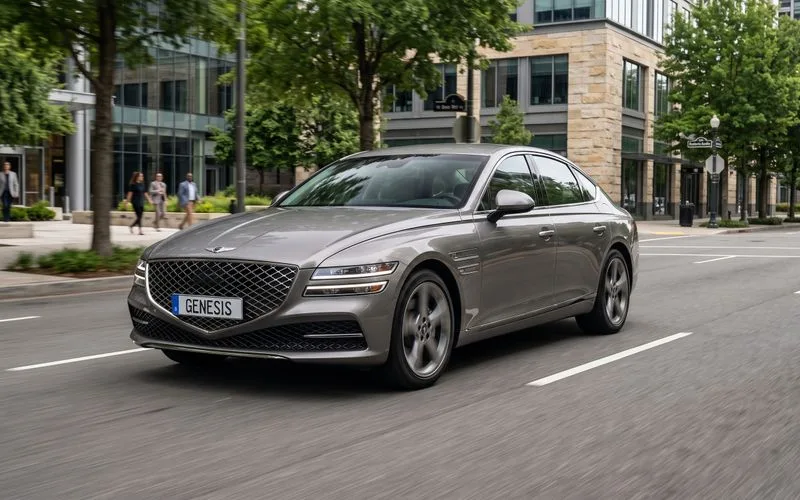 Genesis G80Mid-Size Luxury SedanBetter at: Warranty & resale
Same value-luxury pitch but with a bigger trunk, a plusher cabin, a 10-year/100,000-mile powertrain warranty, and considerably stronger resale.
Compare 3.27B+
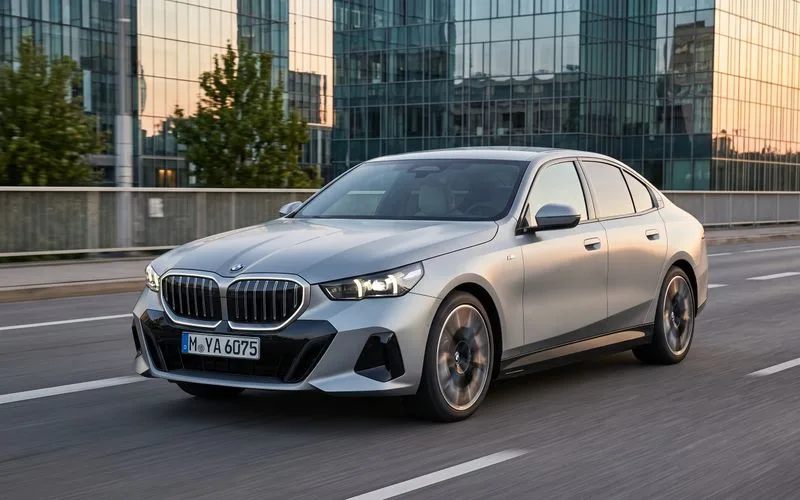 BMW 5 SeriesMid-Size Luxury SedanBetter at: Space & powertrain choice
The benchmark mid-size luxury sedan — roomier rear seat, ~14 cu ft trunk, better materials, and plug-in and electric variants the gas-only CT5 can't match.
Compare 3.11B
3.11B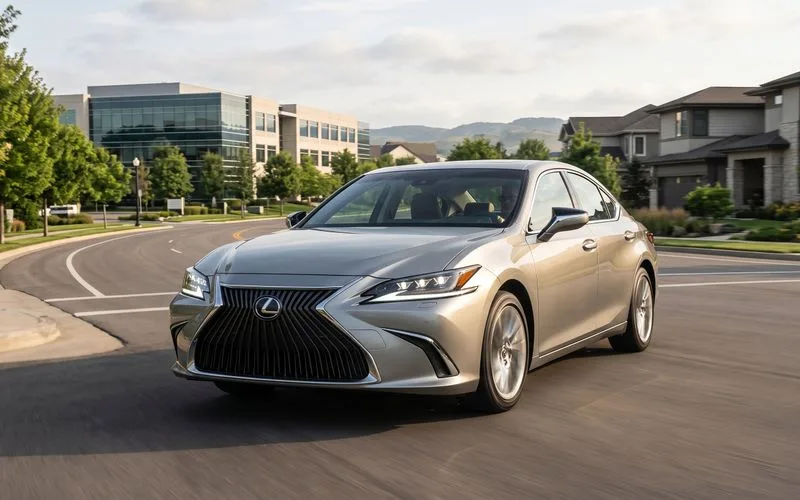 Lexus ESMid-Size Luxury SedanBetter at: Running costs
Trades the CT5's rear-drive handling for hybrid fuel economy, regular gas, top-tier reliability, and roughly 52% five-year value retention.
CompareProduction history
Best fit & conditions
Higher scores mean a better fit for that use case. Learn more about use-case fit →
Subject profile
Academic Probation · NHTSA safety recalls
Feb 26, 2026Equipment: other: owners/service/other manualGeneral Motors has decided that certain 2027 Chevrolet Bolt EV, 2025-2026 Cadillac OPTIQ, Chevrolet Colorado, Equinox EV, GMC Canyon, 2026 Buick Enclave, Envision, Cadillac CT5, Escalade, Escalade ESV, Escalade IQ, Escalade IQL, LYRIQ, VISTIQ, Chevrolet Blazer EV, Corvette Convertible, Corvette Coupe, Corvette Convertible E-Ray, Equinox, Silverado 1500, 2500, 3500, Silverado EV, Suburban 1500, Tahoe, Traverse, GMC Acadia, Hummer EV Pickup, Hummer EV SUV, Sierra 1500, 2500, 3500, Sierra EV, Terrain, Yukon, and Yukon XL vehicles. The radio may not have been set to the correct status to download the electronic owner's manual during production. As such, these vehicles fail to comply with the requirements of Federal Motor Vehicle Safety Standard number 208, âOccupant Protection.â
Defect
General Motors has decided that certain 2027 Chevrolet Bolt EV, 2025-2026 Cadillac OPTIQ, Chevrolet Colorado, Equinox EV, GMC Canyon, 2026 Buick Enclave, Envision, Cadillac CT5, Escalade, Escalade ESV, Escalade IQ, Escalade IQL, LYRIQ, VISTIQ, Chevrolet Blazer EV, Corvette Convertible, Corvette Coupe, Corvette Convertible E-Ray, Equinox, Silverado 1500, 2500, 3500, Silverado EV, Suburban 1500, Tahoe, Traverse, GMC Acadia, Hummer EV Pickup, Hummer EV SUV, Sierra 1500, 2500, 3500, Sierra EV, Terrain, Yukon, and Yukon XL vehicles. The radio may not have been set to the correct status to download the electronic owner's manual during production. As such, these vehicles fail to comply with the requirements of Federal Motor Vehicle Safety Standard number 208, âOccupant Protection.â
Risk
Without an owner's manual to consult, owners may not know how to safely use and operate the vehicle, increasing the risk of injury in a crash.
Remedy
Dealers will reset the vehicle radio, which will facilitate automatic download of the electronic ownerâs manual, free of charge. Owner notification letters were mailed April 16, 2026. Owners may contact GM customer service at 1-866-467-9700, Chevrolet customer service at 1-800-222-1020 or Cadillac customer service at 1-800-333-4223. The manufacturer's number for this recall is N252540430. Vehicle Identification Numbers (VINs) involved in this recall became searchable on NHTSA.gov on February 26, 2026.
NHTSA campaign 26V114000 ↗Manufacturer no. N2525404305,861 vehicles potentially affected (all models in the campaign)Owners notified Apr 16, 2026Filed by General Motors, LLCFiled as CT5
5 recalls on other model years of the CT5 (2020–2023)
Mar 6, 2025Power train: automatic transmissionThe transmission may become damaged internally and cause the wheels to lock-up.
Defect
General Motors LLC (GM) is recalling certain 2019-2020 Cadillac CT6, 2020-2021 CT4, CT5, and 2020-2022 Chevrolet Camaro vehicles equipped with a 10-speed transmission. The transmission may become damaged internally and cause the wheels to lock-up.
Risk
Wheel lock-up while driving increases the risk of a crash.
Remedy
Dealers will install transmission control module monitoring software, free of charge. Owner notification letters were mailed April 7, 2025. Owners may contact Cadillac customer service at 1-800-333-4223 or Chevrolet customer service at 1-800-222-1020. GM's number for this recall is N242480630.
NHTSA campaign 25V148000 ↗Manufacturer no. N24248063090,081 vehicles potentially affected (all models in the campaign)Owners notified Apr 7, 2025Filed by General Motors, LLCFiled as CT5Dec 8, 2022Exterior lighting: lighting control module: softwareThe daytime running lights (DRLs) may not deactivate when the headlights are on. As such, these vehicles fail to comply with the requirements of Federal Motor Vehicle Safety Standard number 108, "Lamps, Reflective Devices, and Associated Equipment."
Defect
General Motors, LLC (GM) is recalling certain 2020-2023 Cadillac CT4 and CT5; 2021-2023 Buick Envision; and 2022-2023 Cadillac Escalade and Escalade ESV, Chevrolet Silverado 1500, Suburban, Tahoe, GMC Sierra 1500, Yukon, and Yukon XL vehicles. The daytime running lights (DRLs) may not deactivate when the headlights are on. As such, these vehicles fail to comply with the requirements of Federal Motor Vehicle Safety Standard number 108, "Lamps, Reflective Devices, and Associated Equipment."
Risk
DRLs that do not deactivate as intended may result in a glare, reducing visibility, and increasing the risk of a crash.
Remedy
The body control module software will be updated by a dealer, or through an over-the-air (OTA) update, free of charge. Owner notification letters were mailed January 23, 2023. Owners may contact GMC customer service at 1-888-988-7267, Chevrolet customer service at 1-800-222-1020, or Cadillac customer service at 1-800-458-8006. GM's number for this recall is N222386380. This recall expands previous recall number 22V-827.
NHTSA campaign 22V903000 ↗Manufacturer no. N222386380740,108 vehicles potentially affected (all models in the campaign)Owners notified Jan 23, 2023Filed by General Motors, LLCFiled as CT5Aug 5, 2021Air bags · Air bags: side/window: curtainThe roof rail side-curtain air bags may not have been installed correctly, which could result in an improper air bag deployment during a crash.
Defect
General Motors, LLC. (GM) is recalling certain 2020-2022 Cadillac CT4 and CT5 vehicles. The roof rail side-curtain air bags may not have been installed correctly, which could result in an improper air bag deployment during a crash.
Risk
Air bags that do not deploy properly can increase the risk of injury in a crash.
Remedy
Dealers will inspect both left and right-side roof rail air bags and reinstall the air bags, as necessary, free of charge. Owner notification letters were mailed on August 30, 2021. Owners may contact Cadillac customer service at 1-800-458-8006. GM's number for this recall is N212342780.
NHTSA campaign 21V611000 ↗Manufacturer no. N21234278034,157 vehicles potentially affected (all models in the campaign)Owners notified Aug 30, 2021Filed by General Motors, LLCFiled as CT5Jun 10, 2021Air bags: srs malfunction warning lamp/light · Electrical system: softwareThe communications gateway module incorrectly processes a loss of communication with the sensing diagnostic module (SDM), causing the air bag malfunction indicator light to inconsistently illuminate.
Defect
General Motors, LLC (GM) is recalling certain 2021 Buick Envision, Cadillac CT4, CT5, Escalade, Escalade ESV, Chevrolet Tahoe, Corvette, Suburban, GMC Yukon, Yukon XL vehicles. The communications gateway module incorrectly processes a loss of communication with the sensing diagnostic module (SDM), causing the air bag malfunction indicator light to inconsistently illuminate.
Risk
The air bag malfunction indicator light may fail to warn the driver of a problem with the air bag, increasing the risk of injury.
Remedy
The communications gateway module software will be updated by a dealer, or through an over-the-air (OTA) update, free of charge. Owner notification letters were mailed on July 1, 2021. Owners may contact Buick customer service at 1-800-521-7300, Cadillac customer service at 1-800-458-8006, Chevrolet customer service at 1-800-222-1020, or GMC customer service at 1-800-462-8782. GM's number for this recall is N212338110.
NHTSA campaign 21V421000 ↗Manufacturer no. N212338110285,622 vehicles potentially affected (all models in the campaign)Owners notified Jul 1, 2021Filed by General Motors, LLCFiled as CT5Sep 24, 2020Service brakesSensor connection contamination in the electronic brake boost system may cause an interruption of communication between the sensor and the brake boost system.
Defect
General Motors LLC (GM) is recalling certain 2020 Chevrolet Corvette and Cadillac CT4, CT5 and XT4, 2021 Chevrolet Trailblazer, and 2020-2021 Buick Encore GX vehicles. Sensor connection contamination in the electronic brake boost system may cause an interruption of communication between the sensor and the brake boost system.
Risk
If communication with the sensor is interrupted, the electronic brake boost assist could be lost. Extra pedal force will be required to slow and stop the vehicle, increasing the risk of a crash.
Remedy
GM will notify owners, and dealers will replace the electronic brake boost module, free of charge. The recall began December 9, 2020. Owners may contact Chevrolet customer service at 1-800-630-2438, Cadillac customer service at 1-800-333-4223, or Buick customer service at 1-800-521-7300. GM's number for this recall is A202307260.
NHTSA campaign 20V588000 ↗Manufacturer no. A2023072603,677 vehicles potentially affected (all models in the campaign)Owners notified Dec 9, 2020Filed by General Motors LLCFiled as CT5
Source: NHTSA Office of Defects Investigation recall database, model years 2020–2026. Recalls are listed by model year as the manufacturer filed them; whether a specific car is affected depends on its VIN — check a VIN at nhtsa.gov ↗. NHTSA model names matched to this page: CT5.
Detailed scoring by subject
1Performance & PowertrainGrades below the middle of the scale.1.63D
Volume Luxury/Premium Luxury trims use the 2.0L LSY turbo-four; the lineup steps up through the 3.0L LGY twin-turbo V6 (Sport, CT5-V) and tops out with the supercharged 6.2L LT4 V8 in the CT5-V Blackwing.
Volume 2.0T LSY produces 258 lb-ft on a broad plateau (1,500–4,000 rpm); the 3.0TT V6 lifts torque to 405 lb-ft and the Blackwing's supercharged V8 delivers 659 lb-ft.
Cadillac's published 0–60 for the 2.0T RWD Premium Luxury is 6.4 s; instrumented tests corroborate mid-6s for the volume trim.
LSY 2.0T is smooth off-boost with a wide torque plateau, though reviewers note some coarseness near redline and light off-the-line lag. The 3.0TT V6 and Blackwing's supercharged V8 are much more refined and expressive.
GM's 10-speed 10L80 automatic shifts crisply with intuitive gear logic across the lineup; paddle response is quick and it rarely hunts on the highway. The Blackwing's optional 6-speed Tremec manual is widely regarded as class-benchmark.
AWD is a ~$2,600 option across Luxury, Premium Luxury, Sport, and CT5-V trims — widely available but not standard, and the Blackwing is RWD-only. System is a straightforward on-demand setup without torque vectoring on non-V trims.
Three distinct engine families — 2.0L LSY turbo-four, 3.0L LGY twin-turbo V6 in two states of tune, and the halo 6.2L LT4 supercharged V8 in the Blackwing — cover mainstream through supercar-baiting performance. No hybrid, PHEV, or EV variant, a gap versus the BMW 5 Series/i5 and Mercedes E-Class/EQE pairs.
2Efficiency & RangeOne of the CT5's weakest categories.0.60F
EPA combined figure for the volume 2.0L turbo RWD trim. Larger-displacement 3.0TT Sport/V and the 6.2L supercharged Blackwing drop meaningfully; no hybrid variant lifts the range. Mid-size luxury sedans with hybrid systems (BMW 5, MB E-Class, Lexus ES) score materially higher.
EPA city figure for the 2.0T RWD volume trim. City economy is unremarkable for the segment — the turbo-four/10-speed pairing lacks the stop-start hybrid assist that lets rivals like the BMW 530e/i5 and Lexus ES Hybrid post 40+ city figures.
The 10-speed automatic and long top-gear cruise give the 2.0T a respectable highway figure, though it trails hybrid mid-size luxury rivals and the efficiency-optimized Tesla Model 3/Lucid Air on a per-mile basis.
Range calculated from Cadillac's 17.4-gallon fuel capacity and EPA combined figure. Adequate for a mid-size luxury sedan but well below efficient hybrid or long-range EV rivals (Lucid Air, Mercedes EQS) that pair 400+ miles with lower running cost.
EPA estimate for the 2.0T RWD on premium fuel at 15k miles/year. The premium-fuel requirement pushes cost well above hybrid mid-size luxury rivals; 3.0TT Sport/V climbs to ~$2,900 and the Blackwing 6.2L SC V8 to ~$3,600/yr.
Premium (91 octane) is recommended across the CT5 range for full advertised output; the 2.0T and 3.0TT will run on 87 octane with reduced power, while the Blackwing 6.2L supercharged V8 effectively requires 93 octane premium. Adds meaningful ongoing cost vs regular-fuel rivals and there is no home-charging alternative.
3SafetyMid-pack among this car's ten categories.2.65C+
NHTSA has not published a combined overall star rating for the current-generation Cadillac CT5; component tests have been solid but a full-vehicle overall rating is not on file. Estimated at 4 stars pending a complete test series.
The current-generation CT5 has not earned a Top Safety Pick or TSP+ award. Prior IIHS test results for the platform have been largely Good in original moderate/side/roof tests, but the updated moderate-overlap protocol and headlight results across trims keep it out of award contention.
Cadillac Safety Alert 1 is standard across CT5 trims — Enhanced Automatic Emergency Braking, Front Pedestrian Braking, Forward Collision Alert, Lane Keep Assist with Lane Departure Warning, Following Distance Indicator, and IntelliBeam auto high-beams. The volume Premium Luxury trim adds Adaptive Cruise Control, Blind Zone Steering Assist, Rear Cross Traffic Alert, and standard Super Cruise, which lifts the effective suite above the base Luxury trim.
GM's Enhanced AEB with pedestrian detection performs well in vehicle-to-vehicle IIHS front-crash-prevention testing but is not a leader in the updated nighttime pedestrian protocol.
Blind Zone Steering Assist and Rear Cross Traffic Alert offer alert-plus-active-intervention behavior. They are standard on Premium Luxury and higher trims (the volume configurations) and optional on the base Luxury trim via the Driver Assist Package.
Standard Lane Keep Assist with Lane Departure Warning is a competent corrective aid; hands-on lane centering behavior is average by class norms. Under Super Cruise the centering experience becomes best-in-class, which lifts the composite on the volume trim.
Full-Speed-Range Adaptive Cruise Control (stop-and-go capable) is standard on Premium Luxury and above (the volume trims), paired with Super Cruise as a highway-assist bundle. Behavior is smooth with well-integrated resume; the base Luxury trim still requires the Driver Assist Package for ACC.
For 2025+ Super Cruise is standard on CT5 Premium Luxury and above (optional on base Luxury), giving the sedan one of the most mature hands-free highway systems on the market — 750,000+ miles of mapped compatible roads in the US and Canada with automated lane change.
IIHS headlight ratings across the current-generation CT5 lineup have been mixed — closer to Acceptable on higher trims with IntelliBeam and better beam pattern, but the base configurations drag the composite. Standard LED headlamps with IntelliBeam help but do not lift the range to top marks.
The CT5 has better sightlines than its CT4 sibling thanks to a longer greenhouse and taller rear window, though a high beltline and thick C-pillars still create rear-three-quarter blind zones. HD Surround Vision (360 camera) and Rear Camera Mirror are available on higher trims to compensate.
The CT5's mid-size sedan proportions give ~37.9 inches of rear legroom and reasonable door apertures, so two rear-facing seats fit without excessive front-seat compromise. LATCH anchors are behind seat-bight covers rather than exposed and three-across is impractical, which keeps this from a top score.
4Space & ComfortMid-pack among this car's ten categories.2.39C+
Standard 5-passenger configuration for the CT5 across all trims (Premium Luxury, Sport, V, Blackwing).
Verified 39.0 in of front headroom for 2026 CT5; slightly less than placeholder value.
Verified 42.4 in front legroom for 2026 CT5.
Verified 36.6 in of rear headroom — tight for the mid-size luxury segment given the CT5's coupe-like rear roofline.
Verified 37.9 in of rear legroom — below segment leaders like the E-Class and 5 Series, closer to 3 Series-class compacts.
Confirmed 11.9 cu ft trunk — notably small for the mid-size luxury sedan class (E-Class ~14, 5 Series ~14, G80 ~13 cu ft). Rear seats include pass-through for longer items.
Conventional luxury-sedan storage — usable center console, door bins, small covered bin ahead of the shifter, wireless charging pad. No standout innovations; rear-seat pass-through helps with longer cargo.
Premium Luxury trim gets standard leather, power-adjustable heated/ventilated front seats with power lumbar massage — reviewers praise all-day comfort with no complaints on long stints. Rear bench comfort adequate but not class-leading given tight headroom.
Magnetic Ride Control on Sport/V/Blackwing delivers well-controlled compliant ride; base Premium Luxury on passive dampers is composed but firmer over sharp bumps. Consistent praise for MRC-equipped configurations.
2026 model year benefits from enhanced sound insulation and redesigned seating; reviewers describe the cabin as quiet and well-insulated for the segment though not at S-Class/EQS levels.
Standard on Premium Luxury: heated + ventilated front seats with massage, heated steering wheel, dual-zone automatic climate control. Rear vents included. Missing the rear heated seats and 4-zone climate top peers offer standard.
5Cost of OwnershipThe CT5's lowest-graded category.0.30F
Base 2026 CT5 Luxury 2.0T MSRP including destination; range extends past $96,000 for the CT5-V Blackwing supercharged V8.
Premium Luxury 2.0T is the volume trim; as-equipped price reflects base ~$50,795 + $1,395 destination with typical option content (Driver Assist package, panoramic sunroof).
Cadillac mid-size-luxury 5-year M&R runs mid-pack among luxury rivals — cheaper than BMW 5 Series/Mercedes E-Class but pricier than Lexus ES/Genesis G80; twin-turbo V6 and V-series trims add tire/brake wear that pushes costs higher.
Cadillac mid-size sedans depreciate faster than German or Japanese luxury peers, and shrinking sedan demand hurts the CT5 further; residuals trail Lexus ES and Genesis G80 by a wide margin.
Standard Cadillac bumper-to-bumper coverage — one year longer than mainstream 3/36 warranties but shorter than Genesis (5/60) or Jaguar (5/60).
Cadillac powertrain coverage is 6 yr / 70k mi — mid-pack in luxury but well behind Genesis (10/100) and Hyundai/Kia (10/100).
Cadillac includes just one complimentary maintenance visit (scaled back from the prior 4-year plan), but bundles 6 yr / 70k mi roadside assistance, a 3-year OnStar/Connected Services Premium trial, in-vehicle Wi-Fi trial, and a 3-year Super Cruise trial on equipped vehicles — solid perks but light on included maintenance versus Genesis/Volvo's multi-year programs.
$52,190 volume-trim price minus its estimated resale value after 5 years (42% retained, or about $21,920) leaves about $30,270 in depreciation. Add the projected $6,200 in 5-year maintenance and repairs, and owning this vehicle for 5 years costs about $36,470 in total.
6Reliability & QualityGrades above the middle of the scale.2.73B-
The CT5 has been on sale since 2020 on GM's mature Alpha 2 platform, so the mechanical package is well shaken out, but Consumer Reports has consistently placed Cadillac sedans at or below average for predicted reliability. The 2025 refresh introduced the 33-inch curved LED display and a reworked infotainment stack, and 2026 is only year two on that hardware — the usual early-generation software teething risk keeps this out of the upper band.
Cadillac routinely finishes in the lower half of Consumer Reports' annual brand-reliability rankings and posts middle-of-pack results in the J.D. Power Vehicle Dependability Study — improved over the last several years, but still clearly behind Lexus, Genesis, and Toyota-family luxury benchmarks.
The CT5 has drawn a moderate number of NHTSA campaigns since its 2020 launch — steering-assist, brake-system software, restraint-system and lighting items among them — plus routine GM service bulletins, but nothing systemic to the engine, transmission, or a fire risk. Recall volume is in line with segment norms rather than a standout in either direction.
The volume 2.0L LSY turbo-four is deployed in high volume across Cadillac, Chevrolet, and GMC with no epidemic failure mode, and the 10L80 10-speed automatic — criticized for torque-converter shudder in early Silverado/F-150-era applications — has been sorted through successive fluid and software revisions. The optional 3.0L LGY twin-turbo V6 has a clean record since 2019, and the Blackwing's supercharged 6.2L LT4 is one of GM's most proven high-output engines (Corvette Z06 C7, Camaro ZL1, CTS-V).
The 2025 refresh lifted the CT5's cabin with the 33-inch display, revised trim, and standard leather on Premium Luxury, and it reads a clear step above the CT4 — but reviewers still flag hard plastics on the lower dash and doors and switchgear that trails the BMW 5 Series, Audi A6, and Mercedes E-Class for tactile richness at this price.
Built alongside the CT4 at GM's Lansing Grand River plant, which has posted consistently strong J.D. Power Initial Quality results, the CT5 shows tight panel gaps and solid assembly in hands-on reviews. Not at Lexus ES levels of obsessive consistency, but free of the widespread rattle and misalignment complaints that drag down the bottom of the segment.
Cadillac runs roughly 600+ US dealers with genuine nationwide coverage, and the CT5's conventional gasoline powertrain can be serviced anywhere in that network — a real practical advantage over boutique luxury and EV-only brands. Service satisfaction lands mid-pack among luxury marques rather than at the top.
The volume 2.0T CT5 shares its Alpha 2 platform, engine, and 10-speed automatic with high-volume GM vehicles, so mechanical parts are abundant and reasonably priced — a meaningful running-cost advantage over BMW, Audi, and Mercedes rivals. Cadillac-specific interior and body parts cost more, and the V-Series and Blackwing add expensive brakes, tires, and Magnetic Ride hardware that pull the average up.
7Technology & InfotainmentThe CT5's best-graded category.3.72A
The 2025 CT5 refresh replaced the previous 10-inch unit with Cadillac's 33-inch-diagonal curved LED display, carried into 2026 as standard equipment on every trim. Cadillac publishes only the whole-panel diagonal, so the touch-only infotainment portion is not separately specified; the value follows this dataset's continuous-panel convention (Celestiq 55 in, Lucid Air 34 in) rather than the split-panel convention used for Buick's 30-inch display.
Google built-in on the 33-inch panel is fast, sharply rendered and logically organized, and the Cadillac skin is cleaner than the Buick/GMC versions of the same stack. It loses points because the refresh deleted the old console rotary controller, pushing climate and secondary functions onto touch.
Wireless Apple CarPlay and Android Auto remain standard across the gas CT5 lineup; GM's removal of phone projection applies to its EVs (Lyriq, Optiq, Vistiq, Escalade IQ), not to combustion Cadillacs.
Google built-in brings natural-language Google Assistant and native Google Maps that can be thrown full-screen into the driver's portion of the panel — one of the few native nav systems owners prefer over phone projection.
AKG Studio audio covers the volume trims and the 19-speaker AKG Studio Reference system is a genuine premium upgrade that reviewers rank near the Burmester and Bowers & Wilkins systems in German rivals.
The driver's third of the 33-inch panel is a fully configurable high-resolution digital cluster, standard on every trim, with full-screen map and performance layouts.
The CT5 rides on GM's VIP electrical architecture, which supports whole-vehicle over-the-air updates beyond maps and infotainment, including Super Cruise road-network expansions and periodic feature additions.
The myCadillac app handles remote start/climate, lock/unlock, locate and vehicle status reliably, but the remote features fall behind an OnStar Remote Access subscription once the included trial lapses, and there is no ultra-wideband phone-as-key on the CT5.
USB-C data/charge ports front and rear plus standard wireless phone charging on the volume trims cover the basics, but there is no household AC outlet and rear-seat port provision is modest for the class.
Keyless Open and Keyless Start with remote start are standard across the lineup, but the CT5 is a conventional trunk sedan with no hands-free decklid and no phone-as-key option.
HD Surround Vision with a crisp multi-view display, front and rear park assist and Reverse Automatic Braking are available and widely fitted on the volume trims; there is no automated parking manoeuvre feature.
A color head-up display is offered on the CT5 but is tied to upper trims and option packages rather than being standard on the entry Luxury trim, so a meaningful share of volume cars go without it.
8Use-Case FitOne of the CT5's weakest categories.1.29D
The CT5's mid-size footprint gives workable door apertures and enough rear legroom for two rear-facing seats without gutting front-seat travel, but 36.6 in of rear headroom under the fastback roofline forces an awkward stoop when buckling kids, LATCH anchors sit buried behind seat-bight covers, and the 11.9 cu ft trunk struggles to take a full-size stroller plus a grocery run.
Cadillac Safety Alert 1 (Enhanced AEB, Front Pedestrian Braking, Forward Collision Alert, Lane Keep Assist, IntelliBeam) is standard on every trim, and the volume Premium Luxury adds full-speed adaptive cruise, Blind Zone Steering Assist and Rear Cross Traffic Alert as standard — but the CT5 holds no IIHS Top Safety Pick, has no published NHTSA overall star rating, and headlight ratings run only Acceptable-to-Marginal, which is what keeps a family buyer's confidence short of the class leaders.
Front-seat occupants get a quiet, well-insulated cabin and seats reviewers happily sit in all day, but the back half is thin for family touring: rear vents but no heated rear seats, no rear climate zone, no rear entertainment, modest rear USB provision, and 36.6 in of rear headroom that pinches adults and older kids. The 11.9 cu ft trunk is the hard limit — four people's luggage does not fit without using the back seat.
The 10L80 ten-speed is decisive and never hunts, the 2.0T is smooth and torque-rich off boost, and the volume Premium Luxury includes full-speed-range stop-and-go adaptive cruise plus standard Super Cruise — a genuinely low-fatigue commute. It falls short of the A6/E-Class benchmark because the base passive-damper suspension is firm over broken pavement, the 2.0T turns buzzy near redline, and the 2025 refresh deleted the console rotary controller, leaving all interaction on the 33-inch touchscreen.
26 MPG combined on 91-octane premium works out to roughly $2,350/yr at 15k miles, and there is no hybrid or PHEV variant anywhere in the 2026 CT5 range to bring that down — rivals like the BMW 530e/i5 and the mild-hybrid E-Class undercut it meaningfully per mile. Luxury-grade consumables and a ~$6,200 five-year maintenance-and-repair bill add to the running cost; the AWD 2.0T and 3.0TT V6 are worse still.
A mid-size, rear-drive-proportioned sedan with a long hood and roughly 194 inches of overall length is a step harder to place than the compact CT4, and the high beltline with thick C-pillars leaves real rear-three-quarter blind zones. HD Surround Vision and rear park assist are widely fitted on the volume trims and do most of the work, but there is no automated parking manoeuvre feature to fall back on.
Cadillac publishes no US tow rating for the CT5 and there is no payload provision beyond passengers and an 11.9 cu ft trunk — the smallest in the mid-size luxury class. Nothing about the car is meaningfully work-capable; the 2.0T and the ten-speed have the torque to move a load they are never rated to pull.
The mechanical hardware is the strong part of an otherwise weak case: the Alpha 2 chassis, LSY 2.0T and 10L80 ten-speed are high-volume GM parts with a solid durability reputation and a cheap, widely stocked service network. But the CT5 has no fleet or work presence, offers no wear-friendly interior trim — leather is standard on the volume trim — and V-Series configurations add performance tires and brakes that punish hard use.
There is no household AC outlet, no roof rails or factory rack ecosystem, no hitch offered, and no tie-down or washable-surface provision beyond ordinary trunk carpet. The CT5 has essentially no work-oriented features and no upfit aftermarket.
This is the CT5's best use case by a wide margin. Super Cruise is standard on the volume Premium Luxury trim — genuinely hands-free across 750,000+ miles of mapped divided highway with automated lane change, the most mature system of any car in this segment — paired with full-speed adaptive cruise, an insulated cabin, front seats good for a full day, and roughly 450 miles of range from the 17.4-gallon tank. It stops short of the BMW 5 Series because the 11.9 cu ft trunk limits four-up touring luggage and premium fuel makes every stop more expensive.
A low-slung performance sedan with sedan ground clearance, no roof rails, no tow rating and no 120V outlet is pavement-bound. AWD is available across Luxury, Premium Luxury, Sport and CT5-V for about $2,600 but is not standard and brings no terrain modes or extra clearance, and the Blackwing is rear-drive only — so the CT5 lands below the quattro-standard A6 and roughly level with the rear-drive-biased German peers.
11.9 cu ft is small even by mid-size luxury sedan standards — roughly two cubic feet behind the E-Class and 5 Series — and the only flexibility on offer is a rear-seat pass-through for skis or lumber. There are no roof rails, no hitch option, and no meaningful underfloor storage, so bulky gear has to go on the back seat.
9Driving ExperienceOne of the CT5's strongest categories.2.79B-
The CT5 rides on GM's rear-drive Alpha platform with near-even weight distribution, and reviewers consistently rate its cornering composure and body control at or near the top of the mid-size luxury sedan class — a genuine dynamic advantage over the front-drive-biased Lexus ES and Audi A6. The volume 2.0T Luxury/Premium Luxury trims run passive dampers and all-season tires (Magnetic Ride Control is reserved for Sport and V models), so ultimate grip trails the CT5-V and Blackwing, but the chassis stays tied-down and predictable.
Cadillac's electric rack in the CT5 is accurate, naturally weighted and strong on-center — routinely called a highlight of the car and a clear step above the numb setups in the A6 and E-Class. It still gives up genuine road feedback to a BMW 3 Series or Alfa Giulia, and the base tune is less communicative than the CT5-V's, so it lands at the top of the 'precise but not fully talkative' band rather than in the class-leading 80s.
Stopping power from the standard four-wheel discs is adequate and fade-free in normal use, but GM's electro-hydraulic (brake-by-wire) boost system on the volume trims produces a somewhat artificial, inconsistent pedal that reviewers have flagged across the CT4/CT5 family — the Brembo front hardware that transforms pedal feel is reserved for CT5-V and Blackwing.
The volume 237-hp 2.0L turbo four paired with GM's 10-speed automatic is generally well-mannered and torque-rich in the midrange, but a published 6.4-second 0–60 is merely adequate for the segment, the 10-speed can hunt and hesitate at part throttle around town, and auto stop/start restarts are noticeably abrupt. The optional 3.0L twin-turbo V6 (335 hp in Sport) is a markedly smoother and more responsive answer.
The 2.0T is well isolated at cruise — helped by the CT5's longer wheelbase and the acoustic work that came with the 2025 refresh — but turns audibly coarse and characterless when extended, and the four-cylinder note is a weak point next to the 3.0TT V6's much better sound. No meaningful vibration comes through the wheel or pedals.
Curb-to-curb turning diameter of roughly 38.1 ft for the rear-drive volume configuration — wider than the platform-mate CT4's verified 37.2 ft, consistent with the CT5's longer 116.0-in wheelbase, and a genuine weak point for a mid-size sedan in tight parking. The prior 36.6-ft placeholder was implausibly tight for a car longer than the CT4.
Low, sporty seating position with a good wheel-to-pedal relationship and generous front-seat and steering-column adjustment; the refreshed cabin's 33-inch curved LED display is crisp and Cadillac kept physical controls for climate and volume. Marks come off for a high rear deck and thick rear pillars that pinch over-the-shoulder visibility, and for 36.6-in rear headroom that makes the back seat tighter than the mid-size class average.
The rear-drive balance, well-weighted steering and composed chassis make the CT5 more engaging than almost anything else in the mid-size luxury sedan class, and the CT5-V Blackwing halo proves how good the bones are. In the volume 2.0T, though, the chassis writes checks the engine can't cash — 6.4 seconds to 60 with a flat-sounding four means it's satisfying rather than thrilling, and the genuinely fun versions cost considerably more.
10Value & Market PositionOne of the CT5's strongest categories.2.98B-
The 2025 facelift carried into 2026 makes the 33-inch curved LED display with Google built-in standard across the whole CT5 range — content BMW and Mercedes still charge for or don't match at this price — alongside wireless CarPlay/Android Auto and the Cadillac Safety Assist suite (AEB, forward collision alert, lane keep, IntelliBeam). Base Luxury trim still leans on Inteluxe leatherette, 18-inch wheels and an options-package path for heated seats and Super Cruise, so it reads generous on screens and driver aids but ordinary on comfort kit versus a loaded-from-base Genesis G80.
CT5 is priced against compact luxury sedans (Luxury from roughly $48K) while sitting between the 3 Series and 5 Series in footprint, and it pairs that with a rear-drive chassis, the standard 33-inch display and access to Super Cruise — the best hands-free system on sale. The value case peaks at the top: CT5-V near $60K for 360 hp and the 668-hp CT5-V Blackwing near $95K with a standard six-speed manual undercut BMW M5 and AMG E63 by tens of thousands. The 237-hp 2.0T base engine and some hard interior plastics keep it out of the top band.
Five distinct trims (Luxury, Premium Luxury, Sport, V-Series, V-Series Blackwing), three engines (2.0L turbo-4, 3.0L twin-turbo V6, 6.2L supercharged V8), RWD standard with AWD widely available, and a rare six-speed manual on the Blackwing give a wide, well-spaced ladder from $48K to $95K. It falls short of the top band only because there is no hybrid or EV variant to match the 5 Series family's 550e and i5.
The CT5 has been one of the few luxury sedans gaining ground rather than fading, running in the high-20,000s to low-30,000s units annually in the US and rising after the 2025 refresh — well ahead of stablemate CT4 and competitive with the BMW 5 Series in raw volume, though still behind the 3 Series it undercuts on price. Acceptance is solid but concentrated among value-driven and enthusiast buyers rather than traditional badge shoppers.
Cadillac's image is on a genuine upswing — Lyriq and Escalade IQ have restored some credibility, Celestiq supplies a halo, and the brand's 2026 Formula 1 entry is the largest marketing platform it has had in decades. It still trails BMW, Mercedes, Audi and Porsche in aspirational pull and resale strength in the mid-size luxury sedan class, and the V-Series halo lifts enthusiast regard more than mainstream cachet.
As a domestic luxury sedan competing against stronger badges, the CT5 is consistently one of the more negotiable cars in its class: GM Financial subvented lease and APR programs, conquest and loyalty cash, and routine dealer discounts mean volume trims commonly transact meaningfully below MSRP. That is a clear buyer benefit even though it signals weaker pricing power. The Blackwing is the exception and trades near sticker.
The Alpha 2 platform underneath dates to the 2020 launch, making 2026 the seventh year of a single generation, but the substantial 2025 facelift — new front and rear styling, fully redesigned interior around the 33-inch display, Google built-in — keeps the cabin current with the rest of Cadillac's lineup. Buyers should weigh real end-of-life risk as Cadillac's sedan lineup contracts toward EVs; there is no announced CT5 successor.
Reviewers consistently praise the CT5's rear-drive chassis balance, ride-handling compromise, Super Cruise and price positioning, while marking it down for interior material quality in places, a tight rear seat for a mid-size car, and a base 2.0T that trails the 330i. It seldom wins outright comparison tests against the 3 Series or G80, but the CT5-V Blackwing is a genuine critical darling — a repeat Car and Driver 10Best winner — which lifts the nameplate's standing well above a plain mid-pack verdict.