

The verdict
A struggling mid-size sedan, strong on reliability and held back by performance.
The 2025 Malibu is the cheapest mid-size sedan of its year — $26,995 delivered — and it spends that money on the two things a commuter actually feels: an exceptionally comfortable ride and an almost absurdly quiet cabin, with a 15.7 cu ft trunk and 38.1 in of rear legroom behind it. Everything else is a ten-year-old car running out its clock: 163 hp and roughly 8.3 seconds to 60 mph make it the slowest thing in the class, blind-spot monitoring is a paid option on every trim, IIHS rates it Poor in the updated side test, and there is no hybrid or all-wheel drive at any price. Chevrolet ended production in November 2024 with no successor, so a 2025 car is leftover inventory that will retain only about 45% of its sticker after five years. Buy one as a cheap, comfortable, well-supported highway commuter and nothing else — a Camry or Accord costs $2,600–$3,200 more and is a better car in almost every measurable way.
Jump to scoresStrengths
- Cheapest mid-size sedan on sale, by thousands
- Ride comfort and cabin quiet above its price
- Big trunk and genuine back-seat room
What holds it back
- The slowest car in the class, with no alternative engine
- Driver-assist safety gear is optional or unavailable
- Crash-test and headlight results that cost it any award
Top alternatives
Cars shoppers cross-shop with the Chevrolet Malibu 2.84B-
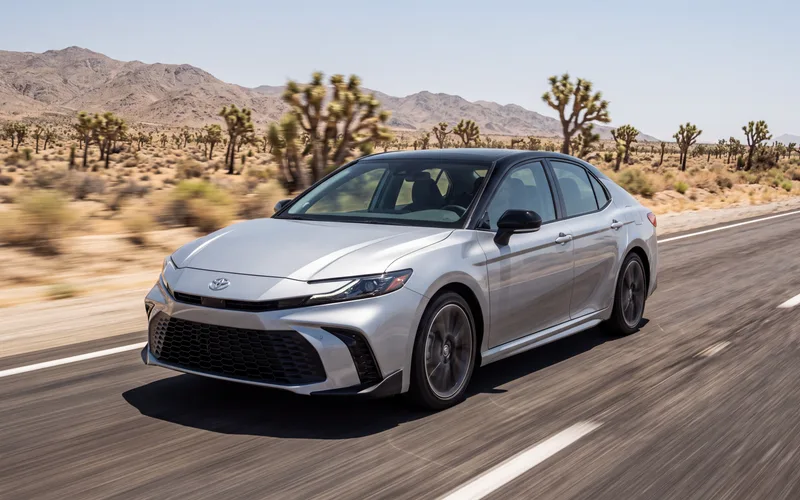 Toyota CamryMid-Size SedanBetter at: Efficiency and resale
For about $3,200 more it delivers 51 MPG combined, available all-wheel drive, standard blind-spot monitoring and 57% five-year resale, which more than closes the price gap over an ownership cycle.
Compare 2.56C+
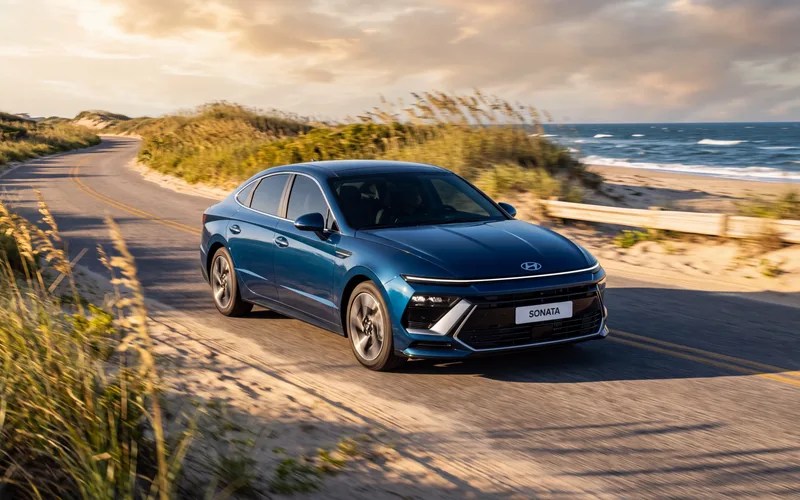 Hyundai SonataMid-Size SedanBetter at: Warranty and tech
A similarly priced but current-generation sedan with twin 12.3-inch displays, standard adaptive cruise and blind-spot monitoring, and a 10-year powertrain warranty covering the parts Malibu buyers worry about.
Compare 1.87C-
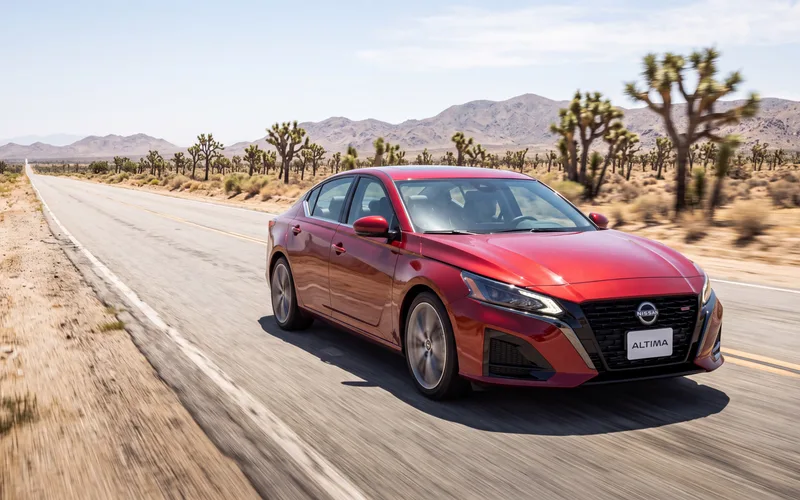 Nissan AltimaMid-Size SedanBetter at: AWD availability
The other bargain mid-sizer, still in production, with all-wheel drive on every trim and Safety Shield 360 standard where the Malibu charges for blind-spot monitoring.
CompareHow it's evolved
9 scored model years · 2017–2025
Subject scores by year
Hover or tap a score to see what moved it versus the year before. A corner mark flags a big swing.
| Year | Performance | Efficiency | Safety | Space | Cost | Reliability | Tech | Use-case | Driving | Value |
|---|---|---|---|---|---|---|---|---|---|---|
| 2025 | 22 | 58 | 48 | 66 | 59 | 69 | 53 | 48 | 60 | 50 |
| 2024 | 22 | 57 | 48 | 66 | 60 | 69 | 52 | 48 | 60 | 52 |
| 2023 | 22 | 53 | 49 | 65 | 58 | 69 | 52 | 47 | 60 | 51 |
| 2022 | 24 | 59 | 34 | 66 | 62 | 70 | 52 | 46 | 60 | 50 |
| 2021 | 24 | 60 | 34 | 66 | 60 | 67 | 51 | 46 | 60 | 50 |
| 2020 | 24 | 60 | 34 | 66 | 59 | 68 | 47 | 46 | 60 | 53 |
| 2019 | 28 | 59 | 34 | 66 | 59 | 69 | 48 | 46 | 60 | 55 |
| 2018 | 27 | 53 | 44 | 66 | 65 | 64 | 43 | 45 | 61 | 56 |
| 2017 | 27 | 53 | 45 | 66 | 63 | 63 | 40 | 46 | 60 | 63 |
Compare two years
Best fit & conditions
Higher scores mean a better fit for that use case. Learn more about use-case fit →
Subject profile
Academic Probation · NHTSA safety recalls
Apr 2, 2026Back over prevention: sensing system: cameraThe rearview camera screen may display a distorted or blank image.
Defect
General Motors, LLC (GM) is recalling certain 2023-2025 Chevrolet Malibu vehicles. The rearview camera screen may display a distorted or blank image.
Risk
A rearview image that does not display correctly reduces the driver's view behind the vehicle, increasing the risk of a crash.
Remedy
Dealers will inspect, and if necessary, replace the rearview camera, free of charge. Owner notification letters were mailed May 20, 2026. Owners may contact Chevrolet customer service at 1-800-222-1020. GM's number for this recall is N262551720. Vehicle Identification Numbers (VINs) involved in this recall became searchable on NHTSA.gov on April 2, 2026.
NHTSA campaign 26V212000 ↗Manufacturer no. N262551720276,879 vehicles potentially affected (all models in the campaign)Owners notified May 20, 2026Filed by General Motors, LLCFiled as MALIBU
10 recalls on other model years of the Malibu (2017–2024)
Aug 1, 2024Equipment: other: owners/service/other manualThe vehicles may have the wrong owner's manual in the glove box. As such, these vehicles fail to comply with the requirements of Federal Motor Vehicle Safety Standard number 225, "Child Restraint Anchorage Systems."
Defect
General Motors, LLC (GM) is recalling certain 2024 Cadillac XT4 and Chevrolet Malibu vehicles. The vehicles may have the wrong owner's manual in the glove box. As such, these vehicles fail to comply with the requirements of Federal Motor Vehicle Safety Standard number 225, "Child Restraint Anchorage Systems."
Risk
The wrong owner's manual may contain inaccurate information about vehicle functions and other safety relevant information, which could lead to improper operation of the vehicle and increase the risk of a crash or injury.
Remedy
Dealers will provide owners with the correct manual, free of charge. Owner notification letters were mailed August 26, 2024. Owners may contact Cadillac's customer service at 1-800-458-8006 and Chevrolet customer service at 1-800-222-1020. GM's number for this recall is N242454040.
NHTSA campaign 24V575000 ↗Manufacturer no. N24245404022 vehicles potentially affected (all models in the campaign)Owners notified Aug 26, 2024Filed by General Motors, LLCFiled as MALIBUDec 14, 2022Structure: frame and membersThe front impact bar, a structural portion of the vehicle frame, may not be properly welded to the front frame rail.
Defect
General Motors, LLC (GM) is recalling certain 2022-2023 Chevrolet Malibu vehicles. The front impact bar, a structural portion of the vehicle frame, may not be properly welded to the front frame rail.
Risk
An improperly welded front impact bar may result in the front crash sensors not performing correctly, increasing the risk of injury in a crash.
Remedy
Dealers will inspect the right-hand and left-hand side of the vehicle's motor rail for an incomplete weld. If the condition is found, the vehicle will be repurchased by GM. Owner notification letters were mailed January 20, 2023. Owners may contact Chevrolet customer service at 1-800-222-1020.
NHTSA campaign 22V923000 ↗2,108 vehicles potentially affected (all models in the campaign)Owners notified Jan 20, 2023Filed by General Motors, LLCFiled as MALIBUMay 19, 2022SeatsThe driver's seat cushion frame may have an improper weld in the power tilt-adjustment mechanism.
Defect
General Motors, LLC (GM) is recalling certain 2021 Chevrolet Malibu, 2022 Chevrolet Equinox, Blazer and Cadillac XT4 vehicles. The driver's seat cushion frame may have an improper weld in the power tilt-adjustment mechanism.
Risk
An improperly welded seat frame may not adequately restrain the driver in a crash, increasing their risk of injury.
Remedy
Dealers will inspect the driver's seat and replace the cushion frame, as necessary, free of charge. Owner notification letters were mailed June 23, 2022. Owners may contact Chevrolet customer service at 1-800-222-1020 or Cadillac customer service at 1-800-458-8006. GM's number for this recall is N212356050.
NHTSA campaign 22V359000 ↗Manufacturer no. N212356050221 vehicles potentially affected (all models in the campaign)Owners notified Jun 23, 2022Filed by General Motors, LLCFiled as MALIBUAug 20, 2021Seat belts: critical fasteners · Seat belts: rear/other: retractorThe rear seat belt retractors may be improperly secured with loose or missing fasteners.
Defect
General Motors, LLC (GM) is recalling certain 2016-2021 Chevrolet Malibu and 2019-2021 Cadillac XT4 vehicles. The rear seat belt retractors may be improperly secured with loose or missing fasteners.
Risk
An improperly secured seat belt retractor may not function properly in a crash, increasing the risk of injury.
Remedy
Dealers will inspect and tighten the rear seat belt retractors, as necessary, free of charge. Owner notification letters were mailed on September 17, 2021. Owners may contact Chevrolet customer service at 1-800-222-1020 and Cadillac customer service at 1-800-458-8006. GM's number for this recall is N212333380.
NHTSA campaign 21V649000 ↗Manufacturer no. N212333380402 vehicles potentially affected (all models in the campaign)Owners notified Sep 17, 2021Filed by General Motors, LLCFiled as MALIBUOct 29, 2020Power train: automatic transmissionThe start/stop accumulator endcap may have missing bolts.
Defect
General Motors LLC (GM) is recalling certain 2018-2019 Chevrolet Cruze and Buick LaCrosse, 2018-2020 Chevrolet Equinox, Chevrolet Traverse and GMC Terrain, 2018 Chevrolet Malibu, 2019-2020 Buick Encore, Buick Enclave, Cadillac XT4, Chevrolet Blazer and GMC Acadia, and 2020 Cadillac XT6 vehicles. The start/stop accumulator endcap may have missing bolts.
Risk
Missing bolts on the start-stop accumulator endcap could result in a transmission oil leak and may progress to a loss of propulsion, increasing the risk of a crash. A transmission fluid leak in the presence of an ignition source may increase the risk of fire.
Remedy
GM will notify owners, and dealers will inspect the start-stop transmission accumulator and replace it if any bolts are missing, free of charge. The recall began December 15, 2020. Owners may contact GMC customer service at 1-888-988-7267, Buick Customer service at 1-866-608-8080, Chevrolet customer service at 1-800-222-1020 or Cadillac customer service at 1-800-458-8006. GM's number for this recall is N202313440.
NHTSA campaign 20V668000 ↗Manufacturer no. N202313440194,105 vehicles potentially affected (all models in the campaign)Owners notified Dec 15, 2020Filed by General Motors LLCFiled as MALIBUSep 6, 2019Electrical system: software · Engine · Fuel system, gasoline: fuel injection system: injectorsAn error in the Engine Control Module (ECM) software may result in the fuel injectors being disabled.
Defect
General Motors LLC (GM) is recalling certain 2018 Chevrolet Malibu vehicles equipped with 1.5L turbo engines. An error in the Engine Control Module (ECM) software may result in the fuel injectors being disabled.
Risk
Disabled fuel injectors would prevent the engine from starting and may cause a stall, increasing the risk of a crash.
Remedy
GM will notify owners, and dealers will reprogram the ECM software, free of charge. The recall began October 16, 2019. Owners may contact GM customer service at 1-800-630-2438. GM's number for this recall is N192221960.
NHTSA campaign 19V642000 ↗Manufacturer no. N192221960177,282 vehicles potentially affected (all models in the campaign)Owners notified Oct 16, 2019Filed by General Motors LLCFiled as MALIBUAug 30, 2018Service brakes, hydraulic: foundation components: disc: caliperThe rear brake caliper pistons may have an insufficient coating causing gas pockets to form, potentially reducing rear brake performance.
Defect
General Motors LLC (GM) is recalling certain 2018-2019 Chevrolet Equinox, Impala, Cruze, Volt and Bolt EV vehicles, GMC Terrain vehicles, Buick Lacrosse and Regal vehicles, Cadillac XTS and XTS Professional vehicles and 2018 Chevrolet Malibu vehicles. The rear brake caliper pistons may have an insufficient coating causing gas pockets to form, potentially reducing rear brake performance.
Risk
A reduction of braking performance can increase the risk of a crash.
Remedy
GM will notify owners, and dealers will bleed the vehicle's brake system, free of charge. The recall began October 11, 2018. Owners may contact Buick customer service at 1-800-521-7300, Cadillac customer service at 1-800-458-8006, Chevrolet customer service at 1-800-222-1020, or GMC customer service at 1-800-462-8782. GM's number for this recall is 18279.
NHTSA campaign 18V576000 ↗Manufacturer no. 18279210,628 vehicles potentially affected (all models in the campaign)Owners notified Oct 11, 2018Filed by General Motors LLCFiled as MALIBUJun 14, 2018Air bags: sensor: occupant classificationDuring servicing, a Passenger Presence System (PPS) may have been installed that was not correctly calibrated to the vehicle's seat type. As a result, the PPS may not properly identify an adult passenger from a child passenger in the front passenger seat, potentially causing the air bag to not deploy when it should, or causing the air bag to deploy when it shouldn't.
Defect
General Motors LLC (GM) is recalling certain 2016-2018 Chevrolet Malibu vehicles. During servicing, a Passenger Presence System (PPS) may have been installed that was not correctly calibrated to the vehicle's seat type. As a result, the PPS may not properly identify an adult passenger from a child passenger in the front passenger seat, potentially causing the air bag to not deploy when it should, or causing the air bag to deploy when it shouldn't.
Risk
In the event of a crash, improper air bag deployment can increase the risk of injury.
Remedy
GM will notify owners, and dealers will replace the front passenger PPS seat service kit, free of charge. The recall began August 7, 2018. Owners may contact Chevrolet customer service at 1-800-222-1020. GM's number for this recall is 18208.
NHTSA campaign 18V400000 ↗Manufacturer no. 1820866 vehicles potentially affected (all models in the campaign)Owners notified Aug 7, 2018Filed by General Motors LLCFiled as MALIBUMay 31, 2018Fuel system, gasoline: delivery: fuel pumpThe high pressure fuel pump may detach from its mounting flange, possibly resulting in the pump damaging the high pressure fuel line.
Defect
General Motors LLC (GM) is recalling certain 2015-2018 GMC Canyon, 2016-2017 Buick Envision, 2016-2018 Chevrolet Colorado and Malibu, 2017-2018 GMC Acadia, 2018 Buick LaCrosse, Cadillac ATS, Chevrolet Equinox, and GMC Terrain vehicles. The high pressure fuel pump may detach from its mounting flange, possibly resulting in the pump damaging the high pressure fuel line.
Risk
A damaged fuel line can create a fuel leak, increasing the risk of a fire.
Remedy
GM will notify owners, and dealers will replace the high pressure fuel pump, and high pressure fuel pipe, free of charge. The recall began July 2, 2018. Owners may contact Buick customer service at 1-800-521-7300, Cadillac customer service at 1-800-458-8006, Chevrolet customer service at 1-800-222-1020, or GMC customer service at 1-800-462-8782. GM's number for this recall is 18188.
NHTSA campaign 18V358000 ↗Manufacturer no. 18188 18268895 vehicles potentially affected (all models in the campaign)Owners notified Jul 2, 2018Filed by General Motors LLCFiled as MALIBUDec 2, 2016Air bags: side/windowThe right-hand rear side air bag inflator manifold may have insufficient welds.
Defect
General Motors LLC (GM) is recalling certain 2017 Malibu vehicles manufactured on November 10, 2016. The right-hand rear side air bag inflator manifold may have insufficient welds.
Risk
Insufficient welds could cause the inflator to separate and propel air bag debris into the cabin during a crash. Also, the inflator could fail to inflate during a crash, increasing the risk of injury.
Remedy
GM will notify owners, and dealers will replace the rear side air bag modules, free of charge. The recall began on January 25, 2017. Owners may contact Chevrolet customer service at 1-800-222-1020. GM's number for this recall is 16146.
NHTSA campaign 16V870000 ↗Manufacturer no. 16146113 vehicles potentially affected (all models in the campaign)Owners notified Jan 25, 2017Filed by General Motors LLCFiled as MALIBU
Source: NHTSA Office of Defects Investigation recall database, model years 2017–2025. Recalls are listed by model year as the manufacturer filed them; whether a specific car is affected depends on its VIN — check a VIN at nhtsa.gov ↗. NHTSA model names matched to this page: MALIBU.
Detailed scoring by subject
1Performance & PowertrainThe Malibu's lowest-graded category.0.00F
For its final model year the Malibu offered a single powertrain: the 1.5L LFV turbo four rated at 163 hp, unchanged from 2024. The 2.0L turbo was dropped after the 2022 model year and the hybrid after 2019, so 163 hp is both the volume-trim and the model-range maximum.
Peak torque of the 1.5L turbo four, the sole 2025 powertrain. Turbo torque arrives low in the rev range, which is why the car feels adequate off the line despite modest horsepower.
The 1.5T/CVT combination is unchanged since the 2019 refresh, so instrumented times for that powertrain carry to 2025. Published figures cluster in the low-to-mid 8s — slow for a mid-size sedan, where the class norm is now 7 s or better.
The 1.5T is quiet and unobtrusive at light throttle and cruising speeds, but reviewers consistently note it grows coarse and loud under sustained load and runs out of breath at higher revs. There is mild low-rpm turbo lag off the line and no electrified assist to fill it.
The CVT (standard on the 1.5T since the 2019 refresh) is well-calibrated by CVT standards — it slurs into motion imperceptibly and simulates ratio steps to suppress drone — but it still flares and holds revs under hard acceleration, and there is no meaningful manual mode or paddle control.
The ninth-generation Malibu was front-wheel drive only for its entire run — no AWD was offered on any trim in any year, including the final 2025 model year. Mid-size rivals Altima, Camry and (from 2025) Sonata all offer AWD, so this is a competitive gap and not merely a segment norm.
By 2025 the Malibu was a one-powertrain car: the 163-hp 1.5L turbo with a CVT, across every trim from LS Fleet to 2LT. The 2.0L turbo/9-speed was cut after 2022 and the full hybrid after 2019, leaving no performance, electrified or drivetrain alternative in the final model year.
2Efficiency & RangeMid-pack among this car's ten categories.1.88C-
The 2025 Malibu is a carry-over of the ninth generation's final configuration: one powertrain, the 163-hp 1.5L turbo four with a CVT driving the front wheels, rated 31 MPG combined. Competitive against conventional gas mid-size sedans (Sonata/K5 2.5L at 31, Altima 2.5L at 30–32) but far behind the hybrid mid-sizers that now define the class.
28 MPG city is respectable for a non-hybrid mid-size sedan — the small-displacement turbo plus standard stop/start beats the larger naturally aspirated 2.5L fours in the segment (Sonata 27, K5 27, Altima 26–27) — but it is roughly 20 MPG short of a Camry hybrid in exactly the driving where a hybrid earns its keep.
36 MPG highway is the Malibu's best efficiency figure and the practical argument for the car — a low-drag sedan with a small turbo engine and a CVT that holds low revs at cruise. It trails the Altima's 39 and the hybrid mid-sizers' mid-40s.
A 15.8-gallon tank at the EPA combined rating gives roughly 490 miles between fills, and close to 570 on a steady highway run. That is ordinary for the segment — line-ball with the K5 (~490) and Sonata (~493), behind the Altima's larger tank and well behind hybrid mid-sizers that clear 600.
EPA puts the Malibu at $2,000 a year to fuel, and it saves an estimated $1,000 over five years against the average new vehicle. Single powertrain means no trim variance in this figure — but it is a gas-only car in a class where a hybrid rival runs several hundred dollars a year cheaper.
The 1.5L turbo runs on regular 87-octane — no premium requirement despite being turbocharged — and there is exactly one powertrain, so every trim has the same simple fueling story. Held below the low 90s only because there is no electrified variant or alternative-fuel flexibility to fall back on: gasoline is the only option.
3SafetyOne of the Malibu's weakest categories.1.23D
NHTSA rates the 2025 Malibu 5 stars overall, with 5 stars in both the frontal and side crash tests and 4 stars for rollover resistance — unchanged from the 2024 car, as expected for the ninth generation's carry-over final model year.
The Malibu earns Good in the driver-side small overlap and the original moderate overlap front test, but Poor in the updated side test — the dummy's head slipped below the curtain airbag and struck the window sill. It has no IIHS award, and its passenger-side small overlap rating is incomplete (tested on one side only). A Poor result in a core crashworthiness test caps this in the bottom band.
Chevy Safety Assist is standard on every 2025 Malibu — forward collision alert with AEB, front pedestrian braking, lane keep assist with lane departure warning, following distance indicator, IntelliBeam auto high beams and an HD rear camera. But blind-spot monitoring, rear cross-traffic alert and adaptive cruise are optional on every trim including the top 2LT, a gap no mainstream mid-size rival still has: Camry, Accord, Sonata and K5 all ship BSM and full-speed ACC standard.
IIHS rates the Malibu's standard front crash prevention system Poor for pedestrian detection, the worst available grade, and it was never re-evaluated under the 2022-onward vehicle-to-vehicle protocol. Front pedestrian braking is standard equipment, but the tested performance — particularly at night — is at the bottom of the segment.
Side Blind Zone Alert with Lane Change Alert and Rear Cross Traffic Alert are alert-only and optional on every trim — a buyer of the volume LT can add them, but nothing is standard and there is no active intervention or safe-exit warning. Reviewers flag the Malibu's thick rear pillars as making the omission worse.
Lane Keep Assist with Lane Departure Warning is standard, but it is a nudge-back-from-the-line system only — there is no lane centering at any price, since Super Cruise was never offered on the Malibu and GM's lower-tier highway assist is absent. Functional as a lapse-catcher, not as a steering aid.
Adaptive cruise control exists only inside the Driver Confidence and Cruise package on the top 2LT — the LS, RS and 1LT trims that make up most sales cannot get it at any price, and there is no combined highway assist mode. GM's full-speed-range ACC itself is competent, but availability this restricted in 2025 is a segment outlier.
No hands-free highway system is available. Super Cruise was never offered on the Malibu and was not added for the nameplate's final model year; the most the car offers is optional adaptive cruise on one trim.
IIHS rates the Malibu's headlights Marginal, the second-lowest grade, and that applies to the volume trims. IntelliBeam automatic high beams are standard across the range, which helps somewhat, but no trim reaches an Acceptable or Good beam pattern.
The ninth-generation Malibu's fastback roofline gives it thick rear pillars and a shallow backlight, and reviewers also fault the deep instrument panel and heavy A-pillars for cutting the forward-side view. An HD rear vision camera is standard and rear park assist is available, but there is no surround-view camera on any trim to compensate.
IIHS rates LATCH ease of use Marginal on both LS and LT configurations — two full sets of lower anchors for the rear outboard seats plus a center tether, but the anchors sit deep in the seat bight and take too much force to attach. The 38.1 in of rear legroom and conventional wide-opening rear doors make the physical fit easy once a seat is in, which keeps this out of the bottom band.
4Space & ComfortOne of the Malibu's strongest categories.2.47C+
Every 2025 Malibu trim — LS, RS, 1LT and 2LT — is a five-passenger four-door sedan with a three-place rear bench; no configuration changes seating.
The ninth-generation Malibu publishes 39.1 in of front headroom, near the top of the mid-size sedan range and a benefit of the low-mounted seats in a tall-ish greenhouse; the optional sunroof costs a little over an inch.
At 41.5 in the Malibu sits at the low end of the mid-size sedan band — Camry (42.1 in) and Accord (42.3 in) both give front occupants more stretch-out room, and the Malibu's long rear legroom was prioritized over the front.
37.5 in is respectable for a fastback-profile sedan and above the segment midpoint, though the sloping roofline means taller adults sit close to the headliner.
The 111.4 in wheelbase the ninth generation gained in 2016 pays off here: 38.1 in of rear legroom seats two adults comfortably, competitive with the Camry (38.0 in) though short of the Accord's 40.8 in.
A 15.7 cu ft trunk is above average for a mid-size sedan — larger than the Camry's 15.1 cu ft — with a wide, deep well and a standard 60/40 folding rear seatback for long items.
Conventional but adequate: a covered center console bin, a hidden storage shelf behind the sliding infotainment surround, decent door pockets, front and rear cupholders, and wireless charging on the 2LT. Nothing innovative — no underfloor trays, no fold-flat front passenger seat, no onboard power outlets beyond USB, and a single rear USB port only on the top trim.
Consumer Reports faults the cloth seats fitted to the volume LS/RS/1LT trims for insufficient back and leg support and explicitly recommends stepping up to the leather seats, which are 2LT-only. Adjustment is also thin down-range — the LS has a manual driver's seat, RS and 1LT add power for the driver only, and the passenger seat is manual until the 2LT.
Ride compliance is the Malibu's strongest comfort trait — a soft, well-damped tune over broken pavement that Consumer Reports calls exceptionally comfortable and that stands out even against newer rivals. The trade-off is body control: it floats over larger heaves and leans more than a Camry or Accord when pushed, and the RS's 18-inch wheels take a small edge off.
Consumer Reports describes the cabin as "almost absurdly quiet" with strong isolation from wind and road noise, which is genuinely above par for a mainstream sedan. It is marked down from the top band because owner reviews on Edmunds and KBB repeatedly report loud tire roar at interstate speeds on coarse pavement, and the 1.5T's CVT drone under load is audible.
Mid-pack and back-loaded onto the pricier trims. Heated front seats and dual-zone automatic climate control start at the 1LT; ventilated front seats and a heated steering wheel are 2LT-only; the LS and RS get single-zone manual air conditioning. There are no rear climate controls or rear vents worth the name, no heated rear seats (the 2019–2022 Premier's heated second row died with that trim), and pre-conditioning is limited to plain remote start rather than an app-scheduled climate function.
5Cost of OwnershipMid-pack among this car's ten categories.1.97C-
Price is the 2025 Malibu's strongest argument: the entry LS undercuts a base Camry LE by roughly $3,200 and a base Accord LX by about $2,600, and it is the cheapest mid-size sedan on sale in its final year. Chevrolet raised the ladder only slightly over 2024 while lifting destination $100 to $1,195.
Kelley Blue Book identifies the RS as the most popular 2025 Malibu among individual buyers — it is a $1,000 appearance-and-wheels step on LS mechanicals (18-inch wheels, black grille, dual exhaust tips) with essentially no options to add, so as-typically-equipped is close to sticker. Even the mid-pack 1LT at $29,295 lands under a base Camry, and the fully loaded 2LT at $32,695 is priced where rivals' mid trims start. The LS carries the fleet and rental volume that made up much of the final production run.
Routine service is cheap — the 1.5L LFV turbo runs on regular fuel with conventional intervals, 16- to 18-inch tires are inexpensive, and Chevrolet's dealer network is the densest in the country. The drag on this number is out-of-warranty risk rather than scheduled work: the CVT250 continuously variable transmission fitted since 2019 is the component with the worst repair reputation on the car and comes off powertrain cover at 60,000 miles, and the 1.5T has a history of coolant-intrusion and turbo-related complaints. Discontinuation does not threaten parts supply — GM supports a nameplate for a decade-plus and the LFV/CVT are shared with the Equinox and Trailblazer families — but it does mean no further running improvements.
At weight 3 this is the item that undoes the Malibu's cheap sticker — the discount taken up front is largely handed back at trade-in. Three forces stack against it: much of the final production run went to fleet and rental buyers, so the used market will absorb a wave of ex-rental 2025 cars at once; the nameplate was discontinued in November 2024, which costs a commodity sedan some used-buyer confidence even though GM parts support continues; and a gas-only sedan with no hybrid option is the least wanted configuration in a segment where the Camry has gone hybrid-only. Retention measured against MSRP is also worse than the published figures imply, because final-year Malibus transacted well below sticker on clearance incentives.
GM's New Vehicle Limited Warranty is 3 years or 36,000 miles — the industry floor and the bottom of the framework band. It matches Toyota, Honda and Nissan but is two years and 24,000 miles short of what a Sonata or K5 buyer gets at a similar price, and on a discontinued nameplate a longer term would have been the obvious way to reassure buyers.
Powertrain coverage is 5 years or 60,000 miles, again the band floor. It matters more here than on most rivals because the CVT250 is the component Malibu shoppers most want covered and 60,000 miles is exactly where CVT complaints start to appear — half the mileage Hyundai and Kia give an original owner.
Scored in the 'short included-maintenance period or basic roadside only' band. Chevrolet Complete Care gives exactly one complimentary scheduled-maintenance visit in the first 12 months — oil and filter change, four-tire rotation, multi-point inspection — after GM cut the program from two visits, so the second oil change is out of pocket. What keeps it mid-band rather than low is that roadside assistance and courtesy transportation run the full 5 years / 60,000 miles, longer than the 3-year cover most rivals bundle, and every car carries an OnStar/Chevrolet Connected Services trial with remote start and automatic crash response through the app. There are no charging or fuel credits, no loyalty sweetener for the final model year, and nothing that offsets the floor-level warranty terms.
$27,995 volume-trim price minus its estimated resale value after 5 years (45% retained, or about $12,598) leaves about $15,397 in depreciation. Add the projected $5,100 in 5-year maintenance and repairs, and owning this vehicle for 5 years costs about $20,497 in total.
6Reliability & QualityThe Malibu's best-graded category.2.69C+
The two major predictors disagree, which is what keeps this out of the 80s: J.D. Power rates the 2025 Malibu 86/100 ("Great") while Consumer Reports expects only about-average reliability, and CR admits its call rests on limited 2023-2024 data. What genuinely helps is age — 2025 is the tenth and final year of a ninth generation frozen since the 2019 refresh, so there is nothing new to go wrong and a decade of running fixes is already baked in. What holds it back is that the one thing carrying real risk, the 1.5L turbo and CVT pairing, is exactly the part of the car with a complaint history (see 6.1.4).
Chevrolet's dependability standing is genuinely good and improving in J.D. Power's long-term study — fifth overall and near the top of the mass-market field in 2025, third among mass-market brands in 2026 — but Consumer Reports still places the brand only average, because Chevy's lineup is split between dependable long-running combustion models and Ultium-era EVs that drag the brand average down. Scored mid-pack-plus rather than top-tier: a brand is not consistently top-five when one of the two authorities that matter calls it average.
The 2025 model year carries exactly one NHTSA recall and it is a visibility-electronics fix, not a powertrain, fire or structural defect — dealers replace a rearview camera whose housing adhesive lets moisture in. Across the whole ninth generation the record is unusually light for a high-volume GM car: a seat-belt fastener campaign, a front impact-bar campaign, and an owner's-manual printing error, none of them systemic. What keeps this out of the 80s is the service-bulletin layer rather than the recall layer — 1.5T oil consumption, CVT shudder and "Engine Power Reduced" are recurring patterns handled as warranty repairs, and the camera campaign, while minor per car, swept 271,770 vehicles.
This is the weak point of the car and the reason the category lands below the Korean mid-sizers. The 1.5L LFV turbo has a documented failure catalogue — low-tension piston rings that pass oil (owners report a quart per 2,000-3,000 miles on bad examples), turbocharger failures concentrated in 2018-2021, pre-ignition piston damage on 2016-2017 builds, and early vacuum-pump and cam-timing trouble — and since 2019 it has been tied to GM's CVT, a unit with a shudder complaint pattern and a replace-rather-than-repair economics profile once the 60,000-mile powertrain warranty expires. Scored at the bottom of the mixed-history band rather than lower because the 2025 car is the most-revised version there is: GM moved to PVD-coated rings and revised parts, and ratings for 2020-2024 builds recovered to average or slightly above.
The cabin is the clearest evidence of a design left to run out its clock: the architecture is unchanged since the generation launched for 2016, and reviewers consistently describe hard, low-grade plastics across nearly every touch point, relieved only by a fabric-trimmed dash panel that matches the seats and, on the 2LT, some stitched soft-touch trim. Sat against a current Accord or Sonata dashboard it reads a decade old, which it is. Held at 45 rather than lower because the Malibu is the cheapest mid-size sedan on sale — at roughly $27,000 the material grade is disappointing rather than dishonest.
Assembly quality is the quiet counterargument to the cheap materials — the two are separate questions and the Malibu splits them. A design in its tenth year coming off a mature Fairfax line produces few defects, and initial-quality surveys reflect it: the Malibu was named best mid-size car in the 2022 IQS and is reported as a segment leader again for 2025, with the Chevrolet brand at 178 PP100 against a 192 industry average and third among mass-market brands. Rattle and misalignment complaints are not a theme in owner reviews. Confidence is MEDIUM, not HIGH, because the 2025 segment award is corroborated only through secondary coverage — J.D. Power's own release names the Nissan Altima highest in mid-size car, so the Malibu result is most likely a tie and jdpower.com blocks automated verification.
Coverage is close to a best case for a US buyer: roughly 2,860 Chevrolet franchises nationwide, one of the two or three densest networks in the country, with Texas alone carrying 223 — a Malibu owner is rarely far from a warranty-authorized bay, including in rural markets where import brands thin out. Service satisfaction backs the density up rather than undercutting it, running above the mass-market average in J.D. Power's Customer Service Index. Short of the 90s only because Chevrolet leads the CSI in trucks, not cars, and sits behind Subaru and the other satisfaction leaders among mass-market brands overall.
Nothing about the Malibu is expensive to fix at the routine level: RepairPal puts average annual repair and maintenance at $532, essentially class par and well under the all-vehicle average, with the same 0.3 unscheduled shop visits a year as its rivals. Parts supply is deep because almost nothing under the skin is Malibu-specific — the LFV turbo and the CVT are shared across the Equinox, Trailblazer and Buick Encore GX families, and the nameplate has sold in volume for decades, so both GM channels and the aftermarket are saturated. Discontinuation after November 2024 is the one thing a buyer worries about here and it is not a real threat: GM supports a nameplate for a decade-plus and the shared hardware means the Malibu can never become an orphan. Held at 80 rather than higher because the CVT is the exception — a failed unit is a replace-not-rebuild job that dwarfs every other repair on the car.
7Technology & InfotainmentGrades below the middle of the scale.1.58D
Every 2025 Malibu — LS, RS, 1LT and 2LT alike — uses the same 8-inch diagonal color touchscreen that became standard across the lineup for 2020, so there is no upgrade path and nothing to note as a trim range. Eight inches was competitive when this cluster of hardware arrived for 2019; against a 2025 mid-size field where 12-inch-plus screens are common it is the smallest display in the segment, which is why the normalized score is near the floor of the sedan band.
Chevrolet Infotainment 3 is genuinely easy to live with — a simple tile menu, quick response, and real hardware for the things you touch while moving (volume knob, tuning, separate climate buttons) — and reviewers consistently say it works. What holds it to the middle of the band is that it is a 2019 system in a 2025 car: small screen, dated graphics, no split-screen or configurability worth the name, and no answer to the Accord/Sonata cabins it is sold against. Reviewers describe it as functional but a generation behind, which is exactly the mid-band description.
This is the one place the Malibu clearly beats its price: wireless Apple CarPlay and wireless Android Auto are standard on all four trims, including the $26,995 LS, at a time when several rivals still reserve wireless projection for mid or upper trims. It matters more here than on a better-equipped car, because with no native navigation below the 2LT (see 7.1.4) phone projection is how most owners will actually navigate. Held just under the top of the band rather than at it only because GM never fixed the two long-standing annoyances of this generation of the system — a single paired projection phone at a time, and connection drops owners report after phone OS updates.
Scored on the volume trim, and on the volume trim there is no built-in navigation at all — connected navigation is standard only on the $32,695 2LT, which also gets the Infotainment 3 Plus head unit with the better voice recognition. LS, RS and 1LT buyers get command-word voice control of radio and phone functions only, of the pre-natural-language generation, and are expected to use CarPlay or Android Auto for maps. The Malibu never received Google built-in, so it misses the Google Maps and Google Assistant that GM now bundles into its 8-year OnStar Basics for vehicles that have it. Placed just under the mid band because "functional voice/nav that owners bypass" overstates what the volume trim has — there is nothing to bypass.
A six-speaker system is standard on three of four trims and it is exactly what that implies — adequate for podcasts and radio, thin and undynamic with music. The only upgrade is a nine-speaker Bose setup, and it is locked to the top 2LT with no way to option it lower, so the volume-trim buyer has no audio choice at all. The Bose unit itself is competent rather than special; Wikipedia records that GM spent the back half of this generation moving it further out of reach, stripping it from the LT Leather Package for 2019 so that only the range-topper could have it.
The volume trim has a conventional analog cluster — physical speedometer and tachometer flanking a small Driver Information Center — and only the top 2LT upgrades that centre panel to an 8-inch color display. Even the 2LT is not a full digital cluster: the dials stay analog and the screen sits between them, so nothing in the lineup offers the configurable full-width display that is now standard on a base Sonata or Camry. Scored in the top of the analog band rather than the partial-digital band because the car a typical buyer takes home has neither. Confidence is MEDIUM, not HIGH, because vehicle data feeds for this car repeatedly mis-report the 8-inch centre touchscreen as an 8-inch "driver information display" on all trims; the trim-by-trim sources agree it is 2LT-only.
The Malibu does receive real over-the-air software updates and does not need a paid data plan to get them — home Wi-Fi is enough — which puts it squarely in the infotainment-OTA band rather than the none band. What it does not have is the newer GM electrical architecture that allows whole-vehicle module updates and feature additions: this generation predates that, so what arrives OTA is infotainment refinement, map and bug-fix work, not new capability. Sitting at the low end of the band because GM also shifted responsibility onto the owner for 2025 — updates must be installed within 45 days or resulting damage falls outside warranty.
The myChevrolet app is a mature, well-rated piece of software and — this is the part that genuinely helps a 2025 car — GM made the remote-command layer standard for eight years on every MY2025 vehicle, so lock/unlock, remote start, locate and vehicle health are not subscription-gated the way they were on earlier Malibus, where owners hit a paywall after the trial. Rich enough for the top of the mid band: real-time diagnostics, tire pressure, oil life, fuel level, service scheduling, hotspot management and sharing with up to eight family members. Kept out of the 80s because there is no phone-as-key on this car, and remote start through the app only works if the vehicle has factory remote start — which the LS and RS do not.
Two USB ports up front and nothing behind them is the volume-trim reality — the single second-row USB and the wireless charging pad are both 2LT-only, and there is no household AC outlet anywhere in the lineup, just the 12-volt socket. For a five-seat family sedan in 2025 that is a genuine shortfall rather than a nitpick: back-seat passengers have no way to charge. Scored at the top of the low band rather than lower because the front ports do the job and at least one of the pair is USB-C on late-production cars.
The basics are all standard and that is worth crediting on the cheapest mid-size sedan sold: proximity keyless entry and push-button start on every trim including the LS, plus Teen Driver, and remote start operable from the key fob or the app for eight years at no charge. What keeps this mid-band is what is missing above the basics — remote start itself is not standard until the 1LT, so LS and RS buyers pay for it or go without; there is no hands-free or power trunk; and there is no phone-as-key, which GM reserves for its newer architectures.
Standard kit is respectable — an HD rear vision camera and rear park assist on every trim, with front park assist and GM's semi-automated Automatic Parking Assist available further up the range, a feature this generation has carried since the 2019 refresh. The hard ceiling is that no Malibu, in any trim or option package, can be had with a surround-view camera, so the item cannot reach the top band by definition, and it lands at the bottom of the mid band. Visibility makes that omission cost more than it would elsewhere: reviewers single out the thick rear pillars and the blind spots they create.
No head-up display was ever offered on the ninth-generation Malibu, on any trim, in any package, and 2025 is a frozen carry-over year that added nothing. Scored in the low band as an absence rather than at zero because a HUD is a genuine luxury at this price point and several mainstream mid-size rivals also omit it on volume trims.
8Use-Case FitOne of the Malibu's weakest categories.1.20D
The physical fit is genuinely good: 38.1 in of rear legroom from the 111.4 in wheelbase seats a rear-facing seat without pushing the front passenger forward, the conventional four-door body gives wide, square rear door openings rather than a coupe-profile squeeze, and the 15.7 cu ft trunk with a standard 60/40 fold swallows a stroller plus the week's gear. What holds it to the middle band is the hardware families actually touch — IIHS rates LATCH ease of use Marginal on both LS and LT, with the lower anchors set deep in the seat bight and needing too much force to clip — and the back seat is unequipped: no rear USB port at all below the $32,695 2LT, no rear vents worth the name. Better rear-seat room and a bigger trunk than the Altima (58), short of the Accord and Camry.
NHTSA gives the 2025 Malibu 5 stars overall, and Chevy Safety Assist — AEB, front pedestrian braking, forward collision alert, lane keep assist, IntelliBeam — plus 10 airbags, Teen Driver and Rear Seat Reminder are standard on the $26,995 LS, so the floor is covered. Everything above that floor is where it fails a family shopper: IIHS rates it Poor in the updated side test (the dummy's head slipped below the curtain airbag onto the window sill), Poor for pedestrian front crash prevention, and Marginal for headlights; it holds no IIHS award; and blind-spot monitoring with rear cross-traffic alert is a paid option on every single trim while adaptive cruise exists only on the top 2LT. Camry, Accord, Sonata and K5 all ship BSM and full-speed ACC standard. That is precisely the bottom band's 'safety gaps at family-friendly price points', and it lands well under the Altima (68), whose Safety Shield 360 reaches the base trim.
The chassis does the road-trip work: Consumer Reports calls the ride exceptionally comfortable and the cabin 'almost absurdly quiet', 38.1 in of rear legroom keeps two adults or two boosters civil for hours, and a 15.7 cu ft trunk holds a family's luggage with every seat occupied. The back half of the cabin is the problem — there is no rear climate zone, no usable rear vents, no heated second row since the Premier trim died, and on the volume LS/RS/1LT trims not one USB port behind the front seats, so nobody in back can charge a tablet on a six-hour drive. Consumer Reports also faults the cloth seats fitted to those same trims for insufficient back and leg support, which is exactly what a long day exposes. Comfortable for medium trips, thin on rear amenities — level with the Altima (58) but for opposite reasons.
Low-speed manners are the Malibu's habitat: the CVT slurs into motion with no shift shock at all, 184 lb-ft arrives from 2,500 rpm so the car feels adequate off the line despite 163 hp, the ride soaks up broken city pavement better than anything else in the class, and the cabin is unusually quiet. Chevrolet also kept real hardware for the controls you use while moving, and put keyless entry, push-button start, an HD rear camera, rear park assist and wireless CarPlay/Android Auto on every trim including the base LS. What keeps it out of the upper band is fatigue-reduction tech the volume buyer cannot have: adaptive cruise is 2LT-only and there is no lane centering at any price, so LS/RS/1LT commuters get plain cruise control in 2025. Add a 1.5T that turns coarse and loud under load, an 8.3 s 0–60 that makes short merges a project, and remote start that is not standard until the 1LT.
Per-mile the Malibu is a cheap car to run: 31 MPG combined and 28 city on regular 87-octane despite the turbo, an EPA estimate of $2,000/yr at 15,000 miles, 16- to 18-inch tires that cost nothing to replace, RepairPal's $532 average annual repair-and-maintenance figure, insurance at a mid-pack ~$2,500/yr, and the densest dealer network in the country to service it in. It sits mid-band rather than higher for the same reason every gas mid-sizer now does — a Camry hybrid returns 51 MPG combined and saves roughly $700 a year in fuel on the same commute — and because the two components carrying the commuter's real cost risk, the 1.5T and the CVT250, come off powertrain cover at 60,000 miles with a live complaint history behind them.
At 194.2 in long and 73.0 in wide the Malibu carries a full mid-size footprint, but it turns tightly for one — 37 ft curb to curb — and an HD rear vision camera plus rear park assist are standard on every trim, with front park assist and GM's semi-automated Automatic Parking Assist available further up. The offset is sight lines: the fastback roofline leaves thick rear pillars and a shallow backlight, and reviewers also fault the deep instrument panel and heavy A-pillars for the forward-side view. Critically, no Malibu in any trim or package can be had with a surround-view camera, so there is no way to buy back what the pillars take away. Manageable with care and camera help — below the Altima (64), which puts a true 360-degree monitor on its volume trim.
The Malibu tops out at a 1,000 lb maximum trailer weight with no trailering package or factory hitch offered on any trim, and 1,000 lb has to cover a utility trailer's own weight before anything goes on it. Under load the 163-hp 1.5T with a CVT has the least powertrain margin in the mid-size class, and there is no bed, no payload provision and no AWD for a muddy jobsite. The entire work story is a sealed 15.7 cu ft trunk with a 60/40 pass-through. Not meaningfully work-capable, in line with the Camry, Accord and Altima (all 18) and a point below them for having the weakest engine of the four.
Much of the final production run went to fleet and rental buyers — there is a literal LS Fleet trim — which is the hard-use, high-mileage validation this item rewards, and the supporting cast is strong: durable cloth interiors on three of four trims, a tenth-year design off a mature Fairfax line with few assembly defects, one minor recall for 2025, ~2,860 dealers, and parts shared with the Equinox and Trailblazer so nothing is Malibu-specific. What pins it just below mid-band is the powertrain itself. The 1.5L LFV has a documented failure catalogue — oil-passing piston rings, turbocharger failures, pre-ignition damage on early builds — and since 2019 it has been tied to a CVT with a shudder pattern and replace-not-rebuild economics, both off warranty at 60,000 miles. A work vehicle is judged on what happens at 120,000 miles, and that is exactly where this drivetrain's reputation is weakest. Below the Altima (50), whose naturally aspirated four carries none of the engine-side risk.
There is no 120V household outlet or inverter anywhere in the lineup — device power is two front USB ports and a 12-volt socket, with even the single rear USB reserved for the 2LT. Chevrolet offered no factory roof rails, crossbars, hitch or trailering package for the Malibu, so every rack solution is an aftermarket clamp-on kit rated for about 110 lb, and there is no washable flooring, no wear-surface option and no upfit ecosystem of any kind. The 60/40 folding seatback and a few trunk hooks are the whole list. Bottom band by definition, alongside the Altima (17).
This is the Malibu's best mission and the honest reason to buy one. Consumer Reports calls the ride exceptionally comfortable and the cabin almost absurdly quiet, which is the combination that makes interstate hours pass, and 36 MPG highway on a 15.8-gallon tank gives roughly 570 highway miles between stops with wireless CarPlay standard on every trim to navigate them. It cannot reach the upper band because the fatigue-reduction layer is missing on the car most people buy: adaptive cruise is confined to the top 2LT and no Malibu at any price offers lane centering, so the volume trim faces a 500-mile day on plain cruise control. Add cloth seats Consumer Reports says lack back and leg support, ventilated seats and a heated wheel locked to the 2LT, no head-up display in any trim, tire roar on coarse pavement, and a 163-hp four that has to rev to hold speed on a grade. Below the Altima (70), which pairs Zero Gravity seats with ProPILOT Assist from its volume trim.
All-wheel drive was never offered on the ninth-generation Malibu in any trim in any model year, which is the hard ceiling here and the clearest gap against the Altima and Camry, both of which sell AWD and can therefore make a ski trip or a wet forest-road trailhead. Everything else compounds it: sedan ground clearance around six inches, a token 1,000 lb tow rating with no factory hitch, no roof rails or crossbar provision for bikes or a box, no drive or terrain modes, no AC outlet for camping, and a sealed trunk instead of a flat load bay to sleep or stack gear in. What keeps it off the floor is that ~490 miles of range, a big trunk and a 60/40 fold will get four people and their gear down any paved road to a campground perfectly well. Pavement-bound, bottom band, and below the Altima's 46.
Within the sedan format the Malibu is well above average: a 15.7 cu ft trunk that beats a Camry's 15.1, a wide deep well, and — worth crediting because rivals gate it — a 60/40 split-folding rear seatback standard on all four trims, so skis or a flat-packed bookshelf go through. But a trunk lid is a trunk lid, and the aperture, not the volume, is what stops a bike or a dresser. There is no underfloor storage, no fold-flat front passenger seat, no roof rails or factory crossbars to put bulk outside the car, and no hitch for a cargo tray. Squarely the mid band's 'fits normal luggage; bulky gear is a squeeze', sitting at its centre on trunk volume rather than at its floor.
9Driving ExperienceOne of the Malibu's strongest categories.2.05C
The 2025 car is the final, unchanged year of the ninth-generation Malibu launched for 2016, and its chassis is tuned for comfort first: reviewers describe it as sure-footed and stable with few side-to-side body motions on a winding road, and planted on the highway, but the soft tune, modest 205/65R16 base tires and FWD-only layout keep it well short of engaging. Secure but unremarkable — mid-band, below the Accord and the redesigned Camry, above the Altima.
The electric rack is quick off-center and accurate enough to place the car confidently, but road feel is the standing criticism — reviewers call it decent-but-not-great at best and outright numb at worst, and it is the single trait most often blamed for the Malibu not feeling sporty. Precise enough, no feedback: lower half of the mid band.
Brakes are one of the few dynamic areas reviewers praise without qualification: strong, smooth and easy to modulate, with a linear pedal and no regen blending to muddy the feel since there is no electrified powertrain. The car is also light for the class at roughly 3,135 lb, which helps. Held below 80 because no instrumented 70-0 figure for this generation was retrievable to confirm class-leading distances.
The 163-hp 1.5L turbo with its CVT is smooth and unobtrusive around town — turbo torque arrives at 2,500 rpm so tip-in feels brisk, and the CVT slurs into motion imperceptibly while simulating ratio steps — but there is mild low-rpm lag, standard auto stop/start, and the engine plainly runs out of breath under sustained load with no electrified assist to fill the gap. Occasional lag and flare puts it in the lower-middle band, consistent with the 52/58 already scored for powertrain refinement and transmission behavior in cat1.
Ambient refinement is a genuine Malibu strength — an acoustic windshield and good insulation make the cabin exceptionally quiet at a cruise — but that is road and wind noise, and this item measures the powertrain. Loaded up, the little turbo four turns raspy and unpleasant, which is more conspicuous precisely because the rest of the car is so hushed. Audible but inoffensive at part throttle, coarse at full: mid band.
Cars.com lists a 37 ft curb-to-curb turning diameter on a 111-in wheelbase for the 2025 Malibu, with no trim-to-trim variation published. Mid-pack for a mid-size sedan — marginally tighter than the Camry's 37.4 ft — and helped by the FWD-only layout with no AWD variant to widen it.
Controls are the high point: a conventional, driver-focused layout with physical climate and audio controls that reviewers call undaunting and easy to reach, plus a straightforward infotainment screen. Against that, the sleek fastback roofline hurts outward visibility relative to the Accord and Camry and makes getting in and out require more contortion, the base cloth seats are underbolstered, and lower trims went without automatic climate control. Comfortable for most with real compromises.
A run-out-year sedan on a decade-old platform with 163 hp, a CVT, numb steering and a comfort-biased chassis: it is pleasant, quiet and easy, and nothing about it invites the long way home. There is no sport trim left (the 2.0T died after 2022, the RS is an appearance package), no sound worth hearing, and 0-60 in roughly 8.3 s is a full second-plus off the class norm. Bottom of the pleasant-but-forgettable band.
10Value & Market PositionGrades below the middle of the scale.1.34D
The $25,800 LS is competitively equipped for its price but sparse in the content that now defines the class: an 8-inch Chevrolet Infotainment 3 touchscreen with WIRELESS Apple CarPlay/Android Auto (still wired on a base Camry or Accord), a 4G LTE hotspot, six speakers, proximity entry with push-button start, rear park assist, Teen Driver and the six-piece Chevy Safety Assist bundle (automatic emergency braking, front pedestrian braking, forward collision alert, lane keep assist with lane departure warning, following distance indicator, IntelliBeam). What is missing is what rivals give away: blind-spot monitoring and rear cross-traffic alert are a paid option at every trim rather than standard, and adaptive cruise control exists only on the top 2LT inside the Driver Confidence and Cruise package. Cloth manual seats, single-zone climate and halogen headlamps on LS/RS, plus an 8-inch screen against the twin 12.3-inch displays standard on a Sonata or K5, make this a cheap car rather than a generous one.
On sticker alone the Malibu is the strongest buy in the mid-size class in its final year: $26,995 delivered for the LS undercuts a base Camry by roughly $3,200 and a base Accord by about $2,600 for a car with competitive rear legroom, a genuinely comfortable ride and 36 mpg highway, and even the loaded 2LT at $32,695 lands where rivals' mid-grades start. The reason this is good rather than standout is everything attached to the low price: 163 hp and a low-8-second 0-60 make it the slowest car in the segment, there is no hybrid and no all-wheel drive at any price, the cabin is a decade-old design in hard plastics, and the money saved up front is partly given back in depreciation (about 45% retention at five years) and in a CVT with a poor repair reputation. Buyers get a lot of car per dollar spent and noticeably less capability and durability per dollar than the Camry or Accord.
Four trims across a narrow $5,700 span — LS, RS, 1LT, 2LT — and beyond that essentially no choice at all: one engine, one transmission, front-wheel drive only, no hybrid, and a short option sheet (blind-spot/rear cross-traffic, sunroof, leather, Bose, navigation, wireless charging). The RS is an appearance step on LS mechanicals rather than a real branch. That makes it the least configurable mainstream mid-size sedan on sale: an Altima offers AWD on every trim, the K5 two engines plus AWD, the Camry FWD or AWD on five grades, and the Accord a full hybrid branch. There is enough spread to serve a budget buyer and a loaded buyer, but nothing for a buyer who wants efficiency, traction or performance.
The nameplate had real market acceptance right to the end — about 130,000 US sales in 2023 and 117,319 in 2024, third or fourth in the mid-size class every quarter — but this specific model year is a run-out, and the item asks for trajectory. Production stopped at Fairfax Assembly in November 2024, before the 2025 model year was properly underway, so every 2025 Malibu sold was leftover inventory: 8,704 units in the first half of 2025, roughly 1,500 cars left on US lots by June, 145 by November, and 206 more trickling out in the first half of 2026. Chevrolet cancelled the car outright with no replacement, exiting the sedan business in the US. "Declining sharply" understates it — the line is at zero.
Chevrolet is one of the most recognized badges in America with the country's densest dealer network and a real halo from Silverado and Corvette, but almost none of that equity attaches to the Malibu. In the car aisle the brand sits neutral-to-soft: mid-pack reliability perception, and a Malibu specifically carrying decades of rental-counter and fleet association, a young credit-challenged retail buyer mix, and weak resale. The 2025 model year adds the stigma of a discontinued nameplate — an orphan from a brand that has publicly quit sedans, which is a live concern for a shopper thinking about resale and residuals even though GM parts support is not at risk. Slightly ahead of Nissan, well behind Hyundai and Kia.
Scored on buyer benefit as the item directs, and for most of its selling life the 2025 Malibu was one of the easiest cars in the class to buy well: a run-out model on a cancelled nameplate carried roughly $2,250 in cash off in May 2025 on top of subvented low-rate financing, extended-term finance offers, deferred payments for 90 days and a national lease program, with dealers motivated to clear the last units. The reason this is not in the 80s is that the window closed — once inventory thinned to about 1,500 cars by mid-2025 Chevrolet withdrew the cash offers, and by September Edmunds showed no manufacturer incentives in most regions with only financing and local leases left. The other caveat is that the discount is partly illusory: heavy depreciation on an orphaned model recovers some of it later.
This is the worst item in the category and the floor is deserved. 2025 is the tenth model year of the ninth-generation Malibu launched for 2016 and the seventh year on the 2019 mid-cycle refresh, and it is a pure carry-over — only colors and package availability changed from 2024. The platform, the 1.5L LFV turbo, the CVT250 and the 8-inch Infotainment 3 head unit are all late-2010s hardware. Redesign risk is not a risk but a settled fact in the buyer's disfavor: production ended in November 2024 and the nameplate was discontinued with no successor, so a 2025 buyer is taking delivery of a ten-year-old design that will never be updated. (Dealer blogs claiming a 2.0L turbo, a head-up display or a digital cluster arrived for 2025 are wrong — the 2.0T was dropped after 2022 and none of that content exists on this car.)
No 2025 awards, no comparison-test wins, and the two verdicts that carry the most weight with buyers are damaging: Consumer Reports ranked the Malibu last among the nine mid-size cars it rated for 2025 and gave it 37/100 predicted reliability, and the IIHS rates it "Poor" in the updated side test, which keeps it off the Top Safety Pick list its 2016 self earned. Reviewers are consistent and consistently mild — a comfortable, quiet, roomy, cheap sedan that runs out of breath, with a dated hard-plastic cabin, plainly outclassed by the Camry, Accord, Sonata and K5. Aggregate placings are middling rather than bottom (US News #5 among mid-size cars, KBB #8 best mid-size) and owner sentiment is decent at 70% recommending, which is why this sits at the top of the bottom band rather than in the 20s.