
The verdict
A capable mid-size suv, strong on safety and held back by ownership.
The 2026 Ioniq 9 is the most convincing three-row electric SUV a mainstream brand has built: 42.8 inches of second-row legroom, a third row adults can actually use, a 5-star NHTSA rating with IIHS Top Safety Pick+, and a whisper-quiet cabin that reviewers compare to European luxury cars. A 110.3-kWh battery delivers 320 miles in the volume SEL AWD and refills 10-80% in about 24 minutes on an 800-volt fast charger, with a factory NACS port for Tesla Superchargers. The catch is money: $67,920 delivered for that SEL, a projected 38% resale value at five years, and Consumer Reports calling predicted reliability below average with two launch-year recalls already on the books. Buy it for the space, the silence and the roughly $13,000 in factory lease cash — not as a long-term financial decision.
Jump to scoresStrengths
- Charging and efficiency that make a big EV livable
- Best-in-class safety credentials, standard on the cheapest trim
- Warranty and incentives that blunt the sticker price
What holds it back
- The depreciation is brutal
- Reliability is an open question, and the early signs aren't great
- Cheap to fuel, expensive to keep
Top alternatives
Cars shoppers cross-shop with the Hyundai Ioniq 9 2.96B-
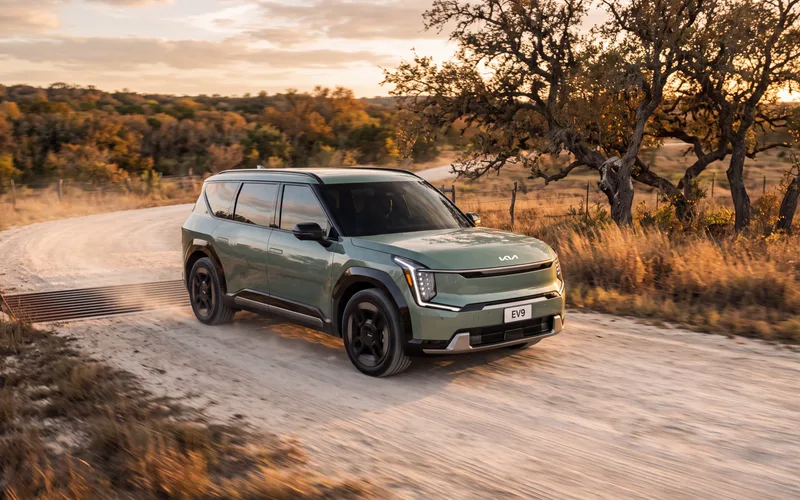 Kia EV9Mid-Size SUVBetter at: Maneuverability
The mechanical twin with the same 800-volt charging and three-row layout, usually at a lower transaction price and with a tighter turning circle for city parking.
Compare 3.03B
3.03B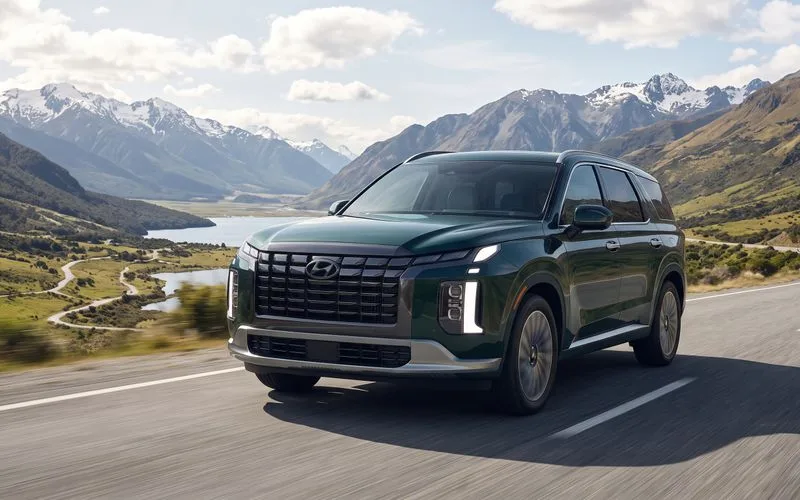 Hyundai PalisadeMid-Size SUVBetter at: Resale value
Same brand, same family mission, roughly $20,000 cheaper, and it refuels in five minutes with far better resale — the sensible pick if you can't charge at home.
Compare 2.80B-
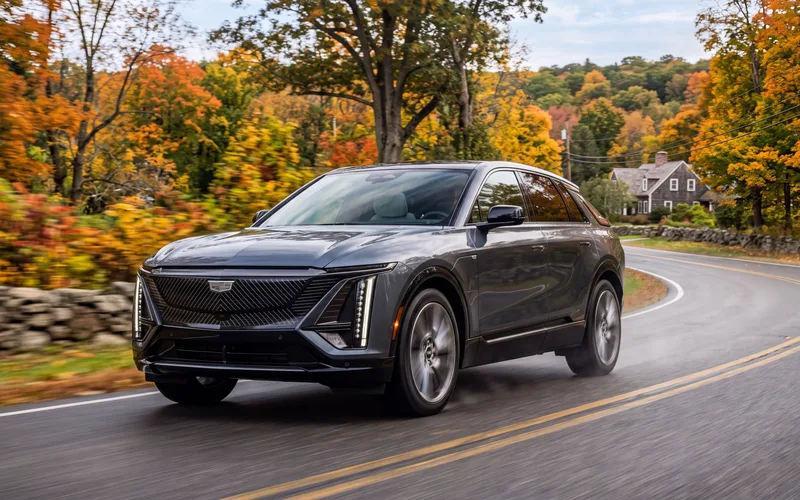 Cadillac VistiqMid-Size Luxury SUVBetter at: Driving feel
A more polished, better-steering three-row EV with a premium badge for buyers willing to pay up for prestige and driving feel.
CompareProduction history
Best fit & conditions
Higher scores mean a better fit for that use case. Learn more about use-case fit →
Subject profile
Academic Probation · NHTSA safety recalls
Sep 11, 2026Seats: mid/rear assembly: power adjustThe second-row power seats may fail to detect a person. As a result, the seats may continue to move after contacting a person during powered seat functions, such as automatic power fold-and-stow.
Defect
Hyundai Motor America (Hyundai) is recalling certain 2026 Ioniq 9 vehicles equipped with a Limited, Calligraphy, or Calligraphy Design trim package. The second-row power seats may fail to detect a person. As a result, the seats may continue to move after contacting a person during powered seat functions, such as automatic power fold-and-stow.
Risk
A person, especially a child, may become trapped by a rear powered seat, increasing the risk of injury.
Remedy
Owners are advised to exercise caution when operating the second-row power seat functions until the repair is performed. Children are advised not to be in the rear seats or near the rear seating area during power-folding operation. The seat software will be inspected and updated over-the-air (OTA) or by a dealer, as necessary, free of charge. Owner notification letters are expected to be mailed October 1, 2026. Owners may contact Hyundai customer service at 1-855-371-9460. Hyundai's number for this recall is 307. Vehicle Identification Numbers (VINs) involved in this recall became searchable on NHTSA.gov on September 12, 2026.
NHTSA campaign 26V588000 ↗Manufacturer no. 3075,360 vehicles potentially affected (all models in the campaign)Owners notified Oct 1, 2026Filed by Hyundai Motor AmericaFiled as IONIQ 9May 18, 2026Suspension: critical fastenersThe fasteners for the rear suspension may loosen and detach, which can result in a loss of vehicle control.
Defect
Hyundai Motor America (Hyundai) is recalling certain 2025 Ioniq 5 and 2026 Ioniq 9 vehicles. The fasteners for the rear suspension may loosen and detach, which can result in a loss of vehicle control.
Risk
A loss of vehicle control increases the risk of a crash.
Remedy
Dealers will inspect and replace the rear suspension fasteners and perform a rear vehicle alignment, as necessary, free of charge. Owner notification letters are expected to be mailed July 17, 2026. Owners may contact Hyundai customer service at 1-855-371-9460. Hyundai's number for this recall is 303. Vehicle Identification Numbers (VINs) involved in this recall became searchable on NHTSA.gov on May 20, 2026.
NHTSA campaign 26V314000 ↗Manufacturer no. 303172 vehicles potentially affected (all models in the campaign)Owners notified Jul 16, 2026Filed by Hyundai Motor AmericaFiled as IONIQ 9Feb 5, 2026Electrical system: propulsion system: traction batteryThe high voltage battery system may contain an improperly tightened bus bar, which can cause a short-circuit.
Defect
Hyundai Motor America (Hyundai) is recalling certain 2025-2026 IONIQ 5 and 2026 IONIQ 9 vehicles. The high voltage battery system may contain an improperly tightened bus bar, which can cause a short-circuit.
Risk
An electrical short in the high voltage battery system increases the risk of a fire.
Remedy
Dealers will inspect and tighten the bus bar retention bolts and replace the battery system assembly, as necessary, free of charge. Owner notification letters were mailed April 3, 2026. Owners may contact Hyundai customer service at 1-855-371-9460. Hyundai's number for this recall is 294. Vehicle Identification Numbers (VINs) involved in this recall became searchable on NHTSA.gov on February 7, 2026.
NHTSA campaign 26V068000 ↗Manufacturer no. 29427 vehicles potentially affected (all models in the campaign)Owners notified Apr 3, 2026Filed by Hyundai Motor AmericaFiled as IONIQ 9
Source: NHTSA Office of Defects Investigation recall database, model years 2026. Recalls are listed by model year as the manufacturer filed them; whether a specific car is affected depends on its VIN — check a VIN at nhtsa.gov ↗. NHTSA model names matched to this page: IONIQ 9.
Detailed scoring by subject
1Performance & PowertrainOne of the Ioniq 9's weakest categories.2.03C
Scored on the volume dual-motor Long Range AWD configuration shared by the SE and SEL trims, which pairs the 110.3 kWh pack with 303 hp; the base S RWD makes 215 hp and the Performance AWD trims (Limited, Calligraphy, Calligraphy Design) make 422 hp.
The volume 303 hp dual-motor AWD setup produces 446 lb-ft, delivered instantly off the line as is typical for a dual-motor EV — strong for a mid-size three-row SUV.
The 303 hp AWD volume configuration runs 0–60 in about 6.2 seconds, and Consumer Reports' instrumented road test of an SEL AWD returned roughly 6.0 seconds — quick for a 6,000-lb three-row family hauler without being a performance claim.
As a dual-motor EV there is no lag, no shift shock and no combustion coarseness; reviewers consistently describe the delivery as instant, seamless and near-silent, helped by triple-sealed glass and active noise cancellation. It loses a little to the very best only because the base RWD car is merely adequate rather than effortless.
Single-speed reduction gearing means no hunting or drone at all, and Hyundai's paddle-adjustable regen plus i-Pedal one-pedal mode (with a new dynamic setting that adapts to driving habits) is graded well and brings the car to a smooth, predictable full stop.
AWD Ioniq 9s are rated at 5,000 lbs when fitted with the factory tow package, with RWD limited to 3,500 lbs — a genuinely useful rating for the class, though towing costs an EV a large share of its range.
Dual-motor e-AWD is standard on five of the six US trims (everything above the base S RWD), with instant electronic torque split, a disconnect actuator that drops the front motor for efficiency, and Snow/Eco/Normal/Sport modes. It stops short of the top band only for lacking low-range or true off-road terrain programming.
6.9 inches of ground clearance, low-rolling-resistance tires, a full 3D underbody aero cover and no skid plates, lockers or low range make this a pavement-and-forest-road vehicle; there is no off-road trim and the battery pack limits breakover.
One powertrain type only — battery-electric, with the same 110.3 kWh pack throughout. Buyers do get three meaningfully distinct output/drive configurations (215 hp RWD, 303 hp AWD, 422 hp Performance AWD), which is more choice than most single-fuel EVs offer, but there is no gas, hybrid or PHEV alternative.
2Efficiency & RangeGrades above the middle of the scale.3.11B
The volume SEL AWD dual-motor rates 88 MPGe combined — 38 kWh/100 mi — which lands in the lower third of the band EV SUVs are normalized against. A ~5,700-lb three-row body is simply not an efficient shape, and the Ioniq 9 pays for its size against leaner EV SUVs, not against gas ones. Re-verified against fueleconomy.gov this run; unchanged.
City is the Ioniq 9's best EPA figure — regenerative braking recovers most of what a three-row SUV wastes in stop-and-go. Against the city band for EV SUVs it still sits low, because mass dominates city consumption and this is one of the heaviest EVs in the class.
Highway MPGe falls 20 points below city despite an 'Aerosthetic' 0.259 Cd — frontal area, not drag coefficient, is what a three-row EV pays for at speed, and it scores in the bottom quarter of the EV SUV highway band. This is the item that most limits the Ioniq 9's efficiency grade.
A 110.3-kWh pack — the largest Hyundai has fitted to a passenger EV — buys 320 miles in the volume SEL AWD, comfortably mid-pack in the EV SUV range band and well ahead of the Kia EV9 it shares an E-GMP platform with. Range is bought with battery here rather than earned with efficiency, which is why this item scores far better than the MPGe items above it.
Hyundai quotes a 257-kW peak acceptance rate on the 800-volt system — near the top of the 70–320 kW band and among the highest in any three-row EV. The figure is the vehicle's acceptance, not the '350 kW charger' Hyundai's marketing copy cites; independent tests measure 235–243 kW, and the curve is unusual in that it climbs toward its peak near 60% SoC rather than tapering from the start.
24 minutes to add 70% of a 110.3-kWh pack is genuinely quick — an independent test beat the claim at 23:19 — and sits in the top quarter of the 17–45 min band. The qualifier that matters for a road-trip family SUV is network: on a 400V Tesla Supercharger the same 10–80% takes about 40 minutes, so the quoted figure only holds on native 800V hardware.
EPA's own published annual energy cost for the AWD is $850 at 15,000 mi/yr — a good result against the EV SUV energy-cost band, and roughly a third of what a comparable gas three-row burns. Re-confirmed directly from fueleconomy.gov this run at the same figure.
No gasoline of any grade, and the home-charging story is close to best case: a 10.9-kW onboard charger refills the big pack in roughly 10 hours on a 240V/48A circuit, and a native NACS port opens the Supercharger network with a CCS adapter included — so both major networks are reachable without buying a second adapter. Held just short of the top of the band because the 800V pack is throttled to roughly half its power on 400V Superchargers, the $850/yr EPA cost assumes home charging (a buyer living on public DC would pay two to three times that), and V2L is gated to Limited and above.
3SafetyThe Ioniq 9's best-graded category.3.84A
NHTSA awarded the 2026 Ioniq 9 its maximum 5-star overall rating, the top of the 3–5 star SUV band.
The Ioniq 9 is a 2026 IIHS TOP SAFETY PICK+ under the tightened 2026 criteria, with Good ratings in small overlap front, the updated moderate overlap front (which now grades rear-passenger protection), and the updated side test. Held back from the very top only because headlights and pedestrian front crash prevention are certified as 'acceptable or good' rather than uniformly Good.
Every trim from the base S up carries the full suite — forward collision-avoidance with pedestrian, cyclist and junction-turning detection, lane keeping and lane following, blind-spot collision-avoidance, rear cross-traffic collision-avoidance, stop-and-go adaptive cruise with navigation-based curve control, driver attention warning, high beam assist and safe exit alerts — plus Highway Driving Assist 2, which most rivals reserve for upper trims.
Clears the stringent 2026 IIHS front crash prevention requirement, avoiding or substantially mitigating impacts with vehicles, pedestrians and cyclists in both day and night runs — but IIHS certifies the pedestrian result as 'acceptable or good' rather than confirming Good across the board, so it sits below a clean sweep.
Blind-Spot Collision-Avoidance Assist and Rear Cross-Traffic Collision-Avoidance Assist are standard on every trim and intervene rather than merely warn, and Safe Exit Assist guards against door-opening into traffic; the camera-based Blind-Spot View Monitor arrives at SEL, one step up from base.
HDA 2 layers HD-map-based lane centering over standard lane keeping and adds signal-initiated automated lane changes; testers describe the centering as steady and confident through sharp curves and faded markings rather than ping-ponging.
Full-speed-range stop-and-go ACC with navigation-based curve control and integrated HDA 2 highway assist, standard on every trim — a genuinely refined package, docked for a consistent reviewer complaint that it brakes late for slowing traffic and is sluggish to resume speed.
No hands-free option in the US market. HDA 2 is capable but explicitly hands-on — the system nags to put hands back on the wheel after a few seconds — so it does not compete with BlueCruise or Super Cruise, and Hyundai's hands-off Highway Driving Pilot is not offered on the Ioniq 9.
IIHS certifies acceptable-or-good headlights as standard equipment across the range — enough to clear the 2026 TSP+ bar — and High Beam Assist is standard on all trims, but a uniform Good rating on the volume trims is not confirmed, which keeps it just under the top band.
The aerodynamic 'Aerosthetic' body costs real rearward sightlines, and the view worsens with third-row heads in place; camera hardware compensates well from SEL up (standard surround-view and Blind-Spot View Monitor, digital rearview mirror on Calligraphy), but the base S and SE go without and the backup camera image is criticized as over-zoomed.
Unusually good for a three-row: exposed, clearly marked lower anchors in both the second and third rows with accessible top tethers, wide door openings and enough second-row travel that third-row access survives an installed car seat. Only real gripe is fighting the third-row head restraints during installation.
4Space & ComfortGrades above the middle of the scale.3.30B+
The volume S/SE/SEL trims seat seven via a second-row bench; the upper Limited and Calligraphy trims trade one seat for power captain's chairs and seat six.
The flat-floor E-GMP packaging and 70.5-inch roofline give the first row an unusually tall 41.5 inches of headroom, near the top of the SUV band; the optional panoramic roof costs two inches.
Front legroom of 41.4 inches is merely adequate for a 199-inch three-row SUV — Hyundai spent the 123.2-inch wheelbase on the second and third rows rather than the front.
At 41.0 inches the second row clears the top of the SUV normalization band outright, a direct benefit of the flat EV floor and boxy roofline.
Second-row legroom of 42.8 inches exceeds the top of the SUV band and beats the front row — limousine-grade space that reviewers single out as the Ioniq 9's signature.
32 inches of third-row legroom with 39.7 inches of headroom, wide-opening rear doors and one-touch second-row walk-in make this genuinely adult-tolerable for short trips and easy for kids; the low seat cushion gives adults little under-thigh support, which keeps it out of the top band.
With the third row folded the Ioniq 9 offers 46.7 cubic feet — mid-pack for a three-row SUV, since the tall battery floor and raked tailgate limit depth; the 21.9 cu ft available behind all three rows is unusually good for the class.
86.9 cubic feet with everything folded is a strong result and lands flat thanks to the EV floor, though a body-on-frame full-size SUV still beats it.
The sliding Universal Island 2.0 console, front-row walk-through flat floor, frunk and vehicle-to-load power outlets are genuine storage innovation; the score is held just below the top of the band because the sliding console is reserved for Limited and above rather than the volume trims.
Reclining 'Relaxation' front seats, power second-row captain's chairs with leg rests and wing headrests, and available massage function draw consistent praise for long-haul comfort in the first two rows; the flat, low third-row cushion is the one weak spot.
The 6,000-lb-plus curb weight, long 123.2-inch wheelbase and self-leveling-tuned suspension produce a ride reviewers describe as absorbing even large bumps without harshness or float — among the best in the three-row EV class.
A 0.259 Cd body, acoustic laminated glass and active noise control on top of an already silent EV powertrain make this one of the quietest cabins at any price, let alone in the mainstream three-row segment.
Heated front seats and a heated steering wheel are standard on every trim, ventilated fronts arrive at the volume SEL, and Limited adds heated and ventilated second-row seats — plus tri-zone climate, third-row vents and remote preconditioning through Bluelink.
5Cost of OwnershipThe Ioniq 9's lowest-graded category.0.00F
Entry S RWD opens at $58,955 plus the $1,600 freight charge, putting the cheapest Ioniq 9 just over $60K — high against the SUV band because this is a premium three-row EV, not a mainstream mid-size SUV.
SEL AWD is the mid-lineup trim that dominates dealer inventory and is the configuration most shoppers land on — $66,320 plus $1,600 destination. At $67,920 it sits at the very top of the SUV price band.
KBB's 5-year cost-to-own projection for this exact model year; high for an EV because the Ioniq 9 carries big 20–21-inch tires, heavy-vehicle brake and suspension wear, and premium-tier dealer service labor even though it needs no oil changes.
Projected retention is the Ioniq 9's worst ownership metric — below the bottom of the SUV band. Three-row EV residuals were hit hard by the September 2025 expiry of the $7,500 federal credit, which reset new-EV transaction prices and dragged forecast used values with them.
Hyundai's 5-year/60,000-mile New Vehicle Limited Warranty is best-in-class among mainstream brands and tops the framework band outright.
Hyundai's 10-year/100,000-mile powertrain coverage extends to the drive motors and the 110.3 kWh high-voltage battery for the original owner — the strongest coverage available in the segment and a maximum-band score.
2026 is the year Hyundai killed its 3-year/36,000-mile Complimentary Maintenance program, so the Ioniq 9 includes no free scheduled service — a real year-specific downgrade versus a 2025 Hyundai. What remains is still substantive: 5 yr/unlimited-mile roadside assistance, complimentary Bluelink+ connected services for new-vehicle buyers, a free ChargePoint Home Flex Level 2 charger or $400 charging credit, and a native NACS port with a CCS adapter included.
$67,920 volume-trim price minus its estimated resale value after 5 years (37.7% retained, or about $25,606) leaves about $42,314 in depreciation. Add the projected $7,148 in 5-year maintenance and repairs, and owning this vehicle for 5 years costs about $49,462 in total.
6Reliability & QualityOne of the Ioniq 9's weakest categories.1.94C-
Consumer Reports predicts the 2026 Ioniq 9 will be less reliable than the average new car — extrapolated from other Hyundai/Kia/Genesis E-GMP EVs — and declines to recommend it despite a very high road-test score. Only its second model year on sale, with no owner-survey history of its own.
Hyundai is a solid upper-middle brand rather than a top-5 one: 8th in Consumer Reports' 2026 Brand Report Card and roughly industry-average in the 2026 J.D. Power VDS, with genuinely strong initial quality. The brand's weak spot is precisely its EV line, which is what the Ioniq 9 belongs to.
Two launch-year NHTSA campaigns, and neither is trivial: an improperly tightened high-voltage battery bus bar that can short-circuit and cause a fire, and rear suspension fasteners that can loosen and detach with loss-of-control risk. Both are workmanship defects on limited build windows with free remedies rather than systemic design faults, which keeps this off the floor of the band.
The E-GMP motors and 110.3 kWh NCM pack are a known, broadly durable family, but the ICCU is an unresolved black mark across Hyundai/Kia/Genesis EVs — 12V charging failures that can immobilize the car, two recalls that didn't fully fix it, and an active class action alleging replacement units are also defective. The Ioniq 9 ships a second-generation ICCU said to carry the corrective hardware; that is plausible but unproven in the field.
Class-leading for a mainstream badge — soft-touch upper dash, suede-like headliner, convincing H-Tex synthetic leather (Nappa higher up), and switchgear reviewers repeatedly describe as near-luxury. Only demerit is firmer plastic low on the door cards where a Genesis would be padded.
Reviewers consistently report tight, well-integrated assembly and a rattle-free cabin, and Hyundai's initial-quality standing is strong. Held below the top band because the rear-suspension recall is itself a factory torque error on early Metaplant America production — an assembly-consistency miss at launch.
Hyundai runs a dense nationwide dealer network with service satisfaction around the mass-market norm, so ordinary work is easy to get done. Marked down because EV-specific service depth is uneven store to store and ICCU replacement backlogs have left Ioniq owners waiting on parts and diagnosis.
Routine upkeep is cheap in EV fashion — no oil, plugs or exhaust — and warranty coverage is unusually deep. But collision and electrical repair lean on dealer-only OEM parts with effectively no aftermarket, and high-voltage components including the ICCU have been in short supply, so an out-of-warranty or body repair is slow and expensive.
7Technology & InfotainmentOne of the Ioniq 9's strongest categories.3.70A
The Ioniq 9 uses Hyundai's panoramic curved display — a 12.3-inch center touchscreen under one glass panel with a 12.3-inch instrument cluster — standard from the base S through Calligraphy Design, with no smaller base unit and no optional upsize. Mid-pack for a 2026 three-row now that Kia's EV9 and several rivals field larger or wider panels.
The Ioniq 9 launches on Hyundai's current ccNC software and is repeatedly singled out by reviewers as one of the easier three-row EV systems to live with: sensible menu structure, physical shortcut keys below the screen, and — unlike EVs that bury wipers and mirrors in menus — a retained control panel for climate and volume. Held just inside the top band rather than higher because several of the climate 'buttons' are capacitive rather than true switches and are awkward to hit on the move.
Wireless Apple CarPlay and Android Auto are standard across the entire 2026 lineup including the base S, alongside wired USB-C connection and standard wireless device charging to keep the phone topped up while projecting. Short of the ceiling only because projection runs windowed on the 12.3-inch panel rather than using the full width of the curved display.
Native navigation is standard on every trim — including the base S — and is EV-aware, with charger search, range-aware routing and battery preconditioning when a DC fast charger is set as the destination, which is exactly the integration that stops owners defaulting to phone maps. Dynamic Voice Recognition backed by Hyundai's AI assistant handles conversational climate, destination and media requests. Kept below 90 because the assistant still handles compound requests poorly and cloud-dependent queries lag.
The premium option is a genuine one — a 14-speaker Bose system with 5.1-channel surround, CenterPoint 360 processing and e-Active sound design on Limited and both Calligraphy trims — and the base setup is an eight-speaker system rather than the four- or six-speaker afterthought common at the bottom of a range. Not higher because that Bose system is gated to the upper half of the lineup, so the volume SEL buyer does not get it.
A 12.3-inch full-digital cluster is standard on every trim with no analog fallback anywhere in the range, sharing the curved glass panel with the touchscreen, crisply rendered and configurable, and it doubles as the display for the Blind-Spot View Monitor camera feed on SEL and above.
Whole-vehicle over-the-air updates are standard on every trim through Bluelink — Hyundai pushes software to infotainment, maps, the cluster and vehicle control units, and the Bluelink Store now delivers downloadable in-car features such as display themes over the air to US cars already in customer hands. Placed at the lower end of the top band because the release cadence is slower and less feature-additive than Tesla's or Rivian's.
Bluelink+ carries no recurring core subscription fee for the original owner for as long as they own the car, which is a materially better ownership deal than the paid connected tiers most rivals charge for, and it covers remote climate preconditioning, lock/unlock, vehicle finder, remote start and EV charge scheduling and limits. Digital Key 2 adds NFC/UWB phone-as-key with shareable credentials. Short of the very top because the app can be slow to wake the car and offers less telemetry depth than Tesla's or Rivian's.
Seven USB-C ports — three up front, two in the second row and two in the third — means even third-row passengers are properly served, which is rare in a three-row at any price. Wireless phone charging is standard from the base S rather than trim-gated, and Vehicle-to-Load adds a real 1.5 kW household outlet in the cargo area plus an exterior V2L adapter that turns the charge port into an outlet. That is the top band on both port count and household power.
Proximity entry with push-button start is standard across the range, Digital Key 2 makes a phone or smartwatch the key and can be shared with other drivers, and the hands-free smart power liftgate opens on key detection. Calligraphy adds Remote Smart Parking Assist 2, which moves the car into or out of a tight space from outside on the fob. Kept below the ceiling because phone-as-key and the hands-free liftgate are not standard at the very bottom of the lineup.
The Surround View Monitor arrives at SEL — the volume trim — rather than being a top-trim exclusive, and comes bundled with Blind-Spot View Monitor, forward/reverse/side Parking Distance Warning and reverse parking collision-avoidance assist. Calligraphy layers on a full-display digital rearview mirror and RSPA 2 self-parking. Held just under the top band because the base S and SE make do with the rear camera alone, and the genuinely automated parking is a top-trim item.
Hyundai's augmented-reality head-up display, which overlays navigation and lane-keeping graphics onto the road ahead, is one of the better implementations at any price — but on the Ioniq 9 it starts at Limited, so S, SE and the volume SEL buyer cannot get it at any cost. Top of the 'limited to top trims' band on quality, excluded from the top band on availability.
8Use-Case FitGrades above the middle of the scale.3.04B
E-GMP flat floor, tall door openings and a sliding/reclining second row make three-across and rear-facing seats easy, and 21.9 cu ft behind the third row swallows a stroller with all seven seats occupied — a genuine benchmark for the class. Full LATCH hardware in both second-row outboard positions and the third row is unusually complete.
Top credentials on the trim families actually buy: IIHS 2026 TOP SAFETY PICK+ with Good ratings across the updated moderate-overlap and side tests, NHTSA 5-star overall, and the full SmartSense suite including Highway Driving Assist 2 standard from the base S rather than locked behind a package.
Adult-usable third row with power recline, quiet acoustic-glass cabin and 21.9 cu ft of luggage space with every seat in use — the combination most three-row rivals force you to choose between. Reviewers repeatedly rate the way-back better than some minivans.
Instant, seamless EV torque, selectable i-Pedal one-pedal regen and standard HDA 2 lane centering make stop-and-go undemanding, and the cabin stays quiet. It loses ground only to its own mass — nearly three tons means the body can float and oscillate over broken pavement.
92 MPGe combined for the RWD S and 88 MPGe for the volume AWD trims is strong for a three-row EV, and home charging plus no oil changes or exhaust work puts per-mile running cost far below any gas SUV this size. It is not exceptional against smaller EVs, and 5,900 lb of curb weight makes tires a real consumable.
199.2 inches long on a 123.2-inch wheelbase with a 41.0-ft turning circle is a full-size footprint that will not disappear in a city garage. Standard surround-view and blind-spot-view cameras plus front/rear/side park distance warning keep it manageable rather than easy.
5,000 lb of tow rating across the lineup is competitive for a three-row EV and enough for a mid-size trailer or boat, and 86.9 cu ft of enclosed cargo helps. But there is no bed, payload is modest for the mass, and towing near capacity roughly halves usable range — a real constraint on any work day that involves distance.
A first-year nameplate with no fleet or hard-use track record, already carrying two NHTSA recalls and a below-average predicted-reliability forecast from Consumer Reports based on other Hyundai/Kia/Genesis EVs. The plush, carpeted interior is aimed at families, not abuse.
1.5 kW V2L through a 110V outlet is a legitimate jobsite feature — it will run tools or a compressor off the 110.3 kWh pack — and roof rails, cargo tie-downs, underfloor storage and a frunk add practical touchpoints. There is no upfit ecosystem, no washable surfaces and no bed access to speak of.
Every trim clears 300 miles of EPA range, the 800V architecture recharges 10–80% in about 24 minutes on a 350 kW station, and the factory NACS port opens the Supercharger network without an adapter. Quiet cabin, relaxation seats and HDA 2 cut fatigue; the caveat is that 400V Superchargers cap it near 126 kW, stretching a stop to about 40 minutes.
AWD trims, 5,000 lb of tow rating for toys, roof rails and 1.5 kW V2L for camp power make it a capable trailhead and campground vehicle. Ground clearance of 6.9 inches, low-rolling-resistance tires and an aero-optimized underbody keep it on gravel roads rather than trails, and remote fast charging remains the planning constraint.
21.9 / 46.7 / 86.9 cu ft is among the most usable cargo ladders in the three-row class, and the flat E-GMP floor, power-folding third row, underfloor bin, frunk, roof rails and hitch availability cover bulky gear well. Only the small frunk and the absence of a true van-like load height hold it back.
9Driving ExperienceMid-pack among this car's ten categories.2.65C+
The E-GMP skateboard's floor-mounted 110.3 kWh pack gives the Ioniq 9 a low center of gravity that masks its roughly 6,000 lb curb weight, and reviewers consistently note it corners securely and 'feels smaller than it is' — but it is tuned for calm, not agility, with some float and body motion over rougher pavement. Comfortably mid-pack for a three-row EV: a step above the softer Kia EV9 tune in composure, well short of the sharper Cadillac Lyriq/Vistiq.
Accurate enough to place the car confidently but essentially devoid of feedback, with light off-center weighting that only firms artificially in Sport mode. Multiple reviewers flagged steering calibration as an area Hyundai should improve, which puts it below the segment's better electric racks.
Stopping distances are respectable rather than short given the mass, but the standout is regen blending: the paddle-adjustable system including full-stop i-Pedal hands off to the friction brakes with unusual transparency, which is the failure mode most heavy EVs suffer from. Confident pedal, no fade complaints in testing.
A dual-motor EV with no shifts, no stop/start and no transitions to bungle, and Hyundai's tip-in calibration is progressive rather than the on/off torque hit some EVs deliver. Performance AWD's sub-5-second 0–60 makes it effortlessly quick in traffic; only the absence of any drama keeps it out of the top band.
Near-silent under load, and Hyundai spent real money on isolation rather than relying on the EV powertrain alone — acoustic laminated glass, foam-lined tires and active noise cancellation. No driveline vibration path through the controls to speak of.
41.0 ft curb-to-curb across the US lineup — near the bottom of the SUV normalization band and a genuine weak point in parking structures, a consequence of the 122.0 in wheelbase and wide tires. Notably worse than the platform-adjacent Kia EV9.
Large glass area and a commanding seating position give good outward sightlines, and the Universal Island 2.0 console slides up to 7.5 in to open a front walk-through — a genuinely clever packaging idea. Held back by real, repeatedly reported niggles: the rim blocks part of the instrument display at low tilt settings, armrests are hard, and rear vision closes up with the third row occupied.
Genuinely fast in a straight line and pleasant to cover ground in, but the Ioniq 9 was engineered as a serene family hauler and behaves like one — no steering feedback, no sound, no appetite for a back road. Pleasant and forgettable rather than something an enthusiast seeks out.
10Value & Market PositionOne of the Ioniq 9's strongest categories.3.55A-
Every trim — including the $58,955 base S — gets the full 110.3 kWh pack, 800V architecture, dual 12.3-inch displays, V2L and the full SmartSense ADAS suite, which is unusually generous since most EV rivals reserve the big battery for upper trims. It falls short of loaded, though: the S is cloth-trimmed, 215-hp RWD, and Highway Driving Assist and ventilated seats don't arrive until SEL.
At $60,555 delivered for 335 miles of EPA range, 350 kW charging and a genuinely premium three-row cabin, it undercuts every other credible three-row EV (EX90, Vistiq, R1S) on content per dollar and matches its EV9 sibling. Value is capped by the absolute price now that the $7,500 federal credit is gone, and by KBB projecting roughly $39K of depreciation in five years on the base car.
Six US trims (S, SE, SEL, Limited, Calligraphy, Calligraphy Design) spanning roughly $59K to $76.5K, three powertrains (RWD, AWD, Performance AWD) and both six- and seven-seat layouts — one of the widest ladders in the electric SUV class. Only real gap is the absence of a smaller, cheaper battery to open a lower price point.
The trajectory is excellent — 4,858 US sales in the first half of 2026, up 380% year over year, with May alone at 1,145 units — but the absolute volume is still modest, running near a 10,000-per-year pace against 20,000-plus for its own Ioniq 5 in the same half. Solid acceptance for a $60K three-row EV, not a segment sales force.
Hyundai carries strong mainstream equity, an award-magnet Ioniq EV sub-brand and a warranty halo, and building the car at Metaplant America in Georgia helps its standing with US buyers. It is not an aspirational badge in the way a Cadillac or Rivian is, and Consumer Reports' below-average predicted reliability call takes some shine off.
Buyer-side support is about as strong as it gets: roughly $13,000 in lease cash on most trims, up to $10,000 cash back on a purchase, and 0% APR with a financing bonus up to $3,000. Crucially this is all manufacturer money — the federal credit expired in September 2025 — so the discount is real rather than a subsidy pass-through.
2026 is effectively the launch model year for the US-market Ioniq 9 — the nameplate was unveiled in November 2024, entered North American sales in May 2025, and is in its first generation on Hyundai's current E-GMP 800V architecture. There is no redesign risk on the horizon for a buyer.
Reviews are near the top of the class — 9.2/10 and #2 among electric SUVs at U.S. News plus its 2026 Best Midsize Electric SUV for Families award, 8.4/10 from Edmunds, first place in MotorTrend's segment rankings, and Wards 10 Best Interiors recognition. It stops short of the top band because Consumer Reports declines to recommend it on predicted reliability despite a strong road-test result, and it hasn't taken a headline NACTOY or 10Best trophy.