

The verdict
A mixed-report compact luxury suv, strong on safety and held back by ownership.
The 2025 Infiniti QX50 is a comfortable, quiet, safety-rich compact luxury SUV that has simply been left behind by the class. It earns a 5-star NHTSA overall rating with ProPILOT Assist standard on every trim, and its sliding rear bench delivers 38.7 inches of rear legroom that shames most rivals — but the 268-hp VC-Turbo four-cylinder is tied to a droning CVT, the dual 8.0-inch/7.0-inch screens are a generation behind, and 25 MPG combined on required premium fuel costs about $2,750 a year to feed. The nameplate is being discontinued after 2026, which means aggressive discounts today and roughly 45% resale retention in five years — about $34,200 of your money gone over that stretch. Buy it for the deal and the quiet cabin, not because it beats a Lexus NX or Genesis GV70 on merit.
Jump to scoresStrengths
- Safety gear is standard, not an upsell
- Back-seat room that embarrasses bigger SUVs
- A genuinely nice place to sit
What holds it back
- The CVT undoes the clever engine
- Premium fuel for mainstream mileage
- Steep depreciation, no free maintenance
Top alternatives
Cars shoppers cross-shop with the Infiniti QX50 2.63C+
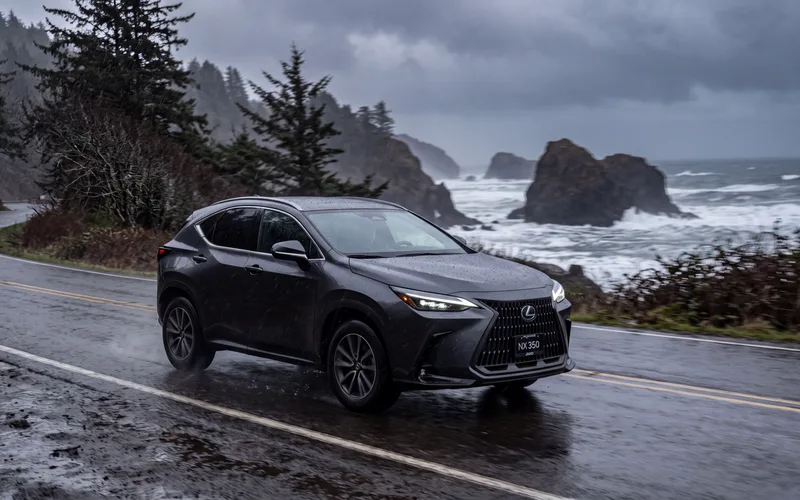 Lexus NXCompact Luxury SUVBetter at: Efficiency and resale
Hybrid and plug-in versions cut fuel spending roughly in half on regular gas, and Lexus resale turns the same purchase price into a far cheaper five years.
Compare 2.69C+
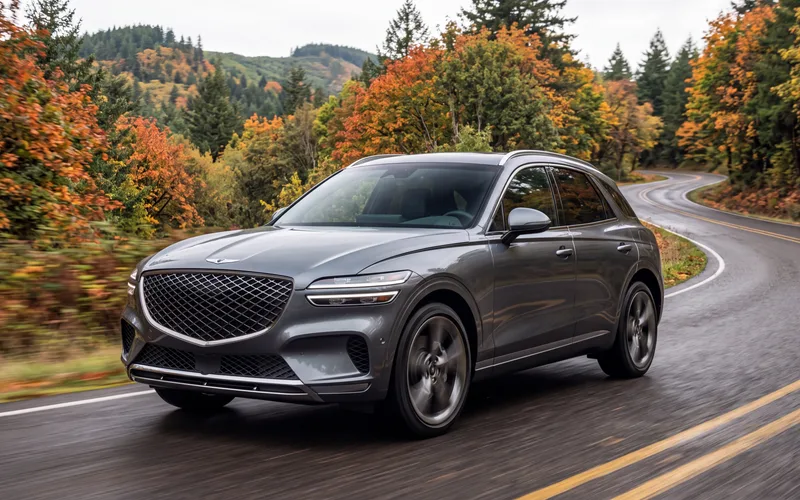 Genesis GV70Compact Luxury SUVBetter at: Warranty and value
More power, a real automatic, better cabin tech, and a 10-year/100,000-mile powertrain warranty with free scheduled maintenance for similar money.
Compare 2.46C+
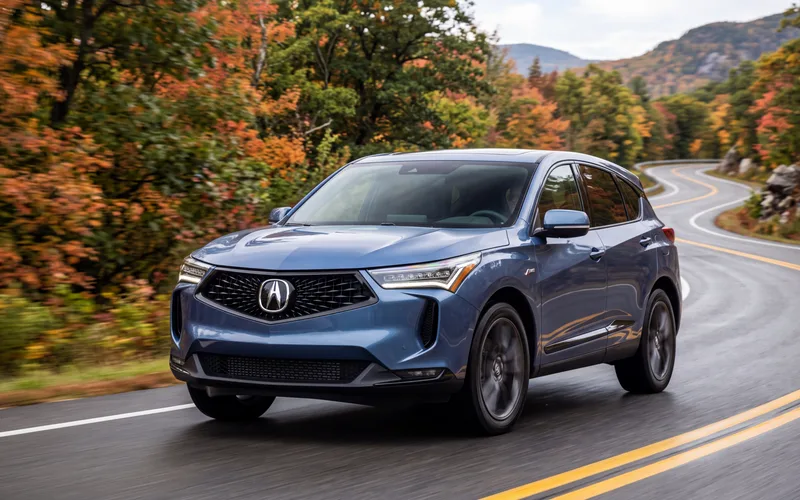 Acura RDXCompact Luxury SUVBetter at: Driving feel
A 10-speed automatic and sharper chassis fix the QX50's biggest flaw — the droning CVT — without giving up standard safety content.
CompareProduction history
Best fit & conditions
Higher scores mean a better fit for that use case. Learn more about use-case fit →
Subject profile
Academic Probation · NHTSA safety recalls
No NHTSA safety recall is on record for the 2025 Infiniti QX50. Other model years of the QX50 have 7 — listed below.
7 recalls on other model years of the QX50 (2019–2024)
Jun 27, 2025Engine and engine cooling: engine: hard parts internal/mechanicalThe engine bearings may have manufacturing defects that can lead to engine failure.
Defect
Nissan North America, Inc. (Nissan) is recalling certain 2021-2024 Rogue, 2019-2020 Altima, 2019-2022 Infiniti QX50, and 2022 Infiniti QX55 vehicles equipped with 3-cylinder 1.5L or 4-cylinder 2.0L variable compression turbo (VC-Turbo) engines. The engine bearings may have manufacturing defects that can lead to engine failure.
Risk
Engine failure increases the risk of a crash. A bearing failure may cause a breach in the engine block, allowing hot oil to be discharged, increasing the risk of an engine fire.
Remedy
Dealers will reprogram the engine control module (ECM) software, free of charge. Owner letters were mailed April 8, 2026. Owners may contact Nissan's customer service at 800-647-7261 or Infiniti's customer service at 1-800-662-6200. Nissan's numbers for this recall are R25A8/A9 and R25B1/B2.
NHTSA campaign 25V437000 ↗Manufacturer no. R25A8/A9 R25B1/B2/D1443,899 vehicles potentially affected (all models in the campaign)Owners notified Jan 26, 2026Filed by Nissan North America, Inc.Filed as QX50Feb 27, 2024Air bags: frontal: driver side: inflator moduleDue to a manufacturing issue, the driver's air bag inflator may absorb moisture, and cause the air bag to deploy improperly.
Defect
Nissan North America, Inc. (Nissan) is recalling certain 2024 Titan, Frontier, Infiniti QX60, Pathfinder, 2023-2024 Sentra, Versa, Kicks, Infiniti QX50, and 2023 Rogue vehicles. Due to a manufacturing issue, the driver's air bag inflator may absorb moisture, and cause the air bag to deploy improperly.
Risk
An air bag that deploys improperly may not protect the driver as intended during a crash, increasing the risk of injury.
Remedy
Dealers will replace the front driver's air bag assembly, free of charge. Owner notification letters were mailed April 10, 2024. Owners may contact Nissan customer service at 1-800-867-7669. Nissan's numbers for this recall are PD103, PD104, and PMA34.
NHTSA campaign 24V154000 ↗Manufacturer no. PD103, PD104, PMA34351 vehicles potentially affected (all models in the campaign)Owners notified Apr 10, 2024Filed by Nissan North America, Inc.Filed as QX50, REDUNDANT QX50Mar 20, 2023Latches/locks/linkages: doors: lockThe incorrect door latch may have been installed in the front right-side passenger door lock assembly, preventing the front right-side door lock from automatically locking.
Defect
Nissan North America, Inc. (Nissan) is recalling certain 2023 INFINITI QX55 and 2022 INFINITI QX50 vehicles. The incorrect door latch may have been installed in the front right-side passenger door lock assembly, preventing the front right-side door lock from automatically locking.
Risk
An unlocked door may unlatch and open during a crash, increasing the risk of injury.
Remedy
Dealers will replace the front right-side passenger door lock assembly, free of charge. Owner notification letters are expected to be mailed May 14, 2023. Owners may contact Nissan's customer service at 1-800-867-7669. Nissan's number for this recall is PC962.
NHTSA campaign 23V187000 ↗Manufacturer no. PC96248 vehicles potentially affected (all models in the campaign)Owners notified May 10, 2023Filed by Nissan North America, Inc.Filed as QX50May 27, 2021Steering: linkages: knuckle: spindle: arm · Suspension: rear: axle: spindleThe front steering knuckle or rear axle housing may have insufficient strength due to improper heat-treatment.
Defect
Nissan North America, Inc. (Nissan) is recalling certain 2020 Nissan Murano, INFINITI QX60, 2021 Nissan GT-R, INFINITI QX50, and Q50 vehicles. The front steering knuckle or rear axle housing may have insufficient strength due to improper heat-treatment.
Risk
The steering knuckle or rear axle could deform upon impact, such as from hitting a curb, resulting in a loss of steering control, or possible wheel separation. Both of these conditions can increase the risk of a crash.
Remedy
Dealers will inspect and replace the front steering knuckle and rear axle housing, as necessary, free of charge. Owner notification letters were mailed July 26, 2021. Nissan owners may contact customer service at 1-800-867-7669. INFINITI owners may contact customer service at 1-800-662-6200.
NHTSA campaign 21V402000 ↗14,276 vehicles potentially affected (all models in the campaign)Owners notified Jul 26, 2021Filed by Nissan North America, Inc.Filed as QX50Jan 26, 2021Equipment: other: labels · TiresThe text of the Tire and Loading Information placard, including the tire size and loading capacity, may be illegible. As such, these vehicles fail to comply with the requirements of Federal Motor Vehicle Safety Standard number 110, "Tire Selection and Rims."
Defect
Nissan North America, Inc. (INFINITI) is recalling certain 2020 INFINITI QX50 vehicles. The text of the Tire and Loading Information placard, including the tire size and loading capacity, may be illegible. As such, these vehicles fail to comply with the requirements of Federal Motor Vehicle Safety Standard number 110, "Tire Selection and Rims."
Risk
Illegible tire size or loading capacity information can lead to the incorrect sized tire being installed or its overloading, increasing the risk of a crash.
Remedy
INFINITI will notify owners, and dealers will inspect the legibility of and, as necessary, replaced the placard, free of charge. The recall began March 17, 2021. Owners may contact INFINITI customer service at 1-800-662-6200. Infiniti's number for this recall is PC788.
NHTSA campaign 21V025000 ↗Manufacturer no. PC7888,291 vehicles potentially affected (all models in the campaign)Owners notified Mar 17, 2021Filed by Nissan North America, Inc.Filed as QX50Sep 12, 2019Back over prevention: sensing system: cameraAdditionally included are 2019 Nissan GT-R and Taxi and Infiniti QX50, QX60, Q70, Q70L vehicles. The back-up camera and display settings can be adjusted such that the rear view image is no longer visible and the system will retain that setting the next time the vehicle is placed in reverse. As such, these vehicles fail to comply with the requirements of Federal Motor Vehicle Safety Standard (FMVSS) number 111, "Rear Visibility."
Defect
Nissan North America, Inc. (Nissan) is recalling certain 2018-2019 Nissan Altima, Armada, Frontier, Kicks, Leaf, Maxima, Murano, NV, NV200, Pathfinder, Rogue, Rogue Sport, Sentra, Titan, Titan Diesel, Versa Note and Versa Sedan vehicles, as well as Infiniti Q50, Q60, QX30 and QX80 vehicles. Additionally included are 2019 Nissan GT-R and Taxi and Infiniti QX50, QX60, Q70, Q70L vehicles. The back-up camera and display settings can be adjusted such that the rear view image is no longer visible and the system will retain that setting the next time the vehicle is placed in reverse. As such, these vehicles fail to comply with the requirements of Federal Motor Vehicle Safety Standard (FMVSS) number 111, "Rear Visibility."
Risk
The lack of an image in the back-up camera display increases the risk of a crash.
Remedy
Nissan will notify owners in phases, having dealers update the back-up camera settings software, free of charge. The recall began November 11, 2019 and all affected VINs should be activated. Owners may contact Nissan customer service at 1-800-867-7669 or INFINITI customer service at 1-800-662-6200.
NHTSA campaign 19V654000 ↗1,228,830 vehicles potentially affected (all models in the campaign)Owners notified Nov 11, 2019Filed by Nissan North America, Inc.Filed as QX50Sep 6, 2018Air bags: knee bolsterIn the event of a crash in very cold temperatures, the trim cover may separate unexpectedly from the passenger-side knee air bag module instead of splitting at the trim cover tear seam as designed.
Defect
Nissan North America, Inc. (Nissan) is recalling certain 2019 INFINITI QX50 vehicles. In the event of a crash in very cold temperatures, the trim cover may separate unexpectedly from the passenger-side knee air bag module instead of splitting at the trim cover tear seam as designed.
Risk
If the passenger-side knee air bag cover detaches during deployment, it can increase the risk of injury.
Remedy
INFINITI will notify owners, and retailers will replace the passenger-side knee air bag module, free of charge. The recall began October 23, 2018. Owners may contact INFINITI customer service at 1-800-662-6200.
NHTSA campaign 18V593000 ↗1,671 vehicles potentially affected (all models in the campaign)Owners notified Oct 23, 2018Filed by Nissan North America, Inc.Filed as QX50
Source: NHTSA Office of Defects Investigation recall database, model years 2017–2025. Recalls are listed by model year as the manufacturer filed them; whether a specific car is affected depends on its VIN — check a VIN at nhtsa.gov ↗. NHTSA model names matched to this page: QX50, REDUNDANT QX50.
Detailed scoring by subject
1Performance & PowertrainOne of the QX50's weakest categories.0.71F
Standard 2.0L VC-Turbo four-cylinder makes 268 hp across every trim; no higher-output variant offered for the send-off model year.
Peak torque of 280 lb-ft from the variable-compression 2.0L turbo; single powertrain across trims.
Manufacturer and independent instrumented tests place the AWD QX50 in the mid-6-second range; carryover for 2026.
The VC-Turbo's variable-compression trick delivers smooth mid-range shove but reviewers flag a coarse note under load and low-load turbo lag masked by the CVT — respectable but not class-leading against inline-sixes and hybrids in this segment.
The XTRONIC CVT is the QX50's most-criticized dynamic trait — recurring reviewer complaints about drone under acceleration, rubbery response, and a disconnected feel versus the 8- to 10-speed autos in Q5, X3, GV70, RDX, and XT5.
Rated for 3,000 lbs when properly equipped on AWD — modest for a compact luxury SUV; base FWD trims are not tow-rated by Infiniti.
Intelligent AWD is available across every trim (standard on Luxe, Sport, Sensory, Autograph; optional on Pure) with active front/rear torque distribution, but there is no low range, no terrain-select modes, and no torque-vectoring rear axle to push it into best-in-class territory.
Pavement-first compact luxury crossover — roughly 8.6 in ground clearance, no skid plates, no lockers, no terrain-select or hill-descent hardware, and no off-road trim variant.
One and only one powertrain: the 2.0L VC-Turbo gas I-4 with CVT. No hybrid, PHEV, or EV variant — a notable gap versus Q5, XC60, NX, RDX, GV70, and XT5 rivals that all offer at least one electrified option.
2Efficiency & RangeOne of the QX50's weakest categories.0.90F
EPA-rated 25 combined MPG across all trims of the QX50 AWD (all trims share the 268-hp VC-Turbo 2.0L I4 with CVT). Below segment norm for compact luxury SUVs, where hybrids and efficient turbo-fours reach 28-30 combined.
EPA-rated 22 MPG city. VC-Turbo 2.0L I4 with CVT — no hybrid assist means weaker city figures than segment leaders (Lexus NX Hybrid, Lincoln Corsair GT PHEV, Audi Q5 hybrid).
EPA-rated 28 MPG highway — modest for a compact luxury SUV given the VC-Turbo's variable-compression tech was meant to boost highway efficiency.
16.0-gallon tank × 25 combined MPG yields ~400 miles per fill-up. Middling for a gas-only compact luxury SUV.
EPA lists ~$2,750/yr fuel cost at 15,000 mi/yr — high because premium gasoline is required and combined efficiency is only 25 MPG. Meaningfully worse than hybrid-equipped compact luxury rivals ($1,500-$2,000/yr).
Infiniti requires premium unleaded gasoline (91 octane minimum) for the VC-Turbo 2.0L across all QX50 trims — 91 is required, not merely recommended, per the owner's manual. That adds ~$0.50/gal versus regular. No E85 or diesel option; no plug-in charging to offset fuel visits.
3SafetyThe QX50's best-graded category.3.06B
NHTSA awarded the current-generation QX50 a 5-star overall rating; the 2026 carries over unchanged, so the 2025 test result applies.
The QX50 is absent from IIHS's 2025/2026 Top Safety Pick lists (only the QX60 and QX80 earned Infiniti awards). Existing test results show mostly Good with some Acceptable ratings; the aging platform hasn't been re-evaluated against the newer updated moderate overlap and updated side tests.
ProPILOT Assist is standard on every trim (Pure/Luxe/Sport), bundling forward emergency braking with pedestrian detection, predictive forward collision warning, blind-spot warning, rear cross-traffic alert, rear automatic braking, lane departure warning, and adaptive cruise with stop-and-go.
Forward Emergency Braking with Pedestrian Detection is standard, but IIHS has not published Advanced/Superior front crash prevention results under the current pedestrian/nighttime protocols for the QX50. System is adequate but not tested to be class-leading.
Blind Spot Warning, Rear Cross Traffic Alert, and Rear Automatic Braking are standard across the range. Alert-only for BSW (no active intervention), but coverage is comprehensive for a compact luxury SUV.
ProPILOT Assist uses Direct Adaptive Steering plus camera-based lane centering. Reviewers describe it as functional and smooth on well-marked highways but less confident than newer BMW/Mercedes systems, with occasional wander.
ProPILOT Assist provides Intelligent Cruise Control with full-speed-range stop-and-go and integrated lane-centering steering assist; reviewers rate it as one of the more refined systems in the near-luxury tier.
The QX50 offers no true hands-free highway driving system — ProPILOT Assist is a hands-on lane-centering + ACC system. No BlueCruise/Super Cruise/FSD analog is available.
LED headlights with automatic high-beam assist are standard, but IIHS has not published Good ratings across trims for the current generation. Adaptive front lighting is limited to upper trims.
Reviewers praise excellent forward visibility over the low hood, but note the sloped roofline and thick rear pillars hamper the rearward view. Around View Monitor (360-degree camera) is available on Luxe/Sport but not the base Pure trim, limiting compensation on the volume trim.
Wide-opening rear doors and standard LATCH anchors in the outboard seats work well for two child seats; a third-across install is tight in this compact-luxury footprint. Lower anchors are reasonably accessible without deep digging.
4Space & ComfortGrades below the middle of the scale.1.32D
The QX50 is a two-row compact luxury crossover with a 60/40 split rear bench, seating five. Corrects prior placeholder that listed seven seats.
Generous front headroom on the moonroof-delete base configuration; moonroof-equipped volume trims give up ~1 inch. Score reflects the without-moonroof reference per framework guidance.
Front legroom sits just below the compact-luxury SUV normalization band. Prior placeholder of 42.3 in was too optimistic.
Strong rear headroom for the segment on moonroof-delete configurations; moonroof drops it to 38.4 in.
Sliding second-row bench delivers class-competitive rear legroom — a QX50 signature since the 2019 redesign. Corrects prior placeholder of 35.9 in.
The QX50 is a strictly two-row, five-passenger crossover — no third row available on any trim. Prior placeholder implied a token third row.
Cargo behind the second row is modest for the class — the sliding rear seat that boosts passenger legroom also caps cargo volume in its rearmost position. Prior placeholder of 51.5 cu ft was substantially overstated.
Maximum cargo with 60/40 rear seats folded sits below the compact-luxury median. Prior placeholder of 84 cu ft was overstated.
Standard center console bin, decent door pockets, and a covered forward tray with USB power — competent but unremarkable. No standout features like an underfloor cargo trunk or party-trick compartments.
Well-cushioned front seats with power adjustment on Luxe and up; semi-aniline leather with massage available on Autograph. Reviewers note comfort for shorter drives but bottom cushions can feel flat on long stints.
Compliant, comfort-tuned ride with good absorption over broken pavement, though body control lags sharper-handling German rivals. Prior placeholder of 87 overstated its ride to segment-leading territory.
Acoustic windshield glass and thick sound insulation deliver above-average isolation from wind and road noise, though the VC-Turbo four-cylinder gets vocal under hard throttle.
Heated front seats and dual-zone auto climate standard from Luxe; ventilated fronts, heated rear seats, and heated wheel available on Sensory and Autograph. Rich for the trim ladder but rear climate is basic and remote start requires higher trims.
5Cost of OwnershipThe QX50's lowest-graded category.0.60F
2026 QX50 carries over 2025 pricing; entry Pure AWD lists at $43,000 MSRP plus $1,350 destination for $44,350 delivered. Competitive against BMW X3, Audi Q5, and Mercedes GLC entry pricing.
Mid-spec Luxe AWD — the volume trim adding heated seats, memory, and driver-assist tech — lists at $46,300 MSRP plus $1,350 destination. Range spans $44,350 Pure to $52,550 Sport.
Premium-fuel VC-Turbo four-cylinder and luxury-brand service labor push maintenance above mainstream compact SUVs; CarEdge tracks ~$8K over five years, near the upper end of the luxury compact band.
The QX50 depreciates faster than most compact luxury SUVs — soft brand demand, aging design (2019 platform), and steep dealer discounts on new units pull residuals below segment norm.
Standard Infiniti bumper-to-bumper coverage is 4 years/60,000 miles — matches BMW, Audi, Mercedes, and Lexus but trails Genesis (5/60) and Jaguar/Land Rover (5/60).
6-year/70,000-mile powertrain coverage sits well below the 10-year/100,000-mile luxury benchmarks from Genesis and even Hyundai/Kia. Mileage cap of 70K is notably tighter than most rivals' 60K/70K/100K tiers.
Infiniti does NOT include complimentary scheduled maintenance with the QX50 — a gap vs. BMW (3-yr/36K), Volvo (3-yr/36K), Genesis (3-yr/36K), and Jaguar/Land Rover (5-yr plans). Buyers get roadside assistance during the basic warranty period plus a courtesy vehicle during warranty service, but no oil changes or scheduled service are prepaid.
$47,650 volume-trim price minus its estimated resale value after 5 years (45% retained, or about $21,443) leaves about $26,208 in depreciation. Add the projected $8,000 in 5-year maintenance and repairs, and owning this vehicle for 5 years costs about $34,208 in total.
6Reliability & QualityOne of the QX50's strongest categories.3.01B
Consumer Reports has rated the QX50 near mid-pack in predicted reliability for the current generation, and J.D. Power quality scores have hovered around industry average. No standout dependability track record for this specific model.
Infiniti has trended mid-to-lower in J.D. Power VDS (2023-2025) and Consumer Reports brand rankings, sitting behind Lexus, Acura, and Genesis in dependability studies for recent years.
The current-generation QX50 (2019+) has had a modest recall history (fuel pump, backup camera image, seatbelt reminder) with no widespread powertrain or fire-related campaigns. TSB activity is normal for the segment.
The VC-Turbo 2.0L variable-compression engine had early-year concerns (timing chain, oil consumption reports on 2019-2020 units) that have largely stabilized. The Xtronic CVT is more robust than early Nissan CVTs but still lags conventional automatics for enthusiast durability expectations.
The QX50 (especially Sensory and Autograph trims) draws consistent praise for quilted semi-aniline leather, real open-pore wood, and Alcantara headliner — competitive with class leaders. Lower-touch areas still show harder plastics.
Assembly quality at the Aguascalientes plant has been solid with tight panel gaps and few reported rattles; occasional complaints about touchscreen bezel and trim edges show up in owner forums but are not systemic.
Infiniti operates roughly 200 U.S. dealers — smaller than BMW, Mercedes-Benz, and Lexus networks, which can mean longer drives in secondary markets. Service satisfaction (J.D. Power CSI) has been mid-pack for the brand.
Many QX50 components (chassis, electronics, some drivetrain) are shared with Nissan, keeping parts pricing and availability better than most European luxury rivals. VC-Turbo-specific parts and CVT service can be pricier and more dealer-dependent.
7Technology & InfotainmentGrades below the middle of the scale.1.63D
QX50 retains the dual-screen InTouch layout with an 8.0-inch upper display for infotainment and a 7.0-inch lower touchscreen for climate/vehicle functions; upper-screen diagonal is small versus segment norms.
Dual-screen InTouch system is functional but widely criticized as laggy and less intuitive than segment leaders (Lexus NX, Audi Q5, BMW X3); the split-screen layout requires reaching between two panels for common tasks.
Wireless Apple CarPlay is available/standard on most trims, but Android Auto remains wired-only — an asymmetry that hurts against rivals offering both wireless.
Built-in nav is offered on upper trims but the voice assistant is a legacy embedded system; most reviewers recommend using phone projection instead of the native experience.
Optional Bose Performance Series 16-speaker system on Sensory/Autograph is a genuine strength and one of the better-tuned premium systems near this price; base six-speaker audio is only adequate.
Cluster is a hybrid analog gauge layout with a central color info display rather than a full-digital reconfigurable cluster — behind Audi Virtual Cockpit, BMW Live Cockpit, and Mercedes MBUX peers.
QX50 platform predates Infiniti's OTA rollout; updates are largely dealer-service, with limited (if any) whole-vehicle over-the-air capability.
MyINFINITI app handles remote start/lock/locate and basic scheduling but requires an ongoing InConnect subscription and lacks digital-key functionality; UI is basic compared with BMW/Mercedes/Audi apps.
USB-A + USB-C ports in both rows and wireless phone charging available on Sensory/Autograph; no household AC outlet, and USB-C count trails newer luxury rivals.
Intelligent Key with push-button start, remote start via key fob and app, and available motion-activated hands-free liftgate — solid coverage; no phone-as-key.
Around View Monitor with Moving Object Detection (360° camera) is a QX50 strength — clear image, standard on Sensory/Autograph and available lower in the range; front/rear sonar is standard on volume trim.
No head-up display is offered on any QX50 trim — a notable omission versus BMW X3, Lexus NX, Audi Q5, and Volvo XC60.
8Use-Case FitMid-pack among this car's ten categories.2.18C
Wide-opening rear doors, 60/40 split rear bench with sliding fore/aft adjustment (helps reaching car-seats), two outboard LATCH positions, and 38.7 in of rear legroom make daily loading manageable. Modest 31.4 cu ft cargo behind the 2nd row constrains stroller + gear versus benchmarks.
ProPILOT Assist is standard on every trim (Pure/Luxe/Sport) — AEB with pedestrian detection, BSW, RCTA, rear AEB, adaptive cruise with stop-and-go, LDW/LKA. NHTSA 5-star overall backs it up; absence from the 2026 IIHS TSP list keeps this out of the top tier.
Acoustic-glass windshield and thick sound insulation deliver a genuinely quiet cabin, and comfortable Luxe front seats plus dual-zone climate suit multi-hour trips. Rear amenities are basic (rear vents + USB only, no rear entertainment/rear climate zone), and 31.4 cu ft behind row 2 is tight for four passengers' luggage.
Comfort-tuned ride, light steering, quiet cabin, and ProPILOT Assist standard (stop-and-go ACC + lane centering) make the QX50 a relaxing daily driver. CVT delivers smooth low-speed behavior; occasional off-the-line rubberiness and coarse VC-Turbo note under load keep it below segment benchmarks like the Volvo XC60 or Lincoln Corsair.
25 combined MPG (22/28) plus premium-fuel requirement makes per-mile fuel cost meaningfully higher than segment hybrids (Lexus NX Hybrid, Lincoln Corsair GT PHEV, Audi Q5 hybrid all reach 28-30+ combined on regular). Insurance is mid-pack at ~$2,215/yr. Not a cheap commuter.
Compact-luxury footprint (~184.8 in long, ~74.9 in wide), Around View Monitor with moving object detection standard on Luxe and up, and a ~38 ft turning circle make urban parking straightforward. Rear visibility is only average because of the thick C-pillar.
Infiniti does not publish a factory tow rating for the QX50 — aftermarket hitches are typically limited to ~2,000 lbs. No bed, no payload advantage, five-seat maximum, 65.1 cu ft max cargo. Genuinely not a work vehicle.
Luxury interior with soft-touch surfaces and semi-aniline leather options is aimed at pampering, not abuse. VC-Turbo carries some early-generation durability concerns (variable-compression mechanism complexity) and the QX50 has essentially no fleet/commercial presence.
Four basic cargo tie-downs, no factory 120V outlet, no upfit ecosystem beyond generic aftermarket roof racks. Cargo floor is carpeted rather than washable, and the low load height offers no advantage for jobsite use.
Quiet cabin (acoustic windshield, thick insulation), comfortable front seats with available massage on Autograph, and ProPILOT Assist reduce highway fatigue. ~400 mi range on a fill is solid for a gas SUV; optional 16-speaker Bose adds to the tourer feel. Below segment leaders like the Volvo XC60 T8 or Audi Q5 for long-haul polish.
Intelligent AWD is standard on 2026 (Pure/Luxe/Sport all AWD-only), but ground clearance is a modest ~7.0 in, there are no dedicated off-road drive modes, and the vehicle is not manufacturer tow-rated for trailers/toys. Handles gravel roads and bike-rack duty fine, but not a genuine adventure enabler.
60/40 split-folding rear bench (no 40/20/40 pass-through), 65.1 cu ft max cargo with seats folded — below the compact-luxury median — plus roof rails and a hands-free power liftgate on higher trims. Hitch is dealer/aftermarket only. Fits normal luggage well; bulky gear (bikes, kayaks) is a squeeze.
9Driving ExperienceOne of the QX50's strongest categories.2.42C+
Composed body control with adequate grip on the multi-link rear suspension, but reviewers consistently note the QX50 lacks the sport-tuned agility of segment leaders like the RDX, X3, or Stelvio; it prioritizes comfort over cornering engagement.
Electric power steering is accurate but light and largely devoid of feedback — a common Infiniti trait and a consistent reviewer criticism versus the more communicative racks in the BMW X3, Alfa Stelvio, and Genesis GV70.
Ventilated front / solid rear disc setup delivers progressive pedal feel and adequate stopping performance for the class; no fade issues reported, but distances are unremarkable versus segment leaders.
The 2.0L VC-Turbo (268 hp / 280 lb-ft) delivers strong low-end torque and clean tip-in, but its pairing with the Xtronic CVT creates a rubber-band feel during hard acceleration and occasional lag at part-throttle — a persistent reviewer criticism.
CVT droning under load is the most-cited refinement complaint about the QX50 — the engine holds high RPM during acceleration, producing coarse, buzzy noise atypical of a luxury compact SUV.
Curb-to-curb turning diameter of 38.7 ft is mid-pack for the compact luxury SUV segment (band 34–42 ft) — competitive but not a standout.
Infiniti's traditional strength: broad seat and steering adjustment range, well-placed physical HVAC controls, and good outward visibility with a relatively high seating position — commonly praised in reviews.
The QX50 is a pleasant, comfort-oriented commuter but is rarely described as engaging or fun; the CVT and numb steering keep it firmly in appliance territory versus enthusiast picks like the Macan, Stelvio, or RDX A-Spec.
10Value & Market PositionMid-pack among this car's ten categories.1.72C-
Base Pure at ~$43,000 includes standard AWD, 268hp VC-Turbo, ProAssist safety suite, dual-screen infotainment, and Infiniti's Premium Care 36-month/22,500-mile maintenance package — competitive for the segment but nothing that undercuts German rivals meaningfully at parity.
Standard AWD + turbo at $43K and class-leading cargo volume are real value points, but outdated dual-screen tech and unsatisfying dynamics hurt the content-per-dollar case versus fresher rivals like the RDX, Corsair, and GLC. Final-year discounts help buyer economics.
Lineup was reshuffled and trimmed for 2025/2026 to only three trims (Pure, Luxe, Sport), all AWD, all with the same 268hp 2.0T — no drivetrain or powertrain choice and a narrow $43K–$51K spread. Take-it-or-leave-it feel versus rivals with FWD/AWD, PHEV, and multiple engines.
10,722 US units in 2024 puts the QX50 near the bottom of the compact luxury SUV pack — outsold nearly 3-to-1 by its own QX60 sibling — and Infiniti has confirmed the model is being discontinued after the 2026 model year, an explicit market rejection signal.
Infiniti retains some premium perception (AMCI Most Trusted Luxury 2018) but the brand has contracted to essentially two nameplates after this year, resale is weak, and image sits well below Lexus/German makes and even Genesis in current buyer consideration.
As a discontinued nameplate clearing final inventory, the QX50 attracts aggressive dealer discounts, loyalty/conquest cash, and subvented lease/APR programs typical of end-of-run Infinitis — strong buyer benefit even though it signals demand weakness.
Second generation entered production in Nov 2017 as a 2019 model with no major redesign since — roughly seven model years old — and the replacement QX65 arrives mid-2026, making this the terminal year of an aging platform with outdated infotainment. Worst-case for freshness scoring.
Consistently below-mid-pack in current comparison tests — Edmunds and U.S. News flag outdated tech, unsatisfying performance, and ride quality that trails rivals. Only meaningful awards (Consumer Guide Best Buy 2020/2021) are stale, and the model is absent from recent 10Best/Top Pick/NACTOY shortlists.