
The verdict
A struggling compact luxury suv, strong on technology and held back by efficiency.
The 2026 Range Rover Evoque is the cheapest way into the most aspirational badge in the SUV world, and it looks and feels the part — a beautifully trimmed, genuinely quiet cabin, an 11.4-inch Pivi Pro screen, standard wireless CarPlay and Meridian audio, and real Land Rover off-road hardware in a $51,375 subcompact. What it asks in return is steep: 22 MPG combined on premium fuel ($3,450 a year by EPA math), 34.0 inches of rear legroom and 21.6 cu ft of cargo that are the tightest in the luxury class, one 246-hp four-cylinder with no hybrid or upgrade path, and a brand that placed among the five worst in J.D. Power's 2026 dependability study. Buy it because you want a Range Rover in a small footprint and you're willing to pay for that in fuel, space, and repair risk — the numbers alone never justify it.
Jump to scoresStrengths
- Tech and infotainment that punch above the price
- Every driver-assist feature is standard on the base car
- Actual off-road hardware, not a styling package
What holds it back
- Fuel economy is the worst part of owning one
- The smallest back seat and cargo bay in the luxury class
- Land Rover's dependability record follows this car
Top alternatives
Cars shoppers cross-shop with the Land Rover Range Rover Evoque 1.60D
1.60D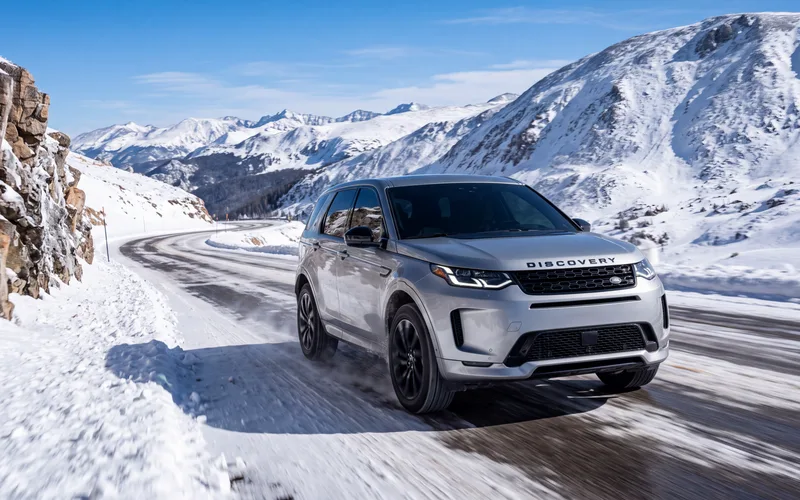 Land Rover Discovery SportCompact Luxury SUVBetter at: Space and practicality
Same showroom, same powertrain and similar money, but with four more inches of rear legroom, 10 cu ft more cargo, 441 lbs more towing and an available third row.
Compare 2.63C+
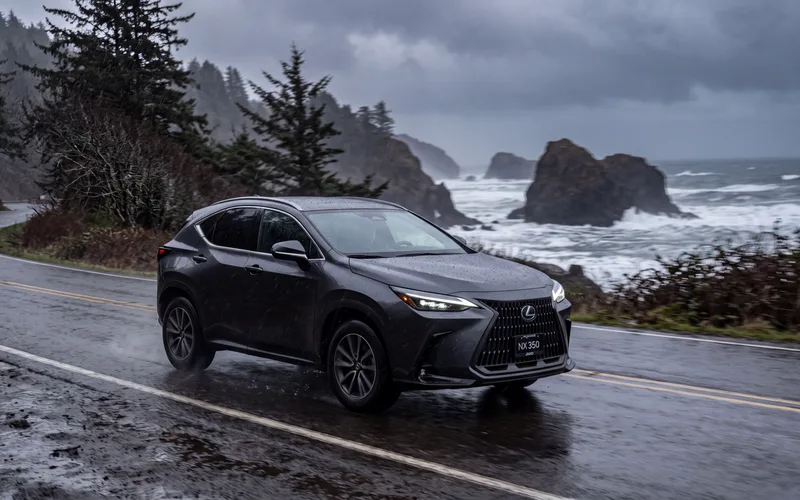 Lexus NXCompact Luxury SUVBetter at: Running costs
Hybrid and plug-in options, far lower fuel and repair costs, and class-leading reliability — everything the Evoque's ownership ledger struggles with.
Compare 2.65C+
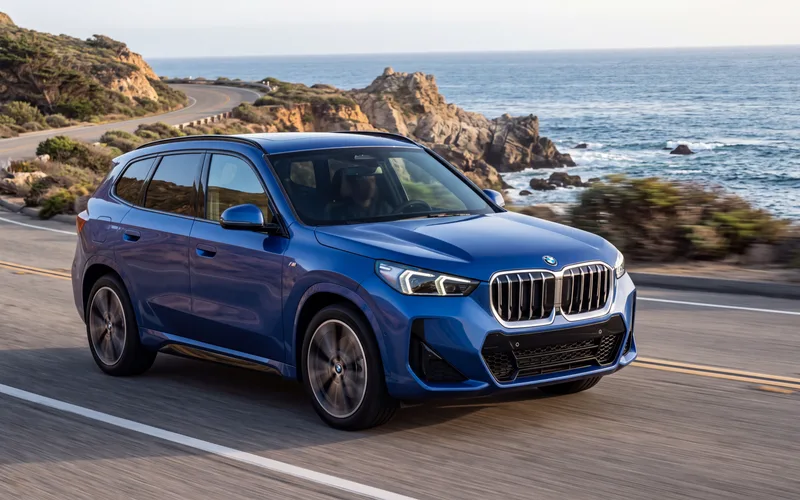 BMW X1Subcompact Luxury SUVBetter at: Driving and value
Costs less, drives better, uses less fuel and adds the highway lane-centering assist the Evoque doesn't offer at any price.
CompareProduction history
Best fit & conditions
Higher scores mean a better fit for that use case. Learn more about use-case fit →
Subject profile
Academic Probation · NHTSA safety recalls
Oct 16, 2025Power train: automatic transmission: gear position indication (prndl)Moisture may have entered the gear shift module (GSM) during assembly, which can cause the gear shift position indicator light to fail. As such, these vehicles fail to comply with the requirements of Federal Motor Vehicle Safety Standard (FMVSS) number 101, "Controls and Displays."
Defect
Jaguar Land Rover North America, LLC (Land Rover) is recalling certain 2025 Range Rover, Range Rover Sport, Discovery Sport, and 2026 Range Rover Evoque, and Jaguar F-Pace vehicles. Moisture may have entered the gear shift module (GSM) during assembly, which can cause the gear shift position indicator light to fail. As such, these vehicles fail to comply with the requirements of Federal Motor Vehicle Safety Standard (FMVSS) number 101, "Controls and Displays."
Risk
A gear shift position indicator that fails to illuminate can make it difficult to identify the correct transmission gear position, increasing the risk of a crash.
Remedy
Dealers will replace the GSM, free of charge. Owner letters were mailed December 2, 2025. Owners may contact Land Roverâs customer service at 1-800-637-6837. Land Rover's numbers for this recall are D054 and H566.
NHTSA campaign 25V705000 ↗Manufacturer no. D054 H566293 vehicles potentially affected (all models in the campaign)Owners notified Dec 2, 2025Filed by Jaguar Land Rover North America, LLCFiled as RANGE ROVER EVOQUE
22 recalls on other model years of the Range Rover Evoque (2017–2018, 2020–2025)
Sep 17, 2026Electrical system: propulsion system: dc/dc converterThe DC-DC converter may malfunction due to an electrical overload that can occur during high power demand. Additionally, a software error can cause the DC-DC converter to stop functioning at vehicle start-up under certain circumstances. Failure of the DC-DC converter will result in the loss of 12-Volt system charging and can lead to complete loss of drive power and exterior lighting.
Defect
Jaguar Land Rover North America, LLC (Land Rover) is recalling certain 2019-2024 Land Rover Range Rover Sport, 2020-2024 Land Rover Range Rover Evoque, Land Rover Range Rover, Land Rover Discovery Sport, Land Rover Defender, 2021-2024 Land Rover Range Rover Velar, Jaguar E-Pace, F-Pace, and Land Rover Discovery vehicles. The DC-DC converter may malfunction due to an electrical overload that can occur during high power demand. Additionally, a software error can cause the DC-DC converter to stop functioning at vehicle start-up under certain circumstances. Failure of the DC-DC converter will result in the loss of 12-Volt system charging and can lead to complete loss of drive power and exterior lighting.
Risk
A loss of drive power increases the risk of a crash.
Remedy
Dealers will update the vehicle software, free of charge. Interim letters notifying owners of the safety risk are expected to be mailed November 13, 2026. Additional letters will be sent once the final remedy is available. Owners may contact Land Rover's customer service at 800-637-6837. Land Rover's number for this recall is E008. This recall expands previous NHTSA recall number 26V248.
NHTSA campaign 26V599000 ↗Manufacturer no. E00823,677 vehicles potentially affected (all models in the campaign)Filed by Jaguar Land Rover North America, LLCFiled as RANGE ROVER EVOQUEApr 17, 2026Electrical system: propulsion system: dc/dc converterInsufficient electrical load balancing during times of high demand can lead to a current overload condition and malfunction of the DCDC converter. A failure of the DC-DC converter will result in a loss of 12-Volt system charging and can lead to complete loss of drive power and exterior lighting.
Defect
Jaguar Land Rover North America, LLC (Land Rover) is recalling certain 2021-2024 Land Rover Range Rover Velar and Land Rover Discovery, 2020-2023 Land Rover Range Rover Evoque, 2019-2024 Land Rover Range Rover Sport, 2020-2024 Land Rover Range Rover, 2020 Land Rover Discovery Sport, 2020-2024 Land Rover Defender, 2021-2024 Jaguar F-Pace, and 2021-2022 Jaguar E-Pace mild-hybrid electric vehicles (MHEVs). Insufficient electrical load balancing during times of high demand can lead to a current overload condition and malfunction of the DCDC converter. A failure of the DC-DC converter will result in a loss of 12-Volt system charging and can lead to complete loss of drive power and exterior lighting.
Risk
A loss of drive power increases the risk of a crash.
Remedy
Dealers will update the central software, free of charge. Interim letters notifying owners of the safety risk were mailed June 17, 2026. Additional letters will be sent once the final remedy is available. Owners may contact Land Rover's customer service at 800-637-6837. Land Rover's numbers for this recall are D126 and H575.
NHTSA campaign 26V248000 ↗Manufacturer no. D126 H575170,169 vehicles potentially affected (all models in the campaign)Filed by Jaguar Land Rover North America, LLCFiled as RANGE ROVER EVOQUESep 25, 2025Back over prevention: sensing system: cameraWater may enter the rearview camera, which can cause the rearview camera image not to appear on the display or display a distorted image.
Defect
Jaguar Land Rover North America, LLC (Land Rover) is recalling certain 2023 Range Rover Evoque vehicles. Water may enter the rearview camera, which can cause the rearview camera image not to appear on the display or display a distorted image.
Risk
A rearview camera image that does not display can decrease the driver's visibility, increasing the risk of injury or crash.
Remedy
Dealers will replace the rearview camera, free of charge. Owner letters were mailed November 14, 2025. Owners may contact Land Rover's customer service at 800-637-6837. Land Rover's number for this recall is D053.
NHTSA campaign 25V645000 ↗Manufacturer no. D0533,818 vehicles potentially affected (all models in the campaign)Owners notified Nov 12, 2025Filed by Jaguar Land Rover North America, LLCFiled as RANGE ROVER EVOQUEJul 7, 2025Air bags: passenger side frontal: cushionThe passenger air bag may tear during deployment.
Defect
Jaguar Land Rover North America, LLC (Jaguar) is recalling certain 2020â2025 Range Rover Evoque vehicles. The passenger air bag may tear during deployment.
Risk
A torn air bag may not adequately protect an occupant in a crash, increasing the risk of injury. Additionally, a torn air bag may allow hot gases to escape, which can cause a burn injury.
Remedy
Dealers will repair the passenger air bag module, free of charge. Owner letters were mailed February 17 2026. Owners may contact Land Rover's customer service at 800-637-6837. Land Rover's number for this recall is N945.
NHTSA campaign 25V454000 ↗Manufacturer no. N94521,000 vehicles potentially affected (all models in the campaign)Owners notified Feb 13, 2026Filed by Jaguar Land Rover North America, LLCFiled as RANGE ROVER EVOQUEFeb 13, 2025Air bags: knee bolsterThe cover for the left-side lower knee air bag may come loose, allowing the air bag cushion to unfold.
Defect
Jaguar Land Rover North America, LLC (Land Rover) is recalling certain 2020 Range Rover Evoque vehicles. The cover for the left-side lower knee air bag may come loose, allowing the air bag cushion to unfold.
Risk
An improperly folded air bag may not deploy as intended, increasing the risk of injury in a crash.
Remedy
Dealers will replace the left-side lower knee air bag module, free of charge. Owner letters were mailed June 6, 2025. Owners may contact Land Rover's customer service at 800-637-6837. Land Rover's number for this recall is N979. This recall expands and replaces previous NHTSA recall 21V-168.
NHTSA campaign 25V089000 ↗Manufacturer no. N9791,270 vehicles potentially affected (all models in the campaign)Owners notified Jun 6, 2025Filed by Jaguar Land Rover North America, LLCFiled as RANGE ROVER EVOQUEFeb 13, 2025Air bags: knee bolsterThe cover for the right-side lower knee air bag may come loose, allowing the air bag cushion to unfold.
Defect
Jaguar Land Rover North America, LLC (Land Rover) is recalling certain 2020 Range Rover Evoque vehicles. The cover for the right-side lower knee air bag may come loose, allowing the air bag cushion to unfold.
Risk
An improperly folded air bag may not deploy as intended, increasing the risk of injury in a crash.
Remedy
Dealers will replace the right-side lower knee air bag module, free of charge. Owner letters were mailed June 6, 2025. Owners may contact Land Rover's customer service at 800-637-6837. Land Rover's number for this recall is N978.
NHTSA campaign 25V088000 ↗Manufacturer no. N9781,473 vehicles potentially affected (all models in the campaign)Owners notified Jun 6, 2025Filed by Jaguar Land Rover North America, LLCFiled as RANGE ROVER EVOQUEJan 16, 2025Back over prevention: software · Equipment: electrical: infotainment: video (touch)screen/monitor/unitThe touchscreen in the center console may go blank at vehicle startup, resulting in the rearview camera image not displaying as intended. As such, these vehicles fail to comply with the requirements of Federal Motor Vehicle Safety Standard (FMVSS) number 111, "Rear Visibility."
Defect
Jaguar Land Rover North America, LLC (Land Rover) is recalling certain 2023 Discovery Sport, 2023-2024 Defender, and 2023 Range Rover Evoque vehicles. The touchscreen in the center console may go blank at vehicle startup, resulting in the rearview camera image not displaying as intended. As such, these vehicles fail to comply with the requirements of Federal Motor Vehicle Safety Standard (FMVSS) number 111, "Rear Visibility."
Risk
A rearview camera that does not display an image can reduce the driver's rear view, increasing the risk of a crash.
Remedy
Dealers will update the touchscreen software, free of charge. Owner notification letters were mailed March 3, 2025. Owners may contact Land Rover's customer service at 1-800-637-6837. Land Rover's number for this recall is N972.
NHTSA campaign 25V016000 ↗Manufacturer no. N97228,370 vehicles potentially affected (all models in the campaign)Owners notified Mar 3, 2025Filed by Jaguar Land Rover North America, LLCFiled as RANGE ROVER EVOQUESep 12, 2024Back over prevention: sensing system: camera · Forward collision avoidance: sensing system: cameraThe Near Field Sensing Module (NFSM) may overheat and cause the 3D surround camera images, including the rearview camera image, not to display.
Defect
Jaguar Land Rover North America, LLC (Land Rover) is recalling certain 2024 Defender, Discovery Sport, Range Rover, Range Rover Evoque, Range Rover Velar, and Range Rover Sport vehicles. The Near Field Sensing Module (NFSM) may overheat and cause the 3D surround camera images, including the rearview camera image, not to display.
Risk
A rearview camera image that does not display can decrease the driver's visibility, increasing the risk of injury or crash.
Remedy
Dealers will replace the NFSM, free of charge. Owner notification letters were mailed October 24, 2024. Owners may contact Land Rover customer service at 1-800-637-6837. Land Rover's number for this recall is N927.
NHTSA campaign 24V678000 ↗Manufacturer no. N927180 vehicles potentially affected (all models in the campaign)Owners notified Oct 24, 2024Filed by Jaguar Land Rover North America, LLCFiled as RANGE ROVER EVOQUEFeb 15, 2022Air bags: air bag/restraint control module: software · Air bags: srs malfunction warning lamp/lightThe supplemental restraint system (SRS) warning light software is programmed incorrectly, which may cause the warning light to malfunction and intermittently illuminate.
Defect
Jaguar Land Rover North America, LLC (Land Rover) is recalling certain 2020 Range Rover Evoque vehicles. The supplemental restraint system (SRS) warning light software is programmed incorrectly, which may cause the warning light to malfunction and intermittently illuminate.
Risk
An SRS system warning light that falsely illuminates could prevent the detection of an actual air bag system failure, increasing the risk of injury in the event of a crash.
Remedy
Dealers will update the restraints control module (RCM) software, free of charge. Owner notification letters were mailed March 23, 2022. Owners may contact Land Rover customer service at 1-800-637-6837. Land Rover's number for this recall is N664.
NHTSA campaign 22V080000 ↗Manufacturer no. N66418,824 vehicles potentially affected (all models in the campaign)Owners notified Mar 23, 2022Filed by Jaguar Land Rover North America, LLCFiled as RANGE ROVER EVOQUEMar 11, 2021Air bags: knee bolsterThe cushion cover on the left-side lower knee air bag may come loose, which could result in the cushion unfolding from the air bag module housing.
Defect
Jaguar Land Rover North America, LLC (Land Rover) is recalling certain 2020 Range Rover Evoque vehicles. The cushion cover on the left-side lower knee air bag may come loose, which could result in the cushion unfolding from the air bag module housing.
Risk
In the event of a crash, an unfolded knee air bag may not offer the driver full protection, increasing the risk for injury.
Remedy
Land Rover will notify owners, and dealers will replace the left-side lower knee air bag module, free of charge. The recall began May 3, 2021. Owners may contact Land Rover customer service at 1-800-637-6837. Land Rover's number for this recall is N566.
NHTSA campaign 21V168000 ↗Manufacturer no. N566250 vehicles potentially affected (all models in the campaign)Owners notified May 3, 2021Filed by Jaguar Land Rover North America, LLCFiled as RANGE ROVER EVOQUEDec 17, 2020SeatsIn the event of a fire, the seat material may burn quicker than allowed. As such, these vehicles fail to comply with the requirements of Federal Motor Vehicle Safety Standard (FMVSS) number 302, "Flammability of Interior Materials."
Defect
Jaguar Land Rover North America, LLC (Land Rover) is recalling certain 2020 Range Rover Evoque vehicles equipped with climate specification front seats trimmed with "Dinamica" cloth. In the event of a fire, the seat material may burn quicker than allowed. As such, these vehicles fail to comply with the requirements of Federal Motor Vehicle Safety Standard (FMVSS) number 302, "Flammability of Interior Materials."
Risk
A seat cover that burns too quickly can increase the risk of injury in the event of a fire.
Remedy
Land Rover will notify owners, and dealers will replace the front seat covers, free of charge. The recall began February 26, 2021. Owners may contact Land Rover customer service at 1-800-637-6837. Land Rover's number for this recall is N524.
NHTSA campaign 20V794000 ↗Manufacturer no. N52466 vehicles potentially affected (all models in the campaign)Owners notified Feb 26, 2021Filed by Jaguar Land Rover North America, LLCFiled as RANGE ROVER EVOQUEDec 17, 2020Seat belts: rear/otherThese seat belt assemblies may not function properly in the event of a crash. As such, these vehicles fail to comply with the requirements of Federal Motor Vehicle Safety Standards (FMVSS) numbers 208, "Occupant Crash Protection" and 209, "Seat Belt Assemblies."
Defect
Jaguar Land Rover North America, LLC (Land Rover) is recalling certain 2020 Range Rover Evoque vehicles equipped with a replacement part for the right and/or left-side outer second-row seat belt assembly. These seat belt assemblies may not function properly in the event of a crash. As such, these vehicles fail to comply with the requirements of Federal Motor Vehicle Safety Standards (FMVSS) numbers 208, "Occupant Crash Protection" and 209, "Seat Belt Assemblies."
Risk
Seat belts that do not function properly can increase the risk of injury during a crash.
Remedy
Land Rover will notify owners, and dealers will inspect the right and/or left-side outer second-row seat belt assemblies and replace them as necessary, free of charge. The recall began February 25, 2021. Owners may contact Land Rover customer service at 1-800-637-6837. Land Rover's number for this recall is N523.
NHTSA campaign 20V793000 ↗Manufacturer no. N52313 vehicles potentially affected (all models in the campaign)Owners notified Feb 25, 2021Filed by Jaguar Land Rover North America, LLCFiled as RANGE ROVER EVOQUEDec 3, 2020Electrical system: instrument panel: speedometer/odometer · Electrical system: softwareA software error may cause the instrument cluster to randomly alternate the speedometer and odometer units between Miles Per Hour (MPH) and Kilometers Per Hour (KM/H) without driver input to the display unit. As such, these vehicles fail to comply with the requirements of the Federal Motor Vehicle Safety Standard (FMVSS) number 101, "Control and Displays."
Defect
Jaguar Land Rover North America, LLC (Land Rover) is recalling certain 2020 Discovery Sport and Range Rover Evoque vehicles. A software error may cause the instrument cluster to randomly alternate the speedometer and odometer units between Miles Per Hour (MPH) and Kilometers Per Hour (KM/H) without driver input to the display unit. As such, these vehicles fail to comply with the requirements of the Federal Motor Vehicle Safety Standard (FMVSS) number 101, "Control and Displays."
Risk
The changing displays may cause driver distraction or confusion and possibly result in excessive speed, which can increase the risk of a crash.
Remedy
Land Rover will notify owners, and dealers will update the vehicle software, free of charge. The recall began January 19, 2021. Owners may contact Land Rover customer service at 1-800-637-6837. Land Rover's number for this recall is N516.
NHTSA campaign 20V751000 ↗Manufacturer no. N51623 vehicles potentially affected (all models in the campaign)Owners notified Jan 19, 2021Filed by Jaguar Land Rover North America, LLCFiled as RANGE ROVER EVOQUENov 5, 2020Electrical system: softwareThe 48 volt electrical system may experience an overload event, causing a failure of the Metal Oxide Semiconductor Field Effect Transistor (MOSFET) and result in a DCDC converter electrical short-circuit.
Defect
Jaguar Land Rover North America, LLC (Land Rover) is recalling certain 2020 Land Rover Discovery Sport and Range Rover Evoque MHEV vehicles. The 48 volt electrical system may experience an overload event, causing a failure of the Metal Oxide Semiconductor Field Effect Transistor (MOSFET) and result in a DCDC converter electrical short-circuit.
Risk
An electrical short-circuit increases the risk of a fire.
Remedy
Land Rover will notify owners, and dealers will update the vehicle software, free of charge. Owners are advised to exit the vehicle when it is parked and park outside away from buildings or structures until the repair is complete. The recall began December 8, 2020. Owners may contact Land Rover customer service at 1-800-369-1000. Land Rover's number for this recall is N503.
NHTSA campaign 20V683000 ↗Manufacturer no. N5033,048 vehicles potentially affected (all models in the campaign)Owners notified Dec 8, 2020Filed by Jaguar Land Rover North America, LLCFiled as RANGE ROVER EVOQUEAug 27, 2020Electrical system: software · Tires: pressure monitoring and regulating systemsThe Tire Pressure Monitoring System (TPMS) recommended pressure has been set incorrectly in the instrument cluster. As a result, the TPMS warning light will not illuminate when tire pressure reaches 25% below the cold inflation pressure stated on the tire placard. As such, these vehicles fail to comply with the requirements of Federal Motor Vehicle Safety Standard number 138, "Tire Pressure Monitoring Systems."
Defect
Jaguar Land Rover North America, LLC (Land Rover) is recalling certain 2020 Range Rover Evoque non-PHEV vehicles equipped with 18-inch wheels. The Tire Pressure Monitoring System (TPMS) recommended pressure has been set incorrectly in the instrument cluster. As a result, the TPMS warning light will not illuminate when tire pressure reaches 25% below the cold inflation pressure stated on the tire placard. As such, these vehicles fail to comply with the requirements of Federal Motor Vehicle Safety Standard number 138, "Tire Pressure Monitoring Systems."
Risk
Drivers may unknowingly operate the vehicle with low tire pressure, negatively impacting vehicle handling and increasing the risk of a crash.
Remedy
Land Rover will notify owners, and dealers will update the instrument cluster software, free of charge. The recall began September 24, 2020. Owners may contact Land Rover customer service at 1-800-369-1000. Land Rover's number for this recall is N486.
NHTSA campaign 20V517000 ↗Manufacturer no. N4861,285 vehicles potentially affected (all models in the campaign)Owners notified Sep 24, 2020Filed by Jaguar Land Rover North America, LLCFiled as RANGE ROVER EVOQUEMar 26, 2020StructureThe headliners may have been improperly manufactured without a metal plate, possibly reducing the headliner's head impact protection. As such, these vehicles fail to comply with the requirements of Federal Motor Vehicle Safety Standard (FMVSS) number 201, "Occupant Protection in Interior Impact."
Defect
Jaguar Land Rover North America, LLC (Land Rover) is recalling certain 2020 Range Rover Evoque headliners, part number LR117807. The headliners may have been improperly manufactured without a metal plate, possibly reducing the headliner's head impact protection. As such, these vehicles fail to comply with the requirements of Federal Motor Vehicle Safety Standard (FMVSS) number 201, "Occupant Protection in Interior Impact."
Risk
An improperly manufactured headliner may increase the risk of injury in the event of a crash.
Remedy
Land Rover will notify vehicle owners, and dealers will replace the headliner, free of charge. Dealers will also notify any retailers that purchased the headliner and exchange them, free of charge. The recall began June 16, 2020. Owners may contact Land Rover customer service at 1-800-637-6837. Land Rover's number for this recall is N454.
NHTSA campaign 20E017000 ↗Manufacturer no. N4543 vehicles potentially affected (all models in the campaign)Owners notified Jun 16, 2020Filed by Jaguar Land Rover North America, LLCFiled as RANGE ROVER EVOQUENov 21, 2019Structure: body: roof and pillarsThe adhesive bond attaching a metal plate to the headliner can fail after exposure to very cold temperatures.
Defect
Jaguar Land Rover North America, LLC (Land Rover) is recalling certain 2020 Range Rover Evoque vehicles. The adhesive bond attaching a metal plate to the headliner can fail after exposure to very cold temperatures.
Risk
In the event of a crash necessitating the deployment of side curtain air bags, the metal plate could detach from the headliner and strike vehicle occupants, increasing the risk of injury.
Remedy
Land Rover will notify owners, and dealers will apply self-adhesive fleece tape to the metal plate and the driver and passenger sides of the headliner, free of charge. The recall began January 17, 2020. Owners may contact Land Rover customer service at 1-800-637-6837. Land Rover's number for this recall is N412.
NHTSA campaign 19V840000 ↗Manufacturer no. N4123,444 vehicles potentially affected (all models in the campaign)Owners notified Feb 27, 2020Filed by Jaguar Land Rover North America, LLCFiled as RANGE ROVER EVOQUEJun 6, 2019Visibility: rear window wiper/washer · Visibility: windshield wiper/washerThe fuse for the front and rear windshield washer system may fail and reduce driver visibility. As such, these vehicles fail to comply with the requirements of Federal Motor Vehicle Safety Standard (FMVSS) number 104, "Windshield Wiping and Washing Systems."
Defect
Jaguar Land Rover North America, LLC (Land Rover) is recalling certain 2020 Range Rover Evoque vehicles. The fuse for the front and rear windshield washer system may fail and reduce driver visibility. As such, these vehicles fail to comply with the requirements of Federal Motor Vehicle Safety Standard (FMVSS) number 104, "Windshield Wiping and Washing Systems."
Risk
The driver's reduced visibility can increase the risk of a crash.
Remedy
Land Rover will notify owners, and dealers will replace the fuse for the front and rear washer systems, free of charge. In addition, the Engine Junction Box lid will be replaced and an owner's manual insert will be added with the updated fuse rating information. The recall is expected to begin August 2, 2019. Owners may contact Land Rover customer service at 1-800-637-6837. Land Rover's number for this recall is N341.
NHTSA campaign 19V421000 ↗Manufacturer no. N3412,200 vehicles potentially affected (all models in the campaign)Owners notified Jul 26, 2019Filed by Jaguar Land Rover North America, LLCFiled as RANGE ROVER EVOQUEFeb 1, 2018Tires: pressure monitoring and regulating systemsThe Tire Pressure Monitoring System (TPMS) may be incorrectly set and thus may not illuminate the warning on the instrument panel when a tire's pressure is 25% below the recommended cold inflation pressure. As such, these vehicles fail to comply with the requirements of Federal Motor Vehicle Safety Standard (FMVSS) number 138, "Tire Pressure Monitoring Systems."
Defect
Jaguar Land Rover North America, LLC (Land Rover) is recalling certain 2018 Land Rover Range Rover Evoque convertible vehicles equipped with 20-inch wheels. The Tire Pressure Monitoring System (TPMS) may be incorrectly set and thus may not illuminate the warning on the instrument panel when a tire's pressure is 25% below the recommended cold inflation pressure. As such, these vehicles fail to comply with the requirements of Federal Motor Vehicle Safety Standard (FMVSS) number 138, "Tire Pressure Monitoring Systems."
Risk
If the vehicle fails to warn the driver of low tire pressure, driving the vehicle may result in tire tread separation, increasing the risk of a crash.
Remedy
Land Rover will notify owners, and dealers will update the TPMS setting to correct the illumination setting, free of charge. The recall began on March 9, 2018. Owners may contact Land Rover customer service at 1-800-637-6837. Land Rover's number for this recall is N164.
NHTSA campaign 18V088000 ↗Manufacturer no. N164190 vehicles potentially affected (all models in the campaign)Owners notified Mar 9, 2018Filed by Jaguar Land Rover North America, LLCFiled as RANGE ROVER EVOQUEFeb 1, 2018Fuel system, gasoline: fuel injection system: fuel railThe fuel rail end caps may leak, possibly resulting in fuel vapor or liquid fuel leaking into the engine bay.
Defect
Jaguar Land Rover North America, LLC (Land Rover) is recalling certain 2018 Land Rover Range Rover Evoque, Range Rover Velar, and Land Rover Discover Sport vehicles equipped with a 2.0L gasoline engine. The fuel rail end caps may leak, possibly resulting in fuel vapor or liquid fuel leaking into the engine bay.
Risk
A fuel leak in the presence of an ignition source such as hot engine or exhaust components can increase the risk of a fire.
Remedy
Land Rover will notify owners, and dealers will replace the fuel rail, free of charge. The recall began on March 8, 2018. Owners may contact Land Rover customer service at 1-800-637-6837. Land Rover's number for this recall is N138.
NHTSA campaign 18V087000 ↗Manufacturer no. N1388,211 vehicles potentially affected (all models in the campaign)Owners notified Mar 8, 2018Filed by Jaguar Land Rover North America, LLCFiled as RANGE ROVER EVOQUEDec 29, 2016Air bags: frontal: passenger side: inflator moduleThe affected vehicles have a front passenger air bag inflator initiator that may fail to ignite during a crash, preventing the air bag from deploying.
Defect
Jaguar Land Rover North America, LLC (Land Rover) is recalling certain 2016 Land Rover Range Rover and Range Rover Sport vehicles and 2017 Range Rover Evoque vehicles. The affected vehicles have a front passenger air bag inflator initiator that may fail to ignite during a crash, preventing the air bag from deploying.
Risk
In the event of a crash of sufficient severity, the front passenger air bag may not deploy as required, increasing the risk of injury.
Remedy
Land Rover will notify owners, and dealers will replace the front passenger air bag, free of charge. The recall is expected to begin February 20, 2017. Owners may contact Land Rover customer service at 1-800-637-6837. Land Rover's number for this recall is P094.
NHTSA campaign 16V941000 ↗Manufacturer no. P094550 vehicles potentially affected (all models in the campaign)Owners notified Feb 14, 2017Filed by Jaguar Land Rover North America, LLCFiled as RANGE ROVER EVOQUEDec 9, 2016Suspension: front: control arm: lower armThe affected vehicles have front lower control arm fasteners that may fail due to an assembly error, possibly resulting in separation of the steering knuckle.
Defect
Jaguar Land Rover North America, LLC (Land Rover) is recalling certain model year 2016-2017 Land Rover Discovery Sport vehicles manufactured May 30, 2016, to August 24, 2016, and 2016-2017 Range Rover Evoque vehicles manufactured June 7, 2016, to August 26, 2016. The affected vehicles have front lower control arm fasteners that may fail due to an assembly error, possibly resulting in separation of the steering knuckle.
Risk
If the fasteners were to fail causing the knuckle to separate, vehicle handling may be affected, increasing the risk of a crash.
Remedy
Land Rover will notify owners, and dealers will replace the hardware that connects the front lower control arm to the knuckle, free of charge. The recall began on January 27, 2017. Owners may contact Land Rover customer service at 1-800-637-6837. Land Rover's number for this recall is Q650/Q651.
NHTSA campaign 16V889000 ↗Manufacturer no. Q650/Q651220 vehicles potentially affected (all models in the campaign)Owners notified Jan 27, 2017Filed by Jaguar Land Rover North America, LLCFiled as RANGE ROVER EVOQUE
Source: NHTSA Office of Defects Investigation recall database, model years 2017–2026. Recalls are listed by model year as the manufacturer filed them; whether a specific car is affected depends on its VIN — check a VIN at nhtsa.gov ↗. NHTSA model names matched to this page: RANGE ROVER EVOQUE.
Detailed scoring by subject
1Performance & PowertrainGrades near the bottom of the scale.0.95F
The 2026 Evoque is a carry-over year of the second-generation L551 (facelifted for 2024), and the US range is a single powertrain: the P250 2.0-liter turbocharged Ingenium four at 246 hp. No P300, no MHEV and no P300e PHEV are offered in the US, so every 2026 trim — S, Dynamic SE and the new-for-2026 Hoxton Edition — makes the same output.
Peak torque arrives at just 1,300 rpm, which is what lets a 246-hp four move a roughly 4,000-lb luxury crossover convincingly in town; the absolute figure is mid-pack for the compact luxury class and well short of the six-cylinder and EV rivals.
Land Rover quotes 7.0 seconds for the P250 and that figure is repeated across the 2026 buyer guides; independent testing of the same powertrain has come in slower (a Car and Driver run of an earlier P250 recorded a 16.8-second quarter mile at 81.3 mph, implying a high-8s sprint), so the claim is treated as optimistic rather than instrumented.
The Ingenium 2.0T is smooth and quiet once rolling and its 1,300-rpm torque peak makes it feel willing in traffic, but reviewers consistently call out turbo lag from a standstill and a lack of urgency when passing or merging — it is the least polished part of an otherwise premium-feeling package. Well behind the six-cylinder and EV compact-luxury rivals (BMW X3, Genesis GV70, Porsche Macan) but no worse than the segment's other four-cylinder-only entries.
The ZF-sourced nine-speed shifts smoothly and unobtrusively when driven gently and its tall top gears help highway refinement, but testers still report occasional stumbles where throttle, engine and gearbox fall out of step at light loads, and it is slow to find a lower gear on demand. Reviewers note it is meaningfully better sorted than the 2020-era calibration.
The 1,800 kg European rating carries to the US spec sheet as 3,968 lbs with the factory tow pack — respectable for a compact luxury crossover, though roughly 450 lbs below its Discovery Sport platform-mate and far short of the six-cylinder rivals.
All-wheel drive is standard on every 2026 US Evoque — there is no front-drive version — and it is backed by Terrain Response 2 with an automatic mode plus dedicated Sand, Grass-Gravel-Snow and Mud & Ruts programs, driveline disconnect for efficiency, hill descent control and Wade Sensing. What keeps it out of the top band is the absence of a low range or any locking differential; traction management is entirely electronic.
More genuinely capable off-pavement than most compact luxury crossovers — 8.3 in of ground clearance, a 23.6-in wading depth with Wade Sensing, a 30.6-degree departure angle and Terrain Response 2 — but it is still a road-biased unibody with no low range, no lockers, no underbody protection package and no off-road trim, and its low-profile tires and street-tuned suspension cap it below the Discovery Sport, let alone the Defender.
One engine, one transmission, one drivetrain for the entire 2026 US range. The P300e plug-in hybrid and the mild-hybrid and diesel variants sold elsewhere are not offered here, and unlike almost every compact luxury rival there is no electrified option at any price — a buyer who wants more power or better efficiency has to change models.
2Efficiency & RangeThe Range Rover Evoque's lowest-graded category.0.00F
2026 is a carry-over year for the L551 Evoque — the US lineup is P250-only (2.0L Ingenium turbo-four, 246 hp, 48V mild-hybrid assist, 9-speed automatic, AWD standard), so one EPA rating covers S, Dynamic SE and the new Hoxton Edition alike. 22 MPG combined sits near the bottom of the 18–45 SUV band and trails compact-luxury rivals like the Audi Q5 and BMW X3.
20 MPG city against a 16–48 SUV band is weak. The 48V belt-integrated starter-generator smooths stop-start and recovers a little braking energy but provides no electric-only propulsion, so a ~4,100 lb body with permanent AWD and a 9-speed automatic gets no meaningful low-speed relief.
Highway is the Evoque's best figure and its only mid-pack result — the low, coupe-like roofline and small frontal area help at cruise where the mass and full-time AWD hurt less. Still only 27 MPG against a 20–42 band.
EPA lists 389 miles of total range from the 17.7-gallon tank — mid-pack for the 230–600 mi SUV band. A generous tank for a subcompact-footprint SUV partly offsets the poor economy, and it beats the platform-mate Discovery Sport's ~354 mi.
EPA puts annual fuel cost at $3,450 — about 680 gallons of premium a year — which is above the top of the 700–3,200 $/yr SUV band and scores out at zero. EPA flags the Evoque as spending $6,250 more on fuel over five years than the average new vehicle.
EPA labels the Evoque "Premium Gasoline Recommended" rather than required, and Land Rover's owner information specifies a 95 RON (≈91 AKI) minimum while noting the engine will run on lower octane at the risk of knock — so regular is tolerated, not endorsed. There is no E85, diesel or plug-in alternative and no home-charging option, and burning ~680 gallons a year at the premium pump is what drives the $3,450 EPA cost. Rated a few points above the platform-mate Discovery Sport (24) and Defender (22), both of which carry a firmer premium requirement, but well short of the segment's hybrids and EVs.
3SafetyOne of the Range Rover Evoque's strongest categories.2.28C
NHTSA has published no 5-Star Safety Ratings for the second-generation (L551) Range Rover Evoque in any US model year, and 2026 is a carry-over of the 2023-facelift car with only the addition of a Hoxton Edition trim alongside the S. The 4-star estimate is anchored on the nameplate's 2019 Euro NCAP five-star result — 94% adult occupant protection, the highest any Jaguar Land Rover product had scored at the time — discounted for the fact that no US-protocol test exists; low US sales volume is why NHTSA skips the model.
The Evoque holds no IIHS award and has no published IIHS crashworthiness results in any model year, so it cannot reach the award band regardless of how well it protects occupants. The structural evidence that does exist is unusually good — Euro NCAP's 2019 assessment of this exact L551 generation returned 94% adult occupant protection, which JLR itself publicised as its best-ever result, plus 87% for child occupants — but that test is now seven years old and ran under a protocol two revisions behind the one the Discovery Sport was assessed against in 2022, so it earns the same mid-band score rather than a higher one. On the recall ledger the Evoque is excluded from the ~250,857-vehicle JLR driver-airbag clockspring recall that swept the Defender, Discovery and Range Rover in mid-2026, but 2026 Evoques are named in a separate recall for moisture ingress into the gear shift module.
The strongest item in the category by a wide margin. Every item the scoring band asks for — emergency braking, adaptive cruise control, Lane Keep Assist, Blind Spot Assist and Rear Traffic Monitor — is standard on the base $49,900 S, not walked up a trim ladder, and it comes alongside a 3D Surround Camera, front and rear parking aids, Driver Condition Monitor, traffic sign recognition with adaptive speed limiter and Trailer Stability Assist. That the 360-degree camera is now standard on the entry trim matters more here than on most rivals given how poor the Evoque's natural sightlines are. Held below the top of the band because there is no rear AEB, no junction/turn assist, no safe-exit warning, and the ClearSight interior rear-view mirror and ClearSight Ground View remain optional rather than standard as on the Discovery Sport.
IIHS has run no front crash prevention test on the Evoque, so there is no Superior/Advanced grade for either the vehicle-to-vehicle or pedestrian protocol and no US nighttime pedestrian data at all. The only performance evidence is Euro NCAP's 2019 assessment, which scored maximum points for the low-speed city AEB function but found only adequate performance against pedestrians and explicitly marginal performance against cyclists, for a 72% vulnerable-road-user result. That places it below the Discovery Sport (71), whose 2022 test was both newer and strong specifically on the cyclist scenarios where the Evoque was weakest, and well below segment rivals carrying actual IIHS Superior ratings.
Blind Spot Assist is standard on both 2026 trims and is JLR's intervening version — a flashing mirror icon plus a corrective steering input if the driver initiates a lane change with a vehicle present, rather than a warning light alone — which puts it in the active-intervention band, and Rear Traffic Monitor is likewise standard from the base S. It is worth more on this car than on most because the Evoque's own sightlines are so restricted. Short of full marks because rear cross-traffic coverage is alert-only with no reverse braking, and there is no safe-exit assist to protect rear occupants opening doors into traffic.
The weakest of the ADAS items and the clearest gap against compact-luxury rivals. Lane Keep Assist is standard on every 2026 trim, but it is a departure-correction system that nudges at the lane edge — J.D. Power states outright that the Evoque lacks a lane-centering system that provides sustained steering assistance on the highway, a feature it notes is common in new vehicles at this price. Euro NCAP's 73% safety-assist score reflects the same thin provision: the lane support system met the requirement, but the speed-limit recognition system was optional and therefore untested. That is a full 12 points below the Discovery Sport's 85% safety-assist result, so the Evoque scores below its platform sibling here.
Adaptive cruise is standard across the 2026 range rather than reserved for upper trims, and the system itself reviews well — J.D. Power found it smooth and competent on the interstate and specifically praised its stop-and-go behaviour, which suits the commuter role most Evoques actually play. It lands mid-band rather than high because there is no highway-assist mode to speak of: with no lane centering there is nothing for the ACC to combine with, no navigation-linked speed adaptation, and the adaptive speed limiter works from camera-read traffic signs rather than mapped data.
JLR offers no hands-free highway driving system on the 2026 Evoque at any trim or option level, and the reason is structural rather than a packaging choice: hands-free operation is built on top of lane centering, and the Evoque has none. Rivals in the compact luxury segment offering BlueCruise, Super Cruise or equivalent are in a different category of capability here. Scored marginally below the Discovery Sport, which at least offers JLR's hands-on Steering Assist as a centering-capable function.
IIHS publishes no headlight rating for the Evoque, so there is no Good/Acceptable/Marginal grade to anchor on and the score has to rest on hardware. Both 2026 US trims get LED headlights with signature DRLs, automatic headlights and approach illumination as standard — adequate and at least universal — but the Pixel LED system JLR developed for this facelift, with 67 individually controlled LEDs per headlight, adaptive driving beam and dynamic bend lighting, is reserved for Dynamic HSE and Autobiography models and does not appear on the S or Hoxton Edition standard lists. The volume US Evoque therefore runs basic LED beams while its German compact-luxury rivals fit matrix systems, and automatic high beam is not itself listed in the manufacturer's standard equipment set.
The item where the Evoque diverges hardest from its boxier Land Rover siblings, and the price of its styling. The rakish roofline, high beltline and letterbox rear window leave genuinely poor natural sightlines, compounded by thick A- and B-pillars and a rear view further chopped up by headrests; reviewers describe the camera system as close to mandatory rather than a convenience. What keeps it in the middle band rather than the bottom is that for 2026 the compensation is standard, not optional — the 3D Surround Camera and front and rear parking aids are fitted to the base S — so no buyer is left reversing on mirrors alone. The two features that would fix the problem properly, the ClearSight interior rear-view mirror that replaces the glass view with a roof-camera feed and ClearSight Ground View, both remain options.
The hardware is good: Cars.com's Car Seat Check of this generation found the two sets of lower anchors exposed under plastic covers and easy to connect to, with three clearly marked top tethers on the seatback, and reported easy installation of a forward-facing convertible and no trouble with rear-facing seats. What holds the score to the middle of the band is the space around that hardware. This is the smallest Range Rover, with roughly 34 inches of rear legroom that reviewers single out as a disadvantage against rivals, headroom that runs out for taller occupants under the sloping roof, and a rear bench where three abreast is a short-trip proposition — so a bulky rear-facing seat still costs the front passenger room, and three-across with car seats is not realistic. No third row is offered.
4Space & ComfortOne of the Range Rover Evoque's weakest categories.0.20F
Every 2026 US Evoque is a five-seat, two-row crossover; unlike its Discovery Sport platform-mate there is no 5+2 third-row option at any trim.
The sliding panoramic roof is standard equipment on the 2026 S and Hoxton Edition, so 37.4 in is the figure for the configuration actually sold in the US; the roughly 39 in no-sunroof number quoted by some aggregators is not orderable here. Even so it is the tightest front headroom in the compact luxury class — the price of the Evoque's fast, chopped roofline.
Front legroom sits right at the bottom of the SUV band — adequate in practice for most drivers, but there is no slack in it, and it trails essentially every compact luxury rival on the SAE measure.
Rear headroom is the one interior dimension the Evoque does not lose on — the second row sits slightly higher than the front and still clears 38 in under the panoramic glass, though the steeply raked rear glass and thick pillars make it feel tighter than the number suggests.
At 34.0 in the Evoque's second row is among the tightest in any luxury SUV sold here — roughly four inches down on the Discovery Sport built on the same architecture — and reviewers consistently flag it as snug for adults on anything but short trips.
There is no third row and none has ever been offered on the L551 Evoque — it is a strictly two-row, five-seat crossover. Buyers who need occasional 6th/7th seats within the brand have to step to the Discovery Sport, which offers a 5+2 package.
The load bay is small even by compact-luxury standards and falls below the bottom of the SUV normalization band — the sloping tailgate and short rear overhang cost real volume, and there is no sliding rear bench to trade legroom for cargo the way the Discovery Sport allows.
Folding the rear bench opens 50.5 cu ft — usable, and the 40:20:40 split adds flexibility for long items alongside a passenger, but the maximum still lands under the SUV band floor and roughly 10 cu ft behind the Discovery Sport.
Competent but unremarkable: deleting the old lower touchscreen in the 2023/24 update freed a proper console cubby and a wireless charging pad, and the deep split-lid armrest bin, wide door pockets and rear-armrest cubby cover the everyday basics. There is no packaging trick of any kind, though, and the small load bay limits what the cabin can absorb.
The front chairs are a genuine strength — 12-way power with memory as standard, praised for support and range of adjustment — but the second row is the weak point of the car, snug on legroom and hemmed in by thick pillars and short glass, so the average across both rows lands mid-pack for the segment.
Verdicts split sharply. Edmunds finds the passive suspension compliant enough to absorb most city bumps even on 20-inch wheels, while Consumer Reports' 2026 road test calls it outright too stiff, with pronounced jolts on anything short of smooth pavement. With 20-inch wheels now standard for 2026 and no adaptive damping in the US range, the harsher verdict is the more likely everyday experience.
Isolation is the Evoque's clearest comfort win — both Consumer Reports and Edmunds single out how little road and wind noise reaches the cabin at speed. It stops short of the top band only because the 2.0-liter Ingenium four turns coarse when worked hard, and there is no active noise cancellation in the US spec.
The 2026 repackaging made the comfort kit that matters standard across the two-trim range — heated 12-way power front seats with memory, heated steering wheel, remote start, dual-zone climate with a CO2-monitoring air purifier, panoramic roof, powered tailgate and a head-up display. The ceiling is lower than rivals': no ventilated front seats appear anywhere in the 2026 US range, and there is no three-zone climate or rear seat heating.
5Cost of OwnershipOne of the Range Rover Evoque's weakest categories.0.60F
2026 is a carry-over year for the second-generation L551 Evoque — same 246-hp P250 Ingenium turbo four and nine-speed automatic with standard AWD — so pricing is the story rather than content. The entry S lists at $49,900 before a $1,475 destination charge, putting the cheapest Evoque just over $51,000 delivered: mid-pack for the SUV price band, and a couple of thousand under the Discovery Sport that shares its showroom.
The S is the volume car, and the transacted example carries the packs most buyers add (cold climate, wheel and black exterior upgrades, driver-assist pack), landing near $54,300 — essentially the same money as a stripped Dynamic SE. The top of the range is close by: the 2026 Hoxton Edition tops out around $56,575 delivered, so the practical spread is narrow for a luxury SUV.
The first five years read better than Land Rover's reputation because the 4-year/50,000-mile warranty absorbs most of the window and the Evoque is a four-cylinder unibody crossover rather than a supercharged V8. CarEdge puts the five-year bill at about $5,362 — roughly $1,070 a year and below the luxury-SUV average — but that figure explicitly excludes warranty work, so the real exposure lands in years five through ten once coverage lapses.
Depreciation is the single largest ownership cost here and the main drag on the category — roughly $28,000–$30,000 of value evaporates in five years. Projections spread from KBB's pessimistic low-40s to iSeeCars' high-40s; the mid-40s consensus is a few points better than the Discovery Sport but still soft against mainstream compact SUVs, reflecting weak Land Rover residuals and buyer wariness about out-of-warranty repair bills.
Land Rover's New Vehicle Limited Warranty runs 4 years/50,000 miles — competitive on years with the German luxury brands, short on mileage next to Genesis or the Korean makes. It is a single all-inclusive term covering the whole vehicle, with 24-hour roadside assistance running alongside it.
Land Rover publishes no extended powertrain coverage: the Ingenium four and ZF nine-speed fall under the same 4-year/50,000-mile limited warranty as the trim and electronics. Against a segment band that starts at 5 years that is the floor, and it stings more here than at most brands given JLR's repair record — longer coverage has to be bought as Vehicle Service Protection.
Nothing scheduled is included. Land Rover sells service as an optional Prepaid Maintenance Plan (and a Full Maintenance Plus Wear & Tear tier) rather than bundling it, and the old EliteCare package that once covered 5 yr/60,000 mi of service is long gone from the US lineup. What comes with the car is genuinely useful but basic: 24-hour Land Rover Roadside Assistance for the full 4-year/50,000-mile warranty period, plus a Pivi Pro connected-services and software-over-the-air data trial. That is squarely 'basic roadside only' territory, behind luxury rivals that still cover the first service or two.
$54,300 volume-trim price minus its estimated resale value after 5 years (46% retained, or about $24,978) leaves about $29,322 in depreciation. Add the projected $5,362 in 5-year maintenance and repairs, and owning this vehicle for 5 years costs about $34,684 in total.
6Reliability & QualityGrades near the bottom of the scale.0.90F
Consumer Reports expects the 2026 Evoque to be less reliable than the average new car, and RepairPal ranks it 9th of 11 luxury compact SUVs. The L551 generation is mature (2019+) and its known faults — 9-speed judder/hesitation, Pivi Pro freezes and reboots — are more nuisance than catastrophic, which keeps it off CR's ten-least-reliable list, but nothing here reaches segment average.
Land Rover posted 274 PP100 in the J.D. Power 2026 Vehicle Dependability Study against a 204 industry average, putting it among the five worst brands, and Consumer Reports' 2026 brand rankings place it second-worst overall. This is a consistent bottom-third standing across multiple years and both major US studies, not a single bad survey.
The 2026 Evoque carries one recall so far — moisture in the gear shift module disabling the gear position indicator, an FMVSS 101 display-compliance defect fixed by a module swap, not a powertrain or fire risk. Recall activity on this generation has settled markedly since a chaotic 2020 (11 campaigns), running 1–3 per year from 2021 on, so the pattern is typical rather than systemic.
The US 2026 Evoque carries over the 2.0L P250 Ingenium turbo petrol (246 hp) and ZF 9-speed — not the 2.0 Ingenium diesel whose early timing-chain stretch and turbo failures are the family's documented plague, so the worst-known failure mode does not apply to US cars. The petrol unit has no comparable systemic defect but is not a benchmark either, and the 9-speed's hesitation/judder history (software, sometimes valve body) is a real mark against it.
The Evoque's cabin is the strongest part of the car relative to its $49.9–56.4k price: Consumer Reports credits padded, stitched surfaces and Edmunds calls the minimalist interior as stylish as the segment gets. It falls short of class-leading because reviewers still find scratchy plastics on the door cards, centre console and dash top — low-touch-zone hard plastics are expected here, but not at this price on surfaces you rest an elbow on.
Assembly quality itself reads as solid — Consumer Reports rates the fit and finish impressive — but the complaint record is scattered rather than clean: a trim creak over bumps on one press car, and owner reports of repeat dealer visits for infotainment and electrical faults that software updates fail to permanently resolve. Solid build undermined by electronics that don't stay fixed.
Roughly 202 US Land Rover retailers is thin coverage concentrated in affluent metros — fine in Southern California, a long drive in much of the interior — and the brand's warranty is a plain 4-year/50,000-mile with no complimentary scheduled maintenance to offset dealer labor rates. Individual retailers earn J.D. Power Dealer of Excellence recognition, but owner accounts of unresolved repeat visits keep this at adequate rather than good.
RepairPal puts average annual repair cost at $1,102 against an $859 luxury-compact-SUV average, and parts are effectively dealer-only with a thin independent aftermarket. Supply is the compounding problem: the August 2025 JLR cyberattack halted the Halewood plant that builds the Evoque and left dealers and independents without parts databases or stock into 2026, with a further Solihull halt in March 2026.
7Technology & InfotainmentThe Range Rover Evoque's best-graded category.3.08B
The floating curved-glass 11.4-inch Pivi Pro touchscreen arrived with the MY2024 interior update and carries into 2026 unchanged; it is standard on S, Dynamic SE and the new Hoxton Edition, with no larger option.
Pivi Pro looks genuinely premium — sharp graphics, quick boot, permanent sidebars that put most tasks within two taps — and reviewers rate it a large step up from the old InControl Touch Pro. It lands mid-pack rather than high because the MY2024 declutter moved all climate and seat-heating control into the screen (seat heat is several taps deep), menu structure is described as cumbersome, and the navigation layer can still lag. Better than the Acura RDX or Cadillac XT5 systems, clearly behind BMW's X3 iDrive and Audi's Q5 MMI.
Both projection platforms are standard and both run wirelessly on every 2026 trim including the $51,175 base S — no upsell tier, no cable required — and Pivi Pro can mirror third-party map guidance into the driver display. Only short of the very top because there is no wired-plus-wireless flexibility issue to speak of but also no additional integration (e.g. app store, dual-phone pairing) beyond the basics.
Amazon Alexa is built into Pivi Pro and handles natural-language requests, and native navigation adds what3words destination entry plus online routing — more capable than the canned command systems in a Lexus NX or Acura RDX. It sits mid-band because reviewers call the voice control unimpressive, the native maps can lag, live-traffic routing rides on the subscription Connected Navigation Pro tier, and most owners default to CarPlay for guidance.
A branded 11-speaker Meridian system is standard on the base S rather than an option — unusual at this price — with a Meridian Surround upgrade available above it. Clean, well-balanced sound that rates strongly for a compact luxury SUV, though neither tier reaches the reference-grade Burmester or Bowers & Wilkins systems offered in a GLC or XC60.
The 12.3-inch Interactive Driver Display is standard on every 2026 trim, fully digital and configurable, and it doubles as the readout for Wade Sensing and (via software update) third-party map guidance. Crisp and legible; the graphic styling is a touch dated next to Audi's Virtual Cockpit but the capability is all present.
Land Rover's Software-Over-The-Air system goes beyond maps — it updates infotainment and multiple vehicle modules in the background over Wi-Fi or the embedded SIM, and some recall remedies are delivered remotely. It stays out of the top band because JLR ships these on an occasional cadence and they rarely add meaningful new functionality the way Tesla, Rivian or Polestar releases do.
The Land Rover Remote app covers the core set — remote engine start and climate pre-conditioning, lock/unlock, vehicle locator with beep-and-flash, status and alerts — but the useful tier is InControl Remote Premium, which reverts to a paid subscription (about $119/year) once the included term lapses, there is no phone-as-key or Apple Wallet key on this platform, and JLR's app has a long-standing reputation for flaky logins and slow command response.
USB-C outlets are fitted front and rear and a wireless charging pad is standard on the base S — the MY2024 console redesign made room for it — and an optional Wi-Fi hotspot covers passenger data. No household-style AC outlet is offered and port counts are modest for the class, which keeps it out of the top band.
Proximity keyless entry, push-button start, a power liftgate and app-based remote start/climate are all standard on the volume S trim, and Land Rover's waterproof Activity Key wristband remains a genuinely useful brand extra. The absence of any smartphone-as-key option — which BMW, Genesis and Mercedes rivals in this class all now offer — is what separates it from the top band.
The hardware is a class strength — a 3D Surround Camera with 360° views plus ClearSight Ground View, which composites the terrain hidden under the nose onto the touchscreen and helps as much in a tight parking structure as it does off-road, alongside standard front and rear sensors and an available ClearSight camera rearview mirror. It is marked down from the Discovery Sport's score because on the volume S trim the surround camera is a $800 stand-alone option (or part of the $1,870 Technology pack) rather than standard; it only becomes standard equipment on the Dynamic SE.
A head-up display can be specified on every 2026 trim including the volume S — bundled into the $1,870 Technology pack — and is standard on the new Hoxton Edition, so no buyer is locked out of it. It falls short of the top band because nobody gets it without paying for a pack, and the unit is a conventional projection display rather than the large augmented-reality type appearing in German rivals.
8Use-Case FitGrades below the middle of the scale.1.51D
The LATCH hardware itself is good — Cars.com found the two sets of lower anchors exposed under plastic covers, easy to reach, with three clearly marked top tethers, and both rear-facing and forward-facing convertibles installed without trouble. Everything around that hardware works against families: 34.0 in of rear legroom is the tightest of any luxury SUV sold here, so a bulky rear-facing seat costs the front passenger real room; the rear bench does not slide to buy any back; the chopped roofline narrows the door aperture for lifting a child into a seat; and the 21.6 cu ft load bay makes a full-size stroller a squeeze. Well below its Discovery Sport platform-mate (78), which has four more inches of rear legroom, a sliding 40:20:40 bench and 10 cu ft more cargo.
The equipment side is genuinely strong for a family buyer because nothing is trim-walked: Emergency Braking, Adaptive Cruise, Lane Keep Assist, Blind Spot Assist, Rear Traffic Monitor, a 3D Surround Camera and front/rear parking aids are all standard on the $49,900 base S. What holds it below the Discovery Sport (66) is verification and gaps — NHTSA and IIHS publish no rating of any kind for the Evoque in any model year, so US buyers have no crash data to check, and the only structural evidence is a 2019 Euro NCAP test now well behind current protocol (the Discovery Sport at least has a 2022 retest). There is no rear-occupant reminder, no rear automatic braking, no safe-exit assist and no lane centering.
What works: rear air vents, two-zone climate with a CO2-monitoring purifier and a sliding panoramic roof are standard on the base S, the cabin is genuinely quiet at speed, and the 17.7-gal tank gives 389 EPA miles between stops — 35 more than the Discovery Sport. What does not: with four aboard this is a small car, 34 in of rear legroom and a sloping roofline make the back seat a short-haul proposition for adults, there is no rear-seat entertainment and no heated rear seats on the volume trim, and 21.6 cu ft of cargo is thin for four people's luggage. Consumer Reports' road test also calls the suspension too stiff, transmitting pronounced jolts on anything but smooth pavement — the opposite of what a multi-hour trip wants.
Commuting is arguably the Evoque's best-fitting role: a small 172.1-in footprint, an elevated Range Rover driving position, 12-way power front seats with memory, a quiet cabin, and adaptive cruise that J.D. Power specifically praised in stop-and-go traffic, all standard from the base S. Three things keep it mid-band — reviewers consistently report turbo lag pulling away from a standstill and a nine-speed that occasionally falls out of step at light throttle, the 2026 standard 20-inch wheels sharpen an already firm ride over city pavement, and the MY2024 declutter pushed climate and seat heating entirely into the touchscreen, which Edmunds calls distracting on the move.
The Evoque's worst use case by a wide margin. EPA rates it 22 MPG combined on premium-recommended fuel and puts the annual bill at $3,450 — $6,250 more than the average new vehicle over five years — and the consumables offer no relief: RepairPal pegs average annual repair cost at $1,102 against $859 for luxury compact SUVs, and full-coverage insurance runs about $2,550 a year. Scored a few points above the Discovery Sport (22) only because 22 MPG and 389 miles of range beat its sibling's 20 MPG and 354, and EPA labels premium recommended rather than required.
The numbers are good — 172.1 in long on a 106-in wheelbase with a 38.0 ft curb-to-curb turning circle, tighter than the Discovery Sport's 39.1 — and for 2026 the 3D Surround Camera and front and rear parking aids are standard on the base S rather than optional. It scores below its boxier sibling (80) because the Evoque has to buy back visibility the Discovery Sport simply has: the high beltline, letterbox rear glass and thick A- and B-pillars leave genuinely poor natural sightlines, reviewers describe the camera system as 'almost mandatory' rather than a convenience, and the two features that would fix it properly — the ClearSight camera rear-view mirror and ClearSight Ground View — remain options.
The 3,968 lb tow rating with the factory tow pack is the one work-adjacent credential — enough for a small boat, a pair of jet skis or a light utility trailer — and standard AWD with Trailer Stability Assist helps. Beyond that it is not a work tool in any sense: a steel unibody, a single 246-hp four already noted for lag under load, no published payload headroom, no bed, and a carpeted 21.6 cu ft luxury load bay smaller than most mainstream compact crossovers. It sits below the Discovery Sport (52), which tows 441 lb more and carries 10 cu ft more.
Land Rover placed 274 PP100 in the 2026 J.D. Power dependability study against a 204 industry average — among the five worst brands — Consumer Reports expects the 2026 Evoque to be less reliable than the average new car, and RepairPal ranks it 9th of 11 luxury compact SUVs. There is no fleet or trade presence to draw on, the cabin is trimmed for luxury rather than abuse with no wash-out option, and parts supply has been actively fragile since the August 2025 JLR cyberattack halted the Halewood plant that builds this car. Marginally above the Discovery Sport (26) only because the US car uses the petrol Ingenium rather than the diesel with the documented timing-chain history, and the L551 has run quiet recall years since 2021.
Provisions are consumer-grade and thinner than the Discovery Sport's (42). Luggage tie-downs in the load space are standard and Land Rover sells a proper accessory catalogue — lockable cross bars rated to 152 lb, roof box, ski/snowboard and aqua-sports carriers, bike carriers and a tow bar — but almost all of it is an add-on: roof rails are not standard equipment on the 2026 S and are required before cross bars will fit, and the tow pack is an accessory. There is no AC inverter or household outlet anywhere in the 2026 US range, no washable or rubberized work interior, no bed or open load area, and nothing resembling an upfitter ecosystem.
A capable two-person tourer with real limits as a four-person one. In its favor: 389 EPA miles between fills, isolation that both Consumer Reports and Edmunds single out as unusually good, supportive 12-way power front seats with memory, and standard adaptive cruise that reviews well on the interstate. Against: Consumer Reports finds the suspension outright too stiff over highway ruts and expansion joints — worse now that 20-inch wheels are standard for 2026 with no adaptive damping offered in the US — the back seat is cramped for adults on a long haul, and there is no lane centering at all, so the ACC has nothing to pair with and none of the fatigue reduction rivals provide. Marginally below the Discovery Sport (63): longer range and quieter, but a harsher ride and much less room in row two.
Real Land Rover hardware in a style-first body. Standard AWD with Terrain Response 2, All-Terrain Progress Control, Hill Descent Control and Hill Launch Assist, 8.3 in of ground clearance, a 23.6 in wading depth with Wade Sensing and a 30.6-degree departure angle put it far ahead of any German or Japanese compact luxury rival on a wet trailhead or a snowed-in forest road. It sits well below the Discovery Sport (84) because the Evoque compromises where its sibling does not: 20-inch wheels on low-profile tires are now standard, there is no low range, no locking differential and no underbody protection package, roof rails are not standard so a rack or box means adding them first, tow capacity is 441 lb lower, and 21.6 cu ft of cargo limits what camping gear actually fits.
The most restrictive load bay in the compact luxury class and the clearest cost of the Evoque's styling: 21.6 cu ft behind the second row and 50.5 cu ft with it folded both fall below the floor of the framework's SUV normalization band, roughly 10 cu ft down on the Discovery Sport in both states, and reviewers note the rear seats do not fold completely flat. The 40:20:40 split is genuinely useful for long items alongside a passenger, standard tie-downs and a powered tailgate help, and Land Rover's accessory catalogue covers roof boxes, ski, bike and kayak carriers — but the rails those mount to are not standard, the hitch is an accessory, the bench does not slide, and there is no underfloor storage of note.
9Driving ExperienceOne of the Range Rover Evoque's strongest categories.2.19C
Secure, composed and better sorted than its Discovery Sport platform-mate, but never agile. The L551's strut-front/multi-link-rear chassis keeps body roll contained and torque-vectoring-by-braking lets it change direction cleanly, and MotorWeek's handling-course run turned up neither excessive understeer nor oversteer from the 3,935-lb body. What caps it is the absence of any real limit-handling ambition: US reviewers put it behind the BMW X1 and Mercedes GLA for cornering agility, the base S rides on tall-sidewall 235/60R18 all-seasons, and adaptive damping is a $1,050 option rather than standard equipment. Well clear of the Discovery Sport (58), a long way behind the Macan, X3 and Stelvio.
Accurate and sensibly geared but essentially mute — the most consistent criticism of the car across US and UK testing. The electrically assisted rack is well weighted and responsive enough to place the nose precisely, and it is noticeably alert just off center at parking and city speeds, which suits how the Evoque is actually used. It returns almost nothing about grip or surface, so the driver reads the car through body roll rather than the wheel rim. A shade above the Discovery Sport (52), which adds artificial self-centering to the same numbness.
The strongest single element of the Evoque's driving experience, and the one backed by instrumented US data: MotorWeek stopped it from 60 mph in 115 feet — a genuinely short distance for a 3,935-lb crossover on all-season tires — and described the brakes as very responsive. Large 14-inch front and 13-inch rear discs sit behind the wheels and autonomous emergency braking is standard on every 2026 trim. Held out of the top band only by the nosedive testers noted under maximum braking and the absence of any repeat-stop fade data.
Fine once rolling, hesitant when asked to start. The sole US powertrain — the 246-hp P250 Ingenium 2.0T with ZF's nine-speed — makes 269 lb-ft from 1,300 rpm and shifts cleanly under steady load, but reviewers consistently report a beat of turbo lag pulling away from rest and moments where throttle, engine and gearbox fall briefly out of step at light acceleration. There is no mild-hybrid assist in the US spec to smooth stop/start or fill the low-rpm gap, which most compact luxury rivals now have. Consistent with the 56/55 recorded for powertrain refinement and transmission behavior in Category 1.
Unusually well isolated at a cruise for a four-cylinder compact SUV — Consumer Reports singles out how little road and wind noise reaches the cabin, and Autoweb calls the car relaxed without feeling lazy — which is what the Range Rover badge is meant to deliver. It stays out of the top band because the Ingenium four has no acoustic character of its own: extended hard it turns audibly gruff rather than sonorous, road noise climbs on coarse freeway surfaces, and there is no six-cylinder or electrified alternative in the US range to escape it.
Mid-pack for a compact SUV and less tight than the 172-inch footprint suggests, though it does beat the Discovery Sport's 38.7 ft on a wheelbase two inches shorter. Fine in a parking garage, unremarkable in a U-turn.
The seat itself is a Land Rover strength and the view out of it is the car's weakness. Drivers sit higher than in most small luxury crossovers, with well-aligned pedals, generous steering-wheel adjustment and standard heated 12-way power front seats with memory, and the 11.4-inch Pivi Pro screen is fast and legible. Against that: the chopped roofline, high beltline and letterbox rear glass make natural rearward and over-shoulder visibility genuinely poor — reviewers describe the surround camera as near-mandatory rather than a convenience — and the MY2024 declutter moved climate and seat heating entirely into the touchscreen, which testers call distracting on the move. Well below the boxier Discovery Sport (76), which gives up nothing in sightlines.
Pleasant, expensive-feeling and forgettable. 7.7 seconds to 60 from a four-cylinder with no aural character, numb steering and a comfort-first chassis add up to a car reviewers call uninspired even in Dynamic SE guise, and Land Rover has again deleted the 296-hp P300 from the US lineup, so there is nothing above the P250 to reach for at any price. The credit it does earn is off-pavement rather than on: Terrain Response 2, 8.3 in of clearance and a 23.6 in wading depth give it a party trick no German rival has, and UK testers find the chassis balance mildly playful exiting slow corners.
10Value & Market PositionGrades below the middle of the scale.1.33D
The base 2026 S is genuinely well-stocked for a luxury subcompact — standard leather seat facings (rare in the class, where Audi and BMW start on synthetic), fixed panoramic roof, heated steering wheel, 11.4-inch Pivi Pro, 12.3-inch digital cluster, Meridian audio, wireless Apple CarPlay/Android Auto, wireless charging, adaptive cruise, blind-spot monitoring and standard AWD. It misses the top band because the entry price sits $5-9k above rivals that reach equipment parity for less, so the content is generous in absolute terms but only competitive per dollar.
At $51,175 delivered the Evoque asks more than a BMW X1, Audi Q3 or Mercedes GLA while delivering a single 246-hp turbo four, below-average 20/27 mpg, a cramped rear seat and one of the weakest expert verdicts in the class. Value retention (47.6% after five years, $29,550 lost) and bottom-quartile cost to own compound it; standard leather and real Terrain Response off-road hardware are the only genuine per-dollar differentiators.
Three US configurations for 2026 — S at $49,900, Dynamic SE at $55,100 and the new London-themed P250 Hoxton Edition at $56,375 delivered — span barely $6k, all on the same P250 engine, nine-speed automatic and AWD, with no PHEV, no six-cylinder and no body variants offered here. Broader than the single-trim Discovery Sport, but a narrow ladder next to an X1/X3 or GLC lineup with multiple powertrains and M/AMG rungs.
US volume has more than halved from its 11,529-unit 2019 peak to roughly 5,100 in 2025, leaving the Evoque a rounding error against 50,000-plus-unit segment leaders like the X3, GLC and Q5. The 2025 rebound from a near-zero 2023-24 trough shows the nameplate still has a following, which keeps it above the terminal-decline floor, but it is a low-volume niche pick rather than a mainstream choice.
The Range Rover badge is the Evoque's strongest asset — it is the cheapest route into a genuinely aspirational nameplate, and reviewers and owners alike single out styling and 'instantly recognizable as a Range Rover' presence as the reason to buy. Land Rover's long-running dependability reputation and only middling value retention keep it out of the top band, but the halo is a clear net positive and stronger than the winding-down Discovery sub-brand's.
Land Rover is supporting the Evoque with subvented 1.9% APR for 12-60 months plus a $2,000 conquest 'welcome credit' for Audi Q3/Q4, BMW X1/X2 and Mercedes GLA/GLB owners — meaningful money without clearance-pricing desperation. The advertised $619/month, 36-month lease with $6,995 due at signing is unremarkable for a $53,625 vehicle, so this is a solidly negotiable car rather than a bargain one.
The L551 second generation was revealed in November 2018 and reached the US for 2020, so 2026 is an eight-year-old design; the 2024 facelift that brought the 11.4-inch Pivi Pro and the current cabin is now two model years old, and 2026 adds only dark anodized trim and the Hoxton Edition. Redesign risk is real but not immediate for buyers — unlike the Discovery Sport, the Evoque is explicitly staying in production at Halewood, with the EMA-platform electric successor not due until late 2027 at the earliest and US deliveries around 2028.
The current Evoque is consistently ranked at the bottom of its class by the outlets that test it — Consumer Reports scores it 28/90 and calls it the least talented and most expensive luxury compact SUV, Edmunds gives 5.3/10, and U.S. News places it #10 among luxury subcompact SUVs. Praise is confined to styling, cabin materials and quietness; the awards on the nameplate's record (2012 NACTOY, 2012 World Car Design) belong to the first generation, and the current car has won no comparison tests.