
The verdict
A mixed-report mid-size luxury suv, strong on technology and held back by ownership.
The 2026 Audi Q8 is the style-first version of the Q7 — same 335-hp turbo V6 and quattro underpinnings, wrapped in a sloping coupe roofline that costs you a third row, roughly 30 cubic feet of cargo space, and a chunk of rear visibility. What you get in return is one of the quietest, best-finished cabins in the mid-size luxury SUV class, standard adaptive air suspension, and a genuinely limousine-grade back seat with 40.2 inches of legroom. The catch is running cost: 19 MPG combined on premium fuel, a volume trim near $82,000, and about 45% resale retention after five years add up to roughly $53,750 in five-year ownership cost. Buy it because you want this shape and this cabin — not because it is the sensible pick.
Jump to scoresStrengths
- One of the quietest, best-built cabins you can buy
- Back seat and long-haul comfort that punch above the coupe styling
- 7,700 lbs of towing and standard quattro
What holds it back
- Ownership cost is the worst part of the car
- 19 MPG on premium fuel, and no hybrid escape hatch
- The roofline eats your cargo space and headroom
Top alternatives
Cars shoppers cross-shop with the Audi Q8 2.75B-
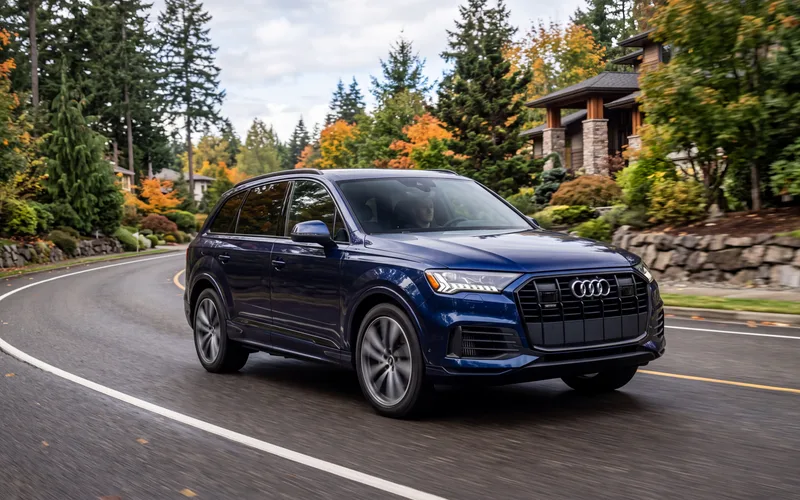 Audi Q7Mid-Size Luxury SUVBetter at: Practicality
Same drivetrain and quattro hardware with three rows, twice the usable cargo space, and thousands less on the window sticker — the rational version of this car.
Compare 2.78B-
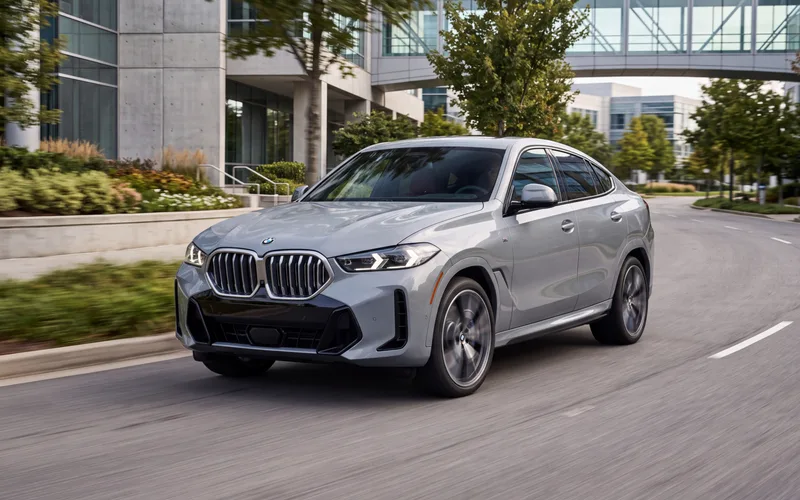 BMW X6Mid-Size Luxury SUVBetter at: Driving dynamics
The other coupe-roofed luxury SUV at this price, with a sharper chassis and a much newer infotainment system.
Compare 2.81B-
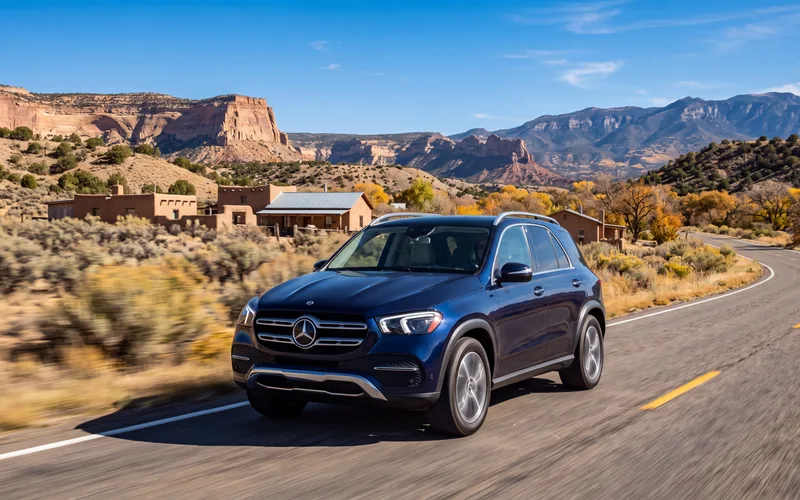 Mercedes-Benz GLEMid-Size Luxury SUVBetter at: Tech and versatility
More cabin technology, an available third row, and hybrid powertrain choices the gas-only Q8 cannot offer.
CompareProduction history
Best fit & conditions
Higher scores mean a better fit for that use case. Learn more about use-case fit →
Subject profile
Academic Probation · NHTSA safety recalls
Dec 19, 2025Back over prevention: sensing system: cameraPlease see the recall report for a complete list of models. A software error may prevent the rearview camera image from displaying as intended. As such, these vehicles fail to comply with the requirements of Federal Motor Vehicle Safety Standard number 111, "Rear Visibility."
Defect
Volkswagen Group of America, Inc. (Audi) is recalling certain 2019-2026 vehicles. Please see the recall report for a complete list of models. A software error may prevent the rearview camera image from displaying as intended. As such, these vehicles fail to comply with the requirements of Federal Motor Vehicle Safety Standard number 111, "Rear Visibility."
Risk
A rearview image that does not display reduces the driver's view behind the vehicle, increasing the risk of a crash.
Remedy
Dealers will update the software, free of charge. Owner notification letters were mailed January 14, 2026. Owners may contact Audi customer service at 1-800-253-2834. Audi's number for this recall is 90TV. Vehicle Identification Numbers (VINs) involved in this recall became searchable on NHTSA.gov on December 23, 2025.
NHTSA campaign 25V900000 ↗Manufacturer no. 90TV356,894 vehicles potentially affected (all models in the campaign)Owners notified Jan 14, 2026Filed by Volkswagen Group of America, Inc.Filed as Q8, RS Q8, SQ8
16 recalls on other model years of the Q8 (2019–2025)
Mar 4, 2026Lane departure: softwareDue to a software error, the lane departure warning system may be deactivated.
Defect
Volkswagen Group of America, Inc. (Audi) is recalling certain 2019 Audi Q8, Audi A7, and Audi A6 vehicles previously repaired under recall number 25V900. Due to a software error, the lane departure warning system may be deactivated.
Risk
The driver may be unaware that the lane departure warning system is deactivated and rely on a system that is not functional, increasing the risk of a crash.
Remedy
Dealers will update the software, free of charge. Owner notification letters were mailed March 13, 2026. Owners may contact Audi customer service at 1-800-253-2834. Audi's number for this recall is 90TW. Vehicle Identification Numbers (VINs) involved in this recall became searchable on NHTSA.gov on March 6, 2026.
NHTSA campaign 26V125000 ↗Manufacturer no. 90TW1,620 vehicles potentially affected (all models in the campaign)Owners notified Mar 13, 2026Filed by Volkswagen Group of America, Inc.Filed as Q8Nov 12, 2025Seat belts: front: anchorageThe driver and front passenger seat belt buckles may be missing a rivet that secures the buckle to the seat belt stalk.
Defect
Volkswagen Group of America, Inc. (Volkswagen) is recalling certain 2025 Audi RS Q8, Audi Q8, Audi Q7, and Audi SQ8 vehicles. The driver and front passenger seat belt buckles may be missing a rivet that secures the buckle to the seat belt stalk.
Risk
A seat belt that is missing a rivet may not properly restrain an occupant during a crash, increasing the risk of injury.
Remedy
Dealers will replace both front seat belt buckles, free of charge. Owner notification letters were mailed December 3, 2025. Owners may contact Audi at 1-800-253-2834. Audi's number for this recall is 692K. Vehicle Identification Numbers (VINs) involved in this recall became searchable on NHTSA.gov on November 14, 2025.
NHTSA campaign 25V777000 ↗Manufacturer no. 692K61 vehicles potentially affected (all models in the campaign)Owners notified Dec 3, 2025Filed by Volkswagen Group of America, Inc.Filed as Q8, RS Q8, SQ8Mar 31, 2025Electrical system: instrument cluster/panel · Electrical system: softwareDue to a software error, the instrument panel display may fail.
Defect
Volkswagen Group of America, Inc. (Audi) is recalling certain 2021 SQ8, A6 SEDAN, A7, A8, Q7, Q8, RS6 Avant, RS7, RSQ8, S6 SEDAN, S7, S8, A6 Allroad, and SQ7 vehicles. Due to a software error, the instrument panel display may fail.
Risk
An instrument panel display that fails to show critical safety information, such as the speedometer or warning lights, increases the risk of a crash.
Remedy
Dealers will update the instrument panel module software, free of charge. Owner notification letters were mailed April 24, 2025. Owners may contact Audi customer service at 1-800-253-2834. Audi's number for this recall is 90VC.
NHTSA campaign 25V201000 ↗Manufacturer no. 90VC44,387 vehicles potentially affected (all models in the campaign)Owners notified Apr 24, 2025Filed by Volkswagen Group of America, Inc.Filed as Q8, RS Q8, SQ8Apr 3, 2024Air bags: sensor: occupant classification: front passengerAn electrical connection in the front passenger seat for the occupant detection system (ODS) control module may loosen and deactivate the front passenger air bag.
Defect
Volkswagen Group of America, Inc. (Volkswagen) is recalling certain 2023 Audi S5 Cabriolet, A4 Allroad, Q5 Sportback, A3 Sedan, S5 Sportback, SQ7, TT Coupe, TT Roadster, RS5 Sportback, 2024 A8, E-Tron Quattro, E-Tron Sportback Quattro, Q8, RSQ8, 2023-2024 Q3, Q5, and Q7 vehicles. An electrical connection in the front passenger seat for the occupant detection system (ODS) control module may loosen and deactivate the front passenger air bag.
Risk
A deactivated front passenger air bag will not deploy during a crash, increasing the risk of injury.
Remedy
Dealers will replace the passenger seat occupant detection system control module, free of charge. Owner notification letters were mailed on May 8, 2024. Owners may contact Audi customer service at 1-800-253-2834. Volkswagen's number for this recall is 69GU.
NHTSA campaign 24V251000 ↗Manufacturer no. 69GU91 vehicles potentially affected (all models in the campaign)Owners notified May 8, 2024Filed by Volkswagen Group of America, Inc.Filed as Q8, RS Q8Dec 20, 2023Air bags: side/windowThe driver's seat side air bag may have been improperly mounted to the seatback frame. As such, these vehicles fail to comply with the requirements of Federal Motor Vehicle Safety Standard number 214, "Side Impact Protection."
Defect
Volkswagen Group of America, Inc. (Audi) is recalling certain 2023-2024 SQ8, RSQ8, Q8, Q7, and 2024 SQ7 vehicles. The driver's seat side air bag may have been improperly mounted to the seatback frame. As such, these vehicles fail to comply with the requirements of Federal Motor Vehicle Safety Standard number 214, "Side Impact Protection."
Risk
An improperly mounted air bag may not restrain an occupant as intended, increasing the risk of injury during a crash.
Remedy
Dealers will inspect and reinstall the air bag as necessary, free of charge. Owner notification letters were mailed January 17, 2024. Owners may contact Audi customer service at 1-800-253-2834. Audi's number for this recall is 69GA.
NHTSA campaign 23V868000 ↗Manufacturer no. 69GA1,001 vehicles potentially affected (all models in the campaign)Owners notified Jan 17, 2024Filed by Volkswagen Group of America, Inc.Filed as Q8, RS Q8, SQ8Oct 26, 2022Back over prevention: display function · Equipment: electrical: infotainment: video (touch)screen/monitor/unitThe infotainment main unit may become damaged internally when the vehicle is shut off, resulting in an inoperative rearview camera display the next time the vehicle is started. As such, these vehicles fail to comply with the requirements of Federal Motor Vehicle Safety Standard number 111, "Rear Visibility."
Defect
Volkswagen Group of America, Inc. (Audi) is recalling certain 2021-2022 AUDI A8, A6 Allroad, E-TRON Quattro, 2022 S3, RSQ8, RS7, RS6 Avant, Q8, Q7, Q3, E-TRON Sportback Quattro, S5 Cabriolet, E-TRON GT, S5 Sportback, A7, A6, A5 Sportback, A5 Cabriolet, A4, A4 Allroad, A3, S8, SQ7, SQ8, S6, and S4 vehicles. The infotainment main unit may become damaged internally when the vehicle is shut off, resulting in an inoperative rearview camera display the next time the vehicle is started. As such, these vehicles fail to comply with the requirements of Federal Motor Vehicle Safety Standard number 111, "Rear Visibility."
Risk
An inoperative rearview camera display reduces the driver's rear visibility, increasing the risk of a crash.
Remedy
Dealers will replace the infotainment main unit, free of charge. Owner notification letters were mailed June 6, 2022. Owners may contact Audi's customer service at 1-800-253-2834. Audi's number for this recall is 91Ei.
NHTSA campaign 22V806000 ↗Manufacturer no. 91Ei6,076 vehicles potentially affected (all models in the campaign)Owners notified Jun 6, 2023Filed by Volkswagen Group of America, Inc.Filed as Q8, RS Q8, SQ8Oct 5, 2022Back over prevention: display functionDue to a software issue, a blank or black screen may be displayed instead of the rearview camera image when the vehicle is placed in reverse gear. As such, these vehicles fail to comply with the requirements of Federal Motor Vehicle Safety Standard number 111, "Rear Visibility."
Defect
Volkswagen Group of America, Inc. (Volkswagen) is recalling certain 2021 Audi A8, RS7, RS6 Avant, RS5 Sportback, RS5 Coupe, Q8, Q7, Q5 Sportback, S4 Sedan, Q5, A7, A6, A6 Allroad, A5 Sportback, A5 Coupe, A5 Cabrioleet, A4 Sedan, A4 Allroad, E-Tron Sportback Quattro, SQ7, S5 Cabriolet, E-Tron Quattro, SQ8, SQ5 Sportback, SQ5, S8, S7, S6 Sedan, S5 Sportback, S5 Coupe, 2022 E-Tron GT, and 2021-2022 RSQ8 vehicles. Due to a software issue, a blank or black screen may be displayed instead of the rearview camera image when the vehicle is placed in reverse gear. As such, these vehicles fail to comply with the requirements of Federal Motor Vehicle Safety Standard number 111, "Rear Visibility."
Risk
A blank rearview camera display can reduce the driver's rear visibility, increasing the risk of a crash.
Remedy
Dealers will update the infotainment unit software, free of charge. Owner notification letters were mailed October 25, 2022. Owners may contact Audi's customer service at 1-800-253-2834. Volkswagen's number for this recall is 91DZ.
NHTSA campaign 22V742000 ↗Manufacturer no. 91DZ170,296 vehicles potentially affected (all models in the campaign)Owners notified Oct 25, 2022Filed by Volkswagen Group of America, Inc.Filed as Q8, RS Q8, SQ8Jul 20, 2022Fuel system, gasoline: delivery: fuel pumpA component inside the fuel pump may break, causing the fuel pump to fail.
Defect
Volkswagen Group of America, Inc. (Volkswagen) is recalling certain 2019-2021 Audi Q8, and 2020-2021 Audi Q7 vehicles. A component inside the fuel pump may break, causing the fuel pump to fail.
Risk
Fuel pump failure can cause an engine stall, increasing the risk of a crash.
Remedy
Dealers will replace the fuel pump, free of charge. Owner notification letters were mailed December 22, 2022. Owners may contact Audi's customer service at 1-800-253-2834. Audi's number for this recall is 20DR.
NHTSA campaign 22V516000 ↗Manufacturer no. 20DR49,443 vehicles potentially affected (all models in the campaign)Owners notified Dec 22, 2022Filed by Volkswagen Group of America, Inc.Filed as Q8Jan 26, 2022Suspension: rear: axle: non-powered axle assembly · TiresThe rear axle alignment may not have been inspected after the repairs for Recall 21V-295 (42L1) were performed.
Defect
Volkswagen Group of America, Inc. (Audi) is recalling certain 2019-2021 Audi A5 Sportback, RS5 Coupe, RS5 Sportback, S5 Sportback, 2020-2021 A4 Allroad, A4 Sedan, A5 Cabriolet, A5 Coupe, A6 Allroad, A6 Sedan, A7, A8, Q5, S4 Sedan, S5 Coupe, S5 Cabriolet, S6 Sedan, S7, S8, SQ5, 2021 Q5 Sportback, Q7, Q8, RS6 Avant, RS7, RSQ8, SQ5 Sportback, SQ7, and SQ8 vehicles. The rear axle alignment may not have been inspected after the repairs for Recall 21V-295 (42L1) were performed.
Risk
Rear axle misalignment may cause premature or uneven tire wear, increasing the risk of a crash.
Remedy
Dealers will inspect the rear axle, adjust the alignment as necessary, and replace any prematurely or unevenly worn tires, free of charge. Owner notification letters were mailed March 3, 2022. Owners may contact Audi customer service at 1-800-253-2834. Audi's number for this recall is 42L5.
NHTSA campaign 22V034000 ↗Manufacturer no. 42L531,058 vehicles potentially affected (all models in the campaign)Owners notified Mar 3, 2022Filed by Volkswagen Group of America, Inc.Filed as Q8, RS Q8, SQ8Oct 20, 2021Back over prevention: sensing system: cameraA software error may prevent the rear-view image from initially displaying when the vehicle begins to reverse. As such, these vehicles fail to comply with the requirements of Federal Motor Vehicle Safety Standard number 111, "Rear Visibility."
Defect
Volkswagen Group of America, Inc. (Audi) is recalling certain 2021 Audi A8 and S8, 2022 Audi A5 Sportback, A4 Sedan, E-Tron GT, Q3, Q5, RS6 Avant, A3 Sedan, S5 Sportback, Q5 Sportback, Q7, Q8, RSQ8, SQ7, SQ8, and S3 Sedan vehicles. A software error may prevent the rear-view image from initially displaying when the vehicle begins to reverse. As such, these vehicles fail to comply with the requirements of Federal Motor Vehicle Safety Standard number 111, "Rear Visibility."
Risk
A rear-view camera that does not display an image reduces the driver's rear view, increasing the risk of a crash.
Remedy
Dealers will update the infotainment unit parameters, free of charge. Owner notification letters were mailed November 9, 2021. Owners may contact Audi customer service at 1-800-253-2834. Audi's number for this recall is 91CR.
NHTSA campaign 21V825000 ↗Manufacturer no. 91CR2,857 vehicles potentially affected (all models in the campaign)Owners notified Nov 9, 2021Filed by Volkswagen Group of America, Inc.Filed as Q8, RS Q8, SQ8Aug 5, 2021Seat belts · Seat belts: rear/other: retractorThe rear seat belt automatic locking retractors may deactivate early, which can prevent the child restraint system from securing properly. As such, these vehicles fail to comply with the requirements of Federal Motor Vehicle Safety Standard number 208, "Occupant Crash Protection."
Defect
Volkswagen Group of America, Inc. (Volkswagen) is recalling certain 2021 Volkswagen ID4, Audi A4 Allroad, A4 Sedan, A5 Cabriolet, A5 Coupe, A5 Sportback, A6 Allroad, A6 Sedan, A7, A8, E-Tron Quattro, E-Tron Sportback Quattro, Q3, Q5, Q5 Sportback, Q7, Q8, RS5 Sportback, RS5 Coupe, RS6 Avant, RS7, RSQ8, S4 Sedan, S5 Cabriolet, S5 Coupe, S5 Sportback, S6 Sedan, S7, S8, SQ5, SQ5 Sportback, SQ7, SQ8, and 2021-2022 S3 Sedan vehicles. The rear seat belt automatic locking retractors may deactivate early, which can prevent the child restraint system from securing properly. As such, these vehicles fail to comply with the requirements of Federal Motor Vehicle Safety Standard number 208, "Occupant Crash Protection."
Risk
An unsecured child restraint system can increase the risk of injury during a crash.
Remedy
Dealers will inspect, and replace as necessary, the middle-rear seat belt assemblies, free of charge. Owner notification letters were mailed August 27, 2021. Owners may contact Volkswagen customer service at 1-800-893-5298 and Audi customer service at 1-800-253-2834. Volkswagen's numbers for this recall are 69CR (VW) and 69CS (Audi).
NHTSA campaign 21V606000 ↗Manufacturer no. 69CR, 69CS45,496 vehicles potentially affected (all models in the campaign)Owners notified Aug 27, 2021Filed by Volkswagen Group of America, Inc.Filed as Q8, RS Q8, SQ8May 12, 2021EngineCracks may develop on the surface of the engine cylinder bore.
Defect
Volkswagen Group of America, Inc. (Audi) is recalling certain 2021 Audi SQ7, RSQ8, RS7, RS6 AVANT, and SQ8 vehicles. Cracks may develop on the surface of the engine cylinder bore.
Risk
Cracks may cause engine damage and a stall or an oil leak, increasing the risk of a crash or fire.
Remedy
Dealers will replace the engine, free of charge. Owner notification letters were mailed July 9, 2021. Owners may contact Audi customer service at 1-800-253-2834. Audi's number for this recall is 10G9.
NHTSA campaign 21V339000 ↗Manufacturer no. 10G915 vehicles potentially affected (all models in the campaign)Owners notified Jul 9, 2021Filed by Volkswagen Group of America, Inc.Filed as RS Q8, SQ8Apr 26, 2021Suspension: rear: axle: non-powered axle assemblyThe lock nut on the trailing arm of the rear axle may break due to stress corrosion.
Defect
Volkswagen Group of America, Inc. (Audi) is recalling certain 2021 Q7, Q8, Q5 Sportback, SQ5 Sportback, RS6 Avant, RS7, RS Q8, 2020-2021 Audi S6 sedan, Q5, A8, S8, A7, A6 Allroad, A5 Cabriolet, A4 sedan, A4 Allroad, SQ5, S7, A6 sedan, S5 coupe, S4 sedan, S5 Cabriolet, A5 coupe, 2019-2021 RS5 coupe, A5 Sportback, S5 Sportback, RS5 Sportback vehicles. The lock nut on the trailing arm of the rear axle may break due to stress corrosion.
Risk
A broken lock nut may misalign the rear axle, causing a loss of control and increasing the risk of a crash.
Remedy
Dealers will replace the lock nuts and, if necessary, the associated bolts, free of charge. Owner notification letters were mailed June 4, 2021. Owners may contact Audi customer service at 1-800-253-2834. Audi's number for this recall is 42L1.
NHTSA campaign 21V295000 ↗Manufacturer no. 42L140,993 vehicles potentially affected (all models in the campaign)Owners notified Jun 4, 2021Filed by Volkswagen Group of America, Inc.Filed as Q8, RS Q8May 13, 2020Power train: automatic transmission: cooling unit and linesAn insufficient weld on a transmission oil pipe may cause the vehicle to leak automatic transmission fluid (ATF).
Defect
Volkswagen Group of America, Inc. (Volkswagen) is recalling certain 2020 Audi Q8 vehicles. An insufficient weld on a transmission oil pipe may cause the vehicle to leak automatic transmission fluid (ATF).
Risk
If transmission fluid leaks while driving, the road surface may become slippery, increasing the risk of a crash.
Remedy
Volkswagen will notify owners, and dealers will inspect the transmission oil pipe and replace it if necessary, free of charge. The recall began June 12, 2020. Owners may contact Volkswagen customer service at 1-800-253-2834. Volkswagen's number for this recall is 38C7.
NHTSA campaign 20V272000 ↗Manufacturer no. 38C7531 vehicles potentially affected (all models in the campaign)Owners notified Jun 12, 2020Filed by Volkswagen Group of America, Inc.Filed as Q8Mar 16, 2020SteeringThe bolt connecting the steering shaft to the steering gear may loosen, possibly resulting in a loss of steering control.
Defect
Volkswagen Group of America, Inc. (Volkswagen) is recalling certain 2019 Audi Q8 and 2017-2019 Audi Q7 vehicles. The bolt connecting the steering shaft to the steering gear may loosen, possibly resulting in a loss of steering control.
Risk
A sudden loss of loss of steering control may increase the risk of a crash.
Remedy
Volkswagen will notify owners, and Audi dealers will inspect and, if necessary, replace the steering shaft bolt, as necessary, free of charge. The recall began March 31, 2020. Owners may contact Audi customer service at 1-800-253-2834. Volkswagen's number for this recall is 36A1.
NHTSA campaign 20V149000 ↗Manufacturer no. 36A1229 vehicles potentially affected (all models in the campaign)Owners notified Mar 31, 2020Filed by Volkswagen Group of America, Inc.Filed as Q8Feb 20, 2019Suspension: front: shock absorberThe front shock absorber forks may develop cracks allowing the shock absorbers to loosen.
Defect
Volkswagen Group of America, Inc. (Audi) is recalling certain 2019 Q7, Q8, S5 Cabriolet, and S5 Sportback vehicles. The front shock absorber forks may develop cracks allowing the shock absorbers to loosen.
Risk
Loose shock absorbers may impair vehicle steering, increasing the risk of crash.
Remedy
Audi has notified owners, and dealers will replace the shock absorber forks, free of charge. The recall began March 18, 2019. Owners may contact Audi customer service at 1-800-253-2834. Audi's number for this recall is 40O4.
NHTSA campaign 19V114000 ↗Manufacturer no. 40O4/40O634 vehicles potentially affected (all models in the campaign)Owners notified Mar 18, 2019Filed by Volkswagen Group of America, Inc.Filed as Q8
Source: NHTSA Office of Defects Investigation recall database, model years 2019–2026. Recalls are listed by model year as the manufacturer filed them; whether a specific car is affected depends on its VIN — check a VIN at nhtsa.gov ↗. NHTSA model names matched to this page: Q8, RS Q8, SQ8.
Detailed scoring by subject
1Performance & PowertrainGrades above the middle of the scale.2.80B-
Volume-trim 3.0L turbocharged V6 mild-hybrid delivers 335 hp; SQ8 4.0L twin-turbo V8 makes 500 hp and RS Q8 lifts to 631 hp.
Base 3.0T V6 mild hybrid rated at 369 lb-ft; V8 variants raise torque substantially.
Audi-claimed 5.5 seconds 0–60 for the volume V6 Q8 with quattro; V8 trims drop dramatically.
The 3.0T V6 mild hybrid is smooth and hushed with prompt turbo response; reviewers consistently praise refinement, though it is not the sharpest throttle in the class.
ZF-sourced eight-speed Tiptronic shifts smoothly and picks the right gear without hunting; paddle response is decisive if not the fastest dual-clutch.
All 2026 Q8 trims are rated at 7,700 lbs when equipped with the factory trailer hitch package — near the top of the mid-size luxury SUV class.
quattro all-wheel drive is standard on every 2026 Q8, SQ8, and RS Q8 trim, with center Torsen differential, drive-mode terrain settings, and an available torque-vectoring rear sport differential on performance variants.
Coupe-profile luxury SUV tuned for pavement — modest ground clearance, no low range, no skid plates or lockers. Optional air suspension can raise ride height for light trails, but there is no dedicated off-road trim.
Three distinct gasoline powertrains across the Q8 family (3.0T V6 mild hybrid, 4.0T V8 in SQ8, higher-tuned 4.0T V8 in RS Q8), but no PHEV or EV option — the electric Q8 e-tron is a separate model.
2Efficiency & RangeOne of the Q8's weakest categories.0.00F
EPA figure for the sole US Q8 powertrain — the 55 TFSI 3.0L turbo V6 (335 hp / 369 lb-ft) with quattro AWD; slightly worse than the mechanically similar Q7 55 TFSI (20 combined) owing to the Q8's larger wheels and heavier coupe-styled body.
EPA city figure for the 55 TFSI 3.0L V6 quattro; the 48V MHEV system enables coasting and start-stop but does not provide electric propulsion, so city MPG remains typical of a ~5,000-lb luxury V6 SUV.
EPA highway figure for the 55 TFSI 3.0L V6 quattro volume trim; matches the Q7 55 TFSI at highway speeds where aero and gearing dominate over curb weight.
Computed from the Q8's 22.5-gal fuel tank and its 19 MPG EPA combined figure; consistent with the Q7's 450 mi range on the same 22.5-gal tank at a slightly higher 20 combined.
EPA-style annual fuel cost at 15k mi/yr on premium gasoline; scales up from the Q7 55 TFSI's published $3,700/yr (20 combined) to ~$3,900/yr at the Q8's 19 combined. Well above the SUV normalization ceiling ($3,200), producing a floored score.
Premium gasoline (91 AKI) is recommended for the Q8's TFSI V6 — a persistent cost premium over regular but not a hard requirement to run the vehicle. No E85, diesel, or PHEV/BEV variant, so no home-charging or flex-fuel offset is available.
3SafetyMid-pack among this car's ten categories.2.68C+
NHTSA has not published an overall star rating for the current-generation Audi Q8; estimate reflects the segment-typical 4-star showing for large luxury SUVs that share the Q7's MLB Evo structure.
IIHS has not comprehensively tested the current-gen Q8, so it holds no TSP or TSP+ designation. Sibling Q7 has historically posted Good scores in legacy tests, and the shared MLB Evo structure suggests solid crashworthiness even without formal awards.
Audi pre sense front (AEB with pedestrian detection), pre sense basic, active lane assist, side assist (blind-spot), rear cross-traffic assist, and adaptive cruise assist are standard across Premium/Premium Plus/Prestige on the 2026 Q8 — comprehensive standard coverage.
Audi pre sense front includes pedestrian and cyclist detection with day/night operation. No current IIHS front-crash-prevention award, but reviewers describe the system as reliably braking without false triggers.
Audi side assist (blind-spot monitoring) and rear cross-traffic assist are standard across all 2026 Q8 trims, alert-only (no active braking intervention). Coverage is comprehensive but lacks the active steering intervention offered by newer luxury rivals.
Active lane assist with lane departure warning is standard; reviewers describe smooth centering on the highway with occasional wander through curves — competent but a step behind Mercedes and Genesis systems.
Adaptive cruise assist plus with predictive efficiency assist offers full-speed-range stop-and-go with smooth acceleration/braking and integrates lane guidance for a well-behaved highway-assist experience.
Audi offers no hands-free highway driving system on the 2026 Q8 in the US market — no equivalent to Ford BlueCruise, GM Super Cruise, or Tesla FSD-supervised. Adaptive cruise assist requires hands on the wheel. The prior placeholder score of 95 was incorrect.
HD Matrix-design LED headlights with adaptive high-beam are standard, and digital OLED taillights are available. US-market regulatory constraints limit some full matrix functionality, but headlight throw and beam pattern are among the best in the segment.
The coupe-style sloping roofline and thick D-pillars create meaningful rear and rear-quarter blind zones. A standard rearview camera and available 360-degree camera partially compensate, but natural sightlines lag boxier Q7/GLE-Class rivals.
Two outboard LATCH anchors sit behind covers that require some digging; wide rear doors and a roomy second row make car-seat loading straightforward, though the 5-seat layout limits 3-across fitment for larger seats.
4Space & ComfortOne of the Q8's weakest categories.1.36D
The Q8 is a two-row, five-passenger coupe-styled SUV; buyers wanting a third row must step up to the Q7.
The Q8's sloped coupe-SUV roofline pushes front headroom to the low end of the mid-size luxury SUV set; with the standard panoramic roof it sits at the bottom of the segment.
Front legroom is mid-pack for mid-size luxury SUVs — adequate for tall drivers but not class-leading.
Rear headroom holds up better than expected for a coupe-SUV thanks to a scooped rear headliner, landing mid-pack for the segment.
Rear legroom is a genuine Q8 strength — reviewers highlight limousine-like second-row space, toe clearance and adult comfort.
The Q8 has no third row; buyers who need seven seats must move to the Q7. Scored at the floor of the '0-49: no third row' band.
Cargo behind the second row is modest for a mid-size luxury SUV, a direct consequence of the sloping coupe roofline — the Q7 and GLE handily out-carry it here.
Max cargo volume is near the bottom of the mid-size luxury SUV band; the tapered roof limits usable vertical space beyond what the raw figure suggests.
Competent luxury-SUV storage — usable console bin, deep door pockets, dual gloveboxes and a large underfloor cargo bin — but nothing standout versus segment leaders like the Lincoln Nautilus or Lexus RX.
Reviewers repeatedly praise supportive, well-bolstered front seats with wide adjustability; optional massage and ventilation push long-haul comfort into class-leading territory, and the rear bench is one of the more usable in the segment.
Standard adaptive air suspension delivers a compliant, controlled ride that soaks up broken pavement while keeping body motions tight; not the plushest in the class (Range Rover, GLE Airmatic edge it) but well above average.
Acoustic front side glass and thorough insulation make the Q8 cabin notably hushed at highway speeds; a small amount of tire roar on coarse pavement is the only common criticism.
Four-zone climate control, heated front seats and a heated steering wheel are standard on Premium Plus and up, with ventilated and massaging front seats, heated rear outboard seats and remote pre-conditioning via myAudi available across the range.
5Cost of OwnershipThe Q8's lowest-graded category.0.00F
The 2026 Q8 continues as Audi's coupe-roofed mid-size luxury SUV flagship. Premium 55 TFSI quattro starts at $75,600 MSRP + $1,295 destination (~$76,895), well above the SUV band ceiling and among the priciest entries in the mid-size luxury SUV set alongside BMW X5/X6 and Mercedes GLE Coupe.
Premium Plus is the popular seller, adding Bang & Olufsen 3D sound, HD Matrix LEDs, adaptive air suspension, and full driver-assist package for $80,800 + $1,295 destination (~$82,095). Prestige tops the lineup around $87,500, and the SQ8 pushes past $100k. All Q8 trims fall well above the SUV volume-price band ceiling.
The Q8 shares the 3.0T V6 quattro powertrain and MLB Evo platform with the Q7, but adds standard adaptive air suspension and larger 20–22" wheels that push tire and brake consumables above Q7 levels. Post-warranty German-luxury repair risk is significant; CarEdge class data pegs Q8 5-year maintenance + repair at the high end of the mid-size luxury SUV range even with Signature Care offsetting years 1–3.
The Q8 depreciates faster than the mid-size luxury SUV average (54.9% depreciation vs. 50.2% segment norm per iSeeCars), pulled down by high starting MSRP, an aging platform relative to fresher rivals (Volvo EX90, Cadillac Vistiq), and softer used demand for the coupe-roof style versus a traditional Q7.
Standard Audi New Vehicle Limited Warranty — matches BMW and Mercedes-Benz but trails Genesis (5/60k) and Jaguar (5/60k) among luxury peers.
Audi does not offer a separate longer powertrain warranty — powertrain coverage matches the 4/50k basic warranty, well below segment peers like Genesis (10/100k) and Lexus (6/70k).
For 2026, Audi Signature Care is standard across the lineup — 3 yr / 30,000 mi of factory-scheduled maintenance (10k/20k/30k services with oil and brake-fluid changes), layered atop 4-year 24-hour roadside assistance, a 12-year corrosion perforation warranty, and Audi connect PLUS trials. A meaningful multi-year benefit package matching BMW Ultimate Care+ (3/36k) and Mercedes Prepaid Maintenance.
$82,095 volume-trim price minus its estimated resale value after 5 years (45% retained, or about $36,943) leaves about $45,152 in depreciation. Add the projected $8,600 in 5-year maintenance and repairs, and owning this vehicle for 5 years costs about $53,752 in total.
6Reliability & QualityOne of the Q8's strongest categories.2.97B-
Consumer Reports predicted reliability for the Q8 has hovered around average for the Audi SUV lineup; JDP quality scores put it near the segment midpoint. Late-generation refinements have stabilized early-model electronics gremlins.
Audi consistently lands mid-pack in Consumer Reports brand reliability rankings (~15th of ~30) and JDP Vehicle Dependability Study (below industry average in recent studies), trailing Lexus, Porsche, and BMW.
The current Q8 generation has seen a modest number of recalls (fuel pump, airbag-related items shared with VW Group vehicles) but nothing catastrophic or systemic. TSB volume is typical for the segment.
The 3.0L TFSI V6 (EA839) with 48V mild-hybrid is a mature VW Group unit shared across Q7/Q8/Cayenne/Bentayga with a solid high-mileage track record; ZF 8HP transmission is legendary. MHEV complexity and premium fuel/synthetic-oil demands cap the score.
Q8 has class-leading interior materials — Valcona leather, real wood/aluminum inlays, dense soft-touch surfaces top to bottom, and premium switchgear. Reviewers routinely rank it among the best in the mid-size luxury SUV segment.
German assembly (Bratislava) delivers tight, consistent panel gaps and cohesive cabin construction. Occasional MMI dual-touchscreen quirks, but rattles/squeaks are rare in owner reports.
Audi has roughly 300 US dealerships — adequate but far less dense than Toyota/Honda or Lexus. Service satisfaction scores are middle-of-the-pack for luxury brands; loaner and Audi Care programs help ownership experience.
German luxury OEM parts are expensive and often dealer-only; specialized tools required for MHEV/air suspension/quattro service. Aftermarket support is thin outside enthusiast channels. Audi consistently ranks among the pricier brands to maintain.
7Technology & InfotainmentThe Q8's best-graded category.3.06B
Audi Q8 uses the dual-screen MMI Touch Response layout: 10.1-inch upper infotainment display with 8.6-inch lower climate/comfort screen. The upper screen is the primary center touchscreen.
MMI Touch Response is now dated versus the panoramic single-screen systems in newer Audis (Q6 e-tron) and rivals. Reviewers praise the haptic click and menu logic, but graphics look older, response is only average, and the touch climate controls draw complaints. Solid but no longer class-leading.
Wireless Apple CarPlay and wireless Android Auto are standard across all Q8 trims, along with wireless phone charging on upper trims.
MMI Navigation Plus with natural voice command is standard and functions well, but the voice assistant lacks the conversational depth of Mercedes MBUX or BMW's newer assistant. Native maps are competent but most owners default to CarPlay/Android Auto.
Standard 10-speaker Audi sound system, Bang & Olufsen Premium 3D Sound with 17 speakers optional on Premium Plus and standard on Prestige, and Bang & Olufsen Advanced 3D with 23 speakers available. Premium options are among the best in the segment.
Audi Virtual Cockpit Plus 12.3-inch fully digital, configurable gauge cluster is standard across all Q8 trims. It remains one of the best digital clusters in the segment with clean graphics and a full-screen map view.
Audi's OTA capability on the Q8 is limited primarily to map data and select infotainment content, not full-vehicle software updates like Tesla, Lucid, Rivian, or newer Mercedes/BMW models. No new features delivered OTA.
myAudi app provides remote lock/unlock, vehicle status, remote start/climate (subscription), stolen vehicle locator, and roadside. Functional and generally reliable, but no digital key and features are subscription-gated after the trial period.
Multiple USB-C fast-charging ports in both rows, wireless phone charging standard on Premium Plus and Prestige. No household AC outlet. Coverage is solid for a gas luxury SUV but lacks the abundant power outlets of some EV rivals.
Advanced Key (proximity entry with push-button start) is standard on Premium Plus and Prestige, optional on Premium. Hands-free power liftgate with gesture control is standard. Remote start via app. No phone-as-key.
Top-view camera (360-degree surround) with virtual perspective view is available on Premium Plus and standard on Prestige, along with Park Assist Plus with parking sensors front and rear. Image quality is good; no fully automated parking.
Color head-up display projecting speed, navigation, and driver-assist info is available on Premium Plus and standard on Prestige. Clear and informative, though not as large as some class rivals.
8Use-Case FitMid-pack among this car's ten categories.2.45C+
Five-seat, two-row layout with wide rear doors, generous 40.2-in rear legroom, and standard air suspension that can kneel for easier loading; the coupe-fastback roofline restricts headroom for tall rear-facing seats, LATCH anchors sit behind trim covers, and the absence of a third row limits multi-kid logistics vs. the Q7 or GLE.
2026 makes side assist (blind-spot), rear cross-traffic assist, adaptive cruise assist plus, active lane assist, and Audi pre sense front standard on every trim — a stronger family baseline than the Q7 where these features remain in optional packages; no current IIHS TSP designation and no published NHTSA overall rating cap the score below segment safety benchmarks (Volvo, Genesis).
Standard adaptive air suspension, acoustic front side glass, four-zone climate (Premium Plus+), heated rear outboard seats, and one of the roomiest second rows in the segment make it a great four-adult tourer; only 30.5 cu ft of cargo behind row two limits luggage on a fully loaded family trip.
Refined 3.0T V6 mild hybrid with a smooth 8-speed automatic, standard adaptive air suspension, and a well-sorted Virtual Cockpit make daily driving easy and low-effort; the ~200-in footprint, absence of hands-free highway driving, and coupe-roofline sightlines hold it back from segment daily-driver leaders.
19 MPG EPA combined on premium gasoline pushes annual fuel cost to about $3,900/yr at 15k mi — worse than the mechanically similar Q7 (20 combined, $3,700/yr) and near the bottom of the mid-size luxury SUV segment; luxury-tier consumables and premium fuel keep per-mile costs high.
The ~200-in-long coupe SUV is a chore in tight urban spaces; the fastback roofline and thick D-pillars create meaningful rear/rear-quarter blind spots, and the surround-view camera is bundled into optional packages on the entry Premium — average visibility hardware for the segment.
7,700-lb tow rating with the factory trailer hitch package matches the Q7 and sits among the highest in the mid-size luxury SUV field; standard quattro AWD gives real trailer stability, but there is no bed, no payload advantage, and the luxury cabin limits non-towing work duty.
MLB Evo chassis and long-serving ZF-derived 8-speed are proven, but the Valcona leather cabin, wood trim, and standard air suspension are not wear-friendly under jobsite abuse; German luxury reliability trends average, not fleet-tough.
Cargo tie-downs, roof rails, and a factory Class-II hitch cover the basics, but there is no bed, no onboard 110V outlet, no upfitter switches, and no meaningful commercial upfit ecosystem — this is a coupe-style luxury cruiser, not a job tool.
Class-benchmark seat comfort, one of the quieter cabins in the segment, standard adaptive air suspension for a plush highway ride, and adaptive cruise assist plus with stop-and-go make it a superb mile-eater; a modest 22.5-gal tank at 19 MPG limits real-world range to about 427 mi, and the lack of hands-free driving keeps it behind the top touring benchmarks.
Standard quattro AWD, offroad drive mode, air-suspension ride-height raise, roof rails, and a 7,700-lb tow rating make it comfortable on gravel roads and capable of hauling toys; the coupe-styled body, modest ground clearance, and absence of low range, skid plates, or lockers keep it firmly pavement-plus and behind the Q7 for real outdoor duty.
60-40 folding rear seats, standard roof rails, optional Class-II hitch, and 30.5/60.7 cu ft cargo cover most gear scenarios; the tapered fastback roofline cuts usable vertical space and the max volume is near the bottom of the mid-size luxury SUV band (GLE and Q7 max out much higher).
9Driving ExperienceOne of the Q8's strongest categories.3.02B
Composed body control and grip for a 5,000+ lb SUV; handles admirably through tight and sweeping corners with well-controlled body roll, though its mass becomes a limiting factor in higher-speed corners. Optional adaptive air suspension and all-wheel steering sharpen it further.
Steering is accurate and well-weighted with progressive electric assist and available dynamic all-wheel steering, but delivers limited road feedback in the base tune — a common Audi trait that sits below BMW/Porsche for pure feel.
Large ventilated discs and a firm, linear pedal deliver strong, repeatable stops with good fade resistance; RS Q8 available carbon-ceramics extend performance. Pedal feel is natural with no grabbiness reported in reviews.
The 3.0L turbo V6 with 48V mild-hybrid system paired to an 8-speed Tiptronic is exceptionally smooth — tip-in is linear, gear changes are imperceptible in D, and the MHEV coast/restart is nearly transparent. 335 hp and 369 lb-ft yield a 5.6-sec 0-60 with no shudder or lag.
Q8 is among the quietest SUVs on sale — Edmunds ranked it the quietest SUV tested. The turbo V6 emits a muted, cultured note under acceleration and settles into near-silent cruising thanks to acoustic glass and extensive sound deadening.
Curb-to-curb turning diameter of ~40.6 ft (12.4 m) for the standard Q8. Optional dynamic all-wheel steering reduces low-speed maneuvering effort but the published circle is unchanged.
Wide-ranging power seat and wheel adjustment, commanding SUV sightlines, and Audi's signature clean cockpit make the driving position easy to dial in for all sizes. Twin-touchscreen MMI puts more controls on-screen than some rivals, a minor daily-use trade-off.
The base Q8 leans toward polished cruiser more than enthusiast tool — competent and satisfying, but the mass and long-legged tuning dull outright playfulness. SQ8/RS Q8 variants elevate this significantly; volume-trim Q8 is pleasant rather than genuinely engaging.
10Value & Market PositionGrades above the middle of the scale.2.88B-
Q8 Premium starts around $76k with MMI dual touchscreens, virtual cockpit, panoramic sunroof, tri-zone climate, leather, and standard quattro AWD — competitive but Premium Plus/Prestige are needed for matrix LED headlights, HUD, and Bang & Olufsen audio, similar to BMW X6 and Mercedes GLE Coupe pricing structure.
Coupe roofline extracts a premium over the mechanically-similar Q7 while trimming cargo, and content-per-dollar trails segment value leaders — Porsche Cayenne offers more dynamic reward and Mercedes GLE offers more tech and cabin theater at similar money.
Three main trims (Premium, Premium Plus, Prestige) plus 500-hp SQ8 and 591-hp RS Q8 performance variants, with adaptive air suspension and progressive-steering options — reasonable breadth for a niche coupe SUV, though no plug-in or hybrid choice in the US lineup.
Niche coupe-styled luxury SUV — US annual volume trails the Q7 substantially and sits below BMW X6 and Mercedes GLE Coupe in category share. Steady but small-volume nameplate, not a segment mover.
Audi is a top-tier aspirational German luxury brand and the Q8 sits as its flagship gas SUV — quattro AWD heritage, RS performance halo, and consistent premium brand rankings support strong desirability, on par with BMW/Mercedes tier.
Audi Financial regularly offers competitive lease specials and finance rate promotions on Q8 given its slower turn rate versus Q5/Q7; dealer negotiability is usually meaningful, especially on Premium Plus stock.
Current Q8 generation launched for MY2019 and received a substantive mid-cycle refresh for MY2024 (new fascia, HD Matrix LEDs, revised MMI). By MY2026 the platform is aging with next-gen replacement expected in the coming years, but the refresh keeps it current-looking.
Well-reviewed for cabin quality, ride refinement, and quattro traction, but rarely tops comparison tests — Porsche Cayenne wins on dynamics and Mercedes GLE Coupe often wins on tech/cabin. No major NACTOY or Car and Driver 10Best appearances; solid B+ press reception overall.