

The verdict
A capable mid-size luxury suv, strong on technology and held back by ownership.
The 2026 Audi Q7 is one of the most beautifully built and quietest three-row luxury SUVs you can buy, with seat comfort and material quality that still benchmark the class nearly a decade into this generation. Properly equipped with the 335-hp V6, it also tows 7,700 lbs — a genuinely useful number in a segment where most rivals stop well short. The catch is what it costs to live with: 20 MPG combined on premium fuel, roughly $3,700 a year in gas, a powertrain warranty that expires with the basic one at 4 years/50,000 miles, and about 48% resale left after five years, which works out to nearly $44,000 in depreciation and service on a $68,595 volume trim. Buy it for the cabin and the towing; don't buy it expecting cheap ownership or class-leading cargo room.
Jump to scoresStrengths
- Cabin quality and quietness that still lead the class
- A superb long-distance family cruiser
- Screens, sound and driver displays are still excellent
What holds it back
- It drinks, and it drinks premium
- Depreciation is the biggest line item you'll never see on the window sticker
- Warranty coverage ends early and repairs are expensive after it does
Top alternatives
Cars shoppers cross-shop with the Audi Q7 2.41C+
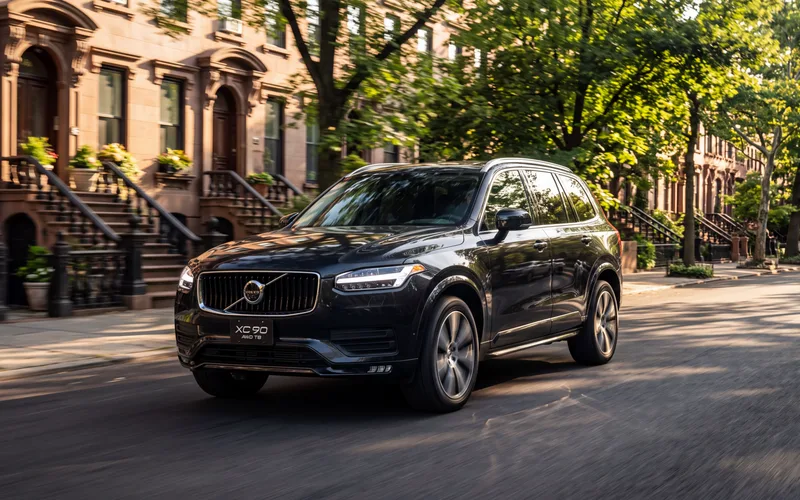 Volvo XC90Mid-Size Luxury SUVBetter at: Efficiency
The most direct three-row luxury alternative, with the full safety suite standard and a plug-in hybrid option that fixes the Q7's biggest running-cost weakness.
Compare 3.07B
3.07B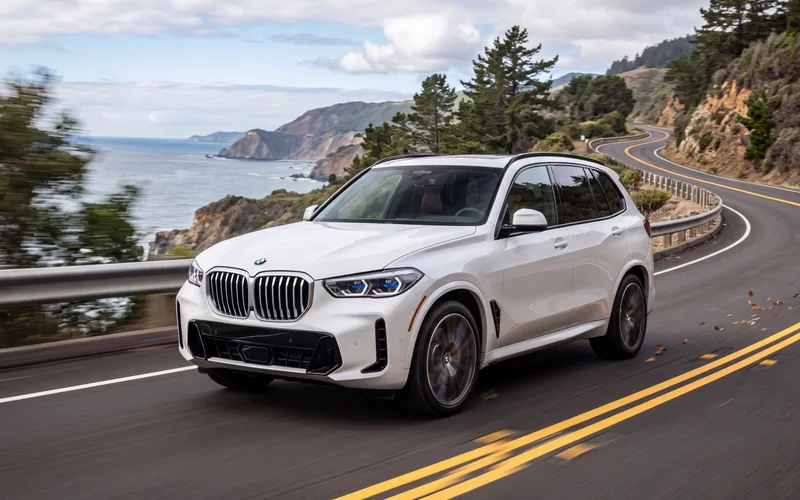 BMW X5Mid-Size Luxury SUVBetter at: Driving dynamics
The obvious German cross-shop if you'd trade the Q7's third row for sharper handling and a newer infotainment generation.
Compare 2.88B-
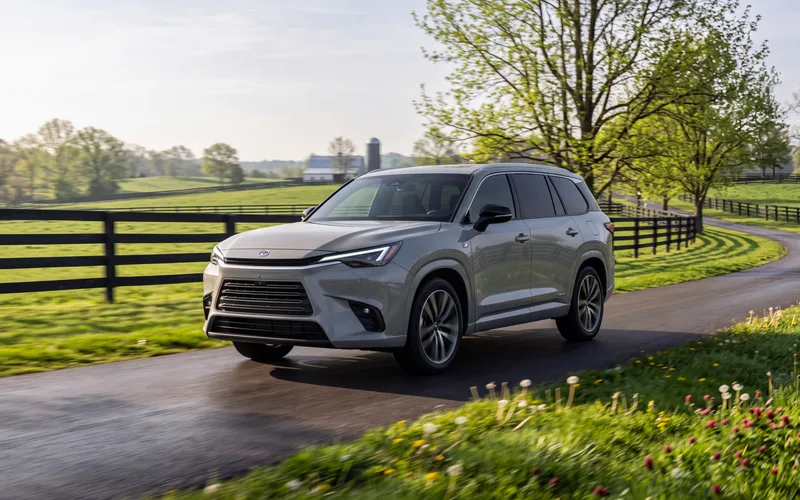 Lexus TXMid-Size Luxury SUVBetter at: Ownership cost
Costs far less to own thanks to hybrid powertrains, stronger resale and Lexus reliability, with a genuinely usable third row and more cargo space.
CompareHow it's evolved
10 scored model years · 2017–2026
Subject scores by year
Hover or tap a score to see what moved it versus the year before. A corner mark flags a big swing.
| Year | Performance | Efficiency | Safety | Space | Cost | Reliability | Tech | Use-case | Driving | Value |
|---|---|---|---|---|---|---|---|---|---|---|
| 2026 | 60 | 30 | 75 | 64 | 28 | 72 | 76 | 69 | 72 | 73 |
| 2025 | 60 | 41 | 80 | 64 | 22 | 67 | 72 | 62 | 70 | 67 |
| 2024 | 60 | 35 | 82 | 63 | 20 | 60 | 73 | 64 | 69 | 68 |
| 2023 | 60 | 35 | 78 | 62 | 20 | 67 | 69 | 62 | 69 | 68 |
| 2022 | 59 | 40 | 72 | 62 | 21 | 62 | 66 | 61 | 69 | 64 |
| 2021 | 59 | 34 | 71 | 63 | 25 | 50 | 68 | 60 | 71 | 69 |
| 2020 | 59 | 34 | 68 | 62 | 25 | 52 | 65 | 60 | 68 | 68 |
| 2019 | 57 | 35 | 65 | 62 | 29 | 60 | 55 | 57 | 67 | 72 |
| 2018 | 58 | 35 | 60 | 60 | 32 | 49 | 50 | 57 | 67 | 73 |
| 2017 | 66 | 35 | 64 | 60 | 31 | 50 | 53 | 59 | 72 | 73 |
Compare two years
Best fit & conditions
Higher scores mean a better fit for that use case. Learn more about use-case fit →
Subject profile
Academic Probation · NHTSA safety recalls
Dec 19, 2025Back over prevention: sensing system: cameraPlease see the recall report for a complete list of models. A software error may prevent the rearview camera image from displaying as intended. As such, these vehicles fail to comply with the requirements of Federal Motor Vehicle Safety Standard number 111, "Rear Visibility."
Defect
Volkswagen Group of America, Inc. (Audi) is recalling certain 2019-2026 vehicles. Please see the recall report for a complete list of models. A software error may prevent the rearview camera image from displaying as intended. As such, these vehicles fail to comply with the requirements of Federal Motor Vehicle Safety Standard number 111, "Rear Visibility."
Risk
A rearview image that does not display reduces the driver's view behind the vehicle, increasing the risk of a crash.
Remedy
Dealers will update the software, free of charge. Owner notification letters were mailed January 14, 2026. Owners may contact Audi customer service at 1-800-253-2834. Audi's number for this recall is 90TV. Vehicle Identification Numbers (VINs) involved in this recall became searchable on NHTSA.gov on December 23, 2025.
NHTSA campaign 25V900000 ↗Manufacturer no. 90TV356,894 vehicles potentially affected (all models in the campaign)Owners notified Jan 14, 2026Filed by Volkswagen Group of America, Inc.Filed as Q7, SQ7
26 recalls on other model years of the Q7 (2017–2025)
Nov 12, 2025Seat belts: front: anchorageThe driver and front passenger seat belt buckles may be missing a rivet that secures the buckle to the seat belt stalk.
Defect
Volkswagen Group of America, Inc. (Volkswagen) is recalling certain 2025 Audi RS Q8, Audi Q8, Audi Q7, and Audi SQ8 vehicles. The driver and front passenger seat belt buckles may be missing a rivet that secures the buckle to the seat belt stalk.
Risk
A seat belt that is missing a rivet may not properly restrain an occupant during a crash, increasing the risk of injury.
Remedy
Dealers will replace both front seat belt buckles, free of charge. Owner notification letters were mailed December 3, 2025. Owners may contact Audi at 1-800-253-2834. Audi's number for this recall is 692K. Vehicle Identification Numbers (VINs) involved in this recall became searchable on NHTSA.gov on November 14, 2025.
NHTSA campaign 25V777000 ↗Manufacturer no. 692K61 vehicles potentially affected (all models in the campaign)Owners notified Dec 3, 2025Filed by Volkswagen Group of America, Inc.Filed as Q7Sep 24, 2025Fuel system, gasoline: delivery: fuel pumpVolkswagen Group of America, Inc. (Volkswagen) is recalling one Audi SQ7 vehicles. The fasteners securing the high pressure fuel pump may not be tightened properly, resulting in a fuel leak.
Defect
Volkswagen Group of America, Inc. (Volkswagen) is recalling one Audi SQ7 vehicles. The fasteners securing the high pressure fuel pump may not be tightened properly, resulting in a fuel leak.
Risk
A fuel leak in the presence of an ignition source increases the risk of a fire.
Remedy
Dealers will inspect and tighten the screw connections and replace the high pressure fuel pump and fuel lines as necessary, free of charge. The one affected vehicle was repaired. Owners may contact Volkswagen customer service at 800-893-5298. Volkswagen's number for this recall is 23HD. Vehicle Identification Numbers (VINs) involved in this recall will be searchable on NHTSA.gov beginning September 26, 2025.
NHTSA campaign 25V637000 ↗Manufacturer no. 23HD1 vehicles potentially affected (all models in the campaign)Filed by Volkswagen Group of America, Inc.Filed as SQ7Mar 31, 2025Electrical system: instrument cluster/panel · Electrical system: softwareDue to a software error, the instrument panel display may fail.
Defect
Volkswagen Group of America, Inc. (Audi) is recalling certain 2021 SQ8, A6 SEDAN, A7, A8, Q7, Q8, RS6 Avant, RS7, RSQ8, S6 SEDAN, S7, S8, A6 Allroad, and SQ7 vehicles. Due to a software error, the instrument panel display may fail.
Risk
An instrument panel display that fails to show critical safety information, such as the speedometer or warning lights, increases the risk of a crash.
Remedy
Dealers will update the instrument panel module software, free of charge. Owner notification letters were mailed April 24, 2025. Owners may contact Audi customer service at 1-800-253-2834. Audi's number for this recall is 90VC.
NHTSA campaign 25V201000 ↗Manufacturer no. 90VC44,387 vehicles potentially affected (all models in the campaign)Owners notified Apr 24, 2025Filed by Volkswagen Group of America, Inc.Filed as Q7, SQ7Apr 3, 2024Air bags: sensor: occupant classification: front passengerAn electrical connection in the front passenger seat for the occupant detection system (ODS) control module may loosen and deactivate the front passenger air bag.
Defect
Volkswagen Group of America, Inc. (Volkswagen) is recalling certain 2023 Audi S5 Cabriolet, A4 Allroad, Q5 Sportback, A3 Sedan, S5 Sportback, SQ7, TT Coupe, TT Roadster, RS5 Sportback, 2024 A8, E-Tron Quattro, E-Tron Sportback Quattro, Q8, RSQ8, 2023-2024 Q3, Q5, and Q7 vehicles. An electrical connection in the front passenger seat for the occupant detection system (ODS) control module may loosen and deactivate the front passenger air bag.
Risk
A deactivated front passenger air bag will not deploy during a crash, increasing the risk of injury.
Remedy
Dealers will replace the passenger seat occupant detection system control module, free of charge. Owner notification letters were mailed on May 8, 2024. Owners may contact Audi customer service at 1-800-253-2834. Volkswagen's number for this recall is 69GU.
NHTSA campaign 24V251000 ↗Manufacturer no. 69GU91 vehicles potentially affected (all models in the campaign)Owners notified May 8, 2024Filed by Volkswagen Group of America, Inc.Filed as Q7, SQ7Dec 20, 2023Air bags: side/windowThe driver's seat side air bag may have been improperly mounted to the seatback frame. As such, these vehicles fail to comply with the requirements of Federal Motor Vehicle Safety Standard number 214, "Side Impact Protection."
Defect
Volkswagen Group of America, Inc. (Audi) is recalling certain 2023-2024 SQ8, RSQ8, Q8, Q7, and 2024 SQ7 vehicles. The driver's seat side air bag may have been improperly mounted to the seatback frame. As such, these vehicles fail to comply with the requirements of Federal Motor Vehicle Safety Standard number 214, "Side Impact Protection."
Risk
An improperly mounted air bag may not restrain an occupant as intended, increasing the risk of injury during a crash.
Remedy
Dealers will inspect and reinstall the air bag as necessary, free of charge. Owner notification letters were mailed January 17, 2024. Owners may contact Audi customer service at 1-800-253-2834. Audi's number for this recall is 69GA.
NHTSA campaign 23V868000 ↗Manufacturer no. 69GA1,001 vehicles potentially affected (all models in the campaign)Owners notified Jan 17, 2024Filed by Volkswagen Group of America, Inc.Filed as Q7, SQ7Mar 29, 2023Forward collision avoidance: sensing system: cameraIncompatibility between the front camera control software and the heating element used for the front camera on the windshield may cause the heating element to overheat.
Defect
Volkswagen Group of America, Inc. (Audi) is recalling certain 2020 Q7 vehicles. Incompatibility between the front camera control software and the heating element used for the front camera on the windshield may cause the heating element to overheat.
Risk
An overheated heating element can increase the risk of a fire.
Remedy
Dealers will update the control software and replace the heater element for the front camera, free of charge. Owner notification letters are expected to be mailed May 26, 2023. Owners may contact Audi's customer service at 1-800-253-2834. Audi's number for this recall is 90N7.
NHTSA campaign 23V212000 ↗Manufacturer no. 90N719 vehicles potentially affected (all models in the campaign)Owners notified May 10, 2023Filed by Volkswagen Group of America, Inc.Filed as Q7Oct 26, 2022Back over prevention: display function · Equipment: electrical: infotainment: video (touch)screen/monitor/unitThe infotainment main unit may become damaged internally when the vehicle is shut off, resulting in an inoperative rearview camera display the next time the vehicle is started. As such, these vehicles fail to comply with the requirements of Federal Motor Vehicle Safety Standard number 111, "Rear Visibility."
Defect
Volkswagen Group of America, Inc. (Audi) is recalling certain 2021-2022 AUDI A8, A6 Allroad, E-TRON Quattro, 2022 S3, RSQ8, RS7, RS6 Avant, Q8, Q7, Q3, E-TRON Sportback Quattro, S5 Cabriolet, E-TRON GT, S5 Sportback, A7, A6, A5 Sportback, A5 Cabriolet, A4, A4 Allroad, A3, S8, SQ7, SQ8, S6, and S4 vehicles. The infotainment main unit may become damaged internally when the vehicle is shut off, resulting in an inoperative rearview camera display the next time the vehicle is started. As such, these vehicles fail to comply with the requirements of Federal Motor Vehicle Safety Standard number 111, "Rear Visibility."
Risk
An inoperative rearview camera display reduces the driver's rear visibility, increasing the risk of a crash.
Remedy
Dealers will replace the infotainment main unit, free of charge. Owner notification letters were mailed June 6, 2022. Owners may contact Audi's customer service at 1-800-253-2834. Audi's number for this recall is 91Ei.
NHTSA campaign 22V806000 ↗Manufacturer no. 91Ei6,076 vehicles potentially affected (all models in the campaign)Owners notified Jun 6, 2023Filed by Volkswagen Group of America, Inc.Filed as Q7, SQ7Oct 5, 2022Back over prevention: display functionDue to a software issue, a blank or black screen may be displayed instead of the rearview camera image when the vehicle is placed in reverse gear. As such, these vehicles fail to comply with the requirements of Federal Motor Vehicle Safety Standard number 111, "Rear Visibility."
Defect
Volkswagen Group of America, Inc. (Volkswagen) is recalling certain 2021 Audi A8, RS7, RS6 Avant, RS5 Sportback, RS5 Coupe, Q8, Q7, Q5 Sportback, S4 Sedan, Q5, A7, A6, A6 Allroad, A5 Sportback, A5 Coupe, A5 Cabrioleet, A4 Sedan, A4 Allroad, E-Tron Sportback Quattro, SQ7, S5 Cabriolet, E-Tron Quattro, SQ8, SQ5 Sportback, SQ5, S8, S7, S6 Sedan, S5 Sportback, S5 Coupe, 2022 E-Tron GT, and 2021-2022 RSQ8 vehicles. Due to a software issue, a blank or black screen may be displayed instead of the rearview camera image when the vehicle is placed in reverse gear. As such, these vehicles fail to comply with the requirements of Federal Motor Vehicle Safety Standard number 111, "Rear Visibility."
Risk
A blank rearview camera display can reduce the driver's rear visibility, increasing the risk of a crash.
Remedy
Dealers will update the infotainment unit software, free of charge. Owner notification letters were mailed October 25, 2022. Owners may contact Audi's customer service at 1-800-253-2834. Volkswagen's number for this recall is 91DZ.
NHTSA campaign 22V742000 ↗Manufacturer no. 91DZ170,296 vehicles potentially affected (all models in the campaign)Owners notified Oct 25, 2022Filed by Volkswagen Group of America, Inc.Filed as Q7, SQ7Jul 20, 2022Fuel system, gasoline: delivery: fuel pumpA component inside the fuel pump may break, causing the fuel pump to fail.
Defect
Volkswagen Group of America, Inc. (Volkswagen) is recalling certain 2019-2021 Audi Q8, and 2020-2021 Audi Q7 vehicles. A component inside the fuel pump may break, causing the fuel pump to fail.
Risk
Fuel pump failure can cause an engine stall, increasing the risk of a crash.
Remedy
Dealers will replace the fuel pump, free of charge. Owner notification letters were mailed December 22, 2022. Owners may contact Audi's customer service at 1-800-253-2834. Audi's number for this recall is 20DR.
NHTSA campaign 22V516000 ↗Manufacturer no. 20DR49,443 vehicles potentially affected (all models in the campaign)Owners notified Dec 22, 2022Filed by Volkswagen Group of America, Inc.Filed as Q7Jan 26, 2022Suspension: rear: axle: non-powered axle assembly · TiresThe rear axle alignment may not have been inspected after the repairs for Recall 21V-295 (42L1) were performed.
Defect
Volkswagen Group of America, Inc. (Audi) is recalling certain 2019-2021 Audi A5 Sportback, RS5 Coupe, RS5 Sportback, S5 Sportback, 2020-2021 A4 Allroad, A4 Sedan, A5 Cabriolet, A5 Coupe, A6 Allroad, A6 Sedan, A7, A8, Q5, S4 Sedan, S5 Coupe, S5 Cabriolet, S6 Sedan, S7, S8, SQ5, 2021 Q5 Sportback, Q7, Q8, RS6 Avant, RS7, RSQ8, SQ5 Sportback, SQ7, and SQ8 vehicles. The rear axle alignment may not have been inspected after the repairs for Recall 21V-295 (42L1) were performed.
Risk
Rear axle misalignment may cause premature or uneven tire wear, increasing the risk of a crash.
Remedy
Dealers will inspect the rear axle, adjust the alignment as necessary, and replace any prematurely or unevenly worn tires, free of charge. Owner notification letters were mailed March 3, 2022. Owners may contact Audi customer service at 1-800-253-2834. Audi's number for this recall is 42L5.
NHTSA campaign 22V034000 ↗Manufacturer no. 42L531,058 vehicles potentially affected (all models in the campaign)Owners notified Mar 3, 2022Filed by Volkswagen Group of America, Inc.Filed as Q7, SQ7Oct 20, 2021Back over prevention: sensing system: cameraA software error may prevent the rear-view image from initially displaying when the vehicle begins to reverse. As such, these vehicles fail to comply with the requirements of Federal Motor Vehicle Safety Standard number 111, "Rear Visibility."
Defect
Volkswagen Group of America, Inc. (Audi) is recalling certain 2021 Audi A8 and S8, 2022 Audi A5 Sportback, A4 Sedan, E-Tron GT, Q3, Q5, RS6 Avant, A3 Sedan, S5 Sportback, Q5 Sportback, Q7, Q8, RSQ8, SQ7, SQ8, and S3 Sedan vehicles. A software error may prevent the rear-view image from initially displaying when the vehicle begins to reverse. As such, these vehicles fail to comply with the requirements of Federal Motor Vehicle Safety Standard number 111, "Rear Visibility."
Risk
A rear-view camera that does not display an image reduces the driver's rear view, increasing the risk of a crash.
Remedy
Dealers will update the infotainment unit parameters, free of charge. Owner notification letters were mailed November 9, 2021. Owners may contact Audi customer service at 1-800-253-2834. Audi's number for this recall is 91CR.
NHTSA campaign 21V825000 ↗Manufacturer no. 91CR2,857 vehicles potentially affected (all models in the campaign)Owners notified Nov 9, 2021Filed by Volkswagen Group of America, Inc.Filed as Q7, SQ7Aug 5, 2021Seat belts · Seat belts: rear/other: retractorThe rear seat belt automatic locking retractors may deactivate early, which can prevent the child restraint system from securing properly. As such, these vehicles fail to comply with the requirements of Federal Motor Vehicle Safety Standard number 208, "Occupant Crash Protection."
Defect
Volkswagen Group of America, Inc. (Volkswagen) is recalling certain 2021 Volkswagen ID4, Audi A4 Allroad, A4 Sedan, A5 Cabriolet, A5 Coupe, A5 Sportback, A6 Allroad, A6 Sedan, A7, A8, E-Tron Quattro, E-Tron Sportback Quattro, Q3, Q5, Q5 Sportback, Q7, Q8, RS5 Sportback, RS5 Coupe, RS6 Avant, RS7, RSQ8, S4 Sedan, S5 Cabriolet, S5 Coupe, S5 Sportback, S6 Sedan, S7, S8, SQ5, SQ5 Sportback, SQ7, SQ8, and 2021-2022 S3 Sedan vehicles. The rear seat belt automatic locking retractors may deactivate early, which can prevent the child restraint system from securing properly. As such, these vehicles fail to comply with the requirements of Federal Motor Vehicle Safety Standard number 208, "Occupant Crash Protection."
Risk
An unsecured child restraint system can increase the risk of injury during a crash.
Remedy
Dealers will inspect, and replace as necessary, the middle-rear seat belt assemblies, free of charge. Owner notification letters were mailed August 27, 2021. Owners may contact Volkswagen customer service at 1-800-893-5298 and Audi customer service at 1-800-253-2834. Volkswagen's numbers for this recall are 69CR (VW) and 69CS (Audi).
NHTSA campaign 21V606000 ↗Manufacturer no. 69CR, 69CS45,496 vehicles potentially affected (all models in the campaign)Owners notified Aug 27, 2021Filed by Volkswagen Group of America, Inc.Filed as Q7, SQ7May 12, 2021EngineCracks may develop on the surface of the engine cylinder bore.
Defect
Volkswagen Group of America, Inc. (Audi) is recalling certain 2021 Audi SQ7, RSQ8, RS7, RS6 AVANT, and SQ8 vehicles. Cracks may develop on the surface of the engine cylinder bore.
Risk
Cracks may cause engine damage and a stall or an oil leak, increasing the risk of a crash or fire.
Remedy
Dealers will replace the engine, free of charge. Owner notification letters were mailed July 9, 2021. Owners may contact Audi customer service at 1-800-253-2834. Audi's number for this recall is 10G9.
NHTSA campaign 21V339000 ↗Manufacturer no. 10G915 vehicles potentially affected (all models in the campaign)Owners notified Jul 9, 2021Filed by Volkswagen Group of America, Inc.Filed as SQ7Apr 26, 2021Suspension: rear: axle: non-powered axle assemblyThe lock nut on the trailing arm of the rear axle may break due to stress corrosion.
Defect
Volkswagen Group of America, Inc. (Audi) is recalling certain 2021 Q7, Q8, Q5 Sportback, SQ5 Sportback, RS6 Avant, RS7, RS Q8, 2020-2021 Audi S6 sedan, Q5, A8, S8, A7, A6 Allroad, A5 Cabriolet, A4 sedan, A4 Allroad, SQ5, S7, A6 sedan, S5 coupe, S4 sedan, S5 Cabriolet, A5 coupe, 2019-2021 RS5 coupe, A5 Sportback, S5 Sportback, RS5 Sportback vehicles. The lock nut on the trailing arm of the rear axle may break due to stress corrosion.
Risk
A broken lock nut may misalign the rear axle, causing a loss of control and increasing the risk of a crash.
Remedy
Dealers will replace the lock nuts and, if necessary, the associated bolts, free of charge. Owner notification letters were mailed June 4, 2021. Owners may contact Audi customer service at 1-800-253-2834. Audi's number for this recall is 42L1.
NHTSA campaign 21V295000 ↗Manufacturer no. 42L140,993 vehicles potentially affected (all models in the campaign)Owners notified Jun 4, 2021Filed by Volkswagen Group of America, Inc.Filed as Q7Feb 17, 2021Air bags: air bag/restraint control module: software · Air bags: frontalThe air bag control module may deploy the second stage of the front passenger air bag too quickly after the first stage when the seat is occupied by an unbelted child. As such, these vehicles fail to comply with the requirements of Federal Motor Vehicle Safety Standard (FMVSS) number 208, "Occupant Crash Protection."
Defect
Volkswagen Group of America, Inc. (Audi) is recalling certain 2020-2021 Audi Q7 vehicles. The air bag control module may deploy the second stage of the front passenger air bag too quickly after the first stage when the seat is occupied by an unbelted child. As such, these vehicles fail to comply with the requirements of Federal Motor Vehicle Safety Standard (FMVSS) number 208, "Occupant Crash Protection."
Risk
During a crash necessitating the deployment of the passenger air bag, the second stage may deploy too quickly when a child is in the front passenger seat, increasing the risk of injury.
Remedy
Audi will notify owners, and dealers will update the air bag control module, free of charge. The recall began March 5, 2021. Owners can contact Audi customer service at 1-800-253-2834. Audi's number for this recall is 69BV.
NHTSA campaign 21V078000 ↗Manufacturer no. 69BV26,967 vehicles potentially affected (all models in the campaign)Owners notified Mar 5, 2021Filed by Volkswagen Group of America, Inc.Filed as Q7Dec 2, 2020Air bags: sensor: side impact · Electrical systemThe electrical connector can detach from the door crash sensor in either of the front doors.
Defect
Volkswagen Group of America, Inc. (Audi) is recalling certain 2021 Audi A6 Allroad, Q7, RS6 and RS7 vehicles. The electrical connector can detach from the door crash sensor in either of the front doors.
Risk
A detached connector can delay the activation of the restraint systems, including the side air bag, curtain air bag and/or seat-belt pretensioners during a side impact crash, increasing the risk of injury.
Remedy
Audi will notify owners, and dealers will inspect, and as necessary, replace the crash sensors in both front doors, free of charge. The recall began December 23, 2020. Owners may contact Audi customer service at 1-800-253-2834. Audi's number for this recall is 69BM.
NHTSA campaign 20V749000 ↗Manufacturer no. 69BM166 vehicles potentially affected (all models in the campaign)Owners notified Dec 23, 2020Filed by Volkswagen Group of America, Inc.Filed as Q7Oct 27, 2020Structure: body: roof and pillarsThe padding on the vehicle's C-pillar may not absorb enough impact in the event of a crash.
Defect
Volkswagen Group of America, Inc. (Audi) is recalling certain 2018-2020 Audi Q7 vehicles. The padding on the vehicle's C-pillar may not absorb enough impact in the event of a crash.
Risk
In the event of a crash, an unbelted occupant's head may impact the vehicle's C-pillar padding, increasing the risk of injury.
Remedy
Audi will notify owners, and dealers will replace the deformation element on the C-pillars, free of charge. The recall began November 17, 2020. Owners may contact Audi customer service at 1-800-253-2834. Audi's number for this recall is 70H8.
NHTSA campaign 20V658000 ↗Manufacturer no. 70H894,144 vehicles potentially affected (all models in the campaign)Owners notified Nov 17, 2020Filed by Volkswagen Group of America, Inc.Filed as Q7Mar 16, 2020SteeringThe bolt connecting the steering shaft to the steering gear may loosen, possibly resulting in a loss of steering control.
Defect
Volkswagen Group of America, Inc. (Volkswagen) is recalling certain 2019 Audi Q8 and 2017-2019 Audi Q7 vehicles. The bolt connecting the steering shaft to the steering gear may loosen, possibly resulting in a loss of steering control.
Risk
A sudden loss of loss of steering control may increase the risk of a crash.
Remedy
Volkswagen will notify owners, and Audi dealers will inspect and, if necessary, replace the steering shaft bolt, as necessary, free of charge. The recall began March 31, 2020. Owners may contact Audi customer service at 1-800-253-2834. Volkswagen's number for this recall is 36A1.
NHTSA campaign 20V149000 ↗Manufacturer no. 36A1229 vehicles potentially affected (all models in the campaign)Owners notified Mar 31, 2020Filed by Volkswagen Group of America, Inc.Filed as Q7Feb 19, 2020Air bags: side/windowIn the event of a crash, the side curtain air bags may not properly inflate.
Defect
Volkswagen Group of America, Inc. (Volkswagen) is recalling certain 2019 Audi Q7 vehicles. In the event of a crash, the side curtain air bags may not properly inflate.
Risk
An air bag that does not properly inflate in the event of a crash can increase the risk of injury.
Remedy
Volkswagen will notify owners, and dealers will replace the side curtain air bags, free of charge. The recall began March 19, 2020. Owners may contact Volkswagen customer service at 1-800-893-5298. Volkswagen's number for this recall is 69AJ.
NHTSA campaign 20V093000 ↗Manufacturer no. 69AJ383 vehicles potentially affected (all models in the campaign)Owners notified Mar 19, 2020Filed by Volkswagen Group of America, Inc.Filed as Q7Feb 20, 2019Suspension: front: shock absorberThe front shock absorber forks may develop cracks allowing the shock absorbers to loosen.
Defect
Volkswagen Group of America, Inc. (Audi) is recalling certain 2019 Q7, Q8, S5 Cabriolet, and S5 Sportback vehicles. The front shock absorber forks may develop cracks allowing the shock absorbers to loosen.
Risk
Loose shock absorbers may impair vehicle steering, increasing the risk of crash.
Remedy
Audi has notified owners, and dealers will replace the shock absorber forks, free of charge. The recall began March 18, 2019. Owners may contact Audi customer service at 1-800-253-2834. Audi's number for this recall is 40O4.
NHTSA campaign 19V114000 ↗Manufacturer no. 40O4/40O634 vehicles potentially affected (all models in the campaign)Owners notified Mar 18, 2019Filed by Volkswagen Group of America, Inc.Filed as Q7Jan 16, 2019Fuel system, gasoline: fuel injection system: fuel railThe left and right fuel rails may leak fuel.
Defect
Volkswagen Group of America, Inc. (Audi) is recalling certain 2016-2018 Q7, A6 and A7 vehicles, and 2015-2018 Audi A8 vehicles. The left and right fuel rails may leak fuel.
Risk
A fuel leak in the presence of an ignition source can increase risk of a fire.
Remedy
Audi has notified owners, and dealers will replace the left and right fuel rail, free of charge. The recall began February 28, 2019. Owners may contact Audi customer service at 1-800-253-2834. Audi's number for this recall is 24DP.
NHTSA campaign 19V035000 ↗Manufacturer no. 24DP74,881 vehicles potentially affected (all models in the campaign)Owners notified Feb 28, 2019Filed by Volkswagen Group of America, Inc.Filed as Q7Dec 29, 2016Air bags: frontal: driver side: inflator module · Air bags: frontal: passenger side: inflator module · Air bags: side/window · Seat belts: pretensionerAdditionally, certain 2017 Audi Q7, A4 Sedan, A4 Allroad, and 2018 Audi Q5 vehicles are being recalled because the seat belt pretensioners may not activate properly.
Defect
Volkswagen Group of America, Inc. (Volkswagen) is recalling certain model year 2017 Audi A7, A4, A6, Volkswagen Golf and Tiguan vehicles and 2016 Volkswagen e-Golf vehicles for driver frontal air bags, passenger frontal air bags or head air bags that may not deploy properly. Additionally, certain 2017 Audi Q7, A4 Sedan, A4 Allroad, and 2018 Audi Q5 vehicles are being recalled because the seat belt pretensioners may not activate properly.
Risk
In the event of a crash, if the air bags and/or the seat belt pretensioners do not inflate or function properly, the vehicle occupants have an increased risk of injury.
Remedy
Volkswagen and Audi will notify owners, and dealers will replace the affected air bags and seat belt pretensioners, free of charge. The recall began April 2017. Owners may contact Volkswagen customer service at 1-800-893-5298 or Audi customer service at 1-800-253-2834.
NHTSA campaign 16V955000 ↗Manufacturer no. VW: 69P4; Audi 69P25,947 vehicles potentially affected (all models in the campaign)Owners notified Feb 28, 2017Filed by Volkswagen Group of America, Inc.Filed as Q7Sep 8, 2016Steering: electric power assist systemIn the affected vehicles, the electric power steering assist control unit may short circuit resulting in a loss of power steering assist.
Defect
Volkswagen Group of America, Inc. (Volkswagen) is recalling certain model year 2017 Audi Q7 vehicles manufactured November 11, 2015, to November 23, 2015. In the affected vehicles, the electric power steering assist control unit may short circuit resulting in a loss of power steering assist.
Risk
With a loss of power steering assist, extra steering effort will be required, especially at lower speeds, increasing the risk of a crash.
Remedy
Audi will notify owners, and dealers will replace the steering rack, free of charge. The recall began November 2016. Owners may contact Audi customer service at 1-800-822-2834. Volkswagen's number for this recall is 48M5.
NHTSA campaign 16V648000 ↗Manufacturer no. 48M58 vehicles potentially affected (all models in the campaign)Owners notified Nov 1, 2016Filed by Volkswagen Group of America, Inc.Filed as Q7Sep 6, 2016Electrical system: software · Exterior lightingThe affected vehicles may have been programmed with new software that inadvertently makes the side marker lights inoperative in conjunction with the parking lights or the headlights. As such, these vehicles fail to comply with the requirements of Federal Motor Vehicle Safety Standard (FMVSS) number 108, "Lamps, Reflective Devices, and Associated Equipment."
Defect
Volkswagen Group of America, Inc. (Volkswagen) is recalling certain model year 2016 TT roadster, A3 cabriolet, A3 sedan and A3 e-tron, 2016-2017 TT coupe, 2017 A4 sedan and Q7 and 2015-2017 Q3 vehicles. The affected vehicles may have been programmed with new software that inadvertently makes the side marker lights inoperative in conjunction with the parking lights or the headlights. As such, these vehicles fail to comply with the requirements of Federal Motor Vehicle Safety Standard (FMVSS) number 108, "Lamps, Reflective Devices, and Associated Equipment."
Risk
If the side marker lights do not illuminate, the vehicle may be less visible at night, increasing the risk of a crash.
Remedy
Audi will notify owners, and dealers will upload revised software to correct the issue, free of charge. This recall began November 2016. Owners may contact Audi customer service at 1-800-253-2834. Volkswagen's number for this recall is 97CB.
NHTSA campaign 16V642000 ↗Manufacturer no. 97CB79,895 vehicles potentially affected (all models in the campaign)Owners notified Nov 1, 2016Filed by Volkswagen Group of America, Inc.Filed as Q7Sep 6, 2016Seats: mid/rear assemblyIn the affected vehicles, the third row seat back may move forward under load, such as in a frontal collision. As such, the vehicles do not conform to Federal Motor Vehicle Safety Standard (FMVSS) number 207, "Seating Systems."
Defect
Volkswagen Group of America, Inc. (Volkswagen) is recalling certain model year 2017 Audi Q7 vehicles manufactured August 30, 2015, to July 10, 2016. In the affected vehicles, the third row seat back may move forward under load, such as in a frontal collision. As such, the vehicles do not conform to Federal Motor Vehicle Safety Standard (FMVSS) number 207, "Seating Systems."
Risk
If the third row seat does not remain in its adjusted position, there may be an increased risk of injury to an occupant in the event of a crash.
Remedy
Audi will notify owners, and dealers will install an additional support bracket to the seat, free of charge. The recall is expected to begin in November 2016. Owners may contact Audi customer service at 1-800-253-2834. Volkswagen's number for this recall is 72F8.
NHTSA campaign 16V641000 ↗Manufacturer no. 72F819,205 vehicles potentially affected (all models in the campaign)Owners notified Nov 1, 2016Filed by Volkswagen Group of America, Inc.Filed as Q7Jul 8, 2016Air bags: frontal: sensor/control module-inactiveDue to a software issue within the air bag control module, the frontal air bags may deploy with more force than required in certain crashes. As such, these vehicles fail to comply with the requirements of Federal Motor Vehicle Safety Standard (FMVSS) number 208, "Occupant Crash Protection."
Defect
Volkswagen Group of America, Inc. (Volkswagen) is recalling certain 2017 Audi Q7 vehicles manufactured August 30, 2015, to May 8, 2016. Due to a software issue within the air bag control module, the frontal air bags may deploy with more force than required in certain crashes. As such, these vehicles fail to comply with the requirements of Federal Motor Vehicle Safety Standard (FMVSS) number 208, "Occupant Crash Protection."
Risk
Air bags that deploy with excessive force may increase the risk of injury.
Remedy
Volkswagen will notify owners, and dealers will update the air bag control module software, free of charge. The recall began September 2016. Owners may contact Audi customer service at 1-800-253-2834. Volkswagen's number for this recall is 69O3.
NHTSA campaign 16V519000 ↗Manufacturer no. 69O314,535 vehicles potentially affected (all models in the campaign)Owners notified Sep 6, 2016Filed by Volkswagen Group of America, Inc.Filed as Q7
Source: NHTSA Office of Defects Investigation recall database, model years 2017–2026. Recalls are listed by model year as the manufacturer filed them; whether a specific car is affected depends on its VIN — check a VIN at nhtsa.gov ↗. NHTSA model names matched to this page: Q7, SQ7.
Detailed scoring by subject
1Performance & PowertrainOne of the Q7's weakest categories.2.03C
Volume 45 TFSI Premium Plus uses the 2.0L turbo I4 rated at 261 hp; 55 TFSI 3.0L V6 upgrades to 335 hp across upper trims.
45 TFSI 2.0T produces 273 lb-ft; 55 TFSI 3.0T V6 lifts torque to 369 lb-ft.
Audi quotes 6.7 s for the 45 TFSI Premium Plus (volume trim); 55 TFSI V6 runs the sprint in ~5.5 s.
Reviewers consistently praise the Q7's smooth, drama-free power delivery and quiet, well-isolated engine behavior; turbo I4 lacks V6 muscle but never feels coarse.
Eight-speed Tiptronic automatic is a long-serving ZF-derived unit widely praised as slick and well-mannered, with quick, unobtrusive shifts and no notable hunting.
Properly equipped 55 TFSI V6 and SQ7 configurations reach a maximum 7,700 lb rating — near the top of the SUV towing band.
Quattro AWD is standard across every US Q7 trim with drive-select modes and available sport differential; lacks true low range or locking diffs but delivers sophisticated on-road and light-off-road traction.
Pavement-oriented luxury 3-row; no dedicated off-road trim, no low range or locking differentials, only modest ~8 in ground clearance and a light-duty offroad drive mode.
US lineup offers two gas options (2.0T I4 and 3.0T V6) plus the 4.0T V8 SQ7 performance variant, but no hybrid, PHEV or EV — electrification lives in Audi's separate e-tron models.
2Efficiency & RangeOne of the Q7's weakest categories.0.00F
EPA figure for the volume 55 TFSI 3.0L V6 quattro; the 2.0L 45 TFSI variant nets 22 combined. Both are AWD.
EPA city figure for the 55 TFSI 3.0L V6 quattro volume trim.
EPA highway figure for the 55 TFSI 3.0L V6 quattro volume trim.
EPA-published Total Range for the 55 TFSI quattro on a 22.5-gal tank (90% usable); the 45 TFSI variant extends to ~495 mi.
EPA annual fuel cost at 15k mi/yr and current premium gasoline prices; the V6's $3,700 exceeds the SUV normalization ceiling of $3,200.
Premium gasoline is recommended (not required) on both the 45 TFSI and 55 TFSI — typical for German luxury but a meaningful ongoing cost premium over regular. Home charging is not applicable (no PHEV/BEV Q7 in the US for 2026); no E85 or diesel option.
3SafetyOne of the Q7's strongest categories.3.09B
Current-generation Q7 (MLB Evo platform) earned a 5-star NHTSA overall rating in the most recent tested model years; 2026 is a carryover of the same body-in-white with no structural changes.
Q7 has historically earned Good ratings in most IIHS crashworthiness tests but has not held a current Top Safety Pick under the tougher updated moderate-overlap and side test protocols. Structure is strong but not category-leading vs. XC90/GLE.
Audi Pre Sense front (AEB), pre sense basic, and lane departure warning are standard, but Side Assist (BSM), rear cross-traffic, and Adaptive Cruise Assist are bundled into the Convenience or Driver Assistance Package on the base Premium trim — a notable gap vs. Volvo/Genesis which include the full suite standard.
Audi pre sense city + pre sense front provide vehicle and pedestrian AEB day and night; well-reviewed in real-world tests, though not the top-scoring system in independent evaluations.
Audi Side Assist with rear cross-traffic assist is competent and includes exit warning, but is optional on base Premium trim rather than standard across the lineup.
Active Lane Assist is competent for lane departure interventions; Adaptive Cruise Assist adds mild lane centering when equipped but reviewers note it can wander and requires frequent driver input compared with best-in-class systems.
Adaptive Cruise Assist (bundled with the Driver Assistance Package) is a smooth full-speed-range system with stop-and-go, integrating ACC and lane centering; it's polished but not as advanced as BMW's or Mercedes' latest highway assist.
Audi does not offer a true hands-free highway driving system on the 2026 Q7 in the US market — no equivalent to GM Super Cruise, Ford BlueCruise, or Tesla Autopilot supervised hands-free. Adaptive Cruise Assist still requires hands on the wheel.
LED headlights are standard; HD Matrix-design LED headlights available on higher trims deliver excellent range and adaptive high-beam patterns. IIHS has rated volume-trim headlights Good on recent Q7s, but performance depends on trim.
Q7 has moderately thick pillars and a high beltline that limit natural sightlines, especially over-shoulder. Optional top-view/surround-view camera and standard rear camera help but the base Premium lacks 360 cameras.
Three-row Q7 offers LATCH anchors in outboard second-row seats plus tether anchors in the third row; second-row door openings are wide and seats slide/fold for easier third-row access, but LATCH anchors are recessed under seat covers requiring some digging.
4Space & ComfortMid-pack among this car's ten categories.2.34C+
The Q7 is a three-row luxury SUV configured 2+3+2 by default; Prestige trim offers a 6-seat layout with second-row captain's chairs.
Front headroom is competitive for the segment; the near-standard panoramic sunroof shaves about an inch.
Front legroom sits below the midpoint of the SUV band — adequate but not spacious relative to segment leaders.
Second-row headroom is generous and near the top of the SUV band.
Sliding second row provides 38.8 in of legroom — comfortable for adults but tighter than full-size three-row rivals like the BMW X7 or Mercedes GLS.
The third row is dimensionally tight (29.2 in legroom, 35.9 in headroom) — kid-friendly and fine for short trips with teens, but adults will find it cramped. Access via power-folding second row is decent.
Cargo behind the second row (third folded) is modest for a mid-size luxury SUV, well behind full-size three-rows and the Lexus TX/Mercedes GLS class.
Maximum cargo with both rows folded is on the small side for the mid-size luxury three-row segment; the Q7 has always prioritized packaging over outright volume.
Sensibly designed console, deep door bins, wireless charging pad, and power-folding third row deliver competent everyday storage — no standout innovations.
Front seats are widely praised for long-distance comfort with strong bolstering and multi-way power adjustment; Prestige adds Valcona leather and massaging front seats.
Standard adaptive air suspension on Prestige (and available on lower trims) delivers a plush, well-controlled ride that ranks near the top of the luxury three-row segment.
Acoustic front glass, thick door seals, and comprehensive sound insulation yield a hushed cabin at highway speeds that benchmarks with segment leaders.
Tri-zone climate standard (four-zone on Prestige), heated front seats and heated steering wheel standard, ventilated front seats and heated rear seats on Prestige — rich equipment, though top-tier features gate to upper trims.
5Cost of OwnershipThe Q7's lowest-graded category.0.00F
The 2026 Q7 continues the mid-cycle refresh introduced for MY2025 with a modest price walk — Premium 45 TFSI quattro is expected to start near $61,100 MSRP plus $1,295 destination (~$62,395), placing the Q7 near the top of the mid-size luxury SUV band.
Premium Plus 55 TFSI quattro — the popular volume seller adding S-line, Bang & Olufsen 3D sound, HD Matrix-design LEDs, and full driver-assist suite — is projected around $67,300 MSRP + $1,295 destination (~$68,595), landing just above the SUV band ceiling. Prestige tops the lineup near $74k.
The Q7's 3.0T V6 quattro drivetrain and larger consumables (tires, brakes, air suspension on higher trims) push 5-year service costs above the Q5. Audi Signature Care (new for 2026) absorbs scheduled maintenance for the first 3 yr / 30k mi, but post-warranty German-luxury repair risk remains elevated.
The Q7 depreciates roughly 50–52% over five years, trailing segment leaders like the Porsche Cayenne and Lexus GX. It sits close to the BMW X5 and Mercedes GLE but is held back by an aging platform perception versus fresher rivals like the Volvo XC90 and Cadillac Vistiq.
Standard Audi New Vehicle Limited Warranty — matches BMW / Mercedes-Benz but trails Genesis (5/60k) and Jaguar (5/60k) among luxury peers.
Audi does not offer a separate longer powertrain warranty — powertrain coverage matches the 4/50k basic warranty, well below segment peers like Genesis (10/100k) and Lexus (6/70k).
For 2026, Audi Signature Care is standard across the lineup — 3 yr / 30,000 mi of factory-scheduled maintenance (10k/20k/30k oil services plus a brake-fluid service), layered atop 4-year 24-hour roadside assistance, a 12-year corrosion perforation warranty, and complimentary Audi connect PLUS trials. A meaningful, multi-year benefit package matching BMW Ultimate Care+ (3/36k) and Mercedes Prepaid Maintenance offerings.
$68,595 volume-trim price minus its estimated resale value after 5 years (48% retained, or about $32,926) leaves about $35,669 in depreciation. Add the projected $8,200 in 5-year maintenance and repairs, and owning this vehicle for 5 years costs about $43,869 in total.
6Reliability & QualityGrades above the middle of the scale.2.90B-
Consumer Reports has recently rated the Q7 around average for predicted reliability, benefiting from the mature MLB Evo platform introduced in 2017 and refreshed in 2020/2025. J.D. Power quality scores for Audi have been mid-pack, with the Q7 free of the newer-technology growing pains seen in the Q8 e-tron/Q4 e-tron.
Audi consistently lands mid-pack in Consumer Reports brand reliability rankings (typically 15th–20th of 30 brands) and J.D. Power VDS, ahead of some German rivals but well behind Lexus, Toyota, and Buick. Long-term dependability is average for the luxury segment.
The current-generation Q7 has had a typical spread of recalls (fuel pump, coolant pump, backup camera software) with no catastrophic or fire-related campaigns. TSB volume is normal for a technology-heavy luxury SUV.
The Q7's 3.0-liter turbocharged V6 (EA839) and ZF 8-speed automatic form a proven, high-mileage combination shared across the VW/Audi group and Porsche Cayenne. Long-term reliability of this powertrain family is well established.
The Q7 cabin is consistently praised for class-leading material richness: Valcona leather, real aluminum/wood trim, dense soft-touch surfaces, and precise switchgear feel throughout the price range. Reviewers regularly cite it among the best in the mid-size luxury segment.
Audi has long been a benchmark for tight panel gaps and consistent assembly, and the Q7 from Bratislava reflects that. Owner complaints of rattles or misalignment are rare; initial quality reports are strong.
Audi operates roughly 300 US dealers — adequate luxury coverage in major metros but noticeably sparse in rural areas. Service satisfaction scores hover around the premium-brand average, well behind Lexus and Buick.
Audi parts and labor costs are among the highest in the industry, and independent-shop coverage is thinner than for mainstream brands. RepairPal and Consumer Reports both flag Audi ownership costs as significantly above average, with dealer-heavy sourcing for many components.
7Technology & InfotainmentThe Q7's best-graded category.3.17B
Facelifted second-gen (4M) Q7 retains Audi's dual-touchscreen MMI Touch Response setup — 10.1-inch upper display for infotainment and 8.6-inch lower display for climate/comfort — smaller than the 14.5-inch panoramic screens debuting on newer Audis like the Q5 and Q6 e-tron.
MMI Touch Response is well-executed with haptic feedback and logical menu structure, but the platform now trails Audi's newer MMI Panoramic Display in speed, graphics, and split-screen flexibility; climate absorbed into the lower screen still draws criticism from reviewers.
Wireless Apple CarPlay and wireless Android Auto are standard across all 2026 Q7 trims and mirror onto the 10.1-inch upper display automatically.
MMI Navigation Plus with natural-voice recognition and 3D map graphics is capable and connects to Audi's cloud services, but many owners still default to CarPlay/Android Auto maps for daily use.
Optional Bang & Olufsen 3D Premium Sound System (23 speakers, ~1,920W) with headrest tweeters is a segment benchmark; standard Audi 3D sound with 10 speakers is competent for the base tier.
12.3-inch Audi Virtual Cockpit Plus is standard on all trims — a highly configurable full-digital cluster with full-screen navigation view that remains a benchmark for driver information displays.
The 4M-generation Q7 predates Audi's new E3 1.2 electrical architecture, so OTA scope is largely limited to map and select infotainment updates rather than the whole-vehicle feature drops seen on newer Q5, Q6 e-tron, and Tesla/Rivian models.
myAudi app supports remote lock/unlock, remote start, climate preconditioning, vehicle status, and locate; digital key via Apple Wallet is supported, though richer connected features require Audi connect PLUS subscription after the initial trial.
USB-C ports in all three rows (two front, two second row, two third row) plus wireless phone charging pad on Premium Plus and above; no household AC outlet in the cabin.
Push-button start is standard; Comfort Key proximity entry and hands-free power tailgate are grouped in the Convenience package on Premium Plus and standard on Prestige; digital key smartphone support broadens hands-free access on equipped trims.
Rear-view camera and front/rear parking sensors standard; 360-degree top-view camera and Park Assist Plus available on Premium Plus/Prestige with clear high-resolution imagery.
Head-up display is available (not standard) as part of upper-trim packages, projecting speed, navigation, and driver-assist prompts onto the windshield; a strong offering but not the AR unit found on the newer Q6 e-tron.
8Use-Case FitMid-pack among this car's ten categories.2.69C+
Three-row 7-seat layout, wide rear doors, power-folding second row for third-row access, and outboard second-row LATCH make family logistics easy; the tight 29.2-in third row and modest 14.2 cu ft behind row three cap the score.
5-star NHTSA overall carryover with standard Audi pre sense front (AEB with pedestrian detection) and LDW is a solid baseline, but blind-spot monitoring, rear cross-traffic, and adaptive cruise are bundled into the optional Convenience/Driver Assistance package on the entry Premium — a family-safety gap vs. Volvo/Genesis rivals that include the full ADAS suite standard.
Standout seat comfort, adaptive air suspension (Prestige), quiet cabin, tri-/quad-zone climate, heated wheel and seats standard, and 450–495 mi range make it an excellent multi-hour family cruiser; modest 35.7 cu ft behind row two (third row up ~14.2) cuts luggage flexibility on trips with all seats occupied.
Smooth 8-speed automatic, refined 2.0T/3.0T powertrains, plush air suspension option, and Virtual Cockpit make daily driving relaxing and low-effort; the large 199-in footprint, absence of one-pedal driving, and no hands-free driver assist keep it a step behind the segment best.
20 MPG combined on the V6 (22 on the I4) plus premium fuel recommended pushes annual fuel cost to $3,700 — one of the pricier daily-drivers in its segment; luxury service intervals and tire/brake costs add to the running bill.
At ~199 in long with a ~40-ft turning circle, the Q7 is a handful in tight urban spaces; a top-view camera helps but requires the optional package on Premium, and thick pillars limit natural sightlines.
Properly equipped 55 TFSI V6 tows up to 7,700 lbs — one of the higher ratings in the mid-size luxury SUV field — and standard quattro AWD gives real trailer manners; no bed, no payload advantage, and luxury cabin limit non-towing work duty.
MLB Evo chassis and long-serving ZF-derived 8-speed are proven, but the Valcona-leather cabin, wood trim, and complex adaptive air suspension aren't wear-friendly for real work abuse; German luxury reliability trends average, not fleet-tough.
Cargo tie-downs, roof rails, and a factory Class-II hitch cover the basics, but there's no bed, no onboard 110V power, no upfitter switches, and no meaningful commercial upfit ecosystem — this is a luxury family hauler, not a job tool.
Class-leading seat comfort, one of the quietest cabins in the segment, plush air-suspension ride, and 450–495 mi highway range make the Q7 a superb mile-eater; only the absence of hands-free driver assist keeps it just behind BMW/Mercedes highway-touring benchmarks.
Standard quattro AWD, an 'offroad' drive mode, ~8-in ground clearance, roof rails, and a 7,700-lb tow rating make it comfortable on gravel roads and capable of hauling toys; the lack of low range, locking diffs, or dedicated off-road hardware keeps it firmly in the pavement-plus category.
Sliding/folding second row, power-folding third row, standard roof rails, optional Class-II hitch, and 69.6 cu ft max cargo cover most gear scenarios well; total volume is below segment-leading three-rows (GLS, TX) so bulky loads with all seats up (14.2 cu ft) are a real squeeze.
9Driving ExperienceGrades above the middle of the scale.2.86B-
Composed three-row dynamics on the MLB Evo platform: minimal body roll, tight for its ~5,200-lb curb weight, but softer and less agile than the Q8 coupe sibling or a BMW X5. Optional air suspension and rear-wheel steering meaningfully sharpen turn-in.
Accurate and precisely weighted with better on-center feel than most three-row luxury SUVs, though still relatively numb compared to BMW X5 or Porsche Cayenne standards.
Smooth, linear pedal with strong, confident stops; no reports of fade or grabby behavior in reviews of the current-generation Q7.
48-volt mild-hybrid 2.0T and 3.0T V6 both pair with an 8-speed automatic that delivers imperceptible shifts and smooth power delivery; only demerit is noticeable tip-in lag in Comfort mode.
Foam-backed carpet, dedicated wheel-well insulation, and acoustic glass deliver one of the quieter cabins in the mid-size luxury SUV class; V6 emits a pleasant, muted growl only under hard throttle.
Corrected from prior placeholder. At 41.0 ft the Q7 is near the poor end of the SUV normalization band — expected for a ~199-in-long three-row on a 117.9-in wheelbase; optional four-wheel steering tightens the real-world radius but is not reflected in the published spec.
Broad seat and wheel adjustability, commanding seating position, and logical control placement; a physical climate row remains alongside the dual-screen MMI, avoiding the touch-heavy annoyances of some rivals.
Pleasant and confident but not the character-forward choice in the segment — the Q7 leans comfort-luxury over driver engagement. Enthusiasts steer toward the SQ7 or a BMW X5 M50; the base Q7 is composed but forgettable behind the wheel.
10Value & Market PositionOne of the Q7's strongest categories.2.93B-
Base Premium 45 TFSI (~$61k) includes quattro AWD, three-row/7-seat layout, panoramic sunroof, LED headlights, dual-screen MMI touch response, Audi virtual cockpit, wireless Apple CarPlay/Android Auto, and Audi pre sense active safety suite — generous relative to BMW X5 and GLE base trims which require more optioning for parity.
Strong content-for-price versus segment: 7-seat standard, quattro AWD, and 335-hp turbo V6 (55 TFSI) at ~$68k undercuts comparably-equipped X5 xDrive40i and GLE 450 by a few thousand. Loses ground to Lexus RX/TX for reliability and Genesis GV80 for outright value.
Two powertrains (45 TFSI 2.0T, 55 TFSI 3.0T V6 mild-hybrid) across three trims (Premium, Premium Plus, Prestige) plus SQ7 performance variant — six mainstream configurations covering ~$61k to ~$80k, with SQ7 extending past $95k. Reasonable spread though narrower than BMW X5's PHEV/M60i breadth.
Steady mid-pack seller in the mid-size luxury SUV segment: recent US annual volume runs in the ~15-20k range, well behind BMW X5, Mercedes GLE, Lexus RX, and Acura MDX. Aging second-generation platform (2017 introduction) constrains momentum despite the 2025 refresh.
Audi maintains strong aspirational status among the German luxury three, viewed as more tech-forward and design-conscious than direct rivals. Slightly below Mercedes/BMW badge equity for some buyers, but Q7 badge in particular retains a loyal three-row family-luxury following.
Audi typically supports Q7 with meaningful lease specials and financing offers, and the model's late-cycle position plus tariff/inventory pressure has produced solid negotiability in 2026. Not a fire-sale but reliably below MSRP.
Current second-generation platform launched for 2017; received a significant mid-cycle facelift for 2025 (new SQ7-derived front fascia, LED Matrix headlights, redesigned dual-screen MMI cockpit) that carries into 2026. Platform underpinnings are aging and a next-generation electrified successor is expected within 1-2 years, adding replacement-risk for buyers.
Consistently well-reviewed for interior quality, ride comfort, and quiet cabin, but rarely wins mid-size luxury SUV comparison tests against BMW X5, GLE, and Lexus RX/TX. Solid IIHS safety record and mid-pack finishes in KBB, Edmunds, and Car and Driver rankings — no recent 10Best or NACTOY wins.