
The verdict
A mixed-report sports car, strong on driving and held back by use-case.
The 2026 BMW Z4 is a genuinely lovely two-seat roadster in its final year — production ends in March 2026 — and it drives like a BMW should: 255 hp and 5.2 seconds to 60 in the volume sDrive30i, one of the best automatics ever built, and a cabin nicer than anything at this price outside Porsche. What it is not is sensible. At $57,450 to start (more like $62,000 as people actually buy it), 28 mpg on required premium, roughly $8,500 in five-year maintenance, two seats and a 9.9 cu-ft trunk, it is a pure second car with no all-wheel drive and a 10.25-inch screen that already looks a generation old. Buy it because you want an open-top BMW with a straight-six option and a manual on the M40i — not because the numbers add up.
Jump to scoresStrengths
- Drives beautifully, shifts even better
- Engines that go the distance
- A cabin that justifies the price
What holds it back
- Two seats, no back seat, no exceptions
- Expensive to buy, and the warranty does not soften it
- Running costs add up fast
Top alternatives
Cars shoppers cross-shop with the BMW Z4 1.92C-
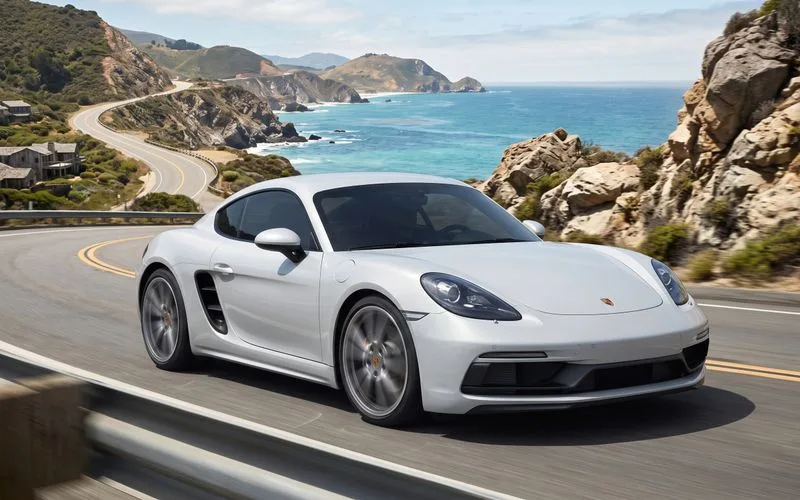 Porsche 718 BoxsterSports CarBetter at: Driving purity
If you're spending this kind of money on a two-seat roadster, the Boxster delivers the steering feel and mid-engine balance the Z4 is repeatedly marked down for.
Compare 2.83B-
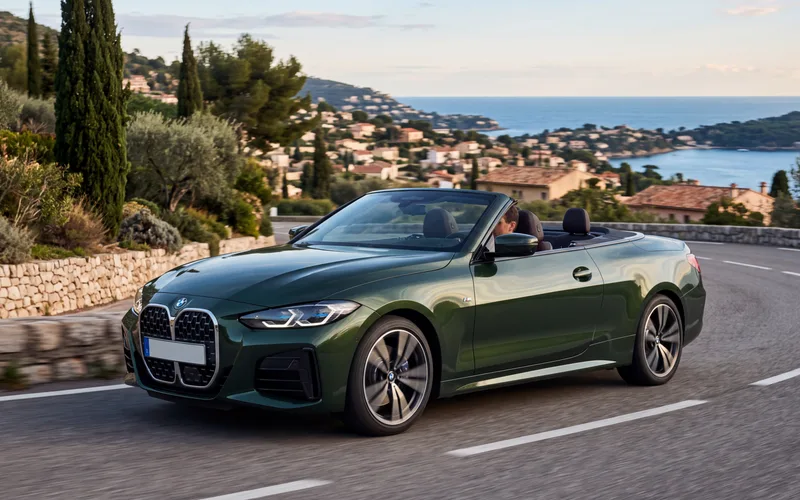 BMW 4 Series ConvertibleLuxury CoupeBetter at: Everyday usability
Same BMW open-air experience with two extra seats, available all-wheel drive and a much bigger screen — the version you can actually own as your only car.
Compare 2.08C
2.08C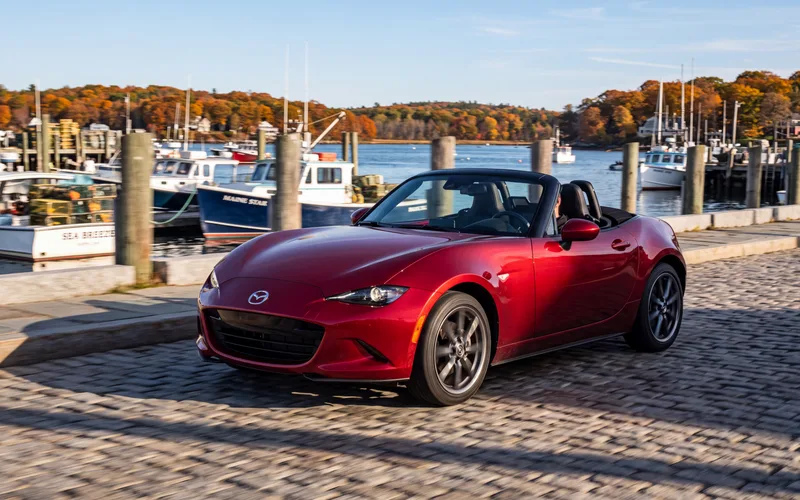 Mazda MX-5 MiataSports CarBetter at: Value
Roughly half the money for arguably more fun per mile, with far lower fuel and maintenance costs than the Z4's premium-only ~$2,450 a year and ~$8,500 five-year service bill.
CompareHow it's evolved
8 scored model years · 2019–2026
Subject scores by year
Hover or tap a score to see what moved it versus the year before. A corner mark flags a big swing.
| Year | Performance | Efficiency | Safety | Space | Cost | Reliability | Tech | Use-case | Driving | Value |
|---|---|---|---|---|---|---|---|---|---|---|
| 2026 | 56 | 34 | 61 | 54 | 38 | 77 | 76 | 31 | 78 | 67 |
| 2025 | 56 | 30 | 55 | 54 | 39 | 78 | 73 | 30 | 77 | 69 |
| 2024 | 55 | 30 | 51 | 54 | 40 | 75 | 72 | 32 | 76 | 68 |
| 2023 | 51 | 30 | 51 | 53 | 42 | 77 | 73 | 31 | 77 | 69 |
| 2022 | 51 | 30 | 50 | 52 | 42 | 74 | 69 | 30 | 77 | 64 |
| 2021 | 51 | 30 | 50 | 52 | 43 | 73 | 70 | 31 | 77 | 69 |
| 2020 | 51 | 26 | 50 | 52 | 40 | 73 | 68 | 30 | 77 | 71 |
| 2019 | 49 | 30 | 50 | 52 | 42 | 71 | 66 | 30 | 76 | 68 |
Compare two years
Best fit & conditions
Higher scores mean a better fit for that use case. Learn more about use-case fit →
Subject profile
Academic Probation · NHTSA safety recalls
No NHTSA safety recall is on record for the 2026 BMW Z4. Other model years of the Z4 have 12 — listed below.
12 recalls on other model years of the Z4 (2019–2023)
Jan 30, 2026Electrical system: starter assemblyPlease see the recall report for a complete list of all models. The engine starter may overheat and catch fire due to wear on an internal component.
Defect
BMW of North America, LLC (BMW) is recalling certain 2021-2023 Toyota Supra, 2022-2023 2 Series Coupe, 2021-2024 5 Series (xDrive), 2021-2022 Z4, 2022-2024 4 Series (Gran Coupe), 2021-2024 4 Series (Convertible and xDrive Convertible), 2021-2023 4 Series (Coupe), 2021-2024 3 Series, 2021-2023 X4, 2021-2024 X3 vehicles. Please see the recall report for a complete list of all models. The engine starter may overheat and catch fire due to wear on an internal component.
Risk
Fire increases the risk of injury.
Remedy
Dealers will replace the engine starter, free of charge. Owner notification letters were mailed July 21, 2026. Owners may contact BMW customer service at 1-800-525-7417 or Toyota's customer service at 1-800-331-4331. Vehicle Identification Numbers (VINs) involved in this recall will be searchable on NHTSA.gov beginning March 24, 2026.
NHTSA campaign 26V056000 ↗87,394 vehicles potentially affected (all models in the campaign)Owners notified Mar 27, 2026Filed by BMW of North America, LLCFiled as Z4Sep 23, 2025Electrical system: starter assembly: relayThe engine starter relay may corrode, causing the relay to overheat and short circuit.
Defect
BMW of North America, LLC (BMW) is recalling certain 2019-2021 BMW 330i, 2019-2022 BMW Z4, 2020-2022 BMW 530i, X3, X4, Toyota Supra, 2021-2022 BMW 430i, 430i Convertible, and 2022 BMW 230i vehicles. The engine starter relay may corrode, causing the relay to overheat and short circuit.
Risk
A short circuit in the starter relay may increase the risk of a fire.
Remedy
Owners are advised to park their vehicles outside and away from structures until the remedy is complete. Dealers will replace the engine starter, free of charge. Owner notification letters were mailed February 6, 2026. Owners may contact BMW customer service at 1-800-525-7417. Vehicle Identification Numbers (VINs) involved in this recall became searchable on NHTSA.gov November 14, 2025.
NHTSA campaign 25V636000 ↗199,674 vehicles potentially affected (all models in the campaign)Owners notified Feb 6, 2026Filed by BMW of North America, LLCFiled as Z4Dec 6, 2023Power train: automatic transmission: control module (tcm/pcm/tecm)The weld seam of the integrated transmission control unit's cover may not have been manufactured properly, which could allow automatic transmission oil to leak into the transmission control unit.
Defect
BMW of North America, LLC (BMW) is recalling certain 2023 Toyota GR Supra, 3 Series Sedan (330i xDrive, M340i xDrive, M3), 5 Series Sedan (530i, 530i xDrive, M5), 4 Series Gran Coupe (430i, 430i xDrive), 4 Series Coupe (430i, 430i xDrive, M440i xDrive), 4 Series Convertible (430i, 430i xDrive, M440i xDrive), 8 Series Coupe (840i, M850i xDrive, M8), 8 Series Convertible (840i, M850i xDrive, M8), 8 Series Gran Coupe (850i xDrive, M8), X3 SAV (X3 xDrive30i, X3M), X4 SAV (X4 xDrive30i), X5 SAV (X5 xDrive40i, X5 M50i, X5M), X6 SAV (X6 xDrive40i, X6 M50i, X6M), and Z4 sDrive30i, Z4 M40i vehicles. The weld seam of the integrated transmission control unit's cover may not have been manufactured properly, which could allow automatic transmission oil to leak into the transmission control unit.
Risk
Transmission oil that leaks into the control unit can lead to a seizure of the transmission gears, causing a sudden loss of drive power and increasing the risk of a crash.
Remedy
Dealers will replace the transmission mechatronics module and the automatic transmission fluid, as necessary, free of charge. Owner notification letters were mailed January 26, 2024. Owners may contact BMW customer service at 1-800-525-7417.
NHTSA campaign 23V821000 ↗Manufacturer no. Toyota - 23TA14552 vehicles potentially affected (all models in the campaign)Owners notified Jan 26, 2024Filed by BMW of North America, LLCFiled as Z4Feb 17, 2023Electrical system: software · Visibility: power window devices and controlsWhen the digital key is removed from the vehicle, the Electronic Control Unit (ECU) software may still allow the power windows and sunroof to be closed. As such, these vehicles fail to comply with the requirements of Federal Motor Vehicle Safety Standard number 118, "Power-operated Window Systems."
Defect
BMW of North Americal, LLC (BMW) is recalling certain 2023 8 Series Coupe (840i, 840i xDrive, M850i xDrive, M8), 8 Series Convertible (840i, 840i xDrive, M850i xDrive, M8), 8 Series Gran Coupe (840i, 840i xDrive, M850i xDrive, M8, Alpine B8 xDrive), 2 Series Coupe (230i, 230i xDrive, M240i xDrive, M2), and 2022-2023 Z4 sDrive30i, Z4 M40i vehicles. When the digital key is removed from the vehicle, the Electronic Control Unit (ECU) software may still allow the power windows and sunroof to be closed. As such, these vehicles fail to comply with the requirements of Federal Motor Vehicle Safety Standard number 118, "Power-operated Window Systems."
Risk
Unintentionally closing the windows or sunroof without the key present can increase the risk of injury to occupants inside the vehicle.
Remedy
Dealers will update the software for the Electronic Control Unit (ECU), free of charge. In addition, the digital key function via cellular service and Wi-Fi capability will be deactivated until the vehicle is updated with new software. Owner notification letters are expected to be mailed April 11, 2023. Owners may contact BMW customer service at 1-800-525-7417.
NHTSA campaign 23V099000 ↗3,193 vehicles potentially affected (all models in the campaign)Owners notified Apr 18, 2023Filed by BMW of North America, LLCFiled as Z4Aug 2, 2021EngineDuring engine start, the engine management software may cause loss of braking assist. Full mechanical braking (without assist) remains available.
Defect
BMW of North America, LLC (BMW) is recalling certain 2020 M340i, M340i xDrive, 540i, 540i xDrive, X3 M40i, 2020-2021 X4 M40i, 745Le xDrive, 2019-2021 Z4 M40i, and 2020-2021 Toyota Supra vehicles. During engine start, the engine management software may cause loss of braking assist. Full mechanical braking (without assist) remains available.
Risk
Loss of braking assist can increase the risk of a crash.
Remedy
Dealers will update the engine management software, free of charge. Owner notification letters were mailed on September 17, 2021. Owners may contact BMW customer service at 1-800-525-7417.
NHTSA campaign 21V598000 ↗50,024 vehicles potentially affected (all models in the campaign)Owners notified Sep 17, 2021Filed by BMW of North America, LLCFiled as Z4Jul 21, 2021Seat beltsThe passenger seat belt Automatic Locking Retractor (ALR) may deactivate early, before the webbing fully retracts. As such, these assemblies fail to comply with the requirements of Federal Motor Vehicle Safety Standard number 208, "Occupant Crash Protection."
Defect
BMW of North America, LLC (BMW) is recalling certain 2021 2 Series (230i, 230i xDrive, M240i, M240i xDrive), 330e, 330e Xdrive, 4 Series Coupe (430i, 430i xDrive, M440i xDrive) M4 Coupe, M4 Competition Coupe, BMW 4 Series Convertible (430i, M440i), BMW X1 sDrive28i, xDrive28i, 2 Series Gran Coupe (228i, 228i xDrive, M235i xDrive), M2 Competition Coupe, 330i, 330i xDrive, M340i, M340i xDrive, M3, M3 Competition, 530i, 530i xDrive, 540i, 540i xDrive, MINI Hardtop 2 Door (Cooper, CooperS, JCW), X2 sDrive28i, X2 xDrive28i, X2 M35i, Z4 sDrive30i, Z4 M40i, MINI Hardtop 2 Door (Cooper SE), MINI Convertible (Cooper, Cooper S, JCW), MINI Clubman (Cooper S, Cooper S All4, JCW), MINI Countryman (Cooper, Cooper All4, Cooper S, Cooper S All4, JCW All4), Rolls Royce Ghost, MINI Countryman (Cooper S E All4), Rolls Royce Phantom, Rolls Royce Cullinan, and Toyota Supra vehicles. The passenger seat belt Automatic Locking Retractor (ALR) may deactivate early, before the webbing fully retracts. As such, these assemblies fail to comply with the requirements of Federal Motor Vehicle Safety Standard number 208, "Occupant Crash Protection."
Risk
During a crash, a seat belt retractor that does not function as intended increases the risk of injury.
Remedy
Dealers will inspect the seat belt retractors (including the seat belts) and, if necessary, replace the retractors, free of charge. Owner notification letters were mailed on September 3, 2021. Owners may contact BMW customer service at 1-800-525-7417; 1-866-825-1525 (MINI); 1-877-877-3735 (Rolls Royce); and 1-888-270-9371 (Toyota).
NHTSA campaign 21V554000 ↗21,537 vehicles potentially affected (all models in the campaign)Owners notified Sep 3, 2021Filed by BMW of North America, LLCFiled as Z4Nov 12, 2020Fuel system, gasoline: storage: tank assemblyThe weld between the fuel tank halves may have been insufficiently welded, causing the weld to fail.
Defect
BMW of North America, LLC (BMW) is recalling certain 2020-2021 Z4 and 2020-2021 Toyota Supra vehicles. The weld between the fuel tank halves may have been insufficiently welded, causing the weld to fail.
Risk
The failed weld may allow fuel to leak, increasing the risk of a fire in the presence of an ignition source.
Remedy
BMW will notify owners, and dealers will replace the fuel tank, free of charge. The recall began December 18, 2020. Owners may contact BMW customer service at 1-800-525-7417 or Toyota customer service at 1-888-270-9371.
NHTSA campaign 20V700000 ↗Manufacturer no. Toyota: 20TB1649 vehicles potentially affected (all models in the campaign)Owners notified Dec 18, 2020Filed by BMW of North America, LLCFiled as Z4Aug 27, 2020Exterior lighting: headlightsThe headlamps are able to be adjusted horizontally. As such, these vehicles fail to comply with the requirements of Federal Motor Vehicle Safety Standard number 108, "Lamps, Reflective Devices and Associated Equipment."
Defect
BMW of North America, LLC (BMW) is recalling certain 2019-2020 Z4 sDrive30i, Z4 M40i and 2020 Toyota Supra vehicles. The headlamps are able to be adjusted horizontally. As such, these vehicles fail to comply with the requirements of Federal Motor Vehicle Safety Standard number 108, "Lamps, Reflective Devices and Associated Equipment."
Risk
Should the headlamps be adjusted horizontally, there could be increased glare and reduced visibility for oncoming drivers, or reduced visibility for the vehicle operator, thereby increasing the risk of a crash.
Remedy
BMW will notify owners, and dealers will inspect the headlamp vertical and horizontal adjustment plugs, correcting them as necessary, free of charge. The recall began December 23, 2020. BMW owners may contact BMW customer service at 1-800-525-7417 or Toyota owners may contact Toyota customer service at 1-888-270-9371.
NHTSA campaign 20V516000 ↗4,265 vehicles potentially affected (all models in the campaign)Owners notified Dec 23, 2020Filed by BMW of North America, LLCFiled as Z4Jun 15, 2020Steering: linkages: tie rod assemblyIn certain driving conditions, such as high temperatures and rough road surfaces, a steering gear tie rod may become damaged, possibly resulting in a fractured tie rod.
Defect
BMW of North America, LLC (BMW) is recalling certain 2019 Z4 sDrive30i, 2019-2020 330i xDrive, M340i and M340i xDrive, 2020 X3M and X4M, and Toyota Supra vehicles. In certain driving conditions, such as high temperatures and rough road surfaces, a steering gear tie rod may become damaged, possibly resulting in a fractured tie rod.
Risk
A damaged or fractured tie rod may affect vehicle handling and control, increasing the risk of a crash.
Remedy
BMW and Toyota will notify owners, and dealers will replace the steering gear tie rods, free of charge. The recall began August 14, 2020. Owners may contact BMW customer service at 1-800-525-7417 or Toyota customer service at 1-888-270-9371.
NHTSA campaign 20V355000 ↗Manufacturer no. Toyota: 20TA092,779 vehicles potentially affected (all models in the campaign)Owners notified Aug 14, 2020Filed by BMW of North America, LLCFiled as Z4Nov 27, 2019Exterior lighting: headlightsThe headlight control units may fail causing a loss of one or both of the headlights.
Defect
BMW of North America, LLC (BMW) is recalling certain 2020 Z4 M40i, Z4 sDrive30i, 330i and 330i xDrive vehicles as well as 2020 Toyota Supra vehicles. The headlight control units may fail causing a loss of one or both of the headlights.
Risk
Headlight failure can reduce the driver's visibility, increasing the risk of a crash.
Remedy
BMW will notify owners, and dealers will replace the headlight control units, free of charge. The recall is expected to begin January 17, 2020. Owners may contact BMW customer service at 1-800-525-7417 or Toyota customer service at 1-888-270-9371.
NHTSA campaign 19V850000 ↗Manufacturer no. Toyota - 19TA20245 vehicles potentially affected (all models in the campaign)Owners notified Jan 24, 2020Filed by BMW of North America, LLCFiled as Z4Oct 15, 2019EngineThe needle roller bearings of the counterbalance shafts may have been improperly installed, potentially causing the counterbalance shaft to loosen.
Defect
BMW of North America, LLC (BMW) is recalling certain 2019-2020 330i, 330i xDrive, and 2019 Z4 vehicles. The needle roller bearings of the counterbalance shafts may have been improperly installed, potentially causing the counterbalance shaft to loosen.
Risk
If the counterbalance shaft loosens, severe engine damage could occur, increasing the risk of a crash.
Remedy
BMW will notify owners, and dealers will replace the engine, free of charge. The recall began December 13, 2019. Owners may contact BMW customer service at 1-800-525-7417.
NHTSA campaign 19V732000 ↗217 vehicles potentially affected (all models in the campaign)Owners notified Dec 13, 2019Filed by BMW of North America, LLCFiled as Z4Sep 27, 2019Back over prevention: sensing system: cameraThe back-up camera and display settings can be adjusted such that the rear view image is no longer visible and the system will retain that setting the next time the vehicle is placed in reverse. As such, these vehicles fail to comply with the requirements of Federal Motor Vehicle Safety Standard (FMVSS) number 111, "Rearview Mirrors."
Defect
BMW of North America, LLC (BMW) is recalling certain 2018 540d, 2018-2020 530i, 530i xDrive, 540i, 540i xDrive, M550i xDrive, M5, 530e, 530e xDrive, X3 sDrive, X3 xDrive, X3 M40i, X3 M, and 2019-2020 X4 xDrive, X4 M40i, X4 M, X7 xDrive, X7 M50i, 740Li, 740Li xDrive, 750Li, 750Li xDrive, 8 Series Convertible and Coupe 840i, 840i xDrive, M850i xDrive, X5 sDrive, X5 xDrive, X5 M50i, X6 xDrive, X6 M50i, 330i, 330i xDrive, M340i, M340i xDrive, Z4 sDrive, Z4 M40i, 740Le xDrive and 745Le xDrive, 2018-2019 640i xDrive Gran Turismo and Rolls-Royce Phantom, 2019 M850i xDrive Gran Coupe and Rolls-Royce Cullinan and 2020 Toyota Supra vehicles. The back-up camera and display settings can be adjusted such that the rear view image is no longer visible and the system will retain that setting the next time the vehicle is placed in reverse. As such, these vehicles fail to comply with the requirements of Federal Motor Vehicle Safety Standard (FMVSS) number 111, "Rearview Mirrors."
Risk
The lack of an image in the back-up camera display increases the risk of a crash.
Remedy
BMW will notify owners, and dealers will update the back-up camera software, free of charge. The recall began November 8, 2019. Owners may contact BMW customer service at 1-800-525-7417 or Rolls-Royce at 1-877-877-3735. Toyota owners may contact Toyota customer service at 1-888-270-9371.
NHTSA campaign 19V684000 ↗257,473 vehicles potentially affected (all models in the campaign)Owners notified Nov 8, 2019Filed by BMW of North America, LLCFiled as Z4
Source: NHTSA Office of Defects Investigation recall database, model years 2019–2026. Recalls are listed by model year as the manufacturer filed them; whether a specific car is affected depends on its VIN — check a VIN at nhtsa.gov ↗. NHTSA model names matched to this page: Z4.
Detailed scoring by subject
1Performance & PowertrainMid-pack among this car's ten categories.1.75C-
sDrive30i volume trim uses BMW's B48 2.0L turbo I4 rated at 255 hp; M40i steps up to the 3.0L B58 turbo I6 at 382 hp.
sDrive30i produces 295 lb-ft from 1,550–4,400 rpm; M40i's I6 makes 369 lb-ft.
BMW-claimed 5.2 s for sDrive30i, corroborated by instrumented tests; M40i drops to 3.9 s with the 8-speed automatic.
B48 delivers a broad torque plateau with minimal turbo lag and a smooth top end; the M40i's B58 straight-six is widely praised as one of the segment's most refined engines.
The ZF 8HP 8-speed automatic is class-leading — crisp, well-timed shifts and responsive manual mode via paddles; M40i also offers an optional 6-speed manual (Handschalter package) for enthusiasts.
The Z4 is rear-wheel drive only across every trim — no xDrive AWD option is offered on this platform.
Two distinct gas powertrains (2.0L turbo I4 and 3.0L turbo I6) cover mainstream and performance buyers, but there is no hybrid, PHEV, or EV variant in the Z4 lineup.
2Efficiency & RangeOne of the Z4's weakest categories.0.24F
EPA combined for the volume 2.0L sDrive30i (255 hp) is 28 mpg; the 3.0L I6 M40i drops to 25 mpg combined.
EPA city rating for the volume sDrive30i trim.
EPA highway rating for the volume sDrive30i trim.
Computed from BMW's 52 L (~13.7 US gal) tank capacity and 28 mpg EPA combined for the sDrive30i.
EPA estimate at 15k mi/yr, 55/45 city/hwy split, premium unleaded. M40i is higher due to lower MPG.
Both Z4 trims require premium unleaded (91+ octane) per BMW; the twin-scroll turbo B48 and B58 engines are tuned for it. No E85, no home-charge option — a costly, single-fuel setup that lands in the lower band.
3SafetyMid-pack among this car's ten categories.2.12C
The G29-generation Z4 has not been crash-tested by NHTSA — a common outcome for low-volume two-seat convertibles. Estimate held to a mid-range value that reflects a modern BMW body structure without any tested result to lean on.
The Z4 has not been tested by IIHS for crashworthiness in the G29 generation, so no TSP/TSP+ award and no individual Good ratings exist. Untested with no known safety concerns and a modern BMW structure warrants the low end of the mostly-Good band rather than the untested-with-known-concerns floor.
Active Driving Assistant is standard on sDrive30i and M40i: forward collision warning with automatic city braking and pedestrian detection, blind-spot detection, lane departure warning, rear cross-traffic alert, and speed limit info. Adaptive cruise control and active lane keeping are bundled in the optional Driving Assistance Package rather than standard, keeping the score out of the top band.
The Z4's AEB with pedestrian detection uses the same generation of BMW system deployed across the current lineup, which in IIHS-tested BMWs earns Acceptable-to-Good vehicle-to-vehicle results but has not itself been evaluated in the Z4. Score reflects a competent modern system without a Z4-specific IIHS result confirming night-pedestrian performance.
Blind Spot Detection and Rear Cross Traffic Alert come standard on every Z4 trim as part of Active Driving Assistant, with visual, audible, and steering-corrective warnings that reviewers have praised on other BMWs. Alert-plus-intervention across the board keeps the score in the top band.
Lane departure warning is standard, but Active Lane Keeping Assistant with steering intervention is only available as part of the optional Driving Assistance Package. When equipped, reviewers describe BMW's lane centering as competent but occasionally hesitant on lane-marking gaps versus best-in-class systems.
Active Cruise Control with Stop & Go is optional (Driving Assistance Package), not standard on the volume sDrive30i. BMW's ACC is refined with smooth transitions and good stop-and-go behavior when equipped, but the option-only status prevents a top-band score.
The Z4 does not offer BMW's Highway Assistant hands-free system in any configuration — that feature is limited to select 5 Series, 7 Series, and iX/i7 variants with the required camera hardware. Drivers must keep hands on the wheel with the Z4's steering-assist systems.
Full-LED headlights with cornering function are standard, and Adaptive LED headlights with variable light distribution are optional. Reviewers rate BMW's LED units competent but not class-leading, and the Z4 has no IIHS headlight rating to confirm Good status across trims.
Top-down visibility is excellent — an inherent convertible advantage. With the soft top raised, thick B/C-pillar structure and a small rear window compromise over-the-shoulder and rearward sightlines. Rearview camera and front/rear PDC are standard; a 360-degree camera is optional but does not eliminate the top-up blind zones.
4Space & ComfortGrades below the middle of the scale.1.61D
The Z4 is a strict two-seat roadster across sDrive30i and M40i trims — no rear bench available.
Adequate front headroom for a soft-top roadster; the low seating position offsets the shallow roofline.
Long front legroom for a compact roadster — competitive with the Boxster and better than the Miata.
Trunk volume is unchanged whether the soft top is stowed or raised — a practical touch, but capacity is small vs. proper convertibles.
Sparse in-cabin storage typical of a compact roadster: small door pockets, shallow center-console cubby, no clever solutions like a frunk or hidden bins. Wireless charging pad and cupholders are the extent of it.
Standard sport seats with power adjustment and driver memory earn praise for long-drive support; optional M Sport seats add adjustable bolsters. Firm but not punishing over multi-hour stints.
Firm sports-car damping that stays composed on smooth pavement; adaptive M suspension (standard on M40i, optional on sDrive30i) tames sharp impacts but never approaches a luxury-coupe ride. Below the Boxster's PASM for outright plushness.
Soft-top construction lets in more wind and road noise at highway speed than the fixed-roof Supra platform-mate; better sealed than a Miata but noticeably louder than metal-roof convertibles like the CLE.
Heated seats standard; heated steering wheel and BMW's neck warmer (Air Collar) available — a genuinely useful open-top feature. Dual-zone auto climate standard. No ventilated seats available, a real gap on a hot-weather convertible.
5Cost of OwnershipOne of the Z4's weakest categories.0.53F
Base sDrive30i lists at $56,100 plus $1,350 destination for 2026, per BMW USA order guides and Car and Driver's 2026 pricing recap. This is the final production year (G29 sunset in March 2026), so pricing sits at the top of the segment band.
sDrive30i is the higher-volume trim; a representative build with the Premium Package (Head-Up Display, heated seats, driver assist) and common paint/interior options lands near $62,000. M40i buyers typically cross into the low-$70s once options are added.
Edmunds True Cost to Own for the current-gen Z4 sDrive30i estimates ~$8,271 maintenance + ~$3,007 repairs across five years; excluding the highly variable repair line the maintenance-heavy figure sits around $8,500. Typical of a luxury German convertible with premium parts and dealer service pricing.
iSeeCars pegs 5-yr Z4 depreciation at ~43.5% (56.5% retained); CarEdge is more optimistic at ~40% depreciation (60% retained). Split at ~57% — reasonable given the Z4's final-year status and enthusiast demand for the manual M40i.
BMW's New Vehicle Limited Warranty covers 4 yr / 50,000 mi — the standard German-luxury figure. Above the 3-yr mainstream norm but well behind Hyundai/Kia/Genesis 5-yr coverage.
BMW does not offer a separate longer powertrain warranty; coverage matches the 4 yr / 50,000 mi Basic term. Well below the 5–10 yr powertrain terms typical of the segment normalization band.
BMW Ultimate Care provides 3 yr / 36,000 mi complimentary scheduled maintenance (oil, filters, brake fluid, inspections) plus 4 yr unlimited-mileage Roadside Assistance. That's a multi-year included-maintenance package with meaningful perks — solid but not class-leading (Genesis/Jaguar offer longer or richer bundles).
$62,000 volume-trim price minus its estimated resale value after 5 years (57% retained, or about $35,340) leaves about $26,660 in depreciation. Add the projected $8,500 in 5-year maintenance and repairs, and owning this vehicle for 5 years costs about $35,160 in total.
6Reliability & QualityOne of the Z4's strongest categories.3.25B+
J.D. Power rates the 2026 Z4 'Great' at 85/100 for Quality & Reliability. Consumer Reports has not published a Z4-specific predicted reliability score, but BMW brand predicted reliability is above average. Placed slightly below segment leaders (Miata, Boxster) that have longer clean track records.
BMW has climbed to top-tier luxury in recent studies: #1 luxury / #2 overall in the 2025 Consumer Reports Car Brand Report Card and #2 luxury / #5 overall for 2026. J.D. Power 2025 VDS: 189 PP100, best among German luxury (Mercedes 243, Audi 273) but still trailing Lexus/Toyota, so short of a top-tier 85+ score.
The G29 generation has meaningful recall exposure: NHTSA 26V056 (Jan 2026) covers 2021-2024 Z4 for engine starter wear with potential thermal event/fire, and NHTSA 25V636 covers 2022-2023 Z4 digital-key ECU software. Well-documented G29 owner issues include coolant expansion tank cracking and EPS rack failures. Serious but not catastrophic — dragged below segment average.
The B58 3.0L turbo I6 (M40i) is regarded as one of BMW's most durable modern engines — closed-deck block, forged crank, dual injection, routinely 200k+ mi with maintenance. The B48 2.0L (sDrive30i) is a solid step up from the N20/N26. Paired with the proven ZF 8HP automatic. Minor deductions for known coolant expansion tank and gasket wear items.
Reviewers praise the Z4's cabin — soft leather, real metal trim, optional Vernasca/Nappa leather, standard SensaTec — plus the curved iDrive 9 display. Materials read as class-appropriate for the ~$55-70k luxury roadster segment, close to the 4 Series Convertible but a step below the Boxster's bespoke feel.
The Z4 is assembled at Magna Steyr in Graz, Austria — the same plant that builds the Toyota Supra and other low-volume premium models known for tight, consistent assembly. Reviews highlight precise panel fitment. BMW's 2025 J.D. Power IQS (196 PP100) is slightly below industry average but improving, with 2026 at 178 PP100.
BMW has ~350-370 US dealerships — dense nationwide coverage, especially in metros. Service-satisfaction picture is mixed: BMW earned five segment awards in the J.D. Power 2025 APEAL Study (score 881) but ranked last among luxury brands in the ACSI 2025 study with a 75, down 5% YoY. Net: solid coverage, only average service experience.
Parts are readily available through BMW's OEM channel and a large enthusiast aftermarket, but costs are firmly on the expensive side of the luxury sports car segment. RepairPal pegs Z4 average annual maintenance at ~$895 and reliability at 3.0/5.0 (14th of 17 luxury compacts), with individual repairs like shocks/struts running $1,900+. Common items — coolant tanks, gaskets, EPS — add up.
7Technology & InfotainmentOne of the Z4's strongest categories.3.19B
The 2026 Z4 carries the G29-era 10.25" central control display — meaningfully smaller than the 14.9" Curved Display on newer BMWs (3/4 Series, M4). No larger screen option offered; this is the final production year for this generation with no display refresh.
For 2026 BMW upgraded the Z4 to Operating System 8.5 with sharper graphics and faster response, and — unlike newer BMWs — the Z4 retains BOTH the physical iDrive rotary controller AND physical climate controls, a real usability win. Demerits: 10.25" screen feels dated vs segment peers, and open-top driving worsens screen glare.
Wireless Apple CarPlay and wireless Android Auto are standard on both sDrive30i and M40i for 2026, no subscription. Pairing is fast and stable in reviewer testing.
BMW Intelligent Personal Assistant ("Hey BMW") handles natural-language commands for climate, nav, and vehicle functions. BMW Maps with cloud-based routing and Real Time Traffic Information is standard and genuinely competitive with phone projection.
Standard Hi-Fi 205W is adequate; optional Harman Kardon Surround Sound (12 speakers, 464W) is the meaningful step up and included in the Premium Package. Small two-seat cabin projects well but open-top acoustics fundamentally cap peak fidelity vs coupes.
BMW Live Cockpit Professional with 12.3" fully digital instrument cluster is standard on both sDrive30i and M40i. Crisp, offers multiple driving-mode layouts and integrated map view — one of the last true digital gauge holdovers on the G29 platform.
BMW Remote Software Upgrade delivers periodic OTA updates covering iDrive, maps, and select vehicle functions via My BMW app. Scope is narrower than Tesla/Rivian whole-vehicle updates but broader than maps-only rivals.
My BMW app covers remote start/climate, lock/unlock, vehicle location, and BMW Digital Key Plus (Ultra Wideband) for compatible iPhones and select Android devices. Core ConnectedDrive functions free for the first several years.
Wireless phone charging tray is standard for 2026 (previously optional). Front console has one USB-A and one USB-C port; no rear seats so no additional row of outlets. Adequate but the USB-A holdover and single USB-C feel dated.
Comfort Access keyless entry with push-button start is standard on M40i and available via Convenience Package on sDrive30i. BMW Digital Key Plus (UWB, unlocks without waking the phone) is available. Remote start via My BMW app included.
Rear-view camera and Park Distance Control (front and rear sensors) are standard; optional Parking Assistant adds automated parallel/perpendicular parking. Surround View 360° is available but on the older G29 platform image quality is a step behind the newer BMW models.
Full-color HUD projecting speed, nav, and driver-assist status is optional via the Premium Package on both trims. Broadly attainable rather than volume-trim standard.
8Use-Case FitThe Z4's lowest-graded category.0.04F
Two-seat roadster with no rear seats, no LATCH anchors, and no meaningful way to secure a rear-facing or forward-facing child seat. A front-passenger installation is possible only where the vehicle allows airbag deactivation, but daily kid-hauling is effectively impossible.
BMW's Active Driving Assistant (forward collision warning with city AEB, lane departure warning, blind-spot detection) is standard and pop-up rollover bars are fitted, but neither IIHS nor NHTSA has published a current-generation rating for the Z4 and, more decisively, the car has no rear occupants at all, so the 'family safety package' framing largely does not apply.
Only two seats and a 9.9 cu-ft trunk — the vehicle cannot carry a family of four for a road trip at all. Even two-up plus a child is not viable, and there are no rear amenities to evaluate.
Refined 2.0L B48 (sDrive30i) with ZF 8-speed, comfortable sport seats, and available adaptive dampers make it pleasant in traffic, and the fabric top raises in ~10 s at up to 31 mph. Low seating height, wide sills for ingress/egress, limited rear three-quarter visibility with top up, and RWD-only (no xDrive) are real daily-use compromises versus the 4 Series Convertible.
sDrive30i's ~25/33/28 mpg is respectable for a rear-drive luxury roadster, but premium fuel is required, BMW run-flats and out-of-warranty service raise per-mile costs, and the M40i drops to 19-23 city mpg. Better than a Boxster on running cost, worse than any mainstream sedan or hybrid.
Compact footprint (170.7 in long, 73.4 in wide) — over a foot shorter than the 4 Series Convertible — plus a ~36.1 ft turning circle, standard front/rear PDC and a rearview camera make it very easy to place in tight urban parking. Low seating and wide-swinging doors are the only real caveats.
Not rated for towing in the US, no cargo bed, no published payload, and only a 9.9 cu-ft trunk. Essentially zero work capability.
Luxury interior with Vernasca leather and a fabric soft top that is far more vulnerable to hard use than a fixed roof. The B48/B58 powertrains are durable in normal service, but there is no fleet or work variant and no wipe-clean cargo area.
No factory trailer hitch, no roof rack option (soft top), no bed tie-downs, no 12V/120V outlet in the cargo area, and no upfit ecosystem. Nothing about the vehicle is work-oriented.
Comfortable sport seats, standard Active Driving Assistant (adaptive cruise available), and a well-insulated fabric top make it a competent two-up highway tourer with roughly a 385-mile combined range from the ~13.7-gal tank at 28 mpg. Small tank, two-seat capacity, and wind noise limit endurance versus a proper GT or the 4 Series Convertible.
RWD only (no xDrive offered), very low ground clearance (~4.5 in), run-flat performance tires, and no factory roof rack or hitch make it strictly a paved-road car. Even light snow or unpaved forest roads are a stretch.
A single ~9.9 cu-ft trunk is the only cargo space — no rear seats to fold, no pass-through, no roof rails, no hitch. It does beat the mid-engine Boxster's split frunk/trunk for carrying a couple of soft weekend bags, but bulky gear like golf clubs or a large suitcase is a real squeeze.
9Driving ExperienceThe Z4's best-graded category.3.30B+
Z4 sDrive30i (volume trim) is composed, well-balanced RWD roadster on the shared Toyota Supra platform with 50/50 weight distribution. Reviewers consistently praise strong grip and body control but note it leans more grand-tourer than knife-edge, sitting behind the Porsche 718 and just off the MX-5 for pure agility.
Electric steering is quick and accurate but the Z4's most-cited weakness across enthusiast press — light on feedback compared to Porsche 718's hydraulic-feel EPS or the MX-5's directness. Well-weighted but numb through the rim.
Volume sDrive30i has strong, linear pedal with confident stops (typical ~110-115 ft from 60 mph in instrumented testing). M Sport brakes optional; M40i's larger rotors are stronger still. Excellent fade resistance for street use.
B48 2.0L turbo I4 (255 hp) paired with ZF 8-speed automatic is exceptionally well-calibrated — crisp tip-in, seamless shifts, minimal turbo lag. Auto stop/start is smooth. M40i's B58 I6 is even better but the volume trim is already very refined.
B48 four-cylinder is smooth and quiet at cruise but lacks the aural character of the M40i's inline-six under load; some synthesized enhancement piped in Sport mode. Never coarse but not stirring.
BMW published curb-to-curb turning diameter of 35.8 ft for sDrive30i (36.1 ft for M40i on wider tires). Competitive for a rear-drive roadster.
Low, sports-car seating with wide power seat adjustment range and reach/rake steering column; iDrive controls are among the best in the segment. Sightlines with the top up are compromised (typical roadster) and ingress requires a drop-in.
Genuinely enjoyable open-top roadster — quick, composed, and characterful — but volume sDrive30i lacks the M40i's inline-six charisma and the sharper feedback of the 718 or MX-5. A car most owners take the long way home in; enthusiasts still prefer the Miata for engagement or the Boxster for polish.
10Value & Market PositionMid-pack among this car's ten categories.2.54C+
sDrive30i base includes SensaTec upholstery, heated 12-way power sport seats, dual-zone climate, 10.25-inch iDrive with wireless Apple CarPlay/Android Auto, adaptive LED headlights, Active Driving Assistant, and a well-insulated power soft top — competitive for the price but not standout versus a Boxster (which charges heavily for options) or a Miata (which includes far less at a much lower price).
At ~$57k for a 255-hp four-cylinder roadster and ~$69k for the 382-hp M40i, the Z4 sits between the Miata (huge bargain) and the Boxster (more expensive but sharper), delivering BMW refinement and interior quality but not the value or driving purity leaders in class.
Lineup is limited to two core trims — sDrive30i and M40i — plus a strictly limited 2026 'Final Edition' M40i built Feb–Apr 2026. Well-differentiated but a narrow range, and no AWD or coupe body variants like the closely related Toyota Supra siblings offer elsewhere.
Z4 is a low-volume niche roadster with declining demand, and BMW has confirmed production ends March 2026 with no direct successor — market acceptance is soft, though this is partly the segment's overall decline rather than a Z4-specific rejection.
BMW remains one of the most aspirational premium brands globally, with especially strong equity in enthusiast/roadster spaces where German engineering carries real cachet — image is a clear net positive for the Z4.
BMW typically offers moderate lease support and financing incentives on the Z4, and end-of-production status is producing scattered dealer discounts on remaining sDrive30i stock — but the limited Final Edition M40i sells at or near MSRP, capping the buyer benefit.
The G29 generation launched for the 2019 model year and receives no major refresh for 2026 — production ends March 2026 with no announced successor, making this the oldest and least-fresh option on the Z4's shelf and a clear liability for buyers weighing future support and residuals.
Consistently well-reviewed for its luxurious interior, refined ride, and the availability of a six-speed manual on the M40i — 2026 M40i won Germany's Sport Auto Award in the convertibles/roadsters up to €100k class — but reviewers (Car and Driver, MotorTrend) uniformly rank it behind the Porsche 718 Boxster on driving purity, so it is well-regarded rather than the pick of the class.