
The verdict
A mixed-report compact luxury sedan, strong on driving and held back by efficiency.
The 2026 Cadillac CT4 is a genuine rear-drive sport sedan sold at a price most rivals can't touch — $37,090 to start, with a chassis that reviewers rank near the top of the compact-luxury class and an optional Super Cruise hands-free highway system that BMW and Mercedes still can't match. What you give up is space and running cost: 33.4 inches of rear legroom and a 10.7 cu-ft trunk are the tightest numbers in the segment, premium fuel and 27 MPG combined push fuel bills to roughly $2,200 a year, and projected 44% resale after five years trails the Lexus IS and Genesis G70 badly. Buy it as a driver's car for one or two people who value the way it steers over the way it packages. If the back seat or the trunk has a job to do, this is the wrong car in this price bracket.
Jump to scoresStrengths
- Drives like a proper sport sedan, not a badge
- Super Cruise — hands-free highway driving the Germans don't offer
- Cheap to fix and easy to get serviced
What holds it back
- The back seat and trunk are the smallest in the class
- Depreciation is the real cost of ownership here
- Premium fuel, no hybrid, ordinary MPG
Top alternatives
Cars shoppers cross-shop with the Cadillac CT4 2.63C+
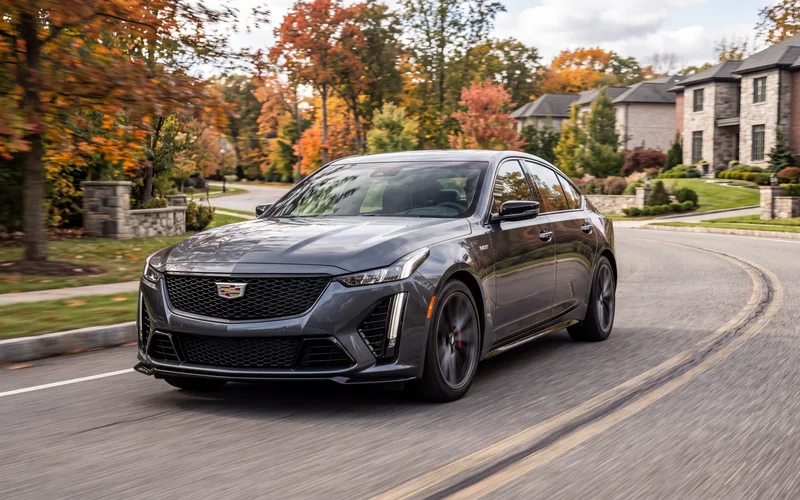 Cadillac CT5Mid-Size Luxury SedanBetter at: Space and tech
Same rear-drive character and Super Cruise availability, but with a back seat and trunk you can actually use and a 33-inch display instead of an 8-inch one.
Compare 2.71B-
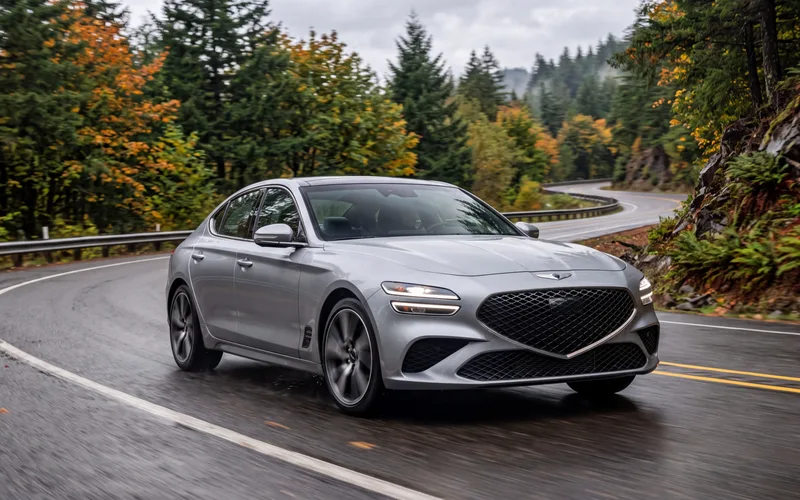 Genesis G70Compact Luxury SedanBetter at: Warranty and resale
The rear-drive value alternative with a 10 yr/100k powertrain warranty, included maintenance, and roughly 50% five-year resale against the CT4's 44%.
Compare 3.07B
3.07B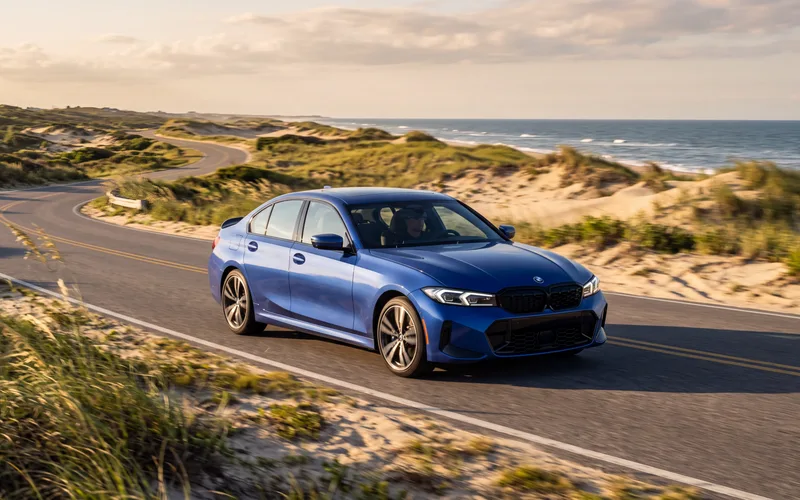 BMW 3 SeriesCompact Luxury SedanBetter at: Practicality
Costs more but delivers 17.0 cu ft of trunk, nearly two more inches of rear legroom, and stronger resale — the practical default if the CT4's packaging is the sticking point.
CompareProduction history
Best fit & conditions
Higher scores mean a better fit for that use case. Learn more about use-case fit →
Subject profile
Academic Probation · NHTSA safety recalls
No NHTSA safety recall is on record for the 2026 Cadillac CT4. Other model years of the CT4 have 5 — listed below.
5 recalls on other model years of the CT4 (2020–2023)
Mar 6, 2025Power train: automatic transmissionThe transmission may become damaged internally and cause the wheels to lock-up.
Defect
General Motors LLC (GM) is recalling certain 2019-2020 Cadillac CT6, 2020-2021 CT4, CT5, and 2020-2022 Chevrolet Camaro vehicles equipped with a 10-speed transmission. The transmission may become damaged internally and cause the wheels to lock-up.
Risk
Wheel lock-up while driving increases the risk of a crash.
Remedy
Dealers will install transmission control module monitoring software, free of charge. Owner notification letters were mailed April 7, 2025. Owners may contact Cadillac customer service at 1-800-333-4223 or Chevrolet customer service at 1-800-222-1020. GM's number for this recall is N242480630.
NHTSA campaign 25V148000 ↗Manufacturer no. N24248063090,081 vehicles potentially affected (all models in the campaign)Owners notified Apr 7, 2025Filed by General Motors, LLCFiled as CT4Dec 8, 2022Exterior lighting: lighting control module: softwareThe daytime running lights (DRLs) may not deactivate when the headlights are on. As such, these vehicles fail to comply with the requirements of Federal Motor Vehicle Safety Standard number 108, "Lamps, Reflective Devices, and Associated Equipment."
Defect
General Motors, LLC (GM) is recalling certain 2020-2023 Cadillac CT4 and CT5; 2021-2023 Buick Envision; and 2022-2023 Cadillac Escalade and Escalade ESV, Chevrolet Silverado 1500, Suburban, Tahoe, GMC Sierra 1500, Yukon, and Yukon XL vehicles. The daytime running lights (DRLs) may not deactivate when the headlights are on. As such, these vehicles fail to comply with the requirements of Federal Motor Vehicle Safety Standard number 108, "Lamps, Reflective Devices, and Associated Equipment."
Risk
DRLs that do not deactivate as intended may result in a glare, reducing visibility, and increasing the risk of a crash.
Remedy
The body control module software will be updated by a dealer, or through an over-the-air (OTA) update, free of charge. Owner notification letters were mailed January 23, 2023. Owners may contact GMC customer service at 1-888-988-7267, Chevrolet customer service at 1-800-222-1020, or Cadillac customer service at 1-800-458-8006. GM's number for this recall is N222386380. This recall expands previous recall number 22V-827.
NHTSA campaign 22V903000 ↗Manufacturer no. N222386380740,108 vehicles potentially affected (all models in the campaign)Owners notified Jan 23, 2023Filed by General Motors, LLCFiled as CT4Aug 5, 2021Air bags · Air bags: side/window: curtainThe roof rail side-curtain air bags may not have been installed correctly, which could result in an improper air bag deployment during a crash.
Defect
General Motors, LLC. (GM) is recalling certain 2020-2022 Cadillac CT4 and CT5 vehicles. The roof rail side-curtain air bags may not have been installed correctly, which could result in an improper air bag deployment during a crash.
Risk
Air bags that do not deploy properly can increase the risk of injury in a crash.
Remedy
Dealers will inspect both left and right-side roof rail air bags and reinstall the air bags, as necessary, free of charge. Owner notification letters were mailed on August 30, 2021. Owners may contact Cadillac customer service at 1-800-458-8006. GM's number for this recall is N212342780.
NHTSA campaign 21V611000 ↗Manufacturer no. N21234278034,157 vehicles potentially affected (all models in the campaign)Owners notified Aug 30, 2021Filed by General Motors, LLCFiled as CT4Jun 10, 2021Air bags: srs malfunction warning lamp/light · Electrical system: softwareThe communications gateway module incorrectly processes a loss of communication with the sensing diagnostic module (SDM), causing the air bag malfunction indicator light to inconsistently illuminate.
Defect
General Motors, LLC (GM) is recalling certain 2021 Buick Envision, Cadillac CT4, CT5, Escalade, Escalade ESV, Chevrolet Tahoe, Corvette, Suburban, GMC Yukon, Yukon XL vehicles. The communications gateway module incorrectly processes a loss of communication with the sensing diagnostic module (SDM), causing the air bag malfunction indicator light to inconsistently illuminate.
Risk
The air bag malfunction indicator light may fail to warn the driver of a problem with the air bag, increasing the risk of injury.
Remedy
The communications gateway module software will be updated by a dealer, or through an over-the-air (OTA) update, free of charge. Owner notification letters were mailed on July 1, 2021. Owners may contact Buick customer service at 1-800-521-7300, Cadillac customer service at 1-800-458-8006, Chevrolet customer service at 1-800-222-1020, or GMC customer service at 1-800-462-8782. GM's number for this recall is N212338110.
NHTSA campaign 21V421000 ↗Manufacturer no. N212338110285,622 vehicles potentially affected (all models in the campaign)Owners notified Jul 1, 2021Filed by General Motors, LLCFiled as CT4Sep 24, 2020Service brakesSensor connection contamination in the electronic brake boost system may cause an interruption of communication between the sensor and the brake boost system.
Defect
General Motors LLC (GM) is recalling certain 2020 Chevrolet Corvette and Cadillac CT4, CT5 and XT4, 2021 Chevrolet Trailblazer, and 2020-2021 Buick Encore GX vehicles. Sensor connection contamination in the electronic brake boost system may cause an interruption of communication between the sensor and the brake boost system.
Risk
If communication with the sensor is interrupted, the electronic brake boost assist could be lost. Extra pedal force will be required to slow and stop the vehicle, increasing the risk of a crash.
Remedy
GM will notify owners, and dealers will replace the electronic brake boost module, free of charge. The recall began December 9, 2020. Owners may contact Chevrolet customer service at 1-800-630-2438, Cadillac customer service at 1-800-333-4223, or Buick customer service at 1-800-521-7300. GM's number for this recall is A202307260.
NHTSA campaign 20V588000 ↗Manufacturer no. A2023072603,677 vehicles potentially affected (all models in the campaign)Owners notified Dec 9, 2020Filed by General Motors LLCFiled as CT4
Source: NHTSA Office of Defects Investigation recall database, model years 2020–2026. Recalls are listed by model year as the manufacturer filed them; whether a specific car is affected depends on its VIN — check a VIN at nhtsa.gov ↗. NHTSA model names matched to this page: CT4.
Detailed scoring by subject
1Performance & PowertrainGrades below the middle of the scale.1.61D
Volume-trim Premium Luxury runs the 2.0L LSY turbo-four; lineup tops out with the 3.6L twin-turbo LF4 V6 in the CT4-V Blackwing.
Volume 2.0T LSY produces 258 lb-ft on a broad plateau (1,500–4,000 rpm); higher outputs from the 2.7T and Blackwing 3.6TT.
Cadillac's published figure for the 2.0T RWD Premium Luxury is 5.8 s; instrumented tests corroborate high-5s.
LSY 2.0T is smooth off-boost with a broad torque curve; reviewers note some coarse notes at high rpm and mild turbo lag from a stop. Higher-output 2.7T and Blackwing V6 are markedly more refined.
Volume-trim 8-speed automatic (GM 8L45) shifts crisply and holds gears well in Sport mode; occasional slow kick-down noted. The 10-speed used in Sport/V-Series is quicker still, and the Blackwing's standard 6-speed manual is class-benchmark.
AWD is a ~$2,500 option across Luxury, Premium Luxury, Sport, and V-Series trims — widely available but not standard, and Blackwing is RWD-only. System is a basic on-demand setup with no torque vectoring on non-V trims.
Three distinct engine families across the range (2.0T LSY, 2.7T Dual-Volute in two outputs plus V-tune, and 3.6TT LF4 in the Blackwing) cover mainstream through halo performance, but the CT4 has no hybrid, PHEV, or EV variant — a gap versus BMW 3 Series and the i4 halo.
2Efficiency & RangeThe CT4's lowest-graded category.0.87F
EPA combined figure for the volume 2.0L turbo RWD trim; larger 2.7T and 3.6TT V6 Blackwing drop meaningfully. Modest for the compact-luxury segment — no hybrid option to lift the number.
EPA city figure for the 2.0T RWD volume trim. City economy suffers from the turbo-four's tuning and rear-drive gearing without any stop/start hybrid assist.
The 10-speed automatic and long top-gear ratio give the 2.0T a respectable highway figure, though still below efficiency-focused compact luxury rivals with hybrid systems.
Range calculated from Cadillac's 17.0-gallon fuel capacity and EPA combined figure. Respectable but not exceptional — larger displacement trims drop the number to roughly 375–440 mi.
EPA estimate for the 2.0T RWD on premium fuel at 15k miles/year. The premium-fuel requirement pushes cost well above mainstream compact sedans despite comparable MPG. 2.7T and Blackwing run $2,500–$3,300/yr.
Premium (91 octane) is recommended across the CT4 range for full advertised output; the 2.0T and 2.7T will run on 87 octane with reduced power, while the Blackwing 3.6TT effectively requires premium. Adds meaningful cost vs regular-fuel rivals and there is no home-charging alternative.
3SafetyMid-pack among this car's ten categories.2.37C+
NHTSA has not published a combined overall star rating for the current-generation Cadillac CT4; component tests (frontal/side) have generally been strong but incomplete. Estimated at 4 stars pending a full test.
The current-generation CT4 has not earned a Top Safety Pick or TSP+ award. Where IIHS has tested this generation, results are largely Good in the main crashworthiness tests, but the updated moderate-overlap and headlight results hold it back from an award.
Cadillac makes Enhanced Automatic Emergency Braking, Front Pedestrian Braking, Forward Collision Alert, Lane Keep Assist with Lane Departure Warning, Following Distance Indicator, and IntelliBeam auto high-beams standard across CT4 trims. Blind-Zone Steering Assist, Rear Cross-Traffic Alert, and Adaptive Cruise Control remain optional (bundled with the Driver Assist Package), which keeps this shy of a top score.
GM's Enhanced AEB with pedestrian detection performs well in vehicle-to-vehicle IIHS front-crash-prevention testing but is not among the class leaders for nighttime pedestrian scenarios.
Blind-Zone Steering Assist and Rear Cross-Traffic Alert are effective when equipped but are locked behind the optional Driver Assist Package rather than standard on the volume Luxury trim.
Standard Lane Keep Assist with Lane Departure Warning works well as a corrective aid; hands-on lane centering is capable but reviewers note it is less refined than best-in-class systems. Super Cruise (when equipped) provides the true centering experience.
Optional Full-Speed-Range Adaptive Cruise Control (stop-and-go capable) is smooth when equipped, but it is not standard on the volume trim and there is no non-Super-Cruise hands-on highway assist bundle.
Super Cruise is optional on the CT4 (introduced for the 2024 model year and available on select trims for 2026), giving the sedan one of the most mature hands-free highway systems on the market with over 750,000 miles of mapped compatible roads and automated lane change.
IIHS headlight ratings for the current-generation CT4 are Acceptable-to-Marginal depending on trim; higher trims with IntelliBeam auto-high-beam and better beam pattern perform notably better than volume-trim headlights, which is what holds this from a top score.
The CT4 has a high beltline and relatively small rear window that create thicker rear-three-quarter blind spots. Available HD Surround Vision (360 camera) and rear camera mirror help compensate on higher trims, but base visibility is only average for the compact luxury class.
The CT4's compact rear seat has tight door openings and modest legroom (about 33.4 inches), making rear-facing child-seat installations difficult; LATCH anchors are behind seat-bight covers rather than exposed. Two seats fit; three-across is impractical.
4Space & ComfortGrades below the middle of the scale.1.55D
The CT4 is a five-passenger sedan, though the narrow rear bench makes three-across seating adults-only in a pinch.
Front headroom is average for a compact sport sedan; the low roofline and standard sunroof pinch tall drivers slightly.
Front legroom is competitive with 3 Series and C-Class; no complaints for average-height drivers.
Rear headroom is at the bottom of the compact-luxury segment; the sloping roofline compromises tall-passenger clearance behind the B-pillar.
Worst-in-class rear legroom — the CT4 is on the tighter Alpha 2 wheelbase and trails 3 Series, C-Class, A4, and Genesis G70 substantially back there.
Small trunk that badly trails the segment (BMW 3 Series 17.0, Audi A4 12.0, Mercedes C-Class 12.6); grocery/carry-on friendly but weekend-luggage constrained.
Standard center console with reasonable bin, twin cupholders, small door pockets, and wireless phone tray on Premium Luxury+; nothing standout and rear passenger storage is sparse.
Front sport seats are supportive and generally comfortable on long drives, especially the Sport trim's 18-way adjustable performance seats; rear bench is cramped and firm — the tight legroom limits long-haul rear comfort.
Base suspension is firm but composed on the RWD Alpha 2 platform; higher trims with FE3/FE4 Sport suspension and Magnetic Ride Control deliver excellent body control with reasonable compliance — one of the CT4's better attributes.
Cabin isolation is competitive — active noise cancellation, laminated front glass on Premium Luxury+; some road noise on coarse surfaces and turbo I4 intrusion under hard throttle.
Dual-zone climate standard; heated front seats/steering wheel on Premium Luxury and up, ventilated fronts on Sport/Premium Luxury with upgrade; no heated rear seats and no rear climate zone — thin rear amenities for the segment.
5Cost of OwnershipOne of the CT4's weakest categories.1.27D
Base 2026 CT4 Luxury trim MSRP including destination; range extends to ~$62,000+ for the CT4-V Blackwing.
Premium Luxury is the volume trim; as-equipped price includes typical option packages (Driver Assist, sunroof) on top of the ~$40,290 base + destination.
Cadillac compact-luxury 5-year M&R runs mid-pack among luxury rivals — cheaper than BMW/Mercedes but pricier than Lexus/Genesis; V-series and V-Blackwing raise costs materially via performance-tire and brake wear.
Cadillac sedans depreciate faster than German or Japanese luxury peers; CT4 residuals trail Lexus IS and Genesis G70 and are pressured further by shrinking sedan demand.
Standard Cadillac bumper-to-bumper coverage — one year longer than mainstream 3/36 warranties but shorter than Genesis (5/60) or Jaguar (5/60).
Cadillac powertrain coverage is 6 yr / 70k mi — mid-pack in luxury but well behind Genesis (10/100) and Hyundai/Kia (10/100).
Cadillac includes just one complimentary maintenance visit (scaled back from the prior 4-year plan), but bundles 6 yr / 70k mi roadside assistance, a 3-year OnStar/Connected Services Premium trial, in-vehicle Wi-Fi trial, and Super Cruise trial where equipped — solid perks but light on included maintenance versus Genesis/Volvo's multi-year programs.
$41,690 volume-trim price minus its estimated resale value after 5 years (44% retained, or about $18,344) leaves about $23,346 in depreciation. Add the projected $5,800 in 5-year maintenance and repairs, and owning this vehicle for 5 years costs about $29,146 in total.
6Reliability & QualityOne of the CT4's strongest categories.2.71B-
The CT4 has been in market since 2020 on GM's mature Alpha platform, but Consumer Reports has consistently rated Cadillac sedans at or below average for predicted reliability and J.D. Power dependability places Cadillac roughly mid-pack among luxury brands. The 2024 refresh introduced a new 33-inch curved display and infotainment stack that carries typical early-generation software-teething risk.
Cadillac routinely lands in the lower half of Consumer Reports' annual brand-reliability rankings (typically 20th–25th of 30+ brands) and posts middle-of-pack results in J.D. Power VDS — improving over the last few years but still trailing Lexus, Genesis, and Toyota's luxury peers.
The Alpha-platform CT4 has attracted a handful of NHTSA recalls since 2020 (transmission software, seat-belt anchor, tail-lamp wiring) and typical GM TSBs, but nothing systemic to the engine, transmission, or safety systems. Recall volume tracks segment norms.
The 2.0T LSY four-cylinder is a widely deployed GM engine across Cadillac/Chevrolet/GMC with no epidemic issues, and the 10L60/10L80 10-speed automatic — while criticized for shudder in early Silverado/F-150 applications — has been refined through multiple software revisions and torque-converter updates. The CT4-V Blackwing's LF3 3.6L twin-turbo V6 traces to the ATS-V and has a strong high-performance track record.
Reviewers have consistently criticized the CT4's cabin for hard plastics on the lower dash and doors and switchgear that falls short of the BMW 3 Series, Audi A4, and Mercedes C-Class — the 2024 refresh added a large curved display and updated trim but did not fundamentally re-engineer the cabin materials.
Assembled at GM's Lansing Grand River plant, which has posted consistently strong J.D. Power Initial Quality results, the CT4 shows tight panel gaps and solid assembly consistency in reviews. Not class-leading versus Lexus IS or the Audi A4, but no widespread rattle/squeak complaints.
Cadillac maintains roughly 600+ US dealers with nationwide coverage, and any dealer can service the CT4's conventional gasoline powertrain — a real advantage over boutique luxury or EV-only brands. Service satisfaction runs mid-pack among luxury brands in J.D. Power CSI.
The CT4 shares its Alpha platform, 2.0T/2.7T engines, and 10-speed automatic with high-volume GM vehicles, so mechanical parts are widely available at reasonable prices — a meaningful cost advantage over BMW/Audi/Mercedes. Trim-specific interior parts are Cadillac-only and pricier, but overall maintenance costs are lower than German rivals.
7Technology & InfotainmentMid-pack among this car's ten categories.2.45C+
The CT4 retains its 8-inch center touchscreen for 2026, unchanged since the 2024 refresh. Notably smaller than the CT5's massive 33-inch curved LED display and small for the compact-luxury segment where 10–14 inches is now typical.
Post-2024 Cadillac User Experience is responsive with logical menus and welcome physical volume/tuning knobs, but the small 8-inch screen and dated graphics trail BMW iDrive 8, Mercedes MBUX, and Audi MMI in the segment. Reviewers call it functional but not class-leading.
Wireless Apple CarPlay and wireless Android Auto are standard on every 2026 CT4 trim from base Luxury upward, matching best-in-segment practice.
Basic voice recognition handles simple commands; native navigation is available (standard on Premium Luxury and V) but is not the natural-language, cloud-connected assistant found in newer Cadillac EVs on the Google Built-In platform. Most owners rely on phone projection.
Base 8-speaker system is adequate; the available Bose Premium 14-speaker system (standard on Premium Luxury and V-Series, optional elsewhere) is well regarded and competitive with rivals' premium tiers, though it trails Burmester and Bang & Olufsen offerings from German rivals.
Base trims use a hybrid analog gauge cluster with a small color driver information center — not a full digital display. An 8-inch reconfigurable driver display is available on higher trims, but the segment increasingly ships full 12+ inch digital clusters standard.
GM's OTA capability on Vehicle Intelligence Platform vehicles like the CT4 covers select infotainment and vehicle software modules but is narrower in scope than Tesla-style whole-vehicle feature-adding updates. No history of adding meaningful new features to CT4 via OTA.
myCadillac app delivers remote start, lock/unlock, vehicle status, and locate; core functions are free for a trial period then require an OnStar/Connected Services subscription. Functional but paywalled — no phone-as-key like BMW Digital Key or Tesla.
USB-C and USB-A ports front and rear; wireless phone charging is optional on Premium Luxury and standard on V. Adequate coverage but not abundant, and no household outlets — typical for a compact sedan.
Proximity keyless entry, push-button start, and remote start are standard across all 2026 CT4 trims. Missing phone-as-key that some rivals offer, but core keyless convenience is fully covered.
HD rear vision camera and rear park assist standard; front and rear park assist added on Premium Luxury; Surround Vision 360-degree camera available on Premium Luxury and standard on V. Coverage is competitive but resolution and features trail BMW/Mercedes top-tier systems.
Color head-up display is available on Premium Luxury and V-Series trims but not offered on base Luxury and Sport. Content is useful (speed, nav, safety alerts) but the projection area is modest compared with segment leaders.
8Use-Case FitOne of the CT4's weakest categories.1.17D
One of the smallest cabins in compact luxury: rear-seat legroom (~33.4 in) is near class-worst, and the narrow rear door aperture makes rear-facing car seats a wrestling match. Two LATCH positions only; not friendly for daily kid duty.
Standard automatic emergency braking, forward-collision alert, lane-keep assist, and rear-seat reminder cover the basics, but full ADAS (blind-spot, adaptive cruise, Super Cruise) is bundled into higher trims most families won't stretch to. No recent IIHS Top Safety Pick designation for the CT4.
Front seats and ride are luxury-grade, but rear-seat space and the ~10.7 cu-ft trunk make four-occupant multi-day trips a stretch. No rear climate zone or rear USB on Luxury trim; higher trims add rear USB-C ports but space is still the limiter.
Small footprint, light steering in Tour mode, and the 2.7L Turbo I4's low-end torque make city and stop-and-go effortless; 10-speed automatic shifts smoothly around town. Sport/V trims firm the ride but the volume Luxury/Premium Luxury is relaxed.
EPA ~23 city / 34 hwy / 27 combined for 2.7T RWD is decent for a rear-drive luxury car, but premium fuel is required and there's no hybrid option — annual fuel costs run above mainstream compact sedans and behind hybrid luxury rivals like the Lexus IS 300h in markets that offer it.
At ~187 in long and ~71 in wide with a tight ~37-ft turning circle, the CT4 is one of the easiest luxury sedans to park; HD Rear Vision Camera standard, HD Surround Vision on higher trims. Modest greenhouse and thick C-pillars hurt over-shoulder visibility slightly.
Not tow-rated and not marketed for work use. Trunk pass-through and 60/40 rear split fold help with occasional long items, but capacity is minimal by any work-vehicle standard.
Alpha platform is proven mechanically, but soft-touch/leatherette interior, low-profile 18–19-in tires, and low ride height make this a bad fit for daily abuse or jobsite duty.
No 120-V outlet, no bed, no factory tie-downs beyond the trunk, no upfit ecosystem. Not a work-capable vehicle.
Comfortable front seats, quiet cabin at highway speed, and available Super Cruise (Cadillac's hands-free driver assist) make it a strong solo/two-up tourer. 17.4-gal tank at ~34 hwy MPG yields ~580 mi highway range. Rear-seat endurance is the limiter.
AWD available on all trims but ground clearance is only ~5 in, and there are no roof rails, no meaningful tow rating, and low-profile summer tires on V/Blackwing. Pavement-bound in adventure terms.
10.7 cu-ft trunk with a 60/40 folding rear seat and center pass-through is workable for skis or a couple of golf bags, but bulky gear (large luggage sets, camping kit, kids' strollers) quickly overwhelms it. No roof rails, no hitch option.
9Driving ExperienceThe CT4's best-graded category.2.94B-
GM Alpha rear-drive platform yields taut body control, negligible body roll, and a tied-down feel that reviewers routinely rank near the top of the compact-luxury sedan segment; the volume Luxury trim rides on standard wheels rather than the Blackwing's Michelin Pilot Sport 4S, so ultimate grip is a step below the halo, but composure is still a strength.
Electric rack is accurate and nicely weighted with good on-center feel for the class, but multiple reviewers flag the base tune as heavier than natural and lower on genuine feedback than a BMW 3 Series or Alfa Giulia — good, not class-leading.
Standard four-wheel discs deliver adequate stopping power, but base-trim pedal feel is a documented weak spot — reviewers describe a 'wooden' pedal with an audible click that makes smooth stops difficult. Prior placeholder of 95 was unsupported.
The 237-hp 2.0L turbo paired with GM's 8-speed automatic is peppy off the line (6.2 s 0–60) and generally well-mannered, though the transmission can hunt at part-throttle and low-rpm turbo lag is noticeable — refined for the class but not standout.
The 2.0T is audible under hard throttle but well isolated at cruise; no significant driveline vibration through the controls, though the four-cylinder note lacks the character of the CT4-V's 3.6L V6 or a BMW B48. Placeholder of 87 was inflated.
Curb-to-curb turning radius of 18.6 ft yields a 37.2-ft diameter — typical for a rear-drive compact luxury sedan on the Alpha platform.
Low, sporty seating with a good wheel-to-pedal relationship, generous front-seat adjustment, and clear forward sightlines; the cabin is tighter than most compact-luxury rivals, but the driver's cockpit itself is well-sorted, with sensibly placed physical controls alongside the CUE touchscreen.
Even in base Luxury trim, the rear-drive Alpha chassis, willing turbo four, and communicative front end make the CT4 one of the more entertaining entry-luxury sedans — reviewers consistently describe it as a 'delight to pilot down curvy roads,' though the base ride is choppier than some prefer.
10Value & Market PositionOne of the CT4's strongest categories.2.65C+
Base Luxury trim near $37K includes leatherette, 8-inch center screen, LED lighting, and basic driver aids, but rivals like the BMW 3 Series and Mercedes C-Class pack more standard tech (digital gauges, larger touchscreens, better ADAS suites); Cadillac's better content lives on Premium Luxury and above.
Rear-drive luxury sedan character at a Civic-competitive base price makes the CT4 one of the cheapest ways into a proper RWD sport sedan, and the V-Series Blackwing near $61K undercuts BMW M3/Mercedes-AMG C63 by $15-20K while matching or beating them in enthusiast press comparisons — strong value at the enthusiast end.
Five distinct trims (Luxury, Premium Luxury, Sport, V-Series, V-Series Blackwing), three engine choices (2.0T, 2.7T, 3.6L twin-turbo V6), RWD/AWD availability, and a rare 6-speed manual on the Blackwing give one of the widest configuration spreads in the compact luxury sedan segment.
US sales run roughly 8,000-10,000 units per year, well behind BMW 3 Series (~40K) and even Mercedes C-Class and Audi A4; the compact luxury sedan segment is contracting and the CT4 is a niche player facing widely reported end-of-life within a year or two.
Cadillac brand image is improving off the strength of Lyriq/Escalade IQ/Celestiq but still trails BMW, Mercedes, Audi, and Porsche in aspirational pull for compact sedans; the V-Series halo helps enthusiasts but doesn't lift the base CT4's cachet.
Slow segment sales and GM's incentive posture mean CT4 buyers typically see meaningful dealer discounts, lease cash, and financing offers — routinely transacting below MSRP outside the Blackwing, which stays closer to sticker.
Current CT4 launched as a 2020 model and by 2026 the Alpha platform is aging with only cosmetic updates since; no next-generation combustion CT4 has been announced and industry reports point to phase-out as Cadillac pivots to EVs, creating replacement uncertainty for buyers.
The CT4-V Blackwing has landed on Car and Driver's 10Best repeatedly since 2022 and been the pick in multiple sport-sedan comparison tests over M3/AMG C63; standard CT4 trims draw more mixed reviews but the halo lifts the nameplate's overall critical standing.