
The verdict
A capable compact luxury sedan, strong on reliability and held back by efficiency.
The 2026 Genesis G70 is the enthusiast's bargain in the compact luxury class: a rear-drive chassis good enough to win Car and Driver 10Best twice, 300 hp standard from the 2.5T (versus 255 hp in a base BMW 330i or Mercedes C 300), the entire driver-assist suite on every trim, and a 10-year/100,000-mile powertrain warranty with three years of free maintenance — all for roughly $46,500 delivered. The catch is that it is a small car that has been on sale since 2019 and shows it. A 10.5 cu ft trunk and 34.8 inches of rear legroom are near the bottom of the segment, 25 MPG combined on recommended premium runs about $2,750 a year, the 10.25-inch screen and wired-only CarPlay are a generation behind, and roughly 42% five-year resale erases much of the price advantage. Lease it or buy it to drive, not to haul people or hold value.
Jump to scoresStrengths
- It drives better than almost anything at the price
- The best warranty and free-maintenance package in the segment
- Every driver-assist feature is standard, on the cheapest trim
What holds it back
- It drinks, and it wants premium
- The trunk and back seat are the smallest compromises you'll make
- Depreciation eats the price advantage
Top alternatives
Cars shoppers cross-shop with the Genesis G70 3.07B
3.07B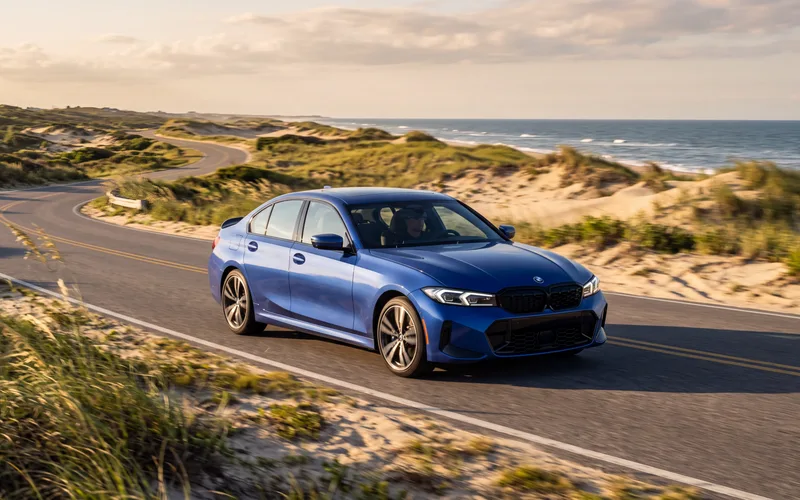 BMW 3 SeriesCompact Luxury SedanBetter at: All-round usability
It matches the G70's driving appeal while adding a usable back seat, a 17.0 cu ft trunk, 31 MPG combined and much stronger resale — the default choice unless the Genesis's price and warranty win you over.
Compare 3.21B+
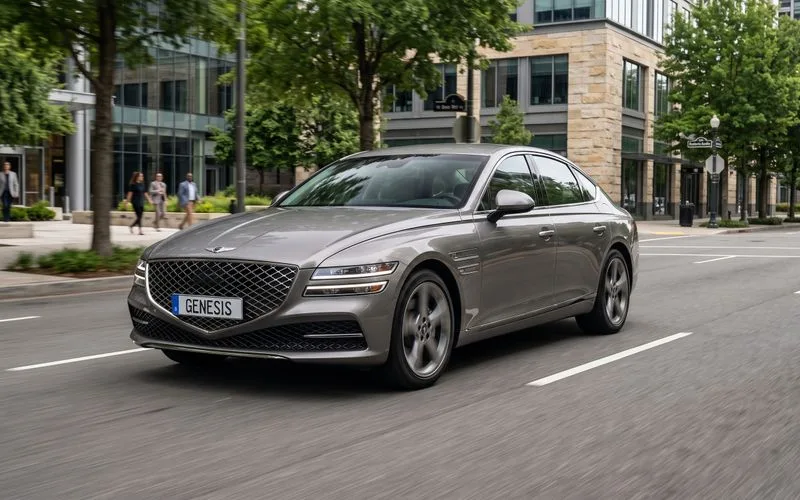 Genesis G80Mid-Size Luxury SedanBetter at: Space and tech
Same warranty, same free maintenance and the same standard-safety philosophy, but with adult rear space, a bigger trunk and a 27-inch OLED display for about $14,000 more.
Compare 2.53C+
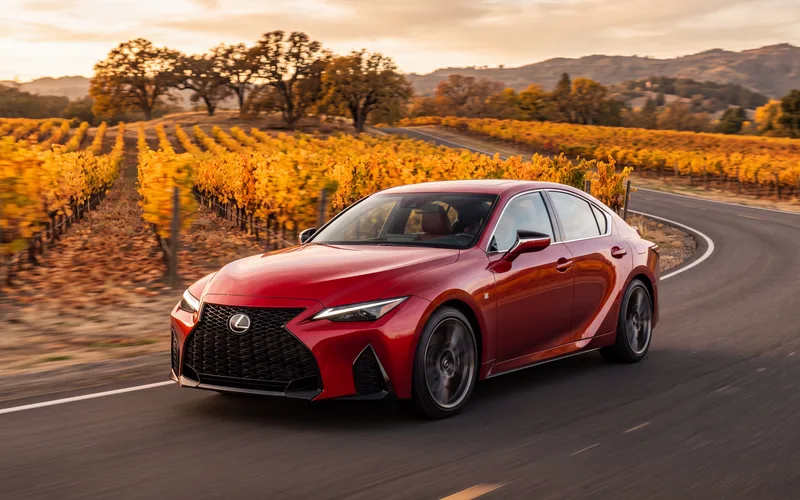 Lexus ISCompact Luxury SedanBetter at: Resale value
Give up the G70's power and equipment advantage in exchange for roughly 56% five-year resale and the segment's most dependable reliability record.
CompareProduction history
Best fit & conditions
Higher scores mean a better fit for that use case. Learn more about use-case fit →
Subject profile
Academic Probation · NHTSA safety recalls
No NHTSA safety recall is on record for the 2026 Genesis G70. Other model years of the G70 have 6 — listed below.
6 recalls on other model years of the G70 (2019–2023)
Jul 11, 2024Fuel system, gasoline: delivery: fuel pump: control/drive moduleThe fuel pump may fail, which can result in a loss of drive power.
Defect
Hyundai Motor America (Hyundai) is recalling certain 2019-2022 Veloster N, 2019-2023 Genesis G70, 2022-2023 Elantra N, and Kona N vehicles. The fuel pump may fail, which can result in a loss of drive power.
Risk
A loss of drive power can increase the risk of a crash.
Remedy
Dealers will update engine control module software. In addition, dealers will inspect and replace the fuel pump assembly, as necessary. All repairs will be performed free of charge. Owner notification letters were mailed beginning September 9, 2024. Some interim notification letters, notifying owners of the safety risk, were mailed September 3, 2024. Owners may contact Hyundai customer service at 1-855-371-9460. Hyundai's numbers for this recall are 262 and 023G.
NHTSA campaign 24V528000 ↗Manufacturer no. 262-023G54,647 vehicles potentially affected (all models in the campaign)Owners notified Sep 9, 2024Filed by Hyundai Motor AmericaFiled as G70Mar 8, 2024Engine and engine cooling: engine: gasoline: turbo/superchargerThe left turbocharger oil feed pipe may deteriorate and leak oil.
Defect
Hyundai Motor America (Hyundai) is recalling certain 2018-2020 Genesis G80, 2017-2022 G90, and 2019-2022 G70 vehicles equipped with a 3.3-liter V6 turbocharged engine. The left turbocharger oil feed pipe may deteriorate and leak oil.
Risk
An oil leak in the presence of hot engine components can increase the risk of an engine compartment fire.
Remedy
Dealers will replace the left turbocharger oil feed pipe, free of charge. Owner notification letters were mailed May 3, 2024. Owners may contact Hyundai customer service at 1-855-371-9460. Hyundai's number for this recall is 019G. This recall expands and replaces recall number 19V-538. Vehicles previously repaired under 19V-538 will need to have the new remedy completed.
NHTSA campaign 24V191000 ↗Manufacturer no. 019G28,439 vehicles potentially affected (all models in the campaign)Owners notified May 3, 2024Filed by Hyundai Motor AmericaFiled as G70Feb 13, 2024Electrical system: starter assembly: solenoidWater may enter the starter solenoid and cause an electrical short, which can result in an engine compartment fire while parked or driving.
Defect
Hyundai Motor America (Hyundai) is recalling certain 2015-2016 Genesis, 2017-2019 Genesis G80, Genesis G90, and 2019 Genesis G70 vehicles. Water may enter the starter solenoid and cause an electrical short, which can result in an engine compartment fire while parked or driving.
Risk
An engine compartment fire while parked or driving can increase the risk of injury.
Remedy
Owners are advised to park outside and away from structures until the recall repair is complete. Dealers will install a remedy relay kit in the engine junction box, free of charge. Owner notification letters were mailed July 15, 2024. Owners may contact Hyundai customer service at 1-855-371-9460. Hyundai's numbers for this recall are 254(H) and 018G(G).
NHTSA campaign 24V107000 ↗Manufacturer no. 254 (H), 018G (G)90,907 vehicles potentially affected (all models in the campaign)Owners notified Jul 15, 2024Filed by Hyundai Motor AmericaFiled as G70Mar 28, 2022Latches/locks/linkages: trunk lid: latchThe trunk latch may become damaged, preventing the opening of the trunk from the inside. As such, these vehicles fail to comply with the requirements of Federal Motor Vehicle Safety Standard number 401, "Internal Trunk Release."
Defect
Hyundai Motor America (Hyundai) is recalling certain 2020 Sonata and Sonata Hybrid, and 2019 Genesis G70 vehicles. The trunk latch may become damaged, preventing the opening of the trunk from the inside. As such, these vehicles fail to comply with the requirements of Federal Motor Vehicle Safety Standard number 401, "Internal Trunk Release."
Risk
A person inside the trunk compartment may become trapped, increasing their risk of injury.
Remedy
Dealers will inspect the trunk latch and replace the trunk latch base, as necessary, free of charge. Owner notification letters were mailed May 26, 2022. Owners may contact Hyundai customer service at 1-855-371-9460. Hyundai's number for this recall is 221/010G.
NHTSA campaign 22V196000 ↗Manufacturer no. 221/010G63,461 vehicles potentially affected (all models in the campaign)Owners notified May 26, 2022Filed by Hyundai Motor AmericaFiled as G70Mar 10, 2021Service brakes, hydraulic: antilock/traction control/electronic limited slip: control unit/moduleThe Anti-Lock Brake System (ABS) module could malfunction and short circuit.
Defect
Hyundai Motor America (Hyundai) is recalling certain 2019-2021 Genesis G70 vehicles. The Anti-Lock Brake System (ABS) module could malfunction and short circuit.
Risk
An electrical short circuit inside the ABS module could cause an engine compartment fire while parked or driving.
Remedy
Owners are advised to park outside and away from structures until the remedy is complete. Hyundai will notify owners, and dealers will replace the ABS module fuse, free of charge. Owner notification letters were mailed July 6, 2021. Owners can contact Hyundai customer service at 1-855-371-9460. Hyundai's number for this recall is 007G.
NHTSA campaign 21V161000 ↗Manufacturer no. 007G552 vehicles potentially affected (all models in the campaign)Owners notified Jul 6, 2021Filed by Hyundai Motor AmericaFiled as G70Sep 21, 2020Fuel system, gasoline: delivery: fuel pumpThe fuel pump's jet nozzle may have a plastic burr remaining from the manufacturing process, possibly causing a blocked nozzle and an insufficient fuel supply to the engine.
Defect
Hyundai Motor America (Hyundai) is recalling certain 2021 Genesis G70 vehicles equipped with 2.0L GDI engines. The fuel pump's jet nozzle may have a plastic burr remaining from the manufacturing process, possibly causing a blocked nozzle and an insufficient fuel supply to the engine.
Risk
Insufficient fuel supply can result in an engine stall, increasing the risk of a crash.
Remedy
Hyundai will notify owners, and dealers will inspect and repair the fuel pump assembly jet nozzle, free of charge. The recall began November 10, 2020. Owners may contact Hyundai customer service at 1-855-371-9460. Hyundai's number for this recall is 005G.
NHTSA campaign 20V569000 ↗Manufacturer no. 005G319 vehicles potentially affected (all models in the campaign)Owners notified Nov 10, 2020Filed by Hyundai Motor AmericaFiled as G70
Source: NHTSA Office of Defects Investigation recall database, model years 2019–2026. Recalls are listed by model year as the manufacturer filed them; whether a specific car is affected depends on its VIN — check a VIN at nhtsa.gov ↗. NHTSA model names matched to this page: G70.
Detailed scoring by subject
1Performance & PowertrainMid-pack among this car's ten categories.2.21C
The volume G70 trim runs Genesis's Smartstream 2.5L turbo four rated at 300 hp @ 5,800 rpm, a figure unchanged since the engine replaced the old 2.0T for 2022 and carried forward through 2026. That is a genuine advantage over the base engines it is cross-shopped against — the BMW 330i (255 hp), Mercedes C 300 (255 hp) and Audi A4 45 TFSI (261 hp) all sit ~40-45 hp behind — while the 3.3T V6 Sport trims add 365 hp.
The 2.5T's 311 lb-ft arrives on a broad 1,650–4,000 rpm plateau, which is what makes the volume G70 feel effortless in everyday part-throttle driving rather than only at the top of the tach. It clears the 295 lb-ft of the 330i and C 300 and the 273 lb-ft of the A4 45 TFSI, though it trails the 3 Series' M340i inline-six.
Instrumented runs of the facelifted 2.5T G70 cluster in the 5.1–5.3 s range, so 5.2 s represents the volume trim. That undercuts the BMW 330i (~5.4 s) and Mercedes C 300 (~5.9 s) and matches the Audi A4 45 TFSI, making acceleration one of the G70's strongest showings in this category; the 3.3T V6 drops to roughly 4.5 s, within a tenth or two of an M340i.
The 2.5T is strong and responsive with only mild off-idle lag, but reviewers consistently flag its acoustics — it turns coarse and gruff near redline in a segment where BMW's B48/B58 and Mercedes' M254 sound and feel more polished, and Genesis pipes in enhanced engine noise to compensate. The 3.3T V6 is notably smoother and more linear, but it is not the volume powertrain, so this lands mid-upper band rather than in the 80s.
Both engines pair with Hyundai's in-house 8-speed torque-converter automatic, which reviewers rate as smooth at cruise, decisive under load and free of hunting, with a noticeably sharper calibration in Sport mode than the same unit gets in the G80. It stops just short of the top tier because the ZF 8HP in the 3 Series still snaps off quicker manual downshifts and the G70's paddles are merely competent.
HTRAC electronically controlled AWD is optional across essentially the whole G70 range rather than restricted to top trims, with a rear-biased split that varies by drive mode plus torque vectoring — a mature on-road system comparable to xDrive or 4MATIC. It sits below the G80's score because RWD remains the standard configuration here rather than AWD being standard, and there is no low range or terrain hardware, which is appropriate for a sport sedan.
The US G70 offers exactly two powertrains — the 2.5L turbo four and the 3.3L twin-turbo V6 — with no hybrid, plug-in or battery-electric variant anywhere in the nameplate. Two distinct, meaningfully different turbo engines earn the middle band, but the total absence of electrification is a real gap in a segment where the 3 Series offers a 330e PHEV, the C-Class and A4 run mild-hybrid systems, and a Genesis buyer wanting an EV has to change nameplate entirely.
2Efficiency & RangeThe G70's lowest-graded category.0.00F
The G70 2.5T RWD has carried an EPA combined rating of ~25 MPG since the MY2022 facelift replaced the 2.0T with the 2.5L turbo four, and MY2026 is a carryover year for the powertrain lineup. A 300-hp turbo four in a rear-drive sport sedan lands well below the compact-luxury leaders (330i 31 MPG, CT4 2.0T 27 MPG).
City economy is the G70's weakest figure — no hybrid assist and a 300-hp turbo four in a ~3,700 lb rear-drive chassis. It trails the Cadillac CT4 2.0T (23) and the BMW 330i (28) in the same segment.
The 8-speed automatic's tall top gears give a respectable 30 MPG highway, matching the Lexus IS 300 but ~5 MPG behind the BMW 330i and 4 behind the Cadillac CT4 2.0T.
A small 15.8-gallon tank is the limiting factor — even at a competitive 25 MPG combined the G70 gives up ~65–90 miles of tank range to the CT4 (17.0 gal) and Lexus IS (17.4 gal), and the 3.3T V6 drops it to roughly 320 miles.
25 MPG combined on premium fuel puts the G70 near the expensive end of the compact-luxury segment: ~600 gallons a year against ~484 for a 330i. The dollar figure is basis-sensitive — at the ~$3.96/gal premium price implied by this dataset's Cadillac CT4 and Lexus IS entries it would read ~$2,375 instead.
Genesis specifies 91-octane premium as recommended rather than required for both the 2.5T and 3.3T, so the car will run on regular at reduced output — better than the BMW 330i's hard premium requirement, but still a real cost penalty versus a mainstream sedan on regular. No E85, diesel, or plug-in option.
3SafetyOne of the G70's strongest categories.2.79B-
NHTSA has not published a combined overall vehicle score for the Genesis G70 — it is a low-volume luxury sedan of the kind the agency routinely skips, and there is no earlier G70 generation to carry a result forward from. The inference sits at 4.5 rather than 5 because it rests on the IK platform's strong early IIHS crashworthiness record rather than on any NHTSA test, which is the same conservative treatment applied to the BMW 3 Series in this dataset.
The G70 was a genuinely strong crash performer at launch, earning Top Safety Pick+ early in the IK generation with Good ratings across the original crashworthiness battery. The problem for 2026 is age: this is a 2019 structure now facing two much harder tests it was never engineered for — the 2023 updated side test with its heavier, faster barrier, and the 2024 updated moderate overlap front test that grades rear-passenger protection, which has punished exactly this class of older compact sedans with tight rear quarters. Mid-band reflects a car that very likely still rates well in the legacy tests but is not a current award winner.
Standard-equipment breadth is the G70's clearest safety advantage over its German rivals and the biggest single reason it out-scores the Giulia, IS and CT4 here. Genesis ships the full suite on every trim — Forward Collision-Avoidance Assist with pedestrian, cyclist and junction-turning logic, Lane Keeping and Lane Following Assist, Highway Driving Assist, Smart Cruise Control with stop-and-go, Blind-Spot Collision-Avoidance Assist, Rear Cross-Traffic Collision-Avoidance Assist, Safe Exit Assist and Driver Attention Warning — in a segment where BMW, Audi and Mercedes still charge for blind-spot monitoring or highway assist. It lands just below the G80's 95 because the surround-view monitor and Blind-Spot View Monitor are trim-gated on the G70 rather than standard.
Forward Collision-Avoidance Assist is well specified on paper — camera-and-radar fusion covering pedestrians, cyclists and junction turns — and it rated Superior under the older IIHS front crash prevention protocol. It sits mid-band because IIHS replaced that test in 2024 with a substantially harder higher-speed evaluation that has knocked many previously Superior systems down to Acceptable or Marginal, and this generation's sensor hardware is now several years old with no sign it was re-tuned for 2026.
Coverage is strong and standard: Blind-Spot Collision-Avoidance Assist intervenes with corrective braking rather than merely warning, Rear Cross-Traffic Collision-Avoidance Assist brakes autonomously when reversing, and Safe Exit Assist stops occupants opening a door into passing traffic — a more complete package than the alert-only systems still common in this class. It stops short of the G80's 93 because the Blind-Spot View Monitor, the camera feed into the gauge cluster that makes the Genesis system genuinely distinctive, is an upper-trim item on the G70 rather than standard equipment.
Lane Following Assist centering is smooth and well damped on marked highways, and reviewers generally rate it among the less intrusive systems in the class — no ping-ponging, no fighting the driver. It sits in the upper half of the middle band rather than the top because the G70 carries the original Highway Driving Assist, not the HDA II found in the G80 and GV80, so there is no signal-initiated automatic lane change, and the system hands back early when lane markings fade or in construction zones.
Smart Cruise Control is a full-speed-range system with stop-and-go that reviewers describe as smooth in its spacing and natural in its braking, and it is standard rather than bundled into an options package. It lands at the bottom edge of the top band because the G70's highway assist is first-generation HDA — competent lane-holding plus adaptive cruise, without the navigation-based curve and interchange slowing that lifts the G80's implementation, and with no hands-free step above it.
There is no hands-free driving option on the US G70 at any trim or price. Highway Driving Assist is explicitly hands-on — it monitors steering-wheel torque, nags, then disengages if you let go. That is a real competitive gap in a segment where GM offers Super Cruise, BMW offers Highway Assistant and Tesla offers supervised FSD; the small non-zero score credits a capable hands-on assist, not any hands-free capability.
Every 2026 G70 gets full-LED headlamps with the signature two-line running lights and High Beam Assist standard, so there is no cheap-halogen base trim dragging the range down. It sits in the middle band rather than the top because IIHS has historically rated G70 lamps merely Acceptable on some configurations — low-beam glare was the recurring complaint, and headlights were part of why the car's Top Safety Pick+ status did not persist.
This is one of the G70's weaker everyday traits. It is a small sedan drawn for style — high beltline, shallow side glass, thick rear pillars and a small back window — and reviewers consistently flag the over-the-shoulder and rearward blind zones as worse than the class average. Camera compensation is only partial: a backup camera and rear parking sensors are standard, but the surround-view monitor and Blind-Spot View Monitor that would cover the obscured zones are upper-trim options, leaving the volume trim reliant on mirrors.
The G70 is among the poorest car-seat platforms in the compact luxury class. Rear legroom is roughly 34.8 inches — tight even by the standards of a segment that is not generous — so a rear-facing seat pushes the front passenger seat uncomfortably far forward, and the small rear door aperture makes loading a child awkward. The outboard lower anchors are also buried in the seat-bight upholstery in the usual luxury-sedan fashion. Two seats fit with compromise; three-across does not, given the contoured centre position and raised transmission tunnel.
4Space & ComfortMid-pack among this car's ten categories.1.95C-
The G70 is a conventional five-passenger compact luxury sedan — front buckets plus a three-place rear bench on every US trim (2.5T and 3.3T, RWD and AWD). The 2026 car is a carryover of the facelifted first generation, with no seating or interior-packaging changes.
38.0 in of front headroom is mid-pack for a compact luxury sedan — fine for six-footers but the low roofline and near-standard sunroof on volume trims keep it from feeling airy. Unchanged across the first generation, including the 2022 facelift and the 2026 carryover.
42.6 in of front legroom is slightly better than the German compact-sport-sedan norm (BMW 3 Series 42.0 in, Audi A4 41.3 in) and gives tall drivers room to stretch, though the wide transmission tunnel narrows the footwell.
37.2 in of rear headroom is adequate rather than generous — better than the Cadillac CT4 (35.7 in) and Lexus IS (36.9 in), but the fast rear roofline means six-footers sit close to the headliner.
34.8 in of rear legroom is genuinely cramped — the G70 rides on a 111.6-in wheelbase and the back seat is a short-trip or child-seat space, not somewhere to put adults for a road trip. It trails the BMW 3 Series (35.2 in) and Mercedes C-Class (36.0 in), beating only the tightest rivals like the Lexus IS and Cadillac CT4.
At 10.5 cu ft the G70's trunk is one of the smallest in any mainstream sedan class — roughly 6 cu ft down on the BMW 3 Series (17.0 cu ft) and short of a weekend's luggage for four. The narrow opening limits what the raw number can absorb.
Interior storage is a weak point: a shallow center-console bin, small door pockets that will not take a large bottle, and a modest covered cubby ahead of the shifter. Folding rear seatbacks help with long items and wireless charging plus USB ports are standard on volume trims, but there is nothing clever or class-leading here.
The front seats are a genuine strength — well-bolstered and generously adjustable, with 16-way power, adjustable side bolsters, ergo-motion massage and quilted Nappa leather on the top trim. The rear bench drags the score down: a low cushion and short squab leave adults short on thigh support.
Adaptive dampers (standard on the 3.3T, available further down the range) give the G70 a firm but well-damped ride that stays composed over broken pavement — noticeably more settled than the Giulia, though 19-in summer tires on Sport trims transmit sharp impacts.
Acoustic laminated front glass and thorough sound deadening keep wind and powertrain noise well suppressed at highway speed — a Genesis hallmark — but the wide summer tires on Sport trims put more road roar into the cabin than the class benchmarks.
Genesis includes comfort kit that costs extra on German rivals: dual-zone automatic climate control, heated front seats and a heated steering wheel are standard, with ventilated front seats on Advanced trims and up and heated rear seats higher in the range. The rear gets vents but no separate climate zone, and pre-conditioning is limited to remote start.
5Cost of OwnershipOne of the G70's weakest categories.1.44D
The G70 carries into 2026 as the facelifted first-generation car, opening with the 300 hp 2.5T in Standard trim. At roughly $46,500 delivered it undercuts a 330i ($47,175) by a nose and sits well under a typically-priced C 300 or A4, but it is far enough up the $22,000–$55,000 sedan band to score in the mid-20s.
The 2.5T AWD in Sport Advanced trim is the volume configuration — AWD carries most of the demand in this segment's northern markets, and Sport Advanced bundles the sunroof, upgraded audio and driver-assist content most G70 buyers order. At ~$51,000 it slots just under a 330i xDrive with Premium ($52,500) and scores in the low 20s against the $24,000–$58,000 band.
Genesis covers scheduled maintenance for the first 3 years/36,000 miles, so most of the five-year bill falls in years four and five plus unscheduled repairs. Hyundai-group mechanicals and strong dependability results keep repair exposure far below the German compact set — the 3 Series (~$7,000), C-Class and A4 all run materially higher — while turbocharged powertrains, 19-inch tires and luxury labor rates keep it a little above the Lexus IS (~$5,100) and below the Cadillac CT4 (~$5,800).
Depreciation is the G70's structural problem: a young luxury brand, heavy reliance on incentives and lease support, and low volume in a shrinking compact-sedan segment all suppress residuals. It trails the Lexus IS (~56%) by a wide margin and sits a couple of points under the Cadillac CT4 (~44%), which erases much of the price advantage the G70 holds when new. A confirmed wind-down of the nameplate would pressure residuals further.
Genesis's 5-year/60,000-mile new-vehicle limited warranty is the longest basic coverage in the compact luxury segment, beating the 4 yr/50,000 mi standard held by BMW, Mercedes, Audi, Lexus and Cadillac. It tops the framework's 3–5 year band outright.
The Hyundai-group 10-year/100,000-mile powertrain warranty carries over to Genesis and is the class benchmark by a wide margin — the German rivals cap powertrain coverage at their 4-year basic term and Lexus offers 6 yr/70,000 mi. It hits the top of the 5–10 year band.
Genesis pairs 3 years/36,000 miles of complimentary scheduled maintenance with Service Valet — a technician collects the car for service and leaves a courtesy vehicle — plus multi-year roadside assistance, complimentary Connected Services and map updates. That combination is the most generous ownership package in the compact luxury segment, comfortably ahead of BMW's 3 yr/36,000 mi Ultimate Care (65 here), Lexus's 1 yr/10,000 mi (64) and Cadillac's single-visit coverage (62). It falls short of the high 90s only because the maintenance term is three years rather than the four-plus that would be best-in-industry.
$51,000 volume-trim price minus its estimated resale value after 5 years (42% retained, or about $21,420) leaves about $29,580 in depreciation. Add the projected $5,300 in 5-year maintenance and repairs, and owning this vehicle for 5 years costs about $34,880 in total.
6Reliability & QualityThe G70's best-graded category.3.32B+
The 2026 G70 is the tail end of the first-generation (IK) car — on sale since MY2019 and facelifted for MY2022 — so the hardware is thoroughly shrunk-in and carries less new-model risk than anything freshly launched, and its tech load (10.25-inch infotainment, conventional 8-speed automatic) is simpler than the newer Genesis sedans and so has fewer electronic failure points. Predicted reliability lands above the compact luxury average but short of the Lexus IS tier, which remains the segment benchmark. Scored a shade above the G80 (78) for the longer-proven platform; down from the placeholder 89, which was unsupported.
Genesis has repeatedly finished at or near the top of J.D. Power's Initial Quality Study and has placed strongly in the Vehicle Dependability Study, and Consumer Reports brand rankings have trended upward for the marque. Held below the 90s because the brand only launched in 2015, so its long-horizon (8-10 year) dependability record is still thinner than Lexus's or Toyota's. Matched to the G80's 82 — this is a brand-level judgment, not a model-level one. Raised from the placeholder 71.
This generation carries real recall history, most notably the Hyundai/Kia-wide ABS/HECU module campaign covering early G70 model years for engine-compartment fire risk, plus assorted corporate-level actions (fuel pump, seat belt pretensioner, electrical) typical of the shared N3 platform era. Nothing points to a systemic powertrain defect, and the 2026 car is a late carryover with little new-model recall exposure of its own, but a fire-risk campaign on the generation keeps this out of the clean-record band. Placed a notch above the G80 (68) on lower new-model exposure; down from the placeholder 86.
Both engines are long-running Hyundai Motor Group units rather than new designs: the 3.3-liter twin-turbo Lambda II V6 has been in service in the G70, G80 and Kia Stinger since 2018 with a generally solid high-mileage record, and the 2.5-liter Smartstream turbo four that replaced the 2.0T for MY2022 is now several years into production without a systemic failure pattern. The in-house 8-speed torque-converter automatic is proven and avoids the dual-clutch durability questions dogging some rivals; none of the Theta II issues that hurt Hyundai/Kia's reputation apply to these engine families. Edged above the G80 (76) for the longer production run. Down from the placeholder 85, which overstated a turbo-GDI powertrain's proven record.
Reviewers have consistently called the G70's cabin richer than its price implies — quilted Nappa leather on upper trims, knurled metal switchgear, genuine metal and open-pore-style trim inserts — and it reads as a class above the entry German compacts on tactile quality. It does not reach the G80's 90, though: the underlying design is older, there is more hard plastic in low-touch areas, and the cabin architecture predates the brand's current screen-and-materials language. Raised from the placeholder 73.
Assembly quality is a genuine Genesis strength — the brand's repeated top-tier Initial Quality Study results are largely a build-and-defects measure, and the G70's Ulsan-built body has drawn few rattle or panel-gap complaints across the generation. Set just under the G80's 86 because the older platform shows marginally more age-related switchgear and trim wear in long-term reports, not because of any assembly deficiency. Raised from the placeholder 73.
A split verdict. Genesis service satisfaction is excellent — the brand ranks strongly in J.D. Power customer-service measures and backs cars with complimentary scheduled maintenance and valet service pickup/delivery, which offsets travel distance for many owners. But the standalone retail network is still thinner than BMW's, Mercedes's or Lexus's and the buildout away from co-located Hyundai stores remains incomplete, so rural and small-market coverage is genuinely sparse. Matched to the G80's 74 — the network is brand-level, not model-specific. Raised slightly from the placeholder 69.
Routine parts and labor run cheaper than the German compact rivals, and heavy component sharing with the Hyundai/Kia N3 platform — including the now-discontinued Kia Stinger — keeps mechanical parts reasonably available. Working against it: the G70 is a low-volume luxury model late in its life, the aftermarket is thin compared with a 3 Series, and body/trim and twin-turbo-specific parts are effectively dealer-only. Set just under the G80's 78 for the weaker long-tail parts outlook on a winding-down nameplate. Raised from the placeholder 70.
7Technology & InfotainmentMid-pack among this car's ten categories.2.53C+
The G70 still runs the 10.25-inch widescreen head unit adopted with the 2022 facelift and carried unchanged into 2026 — the first-generation car never received the 27-inch ccNC OLED panel that came to the refreshed G80 and G90. It is standard across the lineup, so there is no trim range, but it is now one of the smallest displays in the compact luxury sedan class.
Genesis's previous-generation system is quick to respond, shallow in menu structure, and — the reason reviewers keep rating it above its screen size — pairs touch input with a console rotary controller and a full bank of physical climate and audio controls. Graphics and voice search now look a generation behind BMW iDrive 8.5 and MBUX, which keeps it in the upper half of the middle band rather than the top one.
Every US G70 ships with the navigation-equipped head unit, and on that older Genesis hardware Apple CarPlay and Android Auto remain wired-only — a demerit reviewers have called out on this car for several years while cheaper Hyundais offer wireless projection. Scored in the wired-standard band; confidence is LOW because a late software or head-unit change for 2026 is exactly the kind of detail that needs a live spec sheet to rule out.
Native navigation is genuinely good, with connected traffic and routing through Genesis Connected Services and over-the-air map updates. Voice control on this older head unit is command-based rather than the server-assisted natural-language assistant in the refreshed G80/G90, so most owners still default to phone projection for destination search.
The Lexicon 15-speaker premium system is a strong performer for a compact sedan and one of the G70's better-regarded features, and the standard system is more than adequate. It sits below the 21-speaker Lexicon in the G80 and the Burmester/Bowers & Wilkins setups in German rivals, and it is tied to the upper Sport Prestige spec rather than the volume trim.
The G70 pairs a conventional gauge layout with a color driver display on lower trims and offers the full-LCD configurable cluster further up the range, which is squarely the "partial digital or full digital on upper trims only" band. It is not the standard full-width digital panel that the refreshed G80 and the 3 Series now give every buyer.
The G70's electrical architecture predates Genesis's broader OTA rollout, so over-the-air updates cover navigation maps and infotainment software rather than whole-vehicle controller updates that add features. That places it in the infotainment-only band, and below the refreshed G80 which sits on newer hardware.
Genesis Connected Services delivers remote start with climate, remote lock/unlock, vehicle locate, alerts and stolen-vehicle assistance, complimentary for three years before a subscription — competitive content for the class. It scores below the G80 because the G70 carries the earlier NFC-based Digital Key rather than the UWB Digital Key 2 with phone-wallet support and key sharing.
Port provision reflects the car's age: USB-A dominates rather than the fast USB-C fitted throughout newer Genesis models, rear-seat charging is limited, and there is no household AC outlet. Wireless phone charging is available but not standard at the bottom of the range.
Proximity entry with push-button start and remote start are standard across the range, and the hands-free Smart Trunk opens on approach with the key — full keyless convenience for a sedan. It stops short of the top band because phone-as-key is the older NFC Digital Key rather than the seamless UWB implementation on newer Genesis and German rivals.
Rear camera and front/rear parking sensors are standard, with the Surround View Monitor and the in-cluster Blind-Spot View Monitor camera feed reserved for upper trims — the classic "360 on top trims" pattern. Image quality is a step behind the newer high-resolution Genesis systems and there is no remote or automated parking function.
A color head-up display is offered on the G70 but sits at the top of the range rather than on the volume trim, which is the middle band by definition. It is a conventional projection unit, not the large augmented-reality HUD now appearing in the class.
8Use-Case FitOne of the G70's weakest categories.1.17D
A compact RWD sedan with 34.8 in of rear legroom, two outboard LATCH positions and a 10.5 cu ft trunk handles one or two car seats but makes daily kid logistics a chore — rear-facing seats force the front passenger forward and a full-size stroller crowds the trunk. Replaces a placeholder that had invented a 64 for a car whose packaging is a known class weak point.
Genesis makes the full ADAS suite — forward collision avoidance, lane following, Highway Driving Assist, stop-and-go adaptive cruise, blind-spot and rear cross-traffic intervention, Safe Exit Assist — standard on every trim, so families buying the entry car get the safety kit. Held below the G80 by softer crash credentials: no published NHTSA overall rating and IIHS standing under the current side and moderate-overlap protocols unconfirmed.
Front-seat comfort, cabin quietness and dual-zone climate are all good, but with four aboard the G70 runs out of room in both directions at once: among the tightest rear seats in the compact luxury class and a 10.5 cu ft trunk that will not hold four people's luggage for a week. Fine for a weekend, compromised for a family holiday.
A relaxed commuter for one or two: smooth well-calibrated 8-speed automatic, supportive seats, stop-and-go adaptive cruise and lane following standard, and a compact body that is easy to place. Marked down for mediocre rear-three-quarter visibility and a firm sport-tuned ride that transmits more broken pavement than the class softest.
25 MPG combined on premium unleaded in the volume 2.5T RWD makes this an expensive car to commute in, at roughly $2,750 a year at 15,000 miles; the AWD and 3.3T V6 configurations are worse still. No hybrid or electrified variant is offered in the US to soften the per-mile cost.
The small footprint of a compact sedan is the G70's urban asset, but it does not turn as tightly as its size suggests — a 38.7 ft curb-to-curb circle is wide for the class and costs it the easy multi-point U-turn rivals manage. Rearward visibility is compromised by the high beltline and small backlight, and the 360-degree camera is reserved for upper trims.
Not a work vehicle in any sense the item measures: Genesis publishes no US towing capacity for the G70, there is no bed or payload rating, and the 10.5 cu ft trunk is the smallest usable load space in the compact luxury class. Scored in the low band because the capability is absent, not merely limited. This is the single largest correction from the placeholder, which had invented an 83 for a car with no tow rating at all.
The Hyundai-Genesis Smartstream/Lambda mechanicals are mass-market-proven and the 10-year/100,000-mile powertrain warranty is real reassurance, but everything above the driveline is luxury-oriented — leather and soft-touch surfaces that do not take abuse, low ground clearance, and no fleet or commercial track record to draw on.
Essentially no work-oriented provisions: no bed, no household-current outlet, no factory hitch or roof rails, no washable surfaces, and a carpeted trunk with minimal tie-down hardware. The aftermarket upfit ecosystem for a low-volume compact luxury sedan is negligible. Corrected from a placeholder 87 that bore no relation to the vehicle.
A genuinely good two-up tourer: supportive front seats, acoustic glass and a quiet cabin, and Highway Driving Assist with stop-and-go adaptive cruise to cut fatigue. Held back by a modest 15.8-gallon tank that yields roughly 395 combined miles between premium-fuel stops, and by a rear seat that makes four-up legs less pleasant than the numbers suggest.
Optional HTRAC all-wheel drive makes the G70 a credible all-weather car and it will manage a maintained gravel road, but that is the limit: sport-sedan ground clearance, low-profile performance tires, no roof rails for a box or rack, and no tow rating for a trailer or toys. Pavement-biased with a winter-traction asterisk.
The 10.5 cu ft trunk is among the smallest in the compact luxury class and the sedan bodystyle caps what can go in it; folding rear seatbacks on most trims are the one flexibility card the car holds, letting skis or long flat items through at the cost of a seat. No roof rails, no hitch, no underfloor storage of consequence.
9Driving ExperienceOne of the G70's strongest categories.3.30B+
The G70 rides on a rear-drive-based platform with a short 111.6 in wheelbase, and its chassis is the car's signature strength — turn-in is crisp, body control is tightly reined without harshness, and grip limits arrive progressively. Sport trims add adaptive dampers and a mechanical limited-slip differential; even the volume 2.5T on all-seasons corners with a composure that puts it in the class's top tier alongside the BMW 3 Series and Alfa Giulia, well clear of the softer Audi A4 and Mercedes C-Class.
Steering is quick, accurately geared and naturally weighted, with a Sport mode that adds heft without the artificial stickiness common in the class. The consistent criticism is feedback: the electric rack filters out most road texture, so the G70 is precise to place but tells you less about the front tires than a 3 Series or Giulia does. Precise-but-numb puts it at the top of the middle band rather than in the 80s.
Pedal feel is firm and linear with a short, well-defined initial bite — a conventional hydraulic setup with no regen blending to muddy it. The volume 2.5T's standard discs deliver stopping distances typical of a good compact sports sedan on all-seasons; 3.3T Sport trims fit four-piston Brembo front calipers and summer rubber and pull up in the ~155-165 ft range from 70 mph with strong fade resistance over repeat stops.
The 8-speed torque-converter automatic is the standout: smooth at part throttle, decisive under load, and quick to grab the right gear in Sport, with none of the low-speed hesitation that afflicts dual-clutch rivals. The 2.5T's 300 hp arrives with a brief turbo lull off idle and a slightly abrupt tip-in in Sport mode, and Hyundai-Genesis auto stop/start restarts with a noticeable shake — enough to keep it below the impeccable band.
This is the volume trim's weakest dynamic trait. The 2.5L turbo four is audible and somewhat gruff when extended, and the augmented engine sound piped through the speakers does not disguise a fundamentally ordinary four-cylinder note — a real step down from the 3.3T V6's genuinely pleasant growl. Vibration through the wheel and pedals is well isolated, and cruising refinement is good, so it lands as audible-but-inoffensive rather than intrusive.
The G70's compact 111.6 in wheelbase yields a 36.2 ft curb-to-curb turning diameter, comfortably tighter than its larger Genesis siblings (G80 ~37.4 ft, G90 ~38.7 ft) and a good result against the 34-40 ft sedan band — it parks and U-turns easily despite the low, long-hooded body.
The driving position is genuinely sporting — low hip point, deep seat travel, a telescoping range that suits both short and tall drivers, and supportive seats with power bolsters on Sport trims. Physical climate knobs and a real volume dial keep frequent controls off the touchscreen. It loses ground on sightlines: the high beltline, thick rear pillars and shallow back window make over-the-shoulder visibility poor, and the low roofline makes ingress and egress more of a drop-in than rivals require.
The G70 is one of the few compact luxury sedans enthusiasts still actively recommend: rear-drive balance, a chassis that rewards commitment, an eager 8-speed and — in 3.3T form with the LSD and summer tires — real playfulness at the limit. The volume 2.5T is a notch less exciting and the four-cylinder soundtrack works against it, but the underlying car still has the take-the-long-way-home quality the A4 and C-Class lack.
10Value & Market PositionGrades above the middle of the scale.2.79B-
Even the base 2.5T Standard arrives with the 300 hp turbo four, leather-appointed heated power front seats, sunroof, dual-zone climate, the 10.25-inch navigation touchscreen, wireless charging and the full Genesis driver-assist suite (forward collision avoidance with junction turning, blind-spot collision avoidance, lane following, safe exit assist), where a base BMW 330i or Mercedes C 300 still bundles navigation, heated seats and much of the assist content into paid packages. Genesis also folds in 3 years/36,000 miles of complimentary maintenance with valet service, which no German rival matches at this price.
At roughly $46,500 delivered for a 300 hp, well-equipped RWD sport sedan — and about $58,000 for the 365 hp 3.3T twin-turbo V6 in Sport Prestige — the G70 undercuts equivalently-powered German rivals by several thousand dollars while adding a 5 yr/60,000 mi basic and 10 yr/100,000 mi powertrain warranty. It falls short of a standout rating because the payoff is front-loaded: weak resale (roughly 42% retained at five years) claws back much of the purchase-price advantage, and the small trunk and tight rear seat mean you are buying less usable car than the price suggests.
The US lineup is narrow and getting narrower: two gas engines (2.5T and 3.3T V6), rear- or all-wheel drive, and a short Standard / Sport Advanced / Sport Prestige ladder, with no hybrid or electrified variant, no manual since early in the generation, and no Shooting Brake wagon for the US. Genesis packages content into fixed trims rather than offering standalone options, so a buyer who wants one feature has to buy the whole grade above.
The G70 is one of the slowest sellers in the compact luxury sedan class and the trajectory is clearly downward — US volume peaked around 11,000 units in the model's 2019 launch year and has drifted to the low single-digit thousands as Genesis buyers move to the GV70 and GV80 and the segment itself shrinks. It sits far behind the 3 Series, C-Class and IS, in the same commercial territory as the Alfa Romeo Giulia, with the added overhang that Genesis has signalled the nameplate is near the end of its US run.
Genesis has earned genuine credibility in under a decade — repeated top finishes in JD Power initial-quality and APEAL studies, widely admired design language, and a concierge-style ownership experience — but it still lacks the badge equity that drives a large share of luxury purchases, and that shows up directly in resale. The G70 in particular is an enthusiast's pick rather than a status buy, so it draws less halo from the brand than the G80 or GV80 do.
Everything that hurts the G70 commercially helps the buyer at the negotiating table: an aging generation, thin demand, a shrinking segment and end-of-run inventory routinely produce subsidized lease programs, low-APR financing and meaningful discounts off MSRP. Transaction prices land well under sticker, which is the single strongest element of the G70's value case.
This is still the first-generation G70, launched for model year 2019 and facelifted for 2022 (two-line lighting front and rear, the 10.25-inch display, and the 2.5T replacing the 2.0T) — so 2026 is year eight of the generation and year five since the update, with no redesign announced and credible signals that the nameplate ends rather than renews. The dated infotainment hardware and the lack of any electrified option underline the age.
The G70 is one of the better-reviewed cars in the class and has the hardware to show for it — Car and Driver 10Best in 2019 and 2020 and MotorTrend Car of the Year for 2019 — and reviewers still praise the chassis balance, steering and ride-handling compromise, which this scorecard echoes in cat9 (77.9). It is no longer the pick of a comparison test, though: critics consistently flag the cramped rear seat, the roughly 10.5 cu ft trunk, thirsty V6 economy and aging infotainment, and the 3 Series usually takes the win.