
The verdict
A capable full-size luxury suv, strong on space and held back by ownership.
The 2026 Escalade IQ is the most impressive electric SUV Detroit has built and one of the most expensive vehicles to own on the road: a 460-mile EPA range, 750 hp, a 55-inch dashboard display and standard Super Cruise, all for about $130,000 to start and roughly $143,000 as most buyers configure it. It is silent, plush and enormous inside — 119 cu ft of cargo space plus a 12.2 cu ft front trunk — and four-wheel steering makes a 224-inch, 9,000-pound SUV park like something two sizes smaller. The catch is the money after the money: a projected 35% resale value at five years, ~$3,300/yr insurance, dealer-only repairs on a high-voltage platform, and first-generation reliability question marks from a brand that sits in the bottom third of Consumer Reports' rankings. Buy it if you have home charging, a long-term ownership plan, and want the quietest, most effortless three-row luxury SUV sold in America — not if you are counting the total cost.
Jump to scoresStrengths
- Effortless, silent, absurdly quick power
- 460 miles of range and charging hardware to match
- One of the quietest, most comfortable cabins on sale
What holds it back
- The price, and the depreciation that follows it
- Cheap to fuel, expensive to keep
- Unproven reliability from a brand with a weak record
Top alternatives
Cars shoppers cross-shop with the Cadillac Escalade IQ 3.16B
3.16B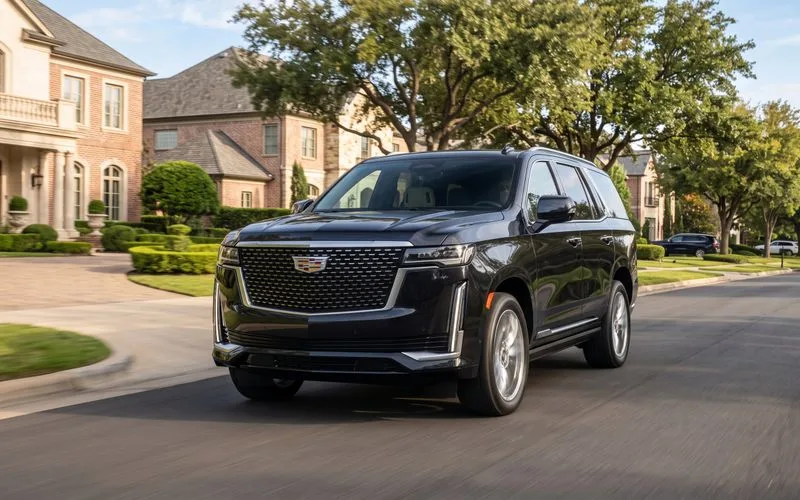 Cadillac EscaladeFull-Size Luxury SUVBetter at: Value and resale
The gas Escalade gives you the same road presence, a usable third row and roughly 50% five-year resale for far less money, if you can live with a $3,800 annual fuel bill.
Compare 2.81B-
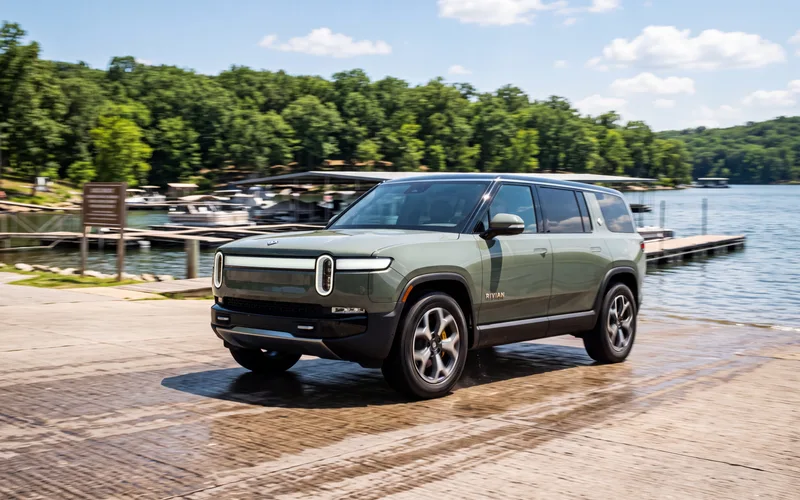 Rivian R1SFull-Size Luxury SUVBetter at: Price and capability
A three-row electric SUV that costs $50,000-plus less, goes genuinely off-road, and still offers well over 300 miles of range.
Compare 3.32B+
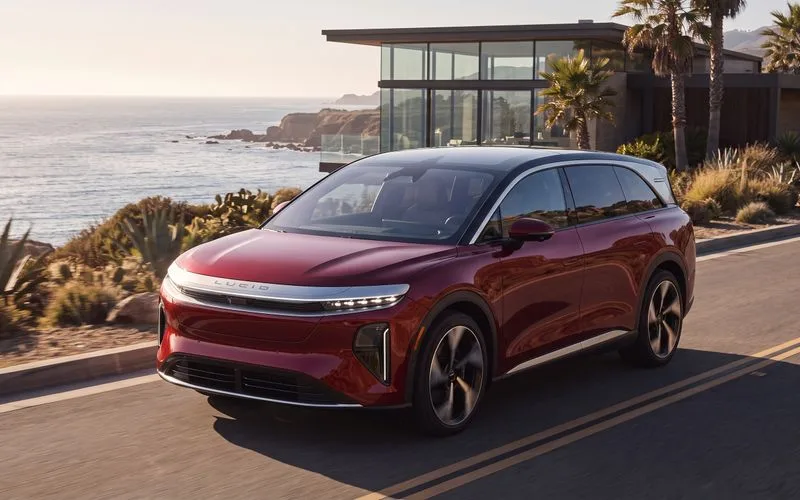 Lucid GravityFull-Size Luxury SUVBetter at: Efficiency
Matches the Escalade IQ's range almost exactly at roughly $95,000 while using far less energy to do it, for shoppers who care more about engineering than badge.
CompareProduction history
Best fit & conditions
Higher scores mean a better fit for that use case. Learn more about use-case fit →
Subject profile
Academic Probation · NHTSA safety recalls
Jul 30, 2026Electrical system: propulsion system: traction batteryThe high voltage battery may have an improperly secured internal module component.
Defect
General Motors, LLC is recalling certain 2026 Cadillac Escalade IQ, Escalade IQL, GMC Sierra EV, Chevrolet Silverado EV, and 2022 GMC Hummer EV Pickup vehicles. The high voltage battery may have an improperly secured internal module component.
Risk
A loose component may move and damage the high voltage battery, increasing the risk of a fire.
Remedy
Dealers will replace the high voltage battery, free of charge. Owner notification letters were mailed August 24, 2026. Owners may contact Cadillac customer service at 1-800-333-4223, GMC customer service at 1-800-462-8782, and Chevrolet customer service at 1-800-222-1020. GM's number for this recall is N262562600. Vehicle Identification Numbers (VINs) involved in this recall became searchable on NHTSA.gov on July 30, 2026.
NHTSA campaign 26V494000 ↗Manufacturer no. N26256260011 vehicles potentially affected (all models in the campaign)Owners notified Aug 24, 2026Filed by General Motors, LLCFiled as ESCALADE IQ, ESCALADE IQLFeb 26, 2026Equipment: other: owners/service/other manualGeneral Motors has decided that certain 2027 Chevrolet Bolt EV, 2025-2026 Cadillac OPTIQ, Chevrolet Colorado, Equinox EV, GMC Canyon, 2026 Buick Enclave, Envision, Cadillac CT5, Escalade, Escalade ESV, Escalade IQ, Escalade IQL, LYRIQ, VISTIQ, Chevrolet Blazer EV, Corvette Convertible, Corvette Coupe, Corvette Convertible E-Ray, Equinox, Silverado 1500, 2500, 3500, Silverado EV, Suburban 1500, Tahoe, Traverse, GMC Acadia, Hummer EV Pickup, Hummer EV SUV, Sierra 1500, 2500, 3500, Sierra EV, Terrain, Yukon, and Yukon XL vehicles. The radio may not have been set to the correct status to download the electronic owner's manual during production. As such, these vehicles fail to comply with the requirements of Federal Motor Vehicle Safety Standard number 208, âOccupant Protection.â
Defect
General Motors has decided that certain 2027 Chevrolet Bolt EV, 2025-2026 Cadillac OPTIQ, Chevrolet Colorado, Equinox EV, GMC Canyon, 2026 Buick Enclave, Envision, Cadillac CT5, Escalade, Escalade ESV, Escalade IQ, Escalade IQL, LYRIQ, VISTIQ, Chevrolet Blazer EV, Corvette Convertible, Corvette Coupe, Corvette Convertible E-Ray, Equinox, Silverado 1500, 2500, 3500, Silverado EV, Suburban 1500, Tahoe, Traverse, GMC Acadia, Hummer EV Pickup, Hummer EV SUV, Sierra 1500, 2500, 3500, Sierra EV, Terrain, Yukon, and Yukon XL vehicles. The radio may not have been set to the correct status to download the electronic owner's manual during production. As such, these vehicles fail to comply with the requirements of Federal Motor Vehicle Safety Standard number 208, âOccupant Protection.â
Risk
Without an owner's manual to consult, owners may not know how to safely use and operate the vehicle, increasing the risk of injury in a crash.
Remedy
Dealers will reset the vehicle radio, which will facilitate automatic download of the electronic ownerâs manual, free of charge. Owner notification letters were mailed April 16, 2026. Owners may contact GM customer service at 1-866-467-9700, Chevrolet customer service at 1-800-222-1020 or Cadillac customer service at 1-800-333-4223. The manufacturer's number for this recall is N252540430. Vehicle Identification Numbers (VINs) involved in this recall became searchable on NHTSA.gov on February 26, 2026.
NHTSA campaign 26V114000 ↗Manufacturer no. N2525404305,861 vehicles potentially affected (all models in the campaign)Owners notified Apr 16, 2026Filed by General Motors, LLCFiled as ESCALADE IQ, ESCALADE IQL
Source: NHTSA Office of Defects Investigation recall database, model years 2025–2026. Recalls are listed by model year as the manufacturer filed them; whether a specific car is affected depends on its VIN — check a VIN at nhtsa.gov ↗. NHTSA model names matched to this page: ESCALADE IQ, ESCALADE IQL.
Detailed scoring by subject
1Performance & PowertrainOne of the Escalade IQ's strongest categories.3.51A-
The dual-motor eAWD Ultium powertrain is the only configuration offered across every 2026 Escalade IQ trim, rated 680 hp in normal drive modes and 750 hp on the standard Velocity Max boost mode. Either figure sits far above the SUV normalization ceiling of 550 hp, so the item clamps to 100.
Peak twist of 785 lb-ft on Velocity Max is roughly 1.7× the top of the SUV band (500 lb-ft) and well clear of the gas Escalade's 460 lb-ft, so the item clamps to 100 even using the 615 lb-ft standard-mode number.
Cadillac's own claim is under 5 seconds, roughly 4.7 s with Velocity Max — extraordinary for a vehicle weighing about 9,000 lb, and more than a second quicker than the 6.2L V8 Escalade. Instrumented tests have generally landed in the mid-4s, so 4.7 s is the conservative reading; the vehicle scores in the strong band but not at the ceiling, since three-second EV SUVs exist.
A dual-permanent-magnet-motor EV with no engine, no gearchanges and no hybrid handoffs delivers thrust instantly and silently, and the sheer mass makes the delivery feel unusually smooth rather than abrupt. Reviewers consistently single out the effortless, lag-free surge as the vehicle's defining trait; it is held just below the ceiling because Velocity Max is a deliberate two-step engagement rather than always-on output.
There is no multi-speed gearbox to criticize — a single fixed-ratio reduction gear means no shifts, no hunting and no downshift lag, and the regen-on-demand paddle plus one-pedal driving give predictable, well-calibrated deceleration. Scored high but not perfect because blending friction and regen braking on a 9,000 lb vehicle is the one place the calibration can be caught out.
Cadillac rates the Escalade IQ at 8,000 lb when properly equipped, which sits exactly at the top of the SUV normalization band and clamps to 100. Worth flagging for buyers that towing near this rating collapses EV range dramatically — the rating is real, the usable towing radius is not comparable to the gas Escalade's.
Dual-motor all-wheel drive is standard on every trim with independent front/rear torque control and no mechanical driveshaft, and four-wheel steering with up to 10 degrees of rear steer plus Arrival Mode adds genuine low-speed maneuvering sophistication. It lands at the bottom of the top band rather than higher because there is no two-speed transfer case or locking differential — the traction hardware is electronic only.
This is an unambiguously pavement-oriented vehicle: a flat underfloor battery pack limits breakover clearance, the standard wheels are 24 inches on low-profile street tires, and there is no low range, locker, skid plating or dedicated off-road trim. The adaptive air suspension can raise ride height and the instant torque helps on loose surfaces, which keeps it above the floor, but roughly 9,000 lb on street rubber rules out anything beyond a graded trail.
One powertrain, full stop — every 2026 Escalade IQ and IQL uses the same 205 kWh pack and dual-motor eAWD setup, with no smaller battery, no single-motor option, no range-extender and obviously no combustion alternative. Velocity Max is a drive mode, not a separate powertrain. Buyers who want choice have to shop the gas Escalade instead.
2Efficiency & RangeOne of the Escalade IQ's strongest categories.3.21B+
The Escalade IQ carries no EPA window-sticker MPGe: its GVWR puts it above the 8,500-lb light-duty threshold, so it is exempt from EPA fuel-economy labeling and does not appear in fueleconomy.gov for either 2025 or 2026. The ~64 MPGe figure is derived on EPA method from the identical 205 kWh BT1 pack that IS rated in the Chevrolet Silverado EV Max Range, scaled by the two vehicles' rated range — a 9,000-lb full-size SUV moving that much air is simply not an efficient EV, whatever the battery buys it in range.
City is the Escalade IQ's stronger cycle, as it is for every heavy EV: regenerative braking recovers most of the energy that stop-and-go driving would otherwise throw away, and the frontal-area penalty barely applies below 40 mph. Derived by applying the EPA-rated city/combined relationship of the same-pack Silverado EV Max Range to the Escalade IQ's derived combined rate.
Highway is where the Escalade IQ's size is charged to it: a 9,000-lb, high-roof, full-size SUV on 22- or 24-inch wheels pays a steep aerodynamic and rolling-resistance penalty above 60 mph, which is why real-world road-trip range falls well short of the 465-mile figure even though the pack is enormous. Derived from the same-pack Silverado EV Max Range's EPA highway/combined relationship.
465 miles is the longest range Cadillac claims for any EV SUV, and for 2026 it is a real 5-mile gain over the 2025 car's 460. Every trim shares the same 205 kWh pack, so range moves only with wheel and tire choice; the longer, heavier IQL gives back a few miles. Because the vehicle is EPA-exempt this is a Cadillac estimate rather than an EPA rating, but independent testing has beaten it comfortably.
The Escalade IQ's 800-volt Ultium architecture accepts a full 350 kW, at or above the ceiling of any DC fast charger currently deployed in the US and well clear of the 150–250 kW rivals in the full-size luxury class. Cadillac quotes up to 117 miles of range added in about 10 minutes, which is roughly 310 kW sustained through the early part of the curve.
The 350 kW peak does not translate into a short stop, because 70% of a 205 kWh pack is 143 kWh — more energy than most EVs hold in total. Even at a strong ~180 kW average across the window, 10–80% runs to roughly three-quarters of an hour, the longest fast-charge stop of any EV in this dataset. The consolation is what those minutes buy: about 325 miles of range, so a road-trip stop is infrequent even if it is long.
At EPA's standard 15,000 mi/yr and its current residential electricity assumption, the Escalade IQ costs roughly $1,150 a year to run — a little over a quarter of what the premium-fuel 6.2L V8 Escalade burns through, and the strongest efficiency argument this vehicle has. That saving is contingent on home charging: at typical public DC rates of $0.45–0.55/kWh the same 15,000 miles runs past $3,500.
Cheap home electricity replaces the 93-octane premium diet of the gas Escalade, and the road-trip hardware is genuinely best-in-class: 800V, 350 kW DC, a CCS1 port plus a GM NACS adapter for the Tesla Supercharger network, and V2H backup power. What holds this below the top band is the scale of the thing at home — the volume Luxury and Sport trims ship with an 11.5 kW onboard charger good for 22 miles per hour, so filling a 205 kWh pack from low state of charge is better than a 20-hour job, and the 19.2 kW charger that halves it is a Premium-trim item plus a GM Energy PowerShift wall unit and the circuit to feed it. This is an EV that assumes a purpose-built garage rather than a driveway outlet.
3SafetyGrades above the middle of the scale.3.21B+
NHTSA has published no overall rating for the Escalade IQ: at roughly 9,000 lb curb weight its GVWR sits at or above the 10,000 lb ceiling of the NCAP program, the same reason GM's other BT1-platform vehicles (Hummer EV, Silverado EV) carry no stars. Estimated between the 4-star result of GM's T1XX full-size SUVs and the 5-star pattern typical of GM's Ultium EVs, whose floor-mounted battery gives a markedly lower centre of gravity and better rollover resistance than a body-on-frame SUV.
The Escalade IQ holds no Top Safety Pick award and has no published IIHS crashworthiness results — the institute does not routinely test vehicles of this weight, price and volume, so the absence reflects test scope rather than a poor result. Placed mid-band: a heavily reinforced EV structure with a large front crush zone and substantial battery-protection engineering argues against known concerns, but a buyer gets no independent crash data at all.
Every driver-assist feature that matters is standard on the base Luxury trim rather than bundled into an upper package: automatic emergency braking with front pedestrian braking, forward collision alert, lane keep assist with lane departure warning, full-speed-range adaptive cruise, side blind zone alert with lane change alert, rear cross traffic braking, reverse automatic braking, HD Surround Vision and Super Cruise. Scored just below the ceiling only because night vision and the more advanced camera views remain trim-dependent.
No IIHS front crash prevention result exists for this vehicle, so the score rests on GM's enhanced AEB with front pedestrian braking, which is competent in daytime vehicle-to-vehicle work but has drawn weaker marks for night pedestrian scenarios under the updated IIHS protocol. Marked slightly below the gas Escalade because roughly 3,000 lb of extra mass lengthens stopping distance materially, and no amount of sensing overcomes that in a late-detection pedestrian event.
Side blind zone alert with lane change alert, rear cross traffic braking and reverse automatic braking are all standard, so the system intervenes rather than merely warning — the top-band requirement. HD Surround Vision with multiple camera views and available trailering views extends coverage to the vehicle's considerable blind zones and to towing, which matters on a rig rated for 8,000 lb.
On mapped highways the Super Cruise centering is genuinely excellent — reviewers consistently describe it as holding the middle of the lane without the ping-ponging that afflicts weaker systems, and the IQ's rear-axle steering keeps a 224-inch body settled. Off the Super Cruise network the underlying lane keep assist reverts to the same corrective-nudge system used across GM's range, which is functional rather than confidence-inspiring, so this lands short of the top band.
Full-speed-range adaptive cruise with stop-and-go is standard and integrates directly into Super Cruise, giving a single well-resolved highway assist rather than two systems that hand off awkwardly. Electric torque delivery makes the stop-and-go modulation smoother than the gas Escalade's, though the mass still shows in how early the system has to begin slowing.
Super Cruise is standard on every Escalade IQ, not an option or an upper-trim bundle, and it remains the most mature hands-free system on sale — roughly 750,000 miles of compatible North American roads, automatic lane change, and driver monitoring that reviewers rate as well-judged rather than nagging. Only the subscription that follows the included trial period keeps this from the very top.
Adaptive full-LED headlamps with the vertical Cadillac signature and IntelliBeam automatic high beams are standard across the range, and night vision is available on upper trims — strong equipment on paper. Without any IIHS headlight rating to confirm real-world reach and glare control, the score stays in the upper-middle band rather than the top one.
Natural sightlines are mediocre in the way every vehicle of this footprint's are: 224 inches long and roughly 85 wide, with thick pillars and a shallow rear window that makes the standard rear camera mirror more useful than the glass behind it. Compensation is thorough, though — HD Surround Vision, front and rear park assist, and standard four-wheel steering that shrinks the turning circle enough that reviewers report it placing far more easily than its dimensions suggest.
The skateboard battery gives a flat floor and the body gives enormous rear-door openings, so reaching the outboard second-row anchors requires no contortion and lifting a seat into place is unusually easy for a vehicle this tall. Second-row captain's chairs mean two LATCH positions rather than three-across, which is the only real limit on an otherwise very accommodating three-row cabin.
4Space & ComfortThe Escalade IQ's best-graded category.3.94A+
Escalade IQ is sold exclusively as a seven-passenger 2+2+3 layout — second-row captain's chairs are standard across Luxury 1/2/3 and there is no eight-passenger bench option as there is on the gas Escalade. Seven of a possible eight places it high but not at the top of the full-size band.
Front headroom is near the top of the full-size band but trails the gas Escalade's ~42.3 in because the IQ pairs a lower, more aerodynamic roofline with a standard full-length fixed glass roof. Figure is from recall of published GM dimensions and was not verified against a live spec sheet in this run.
Front legroom sits at the ceiling of the SUV normalization band (40–44.5 in) — a 136.2-inch wheelbase and a flat EV floor give the front occupants as much stretch-out room as anything in the segment. Digit-level figure is from recall, not a verified spec sheet.
Second-row headroom is mid-band — respectable but not exceptional, because the battery pack raises the floor while the fastback-ish roofline drops the ceiling, costing the IQ a little of the gas Escalade's ~38.9 in. Figure is recalled rather than verified.
Second-row legroom is essentially at the top of the SUV band — the 136.2-inch wheelbase yields limousine-grade rear space, and reviewers routinely describe the second row as the best seat in the vehicle. Value is recalled from published GM dimensions rather than verified this run.
A genuine third row with power-folding second-row access, its own vents and USB-C ports, but the battery-raised floor forces a knees-up posture and third-row legroom is only around 32–33 in — fine for kids and short adult trips, not a place adults want to spend a day. Scored below the gas Escalade ESV, which is the segment's adult-usable benchmark.
About 70 cu ft behind the second row is near the top of the SUV band and only marginally behind the gas Escalade's 72.9 cu ft, with the 12.2 cu ft lockable front eTrunk on top of it (not counted in the value, which uses the SAE rear-cargo figure).
Maximum cargo volume clears the top of the SUV normalization band (55–100 cu ft) outright — 119 cu ft is moving-van territory and effectively 131 cu ft counting the front eTrunk.
Hits nearly every marker the guidance names for a standout score: a 12.2 cu ft lockable, power-operated front eTrunk, a deep console with sliding armrest and dual-hinge bin, abundant USB-C throughout all three rows, and bidirectional power — up to 19.2 kW vehicle-to-home via Ultium Home plus onboard accessory outlets for vehicle-to-load.
Front seats offer extensive power adjustment with heating, ventilation and massage, and the second-row captain's chairs are heated and ventilated with an available Executive Second Row Package adding recline, calf rests and their own displays. Long-haul comfort is a consistent strength in reviews; the third row is the only weak link, which item 4.1.6 already penalizes.
Standard adaptive air suspension with Magnetic Ride Control 4.0, a ~9,000 lb curb weight and a low battery-floor center of gravity give it a plush, exceptionally well-damped ride that reviewers rank at or near the top of the full-size class. Held just short of the ceiling because the standard 24-inch wheels let sharp expansion joints through.
No combustion engine, active noise cancellation, acoustic laminated glass and heavy sound insulation combine to make this one of the quietest vehicles on sale at any price — comfortably library-quiet for the segment and a clear advantage over the V8 Escalade.
At a ~$130k entry price essentially the whole comfort catalogue is standard or near-standard: heated/ventilated/massaging front seats, heated steering wheel, heated and ventilated second row, multi-zone climate with rear controls, and app-based remote cabin preconditioning that an EV can run indefinitely off the 205 kWh pack.
5Cost of OwnershipThe Escalade IQ's lowest-graded category.0.00F
Entry Luxury 1 opens around $130K with destination — roughly double the $65,000 top of the SUV pricing band, so the item clamps to zero. Replaces a placeholder that assumed a mainstream $49K base.
The trims buyers actually take — Luxury 2 and Sport 2 — land in the low $140Ks, more than twice the $68,000 top of the SUV band. Clamps to zero like the entry price.
The EV drivetrain removes oil changes, plugs, and exhaust work, which pulls it below the gas Escalade's ~$8,000, but 24-inch tires on a ~9,000 lb SUV, air suspension, and Cadillac labor rates keep it expensive in absolute terms.
Six-figure luxury EVs have the worst residuals in the market, and the expiry of the $7,500 federal credit in late 2025 dragged used-EV values down further. Even the Escalade badge — good for ~50% on the gas car — does not lift this above the 40% band floor.
Standard Cadillac bumper-to-bumper coverage, mid-band and identical to the gas Escalade — a year longer than mainstream GM but no better than the German luxury norm.
The EV battery and propulsion warranty runs 8 yr/100,000 mi — two years longer than the gas Escalade's 6 yr/70,000 mi powertrain cover, and the clearest ownership advantage the IQ has over its combustion sibling.
No multi-year included maintenance — GM dropped Cadillac Premium Care years ago, leaving essentially one complimentary visit — but the charging package (home charge cord plus an installation credit) and multi-year OnStar/Connected Services and roadside put it at the top of the middle band.
$143,000 volume-trim price minus its estimated resale value after 5 years (35% retained, or about $50,050) leaves about $92,950 in depreciation. Add the projected $7,000 in 5-year maintenance and repairs, and owning this vehicle for 5 years costs about $99,950 in total.
6Reliability & QualityOne of the Escalade IQ's weakest categories.1.50D
First-generation, extremely complex low-volume EV (205 kWh 24-module Ultium pack, 800V architecture, four-wheel steering, air suspension, 55-inch pillar-to-pillar display, power doors) from a brand whose recent EVs have drawn below-average predicted-reliability marks. Too new for a meaningful owner-survey sample, and every structural signal points below segment average.
Cadillac has sat in the bottom third of Consumer Reports' brand reliability rankings for several consecutive years and has trended below the luxury-segment average in J.D. Power's Vehicle Dependability Study. Initial-quality results are stronger than long-term dependability, which keeps this out of the very bottom band.
The Ultium platform family has a documented pattern of early software and high-voltage-system recalls and stop-sales, and the Escalade IQ carries the most electronics content of any GM vehicle. Scored below the 'typical activity' midpoint on family pattern and first-generation exposure rather than on a verified per-VIN recall count.
The dual-motor Ultium drive units and NCMA pouch-cell pack are shared with Silverado EV and Hummer EV, so the hardware is no longer brand-new, but the family has under four years in service and no high-mileage durability record. No systemic drive-unit failure pattern has emerged, which keeps it mid-band rather than low.
Cadillac's flagship cabin is the strongest material execution the brand offers: genuine leather, open-pore wood and metal trim, the 55-inch curved pillar-to-pillar LED display, and an Executive Second Row option. Reviewers have consistently rated it among the best interiors in the full-size luxury SUV class, ahead of the ICE Escalade.
Assembly is solid and reviewers have not flagged the panel-gap or rattle problems that dogged early Factory ZERO Hummer EV builds, but the plant's low-volume EV output and the sheer count of powered mechanisms (power doors, deployable steps, four-wheel steer) leave more to go wrong than in a conventional body-on-frame SUV.
Cadillac's roughly 900-store US network is far denser than any EV-native luxury rival (Rivian, Lucid, Tesla service centers), which is a genuine ownership advantage on a $130k EV. It is marked down because a meaningful share of dealers took GM's buyout rather than fund EV certification, thinning the pool of stores equipped to service a high-voltage Escalade IQ, and Cadillac service satisfaction is only mid-pack.
Close to a worst case for repair economics: a roughly 9,000 lb dealer-only EV with a 205 kWh high-voltage pack, air suspension, four-wheel steering, aluminum-intensive structure, huge low-profile tires on 24-inch wheels, and effectively zero aftermarket. Collision and out-of-warranty high-voltage work are expensive enough to push insurance costs well above class norms.
7Technology & InfotainmentGrades above the middle of the scale.3.10B
The Escalade IQ launched with, and carries into 2026, a single pillar-to-pillar 55-inch total-diagonal curved 9K LED panel spanning driver, center and passenger zones, plus a separate 11-inch lower touchscreen for climate and vehicle controls — all standard, with no screen upgrade or downgrade by trim. Cadillac publishes only the 55-inch combined figure, so the center infotainment section is recorded here at the same ~16.9 in estimate used for the platform-sharing gas Escalade; either the estimate or any plausible alternative sits past the 15.5-in top of the SUV band, so the recomputed score is unaffected by the uncertainty.
Runs GM's Google built-in software on the VIP electrical architecture — responsive, logically organized, and here rendered at 9K across far more screen area than any rival, with a dedicated lower touchscreen keeping climate and vehicle settings out of the main menu stack. Rated a point above the gas Escalade because the EV-native energy, charging and route-planning apps are first-class citizens of the interface rather than bolt-ons, but held out of the top of the band because the panel's width invites reflections and, with no phone projection to fall back on, every UX weakness in the native system is one the owner is stuck with.
Neither Apple CarPlay nor Android Auto is offered on any trim. GM removed phone projection from its EVs beginning with the 2024 Blazer EV, and the Escalade IQ has never offered it — a deliberate product decision in favor of Google built-in, not an omission that a later trim or model year fixes. Scored in the 'not offered' band; a few points above the Equinox EV's 12 only because the native Google Play app catalog and embedded Maps blunt the loss somewhat, which matters more on a six-figure vehicle whose buyers will otherwise notice it every drive.
Google Assistant handles natural-language commands for navigation, media and climate, and Google Maps is the embedded native navigation with live traffic and EV-aware routing that inserts charging stops against the battery's actual state. Rated above the gas Escalade's 88 because the EV routing layer is genuinely useful rather than decorative, and because this is the rare factory nav owners keep using — which it needs to be, given there is no phone projection alternative. Points come off only for the connected-services subscription that gates cloud features after the included trial.
A 40-speaker AKG Studio Reference system with Dolby Atmos is standard rather than optional — the gas Escalade makes a 19-speaker AKG standard and reserves the 36-plus-speaker Reference setup for upper trims. Combined with an electric powertrain that removes engine noise from the equation entirely, this is about as good as factory audio gets in a US-market SUV; only the Lucid Gravity and Navigator's Revel Ultima are in the conversation.
The driver's zone of the 55-inch curved panel is a full-digital, reconfigurable 9K display with multiple layouts including full-width map and camera views, standard on every trim with no analog fallback anywhere in the range. Rated marginally above the gas Escalade's 90 because the EV-specific energy and charge-flow displays add genuinely useful content rather than duplicating the center screen.
Built on GM's Vehicle Intelligence Platform, which supports true whole-vehicle over-the-air updates reaching powertrain, chassis, driver-assist and infotainment modules rather than maps only, and Cadillac's EVs are typically first in line for Super Cruise mapped-road and capability expansions. Sits above the Equinox EV's 82 for that priority, but below Tesla, Rivian and Lucid, which still ship more frequent feature-adding drops.
The myCadillac app covers remote start and cabin preconditioning, lock/unlock, locate and diagnostics, and adds the EV-specific set that matters daily — charge scheduling, charge-limit and charge-status monitoring, and departure-time preconditioning — with a digital phone key available. Rated above the gas Escalade's 78 for that EV functionality and the longer complimentary services period, but short of the top band because vehicle-to-home management lives in a separate GM Energy app and remote commands revert to subscription after the trial.
Best-in-dataset provisioning: USB-C data/charge ports across all three rows, standard wireless phone charging, 120V household outlets in the cabin and the front eTrunk, and PowerStation offboard power of roughly 5.7 kW with vehicle-to-home capability — enough to run tools, a campsite or a house during an outage, not just top up a phone. Nothing in the full-size SUV class matches the power export, which is why this sits a full ten points above the gas Escalade's 86.
Passive keyless entry, push-button start, remote start/preconditioning and a hands-free power liftgate are standard rather than trim-gated, joined by a power-operated front eTrunk and the Arrival and Departure sequences that unlock, light and configure the vehicle as the key approaches. A digital phone key is available. Above the gas Escalade's 86 for the eTrunk and the fully standard content; short of the ceiling because GM's digital key is not a full UWB implementation.
HD Surround Vision with multiple high-resolution views and the Rear Camera Mirror are standard across the range, alongside front and rear park assist and reverse automatic braking — and four-wheel steering with Arrival Mode does more for parking a 224-inch vehicle than any camera can, cutting the turning circle to roughly that of a mid-size sedan. Matched to the gas Escalade's 90: the IQ's rear-steer maneuvering advantage offsets the gas car's available Night Vision.
No head-up display appears to be offered on any Escalade IQ trim — the driver's zone of the 55-inch pillar-to-pillar panel handles that role, and every Cadillac Ultium EV (Lyriq, Optiq, Vistiq, Escalade IQ) forgoes a HUD for the same reason, while the gas Escalade fits a 14-inch unit from Premium Luxury upward. Scored in the 'not offered' band; the prior placeholder of 68 implied an availability nothing supports. Confidence is LOW rather than MEDIUM because the absence could not be confirmed against a live configurator this run — the score rests on the consistent pattern across Cadillac's EV line.
8Use-Case FitGrades above the middle of the scale.2.95B-
Enormous rear door openings, a flat skateboard-battery floor and power-folding second-row seats make loading kids and seats unusually easy for a vehicle this large, and the air suspension's Arrival/Departure sequences kneel the body to cut the step-in height. Held below the very top of the band because second-row captain's chairs are the only layout offered — there is no eight-seat bench as on the gas Escalade — so only two second-row car seats will fit.
Equipment-wise this is exactly what the top band asks for — every driver-assist feature including Super Cruise, blind-spot with lane-change alert, rear cross-traffic braking, reverse automatic braking and rear-seat reminder is standard on the base Luxury trim rather than bundled into an option package, so families are not paying extra for safety. It stops short of the top band only because there are no third-party crash credentials at all: neither NHTSA nor IIHS has tested it, since a ~9,000 lb curb weight puts it outside NCAP's scope.
About as good as multi-hour family travel gets: ~41.5 in of second-row legroom in heated and ventilated captain's chairs (with an Executive Second Row package adding recline and calf rests), rear climate zones and USB-C in all three rows, a 40-speaker AKG Dolby Atmos system standard, and a cabin quiet enough that conversation between rows is effortless. Luggage is a non-issue — roughly 70 cu ft behind the second row plus a 12.2 cu ft front eTrunk with every seat occupied by a person's gear. Only the knees-up third row keeps it off a perfect score.
Silent single-speed EV delivery with one-pedal driving, adaptive air suspension with Magnetic Ride Control 4.0, four-wheel steering that shrinks the car around the driver at parking-lot speeds, and standard Super Cruise for the freeway crawl add up to an exceptionally low-fatigue daily driver. Marked down from the very top by the sheer footprint in traffic, mediocre natural sightlines that force reliance on the camera mirror, the absence of CarPlay/Android Auto for phone-centric commuters, and the fact that the experience depends on having home charging.
The energy half of the equation is genuinely strong — roughly $1,325/yr at 15,000 miles on home electricity, about a third of what the premium-fuel V8 Escalade drinks — but the consumables half is punishing and the item weighs both. Around 61 MPGe (~2.2 mi/kWh) is poor efficiency in absolute EV terms, and 24-inch low-profile tires carrying ~9,000 lb wear fast and cost a fortune to replace, on top of roughly $3,300/yr insurance and dealer-only service on a high-voltage platform. Cheap to fuel, expensive to keep running.
Four-wheel steering with up to roughly 10 degrees of rear steer, plus the Arrival Mode crab-walk, gives this 224-inch SUV a turning circle in the high-30-foot range — dramatically tighter than its length implies and better than most mid-size SUVs. But steering angle cannot shrink the footprint: at roughly 224 in long, ~85 in of body width and ~9,000 lb it still overhangs standard parking bays and is a genuine handful in an urban garage. Standard HD Surround Vision, rear camera mirror and front/rear park assist put it firmly in the 'manageable with camera help' band rather than easy.
An 8,000 lb maximum tow rating is real capability roughly on par with the gas Escalade, and 785 lb-ft of instant electric torque makes it an unusually composed and effortless tow vehicle, with four-wheel steering helping at the ramp. What caps it in the middle band is the EV towing penalty: hauling anything heavy roughly halves the 460-mile range to well under 250 miles, and pull-through DC fast-charging stalls that accept a 9,000 lb SUV plus trailer barely exist. It is also an enclosed SUV with no bed and modest payload headroom for its mass.
This is the vehicle's weakest use case by a wide margin and sits squarely in the 'fragile or luxury-oriented for work contexts' band. It is a first-generation, low-volume, six-figure EV with a 205 kWh pack, air suspension, four-wheel steering, power doors and a 55-inch display — every one of them a failure point that a work truck does not have — wrapped in leather and open-pore wood rather than wear-friendly surfaces. There is no fleet presence to draw a durability reputation from, and repair economics are close to a worst case if anything does break.
PowerStation offboard power of roughly 5.7 kW is a legitimate jobsite asset that most luxury SUVs cannot match — enough to run tools or a site trailer off the truck all day — and it is backed by 120V outlets in the cabin and the eTrunk and a lockable 12.2 cu ft front trunk for tools. Against that there is no bed, no washable interior, no commercial or fleet variant and effectively no upfitter ecosystem, and the standard full-length fixed glass roof rules out the ladder racks and roof-mounted gear that define real jobsite duty. Basic tie-downs plus one standout feature.
This is the Escalade IQ's signature use case and it hits every marker the top band names. A 460-mile EPA-estimated range is among the longest of any EV sold in the US, an 800V architecture takes up to 350 kW DC so stops are short, the cabin is one of the quietest on sale at any price, the seats are heated, ventilated and massaging on a superbly damped air suspension, and Super Cruise is the most mature hands-free system available and is standard. The one real caveat is that highway is the EV's weak cycle, so sustained 75 mph cruising in a 9,000 lb brick delivers meaningfully less than the 460-mile sticker.
It clears the 'gravel roads and bike racks fine' bar comfortably and adds two genuine adventure enablers — standard dual-motor eAWD with height-adjustable air suspension, and roughly 5.7 kW of offboard power that will run a camp fridge, lights or tools for days. What keeps it out of the top band is hardware and logistics: 24-inch wheels on low-profile street tires are the wrong equipment for anything rough, there is no low-range or serious terrain hardware, the standard fixed glass roof limits roof-tent and rack options, and DC fast charging thins out exactly where the trailheads are, so remote round trips need real planning.
Exceptional by almost any measure: roughly 70 cu ft behind the second row opening to 119.2 cu ft with the rows folded, on top of a 12.2 cu ft lockable power-operated front eTrunk for a genuine ~131 cu ft of usable space, with power-folding rear seats, a flat EV load floor and a hitch rated to 8,000 lb for bike and cargo carriers. Just short of the ceiling because the standard fixed glass roof takes the roof away as a load surface — kayaks, roof boxes and roof tents are the one bulky-gear category it cannot solve — and the load lip is high, though the air suspension can kneel it.
9Driving ExperienceGrades above the middle of the scale.3.04B
Standard Adaptive Air Ride Suspension with Magnetic Ride Control and standard four-wheel steering give the Escalade IQ far better body control and low-speed agility than its ~9,000 lb curb weight suggests, and the floor-mounted Ultium pack drops the center of gravity well below the body-on-frame gas Escalade. It is composed and confidence-inspiring rather than agile — mass, tall sidewalls and touring tires cap cornering grip, so it sits mid-pack against lighter full-size luxury rivals.
Accurate and consistently weighted, but heavily isolated in the GM luxury idiom — little genuine feedback reaches the rim, and the rear-steer contribution makes the response feel synthesized at low speed rather than natural. Precise enough to place a very large vehicle confidently, which is the relevant job here, but numb.
The brake-by-wire system blends friction and regenerative braking cleanly, and one-pedal driving plus the Regen on Demand paddle make everyday deceleration smooth and predictable. But roughly 9,000 lb of vehicle is a genuine physics penalty: stopping distances are long by luxury-SUV standards and repeated hard stops load the friction brakes heavily once regen saturates. Adequate and well-calibrated, not strong.
A dual-motor AWD EV with no gearbox, no stop/start and no combustion vibration to isolate — tip-in is progressive, and Velocity Max delivers roughly 750 hp and 785 lb-ft for a sub-5-second 0-60 mph run in a nine-thousand-pound SUV. Effortless, seamless torque delivery is this vehicle's defining dynamic quality and among the best in any full-size SUV.
Near-silent under load: no combustion noise, plus laminated acoustic glass, active noise cancellation and extensive sound deadening. Only faint motor whine at hard throttle and wind/road noise at highway speed intrude, and nothing objectionable reaches the controls. One of the quietest cabins on sale at any price.
Standard four-wheel steering trims the turning diameter of a 224-inch-long, 136-inch-wheelbase SUV to roughly that of a mid-size crossover — a genuine engineering achievement, and tighter than the gas Escalade ESV despite the longer wheelbase. It still scores poorly against the SUV normalization band (34-42 ft), which is calibrated across all SUV sizes rather than full-size ones.
Commanding sightlines, a wide power seat and wheel adjustment range with massage and memory, and standard power-retracting running boards that solve the step-in height of a vehicle this tall. The 55-inch pillar-to-pillar LED display puts key information directly in view, but a large share of secondary functions live in touchscreen menus rather than hard controls, and the sheer footprint means placing the vehicle depends on the camera suite.
The 750-hp Velocity Max launch and the Arrival Mobility diagonal-crawl party trick are genuinely entertaining, and silent effortless speed at this scale has real novelty. But it is impressive rather than engaging — there is no soundtrack, no adjustability at the limit, and nothing that rewards a twisty road. Enthusiasts admire it; they do not take the long way home in it.
10Value & Market PositionOne of the Escalade IQ's weakest categories.2.86B-
Every Escalade IQ trim ships with content rivals charge thousands extra for: Super Cruise hands-free driving, the 55-inch curved 9K display, a 40-speaker AKG Studio Reference Dolby Atmos system, four-wheel steering, air ride adaptive suspension and HD Surround Vision are all standard from Luxury 1. Two notable deletions keep it out of the top band — there is no head-up display on any trim, and Apple CarPlay/Android Auto are absent across GM's EV line.
The weakest line in the category: ~$130K to start and ~$143K as typically equipped buys class-leading 460-mile range and a genuinely loaded spec, but the electric Rivian R1S and Lucid Gravity Grand Touring deliver comparable range and performance for $50K–$65K less, and the gas Escalade ESV offers more usable third-row and cargo space for far less money. Projected 5-year residual of roughly 35% and the September 2025 expiry of the federal clean-vehicle and leasing credits remove the two supports that softened that premium through 2025.
Wide for a six-figure halo model: Luxury 1/2/3 and Sport 1/2/3 in two body lengths (standard Escalade IQ and the extended Escalade IQL added for 2026), topped by the Escalade IQ V at roughly $170K. What is missing is any ladder downward — one battery, one dual-motor eAWD drivetrain, and no entry configuration below about $130K, so the range serves buyers choosing between luxury levels rather than budgets.
A low-volume halo by design and by result — the Escalade IQ sells in the low thousands annually against roughly 40,000 for the combustion Escalade, and Cadillac's EV volume is carried by the Lyriq and Optiq rather than by the six-figure flagship. The trajectory into 2026 is soft: the federal credits that supported luxury EV demand lapsed in September 2025 and GM has pulled back its EV production targets.
Escalade is the most culturally recognized badge in American full-size luxury, and Cadillac's Ultium rollout has been received as a credible one, which lends the IQ real aspirational pull. It sits just below the German flagships on broad luxury-brand equity, and an electric Escalade is a more polarizing proposition to the traditional Escalade buyer than the V8 car is.
Buyer benefit is real but smaller than it was. The Escalade IQ never qualified for the $7,500 federal purchase credit — its MSRP is far above the $80,000 SUV cap — but the commercial-lease pathway that passed that money to lessees ended with the September 30, 2025 expiry, so 2026 shoppers lose it outright. Offsetting that, slow-moving six-figure EV inventory means GM lease cash, subsidized APR and genuine dealer discounting are commonly available.
About as fresh as a nameplate gets without being a launch year: production began in 2024 for the 2025 model year on a clean-sheet 800V Ultium architecture, and 2026 expands rather than ages the line with the extended-length Escalade IQL and the Escalade IQ V. Redesign risk for a 2026 buyer is effectively nil.
Reviews have been broadly favorable on execution — the ride and isolation, the 460-mile range, and four-wheel steering that makes a roughly 9,000-pound vehicle genuinely maneuverable — but conclusions consistently turn on the price, the mass, third-row and cargo packaging that does not beat the cheaper gas ESV, and the removal of phone projection. It reads as an admired technical achievement rather than a comparison-test winner.