
The verdict
A strong full-size luxury suv, strong on space and held back by efficiency.
The 2026 Escalade is the full-size luxury SUV to beat on space, screen and standard technology: 121 cu ft of cargo room, a 55-inch curved display, and hands-free Super Cruise standard on every trim — including the ~$89,500 base Luxury, which is genuinely rare at this price. It also asks you to accept 16 MPG combined on premium fuel, roughly $3,800 a year at the pump, ~$3,000 a year to insure, and a ~$106,000 volume trim, so the running costs are among the harshest of anything on this site. Reliability is the other caution flag: the 6.2L V8 was the subject of a 2025 recall covering roughly 597,000 GM vehicles for bearing failures, and the refreshed electronics are still young. Buy it for the presence, the cabin and the effortless 600-mile day — not for the math.
Jump to scoresStrengths
- Cabin and cargo space nothing in the class beats
- Super Cruise standard on every trim
- Best-in-class technology and audio
What holds it back
- Fuel economy that borders on punishing
- Six-figure pricing and painful ownership math
- Real reliability question marks on the V8
Top alternatives
Cars shoppers cross-shop with the Cadillac Escalade 3.12B
3.12B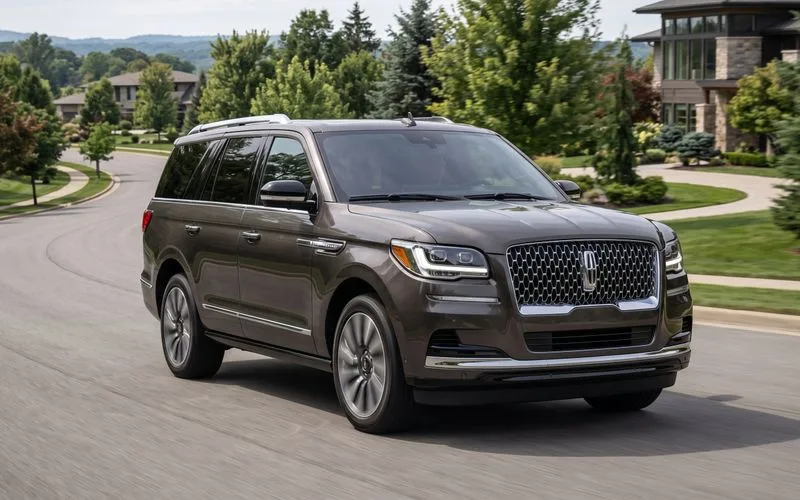 Lincoln NavigatorFull-Size Luxury SUVBetter at: Comfort and deals
The freshly redesigned Navigator matches the Escalade's luxury and beats it on fuel (17 MPG on regular-tolerant fuel), seat comfort and crash-test credentials — and it's usually the better-incentivized buy.
Compare 2.87B-
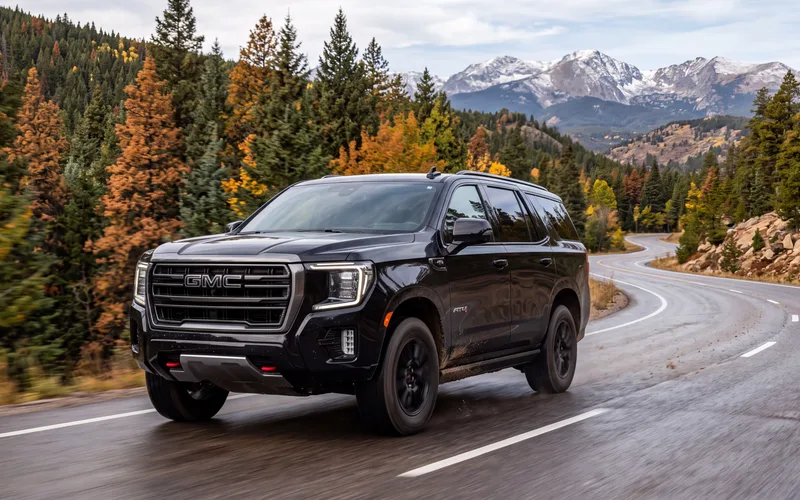 GMC YukonFull-Size SUVBetter at: Value
Same platform, same available 6.2L V8, ~$30,000 less, and a volume 5.3L V8 that runs on regular — most of the Escalade's substance without the six-figure ownership math.
Compare 2.96B-
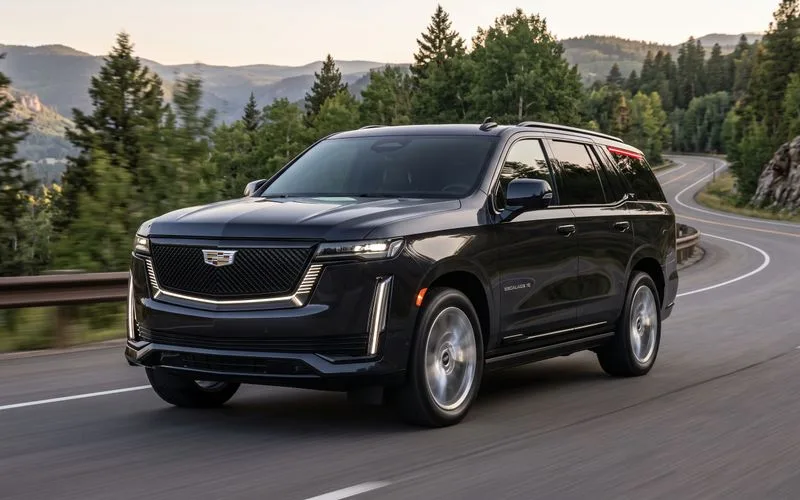 Cadillac Escalade IQFull-Size Luxury SUVBetter at: Running costs
Same Escalade presence and cabin without the $3,800-a-year fuel bill, plus four-wheel steering that makes a 227-inch SUV genuinely easier to park.
CompareHow it's evolved
10 scored model years · 2017–2026
Subject scores by year
Hover or tap a score to see what moved it versus the year before. A corner mark flags a big swing.
| Year | Performance | Efficiency | Safety | Space | Cost | Reliability | Tech | Use-case | Driving | Value |
|---|---|---|---|---|---|---|---|---|---|---|
| 2026 | 75 | 13 | 72 | 89 | 14 | 67 | 87 | 73 | 69 | 79 |
| 2025 | 72 | 12 | 78 | 88 | 15 | 60 | 87 | 70 | 67 | 76 |
| 2024 | 72 | 11 | 66 | 88 | 14 | 55 | 84 | 67 | 65 | 72 |
| 2023 | 73 | 11 | 63 | 88 | 13 | 56 | 85 | 65 | 64 | 70 |
| 2022 | 69 | 12 | 58 | 84 | 14 | 53 | 83 | 59 | 59 | 68 |
| 2021 | 70 | 12 | 58 | 88 | 36 | 58 | 78 | 56 | 61 | 75 |
| 2020 | 68 | 22 | 51 | 76 | 18 | 65 | 52 | 54 | 59 | 61 |
| 2019 | 66 | 20 | 48 | 73 | 11 | 63 | 47 | 53 | 55 | 53 |
| 2018 | 66 | 20 | 48 | 66 | 17 | 57 | 48 | 54 | 49 | 62 |
| 2017 | 67 | 21 | 47 | 63 | 15 | 49 | 49 | 51 | 48 | 61 |
Compare two years
Best fit & conditions
Higher scores mean a better fit for that use case. Learn more about use-case fit →
Subject profile
Academic Probation · NHTSA safety recalls
May 14, 2026Wheels: hubIncorrect bolts may have been installed on the left and right front wheel hubs, which can result in the bolts loosening or deforming over time.
Defect
General Motors, LLC is recalling certain 2025â2026 Cadillac Escalade, Escalade ESV, Chevrolet Suburban 1500, Tahoe, GMC Yukon, and Yukon XL vehicles with 24-inch wheels. Incorrect bolts may have been installed on the left and right front wheel hubs, which can result in the bolts loosening or deforming over time.
Risk
A bolt that loosens or breaks during vehicle operation can result in loss of vehicle control, increasing the risk of a crash.
Remedy
Dealers will replace the front left and right wheel hub bolts, free of charge. Owner notification letters were mailed June 18, 2026. Owners may contact GMC customer service at 1-800-462-8782, Chevrolet customer service at 1-800-222-1020 or Cadillac customer service at 1-800-333-4223. GM's number for this recall is N262554630. Vehicle Identification Numbers (VINs) involved in this recall became searchable on NHTSA.gov on May 14, 2026.
NHTSA campaign 26V304000 ↗Manufacturer no. N2625546302,457 vehicles potentially affected (all models in the campaign)Owners notified Jun 18, 2026Filed by General Motors, LLCFiled as ESCALADE, ESCALADE ESVMay 7, 2026Power train: transfer case (4-wheel drive)A component missing from the drivetrain transfer case may cause the front and/or rear wheels to lock up without warning to the driver.
Defect
General Motors, LLC (GM) is recalling certain 2026 Cadillac Escalade and Escalade ESV, Chevrolet Silverado 1500, Suburban, and Tahoe, and GMC Sierra 1500, Yukon, and Yukon XL vehicles with four-wheel (4WD) or all-wheel drive (AWD), and certain 2015-2020 Suburban, Escalade, Escalade ESV, Yukon, Yukon XL, and Tahoe vehicles. A component missing from the drivetrain transfer case may cause the front and/or rear wheels to lock up without warning to the driver.
Risk
Front or rear wheel lockup increases the risk of a crash.
Remedy
Owners are advised not to drive their vehicle until the remedy is completed. Dealers will inspect and, if necessary, replace the transfer case assembly, free of charge. Owner notification letters were mailed May 18, 2026. Owners may contact GMC customer service at 1-800-462-8782, Chevrolet customer service at 1-800-222-1020 or Cadillac customer service at 1-800-333-4223. GM's number for this recall is N262557620. Vehicle Identification Numbers (VINs) involved in this recall became searchable on NHTSA.gov on May 7, 2026.
NHTSA campaign 26V289000 ↗Manufacturer no. N26255762066 vehicles potentially affected (all models in the campaign)Owners notified May 18, 2026Filed by General Motors, LLCFiled as ESCALADE, ESCALADE ESVFeb 26, 2026Equipment: other: owners/service/other manualGeneral Motors has decided that certain 2027 Chevrolet Bolt EV, 2025-2026 Cadillac OPTIQ, Chevrolet Colorado, Equinox EV, GMC Canyon, 2026 Buick Enclave, Envision, Cadillac CT5, Escalade, Escalade ESV, Escalade IQ, Escalade IQL, LYRIQ, VISTIQ, Chevrolet Blazer EV, Corvette Convertible, Corvette Coupe, Corvette Convertible E-Ray, Equinox, Silverado 1500, 2500, 3500, Silverado EV, Suburban 1500, Tahoe, Traverse, GMC Acadia, Hummer EV Pickup, Hummer EV SUV, Sierra 1500, 2500, 3500, Sierra EV, Terrain, Yukon, and Yukon XL vehicles. The radio may not have been set to the correct status to download the electronic owner's manual during production. As such, these vehicles fail to comply with the requirements of Federal Motor Vehicle Safety Standard number 208, âOccupant Protection.â
Defect
General Motors has decided that certain 2027 Chevrolet Bolt EV, 2025-2026 Cadillac OPTIQ, Chevrolet Colorado, Equinox EV, GMC Canyon, 2026 Buick Enclave, Envision, Cadillac CT5, Escalade, Escalade ESV, Escalade IQ, Escalade IQL, LYRIQ, VISTIQ, Chevrolet Blazer EV, Corvette Convertible, Corvette Coupe, Corvette Convertible E-Ray, Equinox, Silverado 1500, 2500, 3500, Silverado EV, Suburban 1500, Tahoe, Traverse, GMC Acadia, Hummer EV Pickup, Hummer EV SUV, Sierra 1500, 2500, 3500, Sierra EV, Terrain, Yukon, and Yukon XL vehicles. The radio may not have been set to the correct status to download the electronic owner's manual during production. As such, these vehicles fail to comply with the requirements of Federal Motor Vehicle Safety Standard number 208, âOccupant Protection.â
Risk
Without an owner's manual to consult, owners may not know how to safely use and operate the vehicle, increasing the risk of injury in a crash.
Remedy
Dealers will reset the vehicle radio, which will facilitate automatic download of the electronic ownerâs manual, free of charge. Owner notification letters were mailed April 16, 2026. Owners may contact GM customer service at 1-866-467-9700, Chevrolet customer service at 1-800-222-1020 or Cadillac customer service at 1-800-333-4223. The manufacturer's number for this recall is N252540430. Vehicle Identification Numbers (VINs) involved in this recall became searchable on NHTSA.gov on February 26, 2026.
NHTSA campaign 26V114000 ↗Manufacturer no. N2525404305,861 vehicles potentially affected (all models in the campaign)Owners notified Apr 16, 2026Filed by General Motors, LLCFiled as ESCALADE, ESCALADE ESV
22 recalls on other model years of the Escalade (2017–2024)
Feb 13, 2026Power train: automatic transmission: control module: software · Power train: automatic transmission: fluid/lubricant: valves/valve bodyThe transmission control valve may fail and lock up the rear wheels.
Defect
General Motors, LLC (GM) is recalling certain 2022 Chevrolet Tahoe, Chevrolet Suburban, GMC Yukon, GMC Yukon XL, Cadillac Escalade, and Cadillac Escalade ESV vehicles equipped with 10 Speed Transmission with ETRS (Electronic Transmission Range Select). The transmission control valve may fail and lock up the rear wheels.
Risk
Rear wheels that lock up while driving increase the risk of a crash.
Remedy
Dealers will install new transmission control module (TCM) software, free of charge. Owner notification letters were mailed April 7, 2026. Owners may contact GM customer service at 1-888-988-7267, Cadillac customer service at 1-800-458-8006, GMC customer service at GMC 1-800-462-8782 or Chevrolet customer service at 1-800-222-1020. GM's number for this recall is N252536750. Vehicle Identification Numbers (VINs) involved in this recall became searchable on NHTSA.gov on February 12, 2026.
NHTSA campaign 26V085000 ↗Manufacturer no. N25253675043,743 vehicles potentially affected (all models in the campaign)Owners notified Apr 7, 2026Filed by General Motors, LLCFiled as ESCALADE, ESCALADE ESVSep 18, 2025Fuel system, diesel: storage: tank assemblyThe original fuel tank may have been replaced with an incorrect fuel tank, which can allow fuel to leak in a rollover crash.
Defect
General Motors, LLC (GM) is recalling certain 2021 Cadillac Escalade, 2021, 2023-2024 Chevrolet Tahoe, and 2022 and 2024 GMC Yukon vehicles equipped with a 6-cylinder diesel engine. The original fuel tank may have been replaced with an incorrect fuel tank, which can allow fuel to leak in a rollover crash.
Risk
A fuel leak in the presence of an ignition source increases the risk of a vehicle fire.
Remedy
Dealers will inspect for the correct fuel tank and replace it, if necessary, free of charge. Owner notification letters were mailed November 5, 2025. Owners may contact Cadillac customer service at 1-800-333-4223, Chevrolet customer service at 1-800-222-1020, or GMC customer service at 1-800-462-8782. GM's number for this recall is N252512770. Vehicle Identification Numbers (VINs) involved in this recall became searchable on NHTSA.gov on September 18, 2025.
NHTSA campaign 25V619000 ↗Manufacturer no. N25251277012 vehicles potentially affected (all models in the campaign)Owners notified Nov 5, 2025Filed by General Motors, LLCFiled as ESCALADEApr 24, 2025Engine and engine cooling: engine: hard parts internal/mechanicalThe connecting rod and/or crankshaft engine components may have manufacturing defects that can lead to engine damage and engine failure.
Defect
General Motors LLC (GM) is recalling certain 2021-2024 Cadillac Escalade and Escalade ESV, Chevrolet Silverado 1500, Suburban, and Tahoe, GMC Sierra 1500, Yukon, and Yukon XL vehicles equipped with a 6.2L V8 gas engine. The connecting rod and/or crankshaft engine components may have manufacturing defects that can lead to engine damage and engine failure.
Risk
Engine failure increases the risk of a crash.
Remedy
Dealers will inspect the engine, and as necessary, repair or replace the engine. For vehicles that pass inspection, dealers will add higher viscosity oil, install 6 oil fill cap, replace the oil filter, and update the owner's manual. Repairs will be performed free of charge. Owner notification letters were mailed June 18, 2025. Owners may contact Cadillac customer service at 1-800-333-4223, Chevrolet customer service at 1-800-222-1020, or GMC customer service at 1-800-462-8782. GM's number for this recall is N252494000.
NHTSA campaign 25V274000 ↗Manufacturer no. N252494000597,571 vehicles potentially affected (all models in the campaign)Owners notified Jun 18, 2025Filed by General Motors, LLCFiled as ESCALADE, ESCALADE ESVOct 24, 2024Power train: automatic transmission: control module: software · Power train: automatic transmission: fluid/lubricant: valves/valve bodyThe transmission control valve may fail and cause the rear wheels to lock-up.
Defect
General Motors, LLC (GM) is recalling certain 2020-2022 Chevrolet Silverado 1500, 2500, 3500, GMC Sierra 1500, 2500, 3500, 2021 Cadillac Escalade, Escalade ESV, Chevrolet Tahoe, Suburban, GMC Yukon, and Yukon XL vehicles equipped with diesel engines. The transmission control valve may fail and cause the rear wheels to lock-up.
Risk
Rear wheel lock-up can increase the risk of a crash.
Remedy
Dealers will install new transmission control module software, free of charge. GM will provide a special coverage program to cover the repair of transmissions that are identified by the remedy software as containing a defective control valve. Owner notification letters were mailed December 12, 2024. Owners may contact GM customer service at 1-888-988-7267, Cadillac customer service at 1-800-458-8006, GMC customer service at GMC 1-800-462-8782 or Chevrolet customer service at 1-800-222-1020. GM's number for this recall is N242454440.
NHTSA campaign 24V797000 ↗Manufacturer no. N242454440463,295 vehicles potentially affected (all models in the campaign)Owners notified Dec 12, 2024Filed by General Motors, LLCFiled as ESCALADE, ESCALADE ESVSep 12, 2024Service brakes, hydraulic: brake fluid low warning: lamp · Service brakes, hydraulic: power assist: electric: control module: softwareThe electronic brake control module software may fail to display a warning light when a loss of brake fluid occurs. As such, these vehicles fail to comply with the requirements of Federal Vehicle Safety Standard number 135, "Light Vehicle Brake Systems."
Defect
General Motors, LLC (GM) is recalling certain 2023 Chevrolet Silverado 1500, GMC Sierra 1500, 2023-2024 Chevrolet Tahoe, Suburban, GMC Yukon, Yukon XL, Cadillac Escalade, and Escalade ESV vehicles. The electronic brake control module software may fail to display a warning light when a loss of brake fluid occurs. As such, these vehicles fail to comply with the requirements of Federal Vehicle Safety Standard number 135, "Light Vehicle Brake Systems."
Risk
Without a warning light, the vehicle may be driven with low brake fluid, which can reduce braking performance and increase the risk of a crash.
Remedy
The Electronic Brake Control Module (eBCM) software will be updated through an over-the-air (OTA) update or by a dealer, free of charge. Owner notification letters were mailed October 25, 2024. Owners can contact GMC customer service at 1-800-462-8782, Chevrolet customer service at 1-800-222-1020, or Cadillac customer service at 1-800-458-8006. GM's number for this recall is N242447990.
NHTSA campaign 24V674000 ↗Manufacturer no. N242447990449,671 vehicles potentially affected (all models in the campaign)Owners notified Oct 25, 2024Filed by General Motors, LLCFiled as ESCALADE, ESCALADE ESVSep 20, 2023Suspension: rearThe rear suspension outer control arm bolts may not have been properly heat-treated, which can cause the bolts to break.
Defect
General Motors, LLC (GM) is recalling certain 2023 Cadillac Escalade, Escalade ESV, Chevrolet Suburban, Chevrolet Tahoe, GMC Yukon, and Yukon XL vehicles. The rear suspension outer control arm bolts may not have been properly heat-treated, which can cause the bolts to break.
Risk
A broken suspension bolt can result in misalignment of the rear wheel, increasing the risk of a crash.
Remedy
Dealers will replace both rear suspension outer control arm bolts, free of charge. Owner notification letters were mailed November 14, 2023. Owners may contact Chevrolet customer service at 1-800-222-1020; Cadillac customer service at 1-800-458-8006; and GMC customer service at 1-800-462-8782. GM's number for this recall is N232415910.
NHTSA campaign 23V642000 ↗Manufacturer no. N232415910189 vehicles potentially affected (all models in the campaign)Owners notified Nov 14, 2023Filed by General Motors, LLCFiled as ESCALADE, ESCALADE ESVDec 8, 2022Exterior lighting: lighting control module: softwareThe daytime running lights (DRLs) may not deactivate when the headlights are on. As such, these vehicles fail to comply with the requirements of Federal Motor Vehicle Safety Standard number 108, "Lamps, Reflective Devices, and Associated Equipment."
Defect
General Motors, LLC (GM) is recalling certain 2020-2023 Cadillac CT4 and CT5; 2021-2023 Buick Envision; and 2022-2023 Cadillac Escalade and Escalade ESV, Chevrolet Silverado 1500, Suburban, Tahoe, GMC Sierra 1500, Yukon, and Yukon XL vehicles. The daytime running lights (DRLs) may not deactivate when the headlights are on. As such, these vehicles fail to comply with the requirements of Federal Motor Vehicle Safety Standard number 108, "Lamps, Reflective Devices, and Associated Equipment."
Risk
DRLs that do not deactivate as intended may result in a glare, reducing visibility, and increasing the risk of a crash.
Remedy
The body control module software will be updated by a dealer, or through an over-the-air (OTA) update, free of charge. Owner notification letters were mailed January 23, 2023. Owners may contact GMC customer service at 1-888-988-7267, Chevrolet customer service at 1-800-222-1020, or Cadillac customer service at 1-800-458-8006. GM's number for this recall is N222386380. This recall expands previous recall number 22V-827.
NHTSA campaign 22V903000 ↗Manufacturer no. N222386380740,108 vehicles potentially affected (all models in the campaign)Owners notified Jan 23, 2023Filed by General Motors, LLCFiled as ESCALADE, ESCALADE ESVNov 3, 2022Exterior lighting: lighting control module: softwareThe daytime running lights (DRLs) may not deactivate when the headlights are on. As such, these vehicles fail to comply with the requirements of Federal Motor Vehicle Safety Standard number 108, "Lamps, Reflective Devices, and Associated Equipment."
Defect
General Motors, LLC (GM) is recalling certain 2021 Yukon, Yukon XL, Chevrolet Tahoe, Chevrolet Suburban, Cadillac Escalade, and Cadillac Escalade ESV vehicles. The daytime running lights (DRLs) may not deactivate when the headlights are on. As such, these vehicles fail to comply with the requirements of Federal Motor Vehicle Safety Standard number 108, "Lamps, Reflective Devices, and Associated Equipment."
Risk
Daytime Running Lights that do not deactivate as intended may cause a glare, reducing visibility and increasing the risk of a crash.
Remedy
Dealers will provide an over-the-air (OTA) update for the Body Control Module software, free of charge. Owner notification letters were mailed December 15, 2022. Owners may contact GM customer service at 1-888-988-7267, Chevrolet customer service at 1-800-222-1020, or Cadillac customer service at 1-800-458-8006. GM's number for this recall is N222382220.
NHTSA campaign 22V827000 ↗Manufacturer no. N222382220338,735 vehicles potentially affected (all models in the campaign)Owners notified Dec 15, 2022Filed by General Motors, LLCFiled as ESCALADE, ESCALADE ESVAug 11, 2022Seat belts: critical fastenersThe rivet that retains the buckle to the mounting bracket in the left or right side third-row seat belt buckle assembly may have been improperly formed.
Defect
General Motors, LLC (M) is recalling certain 2021-2022 Cadillac Escalade, Escalade ESV, Chevrolet Suburban, Tahoe, GMC Yukon, and Yukon XL vehicles equipped with third-row seats. The rivet that retains the buckle to the mounting bracket in the left or right side third-row seat belt buckle assembly may have been improperly formed.
Risk
A seat belt with a deformed rivet may not properly restrain an occupant, increasing the risk of injury during a crash.
Remedy
Dealers will inspect the rivet head formation on both the left and right side third-row seat belt buckle assemblies and replace seat belt buckle assemblies, as necessary, free of charge. Interim owner notification letters informing owners of the safety risk were mailed September 28, 2022. Owner notification letters were mailed on November 1, 2022. Owners may contact Chevrolet customer service at 1-800-222-1020; Cadillac customer service at 1-800-458-8006; and GMC customer service at 1-800-462-8782. GM's number for this recall is N222372380.
NHTSA campaign 22V617000 ↗Manufacturer no. N222372380484,155 vehicles potentially affected (all models in the campaign)Owners notified Nov 1, 2022Filed by General Motors, LLCFiled as ESCALADE, ESCALADE ESVJan 27, 2022Power train: driveline: driveshaftThe rear wheel driveshaft assemblies may have internal components that were not heat-treated properly, possibly resulting in driveshaft failure.
Defect
General Motors, LLC (GM) is recalling certain 2021 GMC Yukon, Yukon XL, Cadillac Escalade, Escalade ESV, Chevrolet Suburban, and Chevrolet Tahoe vehicles. The rear wheel driveshaft assemblies may have internal components that were not heat-treated properly, possibly resulting in driveshaft failure.
Risk
Driveshaft failure can cause a sudden loss of drive power, increasing the risk of a crash.
Remedy
Dealers will replace the left and/or right rear driveshaft assemblies, free of charge. Owner notification letters were mailed on March 14, 2022. Owners may contact Chevrolet customer service at 1-800-222-1020; Cadillac customer service at 1-800-458-8006 or GMC customer service at 1-800-462-8782. GM's number for this recall is N212351030.
NHTSA campaign 22V036000 ↗Manufacturer no. N2123510301,789 vehicles potentially affected (all models in the campaign)Owners notified Mar 14, 2022Filed by General Motors, LLCFiled as ESCALADE, ESCALADE ESVSep 23, 2021Fuel system, gasoline: delivery: fuel pump: control/drive moduleThe fuel pump power control module may cause the fuel pump to fail or operate intermittently, which can interrupt fuel flow to the engine, and cause an unexpected engine stall.
Defect
General Motors, LLC (GM) is recalling certain 2021 Cadillac Escalade, Escalade ESV, Chevrolet Suburban, Tahoe, GMC Yukon, and Yukon XL vehicles. The fuel pump power control module may cause the fuel pump to fail or operate intermittently, which can interrupt fuel flow to the engine, and cause an unexpected engine stall.
Risk
An engine stall increases the risk of a crash.
Remedy
Dealers will replace the fuel pump power control module, free of charge. Owner notification letters were mailed on October 14, 2021. Owners may contact Chevrolet customer service at 1-800-222-1020; Cadillac customer service at 1-800-458-8006; or GMC customer service at 1-800-462-8782. GM's number for this recall is N212332040.
NHTSA campaign 21V739000 ↗Manufacturer no. N21233204014,939 vehicles potentially affected (all models in the campaign)Owners notified Oct 14, 2021Filed by General Motors, LLCFiled as ESCALADE, ESCALADE ESV, ESCALADE NAJun 17, 2021Steering: steering control moduleA software issue may cause a loss of power steering assist at startup or while driving.
Defect
General Motors, LLC (GM) is recalling certain 2021 Cadillac Escalade, Escalade ESV, Chevrolet Suburban, Chevrolet Tahoe, GMC Yukon, and Yukon XL vehicles. A software issue may cause a loss of power steering assist at startup or while driving.
Risk
Increased steering effort, particularly at lower speeds, increases the risk of a crash.
Remedy
The power steering module software will be updated by a dealer, or through an over-the-air (OTA) update, free of charge. Owner notification letters were mailed July 13, 2021. Owners may contact Chevrolet customer service at 1-800-222-1020; Cadillac customer service at 1-800-458-8006; or GMC customer service at 1-800-462-8782. GM's number for this recall is N212333900.
NHTSA campaign 21V455000 ↗Manufacturer no. N21233390026,847 vehicles potentially affected (all models in the campaign)Owners notified Jul 13, 2021Filed by General Motors, LLCFiled as ESCALADE ESV, ESCALADE NAJun 10, 2021Air bags: srs malfunction warning lamp/light · Electrical system: softwareThe communications gateway module incorrectly processes a loss of communication with the sensing diagnostic module (SDM), causing the air bag malfunction indicator light to inconsistently illuminate.
Defect
General Motors, LLC (GM) is recalling certain 2021 Buick Envision, Cadillac CT4, CT5, Escalade, Escalade ESV, Chevrolet Tahoe, Corvette, Suburban, GMC Yukon, Yukon XL vehicles. The communications gateway module incorrectly processes a loss of communication with the sensing diagnostic module (SDM), causing the air bag malfunction indicator light to inconsistently illuminate.
Risk
The air bag malfunction indicator light may fail to warn the driver of a problem with the air bag, increasing the risk of injury.
Remedy
The communications gateway module software will be updated by a dealer, or through an over-the-air (OTA) update, free of charge. Owner notification letters were mailed on July 1, 2021. Owners may contact Buick customer service at 1-800-521-7300, Cadillac customer service at 1-800-458-8006, Chevrolet customer service at 1-800-222-1020, or GMC customer service at 1-800-462-8782. GM's number for this recall is N212338110.
NHTSA campaign 21V421000 ↗Manufacturer no. N212338110285,622 vehicles potentially affected (all models in the campaign)Owners notified Jul 1, 2021Filed by General Motors, LLCFiled as ESCALADE, ESCALADE ESVMar 18, 2021Seat belts · Seat belts: rear/otherThe third-row outboard seat belts may have been entrapped or misrouted behind the outboard seat-folding mechanism, which could result in damaged seat belts.
Defect
General Motors, LLC (GM) is recalling certain 2021 Cadillac Escalade, Escalade ESV, GMC Yukon, Yukon XL, Chevrolet Suburban, and Tahoe vehicles with third-row seating. The third-row outboard seat belts may have been entrapped or misrouted behind the outboard seat-folding mechanism, which could result in damaged seat belts.
Risk
A damaged seat belt can break during a crash, increasing the risk of injury to the occupant.
Remedy
GM will notify owners, and dealers will inspect the third-row outboard seat belts, replacing any damaged seat belts, and rerouting them if necessary, free of charge. The recall began on April 21, 2021. Owners may contact Chevrolet customer service at 1-800-222-1020, GMC customer service at 1-800-462-8782, and Cadillac customer service at 1-800-458-8006. GM's number for this recall is N202313000.
NHTSA campaign 21V190000 ↗Manufacturer no. N20231300094,641 vehicles potentially affected (all models in the campaign)Owners notified Apr 21, 2021Filed by General Motors, LLCFiled as ESCALADE, ESCALADE ESVFeb 25, 2021TiresThe affected tires were cured for too long during production.
Defect
General Motors LLC (GM) is recalling certain 2020 Buick Enclave, Cadillac XT4, XT5, Escalade, Escalade ESV, Chevrolet Suburban, Tahoe, Traverse, GMC Yukon, Yukon XL, 2018-2021 Chevrolet Express, GMC Savana, 2019-2020 Chevrolet Blazer, Silverado 1500, GMC Acadia, Sierra 1500, and certain Continental tires sold to the aftermarket for various model year 2018-2021 vehicles. The affected tires were cured for too long during production.
Risk
Over cured tires may develop a break in the sidewall resulting in sudden air loss or a belt edge separation which could lead to a tread/belt loss. Either condition can cause a loss of vehicle control, increasing the risk of a crash.
Remedy
GM will notify owners, and dealers will inspect the tires, replacing them as necessary, free of charge. The recall began March 22, 2021. Owners may contact GMC customer service at 1-888-988-7267, Buick customer service at 1-866-608-8080, Chevrolet customer service at 1-800-222-1020 or Cadillac customer service at 1-800-458-8006. GM's number for this recall is N212329050.
NHTSA campaign 21V115000 ↗Manufacturer no. N21232905033,838 vehicles potentially affected (all models in the campaign)Owners notified Mar 22, 2021Filed by General Motors, LLCFiled as ESCALADE, ESCALADE ESVDec 23, 2020Seat belts · Seat belts: critical fastenersIncorrect bolts may have been used at one or more fastening locations to secure the seat belts to the vehicle. If an incorrect bolt was used, the seat belt may not be properly attached to the vehicle.
Defect
General Motors, LLC (GM) is recalling certain 2020 Chevrolet Bolt EV and 2021 GMC Canyon and Sierra 1500, 2500 and 3500, Yukon, Yukon XL, Cadillac Escalade and Escalade ESV and Chevrolet Blazer, Camaro, Colorado, Equinox, Silverado 1500, 2500 and 3500, Suburban and Tahoe vehicles. Incorrect bolts may have been used at one or more fastening locations to secure the seat belts to the vehicle. If an incorrect bolt was used, the seat belt may not be properly attached to the vehicle.
Risk
If a seat belt assembly is not properly attached to the vehicle, the seat belt may not properly restrain an occupant in the event of a crash, increasing the risk of injury.
Remedy
GM will notify owners, and dealers will replace the suspect bolts, free of charge. The recall began January 29, 2021. Owners may contact GMC customer service at 1-800-462-8785, Cadillac customer service at 1-800-458-8006, or Chevrolet customer service at 1-800-222-1020. GM's number for this recall is N202322230.
NHTSA campaign 20V811000 ↗Manufacturer no. N202322230470 vehicles potentially affected (all models in the campaign)Owners notified Jan 29, 2021Filed by General Motors, LLCFiled as ESCALADE ESV, ESCALADE NADec 17, 2020Electrical system: instrument cluster/panelThe front passenger seat belt and airbag status telltale lights located in the overhead console in these vehicles may be set to "night mode" when the vehicle is started using remote start or when the vehicle is turned off and re-started after approximately ten minutes without opening the door. In daytime, if night mode is active, the telltale lights may not be visible, and fail to comply with the requirements of Federal Motor Vehicle Safety Standard numbers 101, "Control and Displays" and 208, "Occupant Crash Protection."
Defect
General Motors, LLC (GM) is recalling certain 2021 Cadillac Escalade and Escalade ESV vehicles. The front passenger seat belt and airbag status telltale lights located in the overhead console in these vehicles may be set to "night mode" when the vehicle is started using remote start or when the vehicle is turned off and re-started after approximately ten minutes without opening the door. In daytime, if night mode is active, the telltale lights may not be visible, and fail to comply with the requirements of Federal Motor Vehicle Safety Standard numbers 101, "Control and Displays" and 208, "Occupant Crash Protection."
Risk
If the telltale lights are not visible, the driver and front passenger may not know that the front passenger is unbuckled or has a deactivated air bag, increasing the risk of passenger injury in a crash.
Remedy
The body control module (BCM) software will be updated by a dealer, or through an over-the-air (OTA) update, free of charge. The recall began February 1, 2021. Owners may contact Cadillac customer service at 1-800-458-8006. GM's number for this recall is N202319980.
NHTSA campaign 20V790000 ↗Manufacturer no. N2023199803,203 vehicles potentially affected (all models in the campaign)Owners notified Feb 1, 2021Filed by General Motors, LLCFiled as ESCALADE NAOct 1, 2020Service brakes, hydraulic: power assist: vacuumThe output of the mechanical vacuum pump can decrease over time, decreasing the amount of vacuum/power brake assist.
Defect
General Motors LLC (GM) is recalling certain 2018 Cadillac Escalade, Chevrolet Silverado 1500 and Tahoe, GMC Sierra 1500 and Yukon vehicles equipped with either a 5.3L or 6.2L V8 engine. The output of the mechanical vacuum pump can decrease over time, decreasing the amount of vacuum/power brake assist.
Risk
A decrease in brake assist can increase the brake pedal effort and distance required to stop the vehicle, increasing the risk of a crash.
Remedy
GM will notify owners, and dealers will reprogram the Electronic Brake Control Module, free of charge. The recall began November 11, 2020. Owners may contact GM customer service at 1-866-522-9559, Cadillac customer service at 1-800-458-8006 or Chevrolet customer service at 1-800-630-2438. GM's number for this recall is N202300860.
NHTSA campaign 20V603000 ↗Manufacturer no. N20230086014,620 vehicles potentially affected (all models in the campaign)Owners notified Nov 11, 2020Filed by General Motors LLCFiled as ESCALADENov 21, 2019Fuel system, gasoline: delivery: fuel pumpThe fuel pump may be missing a pressure regulator, allowing for over-pressurization of the fuel system.
Defect
General Motors LLC (GM) is recalling certain 2020 Cadillac Escalade, Escalade ESV, Chevrolet Camaro, Silverado 1500, Suburban, Tahoe, GMC Sierra 1500, Yukon, and Yukon XL vehicles. The fuel pump may be missing a pressure regulator, allowing for over-pressurization of the fuel system.
Risk
Over-pressurization can crack the fuel pump and cause leaks, increasing the risk of a fire in the presence of an ignition source.
Remedy
GM will notify owners, and dealers will replace the fuel pump, free of charge. The recall began December 18, 2019. Owners may contact Cadillac customer service at 1-800-333-4223, Chevrolet customer service at 1-800-222-1020, or GMC customer service at 1-888-988-7267. GM's number for this recall is N192283991.
NHTSA campaign 19V837000 ↗Manufacturer no. N192283991502 vehicles potentially affected (all models in the campaign)Owners notified Dec 18, 2019Filed by General Motors LLCFiled as ESCALADE, ESCALADE ESVSep 6, 2019Service brakes, hydraulic: power assist: vacuumThe amount of vacuum created by the vacuum pump may decrease over time.
Defect
General Motors LLC (GM) is recalling certain 2015-2017 Cadillac Escalade, 2014-2018 Chevrolet Silverado, GMC Sierra, 2015-2018 Chevrolet Suburban, Tahoe, GMC Yukon vehicles. The amount of vacuum created by the vacuum pump may decrease over time.
Risk
As the vacuum level drops, the brake assist decreases, increasing braking effort, extending the distance required to stop the vehicle, thereby increasing the risk of a crash.
Remedy
GM will notify owners, and dealers will reprogram the Electronic Brake Control Module, free of charge. The recall began October 8, 2019. Owners may contact Chevrolet customer service at 1-800-630-2438, Cadillac customer service at 1-800-458-8006 or GMC customer service at 1-800-462-8782. GM's number for this recall is N192268490.
NHTSA campaign 19V645000 ↗Manufacturer no. N1922684903,456,719 vehicles potentially affected (all models in the campaign)Owners notified Oct 8, 2019Filed by General Motors LLCFiled as ESCALADESep 26, 2018Seat belts: rear/otherCertain second-row or third-row rear seatbelts retractor assemblies may not automatically lock when the seatbelt is fully pulled out of the retractor, possibly preventing a child seat from being properly secured. As such, these vehicles fail to comply with the requirements of Federal Motor Vehicle Safety Standard (FMVSS) number 208, "Occupant Crash Protection."
Defect
General Motors LLC (GM) is recalling certain 2018-2019 Cadillac CT6, Escalade ESV, Chevrolet Suburban, Volt, and GMC Yukon XL vehicles. Certain second-row or third-row rear seatbelts retractor assemblies may not automatically lock when the seatbelt is fully pulled out of the retractor, possibly preventing a child seat from being properly secured. As such, these vehicles fail to comply with the requirements of Federal Motor Vehicle Safety Standard (FMVSS) number 208, "Occupant Crash Protection."
Risk
If the child seat is not properly secured in the event of a crash, it can increase the risk of injury.
Remedy
GM will notify owners, and dealers will inspect the rear seatbelt retractors and replace them if necessary, free of charge. The recall began November 7, 2018. Owners may contact Cadillac customer service at 1-800-458-8006, Chevrolet customer service at 1-800-222-1020 or GMC customer service at 1-800-462-8782. GM's number for this recall is 18315.
NHTSA campaign 18V673000 ↗Manufacturer no. 1831515,800 vehicles potentially affected (all models in the campaign)Owners notified Nov 7, 2018Filed by General Motors LLCFiled as ESCALADE ESVSep 8, 2016Air bags: frontal · Air bags: frontal: sensor/control module-inactive · Seat belts: pretensionerIn the affected vehicles, certain driving conditions may cause the air bag sensing and diagnostic module (SDM) software to activate a diagnostic test. During this test, deployment of the frontal air bags and the seat belt pretensioners would not occur in the event of a crash.
Defect
General Motors LLC (GM) is recalling certain model year 2015-2017 Chevrolet Silverado 2500 HD, 3500 HD, Tahoe, Suburban, GMC Sierra 2500 HD and 3500 HD, GMC Yukon, GMC Yukon XL, Cadillac Escalade and Cadillac Escalade ESV vehicles and 2014-2017 Chevrolet Corvette, Silverado 1500, Trax, Caprice Police Pursuit Vehicle, GMC Sierra 1500, Buick Encore, and 2014-2016 Buick Lacrosse, Chevrolet Spark EV and SS vehicles. In the affected vehicles, certain driving conditions may cause the air bag sensing and diagnostic module (SDM) software to activate a diagnostic test. During this test, deployment of the frontal air bags and the seat belt pretensioners would not occur in the event of a crash.
Risk
A failure of the front air bags or seat belt pretensioners to deploy in the event of a crash necessitating deployment increases the risk of injury to the driver and front passenger.
Remedy
GM will notify owners, and dealers will reflash the SDM software. Vehicles that have had a previous air bag deployment will have the SDM replaced. These repairs will be performed free of charge. The recall began on October 13, 2016. Owners may contact Buick customer service at 1-800-521-7300, Cadillac customer service at 1-800-458-8006, Chevrolet customer service at 1-800-222-1020, or GMC customer service at 1-800-462-8782. GM's number for this recall is 16007.
NHTSA campaign 16V651000 ↗Manufacturer no. 160073,640,162 vehicles potentially affected (all models in the campaign)Owners notified Oct 13, 2016Filed by General Motors LLCFiled as ESCALADE, ESCALADE ESV
Source: NHTSA Office of Defects Investigation recall database, model years 2017–2026. Recalls are listed by model year as the manufacturer filed them; whether a specific car is affected depends on its VIN — check a VIN at nhtsa.gov ↗. NHTSA model names matched to this page: ESCALADE, ESCALADE ESV, ESCALADE NA.
Detailed scoring by subject
1Performance & PowertrainGrades above the middle of the scale.3.08B
The volume Premium Luxury trim carries the standard 6.2L L87 V8 rated 420 hp, unchanged through the fifth generation's 2025 refresh and carried into 2026. The 3.0L Duramax inline-six is a no-cost alternative at 305 hp, and the supercharged Escalade-V tops the range at 682 hp.
The standard 6.2L V8 makes 460 lb-ft, near the top of the full-size SUV band. Buyers who want more low-end pull can take the Duramax diesel, which actually out-torques the V8 at 495 lb-ft.
Instrumented tests of the V8 four-wheel-drive Escalade cluster around 5.8–6.1 seconds despite roughly 6,000 lb of curb weight; the diesel is materially slower and the supercharged V is in sports-sedan territory.
The naturally aspirated 6.2L V8 delivers effortless, linear thrust with no turbo lag and a well-isolated idle, and reviewers routinely single it out as one of the Escalade's best traits. Points come off for Dynamic Fuel Management cylinder-deactivation transitions that can be felt at light throttle, and for a diesel that, while quiet for a six, is audibly coarser at cold start.
The 10L80 ten-speed automatic is unobtrusive in normal driving and keeps the V8 in its wide torque plateau without drama. It is not flawless: with ten ratios to manage it can hunt at low speed and occasionally serves a slurred or delayed downshift when asked for a quick pass, a long-standing criticism of GM's ten-speed.
Body-on-frame construction and the 6.2L V8 give the Escalade a maximum conventional rating of 8,200 lb properly equipped in rear-drive standard-wheelbase form, at the very top of the SUV normalization band. Four-wheel drive and the longer ESV body trim that figure slightly.
Four-wheel drive is optional on every trim rather than restricted to the top of the range, and it is a genuine two-speed system — an active transfer case with Auto, 4Hi and a 4Lo range plus an electronic limited-slip differential, not a soft-roader's on-demand coupling. It is an extra-cost option on lower trims rather than standard, which keeps it out of the top of the band.
The hardware underneath is capable in principle — ladder frame, 4Lo range, and standard Air Ride Adaptive suspension that can raise the body roughly an inch for rough terrain — but Cadillac markets no off-road trim at all, unlike the mechanically related Tahoe Z71. Roughly 8 inches of clearance, long overhangs, no lockers or skid plates, and 22–24 inch street tires make this a graded-road vehicle, not a trail one.
Three genuinely distinct engines — the 6.2L V8, the 3.0L Duramax inline-six diesel offered at no extra cost, and the supercharged V8 in the Escalade-V — cover far more ground than most rivals, and the diesel in particular is a real choice rather than a token one. There is no hybrid or PHEV anywhere in the range, though; electrification is a separate nameplate (Escalade IQ) rather than a trim, which caps this below the top band.
2Efficiency & RangeThe Escalade's lowest-graded category.0.00F
Volume configuration is the 6.2L L87 V8 with 4WD, EPA-rated 16 MPG combined; the optional 3.0L Duramax turbodiesel lifts that to roughly 22–23 MPG combined but is a low-take-rate choice. Replaces a placeholder value of 35 MPG that was never plausible for a 6,000 lb full-size V8 SUV.
The 6.2L V8's Dynamic Fuel Management cylinder deactivation cannot offset ~6,000 lb of curb weight in stop-and-go driving; 14 MPG city is among the weakest figures in the full-size luxury SUV class.
Highway economy is the Escalade's least-bad cycle but still trails the Navigator's 22 MPG, reflecting a large-displacement naturally aspirated V8 against Lincoln's twin-turbo V6. The diesel is the standout at ~26 MPG highway.
A 24.0-gal tank on the standard-wheelbase Escalade paired with 16 MPG combined yields roughly 384 miles — mid-pack for the segment despite the large tank, because consumption is so high. The long-wheelbase ESV's 28-gal tank and the diesel both stretch this substantially.
The combination of 16 MPG combined and a premium-fuel recommendation produces one of the highest running-fuel bills of any vehicle in the dataset, above the Navigator's EPA-listed $3,650. Derived arithmetic rather than a fetched EPA label figure, hence LOW confidence.
The volume 6.2L V8 calls for premium unleaded to make its rated output, and the Escalade-V's supercharged V8 requires it outright — a standing cost penalty of roughly $0.70–0.80 per gallon over regular. The available Duramax runs on ubiquitous #2 ULSD, which is the one mitigating factor.
3SafetyGrades above the middle of the scale.2.89B-
NHTSA has not published an Escalade-specific overall rating for the fifth-generation car or its 2025 refresh; the value carried here is the 4-star overall result of the mechanically related T1XX full-size SUVs (Tahoe/Suburban/Yukon), where strong frontal and side scores are pulled down by the 3-star rollover result typical of tall body-on-frame SUVs.
IIHS does not comprehensively test full-size body-on-frame luxury SUVs, and the Escalade holds no Top Safety Pick or TSP+ award; without a complete set of Good results under the updated moderate-overlap and side protocols it cannot be credited above the middle band, though its ~6,000 lb mass is a real-world occupant-protection advantage the ratings do not capture.
Unlike the Chevrolet/GMC twins, where blind-spot, cross-traffic and adaptive cruise are bundled into upper trims, the Escalade fits the full suite standard on the base Luxury trim — AEB with front pedestrian braking, Forward Collision Alert, Lane Keep Assist with Lane Departure Warning, full-speed-range Adaptive Cruise Control, Blind Zone Steering Assist, Rear Cross Traffic Alert, Reverse Automatic Braking, HD Surround Vision, Rear Camera Mirror, the haptic Safety Alert Seat and Super Cruise. Night Vision and Automatic Parking Assist remain trim/option-gated, which is the only thing keeping it off a near-perfect score.
GM's current AEB with front pedestrian braking is competent in daytime vehicle-to-vehicle work and the Escalade adds Enhanced Automatic Emergency Braking and Reverse Automatic Braking as standard, but there is no published IIHS front-crash-prevention result for the refreshed car and nighttime pedestrian performance is unverified. Roughly three tons of curb weight also lengthens real-world stopping distances relative to lighter three-row rivals.
Blind Zone Steering Assist and Rear Cross Traffic Alert are standard on every trim rather than bundled, and Reverse Automatic Braking adds genuine intervention behind the vehicle instead of alert-only coverage; trailer-aware blind-zone monitoring comes with the advanced trailering content rather than as standard, which holds it short of the top of the band.
The underlying Lane Keep Assist with Lane Departure Warning is the same corrective-nudge system as the Chevrolet twins, but because Super Cruise is standard on every Escalade trim, true hands-free lane centering is available to every buyer on mapped highways — and reviewers consistently describe it as smooth and confident with no ping-ponging. Off mapped roads the car falls back to the basic nudge, which is what keeps it out of the top band.
Full-speed-range Adaptive Cruise Control with stop-and-go is standard on every trim and is well judged in traffic, and the handoff between conventional ACC and Super Cruise highway assist is among the best-integrated in the class — a meaningful advantage over rivals where ACC is a package item.
Super Cruise is standard on every 2026 Escalade — not optional as on the Chevrolet and GMC twins — with automated lane change, hitched-trailer support and GM's driver-monitoring camera, operating on more than 750,000 mapped miles of North American divided highway. It is the most mature and broadly mapped hands-free system on sale and the Escalade gets it without a box to tick.
Full-LED headlamps with the vertical signature and IntelliBeam automatic high beams are standard across the range, and the available Night Vision system on upper trims adds genuine after-dark pedestrian and animal detection; the Escalade carries no current IIHS headlight rating to confirm beam performance, so it cannot be credited at the top of the band.
A commanding seating position and deep glass give an excellent forward view, but a very tall hood, thick D-pillars and 211+ inches of length (227 in ESV) create real blind zones. Unlike the mainstream twins, the Escalade compensates comprehensively from the base trim — HD Surround Vision and the Rear Camera Mirror are standard, with front/rear park assist and available Automatic Parking Assist and Night Vision.
Wide rear-door openings, a tall roofline and easily reached outboard second-row LATCH anchors make installation straightforward, and the cabin is long enough that rear-facing seats fit behind adults without negotiation; the second-row bench allows three across and third-row tether anchors extend car-seat capacity, though the standard captain's chairs on most trims limit the second row to two seats.
4Space & ComfortThe Escalade's best-graded category.4.00A+
The fifth-generation Escalade seats seven with the second-row captain's chairs fitted to most volume trims and eight when the available second-row bench is specified; the maximum available configuration is eight.
Escalade shares the T1XX full-size architecture with the Tahoe/Yukon and publishes the same 42.3 in front headroom without the sunroof, at the very top of the SUV band.
At 45.2 in the Escalade offers more front legroom than its Tahoe/Yukon platform mates (44.5 in) and exceeds the top of the SUV normalization band.
Second-row headroom of 38.9 in is generous in absolute terms but only mid-band for the SUV segment, and the panoramic sunroof most Escalades carry cuts it to roughly 37.1 in.
The independent rear suspension adopted with the 2021 redesign freed up 41.7 in of second-row legroom, near the top of the SUV band and true adult limousine space.
The standard-wheelbase Escalade's third row is genuinely usable for teens and short-trip adults at 34.9 in of legroom and 38.2 in of headroom — a large gain over the pre-2021 car — with power-folding second- and third-row seats easing access, but the ESV is the version adults actually want for distance. Scored below the placeholder's optimistic 83 to match the standard-wheelbase reality and Yukon/Tahoe calibration.
Standard-wheelbase Escalade carries 72.9 cu ft behind the folded third row — strong for the SUV band, though the ESV is materially larger and is the choice for maximum haulers.
With both rear rows folded the Escalade swallows 121.0 cu ft, far past the top of the SUV normalization band even before considering the ESV.
Deep multi-tier center console with a sliding armrest, a large covered bin, under-floor cargo storage behind the third row, USB-C ports in all three rows and standard wireless charging make for well-above-average everyday storage — competitive-plus rather than genuinely innovative, since there is no frunk or in-floor second-row stowage.
Broad, well-padded front seats with 16-way power adjustment, heating, ventilation and massage on volume trims and up, plus genuinely comfortable second-row captain's chairs, put the Escalade in the top tier of the full-size luxury class for long-haul comfort; only the Navigator's 30-way Perfect Position seats rate higher.
Independent rear suspension, standard Magnetic Ride Control and available Air Ride Adaptive Suspension give the Escalade the most compliant ride among body-on-frame full-size luxury SUVs, with well-controlled body motions for a 6,000-lb vehicle; large-diameter wheels on Sport trims introduce some impact harshness over broken pavement.
Active noise cancellation, acoustic-laminated windshield and front side glass and thorough underbody sealing make the Escalade notably hushed at highway speed; the 6.2L V8 is audible under throttle and the optional Duramax diesel adds some clatter at idle, keeping it just short of the EV-quiet Escalade IQ.
Tri-zone (quad-zone available) automatic climate control, heated and ventilated front seats, heated second-row seats, heated steering wheel and massaging front seats are standard or widely available across the range, with remote start preconditioning standard — among the richest comfort suites in the segment.
5Cost of OwnershipOne of the Escalade's weakest categories.0.00F
The 2025 refresh pushed the Escalade's entry point to roughly $87,600 delivered for the Luxury trim, and 2026 carries that generation forward with a typical model-year increase to the high-$80Ks. Either way the figure sits far above the SUV band ceiling of $65,000, so the item floors at 0.
Premium Luxury 4WD is the volume configuration — it is where the 55-inch curved display, Super Cruise hardware and the second-row captain's chairs most buyers want are bundled. At roughly $106,000 delivered it is more than $38,000 above the SUV band ceiling of $68,000, so the item floors at 0.
Mechanically the Escalade shares the Tahoe/Yukon's 6.2L V8 and 10-speed, but luxury-brand labor rates, standard air ride, Magnetic Ride Control and 22-inch (24-inch optional) tires push running costs roughly $1,200 above the Tahoe's ~$6,800 five-year projection.
The Escalade holds value clearly better than its German and Lincoln rivals thanks to steady demand and brand cachet, but the six-figure transaction prices of loaded trims depreciate hard in absolute dollars, so retention lands below the non-luxury Tahoe/Yukon.
Cadillac's standard new-vehicle limited warranty is 4 years or 50,000 miles — a year longer than the Chevrolet/GMC 3/36 on the same platform, and level with BMW and Lincoln.
Cadillac's 6-year/70,000-mile powertrain coverage beats the 5/60 on Chevrolet and GMC full-size SUVs and matches Lincoln, but sits near the bottom of the framework's 5–10 year band that rewards Hyundai/Kia-style 10-year terms.
No multi-year included-maintenance program — Cadillac retired Premium Care Maintenance years ago — which caps this in the middle band. What lifts it above the Chevrolet/GMC siblings is the ownership package around it: 6-year/70,000-mile roadside assistance and courtesy transportation matching the powertrain term, a multi-year connected-services trial, and an included Super Cruise service period on a vehicle where that feature is a headline draw.
$106,000 volume-trim price minus its estimated resale value after 5 years (50% retained, or about $53,000) leaves about $53,000 in depreciation. Add the projected $8,000 in 5-year maintenance and repairs, and owning this vehicle for 5 years costs about $61,000 in total.
6Reliability & QualityOne of the Escalade's weakest categories.2.55C+
Consumer Reports has trended the fifth-generation Escalade at or below average for predicted reliability, and the 2025 mid-cycle refresh added a large volume of new electronic content (the 55-inch pillar-to-pillar display system) that carries into 2026 with limited field history. Cadillac's strong recent J.D. Power dependability standing pulls the estimate up toward the segment middle rather than the bottom.
Cadillac has ranked well in recent J.D. Power U.S. Vehicle Dependability Study results — near the top of the industry and comfortably ahead of stablemates Chevrolet and GMC as well as rival Lincoln — while Consumer Reports brand rankings place Cadillac closer to mid-pack. The split between the two signals keeps this out of the top band.
The generation carries a major powertrain recall: GM's 2025 campaign for 6.2L L87 V8 connecting-rod and crankshaft manufacturing defects covered roughly 600,000 2021-2024 full-size trucks and SUVs including the Escalade, with inspection and a switch to 0W-40 oil as the remedy. The 2026 build sits outside that population and 2026-specific campaigns are few so far, but the generational record is materially worse than typical.
The volume Escalade powertrain is the 6.2L L87 small-block with the 10-speed automatic. The GM small-block family has decades of high-mileage service behind it, but the L87 specifically is the engine at the center of the bearing recall and is the variant most associated with DFM lifter and camshaft complaints — a sharper exposure than the Tahoe/Yukon volume 5.3L. The optional 3.0L Duramax inline-six has a comparatively clean durability reputation.
The strongest element of the scorecard. The 2025 refresh interior — 55-inch curved pillar-to-pillar display, genuine wood and metal trim, high-grade leather on volume Premium Luxury and Sport trims — is consistently reviewed as class-competitive with the Navigator and a clear step above the mechanically related Tahoe and Yukon cabins.
Cadillac posts better initial-quality results than Lincoln and sits above the GM average, but the large-display electronics architecture generates a recurring stream of infotainment glitch and software complaints, and the GM full-size assembly line draws scattered reports of trim rattles and inconsistent panel gaps.
Cadillac's roughly 600-650 US franchised stores are a fraction of Chevrolet's network, which is the main constraint for warranty and brand-specific service in rural markets, but the dealers sit on top of GM's nationwide parts and service infrastructure and Cadillac bundles Premium Care maintenance and concierge support. Service satisfaction scores are around the luxury-segment average.
Sharing engine, transmission, frame and suspension hardware with the Silverado/Sierra/Tahoe/Yukon gives the Escalade far better OEM and aftermarket parts depth than its European rivals, and common mechanical repairs price near mainstream levels. Escalade-specific items push the other way: the 55-inch display assembly, air suspension with Magnetic Ride Control, and 22/24-inch wheel-and-tire packages are all expensive replacements, putting annual repair cost in luxury territory.
7Technology & InfotainmentOne of the Escalade's strongest categories.3.92A+
The 2025 refresh replaced the outgoing 38-in curved OLED array with a single pillar-to-pillar 55-in total-diagonal curved 9K LED display, carried into 2026 unchanged and standard on every trim. Cadillac publishes only the 55-in combined figure, so the center infotainment section is recorded here at the ~16.9 in of the panel it replaced — comfortably past the 15.5-in top of the SUV band either way, and ahead of the platform-mate Tahoe (17.7 in center screen) only on total glass, not center diagonal.
Runs GM's Google built-in software on the VIP architecture — the same responsive, logically organized system reviewers praise in the Tahoe and Yukon, but rendered at 9K across far more screen area and paired with a separate lower touchscreen that keeps climate and vehicle settings out of the main menu stack. Held below 90 because the sheer panel width invites reflections and pushes some secondary functions to touch-only, and the underlying OS is shared with much cheaper GM product.
Wireless Apple CarPlay and wireless Android Auto are standard on every trim, layered over Google built-in. GM's decision to drop phone projection applies only to its Ultium EVs — the gas Escalade retains it, unlike the battery-electric Escalade IQ.
Google Assistant handles natural-language commands for navigation, media and climate, and Google Maps is the embedded native navigation with live traffic — one of the few factory nav systems owners keep using instead of projecting a phone. Points come off only for the connected-services subscription that gates the cloud features after the included trial.
A 19-speaker AKG Studio system is standard on volume trims and the available AKG Studio Reference setup — 36-plus speakers with Dolby Atmos, headrest channels and active noise management — is genuinely reference-grade, rivaled in this segment only by the Navigator's Revel Ultima. The quiet, acoustically laminated cabin (rated 84 in cat4) gives it something to work with.
The driver's portion of the 55-in curved panel is a full-digital, highly configurable 9K display with multiple layouts including full-width map and camera views, standard on every trim. Crisper and larger than the 11-in units standard in the Tahoe and Yukon, which score 85 here.
Built on GM's Vehicle Intelligence Platform, which supports true whole-vehicle over-the-air updates across infotainment, driver-assist and vehicle modules rather than maps only, and Cadillac typically receives Super Cruise map and capability expansions first. Still ships fewer feature-adding drops than Tesla, Rivian or Lucid, which is why it sits in the low 80s.
The myCadillac app with OnStar covers remote start, lock/unlock, locate, diagnostics and tire/fuel status, and a phone-as-key digital key is available on the refreshed T1 SUVs. Remote commands remain subscription-gated after the trial, which keeps a six-figure luxury SUV short of the best-in-class apps.
USB-C data/charge ports are distributed across all three rows, wireless phone charging is standard rather than trim-gated as on the Tahoe, and a 120V household outlet is available — generous provisioning for a seven- to eight-seat cabin.
Passive keyless entry, push-button start, remote start and a hands-free power liftgate are standard across the range rather than trim-gated, and a digital phone key is available. Short of the top band only because GM's digital key is not a full UWB implementation.
HD Surround Vision and the Rear Camera Mirror are standard across the range — both are upper-trim options on the Tahoe and Yukon — alongside front and rear park assist, reverse automatic braking, multiple trailering camera views and available Night Vision. Exactly what a 211-in-long (227-in ESV) vehicle needs, and among the best camera suites in the segment.
A large color head-up display with navigation and driver-assist graphics is offered and is standard from Premium Luxury upward — i.e. on the volume trim — but is not fitted to the base Luxury, which keeps it out of the top band.
8Use-Case FitGrades above the middle of the scale.2.96B-
Enormous rear door apertures, 41.7 in of second-row legroom (rear-facing seats fit behind adults without negotiation), easily reached outboard LATCH anchors and third-row tethers make daily kid logistics genuinely easy, and 25.5 cu ft behind the third row swallows a stroller with all seven seats occupied. Standard power-retractable running boards and power-release second / power-folding third rows offset the tall step-in that penalizes body-on-frame rivals; the deductions are the volume trims' captain's chairs limiting the second row to two, and the sheer bulk around a school pickup line.
Standard-equipment safety content is the best in the full-size luxury class: Super Cruise is standard on every 2026 trim rather than optioned as on the Tahoe/Yukon, and AEB, Blind Zone Steering Assist, Rear Cross Traffic Alert, Rear Pedestrian Alert, Reverse Automatic Braking, lane keeping, rear seat reminder, HD Surround Vision and the Rear Camera Mirror all arrive from the base Luxury trim. What holds it out of the top band is credentials rather than content — there is no IIHS Top Safety Pick for the Escalade and no Escalade-specific NHTSA overall rating, so families get excellent hardware without independent crash validation.
About as good as multi-row family touring gets: 16-way heated, ventilated and massaging front seats, heated second-row captain's chairs, tri-zone (quad-zone available) climate, USB-C in all three rows, standard wireless charging, an available 120V outlet, AKG 19-speaker audio and available dual rear-seat entertainment screens, all inside an actively noise-cancelled cabin on standard Magnetic Ride Control. Critically for road trips, 25.5 cu ft remains behind the third row with every seat in use — luggage for seven without a roof box. The standard-wheelbase third row's 34.9 in of legroom is the one real limit; the ESV is the version adults want for distance.
The 6.2L V8's 460 lb-ft makes stop-and-go effortless, the 10-speed shuffles unobtrusively at low speed, standard Magnetic Ride Control keeps broken-pavement commutes settled, and Super Cruise standard on every trim removes more daily driving workload than anything else in the class. Working against it are 6,000-plus pounds of mass, a very tall hood, 22-inch (optionally 24-inch) wheels that transmit sharp impacts, and a footprint you never stop being aware of in traffic.
Close to the worst commuting economics of anything in the dataset: 16 MPG combined on recommended premium works out to roughly $3,800/yr at 15,000 miles, on top of ~$3,000/yr insurance, ~$8,000 of five-year maintenance and repair, and 22–24-inch tires that are expensive every time they wear out. The single mitigating factor — and the reason it does not sit at the very bottom with the Lexus LX — is the no-cost 3.0L Duramax turbodiesel, which lifts combined economy to roughly 22–23 MPG and cuts the annual fuel bill to about $2,900.
The camera and sensor package is the best in the segment and standard from the base trim — HD Surround Vision, Rear Camera Mirror, front and rear park assist, Reverse Automatic Braking, with Automatic Parking Assist and Night Vision available — which is exactly what a vehicle this size needs. But no amount of imaging shrinks 211.9 inches of length (227 in ESV), 81 inches of width, a roughly 39-foot turning circle and the absence of rear-wheel steering that the Range Rover and Escalade IQ use to shrink themselves in town.
Genuine capability underneath the leather: a ladder frame, up to 8,200 lb of conventional towing (8,000 lb with 4WD, 7,800–8,000 lb ESV), 460 lb-ft from the V8 or 495 lb-ft from the Duramax, a standard integrated trailer brake controller and a trailering camera package with multiple views, plus 121 cu ft of cargo volume. It hauls a serious trailer as competently as the Tahoe it shares a frame with; what it will never have is a bed, and the high curb weight trims payload headroom relative to the mainstream twins.
The bones are fleet-proven — the T1XX ladder frame, 6.2L L87 V8 and 10L80 transmission are shared with Silverado, Tahoe and Suburban fleets running hard nationwide, and parts are everywhere. Two things pull it well below the Chevrolet twins: the L87 bearing-failure recall covering roughly 597,000 2021–2024 GM full-size vehicles is a real durability question mark on the exact engine the Escalade uses, and standard Magnetic Ride Control, available air suspension, 22–24-inch wheels and a leather-and-open-pore-wood interior are all expensive wear items that reward gentle use rather than abuse.
It clears the bar for basic work provisions — cargo tie-downs, a standard integrated trailer brake controller and 7-pin connector, available roof rails, hands-free power liftgate and an available 120V household outlet — but there is essentially nothing beyond that. No washable surfaces anywhere (leather, suede headliner, open-pore wood and a 55-inch display), no rubber-floor or vinyl-seat option, no fleet or police upfit ecosystem of the kind the Tahoe and Suburban enjoy, and no bed-access or onboard-power features aimed at a jobsite.
A superb mile-eater. Independent rear suspension with standard Magnetic Ride Control and available air springs, active noise cancellation with acoustic-laminated glass, 16-way massaging front seats and Super Cruise standard on every trim combine into the lowest-fatigue highway package in the class — Super Cruise in particular does more for a 600-mile day than any comfort feature. The single deduction is range cadence: roughly 384 miles from the standard-wheelbase 24-gallon tank at 16 MPG, and every stop is a premium-fuel stop. The ESV (~448 mi) and the Duramax (~528 mi) both fix that.
The useful adventure hardware is real: optional 4WD on every trim via a genuine two-speed transfer case with Auto/4Hi/4Lo and an electronic limited-slip rear diff — which the Navigator and QX80 cannot match — plus 8,000–8,200 lb of towing for boats and campers, air suspension that raises roughly an inch, available roof rails and a 120V outlet. But Cadillac sells no off-road trim at all, unlike the Tahoe Z71 and Yukon AT4, and roughly 8 inches of clearance, long overhangs, no lockers or skid plates and 22–24-inch street tires make this a graded-road and boat-ramp vehicle, not a trail one.
Exceptional gear capacity even in standard-wheelbase form: 25.5 cu ft behind the third row is roughly double what the X7 (12.8) or GLS (17.4) leave with seven aboard, opening to 72.9 and then 121.0 cu ft with power-folding second and third rows that drop to a near-flat floor. Under-floor storage behind the third row, a hands-free power liftgate with separate opening glass, available roof rails and an 8,200-lb hitch cover almost every bulky-gear scenario; only the ESV's 41.5 / 94.1 / 142.8 cu ft and the Suburban's identical long body do better.
9Driving ExperienceMid-pack among this car's ten categories.2.67C+
Independent rear suspension plus standard Air Ride Adaptive Suspension with Magnetic Ride Control gives the Escalade markedly better body control than its Tahoe/Yukon platform-mates, but a ~6,000 lb body-on-frame SUV on a 120.9-in wheelbase is composed rather than agile. Placed above Yukon Denali (67) and near Navigator (69), below the air-sprung Range Rover (76).
Shares the T1XX full-size SUV variable-effort electric power steering rack — accurate and easy to place for the size, but consistently characterized as numb and isolated, with no rear-axle steering to sharpen it (unlike the Escalade IQ). Sits in the 50-79 'precise enough but numb' band, slightly above Yukon (60) for Cadillac-specific calibration.
Larger rotors and a firmer pedal than the Tahoe/Yukon, but the mass is unavoidable — instrumented 60-0 mph stops for this generation land in the mid-130 ft range, ordinary for a full-size SUV. Brembo front brakes are Escalade-V content, not volume-trim equipment.
The 6.2L L87 V8 paired to the 10L80 10-speed is one of the smoothest large-displacement setups on sale, with abundant low-end torque masking the mass; the deduction is for Dynamic Fuel Management cylinder-deactivation transitions and occasionally lumpy auto stop/start. Above Yukon (74) for Cadillac-specific tuning, below the Navigator's twin-turbo V6 (82) and well below the Escalade IQ's EV drivetrain (92).
Standard active noise cancellation and acoustic laminated glass keep the V8 near-inaudible at cruise, and what does come through is a deliberate, pleasant small-block burble under throttle rather than intrusion. Held short of 90 because the diesel option is noticeably grainier at idle and cold start.
GM standard-wheelbase T1XX figure on the Escalade's 22-inch wheel package; poor in absolute terms against the 34-42 ft SUV band, which is simply the cost of the footprint. The long-wheelbase ESV is far worse at roughly 43.3 ft, outside the band entirely.
Commanding sightlines, a 55-inch pillar-to-pillar curved LED display from the 2025 refresh, 16-way power front seats, power tilt/telescope column, power-adjustable pedals and power-retractable running boards make it adjustable for nearly any driver. The deduction is for sheer bulk in tight spaces and touchscreen-migrated secondary controls; a 360-degree camera suite mitigates but does not erase it.
In volume 6.2L V8 form the Escalade is a serene, effortless cruiser with genuine V8 character and presence, but nobody takes the long way home in one — it is enjoyed for isolation, not response. Scored slightly above Yukon (62) and Navigator (64) for the V8 soundtrack; the 682-hp Escalade-V is genuinely entertaining but is a halo trim outside this scoring.
10Value & Market PositionOne of the Escalade's strongest categories.3.34B+
The 2025 refresh carried into 2026 makes the 55-inch total-diagonal curved 9K display, Super Cruise hands-free driving, Air Ride Adaptive Suspension with Magnetic Ride Control, AKG Studio audio, and a full ADAS suite standard on the entry Luxury trim — hands-free highway driving at base price is something no direct rival matches. It falls short of the top band only because the entry point is ~$89,500 delivered, and the genuinely special content (AKG Studio Reference 38-speaker, night vision, executive second row) still requires the Platinum step.
Measured against luxury rivals the Escalade holds up well — roughly GLS 580 and Range Rover money buys more standard screen, standard hands-free driving, more cargo volume and a stronger tow rating — but two things cap it. It shares its T1XX platform, powertrains and much of its cabin architecture with a GMC Yukon Denali Ultimate that costs roughly $30K less, and its running costs are among the worst of any vehicle on the site, so the content advantage is partly refunded at the pump and at renewal.
Six trims from Luxury to Sport Platinum plus the 682-hp Escalade-V, two wheelbases (standard and ESV), three powertrains including a torque-rich turbodiesel, and RWD or 4WD across the range give the Escalade one of the widest configuration ladders in any segment — and a rare dual-personality split, with chrome Luxury/Premium Luxury and blacked-out Sport lines running in parallel at each price point. Only the Mercedes GLS ladder, with its AMG and Maybach bookends, spans more.
The Escalade is the outright US sales leader of the full-size luxury SUV segment and has held that position for most of the nameplate's life, running roughly 40,000-45,000 units a year and outselling its nearest direct rival more than two to one. Volume that dominant six years into a generation is about as strong a market-acceptance signal as the segment offers; it sits below the very top of the band only because absolute volume is capped by how small the $90K-plus SUV market is.
Escalade is the most culturally recognizable luxury SUV nameplate in America — three decades of celebrity, executive-livery and status association give it a halo no other domestic luxury vehicle has — and Cadillac's brand standing has firmed up on the back of a well-received EV rollout. What holds it under the Mercedes tier is that the prestige is largely domestic rather than global, and it does not translate into strong residuals: five-year retention is roughly 50%, weak for a vehicle with this much demand.
The Escalade is GM's single highest-margin vehicle and demand consistently outruns the discount, so it transacts at or very near sticker with little cash on the hood — the worst position in this segment for a buyer hunting a deal. It clears the bottom band only because GM Financial runs regular subvented lease and APR programs on it, and because the sheer breadth of the lineup means slower-moving Sport Platinum and ESV stock does open up some negotiating room.
The fifth-generation Escalade launched for 2021 and took a thorough mid-cycle refresh for 2025 — restyled front and rear, an all-new dash built around the 55-inch curved 9K display, standard Air Ride Adaptive Suspension, and expanded Super Cruise — which carries into 2026 essentially unchanged. That leaves a current-feeling vehicle with no replacement risk on the horizon (the electric Escalade IQ is an addition to the lineup, not a successor), held below the top of the band because the underlying T1XX platform and body-on-frame architecture date to 2021.
Reviewers treat the refreshed Escalade as the technology and presence benchmark of the full-size luxury class — the curved display, standard Super Cruise, cabin materials and third-row/cargo packaging all draw praise, and the Escalade-V is widely admired as an absurd but brilliant halo. It stops short of the top band because it is not a clean sweep in comparison tests: rivals win on refinement and dynamics, crash-test results are only middling, and thirst and size are recurring knocks.