
The verdict
A capable mid-size luxury suv, strong on technology and held back by ownership.
The 2026 Lyriq is the quiet, comfortable, tech-forward luxury EV Cadillac needed, and for 2026 it throws in hands-free Super Cruise on every trim at $60,695 — something no rival includes at base price. It rides beautifully, goes 326 miles on a charge, costs about $850 a year in electricity, and carries a 33-inch curved display running Google built-in with wireless CarPlay still intact. What it asks in return is money: five-year resale is projected around 34% of MSRP, insurance runs near $2,935 a year, and the federal $7,500 credit is gone. Add only 28.0 cu ft of cargo behind the rear seats, no third row, no frunk, and IIHS-Poor headlights, and this becomes a car you buy for how it drives and feels — not for how it holds value or hauls things.
Jump to scoresStrengths
- Hands-free highway driving, standard on every trim
- Cheap to fuel, and genuinely efficient for a 5,600-lb SUV
- One of the quietest, best-riding cabins in the class
What holds it back
- Depreciation is brutal, even by luxury-EV standards
- Small cargo hold, no third row, and no frunk
- Headlights rate Poor — and it costs a safety award
Top alternatives
Cars shoppers cross-shop with the Cadillac Lyriq 2.60C+
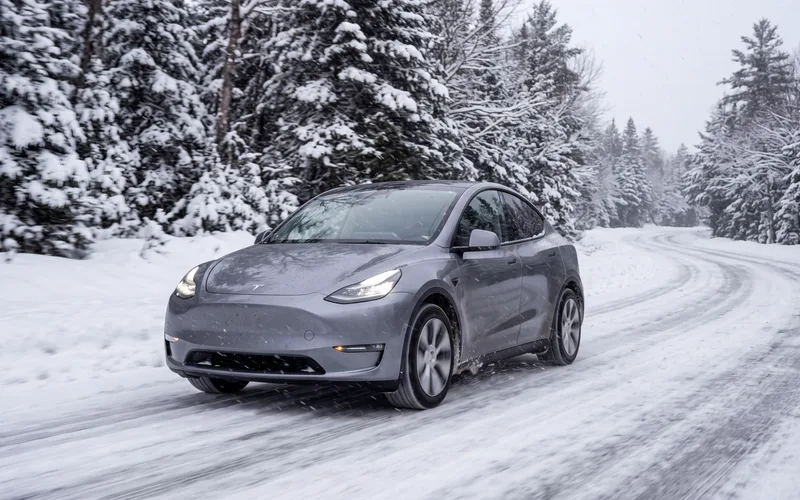 Tesla Model YCompact SUVBetter at: Charging & resale
If charging speed and resale value matter more than cabin refinement, the Model Y wins both decisively and costs less to buy.
Compare 2.80B-
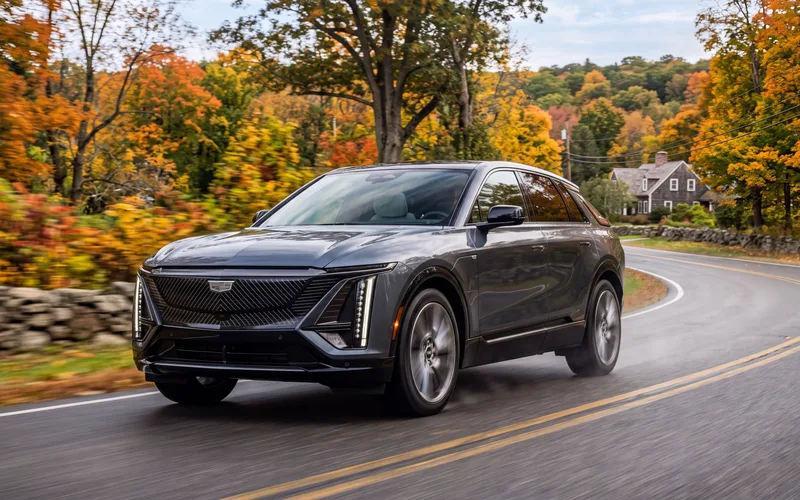 Cadillac VistiqMid-Size Luxury SUVBetter at: Space
The same Cadillac EV experience with a third row and real cargo space, which is exactly what the Lyriq gives up.
Compare 2.70B-
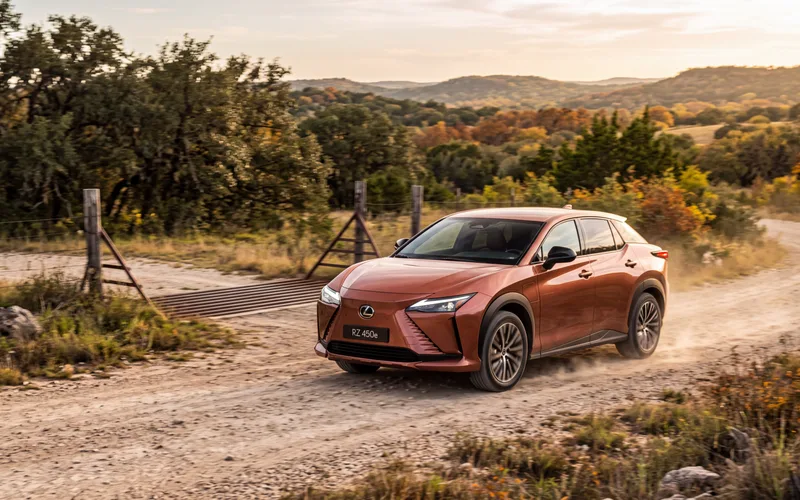 Lexus RZCompact Luxury SUVBetter at: Reliability
Buyers spooked by Cadillac's below-average predicted reliability and steep depreciation get a far safer long-term bet from Lexus.
CompareProduction history
Best fit & conditions
Higher scores mean a better fit for that use case. Learn more about use-case fit →
Subject profile
Academic Probation · NHTSA safety recalls
Feb 26, 2026Equipment: other: owners/service/other manualGeneral Motors has decided that certain 2027 Chevrolet Bolt EV, 2025-2026 Cadillac OPTIQ, Chevrolet Colorado, Equinox EV, GMC Canyon, 2026 Buick Enclave, Envision, Cadillac CT5, Escalade, Escalade ESV, Escalade IQ, Escalade IQL, LYRIQ, VISTIQ, Chevrolet Blazer EV, Corvette Convertible, Corvette Coupe, Corvette Convertible E-Ray, Equinox, Silverado 1500, 2500, 3500, Silverado EV, Suburban 1500, Tahoe, Traverse, GMC Acadia, Hummer EV Pickup, Hummer EV SUV, Sierra 1500, 2500, 3500, Sierra EV, Terrain, Yukon, and Yukon XL vehicles. The radio may not have been set to the correct status to download the electronic owner's manual during production. As such, these vehicles fail to comply with the requirements of Federal Motor Vehicle Safety Standard number 208, âOccupant Protection.â
Defect
General Motors has decided that certain 2027 Chevrolet Bolt EV, 2025-2026 Cadillac OPTIQ, Chevrolet Colorado, Equinox EV, GMC Canyon, 2026 Buick Enclave, Envision, Cadillac CT5, Escalade, Escalade ESV, Escalade IQ, Escalade IQL, LYRIQ, VISTIQ, Chevrolet Blazer EV, Corvette Convertible, Corvette Coupe, Corvette Convertible E-Ray, Equinox, Silverado 1500, 2500, 3500, Silverado EV, Suburban 1500, Tahoe, Traverse, GMC Acadia, Hummer EV Pickup, Hummer EV SUV, Sierra 1500, 2500, 3500, Sierra EV, Terrain, Yukon, and Yukon XL vehicles. The radio may not have been set to the correct status to download the electronic owner's manual during production. As such, these vehicles fail to comply with the requirements of Federal Motor Vehicle Safety Standard number 208, âOccupant Protection.â
Risk
Without an owner's manual to consult, owners may not know how to safely use and operate the vehicle, increasing the risk of injury in a crash.
Remedy
Dealers will reset the vehicle radio, which will facilitate automatic download of the electronic ownerâs manual, free of charge. Owner notification letters were mailed April 16, 2026. Owners may contact GM customer service at 1-866-467-9700, Chevrolet customer service at 1-800-222-1020 or Cadillac customer service at 1-800-333-4223. The manufacturer's number for this recall is N252540430. Vehicle Identification Numbers (VINs) involved in this recall became searchable on NHTSA.gov on February 26, 2026.
NHTSA campaign 26V114000 ↗Manufacturer no. N2525404305,861 vehicles potentially affected (all models in the campaign)Owners notified Apr 16, 2026Filed by General Motors, LLCFiled as LYRIQ
11 recalls on other model years of the Lyriq (2023–2025)
Feb 12, 2026Back over prevention: softwareThe rearview camera screen may turn gray with no camera image.
Defect
General Motors, LLC (GM) is recalling certain 2024 Lyriq vehicles. The rearview camera screen may turn gray with no camera image.
Risk
An inoperative rearview camera can reduce the driver's rear visibility, increasing the risk of a crash.
Remedy
The vehicle cockpit unit (VCU) software will be updated by a dealer or through an over-the-air (OTA) update, free of charge. Owner notification letters were mailed March 16, 2026. Owners may contact Cadillac customer service at 1-800-458-8006. GM's number for this recall is N252542530. Vehicle Identification Numbers (VINs) involved in this recall became searchable on NHTSA.gov on February 12, 2026.
NHTSA campaign 26V082000 ↗Manufacturer no. N25254253022 vehicles potentially affected (all models in the campaign)Owners notified Mar 16, 2026Filed by General Motors, LLCFiled as LYRIQJul 24, 2025Electrical system: propulsion system: traction batteryThe bolts attaching the high voltage battery to the interior floor may be missing or loose.
Defect
General Motors (GM) is recalling certain 2026 Cadillac VISTIQ vehicles and 2025 Cadillac LYRIQ vehicles. The bolts attaching the high voltage battery to the interior floor may be missing or loose.
Risk
An improperly secured battery may become damaged in a crash, increasing the risk of a fire.
Remedy
Dealers will inspect the high-voltage battery bolts and replace or re-tighten the bolts, as necessary, free of charge. Owner notification letters are scheduled to be mailed September 8, 2025. Owners may contact Cadillac customer service at 1-800-333-4223. GM's number for this recall is N252511300.
NHTSA campaign 25V483000 ↗Manufacturer no. N25251130053 vehicles potentially affected (all models in the campaign)Owners notified Aug 21, 2025Filed by General Motors, LLCFiled as LYRIQMay 29, 2025Electrical system: instrument cluster/panel · Equipment: electrical: infotainment: video (touch)screen/monitor/unitThe driver video display may go blank while driving.
Defect
General Motors, LLC (GM) is recalling certain 2023 â 2024 model year Cadillac Lyriq vehicles. The driver video display may go blank while driving.
Risk
A blank video display can result in a loss of critical safety information, such as the speedometer, warning lights, and rearview camera image, increasing the risk of a crash.
Remedy
The video display control module software will be updated by a dealer, or through an over-the-air (OTA) update, free of charge. Owner notification letters are expected to be mailed July 14, 2025. Owners may contact Cadillac customer service at 1-800-333-4223. GM's number for this recall is N252500680.
NHTSA campaign 25V356000 ↗Manufacturer no. N25250068041,376 vehicles potentially affected (all models in the campaign)Owners notified Jun 17, 2025Filed by General Motors, LLCFiled as LYRIQApr 10, 2025Suspension: front: stabilizer barThe left or right front stabilizer bar bracket bolts may have been improperly tightened, which can allow the bolts to loosen and separate from the vehicle frame. A detached stabilizer bar or bracket can damage the vehicle's high voltage cables or EV battery coolant lines.
Defect
General Motors LLC (GM) is recalling certain 2023-2025 Cadillac LYRIQ vehicles. The left or right front stabilizer bar bracket bolts may have been improperly tightened, which can allow the bolts to loosen and separate from the vehicle frame. A detached stabilizer bar or bracket can damage the vehicle's high voltage cables or EV battery coolant lines.
Risk
Damaged cables or coolant lines can result in a vehicle shutdown, causing a loss of drive power and increasing the risk of a crash.
Remedy
Dealers will inspect and tighten the left and/or right stabilizer bar bracket bolts, as necessary, free of charge. Owner notification letters were mailed May 8, 2025. Owners may contact Cadilac customer service at 1-800-333-4223. GM's number for this recall is N252494190.
NHTSA campaign 25V232000 ↗Manufacturer no. N25249419017 vehicles potentially affected (all models in the campaign)Owners notified May 8, 2025Filed by General Motors, LLCFiled as LYRIQMar 27, 2025Equipment: other: owners/service/other manual · Seats: mid/rear assembly: head restraintThe owner's manual inaccurately describes the rear outboard head restraints. As such, these vehicles fail to comply with the requirements of Federal Motor Vehicle Safety Standard (FMVSS) number 202, "Head Restraints."
Defect
General Motors, LLC (GM) is recalling certain 2025 Cadillac LYRIQ vehicles. The owner's manual inaccurately describes the rear outboard head restraints. As such, these vehicles fail to comply with the requirements of Federal Motor Vehicle Safety Standard (FMVSS) number 202, "Head Restraints."
Risk
Incorrect head restraint information may lead to improperly adjusted head restraints, increasing the risk of injury in a crash.
Remedy
GM will mail owner's manual inserts with the correct illustrations and descriptions for rear outboard head restraints, free of charge. Owner notification letters were mailed April 30, 2025. Owners may contact Cadillac customer service at 1-800-458-8006. GM's number for this recall is N252492340.
NHTSA campaign 25V193000 ↗Manufacturer no. N25249234010,643 vehicles potentially affected (all models in the campaign)Owners notified Apr 30, 2025Filed by General Motors, LLCFiled as LYRIQAug 8, 2024Service brakes, hydraulic: antilock/traction control/electronic limited slip: control unit/moduleThe anti-lock brake system (ABS) may activate unexpectedly and release brake pressure in the vehicle's service brake system.
Defect
General Motors, LLC (GM) is recalling certain 2023-2024 Cadillac LYRIQ all-wheel drive vehicles. The anti-lock brake system (ABS) may activate unexpectedly and release brake pressure in the vehicle's service brake system.
Risk
A release of brake pressure can cause a loss of braking ability, increasing the risk of a crash.
Remedy
The electronic brake control module software will be updated through an over-the-air (OTA) update or by a dealer, free of charge. Owner notification letters were mailed September 3, 2024. Owners may contact Cadillac's customer service at 1-800-458-8006 or EV Concierge at 1-844-EV-CADILLAC (1-844-382-2345). GM's number for this recall is N242453471.
NHTSA campaign 24V589000 ↗Manufacturer no. N24245347121,469 vehicles potentially affected (all models in the campaign)Owners notified Sep 3, 2024Filed by General Motors, LLCFiled as LYRIQMay 9, 2024Electrical system: propulsion system · Electrical system: wiringThe electric motors in the rear drive units may have insufficiently insulated wires that can contact each other, resulting in a loss of drive power.
Defect
General Motors, LLC (GM) is recalling certain 2024 Cadillac Lyriq, Chevrolet Blazer EV, Chevrolet Silverado EV, GMC Hummer EV SUV, and GMC Sierra EV vehicles. The electric motors in the rear drive units may have insufficiently insulated wires that can contact each other, resulting in a loss of drive power.
Risk
A loss of drive power increases the risk of a crash.
Remedy
Dealers will replace the rear drive unit, free of charge. Owner notification letters were mailed May 16, 2024. Owners may contact Chevrolet customer service at 1-800-222-1020; Cadillac customer service at 1-800-458-8006; Hummer customer service at 1-800-732-5493; or GMC customer service at 1-800-462-8782. GM's number for this recall is N242447080.
NHTSA campaign 24V320000 ↗Manufacturer no. N24244708010 vehicles potentially affected (all models in the campaign)Owners notified May 16, 2024Filed by General Motors, LLCFiled as LYRIQNov 22, 2023Seat belts: rear/other: anchorageThe bracket that anchors the left-rear and center-rear seat belts may have been improperly welded to the seat frame.
Defect
General Motors, LLC (GM) is recalling certain 2023-2024 LYRIQ vehicles. The bracket that anchors the left-rear and center-rear seat belts may have been improperly welded to the seat frame.
Risk
An improperly welded seat belt bracket may not restrain an occupant as intended, increasing their risk of injury during a crash.
Remedy
Owners are advised not to use the left-rear and center-rear seating positions until the recall repair is completed. Dealers will replace the rear seat cushion frame, free of charge. Owner notification letters were mailed January 17, 2024. Owners may contact Cadillac customer service at 1-800-458-8006. GM's number for this recall is N232425220.
NHTSA campaign 23V785000 ↗Manufacturer no. N23242522043 vehicles potentially affected (all models in the campaign)Owners notified Jan 17, 2024Filed by General Motors, LLCFiled as LYRIQ, REDUNDANT LYRIQOct 12, 2023Electrical system: body control module: softwareThe body control module (BCM) may have been updated with incorrectly calibrated software and fail to make the pedestrian warning sounds.
Defect
General Motors, LLC (GM) is recalling certain 2023 Cadillac LYRIQ vehicles. The body control module (BCM) may have been updated with incorrectly calibrated software and fail to make the pedestrian warning sounds.
Risk
Without external warning sounds, pedestrians may be unaware of an approaching vehicle, increasing the risk of a crash.
Remedy
Dealers will reprogram the BCM, free of charge. Owner notification letters were mailed November 14, 2023. Owners may contact Cadillac customer service at 1-800-458-8006. GM's number for this recall is N232422960.
NHTSA campaign 23V682000 ↗Manufacturer no. N23242296062 vehicles potentially affected (all models in the campaign)Owners notified Nov 14, 2023Filed by General Motors, LLCFiled as LYRIQMay 25, 2023Electrical system: propulsion system: traction batteryCertain connections within the high-voltage battery pack may be out of position or incorrectly welded, which can cause a loss of drive power.
Defect
General Motors, LLC (GM) is recalling certain 2022 GMC Hummer EV and 2023 Cadillac Lyriq vehicles. Certain connections within the high-voltage battery pack may be out of position or incorrectly welded, which can cause a loss of drive power.
Risk
A loss of drive power can increase the risk of a crash.
Remedy
Dealers will inspect and, if necessary, replace the high-voltage battery pack, free of charge. Letters explaining the safety risk were sent to owners January 5, 2024. Owner notification letters were mailed June 6, 2023. Owners may contact GM's Cadillac customer service at 1-800-458-8006 and the EV Concierge number: 1-833-HUMMER-EV (1-833-486-6373). GM's number for this recall is N232404441.
NHTSA campaign 23V367000 ↗Manufacturer no. N23240444133 vehicles potentially affected (all models in the campaign)Owners notified Jun 6, 2023Filed by General Motors, LLCFiled as LYRIQSep 22, 2022Electrical system: instrument cluster/panelA software error in the driver video display control module may cause the instrument panel to go blank.
Defect
General Motors, LLC (GM) is recalling certain 2023 Cadillac LYRIQ vehicles. A software error in the driver video display control module may cause the instrument panel to go blank.
Risk
A blank instrument panel will not show critical information, such as vehicle speed and warning lights, increasing the risk of a crash.
Remedy
GM will update the video display control module software, free of charge. Owner notification letters were mailed November 15, 2022. Owners may contact Cadillac customer service at 1-800-458-8006. GM's number for this recall is N222379510.
NHTSA campaign 22V710000 ↗Manufacturer no. N222379510186 vehicles potentially affected (all models in the campaign)Owners notified Nov 15, 2022Filed by General Motors, LLCFiled as REDUNDANT LYRIQ
Source: NHTSA Office of Defects Investigation recall database, model years 2023–2026. Recalls are listed by model year as the manufacturer filed them; whether a specific car is affected depends on its VIN — check a VIN at nhtsa.gov ↗. NHTSA model names matched to this page: LYRIQ, REDUNDANT LYRIQ.
Detailed scoring by subject
1Performance & PowertrainMid-pack among this car's ten categories.2.62C+
The dual-motor AWD configuration — the representative volume setup for a luxury EV crossover, offered as a $3,500 option on every 2026 trim — is rated by Cadillac at 515 hp, carried over from the 2025 power bump. The single-motor RWD base makes 365 hp and the new Lyriq-V peaks at 615 hp in Velocity Max.
Combined front and rear permanent-magnet motor torque on the AWD volume configuration is 450 lb-ft, available from a standstill. RWD models make 325 lb-ft; the Lyriq-V reaches 650 lb-ft.
The dual-motor AWD Lyriq runs to 60 mph in roughly 4.6 seconds — quick for a 5,600-lb luxury crossover, though a half-second behind the sharpest EV rivals. Some published figures for the AWD run as slow as 5.1 s, so the number is bracketed rather than pinned.
Dual-motor electric delivery is instantaneous and completely seamless — no lag, no shift interruption, no combustion coarseness — and reviewers single out how measured and proportional the thrust feels rather than merely violent. Falls just short of the very top of the band because the Lyriq meters power deliberately rather than with the immediacy of the sharpest luxury EVs.
Single-speed reduction gearing on each axle means there are no shifts to time, no hunting, and no CVT drone — power is continuous from rest. One-pedal driving is toggleable on-screen with configurable aggressiveness, plus a steering-wheel regen paddle for manual blending, and the friction-to-regen handoff is transparent.
Every AWD 2026 Lyriq, including the Lyriq-V, is rated at 3,500 lbs — enough for a small boat or utility trailer but modest against combustion mid-size luxury SUVs that pull 6,000–7,700 lbs. Rear-wheel-drive Lyriqs carry no tow rating at all.
Dual-motor AWD is a $3,500 option on every 2026 trim from the base Luxury upward and is standard on the Lyriq-V, so no buyer is forced up-market to get it, and electric AWD reacts faster than a mechanical transfer case. It stops short of the top band because operation is basic: no low range, no locking differentials, and no terrain-specific modes beyond Tour/Sport/My Mode.
The Lyriq is an unambiguously pavement-oriented luxury crossover: 7.0 in of ground clearance (6.2 in on the V), standard run-flat all-season tires on 20- or 22-inch wheels, a flat battery floor with no skid plating, no locking differentials, no crawl control, and no off-road trim anywhere in the lineup. Light gravel and dirt roads are within reach; nothing beyond is.
Battery-electric is the only choice — no gas, hybrid, or PHEV alternative exists for a buyer not ready to plug in. Within the EV format there are three distinct tiers (365-hp RWD, 515-hp AWD, 615-hp Lyriq-V) drawing on one 102-kWh Ultium pack, which earns credit above a single take-it-or-leave-it setup but not the electrified-plus-combustion breadth the top band describes.
2Efficiency & RangeMid-pack among this car's ten categories.2.32C+
The 2026 Lyriq is battery-electric only, so EPA rates it in MPGe: 92 combined for the volume single-motor RWD on the 102-kWh Ultium pack. That is a solid figure for a ~5,600-lb mid-size luxury SUV and reflects the efficiency GM banked for 2025 (365 hp RWD, 24% fewer parts); the base car is a carry-over for 2026, whose only real change is the addition of the Lyriq-V.
City is the Lyriq's strongest cycle at 100 MPGe — one-pedal driving and the Regen on Demand paddle recover most stop-and-go energy, so urban commuting barely dents the 102-kWh pack. Strong in absolute terms, mid-pack against the electric SUVs the class-normalized band measures it on.
Highway drops to 83 MPGe — the usual EV pattern, amplified here by a tall crossover body and standard 20-inch run-flat all-season tires (22s optional). EPA's own highway-cycle range is 293 miles against the 326-mile combined sticker, so sustained-speed road trips give up roughly 10%.
326 miles from the 102-kWh (100 kWh usable) Ultium pack sits at the top of the mid-size luxury electric SUV field — level with the mechanically related Acura ZDX (327 mi) and clear of the EQE SUV and Polestar 3. No pack or range change for 2026; these are the 2025 figures carried forward.
190 kW is the ceiling of GM's 400-volt Ultium architecture — respectable rather than class-leading, roughly half what an 800-volt E-GMP SUV or a Lucid Gravity will accept, but ahead of the Mercedes EQB and of Cadillac's own Optiq (150 kW). Instrumented tests confirm the car actually reaches it: 188 kW observed on a healthy charger rather than falling well short of the claim.
Fast charging is the Lyriq's clear weak point and the main penalty in this category. Cadillac quotes only a peak rate and a 10-minute figure; instrumented 10–80% sessions run about 40 minutes, because the 400-volt pack hits 188 kW briefly and then tapers hard — one logged run collapsed to 29 kW at 51% state of charge. That puts it near the bottom of the band against 800-volt rivals that manage 18–25 minutes. Confidence is MEDIUM because the number is measured, not published by the manufacturer.
EPA puts annual energy cost at $850 on the standard 15,000 mi/yr assumption — roughly a quarter of what a comparably sized premium-fuel luxury SUV burns, and among the cheapest running costs in the mid-size luxury class. The caveat is that the figure assumes home charging; at typical public DC rates of $0.45–0.55/kWh the same mileage runs closer to $2,500.
Cheap home electricity replaces premium gasoline entirely, and the AC hardware is unusually good: 11.5 kW Level 2 standard (~31 mi/hr) with an available 19.2 kW onboard charger (~50 mi/hr) that few rivals match, plus a 7.7 kW dual-level cord in the box. The deduction is public charging — for 2026 the Lyriq still uses a CCS1 port, so Tesla Supercharger access needs GM's NACS adapter and an app-initiated session, where the Optiq alongside it already has a native NACS plug.
3SafetyOne of the Lyriq's strongest categories.3.73A
NHTSA rates the Lyriq 5 stars overall with 5 stars in every subtest; the 2026 car is a carry-over of the same BEV3 structure tested for 2025, so the rating applies.
Crashworthiness is uniformly Good — small overlap front, updated moderate overlap front and updated side all Good — but Poor headlights keep the Lyriq off the Top Safety Pick list entirely.
Every 2026 Lyriq trim carries the full suite standard — enhanced AEB with intersection and pedestrian/bicyclist braking, adaptive cruise, lane keep assist with lane departure warning, blind zone steering assist, rear cross traffic braking and HD Surround Vision — and Super Cruise became standard across the range for 2026.
IIHS front crash prevention is Good on the updated vehicle-to-vehicle 2.0 test but only Acceptable for pedestrian scenarios, so it clears the daytime bar without reaching superior night-pedestrian performance.
Blind Zone Steering Assist adds active steering intervention rather than a warning light alone, and rear cross traffic braking plus reverse automatic braking and rear pedestrian alert are standard on every trim; owner reports of occasional false or missed blind-spot alerts keep it short of the top.
Lane keep assist with lane departure warning is standard, and the 2026 Super Cruise update adds hands-on lane centering that stays active off mapped roads — reviewers describe the centering as smooth and confident rather than ping-ponging.
Full-speed-range adaptive cruise is standard and 2026 adds intelligent ACC that reads mapped speed limits and Google Maps route data, integrated with Super Cruise so highway assist hands off cleanly between hands-free and hands-on modes.
Super Cruise — the most mature hands-free system on sale — is standard on every 2026 Lyriq rather than optional, covering more than 600,000 miles of mapped North American roads with automatic lane change and driver-attention monitoring.
The LED projector headlights rate Poor at IIHS on every trim for excessive low-beam glare and inadequate visibility on sharp curves — the single failing that costs the Lyriq a Top Safety Pick despite otherwise excellent results. Standard IntelliBeam auto high beams do not offset it.
Forward sightlines are good, but the fastback roofline, steeply raked rear glass and very thick D-pillars create large rear-quarter blind zones; standard HD Surround Vision and the available digital rearview mirror compensate rather than cure it.
IIHS rates the Lyriq's LATCH hardware Good, and the flat skateboard-platform floor with wide-opening rear doors and generous rear legroom makes seat installation and access straightforward for a two-row luxury SUV.
4Space & ComfortOne of the Lyriq's weakest categories.1.61D
The Lyriq is a strictly two-row, five-passenger mid-size luxury SUV across every 2026 trim; Cadillac's three-row EV is the separate Vistiq.
GM-published front headroom of 38.6 in, unchanged for 2026 since the body is carry-over — the panoramic SkyGlass roof is standard and already reflected in the figure.
44.3 in of front legroom is at the top of the mid-size SUV band, a benefit of the flat BEV3 skateboard floor and long 121.8-in wheelbase.
37.7 in of second-row headroom is mid-pack for the segment — the fastback roofline and the battery-raised floor cost some space over boxier rivals.
39.6 in of second-row legroom is genuinely generous for a two-row mid-size SUV and reviewers consistently call the back seat adult-spacious.
The Lyriq has no third row and none is offered on any 2026 trim — buyers needing seven seats are pushed to the Vistiq or Escalade IQ.
28.0 cu ft behind the second row is modest for a mid-size SUV — the sloping liftback and the absence of any frunk cap practical load space, and it trails the Lexus RZ's 34 cu ft.
60.8 cu ft maximum is well below the mid-size SUV norm; the coupe-like roofline limits vertical volume even with the rear seats down.
Competitive rather than clever: a well-executed console with a magnetically latched armrest bin, a large open shelf beneath it, a standard mail-slot wireless charger and a deep under-floor cargo bin — but no frunk at all, which is a real miss on an EV of this size and price.
Broadly praised long-haul comfort in both rows with high-grade leather and 8-way power with 4-way lumbar standard, plus ventilated and massaging fronts from Premium up; held short of the top band by repeated notes that the front cushions want more pronounced bolstering.
Among the segment's better-riding SUVs — five-link suspension with frequency-sensitive passive dampers stays smooth and serene even on the optional 22s, with only some busyness and small-bump judder over broken pavement keeping it out of the very top band.
A standout — EV silence combined with standard active noise cancellation and heavy acoustic treatment makes it one of the quietest cabins in the mid-size luxury class.
Rich and mostly standard: heated front seats and heated steering wheel from the base Luxury trim, ventilated and massaging fronts from Premium, heated rear outboard seats and tri-zone climate on upper trims, plus app-based remote pre-conditioning inherent to the EV platform.
5Cost of OwnershipThe Lyriq's lowest-graded category.0.00F
Entry 2026 Lyriq Luxury RWD opens at $60,695 with the $1,795 destination charge GM raised from $1,495 in December 2025. That sits near the top of the SUV normalization band, so the price item scores low despite the car being competitively placed against luxury-EV rivals.
AWD is the volume configuration in the Lyriq's mostly-Snowbelt luxury-EV buyer base, and for 2026 Super Cruise became standard on every trim, which pulls demand down to the entry Luxury/Sport rather than up to Premium. Luxury AWD at $64,195 is the representative transaction point.
The EV powertrain removes oil services, but Cadillac's dealer labor rates, 20-inch run-flat tires and the mass of the 102 kWh pack keep the five-year figure mid-pack rather than cheap. CarEdge rates the Lyriq below the luxury-SUV average but still flags a ~38% chance of a major repair in the first five years.
This is the Lyriq's defining ownership weakness. Observed used-market data has it depreciating faster than an already-brutal luxury-EV segment, and it lands well below the 40% floor of the SUV band. Expiry of the $7,500 federal credit on 2025-09-30 removes one distortion that had been depressing percentage retention, which is why the estimate sits above iSeeCars' observed figure rather than at it.
GM's standard luxury-division coverage — better than the 3-year German norm, but short of the 5-year terms from Genesis and the Korean brands.
The federally mandated EV floor of 8 years/100,000 miles on the Ultium pack and drive units — matched by nearly every EV competitor, and below Hyundai/Kia/Genesis's 10-year/100,000-mile terms.
Cadillac covers only the first scheduled service visit — token value on an EV with no oil changes — so there is no meaningful included-maintenance program since Premium Care Maintenance was dropped after the 2020 model year. What lifts this above a bare-roadside score is the three years of OnStar connectivity and Super Cruise service bundled with every 2026 Lyriq, now that Super Cruise is standard on all trims; at roughly $40/month afterward that is real retained value. Long roadside terms and an included dual-level charging cord round it out, but there is no confirmed home-charger or public-charging credit for 2026.
$64,195 volume-trim price minus its estimated resale value after 5 years (34% retained, or about $21,826) leaves about $42,369 in depreciation. Add the projected $6,935 in 5-year maintenance and repairs, and owning this vehicle for 5 years costs about $49,304 in total.
6Reliability & QualityOne of the Lyriq's weakest categories.1.68D
Consumer Reports expects the 2026 Lyriq to be less reliable than the average new car, extrapolating from 2023-2025 owner data where in-car electronics, EV battery/charging, electrical accessories and noises/leaks were all flagged trouble spots. 2026 is a carry-over year mechanically (new Lyriq-V trim, renamed trims, AR head-up display), so the same BEV3 hardware and software stack carries the same risk profile.
Cadillac's signals are genuinely split: excellent long-term dependability on its older, mostly ICE product but poor initial quality on current builds, and the EV lineup is what drags the brand down in Consumer Reports. Mid-pack overall rather than a top-5 or bottom-third brand.
The 2026 model year itself is nearly clean so far — one trivial campaign to reset the radio so the electronic owner's manual downloads — but the generation's cumulative record is heavy and includes safety-critical assembly errors, not just software. Fire-risk battery mounting bolts, seat-belt anchorage, brake control module and stabilizer-bar bolts are the kind of severity that belongs below the 'typical activity' band.
The Ultium/BEV3 drivetrain — permanent-magnet synchronous motors on a 102 kWh gross (100 kWh usable) LG pouch pack — has about four years of US service and no design-level battery failure pattern, but it is not a proven high-mileage family and GM has had repeated HV-battery campaigns across the Ultium range. Backed by GM's 8-year/100,000-mile battery warranty. Mixed history rather than a red flag.
The Lyriq's cabin is the car's strongest quality argument — machined metal trim, genuine wood, Inteluxe or perforated leather seating and the 33-inch curved LED display read as richer than the price relative to German mid-size luxury EVs. Materials are class-competitive and better than most GM-sourced interiors.
Major touchpoints feel solid and assembly is generally tight, but squeaks and rattles — particularly around the center console — come up repeatedly in owner reviews, CR lists noises/leaks as a Lyriq trouble spot, and Cadillac's initial-quality result is well below the industry. Scattered complaints on an otherwise solid car.
Roughly 590 Cadillac service points nationwide is good coverage for a luxury brand, and dealer service satisfaction sits just above the premium average — but only about a third are standalone Cadillac stores, EV service capability varies store to store, and the brand trails Porsche, Infiniti and Lexus on satisfaction. Solid, not class-leading.
Routine EV upkeep is cheap and GM's parts distribution is vast, but Lyriq-specific EV and body components are dealer-only with no meaningful aftermarket, and owners have reported extended waits on collision and HV-related parts. Normal-to-slightly-difficult rather than cheap and abundant.
7Technology & InfotainmentThe Lyriq's best-graded category.3.93A+
Every 2026 Lyriq trim carries the same single 33-inch-diagonal curved advanced LED panel, which spans a left control zone, the digital instrument cluster and the right-hand infotainment zone in one piece of glass; Cadillac publishes only the 33-in total figure and never a per-zone diagonal. The panel is roughly 32.6 in wide and about 5 in tall, so the touch-sensitive infotainment zone right of the cluster works out near 14 in diagonally — recorded here per this dataset's convention of logging the center infotainment section rather than the full multi-zone panel (the 2026 Escalade and Escalade IQ 55-in panels are recorded the same way).
Google built-in runs the 9K curved panel with a shortcut bar along the bottom, a physical volume knob and a rotary controller for the cluster, and reviewers consistently describe it as intuitive and quick rather than menu-heavy — and unusually for a GM EV, an owner who dislikes it can fall back on phone projection. Held short of the 90s because the 5-inch-tall panel is a wide letterbox that CarPlay and Android Auto do not fill properly, and because the Lyriq's display software has a track record of glitches serious enough to have drawn recalls on early cars.
Wireless Apple CarPlay and wireless Android Auto are standard on all six 2026 Lyriq trims plus the Lyriq-V, alongside Google built-in — the Lyriq is the last GM EV in North America still offering phone projection, while stablemates like the Optiq, Vistiq, Escalade IQ and every Chevrolet EV have none. Top of the band; a couple of points come off only because projection is letterboxed into part of the wide panel rather than getting the whole screen.
Google built-in supplies Google Assistant for natural-language commands and Google Maps as the embedded native navigation, with EV-aware routing that folds the battery's state of charge into the trip — the system shows expected remaining charge on arrival, not just an ETA — plus Google Play apps installed natively. This is factory nav owners actually keep using rather than bypassing; points come off only for cloud features depending on an active connected-services plan once the included trial lapses.
For 2026 the previous 19-speaker AKG Studio system is replaced by a 23-speaker AKG Studio setup with Dolby Atmos, standard on Premium Luxury, Premium Sport, Signature Luxury, Signature Sport and both Lyriq-V trims — genuinely excellent premium audio in a silent EV cabin, with headrest-mounted speakers and active noise cancellation. Kept out of the top of the band because the entry Luxury and Sport trims fall back to a plain 7-speaker system that is thin for a $60,000 luxury vehicle, so the good audio starts one trim up.
The driver's zone of the standard 33-inch curved panel is a full-digital, reconfigurable 9K display with a dedicated rotary controller, standard on every trim with no analog instrumentation anywhere in the range. EV-specific energy, charge and Super Cruise displays give it real content rather than duplicating the center zone; it remains one of the better-looking clusters in the segment four model years on.
GM's VIP electrical architecture gives the Lyriq true whole-vehicle over-the-air updates that add capability rather than just refreshing maps — the Velocity Package sells extra torque and a quicker 0–60 as a downloadable upgrade, Surround Vision Recorder was added to 2026 cars by OTA, and the Digital Key rollout is itself delivered over the air. Among the strongest OTA implementations outside Tesla and Rivian.
The myCadillac app covers the expected ground — remote lock/unlock, remote start and cabin preconditioning, vehicle locate, and charge scheduling/monitoring — and the Lyriq is one of the two models GM launched Digital Key on, turning a compatible iPhone or Apple Watch into the primary key with sharing for up to three other people and a key card as backup. Held mid-band because Digital Key arrived as a beta on 2026 cars rather than a finished feature, pairing requires an active OnStar account, and GM gates remote commands behind a connected-services subscription once the included trial ends.
USB-C only and plenty of it — three full-function USB-C ports up front plus two charge-only USB-C in the second row — with a wireless phone charger on a slide-out tray in the center-stack cubby standard across all six trims and a 110-volt household-style outlet on the rear face of the console for rear passengers. Short of the very top only because there is no second household outlet or vehicle-to-load export on the standard car.
Proximity entry with pop-out flush door handles, keyless start, remote start and preconditioning from the app, and phone-as-key via GM's Digital Key — which launched on this model — cover the whole convenience list, with a key card as a dead-battery fallback. Hands-free power liftgate is the one gap on the entry Luxury and Sport trims; it arrives with the Premium tier.
HD Surround Vision and Enhanced Automatic Parking Assist — which steers the car into a space with little or no driver input — are standard on every 2026 trim rather than reserved for the top of the range, and 2026 cars gained a Surround Vision Recorder by over-the-air update. Rear Camera Mirror comes with the Premium tier. Firmly in the top band; not maxed because image quality is good rather than class-leading and the remote/summon-style parking features stay on the upper trims.
2026 finally fixes the Lyriq's most-cited tech omission — a new dual-plane augmented-reality head-up display projecting full-color navigation, speed and driver-assistance information — but it is restricted to Signature Luxury, Signature Sport and the Lyriq-V, roughly $9,000 above the entry trim and unavailable on the volume Luxury/Sport and Premium configurations. That is squarely the 'limited to top trims' band, scored near its ceiling because the unit itself is a large, high-quality AR system.
8Use-Case FitMid-pack among this car's ten categories.2.25C
Seat installation and kid access are genuinely easy — IIHS rates the LATCH hardware Good, the BEV3 skateboard floor is flat, the rear doors open wide and 39.6 in of second-row legroom leaves room behind a rear-facing seat — but the two-row-only layout and a modest 28.0 cu ft behind the rear seats mean a stroller plus a week's gear is a real squeeze, and there is no frunk to absorb the overflow.
Outstanding on the trims families actually buy: 5-star NHTSA overall, Good IIHS crashworthiness across every updated test, and the entire ADAS suite — including Super Cruise, which became standard on all trims for 2026 — plus Rear Seat Reminder, Teen Driver and rear pedestrian alert at the base price point. The one real gap is Poor IIHS headlights, which costs the Lyriq a Top Safety Pick outright.
The back seat is a good place to spend hours — reclining seatbacks, heated outboard cushions, tri-zone climate on upper trims, two rear USB-C ports and a 110-volt console outlet, in one of the quietest cabins in the class. It falls short of the top band because luggage space with all five seats occupied is only 28.0 cu ft, there is no rear-seat entertainment option, and the rear USB-C ports are charge-only.
This is the Lyriq's best mission. Silent single-speed electric delivery, configurable one-pedal driving with a Regen on Demand paddle, a ride reviewers call near the top of its class, and hands-free Super Cruise standard on every 2026 trim make a stop-and-go commute genuinely restful; only the 5,606-lb mass and the poor rear-quarter sightlines intrude.
Per-mile energy cost is excellent — 100 MPGe in the city and an EPA annual energy bill of $850 on 15,000 miles, roughly a quarter of a premium-fuel luxury SUV, with no oil services at all. Held out of the top band by expensive consumables and fixed costs: 20- and 22-inch run-flat tires, Cadillac dealer labor rates, and insurance running roughly 15–30% above the all-vehicle average.
Workable in the city with the cameras doing the heavy lifting, not naturally easy: 196.7 in long, 86.9 in wide over mirrors and 5,606 lb, with a 39.6-ft turning circle that is only average and thick D-pillars plus steeply raked rear glass creating big rear-quarter blind zones. Standard HD Surround Vision and Enhanced Automatic Parking Assist — which steers into a space with little driver input — are what keep it comfortably in the mid band.
Only nominally work-capable. AWD models carry a 3,500-lb rating — enough for a small utility trailer or a jet ski, and electric torque pulls it easily — but rear-wheel-drive Lyriqs have no tow rating at all, there is no bed, no meaningful payload headroom, and 60.8 cu ft of maximum cargo is small for a mid-size SUV. Towing also roughly halves usable range.
Built as a luxury object, not a tool: leather upholstery, a 33-inch curved display spanning the dash and expensive run-flat tires on 20- or 22-inch wheels, with no cloth or wear-friendly interior anywhere in the range and no fleet presence to draw a durability record from. The BEV3 platform is now four model years into production at Spring Hill and the passive frequency-sensitive dampers avoid air-suspension failure modes, but early Lyriqs carried a well-documented recall and software-quality history.
Better than its luxury-crossover shape suggests, thanks to electricity: a 110-volt household outlet on the console and GM Energy vehicle-to-home bidirectional capability that can discharge up to 9.6 kW, plus a factory 3,500-lb hitch package with a 4-pin harness, accessory roof cross rails and an under-floor cargo bin. But there is no bed, no upfit ecosystem, no washable surfaces, a roof load limit around 110–165 lb, and the hitch package is unavailable on RWD cars.
Superb for the driving part of a road trip — 326 miles of EPA range (303–319 AWD), a stunningly quiet cabin, a supple ride, comfortable seats and standard hands-free Super Cruise with EV-aware Google Maps routing, which is the single most effective fatigue reducer in the class. What keeps it out of the top band is the recharging: the 400-volt architecture peaks at only 190 kW, and Edmunds measured about 261 miles of range added per hour, calling it the slowest-charging luxury EV.
Fine for a trailhead gravel road and a bike rack, and nothing beyond that. Dual-motor AWD is available on every trim, the accessory hitch takes racks and small trailers, cross rails carry skis or a box, and the 110V outlet plus V2H make it a useful camp power source — but 7.0 in of ground clearance (6.2 in on the V), run-flat all-season tires, no skid plating, no locking differentials and no off-road drive mode make it pavement-and-graded-dirt only.
The mechanisms are good but the volume is not. A power-folding 60/40 rear bench with a cargo-area release, a wide hatch opening and a concealed under-floor bin make loading easy, and roof cross rails plus a hitch are available — but 28.0 cu ft behind the seats and 60.8 cu ft maximum are well below the mid-size SUV norm, the folded seatbacks angle up rather than lying flat, the roof load limit is modest, and there is no frunk at all.
9Driving ExperienceGrades above the middle of the scale.3.09B
Five-link front and rear suspension and a near 50:50 weight distribution give the Lyriq composed body control and secure, predictable cornering, but ~5,600–5,900 lb of curb weight and comfort-biased tuning keep it well short of agile — reviewers uniformly note the Sport mode does not make it sporty.
Weighting is judged well-chosen — heavy enough to feel substantial without being artificial — but the rack is consistently described as numb, telling the driver little about the road surface. Precise enough, short on feedback.
Large discs and well-sorted regen blending give confident, repeatable stops, and the fingertip regen paddle plus one-pedal driving are among the better-calibrated implementations in the segment; the pedal itself is more reassuring than communicative, and stopping a 5,600+ lb SUV on all-seasons limits outright distances.
The dual-motor Ultium drivetrain is a standout: no shift events, no stop/start, and a deliberately progressive tip-in calibration that makes 515 hp feel effortless rather than abrupt. Response is immediate without the snatchy low-speed behavior that afflicts some EV rivals.
Near-silent under load with no motor whine of note, and active noise cancellation plus acoustic glazing keep road and wind noise out — cabin quietness is one of the Lyriq's most consistently praised traits.
A 121.8-in wheelbase and 20–22 in wheels give the Lyriq a wide 39.6 ft curb-to-curb circle — poor for a mid-size SUV and noticeable in parking structures and U-turns.
Comfortable, widely adjustable front seats and a commanding sightline, undercut by control placement: the rotary console dial is unintuitive, seat adjusters are awkwardly sited on the door panels, and gloss black and chrome trim throw glare in direct sun.
Quick and serene, but deliberately engineered as a hushed grand tourer rather than an entertainer — the volume trims lack the adaptive dampers, Brembos and summer tires that make the new-for-2026 Lyriq-V engaging. Pleasant to cover distance in; not a car enthusiasts take the long way home in.
10Value & Market PositionOne of the Lyriq's strongest categories.3.09B
The headline 2026 change is that Super Cruise hands-free highway driving became standard on every trim — in 2025 it required the Luxury 2/Sport 2 walk-up worth roughly $5,000, and no direct rival includes an equivalent hands-free system at base. Every trim also gets the full 102 kWh Ultium pack (no de-contented short-range base car), the 33-inch LED display, 19.2 kW AC charging, AKG audio and, new for 2026, Hitch Guidance and Hitch View at no charge.
At $59,200 base ($60,695 with destination) for 314 miles of EPA range, 365 hp RWD / 515 hp AWD, a genuinely premium cabin and standard Super Cruise, the content-for-price is among the strongest in the mid-size luxury EV class — U.S. News calls it the best-value luxury electric SUV under $60,000. Two things pull it back: the federal $7,500 credit expired for deliveries after 30 Sept 2025, so a 2026 buyer pays roughly $7.5K more in real terms than a 2025 buyer for a near-identical car, and five-year depreciation runs worse than the segment average.
Six core trims arranged as parallel Luxury and Sport appearance lines (base / Premium / Signature), each available in RWD or AWD, topped by the Lyriq-V and Lyriq-V Premium from $79,995 — a well-spaced $59K–$80K+ ladder that covers both the value and performance ends. It loses a little for offering only one battery size, so there is no cheaper short-range entry point, and because the Luxury/Sport split is purely cosmetic (chrome vs gloss black trim) rather than a functional choice.
The Lyriq was the best-selling luxury mid-size EV in the US in 2024 at over 28,000 units (+210%), but volume has fallen for two straight years since: H1 2025 down 28.8%, Q2 2025 down 31% to 5,017, and Q1 2026 down another 21.6% to 3,370. Much of that is internal — the new Vistiq and Optiq took sales while Cadillac's total EV volume kept climbing — and the post-credit EV market contraction accounts for the rest, so this is a still-relevant nameplate on a clearly declining trajectory rather than a failing one.
Cadillac carries real name recognition and an Escalade-led halo, and the EV line has genuine pull — 75% of the brand's first 100,000 EV buyers came from other marques, which is a conquest rate few legacy brands match. It still sits a rung below BMW, Mercedes and Lexus on prestige and, more materially for buyers, on residual strength, which is where the image gap shows up in dollars.
Buyer-side support is consistently strong and stackable: $2,000 competitive conquest cash, $2,000 loyalty cash, up to $1,250 Costco, subsidized leases in the $479–$539/month range and 2.9% APR with up to $2,600 financing bonus have run essentially every month of 2026. Because the Lyriq is assembled in Spring Hill, Tennessee it also qualifies buyers for the new US-assembly auto-loan interest deduction that replaced the expired federal credit. Scored on buyer benefit, this is near the top of the band even though the depth of the incentives reflects soft post-credit demand.
2026 is the fourth model year of the original BEV3-platform Lyriq launched for 2023, with no redesign or styling refresh — the substantive updates landed in 2024 (AWD, door handles) and 2025 (power and range increases, Tech trim dropped). By mid-2026 the 2027 car is already configurable and swaps the Lyriq's CCS1 port for a native NACS connector, so a 2026 buyer knowingly takes the older charging hardware and needs an adapter for Tesla Superchargers. Standard Super Cruise keeps the 2026 current on driver assistance, but this is a late-mid-cycle car whose successor is visibly better equipped in one concrete way.
Reviews are consistently warm — Car and Driver, Edmunds and Top Gear all praise the ride quality, interior execution and Super Cruise, and the car has collected real hardware including German Car of the Year 2025 in the luxury category (the first American winner) and Green Car Journal's Luxury Green Car of the Year. It is nonetheless rarely the outright pick of a US comparison test, ranking #9 among luxury electric SUVs at U.S. News despite a strong 8.6/10 score, and owner feedback flags reliability as its weakest attribute.