
The verdict
A capable mid-size luxury suv, strong on safety and held back by ownership.
The 2026 Vistiq is Cadillac's most convincing EV yet: an all-new three-row electric SUV with 615 hp, a 3.7-second 0-60, 305 miles of EPA range, and a base trim so loaded that Super Cruise, a 23-speaker AKG system and massaging front seats all come standard at $79,390. It drives quietly and quickly, the second row is genuinely spacious at 40.2 inches of legroom, and the third row is usable for short hauls. The catch is money and maturity — insurance runs near $3,250 a year, the car keeps only about 41% of its value after five years with no federal EV credit to soften the sticker, and this is a launch-year vehicle with four recalls already, below-average predicted reliability, and no Apple CarPlay or Android Auto at any price. Buy it for the standard equipment and the hands-free highway driving; go in clear-eyed about the ownership bill.
Jump to scoresStrengths
- Super Cruise is standard, and it's the best hands-free system you can buy
- 615 hp and a 3.7-second 0-60 in a seven-seater
- Cheap to fuel and quiet to travel in
What holds it back
- The price and the depreciation are both brutal
- Insurance is expensive and the running costs add up
- Launch-year risk: four recalls, and no crash ratings yet
Top alternatives
Cars shoppers cross-shop with the Cadillac Vistiq 2.96B-
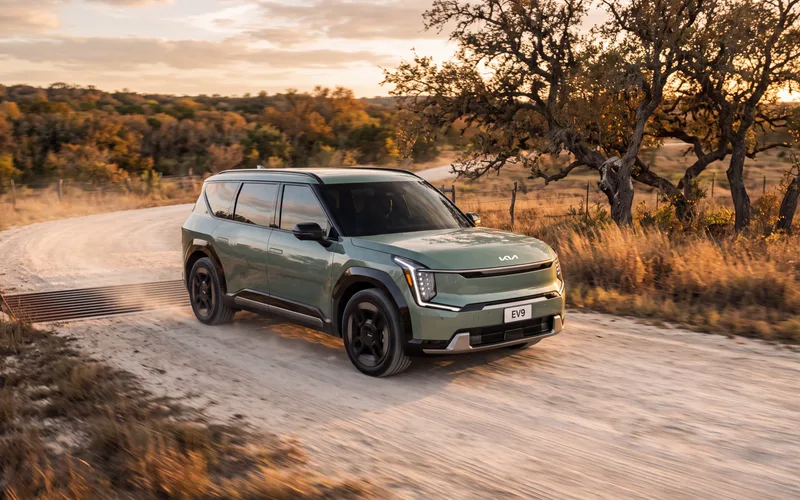 Kia EV9Mid-Size SUVBetter at: Value
Nearly the same three-row electric packaging and a usable third row for roughly $15,000-$20,000 less, with a longer warranty and a proven sales record.
Compare 2.81B-
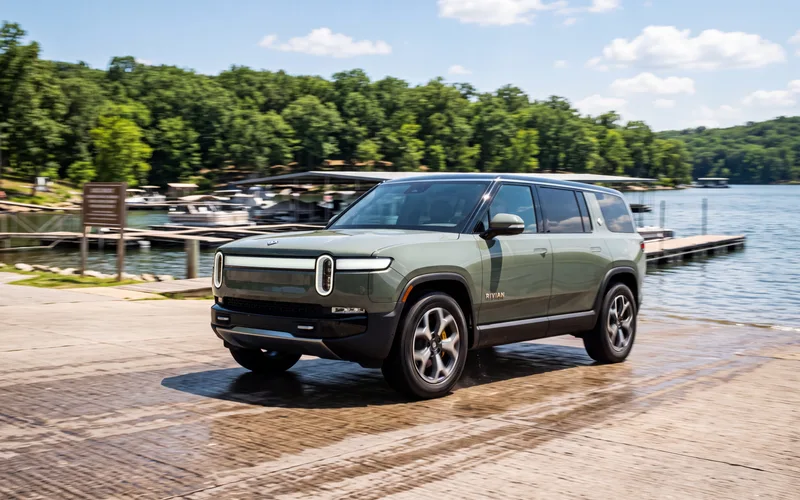 Rivian R1SFull-Size Luxury SUVBetter at: Adventure capability
Similar money buys real off-road capability, a frunk and more cargo flexibility if your family trips end on gravel rather than at a hotel.
Compare 2.73B-
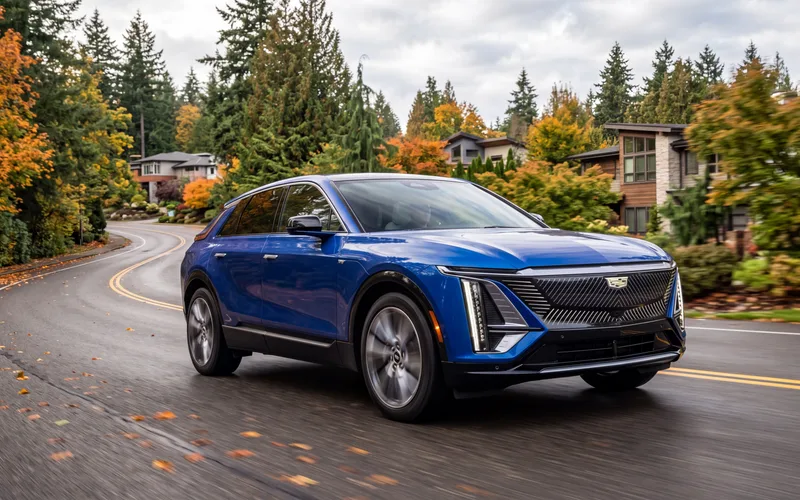 Cadillac LyriqMid-Size Luxury SUVBetter at: Range and CarPlay
The same Cadillac EV experience for less, with more range, better efficiency and — uniquely in the Cadillac EV lineup — Apple CarPlay and Android Auto still intact.
CompareProduction history
Best fit & conditions
Higher scores mean a better fit for that use case. Learn more about use-case fit →
Subject profile
Academic Probation · NHTSA safety recalls
Jun 18, 2026Seats: mid/rear assembly: power adjustWhen the power fold feature is activated, the third-row power seatback may fail to reverse when enountering a person.
Defect
General Motors, LLC (GM) is recalling certain 2026-2027 Cadillac Vistiq vehicles. When the power fold feature is activated, the third-row power seatback may fail to reverse when enountering a person.
Risk
A person, especially a child, may be trapped by a rear powered seatback, increasing their risk of injury.
Remedy
Dealers will reprogram the software for the folding seat module, free of charge. Owner notification letters were mailed August 6, 2026. Owners may contact Cadillac customer service at 1-800-333-4223. The manufacturer's number for this recall is N262555780. Vehicle Identification Numbers (VINs) involved in this recall became searchable on NHTSA.gov on June 18, 2026.
NHTSA campaign 26V394000 ↗Manufacturer no. N26255578014,540 vehicles potentially affected (all models in the campaign)Owners notified Aug 6, 2026Filed by General Motors, LLCFiled as VISTIQFeb 26, 2026Equipment: other: owners/service/other manualGeneral Motors has decided that certain 2027 Chevrolet Bolt EV, 2025-2026 Cadillac OPTIQ, Chevrolet Colorado, Equinox EV, GMC Canyon, 2026 Buick Enclave, Envision, Cadillac CT5, Escalade, Escalade ESV, Escalade IQ, Escalade IQL, LYRIQ, VISTIQ, Chevrolet Blazer EV, Corvette Convertible, Corvette Coupe, Corvette Convertible E-Ray, Equinox, Silverado 1500, 2500, 3500, Silverado EV, Suburban 1500, Tahoe, Traverse, GMC Acadia, Hummer EV Pickup, Hummer EV SUV, Sierra 1500, 2500, 3500, Sierra EV, Terrain, Yukon, and Yukon XL vehicles. The radio may not have been set to the correct status to download the electronic owner's manual during production. As such, these vehicles fail to comply with the requirements of Federal Motor Vehicle Safety Standard number 208, âOccupant Protection.â
Defect
General Motors has decided that certain 2027 Chevrolet Bolt EV, 2025-2026 Cadillac OPTIQ, Chevrolet Colorado, Equinox EV, GMC Canyon, 2026 Buick Enclave, Envision, Cadillac CT5, Escalade, Escalade ESV, Escalade IQ, Escalade IQL, LYRIQ, VISTIQ, Chevrolet Blazer EV, Corvette Convertible, Corvette Coupe, Corvette Convertible E-Ray, Equinox, Silverado 1500, 2500, 3500, Silverado EV, Suburban 1500, Tahoe, Traverse, GMC Acadia, Hummer EV Pickup, Hummer EV SUV, Sierra 1500, 2500, 3500, Sierra EV, Terrain, Yukon, and Yukon XL vehicles. The radio may not have been set to the correct status to download the electronic owner's manual during production. As such, these vehicles fail to comply with the requirements of Federal Motor Vehicle Safety Standard number 208, âOccupant Protection.â
Risk
Without an owner's manual to consult, owners may not know how to safely use and operate the vehicle, increasing the risk of injury in a crash.
Remedy
Dealers will reset the vehicle radio, which will facilitate automatic download of the electronic ownerâs manual, free of charge. Owner notification letters were mailed April 16, 2026. Owners may contact GM customer service at 1-866-467-9700, Chevrolet customer service at 1-800-222-1020 or Cadillac customer service at 1-800-333-4223. The manufacturer's number for this recall is N252540430. Vehicle Identification Numbers (VINs) involved in this recall became searchable on NHTSA.gov on February 26, 2026.
NHTSA campaign 26V114000 ↗Manufacturer no. N2525404305,861 vehicles potentially affected (all models in the campaign)Owners notified Apr 16, 2026Filed by General Motors, LLCFiled as VISTIQNov 25, 2025Equipment: other: owners/service/other manualThe radio may not have been set to the correct status to download the electronic owner's manual during production. As such, these vehicles fail to comply with the requirements of Federal Motor Vehicle Safety Standard number 225, âChild Restraint Anchorage Systems.â
Defect
General Motors is recalling certain 2026 Cadillac Vistiq electric vehicles. The radio may not have been set to the correct status to download the electronic owner's manual during production. As such, these vehicles fail to comply with the requirements of Federal Motor Vehicle Safety Standard number 225, âChild Restraint Anchorage Systems.â
Risk
Without an owner's manual to consult, owners may not know how to safely use and operate the vehicle, increasing the risk of injury in a crash.
Remedy
Dealers will reset the vehicle radio which will facilitate automatic download of the electronic ownerâs manual, free of charge. Owner notification letters were mailed December 30, 2025. Owners may contact Cadillac customer service at 1-800-333-4223. The manufacturer's number for this recall is A252516680. Vehicle Identification Numbers (VINs) involved in this recall became searchable on NHTSA.gov on November 25, 2025.
NHTSA campaign 25V819000 ↗Manufacturer no. A25251668094 vehicles potentially affected (all models in the campaign)Owners notified Dec 30, 2025Filed by General Motors, LLCFiled as VISTIQJul 24, 2025Electrical system: propulsion system: traction batteryThe bolts attaching the high voltage battery to the interior floor may be missing or loose.
Defect
General Motors (GM) is recalling certain 2026 Cadillac VISTIQ vehicles and 2025 Cadillac LYRIQ vehicles. The bolts attaching the high voltage battery to the interior floor may be missing or loose.
Risk
An improperly secured battery may become damaged in a crash, increasing the risk of a fire.
Remedy
Dealers will inspect the high-voltage battery bolts and replace or re-tighten the bolts, as necessary, free of charge. Owner notification letters are scheduled to be mailed September 8, 2025. Owners may contact Cadillac customer service at 1-800-333-4223. GM's number for this recall is N252511300.
NHTSA campaign 25V483000 ↗Manufacturer no. N25251130053 vehicles potentially affected (all models in the campaign)Owners notified Aug 21, 2025Filed by General Motors, LLCFiled as VISTIQ
Source: NHTSA Office of Defects Investigation recall database, model years 2026. Recalls are listed by model year as the manufacturer filed them; whether a specific car is affected depends on its VIN — check a VIN at nhtsa.gov ↗. NHTSA model names matched to this page: VISTIQ.
Detailed scoring by subject
1Performance & PowertrainOne of the Vistiq's strongest categories.3.18B
2026 is the Vistiq's launch model year and the entire lineup — Luxury, Sport, Premium Luxury and Platinum — shares one dual-motor AWD powertrain rated at 615 hp with Velocity Max engaged, so the volume Luxury trim carries the full output. Cadillac has never published the lower non-Velocity-Max figure.
Combined front and rear permanent-magnet motor torque is 650 lb-ft, available instantly from a standstill — near the top of the mid-size SUV band and matching the Lyriq-V's figure in a three-row body.
Cadillac quotes 3.7 seconds to 60 mph with Velocity Max engaged, and independent instrumented testing came in slightly quicker at 3.6 seconds — supercar-adjacent for a 7-seat luxury SUV and among the quickest three-row vehicles sold.
Dual permanent-magnet motors give immediate, linear thrust with no lag, no shift interruption and no combustion noise; reviewers consistently describe the delivery as smooth and effortless with the vehicle's mass masking just how fast it is. Velocity Max adds a burst-mode ceiling on top of already-strong everyday response.
Single-speed reduction gearing means no shifts to hunt for or mistime, and regen is driver-selectable via a steering-wheel paddle with a true one-pedal mode — the seamless EV delivery the top band describes. Held just below the ceiling because blending between regen and friction braking is the only place the driveline asks anything of the driver.
Rated at 5,000 lbs across the whole lineup when fitted with the dealer-installed/available frame-mounted hitch — mid-pack for the segment, above the two-row Lyriq's 3,500 lbs but well short of body-on-frame or Rivian-class three-rows. Real-world range penalty while towing is severe on any EV.
Dual-motor all-wheel drive is standard on every 2026 trim — there is no RWD Vistiq — and the twin-motor layout allows instantaneous front/rear torque distribution, with Active Rear Steering on Premium Luxury and Platinum sharpening low-speed agility. No low range or locking differentials keeps it out of the very top of the band.
Purely pavement-oriented: 7.24 in of ground clearance, street tires on 21–23 in wheels, no skid plates, lockers, low range or terrain-mode hardware, and no off-road trim in the lineup. The available Air Ride Adaptive Suspension can raise the body slightly, but this is a luxury family crossover with a low-slung battery, not a trail vehicle.
One powertrain, take it or leave it — a single 102 kWh dual-motor AWD EV configuration across all four trims, with no gas, hybrid, single-motor RWD or long-range battery alternative. The only drivetrain-adjacent choice is the 11.5 kW vs 19.2 kW onboard charger, which trades 5 miles of EPA range for faster AC charging.
2Efficiency & RangeOne of the Vistiq's weakest categories.2.22C
2026 is the Vistiq's first model year, and it is battery-electric only, so EPA rates it in MPGe: 86 combined, equal to 39 kWh/100 mi. Against the EV-SUV band that is a below-average result — the Vistiq carries a third row, ~5,900 lb of curb weight and 615 hp of standard dual-motor AWD on the same 102-kWh pack that moves the two-row Lyriq to 92 MPGe.
City is the Vistiq's best cycle at 93 MPGe, the usual EV pattern — regenerative braking recovers most stop-and-go energy, so school runs and urban commuting barely dent the 102-kWh pack.
Highway falls to 78 MPGe, a 16% drop from city — a tall three-row body and standard 21-inch wheels cost aerodynamic and rolling efficiency at speed. Real-world road-trip range therefore lands meaningfully below the 305-mile sticker; one published road test logged 2.2 mi/kWh (~74 MPGe) on its trip computer.
305 miles from the 102-kWh pack is mid-pack for a three-row electric luxury SUV — it beats the 300 miles GM estimated at reveal and the Kia EV9, but trails the two-row Lyriq's 326 and sits well short of the 400-mile top of the EV-SUV band. The available 19.2 kW onboard charger costs 5 miles of rated range.
190 kW is respectable but is the ceiling of GM's 400 V Ultium architecture, and it lands roughly mid-band: the 800 V rivals in this class — including Cadillac's own Escalade IQ at 350 kW — take on close to twice the power. Shared hardware with the Lyriq, which measures ~188 kW at its peak in independent testing.
Cadillac quotes only "80 miles in about 10 minutes" and no 10–80% time, so this is derived from the identical hardware in the Lyriq — same 102-kWh Ultium pack, same 400 V architecture, same 190 kW peak — which measures 40 minutes for that window with a sharp taper past the halfway mark. That is slow for the segment and is the Vistiq's weakest road-trip attribute.
EPA puts annual energy cost at $900 on the standard 15,000 mi/yr assumption — a fraction of what a comparably sized premium-fuel three-row luxury SUV burns, and among the cheapest running costs in the class. The caveat is that the figure assumes home charging; at typical public DC fast-charging rates of $0.45–0.55/kWh it would roughly triple.
Cheap home electricity replaces the premium gasoline a rival three-row luxury SUV would demand, and the AC hardware is unusually strong: 11.5 kW Level 2 standard (29 mi/hr, a full charge in 11.2 hrs at 240V) with an available 19.2 kW onboard charger (46.9 mi/hr, 7 hrs) that few rivals offer, plus a 7.7 kW dual-level cord in the box. The deduction is public charging — for 2026 the Vistiq uses a CCS1 port, so Tesla Supercharger access requires GM's NACS adapter rather than the native plug the 2026 Optiq already has and the Vistiq only gets for 2027. At 39 kWh/100 mi each charging hour also buys fewer miles than in the lighter Lyriq (29 vs 31 mi/hr on the same 11.5 kW charger), which is why this sits a notch below it.
3SafetyThe Vistiq's best-graded category.3.39B+
2026 is the Vistiq's debut model year and NHTSA has not crash-tested it — the agency's record for the vehicle exists but every rating field reads Not Rated. Estimated just under 5 stars on the strength of the shared Ultium/BEV3 skateboard architecture, whose siblings all earn 5 stars overall, held back from a clean 5 because nothing has actually been measured on this longer, heavier three-row body.
The Vistiq has no IIHS crashworthiness results at all — it does not appear in the Institute's midsize luxury SUV class summary and has no vehicle ratings page — so it holds no Top Safety Pick award and there is no Good/Acceptable record to credit. Two open safety recalls (high-voltage battery mounting bolts, third-row power seatback) count as known concerns rather than a clean unknown.
Every 2026 Vistiq trim carries the full active-safety suite standard — Enhanced and Intersection Automatic Emergency Braking, Forward Collision Alert, Blind Zone Steering Assist, Side Bicyclist Alert, Rear Pedestrian Alert, Lane Keep Assist with Lane Departure Warning, Adaptive Cruise Control, HD Surround Vision, Rear Camera Mirror and IntelliBeam — with Super Cruise standard rather than optional. Nothing safety-critical is trim-locked; Night Vision and the AR head-up display are the only genuinely optional items.
The hardware is comprehensive on paper — Enhanced AEB plus intersection AEB and pedestrian/bicyclist detection standard — but IIHS has published no front crash prevention result for the Vistiq, so nothing is verified. Scored just below the platform-sibling Lyriq, whose identical-generation system earns Good on the updated vehicle-to-vehicle test but only Acceptable for pedestrian scenarios, with a further allowance for the Vistiq's greater mass.
Blind Zone Steering Assist provides active steering intervention rather than a warning light alone, and it is backed by Side Bicyclist Alert, Rear Pedestrian Alert and standard HD Surround Vision on every trim. Coverage extends to trailering, which matters on a 5,000-lb-rated tow vehicle; it falls just short of the top of the band because rear-quarter coverage on a body this long leans heavily on cameras.
Lane Keep Assist with Lane Departure Warning is standard, and the Vistiq launches the newest Super Cruise generation, which adds hands-on lane centering that stays active off mapped roads. Reviewers describe the centering as steady and confident rather than ping-ponging, consistent with GM's well-regarded implementation.
Standard full-speed-range adaptive cruise handles stop-and-go and now reads changing posted limits to adjust speed on its own, and it is tightly integrated with Super Cruise so the car moves between hands-on and hands-free assist without the driver managing the handoff. Among the better-executed highway-assist packages in the segment.
Super Cruise — the most mature hands-free highway system on sale — is standard on every Vistiq trim with three years of OnStar included, and the Vistiq is the launch vehicle for the newest version, which adds automatic lane changes plus the ability to follow a route through an interchange from one Super Cruise road onto another. Best-in-class on both capability and availability.
IIHS has not rated the Vistiq's headlights, so there is no measured visibility or glare result either way. Standard IntelliBeam auto high beams with a camera washer are a point in its favor, but Cadillac's recent LED units have a poor Institute track record on the closely related Lyriq, and early owner reports of lens condensation plus headlight controls buried in the touchscreen keep this mid-band rather than assumed good.
The upright three-row body gives a high seating position and large glass all round — a clear improvement on the fastback Lyriq — and standard HD Surround Vision plus a standard Rear Camera Mirror cover what the sheer size of the vehicle blocks. Third-row headrests still obstruct the rear glass, which is exactly what the camera mirror exists to solve.
Second-row LATCH is conventional and workable, but the third row provides top tethers only with no lower anchors, so any seat back there must be belt-installed — a real constraint on a three-row family SUV. The third row's high floor, shallow cushions and tight legroom compound it, and an open recall covers a power seatback that may fail to reverse when it encounters a person.
4Space & ComfortGrades above the middle of the scale.2.93B-
The volume Luxury/Sport trims carry a 60/40-split second-row bench for seven-passenger seating; captain's chairs (standard on Premium Luxury and Platinum) drop it to six.
Published first-row headroom for the 2026 Vistiq, generous for a mid-size luxury SUV with a fixed panoramic roof available.
Cadillac publishes 43.14 in of front legroom, mid-pack for the segment despite the skateboard-battery floor.
Second-row headroom of 38.9 in is comfortable for adults; the third row actually measures slightly taller (39.5 in) because of the stepped roofline over the rearmost seats.
40.16 in of second-row legroom is near the top of the three-row luxury field and better than most gas-powered mid-size rivals, thanks to the dedicated EV platform's long wheelbase.
A genuine third row — 30.6 in of legroom and 39.5 in of headroom, more than most mid-size luxury SUVs offer — but the battery raises the floor, so adults sit knees-above-hips and it is best kept to shorter trips.
Behind the second row with the third row folded the Vistiq holds 43 cu ft — competitive for a three-row mid-size but well short of full-size SUVs, and there is no frunk to supplement it.
80.2 cu ft with both rear rows folded is solid mid-size three-row capacity, though below the 90-plus cu ft of the largest three-row SUVs.
Pass-through and underfloor cargo bins plus a large console with an 8-inch lower touchscreen for climate/seat functions make for competitive everyday storage, but unlike most EV rivals the Vistiq has no frunk — the hood covers charging hardware.
Heated, ventilated and massaging front seats are standard from the base Luxury trim and reviewers single out long-haul front-seat comfort; the raised third-row floor is the one weak link.
Continuous Damping Control is standard across the range and Air Ride Adaptive Suspension with Magnetic Ride Control arrives on Premium Luxury and Platinum; reviewers describe well-controlled body motions with an underlying firmness that can turn brittle over broken pavement.
Low drag, EV powertrain, acoustic glass and standard active noise cancellation combine for one of the quietest cabins in the mid-size luxury class at highway speed.
The base Luxury trim already includes heated/ventilated/massaging front seats, heated second-row seats, a heated steering wheel and five-zone automatic climate control, with app-based remote pre-conditioning standard on the EV — comfort content is essentially fully loaded from the entry price.
5Cost of OwnershipThe Vistiq's lowest-graded category.0.00F
The Vistiq is all-new for 2026 — its first model year — and opens at $79,390 with destination, well above the $65,000 ceiling of the SUV price band, so this item bottoms out. Dual-motor AWD and 615 hp are standard on every trim, which is why there is no cheaper single-motor entry point the way there is on the Lyriq.
Volume sits at the bottom of the trim walk: Sport is only $500 above Luxury and adds the blacked-out exterior and 21-inch wheels most buyers want, while the next rung up (Premium Luxury) costs $14,000 more for air suspension and rear steer. Even the volume configuration clears the $68,000 top of the SUV band, so the item scores zero.
No oil changes and a once-yearly service interval keep scheduled work light for an $80k luxury three-row, but Cadillac dealer labor rates and 21-inch tires under a ~6,000-lb SUV do the damage. KBB's Vistiq-specific figures understate the real bill because they carry little tire replacement; adding wear-item amortization lands the estimate near $5,600, which is still better than most of the mid-size luxury SUV set.
Best-in-class for a luxury EV SUV and still barely above the floor of the SUV band — that gap is the whole story of electric depreciation. KBB named the Vistiq the 2026 Best Resale Value winner in Luxury Electric SUV at 39.8% retained, which beats the Lyriq badly but trails the 45% all-industry average. The estimate sits just above the award figure because KBB's own cost-to-own model for the Luxury trim projects a higher residual.
GM's standard luxury-division term, unchanged for the Vistiq's launch year — a year longer than the German norm but short of the 5-year coverage Genesis offers in the same showroom bracket.
The federally mandated EV floor on the 102 kWh Ultium pack and both drive units — matched by essentially every EV rival and beaten by Hyundai/Kia/Genesis's 10-year/100,000-mile terms.
There is no multi-year included-maintenance program — Cadillac covers only the first scheduled service visit, which on an EV with a once-yearly interval and no oil to change is close to a token. What earns the score is the connected-services bundle: Super Cruise is standard on every 2026 Vistiq with a 3-year OnStar One plan included, which is roughly $40–50/month of retained value once it lapses, plus the 20-foot dual-level charge cord in the box. Roadside terms are long, but there is no confirmed home-charger installation credit or public-charging allowance for 2026.
$79,890 volume-trim price minus its estimated resale value after 5 years (41% retained, or about $32,755) leaves about $47,135 in depreciation. Add the projected $5,600 in 5-year maintenance and repairs, and owning this vehicle for 5 years costs about $52,735 in total.
6Reliability & QualityOne of the Vistiq's weakest categories.1.47D
Consumer Reports predicts below-average reliability, extrapolating from other GM electric vehicles because the Vistiq has no owner history of its own. 2026 is the nameplate's first model year on sale — a launch-year BEV3/Ultium three-row with no track record, and the early evidence (four recalls inside twelve months, owner reports of Super Cruise and infotainment faults) points the same direction rather than against it.
Cadillac's signals are genuinely split: strong long-term dependability on its older, mostly ICE product but poor initial quality on current builds, and the EV lineup is precisely what drags the brand down at Consumer Reports. Mid-pack overall rather than top-5 or bottom-third — and the half of the record that is weak is the half a launch-year EV lands in.
Four NHTSA campaigns inside the nameplate's first twelve months on a base of roughly 15,000 vehicles, and two of them are safety-critical rather than paperwork: a power third-row seatback that fails to reverse on a child, and high-voltage battery bolts left missing or loose. The seat recall covers 100 percent of production and came with a stop-delivery order, which is the severity band this item reserves for the bottom range.
The Ultium/BEV3 drivetrain — dual permanent-magnet motors making 615 hp on a 102 kWh, 12-module pack — has roughly four years of US service across the GM EV range with no design-level motor or pack failure pattern, but it is not a proven high-mileage family and GM has run repeated high-voltage battery campaigns on it, including one that touched this vehicle. Backed by 8 years/100,000 miles. Newer powertrain with mixed history rather than a red flag.
The cabin is the Vistiq's strongest quality argument and the clearest thing separating it from the mainstream three-row EVs: open-pore wood in several patterns, nickel-finished metal, soft-touch coverage across effectively every contact point, and a 23-speaker AKG system standard. Reviewers consistently call it class-competitive for a mid-size luxury EV; the one recurring knock is synthetic rather than genuine leather on lower trims.
Press cars present as tightly assembled and reviewers describe the finish as attractive and well-executed, but this is launch-year production from a brand sitting third from the bottom in initial quality, and owner reports already include fault messages within the first day of ownership, a seat-belt-adjuster rattle and a blown door speaker. Scattered complaints on an otherwise solid car, with first-model-year variance still unresolved.
Roughly 590 Cadillac service points nationwide is good coverage for a luxury brand and dealer service satisfaction sits just above the premium average, but only about a third are standalone Cadillac stores, EV service capability varies store to store, and the brand trails Porsche, Infiniti and Lexus on satisfaction. Solid rather than class-leading.
Routine upkeep is cheap in the way EVs are — no oil changes, scheduled maintenance around $940 a year — and GM's parts distribution is vast, but every Vistiq-specific EV, trim and body component is dealer-only on a nameplate barely a year old with no aftermarket and no salvage supply, so collision and HV repairs depend entirely on the factory pipeline. Slightly harder than the segment norm rather than cheap and abundant.
7Technology & InfotainmentGrades above the middle of the scale.3.11B
Cadillac publishes only the 33-in total diagonal of the curved Horizon Display, which merges the driver cluster and center touchscreen into a single pane; the touch-operable infotainment portion is roughly 14 in, the same panel used in the Lyriq and Optiq. Standard on Luxury, Sport, Premium Luxury and Platinum, so there is no trim range.
Google built-in on the 33-in Horizon Display is consistently called fast, cleanly laid out and among the more intuitive native systems, and the Vistiq keeps real hardware — a console rotary controller plus a dedicated 8-in Front Command Center touchscreen for climate/seat functions (mirrored by a second-row screen), which offloads the main display. Held short of the top of the band because a few functions, notably the headlights, live only in the touchscreen.
The Vistiq offers no Apple CarPlay or Android Auto in any form, wired or wireless, on any trim — GM's phone-projection deletion applies to it as to the rest of its EV lineup. Buyers are locked into Google built-in. Bottom of the 0–49 band; a few points only because the native Google stack genuinely replaces most of what projection provided.
Google built-in brings native Google Assistant natural-language voice and full Google Maps with EV route and charge-stop planning, plus Google Play app downloads — standard on every trim. With no phone projection available this is the only interface, and it is strong enough to carry that load; signing in with a Google account pulls in saved places and favorites.
A 23-speaker AKG Studio system is standard on the entry Luxury trim rather than an upgrade, with Dolby Atmos available — there is no weak base system to buy past. Only the Escalade IQ's 40-speaker AKG Studio Reference outranks it in the Cadillac range.
The driver display is the left-hand section of the standard curved 33-in 9K-resolution Horizon Display — full-digital, reconfigurable, and fitted to every trim from the $77,395 Luxury up. Crisp graphics and no analog fallback anywhere in the lineup.
GM ships whole-vehicle over-the-air updates to the Vistiq, not maps-only patches: a full Cadillac infotainment UI overhaul went out OTA in mid-2026, and a new dual-profile seat-memory feature is debuting on the Vistiq before spreading to other GM vehicles. Super Cruise mapped-road expansions and driver-assist software also arrive OTA. Short of the very top only because GM's cadence is less frequent than the best in the class.
The myCadillac app covers the core set well — remote lock/unlock, locate, remote start with cabin climate and battery preconditioning, charge scheduling and charge monitoring — and a 3-year OnStar One plan is bundled with every Vistiq. It sits below its Lyriq and Optiq stablemates because Digital Key (phone-as-key) is not available on the 2026 Vistiq: GM has confirmed the hardware only arrives with 2027 production, and remote functions revert to subscription after the included term.
Seven USB-C ports standard across all three rows, two front-row wireless charging pads (a pair, not the usual single pad), and a 5G in-vehicle Wi-Fi hotspot — all on the base Luxury trim. Bidirectional vehicle-to-home power is available through the GM Energy V2H bundle. Kept below the Escalade IQ's score because that vehicle adds true offboard AC power outlets.
Proximity entry, push-button start, hands-free power liftgate and remote start from both the fob and the myCadillac app (preconditioning cabin and battery) are standard on every trim. It lands mid-upper band rather than at the top because phone-as-key is unavailable on the 2026 Vistiq — Digital Key is a 2027 model-year addition, whereas the Lyriq and Optiq already have it.
HD Surround Vision is standard on the base Luxury trim, not an upper-trim option, and is joined by a Rear Camera Mirror, front and rear park assist and available Enhanced Automatic Parking Assist. Premium Luxury and Platinum add Night Vision with pedestrian and large-animal detection. High-resolution imagery on the 33-in display makes it genuinely usable in a 205.5-in-long SUV.
The hardware is excellent — Cadillac's first augmented-reality HUD, using Envisics holographic projection to overlay navigation arrows and hazard highlights on the road — but it is locked to Premium Luxury and Platinum. The volume Luxury and Sport trims cannot get it even as an option, and stepping up to Premium Luxury costs $14,500. Quality argues for the top band, availability pulls it firmly into the middle.
8Use-Case FitMid-pack among this car's ten categories.2.42C+
Second-row access is genuinely good — a single button tilts and slides the seat for third-row entry, and the row also slides and reclines through many positions — with 43.0 cu ft behind it once the third row power-folds flat into the floor. The hard limit is that the third row has top tethers but no lower LATCH anchors, so any seat back there must be belt-installed, and those seats are shallow, low and tight.
Nothing safety-critical is trim-locked: the base Luxury trim already carries Enhanced and Intersection AEB, Blind Zone Steering Assist, Rear Pedestrian Alert, Lane Keep Assist, HD Surround Vision, Rear Camera Mirror and Super Cruise. Held out of the top band because crashworthiness is still unproven — neither NHTSA nor IIHS has published ratings for the launch-year Vistiq — and headlight performance is a known weak point.
Rear-seat provision is strong for multi-hour trips — five-zone climate, heated second-row seats, seven USB-C ports across all three rows, a 5G Wi-Fi hotspot and a 23-speaker AKG system standard, in a cabin reviewers rate as very quiet. The compromise is luggage with everyone aboard: 15.2 cu ft behind the third row is thin for seven people's bags, and third-row occupants sit knees-above-hips on the battery floor.
Super Cruise standard on every trim is the single biggest commuting advantage in this segment — genuine hands-free operation on 600,000+ miles of certified road, now with automatic lane changes and interchange-to-interchange routing. Add one-pedal driving, instant torque, standard Continuous Damping Control and standard heated/ventilated/massaging front seats and daily traffic is close to effortless; the missing wireless CarPlay/Android Auto and an occasionally brittle ride over broken pavement are the real annoyances.
Per-mile energy cost is excellent for a 6,300-lb three-row: EPA puts annual fuel cost at about $900 for 15,000 miles, roughly a third of what an equivalent V6 luxury SUV burns, and EV consumables are minimal — no oil changes and regen-assisted brake wear. The offset is 21–23-inch tires that are expensive to replace, which is why this sits below the cheapest-to-run EVs rather than at the top of the band.
A 205.5-inch, 86.7-inch-wide, 6,326-lb SUV is a handful in a city garage, and the rear-axle steering that shrinks the turning circle is reserved for Premium Luxury and Platinum — the volume Luxury and Sport trims turn in 38.6 ft. Standard HD Surround Vision, a Rear Camera Mirror and front/rear park assist make it manageable with camera help rather than easy.
5,000 lbs of towing with the available frame-mounted hitch plus 80.2 cu ft of flat load space covers light-to-moderate duty — a small landscaping trailer, a jet-ski pair, a run to the lumberyard — and 615 hp means it never struggles for grunt under load. It is still a unibody luxury crossover with no payload rating marketed for work, and EV range collapses when towing, which caps its usefulness as an actual work vehicle.
A first-model-year nameplate on a luxury-finished interior with no fleet history and open launch recalls is the opposite of a proven work tool. The GM BEV3/Ultium hardware underneath is shared with the Lyriq and is reasonably well sorted, but the air suspension on upper trims, 23-inch wheels and leather-and-screens cabin are not built to absorb jobsite abuse.
The work-adjacent provisions exist but are all extra-cost accessories: a dealer roof cross-rail package rated to 220 lbs, the available trailer hitch, cargo tie-downs and underfloor bins. Onboard power is the notable gap — the Vistiq supports bidirectional vehicle-to-home only through the optional GM Energy bundle rather than offering the simple 120V bed/cargo outlets that make a vehicle useful on a jobsite, and no surface in the cabin is meant to be hosed out.
An excellent mile-eater: 305 miles EPA that holds up in the real world — Consumer Reports measured 292 miles in its 70-mph highway test and MotorWeek was on pace for 356 — inside a very quiet cabin with front seats reviewers praise after hours behind the wheel, and Super Cruise doing the highway work hands-free. What keeps it out of the 90s is charging: 190 kW peak is only mid-pack, and 2026 cars still use a CCS1 port needing a $225 NACS adapter for Superchargers, where 5–80% takes roughly 38 minutes.
Standard dual-motor AWD, a 5,000-lb tow rating and available roof cross rails cover bike racks, a small camper and gravel access roads, but nothing beyond that. Ground clearance is only 7.24 inches, the tires are street rubber on 21–23-inch wheels, and there are no skid plates, lockers, low range, terrain modes or an off-road trim anywhere in the lineup — Cadillac markets this for 'family travel or daily commutes,' not trails.
The raw numbers are good — 43.0 cu ft behind the second row and 80.2 cu ft with everything folded — and the third row power-folds flush into the floor while the second row slides, reclines and folds, backed by pass-through and underfloor bins plus available cross rails and a hitch. Two things hold it short of the top band: 15.2 cu ft behind the third row is tight when all seven seats are used, and unlike almost every EV rival there is no frunk for charge cables.
9Driving ExperienceGrades above the middle of the scale.2.78B-
Instrumented grip is respectable for a 6,300 lb three-row and testers call the chassis stable, taut and well controlled, but the volume Luxury/Sport trims ride on standard chassis damping control — the Air Ride Adaptive Suspension with Continuous Damping Control and the 3.5-degree Active Rear Steer that earn the warmest reviews are $14,000 up the walk on Premium Luxury and Platinum. Secure and composed rather than agile; the mass is plainly felt on a winding road.
Weighting is well judged — heavy enough to feel substantial without being a chore — but every source that comments on feedback describes the rack as artificial and short on road feel, and precision falls away when the pace rises.
176 ft from 70 mph is a solid result for a 6,300 lb SUV and the regen blending is among GM's better efforts — firm, progressive pedal with one-pedal driving that most owners can live on. Points come off for the pedal going vague under hard high-speed stops, a trait Consumer Reports flagged specifically.
The standard 615-hp dual-motor drivetrain is the Vistiq's best dynamic trait: no shift events, no stop/start, and a tip-in calibration that delivers mid-three-second thrust without any snatchiness at parking-lot speeds. Identical hardware on all four trims, so the volume car gives up nothing here.
A 0.29 drag coefficient and standard active noise cancellation make the cabin hushed at highway speed with no meaningful motor whine under load. Held below the very top of the band by Consumer Reports' report of occasional interior rattles and audible electric-motor sound.
On a 122-in wheelbase and 285/45R21 tires, the volume Luxury/Sport trims need a wide 41 ft curb-to-curb — near the bottom of the SUV band and a genuine nuisance in parking structures. The 3.5-degree Active Rear Steer that cuts it to 38.2 ft is reserved for the two trims that cost $14,000 more.
The seat itself is excellent — commanding sightline, generous leg and head room, a conventional wheel and heated/ventilated/massaging front chairs standard — but the control layout is a repeated complaint: the wheel rim blocks part of the instrument display no matter how it is set, the touchscreen sits far enough left to require a reach, headlights are touchscreen-only, and there is no Apple CarPlay or Android Auto.
Genuinely fast in a straight line, and the hushed, firmly damped cruise is satisfying in its own way — but reviewers are unanimous that this is a refined family hauler, not a car anyone takes the long way home in. There is no V variant and the volume trims lack even the air springs and rear steer that sharpen the expensive ones.
10Value & Market PositionOne of the Vistiq's strongest categories.3.20B+
The base Luxury trim is the story of this car: $79,390 buys 615 hp dual-motor AWD, 305 miles, Super Cruise with a 3-year OnStar One plan, the 33-inch curved display with Google built-in, a 23-speaker AKG Studio system, and heated/ventilated/massaging 18-way front seats — a content list German rivals build with five-figure option packs. Sport, the volume trim, adds only $500 of appearance items on top, so essentially the whole feature set is available at the bottom of the walk.
Against direct luxury three-row EVs — Volvo EX90, Mercedes EQE SUV, Rivian R1S, Lucid Gravity — the Vistiq delivers more standard content and more power per dollar than most, and Car and Driver's 9/10 reflects that. What holds it out of the top band is the ceiling and the running costs: Premium Luxury jumps $14,000 over Sport, Platinum lands at $98,490, the federal $7,500 EV credit no longer exists to soften the sticker, and insurance and depreciation both run heavy. Buyers cross-shopping the Kia EV9 or Hyundai Ioniq 9 pay a large premium for the badge and the Super Cruise hardware.
Four trims but one drivetrain: every Vistiq is the same 102 kWh pack and 615-hp dual-motor AWD, with no single-motor, no long-range battery and no rear-drive entry point the way the Lyriq and most rivals offer. Configuration choice is mostly cosmetic — wheels, roof color, the 19.2 kW charge module, a dealer-installed hitch — with the one real fork being second-row bench (seven seats) versus captain's chairs (six). A $14,000 canyon between Sport and Premium Luxury leaves no mid-price rung for buyers who want air suspension without the full luxury load.
The Vistiq is climbing fast off a launch-year base — up 123.7% year-to-date and up 14.7% in Q2 — while Cadillac overall fell 22.3%, so it is one of the few things working in the lineup and it comfortably buried the XT6 it replaced. But the absolute numbers are modest: roughly 3,900 units in the first half puts it well behind the Kia EV9 and Rivian R1S among three-row EVs and makes it the weakest-selling crossover Cadillac builds.
Cadillac still carries genuine aspirational weight in the US — the Escalade halo, and a Super Cruise system widely regarded as the best hands-free driver assistance sold — and its EV push is the healthiest part of the business. The counterweight is measurable: Cadillac finished third from the bottom of the 2026 Initial Quality Study, sat just under the premium average on APEAL, and the brand's volume is falling while premium share overall shrinks. That lands the badge as a positive but not a resale-proof asset.
There is real money on the hood without the fire-sale look: stackable $2,000 conquest and $2,000 loyalty allowances, subvented financing with a financing bonus, a lease pull-ahead that waives up to four remaining payments, and advertised leases in the $659–$789 range on a near-$80,000 SUV. Observed dealer discounts of roughly $6,500 off sticker confirm the truck is negotiable. It falls short of the top band only because the incentives are largely gated to conquest and loyalty buyers rather than open to everyone.
2026 is the Vistiq's first model year — an all-new nameplate on GM's current EV architecture, launched in 2025 to replace the discontinued gas XT6. It ships with the newest hardware Cadillac has: the 33-inch Horizon Display with Google built-in, a native NACS charging port, and Super Cruise standard. Redesign risk for a buyer is effectively nil; the only freshness caveat is the flip side of a launch year, which is that first-build quality is unproven.
The Vistiq reviewed better than almost anything else Cadillac launched this cycle: a 9-out-of-10 Car and Driver rating with Editors' Choice status, a MotorTrend SUV of the Year finalist berth, German Luxury Car of the Year, and a KBB Best Resale Value win in its class. It is short of the very top band because it keeps finishing second — it lost SUV of the Year to its own Escalade IQ sibling and was cut before the North American Utility Vehicle of the Year finals — and reviewers consistently flag the same specific faults in the steering and the display's control dial.