

The verdict
A capable mid-size suv, strong on technology and held back by ownership.
The 2026 Traverse is a space-and-screen bargain: 97.6 cu ft of maximum cargo room, a third row adults can actually sit in, and a 17.7-inch touchscreen with Google built-in standard on every trim from the ~$41,000 LS up — along with adaptive cruise and blind-spot braking that rivals make you pay for. What you give up is efficiency and peace of mind: one turbocharged four-cylinder is the entire powertrain menu at 23 MPG combined, there is no hybrid, the warranty is the industry floor at 3/36 and 5/60, and the redesigned platform's reliability record is still short and unimpressive. Buy it if you want the most usable family space per dollar and plan to keep an eye on the maintenance schedule; skip it if fuel bills, resale value, or long warranty coverage top your list.
Jump to scoresStrengths
- Class-leading cargo and seating flexibility
- The biggest screen in the segment, standard on every trim
- Family room where it counts — including a third row that works
What holds it back
- Thirsty, with no hybrid escape hatch
- Bottom-of-industry warranty and almost no free maintenance
- Resale value bleeds
Top alternatives
Cars shoppers cross-shop with the Chevrolet Traverse 2.88B-
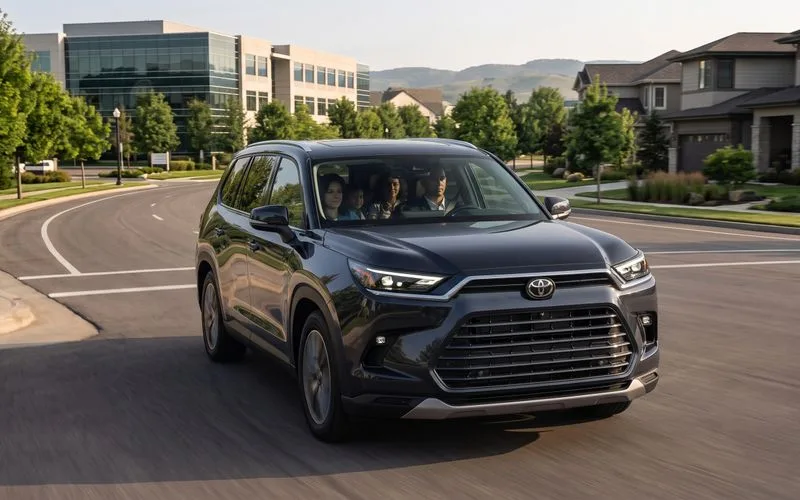 Toyota Grand HighlanderMid-Size SUVBetter at: Efficiency
Hybrid powertrains cut the fuel bill sharply and come with Toyota reliability and resale, without giving up meaningful third-row space.
Compare 2.79B-
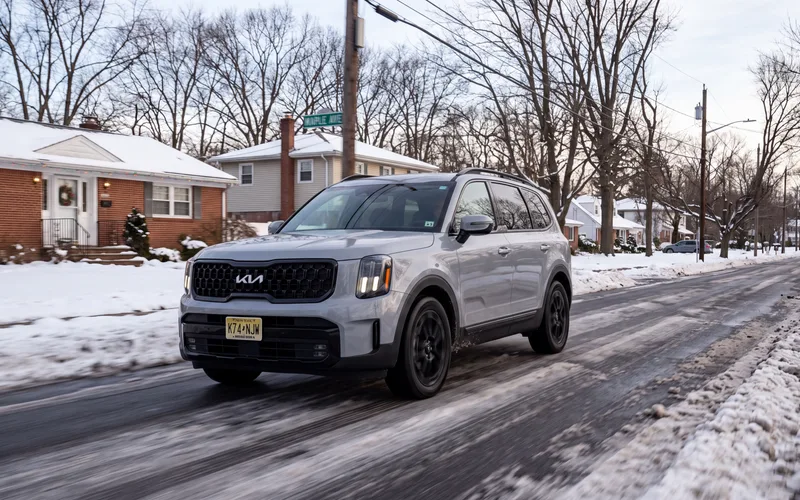 Kia TellurideMid-Size SUVBetter at: Resale value
A 10-year/100,000-mile powertrain warranty and mid-50s resale make it far cheaper to own over five years for similar room.
Compare 2.43C+
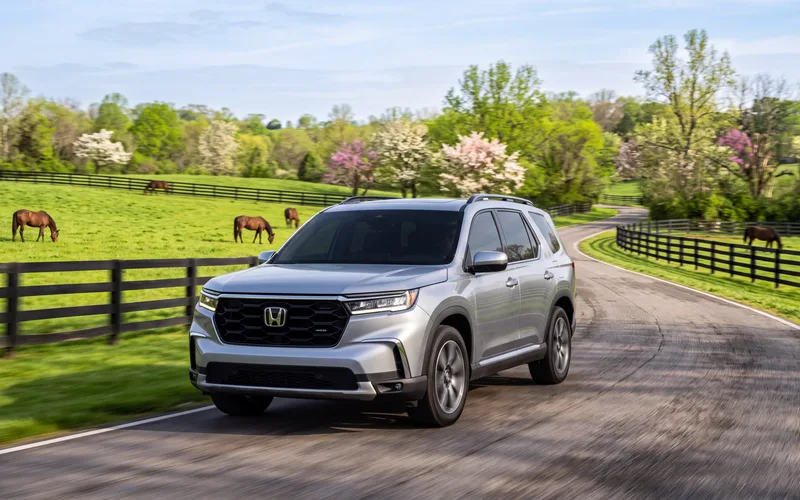 Honda PilotMid-Size SUVBetter at: Refinement
Its V6 is smoother and quieter than the Traverse's coarse turbo four, with a stronger reliability track record behind it.
CompareHow it's evolved
10 scored model years · 2017–2026
Subject scores by year
Hover or tap a score to see what moved it versus the year before. A corner mark flags a big swing.
| Year | Performance | Efficiency | Safety | Space | Cost | Reliability | Tech | Use-case | Driving | Value |
|---|---|---|---|---|---|---|---|---|---|---|
| 2026 | 52 | 57 | 78 | 79 | 42 | 63 | 82 | 66 | 65 | 73 |
| 2025 | 50 | 46 | 82 | 80 | 43 | 62 | 78 | 65 | 64 | 74 |
| 2024 | 50 | 46 | 79 | 78 | 45 | 60 | 78 | 65 | 62 | 71 |
| 2023 | 49 | 36 | 50 | 74 | 48 | 66 | 53 | 63 | 59 | 62 |
| 2022 | 49 | 36 | 50 | 74 | 50 | 67 | 53 | 63 | 59 | 61 |
| 2021 | 49 | 36 | 57 | 73 | 53 | 68 | 46 | 61 | 59 | 61 |
| 2020 | 49 | 36 | 52 | 70 | 50 | 62 | 47 | 61 | 59 | 64 |
| 2019 | 50 | 36 | 52 | 70 | 50 | 62 | 46 | 61 | 58 | 66 |
| 2018 | 51 | 36 | 51 | 70 | 52 | 61 | 46 | 60 | 58 | 67 |
| 2017 | 43 | 23 | 39 | 70 | 53 | 59 | 30 | 53 | 54 | 56 |
Compare two years
Best fit & conditions
Higher scores mean a better fit for that use case. Learn more about use-case fit →
Subject profile
Trims & configurations
4 trimsScores above reflect the volume trim. Per-trim specs and scores are rolling out — the full lineup:
Academic Probation · NHTSA safety recalls
Feb 26, 2026Equipment: other: owners/service/other manualGeneral Motors has decided that certain 2027 Chevrolet Bolt EV, 2025-2026 Cadillac OPTIQ, Chevrolet Colorado, Equinox EV, GMC Canyon, 2026 Buick Enclave, Envision, Cadillac CT5, Escalade, Escalade ESV, Escalade IQ, Escalade IQL, LYRIQ, VISTIQ, Chevrolet Blazer EV, Corvette Convertible, Corvette Coupe, Corvette Convertible E-Ray, Equinox, Silverado 1500, 2500, 3500, Silverado EV, Suburban 1500, Tahoe, Traverse, GMC Acadia, Hummer EV Pickup, Hummer EV SUV, Sierra 1500, 2500, 3500, Sierra EV, Terrain, Yukon, and Yukon XL vehicles. The radio may not have been set to the correct status to download the electronic owner's manual during production. As such, these vehicles fail to comply with the requirements of Federal Motor Vehicle Safety Standard number 208, âOccupant Protection.â
Defect
General Motors has decided that certain 2027 Chevrolet Bolt EV, 2025-2026 Cadillac OPTIQ, Chevrolet Colorado, Equinox EV, GMC Canyon, 2026 Buick Enclave, Envision, Cadillac CT5, Escalade, Escalade ESV, Escalade IQ, Escalade IQL, LYRIQ, VISTIQ, Chevrolet Blazer EV, Corvette Convertible, Corvette Coupe, Corvette Convertible E-Ray, Equinox, Silverado 1500, 2500, 3500, Silverado EV, Suburban 1500, Tahoe, Traverse, GMC Acadia, Hummer EV Pickup, Hummer EV SUV, Sierra 1500, 2500, 3500, Sierra EV, Terrain, Yukon, and Yukon XL vehicles. The radio may not have been set to the correct status to download the electronic owner's manual during production. As such, these vehicles fail to comply with the requirements of Federal Motor Vehicle Safety Standard number 208, âOccupant Protection.â
Risk
Without an owner's manual to consult, owners may not know how to safely use and operate the vehicle, increasing the risk of injury in a crash.
Remedy
Dealers will reset the vehicle radio, which will facilitate automatic download of the electronic ownerâs manual, free of charge. Owner notification letters were mailed April 16, 2026. Owners may contact GM customer service at 1-866-467-9700, Chevrolet customer service at 1-800-222-1020 or Cadillac customer service at 1-800-333-4223. The manufacturer's number for this recall is N252540430. Vehicle Identification Numbers (VINs) involved in this recall became searchable on NHTSA.gov on February 26, 2026.
NHTSA campaign 26V114000 ↗Manufacturer no. N2525404305,861 vehicles potentially affected (all models in the campaign)Owners notified Apr 16, 2026Filed by General Motors, LLCFiled as TRAVERSE
15 recalls on other model years of the Traverse (2017–2023)
May 10, 2023Air bags: frontal: driver side: inflator moduleThe driver's air bag inflator may explode during deployment, due to a manufacturing defect.
Defect
General Motors, LLC (GM) is recalling certain 2014-2017 Buick Enclave, Chevrolet Traverse, and GMC Acadia vehicles. The driver's air bag inflator may explode during deployment, due to a manufacturing defect.
Risk
An inflator explosion may result in sharp metal fragments striking the driver or other occupants, resulting in serious injury or death.
Remedy
Dealers will replace the driver's air bag module, free of charge. GM began mailing final owner letters February 23, 2024 and will continue mailing through December 2025. Owners may contact Buick customer service at 1-800-521-7300, Chevrolet customer service at 1-800-222-1020, or GMC customer service at 1-800-462-8782. GM's number for this recall is N232404980.
NHTSA campaign 23V334000 ↗Manufacturer no. N232404980995,085 vehicles potentially affected (all models in the campaign)Owners notified Feb 23, 2024Filed by General Motors, LLCFiled as TRAVERSEMar 16, 2023Power train: automatic transmissionThe transmission may have been built with an incorrect sun gear, which can result in the driver-side half-shaft disengaging from the transmission.
Defect
General Motors, LLC (GM) is recalling certain 2023 Cadillac XT6, GMC Acadia, Chevrolet Blazer, Traverse, and 2022-2023 Cadillac XT5 vehicles. The transmission may have been built with an incorrect sun gear, which can result in the driver-side half-shaft disengaging from the transmission.
Risk
A half-shaft disengaging from the transmission can result in a loss of drive power or vehicle rollaway when the vehicle is placed in park. Either of these scenarios can increase the risk of a crash.
Remedy
Dealers will replace the sun gears, free of charge. Owner notification letters were mailed on July 27, 2023. The remedy is expected to become available August 31, 2023. Owners may contact Cadillac customer service at 1-800-458-8006, Chevrolet customer service at 1-800-222-1020, or GMC customer service at 1-800-462-8782. GMC's number for this recall is N222389310.
NHTSA campaign 23V172000 ↗Manufacturer no. N2223893108,744 vehicles potentially affected (all models in the campaign)Owners notified Jul 27, 2023Filed by General Motors, LLCFiled as TRAVERSEFeb 2, 2023Power train: driveline: driveshaftThe left-side half-shaft assemblies may be missing a retaining ring.
Defect
General Motors, LLC (GM) is recalling certain 2023 Chevrolet Blazer and Traverse vehicles. The left-side half-shaft assemblies may be missing a retaining ring.
Risk
A missing retaining ring on the half-shaft can cause half-shaft inner joint separation, resulting in a loss of drive power or vehicle rollaway when the vehicle is placed in park. Either of these scenarios can increase the risk of a crash.
Remedy
Dealers will replace the left-side half-shaft assembly, free of charge. Owner notification letters were mailed February 23, 2023. Owners may contact Chevrolet customer service at 1-800-222-1020. GM's number for this recall is N222390180.
NHTSA campaign 23V042000 ↗Manufacturer no. N22239018010 vehicles potentially affected (all models in the campaign)Owners notified Feb 23, 2023Filed by General Motors, LLCFiled as TRAVERSEMar 31, 2022Air bags: side/window: curtainThe harness connector to the left or right side roof rail air bag may have incompatible electrical terminals, which could prevent the air bags from deploying in a crash.
Defect
General Motors, LLC (GM) is recalling certain 2020-2022 Chevrolet Traverse and 2021-2022 Buick Enclave vehicles. The harness connector to the left or right side roof rail air bag may have incompatible electrical terminals, which could prevent the air bags from deploying in a crash.
Risk
Roof rail air bags that do not deploy as intended increase the risk of injury in a crash.
Remedy
Dealers will replace the harness connector to the roof rail air bags, free of charge. Owner notification letters were mailed on April 29, 2022. Owners may contact Buick customer service at 1-800-521-7300 or Chevrolet customer service at 1-800-222-1020. GM's number for this recall is N212352140.
NHTSA campaign 22V210000 ↗Manufacturer no. N21235214089 vehicles potentially affected (all models in the campaign)Owners notified Apr 29, 2022Filed by General Motors, LLCFiled as TRAVERSEOct 18, 2021Power train: automatic transmissionThe screw and clip that hold the inner wheel-well plastic shroud in place may chafe against the transmission case, possibly resulting in a transmission fluid leak.
Defect
Braun Corporation (Braun) is recalling certain 2020-2021 Chevrolet Traverse wheelchair accessible vehicles with Power In-floor Ramp conversion. The screw and clip that hold the inner wheel-well plastic shroud in place may chafe against the transmission case, possibly resulting in a transmission fluid leak.
Risk
A transmission fluid leak can cause a loss of drive power, increasing the risk of a crash. In addition, a leak in the presence of an ignition source increases the risk of a fire.
Remedy
Dealers will replace the screw and clip, and inspect for signs of contact with the transmission, free of charge. Owner notification letters were mailed November 29, 2021. Owners may contact Braun customer service at 1-800-488-0359.
NHTSA campaign 21V817000 ↗639 vehicles potentially affected (all models in the campaign)Owners notified Nov 29, 2021Filed by Braun CorporationFiled as TRAVERSEOct 7, 2021Air bags: frontal · Air bags: frontal: driver side: inflator moduleThe driver's air bag inflator may explode during deployment, due to a manufacturing defect.
Defect
General Motors, LLC (GM) is recalling certain 2008-2017 Buick Enclave and 2013-2017 Chevrolet Traverse vehicles. The driver's air bag inflator may explode during deployment, due to a manufacturing defect.
Risk
An inflator explosion may result in sharp metal fragments striking the driver or other occupants, resulting in serious injury or death.
Remedy
Dealers will replace the driver's air bag module, free of charge. Interim owner notification letters were mailed on November 3, 2021. Owner notification letters were mailed on January 10, 2022. Owners may contact Buick customer service at 1-800-521-7300 or Chevrolet customer service at 1-800-222-1020. GM's number for this recall is N212349040.
NHTSA campaign 21V782000 ↗Manufacturer no. N212349040555 vehicles potentially affected (all models in the campaign)Owners notified Jan 10, 2022Filed by General Motors, LLCFiled as TRAVERSEJun 24, 2021Air bags: sensor: frontal impactDuring service by dealers, certain vehicles may have received incorrect air bag calibration software that may affect frontal airbag deployment.
Defect
General Motors, LLC (GM) is recalling certain 2021 Chevrolet Traverse and Buick Enclave vehicles. During service by dealers, certain vehicles may have received incorrect air bag calibration software that may affect frontal airbag deployment.
Risk
Air bags that do not deploy as intended can increase the risk of injury.
Remedy
Dealers will update the air bag calibration software, free of charge. Owner notification letters were mailed on July 29, 2021. Owners may contact Chevrolet customer service at 1-800-222-1020 and Buick customer service at 1-800-521-7300. GM's number for this recall is N212340220.
NHTSA campaign 21V472000 ↗Manufacturer no. N2123402206 vehicles potentially affected (all models in the campaign)Owners notified Jul 29, 2021Filed by General Motors, LLCFiled as TRAVERSEApr 8, 2021Air bags: critical fastenersThe side curtain air bags may not be properly attached.
Defect
General Motors, LLC (GM) is recalling certain 2010-2015, 2017 Buick Enclave, 2010-2019 Chevrolet Traverse, and 2011-2016 GMC Acadia vehicles. The side curtain air bags may not be properly attached.
Risk
Unsecured side curtain air bags may not perform as intended, increasing the risk of injury.
Remedy
GM will notify owners, and dealers will inspect and, if necessary, realign or replace the weld nuts, free of charge. Owner notification letters were mailed on May 24, 2021. Owners may contact Buick customer service at 1-800-521-7300, Chevrolet customer service at 1-800-222-1020, and GMC customer service at 1-800-462-8782. GM's number for this recall is N202321200.
NHTSA campaign 21V246000 ↗Manufacturer no. N202321200108 vehicles potentially affected (all models in the campaign)Owners notified May 24, 2021Filed by General Motors, LLCFiled as TRAVERSEFeb 25, 2021TiresThe affected tires were cured for too long during production.
Defect
General Motors LLC (GM) is recalling certain 2020 Buick Enclave, Cadillac XT4, XT5, Escalade, Escalade ESV, Chevrolet Suburban, Tahoe, Traverse, GMC Yukon, Yukon XL, 2018-2021 Chevrolet Express, GMC Savana, 2019-2020 Chevrolet Blazer, Silverado 1500, GMC Acadia, Sierra 1500, and certain Continental tires sold to the aftermarket for various model year 2018-2021 vehicles. The affected tires were cured for too long during production.
Risk
Over cured tires may develop a break in the sidewall resulting in sudden air loss or a belt edge separation which could lead to a tread/belt loss. Either condition can cause a loss of vehicle control, increasing the risk of a crash.
Remedy
GM will notify owners, and dealers will inspect the tires, replacing them as necessary, free of charge. The recall began March 22, 2021. Owners may contact GMC customer service at 1-888-988-7267, Buick customer service at 1-866-608-8080, Chevrolet customer service at 1-800-222-1020 or Cadillac customer service at 1-800-458-8006. GM's number for this recall is N212329050.
NHTSA campaign 21V115000 ↗Manufacturer no. N21232905033,838 vehicles potentially affected (all models in the campaign)Owners notified Mar 22, 2021Filed by General Motors, LLCFiled as TRAVERSENov 5, 2020TiresThe vehicles may have been manufactured with Continental tires that were overcured.
Defect
General Motors LLC (GM) is recalling certain 2020 Buick Enclave, Cadillac XT5, GMC Acadia and Chevrolet Traverse vehicles and 2020-2021 Chevrolet Silverado 1500, GMC Sierra 1500 vehicles. The vehicles may have been manufactured with Continental tires that were overcured.
Risk
Overcured tires may experience a carcass break in the sidewall resulting in a sudden air loss or could develop a belt edge separation which could lead to partial or full tread/belt loss. Either condition increases the risk of a crash.
Remedy
GM will notify owners, and dealers will inspect vehicles and replace tires that have DOT number and production mold number combinations identified by Continental, free of charge. The recall began December 17, 2020. Owners may contact GMC customer service at 1-888-988-7267, Buick customer service at 1-866-608-8080, Chevrolet customer service at 1-800-222-1020 or Cadillac customer service at 1-800-458-8006. GM's number for this recall is N202319030.
NHTSA campaign 20V684000 ↗Manufacturer no. N2023190307,516 vehicles potentially affected (all models in the campaign)Owners notified Dec 17, 2020Filed by General Motors LLCFiled as TRAVERSEOct 29, 2020Power train: automatic transmissionThe start/stop accumulator endcap may have missing bolts.
Defect
General Motors LLC (GM) is recalling certain 2018-2019 Chevrolet Cruze and Buick LaCrosse, 2018-2020 Chevrolet Equinox, Chevrolet Traverse and GMC Terrain, 2018 Chevrolet Malibu, 2019-2020 Buick Encore, Buick Enclave, Cadillac XT4, Chevrolet Blazer and GMC Acadia, and 2020 Cadillac XT6 vehicles. The start/stop accumulator endcap may have missing bolts.
Risk
Missing bolts on the start-stop accumulator endcap could result in a transmission oil leak and may progress to a loss of propulsion, increasing the risk of a crash. A transmission fluid leak in the presence of an ignition source may increase the risk of fire.
Remedy
GM will notify owners, and dealers will inspect the start-stop transmission accumulator and replace it if any bolts are missing, free of charge. The recall began December 15, 2020. Owners may contact GMC customer service at 1-888-988-7267, Buick Customer service at 1-866-608-8080, Chevrolet customer service at 1-800-222-1020 or Cadillac customer service at 1-800-458-8006. GM's number for this recall is N202313440.
NHTSA campaign 20V668000 ↗Manufacturer no. N202313440194,105 vehicles potentially affected (all models in the campaign)Owners notified Dec 15, 2020Filed by General Motors LLCFiled as TRAVERSEOct 15, 2020Fuel system, gasoline: delivery: fuel pumpThe fuel pump's jet nozzle may have a plastic burr remaining from the manufacturing process, possibly causing a blocked nozzle and an insufficient fuel supply to the engine.
Defect
General Motors LLC (GM) is recalling certain 2020 Buick Enclave, Cadillac XT5, Cadillac XT6, Chevrolet Traverse, and GMC Acadia vehicles. The fuel pump's jet nozzle may have a plastic burr remaining from the manufacturing process, possibly causing a blocked nozzle and an insufficient fuel supply to the engine.
Risk
Insufficient fuel supply can result in an engine stall without warning, increasing the risk of a crash.
Remedy
GM will notify owners, and dealers will replace the fuel pump module. The recall began November 16, 2020. Owners may contact GMC customer service at 1-888-988-7267, Buick Customer service at 1-866-608-8080, Chevrolet customer service at 1-800-222-1020 or Cadillac customer service at 1-800-458-8006. GM's number for this recall is N202314760.
NHTSA campaign 20V639000 ↗Manufacturer no. N2023147602,781 vehicles potentially affected (all models in the campaign)Owners notified Nov 16, 2020Filed by General Motors LLCFiled as TRAVERSEJul 30, 2020Air bags: side/window: curtain: inflatorThe diffuser component of the Roof-Rail Air Bag (RRAB) inflator may not have been properly crimped to the inflator and could separate from the inflator during air bag deployment.
Defect
General Motors, LLC. (GM) is recalling certain 2020 Buick Enclave, Cadillac XT5 and XT6, Chevrolet Blazer, Silverado 1500, 2500 and 3500 and Traverse and GMC Acadia and Sierra 1500, 2500 and 3500 vehicles. The diffuser component of the Roof-Rail Air Bag (RRAB) inflator may not have been properly crimped to the inflator and could separate from the inflator during air bag deployment.
Risk
If the diffuser separates from the inflator during deployment, RRAB performance may be degraded, increasing the risk of injury in a crash.
Remedy
GM will notify owners, and dealers will replace the suspect RRAB modules, free of charge. The recall began September 3, 2020. Owners may contact Chevrolet customer service at 1-800-630-2438, Cadillac customer service at 1-800-333-4223, or Buick customer service at 1-800-521-7300. GM's number for this recall is N202305380.
NHTSA campaign 20V446000 ↗Manufacturer no. N202305380769 vehicles potentially affected (all models in the campaign)Owners notified Sep 3, 2020Filed by General Motors LLCFiled as TRAVERSESep 6, 2019Structure: frame and membersThe right-hand frame rail in the engine compartment may be cracked.
Defect
General Motors LLC (GM) is recalling certain 2020 Buick Enclave and Chevrolet Traverse vehicles. The right-hand frame rail in the engine compartment may be cracked.
Risk
A crack in the frame rail may reduce crash performance, increasing the risk of an injury.
Remedy
GM will notify owners, and dealers will inspect and, as necessary, replace the vehicle, free of charge. The recall began October 4, 2019. Owners may contact Chevrolet customer service at 1-800-630-2438 or Buick customer service at 1-800-521-7300. GM's number for this recall is N192268310.
NHTSA campaign 19V643000 ↗Manufacturer no. N1922683103,420 vehicles potentially affected (all models in the campaign)Owners notified Oct 4, 2019Filed by General Motors LLCFiled as TRAVERSENov 1, 2018Air bags · Air bags: air bag/restraint control moduleThe Sensing Diagnostic Module (SDM) on these vehicle may not have been turned off of "manufacturing mode," preventing the air bags from deploying in the event of a crash.
Defect
General Motors LLC (GM) is recalling certain 2019 Buick Encore, Chevrolet Spark, Traverse, and Trax vehicles. The Sensing Diagnostic Module (SDM) on these vehicle may not have been turned off of "manufacturing mode," preventing the air bags from deploying in the event of a crash.
Risk
If the air bags do not deploy in the event of a crash, it can increase the risk of injury.
Remedy
GM will notify owners, and dealers will reprogram the SDM module to the correct mode, free of charge. The recall began November 6, 2018. Owners may contact Buick customer service at 1-800-521-7300 and Chevrolet customer service at 1-800-222-1020. GM's number for this recall is 18365.
NHTSA campaign 18V774000 ↗Manufacturer no. 1836512 vehicles potentially affected (all models in the campaign)Owners notified Nov 6, 2018Filed by General Motors LLCFiled as TRAVERSE
Source: NHTSA Office of Defects Investigation recall database, model years 2017–2026. Recalls are listed by model year as the manufacturer filed them; whether a specific car is affected depends on its VIN — check a VIN at nhtsa.gov ↗. NHTSA model names matched to this page: TRAVERSE.
Detailed scoring by subject
1Performance & PowertrainOne of the Traverse's weakest categories.1.49D
The 2026 Traverse carries over the fourth generation's sole powertrain, GM's 2.5L turbocharged inline-4 (LK0, 'Turbo-Max'), rated at 328 hp @ 5,300 rpm on LS, LT, Z71, RS and High Country alike — a step up from the outgoing 3.6L V6's 310 hp, with no output split by trim.
The 2.5L turbo makes 326 lb-ft, up sharply from the previous V6's 266 lb-ft and delivered far lower in the rev range, which is what gives the Traverse its easy low-speed shove when loaded.
Chevrolet publishes no 0–60 claim; instrumented tests of the mechanically identical 2024–2025 Traverse (2.5T, 8-speed, ~4,600 lb curb weight) cluster at 6.5–6.9 s, with the Z71's all-terrain tires at the slow end. Quick for a mainstream three-row SUV, though hybrid rivals now match it on far less fuel.
The 2.5T pulls hard from low revs with minimal lag once moving, but reviewers consistently describe it as coarse and thrashy at full throttle and note hesitant tip-in from rest — a clear step down in smoothness from the V6 it replaced and from the hybrid Grand Highlander. Scored just under the mechanically identical Enclave, which adds active noise cancellation and extra insulation the Chevy does not.
GM's 8-speed torque-converter automatic is well matched to the engine's low-rpm torque and shifts smoothly and decisively in normal driving; reviewers cite occasional off-the-line hesitation and busy downshifting on grades, and there is no meaningful manual control.
5,000 lbs when properly equipped with the available trailering package — unchanged from the previous generation and exactly at the mainstream three-row segment norm shared by Pilot, Telluride, Palisade, Explorer, Acadia and Enclave. Without the package the rating drops well below that.
FWD is standard on LS, LT and RS with AWD optional, and AWD is standard on Z71 and High Country — orderable across the whole range rather than locked to top trims. The system adds a twin-clutch rear drive unit with side-to-side torque vectoring on upper trims plus a driver-selectable AWD disconnect, but there is no low range or center-diff lock.
The dedicated Z71 trim carries standard AWD with the twin-clutch rear unit, an off-road-tuned suspension raising ground clearance to roughly 8 inches, all-terrain tires, a skid plate, hill descent control and a Terrain drive mode. That is credible light-duty trail and weather capability — on par with the Acadia AT4 and just behind a Pilot TrailSport — but it remains a unibody crossover with no low range and no locking differential.
One engine and one transmission across the entire 2026 range — no V6, no hybrid, no PHEV and no electric Traverse. That is the narrowest possible lineup and a real weakness against three-row rivals offering hybrid or multiple engine choices; Chevrolet's EVs are separate nameplates, not Traverse variants.
2Efficiency & RangeOne of the Traverse's weakest categories.1.82C-
The fourth-generation Traverse (2024–present) uses GM's 2.5L turbo I4 (LK0, 328 hp) with an 8-speed automatic, and the powertrain carries into 2026 unchanged — so the EPA rating carries forward at 23 MPG combined for the FWD LT volume configuration. That is near the bottom of the SUV normalization band: a 4,600-lb three-row with no hybrid assist cannot reach the numbers the electrified rivals in this segment post.
20 MPG city sits well below the SUV segment midpoint. Stop-start is the only meaningful efficiency aid — the turbo four has to move a heavy three-row body from rest without any electric torque fill, which is exactly where hybridized competitors (Grand Highlander, Santa Fe, Sorento) open their largest advantage.
Highway is the Traverse's best cycle — the 8-speed's tall top gear lets the 2.5T settle at low revs at cruise for 27 MPG. Respectable for a 204-inch three-row, though the large frontal area caps the gain and AWD models give back roughly 3 MPG.
The oversized fuel tank rescues what mediocre MPG gives away: roughly 515 miles of theoretical range on a fill puts the Traverse in the upper part of the SUV range band and makes it a genuinely strong long-haul family cruiser despite unremarkable consumption. This is the single best attribute in its efficiency profile.
At 23 MPG combined on 87-octane regular, the EPA's 15,000-mi/yr, 55/45 city-highway assumption works out to roughly 650 gallons and about $2,200 a year. Middling for the segment — cheap regular fuel keeps the per-gallon cost down, but consumption stays high because there is no electrified option to offset it.
The 2.5L turbo is engineered for 87-octane regular unleaded on every trim — no premium requirement, no diesel, no E85 complication, and no charging infrastructure to plan around. Whatever the Traverse gives up in consumption, it costs the least possible per gallon and refuels anywhere, which puts it at the top end of the 80–100 band alongside its GM siblings.
3SafetyOne of the Traverse's strongest categories.3.30B+
The third-generation Traverse (2024 redesign, GM C1 platform) earned a 5-star NHTSA overall rating, the best result among GM's three-row C1 SUVs and a clear step above the platform-mate Acadia's 4 stars. 2026 is a carryover year with unchanged structure and restraints, so the rating carries forward.
The redesigned Traverse posts Good results on the small-overlap front and updated side tests but only Acceptable on the updated moderate-overlap front test, where rear-occupant protection is the known weak point. That mix, plus headlight ratings that never reach Good, keeps it off the Top Safety Pick list for 2024-2026 — squarely the mid-band 'mostly Good with some Acceptable, no award' case.
The 2024 redesign made the Traverse's standard safety content unusually deep for a mainstream three-row: Chevy Safety Assist (AEB, forward collision alert, front pedestrian braking, lane keep assist with lane departure warning, following distance indicator, IntelliBeam) plus adaptive cruise control and Side Blind Zone Alert with rear cross-traffic braking on every trim from the base LS up. Having both ACC and blind-spot standard is what separates it from the Acadia and Enclave, which gate one or both behind packages or upper trims.
The Traverse uses GM's current AEB with front pedestrian braking, which performs competently in daylight vehicle-to-vehicle and pedestrian scenarios but has not posted a Superior result under IIHS's tougher updated nighttime pedestrian protocol — the same pattern seen across the C1 three-row family. Adequate rather than class-leading.
Side Blind Zone Alert with Rear Cross Traffic Braking is standard on every trim and intervenes with braking rather than merely warning, which is above the mainstream norm. It stops short of the top band because there is no trailer-aware blind-spot extension despite the Traverse's 5,000-lb tow rating, and no safe-exit rear-occupant alert.
Standard Lane Keep Assist with Lane Departure Warning is corrective and reactive rather than a true centering system — reviewers of the 2024-2025 platform describe it as useful but occasionally abrupt. Genuine smooth lane centering arrives only with Super Cruise on the upper trims, so the volume LT buyer gets the lesser experience.
Full-speed-range adaptive cruise with stop-and-go is standard on every trim — a meaningful advantage over the Acadia and Enclave, where it is packaged or top-trim-only — and it is well calibrated per platform reviews. On RS and High Country it combines with Super Cruise into a genuinely refined highway-assist package, which lifts this into the bottom of the top band.
Super Cruise is offered on the RS and High Country trims for 2026 — GM's system remains the most mature hands-free highway assist on sale, with driver monitoring, automatic lane change, and coverage of more than 750,000 miles of compatible North American divided highways. It is optional and top-trim-restricted rather than broadly available, which keeps it out of the highest tier.
Full LED headlamps with standard IntelliBeam auto high beams are fitted across the range, but IIHS has rated the Traverse's headlight configurations only Acceptable rather than Good — one of the reasons the vehicle misses a Top Safety Pick award. No adaptive/curve-matrix beam upgrade is offered even at High Country.
The 2024 redesign's boxy, upright greenhouse with a squared-off beltline and large glass area gives an unusually good forward and side view for a three-row SUV, and the low dash and thin A-pillars were praised by reviewers. Thick D-pillars and the tall tail still create real rear-quarter blind zones; a rear camera is standard and HD Surround Vision is available on upper trims to compensate.
The Traverse is among the roomiest mainstream three-rows, and it shows here: wide, square second-row door openings, easily reached outboard LATCH anchors, and a third row big enough to actually take a booster or convertible seat rather than being a token bench. Eight-passenger models fit three across the second-row bench; captain's-chair models trade that for easier third-row access, and third-row positions are tether-only as is segment standard.
4Space & ComfortOne of the Traverse's strongest categories.3.37B+
The volume LT trim retains the 8-passenger second-row bench, which Chevrolet kept on the Traverse as its family-volume three-row even after Buick dropped the bench from the Enclave. Upper trims move to captain's chairs for 7.
Front headroom matches the shared VSS-M interior package used by the mechanically identical GMC Acadia and Buick Enclave, both of which publish 40.9 in.
Class-leading front legroom carried across the whole VSS-M three-row family; the 2024 redesign added roughly 3.5 in over the previous-generation Traverse.
The boxy 2024-on roofline puts second-row headroom at the top of the mid-size SUV band, tying the Acadia and Enclave.
Second-row legroom sits near the top of the mid-size three-row class and gained about 1.3 in in the 2024 redesign; the Traverse tracks the Acadia's 39.7 in rather than the Enclave's shorter 39.0 in second-row package.
The Traverse has long carried one of the roomiest third rows among mainstream mid-size SUVs, and the 2024 redesign kept adult-tolerable third-row legroom plus a sliding/tilting second row for access — genuinely usable for teens and short-haul adults, but still short of the minivan-grade ease that earns 80+.
Cargo volume behind the second row with the third row folded is strong for a mid-size three-row, and the 22.9 cu ft behind the raised third row still swallows a real grocery run or airport luggage.
Near the top of the mid-size SUV band and one of the Traverse's signature strengths — close to minivan territory with a near-flat load floor.
The 2024-on redesign brought a large center console with a pass-through bin, deep door pockets, an under-floor cargo well behind the third row and multiple USB-C outlets — competitive everyday storage, but no standout innovation on the order of a giga console or onboard AC power.
Front seats are supportive over long stints and the redesign improved cushioning and adjustability, but the volume LT gets cloth with a comparatively short adjustment range and no massaging option, so it sits below the more heavily padded Acadia Denali and Enclave Avenir.
Composed and well-controlled on the LT's smaller wheels, but the Traverse does without the adaptive dampers offered on its Denali and Avenir siblings, and RS trims on 22-inch wheels ride noticeably firmer over broken pavement.
Wind and road noise are well suppressed at highway speed, but the 2.5L turbo four is audibly coarse under hard acceleration and Chevrolet fits less acoustic content than Buick's QuietTuning package — average-to-good for the segment rather than class-leading.
Tri-zone automatic climate control and rear climate outlets are standard, with heated front seats and a heated steering wheel from LT up and ventilated front seats plus heated second-row seats on RS/High Country — solid mainstream coverage that lands a tier below the premium siblings.
5Cost of OwnershipThe Traverse's lowest-graded category.0.80F
The 2026 Traverse is a carryover of the third-generation (2024 redesign) lineup — LS/LT/RS/Z71/High Country on a single 2.5L turbo four — so pricing is projected from the known launch ladder plus two years of typical GM increases rather than a confirmed 2026 sheet.
LT is the volume trim on the Traverse and AWD is the majority mix in the three-row family segment; a typically-equipped LT AWD lands in the mid-$46k range, with the heavily-marketed RS pushing the practical transaction average higher.
Estimated from class data for mainstream three-row SUVs with turbocharged four-cylinder powertrains; the 2.5L turbo adds boost-related service over the old naturally-aspirated V6, but Chevrolet parts and labor rates run slightly under the GMC and Buick versions of the same vehicle.
GM three-row SUVs project in the mid-40s for five-year retention — the Traverse's heavier fleet exposure and habitual incentive spending offset the goodwill the 2024 redesign earned, leaving it far behind the Toyota and Korean three-rows that lead this item.
Chevrolet's New Vehicle Limited Warranty is unchanged for 2026 at the industry floor, and it is a genuine weakness against three-row rivals from Hyundai, Kia and Mitsubishi — even in-house, Buick's version of this same vehicle carries a year more.
GM's powertrain coverage is unchanged for 2026 and sits at the bottom of the industry alongside Ford, which matters more than usual here because the 2.5L turbo four is a relatively young engine hauling a heavy three-row SUV.
Chevrolet's included package is thin: a single complimentary first scheduled-maintenance visit (oil change, tire rotation, multi-point inspection), 5-yr/60,000-mi roadside assistance, and a short OnStar and Connected Services trial. One visit barely qualifies as an included-maintenance period, leaving the Traverse well behind the ToyotaCare (2 yr / 25,000 mi) coverage on the Highlander and Grand Highlander it competes with directly.
$46,495 volume-trim price minus its estimated resale value after 5 years (46% retained, or about $21,388) leaves about $25,107 in depreciation. Add the projected $5,800 in 5-year maintenance and repairs, and owning this vehicle for 5 years costs about $30,907 in total.
6Reliability & QualityMid-pack among this car's ten categories.2.22C
The Traverse launched GM's third-generation C1 three-row for MY2024 and drew a low Consumer Reports predicted-reliability rating on the all-new platform and 2.5L turbo powertrain. 2026 is the generation's third model year, so it has the most accumulated running changes and owner data of the three siblings, but the outlook remains below the segment's Toyota/Hyundai benchmarks.
Chevrolet lands in the lower-middle of recent Consumer Reports brand-reliability rankings and at or slightly below the industry average in J.D. Power's Vehicle Dependability Study — consistently a step behind sibling brands GMC and especially Buick, but not a repeat bottom-third finisher.
As the launch vehicle for the C1 three-row generation, the 2024 Traverse absorbed the first-year recall cluster — powertrain and transmission software, safety-belt and interior items — that later propagated to the Acadia and Enclave. Nothing systemic (no fire or brake campaigns), and activity tapered through 2025, but the generation's recall count sits above segment best-in-class.
The LK0 2.5L turbo four replaced the well-proven naturally aspirated 3.6L V6 and has under three model years in market, working hard to move a roughly 4,700-lb three-row. Early Traverse/Acadia owners have reported cooling-system and turbo-related complaints. The paired Hydra-Matic 8-speed derives from GM's more proven 8L-series but is new in this high-torque transverse application.
The third-gen redesign massively upgraded the Traverse cabin — 17.7-inch center touchscreen, 11-inch digital cluster, better soft-touch coverage on upper surfaces — and it now reads as competitive among mainstream three-rows. But the volume LT/RS trims keep noticeably more hard plastic on lower doors and console than the Acadia Denali or Enclave Avenir, which reviewers repeatedly cite as the siblings' advantage over the Chevy.
Assembly at Lansing Delta Township has been generally solid, but launch-year Traverses drew scattered owner complaints about rattles, trim alignment, and infotainment software glitches typical of first-year production. By the MY2026 build — the third year of the generation — the line is the most mature of the three C1 siblings.
Chevrolet operates the largest US dealer and service footprint of any GM brand — roughly 3,000 locations — giving effectively nationwide coverage including rural markets where import rivals thin out. Service satisfaction is the limiter: J.D. Power's Customer Service Index puts Chevrolet around the mass-market average rather than at the top.
The Traverse is the highest-volume of the three C1 three-rows, so parts commonality with the Acadia and Enclave plus GM's mature national distribution makes components cheap and easy to source, with strong independent-shop support. Turbocharger and 8-speed service costs run above the outgoing V6 baseline, which keeps it out of the top band.
7Technology & InfotainmentThe Traverse's best-graded category.3.55A-
The 2024 Traverse redesign introduced a 17.7-inch diagonal landscape touchscreen standard on all trims, carried unchanged into 2026 — the largest center display in the mainstream three-row segment and well past the SUV band ceiling of 15.5 in. Replaces a placeholder 9.6 in value.
GM's Google Built-in system on the huge landscape screen is quick to boot and logically organized, and Chevrolet kept a physical volume knob plus separate hard climate controls below the display. Reviewers rate it among the better mainstream systems, with the main gripe being how visually busy the wide screen gets.
Wireless Apple CarPlay and wireless Android Auto are standard on every 2026 Traverse trim — GM's decision to drop phone projection applies only to its Ultium EVs, not the gas three-row crossovers.
Google built-in supplies Google Assistant natural-language voice control, Google Maps as the embedded navigation and the Google Play store, included with the vehicle's connectivity plan — one of the strongest native voice/nav implementations in a mainstream SUV, and unusual in that owners have little reason to bypass it for phone projection.
The base six-speaker setup is unremarkable and the step-up is a Bose premium system available on upper trims and standard on High Country. Competent, but the Traverse does not offer a flagship large-channel-count system like the Acadia Denali's 16-speaker Bose.
An 11-inch fully digital, reconfigurable driver display is standard on every 2026 Traverse trim with no analog fallback anywhere in the range — near the top of what mainstream three-row rivals offer.
The redesigned Traverse rides on GM's VIP electrical architecture with the Ultifi software layer, which supports over-the-air updates spanning infotainment, driver-assistance calibration and body-control modules rather than maps alone. Feature-adding updates are less frequent than Tesla's or Rivian's cadence.
The myChevrolet app covers remote start, lock/unlock, vehicle status and locate, but those commands revert to a paid OnStar Remote Access plan once the included trial lapses — a real ongoing cost against rivals that include remote functions free. No phone-as-key digital key on the Traverse.
USB-C data/charge ports are distributed across all three rows, and wireless phone charging is available and standard from the mid trims up — good provisioning for a family three-row, though not the fast-USB-everywhere-plus-household-outlet standard that earns the top band.
Keyless open with push-button start and remote start is standard across essentially the whole 2026 Traverse range, with a hands-free power liftgate on upper trims. Solid mainstream convenience, held back from the top band by the absence of a phone-as-key option.
HD Surround Vision 360-degree camera plus front and rear park assist are available across most of the range and standard on upper trims, with the off-road-oriented Z71 adding extra camera views. Image quality is good; there is no automated self-parking.
A head-up display is offered on the Traverse but confined to the top High Country trim rather than the volume LT — which the item's guidance places squarely in the middle band. Buyers of the mainstream trim cannot option it.
8Use-Case FitMid-pack among this car's ten categories.2.47C+
The 2024-redesign Traverse pairs wide, squared-off rear door openings with the segment's most flexible seating menu — an 8-passenger second-row bench standard on the volume LS/LT (three-across capable) or 7-passenger captain's chairs on RS/Z71/High Country — and 22.9 cu ft behind the third row swallows a full-size stroller without folding anything. Its own LATCH usability scored 80 in cat3, and second-row outboard anchors are easily reached.
Unusually strong standard safety on the trims families actually buy: Chevy Safety Assist plus Side Blind Zone Alert with Rear Cross Traffic Braking AND adaptive cruise control are standard all the way down to the ~$41k LS, where the pricier Acadia makes blind-zone coverage part of an optional bundle. NHTSA awards 5 stars overall; the ceiling is IIHS, where an Acceptable updated moderate-overlap result and Acceptable headlights keep it short of a Top Safety Pick.
A genuinely adult-usable third row, 40.0 in / 39.7 in of second-row head and legroom, standard tri-zone automatic climate and USB-C ports serving all three rows make multi-hour family duty easy, and 22.9 cu ft behind row three means luggage still fits with every seat occupied. Held back from the Enclave's level by a noisier cabin — the 2.5L turbo four is coarse under load — and no factory rear-seat entertainment.
328 hp / 326 lb-ft makes low-speed traffic effortless and the 17.7-inch touchscreen with Google built-in and standard adaptive cruise cuts commute workload, but a 204-inch, ~4,700-lb three-row is never truly nimble in traffic, and the 2.5T's coarseness under load plus occasional 8-speed hesitation are recurring reviewer criticisms.
The single 2.5T powertrain returns 23 MPG combined FWD and about 21 AWD — roughly $2,200–$2,400 a year in fuel at EPA's 15,000-mile assumption — which is merely average for the class and badly beaten by the hybrid three-rows (Pilot, Grand Highlander, Highlander) it competes against. Regular 87-octane fuel and mainstream, high-volume GM consumables keep the per-mile floor from dropping further.
At roughly 204 inches long and 78 wide on a ~38-foot turning circle, the Traverse is a genuine handful in urban garages and parallel spots. It claws back points with an upright glasshouse and slim pillars that reviewers praise for outward visibility, plus HD Surround Vision and Rear Park Assist to cover the blind spots the sheer size creates.
A 5,000-lb maximum tow rating with the trailering package covers a small travel trailer, a two-place snowmobile trailer or a light dual-axle utility trailer, and the 2.5T's 326 lb-ft of low-end torque copes with that load better than the old V6 did. But this is a unibody family hauler — there is no bed, no meaningful payload headroom, and nothing approaching body-on-frame work capacity; the 97.6 cu ft of enclosed cargo is the real work asset.
The cloth-seat LS/LT is the plainest, most abuse-tolerant version of the C1 triplet and Chevrolet's ~3,000-dealer network with shared, high-volume parts makes downtime cheap to fix. Against that, the LK0 2.5T and this platform are only three model years old with a weak early record — Consumer Reports scored the redesign 1/5 for predicted reliability and NHTSA shows multiple launch-year recalls — so hard-use durability is genuinely unproven.
Essentially no work-focused provisioning: no bed, no 120V household outlet or Pro Power onboard, no washable rubber-floor interior option, and no commercial upfit ecosystem — just a carpeted cargo floor with basic tie-downs, an under-floor rear bin and standard roof rails. The one genuine advantage over its Buick twin is Chevrolet's broad accessory catalog of roof racks, cargo liners and all-weather mats sold through a much denser dealer network.
A 22.4-gallon tank stretches to roughly 515 miles FWD (about 470 AWD), near the top of the segment for a gas three-row, and Super Cruise hands-free driving on RS and High Country is a real fatigue-killer on interstate hauls. The volume LT misses Super Cruise, and a 70-rated ride and 70-rated cabin quietness — the 2.5T drones under load — keep it a rung below the class's best mile-eaters.
The Z71 is the most credible light-duty trim in the C1 triplet — roughly 8 inches of ground clearance, twin-clutch AWD with torque vectoring, hill descent control, skid plates and all-terrain tires make gravel forest roads and muddy trailheads a non-event. Standard roof rails and the 5,000-lb rating handle bikes, kayaks and a small toy hauler. It remains a unibody crossover, and AWD costs extra on the volume LS/LT/RS.
Cargo is the Traverse's headline strength: 97.6 cu ft with both rear rows folded is at the very top of the mainstream mid-size three-row class, 57.9 cu ft behind row two beats most rivals' maximum, and even 22.9 cu ft behind row three takes a week's luggage for seven. A 60/40 folding second-row bench, power-folding third row on upper trims, under-floor bin, standard roof rails and an available hitch cover nearly every bulky-gear scenario.
9Driving ExperienceMid-pack among this car's ten categories.2.42C+
The third-generation Traverse (2024 redesign on GM's C1 platform, carried into 2026 unchanged) is meaningfully better tied down than the model it replaced — a wider track, stiffer structure and better-controlled body motions make it composed and secure through corners despite a ~4,600–4,900 lb curb weight. Chevrolet's damping is a shade firmer than the comfort-first Enclave, and RS gets a mildly sportier tune, but this is still a big three-row that leans and feels its width in transitions rather than one that rewards pace. Z71's 1-inch lift and all-terrain tires trade on-road grip for trail clearance.
GM's electric rack is accurate and well-geared for parking-lot work but light and largely feedback-free — reviewers consistently describe it as numb on center with little road-surface information. It is fractionally more substantial in effort than the Acadia's tune, which is the extent of the differentiation among the C1 triplets.
Four-wheel discs sized for a heavy three-row deliver a firm, linear pedal and stopping distances in the 130-ft range from 60 mph — mid-pack to slightly better than average for the segment, with no fade complaints in normal family duty. Pedal feel is a touch firmer and more confidence-inspiring than the softer Buick calibration.
The sole 2.5L turbo I4 (LK0, 328 hp / 326 lb-ft) with GM's 8-speed automatic gives the 2026 Traverse strong, low-slung torque and prompt part-throttle response — genuinely quicker in real-world driving than the 3.6L V6 it replaced. It is held out of the top band by mild off-idle lag before boost arrives, occasionally lumpy low-speed shifts, and an auto stop/start restart that can be felt through the structure.
The weakest part of the Traverse's driving experience. The 2.5T is unobtrusive at light loads and steady cruise, but sounds coarse and thrashy when worked hard — merging, passing, or climbing a grade with the family aboard — and it lacks the acoustic glass and active noise cancellation that soften the same engine in the Enclave. Rivals with V6s (Palisade, Telluride, Grand Highlander) or hybrid assist are clearly more refined under load.
The 2024 redesign stretched the wheelbase to 120.9 in, and low-speed maneuverability paid for it: Chevrolet's dimensional sheet lists a 39.4 ft curb-to-curb turning diameter, near the wide end of the SUV band and a real nuisance in parking structures. It is marginally tighter than the longer-wheelbase Acadia at 40.0 ft. Replaces a placeholder value of 37 ft, which was implausibly tight for this footprint.
One of the Traverse's genuine strengths: a commanding, upright seat height, a tall glasshouse with a low beltline and thin-enough pillars for good outward visibility, wide seat and tilt/telescope adjustment, and an easy step-in height. The 2024 dash pairs a standard 11-in digital cluster with a 17.7-in landscape touchscreen while retaining physical HVAC and volume controls beneath it — better everyday ergonomics than rivals that buried climate functions in a menu.
The Traverse is engineered as a competent family hauler and it is honest about that. The turbo four's low-end shove makes it feel usefully brisk in traffic, and the Z71 and RS trims add some visual and off-road character, but numb steering, an uninspiring engine note and comfort-first chassis tuning mean nobody takes the long way home in one. Pleasant and forgettable — the middle of the band.
10Value & Market PositionGrades above the middle of the scale.2.95B-
Standard content is the Traverse's strongest value argument: every 2026 trim from the base LS up gets the 17.7-inch center touchscreen (largest in the mainstream three-row class), an 11-inch digital cluster, Google Built-in with wireless Apple CarPlay/Android Auto, Chevy Safety Assist, full-speed adaptive cruise with stop-and-go, and Side Blind Zone Alert with rear cross-traffic braking. That standard ADAS depth beats the platform-mate Acadia and Enclave, where adaptive cruise is packaged or top-trim-only; it lands short of the top band only because Palisade and Telluride bundle more comfort content (ventilated seats, heated wheel) at comparable money.
At roughly $41k delivered for an LS FWD and about $46.5k for the volume LT AWD, the Traverse is the cheapest of GM's three C1 three-rows while carrying the most standard content and the same 328-hp powertrain — a real bang-for-buck story against a comparably equipped Grand Highlander, Palisade or Telluride. It is held out of the standout band by the cost side of ownership rather than the sticker: an industry-floor 3/36 and 5/60 warranty, a single complimentary maintenance visit, and roughly 46% five-year resale retention all erode what the buyer actually keeps, and there is no hybrid option in a segment increasingly priced around one.
Five well-spaced trims — LS, LT, Z71, RS, High Country — span roughly $41k to $58k with FWD or AWD available across the ladder and a choice of second-row bench or captain's chairs for 7- or 8-passenger seating, plus genuinely differentiated flavors in the off-road-oriented Z71 and blacked-out RS. That is materially broader than the three-trim Acadia, Enclave and Equinox lineups. The one real gap is powertrain: a single 2.5L turbo four with no hybrid or V6 alternative.
The Traverse is a perennial top-five mid-size three-row seller and by a wide margin the highest-volume of GM's three C1 SUVs, running around 100,000+ US units a year with the redesigned generation selling steadily. It sits just below the segment-leader band because Explorer, Palisade, Telluride and Grand Highlander trade the top spots between them, and because a meaningful share of Traverse volume has historically gone to fleet rather than retail.
Chevrolet reads as a broadly neutral mainstream badge in the US — familiar, universally serviced, but without the loyalty halo Toyota, Honda or Subaru carry in the family-SUV space and without the Denali-style premium lift GMC gets on the same vehicle. The Traverse's fleet exposure and weak residual performance are the concrete places that neutral image costs the buyer money.
GM is among the most incentive-active mainstream automakers and the Traverse is a high-volume, widely stocked nameplate, so subvented low-APR financing, cash allowances, lease support and periodic employee-pricing-style events are routinely available and dealers negotiate off sticker. That is a strong buyer benefit relative to tight-supply rivals like the Telluride and Palisade, even though it is also part of why residuals lag.
The third-generation Traverse arrived for model year 2024 on GM's C1 platform with the current VIP electrical architecture, Ultifi over-the-air updates, Google Built-in infotainment and available Super Cruise, so 2026 is year three of the generation — current hardware with no redesign risk for near-term buyers. It stays out of the very top band because the newest-year glow has passed and the lineup still has no hybrid variant while the segment moves that way.
The redesigned Traverse has been reviewed noticeably more warmly than its Acadia and Enclave siblings — praise for the boxy styling, class-leading screen, genuinely usable third row, deep standard safety content and the Z71's credibility, against consistent criticism of the coarse and thrashy 2.5L turbo four, unremarkable fuel economy with no hybrid on offer, and hard plastics low in the cabin. It is a strong recommendation but rarely the outright winner: Grand Highlander, Telluride and Palisade take most comparison-test wins, and the Traverse misses IIHS Top Safety Pick+ on moderate-overlap and headlight results, with no NACTOY or 10Best hardware.