

The verdict
A mixed-report compact luxury suv, strong on value and held back by efficiency.
The refreshed 2026 GV70 is the compact luxury SUV that gives you the most car for the money: 300 hp and all-wheel drive standard for $49,435 delivered, a 27-inch OLED dash on every trim, an IIHS Top Safety Pick+ with five NHTSA stars, and a 10-year/100,000-mile powertrain warranty no German rival comes close to matching. The cabin is the real sell — reviewers put its materials on par with a Mercedes GLC — and it rides and hushes like something more expensive. The catch is practicality and running cost: 28.9 cubic feet behind the rear seats is the smallest in the class, the 2.5T turbo four returns just 23 MPG combined on required premium fuel (about $3,300 a year), and Consumer Reports still predicts below-average reliability against a nine-recall generation. Buy it for the interior, the safety gear and the warranty; skip it if you haul a lot or count fuel dollars.
Jump to scoresStrengths
- Top-tier crash safety with the driver aids standard, not optional
- Warranty and free maintenance that no luxury rival matches
- A 27-inch OLED dash that's standard on the cheapest trim
What holds it back
- The smallest cargo hold in the class
- Thirsty, and it wants premium fuel
- Reliability predictions and a busy recall record
Top alternatives
Cars shoppers cross-shop with the Genesis GV70 2.79B-
 BMW X3Compact Luxury SUVBetter at: Driving dynamics
The default cross-shop: sharper handling, better fuel economy and more cargo room, with resale value the GV70 can't match — if you'll pay more for a less impressive interior.
Compare 2.63C+
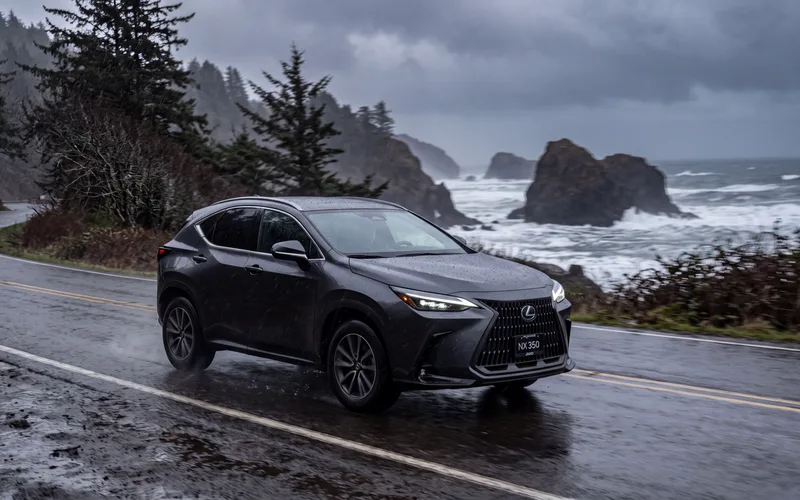 Lexus NXCompact Luxury SUVBetter at: Efficiency
Hybrid and plug-in hybrid powertrains cut the GV70's $3,300 annual fuel bill dramatically, backed by the best long-term dependability record in the luxury class.
Compare 2.74B-
 Audi Q5Compact Luxury SUVBetter at: Resale value
Comparable cabin quality with stronger residuals and a 4,400-lb tow rating, for buyers who want German engineering and don't need the GV70's extra standard content.
CompareProduction history
Best fit & conditions
Higher scores mean a better fit for that use case. Learn more about use-case fit →
Subject profile
Academic Probation · NHTSA safety recalls
Apr 10, 2026Fuel system, gasoline: delivery: hoses, lines/piping, and fittingsFuel may leak at the pipe connection between the fuel pipe and fuel rail.
Defect
Hyundai Motor America (Genesis) is recalling certain Genesis 2022-2026 GV70, 2023-2025 G90, 2021-2025 G80, and GV80 vehicles. Fuel may leak at the pipe connection between the fuel pipe and fuel rail.
Risk
A fuel leak increases the risk of a fire.
Remedy
Dealers will inspect and tighten, or replace the fuel pipe as necessary, free of charge. Owner notification letters were mailed beginning July 20, 2026. Owners may contact Genesis customer service at 844-340-9741. Genesis' number for this recall is 033G. Vehicle Identification Numbers (VINs) involved in this recall became searchable on NHTSA.gov beginning April 11, 2026.
NHTSA campaign 26V229000 ↗Manufacturer no. 033G94,760 vehicles potentially affected (all models in the campaign)Owners notified Jul 20, 2026Filed by Hyundai Motor AmericaFiled as GV70Jan 16, 2026Electrical system: instrument cluster/panelDue to a software error, the instrument panel display may fail. As such, these vehicles fail to comply with the requirements of Federal Motor Vehicle Safety Standard (FMVSS) number 101, "Controls and Displays."
Defect
Hyundai Motor America (Hyundai) is recalling certain Genesis 2025-2026 G80, GV80, 2026 G80 "Electrified," GV60, GV70 "Electrified" and GV70 vehicles. Due to a software error, the instrument panel display may fail. As such, these vehicles fail to comply with the requirements of Federal Motor Vehicle Safety Standard (FMVSS) number 101, "Controls and Displays."
Risk
An instrument panel display that fails to show critical safety information, such as the speedometer or fuel gauge, increases the risk of a crash.
Remedy
Owners are advised to disable the high definition (HD) radio feature until the recall remedy has been performed. The audio video navigation software will be updated over-the-air (OTA) or inspected and updated by a dealer, free of charge. Owner notification letters were mailed beginning February 17, 2026. Owners may contact Genesis customer service at 844-340-9741. Hyundai's number for this recall is 031G. Vehicle Identification Numbers (VINs) involved in this recall became searchable on NHTSA.gov beginning January 17, 2026.
NHTSA campaign 26V019000 ↗Manufacturer no. 031G83,877 vehicles potentially affected (all models in the campaign)Owners notified Feb 17, 2026Filed by Hyundai Motor AmericaFiled as GV70, GV70 ELECTRIFIEDNov 20, 2025Air bags: side/window: curtainThe side curtain air bags may not have been installed properly, which can cause the air bags not to deploy as intended.
Defect
Hyundai Motor America (Hyundai) is recalling certain 2025 Tucson, 2025-2026 Santa Cruz, Santa Fe, Santa Fe Hybrid, and 2026 Genesis GV70 vehicles. The side curtain air bags may not have been installed properly, which can cause the air bags not to deploy as intended.
Risk
Side curtain air bags that do not deploy as intended increase the risk of injury in a crash.
Remedy
Dealers will reinstall the side curtain air bags, free of charge. Owner notification letters were mailed beginning December 29, 2025. Owners may contact Hyundai customer service at 1-855-371-9460. Hyundai's numbers for this recall are 289 and 029G. Vehicle Identification Numbers (VINs) involved in this recall became searchable on NHTSA.gov on November 22, 2025.
NHTSA campaign 25V809000 ↗Manufacturer no. 289 (H); 029G (G)258 vehicles potentially affected (all models in the campaign)Owners notified Dec 29, 2025Filed by Hyundai Motor AmericaFiled as GV70
8 recalls on other model years of the GV70 (2022–2025)
Feb 19, 2025Electrical system: instrument cluster/panelDue to a software error, the instrument panel display may fail. As such, these vehicles fail to comply with the requirements of Federal Motor Vehicle Safety Standard (FMVSS) number 101, "Controls and Displays."
Defect
Hyundai Motor America (Hyundai) is recalling certain Genesis 2023-2024 G80, GV80, 2025 GV70 and 2023-2025 GV70 "Electrified" vehicles. Due to a software error, the instrument panel display may fail. As such, these vehicles fail to comply with the requirements of Federal Motor Vehicle Safety Standard (FMVSS) number 101, "Controls and Displays."
Risk
An instrument panel display that fails to show critical safety information, such as the speedometer or warning lights, increases the risk of a crash.
Remedy
Dealers will inspect and update the instrument panel display software, as necessary, free of charge. Owner notification letters were mailed March 26, 2025. Owners may contact Genesis customer service at 844-340-9741. Hyundai's number for this recall is 026G.
NHTSA campaign 25V105000 ↗Manufacturer no. 026G32,594 vehicles potentially affected (all models in the campaign)Owners notified Mar 26, 2025Filed by Hyundai Motor AmericaFiled as GV70, GV70 ELECTRIFIEDNov 18, 2024Electrical system: 12v/24v/48v battery · Electrical system: propulsion system: charging: module: softwareThe Integrated Charging Control Unit (ICCU) may become damaged and stop charging the 12-volt battery, which can result in a loss of drive power.
Defect
Hyundai Motor America (Hyundai) is recalling certain 2022-2024 IONIQ 5, 2023-2025 IONIQ 6, Genesis GV60, Genesis GV70 "Electrified," and Genesis G80 "Electrified" vehicles. The Integrated Charging Control Unit (ICCU) may become damaged and stop charging the 12-volt battery, which can result in a loss of drive power.
Risk
A loss of drive power increases the risk of a crash.
Remedy
Dealers will inspect and replace the ICCU and its fuse, as necessary. In addition, dealers will update the ICCU software. All repairs will be performed free of charge. Owner notification letters were mailed December 20, 2024. Owners may contact Hyundai customer service at 1-855-371-9460 or Genesis customer service at 1-844-340-9741. Hyundai's numbers for this recall are 272 (Hyundai) and 025G (Genesis). This recall expands and replaces previous recall number 24V-204. Vehicles previously repaired under recall 24V-204 will need to have the new remedy completed.
NHTSA campaign 24V868000 ↗Manufacturer no. 272 (H), 025G (G)145,642 vehicles potentially affected (all models in the campaign)Owners notified Dec 20, 2024Filed by Hyundai Motor AmericaFiled as GV70 ELECTRIFIEDApr 19, 2024Fuel system, gasoline: delivery: fuel pumpThe fuel pump may fail, which can result in a loss of drive power.
Defect
Hyundai Motor America (Hyundai) is recalling certain 2022-2023 Genesis GV70, GV80, G80, and G90 vehicles. The fuel pump may fail, which can result in a loss of drive power.
Risk
A loss of drive power can increase the risk of a crash.
Remedy
Dealers will inspect and replace the fuel pump assembly, free of charge. Owner notification letters were mailed June 7, 2024. Owners may contact Hyundai customer service at 1-855-371-9460. Hyundai's number for this recall is 022G. This recall is an expansion of recall number 23V-630.
NHTSA campaign 24V282000 ↗Manufacturer no. 022G31,440 vehicles potentially affected (all models in the campaign)Owners notified Jun 7, 2024Filed by Hyundai Motor AmericaFiled as GV70Mar 15, 2024Electrical system: wiringWater may leak into the transmission control harness, which can cause a short circuit and unexpectedly shift the transmission from Park to Neutral.
Defect
Hyundai Motor America (Hyundai) is recalling certain 2024 Genesis GV70 vehicles. Water may leak into the transmission control harness, which can cause a short circuit and unexpectedly shift the transmission from Park to Neutral.
Risk
An unexpected shift from Park to Neutral can cause a vehicle roll away and increase the risk of a crash or injury.
Remedy
Owners are advised to turn off the ignition and use the emergency parking brake after parking their vehicles. Dealers will inspect the transmission control harness and repair the connector, or replace the harness and internal wiring, as necessary, free of charge. Owner notification letters were mailed May 9, 2024. Owners may contact Hyundai customer service at 1-855-371-9460. Hyundai's number for this recall is 020G.
NHTSA campaign 24V205000 ↗Manufacturer no. 020G15,645 vehicles potentially affected (all models in the campaign)Owners notified May 9, 2024Filed by Hyundai Motor AmericaFiled as GV70Mar 15, 2024Electrical system: 12v/24v/48v battery · Electrical system: propulsion system: charging: module: softwareThe Integrated Charging Control Unit (ICCU) may become damaged and stop charging the 12-Volt battery, which can result in a loss of drive power.
Defect
Hyundai Motor America (Hyundai) is recalling certain 2022-2024 IONIQ 5, 2023-2024 IONIQ 6, Genesis GV60, Genesis GV70 "Electrified," and Genesis G80 "Electrified" vehicles. The Integrated Charging Control Unit (ICCU) may become damaged and stop charging the 12-Volt battery, which can result in a loss of drive power.
Risk
A loss of drive power increases the risk of a crash.
Remedy
This recall is replaced by NHTSA recall number 24V-868. Vehicles already repaired under this recall will need to have the new remedy completed. Dealers will inspect and replace the ICCU and its fuse, as necessary. In addition, dealers will update the ICCU software. All repairs will be performed free of charge. Owner notification letters were mailed April 22, 2024. Owners may contact Hyundai customer service at 1-855-371-9460. Hyundai's number for this recall is 257/021G.
NHTSA campaign 24V204000 ↗Manufacturer no. 257/021G99,055 vehicles potentially affected (all models in the campaign)Owners notified Apr 22, 2024Filed by Hyundai Motor AmericaFiled as GV70 ELECTRIFIEDSep 11, 2023Fuel system, gasoline: delivery: fuel pumpThe fuel pump may fail, which can result in a loss of drive power.
Defect
Hyundai Motor America (Hyundai) is recalling certain 2021-2022 Genesis G80, GV80, and 2022 Genesis GV70 vehicles. The fuel pump may fail, which can result in a loss of drive power.
Risk
A loss of drive power can increase the risk of a crash.
Remedy
Dealers will replace the fuel pump, free of charge. Owner notification letters were mailed November 8, 2023. Owners may contact Hyundai customer service at 1-855-371-9460. Hyundai's number for this recall is 016G.
NHTSA campaign 23V630000 ↗Manufacturer no. 016G19,272 vehicles potentially affected (all models in the campaign)Owners notified Nov 8, 2023Filed by Hyundai Motor AmericaFiled as GV70Feb 16, 2023Seat belts: front · Seat belts: pretensionerIn the event of a crash, the front driver-side and/or passenger-side seat belt pretensioners may explode upon deployment.
Defect
Hyundai Motor America (Hyundai) is recalling certain 2020-2023 Genesis GV80, 2021-2023 Genesis G80, 2022-2023 Genesis GV70, and 2023 Genesis GV60 vehicles. In the event of a crash, the front driver-side and/or passenger-side seat belt pretensioners may explode upon deployment.
Risk
An exploding seat belt pretensioner can project metal fragments into the vehicle, strike vehicle occupants, and result in injury.
Remedy
Dealers will secure the seat belt pretensioners with a cap, free of charge. Owner notification letters were mailed April 14, 2023. For GV60 owners, Interim notification letters, notifying owners of the safety risk, were mailed April 14, 2023. A second notice will be sent once the final remedy is available. Owners may contact Hyundai customer service at 1-855-371-9460. Hyundai's number for this recall is 012G. This recall supersedes and expands recall number 21V-796. Vehicles previously repaired under recall 21V-796 will need to have the new remedy completed.
NHTSA campaign 23V094000 ↗Manufacturer no. 012G65,517 vehicles potentially affected (all models in the campaign)Owners notified Apr 14, 2023Filed by Hyundai Motor AmericaFiled as GV70Oct 13, 2021Seat belts: front · Seat belts: pretensionerIn the event of a crash, the front driver-side and/or passenger-side seat belt pretensioner(s) may explode upon deployment.
Defect
Hyundai Motor America (Hyundai) is recalling certain 2021 Elantra, Elantra HEV, Venue, Genesis GV80 and 2022 Genesis GV70 vehicles. In the event of a crash, the front driver-side and/or passenger-side seat belt pretensioner(s) may explode upon deployment.
Risk
An exploding seat belt pretensioner could project metal fragments into the vehicle, striking vehicle occupants and resulting in injury.
Remedy
Dealers will replace the seat belt pretensioners, free of charge. Owner notification letters were mailed February 10, 2022. Owners may contact Hyundai customer service at 1-855-371-9460. Hyundai's numbers for this recall are 211 and 009G. This recall is replaced by NHTSA recall numbers 22V-354 for Elantra and Elantra HEV vehicles, 22V-458 for Venue vehicles, and 23V-094 for Genesis vehicles. Elantra, Elantra HEV, Venue, and Genesis vehicles already repaired under this recall will need to have the new remedies completed.
NHTSA campaign 21V796000 ↗Manufacturer no. 211/009G978 vehicles potentially affected (all models in the campaign)Owners notified Feb 10, 2022Filed by Hyundai Motor AmericaFiled as GV70
Source: NHTSA Office of Defects Investigation recall database, model years 2022–2026. Recalls are listed by model year as the manufacturer filed them; whether a specific car is affected depends on its VIN — check a VIN at nhtsa.gov ↗. NHTSA model names matched to this page: GV70, GV70 ELECTRIFIED.
Detailed scoring by subject
1Performance & PowertrainOne of the GV70's weakest categories.1.66D
2026 is the US launch year for the facelifted first-generation GV70, and the powertrains carry over unchanged: the volume 2.5L turbo four makes 300 hp, with the twin-turbo 3.5L V6 at 375 hp above it and a dual-motor Electrified GV70 at 429 hp alongside.
The 2.5T's 311 lb-ft arrives on a broad turbocharged plateau and is mid-pack for the compact luxury segment — above the four-cylinder Lexus NX and Acura RDX, below the Audi Q5 and BMW X3 six-cylinder options and well below the Electrified GV70's 516 lb-ft.
The 2026 refresh is cosmetic and interior-focused with no powertrain change, so the 2.5T's instrumented 5.6-second run carries forward; the 3.5T V6 has been tested at a flat 5.0 seconds. Quick for a base compact luxury SUV without being class-leading.
The 2.5T is quiet and well-isolated with strong midrange once it is on boost, but reviewers of the 2026 car consistently note a beat of turbo lag off the line before the surge arrives around 2,000 rpm. The optional V6 is the more refined of the two, described as smooth with a distant purr, which keeps the nameplate comfortably in the upper-middle band rather than at the top.
The 8-speed automatic is well-mannered and quick to respond to the paddles in normal driving, but it is the weakest link in the driveline: reviewers of the 2026 car call it lazy and hesitant when pushed hard and short of the ZF units in German rivals, with slight jerkiness at parking-lot speeds.
3,500 lbs with trailer brakes is the standard compact luxury SUV rating — fine for a small boat, a pair of jet skis or a light utility trailer, but low in the SUV band, which is calibrated across body-on-frame three-row SUVs as well. Tongue weight is capped at 351 lbs.
Every 2026 GV70 sold in the US is all-wheel drive — there is no FWD or RWD trim to avoid — and the system is a proper rear-biased setup with Drive Mode Select and Terrain Mode standard across the range, an available rear electronic limited-slip differential, and variable gear ratio steering. It sits just below the top of the band only for want of a low range.
A road-going luxury crossover: about 6.9 inches of ground clearance, street-biased tires on 19- and 21-inch wheels, no skid plates beyond a decorative front garnish and no off-road trim in the lineup. Standard AWD plus a Terrain Mode with snow/mud/sand settings earns it credit for slippery-surface competence, which is the ceiling here.
Three genuinely distinct choices under one nameplate for 2026 — a 300 hp turbo four, a 375 hp twin-turbo V6, and a fully electric dual-motor Electrified GV70 on an 84 kWh pack — which covers mainstream, performance and electrified buyers. It falls short of the top band because there is no hybrid or plug-in hybrid bridging the gas and EV ends.
2Efficiency & RangeThe GV70's lowest-graded category.0.41F
The volume 2.5T AWD turbo-four returns 23 MPG combined — mid-pack for a compact luxury SUV and well behind hybrid-standard rivals, though the model line also offers a 96 MPGe full EV.
20 MPG city from the 300-hp 2.5T with standard AWD and no hybrid assist — a weak city figure against segment rivals that pair a four-cylinder with electrification.
28 MPG highway is the GV70's best efficiency showing, the eight-speed automatic keeping revs low at cruise, but wheel upsizing costs 2 MPG.
A 400-mile EPA range from the 17.4-gallon tank is respectable but unremarkable for a gas compact SUV; the EV variant's 263 miles is mid-pack for a 2026 luxury EV.
At $3,300/yr the gas GV70 sits at the top of the SUV cost band — a product of 23 MPG combined and a premium-fuel requirement — while the EV variant costs roughly a quarter as much to run.
Both turbocharged gas engines are rated on premium unleaded, which stacks a per-gallon penalty on an already mediocre 23 MPG; the offsetting factor is a genuinely cheap-to-charge EV sibling whose new NACS port makes home and Supercharger energy easy to get.
3SafetyOne of the GV70's strongest categories.3.63A-
NHTSA has published 2026-model-year ratings for the gas GV70 AWD and it carries a 5-star overall score, with 5 stars in every side measure; the sub-5 results are the 4-star frontal (driver 4 / passenger 5) and the 4-star rollover with a 13.0% risk and no tip. The Electrified GV70 is listed but Not Rated, so the gas car's rating stands for the nameplate.
The 2026 GV70 is a 2026 IIHS TOP SAFETY PICK+ with Good in every crashworthiness test IIHS ran — small overlap front driver and passenger, updated moderate overlap front, and updated side. Held just short of the top of the band because headlights rate only Acceptable and roof strength and head restraints are unrated for this generation; the updated moderate overlap Good also carries an April 2024 build-date qualifier, which does not affect 2026 cars but does mean the result is not generation-wide.
Every 2026 GV70, including the $48,985 base 2.5T Standard, ships with Forward Collision-Avoidance Assist, full-range Smart Cruise Control with stop-and-go, Highway Driving Assist, Lane Keeping and Lane Following Assist, blind-spot monitoring, rear cross-traffic alert, rear automatic braking, Safe Exit Assist, rear occupant alert, driver attention warning, high-beam assist, traffic-sign recognition and front/rear parking sensors. It sits below the GV60 because the camera-based layer — Blind-Spot View Monitor, Surround View Monitor, side parking distance warning, reverse parking collision-avoidance — waits for 2.5T Advanced, and Highway Driving Assist 2 is reserved for the Sport Prestige/Prestige trims.
IIHS rates the standard system Good for vehicle-to-pedestrian front crash prevention — the top result and the harder of the two evaluations — while the tougher 2.0 vehicle-to-vehicle test returns Acceptable. Rear automatic braking is standard as well, which the class does not universally offer. Strong overall, but short of a clean sweep on the vehicle-to-vehicle side.
Blind-Spot Collision-Avoidance Assist and Rear Cross-Traffic Collision-Avoidance Assist are standard on every trim and actively intervene rather than merely warning, Safe Exit Assist is standard, and rear automatic braking backs up the reversing case. The camera-in-cluster Blind-Spot View Monitor — the piece that best offsets the sloping rear roofline — plus side parking distance warning start at 2.5T Advanced, which keeps this out of the top of the band.
Lane Keeping Assist and Lane Following Assist are standard, and the 2026 update improves the centering directly: it can now follow the vehicle ahead briefly when lane markings disappear, and new steering-wheel sensors cut false hands-off alarms. Reviewers describe confident, non-ping-ponging tracking on the highway. Held below the top of the band because the most precise centering, with automated lane changes, comes only with HDA2 on the Prestige trims.
Full-speed-range Smart Cruise Control with stop-and-go is standard, integrated with Highway Driving Assist on every trim, and it resumes automatically within three seconds of the lead car moving. Reviewers of the refreshed 2026 car say the system effectively drives the highway for you with a finger on the wheel. Not top-of-band because the automated lane-change layer (HDA2) is a top-trim item.
Genesis offers no hands-free highway system on the 2026 GV70 at any price. Even HDA2 on the Prestige trims is explicitly hands-on — the car ships with Hands-On Detection that escalates warnings the moment the driver lets go. Scored in the no-option band, slightly above the floor because HDA1 covers the same roads competently with hands resting on the rim.
Two-Line LED headlamps with Micro Lens Array technology are standard and IIHS rates them Acceptable — consistent across the range with no bad variant, and a prerequisite of the car's TSP+ award, which requires Acceptable or better on every trim, but a rung below Good. High-beam assist is standard.
Forward and side visibility is a genuine strength — thin front pillars, large side glass and well-placed mirrors — but the coupe-influenced rear roofline and small back window cut rearward vision. Camera compensation is only partial on the volume trims: rearview camera and front/rear parking sensors are standard, while the Surround View Monitor and Blind-Spot View Monitor that would close the gap start at 2.5T Advanced.
IIHS rates LATCH ease of use Good — the top result and better than most of the compact luxury field — with two complete outboard sets and a tether for the center position, and reviewers confirm the anchors and top tethers are easy to reach. Kept below 90 because it is still a compact SUV: the second row is workable rather than roomy, so three seats across or a rear-facing seat behind a tall driver eats into front legroom.
4Space & ComfortOne of the GV70's weakest categories.1.44D
The GV70 is a strictly two-row compact luxury crossover; all six 2026 AWD trims (2.5T Standard, Select, Advanced, Sport Prestige, 3.5T Sport Advanced, Sport Prestige) seat five, and no third row or captain's-chair configuration is offered.
39.6 in of front headroom is mid-pack for a compact luxury SUV, and the 2026 facelift left it untouched — the JK1 body structure carried over unchanged when Genesis revised the fascias, console and displays.
At 41.3 in the GV70 gives up real front legroom to the class — a consequence of its 113.2 in wheelbase and driver-focused, high-console cabin architecture rather than of the 2026 refresh, which did not move the front bulkhead.
Second-row headroom of 39.1 in is a genuine strength and near the top of the compact-luxury field — the GV70's roofline stays flat over the rear bench rather than tapering coupe-style, and it gives up only half an inch to the front row.
37.2 in is competitive on paper but tight in practice behind a tall driver; Genesis partly answers that with a front-passenger seat slide button reachable from the rear. Reviewers split on it — praised as 'surprisingly good' by some, flagged as trailing rivals by others.
The GV70 has no third row and none has ever been offered — buyers wanting a third row are pushed up to the seven-seat GV80. Scored in the low band per the item's rule that a missing third row is a score, not an omission.
28.9 cu ft behind the rear seats is the GV70's clearest practicality weakness — the sloping tailgate and short 185.6 in overall length cost it real load space against the BMW X3 and Volvo XC60. The figure is unchanged for 2026.
56.9 cu ft with the 60/40 bench folded sits at the very bottom of the SUV normalization band — the GV70 is a small-footprint crossover measured against a scale that runs to three-row utilities, and even within its own class it is a below-average hauler.
Competitive but not clever. The 2026 refresh redesigned the console and genuinely improved the daily-use items — bigger, better-placed cupholders and a wireless charging pocket that hides the phone — and there are four USB ports plus an available household-style outlet and a cargo-area power outlet. Against that, the transmission tunnel eats floor space, the door bins are too narrow for a normal water bottle, and there is no underfloor or frunk trick storage of the sort that lifts a score into the top band.
Seats are the GV70's signature comfort asset. The driver's chair offers power thigh-cushion extension, power side bolsters, heating, ventilation and Ergo Motion massage, with quilted Nappa leather on upper trims; the rear bench reclines (though it does not slide) and is heated on higher trims. Held below the 90s only because the deepest adjustment and massage functions are trim-gated rather than standard.
The 2026 facelift added new hydro bushings at the body and suspension mounts plus Highway Body Motion Control, and reviewers describe the result as plush but well-controlled rather than floaty. Not a segment-leading 90 for the volume 2.5T, because the adaptive damping with Road Preview that produces the best of it is reserved for the V6/upper trims.
Refinement was an explicit target of the 2026 update, and reviewers and owners consistently call the cabin exceptionally hushed at speed. The one recurring gripe is the auto start/stop system, whose restart is audible in the cabin.
Unusually rich at the bottom of the range: a heated steering wheel and three-zone automatic climate control are standard on the entry 2.5T Standard, and heated front seats are standard across every trim — content most German rivals still charge for. Moving up adds ventilated front seats, heated second-row seats, Ergo Motion massage and rear sunshades, with rear vents throughout and physical climate knobs retained alongside the new 27-inch display.
5Cost of OwnershipMid-pack among this car's ten categories.2.32C+
The refreshed 2026 GV70 opens at $47,985 plus a $1,450 freight charge, and standard AWD is included at that price — a genuinely low entry point for a compact luxury SUV, undercutting comparably-equipped AWD versions of the BMW X3, Mercedes GLC and Audi Q5. Prices rose by up to roughly $3,200 with the refresh, so 2025 figures do not carry over.
The 2026 refresh split the 2.5T into four trims, and Select — the first step up, adding the popular convenience and comfort content over the base car while staying under $53k — is the likely volume configuration. Buyers wanting the full-fat equipment jump to Advanced at $56,885 delivered; the 3.5T V6 trims are low-volume halo pricing above $64k.
Three years/36,000 miles of complimentary scheduled maintenance plus a 5-year/60,000-mile bumper-to-bumper warranty means the owner pays for almost nothing but tires and wear items until late in the window, and Genesis parts and labor price near Hyundai rather than German-luxury levels. CarEdge models $3,053 of maintenance over five years; adding a set of staggered performance tires and post-warranty repairs in year five lands near $4,100 — cheap for the class and well below the Audi Q5 or Mercedes GLC.
The weakest link in an otherwise strong ownership case, and the reason this category can't reach the mainstream-SUV tier. Half of a ~$52,000 sticker is gone by year five — better than the class average and dramatically better than the Electrified GV70's EV residuals, but still ordinary-luxury depreciation driven by limited brand recognition and heavy new-car incentive activity. It is a bargain used and a mediocre asset new.
Tops the band and beats every German and Japanese rival in the compact luxury SUV class by a full year and 10,000 miles — BMW, Mercedes-Benz, Audi, Cadillac, Lexus and Acura all stop at 4 yr/50,000 mi.
At the ceiling of the band. Ten years and 100,000 miles on the 2.5T/3.5T turbo engines and 8-speed automatic is class-leading coverage that no European luxury rival approaches, and the same term covers the high-voltage battery on the Electrified GV70. The catch is that it is original-owner only and does not transfer.
Solidly in the top band. Three years/36,000 miles of complimentary scheduled maintenance — oil and filter, tire rotation, engine and cabin air filters, alignment as needed, multipoint inspection — is delivered through Genesis Service Valet, which collects the car and leaves a loaner, so the owner never visits the dealer. That stacks with 5 years of unlimited-mile 24/7 roadside assistance, 3 years of Genesis Connected Services, Genesis Concierge and a SiriusXM trial. It outclasses BMW and Mercedes (no included maintenance at all) and matches or beats Lexus and Acura. Held short of the mid-90s only because the coverage is three years rather than the four-to-five some rivals' paid plans reach, and there is no EV-style charging credit on the gas car.
$52,335 volume-trim price minus its estimated resale value after 5 years (50% retained, or about $26,168) leaves about $26,168 in depreciation. Add the projected $4,100 in 5-year maintenance and repairs, and owning this vehicle for 5 years costs about $30,268 in total.
6Reliability & QualityMid-pack among this car's ten categories.2.27C
The two authorities that matter point in opposite directions. J.D. Power rates the 2026 GV70 at 81/100 for quality & reliability — the bottom of its "Great" band and a full ten points above the GV60 — while Consumer Reports expects the 2026 GV70 to be less reliable than the average new car and rates it below average against compact luxury SUV rivals, projecting from 2023–2025 owner data. CR flags trouble across powertrain, suspension/steering, climate, body hardware and in-car electronics rather than one isolated system, which is what keeps this out of the upper band despite J.D. Power's number and the car's strong initial-quality showing. The upside case is real, though: CR recorded an uptick in expected powertrain reliability for the 2026 GV70 over 2025, and the facelifted car runs the post-mid-2023 revised 2.5T.
Genesis builds a near-flawless new car and a merely mid-pack used one. It surged to 2nd overall in the J.D. Power 2026 Initial Quality Study at 151 PP100 — up seven places from 9th, ahead of Lexus (156) and behind only Porsche (138) — with the GV70 itself taking a top-three finish in compact premium SUV. That measures the first 90 days. Long-term dependability is the weak flank: in the 2026 Vehicle Dependability Study Lexus ranks highest among luxury brands for a fourth straight year with Genesis nowhere among the leaders, and Consumer Reports is harsher still, placing Genesis 21st of 26 brands on its 2026 report card (score 33) with not one Genesis model rated average-or-better for predicted reliability. Averaging a top-tier 90-day record against a bottom-quartile CR standing lands squarely mid-pack.
Nine NHTSA campaigns across this single generation, and the severe ones are fire, loss of drive power and restraint failure rather than paperwork. Worst for a 2026 buyer is 26V229000: the crossover fuel pipe between the fuel rails was assembled with insufficient torque stabilizer on its retention fasteners, so the joint loosens over time and can leak fuel — a fire risk, 26,105 GV70s across 2022–2026, with the current model year inside the population. Behind it sit two fuel-pump campaigns causing loss of drive power (23V630000, 24V282000), two front seat-belt pretensioner campaigns for pretensioners that may explode on deployment (21V796000, 23V094000), a transmission control harness short from water intrusion (24V205000), and two instrument-panel display software recalls (25V105000, 26V019000). Repeated powertrain and safety-system campaigns is the bottom-band description. It sits above the GV60's 42 only because the stranding-grade defects are confined to 2022–2023 build and the 2026-specific side-curtain airbag misinstall (25V809000) covers just three vehicles.
Mixed history rather than a red flag. The volume 2.5T Smartstream (G4KP, 300 hp) had a genuine defect period — 2021 to early 2023 units are documented burning as much as a quart per 1,000 miles because of a piston-ring design that compromised the cylinder seal, with carbon buildup and misfires downstream; Hyundai redesigned the piston and rings mid-2023, so the 2026 car carries the revised hardware and the field reports on later builds are much quieter. The 3.5T twin-turbo V6 has its own high-mileage question marks (CVVT and timing-chain wear reported approaching 100k, rear-differential whine) but is a lower-volume choice here. In its favor: the conventional 8-speed torque-converter automatic is a proven Hyundai Motor Group unit with no systemic failure pattern, and the whole drivetrain is shared across high-volume Hyundai/Kia applications rather than being bespoke. The two fuel-pump loss-of-power recalls on 2022–2023 cars are what keep this from climbing past the middle.
Class-leading for the money, and reviewers say so in comparative terms rather than in the abstract: material quality is put on par with the Mercedes GLC and Volvo XC60 and described as making the BMW X3 look cheap, from a car whose volume 2.5T Select opens at $52,335 delivered. The 2026 facelift raises it further — the old split screens give way to a single 27-inch curved OLED spanning cluster and infotainment, with redesigned climate controls and center console — while the cabin keeps Nappa leather (diamond-quilted on upper trims), heavy contrast stitching, real metal and open-pore/carbon trim across the dash and doors, and the brand's two-line motif. Genesis also keeps physical switchgear for climate and volume instead of burying it in the display, which reviewers repeatedly cite as a quality signal against digital-first rivals.
This is where the Initial Quality Study result earns its keep, because IQS measures precisely the first-90-days defects, misalignment and rattles this item asks about: Genesis finished 2nd overall among all brands in 2026 at 151 PP100, and the GV70 itself took a top-three finish in compact premium SUV — the model, not just the badge. Independent inspection backs it, with reviewers reporting narrow, even exterior panel gaps, deep lustrous paint, even seat stitching and doors that shut with a solid thud. Held short of the high 80s by contrary evidence that is specific rather than vague: a Top Gear long-term GV70 found a noticeably larger panel gap on the driver's side than the passenger side, and two 2026-model recalls are outright assembly-process failures — side curtain airbags not installed properly, and fuel-pipe fasteners torqued without adequate stabilizer. Owner sentiment stays strongly positive (83% of 50 KBB reviewers recommend it), with fit-and-finish complaints a clear minority.
Adequate and improving, but thin and not yet well regarded. Genesis retails through roughly 200 US points, of which only 84 were dedicated standalone Genesis facilities as of February 2026 after nine more opened — the rest still share a roof with Hyundai. Against Lexus, BMW or Mercedes networks several times denser, a GV70 owner outside a major metro drives to be serviced. Satisfaction is the softer spot: the premium-brand average in the 2026 J.D. Power Customer Service Index rose eight points to 886 with Porsche, Lexus and Cadillac leading, and Genesis does not appear among those leaders — consistent with its history in the study, where it finished last among 14 premium brands in 2023 at 819 against an 864 average. What keeps this mid-band rather than lower is that Genesis Service Valet pickup-and-delivery with a loaner is standard for the 3 yr/36,000 mi complimentary maintenance period, which genuinely neutralizes the density problem for routine work.
Routine costs are normal; the tail risk is parts logistics, and it is the documented weak point of GV70 ownership. Mechanical service is unremarkable for the class — RepairPal puts Genesis brand annual repair and maintenance around $524, and the drivetrain is not bespoke, with the 2.5T, 3.5T and 8-speed automatic all shared across high-volume Hyundai and Kia applications, so common wear items are ordinary Korean-parts money. What drags this to the middle is availability of model-specific body, trim and electronic parts, which frequently ship from Korea: GV70 owners document four months waiting on a front bumper with a backordered front radar behind it, a rear bumper trim ordered with no ETA, and in one case 142 days at the dealer inside year one. The aftermarket for a low-volume Korean luxury crossover is thin, and out-of-warranty major work is luxury-priced (engine $4,500–$11,000, transmission $5,500–$9,000). The 5 yr/60,000 mi basic and 10 yr/100,000 mi powertrain warranty means an original owner rarely pays for the big items, but the wait is on them either way.
7Technology & InfotainmentOne of the GV70's strongest categories.3.71A
2026 is the US launch year of the GV70 mid-cycle facelift, which replaces the pre-refresh 12.3-in cluster + 14.5-in infotainment pair with one 27-in OLED standard on every trim; the touch-operated right-hand section is essentially the same ~14.5-in diagonal, recorded the way the GV60's 27-in panel was.
The 2026 refresh puts Genesis's newest ccNC software on the 27-in OLED and reviewers of this exact model year consistently call it fast, vividly rendered and easy to operate, with the console rotary controller and a dedicated lower climate touchpad preserving physical redundancy; the one recurring complaint is that secondary settings sit two menus deep.
Wireless Apple CarPlay and Android Auto are standard on all six 2026 trims — a genuine fix delivered by the refresh, since the pre-facelift GV70 forced a wired connection on nav-equipped cars.
The refresh materially expanded the 'Hey Genesis' assistant's command set — it now handles climate, window position, ambient lighting, calls and destinations by natural phrasing — and native navigation with OTA map updates is standard on the base trim rather than option-gated; it still trails the very best conversational assistants on off-script requests.
The premium option is a 16-speaker Bang & Olufsen surround system with Beosonic tuning, and it arrives relatively early in the lineup — standard from the $55K 2.5T Advanced upward, not reserved for the $71K flagship; the base 2.5T's nine-speaker system is competent but unremarkable for a luxury compact.
The driver's half of the 27-in OLED is a crisp, configurable full-digital cluster on every 2026 trim including the $48,985 base car — no analog fallback and no upper-trim gate — and it is a single continuous panel rather than two screens sharing a housing.
Genesis ships whole-vehicle over-the-air updates on the ccNC-generation GV70 — reaching voice recognition, infotainment, lighting and other electronic control units rather than maps alone — and the 2026 refresh explicitly lists improved OTA scope as a standard change; cadence still falls short of Tesla/Rivian.
Genesis Connected Services is complimentary to first owners and covers remote start/climate, lock/unlock, vehicle locate, stolen-vehicle recovery and Genesis Pay, and a standard console fingerprint reader authenticates the driver — but full Digital Key 2 phone-as-key is gated to the Sport Prestige trims rather than offered across the range, which keeps this out of the top band.
USB-C power/data ports serve both rows and the refresh relocated the wireless charging pad to a more reachable console position, but the pad is not standard on the base 2.5T AWD (it starts at Select), and the gas GV70 has no household outlet or vehicle-to-load power the way the E-GMP Electrified GV70 does — adequate rather than abundant.
Proximity entry, push-button start, remote start and a hands-free power liftgate are standard, and a center-console fingerprint reader lets the car be started and personalized without a key at all; phone-as-key exists as Digital Key 2 but only from the Sport Prestige trims up, and the 2026 refresh extends smart-key range to the second-row doors.
Rear camera and front/rear parking sensors are standard, the high-resolution Surround View Monitor and turn-signal Blind-Spot View Monitor arrive at the mid-lineup 2.5T Advanced, and the 2026 refresh upgrades Remote Smart Parking Assist to handle forward-to-back, parallel and diagonal spaces; forward cameras also feed Road Preview suspension prep. The 360 view still is not standard on the two cheapest trims.
The 12-inch head-up display is genuinely good but is locked to a single trim — the $71,095 3.5T Sport Prestige, the most expensive of six — and cannot even be optioned onto the 2.5T Sport Prestige below it, so no volume GV70 buyer can get one. That is the 'HUD limited to top trims' band at its most restrictive.
8Use-Case FitMid-pack among this car's ten categories.2.49C+
The car-seat side is genuinely good — IIHS rates LATCH ease of use Good, there are two complete sets of connectors on the outboard seats plus a middle top tether, and the wide rear doors and reclining 60/40 bench make buckling kids in easy. What holds it back is everything after the child seat is installed: 28.9 cu ft behind the second row is the smallest of the mainstream compact luxury SUVs, so a stroller plus a week's groceries is a real squeeze, and the bench reclines but does not slide.
About as strong a family safety case as the segment offers: the 2026 GV70 holds both an IIHS Top Safety Pick+ and a NHTSA 5-star overall rating, and Genesis puts the driver-assist suite — forward collision avoidance with junction turning, blind-spot collision avoidance, lane following, stop-and-go adaptive cruise, Highway Driving Assist, rear occupant alert and safe exit assist — on the base trim rather than behind a package. The only real gap for families is that the surround-view and blind-spot view monitors don't appear until the 2.5T Advanced.
The cabin itself is a very good place to spend six hours with a family — supportive seats, a genuinely quiet cabin, a composed ride on the standard suspension, and a second row with its own vents and climate controls, a power outlet and a USB charger. Rear amenities thin out on the trims most families buy, though: heated rear seats, tri-zone climate and manual rear sunshades are reserved for the upper trims. The binding constraint is luggage — 28.9 cu ft with four aboard is the least in the class, so a family road trip needs the roof.
A relaxing commuter. The 300-hp 2.5T and 8-speed automatic are smooth from a standstill, the cabin is quiet, and stop-and-go adaptive cruise is standard, with Highway Driving Assist that reviewers describe as effectively doing the driving on a highway slog. The 2026 refresh also fixed daily-use irritations by redesigning the console, restoring physical climate controls and relocating the wireless charger. Marks come off only for the firmer ride on the 21-inch wheels and the finger-on-the-wheel requirement where rivals offer hands-free.
An expensive car to commute in. The volume 2.5T AWD returns 20/28/23 MPG and both gas engines want premium unleaded, which stacks a per-gallon penalty on already mediocre economy — EPA puts annual fuel at about $3,300, and insurance runs roughly $2,450 a year. There is no hybrid in the gas lineup to soften that. Three years of complimentary scheduled maintenance with valet pickup offsets some of the early running cost, and the Electrified GV70 commutes for about $800 a year — but it is a separate, substantially pricier lineup, not a trim of the car being scored.
Easy to place for a luxury SUV: 185.6 in long and 75.2 in wide is a genuinely compact footprint, the turning circle is a tight 37.7 ft, and variable-gear-ratio steering is standard across the range. Camera help is good where you get it — surround-view and blind-spot view monitors plus Remote Smart Parking Assist 2 with forward/back, parallel and diagonal modes — but those start at the 2.5T Advanced, and the sloping roofline and thick rear pillars hurt over-the-shoulder visibility on the base trims that rely on the standard rear camera alone.
Light-duty only. The GV70 tows 3,500 lbs with trailer brakes and 1,653 lbs without, with a 351 lb tongue limit — enough for a small utility trailer, a pair of jet skis or a couple of dirt bikes, but a full 900 lbs short of the Audi Q5 and BMW X3 ratings. There is no bed, no meaningful payload headroom, and 28.9 cu ft of carpeted, sloped-tailgate cargo bay is a poor substitute for a load floor. The 2.5T pulls willingly under load; the vehicle around it just isn't sized for work.
Middling. The mechanical package underneath is a mainstream Hyundai-group unit — the 2.5L turbo four and 8-speed automatic are used in high volume across Hyundai, Kia and Genesis — and the 10-year/100,000-mile powertrain warranty is the longest in the segment, both of which count for something under sustained use. Against that, this is an unambiguously luxury-oriented vehicle with Nappa leather, open-pore wood and 21-inch wheels on upper trims, no wear-friendly interior option, no fleet presence to draw a durability record from, and a recall history that scores below the segment average on this scorecard.
Basic provisions only. There are cargo-area tie-downs and a 12-volt outlet back there, and a healthy accessory ecosystem exists for a hitch (factory and Curt/Draw-Tite Class III units) plus lockable roof crossbars that take baskets, boxes and bike racks. But the gas GV70 has no onboard AC power, no washable surfaces anywhere, and nothing resembling an upfit catalogue. The Electrified GV70's 1.9 kW V2L outlet is the one genuinely work-useful power source in the family, and it belongs to the separate EV lineup.
This is the GV70's best mission. It combines a properly quiet cabin, well-shaped and long-haul-comfortable front seats, a composed ride with Road Preview reading the road ahead through the forward camera, and a Highway Driving Assist that reviewers say does effectively all the work on an interstate. The 17.4-gallon tank and 23 MPG give roughly 400 miles between stops. Only the Electrified GV70 is a weaker tourer, at 263 miles — though its 800V architecture, 10–80% in about 19 minutes and new native NACS port make its stops short and easy to find.
Comfortable on a gravel forest road, out of its depth past that. Every 2026 GV70 sold in the US is all-wheel drive — there is no FWD trim to accidentally buy — and Terrain Mode with snow, mud and sand settings is standard across the range, which covers trailheads, ski weekends and washboard. But about 6.9 inches of ground clearance, street tires on 19- and 21-inch wheels, no low range and a purely decorative front skid plate cap it well short of an adventure vehicle. Roof crossbars and a 3,500 lb hitch let it carry bikes, boxes and a small trailer of toys.
Restrictive by class standards. 28.9 cu ft behind the rear seats and 56.9 cu ft folded are the smallest figures among the mainstream compact luxury SUVs, and the sloping tailgate limits how tall a load can be. The bench folds 60/40 rather than the more useful 40/20/40, so skis plus two rear passengers means dropping a whole outboard seat, and there is no underfloor bin or frunk on the gas car to absorb odd items. Roof crossbars and a Class III hitch are the practical escape valves; the Electrified GV70 adds a token 0.78 cu ft frunk.
9Driving ExperienceGrades above the middle of the scale.3.02B
The 2026 facelift keeps the JK1 chassis that made the GV70 a Motor Trend SUV of the Year and a two-time C/D 10Best pick, and adds hydro bushings plus camera-fed Preview ECS on Sport models: reviewers describe a sweetly balanced crossover that changes direction with composure while still absorbing broken pavement. It stops short of the top band because 0.83 g of grip on touring tires at 4,643 lbs is modest, and at genuinely hard-driven speeds at least one reviewer found the poise unravels.
Steering is the most consistently praised part of the GV70's dynamics — meaningfully weighted on-center, precise, and communicative enough to telegraph where the tires are, with Variable Gear Ratio steering standard across the 2026 range. It misses the top band because Sport+ adds heft that reviewers call artificial, and the Electrified version's rack is lighter and less feelsome than the gas cars'.
Pedal response is strong and predictable in normal use and the Electrified GV70's paddle-adjustable regen blends cleanly all the way to one-pedal driving, but the hardware is only mid-pack: Car and Driver measured 187 feet from 70 mph, well off the best in the compact luxury class, and the Sport models' monobloc calipers bite hard early in the travel in a way that takes acclimation to stop smoothly.
The 3.5T V6 is genuinely smooth and effortless in everyday driving and the dual-motor Electrified GV70 has an excellently progressive accelerator, but the calibration has rough edges across the range: measurable throttle and turbo lag off the line, an 8-speed automatic that reviewers call lazy and hesitant when pushed, a jolty stop-start restart, and a Boost button on the EV that turns a linear pedal into a switch.
Powertrain noise is well managed — the twin-turbo V6 has a refined, distant character that reviewers say sounds good under load, the Electrified version is near-silent, and ANC-R road-noise cancellation plus new hydro bushings keep vibration out of the cabin. Points come off because the sporty exhaust note is synthesized through the audio system rather than earned, and the stop-start restart is audibly unpleasant.
37.7 feet curb-to-curb is competitive for a compact luxury SUV on a 112.8-inch wheelbase and does not change with the 21-inch wheels or the EV powertrain, making the GV70 easy to park and U-turn without being a standout in a segment band that also contains much smaller crossovers.
A strong point: the driver sits low in the chassis rather than climbing aboard, the wheel and pedal relationship is naturally set, and the volume trim's seat adds adjustable thigh support, adjustable side bolsters and massage. The 2026 refresh also improved the controls — physical volume and tuning knobs return beneath the new 27-inch OLED display and climate keeps its own panel with physical temperature knobs — which keeps it near, but not at, the top of the band alongside remaining touch-panel functions.
The GV70 is more engaging than most of its comfort-first rivals — the V6 is an engine reviewers enjoy exploring with the paddles, the steering rewards a good road, and the nameplate has taken Car and Driver 10Best honors twice. It is not an enthusiast's first choice, though: the drive-mode theatrics feel manufactured, the mass shows when pushed, and the Electrified version deliberately trades engagement for relaxation.
10Value & Market PositionThe GV70's best-graded category.3.72A
The base 2.5T includes 300 hp, standard AWD, the new 27-inch OLED display and the full ADAS suite at a price under most rivals' entry point — content German rivals charge thousands more to match. Ownership extras (10 yr/100k powertrain, 3 yr/36k complimentary maintenance) push it further ahead.
Standout bang-for-buck: more power, more standard tech and a far longer warranty for several thousand less than the X3/Q5/GLC. Held short of the top band because the value gap narrows on the $64k-$71k 3.5T trims, fuel economy trails the mild-hybrid Germans, and resale is only modestly better than the class average.
Six well-spaced gas trims across two engines span roughly $49k to $71k, with a separate Electrified GV70 covering the EV buyer. Short of the top band because AWD is the only drivetrain (no cheaper RWD/FWD leader), there is no hybrid, and content is bundled by trim rather than offered as free-standing options.
Genesis's best-selling model and a clear fast riser — 35,357 US sales in 2025, up 18% year over year, and still the brand's volume leader in 2026. Not top-band because in absolute terms it remains well behind the segment's German and Japanese volume leaders.
Genesis has climbed into genuine luxury credibility — No. 2 overall in the 2026 J.D. Power IQS, record US volume, and a growing standalone dealer network. It stops short of the aspirational band because the badge still lacks the cachet of BMW, Mercedes or Porsche and resale trails the strongest German and Lexus nameplates.
Meaningful subvented financing and loyalty cash are on the table without any sign of desperation pricing — no broad cash rebate is needed to move the metal. Buyers get real benefit but the discounts are modest rather than aggressive.
2026 is the year the facelift reaches the US, so the car is at the freshest point in its cycle with new front-end styling, redesigned interior controls and the 27-inch OLED display; the EV variant also gained a bigger battery and NACS. Held below the top band because this is a mid-cycle refresh of the JK1 generation that launched for 2022, not a new platform.
One of the most decorated vehicles in the segment — MotorTrend SUV of the Year, three straight Car and Driver 10Best wins, a 2026 Wards interiors award, IIHS Top Safety Pick+ and NHTSA five stars. Just short of the ceiling because reviewers consistently rate it less engaging to drive than the X3, GLC and Q5, which costs it outright dynamic comparison-test wins.