

The verdict
A capable compact luxury suv, strong on technology and held back by ownership.
The redesigned 2026 Q5 is the tech-and-safety pick of the compact luxury SUV class: a 14.5-inch curved MMI screen and 11.9-inch digital cockpit are standard, quattro all-wheel drive is standard, and it earns an IIHS TOP SAFETY PICK+ under the tougher 2026 criteria. The trade-off is running cost — 24 MPG combined on required premium fuel works out to roughly $2,413 a year, and the volume Premium Plus lands near $59,000 with a 4-year/50,000-mile powertrain warranty that no longer stretches past the bumper-to-bumper term. Cargo space (27.6 cu ft behind the rear seats) and passenger room are competitive for a two-row compact, but slim next to anything larger. Buy it for the cabin, the tech, and the all-weather confidence; cross-shop hard if fuel bills and depreciation matter more than the four rings.
Jump to scoresStrengths
- Class-leading screens and infotainment
- Top-tier crash protection and driver aids
- Interior quality that justifies the badge
What holds it back
- Thirsty, and only on premium fuel
- Expensive to own past the warranty
- A powertrain warranty that stops at four years
Top alternatives
Cars shoppers cross-shop with the Audi Q5 2.79B-
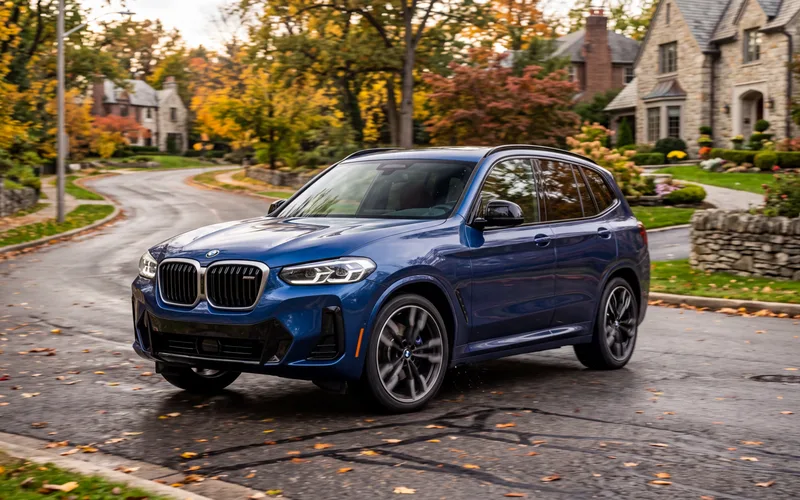 BMW X3Compact Luxury SUVBetter at: Driving dynamics
The most direct rival — same price, same class, sharper to drive and currently carrying incentives the redesigned Q5 does not.
Compare 2.69C+
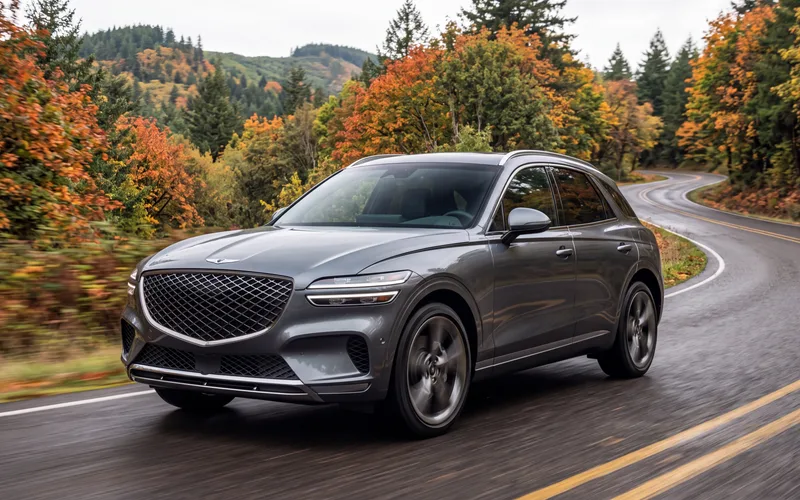 Genesis GV70Compact Luxury SUVBetter at: Value and warranty
Delivers comparable luxury and more standard equipment for thousands less, with a 10-year/100,000-mile powertrain warranty against Audi's 4-year/50,000.
Compare 2.63C+
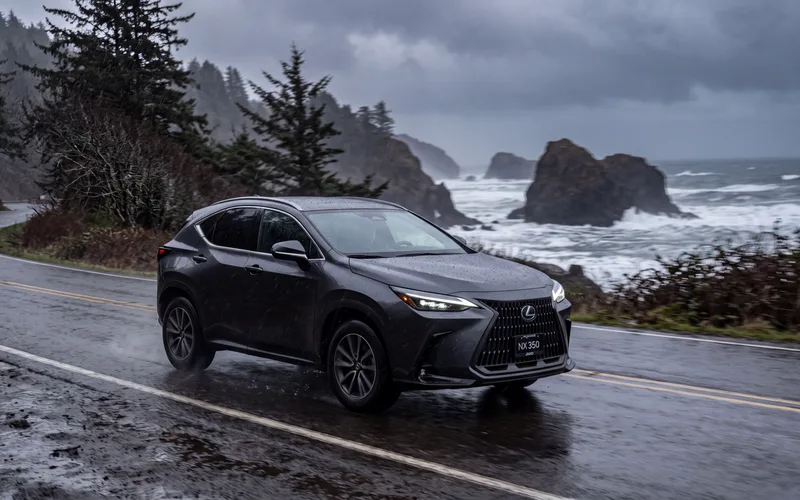 Lexus NXCompact Luxury SUVBetter at: Running costs
Hybrid economy near 39 MPG on regular fuel plus top-of-class reliability and resale, if the Q5's ~$2,413 annual fuel bill is the sticking point.
CompareHow it's evolved
10 scored model years · 2017–2026
Subject scores by year
Hover or tap a score to see what moved it versus the year before. A corner mark flags a big swing.
| Year | Performance | Efficiency | Safety | Space | Cost | Reliability | Tech | Use-case | Driving | Value |
|---|---|---|---|---|---|---|---|---|---|---|
| 2026 | 58 | 45 | 84 | 46 | 42 | 72 | 85 | 72 | 72 | 77 |
| 2025 | 55 | 45 | 82 | 46 | 33 | 54 | 83 | 64 | 68 | 72 |
| 2024 | 56 | 42 | 69 | 47 | 35 | 59 | 67 | 59 | 70 | 68 |
| 2023 | 55 | 49 | 76 | 47 | 41 | 55 | 69 | 59 | 66 | 71 |
| 2022 | 54 | 49 | 78 | 48 | 43 | 49 | 67 | 60 | 67 | 67 |
| 2021 | 54 | 49 | 75 | 47 | 43 | 48 | 66 | 59 | 62 | 74 |
| 2020 | 53 | 44 | 63 | 50 | 41 | 56 | 60 | 57 | 66 | 72 |
| 2019 | 51 | 44 | 61 | 50 | 42 | 50 | 61 | 57 | 67 | 73 |
| 2018 | 50 | 47 | 70 | 51 | 47 | 47 | 57 | 57 | 67 | 73 |
| 2017 | 49 | 36 | 47 | 46 | 46 | 50 | 34 | 55 | 69 | 63 |
Compare two years
Best fit & conditions
Higher scores mean a better fit for that use case. Learn more about use-case fit →
Subject profile
Academic Probation · NHTSA safety recalls
No NHTSA safety recall is on record for the 2026 Audi Q5. Other model years of the Q5 have 27 — listed below.
27 recalls on other model years of the Q5 (2017–2025)
Apr 24, 2026Seat belts: pretensionerThe driver and front passenger seat belts may have been manufactured incorrectly, and fail to properly restrain occupants during a crash.
Defect
Volkswagen Group of America, Inc. (Audi) is recalling certain 2025 Q5, Q5 Sportback, SQ5, and SQ5 Sportback vehicles. The driver and front passenger seat belts may have been manufactured incorrectly, and fail to properly restrain occupants during a crash.
Risk
Improperly restrained occupants have an increased risk of injury during a crash.
Remedy
Dealers will replace the driver and front passenger seat belts as necessary, free of charge. Owner notification letters were mailed May 29, 2026. Owners may contact Audi's customer service at 1-800-253-2834. Audi's number for this recall is 69GT.
NHTSA campaign 26V266000 ↗Manufacturer no. 69GT7,425 vehicles potentially affected (all models in the campaign)Owners notified May 29, 2026Filed by Volkswagen Group of America, Inc.Filed as Q5, Q5 SPORTBACK, SQ5, SQ5 SPORTBACKMay 7, 2025EngineThe cylinder head cover screws may have been improperly tightened.
Defect
Volkswagen Group of America, Inc. (Audi) is recalling certain 2022-2024 Q5 Quattro and Q5 Sportback Quattro vehicles. The cylinder head cover screws may have been improperly tightened.
Risk
The screws can loosen, allowing oil to leak and increasing the risk of a fire.
Remedy
Dealers will inspect and replace the screws as necessary, free of charge. Owner notification letters were mailed June 5, 2025. Owners may contact Audi customer service at 1-800-253-2834. Audi's number for this recall is 15ZK.
NHTSA campaign 25V294000 ↗Manufacturer no. 15ZK89,417 vehicles potentially affected (all models in the campaign)Owners notified Jun 4, 2025Filed by Volkswagen Group of America, Inc.Filed as Q5, Q5 SPORTBACKFeb 12, 2025Electrical system: propulsion system: traction batteryThe high-voltage battery may overheat.
Defect
Volkswagen Group of America, Inc. (Volkswagen) is recalling certain 2021-2024 Audi Q5, and 2022 A7 E Hybrid Electric PHEV vehicles. The high-voltage battery may overheat.
Risk
A high-voltage battery that overheats increases the risk of a fire.
Remedy
Dealers will install advanced diagnostic software , free of charge. Volkswagen will monitor available online vehicle data and contact owners as necessary, to advise them not to charge the vehicle until the battery can be replaced. For vehicles in which online data is unavailable, owners are advised not to charge their batteries until the final remedy becomes available. Repairs will be performed free of charge. This will be a Phased recall. Phase 1 will include Interim letters 2022-2023 model year vehicles. Phase 2 will include Owner letters 2021-2024 model year vehicles, and Phase 3 will include Interim letters 2022-2023 model year vehicles. Interim owner notification letters informing owners of the safety risk were mailed February 28, 2025, and May 7, 2025. A second notice will be sent once the final remedy is available. Owner notification letters were mailed May 1, 2025. Owners may contact Audi customer service at 1-800-253-2834. Volkswagen's number for this recall is 93AA. This recall expands and replaces previous NHTSA recall number 24V898.
NHTSA campaign 25V080000 ↗Manufacturer no. 93AA20,201 vehicles potentially affected (all models in the campaign)Owners notified May 1, 2025Filed by Volkswagen Group of America, Inc.Filed as Q5Nov 27, 2024Electrical system: propulsion system: traction batteryThe high-voltage battery may overheat.
Defect
Volkswagen Group of America, Inc. (Volkswagen) is recalling certain 2022-2023 Audi Q5 PHEV and 2022 Audi A7 PHEV vehicles. The high-voltage battery may overheat.
Risk
A high-voltage battery that overheats increases the risk of a fire.
Remedy
Dealers will install advanced diagnostic software as the final remedy, anticipated to be available in the second quarter of 2025. Volkswagen will monitor available online vehicle data and contact owners as necessary, to advise them not to charge the vehicle until the battery can be replaced. For vehicles in which online data is unavailable, owners are advised not to charge their batteries until the final remedy becomes available. Repairs will be performed free of charge. Owner notification letters were mailed May 1, 2025. Owners may contact Volkswagen Audi customer service at 1-800-253-2834. Volkswagen's number for this recall is 93AA. This recall has been replaced by NHTSA recall number 25V080.
NHTSA campaign 24V898000 ↗Manufacturer no. 93AA4,616 vehicles potentially affected (all models in the campaign)Owners notified May 1, 2025Filed by Volkswagen Group of America, Inc.Filed as Q5Apr 3, 2024Air bags: sensor: occupant classification: front passengerAn electrical connection in the front passenger seat for the occupant detection system (ODS) control module may loosen and deactivate the front passenger air bag.
Defect
Volkswagen Group of America, Inc. (Volkswagen) is recalling certain 2023 Audi S5 Cabriolet, A4 Allroad, Q5 Sportback, A3 Sedan, S5 Sportback, SQ7, TT Coupe, TT Roadster, RS5 Sportback, 2024 A8, E-Tron Quattro, E-Tron Sportback Quattro, Q8, RSQ8, 2023-2024 Q3, Q5, and Q7 vehicles. An electrical connection in the front passenger seat for the occupant detection system (ODS) control module may loosen and deactivate the front passenger air bag.
Risk
A deactivated front passenger air bag will not deploy during a crash, increasing the risk of injury.
Remedy
Dealers will replace the passenger seat occupant detection system control module, free of charge. Owner notification letters were mailed on May 8, 2024. Owners may contact Audi customer service at 1-800-253-2834. Volkswagen's number for this recall is 69GU.
NHTSA campaign 24V251000 ↗Manufacturer no. 69GU91 vehicles potentially affected (all models in the campaign)Owners notified May 8, 2024Filed by Volkswagen Group of America, Inc.Filed as Q5Dec 13, 2023Electrical system: propulsion system: charging: cable/cord: onboardWhen using the industrial 220V/240V plug at the 100% charge setting, some home power outlets may be incapable of handling the electrical current required to utilize the compact charging system, causing the outlet or charging cable to overheat.
Defect
Volkswagen Group of America, Inc. (Audi) is recalling certain 2022-2024 RS e-tron GT, e-tron GT, Q4 e-tron Sportback, Q4 e-tron, 2020-2021 Audi A8, 2019-2024 e-tron Quattro, 2020-2024 e-tron Sportback Quattro, Q5, and 2021-2022 A7 vehicles. When using the industrial 220V/240V plug at the 100% charge setting, some home power outlets may be incapable of handling the electrical current required to utilize the compact charging system, causing the outlet or charging cable to overheat.
Risk
An overheated outlet or charging cable can increase the risk of a fire.
Remedy
Owners are advised not to use the 220V/240V compact/portable charging cable and only use the 110V home charging cable or public charging stations. Dealers will supply a new 220V/240V compact/portable charging cable with an incorporated temperature sensor, free of charge. Owner notification letters were mailed on March 28, 2024. Owners may contact Audi customer service at 1-800-253-2834. Audi's numbers for this recall are 93U6 and 93U8.
NHTSA campaign 23V842000 ↗Manufacturer no. 93U6/93U893,196 vehicles potentially affected (all models in the campaign)Owners notified Mar 28, 2024Filed by Volkswagen Group of America, Inc.Filed as Q5Oct 7, 2022Engine and engine cooling: engine: hard parts internal/mechanicalThe engine connecting rod bearings may become damaged, which can result in engine failure.
Defect
Volkswagen Group of America, Inc. (Volkswagen) is recalling certain 2021-2023 Audi Q5 Sportback, Q5, 2022-2023 Volkswagen Atlas FL, and Atlas Cross Sport vehicles. The engine connecting rod bearings may become damaged, which can result in engine failure.
Risk
A damaged engine can result in engine failure and a stall, increasing the risk of a crash. If the engine failure causes an oil leak, it can increase the risk of a fire.
Remedy
Dealers will inspect and, if necessary, replace an affected engine, free of charge. Owner notification letters are expected to be mailed December 6, 2022. Owners may contact Volkswagen's customer service at 1-800-893-5298 and Audi's customer service at 1-800-253-2834. Volkswagen's numbers for this recall are 13i4 (VW) and 13i5 (Audi).
NHTSA campaign 22V753000 ↗Manufacturer no. VW: 13i4, Audi: 13i576,515 vehicles potentially affected (all models in the campaign)Owners notified Nov 8, 2022Filed by Volkswagen Group of America, Inc.Filed as Q5, Q5 SPORTBACKOct 5, 2022Back over prevention: display functionDue to a software issue, a blank or black screen may be displayed instead of the rearview camera image when the vehicle is placed in reverse gear. As such, these vehicles fail to comply with the requirements of Federal Motor Vehicle Safety Standard number 111, "Rear Visibility."
Defect
Volkswagen Group of America, Inc. (Volkswagen) is recalling certain 2021 Audi A8, RS7, RS6 Avant, RS5 Sportback, RS5 Coupe, Q8, Q7, Q5 Sportback, S4 Sedan, Q5, A7, A6, A6 Allroad, A5 Sportback, A5 Coupe, A5 Cabrioleet, A4 Sedan, A4 Allroad, E-Tron Sportback Quattro, SQ7, S5 Cabriolet, E-Tron Quattro, SQ8, SQ5 Sportback, SQ5, S8, S7, S6 Sedan, S5 Sportback, S5 Coupe, 2022 E-Tron GT, and 2021-2022 RSQ8 vehicles. Due to a software issue, a blank or black screen may be displayed instead of the rearview camera image when the vehicle is placed in reverse gear. As such, these vehicles fail to comply with the requirements of Federal Motor Vehicle Safety Standard number 111, "Rear Visibility."
Risk
A blank rearview camera display can reduce the driver's rear visibility, increasing the risk of a crash.
Remedy
Dealers will update the infotainment unit software, free of charge. Owner notification letters were mailed October 25, 2022. Owners may contact Audi's customer service at 1-800-253-2834. Volkswagen's number for this recall is 91DZ.
NHTSA campaign 22V742000 ↗Manufacturer no. 91DZ170,296 vehicles potentially affected (all models in the campaign)Owners notified Oct 25, 2022Filed by Volkswagen Group of America, Inc.Filed as Q5, SQ5Aug 3, 2022Structure: body: tailgateVolkswagen Group of America, Inc. (Audi) is recalling one 2022 Audi SQ5 Sportback vehicle. The connections that join the metal sheets to form the rear lid may have been improperly connected.
Defect
Volkswagen Group of America, Inc. (Audi) is recalling one 2022 Audi SQ5 Sportback vehicle. The connections that join the metal sheets to form the rear lid may have been improperly connected.
Risk
An improperly connected rear lid may decrease the structural protection of the vehicle during a crash, increasing the risk of injury.
Remedy
A dealer will replace the rear lid, free of charge. The owner notification letter is expected to be mailed September 30, 2022. Owners may contact Audi's customer service at 1-800-253-2834. Audi's number for this recall is 55M6.
NHTSA campaign 22V567000 ↗Manufacturer no. 55M61 vehicles potentially affected (all models in the campaign)Owners notified Sep 28, 2022Filed by Volkswagen Group of America, Inc.Filed as SQ5May 23, 2022Engine and engine cooling: engine: engine control module (ecu/ecm)The semiconductor inside the engine control unit may short-circuit and cause an engine stall.
Defect
Volkswagen Group of America, Inc. (Audi) is recalling certain 2022 Audi A6 Sedan, A4 Sedan, Q5, and Q5 Sportback vehicles. The semiconductor inside the engine control unit may short-circuit and cause an engine stall.
Risk
An engine stall can increase the risk of a crash.
Remedy
Dealers will replace the engine control unit, free of charge. Owner notification letters were mailed July 18, 2022. Owners may contact Audi customer service at 1-800-253-2834. Audi's number for this recall is 24iH.
NHTSA campaign 22V368000 ↗Manufacturer no. 24iH72 vehicles potentially affected (all models in the campaign)Owners notified Jul 18, 2022Filed by Volkswagen Group of America, Inc.Filed as Q5 SPORTBACKJan 26, 2022Suspension: rear: axle: non-powered axle assembly · TiresThe rear axle alignment may not have been inspected after the repairs for Recall 21V-295 (42L1) were performed.
Defect
Volkswagen Group of America, Inc. (Audi) is recalling certain 2019-2021 Audi A5 Sportback, RS5 Coupe, RS5 Sportback, S5 Sportback, 2020-2021 A4 Allroad, A4 Sedan, A5 Cabriolet, A5 Coupe, A6 Allroad, A6 Sedan, A7, A8, Q5, S4 Sedan, S5 Coupe, S5 Cabriolet, S6 Sedan, S7, S8, SQ5, 2021 Q5 Sportback, Q7, Q8, RS6 Avant, RS7, RSQ8, SQ5 Sportback, SQ7, and SQ8 vehicles. The rear axle alignment may not have been inspected after the repairs for Recall 21V-295 (42L1) were performed.
Risk
Rear axle misalignment may cause premature or uneven tire wear, increasing the risk of a crash.
Remedy
Dealers will inspect the rear axle, adjust the alignment as necessary, and replace any prematurely or unevenly worn tires, free of charge. Owner notification letters were mailed March 3, 2022. Owners may contact Audi customer service at 1-800-253-2834. Audi's number for this recall is 42L5.
NHTSA campaign 22V034000 ↗Manufacturer no. 42L531,058 vehicles potentially affected (all models in the campaign)Owners notified Mar 3, 2022Filed by Volkswagen Group of America, Inc.Filed as Q5, SQ5Dec 8, 2021Electrical system: body control module/bcm · Structure: bodyA liquid spill in the rear seat, or water ingress from an insufficient body seam underneath the vehicle may allow liquid to penetrate the gateway control module, causing it to shutdown.
Defect
Volkswagen Group of America, Inc. (Audi) is recalling certain 2021-2022 Q5 Sportback, SQ5 Sportback, 2018-2022 Q5, and SQ5 vehicles. A liquid spill in the rear seat, or water ingress from an insufficient body seam underneath the vehicle may allow liquid to penetrate the gateway control module, causing it to shutdown.
Risk
A gateway control module shutdown will suddenly reduce engine power, increasing the risk of a crash.
Remedy
Dealers will install a protective cover on the gateway control module and seal an underbody seam as necessary, free of charge. Owner notification letters were mailed January 21, 2022. Owners may contact Audi customer service at 1-800-253-2834. Audi's number for this recall is 90S9.
NHTSA campaign 21V947000 ↗Manufacturer no. 90S9288,991 vehicles potentially affected (all models in the campaign)Owners notified Jan 21, 2022Filed by Volkswagen Group of America, Inc.Filed as Q5, Q5 SPORTBACK, SQ5Oct 20, 2021Back over prevention: sensing system: cameraA software error may prevent the rear-view image from initially displaying when the vehicle begins to reverse. As such, these vehicles fail to comply with the requirements of Federal Motor Vehicle Safety Standard number 111, "Rear Visibility."
Defect
Volkswagen Group of America, Inc. (Audi) is recalling certain 2021 Audi A8 and S8, 2022 Audi A5 Sportback, A4 Sedan, E-Tron GT, Q3, Q5, RS6 Avant, A3 Sedan, S5 Sportback, Q5 Sportback, Q7, Q8, RSQ8, SQ7, SQ8, and S3 Sedan vehicles. A software error may prevent the rear-view image from initially displaying when the vehicle begins to reverse. As such, these vehicles fail to comply with the requirements of Federal Motor Vehicle Safety Standard number 111, "Rear Visibility."
Risk
A rear-view camera that does not display an image reduces the driver's rear view, increasing the risk of a crash.
Remedy
Dealers will update the infotainment unit parameters, free of charge. Owner notification letters were mailed November 9, 2021. Owners may contact Audi customer service at 1-800-253-2834. Audi's number for this recall is 91CR.
NHTSA campaign 21V825000 ↗Manufacturer no. 91CR2,857 vehicles potentially affected (all models in the campaign)Owners notified Nov 9, 2021Filed by Volkswagen Group of America, Inc.Filed as Q5 SPORTBACKAug 5, 2021Seat belts · Seat belts: rear/other: retractorThe rear seat belt automatic locking retractors may deactivate early, which can prevent the child restraint system from securing properly. As such, these vehicles fail to comply with the requirements of Federal Motor Vehicle Safety Standard number 208, "Occupant Crash Protection."
Defect
Volkswagen Group of America, Inc. (Volkswagen) is recalling certain 2021 Volkswagen ID4, Audi A4 Allroad, A4 Sedan, A5 Cabriolet, A5 Coupe, A5 Sportback, A6 Allroad, A6 Sedan, A7, A8, E-Tron Quattro, E-Tron Sportback Quattro, Q3, Q5, Q5 Sportback, Q7, Q8, RS5 Sportback, RS5 Coupe, RS6 Avant, RS7, RSQ8, S4 Sedan, S5 Cabriolet, S5 Coupe, S5 Sportback, S6 Sedan, S7, S8, SQ5, SQ5 Sportback, SQ7, SQ8, and 2021-2022 S3 Sedan vehicles. The rear seat belt automatic locking retractors may deactivate early, which can prevent the child restraint system from securing properly. As such, these vehicles fail to comply with the requirements of Federal Motor Vehicle Safety Standard number 208, "Occupant Crash Protection."
Risk
An unsecured child restraint system can increase the risk of injury during a crash.
Remedy
Dealers will inspect, and replace as necessary, the middle-rear seat belt assemblies, free of charge. Owner notification letters were mailed August 27, 2021. Owners may contact Volkswagen customer service at 1-800-893-5298 and Audi customer service at 1-800-253-2834. Volkswagen's numbers for this recall are 69CR (VW) and 69CS (Audi).
NHTSA campaign 21V606000 ↗Manufacturer no. 69CR, 69CS45,496 vehicles potentially affected (all models in the campaign)Owners notified Aug 27, 2021Filed by Volkswagen Group of America, Inc.Filed as Q5, SQ5Apr 26, 2021Suspension: rear: axle: non-powered axle assemblyThe lock nut on the trailing arm of the rear axle may break due to stress corrosion.
Defect
Volkswagen Group of America, Inc. (Audi) is recalling certain 2021 Q7, Q8, Q5 Sportback, SQ5 Sportback, RS6 Avant, RS7, RS Q8, 2020-2021 Audi S6 sedan, Q5, A8, S8, A7, A6 Allroad, A5 Cabriolet, A4 sedan, A4 Allroad, SQ5, S7, A6 sedan, S5 coupe, S4 sedan, S5 Cabriolet, A5 coupe, 2019-2021 RS5 coupe, A5 Sportback, S5 Sportback, RS5 Sportback vehicles. The lock nut on the trailing arm of the rear axle may break due to stress corrosion.
Risk
A broken lock nut may misalign the rear axle, causing a loss of control and increasing the risk of a crash.
Remedy
Dealers will replace the lock nuts and, if necessary, the associated bolts, free of charge. Owner notification letters were mailed June 4, 2021. Owners may contact Audi customer service at 1-800-253-2834. Audi's number for this recall is 42L1.
NHTSA campaign 21V295000 ↗Manufacturer no. 42L140,993 vehicles potentially affected (all models in the campaign)Owners notified Jun 4, 2021Filed by Volkswagen Group of America, Inc.Filed as Q5, SQ5Aug 26, 2020SeatsParts of the front seat frame and backrest adjuster may not have been welded properly.
Defect
Volkswagen Group of America, Inc. (Volkswagen ) is recalling certain 2020 Volkswagen Atlas Cross Sport, Jetta, Jetta GLI and Tiguan and Audi Q5 and SQ5 and 2021 Volkswagen Atlas vehicles. Parts of the front seat frame and backrest adjuster may not have been welded properly.
Risk
In the event of a rear-end crash, the backrest adjustment could break, possibly reducing the amount of occupant restraint, thus increasing risk of injury.
Remedy
Volkswagen will notify owners, and dealers will inspect the front seats, and, as necessary, replace the seatback frames, free of charge. The recall began September 11, 2020. Volkswagen owners may contact their customer service at 1-888-241-2289. Audi owners may contact their customer service at 1-800-893-5298. Volkswagen's numbers for this recall are 72L1, 72K8, and 72K9.
NHTSA campaign 20V505000 ↗Manufacturer no. 72L1, 72K8, 72K95,376 vehicles potentially affected (all models in the campaign)Owners notified Sep 11, 2020Filed by Volkswagen Group of America, Inc.Filed as Q5, SQ5Oct 16, 2019Structure: bodyThe rear wheel arch cover trim may loosen and detach from the vehicle.
Defect
Volkswagen Group of America, Inc. (Audi) is recalling certain 2018-2019 Audi SQ5 and 2018-2020 Audi Q5 vehicles. The rear wheel arch cover trim may loosen and detach from the vehicle.
Risk
The detached trim may become a road hazard, increasing the risk of crash.
Remedy
Audi will notify owners, and dealers will replace the four clips securing the forward part of the rear wheel arch trim, free of charge. The recall began November 1, 2019. Owners may contact Audi customer service at 1-800-253-2834. Audi's number for this recall is 66K8.
NHTSA campaign 19V737000 ↗Manufacturer no. 66K8174,278 vehicles potentially affected (all models in the campaign)Owners notified Nov 1, 2019Filed by Volkswagen Group of America, Inc.Filed as Q5, SQ5Jun 19, 2019Air bags: frontal: passenger side: inflator module · Electrical system: instrument cluster/panelIn the event of a crash deploying the passenger's frontal air bag, the instrument panel carrier may break due to incorrect welding. If the carrier breaks, there may be damage to the passenger frontal air bag.
Defect
Volkswagen Group of America, Inc. (Volkswagen) is recalling certain 2019 Audi Q5 and SQ5 vehicles. In the event of a crash deploying the passenger's frontal air bag, the instrument panel carrier may break due to incorrect welding. If the carrier breaks, there may be damage to the passenger frontal air bag.
Risk
A damaged frontal air bag may not provide adequate protection, increasing the risk of an injury.
Remedy
Audi will notify owners, and dealers will replace the instrument panel and the passenger frontal air bag, free of charge. The recall began August 16, 2019. Owners may contact Volkswagen customer service at 1-800-253-2834. Volkswagen's number for this recall is 90N1.
NHTSA campaign 19V473000 ↗Manufacturer no. 90N128 vehicles potentially affected (all models in the campaign)Owners notified Aug 16, 2019Filed by Volkswagen Group of America, Inc.Filed as Q5, SQ5Jun 5, 2019Wheels: hubThe wheel arch cover trim may loosen and detach.
Defect
Volkswagen Group of America, Inc. (Volkswagen) is recalling certain 2018-2019 Audi Q5 and SQ5 vehicles. The wheel arch cover trim may loosen and detach.
Risk
The detached trim may become a road hazard, increasing the risk of crash.
Remedy
Volkswagen will notify owners, and dealers will secure the wheel arch trim with an additional screw and nut, free of charge. The recall began July 26, 2019. Owners may contact Volkswagen customer at 1-800-253-2834. Volkswagen's number for this recall is 66K6.
NHTSA campaign 19V416000 ↗Manufacturer no. 66K6/66K7126,161 vehicles potentially affected (all models in the campaign)Owners notified Jul 26, 2019Filed by Volkswagen Group of America, Inc.Filed as Q5, SQ5Apr 8, 2019Service brakes, hydraulic: foundation components: master cylinderThe brake master cylinder casting may be too short.
Defect
Volkswagen Group of America, Inc. (Audi) is recalling certain 2018-2019 Audi Q5 and SQ5 vehicles. The brake master cylinder casting may be too short.
Risk
A short casting can cause a sudden loss of brakes, increasing the risk of crash. The electronic parking brake and its emergency brake function are not affected and will still function.
Remedy
Audi has notified owners, and dealers will inspect the brake master cylinder, replacing it as necessary, free of charge. The recall began May 3, 2019. Owners may contact Audi customer service at 1-800-253-2834. Audi's number for this recall is 47O9.
NHTSA campaign 19V277000 ↗Manufacturer no. 47O912,645 vehicles potentially affected (all models in the campaign)Owners notified May 3, 2019Filed by Volkswagen Group of America, Inc.Filed as Q5, SQ5Jun 1, 2018Service brakes, hydraulic: foundation components: disc: caliperThe brake caliper pistons on these vehicles may have insufficient coating, potentially reducing the brake performance.
Defect
Volkswagen Group of America, Inc. (Volkswagen) is recalling certain 2018 Volkswagen Atlas, Passat, Beetle, Beetle Convertible, Golf, Golf SportWagen and GTI and Audi Q5 and SQ5 vehicles. The brake caliper pistons on these vehicles may have insufficient coating, potentially reducing the brake performance.
Risk
A reduction of braking performance can increase the risk of a crash.
Remedy
Volkswagen and Audi will notify their owners. Audi dealers will bleed the rear brakes. Volkswagen dealers will bleed the front and rear brake calipers. Note: Owners are advised not to drive their vehicles until the brake system has been checked. The recall began June 29, 2018. Owners may contact Volkswagen customer service at 1-800-893-5298 and Audi customer service at 1-800-253-2834. Volkswagen's numbers for this recall are 47N8, 47N9, and 47N6.
NHTSA campaign 18V369000 ↗Manufacturer no. 47N8, 47N9, 47N610,225 vehicles potentially affected (all models in the campaign)Owners notified Jun 29, 2018Filed by Volkswagen Group of America, Inc.Filed as Q5, SQ5Apr 11, 2018Engine and engine cooling: cooling systemThese vehicles, equipped with 2.0l Turbo FSI engines, have an electric coolant pump that can either become blocked with debris from the cooling system causing it to overheat or can short-circuit from moisture within the pump.
Defect
Volkswagen Group of America, Inc. (Volkswagen) is recalling certain 2013-2017 Audi A5 Cabriolet, A5 Sedan and Audi Q5 vehicles, 2012-2015 Audi A6 vehicles and 2013-2016 Audi A4 Sedan and A4 allroad vehicles. These vehicles, equipped with 2.0l Turbo FSI engines, have an electric coolant pump that can either become blocked with debris from the cooling system causing it to overheat or can short-circuit from moisture within the pump.
Risk
A blocked pump or a short-circuited pump can increase the risk of a fire.
Remedy
Audi will notify owners, and dealers will replace the pumps, free of charge. The recall began September 14, 2018. Owners may contact Audi customer service at 1-800-253-2834. Audi's number's for this recall is 19N3/19N4. Note: This recall is in additional to the coolant pump software update applied as a remedy under recall 17V002.
NHTSA campaign 18V229000 ↗Manufacturer no. 19N3/19N4342,867 vehicles potentially affected (all models in the campaign)Owners notified Sep 14, 2018Filed by Volkswagen Group of America, Inc.Filed as Q5May 3, 2017Fuel system, gasoline: delivery: fuel pumpThese gasoline-powered vehicles have a fuel pump flange that may crack, allowing fuel to leak.
Defect
Volkswagen Group of America, Inc. (Volkswagen) is recalling certain model year 2013-2017 Audi Q5 and 2013-2017 Audi Q7 vehicles. These gasoline-powered vehicles have a fuel pump flange that may crack, allowing fuel to leak.
Risk
A fuel leak in the presence of an ignition source increases the risk of a fire.
Remedy
Audi will notify owners, and dealers will replace the fuel pump flange if cracks are present. Flanges that do not have cracks will have a protective film applied. These repairs will be performed free of charge. The recall began July 3, 2017. Owners may contact Audi customer service at 1-800-253-2834. Volkswagen's number for this recall is 20Z8. Note: This recall is an expansion of recall 16V-660.
NHTSA campaign 17V298000 ↗Manufacturer no. 20Z8240,487 vehicles potentially affected (all models in the campaign)Owners notified Jul 3, 2017Filed by Volkswagen Group of America, Inc.Filed as Q5May 3, 2017Power train: automatic transmission: gear position indication (prndl)Due to a manufacturing defect within the gearbox, despite selecting the Park position, the vehicle may still unexpectedly roll.
Defect
Volkswagen Group of America, Inc. (Volkswagen) is recalling certain 2017 Audi Q5 vehicles. Due to a manufacturing defect within the gearbox, despite selecting the Park position, the vehicle may still unexpectedly roll.
Risk
Despite selecting 'Park', if the parking brake is not applied, the vehicle may rollaway, increasing the risk of a crash.
Remedy
Audi will notify owners, and dealers will replace the geabox in the affected vehicles, free of charge. The recall began May 15, 2017. Owners may contact Audi customer service at 1-800-253-2834. Volkswagen's number for this recall is 37K6.
NHTSA campaign 17V297000 ↗Manufacturer no. 37K65 vehicles potentially affected (all models in the campaign)Owners notified May 15, 2017Filed by Volkswagen Group of America, Inc.Filed as Q5Jan 3, 2017Engine and engine cooling: cooling systemThese vehicles, equipped with 2.0l Turbo FSI engines, have an electric coolant pump that can be blocked with debris from the cooling system, resulting in the pump overheating.
Defect
Volkswagen Group of America, Inc. (Volkswagen) is recalling certain 2013-2017 Audi A5, A5 Cabriolet and Q5 vehicles, 2013-2016 Audi Allroad and Audi A4 vehicles and 2012-2015 Audi A6 vehicles. These vehicles, equipped with 2.0l Turbo FSI engines, have an electric coolant pump that can be blocked with debris from the cooling system, resulting in the pump overheating.
Risk
If the coolant pump overheats, it can increase the risk of a fire.
Remedy
Audi will notify owners, and dealers will update the software so that the power supply to the coolant pump is deactivated if the pump becomes blocked with debris, free of charge. The recall is expected to begin February 20, 2017. Owners may contact Audi customer service at 1-800-253-2834. Volkswagen's number for this recall is 19M1.
NHTSA campaign 17V002000 ↗Manufacturer no. 19M1342,867 vehicles potentially affected (all models in the campaign)Owners notified Mar 3, 2017Filed by Volkswagen Group of America, Inc.Filed as Q5Jan 3, 2017Air bags: side/window · Visibility: sun/moon roof assemblyThe sunroof drainage system may allow water to soak into the foam surrounding the side head air bag inflator canister resulting in the corrosion of the canister. If this happens, the corrosion can weaken the canister and the inflator could fracture without air bag deployment, propelling fragments into the passenger compartment, striking and causing serious injury to vehicle occupants.
Defect
Volkswagen Group of America, Inc. (Volkswagen) is recalling certain 2011-2017 Audi Q5 vehicles. The sunroof drainage system may allow water to soak into the foam surrounding the side head air bag inflator canister resulting in the corrosion of the canister. If this happens, the corrosion can weaken the canister and the inflator could fracture without air bag deployment, propelling fragments into the passenger compartment, striking and causing serious injury to vehicle occupants.
Risk
An inflator rupture may result in metal fragments striking the driver or other occupants resulting in serious injury or death.
Remedy
Audi will notify owners, and dealers will inspect the inflator and either coat it or replace it, as necessary, after removing the surrounding foam, free of charge. The recall is expected to began March 2017. Owners may contact Audi customer service at 1-800-253-2834. Volkswagen's number for this recall is 69P1.
NHTSA campaign 17V001000 ↗Manufacturer no. 69P1234,057 vehicles potentially affected (all models in the campaign)Owners notified Mar 3, 2017Filed by Volkswagen Group of America, Inc.Filed as Q5Dec 29, 2016Air bags: frontal: driver side: inflator module · Air bags: frontal: passenger side: inflator module · Air bags: side/window · Seat belts: pretensionerAdditionally, certain 2017 Audi Q7, A4 Sedan, A4 Allroad, and 2018 Audi Q5 vehicles are being recalled because the seat belt pretensioners may not activate properly.
Defect
Volkswagen Group of America, Inc. (Volkswagen) is recalling certain model year 2017 Audi A7, A4, A6, Volkswagen Golf and Tiguan vehicles and 2016 Volkswagen e-Golf vehicles for driver frontal air bags, passenger frontal air bags or head air bags that may not deploy properly. Additionally, certain 2017 Audi Q7, A4 Sedan, A4 Allroad, and 2018 Audi Q5 vehicles are being recalled because the seat belt pretensioners may not activate properly.
Risk
In the event of a crash, if the air bags and/or the seat belt pretensioners do not inflate or function properly, the vehicle occupants have an increased risk of injury.
Remedy
Volkswagen and Audi will notify owners, and dealers will replace the affected air bags and seat belt pretensioners, free of charge. The recall began April 2017. Owners may contact Volkswagen customer service at 1-800-893-5298 or Audi customer service at 1-800-253-2834.
NHTSA campaign 16V955000 ↗Manufacturer no. VW: 69P4; Audi 69P25,947 vehicles potentially affected (all models in the campaign)Owners notified Feb 28, 2017Filed by Volkswagen Group of America, Inc.Filed as Q5
Source: NHTSA Office of Defects Investigation recall database, model years 2017–2026. Recalls are listed by model year as the manufacturer filed them; whether a specific car is affected depends on its VIN — check a VIN at nhtsa.gov ↗. NHTSA model names matched to this page: Q5, Q5 SPORTBACK, SQ5, SQ5 SPORTBACK.
Detailed scoring by subject
1Performance & PowertrainMid-pack among this car's ten categories.1.88C-
Volume Premium/Premium Plus trims use Audi's 2.0T EA888 evo5 with 48V MHEV producing 268 hp; the SQ5 tops the range with a 3.0T V6 at 362 hp.
The 2.0T volume powertrain makes 295 lb-ft; SQ5 delivers 406 lb-ft from the twin-scroll turbo V6.
Audi USA's current manufacturer figure for the 2.0T quattro Q5 is 5.8 seconds to 60 mph; the SQ5 drops it to about 4.5 seconds.
The third-gen 2.0T on PPC uses 48V mild-hybrid assist to smooth stop/start and low-load transitions; reviewers describe throttle response as brisk and turbo lag as well-suppressed, with only occasional coarseness at high rpm.
The new 7-speed S tronic dual-clutch shifts crisply at speed and pairs well with the MHEV system, but reviewers still call out the familiar DCT low-speed hesitation and jerky parking-lot creep.
Audi rates the Q5 at 4,400 lbs of towing when equipped with the factory tow package — mid-pack for the compact luxury SUV class.
Quattro all-wheel drive is standard on every US Q5 trim, and SQ5 adds an available sport differential — no FWD-only variant is offered in the US market.
The Q5 is a pavement-focused luxury crossover with ~8.2 in of standard ground clearance (up to ~9.5 in with the optional adaptive air suspension in offroad mode), no low range, no lockers, and no dedicated off-road trim; drive-select terrain settings help on light gravel or snow only.
US buyers get three distinct powertrains for 2026: the 2.0T MHEV four, the SQ5's 3.0T V6, and the newly launched Q5 e-hybrid PHEV (up to 362 hp with ~50 miles WLTP EV range / ~23–26 mi EPA-equivalent) — solid breadth including an electrified option.
2Efficiency & RangeOne of the Q5's weakest categories.1.00D
EPA-rated 24 MPG combined for the 2026 Q5 2.0T quattro (volume trim). Well below the compact luxury SUV field where hybridized rivals reach 30+ MPG combined.
EPA 21 MPG city for the standard Q5 2.0T quattro. The 2.0T turbo four with quattro AWD is thirsty in stop-and-go, lagging hybrid rivals like the Lexus NX and Mercedes GLC.
EPA 29 MPG highway for the 2026 Q5 2.0T quattro — respectable for a premium AWD SUV but nothing standout in the segment.
17.2-gallon tank × 24 MPG combined ≈ 413 miles of real-world highway range. Mid-pack for the segment; premium hybrid rivals stretch further on a fill.
EPA methodology (15k mi/yr, 55% city / 45% hwy, premium at $3.86/gal) yields ~$2,413 annual fuel cost for the 24 MPG-combined Q5 quattro. High for the segment because premium is required.
Audi requires 91-octane premium unleaded for the 2.0T TFSI to hit its rated output and fuel economy. No E85 or diesel option; no home-charging option for 2026 US buyers absent the PHEV. Costly at the pump vs. non-luxury rivals.
3SafetyOne of the Q5's strongest categories.3.72A
NHTSA selected the 2026 Q5 for 5-Star Safety Ratings testing but has not published results as of mid-2026. Estimate carries forward the outgoing generation's 5-star overall result and is supported by the new gen's Euro NCAP 5-star and IIHS TSP+ crashworthiness.
IIHS 2026 TOP SAFETY PICK+ under the tougher 2026 criteria — Good in small overlap front, updated moderate overlap front (rear-passenger emphasis), and updated side. Good pedestrian FCP; Acceptable/Good vehicle-to-vehicle FCP 2.0.
Base Premium comes standard with Audi pre sense front/basic (AEB with pedestrian/cyclist), lane departure warning, and blind-spot monitoring. Full adaptive cruise assist (ACC + lane centering) is standard on Premium Plus and up, optional on Premium — the volume trim gap keeps this out of the 80s.
IIHS rated the 2026 Q5's pedestrian front crash prevention Good and its updated vehicle-to-vehicle FCP 2.0 (with motorcycle and semitrailer targets) Acceptable or better — meeting the tougher 2026 TSP+ AEB bar. Nighttime pedestrian performance is Good.
Side assist (blind-spot monitoring) is standard across trims; rear cross-traffic assist and exit warning are included on Premium Plus and up. Alert-only on the base trim keeps it from the top of the band.
Adaptive Cruise Assist Plus (new for 2026) adds smoother, more confident lane centering on top of Audi's active lane assist. Reviewers describe the highway keeping as calm and well-damped without the ping-pong seen in older Audi systems.
Full-speed-range adaptive cruise with stop-and-go, tied into Adaptive Cruise Assist Plus for combined ACC + lane centering, plus available traffic-sign recognition and voice control of the ACC/distance settings. Standard from Premium Plus, so most buyers get it.
The 2026 Q5's highway assist is a hands-on Level 2 system — Audi has not launched a US hands-free equivalent to BlueCruise / Super Cruise / FSD-supervised on the Q5. Reset from the placeholder score.
All 2026 Q5 trims must carry Acceptable-or-Good IIHS headlights to qualify for TSP+, and the Q5 achieved that. Matrix-design LED headlights with high-beam assist are standard; digital OLED tail lights on upper trims aid conspicuity.
Traditional Q5 sightlines are decent for a compact luxury SUV — reasonable beltline and glass, but the new gen has thicker C-pillars and a rising shoulder line that create some rear-quarter blind zones. 360-degree top-view camera is available (standard higher up) to compensate.
BabyDrive's 2026 Q5 install video confirms three child seats fit across the rear bench (three forward-facing, or two forward + one rear-facing). ISOFIX (LATCH) points in the outer positions sit under neat flip-open covers with plastic guides that make anchor access straightforward; wide-opening rear doors help.
4Space & ComfortOne of the Q5's weakest categories.1.08D
The Q5 is a two-row compact luxury SUV with five-passenger seating across all US trims and body styles (SUV and Sportback).
Front headroom is at the low end of the SUV normalization band; the standard/available panoramic sunroof constrains overhead space versus taller-roofed rivals.
Front legroom is modest for the SUV segment band but competitive for compact luxury utility packaging.
Second-row headroom is competitive for a compact luxury SUV; the Sportback body style trims this figure slightly for rear passengers.
Second-row legroom is generous for the compact luxury SUV segment, seating two adults comfortably with the sliding/reclining rear bench.
The Q5 offers no third-row seating in any US configuration; this item scores at the low end for absence of a third row.
Cargo volume behind the second row is competitive for a compact luxury SUV but sits near the bottom of the segment-wide band, which spans three-row utilities.
Maximum cargo volume with rear seats folded sits low in the SUV band because the band spans three-row SUVs; the figure is class-competitive for compact luxury two-row rivals.
Competent everyday storage — deep center armrest bin, wireless charging pad, front seatback storage nets, lockable glovebox, and a 40/20/40 split rear bench — but no standout innovations relative to segment leaders.
Standard eight-way power heated front seats with four-way lumbar are well-bolstered and long-haul comfortable; available ventilated massage front seats and reclining heated outboard rear seats elevate upper trims.
Standard suspension is well-controlled but firm on broken pavement, especially on larger wheels; optional adaptive air suspension delivers a plush, class-competitive ride.
Wind and road noise isolation is above average for the segment, aided by available acoustic laminated glass on higher trims; not quite library-quiet like the Mercedes GLC but among the quieter compact luxury SUVs.
Standard three-zone automatic climate control and heated front seats; available heated wheel, ventilated massage front seats, and heated reclining rear outboard seats deliver a rich comfort suite across the lineup.
5Cost of OwnershipThe Q5's lowest-graded category.0.79F
The all-new B10 Q5 Premium quattro (only quattro is offered for 2026 in the US) starts at $52,800 MSRP plus $1,295 destination = $54,095, a $7k jump versus the outgoing generation reflecting more standard content and platform costs.
The Premium Plus quattro — Audi's typical volume seller with matrix-design headlights, adaptive cruise, and Audi virtual cockpit plus — lands roughly $4,900 above the Premium, or about $58,995 with destination. Prestige tops the lineup near $64k.
New for 2026, Audi Signature Care covers scheduled maintenance for 3 yr/30k mi (1/10k, 2/20k, 3/30k plus a brake fluid service), materially lowering out-of-pocket costs in years 1–3. Post-warranty German-luxury repair risk still pushes the 5-year total to roughly $7,000, above mainstream compact SUVs but competitive with BMW X3 and Mercedes GLC.
Audi Q5 retains roughly 50–52% of MSRP after five years — better than most electric luxury SUVs but trailing segment leaders like the Porsche Macan and Lexus NX. New PPC-platform styling and tech should support residuals near the class average.
The 2026 Q5 carries Audi's standard 4 yr / 50,000 mi New Vehicle Limited Warranty — matching BMW and Mercedes but trailing Genesis (5/60) and Jaguar (5/60).
Audi does not extend powertrain coverage beyond the basic term — the powertrain warranty matches the 4 yr / 50,000 mi bumper-to-bumper, well short of the 5/60 or 10/100 offered by Genesis and Kia's luxury lines.
New for 2026, Audi Signature Care includes 3 yr / 30,000 mi of factory-scheduled maintenance (oil services at 10k, 20k, 30k mi plus one brake-fluid service) — closing the gap with BMW Ultimate Care+ (3/36k) and Mercedes Prepaid Maintenance. Layered atop 4 yr / 24-hour roadside assistance, a 12 yr corrosion perforation warranty, and complimentary Audi connect PLUS + emergency call trials.
$58,995 volume-trim price minus its estimated resale value after 5 years (51% retained, or about $30,087) leaves about $28,908 in depreciation. Add the projected $7,000 in 5-year maintenance and repairs, and owning this vehicle for 5 years costs about $35,908 in total.
6Reliability & QualityGrades above the middle of the scale.2.86B-
All-new third-generation Q5 on Audi's PPC platform with new E3 1.2 electronics architecture — unproven combination raises predicted-reliability risk. Audi historically forecasts below CR/JDP averages; outgoing-gen Q5 was average-to-slightly-below in Consumer Reports predicted reliability.
Audi consistently ranks mid-pack in Consumer Reports brand reliability (typically 15th–20th of ~25 brands) and around industry average in J.D. Power Vehicle Dependability Study. Not bottom-third but well behind Lexus, Toyota, Buick.
Outgoing (Type FY) Q5 accumulated typical recall activity over its run — nothing systemic. New-generation platform too fresh for firm data, but Audi's new E3 1.2 digital architecture on the related Q6 e-tron drew early software/OTA complaints.
2.0L EA888 evo5 turbo I4 is a mature, refined engine family with a broadly solid long-term record. New 7-speed S tronic dual-clutch is improved over early DSGs but adds complexity vs. torque converter autos. PHEV variant adds hybrid components with only modest track record for Audi.
Fully redesigned cabin with dual-screen digital cockpit (11.9" instrument + 14.5" MMI) plus optional 10.9" passenger display, extensive soft-touch surfaces, and premium switchgear. Reviewers consistently place Audi at or near the top of compact-luxury interior quality.
Audi has a long-standing reputation for tight panel gaps, consistent assembly, and low buzz/rattle rates. New-generation model risks minor first-year fit inconsistencies, but early press cars show typical Audi build quality.
Roughly 300 Audi dealers nationwide — adequate for a luxury brand but far less dense than mainstream competitors, and thinner than BMW's ~350 or Mercedes' ~380 US networks. Service satisfaction scores land mid-pack among luxury brands.
German luxury parts pricing runs well above industry average, and specialized components (air suspension, DCT, MMI modules) are dealer-oriented and expensive. Q5's high US sales volume means common wear parts are broadly stocked, but repair costs typically exceed mainstream compact SUVs by 40-60%.
7Technology & InfotainmentThe Q5's best-graded category.3.80A
All-new third-gen (B10) Q5 debuts Audi's MMI Panoramic Display with a 14.5-inch curved central touchscreen standard across the US lineup — one of the larger screens in the compact-luxury SUV segment.
New MMI runs on Android Automotive OS with quick boot, crisp graphics, and a logical layout; climate and audio absorb into the touchscreen with only a small physical volume roller, which reviewers flag as a usability compromise.
Wireless Apple CarPlay and wireless Android Auto are standard across all US Q5 trims and mirror onto the 14.5-inch display without extra setup.
Latest MMI voice assistant handles natural-language commands with cloud AI backing, and native navigation uses Google-based mapping with real-time traffic; capable but many owners still default to CarPlay/AA maps.
Optional Bang & Olufsen Premium Sound System 3D with 16 speakers (~685W) is a segment high point; base 10-speaker system is competent but modest given the Q5's premium positioning.
11.9-in Audi Virtual Cockpit Plus is standard on all trims — a highly configurable full-digital cluster that remains a benchmark for driver information displays.
New E3 1.2 electrical architecture unlocks broader OTA capability than prior Audis, covering infotainment, maps, and select vehicle-function updates; still not Tesla/Rivian-style whole-vehicle feature drops.
myAudi app provides remote lock/unlock, climate, vehicle status, locate, and remote start on equipped trims; digital key via Apple Wallet and Google Wallet is supported, though richer connected features require Audi connect subscription after trial.
Four USB-C ports (two front, two rear) plus wireless charging pad on Premium Plus and above; 12V outlet retained. No household AC outlet in the cabin.
Push-button start standard; Comfort Key proximity entry and hands-free power tailgate on Premium Plus and above; digital-key smartphone support broadens keyless convenience for equipped buyers.
Rear camera and front/rear parking sensors standard; 360-degree top-view camera with 3D rendering and remote park assist available on Premium Plus/Prestige trims with high-resolution imagery.
Available augmented-reality head-up display projects large, information-rich graphics onto the road ahead; a segment standout, though limited to Prestige and Premium Plus trims rather than standard.
8Use-Case FitGrades above the middle of the scale.2.88B-
Three child seats fit across the rear bench with ISOFIX guides and neat flip covers on the outboard seats; 40/20/40 split with a sliding/reclining rear bench and wide-opening rear doors ease loading. Two-row-only layout and modest 27.6 cu ft behind the second row cap a family-hauler ceiling that three-row rivals exceed.
IIHS 2026 TOP SAFETY PICK+ with Good pedestrian FCP and Good headlights across all trims, plus estimated 5-star NHTSA; AEB, blind-spot monitoring, and lane-departure warning are standard from base Premium. Full Adaptive Cruise Assist Plus (ACC + lane centering) and rear cross-traffic are gated to Premium Plus (~$4.9k step-up), so the family-affordable base trim misses the top ADAS content.
Three-zone climate standard, heated front seats standard, available heated/reclining/massage rear outboard seats, quiet cabin, and long ~413-mi range make multi-hour trips comfortable; optional air suspension smooths pavement. Cargo behind the rear bench (27.6 cu ft SUV / 25.4 Sportback) is tight when four-plus occupants are loaded with luggage.
48V mild-hybrid 2.0T smooths stop-start and low-load transitions, Adaptive Cruise Assist Plus handles stop-and-go with lane centering, and standard quattro delivers unflappable all-weather traction. Familiar DCT low-speed hesitation in parking-lot creep and a firm-on-standard-suspension ride keep it out of the class-leading 90s.
EPA 24 MPG combined on required 91-octane premium yields ~$2,413/yr in fuel at 15k mi — well above hybrid rivals like the Lexus NX (~39 MPG) and mild-hybrid Mercedes GLC that dominate the calibration table's high scorers. Insurance (~$2,100/yr) and premium fuel keep per-mile costs firmly in the expensive tier for the segment.
Compact-luxury footprint (~187 in length) and a 41.2 ft turning circle are manageable in the city, and a 360-degree top-view camera is available (standard on upper trims). Thicker C-pillars in the new generation create some rear-quarter blind zones that dock outward visibility.
Max towing of 4,400 lbs with the factory tow package is competitive for the compact luxury SUV class — enough for a small utility trailer, jet-ski pair, or ~20 ft boat — and quattro plus the 268 hp 2.0T handle the load. There is no bed, payload is modest, and the Q5 is not a serious jobsite tool.
Q5s hold up well in normal use with solid VW-Group platform engineering, but leather-and-suede-trim interiors, high out-of-warranty repair costs, and no fleet or work reputation limit toughness under abuse. There is no work-oriented interior option or heavy-duty package.
Basic cargo tie-downs, an available factory tow hitch, and available roof rails cover minimal work loads, but the Q5 offers no onboard 110V outlet, no washable/rubber-floor option, and no upfit ecosystem — the cabin is optimized for premium materials, not wear.
413-mile highway range, quiet cabin, well-bolstered eight-way power front seats (ventilated/massage available), and Adaptive Cruise Assist Plus with lane centering make it a superb mile-eater; optional air suspension isolates broken pavement over long hauls. It doesn't quite match the GLC/XC60 acoustic hush at the top of the class.
Quattro AWD is standard on every trim and 4,400 lbs of towing plus available roof rails haul bike racks, roof boxes, and small trailers; 8.2 in of standard ground clearance (up to 9.5 in with the optional adaptive air suspension offroad mode) manages gravel and light trails. No low range, no lockers, and no dedicated off-road package keep it well short of Defender/GX territory.
40/20/40 split rear bench with sliding/reclining action, underfloor storage in the cargo area, hands-free power liftgate, available roof rails, and factory hitch cover most family/adventure gear duty; total 60.4 cu ft with seats folded (53.1 in Sportback) is class-competitive but well behind mid-size and three-row utilities that dominate the top of the SUV cargo band.
9Driving ExperienceGrades above the middle of the scale.2.85B-
All-new 3rd-gen Q5 on the PPC platform delivers composed body control and secure grip with standard quattro; optional adaptive damping tightens the response, but the calm chassis tune trails the BMW X3 and Alfa Stelvio for outright agility in the compact luxury SUV set.
Progressive electric power steering is precise and consistently weighted with heft added in Dynamic mode, yet returns limited road feel — a familiar Audi trait that keeps it behind the BMW X3 and Porsche Macan on feedback.
Firm pedal with strong bite from the standard ventilated front discs and no reports of fade in early testing; the mild-hybrid setup blends coast regen cleanly with friction braking.
The 268 hp 2.0T with 48-volt mild-hybrid assist and 7-speed S tronic dual-clutch is refined and responsive once rolling; there is still occasional low-speed shuffle from the DCT and mildly delayed off-idle tip-in that keeps it just short of a torque-converter automatic's polish.
Additional sound insulation and improved mounts on the new-generation body suppress the 2.0-liter turbo four to a distant hum at cruise; it becomes audible under full throttle but never coarse or droning.
Curb-to-curb turning diameter of ~39.4 ft on the new-generation Q5 — mid-pack for the compact luxury SUV segment and tighter than the outgoing Q5's ~40 ft figure.
The MMI Digital Stage triple-screen layout, wide seat adjustment range and elevated command view make for a comfortable, contemporary cockpit; the migration of climate and drive-mode functions onto haptic touch surfaces is a minor demerit for eyes-off use.
Quick and polished — roughly 5.8 seconds to 60 mph with quattro — and composed on a favorite road, but the numb steering and comfort-biased tune leave it short of the truly involving picks like the BMW X3 or Porsche Macan; the SQ5 addresses the character gap, not the base car.
10Value & Market PositionOne of the Q5's strongest categories.3.20B+
Base Premium trim (~$48K) includes 11.9-inch digital cockpit, 14.5-inch MMI touchscreen, panoramic sunroof, tri-zone climate, wireless CarPlay/Android Auto, LED headlights and heated front seats — solid but not class-leading. Adaptive cruise, ventilated seats, head-up display, and Bang & Olufsen audio require Premium Plus or Prestige, whereas Genesis GV70 and Acura RDX bundle more of these standard.
Q5 delivers a genuinely premium interior and refined 2.0T mild-hybrid powertrain, but a well-equipped Premium Plus lands in the mid-$50Ks — where a comparably loaded Genesis GV70 or Acura RDX undercuts by $4–8K. Value is fair for a German luxury benchmark but not a bargain.
Three-trim ladder (Premium/Premium Plus/Prestige) with S line appearance package, quattro AWD standard, plus a coupe-profile Q5 Sportback body style and the returning SQ5 performance model — wider configuration menu than most compact-lux SUV rivals. PHEV variant (Q5 e-hybrid) rounds out powertrains.
Q5 has been Audi's US volume leader for years, routinely selling 50–70K units and finishing top-3 in the compact luxury SUV segment behind the Lexus NX and BMW X3. The 2026 redesign is drawing strong early demand.
Audi ranks as a top-tier luxury brand in the US — tech-forward, design-led image just a step behind Mercedes and BMW in traditional prestige rankings, ahead of Acura/Infiniti/Genesis in perceived cachet. Strong resale halo and loyal repeat-buyer base.
As an all-new redesign in its launch year, the 2026 Q5 sells at or near MSRP with limited factory incentives — Audi typically leans on lease-support money rather than cash-on-hood, and the outgoing generation's clearance offers don't transfer. Buyers see fewer deals than on mid-cycle rivals like the X3 or GLC.
All-new third-generation Q5 (B10) launched globally for 2025 MY (Europe) and 2026 MY (US) on Audi's new Premium Platform Combustion (PPC) architecture, with fresh exterior design, all-new interior with dual-screen MMI/digital cockpit, and updated powertrains. No redesign risk for buyers this cycle.
Early reviews of the redesigned Q5 praise its refined ride, upscale cabin, and improved tech, but common criticisms include the touch-heavy infotainment (fewer physical controls), unremarkable steering feel, and a base 2.0T that trails BMW's B48 for sharpness. Well-reviewed benchmark rather than a comparison-test winner or major award-holder; typically finishes mid-pack behind the X3 and GLC in head-to-head tests.