

The verdict
A capable mid-size luxury suv, strong on technology and held back by efficiency.
The 2026 Genesis GV80 is the value champion of the mid-size luxury SUV class: a $59,195 delivered starting price buys a 27-inch OLED cabin, wireless CarPlay, the full driver-assist suite, a 5-year/60,000-mile bumper-to-bumper warranty and three years of free scheduled maintenance with valet pickup — content a BMW X5 or Mercedes GLE charges $8,000–$10,000 more to approach. It backs that up with an IIHS Top Safety Pick+, a five-star NHTSA rating, a hushed and beautifully built interior, and a surprising 6,000-lb tow rating. The costs are fuel and space: 21 MPG combined on premium gas works out to $3,600 a year, the third row is a kids-only 30.3 inches of legroom, and cargo behind row two is a tight 36.5 cu ft. Buy it for the cabin, the safety and the warranty — not for running costs or hauling capacity.
Jump to scoresStrengths
- You get luxury-brand content for thousands less
- Top-tier safety on every trim, not just the loaded ones
- One of the best cabins at any price
What holds it back
- It drinks — and it drinks premium
- No hybrid, no plug-in, no EV
- Third row and cargo hold are the class's tightest
Top alternatives
Cars shoppers cross-shop with the Genesis GV80 3.07B
3.07B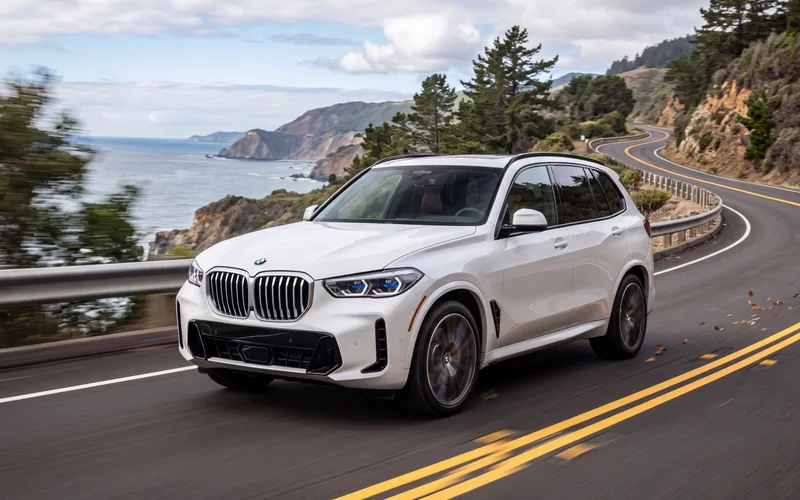 BMW X5Mid-Size Luxury SUVBetter at: Driving dynamics
The obvious rival if driving enjoyment, badge equity and resale matter more than getting the most equipment per dollar — and it offers a plug-in hybrid the GV80 can't.
Compare 2.65C+
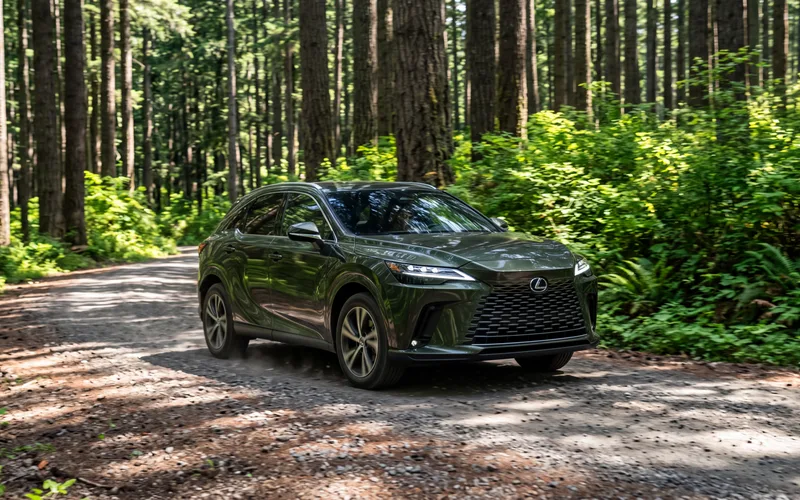 Lexus RXMid-Size Luxury SUVBetter at: Resale value
The safer long-term bet: better predicted reliability, far stronger resale value and hybrid powertrains that cut the GV80's $3,600 annual fuel bill roughly in half.
Compare 2.41C+
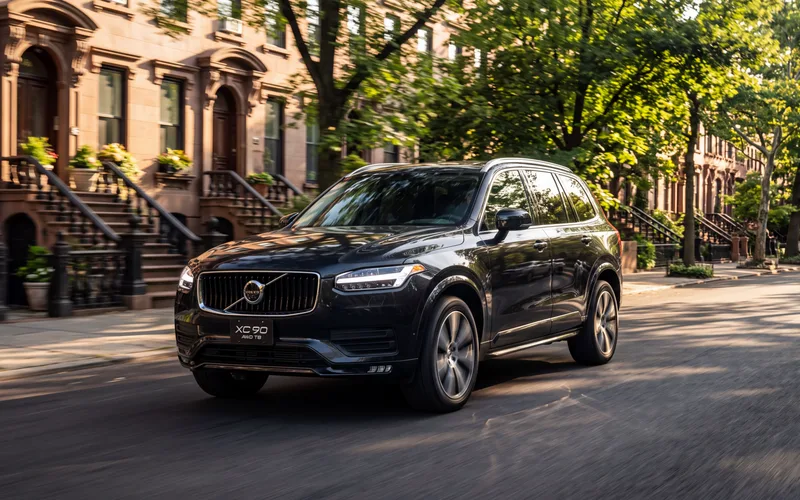 Volvo XC90Mid-Size Luxury SUVBetter at: Family space
The right call for buyers who need the third row and cargo bay to actually work, with a plug-in hybrid option on top.
CompareProduction history
Best fit & conditions
Higher scores mean a better fit for that use case. Learn more about use-case fit →
Subject profile
Academic Probation · NHTSA safety recalls
Jan 16, 2026Electrical system: instrument cluster/panelDue to a software error, the instrument panel display may fail. As such, these vehicles fail to comply with the requirements of Federal Motor Vehicle Safety Standard (FMVSS) number 101, "Controls and Displays."
Defect
Hyundai Motor America (Hyundai) is recalling certain Genesis 2025-2026 G80, GV80, 2026 G80 "Electrified," GV60, GV70 "Electrified" and GV70 vehicles. Due to a software error, the instrument panel display may fail. As such, these vehicles fail to comply with the requirements of Federal Motor Vehicle Safety Standard (FMVSS) number 101, "Controls and Displays."
Risk
An instrument panel display that fails to show critical safety information, such as the speedometer or fuel gauge, increases the risk of a crash.
Remedy
Owners are advised to disable the high definition (HD) radio feature until the recall remedy has been performed. The audio video navigation software will be updated over-the-air (OTA) or inspected and updated by a dealer, free of charge. Owner notification letters were mailed beginning February 17, 2026. Owners may contact Genesis customer service at 844-340-9741. Hyundai's number for this recall is 031G. Vehicle Identification Numbers (VINs) involved in this recall became searchable on NHTSA.gov beginning January 17, 2026.
NHTSA campaign 26V019000 ↗Manufacturer no. 031G83,877 vehicles potentially affected (all models in the campaign)Owners notified Feb 17, 2026Filed by Hyundai Motor AmericaFiled as GV80
8 recalls on other model years of the GV80 (2021–2025)
Apr 10, 2026Fuel system, gasoline: delivery: hoses, lines/piping, and fittingsFuel may leak at the pipe connection between the fuel pipe and fuel rail.
Defect
Hyundai Motor America (Genesis) is recalling certain Genesis 2022-2026 GV70, 2023-2025 G90, 2021-2025 G80, and GV80 vehicles. Fuel may leak at the pipe connection between the fuel pipe and fuel rail.
Risk
A fuel leak increases the risk of a fire.
Remedy
Dealers will inspect and tighten, or replace the fuel pipe as necessary, free of charge. Owner notification letters were mailed beginning July 20, 2026. Owners may contact Genesis customer service at 844-340-9741. Genesis' number for this recall is 033G. Vehicle Identification Numbers (VINs) involved in this recall became searchable on NHTSA.gov beginning April 11, 2026.
NHTSA campaign 26V229000 ↗Manufacturer no. 033G94,760 vehicles potentially affected (all models in the campaign)Owners notified Jul 20, 2026Filed by Hyundai Motor AmericaFiled as GV80Feb 19, 2025Electrical system: instrument cluster/panelDue to a software error, the instrument panel display may fail. As such, these vehicles fail to comply with the requirements of Federal Motor Vehicle Safety Standard (FMVSS) number 101, "Controls and Displays."
Defect
Hyundai Motor America (Hyundai) is recalling certain Genesis 2023-2024 G80, GV80, 2025 GV70 and 2023-2025 GV70 "Electrified" vehicles. Due to a software error, the instrument panel display may fail. As such, these vehicles fail to comply with the requirements of Federal Motor Vehicle Safety Standard (FMVSS) number 101, "Controls and Displays."
Risk
An instrument panel display that fails to show critical safety information, such as the speedometer or warning lights, increases the risk of a crash.
Remedy
Dealers will inspect and update the instrument panel display software, as necessary, free of charge. Owner notification letters were mailed March 26, 2025. Owners may contact Genesis customer service at 844-340-9741. Hyundai's number for this recall is 026G.
NHTSA campaign 25V105000 ↗Manufacturer no. 026G32,594 vehicles potentially affected (all models in the campaign)Owners notified Mar 26, 2025Filed by Hyundai Motor AmericaFiled as GV80Aug 7, 2024Back over prevention: sensing system: cameraThe rearview camera display may shut off when the vehicle is driven in reverse. As such, these vehicles fail to comply with the requirements of Federal Motor Vehicle Safety Standard number 111, "Rear Visibility."
Defect
Hyundai Motor America (Hyundai) is recalling certain Genesis 2024-2025 GV60 hybrid and 2025 GV80 vehicles. The rearview camera display may shut off when the vehicle is driven in reverse. As such, these vehicles fail to comply with the requirements of Federal Motor Vehicle Safety Standard number 111, "Rear Visibility."
Risk
A rearview camera image that does not display decreases the driver's visibility, increasing the risk of a crash.
Remedy
Dealers will update the rearview camera software, free of charge. Owner notification letters were mailed September 11, 2024. Owners may contact Genesis Customer service at 1-844-340-9741. Hyundai's number for this recall is 024G.
NHTSA campaign 24V584000 ↗Manufacturer no. 024G1,488 vehicles potentially affected (all models in the campaign)Owners notified Sep 11, 2024Filed by Hyundai Motor AmericaFiled as GV80Apr 19, 2024Fuel system, gasoline: delivery: fuel pumpThe fuel pump may fail, which can result in a loss of drive power.
Defect
Hyundai Motor America (Hyundai) is recalling certain 2022-2023 Genesis GV70, GV80, G80, and G90 vehicles. The fuel pump may fail, which can result in a loss of drive power.
Risk
A loss of drive power can increase the risk of a crash.
Remedy
Dealers will inspect and replace the fuel pump assembly, free of charge. Owner notification letters were mailed June 7, 2024. Owners may contact Hyundai customer service at 1-855-371-9460. Hyundai's number for this recall is 022G. This recall is an expansion of recall number 23V-630.
NHTSA campaign 24V282000 ↗Manufacturer no. 022G31,440 vehicles potentially affected (all models in the campaign)Owners notified Jun 7, 2024Filed by Hyundai Motor AmericaFiled as GV80Sep 11, 2023Fuel system, gasoline: delivery: fuel pumpThe fuel pump may fail, which can result in a loss of drive power.
Defect
Hyundai Motor America (Hyundai) is recalling certain 2021-2022 Genesis G80, GV80, and 2022 Genesis GV70 vehicles. The fuel pump may fail, which can result in a loss of drive power.
Risk
A loss of drive power can increase the risk of a crash.
Remedy
Dealers will replace the fuel pump, free of charge. Owner notification letters were mailed November 8, 2023. Owners may contact Hyundai customer service at 1-855-371-9460. Hyundai's number for this recall is 016G.
NHTSA campaign 23V630000 ↗Manufacturer no. 016G19,272 vehicles potentially affected (all models in the campaign)Owners notified Nov 8, 2023Filed by Hyundai Motor AmericaFiled as GV80Feb 16, 2023Seat belts: front · Seat belts: pretensionerIn the event of a crash, the front driver-side and/or passenger-side seat belt pretensioners may explode upon deployment.
Defect
Hyundai Motor America (Hyundai) is recalling certain 2020-2023 Genesis GV80, 2021-2023 Genesis G80, 2022-2023 Genesis GV70, and 2023 Genesis GV60 vehicles. In the event of a crash, the front driver-side and/or passenger-side seat belt pretensioners may explode upon deployment.
Risk
An exploding seat belt pretensioner can project metal fragments into the vehicle, strike vehicle occupants, and result in injury.
Remedy
Dealers will secure the seat belt pretensioners with a cap, free of charge. Owner notification letters were mailed April 14, 2023. For GV60 owners, Interim notification letters, notifying owners of the safety risk, were mailed April 14, 2023. A second notice will be sent once the final remedy is available. Owners may contact Hyundai customer service at 1-855-371-9460. Hyundai's number for this recall is 012G. This recall supersedes and expands recall number 21V-796. Vehicles previously repaired under recall 21V-796 will need to have the new remedy completed.
NHTSA campaign 23V094000 ↗Manufacturer no. 012G65,517 vehicles potentially affected (all models in the campaign)Owners notified Apr 14, 2023Filed by Hyundai Motor AmericaFiled as GV80Oct 13, 2021Seat belts: front · Seat belts: pretensionerIn the event of a crash, the front driver-side and/or passenger-side seat belt pretensioner(s) may explode upon deployment.
Defect
Hyundai Motor America (Hyundai) is recalling certain 2021 Elantra, Elantra HEV, Venue, Genesis GV80 and 2022 Genesis GV70 vehicles. In the event of a crash, the front driver-side and/or passenger-side seat belt pretensioner(s) may explode upon deployment.
Risk
An exploding seat belt pretensioner could project metal fragments into the vehicle, striking vehicle occupants and resulting in injury.
Remedy
Dealers will replace the seat belt pretensioners, free of charge. Owner notification letters were mailed February 10, 2022. Owners may contact Hyundai customer service at 1-855-371-9460. Hyundai's numbers for this recall are 211 and 009G. This recall is replaced by NHTSA recall numbers 22V-354 for Elantra and Elantra HEV vehicles, 22V-458 for Venue vehicles, and 23V-094 for Genesis vehicles. Elantra, Elantra HEV, Venue, and Genesis vehicles already repaired under this recall will need to have the new remedies completed.
NHTSA campaign 21V796000 ↗Manufacturer no. 211/009G978 vehicles potentially affected (all models in the campaign)Owners notified Feb 10, 2022Filed by Hyundai Motor AmericaFiled as GV80Mar 24, 2021Fuel system, gasoline: delivery: hoses, lines/piping, and fittingsThe fuel tube connecting the high pressure fuel pump to the fuel rail may not seal properly, which could allow fuel to leak.
Defect
Hyundai Motor America (Hyundai) is recalling certain 2021 Genesis G80 and GV80 vehicles equipped with 2.5-litre turbo engines. The fuel tube connecting the high pressure fuel pump to the fuel rail may not seal properly, which could allow fuel to leak.
Risk
A fuel leak in the presence of an ignition source can increase the risk of a fire.
Remedy
Hyundai will notify owners, and dealers will replace the high pressure fuel tube, free of charge. Owner notification letters were mailed on May 24, 2021. Owners may contact Hyundai customer service at 1-855-371-9460. Hyundai's number for this recall is 008G.
NHTSA campaign 21V208000 ↗Manufacturer no. 008G147 vehicles potentially affected (all models in the campaign)Owners notified May 21, 2021Filed by Hyundai Motor AmericaFiled as GV80
Source: NHTSA Office of Defects Investigation recall database, model years 2021–2026. Recalls are listed by model year as the manufacturer filed them; whether a specific car is affected depends on its VIN — check a VIN at nhtsa.gov ↗. NHTSA model names matched to this page: GV80.
Detailed scoring by subject
1Performance & PowertrainOne of the GV80's weakest categories.1.95C-
2026 is a carry-over powertrain year for the facelifted first-generation (JX1) GV80 — the volume 2.5L turbo four makes 300 hp, with the twin-turbo 3.5L V6 at 375 hp above it. Respectable for a mid-size luxury SUV but the four-cylinder base engine sits low in an SUV band calibrated across all body types up to 550 hp.
The 2.5T's 311 lb-ft on a broad turbo plateau is adequate for a 4,700+ lb three-row crossover and is what enables the full 6,000 lb tow rating, but it is mid-pack against six-cylinder German rivals in this class.
No powertrain change for 2026, so the 2.5T's established mid-six-second run carries forward; published figures cluster between 6.1 and 6.6 s for the AWD four-cylinder. Adequate rather than quick — the 3.5T V6 is the one that feels fast at 5.7 s.
Genesis buys refinement with isolation rather than engine character: reviewers of the 2026 car consistently rate the GV80 above its European rivals for overall smoothness and hush, but the volume 2.5T has noticeable turbo lag from a rolling start and sounds strained when leaned on. The 3.5T V6 is the smoother, more effortless choice.
The 8-speed automatic is the better-executed half of the driveline here — reviewers of the 2026 car describe seamless, snappy gear changes with no hunting in Comfort mode, and shift-by-wire selection is standard. It ranks above the same transmission's reception in the smaller GV70, though it is tuned for smoothness over aggression.
6,000 lbs with trailer brakes is a genuinely strong rating for a unibody luxury crossover — well above the GV70's 3,500 lbs and enough for a mid-size boat or a two-horse trailer. Enabled by the RWD-based architecture; a tow hitch package is required.
AWD is available on every 2026 GV80 and standard on all but the newly added base 2.5T RWD trim, and it is a sophisticated rear-biased setup: Drive Mode Select plus Terrain Modes (Snow/Mud/Sand) new for 2026 on AWD cars, with a rear electronic limited-slip differential available on 3.5T models. No low range, which is what keeps it out of the top band.
Better provisioned than most luxury crossovers without being credible off-road: 8.1 inches of ground clearance is genuinely useful, and the 2026 Terrain Modes plus available electronically controlled suspension with Road Preview help on gravel, snow and soft sand. But there is no low range, no locking differential, no skid plating and no off-road trim, and the wheels run to 22 inches on road-biased rubber.
Two distinct mainstream gas engines for the SUV — a 300 hp turbo four and a 375 hp twin-turbo V6 — plus a third variant, the 409 hp 3.5T with a 48V electric supercharger, restricted to the GV80 Coupe body. That covers mainstream needs but there is no hybrid, PHEV or EV GV80 in the US for 2026; the electric GV80 is a next-generation car with production slated for late 2026 at the earliest.
2Efficiency & RangeThe GV80's lowest-graded category.0.09F
Scored on the volume 2.5T AWD configuration — the mainstream GV80 build and the only one offered across the Standard/Select/Advanced trims. A 300 hp turbo-four hauling ~4,700 lb of RWD-architecture luxury SUV lands well below the mid-size SUV band midpoint, and the new-for-2026 RWD base trim only adds 1 MPG.
City economy is the GV80's weakest EPA figure — no hybrid assist, a torque-converter 8-speed and full-time AWD mean stop-and-go running gets no electrified help at all.
Highway is the GV80's relative best, but 24 MPG still sits in the bottom quarter of the SUV band; the RWD 2.5T added for 2026 is the efficiency pick at 26 MPG.
A large 21.1-gallon tank rescues what mediocre economy gives away — the GV80 covers a respectable mid-pack distance between fills despite drinking heavily. Figure is EPA combined MPG × published tank capacity, not a separately published EPA range.
At the top of the SUV cost band and beyond it — mid-20s MPG combined with premium-grade pricing produces one of the more expensive fuel bills in the mid-size luxury class, and the 3.5T pushes it to $4,000.
Premium is recommended, not mandated: Genesis calls for 91 AKI for rated output but explicitly permits 87–90 AKI with a slight performance reduction, so owners can run regular in a pinch without harm. EPA nonetheless rates and costs the GV80 on premium, which is where the real-world bill lands. No E85 or diesel option and no charging alternative, so there is no cheaper energy path available.
3SafetyOne of the GV80's strongest categories.3.82A
NHTSA rated the 2026 GV80 five stars overall in both RWD and AWD forms, with five stars in every side-impact measure and four stars in frontal crash and rollover.
The 2026 GV80 is a 2026 IIHS TOP SAFETY PICK+ — the top award — earning Good in every crashworthiness test including the updated moderate overlap front and updated side evaluations, with no Acceptable or worse result in the crash suite.
Even the base 2.5T (new for 2026 in RWD form) carries the full suite standard: Forward Collision-Avoidance Assist with pedestrian and cyclist detection, Smart Cruise Control with Stop & Go, Lane Following Assist lane centering, Blind-Spot Collision-Avoidance Assist with intervention, Rear Cross-Traffic Collision-Avoidance Assist with braking, Highway Driving Assist 2, Safe Exit Assist, Rear Occupant Alert, front/rear parking sensors, auto high beams and driver attention warning. Only the Blind-Spot View Monitor camera and surround-view are trim-gated, which keeps it just short of a perfect sweep.
IIHS rates the GV80 Good on both front crash prevention evaluations — the tough updated vehicle-to-vehicle test and the pedestrian test covering day and night crossing scenarios — which is the ceiling of current IIHS AEB testing.
Blind-Spot Collision-Avoidance Assist and Rear Cross-Traffic Collision-Avoidance Assist are standard and actively intervene with braking rather than merely warning, joined by standard Safe Exit Assist; the Blind-Spot View Monitor's live camera feed in the cluster on mid and upper trims is a genuine step beyond alert-only rivals.
Lane Following Assist centering is standard and Highway Driving Assist 2 adds machine-learning adaptation to the driver's style plus signal-initiated automatic lane changes; the Hyundai/Kia/Genesis implementation is consistently praised for holding the middle of the lane without the ping-ponging common in the class.
Smart Cruise Control with Stop & Go is standard and navigation-linked (ASCC slows for mapped curves and limits), and HDA 2 integrates it with centering and automatic lane changes into one of the better-resolved highway assists in the segment; reviewers describe the stop-and-go tuning as reacting promptly to traffic changes.
No hands-free system is offered on the US GV80 — HDA 2 is hands-on and nags for wheel torque, shutting itself off after three ignored warnings. It earns a little above the floor only because the hands-on tolerance is relatively long and the system otherwise does the same highway work as a hands-free rival.
IIHS rates the 2026 GV80's headlights Good, and that rating applies to every trim rather than only the loaded ones — a meaningful advantage over the GV70/GV60, which fall short of Good. Held below the top of the band because high-beam visibility on the left side of the straightaway was rated inadequate.
Reviewers describe sightlines as good in all directions for a vehicle this size, helped by a relatively upright greenhouse, and the camera kit compensates well — surround-view plus the Blind-Spot View Monitor's turn-signal camera feed. The high beltline, thick rear pillars and the optional third row's headrests still cut into the over-shoulder and rearward view.
Two full sets of second-row lower anchors plus a center tether, wide rear door openings and generous second-row legroom make installation easy in practice, and the available third row adds a place to put older kids. IIHS docks it to Acceptable because the driver-side lower anchors sit too deep in the seat cushion, and wide convertible seats make the middle position a squeeze.
4Space & ComfortMid-pack among this car's ten categories.2.34C+
For 2026 the power-folding third row becomes standard on every Advanced and Prestige trim of both the 2.5T and 3.5T — previously it required the V6 — so the volume 2.5T Advanced AWD is a 7-seater. Base Standard/Select trims and the new 3.5T Prestige Black remain five-seat.
First-row headroom of 40.2 in is unchanged for 2026 — the JX1 GV80 carries the 2023 facelift bodyshell with no packaging change — and sits comfortably above mid-pack for a mid-size SUV.
41.6 in of first-row legroom is modest for the class — the GV80's rear-drive architecture pushes the dash forward and the front footwells are shorter than in most three-row rivals, which land 42–44 in.
Second-row headroom of 38.4 in is good for the segment despite the standard panoramic roof on Advanced and above, leaving usable clearance for six-foot passengers.
38.7 in of second-row legroom is genuinely adult-friendly, and the second row slides and reclines so the figure can be traded against third-row space. It trails limousine-like rivals (Q7, Palisade) but is competitive for a mid-size luxury SUV.
The third row is now standard on the volume trims and power-folds from a cargo-area button or the 27-inch display, but at 30.3 in of legroom and 34.3 in of headroom it is a knees-up, kids-only bench — reviewers of the 2026 car call it cramped and fine only for short adult trips. That is materially tighter than the class benchmarks and only just clears the 'token seating' line.
With the standard third row folded, the seven-seat GV80 leaves 36.5 cu ft behind the second row — a genuine weak spot against three-row rivals that clear 45–50 cu ft, and the direct consequence of squeezing a third row into a mid-size RWD platform. Only 11.6 cu ft remains with all three rows up.
71.7 cu ft with everything folded is well short of the 80–100 cu ft the biggest three-row SUVs manage; the folded third-row structure and the sloping roofline both cost volume. Five-seat GV80s, with no third-row mechanism in the floor, are quoted nearer 84 cu ft.
Competent rather than clever: a covered console bin under the rotary controller, wireless charging pad, four USB-C ports, deep door pockets and an underfloor cargo well, plus power third-row folding from the cargo area. There is no standout innovation — no giant console, no frunk, no onboard power export — and the console is partly consumed by the shift and infotainment dials.
A genuine strength. The volume 2.5T Advanced gets genuine leather, ventilated front seats with massage and an Ergo Motion driver's seat with cushion extender; Prestige adds quilted Nappa and heated/ventilated power second-row seats. Reviewers consistently single out long-haul front-seat comfort. Only the third-row bench drags the item down.
Tuned for isolation rather than sport, and it works: the GV80 glides over broken pavement and absorbs large impacts without float. Prestige and above add Preview Electronic Control Suspension that reads the road ahead with the forward camera; the volume Advanced rides on conventional dampers and is a step behind that, which keeps it out of the top band.
One of the quieter cabins in the class — thorough sound deadening, active noise control and acoustic laminated front glass, with rear acoustic glass added on Prestige. The 2.5-liter four in the volume trim is more audible under hard acceleration than a rival V6 or EV, which is the main thing keeping it below the leaders.
Richly equipped and generous low in the range: three-zone climate, heated front seats and wireless charging are standard, a heated steering wheel arrives on Select, and the volume Advanced brings ventilated and massaging front seats plus quad-zone climate with second-row controls. Prestige adds heated rear seats and power rear sunshades. Little of substance is missing.
5Cost of OwnershipOne of the GV80's weakest categories.1.29D
2026 adds a rear-drive 2.5T base trim that undercuts the entry AWD car by $2,150 and lowers the GV80's advertised entry point — but this is still a mid-size luxury SUV opening near $60,000 delivered, deep into the upper half of the segment's normalization band. The 2026 model year is a trim-and-content update to the facelifted (2023-refresh) first generation, not a new car, so nothing here is inflated by a redesign.
Select AWD is the realistic volume configuration: AWD is effectively expected in this class, and Select is the first trim that adds the convenience and comfort content most GV80 buyers shop for while staying under $66,000 delivered. Buyers who want the third row — newly offered with the four-cylinder for 2026 — have to reach $70,095 for 2.5T Advanced, and the 3.5T V6 trims above $77,000 are low-volume. At ~$65k the GV80 sits near the top of the suv band, which is what holds this sub-category down despite the car's strong running-cost story.
Cheap to run for a mid-size luxury SUV and the strongest number in this category. Three years/36,000 miles of complimentary scheduled maintenance and a 5-year/60,000-mile bumper-to-bumper warranty mean the owner buys little more than tires until the mileage cap is passed, and Genesis parts and labor price closer to Hyundai than to Audi or Mercedes. CarEdge's $3,216 five-year maintenance figure excludes tires and post-warranty repairs; adding a set of 20-inch tires, brakes and the tail end of a 15,000-mile-a-year duty cycle beyond the 60,000-mile warranty puts the realistic out-of-pocket near $4,800 — above the smaller GV70's ~$4,100 because of the extra mass, larger wheels and the adaptive/air-suspension hardware on upper trims.
The GV80 depreciates like the luxury mid-size SUV class it competes in — roughly half the sticker gone by year five — with no Genesis premium and no Genesis penalty. That is worse than the compact GV70's ~50% and far worse than a Lexus RX, and combined with a ~$65,000 volume-trim price it means the largest single ownership cost by a wide margin. Excellent value used, mediocre as an asset new; KBB's harsher figure reflects heavy incentive activity on new inventory.
At the top of the band and a full year and 10,000 miles beyond what BMW, Mercedes-Benz, Audi, Lincoln, Lexus and Acura offer in this class — and unlike the powertrain coverage, it carries over to a second owner for the remainder of its term.
Ceiling of the band. Ten years and 100,000 miles on the 2.5T four, 3.5T twin-turbo V6 and eight-speed automatic is coverage no European or Japanese luxury rival comes close to, and it matters more than usual here given the GV80's early-life engine recall history. The catch is that it is original-owner only and does not transfer.
Firmly in the top band. Three years/36,000 miles of complimentary scheduled maintenance — oil and filter, tire rotation, engine and cabin air filters, multipoint inspection — is delivered via Genesis Service Valet, which collects the car and leaves a loaner, so an owner can go three years without visiting a dealer. That stacks with 5 years of unlimited-mile 24/7 roadside assistance, 3 years of Genesis Connected Services and Genesis Concierge. It outclasses BMW, Mercedes-Benz and Audi, which include no scheduled maintenance at all, and matches or beats Lexus and Acura. Held short of the mid-90s because the coverage runs three years rather than four or five, and there is no charging-credit-style perk on the gas car.
$65,245 volume-trim price minus its estimated resale value after 5 years (48% retained, or about $31,318) leaves about $33,927 in depreciation. Add the projected $4,800 in 5-year maintenance and repairs, and owning this vehicle for 5 years costs about $38,727 in total.
6Reliability & QualityMid-pack among this car's ten categories.2.29C
The two authorities that matter point in opposite directions, which is the definition of the mixed-signal middle band. J.D. Power rates the 2026 GV80 at 81/100 for quality & reliability — the bottom rung of its "Great" band and ten points clear of the GV60 — while Consumer Reports expects the 2026 GV80 to be less reliable than the average new car, projecting from 2023–2025 owner data. CR's position is not a rounding error either: it called the 2025 GV80 less reliable than other cars of its model year and placed it 10th of 11 in a field of luxury rivals. Every per-trouble-spot rating for the 2026 car is still NA, so CR's verdict rests on prior-year owner surveys plus the brand score rather than on data for this specific configuration — but the 2026 GV80 is a carry-over of the facelifted car those surveys covered, so the projection transfers cleanly. Held out of the upper band by CR, held out of the lower band by a genuinely strong J.D. Power number and a top-three segment finish in initial quality.
Genesis builds a near-flawless new car and a merely mid-pack used one. It surged to 2nd overall in the J.D. Power 2026 Initial Quality Study — up seven places from 9th in 2025 — with the GV80 itself finishing 2nd in upper-midsize premium SUV. That measures the first 90 days. Long-term dependability is the weak flank: in the 2026 Vehicle Dependability Study (three-year-old vehicles, 204 PP100 industry average) Genesis sits in the upper half but nowhere near the premium podium of Lexus (151), Cadillac (175) and Porsche (182), and Consumer Reports is harsher still, ranking Genesis 7th among luxury brands and 14th of 22 overall with in-car electronics called out as the brand's biggest trouble spot. Averaging a top-tier 90-day record against a middling-to-poor multi-year standing lands squarely mid-pack.
Nine NHTSA campaigns across this single generation, and the serious ones are fuel leaks, loss of drive power and restraint failure rather than paperwork. The pattern repeats by system: three fuel-delivery campaigns (21V208000 high-pressure fuel tube seal, and 26V229000 for fuel leaking at the fuel pipe/fuel rail joint on 2021–2025 cars), two fuel-pump campaigns that can strand the car mid-drive (23V630000, 24V282000), two front seat-belt pretensioner campaigns for pretensioners that may explode on deployment (21V796000, 23V094000), and two instrument-panel display software recalls (25V105000, 26V019000) plus a rearview-camera shutoff (24V584000). Repeated powertrain and safety-system campaigns is the bottom-band description, and Wikipedia records the same pattern at launch in Korea — eight recalls in the first year, four of them engine-related. What lifts this a couple of points above its GV70 sibling is that the 2026 model year sits outside the fuel-leak population entirely and so far carries only the OTA-remediable instrument-cluster software recall.
Mixed history rather than a red flag. The volume 2.5-liter Smartstream T-GDi (300 hp) replaced the notorious 2.4 Theta II but inherited an oil-consumption problem of its own: 2021 to early-2023 units are documented losing as much as a quart per 1,000 miles from a piston-ring sealing design, with carbon buildup and misfires downstream, and GV80 owner threads carry exactly that story — oil lights, near-dry dipsticks, five quarts added before the second service, misfire to follow. Hyundai redesigned the piston and rings mid-2023, so the 2026 car ships the revised hardware and later-build field reports are markedly quieter; a widely covered 30,000-mile GV80 engine seizure was traced by teardown to rod-bearing failure from an oil-change omission, not a design defect. The 3.5-liter twin-turbo V6 (375 hp) is the same family used across Genesis and has no systemic failure pattern, and the conventional 8-speed torque-converter automatic is a proven Hyundai Motor Group unit shared with high-volume applications rather than a bespoke design. Two fuel-pump loss-of-power recalls on 2021–2023 cars are what keep this from climbing past the middle.
Class-leading for the money, and this is the cabin the whole brand is judged by. The facelift's single 27-inch curved OLED replaced the old 12.3-inch cluster and 14.5-inch screen, with redesigned climate controls and center console, and the materials around it are genuinely flagship-grade: Nappa leather on upper trims, leatherette-wrapped upper instrument panel, microfiber suede headliner, real carbon-fiber and open-pore wood trim, heavy contrast stitching and the brand's two-line motif. Reviewers put it at the top of the segment outright rather than qualifying it as good-for-the-price, and Genesis keeps physical switchgear for climate and volume instead of burying it in the display — a quality signal reviewers repeatedly cite against digital-first German rivals. It earns a couple of points over the smaller GV70 because the same material story arrives with more of it standard and a $59,195 opening price against mid-size luxury rivals that cost more for less.
This is where the Initial Quality Study result earns its keep, because IQS measures exactly the first-90-days defects, misalignment and rattles this item asks about: Genesis finished 2nd overall among all brands in the 2026 study, and the GV80 itself placed 2nd in upper-midsize premium SUV — the model, not just the badge. Independent road tests corroborate it directly, reporting solid assembly with no noticeable squeaks or rattles and consistently upscale surfaces, and unlike the GV70 the 2026 GV80 carries no assembly-process recall (no misinstalled airbags, and it sits outside the under-torqued fuel-pipe population). What keeps it out of the high 80s is the generation's own record rather than this year's: the earlier fuel-line seal and fuel-pipe joint campaigns were manufacturing-process failures, and the brand's persistent instrument-display software recalls are a quality-control pattern even when the remedy is over the air.
Adequate and improving, but thin and not yet well regarded. Genesis retails through roughly 200 US points, of which only 84 were dedicated standalone Genesis facilities as of February 2026 after nine more opened — the rest still share a roof with Hyundai. Against Lexus, BMW or Mercedes networks several times denser, a GV80 owner outside a major metro drives to be serviced. Satisfaction is the softer spot: the premium-brand average in the 2026 J.D. Power Customer Service Index rose eight points to 886 with Porsche, Lexus and Cadillac leading, and Genesis does not appear among those leaders — consistent with its history in the study, where it finished last among 14 premium brands in 2023 at 819 against an 864 average. What keeps this mid-band rather than lower is Genesis Service Valet: pickup and delivery with a loaner, standard through the 3 yr/36,000 mi complimentary maintenance period, which genuinely neutralizes the density problem for routine work.
Normal-to-costly on routine work, with parts logistics as the real tail risk. Estimated annual maintenance and repair for the GV80 runs about $984 — the priciest of the Genesis SUV line and roughly double the RepairPal Genesis brand average of ~$524, reflecting a bigger, heavier luxury SUV on 20–22-inch rubber; RepairPal itself still lists insufficient GV80-specific data for a firm model-level figure. Mechanically the parts are not exotic: the 2.5T, 3.5T and 8-speed automatic are shared across Hyundai Motor Group applications, so wear items are ordinary Korean-parts money. The drag is model-specific body, trim and electronic parts, which frequently ship from Korea, and Genesis owner forums document multi-month waits on collision panels and sensor hardware across the GV line, with a thin aftermarket for a low-volume Korean luxury crossover. The 5 yr/60,000 mi basic and 10 yr/100,000 mi powertrain warranty means the original owner rarely pays for the big items, but the wait is on them either way.
7Technology & InfotainmentThe GV80's best-graded category.3.91A+
2026 carries over the JX1 facelift's single 27-in OLED, which replaced the pre-refresh 12.3-in cluster and 14.5-in infotainment screen; Genesis publishes only the combined 27-in diagonal, so the touch-operated right-hand section is recorded at the ~14.5-in size it replaced, the same convention used for the GV70 and GV60.
The GV80 runs Genesis's current ccNC software on the 27-in OLED and reviewers of this model year consistently call the graphics crisp and the responses quick, with scrollable home tiles, a console rotary controller and a separate lower climate panel preserving physical redundancy; the recurring complaints are that the rotary dial is fiddly to aim precisely and that secondary settings sit a submenu or two deep.
Wireless Apple CarPlay and Android Auto are standard on every 2026 trim including the $57,700 base 2.5T RWD — the facelift-generation fix for a car that previously forced a wired connection on navigation-equipped examples.
Native navigation is standard on the base trim rather than option-gated — the 27-in panel is billed as an 'Instrument Cluster and Navigation System' — and the built-in assistant takes natural phrasing for climate, windows, calls and destinations, with OTA map updates delivered through Genesis Connected Services; it still trails the best conversational assistants on off-script requests.
The premium option is a genuinely flagship-grade 18-speaker, 1,400-watt Bang & Olufsen surround system with BeoSonic tuning and Danish-designed aluminum grilles, and it becomes standard from the mid-lineup 2.5T Advanced upward rather than being reserved for the top trim; the base nine-speaker system is competent but ordinary for a $57K luxury SUV.
The driver's portion of the 27-in OLED is a 12.3-inch configurable full-digital cluster with 3D rendering of vehicle status, standard on all 2026 trims with no analog fallback and no upper-trim gate, and it is one continuous panel rather than two displays sharing a housing.
Genesis ships whole-vehicle over-the-air updates on the GV80 — reaching safety, performance and feature software across electronic control units rather than maps alone — installed from the vehicle after an owner prompt; cadence and feature-adding ambition still fall short of Tesla, Rivian or Polestar.
Genesis Connected Services is complimentary to first owners and covers remote start/climate, lock/unlock, vehicle locate, stolen-vehicle recovery, Valet Mode and in-car Genesis Pay, and — unlike the GV70, which gates it to the Sport Prestige trims — phone-as-key Digital Key 2 is available across the 2026 GV80 range, with the Premium version adding rear-door lock/unlock from 2.5T AWD up.
Four USB-C ports serve the cabin and a wireless charging pad is standard on every 2026 trim — relocated this generation to a more reachable console spot — plus a built-in Wi-Fi hotspot; what keeps it out of the top band is that the gas GV80 offers no household AC outlet or vehicle-to-load power the way EV rivals in this segment do.
Proximity smart key, push-button and remote start and a hands-free power liftgate are standard, a center-console fingerprint reader starts the car and loads driver profiles without a key at all, and Digital Key 2 turns a phone or watch into the key with shareable access — a fuller keyless suite than most mid-size luxury SUVs offer at the base trim.
Front and rear parking sensors plus a rear camera are standard, and the high-resolution Surround View Monitor, turn-signal Blind-Spot View Monitor and self-steering Remote Smart Parking Assist 2 all arrive together at the mid-lineup 2.5T Advanced, with a digital center mirror and Built-In-Cam 2 available above that; the 360-degree view still is not offered on the two cheapest trims.
The 12-inch head-up display is standard from the 2.5T Advanced upward — the trim reviewers single out as the volume sweet spot, roughly the middle of an eight-trim ladder — rather than being locked to the flagship the way the GV70's is; the only cars that cannot have it are the two entry trims below Advanced.
8Use-Case FitMid-pack among this car's ten categories.2.53C+
Getting kids in is easy — wide rear door openings, 38.7 in of second-row legroom on a bench that both slides and reclines, two full sets of lower anchors plus a center tether, and for 2026 a power-folding third row that raises or lowers from a cargo-area button on every Advanced and Prestige trim, so a rear-facing seat and an older kid can coexist. What keeps it out of the top band is what happens after the seats are in: IIHS rates LATCH ease of use only Acceptable because the driver-side lower anchors sit too deep in the cushion, and 36.5 cu ft behind the second row (third row folded) is small for a three-row SUV, so a stroller plus a grocery run is a genuine squeeze.
About as complete a family safety case as this segment offers, and — crucially — it is complete on the trims families actually buy. The 2026 GV80 holds both an IIHS Top Safety Pick+ and a NHTSA five-star overall rating, its headlights are rated Good on every trim rather than only the loaded ones, and the full Genesis Active Safety Control suite is standard right down to the new $59,195 2.5T RWD base car: forward collision avoidance with pedestrian and cyclist detection, stop-and-go smart cruise, lane following, blind-spot and rear cross-traffic collision avoidance with braking, Rear Occupant Alert and Safe Exit Assist. The only family-relevant gaps are that the surround-view and blind-spot camera monitors do not appear until the 2.5T Advanced.
The cabin is a very good place to spend six hours: quiet, softly damped, with massaging and ventilated front seats and quad-zone climate with second-row controls from the volume 2.5T Advanced upward, Prestige adding heated second-row seats and power rear sunshades, and an optional dual 14.6-inch rear entertainment system. The binding constraint is gear rather than comfort — with all three rows occupied there are only 11.6 cu ft behind the third row, less than most sedans' trunks, so a seven-up road trip needs the roof or a hitch carrier. The third row itself, at 30.3 in of legroom and 34.3 in of headroom, is a kids-only proposition for anything longer than a town errand.
A genuinely relaxing daily driver. The 8-speed torque-converter automatic shifts seamlessly at low speed where a dual-clutch would shunt, the cabin is among the quieter in the class, brake feel is progressive in stop-and-go, and Smart Cruise Control with Stop & Go plus Highway Driving Assist 2 lane centering are standard on every trim — not packaged options. The 2023 facelift's retained physical climate panel and, for 2026, a repositioned wireless charger remove the usual luxury-SUV daily irritations. Points come off for the volume 2.5T's turbo lag from a rolling start and for the hands-on-wheel requirement where GM, Ford and BMW rivals now offer hands-free.
Expensive per mile, and worse than the smaller GV70 on every line. The volume 2.5T AWD returns 19/24/21 MPG on premium-recommended fuel, which EPA costs at $3,600 a year at 15,000 miles, and full-coverage insurance runs about $2,880. There is no hybrid, plug-in or electric GV80 anywhere in the US lineup to soften that — the 48V e-supercharger 3.5T is a performance device rated no better than the plain V6. The mitigations are real but limited: 87–90 AKI is permitted with a slight power reduction, and three years of complimentary scheduled maintenance with valet pickup removes most early service spend.
Manageable with camera help rather than easy. At 194.5 in long and 77.8 in wide on a 116.3-in wheelbase, with a 39.3-ft turning circle, the GV80 is a full mid-size SUV that fills a city parking bay, and reviewers note the high beltline, thick rear pillars and third-row headrests cutting into the over-shoulder view. The camera kit that fixes it is excellent — Surround View Monitor, turn-signal Blind-Spot View Monitor and self-steering Remote Smart Parking Assist 2 — but all three arrive together only at the mid-lineup 2.5T Advanced, leaving the two entry trims on front and rear sensors plus a rear camera.
Light-to-moderate work duty, and unusually capable for a luxury crossover on the one metric that matters most: 6,000 lbs braked towing with the hitch package is nearly double the GV70's rating and beats the Audi Q7 and Lexus RX, enough for a mid-size boat, a car trailer or a two-horse rig, with the rear-drive architecture and 311 lb-ft (391 lb-ft on the V6) doing the work. Everything else is passenger-car: no bed, no meaningful payload headroom, a 408 lb tongue limit, and a carpeted 36.5 cu ft cargo bay with a sloped tailgate that is a poor substitute for a load floor. It can pull a work trailer to a site; it cannot be the work vehicle.
Middling, for the same reasons as the rest of the Genesis line. Underneath is mainstream Hyundai Motor Group hardware — the Smartstream 2.5T, the 3.5T V6 and a conventional 8-speed torque-converter automatic all used in high volume elsewhere — backed by a 10-year/100,000-mile powertrain warranty no rival matches, and both count under sustained load. Against that: this is an unambiguously luxury-oriented vehicle with Nappa leather, open-pore wood and wheels up to 22 inches, no wear-friendly interior option, no fleet presence to draw a durability record from, and a generation-level recall record — nine NHTSA campaigns including two fuel-pump loss-of-power recalls and three fuel-delivery campaigns — that scores below segment average on this scorecard.
Basic provisions only. There are cargo-area tie-downs, an underfloor storage well and a 12-volt outlet in back, and a healthy accessory catalogue covers a factory Class III hitch with wiring harness plus lockable roof crossbars for baskets, boxes and bike racks. But the gas GV80 offers no household AC outlet and no vehicle-to-load power the way EV rivals in this segment do, there is not a washable surface anywhere in the cabin, and nothing resembling an upfit ecosystem exists for a low-volume Korean luxury crossover.
This is the GV80's best mission by a clear margin. A large 21.1-gallon tank turns mediocre economy into roughly 443 miles between stops (about 464 on the 2.5T RWD), the cabin is one of the quieter in the class with acoustic laminated glass and active noise control, the front seats are among the segment's best — Ergo Motion driver's seat with cushion extender, ventilation and massage from the volume Advanced trim — and Highway Driving Assist 2 combines navigation-linked stop-and-go cruise with lane centering and signal-initiated lane changes, one of the better-resolved highway assists on sale. The only real deductions are the hands-on-wheel requirement and the 2.5T sounding strained on long grades.
Comfortably beyond a trailhead, well short of a trail. 8.1 inches of ground clearance is genuinely useful and a full inch more than the GV70's, AWD is standard on every trim except the new base 2.5T RWD, and Terrain Modes with Snow, Mud and Sand settings are new for 2026 on AWD cars, joined by an available rear electronic limited-slip differential on the 3.5T. Combined with 6,000 lbs of towing for a camper or a boat and 220-lb roof crossbars for boxes and bikes, it is a real adventure enabler on gravel, snow and forest road. But there is no low range, no locking differential, no skid plating and no off-road trim, and upper trims run 22-inch wheels on road-biased rubber.
Fits normal luggage; bulky gear is a squeeze. The seven-seat GV80 leaves 36.5 cu ft behind the second row with the third folded and 71.7 cu ft with everything down — well short of three-row rivals that clear 45–50 and 80–100 cu ft respectively — and the sloping tailgate limits how tall a load can be. Five-seat trims do better at 38.7 and roughly 84 cu ft. Flexibility itself is good: a power-folding third row operated from the cargo area or the 27-inch display, a sliding and reclining second row, an underfloor storage well, flush roof rails with a 220-lb OEM crossbar system and a factory Class III hitch to move the overflow outside.
9Driving ExperienceGrades above the middle of the scale.2.81B-
The GV80 uses a rear-drive architecture with near-even weight distribution and camera-fed Road Preview adaptive dampers, and reviewers consistently find it planted, settled and low on body roll for a 4,700–5,300 lb three-row — but it is tuned for isolation rather than agility. Instrumented grip is modest at 0.82 g, and the harshest critics say it simply cannot follow the German rivals through corners, which keeps it in the secure-but-unremarkable band rather than the top one.
Steering is accurate and substantially weighted — reviewers call it responsive and appropriately heavy, and Sport/Sport+ tighten it further — but the weight is effort rather than information, and more than one reviewer finds it too heavy even in Comfort mode. Precise enough to place the nose confidently, short of the genuine feedback the top band requires.
The hardware is strong for the mass — 14-inch discs at all four corners, 170 ft from 70 mph in Car and Driver testing and a 98 ft 60–0 average for the e-supercharged version at MotorWeek — but pedal calibration is the repeated complaint: several reviewers describe an abrupt, grabby initial bite that takes acclimation to stop smoothly, and MotorWeek's 103 ft from 60 mph in the standard 3.5T SUV is only mid-pack.
All three 2026 powertrains are smooth and unruffled — the 3.5T V6 in particular moves the car effortlessly and the 8-speed automatic shifts unobtrusively — and the new 3.5T E-SC's 48V electric supercharger adds low-rpm punch the turbos alone cannot. It falls short of the top band because response off the line is the consistent weak point: reviewers note the GV80 is strong but not immediate, with the 409-hp version still described as lacking quick off-the-line acceleration.
Isolation is the GV80's signature strength and the thing reviewers reach for when explaining why it beats pricier German rivals: the V6 is near-silent under load, sound insulation keeps the cabin serene, and the drivetrain transmits essentially nothing through the controls. It stops just short of the ceiling because the sporting exhaust note in Sport+ is a deliberately piped-in character rather than an inherently pleasing engine voice.
39.3 feet curb-to-curb is a weak figure inside the SUV band — a consequence of the GV80's 116.3-inch rear-drive wheelbase and up-to-22-inch wheels — and it is the one everyday-drivability metric where this SUV is clearly worse than its compact GV70 sibling (37.7 ft), making tight garages and U-turns a genuine chore.
Among the best in the segment, and notably so in 2026: the new 27-inch OLED display did not swallow the controls the way it has at Mercedes and Audi, because climate keeps its own dedicated six-inch panel with knurled physical dials, and the Ergo Motion driver's seat actively varies support on long drives. Wide adjustability, an unhurried command seating height and uncluttered layout make this a rare modern luxury interior that is easier to use than the one it replaced.
The GV80 is a satisfying car to cover ground in — smooth, effortless, quietly rapid, and reviewers do enjoy it — but it makes no attempt at the enthusiast's checklist. The engine note is synthesized, the mass is always felt, the chassis discourages being pushed, and even favorable reviews frame the appeal as therapeutic isolation rather than engagement. Pleasant, deeply competent, and forgettable as a driver's car.
10Value & Market PositionOne of the GV80's strongest categories.3.59A-
The GV80's core content is standard across the whole range rather than optioned: the 27-inch panoramic OLED panel that merges cluster and infotainment, wireless Apple CarPlay/Android Auto, leatherette upholstery, heated front seats, and the full Genesis driver-assist suite including Highway Driving Assist 2, forward collision-avoidance, blind-spot collision-avoidance and lane keeping. A BMW X5 or Mercedes-Benz GLE charges for a comparable screen and hands-off-adjacent highway assist. Held below the high 80s because the new-for-2026 $57,700 2.5T RWD base trim is a genuine price leader with genuine omissions — the 18-speaker Bang & Olufsen system does not appear until Advanced, and wireless charging and the hands-free power liftgate sit in the Convenience Package rather than in the base spec.
This is the GV80's defining argument and the strongest item in the category. A $59,195 delivered entry price buys a 300-hp turbo four, the panoramic OLED cabin, the full ADAS suite, a 5 yr/60,000-mi bumper-to-bumper warranty and 3 yr/36,000-mi complimentary maintenance — a BMW X5 or GLE opens roughly $8,000–$10,000 higher and includes no scheduled maintenance at all. Reviewers converge on the same verdict, and the market is paying it: average transaction price climbed to $64,766 in August 2025, so buyers are not being bribed into the car. Short of the mid-90s only because the 2.5T's fuel economy is mediocre for the class and the third row remains cramped, so the content advantage is not total capability parity.
Eight trims across two engine families spanning roughly $26,000 from bottom to top, and 2026 widens the ladder at both ends: a new rear-drive 2.5T base drops the entry point about $2,150, while third-row seating — previously a V6 privilege — becomes available on 2.5T Advanced and Prestige, so a seven-seat GV80 no longer forces the expensive engine. Five-, six- and seven-seat layouts, RWD or AWD on the four-cylinder, and a separate GV80 Coupe body style round it out. Not higher because there is still exactly one fuel type on offer for 2026: the 2.5T hybrid does not arrive until September 2026, and there is no PHEV or EV variant, which rivals like the X5, GLE and Cayenne all field.
A solidly accepted seller on a clear upward trajectory rather than a segment leader. Genesis moved 25,646 GV80s in the US in 2025, up 11.6% year over year, and cumulative US sales passed 100,000 in August 2025 — roughly five years after launch, which is real traction for a badge nobody had heard of in 2019. But the volume ceiling is well below the segment's incumbents: the BMW X5 sold 76,246 units in the same year, about three times the GV80. Growth outpaces the Germans; absolute volume does not, and dealer coverage remains thinner than any established luxury brand's.
Genesis has moved decisively out of the value-badge category — second overall in the J.D. Power 2026 Initial Quality Study, up seven places from ninth, with the GV80 itself a top-three finisher in upper midsize premium SUV — and its design and service model (valet pickup with a loaner) draw genuine admiration. What it still lacks is badge equity: the resale evidence shows no Genesis premium at all, with the GV80 retaining roughly 48% at five years, dead level with the luxury midsize SUV average and well behind Lexus. Buyers cross-shopping an X5 or GLE are still trading brand cachet for content, and the smaller dealer footprint reinforces that. Above neutral, short of aspirational.
Close to the ideal shape for a buyer: real money on the table without the smell of a car that will not move. Genesis is publishing 0.49% APR over 48 months with a financing bonus up to $1,500, and up to $1,500 in lease cash, while transaction prices are rising year over year — incentives here are conquest spending against the Germans, not clearance. Confidence is MEDIUM rather than HIGH because national offers rotate monthly and regional variation on a low-volume luxury nameplate is wide.
Squarely mid-cycle, and the clock is audible. This is still the first-generation JX1 GV80 launched in the US for 2021, carried by the substantial 2023 facelift that brought the 27-inch OLED panel, revised grille and lamps, new climate controls and console, and the switch from Lexicon to Bang & Olufsen audio. For 2026 Genesis adds the RWD base trim, broader third-row availability and a new Ultimate Package, which is a content update rather than new hardware — and the platform underneath is now six model years old. Buyers should also weigh what is queued: the 2.5T hybrid lands in September 2026 mid-year, and the second-generation GV80 on the Genesis Trinity platform is expected around 2027–2028, so a 2026 purchase sits near the end of this generation's life.
About as decorated as a mid-size luxury SUV gets without being a Porsche. U.S. News ranks the 2026 GV80 #1 in luxury midsize SUVs at 9.3/10, KBB currently tops its best-luxury-midsize-SUV list with it after a prior Best Buy award, and Car and Driver named it a 2026 Editors' Choice winner — a 9-of-10-minimum bar cleared out of nearly 450 vehicles evaluated, and the fourth consecutive year multiple Genesis models have been recognized. Safety bodies agree: IIHS Top Safety Pick+ and a five-star NHTSA overall rating. The consistent criticisms are narrow and specific — mediocre fuel economy for the class and a tight third row — rather than dynamic or quality complaints, which is why this sits near the top band rather than merely well-reviewed.