
The verdict
A mixed-report mid-size luxury suv, strong on reliability and held back by efficiency.
The 2026 Lexus RX is the best-selling luxury vehicle in America for good reason: it's quiet, superbly built, cheap to own for a $51,175 luxury SUV, and it holds about 65% of its value after five years while the class average loses more than half. What it isn't is fast, spacious, or exciting — the volume RX 350's 275-hp turbo four needs 7.3 seconds to reach 60 mph and drinks premium fuel for just 24 MPG combined, the five-seat cabin maxes out at 46.2 cubic feet of cargo, and there's no third row at any price. Buy the RX 350h hybrid if you're buying an RX at all: it returns 36 MPG, goes roughly 619 miles on a tank, and cuts your annual fuel bill from about $2,900 to $1,600. The one thing that should give a family buyer pause is the Poor IIHS moderate-overlap crash rating, which costs the RX any Top Safety Pick award for 2026.
Jump to scoresStrengths
- Bulletproof reliability and the cheapest ownership in the luxury class
- Best-in-class resale value
- Four powertrains, including one of the best hybrids you can buy
What holds it back
- A Poor IIHS crash rating and no Top Safety Pick award
- The gas RX 350 is thirsty and expensive to feed
- Five seats only, and not much room behind them
Top alternatives
Cars shoppers cross-shop with the Lexus RX 2.81B-
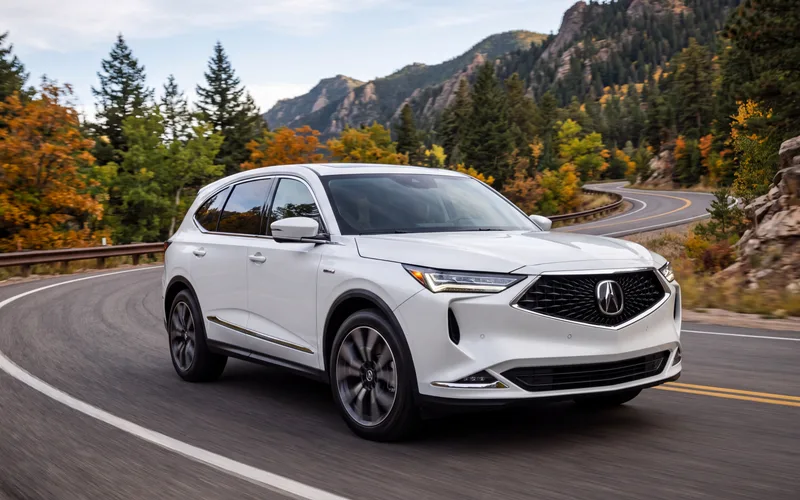 Acura MDXMid-Size Luxury SUVBetter at: Third-row seating
Similar money buys a third row, a V6 and comparable Japanese-luxury ownership costs — the obvious pick if five seats aren't enough.
Compare 2.90B-
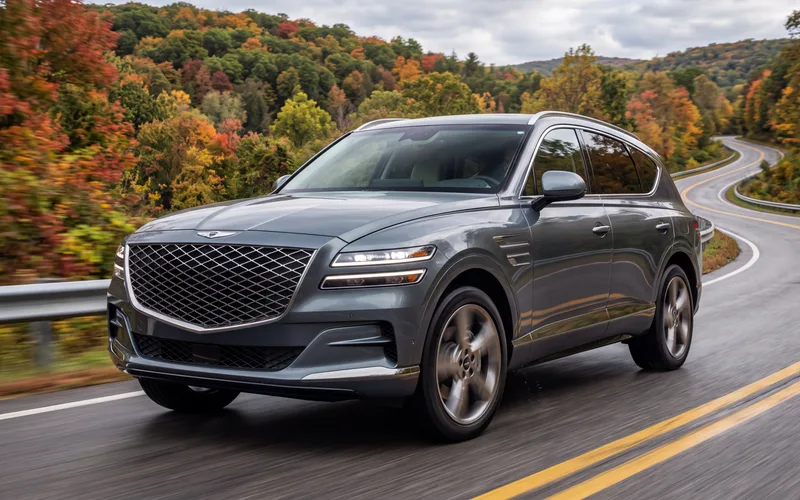 Genesis GV80Mid-Size Luxury SUVBetter at: Interior and warranty
A richer cabin, more athletic chassis and a 10-year/100,000-mile powertrain warranty for around $6,500 more than a base RX.
Compare 2.88B-
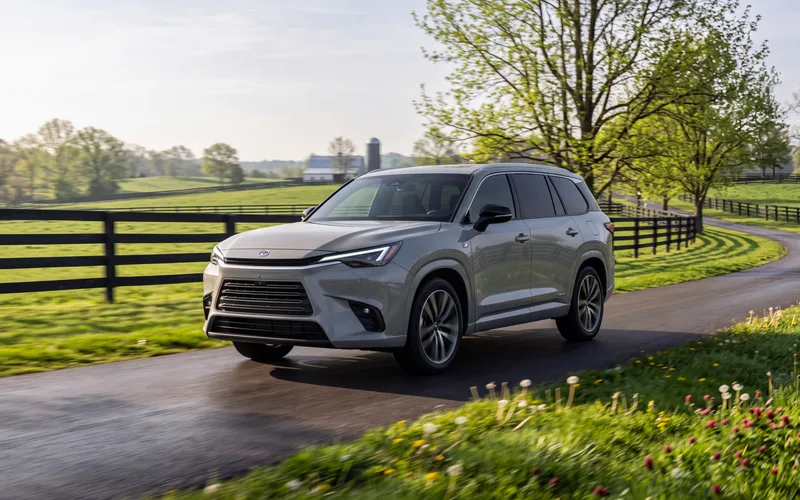 Lexus TXMid-Size Luxury SUVBetter at: Space
The same Lexus hybrid hardware and dealer experience in a three-row body that fixes the RX's cargo and seating ceiling.
CompareHow it's evolved
10 scored model years · 2017–2026
Subject scores by year
Hover or tap a score to see what moved it versus the year before. A corner mark flags a big swing.
| Year | Performance | Efficiency | Safety | Space | Cost | Reliability | Tech | Use-case | Driving | Value |
|---|---|---|---|---|---|---|---|---|---|---|
| 2026 | 48 | 44 | 77 | 50 | 59 | 84 | 75 | 68 | 66 | 78 |
| 2025 | 48 | 41 | 79 | 50 | 60 | 82 | 75 | 68 | 66 | 77 |
| 2024 | 48 | 40 | 80 | 49 | 60 | 83 | 71 | 60 | 61 | 80 |
| 2023 | 46 | 40 | 86 | 47 | 62 | 78 | 72 | 62 | 59 | 77 |
| 2022 | 45 | 47 | 69 | 54 | 64 | 89 | 53 | 59 | 60 | 66 |
| 2021 | 45 | 48 | 69 | 52 | 64 | 88 | 51 | 61 | 60 | 75 |
| 2020 | 46 | 42 | 74 | 54 | 66 | 85 | 51 | 59 | 64 | 72 |
| 2019 | 45 | 42 | 67 | 53 | 66 | 86 | 39 | 58 | 59 | 69 |
| 2018 | 46 | 42 | 72 | 55 | 67 | 87 | 40 | 58 | 62 | 69 |
| 2017 | 45 | 42 | 78 | 53 | 65 | 87 | 38 | 59 | 62 | 74 |
Compare two years
Best fit & conditions
Higher scores mean a better fit for that use case. Learn more about use-case fit →
Subject profile
Academic Probation · NHTSA safety recalls
Sep 17, 2026Steering: linkages: knuckle: spindle: armDue to a manufacturing error, the front steering knuckles may crack and break, which can result in a loss of vehicle steering control.
Defect
Toyota Motor Engineering & Manufacturing (Toyota) is recalling certain 2026 Lexus TX350, RX350 Hybrid, RX350, RX500 Hybrid, TX500 Hybrid, Toyota Grand Highlander, and Grand Highlander Hybrid vehicles. Due to a manufacturing error, the front steering knuckles may crack and break, which can result in a loss of vehicle steering control.
Risk
A loss of vehicle steering control increases the risk of a crash.
Remedy
Dealers will inspect and replace the front steering knuckles, as necessary, free of charge. Owner notification letters are expected to be mailed November 2, 2026. Owners may contact Toyota's customer service at 1-800-331-4331. Toyota's numbers for this recall are 26TA19 and 26LA09.
NHTSA campaign 26V598000 ↗Manufacturer no. 26TA19 / 26LA09617 vehicles potentially affected (all models in the campaign)Filed by Toyota Motor Engineering & ManufacturingFiled as RX, RX HYBRIDMar 18, 2026Back over prevention: softwareThe rearview camera image may not display when the vehicle is placed in reverse. As such, these vehicles fail to comply with the requirements of Federal Motor Vehicle Safety Standard (FMVSS) number 111, "Rear Visibility."
Defect
Toyota Motor Engineering & Manufacturing (Toyota) is recalling certain 2022-2025 Lexus NX350, NX250, 2023-2026 RX350, and 2024-2026 TX350 vehicles. The rearview camera image may not display when the vehicle is placed in reverse. As such, these vehicles fail to comply with the requirements of Federal Motor Vehicle Safety Standard (FMVSS) number 111, "Rear Visibility."
Risk
A rearview image that does not display reduces the driver's view behind the vehicle, increasing the risk of a crash.
Remedy
Dealers will update the rearview camera software or replace the rearview camera, as necessary, free of charge. Owner notification letters were mailed May 15, 2026. Owners may contact Toyota's customer service at 1-800-331-4331. Toyota's numbers for this recall are 26LB02 and 26LA02.
NHTSA campaign 26V162000 ↗Manufacturer no. 26LB02 / 26LA02144,200 vehicles potentially affected (all models in the campaign)Owners notified May 15, 2026Filed by Toyota Motor Engineering & ManufacturingFiled as RXOct 30, 2025Back over prevention: display functionPlease see the recall report for a complete list of models. A software error may cause the rearview camera to freeze or display a blank screen when the vehicle is in reverse. As such, these vehicles fail to comply with the requirements of Federal Motor Vehicle Safety Standard (FMVSS) number 111, "Rear Visibility."
Defect
Toyota Motor Engineering & Manufacturing (Toyota) is recalling certain 2022-2026 Toyota, Lexus, and Subaru Solterra vehicles equipped with a Panoramic View Monitor (PVM) system. Please see the recall report for a complete list of models. A software error may cause the rearview camera to freeze or display a blank screen when the vehicle is in reverse. As such, these vehicles fail to comply with the requirements of Federal Motor Vehicle Safety Standard (FMVSS) number 111, "Rear Visibility."
Risk
A rearview camera that fails to display an image can reduce the driver's view behind the vehicle, increasing the risk of a crash.
Remedy
Dealers will update the parking assist software, free of charge. Owner letters were mailed January 2, 2026. Owners may contact Toyota's customer service at 1-800-331-4331. Toyota's numbers for this recall are 25TB13 and 25LB06. Subaru's number for this recall is WRE25.
NHTSA campaign 25V744000 ↗Manufacturer no. 25TB13/25LB06/WRE251,024,407 vehicles potentially affected (all models in the campaign)Owners notified Dec 5, 2025Filed by Toyota Motor Engineering & ManufacturingFiled as REDUNDANT RX PLUG-IN HYBRID, RX, RX HYBRID, RX PLUG-IN HYBRID
11 recalls on other model years of the RX (2017–2021, 2023–2025)
Sep 11, 2025Electrical system: instrument cluster/panelDue to an error in the instrument panel software at vehicle startup, the instrument panel may fail to display vehicle speed, brake system, and tire pressure warning lights.
Defect
Toyota Motor Engineering & Manufacturing (Toyota) is recalling certain 2023-2024 Toyota Venza, 2023-2025 RAV4 Prime, RAV4, Highlander, GR Corolla, Crown, 2024-2025 Lexus TX, LS, Toyota Tacoma, Grand Highlander, and 2025 Lexus RX, Toyota Crown Signia, Camry, RAV 4 Plug-in Hybrid (PHEV), and 4 Runner vehicles. Due to an error in the instrument panel software at vehicle startup, the instrument panel may fail to display vehicle speed, brake system, and tire pressure warning lights.
Risk
An instrument panel display that does not show critical information can increase the risk of a crash or injury.
Remedy
Dealers will update the instrument panel software over-the-air (OTA) for non-PHEV vehicles, free of charge. For PHEV vehicles, dealers will inspect the instrument panel assembly, and either replace it, or update the software, free of charge. Owner letters were mailed December 5, 2025. Additional letters will be sent, anticipated in May 2026. This is a phased recall. Owners may contact Toyota's customer service at 1-800-331-4331. Toyota's numbers for this recall are 25TB08 and 25TA08. Lexus' numbers for this recall are 25LB05 and 25LA05.
NHTSA campaign 25V595000 ↗Manufacturer no. See Part 573 Report591,377 vehicles potentially affected (all models in the campaign)Owners notified Dec 5, 2025Filed by Toyota Motor Engineering & ManufacturingFiled as RXFeb 6, 2025Seat belts: rear/other: webbingThe second-row center seat belt webbing may be damaged. As such, these vehicles fail to comply with the requirements of Federal Motor Vehicle Safety Standard (FMVSS) number 209, "Seat Belt Assemblies."
Defect
Toyota Motor Engineering & Manufacturing (Toyota) is recalling certain 2025 Toyota Camry Hybrid, Lexus NX250, NX350, NX350 Hybrid, 2024-2025 Lexus RX350, RX350 Hybrid, and RX500 Hybrid vehicles. The second-row center seat belt webbing may be damaged. As such, these vehicles fail to comply with the requirements of Federal Motor Vehicle Safety Standard (FMVSS) number 209, "Seat Belt Assemblies."
Risk
A damaged seat belt may not adequately restrain an occupant, increasing the risk of injury during a crash.
Remedy
Dealers will inspect the seat belt webbing and replace the seat belt assembly if necessary, free of charge. Owner notification letters were mailed March 20, 2025. Owners may contact Toyota's customer service at 1-800-331-4331. Toyota's numbers for this recall are 25TA03 and 25LA03.
NHTSA campaign 25V059000 ↗Manufacturer no. 25TA03 / 25LA0340,922 vehicles potentially affected (all models in the campaign)Owners notified Mar 20, 2025Filed by Toyota Motor Engineering & ManufacturingFiled as RX, RX HYBRIDJan 29, 2025Air bags: frontal: driver clockspring/spiral cassette · Steering: columnAn electrical connection inside the steering column's spiral cable assembly may be insufficiently welded, causing the connection to separate and deactivate the driver's air bag. As such, these vehicles fail to comply with the requirements of Federal Motor Vehicle Safety Standard number 208, "Occupant Crash Protection."
Defect
Toyota Motor Engineering & Manufacturing (Toyota) is recalling certain 2023 Toyota Corolla, Corolla Cross, Corolla Cross Hybrid, Highlander, Highlander Hybrid, Tacoma, Lexus RX350, 2023-2024 NX250, and NX350 vehicles that may have been incorrectly repaired under previous NHTSA recall number 23V-480. An electrical connection inside the steering column's spiral cable assembly may be insufficiently welded, causing the connection to separate and deactivate the driver's air bag. As such, these vehicles fail to comply with the requirements of Federal Motor Vehicle Safety Standard number 208, "Occupant Crash Protection."
Risk
A deactivated driver's air bag will not deploy as intended, increasing the risk of injury during a crash.
Remedy
Dealers will inspect and replace the spiral cable assembly as necessary, free of charge. Owner notification letters were mailed March 17, 2025. Owners may contact Toyota's customer service at 1-800-331-4331. Toyota's number for this recall is 25TA02. Lexus' number for this recall is 25LA02.
NHTSA campaign 25V040000 ↗Manufacturer no. 25TA02/25LA021,716 vehicles potentially affected (all models in the campaign)Owners notified Mar 17, 2025Filed by Toyota Motor Engineering & ManufacturingFiled as RXJan 22, 2025Fuel system, gasoline: delivery: fuel pumpThe low-pressure fuel pump inside the fuel tank may fail.
Defect
Toyota Motor Engineering & Manufacturing (Toyota) is recalling certain 2018 Camry, 2019 Lexus NX300, and 2019 RX350L vehicles. The low-pressure fuel pump inside the fuel tank may fail.
Risk
Fuel pump failure can cause an engine stall, increasing the risk of a crash.
Remedy
Dealers will replace the fuel pump assembly, free of charge. Owner notification letters were mailed March 12, 2025. Owners may contact Toyota's customer service at 1-800-331-4331. Toyota's numbers for this recall are 25TA01 and 25LA01.
NHTSA campaign 25V028000 ↗Manufacturer no. 25TA01 / 25LA01858 vehicles potentially affected (all models in the campaign)Owners notified Mar 12, 2025Filed by Toyota Motor Engineering & ManufacturingFiled as RXJun 27, 2024Seats: front assembly: head restraintThe head restraints on the driver and front passenger seats may be inadvertently removed without pressing the lock release button. As such, these vehicles fail to comply with the requirements of Federal Motor Vehicle Safety Standard (FMVSS) Number 202, "Head Restraints."
Defect
Toyota Motor Engineering & Manufacturing (Toyota) is recalling certain 2024 Lexus RX 350, RX 350h, 2024-2025 NX 250, NX 350, and NX 350h vehicles. The head restraints on the driver and front passenger seats may be inadvertently removed without pressing the lock release button. As such, these vehicles fail to comply with the requirements of Federal Motor Vehicle Safety Standard (FMVSS) Number 202, "Head Restraints."
Risk
A head restraint that is inadvertently removed and not reinstalled can increase the risk of injury during a rear-end crash.
Remedy
Dealers will replace the driver and front passenger seat head rest assemblies, free of charge. Owner letters were mailed February 14, 2025. Owners may contact Toyota customer service at 1-800-331-4331. Toyota's numbers for this recall are 24LB06 and 24LA06.
NHTSA campaign 24V482000 ↗Manufacturer no. 24LB06, 24LA0611,418 vehicles potentially affected (all models in the campaign)Owners notified Feb 14, 2025Filed by Toyota Motor Engineering & ManufacturingFiled as RX, RX HYBRIDDec 20, 2023Air bags: sensor: occupant classificationA short circuit may develop in the Occupant Classification System (OCS) sensor, preventing the front passenger air bag from deploying.
Defect
Toyota Motor Engineering & Manufacturing (Toyota) is recalling certain 2020-2021 Avalon, Avalon Hybrid, Corolla, Highlander, Highlander Hybrid, RAV4, RAV4 Hybrid, Lexus ES350, Lexus RX350, Lexus RX450H, 2021 Sienna Hybrid, Lexus ES250, 2020-2022 Camry, Camry Hybrid, and ES300H vehicles. A short circuit may develop in the Occupant Classification System (OCS) sensor, preventing the front passenger air bag from deploying.
Risk
An air bag that does not deploy during a crash increases the risk of injury.
Remedy
Dealers will inspect and replace the sensor as necessary, free of charge. Interim letters notifying owners of the safety risk were mailed in February 2024. Some final remedy owner letters were mailed October 31, 2024. Letters will continue to be mailed in phases through January 2026. Owners may contact Toyota customer service at 1-800-331-4331. Toyota's number for this recall is 23TB15/23TA15 Lexus 23LB03/23LA03.
NHTSA campaign 23V865000 ↗Manufacturer no. 23TA15, 23LA03999,901 vehicles potentially affected (all models in the campaign)Owners notified Oct 31, 2024Filed by Toyota Motor Engineering & ManufacturingFiled as RX, RX HYBRIDJul 12, 2023Air bags: frontal: driver clockspring/spiral cassette · Steering: columnAn electrical connection inside the steering column's spiral cable assembly may be insufficiently welded, causing the connection to separate and deactivate the driver's air bag. As such, these vehicles fail to comply with the requirements of Federal Motor Vehicle Safety Standard number 208, "Occupant Crash Protection."
Defect
Toyota Motor Engineering & Manufacturing (Toyota) is recalling certain 2023 Corolla, Corolla Cross, Corolla Cross Hybrid, Highlander, Highlander Hybrid, Tacoma, 2023 Lexus RX350, RX350 Hybrid, RX500 Hybrid, 2023-2024 Lexus NX250, NX350, and NX350 Hybrid vehicles. An electrical connection inside the steering column's spiral cable assembly may be insufficiently welded, causing the connection to separate and deactivate the driver's air bag. As such, these vehicles fail to comply with the requirements of Federal Motor Vehicle Safety Standard number 208, "Occupant Crash Protection."
Risk
A deactivated driver's air bag that does not deploy as intended increases the risk of injury during a crash.
Remedy
Dealers will inspect and replace the spiral cable assembly, if necessary, free of charge. Owner notification letters were mailed September 8, 2023. Owners may contact Toyota's customer service at 1-800-331-4331. Toyota's number for this recall is 23TA08. Lexus' number for this recall is 23LA02.
NHTSA campaign 23V480000 ↗Manufacturer no. 23TA08/ 23LA02152,927 vehicles potentially affected (all models in the campaign)Owners notified Sep 8, 2023Filed by Toyota Motor Engineering & ManufacturingFiled as RX HYBRID, RX350, RX500HFeb 3, 2021Fuel system, gasoline: storage: tank assembly: filler pipe and capThe transport hook may not have been removed prior to sale. As such, these vehicles fail to comply with the requirements of Federal Motor Vehicle Safety Standard number 301, "Fuel System Integrity."
Defect
Toyota Motor Engineering & Manufacturing (Lexus) is recalling certain 2019 Lexus RX350 and 2021 RX350 vehicles. The transport hook may not have been removed prior to sale. As such, these vehicles fail to comply with the requirements of Federal Motor Vehicle Safety Standard number 301, "Fuel System Integrity."
Risk
During a rear-end crash, the transport hook can damage the fuel filler pipe, increasing the risk of a fire.
Remedy
Lexus will notify owners, and dealers will inspect and, as necessary, remove the rear transport hook, free of charge. The recall began April 1, 2021. Owners may contact Lexus customer service at 1-800-331-4331. Lexus' number for this recall is 21LA01.
NHTSA campaign 21V043000 ↗Manufacturer no. 21LA011,081 vehicles potentially affected (all models in the campaign)Owners notified Apr 1, 2021Filed by Toyota Motor Engineering & ManufacturingFiled as RX350Nov 4, 2020Fuel system, gasoline: delivery: fuel pumpThe low-pressure fuel pump inside the fuel tank may fail.
Defect
Toyota Motor Engineering & Manufacturing (Toyota) is recalling certain 2018-2019 4Runner, 2019-2020 Avalon, 2019 Corolla Hatchback, 2017-2019 Highlander, 2018-2020 Camry, 2020 Corolla, 2018-2019 Land Cruiser, 2017-2020 Tacoma, 2019-2020 RAV4, 2019-2020 Sequoia, 2017-2020 Sienna, 2019-2020 Tundra, 2018-2020 Lexus ES350, 2017 Lexus GS200t, 2017-2019 Lexus GS350, 2019 Lexus GS300, 2018-2020 Lexus LC500h, 2019-2020 Lexus LS500, 2018-2019 Lexus GX460, 2017 Lexus IS200t, 2019 Lexus IS300, 2019 Lexus IS350, 2018-2020 Lexus LC500, 2018 Lexus LS500, 2019 Lexus LS500h, 2018-2019 Lexus LX570, 2017 Lexus RC200t, 2019 Lexus RC300, RC350, 2017 and 2019-2020 Lexus RX350, 2018-2020 RX350L, 2019 Lexus UX200, 2018-2019 Lexus NX300 vehicles. The low-pressure fuel pump inside the fuel tank may fail.
Risk
If the fuel pump fails, the engine can stall while driving, increasing the risk of a crash.
Remedy
Toyota will notify owners, and dealers will replace the fuel pump assembly with an improved one, free of charge. Owners of specific models were notified that remedy parts were available starting January 21, 2021. Owners of other models will be notified as remedy parts become available. Remedy parts should be available for all affected vehicles by late March 2021. Owners may contact Toyota customer service at 1-888-270-9371 or Lexus customer service at 1-800-255-3987. Note: This recall is an expansion of recall 20V-012. Toyota's number for this recall is 20TA02. Lexus' number for this recall is 20LA01.
NHTSA campaign 20V682000 ↗Manufacturer no. 20TA02, 20LA011,525,742 vehicles potentially affected (all models in the campaign)Owners notified Jan 21, 2021Filed by Toyota Motor Engineering & ManufacturingFiled as RX350, RX350LJan 13, 2020Fuel system, gasoline: delivery: fuel pumpToyota Motor Engineering & Manufacturing (Toyota) recalled certain 2018-2019 4Runner, Highlander, Camry, Land Cruiser, Sequoia, Sienna, Tacoma and Tundra, and Lexus RC 300, RC 350, GS 350, GX 460, IS 300, LC 500, LS 500, LX 570, RX 350L, and 2019 Toyota Avalon and Corolla, and certain Lexus NX 300, and ES 350 vehicles on January 13, 2020. On March 4, 2020, Toyota expanded the recall to include certain 2014-2015 Toyota 4Runner and Land Cruiser, 2018 Avalon, Corolla, 2014 FJ Cruiser, 2017 Sienna and Lexus 2018 ES 350, 2018-2019 GS 300, 2013-2014 GS350, 2014-2015 GX 460, IS 350 and LX 570, 2014 IS F, 2018-2019 IS 350, LC 500H and LS 500H, 2013-2015 LS 460, 2015 NX 200T and RC350, 2017 RC 200T and RX 350. Toyota also removed the 2018-2019 Toyota 4Runner and Land Cruiser and 2018-2019 Lexus GX 460 and LX 570 and 2019 NX300 from inclusion in this recall. On March 19, 2020, Toyota expanded the recall to include 2015 Lexus GS350 vehicles. The low-pressure fuel pump inside the fuel tank may fail.
Defect
Toyota Motor Engineering & Manufacturing (Toyota) recalled certain 2018-2019 4Runner, Highlander, Camry, Land Cruiser, Sequoia, Sienna, Tacoma and Tundra, and Lexus RC 300, RC 350, GS 350, GX 460, IS 300, LC 500, LS 500, LX 570, RX 350L, and 2019 Toyota Avalon and Corolla, and certain Lexus NX 300, and ES 350 vehicles on January 13, 2020. On March 4, 2020, Toyota expanded the recall to include certain 2014-2015 Toyota 4Runner and Land Cruiser, 2018 Avalon, Corolla, 2014 FJ Cruiser, 2017 Sienna and Lexus 2018 ES 350, 2018-2019 GS 300, 2013-2014 GS350, 2014-2015 GX 460, IS 350 and LX 570, 2014 IS F, 2018-2019 IS 350, LC 500H and LS 500H, 2013-2015 LS 460, 2015 NX 200T and RC350, 2017 RC 200T and RX 350. Toyota also removed the 2018-2019 Toyota 4Runner and Land Cruiser and 2018-2019 Lexus GX 460 and LX 570 and 2019 NX300 from inclusion in this recall. On March 19, 2020, Toyota expanded the recall to include 2015 Lexus GS350 vehicles. The low-pressure fuel pump inside the fuel tank may fail.
Risk
If the fuel pump fails, the engine can stall while driving, increasing the risk of a crash.
Remedy
Toyota will notify owners, and dealers will replace the fuel pump, free of charge. The recall began May 4, 2020. Owners may contact Toyota customer service at 1-888-270-9371 or Lexus customer service at 1-800-255-3987. Toyota's numbers for this recall are 20TB02 and 20TA02 for Toyota vehicles and 20LB01 and 20LA01 for Lexus vehicles.
NHTSA campaign 20V012000 ↗Manufacturer no. 20TB02/20TA02/20LB011,830,752 vehicles potentially affected (all models in the campaign)Owners notified May 1, 2020Filed by Toyota Motor Engineering & ManufacturingFiled as RX350, RX350LApr 3, 2018Service brakes, hydraulic: power assist: vacuumDuring the manufacturing process, the oil galley in the rotor for the brake booster vacuum pump assembly may have been improperly machined possibly resulting in a sudden loss of brake assist.
Defect
Toyota Motor Engineering & Manufacturing (Toyota) is recalling certain 2018 Toyota Camry and Highlander vehicles, 2017 Toyota Sienna and Tacoma vehicles and 2017 Lexus RX350 vehicles. During the manufacturing process, the oil galley in the rotor for the brake booster vacuum pump assembly may have been improperly machined possibly resulting in a sudden loss of brake assist.
Risk
A sudden loss of braking assist can increase the risk of a crash.
Remedy
Toyota will notify owners, and dealers will replace the brake booster vacuum pump, free of charge. The recall began on May 9, 2018. Owners may contact Toyota customer service at 1-888-270-9371, or Lexus customer service at 1-800-255-3987. Toyota's numbers for this recall are J0K/JLD.
NHTSA campaign 18V211000 ↗Manufacturer no. J0K/JLD6,046 vehicles potentially affected (all models in the campaign)Owners notified May 9, 2018Filed by Toyota Motor Engineering & ManufacturingFiled as RX350
Source: NHTSA Office of Defects Investigation recall database, model years 2017–2026. Recalls are listed by model year as the manufacturer filed them; whether a specific car is affected depends on its VIN — check a VIN at nhtsa.gov ↗. NHTSA model names matched to this page: REDUNDANT RX PLUG-IN HYBRID, RX, RX HYBRID, RX PLUG-IN HYBRID, RX350, RX350L, RX500H.
Detailed scoring by subject
1Performance & PowertrainOne of the RX's weakest categories.1.22D
The volume RX 350 uses the 2.4-liter turbocharged four (2GR V6 dropped with the fifth-generation ALA10) rated at 275 hp; the hybrid 350h makes 246 hp combined, the 450h+ PHEV 304 hp, and the 500h F Sport Performance 366 hp.
The turbo 2.4 delivers 317 lb-ft, a meaningful gain over the old 3.5 V6's 267 lb-ft and the strongest part of the RX 350's spec sheet; the 350h hybrid's 233 lb-ft is well below it.
Lexus claims 7.2 seconds for the RX 350 AWD and independent testing has come in slightly slower (Consumer Reports measured 7.5 sec, Edmunds 7.8 for the heavier F Sport Handling), so 7.3 sec represents the volume trim fairly — mid-pack at best against mid-size luxury rivals that run mid-fives to low sixes.
The volume RX 350's turbo four is the weak point of an otherwise serene car — reviewers consistently call it gritty and coarse under load compared with the silky 3.5 V6 it replaced, and there is noticeable lag off idle. The hybrid variants transition between gas and electric essentially imperceptibly, which is why this lands mid-band rather than lower.
The RX 350's eight-speed automatic shifts smoothly in relaxed driving and rarely hunts, but delivers a perceptible bump under harder throttle. The 350h and 450h+ use an eCVT that is unobtrusive in normal use yet drones under sustained full throttle; the 500h's six-speed is the crispest of the lineup but is not the volume configuration.
3,500 lbs is a light-duty rating good for a small boat, a pair of jet skis or a compact trailer — competitive with the Acura MDX but roughly half what a BMW X5 or Audi Q7 will pull, and the figure does not improve on any RX trim.
AWD is optional on every RX 350 trim and standard on the F Sport Handling, all hybrids (E-Four), the 450h+ PHEV and the 500h — so nearly the whole range can be had with it. Operation is straightforward on-road hardware, though: Active Torque Control on the gas car and an electric rear axle on the hybrids, with the 500h's DIRECT4 the only genuinely sophisticated setup and no low range or locking differentials anywhere.
The RX is an unapologetically pavement-oriented unibody crossover — about 8.2 inches of ground clearance, road-biased tires, no skid plates, no low range, no locker and no off-road trim. A Snow drive mode and on-demand AWD cover a slick driveway; anything past a graded dirt road is outside its remit, and the Lexus GX exists for buyers who need that.
Four genuinely distinct powertrains for 2026: the 275-hp turbo 2.4 gas, the 246-hp 350h full hybrid, the 304-hp 450h+ plug-in hybrid with 38 miles of EPA electric range, and the 366-hp 500h F Sport Performance hybrid. That spread — economy hybrid through PHEV through performance hybrid — is among the broadest in the mid-size luxury class; only a full EV is missing, and Lexus points those buyers at the RZ.
2Efficiency & RangeThe RX's lowest-graded category.0.94F
The turbocharged 2.4-liter RX 350 remains the entry powertrain and roughly half of US RX sales, so it is the representative configuration; its 24 MPG combined is mid-pack for a mid-size luxury SUV and is comfortably beaten by the RX 350h hybrid sitting one rung up the same lineup.
City is the gas RX's weakest cycle — the 2.4-liter turbo with an 8-speed automatic has no electric assist, and the RX 350h returns a full 16 MPG more in town.
Highway is the gas RX's best cycle and is competitive with turbo-four luxury rivals, though still short of the hybrid's 34 MPG.
Computed from the EPA combined rating and the published 17.8-gallon tank; adequate but unremarkable, and the point of comparison is the hybrid sibling on the same showroom floor that goes nearly 200 miles further per fill.
Premium-fuel requirement stacked on a 24-MPG combined rating makes the gas RX expensive to feed — the hybrid costs roughly $1,300 a year less to run, which is the single strongest argument for stepping up to it.
Lexus specifies 91-octane premium for the RX 350's 2.4-liter turbo to reach rated output and economy, a real running-cost penalty; requirements are mixed across the lineup, though, since the 350h is rated by the EPA on regular and the 450h+ can cover most commutes on home charging.
3SafetyOne of the RX's strongest categories.3.24B+
NHTSA rates the 2026 RX 350 AWD — the volume configuration — 5 stars overall, with 4 stars frontal, 5 stars side and 4 stars rollover; the FWD variant lands at 4 stars overall.
The fifth-gen RX (ratings apply to 2023–26) rates Good in driver- and passenger-side small overlap and Good in the side 2.0 test, but Poor in the updated moderate overlap front test — rear-dummy measurements showed elevated chest-injury risk, and the 2024 chest-index revision dropped it from Marginal to Poor. That is a Poor result in a key crashworthiness test, and it costs the RX any 2026 award: IIHS now requires a Good moderate overlap rating for both TSP and TSP+, and the 2026 RX appears on neither list (the 2026 Lexus NX does).
Lexus Safety System+ 3.0 is standard on every 2026 RX grade — pre-collision AEB with pedestrian, bicyclist and motorcyclist detection plus intersection support (approx. 7–110 mph), Full-Speed Range Dynamic Radar Cruise Control with curve-speed management, Lane Departure Alert with Steering Assist, Lane Tracing Assist, Proactive Driving Assist, Road Sign Assist and Automatic High Beams — and Blind Spot Monitor with Rear Cross-Traffic Alert is standard as well. Nothing in the core five is trim-locked; only the extras (rear cross-traffic braking, Advanced Park, Traffic Jam Assist, panoramic camera) climb the grade walk.
The RX's standard pre-collision system posts strong IIHS pedestrian front-crash-prevention results — collision avoided in both the 12 mph and 25 mph crossing-adult tests — and covers vehicles, pedestrians, bicyclists and motorcyclists day and night with intersection turn support. It has not, however, been re-rated under the tougher vehicle-to-vehicle front crash prevention test IIHS added to the 2026 award criteria, so credit stops short of the top band.
Blind Spot Monitor with Rear Cross-Traffic Alert is standard on every grade, with Safe Exit Assist guarding door openings against approaching traffic and cyclists; rear cross-traffic braking and the Panoramic View Monitor remain package/upper-grade items rather than standard intervention.
Lane Departure Alert with Steering Assist plus Lane Tracing Assist are standard and hold the RX centered smoothly on marked highway lanes, but Toyota/Lexus centering is tuned conservatively — it hands back early on faded markings and in tighter sweepers rather than holding a confident line, which keeps it a rung below the best in this class.
Full-Speed Range Dynamic Radar Cruise Control works from highway speeds down to a full stop with automatic resume, adds curve-speed management, and pairs with Lane Tracing Assist and Proactive Driving Assist for a well-integrated, unobtrusive highway package — one of the more polished non-hands-free setups, though it stops short of a true mapped highway-assist mode.
The RX offers hands-free operation only through Traffic Jam Assist — limited to controlled-access freeways at 25 mph and below, tied to a Drive Connect subscription (three-year trial) and restricted to certain grades. Lexus Teammate Advanced Drive, the highway-speed system, is not offered on the RX, so there is nothing comparable to BlueCruise or Super Cruise here.
IIHS rates two headlight variations on the RX. The Premium Triple Beam setup on F SPORT and Luxury grades earns Good — good visibility both sides on the straightaway, good in all four curve tests, no excessive glare — while the standard lamps on the volume Premium grade rate a step below. Automatic high beams are standard fleet-wide.
The commanding seating position and slim A-pillars give a good forward view, but the fifth-gen RX's fast roofline, high beltline and thick rear pillars leave a genuinely compromised over-the-shoulder and rearward view — Consumer Reports calls rear visibility not ideal. The Panoramic View Monitor and digital rearview mirror that would offset it are optional rather than standard on the volume grade.
Two full LATCH positions with exposed, easy-to-reach lower anchors, three clearly marked top tethers midway down the seatbacks, wide rear door openings and enough width for two seats side by side — the RX takes straight A's in Cars.com's Car Seat Check. The five-seat cabin is not wide enough for a genuine three-across, which is the only real limitation.
4Space & ComfortOne of the RX's weakest categories.1.32D
The fifth-generation RX (ALA10/ALH10) is offered only as a five-passenger two-row SUV across all 2026 models — RX 350, RX 350h, RX 450h+ and RX 500h F Sport Performance. The three-row RX L was discontinued with the fourth generation and replaced by the separate Lexus TX.
Front headroom of the 2026 RX measures 39.5 in without the moonroof, dropping to 38.1 in when the available moonroof or panoramic glass roof is fitted. Per the item guidance, the no-sunroof figure is used.
Front legroom is 41.1 in across 2026 RX trims — adequate but toward the low end for a mid-size SUV, a consequence of the GA-K platform packaging that prioritizes a low cowl and long hood.
Second-row headroom is 38.6 in without the moonroof and barely changes (38.5 in) with it fitted, so rear head space is genuinely good regardless of roof choice.
Second-row legroom measures 37.4 in — comfortable for two adults but mid-pack for the mid-size luxury class, where several rivals and the related three-row TX offer noticeably more.
The 2026 RX has no third row in any trim or powertrain — the fifth generation is two-row only, and buyers needing seven seats are directed to the Lexus TX. Scored in the low band as the item requires for an SUV with no third row.
Cargo volume behind the second row is 29.6 cu ft — a usable, well-shaped hold for a two-row luxury crossover, but small measured against the mid-size SUV band that includes three-row vehicles.
Folding the split second row opens 46.2 cu ft maximum — well below the mid-size SUV band floor, since the RX packages a two-row cabin into a 192.5-in body rather than chasing volume.
Everyday storage is competent rather than clever: a covered center console with an integrated wireless charging pad, USB-C ports in both rows, decent door bins and a square, unobstructed cargo floor with an underfloor compartment. There is no signature storage innovation of the sort GM and Hyundai three-rows now offer, and the console bin itself is modest.
Front seats are a consistent strength — soft yet supportive over long stints, with power adjustment and (Premium and up) ventilation; the second row is comfortable for two adults but tighter on legroom than class leaders and poor in the center position. Long-haul comfort front and rear is repeatedly praised, short of the very top only because of rear-seat space.
Ride comfort remains a defining RX strength on the GA-K platform, compliant over broken pavement and well controlled, with Adaptive Variable Suspension standard on F Sport models. Reviewers do note it is not quite as plush as earlier V6 generations, and the F Sport Handling and 500h setups on 21-in wheels trade some compliance for body control.
Active Noise Control, acoustic glass and heavy sound insulation make the RX one of the quieter cabins in the mid-size luxury class at highway speed. The turbocharged 2.4-liter in the RX 350 is coarser under load than the V6 it replaced, so it reads as very quiet cruising but less serene when pushed.
Comfort equipment is rich and starts low in the range: heated front seats and multi-zone (tri-zone) automatic climate control are standard on every 2026 RX, with ventilated front seats and a heated leather/wood steering wheel from Premium up, heated and ventilated rear outboard seats on upper trims, and a panoramic glass roof on Luxury. Remote climate pre-conditioning is available through the Lexus app.
5Cost of OwnershipMid-pack among this car's ten categories.1.96C-
The 2026 RX opens at $51,175 for the front-drive RX 350 Standard with destination included, a $600 increase over 2025 — mid-pack for a mid-size luxury SUV and well under the German rivals it shops against.
The RX 350 Premium with AWD is the volume configuration — it adds the moonroof, heated/ventilated seats and larger wheels most buyers want without the Luxury trim's $62k ask. The hybrid equivalent runs roughly $2,200 more.
Estimates spread widely — CarEdge's owner-cost model is far cheaper than KBB's dealer-rate schedule — so this sits between them, still one of the lower figures in the luxury mid-size SUV class thanks to Toyota-derived hardware and long service intervals.
The RX is the resale benchmark of its segment: independent trackers put five-year depreciation near 33% against a class average above 50%. KBB's more conservative residual model pulls the figure down somewhat, so this lands just under the trackers' 67%.
Standard Lexus terms — a year longer than the mainstream 3/36 norm but shorter than Genesis's 5/60 in the same segment.
Six years/70,000 miles is mid-pack and trails Genesis (10/100k) badly on paper, though hybrid and PHEV buyers get the far longer battery coverage that matters most on these powertrains.
Lexus covers only the first two scheduled visits (1 yr/10,000 mi), which is thin next to BMW's and Volvo's longer plans, but the four years of unlimited-mileage roadside assistance and included connected-services trials lift it above a bare-roadside offering.
$54,950 volume-trim price minus its estimated resale value after 5 years (65% retained, or about $35,718) leaves about $19,233 in depreciation. Add the projected $6,300 in 5-year maintenance and repairs, and owning this vehicle for 5 years costs about $25,533 in total.
6Reliability & QualityThe RX's best-graded category.3.69A-
J.D. Power rates the 2026 RX 350 at 82/100 predicted reliability — inside its 81–90 "Great" band — and RepairPal ranks the RX 4/5, 3rd of 14 luxury midsize SUVs. Held short of the top band because Consumer Reports only predicts "about average" reliability for the 2026 RX Hybrid (from 2023–25 data) and RX Plug-in Hybrid (2024–25 data), so the sources don't fully agree.
Lexus ranks highest overall and among premium brands in the J.D. Power 2026 Vehicle Dependability Study for a fourth consecutive year, at 151 PP100 against a 204 PP100 industry average. Three of the eight model-level VDS awards went to Lexus (IS, UX, GX), and the brand is a perennial top finisher in Consumer Reports' brand rankings.
Three recall campaigns touch the 2026 RX — a rearview-camera image failure on 2023–2026 RX 350 (owner letters mailed May 15, 2026), a Panoramic View Monitor recall spanning 2022–2026 Toyota/Lexus/Subaru vehicles, and a parking-assist software update (letters January 2, 2026). All are camera/software remedies with no powertrain, fire, or structural defect, and the fifth generation has generated no systemic mechanical campaign. Docked for the repeated camera-software pattern across Toyota's lineup rather than for severity.
The volume RX 350 uses the 2.4L turbo T24A-FTS four — a relatively young engine (introduced with the 2022 NX 350) with limited high-mileage US data and scattered reports of fuel-injection and turbo-related concerns, replacing the famously durable 2GR V6. The hybrid side is the opposite story: the RX 350h and RX 450h+ run Toyota's Dynamic Force hybrid system, a family with a very strong high-mileage record. Averages to a solid but not top-band score.
Reviewers consistently describe the RX cabin as refined and cohesive, with soft-touch surfaces, real wood or aluminum accents, standard NuLuxe on base grades and semi-aniline leather on Luxury. Short of class-leading because Edmunds and U.S. News both put the RX behind the Mercedes-Benz GLE and Genesis GV80 for outright material richness, and owners report the soft-touch dash scuffing easily.
Assembly is tight and the cabin is notably quiet, and Lexus placed 3rd among premium brands in the 2026 J.D. Power Initial Quality Study at 156 PP100 against a 175 PP100 industry average. Held below the top band by Consumer Reports trouble-spot data on the fifth-gen RX flagging squeaks and rattles, weather stripping/seals, and in-car electronics — plus Lexus losing the IQS crown it had held, now behind Porsche (138) and Genesis (151).
Roughly 240-245 US Lexus dealers give solid nationwide coverage for a premium brand, and service satisfaction is near the top of the industry — 900 on J.D. Power's 2026 CSI, third among premium brands. Not the outright leader: Porsche (915) and Infiniti (912) both edge Lexus overall, and Lexus is third again in the premium SUV segment at 897.
Running costs are exceptionally low for a luxury midsize SUV — RepairPal puts annual repair at about $550 versus $807 for the segment and $652 across all vehicles, and heavy parts commonality with Toyota (GA-K platform, Dynamic Force engines, shared hybrid components) keeps supply deep and pricing sane. Not a top-band 90+ because it is still a luxury nameplate with dealer-priced trim, glass and electronics rather than a mass-market aftermarket.
7Technology & InfotainmentGrades above the middle of the scale.3.10B
The volume RX 350/350h Premium carries the 9.8-inch Lexus Interface touchscreen; the 14-inch HD unit with anti-reflective coating starts at Premium+ and is standard on every F SPORT grade.
Lexus Interface is quick, logically laid out and keeps real volume and temperature knobs within easy reach, but reviewers ding it for folding media and climate into one screen and for multi-step paths to simple tasks.
Wireless Apple CarPlay and Android Auto are standard on every 2026 RX trim, including the base car, with no wired-only tier.
The 'Hey Lexus' Intelligent Assistant handles natural speech and controls cabin functions, and cloud navigation adds Google POI search and live traffic — but the good nav experience is tied to a Drive Connect subscription after the 3-year trial.
The standard Lexus Premium Audio setup is competent for the class, and the optional Mark Levinson PurePlay surround system — 21 speakers, 1,800 watts — is one of the better factory systems available in a mid-size luxury SUV.
A 12.3-inch digital gauge cluster is fitted across the 2026 RX range including the base car, and it is crisp and configurable, though less visually flexible than the best German layouts.
Lexus Interface receives over-the-air multimedia and map updates over Wi-Fi or the embedded modem, but Toyota/Lexus OTA does not extend to broad whole-vehicle software that adds features — ECU and safety-system updates still go through the dealer.
The Lexus App covers remote start/climate, lock/unlock, vehicle locate and PHEV charge status, and Digital Key phone-as-key is offered — but remote functions and the digital key are gated behind a Remote Connect subscription once the 3-year trial lapses.
Six USB ports serve both rows and wireless phone charging became standard on every 2026 RX, though there is no household-style AC outlet in the cabin.
SmartAccess proximity entry with push-button start and a power liftgate are standard equipment, and phone-as-key Digital Key is available — the subscription requirement is the only thing holding it below the top band.
Rear camera and parking sensors are standard, and Advanced Park automates parallel and perpendicular maneuvers well — but the Panoramic View Monitor and Advanced Park sit in a roughly $1,670 Convenience package rather than on the volume trim as standard.
A color head-up display projecting speed, navigation and safety alerts is offered, but only inside the roughly $1,475 Technology package on upper grades — it cannot be had on the volume Premium trim.
8Use-Case FitMid-pack among this car's ten categories.2.60C+
Wide rear door openings, 37.4 in of second-row legroom and an A-graded LATCH setup (two exposed outboard lower-anchor sets, three clearly marked top tethers) make daily kid duty easy, and 29.6 cu ft behind the rear seats swallows a stroller without folding anything. The fifth-generation RX is five-seat only — Lexus moved three-row buyers to the TX — so a growing family outgrows it in a way an X5 or GV80 with an optional third row does not, and three car seats across is a squeeze.
Lexus Safety System+ 3.0, blind-spot monitor with rear cross-traffic alert, parking sensors and Safe Exit Assist are standard on every trim including the $51,225 base car, and NHTSA gives the AWD RX 350 five stars overall. The offsetting problem is real: the 2026 RX rates Poor in the IIHS updated moderate overlap front test (which grades rear-passenger protection) and takes no Top Safety Pick award, a genuine gap for a vehicle bought largely to carry kids in the back seat.
Reviewers consistently single out the RX's hushed cabin and supportive long-haul seats, and the back seat gets its own vents, reclining backrests, available heat and an available panoramic roof — with 29.6 cu ft of luggage room still available with all five seats occupied, well clear of what a three-row rival leaves behind its last row. Rear-seat entertainment is no longer offered and the second row, while comfortable for two adults, is average rather than limousine-like for three.
This is the RX's core competence: the 246 hp RX 350h's e-CVT hybrid pulls away from stoplights with no shift shock, the steering is light, visibility is good and noise isolation makes stop-and-go traffic genuinely low-effort — the reason it has been the best-selling luxury SUV in the US for years. The turbo 2.4 RX 350's eight-speed can be a touch hesitant off the line, and Lexus's 9.8-inch standard touchscreen buries some climate functions, which keeps it just short of the top band.
The RX 350h's 36 mpg combined is outstanding for a mid-size luxury SUV and the 450h+ covers a 38-mile EV commute before the engine wakes, while Lexus's long-run reliability keeps consumables and unscheduled repairs cheap. The volume gas RX 350 pulls the average down — 24 mpg combined on premium-recommended fuel is only ordinary for the class — and luxury-brand tires and service labor still cost luxury money.
At 192.5 in long and 75.6 in wide the RX is compact by mid-size-luxury standards — shorter than an X5 or GLE — and standard front and rear parking sensors plus a rear camera cover ordinary garage duty. The roughly 41 ft kerb-to-kerb turning circle is unremarkable, thick rear pillars limit the over-shoulder view, and the surround-view monitor that makes tight urban parking easy is bundled into an option package rather than standard.
A unibody luxury crossover with a 3,500 lb maximum tow rating and no meaningful payload headroom, the RX handles a small utility trailer or a pair of jet skis and nothing beyond that. There is no bed, no low-range gearing and no heavy-duty cooling package; the hybrid's e-CVT is unstressed at light loads but the vehicle was never engineered for sustained work duty.
The underlying Toyota hybrid hardware is about as proven as powertrains get — the RX has topped J.D. Power dependability rankings and Lexus hybrids routinely run past 200,000 miles — so it will survive hard mileage better than most luxury rivals. But every wear surface is aimed at pampering: leather or NuLuxe upholstery, carpeted cargo floor, no rubber-floor or vinyl-seat option, and no fleet or trade presence to prove it under abuse.
Provisions amount to cargo tie-down hooks, a dealer-accessory hitch and roof crossbars rated for 150 lb — adequate for a ladder rack in the loosest sense and nothing more. There is no bed access, no onboard 120V power for tools, no washable surfaces and essentially no aftermarket upfit ecosystem for a Lexus crossover.
The RX 350h pairs a 17.2-gallon tank with 36 mpg combined for roughly 600 miles between stops, and does it in one of the quietest, most fatigue-free cabins in the segment, with Lexus Safety System+ 3.0's full-speed radar cruise and Lane Tracing Assist standard on every trim. Owners report cross-country runs without complaint; only the absence of a true hands-off highway system keeps it out of the very top of the band.
About 8.2 in of ground clearance, standard E-Four or Active Torque Control AWD on the hybrids, a Snow drive mode and a 3,500 lb rating for a small camper or boat cover trailheads, gravel roads and ski weekends without drama. It stops there: no low range, no locking differential, no underbody protection and road-biased tires — Lexus sells the body-on-frame GX to anyone who actually leaves the pavement.
29.6 cu ft behind the second row is genuinely useful — more than most two-row luxury rivals leave with seats up — and the 60/40 seatback folds flat (power-folding on upper trims) onto a low, wide floor with roof rails and an accessory hitch available. The ceiling is the problem for bulky gear: 46.2 cu ft maximum is well short of the roughly 70+ cu ft a BMW X5 or Mercedes GLE opens up, so a bike or a full apartment-move load runs out of room fast.
9Driving ExperienceMid-pack among this car's ten categories.2.43C+
The fifth-gen GA-K RX (2026 is a carry-over year for the chassis, with only equipment changes) is lighter, stiffer and marginally sharper than the AL20 it replaced, but it is still tuned comfort-first: secure and predictable with pronounced body roll when pushed, and no match for an X5 or GV80. The F SPORT Handling grade's AVS tightens body control without transforming the character.
Accurately weighted and direct enough for confident placement, and the F SPORT grades add a performance-tuned rack, but the electric assist filters out road texture — precise rather than communicative, which is the historic RX pattern.
Instrumented stops are mid-pack for a ~4,400 lb luxury crossover and the pedal is firm and consistent in the gas RX 350; the hybrid and PHEV blend regen well in normal driving, though owners of the 350h report some low-speed grabbiness during parking maneuvers.
The volume RX 350's 2.4L turbo four and 8-speed automatic shift smoothly when driven gently but can be abrupt under harder throttle, with reported low-gear hesitancy off the line — a step back from the outgoing 3.5L V6. The 350h/450h+ eCVT hybrids are notably smoother, and the 500h's Direct4 setup is the quickest and best-calibrated of the range.
Cruising refinement is still good, but the 2.4L turbo four sounds gritty under load and the cabin is measurably less hushed than the V6-era RX that defined the segment's quietness — the single biggest refinement complaint against this generation.
Lexus publishes a 19.4 ft minimum turning radius for the 2026 RX on the volume 19-inch wheel fitment, i.e. a 38.8 ft curb-to-curb diameter; unchanged from the 2023 redesign despite the 112.2 in wheelbase. Average for a mid-size SUV, no better.
A genuine RX strength: elevated hip point, wide seat and wheel adjustment range, clear gauges, a padded console where it meets the right knee, and easy ingress/egress. The standard 9.8-inch (available 14-inch) Lexus Interface touchscreen kept physical climate controls, though thick A-pillars pinch the view at intersections and there are a lot of buttons to learn.
The RX is engineered as a serene commuter and it succeeds at that, but nobody buys one for the drive — the volume RX 350/350h is pleasant and forgettable, and even the 366 hp RX 500h reads as a fast crossover rather than an entertaining one.
10Value & Market PositionOne of the RX's strongest categories.3.30B+
The base 2026 RX 350 opens at about $51,975 with Lexus Safety System+ 3.0, a 12.3-inch digital cluster, 9.8-inch touchscreen with wireless CarPlay/Android Auto, 12-speaker premium audio, six USB ports, ambient lighting, 19-inch alloys and — new for 2026 — standard wireless phone charging, content a BMW X5 ($68,300 base) or Mercedes GLE only reaches thousands of dollars higher. It stops short of the top band because the entry grade still uses NuLuxe rather than leather and reserves the 14-inch screen, Mark Levinson audio and panoramic roof for higher grades.
The RX carries one of the lowest entry prices in the mid-size luxury SUV class while pairing it with class-leading retained value (Lexus topped the midsize luxury SUV segment in KBB's 2026 Best Resale Value Awards) and a low cost to own, so the money spent comes back in ownership terms rather than in raw content. What keeps it out of the top band is performance-per-dollar: the RX 350's 7.8-second 0-60 mph is well off an X5 or GLE in the low fives, and the infotainment is not a class benchmark.
Four powertrains (RX 350 turbo-four, RX 350h hybrid, RX 450h+ plug-in hybrid, RX 500h F Sport Performance) span seven grades — Standard, Premium, Premium+, Luxury, F SPORT Handling, F SPORT Performance and F SPORT Design — with FWD or AWD and a spread from roughly $52,000 to $73,310. For 2026 Lexus added a Premium grade to the plug-in hybrid, cutting more than $6,600 off the cheapest way into the PHEV. The only real gap is seating: this generation is five-seat only, with three-row buyers pushed to the TX.
The RX is the best-selling luxury vehicle in the United States outright, moving roughly 113,000 units in 2025 — more than any single BMW model and about a third of Lexus's US volume — and it is still growing into 2026. Market acceptance for the current generation is as strong as it gets in this segment.
Lexus carries an unusually loyal following built on dependability and resale, posted record global and US sales in 2025, and averages about 47% resale value — all of which protects the RX's residuals and owner satisfaction. It sits below the top band because the brand's pull is reassurance rather than aspiration: Mercedes, BMW and Porsche still hold the prestige halo in this price bracket.
Buyers can expect roughly $3,000 off sticker in the market plus a $1,000 rebate on RX, RX hybrid and RX plug-in hybrid models and financing from 3.99% APR with a bonus up to $1,500, alongside advertised leases from the high-$500s. That is real, usable money without desperation pricing, but as the segment's volume leader the RX is not heavily discounted and rarely offers large cash back.
The fifth-generation RX (ALA10/ALH10) on the GA-K platform arrived for 2023, so 2026 is the fourth year of the cycle. The 2026 changes are spec housekeeping — standard wireless charging, the Appearance Package extended to F SPORT Handling and F SPORT Performance, and a new Premium grade on the 450h+ — not a facelift, which leaves a mid-cycle refresh plausibly due within a year or two.
Reviewers respect the RX without ranking it first: Edmunds scores it 7.1/10 and US News places it 11th among luxury midsize SUVs on an 8.5/10 score, with recurring criticism of tepid acceleration, unremarkable non-hybrid economy and fiddly infotainment. Its wins are ownership-flavored rather than comparison-test victories — KBB's #1 Best Luxury Hybrid SUV and a Best Resale Value class win — placing it solidly in the well-reviewed-but-rarely-the-pick band.