
The verdict
A mixed-report mid-size suv, strong on technology and held back by ownership.
The 2026 Acadia is GMC's big, handsome, tech-forward three-row family SUV — and it is genuinely huge inside, with 44.5 inches of front legroom, 40.0 inches of second-row headroom and 97.5 cubic feet of cargo space with the rear seats down, plus a standard 15-inch Google-built-in touchscreen on every trim. Where it falls down is the running costs: one turbocharged four-cylinder engine with no hybrid option, 22 MPG combined in AWD form, roughly $2,700 a year in fuel, an industry-floor 3-year/36,000-mile warranty, and projected 5-year ownership costs near $31,900. If you want the space and the Denali cabin and you plan to negotiate hard on a $45,000–$49,000 sticker, it delivers. If fuel bills, warranty coverage or long-term reliability matter more than badge and screen size, the Grand Highlander and Telluride make a stronger case.
Jump to scoresStrengths
- One of the roomiest cabins in the class
- Standard tech that shames far pricier SUVs
- A cabin that feels a class above, especially in Denali
What holds it back
- The warranty is the industry floor
- Thirsty, with no hybrid to fix it
- Depreciation is the real price of admission
Top alternatives
Cars shoppers cross-shop with the GMC Acadia 2.88B-
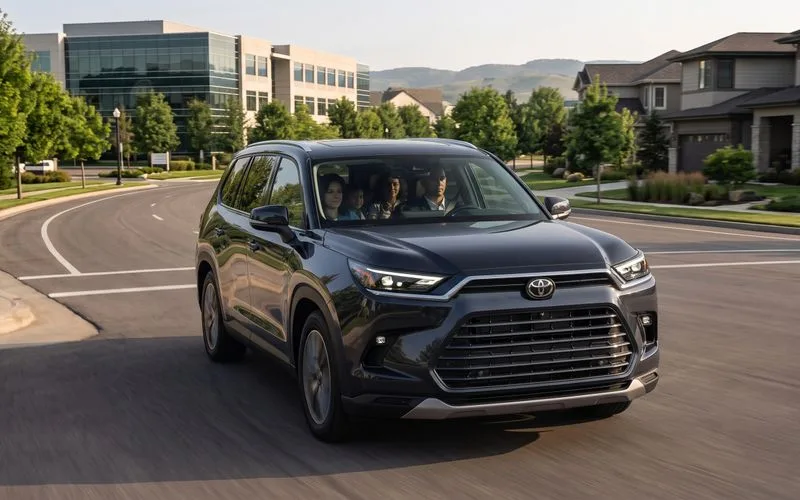 Toyota Grand HighlanderMid-Size SUVBetter at: Running costs
Same three-row space with a hybrid returning roughly 34 MPG combined versus the Acadia's 22, much stronger resale, and two years of included maintenance.
Compare 2.79B-
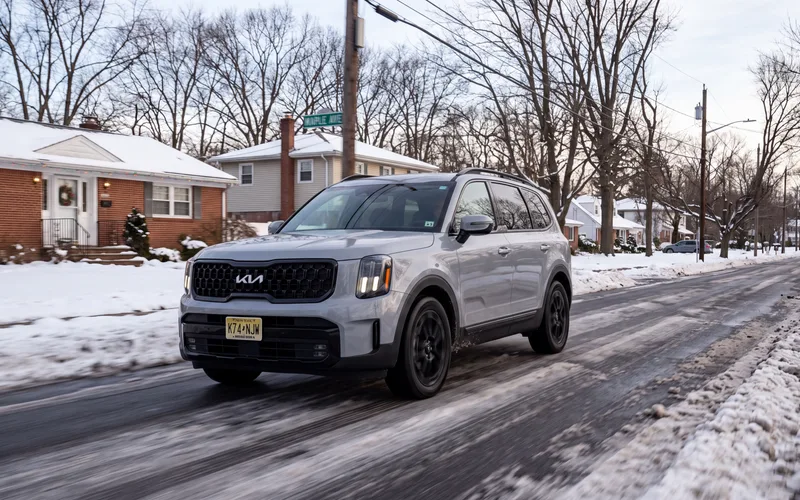 Kia TellurideMid-Size SUVBetter at: Warranty
Equally roomy with a smoother V6 and a 10-year/100,000-mile powertrain warranty against GMC's 5-year/60,000-mile floor.
Compare 2.72B-
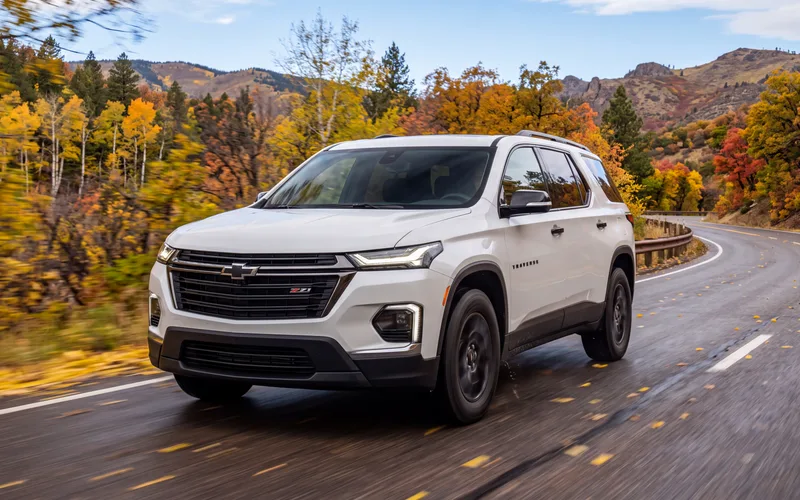 Chevrolet TraverseMid-Size SUVBetter at: Price
Mechanically the same vehicle with the same 328-hp turbo four and near-identical space, typically for thousands less on the sticker.
CompareHow it's evolved
4 scored model years · 2023–2026
Subject scores by year
Hover or tap a score to see what moved it versus the year before. A corner mark flags a big swing.
| Year | Performance | Efficiency | Safety | Space | Cost | Reliability | Tech | Use-case | Driving | Value |
|---|---|---|---|---|---|---|---|---|---|---|
| 2026 | 51 | 49 | 63 | 77 | 39 | 65 | 80 | 64 | 63 | 69 |
| 2025 | 53 | 49 | 63 | 77 | 41 | 62 | 80 | 64 | 59 | 70 |
| 2024 | 53 | 49 | 63 | 76 | 39 | 58 | 78 | 63 | 58 | 67 |
| 2023 | 43 | 55 | 53 | 61 | 41 | 63 | 61 | 56 | 57 | 61 |
Compare two years
Best fit & conditions
Higher scores mean a better fit for that use case. Learn more about use-case fit →
Subject profile
Academic Probation · NHTSA safety recalls
Feb 26, 2026Equipment: other: owners/service/other manualGeneral Motors has decided that certain 2027 Chevrolet Bolt EV, 2025-2026 Cadillac OPTIQ, Chevrolet Colorado, Equinox EV, GMC Canyon, 2026 Buick Enclave, Envision, Cadillac CT5, Escalade, Escalade ESV, Escalade IQ, Escalade IQL, LYRIQ, VISTIQ, Chevrolet Blazer EV, Corvette Convertible, Corvette Coupe, Corvette Convertible E-Ray, Equinox, Silverado 1500, 2500, 3500, Silverado EV, Suburban 1500, Tahoe, Traverse, GMC Acadia, Hummer EV Pickup, Hummer EV SUV, Sierra 1500, 2500, 3500, Sierra EV, Terrain, Yukon, and Yukon XL vehicles. The radio may not have been set to the correct status to download the electronic owner's manual during production. As such, these vehicles fail to comply with the requirements of Federal Motor Vehicle Safety Standard number 208, âOccupant Protection.â
Defect
General Motors has decided that certain 2027 Chevrolet Bolt EV, 2025-2026 Cadillac OPTIQ, Chevrolet Colorado, Equinox EV, GMC Canyon, 2026 Buick Enclave, Envision, Cadillac CT5, Escalade, Escalade ESV, Escalade IQ, Escalade IQL, LYRIQ, VISTIQ, Chevrolet Blazer EV, Corvette Convertible, Corvette Coupe, Corvette Convertible E-Ray, Equinox, Silverado 1500, 2500, 3500, Silverado EV, Suburban 1500, Tahoe, Traverse, GMC Acadia, Hummer EV Pickup, Hummer EV SUV, Sierra 1500, 2500, 3500, Sierra EV, Terrain, Yukon, and Yukon XL vehicles. The radio may not have been set to the correct status to download the electronic owner's manual during production. As such, these vehicles fail to comply with the requirements of Federal Motor Vehicle Safety Standard number 208, âOccupant Protection.â
Risk
Without an owner's manual to consult, owners may not know how to safely use and operate the vehicle, increasing the risk of injury in a crash.
Remedy
Dealers will reset the vehicle radio, which will facilitate automatic download of the electronic ownerâs manual, free of charge. Owner notification letters were mailed April 16, 2026. Owners may contact GM customer service at 1-866-467-9700, Chevrolet customer service at 1-800-222-1020 or Cadillac customer service at 1-800-333-4223. The manufacturer's number for this recall is N252540430. Vehicle Identification Numbers (VINs) involved in this recall became searchable on NHTSA.gov on February 26, 2026.
NHTSA campaign 26V114000 ↗Manufacturer no. N2525404305,861 vehicles potentially affected (all models in the campaign)Owners notified Apr 16, 2026Filed by General Motors, LLCFiled as ACADIA
18 recalls on other model years of the Acadia (2017–2023)
Oct 12, 2023Visibility: windshieldThe windshield may have been assembled without the proper urethane sealant required to bond the windshield to the vehicle body.
Defect
General Motors, LLC (GM) is recalling certain 2023 GMC Acadia and 2024 Cadilac XT5 and XT6 vehicles. The windshield may have been assembled without the proper urethane sealant required to bond the windshield to the vehicle body.
Risk
A windshield that is not properly bonded may detach during a crash and increase the risk of injury.
Remedy
Dealers will inspect the windshield and apply primer and urethane sealant. If the windshield is damaged, the dealer will replace it. Repairs will be performed free of charge. Owner notification letters were mailed November 14, 2023. Owners may contact Cadillac customer service at 1-800-458-8006 or GMC customer service at 1-800-462-8782. GM's number for this recall is N232419690.
NHTSA campaign 23V681000 ↗Manufacturer no. N23241969042 vehicles potentially affected (all models in the campaign)Owners notified Nov 14, 2023Filed by General Motors, LLCFiled as ACADIAMay 10, 2023Air bags: frontal: driver side: inflator moduleThe driver's air bag inflator may explode during deployment, due to a manufacturing defect.
Defect
General Motors, LLC (GM) is recalling certain 2014-2017 Buick Enclave, Chevrolet Traverse, and GMC Acadia vehicles. The driver's air bag inflator may explode during deployment, due to a manufacturing defect.
Risk
An inflator explosion may result in sharp metal fragments striking the driver or other occupants, resulting in serious injury or death.
Remedy
Dealers will replace the driver's air bag module, free of charge. GM began mailing final owner letters February 23, 2024 and will continue mailing through December 2025. Owners may contact Buick customer service at 1-800-521-7300, Chevrolet customer service at 1-800-222-1020, or GMC customer service at 1-800-462-8782. GM's number for this recall is N232404980.
NHTSA campaign 23V334000 ↗Manufacturer no. N232404980995,085 vehicles potentially affected (all models in the campaign)Owners notified Feb 23, 2024Filed by General Motors, LLCFiled as ACADIAMar 16, 2023Power train: automatic transmissionThe transmission may have been built with an incorrect sun gear, which can result in the driver-side half-shaft disengaging from the transmission.
Defect
General Motors, LLC (GM) is recalling certain 2023 Cadillac XT6, GMC Acadia, Chevrolet Blazer, Traverse, and 2022-2023 Cadillac XT5 vehicles. The transmission may have been built with an incorrect sun gear, which can result in the driver-side half-shaft disengaging from the transmission.
Risk
A half-shaft disengaging from the transmission can result in a loss of drive power or vehicle rollaway when the vehicle is placed in park. Either of these scenarios can increase the risk of a crash.
Remedy
Dealers will replace the sun gears, free of charge. Owner notification letters were mailed on July 27, 2023. The remedy is expected to become available August 31, 2023. Owners may contact Cadillac customer service at 1-800-458-8006, Chevrolet customer service at 1-800-222-1020, or GMC customer service at 1-800-462-8782. GMC's number for this recall is N222389310.
NHTSA campaign 23V172000 ↗Manufacturer no. N2223893108,744 vehicles potentially affected (all models in the campaign)Owners notified Jul 27, 2023Filed by General Motors, LLCFiled as ACADIAFeb 2, 2023Power train: driveline: driveshaftThe right-front half-shaft assemblies may be improperly connected to the transmission, causing them to separate.
Defect
General Motors, LLC (GM) is recalling certain 2023 Cadillac XT5 and GMC Acadia vehicles. The right-front half-shaft assemblies may be improperly connected to the transmission, causing them to separate.
Risk
Separation between the half-shaft and transmission can result in a loss of drive power or vehicle rollaway when the vehicle is placed in park. Either of these scenarios can increase the risk of a crash.
Remedy
Dealers will replace the right-front half-shaft assemblies, free of charge. Owner notification letters were mailed February 17, 2023. Owners may contact Cadillac customer service at 1-800-458-8006 or GMC customer service at 1-800-462-8782. GM's number for this recall is N222393410.
NHTSA campaign 23V043000 ↗Manufacturer no. N22239341010 vehicles potentially affected (all models in the campaign)Owners notified Feb 17, 2023Filed by General Motors, LLCFiled as ACADIASep 22, 2022Back over prevention: sensing system: cameraThe rearview camera coaxial cable connectors may have been crimped improperly, causing the rearview camera to fail or function intermittently.
Defect
General Motors, LLC (GM) is recalling certain 2020-2021 Cadillac XT5, XT6, and GMC Acadia vehicles equipped with the optional Surround Vision feature. The rearview camera coaxial cable connectors may have been crimped improperly, causing the rearview camera to fail or function intermittently.
Risk
An inoperative rearview camera can reduce the driver's rear visibility, increasing the risk of a crash.
Remedy
Dealers will replace the coaxial cables, free of charge. Owner notification letters were mailed January 18, 2023. Owners may contact Cadillac customer service at 1-800-458-8006 or GMC customer service at 1-800-462-8782. GM's number for this recall is N222378380.
NHTSA campaign 22V709000 ↗Manufacturer no. N22237838095,231 vehicles potentially affected (all models in the campaign)Owners notified Jan 18, 2023Filed by General Motors, LLCFiled as ACADIASep 22, 2022Equipment: other: labelsThe certification label located on the driver's side B-pillar contains tire size information that may be illegible. As such, these vehicles fail to comply with the requirements of Federal Motor Vehicle Safety Standard number 110, "Tire Selection and Rims."
Defect
General Motors, LLC (GM) is recalling certain 2023 Cadillac XT5, XT6, and GMC Acadia vehicles. The certification label located on the driver's side B-pillar contains tire size information that may be illegible. As such, these vehicles fail to comply with the requirements of Federal Motor Vehicle Safety Standard number 110, "Tire Selection and Rims."
Risk
Illegible tire size information may result in the wrong tires being installed, increasing the risk of a crash.
Remedy
Dealers will replace the vehicle certification label, free of charge. Owner notification letters were mailed October 12, 2022. Owners may contact Cadillac customer service at 1-800-458-8006 or GMC customer service at 1-800-462-8782. GM's number for this recall is N222381690.
NHTSA campaign 22V708000 ↗Manufacturer no. N22238169024 vehicles potentially affected (all models in the campaign)Owners notified Oct 12, 2022Filed by General Motors, LLCFiled as ACADIAJun 23, 2022Fuel system, gasoline: storage: tank assemblyThe fuel tank rollover valve may not provide a proper seal in the event of a rollover crash.
Defect
General Motors, LLC (GM) is recalling certain 2022 Cadillac XT5, XT6, and GMC Acadia All-Wheel Drive (AWD) vehicles. The fuel tank rollover valve may not provide a proper seal in the event of a rollover crash.
Risk
A fuel tank rollover valve that does not properly seal can result in a fuel leak during a rollover crash, increasing the risk of a fire.
Remedy
Dealers will inspect the fuel tank and replace the fuel tank shell if the rollover valve is found to be dislodged or missing, free of charge. Owner notification letters were mailed July 27, 2022. Owners may contact Cadillac customer service at 1-800-458-8006 and GMC customer service at 1-800-462-8782. GM's number for this recall is N222366070.
NHTSA campaign 22V446000 ↗Manufacturer no. N222366070228 vehicles potentially affected (all models in the campaign)Owners notified Jul 27, 2022Filed by General Motors, LLCFiled as ACADIAJun 16, 2022Suspension: rearThe left-rear suspension toe link may have been tightened improperly, which could result in a loose or separated toe link.
Defect
General Motors, LLC (GM) is recalling certain 2022 Cadillac XT5, XT6, and GMC Acadia vehicles. The left-rear suspension toe link may have been tightened improperly, which could result in a loose or separated toe link.
Risk
A loose toe link can separate and cause a loss of vehicle control, increasing the risk of a crash.
Remedy
Dealers will inspect the left-rear suspension and replace the fastener if it is loose or missing, free of charge. Owner notification letters were mailed July 11, 2022. Owners may contact Cadillac customer service at 1-800-458-8006 or GMC customer service at 1-800-462-8782. GM's number for this recall is N222364330.
NHTSA campaign 22V427000 ↗Manufacturer no. N222364330736 vehicles potentially affected (all models in the campaign)Owners notified Jul 11, 2022Filed by General Motors, LLCFiled as ACADIASep 10, 2021Air bags · Air bags: air bag/restraint control moduleThe sensing diagnostic module (SDM) may have been left in "manufacturing mode" and not activated at the assembly plant prior to shipment. As such, these vehicles fail to comply with the requirements of Federal Motor Vehicle Safety Standard number 208, "Occupant Crash Protection."
Defect
General Motors, LLC. (GM) is recalling certain 2022 GMC Acadia vehicles. The sensing diagnostic module (SDM) may have been left in "manufacturing mode" and not activated at the assembly plant prior to shipment. As such, these vehicles fail to comply with the requirements of Federal Motor Vehicle Safety Standard number 208, "Occupant Crash Protection."
Risk
The air bags will not deploy with an unactivated SDM, increasing the risk of injury in a crash.
Remedy
The vehicles will be returned to the assembly plant for SDM activation. Both affected vehicles are still in dealer inventory and therefore no owner notification letters will be mailed. Owners may contact GMC 1-800-462-8782. GM's number for this recall is N212344261.
NHTSA campaign 21V702000 ↗Manufacturer no. N2123442612 vehicles potentially affected (all models in the campaign)Owners notified Sep 10, 2021Filed by General Motors, LLCFiled as ACADIAJun 3, 2021Fuel system, gasoline: delivery: hoses, lines/piping, and fittingsThe fuel supply lines may be improperly attached and seated.
Defect
General Motors, LLC. (GM) is recalling certain 2021 Cadillac XT5, XT6, and GMC Acadia vehicles. The fuel supply lines may be improperly attached and seated.
Risk
Improperly attached and seated fuel supply lines may loosen or separate, causing a fuel leak and increasing the risk of a fire.
Remedy
Dealers will inspect and replace fuel supply lines as necessary, free of charge. Owner notification letters were mailed on July 1, 2021. Owners may contact Cadillac customer service at 1-800-458-8006 and GMC customer service at 1-800-462-8782. GM's number for this recall is N212335590.
NHTSA campaign 21V422000 ↗Manufacturer no. N212335590572 vehicles potentially affected (all models in the campaign)Owners notified Jul 1, 2021Filed by General Motors, LLCFiled as ACADIAFeb 25, 2021TiresThe affected tires were cured for too long during production.
Defect
General Motors LLC (GM) is recalling certain 2020 Buick Enclave, Cadillac XT4, XT5, Escalade, Escalade ESV, Chevrolet Suburban, Tahoe, Traverse, GMC Yukon, Yukon XL, 2018-2021 Chevrolet Express, GMC Savana, 2019-2020 Chevrolet Blazer, Silverado 1500, GMC Acadia, Sierra 1500, and certain Continental tires sold to the aftermarket for various model year 2018-2021 vehicles. The affected tires were cured for too long during production.
Risk
Over cured tires may develop a break in the sidewall resulting in sudden air loss or a belt edge separation which could lead to a tread/belt loss. Either condition can cause a loss of vehicle control, increasing the risk of a crash.
Remedy
GM will notify owners, and dealers will inspect the tires, replacing them as necessary, free of charge. The recall began March 22, 2021. Owners may contact GMC customer service at 1-888-988-7267, Buick customer service at 1-866-608-8080, Chevrolet customer service at 1-800-222-1020 or Cadillac customer service at 1-800-458-8006. GM's number for this recall is N212329050.
NHTSA campaign 21V115000 ↗Manufacturer no. N21232905033,838 vehicles potentially affected (all models in the campaign)Owners notified Mar 22, 2021Filed by General Motors, LLCFiled as ACADIANov 5, 2020TiresThe vehicles may have been manufactured with Continental tires that were overcured.
Defect
General Motors LLC (GM) is recalling certain 2020 Buick Enclave, Cadillac XT5, GMC Acadia and Chevrolet Traverse vehicles and 2020-2021 Chevrolet Silverado 1500, GMC Sierra 1500 vehicles. The vehicles may have been manufactured with Continental tires that were overcured.
Risk
Overcured tires may experience a carcass break in the sidewall resulting in a sudden air loss or could develop a belt edge separation which could lead to partial or full tread/belt loss. Either condition increases the risk of a crash.
Remedy
GM will notify owners, and dealers will inspect vehicles and replace tires that have DOT number and production mold number combinations identified by Continental, free of charge. The recall began December 17, 2020. Owners may contact GMC customer service at 1-888-988-7267, Buick customer service at 1-866-608-8080, Chevrolet customer service at 1-800-222-1020 or Cadillac customer service at 1-800-458-8006. GM's number for this recall is N202319030.
NHTSA campaign 20V684000 ↗Manufacturer no. N2023190307,516 vehicles potentially affected (all models in the campaign)Owners notified Dec 17, 2020Filed by General Motors LLCFiled as ACADIAOct 29, 2020Power train: automatic transmissionThe start/stop accumulator endcap may have missing bolts.
Defect
General Motors LLC (GM) is recalling certain 2018-2019 Chevrolet Cruze and Buick LaCrosse, 2018-2020 Chevrolet Equinox, Chevrolet Traverse and GMC Terrain, 2018 Chevrolet Malibu, 2019-2020 Buick Encore, Buick Enclave, Cadillac XT4, Chevrolet Blazer and GMC Acadia, and 2020 Cadillac XT6 vehicles. The start/stop accumulator endcap may have missing bolts.
Risk
Missing bolts on the start-stop accumulator endcap could result in a transmission oil leak and may progress to a loss of propulsion, increasing the risk of a crash. A transmission fluid leak in the presence of an ignition source may increase the risk of fire.
Remedy
GM will notify owners, and dealers will inspect the start-stop transmission accumulator and replace it if any bolts are missing, free of charge. The recall began December 15, 2020. Owners may contact GMC customer service at 1-888-988-7267, Buick Customer service at 1-866-608-8080, Chevrolet customer service at 1-800-222-1020 or Cadillac customer service at 1-800-458-8006. GM's number for this recall is N202313440.
NHTSA campaign 20V668000 ↗Manufacturer no. N202313440194,105 vehicles potentially affected (all models in the campaign)Owners notified Dec 15, 2020Filed by General Motors LLCFiled as ACADIAOct 15, 2020Fuel system, gasoline: delivery: fuel pumpThe fuel pump's jet nozzle may have a plastic burr remaining from the manufacturing process, possibly causing a blocked nozzle and an insufficient fuel supply to the engine.
Defect
General Motors LLC (GM) is recalling certain 2020 Buick Enclave, Cadillac XT5, Cadillac XT6, Chevrolet Traverse, and GMC Acadia vehicles. The fuel pump's jet nozzle may have a plastic burr remaining from the manufacturing process, possibly causing a blocked nozzle and an insufficient fuel supply to the engine.
Risk
Insufficient fuel supply can result in an engine stall without warning, increasing the risk of a crash.
Remedy
GM will notify owners, and dealers will replace the fuel pump module. The recall began November 16, 2020. Owners may contact GMC customer service at 1-888-988-7267, Buick Customer service at 1-866-608-8080, Chevrolet customer service at 1-800-222-1020 or Cadillac customer service at 1-800-458-8006. GM's number for this recall is N202314760.
NHTSA campaign 20V639000 ↗Manufacturer no. N2023147602,781 vehicles potentially affected (all models in the campaign)Owners notified Nov 16, 2020Filed by General Motors LLCFiled as ACADIAJul 30, 2020Air bags: side/window: curtain: inflatorThe diffuser component of the Roof-Rail Air Bag (RRAB) inflator may not have been properly crimped to the inflator and could separate from the inflator during air bag deployment.
Defect
General Motors, LLC. (GM) is recalling certain 2020 Buick Enclave, Cadillac XT5 and XT6, Chevrolet Blazer, Silverado 1500, 2500 and 3500 and Traverse and GMC Acadia and Sierra 1500, 2500 and 3500 vehicles. The diffuser component of the Roof-Rail Air Bag (RRAB) inflator may not have been properly crimped to the inflator and could separate from the inflator during air bag deployment.
Risk
If the diffuser separates from the inflator during deployment, RRAB performance may be degraded, increasing the risk of injury in a crash.
Remedy
GM will notify owners, and dealers will replace the suspect RRAB modules, free of charge. The recall began September 3, 2020. Owners may contact Chevrolet customer service at 1-800-630-2438, Cadillac customer service at 1-800-333-4223, or Buick customer service at 1-800-521-7300. GM's number for this recall is N202305380.
NHTSA campaign 20V446000 ↗Manufacturer no. N202305380769 vehicles potentially affected (all models in the campaign)Owners notified Sep 3, 2020Filed by General Motors LLCFiled as ACADIAMay 31, 2018Fuel system, gasoline: delivery: fuel pumpThe high pressure fuel pump may detach from its mounting flange, possibly resulting in the pump damaging the high pressure fuel line.
Defect
General Motors LLC (GM) is recalling certain 2015-2018 GMC Canyon, 2016-2017 Buick Envision, 2016-2018 Chevrolet Colorado and Malibu, 2017-2018 GMC Acadia, 2018 Buick LaCrosse, Cadillac ATS, Chevrolet Equinox, and GMC Terrain vehicles. The high pressure fuel pump may detach from its mounting flange, possibly resulting in the pump damaging the high pressure fuel line.
Risk
A damaged fuel line can create a fuel leak, increasing the risk of a fire.
Remedy
GM will notify owners, and dealers will replace the high pressure fuel pump, and high pressure fuel pipe, free of charge. The recall began July 2, 2018. Owners may contact Buick customer service at 1-800-521-7300, Cadillac customer service at 1-800-458-8006, Chevrolet customer service at 1-800-222-1020, or GMC customer service at 1-800-462-8782. GM's number for this recall is 18188.
NHTSA campaign 18V358000 ↗Manufacturer no. 18188 18268895 vehicles potentially affected (all models in the campaign)Owners notified Jul 2, 2018Filed by General Motors LLCFiled as ACADIAAug 22, 2017Power train: driveline: driveshaftThe right front intermediate driveshaft may fracture and separate while driving.
Defect
General Motors LLC (GM) is recalling certain 2018 Chevrolet Equinox and GMC Terrain vehicles and 2017-2018 GMC Acadia vehicles. The right front intermediate driveshaft may fracture and separate while driving.
Risk
If the front right intermediate drive shaft assembly separates while driving, the vehicle will lose propulsion, increasing the risk of a crash. If the assembly separates while parked on a grade, without the park brake engaged, the vehicle may move unintentionally, increasing the risk of a vehicle roll-away.
Remedy
GM will notify owners, and dealers will replace the right front intermediate drive shaft assembly, free of charge. The recall began August 25, 2017. Owners may contact GMC customer service at 1-800-462-8782 or Chevrolet customer service at 1-800-222-1020. GM's number for this recall is 17329.
NHTSA campaign 17V516000 ↗Manufacturer no. 173292,905 vehicles potentially affected (all models in the campaign)Owners notified Aug 25, 2017Filed by General Motors LLCFiled as ACADIANov 4, 2016Service brakes, hydraulic: foundation components: disc: caliperThe front brake calipers may have a torn or misaligned caliper piston seal which may allow brake fluid to leak.
Defect
General Motors LLC (GM) is recalling certain model year 2017 Cadillac XT5 vehicles manufactured April 16, 2016, to May 9, 2016, and 2017 GMC Acadia vehicles manufactured April 19, 2016, to April 22, 2016. The front brake calipers may have a torn or misaligned caliper piston seal which may allow brake fluid to leak.
Risk
If there is a brake fluid leak, braking performance may be reduced, increasing the risk of a crash.
Remedy
GM will notify owners, and dealers will inspect the front brake calipers, replacing the brake caliper assemblies, as necessary, free of charge. The recall began on December 12, 2016. Owners may contact GM customer service at 1-800-458-8006 (Cadillac), or 1-800-462-8782 (GMC). GM's number for this recall is 16096.
NHTSA campaign 16V802000 ↗Manufacturer no. 160961,844 vehicles potentially affected (all models in the campaign)Owners notified Dec 12, 2016Filed by General Motors LLCFiled as ACADIA
Source: NHTSA Office of Defects Investigation recall database, model years 2017–2026. Recalls are listed by model year as the manufacturer filed them; whether a specific car is affected depends on its VIN — check a VIN at nhtsa.gov ↗. NHTSA model names matched to this page: ACADIA.
Detailed scoring by subject
1Performance & PowertrainOne of the Acadia's weakest categories.1.45D
The 2026 Acadia carries over the fourth-generation's sole powertrain, a 2.5L turbocharged inline-4 (LK0) rated at 328 hp across all trims (Elevation, AT4, Denali).
The 2.5L turbo delivers a healthy 326 lb-ft peak, common to every 2026 Acadia trim.
Instrumented tests of the mechanically identical 2024–2025 Acadia AWD returned roughly 6.7 s to 60 mph; the 2026 uses the same 2.5L turbo/8-speed drivetrain.
Reviewers consistently note the 2.5L turbo pulls strongly on paper but sounds coarse and thrashy under load — a step down in refinement from the outgoing V6 and clearly behind hybrid rivals like the Toyota Grand Highlander Hybrid.
GM's 8-speed automatic (Hydra-Matic 8L80) is generally decisive and well-matched to the 2.5L turbo's torque, though reviewers occasionally cite off-the-line hesitation and busy downshifts on grades.
Every 2026 Acadia — regardless of trim — is rated to tow 5,000 lbs when equipped with the available trailering package; midpack for a mid-size three-row SUV.
AWD is optional on Elevation and Denali (FWD standard) and standard on AT4, where a twin-clutch rear-drive unit adds torque vectoring. Widely available, but nothing like a locker or low-range setup.
The AT4 trim adds an off-road-tuned suspension, ~8 in of ground clearance, skid plates, hill descent control, all-terrain tires and a Terrain drive mode — real light-duty capability, but no locking diff or low range and clearance still trails 4Runner/Bronco.
The Acadia offers a single 2.5L turbo across the entire 2026 range — no V6, no hybrid, no PHEV, no EV. That is the narrowest possible lineup and a real weakness against three-row rivals like the Grand Highlander, Pilot, Palisade and Telluride that offer hybrids or additional engines.
2Efficiency & RangeOne of the Acadia's weakest categories.1.24D
Third-generation Acadia (2024–present) carries GM's 2.5L turbo I4 (LK0, 328 hp) with an 8-speed automatic; the 2026 model year continues the unchanged powertrain. EPA combined economy is 22 MPG for the AWD volume trim (23 MPG FWD) — near the low end of the SUV normalization band and a step down from the outgoing 3.6L V6 Acadia because of the turbo's added weight and Grand-Highlander-class footprint.
AWD city rating is 19 MPG — well below the SUV segment midpoint. The 2.5L turbo lugs a 4,600+ lb three-row body around town without hybrid assist, and stop-start is the only meaningful efficiency aid.
Highway rating of 26 MPG (AWD) is close to segment median for a three-row SUV of this size but nothing exceptional — the 8-speed's tall top gear helps at cruise, but the large frontal area limits gains.
The oversized 22.4-gallon tank redeems what modest MPG figures give up: at 22 MPG combined (AWD), theoretical range clears ~493 miles, and the FWD trim pushes past 515. This lands the Acadia in the upper end of the SUV range band and is one of its strongest efficiency-category attributes for long-haul family trips.
At 22 MPG combined on regular unleaded and the EPA's 15k-mi/yr / 55-city assumption, annual fuel cost sits near $2,700 for the AWD Acadia — high for a modern mid-size SUV because there is no hybrid option and the vehicle's mass keeps consumption up. FWD trims save roughly $100/yr.
The 2.5L turbo is engineered to run on regular 87-octane unleaded across all trims — no premium requirement, no diesel, no charging infrastructure to think about. Straightforward gas-station fuel keeps per-fill costs low even if consumption is high, placing this at the top end of the 80–100 band.
3SafetyMid-pack among this car's ten categories.2.24C
Third-generation Acadia (2024+) NHTSA testing yielded a 4-star overall rating (4 front / 5 side / 4 rollover); 2026 carries the same body-in-white and restraint hardware, so the rating is expected to carry over unchanged.
Redesigned Acadia has not earned IIHS Top Safety Pick status. Sister-vehicle testing (Chevrolet Traverse on the same C1XX platform) has shown Acceptable/Marginal results on the updated side-impact and moderate-overlap front tests, further held back by trim-dependent headlight ratings. No 2026 TSP designation.
Standard GMC Pro Safety on every trim (Elevation, AT4, Denali) bundles Automatic Emergency Braking, Forward Collision Alert, Front Pedestrian Braking, Lane Keep Assist with Lane Departure Warning, Following Distance Indicator, IntelliBeam auto high beams, and Rear Vision Camera. However, Blind Zone Steering Assist, Rear Cross Traffic Alert, and Adaptive Cruise Control remain part of Pro Safety Plus — standard on AT4/Denali but bundled/optional on the base Elevation.
GM's shared AEB with front pedestrian braking rates well in daytime scenarios on this platform but is a weaker performer on IIHS's updated nighttime pedestrian front crash prevention protocol. No 2026-specific IIHS result yet; hardware carries over from 2025.
Blind Zone Steering Assist and Rear Cross Traffic Alert offer alert-and-intervention behavior and are standard on AT4 and Denali; base Elevation still requires the Pro Safety Plus package to add them, which is why this stays mid-pack rather than best-in-class.
Standard Lane Keep Assist with Lane Departure Warning is functional but corrective rather than smooth centering; genuine hands-on lane centering only arrives when the Denali is equipped with Super Cruise. Reviewers of the 2024–2025 platform describe the base LKA as adequate but occasionally pingy — 2026 carries the same software calibration.
Full-speed-range Adaptive Cruise Control with stop-and-go is standard on AT4 and Denali through GMC Pro Safety Plus and performs smoothly per platform reviews; base Elevation still lacks it standard. Denali units fitted with Super Cruise deliver a class-leading highway assist experience.
Super Cruise remains available on the Denali trim for 2026, with GM's now-mature system covering more than 750,000 miles of compatible North American divided highways and supporting automated lane change and trailering-aware operation. Limited to the top trim, which caps the score below the highest tier.
Full LED headlamps with IntelliBeam auto high beams are standard fleet-wide, but IIHS testing on the platform-mate Traverse rated most headlight configurations only Acceptable, and curve-adaptive/matrix beam behavior is limited to the top trims. 2026 hardware unchanged.
The redesigned Acadia's tall greenhouse and upright dash give a commanding forward view and decent side sightlines, but thick D-pillars limit rear-quarter visibility on a body that grew significantly in the 2024 redesign. Rear Vision Camera is standard; HD Surround Vision (360-degree) is available on Elevation and standard on AT4/Denali to compensate.
Larger cabin from the 2024 redesign brings wide second-row door openings and easily accessed outboard LATCH anchors; second-row 60/40 bench (Elevation) seats three across while captain's chairs (AT4/Denali) trade width for easier third-row access. Third-row LATCH remains tether-only, typical for the segment.
4Space & ComfortOne of the Acadia's strongest categories.3.21B+
Third-generation Acadia is a three-row mid-size SUV; captain's chairs are standard on AT4/Denali (7 seats), an 8-passenger bench is offered on Elevation.
Third-generation Acadia (2024 redesign) grew substantially in every dimension; front headroom is at the top of the mid-size SUV band.
Class-leading front legroom for a mid-size SUV — hits the top of the segment normalization band.
Second-row headroom is at the top of the SUV band thanks to the taller, squarer 2024+ redesign.
Second-row legroom is generous for the segment — adults sit comfortably behind adults.
Third row grew usefully in the 2024 redesign (38.5 in headroom, 29.8 in legroom) and reviewers call it kid-friendly with room for short adult trips, but access and knee space still trail class leaders like the Palisade/Telluride and Grand Highlander.
Cargo volume behind the second row is competitive for a mid-size three-row SUV, though it trails the Traverse-derived platform's largest rivals slightly.
Max cargo capacity is near the top of the mid-size SUV band after the 2024 redesign added roughly 80 cu ft of interior volume overall.
Large center console with sliding armrest, deep door bins, wireless phone tray, and standard 15-inch portrait screen keep clutter organized. Denali adds a Bose-integrated shelf and rear-console storage, but nothing genuinely innovative (no giga console, frunk, or Pro Power outlets).
Denali front chairs get 16-way power adjustment with massage and are widely praised for long-haul comfort; Elevation cloth is well-cushioned but flatter. Second-row captain's chairs slide and recline for adult comfort.
Denali gets adaptive dampers and quiet 20-inch tires for a composed, well-controlled ride; AT4 with 18s on all-terrain rubber rides firmer and busier on broken pavement. Overall rides better than the outgoing Acadia and the related Traverse.
Standard acoustic laminated windshield and active noise cancellation (Bose Centerpoint on Denali) keep highway noise well-suppressed; the 2.5T is a bit gruff under hard acceleration but muted at cruise.
Tri-zone climate is standard; heated front seats and heated steering wheel standard on Elevation and up; ventilated fronts and heated second-row captain's chairs standard on AT4/Denali; Denali adds massaging front seats and remote start with cabin pre-conditioning.
5Cost of OwnershipThe Acadia's lowest-graded category.0.60F
GMC has not published full 2026 pricing at time of scoring; figure is a modest ~$1,000 carry-forward from the 2025 Elevation FWD base of $43,995 (with $1,395 destination), consistent with recent-year GMC increases.
Elevation AWD is the highest-volume configuration for the redesigned 3-row Acadia; a typically-equipped Elevation AWD lands mid-$46k, and the popular AT4 mix pushes the practical average up to about $49k.
Estimated from Edmunds/CarEdge class data for premium 3-row midsize SUVs with turbo-four powertrains; higher than a naturally aspirated V6 equivalent because of turbo service and premium-branded parts, but below luxury peers.
GM midsize 3-row SUVs typically retain 44–50% of MSRP over 5 years per KBB/ALG residual projections; Acadia is a mid-pack performer, well behind Toyota Highlander/Grand Highlander but ahead of Ford Explorer.
GM standard bumper-to-bumper coverage is unchanged for 2026; this is the industry floor and trails Korean/Genesis rivals substantially.
GM standard powertrain coverage is unchanged for 2026; sits at the bottom of the industry alongside Ford, well behind Hyundai/Kia (10/100k) and Mitsubishi.
GM's included package is thin: one complimentary first-visit maintenance (oil change / tire rotation / inspection), 5-yr/60k roadside assistance, and short 3-month OnStar & Connected Services Premium trial. Below segment norms (Toyota 2yr/25k ToyotaCare, BMW 3yr free scheduled), but above brands offering nothing.
$48,995 volume-trim price minus its estimated resale value after 5 years (47% retained, or about $23,028) leaves about $25,967 in depreciation. Add the projected $5,900 in 5-year maintenance and repairs, and owning this vehicle for 5 years costs about $31,867 in total.
6Reliability & QualityMid-pack among this car's ten categories.2.37C+
3rd-gen Acadia is in its third model year; the 2024 launch drew a low Consumer Reports predicted-reliability rating (1/5) on the all-new platform and 2.5T powertrain, with modest improvement observed for 2025. 2026 should benefit from another year of running changes but the generation still lacks a proven track record.
GMC has landed mid-pack in recent Consumer Reports brand-reliability rankings and near industry average in J.D. Power VDS (PP100). Not among the top-tier brands but no consistent bottom-third finishes either.
2024 launch Acadias saw the typical cluster of early recalls (software, safety-restraint and seat-belt items) common to all-new GM crossovers; nothing systemic to powertrain, brakes, or fire risk. By MY2026 most first-year issues have been addressed but recall count on the 3rd gen is above segment best-in-class.
The LK0 2.5L turbo I4 is a new engine family introduced in the 2024 Traverse/Acadia; no long-term durability track record yet, and it works hard hauling a ~4,900 lb three-row SUV. The paired Hydra-Matic 8-speed is more proven but its high-torque application here is still new. Mixed signals until fleet data accumulates.
Denali volume trim earns strong reviewer praise for material richness — 15-inch center display, 11-inch cluster, real wood/aluminum trim, quilted leather. Materials read as class-leading among non-luxury mid-size three-rows and comparable to entry-luxury cabins at a lower price. Lower Elevation/AT4 trims are less lavish but still solid.
Assembly quality on the 3rd-gen Acadia has been generally solid with scattered early-build complaints about trim alignment and infotainment glitches. By MY2026 build (third year of the generation), Spring Hill assembly plant has had time to refine the process; initial-quality reports have trended in a positive direction.
GMC vehicles are sold and serviced through the extensive Buick-GMC dealer channel — one of the densest US nationwide networks. Service satisfaction runs around industry average per J.D. Power CSI; not a top-tier brand for service experience but reliably available almost everywhere.
GM parts availability is strong given shared platform components with Traverse/Enclave; independent-shop service is well-supported by broad GM parts distribution. Repair costs on the newer 2.5T turbo I4 with more complex hardware run above the segment average but not unusually high. Aftermarket for the 3rd gen is still developing.
7Technology & InfotainmentThe Acadia's best-graded category.3.42B+
The 2026 Acadia carries over the redesigned 5th-gen interior with a standard 15-inch diagonal color touchscreen in portrait orientation on every trim (Elevation, AT4, Denali).
GM's Google-built-in system with the 15" portrait screen is generally quick and logically laid out, with useful physical volume/tuning knob and separate climate controls. Reviewers praise the menu structure and speed but note occasional crowded submenus.
Wireless Apple CarPlay and wireless Android Auto are standard across every trim of the 2026 Acadia — GM restored phone projection with the 2024 redesign after the Ultium EVs briefly dropped it.
Google built-in integrates Google Assistant natural-language voice control and Google Maps as the native navigation, with Google Play app store — one of the strongest embedded-Google implementations among mainstream SUVs.
Base 6-speaker system is adequate; a Bose Performance Series audio system (10 speakers) is available on AT4 and standard on Denali, with a 16-speaker Bose surround setup on the Denali as the top offering — strong for a mainstream three-row.
A full 11-inch diagonal reconfigurable digital driver display is standard on every trim, with multiple layouts and clear rendering — no analog fallback.
The redesigned Acadia runs on GM's Ultifi software platform with vehicle-wide OTA update capability — GM has pushed multi-domain updates including infotainment, driver-assist calibration, and body-control features.
myGMC app offers remote start, lock/unlock, vehicle status, and location — but core Remote Access features shift to a paid OnStar Remote Access Plan after the trial period, which drops the value versus competitors offering these free.
Multiple USB-C ports across all three rows are standard, and a wireless phone charger is available (standard from AT4 up). No AC household outlet, which caps the ceiling here.
Keyless Open passive entry, push-button start, and remote start are standard on all trims; hands-free power liftgate becomes standard from AT4 and up. No phone-as-key implementation yet.
HD Rear Vision Camera is standard, HD Surround Vision (four-camera 360°) and front/rear park assist are available on upper trims, and Denali adds Rear Camera Mirror. Image quality is high-resolution.
A color head-up display is offered but restricted to the top Denali trim (and available on AT4) — not present on the volume Elevation trim, which caps the score below segment leaders that offer HUD lower in the range.
8Use-Case FitMid-pack among this car's ten categories.2.33C+
The 3rd-gen (2024+) redesign gave the Acadia wider rear door openings and a larger cabin; outboard 2nd-row LATCH anchors are easily accessed, and the standard captain's chairs on AT4/Denali make 3rd-row access with car seats installed simple. Hands-free power liftgate (AT4/Denali) and cavernous cargo (57.3 cu ft behind row 2) swallow strollers. Prior placeholder overstated benchmark status — segment leaders (Palisade/Telluride) still edge it on second-row cabin width.
GMC Pro Safety (AEB, FCW, front pedestrian braking, LKA, IntelliBeam) is standard on every trim, but Pro Safety Plus (Blind Zone Steering, Rear Cross Traffic, adaptive cruise) is standard only on AT4/Denali — an option pack on the volume-family Elevation. NHTSA 4-star overall (not 5) and no IIHS Top Safety Pick award cap the family-safety credentials below segment best.
Roomy 2nd row (40.0 in headroom / 39.7 in legroom), tri-zone auto climate standard, heated second-row captain's chairs standard on AT4/Denali, USB-C ports across all three rows, and a ~493-mi tank range make the Acadia a genuinely capable long-haul family hauler. Absence of any rear-seat entertainment option and thin 3rd-row leg space (29.8 in) keep it below segment leaders (Palisade/Grand Highlander) with more back-seat amenity.
204-in long, 4,600+ lb three-row body with a thick D-pillar isn't inherently commuter-friendly, but standard Pro Safety, easy-to-read 15" screen with physical HVAC controls, and available Super Cruise on Denali reduce daily fatigue. Reviewers note the 2.5T is smooth at low speeds despite occasional 8-speed tip-in hesitation.
EPA 22 MPG combined AWD (19/26) with no hybrid, PHEV or EV option means per-mile fuel cost lands around $2,700/yr — well above hybrid-equipped rivals (Grand Highlander Hybrid, Palisade Hybrid, Sorento HEV, Explorer Hybrid). Regular 87-octane is a small offset. Prior placeholder (80) badly overstated this — Acadia is a below-average commuter cost story for the segment. Insurance ~$1,950/yr is average.
The redesigned Acadia is a full 204 in long and ~78 in wide — big by any urban measure — with a 37.8-ft turning circle. HD Surround Vision (four-camera 360) is standard on AT4/Denali (available on Elevation) and front/rear park assist are available, which claws it back to competent-not-easy. Sight lines improved over 2nd-gen but rear quarters are still blocky.
5,000-lb max tow rating (with trailering package) is mid-pack for a unibody mid-size 3-row SUV; the 2.5T's 328 hp / 326 lb-ft copes with a loaded trailer but works hard, and there is no engine option for buyers who need more. No bed and modest payload cap keep this well short of a body-on-frame or truck-based rival for serious work.
3rd-gen (2024+) Acadia earned Consumer Reports predicted reliability 1/5 in year one and only modest improvement in 2025; the LK0 2.5T is a brand-new engine family with no high-mileage track record, and the Denali's leather-and-suede interior is not fleet-oriented. GMC lacks a work-fleet reputation for this vehicle. Prior placeholder (70) overstated durability for hard-use contexts.
The Acadia has no bed, no household-outlet Pro Power onboard, no washable-surface interior option and no work-oriented upfit ecosystem — it is a premium family SUV. Roof rails and tow prep are available, USB-C ports across all rows keep devices charged, but that's the extent of jobsite features. Prior placeholder (84) badly overrated this.
22.4-gallon tank gives ~493 mi range (515 FWD) — near the top of the segment for a gas SUV. Denali gets 16-way heated/ventilated massage front chairs; standard acoustic-laminated windshield and available Bose active noise cancellation keep highway noise low. Super Cruise on Denali removes hands-on driving fatigue on 750,000+ mi of mapped US highways. Standard ADAS on lower trims lags slightly.
AT4 trim brings real light-duty ability — ~8 in ground clearance, twin-clutch AWD with torque vectoring, hill descent control, skid plates, all-terrain tires and a Terrain drive mode — competitive with Bronco Sport Badlands but well short of a 4Runner or Wrangler (no low range, no lockers). Base FWD Elevation is largely pavement-bound. Standard roof rails and tow prep support gear/bikes.
97.5 cu ft max cargo (2nd + 3rd rows folded), 57.3 cu ft behind row 2 and 23.0 cu ft behind row 3 is genuinely capacious. 60/40 second-row bench (Elevation) folds flat, captain's chairs (AT4/Denali) tumble forward; standard roof rails and available Class III hitch support a rooftop box, kayak or bike rack. Underfloor storage and cargo-area tie-downs round it out, though nothing especially clever versus segment leaders.
9Driving ExperienceMid-pack among this car's ten categories.2.23C
Third-gen Acadia (redesigned MY2024, carryover into 2026) grew to a 121-in wheelbase and ~4,900-lb curb weight; reviews describe composed, secure handling for its size but with noticeable heft in transitions. Denali offers Continuous Damping Control (adaptive dampers) which sharpens body control, but volume Elevation trim rides on passive dampers and 20-in wheels.
Electric power steering is precise but light and numb — typical GM mid-size SUV tuning. Center feel is vague and there is little on-center buildup or road-surface feedback communicated through the wheel.
Four-wheel discs sized for a ~5,000-lb SUV deliver adequate stopping power with linear pedal feel; no reports of fade in normal driving, though 60-0 distances are middling for the mid-size class due to weight.
The sole 2.5L LK0 turbo I4 (328 hp / 326 lb-ft) paired with GM's 8-speed automatic delivers strong low-end torque and quick tip-in — outputs actually exceed the outgoing 3.6L V6. Downshifts and part-throttle response are prompt; auto-stop restart is occasionally coarse.
The 2.5L turbo four is smooth at light loads but sounds noticeably coarse and thrashy when pushed hard through the rev range, especially on grades or during passing — a step down in refinement from the V6s in Palisade/Telluride/Grand Highlander or the twin-turbo V6 in Buick Enclave.
The redesigned 2024+ Acadia's stretched 121.8-in wheelbase penalizes low-speed maneuverability; GMC lists a 40.0-ft curb-to-curb turning circle, near the wide end of the mid-size SUV band and a real liability in parking lots.
Commanding seat height, wide seat/wheel adjustment range, and clear sightlines out of the tall glasshouse. Redesigned dash centers on an 11-in reconfigurable cluster and a 15-in portrait touchscreen with reasonable button/knob backup; center console is broad with clearly located transmission/drive-mode controls.
The Acadia is engineered as a comfortable family hauler, not a driver's SUV — it dispatches commutes and road trips capably but has no real character to reward enthusiastic driving. Sound, chassis balance, and steering all read as appliance-like rather than engaging.
10Value & Market PositionOne of the Acadia's strongest categories.2.67C+
Base Elevation (~$45K) brings a 15-inch touchscreen, 11-inch driver display, Google Built-In, wireless CarPlay/Android Auto, and GM Safety Assist ADAS as standard, which is competitive but not class-leading — Palisade/Telluride and Grand Highlander bundle more comfort content (ventilated seats, heated steering) at similar price points.
Third-gen Acadia's price jumped meaningfully over the outgoing model — Denali AWD approaches $60K+, entering Cadillac/luxury cross-shop territory while delivering a 4-cylinder powertrain and mid-pack fuel economy; content-per-dollar trails Palisade/Telluride and Grand Highlander, which are commonly cited by reviewers as better values.
Three-trim lineup (Elevation, AT4, Denali) with FWD/AWD choice and 7- or 8-passenger seating covers most buyers, but there is no true entry-level trim below Elevation and only one powertrain, so budget shoppers and hybrid seekers are left out.
Acadia is a steady mid-pack seller in the mid-size 3-row segment, typically posting solid quarterly numbers on the strength of the redesigned generation but well behind volume leaders Explorer, Palisade, Telluride, and Grand Highlander.
GMC carries a solid premium-truck-and-SUV image reinforced by the Denali sub-brand, which lifts perceived status above mainstream Chevy/Ford equivalents; not aspirational the way a luxury badge would be, but a clear positive for resale and satisfaction.
GM regularly runs meaningful cash, lease, and financing incentives on Acadia, and dealers negotiate off MSRP — buyers can typically find 5–10%+ off sticker without waiting for special events, which is favorable versus tight-supply rivals like Telluride/Palisade.
Third generation fully redesigned for MY2024 on GM's C1 platform with current infotainment (Google Built-In), latest ADAS (Super Cruise available), and modern powertrain — 2026 is year three of the generation, so still fresh with no imminent replacement.
Reviewers give the redesigned Acadia generally positive but middle-of-the-pack marks — praise for cabin size, tech, and Denali refinement, but consistent criticism of the busy ride, working-hard 4-cylinder, and price; not a NACTOY finalist or Car and Driver 10Best pick, and rarely the winner in mid-size 3-row comparisons.