

The verdict
A struggling mid-size truck, strong on technology and held back by efficiency.
The 2026 GMC Canyon is the dressed-up, hardware-heavy version of the mid-size truck formula: every trim gets 4WD with low range, the 310-hp 2.7L turbo four with 430 lb-ft, an 11.3-inch Google-built touchscreen, and — on Denali — hands-free Super Cruise that no rival mid-size truck offers. What you give up is space and thrift. Rear legroom is just 34.7 inches, the only bed is a 5-footer (61.7 in), payload tops out near 1,610 lbs, and 19 MPG combined with a 3-year/36,000-mile warranty makes it an expensive truck to keep. Buy it for the AT4X off-road hardware and the tech; don't buy it expecting a family cab or a work-truck bargain.
Jump to scoresStrengths
- Serious off-road hardware, and 4WD on every truck
- One of the best infotainment systems in any truck
- Super Cruise — hands-free highway driving no mid-size rival has
What holds it back
- The back seat is one of the tightest in the class
- Only a 5-foot bed, and modest payload
- Thirsty for a mid-size truck
Top alternatives
Cars shoppers cross-shop with the GMC Canyon 1.99C-
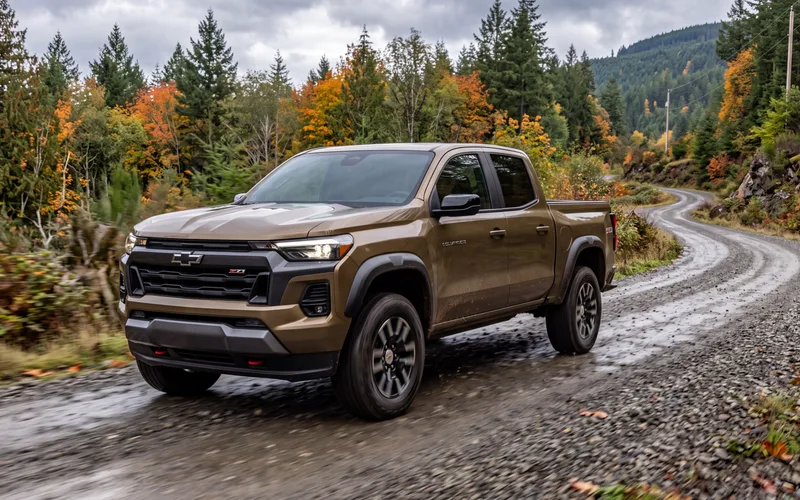 Chevrolet ColoradoMid-Size TruckBetter at: Value per dollar
The mechanically identical truck for roughly $5,000–$7,000 less, giving up Denali trim and Super Cruise but nothing in capability.
Compare 2.12C
2.12C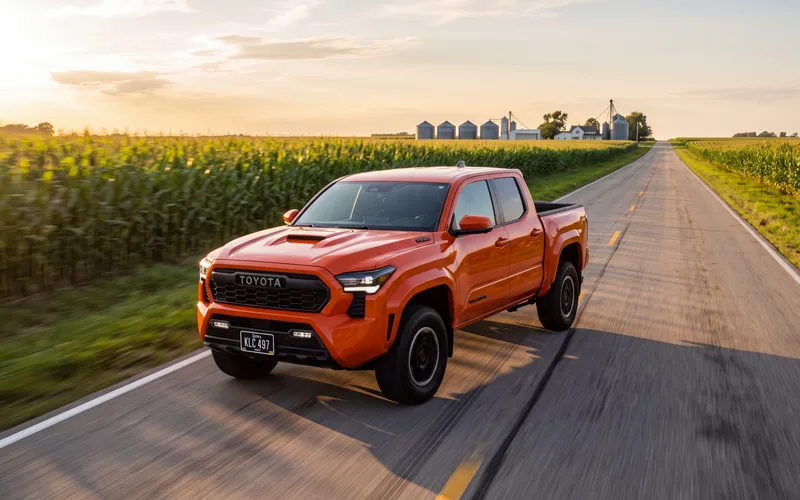 Toyota TacomaMid-Size TruckBetter at: Resale value
Holds about 65 percent of its value after five years versus the Canyon's ~57 percent, and adds a hybrid powertrain plus a long-bed option.
Compare 1.87C-
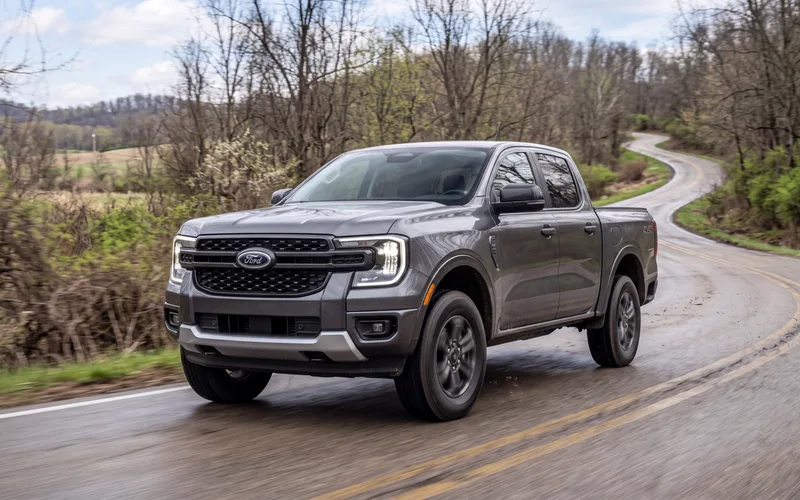 Ford RangerMid-Size TruckBetter at: Cabin and bed space
A genuinely usable crew cab at 36.6 in of rear legroom and a much bigger 51.5-cu-ft bed for buyers who carry people and gear.
CompareHow it's evolved
4 scored model years · 2023–2026
Subject scores by year
Hover or tap a score to see what moved it versus the year before. A corner mark flags a big swing.
| Year | Performance | Efficiency | Safety | Space | Cost | Reliability | Tech | Use-case | Driving | Value |
|---|---|---|---|---|---|---|---|---|---|---|
| 2026 | 45 | 42 | 63 | 52 | 48 | 59 | 70 | 64 | 65 | 65 |
| 2025 | 45 | 42 | 63 | 52 | 49 | 59 | 70 | 64 | 65 | 66 |
| 2024 | 45 | 42 | 63 | 52 | 49 | 58 | 69 | 63 | 65 | 66 |
| 2023 | 45 | 42 | 62 | 52 | 48 | 55 | 69 | 62 | 64 | 66 |
Compare two years
Best fit & conditions
Higher scores mean a better fit for that use case. Learn more about use-case fit →
Subject profile
Academic Probation · NHTSA safety recalls
Feb 26, 2026Equipment: other: owners/service/other manualGeneral Motors has decided that certain 2027 Chevrolet Bolt EV, 2025-2026 Cadillac OPTIQ, Chevrolet Colorado, Equinox EV, GMC Canyon, 2026 Buick Enclave, Envision, Cadillac CT5, Escalade, Escalade ESV, Escalade IQ, Escalade IQL, LYRIQ, VISTIQ, Chevrolet Blazer EV, Corvette Convertible, Corvette Coupe, Corvette Convertible E-Ray, Equinox, Silverado 1500, 2500, 3500, Silverado EV, Suburban 1500, Tahoe, Traverse, GMC Acadia, Hummer EV Pickup, Hummer EV SUV, Sierra 1500, 2500, 3500, Sierra EV, Terrain, Yukon, and Yukon XL vehicles. The radio may not have been set to the correct status to download the electronic owner's manual during production. As such, these vehicles fail to comply with the requirements of Federal Motor Vehicle Safety Standard number 208, âOccupant Protection.â
Defect
General Motors has decided that certain 2027 Chevrolet Bolt EV, 2025-2026 Cadillac OPTIQ, Chevrolet Colorado, Equinox EV, GMC Canyon, 2026 Buick Enclave, Envision, Cadillac CT5, Escalade, Escalade ESV, Escalade IQ, Escalade IQL, LYRIQ, VISTIQ, Chevrolet Blazer EV, Corvette Convertible, Corvette Coupe, Corvette Convertible E-Ray, Equinox, Silverado 1500, 2500, 3500, Silverado EV, Suburban 1500, Tahoe, Traverse, GMC Acadia, Hummer EV Pickup, Hummer EV SUV, Sierra 1500, 2500, 3500, Sierra EV, Terrain, Yukon, and Yukon XL vehicles. The radio may not have been set to the correct status to download the electronic owner's manual during production. As such, these vehicles fail to comply with the requirements of Federal Motor Vehicle Safety Standard number 208, âOccupant Protection.â
Risk
Without an owner's manual to consult, owners may not know how to safely use and operate the vehicle, increasing the risk of injury in a crash.
Remedy
Dealers will reset the vehicle radio, which will facilitate automatic download of the electronic ownerâs manual, free of charge. Owner notification letters were mailed April 16, 2026. Owners may contact GM customer service at 1-866-467-9700, Chevrolet customer service at 1-800-222-1020 or Cadillac customer service at 1-800-333-4223. The manufacturer's number for this recall is N252540430. Vehicle Identification Numbers (VINs) involved in this recall became searchable on NHTSA.gov on February 26, 2026.
NHTSA campaign 26V114000 ↗Manufacturer no. N2525404305,861 vehicles potentially affected (all models in the campaign)Owners notified Apr 16, 2026Filed by General Motors, LLCFiled as CANYONDec 11, 2025Air bags: air bag/restraint control module: software · Air bags: frontal: passenger side: inflator moduleIncorrect sensing and diagnostic module (SDM) software may cause a second stage passenger air bag deployment when only a first stage is intended. As such, these vehicles fail to conform to Federal Motor Vehicle Safety Standard (FMVSS) number 208, âOccupant Crash Protection."
Defect
General Motors, LLC (GM) is recalling certain 2024â2026 GMC Canyon AT4X AEV vehicles. Incorrect sensing and diagnostic module (SDM) software may cause a second stage passenger air bag deployment when only a first stage is intended. As such, these vehicles fail to conform to Federal Motor Vehicle Safety Standard (FMVSS) number 208, âOccupant Crash Protection."
Risk
An air bag that deploys improperly increases the risk of injury in a crash.
Remedy
Dealers will update the SDM software, free of charge. Owner notification letters were mailed January 30, 2026. Owners may contact GMC customer service at 1-800-462-8782. GM's number for this recall is N252533510. Vehicle Identification Numbers (VINs) involved in this recall became searchable on NHTSA.gov on December 11, 2025.
NHTSA campaign 25V856000 ↗Manufacturer no. N2525335101,120 vehicles potentially affected (all models in the campaign)Owners notified Jan 30, 2026Filed by General Motors, LLCFiled as CANYON
9 recalls on other model years of the Canyon (2017–2018, 2021–2024)
Sep 19, 2024Seat belts: critical fastenersThe left or right front seat may have a seat belt buckle attachment bolt that was not tightened properly.
Defect
General Motors, LLC (GM) is recalling certain 2023-2024 Chevrolet Colorado and 2023 GMC Canyon vehicles. The left or right front seat may have a seat belt buckle attachment bolt that was not tightened properly.
Risk
A loose seat belt may not properly restrain an occupant in a crash, increasing the risk of injury.
Remedy
Dealers will tighten the left and right front seat belt buckle attachment bolts, free of charge. Owner notification letters were mailed October 30, 2024. Owners may contact Chevrolet customer service at 1-800-222-1020, or GMC customer service at 1-800-462-8782. GM's number for this recall is N242453720.
NHTSA campaign 24V703000 ↗Manufacturer no. N242453720151 vehicles potentially affected (all models in the campaign)Owners notified Oct 30, 2024Filed by General Motors, LLCFiled as CANYONSep 12, 2024Exterior lighting: headlightsThe headlights may flicker while driving and while the vehicle is in park. As such, these vehicles fail to comply with the requirements of Federal Motor Safety Standard number 108, "Lamps, Reflective Devices, and Associated Equipment."
Defect
General Motors, LLC (GM) is recalling certain 2024 GMC Canyon vehicles. The headlights may flicker while driving and while the vehicle is in park. As such, these vehicles fail to comply with the requirements of Federal Motor Safety Standard number 108, "Lamps, Reflective Devices, and Associated Equipment."
Risk
Headlights flickering can reduce visibility, increasing the risk of a crash.
Remedy
Dealers will replace a module in the headlight, free of charge. Owner notification letters were mailed October 10, 2024. Owners can contact GMC customer service at 1-800-462-8782. GM's number for this recall is N242468880.
NHTSA campaign 24V673000 ↗Manufacturer no. N24246888013,241 vehicles potentially affected (all models in the campaign)Owners notified Oct 10, 2024Filed by General Motors, LLCFiled as CANYONJun 28, 2024Fuel system, gasoline: delivery: fuel pump: mounting plate/flange · Fuel system, gasoline: storage: tank assemblyThe lock ring that secures the fuel pump to the fuel tank assembly may not have been fully locked during assembly, which can result in a fuel leak during a crash.
Defect
General Motors, LLC (GM) is recalling certain 2024 Chevrolet Colorado and GMC Canyon vehicles. The lock ring that secures the fuel pump to the fuel tank assembly may not have been fully locked during assembly, which can result in a fuel leak during a crash.
Risk
A fuel leak in the presence of an ignition source increases the risk of a fire.
Remedy
Dealers will inspect and fully lock the fuel tank lock ring as necessary, free of charge. Owner notification letters are expected to be mailed August 13, 2024. Owners may contact Chevrolet customer service at 1-800-222-1020, or GMC Customer Call Center at (888) 988-7267. GM's number for this recall is N242451330.
NHTSA campaign 24V491000 ↗Manufacturer no. N2424513308,622 vehicles potentially affected (all models in the campaign)Owners notified Aug 6, 2024Filed by General Motors, LLCFiled as CANYONMar 28, 2024Wheels: lugs/nuts/bolts/studsThe front wheel hub bolts may have been over-tightened and damaged during installation.
Defect
General Motors, LLC (GM) is recalling certain 2023 Chevrolet Colorado and GMC Canyon vehicles. The front wheel hub bolts may have been over-tightened and damaged during installation.
Risk
Damaged bolts may loosen or break, which can result in a loss of vehicle control and increase the risk of a crash.
Remedy
Dealers will replace the left and right front wheel hub bolts, free of charge. Owner notification letters were mailed April 10, 2024. Owners may contact Chevrolet customer service at 1-800-222-1020 or GMC customer service at 1-800-462-8782. GM's number for this recall is N232431480.
NHTSA campaign 24V237000 ↗Manufacturer no. N23243148017 vehicles potentially affected (all models in the campaign)Owners notified Apr 10, 2024Filed by General Motors, LLCFiled as CANYONFeb 22, 2024Electrical system: adas: driver monitoring: camera/sensor · Forward collision avoidance: automatic emergency brakingThe front camera module (FCM) system may falsely detect an obstacle, causing the automatic emergency braking (AEB) to engage unexpectedly.
Defect
General Motors, LLC (GM) is recalling certain 2023 Chevrolet Colorado and GMC Canyon vehicles. The front camera module (FCM) system may falsely detect an obstacle, causing the automatic emergency braking (AEB) to engage unexpectedly.
Risk
Unexpected automatic emergency braking can cause the vehicle to abruptly stop or slow down, increasing the risk of a crash.
Remedy
Dealers will update the front camera module (FCM) software, free of charge. Owner notification letters were mailed April 5, 2024. Owners may contact GMC customer service at 1-800-462-8782 or Chevrolet customer service at 1-800-222-1020. GM's number for this recall is A232424660.
NHTSA campaign 24V133000 ↗Manufacturer no. A23242466055,755 vehicles potentially affected (all models in the campaign)Owners notified Apr 5, 2024Filed by General Motors, LLCFiled as CANYONMay 26, 2022Seats: critical fastenersThe front passenger seat may have a hook attachment that was not properly welded, allowing it to separate from the inboard track of the seat frame.
Defect
General Motors, LLC (GM) is recalling certain 2022 GMC Canyon and Chevrolet Colorado vehicles equipped with a manual passenger seat. The front passenger seat may have a hook attachment that was not properly welded, allowing it to separate from the inboard track of the seat frame.
Risk
An improperly welded seat frame may not properly restrain the seat occupant, increasing the risk of injury in a crash.
Remedy
Dealers will inspect the front passenger seat and replace the cushion frame, if necessary, free of charge. Owner notification letters were mailed July 6, 2022. Owners may contact GMC customer service at 1-800-462-8782 or Chevrolet customer service at 1-800-222-1020. GM's number for this recall is N222368320.
NHTSA campaign 22V375000 ↗Manufacturer no. N2223683201,631 vehicles potentially affected (all models in the campaign)Owners notified Jul 6, 2022Filed by General Motors, LLCFiled as CANYONJul 1, 2021Equipment: other: labelsThe load carrying capacity printed on the Tire and Loading Information placard is 22.5 kg (51 lbs.) more than intended. As such, these vehicles fail to comply with the requirements of Federal Motor Vehicle Safety Standard number 110, "Tire Selection and Rims."
Defect
General Motors, LLC (GM) is recalling certain 2021 GMC Canyon vehicles. The load carrying capacity printed on the Tire and Loading Information placard is 22.5 kg (51 lbs.) more than intended. As such, these vehicles fail to comply with the requirements of Federal Motor Vehicle Safety Standard number 110, "Tire Selection and Rims."
Risk
An incorrect label may lead to unintentionally overloading the vehicle, increasing the risk of a crash.
Remedy
GM will mail owners a new B-pillar label, free of charge. Owners may apply the label, or bring it to a dealer for installation. Owner notification letters were mailed on August 17, 2021. Owners may contact GMC customer service at 1-800-462-8782. GM's number for this recall is N212340735.
NHTSA campaign 21V497000 ↗Manufacturer no. N2123407357,199 vehicles potentially affected (all models in the campaign)Owners notified Aug 17, 2021Filed by General Motors, LLCFiled as CANYONDec 23, 2020Seat belts · Seat belts: critical fastenersIncorrect bolts may have been used at one or more fastening locations to secure the seat belts to the vehicle. If an incorrect bolt was used, the seat belt may not be properly attached to the vehicle.
Defect
General Motors, LLC (GM) is recalling certain 2020 Chevrolet Bolt EV and 2021 GMC Canyon and Sierra 1500, 2500 and 3500, Yukon, Yukon XL, Cadillac Escalade and Escalade ESV and Chevrolet Blazer, Camaro, Colorado, Equinox, Silverado 1500, 2500 and 3500, Suburban and Tahoe vehicles. Incorrect bolts may have been used at one or more fastening locations to secure the seat belts to the vehicle. If an incorrect bolt was used, the seat belt may not be properly attached to the vehicle.
Risk
If a seat belt assembly is not properly attached to the vehicle, the seat belt may not properly restrain an occupant in the event of a crash, increasing the risk of injury.
Remedy
GM will notify owners, and dealers will replace the suspect bolts, free of charge. The recall began January 29, 2021. Owners may contact GMC customer service at 1-800-462-8785, Cadillac customer service at 1-800-458-8006, or Chevrolet customer service at 1-800-222-1020. GM's number for this recall is N202322230.
NHTSA campaign 20V811000 ↗Manufacturer no. N202322230470 vehicles potentially affected (all models in the campaign)Owners notified Jan 29, 2021Filed by General Motors, LLCFiled as CANYONMay 31, 2018Fuel system, gasoline: delivery: fuel pumpThe high pressure fuel pump may detach from its mounting flange, possibly resulting in the pump damaging the high pressure fuel line.
Defect
General Motors LLC (GM) is recalling certain 2015-2018 GMC Canyon, 2016-2017 Buick Envision, 2016-2018 Chevrolet Colorado and Malibu, 2017-2018 GMC Acadia, 2018 Buick LaCrosse, Cadillac ATS, Chevrolet Equinox, and GMC Terrain vehicles. The high pressure fuel pump may detach from its mounting flange, possibly resulting in the pump damaging the high pressure fuel line.
Risk
A damaged fuel line can create a fuel leak, increasing the risk of a fire.
Remedy
GM will notify owners, and dealers will replace the high pressure fuel pump, and high pressure fuel pipe, free of charge. The recall began July 2, 2018. Owners may contact Buick customer service at 1-800-521-7300, Cadillac customer service at 1-800-458-8006, Chevrolet customer service at 1-800-222-1020, or GMC customer service at 1-800-462-8782. GM's number for this recall is 18188.
NHTSA campaign 18V358000 ↗Manufacturer no. 18188 18268895 vehicles potentially affected (all models in the campaign)Owners notified Jul 2, 2018Filed by General Motors LLCFiled as CANYON
Source: NHTSA Office of Defects Investigation recall database, model years 2017–2026. Recalls are listed by model year as the manufacturer filed them; whether a specific car is affected depends on its VIN — check a VIN at nhtsa.gov ↗. NHTSA model names matched to this page: CANYON.
Detailed scoring by subject
1Performance & PowertrainOne of the Canyon's weakest categories.1.03D
The 2026 Canyon uses a single 2.7L Turbo I4 (L3B, high-output tune) across every trim — Elevation, AT4, Denali, AT4X, AT4X AEV Edition — rated 310 hp at 5,600 rpm.
Same 2.7L Turbo I4 puts down 430 lb-ft at 3,000 rpm — strongest torque figure among gas-only mid-size trucks.
Instrumented tests of the mechanically identical Chevrolet Colorado (same 2.7L HO / 8-speed / 4WD) return roughly 6.7–7.2 s; Canyon trims run essentially the same time, with AT4X slightly slower on 33 in. mud terrains.
Torque delivery is strong and largely lag-free thanks to a big single-scroll turbo, but reviewers consistently flag coarse engine note and buzzy behavior under load — refined for a mid-size work truck, not a Denali-caliber luxury drivetrain.
GM's 8L80 8-speed automatic shifts smoothly in most situations and pairs well with the flat torque curve; occasional slow kickdowns and hunting between gears at part-throttle noted, but no CVT drone or harsh calibration.
Max conventional tow rating is 7,700 lbs on Elevation, AT4, and Denali when properly equipped; the off-road-focused AT4X and AT4X AEV Edition drop to 6,000 lbs due to gearing and suspension tuning.
Best-case payload on the base Elevation 4WD is roughly 1,610 lbs; Denali and AT4X trims fall a bit lower due to heavier equipment. Modest for a mid-size truck once you subtract the crew and any accessories.
GM ProGrade Trailering brings tow/haul mode, hitch-view camera, hitch guidance with hitch-view zoom, and the myGMC trailering app; an integrated trailer brake controller is available. Missing GM's higher-end 15-camera surround-trailering suite from Sierra/Silverado, but core aids are solid.
GMC made 4WD standard on every 2026 Canyon trim — Elevation, AT4, Denali, AT4X, and AT4X AEV Edition — with a two-speed transfer case (low range) across the lineup. Autotrac auto-4WD available; AT4X adds locking front and rear differentials.
The AT4X carries Multimatic DSSV spool-valve dampers, front and rear e-lockers, 33 in. mud-terrain tires, and 10.7 in. ground clearance; the AT4X AEV Edition adds 35 in. tires, boron-steel skid plates, and AEV-tuned suspension for genuine mid-size off-road credibility rivaling Tacoma TRD Pro and Ranger Raptor-adjacent tunes.
Every 2026 Canyon uses the same 2.7L Turbo I4 / 8-speed / 4WD combination — no V6, no diesel, no hybrid, no PHEV. Simpler than Tacoma (turbo + i-Force Max hybrid) or Ranger (2.3L EcoBoost + 2.7L twin-turbo V6 Raptor).
2Efficiency & RangeThe Canyon's lowest-graded category.0.80F
Sole engine is the 2.7L Turbomax HO I-4 (310 hp / 430 lb-ft) with 8-speed automatic carried unchanged from the 2023 redesign; volume trims (Elevation 4WD, AT4, Denali) are 4WD.
Body-on-frame mid-size truck with turbocharged four; auto stop/start included but no hybrid assist.
Tall body and 4WD hardware limit highway efficiency versus unibody rivals; taller final drive helps at cruise.
Range figure is EPA combined × published tank capacity; competitive for a mid-size gas truck but well behind hybrid Tacoma/Ridgeline.
EPA-style estimate using 15,000 mi/yr at the 19 MPG combined rating and ~$3.30/gal regular; consistent with fueleconomy.gov's published annual cost band for the 2024–2025 4WD Canyon.
The 2.7L Turbomax HO is designed to run on 87-octane regular unleaded across all Canyon trims; no premium requirement, no diesel or E85 dependency.
3SafetyMid-pack among this car's ten categories.2.24C
NHTSA rated the current-gen Canyon Crew Cab (shared platform with Colorado) 4 stars overall — 4-star frontal, 5-star side, 3-star rollover. No changes to structure or restraints noted for the 2026 MY.
Current-gen Canyon (shared with Colorado) has not earned Top Safety Pick. Good moderate overlap and roof strength, but Marginal on the updated moderate overlap (rear passenger) test and Marginal/Poor on the updated side test — patterns typical of mid-size trucks.
GMC ProGrade Safety standard across the range: forward collision alert, automatic emergency braking, front pedestrian braking, lane keep assist with lane departure warning, IntelliBeam auto high beams, following distance indicator. Adaptive cruise, blind-spot monitor, and rear cross-traffic remain optional on Elevation and only bundled or standard on AT4/Denali/AT4X.
IIHS front crash prevention on the shared Colorado/Canyon platform earned Advanced-to-Superior daytime vehicle-to-vehicle results; pedestrian detection is functional but night-time performance is weaker than best-in-class systems.
Blind-zone alert with lane-change alert and rear cross-traffic braking are available but optional on the base Elevation trim; trailer-length coverage extends BSM behind attached trailers on properly-equipped configurations. Not standard fleet-wide.
Lane keep assist with lane departure warning is standard, but true hands-on lane centering is only present via Super Cruise (Denali). Base LKA is corrective/oscillatory in reviews — adequate but not confidence-inspiring on curves.
Full-speed-range adaptive cruise with stop-and-go is available and integrates with Super Cruise on Denali. Not standard on Elevation. Behavior is smooth on freeways but resume/gap tuning is less polished than newer Ford/Toyota systems.
Super Cruise (hands-free highway driving) is available on Canyon Denali — GM's mature system with automatic lane changes and over 750,000 miles of mapped divided-highway coverage. Requires optional package but is a genuine differentiator among mid-size trucks.
LED headlights with IntelliBeam auto high beams standard; IIHS testing of the shared Colorado platform returned Marginal-to-Acceptable ratings depending on trim/equipment. Not a class leader.
Tall beltline, thick A/C pillars, and short rear glass typical of mid-size trucks limit natural sightlines; HD Surround Vision (available AT4/Denali/AT4X) with transparent-trailer view helps low-speed maneuvering. Reviewers rate visibility average for the class.
Crew Cab (the sole body style for 2026) has clearly-marked lower LATCH anchors and three top tethers with reasonable rear-door opening angles; the rear bench is narrow relative to full-size trucks, making three-across seats tight but two seats fit easily.
4Space & ComfortGrades below the middle of the scale.1.50D
3rd-gen Canyon (2023+, carryover for 2026) is offered exclusively in Crew Cab configuration seating five.
GM mid-size platform figure; 2026 carries over 3rd-gen (2023-launch) interior package unchanged. Sunroof-equipped Denali trims lose ~0.7 in.
Class-leading front legroom on GM's mid-size crew-cab platform; unchanged for 2026.
Modest by mid-size truck standards — flat roofline yields less rear headroom than Tacoma. 3rd-gen carryover for 2026.
Tight for a crew cab — Canyon dropped extended cab in 3rd gen but retained a short rear-passenger compartment. Well below Frontier (43.8 in) and Ranger (36.6 in) crew cabs.
3rd-gen Canyon offers only the 5-foot short box; long-bed and extended-cab configurations were discontinued for 2023 and remain absent for 2026.
GM mid-size box: 61.7-in floor length, ~57.8-in width, ~20.9-in depth. Between Frontier (26.6 cu ft) and Tacoma short-bed (~40 cu ft), below Ranger SuperCrew (51.5 cu ft).
Competitive but not standout: large center console with multi-tier storage, deep door bins, and available bed-side storage boxes on AT4X. Lacks the innovation of Ridgeline's in-bed trunk or Ford's Pro Power onboard. Denali adds premium bins/lining.
Canyon Denali's premium leather seats with 10-way power adjustment and massage on top trim earn strong long-haul reviews; AT4/Elevation seats are supportive but firmer. Rear bench is flat and upright — the weak point.
Meaningful improvement over 2nd-gen Canyon: wider track, retuned dampers, and DSSV shocks on AT4X yield composed ride on and off pavement. Standard trims still firmer than Tacoma i-FORCE MAX; unladen bed bounce remains typical for the segment.
3rd-gen adds acoustic laminated glass on higher trims and improved sound deadening; wind noise well suppressed at highway speeds. 2.7L turbo-four thrums under load and off-road tires on AT4X add road noise.
Heated front seats standard from Elevation up; heated steering wheel, ventilated front seats, and heated rear seats available on Denali. Dual-zone auto climate on most trims. Remote start standard. Lacks massaging seats.
5Cost of OwnershipOne of the Canyon's weakest categories.1.22D
3rd-gen Canyon (2023+) carries over for 2026 with a modest MSRP bump over 2025's ~$42,395 Elevation. Canyon commands a premium over the mechanically identical Chevy Colorado (which lost its sub-$32K WT trim in the 3rd-gen redesign).
AT4 is the volume-selling Canyon trim, sitting between Elevation and Denali/AT4X. Typical build with Technology or Convenience package lands mid-$40Ks base + options → ~$50K OTD.
GM mid-size truck 5-year maintenance & repair projection sits mid-pack — 2.7L Turbomax is a proven engine but repair costs run higher than Toyota/Honda peers. Off-road AT4/AT4X trims see higher tire/brake wear.
Canyon holds value modestly better than Colorado due to premium positioning and Denali halo, but well below segment leader Tacoma (~65%+). 3rd-gen models have limited residual history; residual services project mid-50s%.
GM standard bumper-to-bumper coverage — floor of the segment, matched by Ford/Ram/Toyota/Honda but shorter than Hyundai Santa Cruz's 5/60.
GM standard powertrain coverage — segment-standard for Ford/Ram/Toyota/Honda, but well below Hyundai's 10/100 and Nissan Frontier's 5/100k.
GMC includes only 1 complimentary maintenance visit (first oil change) plus 5-year OnStar/Connected Services trial and 5-year/60k roadside assistance. Meaningfully behind Toyota's 2-yr/25k ToyotaCare on Tacoma and Hyundai's 3-yr complimentary maintenance on Santa Cruz.
$49,995 volume-trim price minus its estimated resale value after 5 years (57% retained, or about $28,497) leaves about $21,498 in depreciation. Add the projected $7,700 in 5-year maintenance and repairs, and owning this vehicle for 5 years costs about $29,198 in total.
6Reliability & QualityMid-pack among this car's ten categories.1.97C-
The redesigned third-generation Canyon/Colorado (2023+) has drawn below-average predicted reliability from Consumer Reports since launch, with owner-survey complaints centered on the 2.7L Turbo, 8-speed transmission software, and infotainment gremlins. 2026 carries the same architecture with only minor updates, so the outlook remains subpar for the segment.
GMC sits mid-pack in J.D. Power VDS and Consumer Reports brand rankings — better than a few domestic rivals but well behind Toyota/Lexus and Honda. Recent-year brand scores hover near the industry average.
The current-generation Canyon has accumulated a moderate stack of NHTSA recalls (tailgate latch, brake caliper mounting, seat-belt anchor, transmission control, fuel-system software), plus repeated TSBs for infotainment glitches. Nothing catastrophic, but volume and frequency are above class average.
GM's 2.7L Turbo L3B/HO is still a young engine family (introduced 2019 in Silverado, refreshed for Canyon/Colorado 2023); early complaints of valvetrain/coolant issues have improved but long-term high-mile data is thin. Hydra-Matic 8L80 has a mixed history of shift-quality TSBs. No clear red flags but also no proven decade-long track record like Toyota's 3.5L V6.
GMC positions Canyon above sibling Colorado with more soft-touch surfaces, richer stitched dash on Denali/AT4X, and better switchgear feel. Volume AT4/Elevation trims still have obvious hard plastic in lower zones but overall material grade is competitive for the premium mid-size class.
Assembly quality at Wentzville is generally solid, with tight exterior panel gaps and consistent trim alignment. Some launch-year rattle and dashboard-squeak complaints persist into 2026, and infotainment/software polish lags the mechanical build.
Buick-GMC dealers combined with shared Chevrolet service infrastructure yield near-nationwide coverage, roughly 1,500+ GMC franchises. Service satisfaction is average — not class-leading like Lexus but comfortably above sparse networks like Rivian.
Shared componentry with Colorado, Silverado, and Sierra means good parts commonality and healthy aftermarket support. Repair costs run mid-tier for the segment — cheaper than European premium but more than mainstream Japanese trucks, with the turbo-four adding some complexity vs. a naturally aspirated V6.
7Technology & InfotainmentThe Canyon's best-graded category.2.74B-
The 2026 GMC Canyon carries a standard 11.3-inch diagonal color touchscreen across every trim (Elevation, AT4, AT4X, Denali). No larger unit is offered.
GMC Infotainment System with Google Built-in runs on a modern chipset with generally quick response, logical tile layout, and pinch-zoom maps. Reviewers note occasional lag when jumping between apps and heavy reliance on the touchscreen for climate/HVAC shortcuts, but no fundamental usability issues.
Wireless Apple CarPlay and wireless Android Auto are standard on every 2026 Canyon trim, paired with wireless charging on AT4/AT4X/Denali.
Google Built-in provides Google Assistant natural-language voice and Google Maps as the native nav — arguably the best OEM implementation of both. Included via 8-year connected-services trial, then subscription for cellular data.
Base 6-speaker system on Elevation is adequate; Bose 7-speaker premium audio is standard on Denali and available on AT4/AT4X and delivers respectable clarity in-class. No true audiophile option.
Standard 11-inch diagonal reconfigurable full-digital driver information cluster across every trim — crisp, multiple layouts, off-road and tow gauges available.
Canyon rides on GM's Ultifi software platform, which supports whole-vehicle over-the-air updates spanning infotainment, ADAS calibrations, and select feature additions — behind Rivian/Tesla but ahead of most legacy truck rivals.
myGMC app with OnStar/Connected Services covers remote start, lock/unlock, vehicle locate, tire pressure, fuel status, and service scheduling. Polished UI but many convenience remote features fall behind a paywall after the 3-year Remote Access trial expires.
Two front USB-C data/charging ports plus two USB-C ports for rear passengers; wireless phone charging standard on AT4/AT4X/Denali. Available 400W 120V bed-mounted power outlet handles jobsite/tailgate loads. No 3-prong cabin outlet.
Passive keyless entry with push-button start and remote start are standard from the Elevation trim upward. No digital key/phone-as-key option, which most direct rivals also lack.
HD Rear Vision Camera standard on all trims; HD Surround Vision (multi-view 360-degree cameras) standard on AT4X/Denali and available on AT4. Front and Rear Park Assist standard on AT4 and above. Multiple tow/trailer camera views available with Advanced Trailering Package.
The 2026 GMC Canyon does not offer a head-up display on any trim — a notable omission versus the Silverado/Sierra 1500 and Toyota Tacoma Limited/TRD Pro.
8Use-Case FitMid-pack among this car's ten categories.2.33C+
Crew Cab (only body style for 2026) has four full doors and clearly marked LATCH anchors, but the 34.7 in rear legroom and flat, upright bench are among the tightest in the mid-size class — well behind Frontier (43.8 in) and Ridgeline. High step-in also makes buckling toddlers a stretch versus a unibody SUV or the Ridgeline.
GMC ProGrade Safety brings AEB, LKA/LDW, front pedestrian braking, and IntelliBeam auto highs standard, and Teen Driver/Rear Seat Reminder are included. But adaptive cruise, blind-zone alert, and rear cross-traffic are optional on the affordable Elevation trim, and the Colorado-twin platform has NHTSA 4-star overall (3-star rollover) with Marginal updated moderate-overlap and side-test results — solid but not benchmark for a family.
Front seats are supportive (Denali adds ventilated, heated), and the bed swallows luggage — but the rear bench is upright with only 34.7 in of legroom, and cabin quietness is only class-average with the 2.7 L four buzzing under load. Rear amenities top out at heated rear seats on Denali; no rear-seat entertainment or rear-zone climate.
The 310 hp / 430 lb-ft 2.7 L Turbomax pulls strongly from a stop and the 8-speed shifts smoothly for stop-and-go traffic, and the 11.3-in Google Built-in touchscreen with wireless CarPlay/Android Auto is one of the better mainstream setups. But the truck's height, firm base ride, gruff engine note under load, and body-on-frame footprint keep it from feeling truly effortless in daily use.
EPA-rated 17/21/19 MPG (4WD) and 19/23/20 (2WD Elevation) put annual fuel cost near $2,650 on regular unleaded — well behind hybrid mid-sizers like the Tacoma i-Force Max (~25 combined) and compact-truck alternatives like the Maverick Hybrid (42 combined). Regular fuel and no premium-tire penalty help, but the per-mile bill is decidedly truck-like.
48.3 ft curb-to-curb turning circle is unusually wide for a mid-size truck (Tacoma ~40.6 ft, Ranger 42.5 ft), and the Crew Cab short-box body still measures ~213 in overall. HD Rear Vision is standard and HD Surround Vision helps on AT4/Denali/AT4X, but front and rear park assist aren't standard on the Elevation, leaving the base trim awkward in tight urban lots.
7,700 lb max tow (Elevation/AT4/Denali) tops the gas mid-size class and 430 lb-ft is strong under load, but payload maxes at only ~1,610 lb and the 5-ft short box (the only bed length offered — no long-box or extended-cab option) limits sheet-goods and long-lumber jobs. AT4X drops to 6,000 lb tow.
Body-on-frame chassis and GM's 8L80 automatic are proven, but the 3rd-gen Canyon/Colorado (2023 launch, carried into 2026) had early transmission and software TSBs, and fleet buyers still tend to reach for the Silverado/Sierra 1500 for hard commercial duty. Interior is nicer than a work-truck should need — no vinyl-floor base trim like Colorado WT.
12 factory tie-downs, corner steps, damped tailgate, LED bed lighting, and an available 400 W / 120 V bed outlet cover most jobsite needs, and the GM upfitter ecosystem is broad. But there's no F-150-style Pro Power Onboard high-output inverter, no available drop-in bedliner across all trims from the factory, and no in-bed trunk like Ridgeline.
~399 mi highway range and Super Cruise (available on Denali) are real touring assets, and front seats plus a mature Google Built-in nav make interstate hours easy. But cabin noise (66) and unladen ride bounce still put it a step behind Tacoma i-Force Max and full-size Sierra for genuinely relaxing long hauls.
4WD with two-speed transfer case is standard across the 2026 lineup (a change GMC leaned into), and the AT4X packs Multimatic DSSV dampers, front and rear e-lockers, 33-in mud terrains, and 10.7 in of clearance — with the AT4X AEV Edition adding 35-in tires and boron skid plates. That's genuine mid-size off-road credibility, and the 400 W bed outlet is a real camping asset.
The 5-ft, 41.9 cu ft open bed swallows bikes, coolers, and rack-mounted gear easily and the ~57 in width can take 4x8 sheets with the tailgate down; rear seat bottom flips for interior stow. But there's no long-box option, roof rails aren't standard, and the storage cleverness (no in-bed trunk, no frunk) is average for the class.
9Driving ExperienceOne of the Canyon's strongest categories.2.39C+
Third-gen Canyon (shared GMT31XX platform with Colorado) has a stiffer, more composed chassis than the prior generation, with well-controlled body roll for a mid-size truck; AT4X's Multimatic DSSV dampers add real off-road capability but on-road it remains a body-on-frame truck with predictable, secure but unremarkable handling. Slightly above the Colorado twin on the strength of AT4 tuning and Denali chassis calibration.
Electric power steering is well-weighted and reasonably precise on-center; feedback is muted as expected for a truck EPS setup, but tracking is stable at highway speeds. Denali's tuning is a touch more natural than base Colorado.
Four-wheel disc brakes with linear pedal feel; instrumented 60–0 mph stops for the Colorado/Canyon Crew Cab hover around 130–135 ft, average for a ~4,600 lb mid-size truck. Fade resistance and pedal modulation are unremarkable but adequate for daily and towing use.
The sole 2.7L Turbo High-Output I4 (310 hp / 430 lb-ft) delivers strong low-end torque with the 8-speed automatic; tip-in is prompt and shifts are generally smooth. Occasional turbo lag from a standstill and some gear-hunting on grades keep it from best-in-class, but calibration is much improved over the outgoing 2.5L/V6.
The 2.7L four-cylinder sounds coarse and gruff under hard acceleration compared to the V6s in the Tacoma, Frontier, and Ridgeline — a consistent criticism across reviews. Idle vibration is well-isolated in Denali trim, but the powertrain note is a weak point of the third-gen.
GMC lists the 2026 Canyon Crew Cab Short Box (5-ft bed) curb-to-curb turning diameter at 44.5 ft — mid-pack for the mid-size truck segment given its long 131.4-in wheelbase, wider than Tacoma (~40.7 ft) but narrower than the placeholder value.
Tall commanding seating position with excellent forward sightlines, thick A-pillars aside; standard 11-in digital cluster and 11.3-in touchscreen keep controls close to hand. Denali and AT4 trims add power-adjustable steering column and ventilated seats; ingress/egress from the crew cab is easy for most, though the tall stance may require the running-board option.
Strong torque and confident chassis make the Canyon capable and satisfying to hustle down a back road, and the AT4X is genuinely enjoyable off-pavement; the coarse 4-cylinder soundtrack and truck-typical weight cap the enthusiast appeal. Character is 'capable workhorse' more than 'grin-inducing'.
10Value & Market PositionOne of the Canyon's strongest categories.2.36C+
Every 2026 Canyon comes standard with 4WD and the 310 hp 2.7L Turbo High-Output — no anemic base engine or 2WD stripper trim exists. Base AT4 (now the entry point after Elevation was dropped for 2026) includes an 11.3-inch touchscreen, 11-inch digital cluster, off-road-tuned suspension, hill descent, heated front seats and wireless CarPlay/Android Auto — content that would cost thousands more on a Tacoma SR5 or Ranger XLT to reach parity.
AT4 opens near $44K and Denali/AT4X AEV Edition push past $60K, which is premium money for a truck that shares its GMT 31XX bones and drivetrain with the cheaper Chevy Colorado Z71/Trail Boss. Buyers pay a real GMC/Denali tax for interior trim and grille chrome rather than exclusive capability, so bang-for-buck trails Tacoma TRD Off-Road, Frontier PRO-4X and even a loaded Colorado.
The 2026 lineup is deliberately narrow: Crew Cab + 5-foot bed only, one powertrain (2.7L Turbo HO), 4WD only, and just four trims after Elevation was dropped (AT4, AT4X, AT4X AEV Edition, Denali). No extended cab, no long bed, no work-truck trim, no diesel or hybrid — vs. Tacoma's XtraCab/Double Cab, long-bed option, hybrid i-FORCE MAX and 8+ trims.
Canyon runs a distant fifth in the mid-size class — roughly 35–40K US units annually vs. Tacoma near 200K, Ranger and Colorado each around 90–100K, and Frontier around 75K. It sells as a niche premium alternative rather than a volume player, though sales have been steady since the 3rd-gen relaunch.
GMC's "Professional Grade" positioning and the Denali sub-brand carry real cachet in the truck market, with above-average loyalty and consistently strong resale relative to Chevy. The AT4X and AEV Edition also give the Canyon genuine off-road credibility that supports its premium image.
GM typically layers ~$1,500–3,000 in cash allowances plus subvented GM Financial APR/lease programs on Canyon, and dealers negotiate — supply is healthy, not constrained. Buyers can usually transact below MSRP, though incentives don't reach the aggressive levels GM puts on Silverado/Sierra 1500.
This is the third year of the 3rd-generation Canyon (launched MY2023 on the redesigned GMT 31XX architecture), so it's mid-cycle but still very current: fresh sheetmetal, modern 11.3" Google-built infotainment, digital cluster, and the newest GM safety-tech suite. AEV Edition (added MY2025) keeps the halo fresh, and no imminent replacement is on the horizon.
The platform earned MotorTrend Truck of the Year 2024 (as the Chevrolet Colorado) and the Canyon shares the same praise for its torquey turbo four, modern interior and serious AT4X off-road hardware. Reviewers still put Tacoma ahead in comparison tests thanks to its hybrid option and body-style breadth, and knock Canyon for firm ride and rich pricing — so it's respected but rarely the outright winner.