

The verdict
A struggling mid-size truck, strong on technology and held back by efficiency.
The 2026 Colorado is the mid-size truck to buy if capability per dollar matters more than refinement. One engine does all the work — a 310-hp, 430-lb-ft turbo four that tows a class-topping 7,700 lbs — and the off-road ladder runs from the Trail Boss all the way to the AEV-built ZR2 Bison on 35-inch tires, with an 11.3-inch Google built-in screen and available Super Cruise hands-free driving standing well ahead of most rivals. The costs show up later: 19 MPG combined with no hybrid anywhere in the lineup, about 56% resale retention after five years, below-average predicted reliability, and a rear seat with just 34.7 inches of legroom. Buy it for the bed, the trail, and the price; cross-shop a Tacoma if you plan to keep it a decade.
Jump to scoresStrengths
- One of the deepest off-road lineups in the segment
- Easy and cheap to live with day to day
- The best infotainment in the mid-size truck class
What holds it back
- Thirsty, with no hybrid escape hatch
- The back seat is the worst part of the truck
- Weak resale and floor-level warranty coverage
Top alternatives
Cars shoppers cross-shop with the Chevrolet Colorado 2.12C
2.12C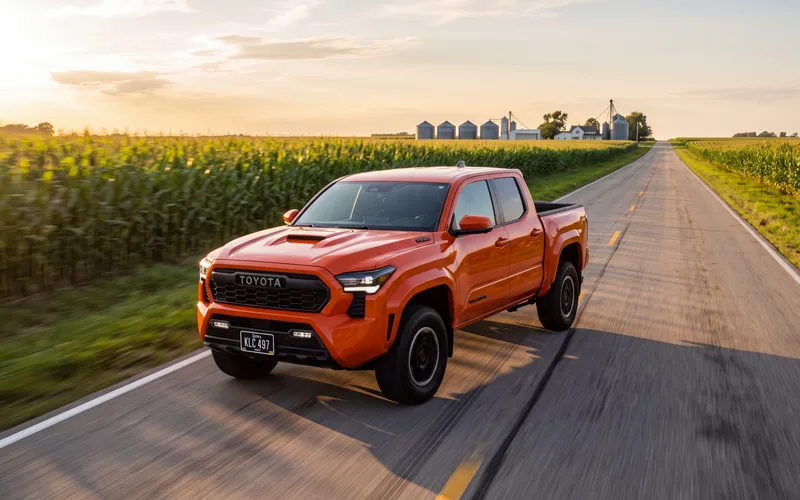 Toyota TacomaMid-Size TruckBetter at: Resale value
Better predicted reliability, standard safety tech on every trim, cab and bed choices, a hybrid option, and resale that holds roughly 65-70% at five years versus the Colorado's 56%.
Compare 1.87C-
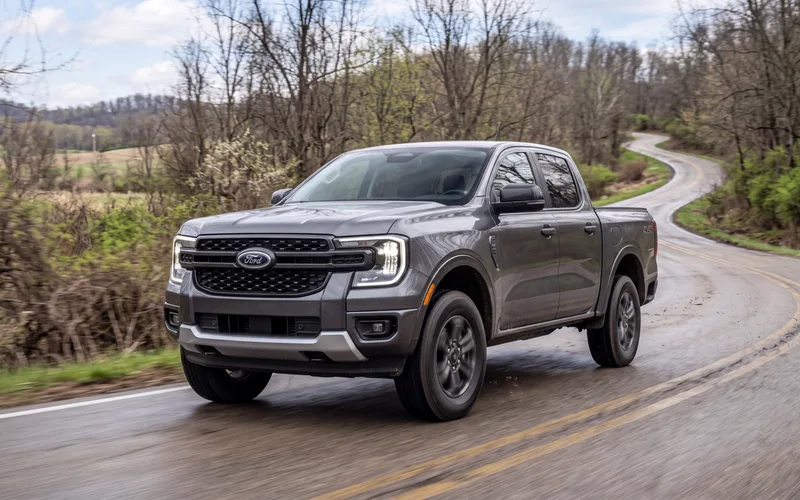 Ford RangerMid-Size TruckBetter at: Cargo and resale
Retains close to 70% of its value after five years, offers a bigger 51.5-cu-ft SuperCrew bed and more rear legroom, and sees better out of the cab.
Compare 1.97C-
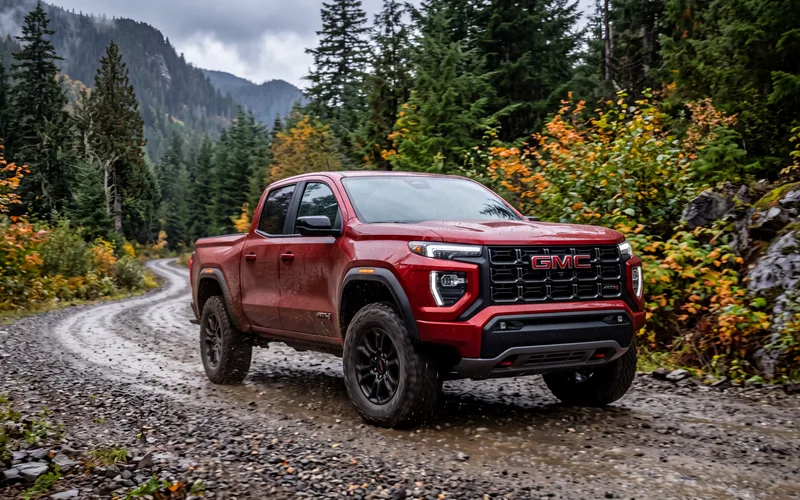 GMC CanyonMid-Size TruckBetter at: Interior quality
The identical truck with a nicer interior, standard 4WD, a standard 11-inch digital cluster and a Denali flagship with ventilated seats — worth the roughly $5,000-$7,000 premium only if materials matter to you.
CompareHow it's evolved
10 scored model years · 2017–2026
Subject scores by year
Hover or tap a score to see what moved it versus the year before. A corner mark flags a big swing.
| Year | Performance | Efficiency | Safety | Space | Cost | Reliability | Tech | Use-case | Driving | Value |
|---|---|---|---|---|---|---|---|---|---|---|
| 2026 | 46 | 40 | 56 | 50 | 55 | 62 | 72 | 63 | 69 | 72 |
| 2025 | 46 | 39 | 55 | 50 | 66 | 59 | 72 | 63 | 69 | 72 |
| 2024 | 39 | 58 | 58 | 49 | 68 | 52 | 71 | 67 | 71 | 79 |
| 2023 | 42 | 58 | 56 | 51 | 71 | 53 | 70 | 66 | 70 | 81 |
| 2022 | 47 | 42 | 27 | 53 | 51 | 67 | 48 | 63 | 68 | 68 |
| 2021 | 46 | 42 | 24 | 51 | 57 | 62 | 48 | 65 | 68 | 67 |
| 2020 | 45 | 54 | 25 | 51 | 55 | 58 | 48 | 65 | 72 | 67 |
| 2019 | 45 | 47 | 28 | 50 | 68 | 58 | 45 | 62 | 68 | 77 |
| 2018 | 47 | 47 | 28 | 53 | 71 | 59 | 48 | 63 | 70 | 78 |
| 2017 | 47 | 50 | 28 | 53 | 70 | 52 | 45 | 65 | 71 | 74 |
Compare two years
Best fit & conditions
Higher scores mean a better fit for that use case. Learn more about use-case fit →
Subject profile
Trims & configurations
5 trimsScores above reflect the volume trim. Per-trim specs and scores are rolling out — the full lineup:
Academic Probation · NHTSA safety recalls
Feb 26, 2026Equipment: other: owners/service/other manualGeneral Motors has decided that certain 2027 Chevrolet Bolt EV, 2025-2026 Cadillac OPTIQ, Chevrolet Colorado, Equinox EV, GMC Canyon, 2026 Buick Enclave, Envision, Cadillac CT5, Escalade, Escalade ESV, Escalade IQ, Escalade IQL, LYRIQ, VISTIQ, Chevrolet Blazer EV, Corvette Convertible, Corvette Coupe, Corvette Convertible E-Ray, Equinox, Silverado 1500, 2500, 3500, Silverado EV, Suburban 1500, Tahoe, Traverse, GMC Acadia, Hummer EV Pickup, Hummer EV SUV, Sierra 1500, 2500, 3500, Sierra EV, Terrain, Yukon, and Yukon XL vehicles. The radio may not have been set to the correct status to download the electronic owner's manual during production. As such, these vehicles fail to comply with the requirements of Federal Motor Vehicle Safety Standard number 208, âOccupant Protection.â
Defect
General Motors has decided that certain 2027 Chevrolet Bolt EV, 2025-2026 Cadillac OPTIQ, Chevrolet Colorado, Equinox EV, GMC Canyon, 2026 Buick Enclave, Envision, Cadillac CT5, Escalade, Escalade ESV, Escalade IQ, Escalade IQL, LYRIQ, VISTIQ, Chevrolet Blazer EV, Corvette Convertible, Corvette Coupe, Corvette Convertible E-Ray, Equinox, Silverado 1500, 2500, 3500, Silverado EV, Suburban 1500, Tahoe, Traverse, GMC Acadia, Hummer EV Pickup, Hummer EV SUV, Sierra 1500, 2500, 3500, Sierra EV, Terrain, Yukon, and Yukon XL vehicles. The radio may not have been set to the correct status to download the electronic owner's manual during production. As such, these vehicles fail to comply with the requirements of Federal Motor Vehicle Safety Standard number 208, âOccupant Protection.â
Risk
Without an owner's manual to consult, owners may not know how to safely use and operate the vehicle, increasing the risk of injury in a crash.
Remedy
Dealers will reset the vehicle radio, which will facilitate automatic download of the electronic ownerâs manual, free of charge. Owner notification letters were mailed April 16, 2026. Owners may contact GM customer service at 1-866-467-9700, Chevrolet customer service at 1-800-222-1020 or Cadillac customer service at 1-800-333-4223. The manufacturer's number for this recall is N252540430. Vehicle Identification Numbers (VINs) involved in this recall became searchable on NHTSA.gov on February 26, 2026.
NHTSA campaign 26V114000 ↗Manufacturer no. N2525404305,861 vehicles potentially affected (all models in the campaign)Owners notified Apr 16, 2026Filed by General Motors, LLCFiled as COLORADO
8 recalls on other model years of the Colorado (2017–2018, 2021–2024)
Sep 19, 2024Seat belts: critical fastenersThe left or right front seat may have a seat belt buckle attachment bolt that was not tightened properly.
Defect
General Motors, LLC (GM) is recalling certain 2023-2024 Chevrolet Colorado and 2023 GMC Canyon vehicles. The left or right front seat may have a seat belt buckle attachment bolt that was not tightened properly.
Risk
A loose seat belt may not properly restrain an occupant in a crash, increasing the risk of injury.
Remedy
Dealers will tighten the left and right front seat belt buckle attachment bolts, free of charge. Owner notification letters were mailed October 30, 2024. Owners may contact Chevrolet customer service at 1-800-222-1020, or GMC customer service at 1-800-462-8782. GM's number for this recall is N242453720.
NHTSA campaign 24V703000 ↗Manufacturer no. N242453720151 vehicles potentially affected (all models in the campaign)Owners notified Oct 30, 2024Filed by General Motors, LLCFiled as COLORADOJun 28, 2024Fuel system, gasoline: delivery: fuel pump: mounting plate/flange · Fuel system, gasoline: storage: tank assemblyThe lock ring that secures the fuel pump to the fuel tank assembly may not have been fully locked during assembly, which can result in a fuel leak during a crash.
Defect
General Motors, LLC (GM) is recalling certain 2024 Chevrolet Colorado and GMC Canyon vehicles. The lock ring that secures the fuel pump to the fuel tank assembly may not have been fully locked during assembly, which can result in a fuel leak during a crash.
Risk
A fuel leak in the presence of an ignition source increases the risk of a fire.
Remedy
Dealers will inspect and fully lock the fuel tank lock ring as necessary, free of charge. Owner notification letters are expected to be mailed August 13, 2024. Owners may contact Chevrolet customer service at 1-800-222-1020, or GMC Customer Call Center at (888) 988-7267. GM's number for this recall is N242451330.
NHTSA campaign 24V491000 ↗Manufacturer no. N2424513308,622 vehicles potentially affected (all models in the campaign)Owners notified Aug 6, 2024Filed by General Motors, LLCFiled as COLORADOMay 23, 2024TiresIncorrect tires may have been installed that do not match the tire label, and the tire pressure monitoring system (TPMS) may provide inaccurate information for the installed tires. As such, these vehicles fail to comply with the requirements of Federal Motor Vehicle Safety Standard numbers 110, "Tire Selection and Rims" and 138, "Tire Pressure Monitoring Systems."
Defect
General Motors, LLC (GM) is recalling certain 2024 Chevrolet Colorado vehicles. Incorrect tires may have been installed that do not match the tire label, and the tire pressure monitoring system (TPMS) may provide inaccurate information for the installed tires. As such, these vehicles fail to comply with the requirements of Federal Motor Vehicle Safety Standard numbers 110, "Tire Selection and Rims" and 138, "Tire Pressure Monitoring Systems."
Risk
A tire label that does not accurately reflect the installed tires may result in the installation of incorrectly sized tires. In addition, the TPMS may not warn the driver of a drop in tire pressure. Both of these scenarios can increase the risk of a crash.
Remedy
Dealers will inspect and replace the tires as necessary, free of charge. Owner notification letters were mailed June 19, 2024. Owners may contact Chevrolet customer service at 1-800-222-1020. GM's number for this recall is N242444030.
NHTSA campaign 24V366000 ↗Manufacturer no. N24244403056 vehicles potentially affected (all models in the campaign)Owners notified Jun 19, 2024Filed by General Motors, LLCFiled as COLORADOMar 28, 2024Wheels: lugs/nuts/bolts/studsThe front wheel hub bolts may have been over-tightened and damaged during installation.
Defect
General Motors, LLC (GM) is recalling certain 2023 Chevrolet Colorado and GMC Canyon vehicles. The front wheel hub bolts may have been over-tightened and damaged during installation.
Risk
Damaged bolts may loosen or break, which can result in a loss of vehicle control and increase the risk of a crash.
Remedy
Dealers will replace the left and right front wheel hub bolts, free of charge. Owner notification letters were mailed April 10, 2024. Owners may contact Chevrolet customer service at 1-800-222-1020 or GMC customer service at 1-800-462-8782. GM's number for this recall is N232431480.
NHTSA campaign 24V237000 ↗Manufacturer no. N23243148017 vehicles potentially affected (all models in the campaign)Owners notified Apr 10, 2024Filed by General Motors, LLCFiled as COLORADOFeb 22, 2024Electrical system: adas: driver monitoring: camera/sensor · Forward collision avoidance: automatic emergency brakingThe front camera module (FCM) system may falsely detect an obstacle, causing the automatic emergency braking (AEB) to engage unexpectedly.
Defect
General Motors, LLC (GM) is recalling certain 2023 Chevrolet Colorado and GMC Canyon vehicles. The front camera module (FCM) system may falsely detect an obstacle, causing the automatic emergency braking (AEB) to engage unexpectedly.
Risk
Unexpected automatic emergency braking can cause the vehicle to abruptly stop or slow down, increasing the risk of a crash.
Remedy
Dealers will update the front camera module (FCM) software, free of charge. Owner notification letters were mailed April 5, 2024. Owners may contact GMC customer service at 1-800-462-8782 or Chevrolet customer service at 1-800-222-1020. GM's number for this recall is A232424660.
NHTSA campaign 24V133000 ↗Manufacturer no. A23242466055,755 vehicles potentially affected (all models in the campaign)Owners notified Apr 5, 2024Filed by General Motors, LLCFiled as COLORADOMay 26, 2022Seats: critical fastenersThe front passenger seat may have a hook attachment that was not properly welded, allowing it to separate from the inboard track of the seat frame.
Defect
General Motors, LLC (GM) is recalling certain 2022 GMC Canyon and Chevrolet Colorado vehicles equipped with a manual passenger seat. The front passenger seat may have a hook attachment that was not properly welded, allowing it to separate from the inboard track of the seat frame.
Risk
An improperly welded seat frame may not properly restrain the seat occupant, increasing the risk of injury in a crash.
Remedy
Dealers will inspect the front passenger seat and replace the cushion frame, if necessary, free of charge. Owner notification letters were mailed July 6, 2022. Owners may contact GMC customer service at 1-800-462-8782 or Chevrolet customer service at 1-800-222-1020. GM's number for this recall is N222368320.
NHTSA campaign 22V375000 ↗Manufacturer no. N2223683201,631 vehicles potentially affected (all models in the campaign)Owners notified Jul 6, 2022Filed by General Motors, LLCFiled as COLORADODec 23, 2020Seat belts · Seat belts: critical fastenersIncorrect bolts may have been used at one or more fastening locations to secure the seat belts to the vehicle. If an incorrect bolt was used, the seat belt may not be properly attached to the vehicle.
Defect
General Motors, LLC (GM) is recalling certain 2020 Chevrolet Bolt EV and 2021 GMC Canyon and Sierra 1500, 2500 and 3500, Yukon, Yukon XL, Cadillac Escalade and Escalade ESV and Chevrolet Blazer, Camaro, Colorado, Equinox, Silverado 1500, 2500 and 3500, Suburban and Tahoe vehicles. Incorrect bolts may have been used at one or more fastening locations to secure the seat belts to the vehicle. If an incorrect bolt was used, the seat belt may not be properly attached to the vehicle.
Risk
If a seat belt assembly is not properly attached to the vehicle, the seat belt may not properly restrain an occupant in the event of a crash, increasing the risk of injury.
Remedy
GM will notify owners, and dealers will replace the suspect bolts, free of charge. The recall began January 29, 2021. Owners may contact GMC customer service at 1-800-462-8785, Cadillac customer service at 1-800-458-8006, or Chevrolet customer service at 1-800-222-1020. GM's number for this recall is N202322230.
NHTSA campaign 20V811000 ↗Manufacturer no. N202322230470 vehicles potentially affected (all models in the campaign)Owners notified Jan 29, 2021Filed by General Motors, LLCFiled as COLORADOMay 31, 2018Fuel system, gasoline: delivery: fuel pumpThe high pressure fuel pump may detach from its mounting flange, possibly resulting in the pump damaging the high pressure fuel line.
Defect
General Motors LLC (GM) is recalling certain 2015-2018 GMC Canyon, 2016-2017 Buick Envision, 2016-2018 Chevrolet Colorado and Malibu, 2017-2018 GMC Acadia, 2018 Buick LaCrosse, Cadillac ATS, Chevrolet Equinox, and GMC Terrain vehicles. The high pressure fuel pump may detach from its mounting flange, possibly resulting in the pump damaging the high pressure fuel line.
Risk
A damaged fuel line can create a fuel leak, increasing the risk of a fire.
Remedy
GM will notify owners, and dealers will replace the high pressure fuel pump, and high pressure fuel pipe, free of charge. The recall began July 2, 2018. Owners may contact Buick customer service at 1-800-521-7300, Cadillac customer service at 1-800-458-8006, Chevrolet customer service at 1-800-222-1020, or GMC customer service at 1-800-462-8782. GM's number for this recall is 18188.
NHTSA campaign 18V358000 ↗Manufacturer no. 18188 18268895 vehicles potentially affected (all models in the campaign)Owners notified Jul 2, 2018Filed by General Motors LLCFiled as COLORADO
Source: NHTSA Office of Defects Investigation recall database, model years 2017–2026. Recalls are listed by model year as the manufacturer filed them; whether a specific car is affected depends on its VIN — check a VIN at nhtsa.gov ↗. NHTSA model names matched to this page: COLORADO.
Detailed scoring by subject
1Performance & PowertrainOne of the Colorado's weakest categories.1.06D
The volume LT and every other 2026 Colorado use the same high-output 2.7L TurboMax turbo four. The 2026 model is a third-generation carryover with no powertrain change.
The volume LT's standard TurboMax produces 430 lb-ft, an unusually strong figure for a gas midsize truck. No lower-output engine is offered for 2026.
Consumer Reports tested the volume Colorado LT with the current 310-hp engine at 6.9 seconds. That trim-specific result is more representative than mixing in tests of lighter earlier tunes or off-road ZR2 variants; the score falls 2 points from the prior 6.8-second estimate.
The TurboMax is responsive and delivers abundant low-end torque, but its coarse four-cylinder sound under acceleration keeps it below the segment's smoother powertrains. Delivery is muscular and usable rather than polished.
The eight-speed automatic is generally smooth, quick, and well paired with the engine's broad torque, though it does not stand out as exceptionally crisp or offer a manual alternative. It fits the rubric's solid middle band.
The 2026 Colorado's maximum conventional rating is 7,700 lb when properly equipped. This is near the top of the gas midsize-truck class even though the normalization band also spans full-size pickups.
Chevrolet's current 2026 documentation gives a 1,710-lb range maximum, superseding the prior approximate 1,684-lb value. The corrected normalized score rises by 1 point.
Colorado offers the important integrated aids—an in-vehicle trailering app, available brake controller, Hitch Guidance, camera views, trailer profiles, and Trailer Side Blind Zone Alert—but not the full-size Silverado's most advanced transparent-trailer and steering-assist suite.
Four-wheel drive is optional on WT and LT and standard on the off-road trims, giving broad availability plus Auto 4WD, low range on the serious off-road configurations, terrain modes, and locking differentials. It misses a higher score because the volume LT's 4WD costs extra.
Trail Boss, Z71, ZR2, and ZR2 Bison create an unusually deep factory off-road ladder. At the top, DSSV dampers, front and rear lockers, 35-inch tires, and extensive AEV underbody protection provide genuine high-end trail capability.
Every 2026 Colorado uses one 2.7L TurboMax engine and one eight-speed automatic, with no V6, diesel, hybrid, plug-in hybrid, EV, or manual alternative. Strong standard output does not offset the take-it-or-leave-it lineup under this criterion.
2Efficiency & RangeThe Colorado's lowest-graded category.0.62F
The volume LT is represented with 4WD, which earns 19 MPG combined; the rear-drive LT is more efficient at 21 MPG. The 2026 model remains in the third generation introduced for 2023, and Chevrolet confirms the 2.7L TurboMax and 8-speed automatic continue across the lineup.
The representative LT 4WD returns 17 MPG city, while choosing rear-wheel drive raises the rating to 19 MPG.
EPA's model-year-specific record rates the 2026 LT-type 4WD configuration at 22 MPG highway, one MPG above the figure in the previous score; rear-wheel drive reaches 24 MPG.
The EPA API does not publish a separate total-range field for this gasoline truck, so range is calculated from its 19 MPG combined rating and 21.4-gallon tank. The prior entry used the second-generation truck's 21.0-gallon capacity rather than the third-generation specification.
EPA's current model-year-specific estimate is $3,250 per year for the representative 4WD configuration, replacing the prior independently calculated and outdated $2,650 estimate.
Every 2026 Colorado uses the same TurboMax engine and runs on inexpensive, widely available regular unleaded; there is no premium-fuel requirement or trim-dependent complication.
3SafetyMid-pack among this car's ten categories.1.74C-
The 2026 Colorado is a lightly changed fourth model year of the third generation, with no driver-assistance, structural, or restraint change identified. The latest NHTSA-tested current-generation Crew Cab therefore supplies the applicable rating.
The Colorado earns Good ratings in the small-overlap front and updated side tests, but its Marginal updated moderate-overlap result, driven by rear-passenger injury measures, prevents an award. This is stronger crashworthiness than the prior assessment implied, because the updated side result is Good, not below Good.
Every 2026 Colorado includes the six-feature Chevy Safety Assist bundle, covering AEB, pedestrian braking, forward warning, lane keeping, following-distance display, and automatic high beams. Adaptive cruise and the Safety Package's blind-zone and rear cross-traffic systems remain optional, so the standard suite is useful but incomplete.
The newly available IIHS testing is a substantial downgrade from the prior indirect estimate: the standard system is Poor in vehicle-to-vehicle 2.0 and only Acceptable for pedestrians. It avoids some lower-speed impacts but leaves considerable speed in centered higher-speed approaches.
The optional Safety Package is more capable than an alert-only system: Blind Zone Steering Assist can intervene and Rear Cross Traffic Braking can automatically brake. Package gating on the volume LT and the absence of documented trailer-length blind-zone coverage keep it below systems that are standard throughout the range.
Lane Keep Assist with Lane Departure Warning is standard, but it is a corrective lane-edge aid rather than continuous lane centering. With no hands-free or separate centering system offered, it earns credit for broad availability rather than sophistication.
Adaptive Cruise Control is available through the Technology Package and can manage stop-and-go traffic, but it is optional on the volume LT and is not paired with a true lane-centering highway assistant. That makes it capable optional ACC rather than an integrated highway-assist system.
No hands-free driving system is offered on the 2026 Colorado. The prior score incorrectly transferred Super Cruise availability from other GM trucks, including the related but differently equipped GMC Canyon.
The latest tested configuration gives the volume LT's halogen reflectors a Poor rating, while Z71 and ZR2 LED projectors rate Acceptable. IIHS has not yet carried the headlight result onto its 2026 summary, but Chevrolet still identifies LEDs as upper-trim equipment, so the unchanged volume-trim hardware warrants a low score.
The upright crew cab provides ordinary pickup sightlines, but the tall hood, high beltline, and thick pillars create meaningful near-field blind zones. Up to 10 available camera views compensate at low speeds, though they are optional rather than standard on the volume trim.
The two outboard lower-anchor sets are easy to reach, and forward-facing installation is straightforward once the unusual tether-loop routing is understood. Rear-facing seats reduce front-passenger space and three seats do not fit across, limiting an otherwise user-friendly setup.
4Space & ComfortOne of the Colorado's weakest categories.1.34D
The third-generation Colorado is Crew Cab-only and provides two front bucket seats plus a three-place rear bench. The 2026 model retains this configuration.
The volume LT has 40.3 inches of front headroom without the optional sunroof. This corrects the prior unsupported 39.9-inch value using Chevrolet's published third-generation dimension, corroborated by a 2026 specification listing.
The Colorado's 45.2-inch front legroom reaches the top of the truck normalization band. This corrects the prior 44.9-inch value with Chevrolet's platform specification and 2026 corroboration.
Second-row headroom is near the bottom of the truck band, consistent with reviewers finding the back seat cramped. This corrects the prior rounded 38.4-inch figure.
The Crew Cab's rear legroom is close to the bottom of the truck band, and multiple 2026 reviews describe limited adult knee room and an upright rear seatback.
Every 2026 Colorado uses the same short box; no long-bed alternative is offered. Wikipedia confirms that the third generation has a single bed length.
The box is usefully wide and deep for a midsize pickup, but its single short-bed configuration limits total capacity.
The volume LT combines a roomy center bin, useful door and glovebox storage, storage beneath the 60/40 rear bench, and a lockable StowFlex tailgate compartment. It is more clever than average, though it lacks the Ridgeline's large in-bed trunk or a high-output onboard generator.
The LT driver's posture and adjustment range are improved, but the front cushions draw mixed reviews and the low, upright rear bench is cramped for adults. The volume trim is therefore adequate rather than a long-haul comfort leader.
In volume LT form the Colorado absorbs bumps better than many body-on-frame midsize rivals while retaining composed control. Off-road trims, especially Trail Boss, ride more stiffly, so the lineup does not reach the plushest band.
Road noise can be well controlled, even on a Z71, but noticeable highway wind noise and the coarse TurboMax four under acceleration keep the volume LT near average. The single gas engine means its raspy character affects every trim.
The volume LT offers or includes the important daily-comfort features—heated front seats, dual-zone automatic climate control, remote start and rear vents—while ventilated leather front seats, memory and a heated wheel are available at the top of the range. WT remains basic and there are no heated rear seats.
5Cost of OwnershipMid-pack among this car's ten categories.1.71C-
The 2026 Colorado remains in the third generation introduced for 2023, with no 2026 refresh or powertrain change identified. Chevrolet lists the WT at $32,400 before its $2,095 destination charge, producing a delivered base MSRP of $34,495.
LT is the Colorado's mainstream volume trim, and 4WD is the representative configuration for a mid-size pickup. Chevrolet lists the 2026 LT 4WD at $39,300 before destination, or $41,395 delivered.
Kelley Blue Book's exact-2026 Colorado projection separates scheduled maintenance and repairs; combining both required components yields $9,031. This replaces the prior broad class estimate with a model-year-specific projection.
Current iSeeCars data projects materially stronger Colorado retention than the prior estimate, though it remains below the midsize-truck category average cited by the same source. The value is rounded from iSeeCars' published 0.620981 retention ratio.
Chevrolet's 2026 bumper-to-bumper coverage is 3 years or 36,000 miles, the floor of the truck normalization band and typical for the segment.
The 2026 Colorado's powertrain coverage lasts 5 years or 60,000 miles, the floor of the truck normalization band.
Chevrolet includes one first-year maintenance visit and 5-year/60,000-mile roadside assistance. That is useful but limited compared with rivals offering multi-year scheduled-maintenance plans.
$41,395 volume-trim price minus its estimated resale value after 5 years (62.1% retained, or about $25,706) leaves about $15,689 in depreciation. Add the projected $9,031 in 5-year maintenance and repairs, and owning this vehicle for 5 years costs about $24,720 in total.
6Reliability & QualityMid-pack among this car's ten categories.2.20C
The evidence is sharply split: Consumer Reports expects the 2026 Colorado to be less reliable than the average new vehicle, while J.D. Power rates its quality and reliability 83/100. Because CR's prediction incorporates survey results from all three prior years of this 2023-generation truck, the Colorado remains just below the average band despite J.D. Power's encouraging result.
Chevrolet's brand record is mixed but stronger than the prior score reflected: it ranks third among mass-market brands in J.D. Power's latest three-year dependability study, while Consumer Reports places it midpack for new-car reliability. That supports an above-midpoint score, but not top-tier status across sources.
The 2026 Colorado has one documented NHTSA recall, a broad GM software campaign involving camera-display failures, while the 2023-generation history also includes model-specific campaigns and service bulletins. Activity is moderate rather than clean, but the verified 2026 record does not support the prior claim of numerous severe campaigns applying to this model year.
Every 2026 Colorado now uses the 310-hp, 430-lb-ft 2.7L TurboMax L3B and enhanced eight-speed automatic; the former 237-hp base tune is no longer offered. The engine family has been produced since 2018 and has no established systemic failure pattern, but this high-output Colorado application and revised 8L80 still lack the long high-mileage history of proven naturally aspirated rivals.
The volume-oriented LT has a modern, functional layout and large standard displays, but extensive hard plastic limits perceived quality. Direct 2026 reviews consistently call out cheap-looking or hard cabin surfaces, leaving the Colorado acceptable for a work-focused truck but below the richer cabins in this class.
Assembly quality is better than the inexpensive materials suggest: current reviewers find the cabin well built and its controls robust, without widespread 2026 reports of panel or rattle defects. The Colorado remains short of the top band because CR's generation-level reliability data and scattered owner trim complaints indicate imperfect consistency.
Chevrolet combines one of the country's densest dealer networks with unusually strong truck-service satisfaction, making support readily accessible in both metropolitan and rural markets. This is a clear strength relative to most mid-size-truck competitors.
Shared GM truck components, broad dealer coverage, and a mature aftermarket make parts easy to source. Costs are broadly average for a mid-size truck rather than exceptionally cheap, and turbocharging plus modern electronics add complexity.
7Technology & InfotainmentThe Colorado's best-graded category.2.90B-
The volume LT and every other 2026 Colorado trim use the same 11.3-inch center touchscreen. The 2026 model is a lightly changed fourth year of the third generation introduced for 2023, with no infotainment-screen change identified.
The Google-based interface is responsive, visually crisp and logically organized, while separate volume and climate controls make it easy to use while driving. This merits the low 80s despite some generation-level software complaints.
Wireless Apple CarPlay and wireless Android Auto are standard across the 2026 range, including WT. Wireless charging remains optional, so cable-free projection can still consume phone power on the volume LT unless equipped with its Convenience Package.
Standard Google built-in provides Google Maps and Google Assistant, placing the Colorado among the segment's strongest native navigation and voice implementations. It stops short of a higher score because one 2026 test found that simple place-search phrasing sometimes needed to be reworded.
The volume LT's standard six-speaker system is a clear weak point, with distortion at moderate volume. A respectable seven-speaker Bose system is available, but only through optional equipment and does not rescue the representative configuration.
An 11-inch fully digital, configurable driver display is standard on the volume LT and every other trim. Its three themes and configurable information make it one of the strongest standard clusters in the mid-size-truck class.
The Colorado supports meaningful whole-vehicle OTA updates rather than infotainment-only patches, including body, powertrain and gateway modules. The demonstrated breadth earns an 80s score, though GM's feature-addition cadence remains behind the leading software-defined EVs.
The polished myChevrolet app provides remote start, lock/unlock, locate, vehicle status, service scheduling and roadside assistance, and core commands are included for eight years. It lacks phone-as-key and richer direct climate controls, keeping it below the leaders.
The volume LT starts with two front USB ports, while rear USB charging, wireless phone charging and both rear-console and bed-mounted 120-volt outlets are available. Useful expansion options lift it above average, but those conveniences are not all standard on the volume trim.
The volume LT includes passive Keyless Open and Start plus remote start, while WT and Trail Boss use less convenient remote keyless entry. No phone-as-key or hands-free tailgate is offered, limiting the ceiling.
Every trim has a high-definition reversing camera with hitch guidance, and the volume LT can add HD Surround Vision and parking-assistance features through packages. The useful, high-resolution 360-degree system is not standard and there is no automated parking, holding the score in the upper 70s.
No head-up display is offered on any 2026 Colorado trim, leaving a major convenience-tech omission even at the top of the range.
8Use-Case FitMid-pack among this car's ten categories.2.28C
The Crew Cab-only body provides four full doors, accessible outboard LATCH anchors and useful under-seat storage, but its 34.7-inch rear legroom makes rear-facing seats squeeze front occupants; three child seats do not fit across, and stroller security requires a bed cover.
Standard Chevy Safety Assist and rear-occupant features provide a useful baseline, but blind-zone steering assist and adaptive cruise cost extra on the volume LT. More importantly, the current-generation truck has no IIHS award, a Marginal updated moderate-overlap result and Poor vehicle-to-vehicle AEB performance.
The composed LT ride and 41.9-cu-ft bed are useful on trips, but the upright rear bench has just 34.7 inches of legroom and 38.3 inches of headroom. Mixed front-seat comfort, highway wind noise and the raspy engine further limit multi-hour comfort for four or five occupants.
The volume LT combines strong 430-lb-ft low-end response, a generally smooth eight-speed, a composed ride and an intuitive 11.3-inch interface with physical climate controls. A coarse engine note, tall-hood blind zones and corrective lane keeping without centering keep it merely good in traffic.
EPA-rated 17/22/19 MPG and $3,250 in annual fuel for the representative LT 4WD make this an expensive commuter even on regular gasoline. The gas-only lineup offers no hybrid alternative, while projected five-year maintenance and repair costs are also substantial.
The Crew Cab short-box footprint, tall hood and roughly 48-foot turning circle make urban garages awkward. A standard HD reversing camera with hitch guidance helps, but Surround Vision and parking assistance are optional on the volume LT.
A properly equipped Colorado tows 7,700 pounds and offers up to 1,710 pounds of payload, backed by 430 lb-ft and useful integrated trailering aids. Those are excellent gas midsize-truck figures, though the Crew Cab's single 61.7-inch short box limits trade-focused flexibility.
Body-on-frame construction, a work-oriented WT cabin, shared GM truck components and a dense Chevrolet service network suit hard use. The current generation's below-average Consumer Reports prediction and still-maturing high-output TurboMax/eight-speed combination prevent a fleet-proven score.
Up to 17 tie-downs, CornerStep bumper access, Hitch Guidance, a mid-position tailgate, LT-standard lockable StowFlex tailgate storage and available bed power form a strong jobsite toolkit. The 120-volt outlets remain optional and the short-box-only body constrains longer materials.
The LT's composed ride and roughly 407-mile calculated range are adequate for highway travel, and full-speed adaptive cruise is available. However, ACC costs extra, no lane-centering or hands-free system is offered, and the cramped rear bench, wind noise and coarse engine undermine long-day comfort.
Trail Boss, Z71, ZR2 and ZR2 Bison create one of the segment's deepest off-road ladders, culminating in DSSV dampers, front and rear lockers, 35-inch tires and AEV protection. Broad 4WD availability, 7,700-pound maximum towing and available bed power make it a genuine adventure enabler.
The 41.9-cu-ft bed, up to 17 tie-downs, multi-position tailgate, lockable StowFlex compartment, under-seat storage and broad hitch/rack ecosystem handle bulky outdoor gear well. A single 61.7-inch short bed and no weather-secure large cargo area without an accessory cover cap the score.
9Driving ExperienceOne of the Colorado's strongest categories.2.64C+
The third-generation Colorado (2023–present) has unusually disciplined body control for a body-on-frame pickup, and the volume LT stays predictable over rough pavement with low roll. Its 0.78-g skidpad and 28.1-second figure-eight results are solid rather than sporty, and the leaf-sprung rear axle still produces some pickup bounce.
The electric steering is prompt, reassuringly weighted, and more communicative than the class norm, helping the Colorado feel planted on winding roads. It does not deliver sports-car texture, but reputable tests consistently describe more precision and feedback than merely numb truck steering.
The LT's four-wheel discs stop consistently and the pedal applies progressively, giving good everyday confidence. The 126–134-ft dry 60–0 results are competitive for a midsize pickup, though MotorTrend found limited pedal feel and triggered an overheat warning during repeated figure-eight braking.
The standard TurboMax's 430 lb-ft gives the volume LT forceful low- and midrange response, and its enhanced eight-speed automatic generally keeps the engine in that useful band. Some initial pedal travel and turbo response delay keep the calibration from feeling immediate or impeccable.
The turbo four is acceptably isolated in routine driving but sounds raspy and grumbly when worked, especially on long grades. That coarse under-load character is a clear refinement deficit beside smoother V6 rivals even though wind and tire isolation can be respectable.
The instrumented 42-ft circle applies directly to the volume Colorado LT and is good for a 131.4-in-wheelbase midsize pickup. Chevrolet's current public specifications do not publish a 2026 curb-to-curb figure, so the measured LT result is preferable to an unverified carried-over catalog value.
The LT provides a commanding view, ample front space, a power driver's seat, and large standard displays, while physical climate controls keep frequent tasks straightforward. Thick pillars, firm cushions, some unintuitive screen-based controls, and limited steering-wheel telescoping range prevent excellent accommodation for all body sizes.
Strong low-end torque, better-than-average steering, and a composed chassis make the Colorado more enjoyable than most conventional midsize pickups, while the ZR2 gives the nameplate genuine enthusiast appeal off-road. The LT's coarse engine note, intrusive stability control at the limit, and ordinary grip stop it short of genuinely sporty territory.
10Value & Market PositionOne of the Colorado's strongest categories.2.87B-
Even the 2026 WT includes the full-output 310-hp/430-lb-ft TurboMax engine, an 11.3-inch touchscreen, an 11-inch driver display, Google built-in, wireless smartphone integration and six-feature Chevy Safety Assist, an unusually strong base-truck foundation. It remains below the loaded band because wireless charging, adaptive cruise control, blind-zone monitoring and rear cross-traffic alert are not standard across the range.
At $32,400 before destination for WT and $39,300 for the volume LT 4WD, the Colorado combines class-leading standard torque, up to 7,700 pounds of towing and excellent standard displays with a lower entry price than many rivals. The inexpensive Trail Boss and highly capable ZR2 strengthen the case, although a single engine, short warranty and mixed owner/reliability record keep it short of standout-bargain territory.
Five well-spaced models cover basic work duty through Trail Boss, Z71 and the serious ZR2/Bison off-road halo, while WT and LT offer either 2WD or 4WD. Choice is otherwise narrow: every truck is a Crew Cab with one short bed, the other three trims are 4WD-only, and one turbo-four/automatic combination serves the entire lineup with no long bed, alternate cab, V6, hybrid or diesel.
The Colorado is a high-volume, firmly accepted midsize pickup: US sales rose about 10% to 107,867 in 2025, placing it behind the Tacoma but ahead of most direct rivals. Momentum cooled in the first half of 2026, down 9.7% to 47,693, so it merits a strong-runner-up score rather than leader or fast-riser status.
Chevrolet has authentic truck credibility, broad recognition and a large US dealer footprint, while the Colorado's ZR2 gives the model a respected enthusiast halo. The bowtie remains a mainstream volume brand rather than an aspirational badge, and the Colorado lacks the premium image of its GMC Canyon sibling, so image is a modest asset rather than a resale-driving advantage.
The buyer environment is unusually favorable without suggesting a distressed model: 2026 Colorados average about $2,000 below MSRP, Chevrolet adds $1,000 customer cash, and qualified buyers can obtain 4.9% financing with plentiful nationwide stock. A slower-than-market 36-day inventory turn provides further negotiating room.
The 2026 Colorado is the fourth model year of the third generation introduced for 2023 and receives no significant redesign or powertrain change, placing it squarely mid-cycle. Its standard Google-based interface, large dual displays and modern driver-assistance suite remain current, but newer-generation rivals reduce its freshness advantage.
The current-generation Colorado has major recognition, led by MotorTrend's 2024 Truck of the Year, and the 2026 truck continues to earn praise for its powertrain, towing, technology and ZR2 capability. Reception is not uniformly class-leading, however: Edmunds scores it 6.4/10 and fourth of seven midsize trucks, while MotorTrend's current ranking also places it fourth despite a strong 9.3/10 score.