

The verdict
A strong mid-size suv, strong on safety and held back by efficiency.
The redesigned 2026 Palisade is one of the best family haulers you can buy. It seats eight and gives second-row passengers 43 inches of legroom, it earns NHTSA's 5-star overall rating and an IIHS Top Safety Pick+, and its cabin is quiet enough to feel near-luxury, all from $40,430. The price for that comfort is paid at the pump and on the on-ramp. The volume V6 AWD manages only 20 MPG combined and needed 8.1 seconds to reach 60 mph in testing, so shoppers who care about fuel bills should look hard at the new hybrid. As a first-year design, it has already had three recalls.
Jump to scoresStrengths
- Top-tier crash protection and standard safety tech
- Real room for eight people
- A hushed, near-luxury cabin
What holds it back
- Thirsty V6
- Slow, especially when loaded
- Comfortable, not engaging
Top alternatives
Cars shoppers cross-shop with the Hyundai Palisade 2.79B-
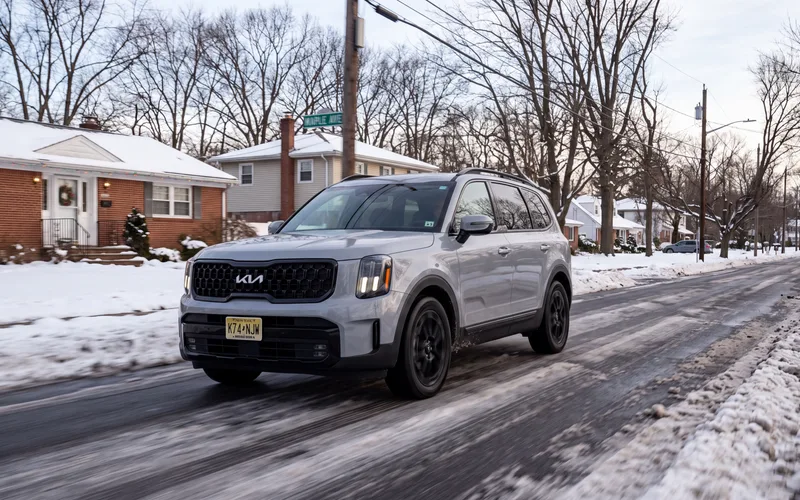 Kia TellurideMid-Size SUVBetter at: Fuel economy
Same proven V6 and three-row room as the Palisade with slightly better fuel economy, often at a lower transaction price.
Compare 2.88B-
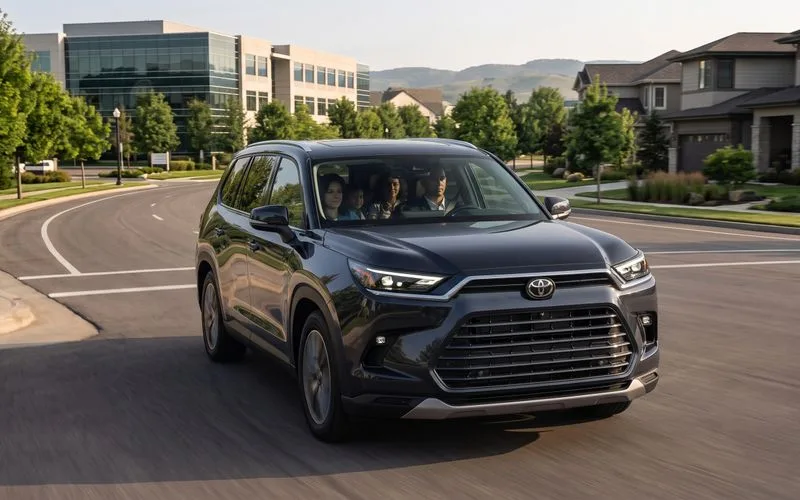 Toyota Grand HighlanderMid-Size SUVBetter at: Resale value
Shoppers who prioritize long-term reliability and resale value, and want an adult-sized third row, will lean Toyota.
Compare 2.43C+
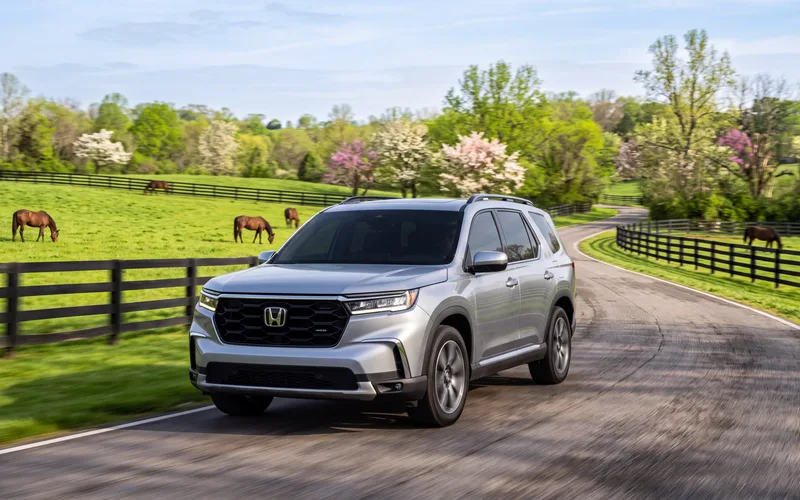 Honda PilotMid-Size SUVBetter at: Proven reliability
A well-proven three-row with Honda's reliability reputation and resale strength, for buyers wary of a first-year redesign.
CompareHow it's evolved
7 scored model years · 2020–2026
Subject scores by year
Hover or tap a score to see what moved it versus the year before. A corner mark flags a big swing.
| Year | Performance | Efficiency | Safety | Space | Cost | Reliability | Tech | Use-case | Driving | Value |
|---|---|---|---|---|---|---|---|---|---|---|
| 2026 | 50 | 36 | 85 | 82 | 69 | 72 | 82 | 70 | 64 | 83 |
| 2025 | 49 | 35 | 78 | 80 | 74 | 65 | 65 | 64 | 64 | 73 |
| 2024 | 49 | 41 | 81 | 78 | 72 | 71 | 64 | 65 | 65 | 76 |
| 2023 | 49 | 41 | 83 | 78 | 70 | 71 | 64 | 65 | 65 | 76 |
| 2022 | 49 | 41 | 81 | 78 | 72 | 71 | 56 | 63 | 64 | 70 |
| 2021 | 49 | 41 | 79 | 78 | 74 | 70 | 55 | 63 | 64 | 72 |
| 2020 | 49 | 41 | 75 | 78 | 75 | 68 | 52 | 63 | 64 | 75 |
Compare two years
Best fit & conditions
Higher scores mean a better fit for that use case. Learn more about use-case fit →
Subject profile
Academic Probation · NHTSA safety recalls
Mar 19, 2026Seat belts: rear/other: buckle assembly · Seat belts: status indicator switchThe internal wiring within the third-row driver-side seat belt buckle may become damaged and result in a permanent display of a belted third-row driver-side seat on the instrument panel.
Defect
Hyundai Motor America (Hyundai) is recalling certain 2026 Hyundai Palisade and 2026 Hyundai Palisade Hybrid vehicles equipped with "Limited" and "Calligraphy" trim packages. The internal wiring within the third-row driver-side seat belt buckle may become damaged and result in a permanent display of a belted third-row driver-side seat on the instrument panel.
Risk
A faulty seat belt status indicator may fail to alert occupants to an unfastened seat belt, increasing the risk of injury.
Remedy
Dealers will install a wiring harness extension and replace the seat belt assembly, as necessary, free of charge. Owner notification letters were mailed beginning May 8, 2026. Owners may contact Hyundai customer service at 1-855-371-9460. Hyundai's number for this recall is 297. Vehicle Identification Numbers (VINs) involved in this recall became searchable on NHTSA.gov March 21, 2026.
NHTSA campaign 26V169000 ↗Manufacturer no. 29746,787 vehicles potentially affected (all models in the campaign)Owners notified May 8, 2026Filed by Hyundai Motor AmericaFiled as PALISADE, PALISADE HYBRIDMar 17, 2026Seats: mid/rear assembly: power adjustThe second and third row power seats may fail to detect a person. The seat may continue to move after contacting a person during powered seat functions, such as one-touch tilt-and-slide or automatic power fold-and-stow.
Defect
Hyundai Motor America (Hyundai) is recalling certain 2026 Palisade and 2026 Palisade Hybrid vehicles equipped with a Limited or Calligraphy trim package. The second and third row power seats may fail to detect a person. The seat may continue to move after contacting a person during powered seat functions, such as one-touch tilt-and-slide or automatic power fold-and-stow.
Risk
A person, especially a child, may become trapped by a rear powered seat, increasing the risk of injury or death.
Remedy
Owners are advised to exercise caution when operating the second and third row power seat functions until the repair is performed. Children are advised to not be in the rear seats or near the rear seating area during power-folding operation. The seat controller and the audio, visual, navigation software will be updated over-the-air (OTA) or by a dealer, as necessary, free of charge. Owner notification letters were mailed May 14, 2026. Owners may contact Hyundai customer service at 1-855-371-9460. Hyundai's number for this recall is 296. Vehicle Identification Numbers (VINs) involved in this recall will be searchable on NHTSA.gov on March 19, 2026.
NHTSA campaign 26V160000 ↗Manufacturer no. 29661,307 vehicles potentially affected (all models in the campaign)Owners notified May 8, 2026Filed by Hyundai Motor AmericaFiled as PALISADE, PALISADE HYBRIDJan 26, 2026Electrical system: instrument cluster/panelDue to a software error, the instrument panel display may fail. As such, these vehicles fail to comply with the requirements of Federal Motor Vehicle Safety Standard (FMVSS) number 101, "Controls and Displays."
Defect
Hyundai Motor America (Hyundai) is recalling certain 2025-2026 Tucson Hybrid, Tucson Plug-In Hybrid Electric (PHEV), 2026 IONIQ 5, Santa Cruz, Kona, Palisade, Palisade Hybrid, Santa Fe, Santa Fe Hybrid, Sonata, Sonata Hybrid, and Tucson vehicles. Due to a software error, the instrument panel display may fail. As such, these vehicles fail to comply with the requirements of Federal Motor Vehicle Safety Standard (FMVSS) number 101, "Controls and Displays."
Risk
An instrument panel display that fails to show critical safety information, such as the speedometer or warning lights, increases the risk of a crash.
Remedy
The instrument panel display software will be updated over-the-air (OTA) or by a dealer, free of charge. Owner notification letters were mailed March 24, 2026. Owners may contact Hyundai's customer service at 855-371-9460. Hyundai's number for this recall is 293. Vehicle Identification Numbers (VINs) involved in this recall became searchable on NHTSA.gov on January 28, 2026.
NHTSA campaign 26V047000 ↗Manufacturer no. 29341,651 vehicles potentially affected (all models in the campaign)Owners notified Mar 24, 2026Filed by Hyundai Motor AmericaFiled as PALISADE, PALISADE HYBRID
13 recalls on other model years of the Palisade (2020–2025)
Jan 22, 2026Air bags: side/window: curtainThe side curtain air bags for third-row occupants may deploy improperly in a crash. As such, these vehicles fail to comply with the requirements of Federal Motor Vehicle Safety Standard (FMVSS) number 226, "Ejection Mitigation."
Defect
Hyundai Motor America (Hyundai) is recalling certain 2020-2025 Palisade vehicles. The side curtain air bags for third-row occupants may deploy improperly in a crash. As such, these vehicles fail to comply with the requirements of Federal Motor Vehicle Safety Standard (FMVSS) number 226, "Ejection Mitigation."
Risk
Improper side curtain air bag deployment increases the risk of injury during a crash.
Remedy
Dealers will install a protective film over the rear window and remove padding, as necessary free of charge. Interim notification letters, notifying owners of the safety risk, were mailed beginning March 13, 2026. Final remedy owner letters will be mailed in phases, beginning in June 2026 and expected to continue through December 2026. Owners may contact Hyundai customer service at 1-855-371-9460. Hyundai's number for this recall is 292. Vehicle Identification Numbers (VINs) involved in this recall became searchable on NHTSA.gov on January 24, 2026.
NHTSA campaign 26V034000 ↗Manufacturer no. 292568,576 vehicles potentially affected (all models in the campaign)Owners notified Jun 26, 2026Filed by Hyundai Motor AmericaFiled as PALISADESep 11, 2025Seat belts: rear/other: buckle assembly · Seat belts: front: buckle assemblyThe seat belt buckles in the driver, passenger, and second-row window seats may fail to latch.
Defect
Hyundai Motor America (Hyundai) is recalling certain 2020-2025 Palisade vehicles. The seat belt buckles in the driver, passenger, and second-row window seats may fail to latch.
Risk
Seat belt buckles that fail to latch may not properly restrain occupants in a crash, increasing the risk of injury.
Remedy
Passengers are advised to insert the belt firmly into the buckle with a quick and direct motion, pulling on the belt to confirm the seat belt is fully secured, until the recall remedy is performed. Dealers will replace the seat belt buckle assemblies, free of charge. Interim notification letters, notifying owners of the safety risk, were mailed beginning October 23, 2025. Final remedy owner letters will be mailed in phases, beginning in June 2026 and expected to continue through December 2026. Owners may contact Hyundai customer service at 1-855-371-9460. Hyundai's number for this recall is 283. Vehicle Identification Numbers (VINs) involved in this recall became searchable on NHTSA.gov on September 13, 2025.
NHTSA campaign 25V607000 ↗Manufacturer no. 283568,580 vehicles potentially affected (all models in the campaign)Owners notified Jun 26, 2026Filed by Hyundai Motor AmericaFiled as PALISADEMay 6, 2025Power train: automatic transmission: fluid/lubricant: pumpAn insufficient seal on the controller for the electric oil pump may allow moisture to accumulate in the printed circuit board, which can cause an electrical short and result in a fire.
Defect
Hyundai Motor America (Hyundai) is recalling certain 2025 Hyundai Palisade vehicles. An insufficient seal on the controller for the electric oil pump may allow moisture to accumulate in the printed circuit board, which can cause an electrical short and result in a fire.
Risk
A fire while parked or driving can increase the risk of injury.
Remedy
Owners are advised to park their vehicles outside and away from structures until the recall remedy is completed. Dealers will replace the electric oil pump controller, free of charge. Owner notification letters were mailed June 11, 2025. Owners may contact Hyundai customer service at 1-855-371-9460. Hyundai's number for this recall is 278.
NHTSA campaign 25V291000 ↗Manufacturer no. 278620 vehicles potentially affected (all models in the campaign)Owners notified Jun 11, 2025Filed by Hyundai Motor AmericaFiled as PALISADEFeb 13, 2024Engine and engine cooling: engine: hard parts internal/mechanicalThe engine valve springs may break while driving, which can result in a loss of drive power and possibly create a hole in the engine block.
Defect
Hyundia Motor America (Hyundai) is recalling certain 2024 Palisade vehicles. The engine valve springs may break while driving, which can result in a loss of drive power and possibly create a hole in the engine block.
Risk
A loss of drive power increases the risk of a crash. A hole in the engine block increases the risk of a fire.
Remedy
Dealers will replace the engine sub-assembly, free of charge. Owner notification letters were mailed by December 6, 2024. Owners may contact Hyundai customer service at 1-855-371-9460. Hyundai's number for this recall is 255.
NHTSA campaign 24V106000 ↗Manufacturer no. 2554,245 vehicles potentially affected (all models in the campaign)Owners notified Aug 1, 2024Filed by Hyundai Motor AmericaFiled as PALISADEAug 25, 2023Air bags: sensor: occupant classification: front passengerThe Occupant Detection System (ODS) may fail to detect an occupant and deactivate the passenger-side front air bags. As such, these vehicles fail to comply with Federal Motor Vehicle Safety Standard number 208, "Occupant Crash Protection."
Defect
Hyundai Motor America (Hyundai) is recalling certain 2024 Palisade vehicles equipped with dark premium suede seats. The Occupant Detection System (ODS) may fail to detect an occupant and deactivate the passenger-side front air bags. As such, these vehicles fail to comply with Federal Motor Vehicle Safety Standard number 208, "Occupant Crash Protection."
Risk
Deactivated front passenger air bags will not deploy as intended, increasing the risk of injury during a crash.
Remedy
Dealers will update the ODS software, free of charge. Owner notification letters were mailed September 26th, 2023. Owners may contact Hyundai customer service at 1-855-371-9460. Hyundai's number for this recall is 249.
NHTSA campaign 23V599000 ↗Manufacturer no. 24963 vehicles potentially affected (all models in the campaign)Owners notified Sep 26, 2023Filed by Hyundai Motor AmericaFiled as PALISADEJul 27, 2023Power train: automatic transmission: fluid/lubricant: pumpThe electronic controller for the Idle Stop & Go oil pump assembly may contain damaged electrical components that can cause the pump controller to overheat.
Defect
Hyundai Motor America (Hyundai) is recalling certain 2023-2024 Palisade Tucson, 2023 Sonata, Elantra, and Kona vehicles. The electronic controller for the Idle Stop & Go oil pump assembly may contain damaged electrical components that can cause the pump controller to overheat.
Risk
An electric oil pump assembly that overheats increases the risk of a vehicle fire.
Remedy
Owners are advised to park outside and away from structures until the recall repair is complete. Dealers will inspect and replace the electric oil pump controller, as necessary, free of charge. Owner notification letters were mailed starting September 7, 2023. Owners may contact Hyundai customer service at 1-855-371-9460. Hyundai's number for this recall is 246.
NHTSA campaign 23V526000 ↗Manufacturer no. 24652,109 vehicles potentially affected (all models in the campaign)Owners notified Sep 7, 2023Filed by Hyundai Motor AmericaFiled as PALISADEJun 8, 2023Service brakes, hydraulic: power assistThe brake booster diaphragm may become misaligned and cause an internal vacuum leak, which can result in a loss of power brake assist.
Defect
Hyundai Motor America (Hyundai) is recalling certain 2023 Palisade vehicles. The brake booster diaphragm may become misaligned and cause an internal vacuum leak, which can result in a loss of power brake assist.
Risk
A loss of power brake assist can extend the distance required to stop, increasing the risk of a crash.
Remedy
Dealers will inspect and replace the brake booster as necessary, free of charge. Owner notification letters were mailed July 14, 2023. Owners may contact Hyundai customer service at 1-855-371-9460. Hyundai's number for this recall is 245.
NHTSA campaign 23V415000 ↗Manufacturer no. 245322 vehicles potentially affected (all models in the campaign)Owners notified Jul 14, 2023Filed by Hyundai Motor AmericaFiled as PALISADEMar 17, 2023Visibility/wiperThe windshield wiper motor may operate intermittently or fail to operate due to snow or ice buildup on the windshield, causing the wipers to fail.
Defect
Hyundai Motor America (Hyundai) is recalling certain 2021-2023 Palisade vehicles. The windshield wiper motor may operate intermittently or fail to operate due to snow or ice buildup on the windshield, causing the wipers to fail.
Risk
Windshield wiper failure can reduce visibility, increasing the risk of a crash.
Remedy
Dealers will replace the driver-side windshield wiper arm, free of charge. Owner notification letters were mailed May 15, 2023. Owners may contact Hyundai customer service at 1-855-371-9460. Hyundai's number for this recall is 243. This recall is an expansion of recall number 22V-627.
NHTSA campaign 23V180000 ↗Manufacturer no. 243167,085 vehicles potentially affected (all models in the campaign)Owners notified May 15, 2023Filed by Hyundai Motor AmericaFiled as PALISADEAug 18, 2022Trailer hitchesHyundai Motor America (Hyundai) is recalling 2020-2022 Palisade vehicles potentially equipped with a tow hitch harness installed as original equipment, or purchased as an accessory through a Hyundai dealership. Debris and moisture accumulation on the tow hitch harness module printed circuit board (PCB) may cause an electrical short, which can result in a fire.
Defect
Hyundai Motor America (Hyundai) is recalling 2020-2022 Palisade vehicles potentially equipped with a tow hitch harness installed as original equipment, or purchased as an accessory through a Hyundai dealership. Debris and moisture accumulation on the tow hitch harness module printed circuit board (PCB) may cause an electrical short, which can result in a fire.
Risk
A fire while parked or driving can increase the risk of injury.
Remedy
Owners are advised to park outside and away from structures until the recall repair is complete. Dealers will install a new fuse and wire extension kit, as necessary, free of charge. Owner notification letters were mailed May 18, 2023. Owners may contact Hyundai customer service at 1-855-371-9460. Hyundai's number for this recall is 235.
NHTSA campaign 22V633000 ↗Manufacturer no. 235244,980 vehicles potentially affected (all models in the campaign)Owners notified Oct 13, 2022Filed by Hyundai Motor AmericaFiled as PALISADEAug 15, 2022Visibility: windshield wiper/washer: motorThe windshield wiper motor may become inoperative, causing the wipers to fail.
Defect
Hyundai Motor America (Hyundai) is recalling certain 2020-2021 Palisade vehicles. The windshield wiper motor may become inoperative, causing the wipers to fail.
Risk
Windshield wiper failure can reduce visibility, increasing the risk of a crash.
Remedy
Dealers will replace the driver-side windshield wiper arm, free of charge. Owner notification letters were mailed December 13, 2022. Owners may contact Hyundai customer service at 1-855-371-9460. Hyundai's number for this recall is 233.
NHTSA campaign 22V627000 ↗Manufacturer no. 233122,949 vehicles potentially affected (all models in the campaign)Owners notified Dec 13, 2022Filed by Hyundai Motor AmericaFiled as PALISADEMay 18, 2022Electrical system: instrument cluster/panelThe instrument cluster assembly may have been manufactured with excessive adhesive, which can disable the instrument cluster display screen.
Defect
Hyundai Motor America (Hyundai) is recalling certain 2022 Palisade vehicles. The instrument cluster assembly may have been manufactured with excessive adhesive, which can disable the instrument cluster display screen.
Risk
A disabled display screen will not show critical information, such as the meters, gauges, and warning lights, which can increase the risk of a crash.
Remedy
Dealers will replace the instrument cluster assembly, free of charge. Owner notification letters were mailed July 15, 2022. Owners may contact Hyundai customer service at 1-855-371-9460. Hyundai's number for this recall is 230.
NHTSA campaign 22V353000 ↗Manufacturer no. 230158 vehicles potentially affected (all models in the campaign)Owners notified Jul 15, 2022Filed by Hyundai Motor AmericaFiled as PALISADEOct 27, 2021Service brakes, hydraulic: fluid · Service brakes, hydraulic: foundation components: master cylinderThe brake fluid may be contaminated, which can cause the brake master cylinder inner-cup seals to swell, and reduce braking performance.
Defect
Hyundai Motor America (Hyundai) is recalling certain 2021 Palisade vehicles. The brake fluid may be contaminated, which can cause the brake master cylinder inner-cup seals to swell, and reduce braking performance.
Risk
Reduced braking performance can extend the distance required to stop the vehicle, increasing the risk of a crash.
Remedy
Dealers will replace the brake master cylinder, and flush the brake fluid, free of charge. Owner notification letters were mailed on December 24, 2021. Owners may contact Hyundai customer service at 1-855-371-9460. Hyundai's number for this recall is 212.
NHTSA campaign 21V840000 ↗Manufacturer no. 212995 vehicles potentially affected (all models in the campaign)Owners notified Dec 24, 2021Filed by Hyundai Motor AmericaFiled as PALISADENov 7, 2019Air bags: side/windowThe mounting bolts used to secure the side curtain air bags may damage the side curtain air bags during deployment.
Defect
Hyundai Motor America (Hyundai) is recalling certain 2020 Palisade vehicles. The mounting bolts used to secure the side curtain air bags may damage the side curtain air bags during deployment.
Risk
Damaged side curtain air bags may not inflate properly in the event of a crash, increasing the risk of injury.
Remedy
Hyundai will notify owners, and dealers will install a protective cover on the mounting bolts, free of charge. The recall began December 20, 2019. Owners may contact Hyundai customer service at 1-855-371-9460. Hyundai's number for this recall is 186.
NHTSA campaign 19V802000 ↗Manufacturer no. 18611,217 vehicles potentially affected (all models in the campaign)Owners notified Dec 20, 2019Filed by Hyundai Motor AmericaFiled as PALISADE
Source: NHTSA Office of Defects Investigation recall database, model years 2020–2026. Recalls are listed by model year as the manufacturer filed them; whether a specific car is affected depends on its VIN — check a VIN at nhtsa.gov ↗. NHTSA model names matched to this page: PALISADE, PALISADE HYBRID.
Detailed scoring by subject
1Performance & PowertrainOne of the Palisade's weakest categories.1.37D
The volume SEL trim of the all-new second-generation 2026 Palisade uses the 3.5L Smartstream naturally aspirated V6 at 287 hp, four fewer than the outgoing car's 291 hp. The new 2.5L turbo hybrid tops the range at 329 hp combined.
The volume trim's 3.5L V6 peaks at 260 lb-ft, high in the rev range at 5,000 rpm — two lb-ft less than the prior generation and well behind turbo and hybrid rivals in low-end pull.
Car and Driver's instrumented test of a V6 AWD 2026 Palisade took 8.1 seconds — 1.7 s slower than a 2023 Palisade XRT — because the new body is 369 lb heavier on a marginally less powerful engine. Updated from the earlier 7.5 s estimate now that a real test exists.
The naturally aspirated V6 is smooth and lag-free with no turbo or hybrid handoffs, but in the heavier LX3 body it has to be wrung out to make progress and testers called it lethargic; lowered from 72 on that instrumented evidence.
The 8-speed torque-converter automatic shifts smoothly and picks sensible gears in normal driving with no CVT drone, though it can be slow to kick down when asked for a quick pass.
The V6 is rated at 5,000 pounds when properly equipped — the segment-standard figure shared with the Telluride, Pilot and Explorer; the new hybrid is rated lower at 4,000 pounds.
HTRAC all-wheel drive is optional across the trim ladder (EPA certifies FWD, AWD and XRT Pro gas variants plus FWD/AWD hybrids) and standard on the XRT Pro, with terrain modes and a center-lock function, but no low range.
The XRT Pro adds raised ride height, all-terrain tires, revised fascias for better approach angle, tow hooks and terrain modes — genuine light-duty credibility — but it remains a unibody crossover with no low range or locking differential.
Two genuinely distinct powertrains for 2026 — the 3.5L V6 and a new 2.5L turbo hybrid in FWD, AWD and high-efficiency Blue forms — covering mainstream needs and adding the first electrified Palisade, but no PHEV or EV.
2Efficiency & RangeThe Palisade's lowest-graded category.0.39F
EPA rates the volume 3.5L V6 AWD at 20 MPG combined, one MPG below the earlier 21 MPG estimate — the heavier second-generation body costs efficiency. The new 2.5T hybrid (29–34 MPG) is far thriftier but is a separate powertrain class.
A naturally aspirated three-row V6 with no electrification posts 18 MPG city with AWD, one below the earlier estimate and below the Telluride/Pilot's 19.
EPA highway is 24 MPG for the V6 AWD — level with the outgoing generation rather than the modest gain previously assumed.
A 19.0-gallon tank at 20 MPG combined gives EPA's 380-mile range for the volume V6 AWD — adequate but unremarkable for a road-trip SUV; the hybrid stretches to 528–619 miles.
At 20 MPG and 15,000 miles a year the V6 AWD burns about 750 gallons of regular. Valued at the same fuel-price basis as the peer scorecards (Telluride/Pilot $2,350 at 21 MPG ≈ $3.29/gal) so it compares like-for-like; EPA's live figure is higher only because it now prices regular at $4.33.
Both 2026 powertrains run on 87-octane regular, with no premium recommendation, diesel/DEF complication, or charging to arrange — the fuel bill is high because of consumption, not fuel grade.
3SafetyThe Palisade's best-graded category.3.78A
NHTSA has tested the second-generation (LX3) 2026 Palisade gas model and awarded 5 stars overall in both FWD and AWD form, confirming the result the previous run could only carry forward. Frontal and rollover sub-ratings are 4 stars.
The 2026 Palisade earns the IIHS 2026 Top Safety Pick+ with Good ratings in every crashworthiness test, including the updated moderate-overlap front test that trips up most three-row SUVs. Held below the very top because the award covers only vehicles built after November 2025; earlier builds had a weaker moderate-overlap result and qualified for a 2025 Top Safety Pick only. Raised from 74 now that the award is confirmed rather than assumed.
Hyundai SmartSense is standard on every 2026 Palisade, including the $40,430 base SE. It covers Forward Collision-Avoidance Assist 2, Blind-Spot and Rear Cross-Traffic Collision-Avoidance Assist, Lane Keeping and Lane Following Assist, Smart Cruise Control with Stop & Go, Highway Driving Assist, Safe Exit Assist and Rear Occupant Alert. None of the core AEB, ACC, LKA, BSM or RCTA features is held back for an upper trim.
The standard Forward Collision-Avoidance Assist 2 earns Good in both of IIHS's current front crash prevention tests. Those are the tougher vehicle-to-vehicle 2.0 test (higher speeds, more scenarios) and the pedestrian test, which includes nighttime runs. Raised from 70 now that the results under the current protocol are confirmed.
Blind-spot and rear cross-traffic collision-avoidance are standard on every trim, and both brake or steer rather than only warn. Safe Exit Assist is also standard, and upper trims add Blind-Spot View Monitor camera feeds in the cluster. Held below the top of the band because blind-spot coverage does not extend to a trailer, even though the Palisade is rated to tow 5,000 lbs.
Lane Keeping Assist and Lane Following Assist are standard on every trim. Hyundai's lane centering is consistently rated among the smoother mainstream systems: it holds the middle of the lane rather than bouncing between the markings.
Smart Cruise Control with Stop & Go and Highway Driving Assist are standard, giving every trim adaptive cruise across the full speed range combined with lane centering. The Calligraphy adds Highway Driving Assist 2 with assisted lane changes. The base system lacks lane-change assist, which keeps the score short of the very top of the band.
No trim offers hands-free driving. Highway Driving Assist and HDA 2 both require the driver's hands on the wheel, so the Palisade has nothing to match Super Cruise or BlueCruise. Scored just above the floor because the hands-on assist is competent.
IIHS rates the headlights Good on every trim. Standard equipment is LED projectors with High Beam Assist. Raised from 75 because Good headlights are confirmed across the whole range, not just on upper trims as with the previous generation.
The upright, boxier LX3 body gives a tall greenhouse and large side glass, so forward and side sightlines are good. Thick D-pillars and the third-row headrests limit the over-the-shoulder view. Surround View Monitor and Blind-Spot View Monitor make up for it on upper trims.
IIHS rates the LATCH hardware Good+ for ease of use, with full child-seat hardware at four rear positions. Wide rear door openings and a 114.2-in wheelbase make fitting several seats easy. Raised from 76 because the confirmed Good+ rating replaces the earlier assumption that it would carry Hyundai's past Acceptable rating.
4Space & ComfortOne of the Palisade's strongest categories.3.59A-
The second-generation 2026 Palisade seats eight as standard with a second-row bench; captain's chairs drop it to seven.
Corrected to the published 41.5 in without sunroof — near the top of the SUV band; the previous 40.6 in was an unverified estimate.
Published front legroom of 44.2 in sits near the top of the SUV band; replaces the unverified 44.4 in estimate.
Second-row headroom of 40.7 in without sunroof is above the top of the SUV band, reflecting the boxier LX3 roofline; the prior 39.6 in was an unverified estimate.
Second-row legroom of 43.0 in is class-leading and above the top of the SUV band, made possible by the 2.7-in longer wheelbase.
With 32.1 in of legroom and 37.8 in of headroom the third row is roomier than before and easy to reach via one-touch tilt-and-slide, with available power slide/recline, heat and power folding — but reviewers still say tall adults will grumble on long hauls. Lowered from 82: kid-friendly and adult-capable for short-to-medium trips, not quite the adult-for-hours benchmark.
Corrected to the published 46.3 cu ft behind the second row — the redesign spent its extra length on passengers, so the hold is average rather than large for a three-row; the prior 51.4 cu ft was an unverified estimate.
Published 86.7 cu ft maximum is upper-mid for the SUV band; replaces the unverified 88.6 cu ft estimate.
Strong storage and power provision: 100 W USB-C in every row, a fan-cooled 15 W wireless pad, a large console, and a UV-C sterilization compartment on Limited/Calligraphy. Standout for the segment, though the UV-C box is top-trim only.
Well-padded, broadly adjustable front seats and a roomy second row, with relaxation seats (extra recline and deployable leg supports) front and second row on upper trims. Top of the mainstream band.
Comfort-tuned suspension with a new self-leveling rear axle soaks up rough pavement calmly; MotorWeek says it moves the Palisade 'further into luxury territory'. Raised slightly on review corroboration.
Laminated windshield and front side glass are standard, plus heavy under-hood insulation and sound-deadening carpet; reviewers call it 'supremely quiet'. Library-quiet for the class — raised from 80.
Rich equipment exists — ventilated front and second-row seats, heated wheel, heated rear rows — but it starts at SEL Premium; the volume SEL gets heated fronts only. Lowered from 85 to the 'mid trims and up' band, top of it.
5Cost of OwnershipMid-pack among this car's ten categories.2.67C+
The all-new second-generation 2026 Palisade opens with the SE FWD at $38,935 plus $1,495 freight, mid-pack for a three-row mid-size SUV. Value now confirmed against Hyundai's own launch pricing (previously knowledge-based); score unchanged.
SEL is the volume trim and most leave the lot with HTRAC AWD: $41,440 FWD + $2,000 AWD + $1,495 destination. Up 2 points from the prior ~$46,000 estimate now that published pricing is in hand.
KBB's 5-year cost-to-own projection for the 2026 Palisade puts maintenance at $6,472 and repairs at $673, well above the earlier ~$5,100 knowledge-based estimate, hence the drop of 32 points. Hyundai's 3 yr/36,000 mi complimentary maintenance offsets early services in practice, but the projection is the sourced figure.
KBB projects $18,041 of depreciation and a $22,994 five-year residual, about 56% retained, better than the ~52% previously estimated. That is strong for a Hyundai and puts it level with the Telluride. Up 13 points.
Hyundai's standard 5-year/60,000-mile new-vehicle limited warranty is best-in-class among mainstream brands and two years longer than the Honda/Toyota norm.
The 10-year/100,000-mile powertrain coverage on the 3.5L V6 tops the band outright.
Hyundai Complimentary Maintenance covers factory-scheduled service for 3 years/36,000 miles, unlike Kia, which includes none on the Telluride. It comes with 5 years of unlimited-mileage roadside assistance and complimentary Bluelink connected services. The perks stop short of the longer plans that would push this into the 90s.
$44,935 volume-trim price minus its estimated resale value after 5 years (56% retained, or about $25,164) leaves about $19,771 in depreciation. Add the projected $7,145 in 5-year maintenance and repairs, and owning this vehicle for 5 years costs about $26,916 in total.
6Reliability & QualityGrades above the middle of the scale.2.89B-
Consumer Reports now forecasts only average reliability for the all-new LX3 Palisade, and that forecast rests on brand history and the previous generation rather than on survey data for this body. Three campaigns in its first model year support holding it mid-pack rather than near the top of the peer group. Lowered from 72 now that CR's published forecast and the 2026 recall record are both available.
Hyundai now sits in the upper-middle tier: top 10 in Consumer Reports' brand ranking and 11th in J.D. Power's 2026 VDS, where it improved year over year. It is still not in the consistent top-five group led by Lexus and Toyota.
In its first model year the LX3 has already had three recalls. The most serious followed a child's death: on Limited and Calligraphy trims, the second- and third-row power seats may not detect a person, which led to a stop-sale. Both seat recalls are limited to the upper trims rather than the volume trim, so this stays in the typical band and not the major-recall band, but it is well short of a clean first year. Lowered from 70 now that NHTSA's campaign list for MY2026 can be checked.
The volume trim carries over the 3.5L Smartstream V6 and 8-speed torque-converter automatic, which have been in Palisade and Telluride service since MY2020 without a widespread failure pattern. None of the 2026 recalls involve the powertrain. The optional 2.5T hybrid is unproven and would score lower on its own.
The redesigned cabin is the Palisade's strongest point. Reviewers describe its materials and isolation as near-premium, ahead of mainstream three-row rivals, with Nappa leather on the top trims.
Ulsan assembly is generally tight and the cabin is notably quiet. However, two launch-year campaigns trace back to component and electronics quality in the seats and buckles, and a third is a cluster software fault, which is the usual set of first-year problems. Trimmed slightly from 78.
Hyundai's US dealer network of about 800 stores means service coverage is not a problem almost anywhere. The 10-year/100,000-mile powertrain warranty and complimentary maintenance lower the cost of using it. Service satisfaction is mid-pack.
Mechanical parts are normally priced and well stocked because the V6 and 8-speed are shared with high-volume Hyundai and Kia models. Body, lighting and trim parts are new for the LX3 generation and may take time to reach the aftermarket.
7Technology & InfotainmentGrades near the top of the scale.3.56A-
A 12.3-in center touchscreen paired with a 12.3-in cluster under one curved panel is standard on every 2026 trim.
Latest Hyundai ccNC software is quick and logically laid out, and the Palisade keeps a physical volume knob and dedicated climate controls below the screen rather than burying HVAC in menus.
Wireless Apple CarPlay and Android Auto are standard across the trim walk on the 12.3-in head unit.
Connected native navigation is standard on every trim with complimentary OTA map updates for three years, plus natural-language voice control through next-generation Bluelink.
A Bose 14-speaker surround system is available from SEL Premium upward — a genuine step up — while the volume SE/SEL keep the ordinary base system.
A 12.3-in full-digital configurable cluster is standard on every trim as half of the curved display, with Blind-Spot View Monitor feeds on trims that have it.
OTA capability is standard for maps and multimedia and extends to selected vehicle controllers, but it is not a routine feature-adding whole-vehicle cadence.
Next-generation Bluelink covers remote start/climate, lock/unlock, locate and Rear Occupant Alert push notifications, and runs the shareable Digital Key — rich and complimentary on equipped vehicles.
100 W-capable USB-C ports in every row and a fan-cooled 15 W wireless pad — abundant fast device power. The gas volume trim lacks the household outlet that would put it at the very top.
Proximity entry, push-button and remote start are standard, a power liftgate comes from SEL, and Hyundai Digital Key 2 phone/smartwatch-as-key is standard per the launch release — raised from 88 on that confirmation.
Rear camera, reverse Parking Collision-Avoidance Assist and Remote Smart Parking Assist appear in the standard suite, plus a built-in two-camera dash cam; Surround View and Blind-Spot View Monitor arrive at SEL Premium. Raised from 86 on the standard parking automation.
A head-up display is offered only at the top of the range — standard on Calligraphy (some dealer guides also list Limited) — so it sits in the trim-restricted band. Lowered from 72.
8Use-Case FitGrades above the middle of the scale.2.75B-
Family logistics are the Palisade's core strength: eight seats, a one-touch tilt-and-slide second row that clears a path to the third, a bench-or-captain's-chairs choice, and Rear Occupant Alert. Held just short of the top by hinged doors versus a minivan.
Top safety credentials on the trims families buy: NHTSA 5-star overall, strong IIHS results, and a standard ADAS suite with Safe Exit Assist, Rear Occupant Alert, ten airbags including third-row curtain coverage and a built-in dash cam. Raised from 82 now that crash ratings are in.
Excellent all-row comfort: a supremely quiet cabin, comfort-tuned self-leveling ride, 100 W USB-C in every row, available heated/ventilated second row and heated third row, and 19.1 cu ft left behind the third row with every seat filled.
Smooth, quiet and comfortable in traffic with Navigation-Based Smart Cruise standard, but the heavier body and lethargic V6 make merges feel like work, and it is a large vehicle to place. Lowered from 82.
The volume V6 AWD returns 20 MPG combined for roughly $2,450 a year — below average per mile even for a three-row, softened only by regular fuel and complimentary maintenance. Lowered from 50 on the confirmed EPA figure.
Big footprint and a 39.2-ft turning circle make tight garages deliberate work, offset by standard reverse collision-avoidance, Remote Smart Parking Assist and available surround view. Manageable with care.
5,000 lb towing (V6) handles a small utility trailer and 86.7 cu ft folds flat for a materials run, but the V6 is short on torque under load and there is no bed or payload headroom — light-to-moderate duty only.
A 10-year/100,000-mile powertrain warranty and a conventional V6/8-speed are reassuring, but the 3.5L is newly developed for this application, the body is first-year, and the interior is family-luxury rather than wear-friendly — unproven under hard use.
Family-SUV basics only: cargo tie-downs, roof rails, a hitch for the 5,000 lb rating, abundant USB-C and recovery hooks on XRT Pro. No household outlet on the gas model, no washable work interior, no upfit ecosystem.
A superb highway companion — very quiet, comfortable relaxation seats, composed ride and standard navigation-based cruise with lane following — held back only by ~380 miles of V6 AWD range versus 600-plus for the hybrid.
HTRAC AWD with Mud/Sand/Snow modes, 5,000 lb towing and flat-folding rows handle trailheads well; the XRT Pro adds 8.4 in of clearance, all-terrain tires, an electronic rear LSD and recovery hooks. The volume SEL is still a road-biased unibody.
Sliding/folding second row, power-folding third row on upper trims and an 86.7 cu ft flat bay make bulky loads easy, but 46.3 cu ft behind the second row is only average. Lowered from 82 on the published volumes.
9Driving ExperienceOne of the Palisade's weakest categories.2.29C
Grip is fine — 0.83 g on the skidpad, a hair above the class average — but the 4,800-lb LX3 shows substantial body roll and early understeer; Sport mode helps. Secure rather than engaging.
Accurate and consistently weighted but 'rather numb', as reviewers note is typical of three-row crossovers.
Instrumented stops are competitive — MotorWeek recorded a short 103 ft from 60 mph, Edmunds 125 ft on the heavier Calligraphy — though MotorWeek noted the ABS 'laboring hard'. Adequate-to-good for a heavy three-row; raised from 64 now that real figures exist.
The new 3.5L V6 and 8-speed automatic are smooth and shift unobtrusively, but response is lethargic: 287 hp against a 369-lb heavier body yields 8.1–8.8 s to 60 mph, and the engine 'worked very hard' with shifts prioritizing smoothness over quickness. Lowered from 73 on the instrumented evidence.
Near-silent at a steady cruise thanks to heavy under-hood insulation and laminated glass, but the V6 must be revved hard to move a loaded Palisade, where it becomes audible.
Published 39.2 ft curb-to-curb is toward the wide end of the SUV band — the cost of the 2.7-in longer wheelbase. Replaces the inferred 39.4 ft.
Tall, commanding seating behind an upright windshield, 41.5 in of front headroom and 44.2 in of legroom, good sightlines, and physical climate and audio controls retained under the curved display. The column shifter frees console space but takes familiarization.
Quiet, solid and pleasant, but numb steering, body roll and a V6 Car and Driver called 'downright lethargic' mean nobody takes the long way home in one. The XRT Pro adds trail character, not on-road fun. Lowered from 54.
10Value & Market PositionOne of the Palisade's strongest categories.3.67A-
The base SE already carries the dual 12.3-in display pair, wireless CarPlay/Android Auto, the full SmartSense driver-assist suite, tri-zone climate and USB-C in all three rows. Rivals still gate much of that behind mid or upper trims. It sits high in the top band rather than at the ceiling because the entry price rose with the redesign.
$40,430 buys a well-equipped eight-seat three-row. The ownership package (5/60 basic, 10/100 powertrain, 3 yr/36,000 mi complimentary maintenance) is worth real money against Honda and Toyota. The value case narrows at the top, where a Calligraphy AWD reaches ~$57.5K delivered.
A well-spaced ladder runs from the value SE through SEL, XRT Pro and Limited to Calligraphy. It crosses FWD or HTRAC AWD, the 3.5L V6 or the new 2.5T hybrid (with its own Blue SEL/SEL Premium/Limited/Calligraphy hybrid trims), and seven- or eight-seat layouts. That is one of the broadest configuration spreads in the class.
The new generation is selling at roughly a 140,000-unit annual pace: 35,229 in Q3 2026 and 10,327 in September alone, up 52% year over year, where it led Hyundai's record month. That is top-tier volume for a mid-size three-row. Up 3 points now that real launch-year sales replace an approximate figure.
Hyundai's image has climbed a long way on design, warranty and its EV lineup, and the Palisade is the brand's aspirational family flagship. It stays at the upper end of neutral because Hyundai still lacks Toyota/Honda's default-choice standing.
A year into the redesign, Hyundai is already supporting the Palisade: 3.9% APR for 60 months with up to $2,000 bonus cash, plus up to $2,250 in lease incentives. That is modest but real money, not desperation pricing. Up 11 points from the launch-era assumption that it would sell at MSRP with no deals.
This is the first model year of the second-generation Palisade, with a new body, a new dual-screen electrical architecture, a new XRT Pro trim and the nameplate's first hybrid. A 2026 buyer faces no redesign risk.
The redesigned Palisade won the 2026 North American Utility Vehicle of the Year (NACTOY) and 2026 Canadian Utility Vehicle of the Year, and was a World Car of the Year finalist. Reviewers praise its interior and third row. Up 10 points now that these awards are verified; held below the very top because reviewers still mark down its modest V6 and dynamics.