

The verdict
A struggling mid-size luxury suv, strong on space and held back by technology.
The 2018 QX60 is a comfortable, quiet three-row family hauler with the best second-row-and-third-row access trick in the class — the middle bench slides forward with a child seat still strapped in — and 41.7 inches of second-row legroom that few rivals match. But 2018 is the year the choice disappeared: one 295-hp V6, one CVT, no hybrid, no CarPlay or Android Auto at any price, and Poor-rated headlights that cost it a Top Safety Pick its Good crash results had earned. Used, it is a bargain — a $50,795 sticker fell under $19,000 in five years — and Nissan Pathfinder mechanicals keep repairs cheap. Buy one knowing the JATCO CVT is a named vehicle in a $277.7 million class settlement, and that its warranty extension expired years ago.
Jump to scoresStrengths
- Third-row access nobody else matched
- Quiet, plush ride for the money
- Cheap to keep running for a luxury badge
What holds it back
- The CVT is a named defendant, and its coverage has expired
- No CarPlay, no Android Auto, no way to buy them
- Poor headlights and safety tech locked behind $9,000 of packages
Top alternatives
Cars shoppers cross-shop with the Infiniti QX60 2.81B-
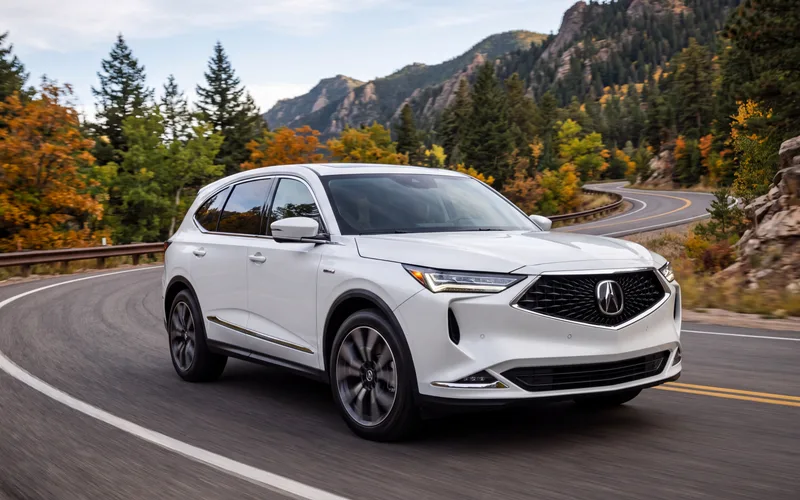 Acura MDXMid-Size Luxury SUVBetter at: Resale value
Same three-row luxury mission and price bracket, but with a V6 that fixes the QX60's refinement complaint and substantially stronger resale.
Compare 2.88B-
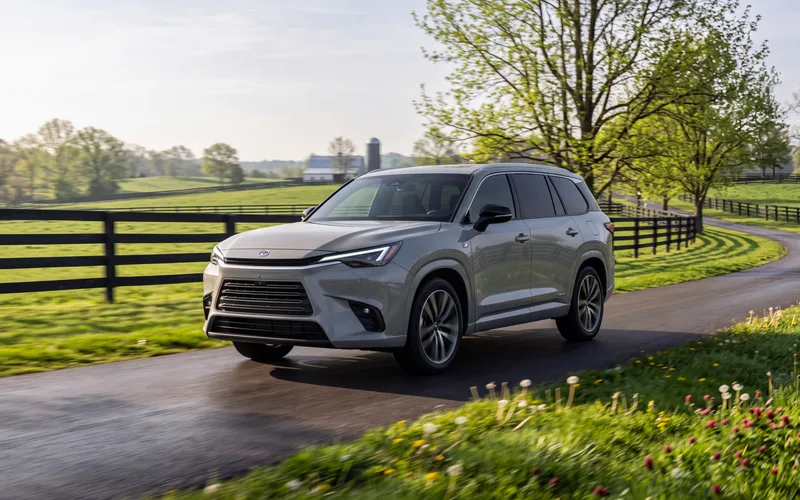 Lexus TXMid-Size Luxury SUVBetter at: Efficiency
Offers hybrid power the QX60 can't, which flips the worst part of ownership — fuel cost and depreciation — in your favor.
Compare 2.79B-
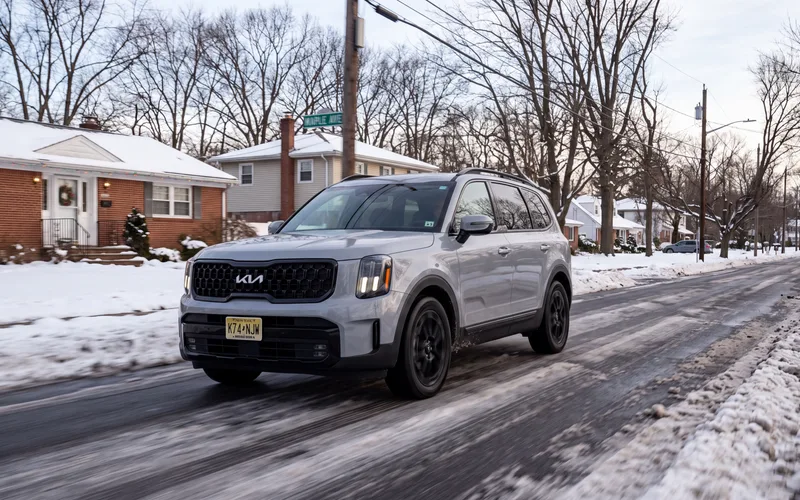 Kia TellurideMid-Size SUVBetter at: Space and warranty
Costs far less, seats adults in the third row, and hauls more cargo, with a 10-year powertrain warranty on top.
CompareHow it's evolved
9 scored model years · 2017–2026
Subject scores by year
Hover or tap a score to see what moved it versus the year before. A corner mark flags a big swing.
| Year | Performance | Efficiency | Safety | Space | Cost | Reliability | Tech | Use-case | Driving | Value |
|---|---|---|---|---|---|---|---|---|---|---|
| 2026 | 47 | 46 | 76 | 70 | 25 | 72 | 82 | 68 | 65 | 74 |
| 2025 | 41 | 42 | 80 | 62 | 30 | 52 | 67 | 64 | 57 | 70 |
| 2024 | 48 | 35 | 81 | 61 | 32 | 67 | 68 | 60 | 61 | 68 |
| 2023 | 46 | 33 | 81 | 61 | 36 | 67 | 70 | 61 | 62 | 68 |
| 2022 | 46 | 33 | 81 | 61 | 33 | 66 | 70 | 61 | 62 | 66 |
| 2020 | 44 | 35 | 65 | 68 | 34 | 65 | 34 | 61 | 56 | 58 |
| 2019 | 44 | 35 | 63 | 67 | 36 | 62 | 34 | 60 | 56 | 60 |
| 2018 | 44 | 35 | 58 | 67 | 39 | 56 | 33 | 59 | 56 | 57 |
| 2017 | 47 | 35 | 59 | 68 | 42 | 50 | 33 | 59 | 57 | 61 |
Compare two years
Best fit & conditions
Higher scores mean a better fit for that use case. Learn more about use-case fit →
Subject profile
Detailed scoring by subject
1Performance & PowertrainGrades near the bottom of the scale.0.95F
2018 is a carry-over year of the L50 generation, still running the direct-injected 3.5-liter VQ35DD that the 2016.5/2017 refresh introduced; 295 hp is competitive on paper for a three-row crossover but comes from displacement rather than boost.
270 lb-ft that does not peak until 4,800 rpm is the signature of a naturally aspirated V6 — enough for a loaded family run, but with none of the low-rpm shove a turbocharged rival delivers off the line.
7.3 seconds is mid-pack for a ~4,600-lb three-row luxury crossover — quick enough to merge and pass without drama, but the CVT's measured, revs-first delivery makes it feel slower than the stopwatch says.
With no turbo to spool and — for 2018, the first year without the hybrid — no electric handoffs to manage, the VQ35DD is smooth and quiet in normal use; the deduction is that both peaks live high in the rev range, so the engine gets vocal and coarse exactly when a serenity-marketed luxury SUV should stay hushed.
The Xtronic CVT with D-Step Logic is among the better CVTs — it fakes stepped ratios well enough that most drivers never object — but it is still a CVT in a class where 8- and 9-speed automatics are the norm, and hard throttle brings the elastic response and sustained drone those transmissions avoid.
5,000 lbs is the top of what a unibody, front-drive-based three-row offers and covers a small boat or a pair of jet skis — a clear advantage over the 3,500-lb ratings common among its crossover rivals.
Intelligent AWD is available on the single 2018 trim, so any buyer can order it, but it is a paid option rather than standard equipment and the hardware is a basic on-demand front-biased system — it can lock to a 50:50 split and has a Snow drive mode, but there is no low range and no torque vectoring.
The QX60 is an elongated Nissan Murano unibody riding 6.5 inches off the ground on all-season tires — for 2018 there is no off-road trim, no skid plating, no locking differential and no low range anywhere in the range, and Snow mode is a traction-management setting rather than off-road hardware.
2018 is the year the choice disappeared: the supercharged 2.5-liter QX60 Hybrid was dropped after 2017, leaving exactly one powertrain — 3.5L V6 and CVT — with only the driven axles left to pick, and nothing turbocharged or electrified offered in its place.
2Efficiency & RangeOne of the QX60's weakest categories.0.30F
22 MPG combined is unremarkable for a 4,600-lb three-row on a naturally aspirated V6, and with the hybrid gone from the 2018 lineup there is no thriftier version of this car to reach for.
City driving is where the QX60 loses most ground — a heavy three-row hauling 3.5 liters of displacement through stop-and-go traffic with no electric assist to cover the launches.
The CVT holds low cruising revs and the body is slippery for its size, so a steady highway run is the QX60's best case — but 26 MPG still trails the turbo-four and hybrid three-rows leading this class.
A large 19.5-gallon tank rescues what mediocre economy would otherwise cost, putting roughly 429 miles between stops — genuinely useful for family road-trip duty, even though every gallon is priced as premium.
The EPA estimate is penalized twice — 22 MPG combined, then priced against premium gasoline — which puts the QX60 near the expensive end of the gas SUV field to keep fueled.
Premium 91 AKI is what INFINITI recommends and what the EPA prices the running costs against, but it is recommended rather than required — the owner's manual permits 87 AKI regular with a noted drop in performance, so owners retain an escape valve that a premium-required vehicle does not offer.
3SafetyOne of the QX60's strongest categories.1.89C-
A full five-star overall result, though the component scores show it is carried by an unblemished side-impact performance rather than by a strong frontal one — the driver-side frontal test and the rollover resistance figure both come back at four stars.
The structure is genuinely sound — Good in five of six crashworthiness tests with only the passenger-side small overlap dropping to Acceptable — but the QX60 leaves 2018 with no Top Safety Pick at all, because Poor headlights disqualify it from an award its crash results would otherwise have earned.
Nothing beyond the federally mandated rearview camera and stability control is standard: blind-spot warning, adaptive cruise and rear cross-traffic braking all live behind the $1,850 Driver Assistance Package, and automatic emergency braking is locked inside the $7,300 Deluxe Technology Package that itself stacks on top of Premium and Premium Plus. For a luxury three-row in 2018 — the year Nissan was making AEB standard across much of its mainstream range — that is an indefensible content sheet.
When fitted, Forward Emergency Braking earns IIHS's top Superior rating for vehicle-to-vehicle avoidance, and Infiniti's Predictive Forward Collision Warning reads two cars ahead — but it is only available with the most expensive option package, and IIHS had no pedestrian front-crash-prevention program in 2018, so the claimed pedestrian detection is untested and nighttime performance is unknown.
The hardware is better than the class norm of the day — Backup Collision Intervention actually brakes for cross traffic rather than only chiming, and Blind Spot Intervention nudges the car back into lane — but every bit of it is optional, and the braking half requires climbing to the top package.
There is no lane centering of any kind — the QX60's Lane Departure Prevention corrects with individual brake applications rather than steering, which feels like a stumble rather than a guide, and even that crude system is optional. ProPILOT Assist did not reach this nameplate until the 2022 redesign.
Intelligent Cruise Control is a full-speed-range system that will brake to a standstill and resume, which was competitive for 2018, but there is no steering component to pair it with, so it never adds up to a highway assist — and reviewers found the overlapping ICC/Distance Control Assist modes confusing enough to be unsure which one was doing the braking.
No hands-free highway system was offered on the 2018 QX60, and none could have been — the car has no lane-centering steering function to build one on.
IIHS rated the headlights Poor on both configurations it tested — not Marginal on the base and Good higher up, but Poor across the range, with no way to option your way out of it. This is the single failing that costs an otherwise Good-scoring crash performer its Top Safety Pick.
A low dashboard, low beltline and generous glass give the QX60 the kind of natural forward and side sightlines that later, higher-shouldered three-rows gave away — the reason it feels smaller from the driver's seat than it is. The 360-degree camera that would cover the rest is a $4,700 climb through two packages, so the volume car relies on the glass.
The QX60's signature trick is genuinely a child-seat feature: the second row tilts and slides far forward with a car seat still installed and occupied, so third-row access does not mean uninstalling anything. IIHS rates the anchors themselves only Acceptable, but there are five lower-anchor positions across two rows and the door openings are wide.
4Space & ComfortThe QX60's best-graded category.2.55C+
Seven seats across three rows is the only configuration offered in 2018 — the QX60 was a single-grade model that year, so there is no seating choice to make beyond front- or all-wheel drive.
40.7 inches is generous for a mid-size crossover — the L50's tall, upright greenhouse pays off up front, and INFINITI publishes one figure because the power sliding moonroof is standard on every 2018 car.
42.2 inches is mid-pack for the segment — adequate for tall drivers but short of the 44-plus inches the roomiest three-rows offer, and short of the 44.4 in the second-generation QX60 later delivered.
38.3 inches in row two is comfortable for adults, and the figure quoted is the volume configuration since the panoramic moonroof that eats into it lives in the $7,300 Deluxe Technology Package rather than on the base car.
41.7 inches is near the top of what any three-row crossover offers and is the L50 QX60's single best measurement — the multi-mode bench slides right back when the third row is empty, and the car gives up nearly four inches of it in the second-generation redesign.
Access is the class benchmark — the multi-mode bench slides and tilts forward with a child seat still strapped in — and the third row reclines, but 30.8 inches of legroom on a low, flat cushion puts adults knees-up, and reviewers are unanimous that row three is a children's space.
40.2 cubic feet is the QX60's weakest dimension — the elongated Murano platform buys passenger room at the cost of a shallow, short load bay — and with all seven seats up the 15.9 cubic feet behind row three barely swallows a stroller and a few soft bags.
75.8 cubic feet fully folded is average for the class — usable, but the 60/40 and 50/50 backrests drop onto a high floor that is not quite flat, and rivals built on dedicated three-row platforms clear 80-plus.
The count is better than the class norm of the day — eight cup holders, six bottle holders, four 12-volt points, second-row armrests with storage, dual seatback map pockets and three dedicated USB charging ports split between rows two and three — but nothing here is inventive: no wireless charging pad, no underfloor bin, and the household 120-volt outlet only arrives with an option package.
Leather-appointed heated power front seats are standard on every 2018 car and the raised, sliding second row draws consistent praise, but three things hold this below the top band: Edmunds wanted softer foam up front, the driver gets only eight-way power with lumbar bundled into an option package, and the ventilated front seats are locked inside the $7,300 Deluxe Technology Package.
Isolation is the QX60's headline quality — Dual-Flow Path twin-tube dampers and a long-travel tune absorb broken pavement well enough that TFLcar put the ride 'on a par with many luxury sedans' — and the 2016 refresh's firmer calibration took some of the float out; what keeps it out of the 80s is that Edmunds still calls the suspension soft, with body roll to match.
Acoustic laminated windshield and front side glass, three liquid-filled engine mounts and a 0.33 drag coefficient make this a genuinely hushed highway cruiser by reviewers' account; the one recurring intrusion is the CVT holding revs on a hard merge, where The Car Connection judges the V6 itself 'coarse-sounding'.
The standard sheet is strong for 2018 — tri-zone automatic climate with microfilter, heated front seats, rear heating vents under both front rows and a power moonroof on every car — but unlike the later PURE/LUXE years nothing sits above that as standard equipment: heated steering wheel and remote start need the Premium Package, and ventilated front seats, heated second-row seats and the Plasmacluster air purifier all need the $7,300 Deluxe Technology Package.
5Cost of OwnershipOne of the QX60's weakest categories.0.58F
For 2018 the QX60 was a single-grade model — one 3.5-liter V6, one CVT, front-drive or Intelligent AWD — opening at $43,300 plus INFINITI's $995 destination and handling charge. That made it one of the two or three cheapest ways into a genuine seven-seat luxury crossover in 2018, level with the Acura MDX and roughly $10,000 under a comparably sized Audi Q7 or Volvo XC90.
With no trim ladder to climb, the QX60's volume configuration is defined by packages, and the pair almost every 2018 buyer took was Premium ($1,800 — Bose 13-speaker audio, remote start, heated steering wheel, memory seats, roof rails) and Premium Plus ($2,900 — INFINITI InTouch navigation and the Around View Monitor, neither available any other way). On the AWD drivetrain used throughout this scorecard that is $46,095 + $4,700 ≈ $50,795, which is where documented 2018 window stickers cluster.
Under the badge this is a Nissan Pathfinder — VQ35DD V6, JATCO Xtronic CVT, Nissan parts and Nissan labor rates — so it services far more cheaply than the German or Volvo three-rows, and KBB named the 2018 QX60 its 5-Year Cost to Own segment leader on exactly that arithmetic. The figure sits above the published nameplate averages for two reasons specific to a 2018: INFINITI included no scheduled maintenance whatsoever that year, so the owner pays from the first oil change, and the engine's premium-fuel requirement plus the CVT — the weakest link on this platform — coming out from under the 4-year/60,000-mile basic warranty inside the five-year window both add real exposure.
This is what sinks the category, and for a 2018 car it is measured rather than projected — the five-year mark fell in 2023, and even with the post-COVID used market still running hot a 2018 QX60 was worth a bit under $19,000 against a ~$50,800 sticker. INFINITI's weak brand equity is the main driver: the same money in an Acura MDX or Lexus RX kept roughly ten to fifteen points more of its value over the same span, and the QX60's own class average is about 45% retained.
INFINITI's new-vehicle limited warranty ran four years or 60,000 miles in 2018 — the luxury-brand convention on term, and 10,000 miles more generous on distance than the 4-year/50,000-mile coverage Acura, Cadillac, BMW, Audi, Lexus and Volvo all offered that year.
Six years or 70,000 miles on the V6, the Xtronic CVT and the drive components — ahead of the German 4-year/50,000-mile norm of the era, but well short of the 10-year/100,000-mile powertrain coverage a 2018 shopper could get from Hyundai, Kia or Genesis, and short of what the CVT's reliability record arguably warranted.
A 2018 QX60 came with no included scheduled maintenance at all — INFINITI Premium Care, which covers three years of oil changes, rotations and inspections, did not arrive until the 2023 model year — so this owner pays for the first service and every one after it, on premium fuel and 7,500-mile intervals. What is included is roadside-and-trials: 24-hour roadside assistance and trip-interruption benefits for 48 months with no mileage cap, plus complimentary trial access to INFINITI Connection/InTouch Services on cars fitted with the navigation hardware in the Premium Plus Package. A long roadside term attached to nothing else is the definition of the middle band rather than the top of it, and it lands slightly below the equivalent 2020 car because the 2018's connected-services suite is the older InTouch generation with no Apple CarPlay or Android Auto at any price.
$50,795 volume-trim price minus its estimated resale value after 5 years (38% retained, or about $19,302) leaves about $31,493 in depreciation. Add the projected $4,500 in 5-year maintenance and repairs, and owning this vehicle for 5 years costs about $35,993 in total.
6Reliability & QualityMid-pack among this car's ten categories.1.78C-
The two major predictors disagree, and that disagreement is the finding: J.D. Power rates the 2018 QX60 below average at 2.5 out of 5 for predicted reliability, while Consumer Reports calls it about average for its model year. Owner data splits the same way — complaint volume filed against the 2018 specifically is thin (five problems logged at CarComplaints, and 2014/2015/2017 are the nameplate's worst transmission years, not 2018), but the owners who do report trouble report expensive trouble: CVT failure, oil-sludge engine replacement, catalytic converters. Mixed signals with a real severity tail put it in the lower half of the average band, well below the 2020 car, which the same J.D. Power scale rated 'Great'.
Infiniti's dependability record around this model year is genuinely mid-pack with a good streak in it rather than a bad one. The brand posted one of the largest initial-quality gains of the 2018 study year — 15 fewer problems per 100 vehicles than in 2017 — and had just recorded the single biggest rank improvement in the 2018 Vehicle Dependability Study, climbing from 29th to 4th. What holds it to the middle band is that the gain started from a low base and did not compound: Infiniti's initial quality still trailed the 93 PP100 industry average that year, Consumer Reports carries too few Infinitis to publish a brand reliability rank at all, and by the 2023 study the brand had fallen back to 19th of 32. No single year's climb makes a top-5 dependability brand.
The recall count is low — one campaign — but the item measures severity and pattern, and on both counts this one is bad. The defect is a brake-fluid leak onto an ABS circuit board that can short and start a fire, it swept up 394,025 vehicles across the Nissan/Infiniti range, and it is a *repeat*: the 2019 campaign exists because the 2018 campaign for the same defect left cars unrepaired or wrongly cleared. On the bulletin side, the CVT judder-and-hesitation pattern on this generation was severe enough to produce a $277.7 million class settlement that names the 2015–2018 QX60 by model year. A fire recall issued twice plus a litigated driveline pattern is what the low band describes, and it is the clearest place the 2018 separates from the near-spotless 2020 car.
The engine and the transmission have opposite reputations and the transmission wins the argument for this particular year. The 3.5-liter VQ35DD V6 — direct-injected and rated 295 hp since the 2017 refresh, carried over unchanged into 2018 — is a well-proven high-mileage family. The JATCO Xtronic CVT behind it is the most litigated transmission in the US market, and unlike the 2020 car, the 2018 is not merely adjacent to that history: it is a named class vehicle in the settled case, one of the last model years covered. Nissan's own remedy was a software update and a 24-month/24,000-mile warranty extension that expired years ago, leaving a 2026 buyer of this car with an out-of-warranty CVT whose failure mode is documented and whose replacement is a four-figure job. Nissan's verdict on the design is the strongest evidence available: it abandoned the CVT entirely for the 2022 redesign in favor of a nine-speed torque-converter automatic.
This is the same cabin the 2020 car carries — the 2016 refresh interior, unchanged for 2018 — and reviewers split on it the same way. Standard leather on every 2018 QX60 and the maple wood on optioned cars genuinely read as luxury, and the car is finished well above the Pathfinder it shares a platform with. But the dashboard top is hard plastic and the switchgear comes out of the Nissan parts bin, and those are exactly the surfaces a $50,000 buyer touches, so the car cannot claim the class-leading band its price implies.
Assembly is broadly solid — a sixth-year build of a mature design on the same Smyrna line as the Pathfinder, with a notably quiet cabin — and Infiniti's initial quality improved more than almost any brand's in the 2018 study year. It lands below mid-band anyway on two counts this item is specifically about. Owners of the 2018 report scattered rattles, squeaks and peeling exterior trim, and the car's single recall is a manufacturing and supplier failure rather than a design one: ABS actuator pumps built such that brake fluid can reach a circuit board, on a campaign that had to be run twice because the first pass left cars unfixed.
Roughly 190 to 205 US stores in 43 states is a thin footprint for a luxury brand — behind Lexus, Acura, BMW and Mercedes-Benz — and it has been contracting since this car was new rather than growing, with Nissan now letting Infiniti dealers co-locate inside Nissan showrooms to survive. For an owner outside a metro area that is a real drive to the nearest franchise. The saving grace is specific to a car of this age: an eight-year-old QX60 is long out of warranty and is mechanically a Pathfinder, so any Nissan-competent independent shop can service it and franchise density stops being the binding constraint.
The strongest thing about owning this car, and it follows directly from the Pathfinder underneath it: the platform, the VQ-family 3.5-liter V6 and the JATCO CVT are all high-volume Nissan hardware built on the same Smyrna line, so parts are commodity-priced with deep aftermarket and salvage supply rather than low-volume luxury pieces, and running costs land near the all-vehicle average instead of the luxury-SUV average. Eight years of production depth make used and remanufactured supply better still — CVT rebuilders stock reman units for this exact application. It stops short of the top band because a CVT replacement, which this model year is meaningfully exposed to, is a four-figure job, and Infiniti-specific trim, wood and infotainment pieces remain dealer-sourced.
7Technology & InfotainmentThe QX60's lowest-graded category.0.13F
Eight inches was already small for a luxury three-row in 2018 and INFINITI offered no upgrade at any price — the second-generation car jumped to 12.3 inches four model years later.
Nothing is buried — a rotary INFINITI Controller, real climate knobs and illuminated wheel switches mean the hardware layout ages better than the software — but the InTouch system itself is 2013-vintage, still built around an AM/FM/CD head unit with auxiliary A/V jacks, and reviewers found the menu structure confusing next to rivals.
Neither Apple CarPlay nor Android Auto is offered in any form on the 2018 QX60 — not wireless, not even wired, not in any of the six option packages — which in a luxury three-row that year is a hole rivals had already filled.
Navigation and the voice recognition that drives it are both option-package content — $2,900 for Premium Plus, which itself requires the $1,800 Premium Package beneath it — and what that buys is a rigid command-word system with one-shot destination entry rather than natural language; with no phone projection to fall back on, a QX60 without those boxes ticked has no maps at all.
The upgrades are genuinely good — a 13-speaker Bose Premium system with an Acoustic Waveguide subwoofer, and above it a 15-speaker Bose Cabin Surround setup with 5.1 decoding — but neither is standard, and the base car every buyer starts from has a thin six-speaker AM/FM/CD unit, so the volume configuration only gets there by paying for the Premium Package.
There is no digital cluster on the 2018 QX60 in any configuration — the gauges are analog Fine Vision electroluminescent dials with a small colour Intelligent-View trip display wedged between them, which is where the segment had been five years earlier.
The 2018 QX60 has no over-the-air update capability of any kind — the InTouch head unit takes map data through a dealer on physical media, and no vehicle software can be refreshed remotely; the platform predates INFINITI's connected-update architecture entirely.
The feature list reads better than it lives: INFINITI Connection covers remote door lock/unlock, vehicle locator, stolen-vehicle reporting, Drive Zone and Speed Alert boundaries and even Google Calendar sync, and the first year is complimentary — but the telematics hardware rides inside the Premium Plus Package rather than being standard, it becomes a paid subscription afterwards, remote engine start is a key-fob function rather than an app one, and there is no digital key.
Port coverage across the rows is better than the QX60 usually gets credit for — one front data USB plus three dedicated charging ports, one for the second row and two for the third, alongside four 12-volt points — but every socket is USB-A, there is no wireless charging pad at any price, and the 120-volt household outlet and the rear HDMI/USB pair both sit inside option packages.
The basics are all standard — proximity entry with illuminated push-button ignition, a remote fob that also works the windows, liftgate and fuel door, and a power rear liftgate on every car — but unlike the later LUXE grade nothing beyond that comes included: remote engine start and the memory-storing Enhanced Intelligent Key need the Premium Package, the hands-free Motion-Activated Liftgate needs the $7,300 Deluxe Technology Package, and there is no phone-as-key.
The base car leaves with a plain reversing camera and no sonar at all — the four-lens Around View Monitor with Moving Object Detection and the front/rear sonar system both live in the Premium Plus Package, which itself requires Premium underneath it, so the surround view costs $4,700 to reach — and no automated parking function is offered on the QX60 in any configuration.
No head-up display is offered on the 2018 QX60 at any price or in any package — one never appeared on the L50 generation in the US market.
8Use-Case FitOne of the QX60's strongest categories.1.95C-
This is what the QX60 was built to do and what it still does best: the multi-mode second row slides and tilts far forward with a child seat installed on the 40 percent side, so reaching the third row never means uninstalling anything, and 2018 adds Rear Door Alert as standard equipment on every car. The ceiling is cargo — 15.9 cubic feet behind a raised third row is a stroller and not much else — and IIHS rates the anchors themselves only Acceptable.
The crash structure is genuinely good — five NHTSA stars overall and IIHS Good in five of six tests — but the 2018 car earns no Top Safety Pick because its headlights rate Poor with no way to option out of it, and the driver aids a family would actually want are walled off: blind-spot warning and adaptive cruise need the $1,850 Driver Assistance Package and automatic emergency braking only exists inside the $7,300 Deluxe Technology Package that stacks on two others.
A quiet cabin, tri-zone automatic climate and rear heating vents standard, a second row that reclines and slides 5.5 inches, three USB charging ports aimed at rows two and three, an available Theater Package with dual 8-inch screens and HDMI, and roughly 429 miles of range make this a strong multi-hour family device. What holds it back is the same trade-off in reverse: use the third row and only 15.9 cubic feet of luggage space is left, and that third row's flat cushion is not a place to spend a day.
Low-effort in exactly the way commuting rewards: a naturally aspirated V6 with no turbo lag paired to a CVT that reviewers found unusually free of rubber-banding, very light steering, a soft ride, a commanding seat height with a low step-in, and a low dash and beltline that make the car feel smaller than it is. The demerits are fatigue-adjacent rather than dynamic — adaptive cruise is optional and there is no lane centering at any price.
The per-mile arithmetic is poor and premium fuel is why: 22 MPG combined priced against 91 AKI gives an EPA annual fuel bill of $3,450, near the expensive end of the gas SUV field. What keeps it off the floor is the other half of the cost — Nissan Pathfinder hardware means Nissan-level consumables and labor, which is precisely what won this car a Kelley Blue Book 5-Year Cost to Own segment award.
A 200-inch, 77-inch-wide crossover turning a 38.8-foot circle is a real presence in a city, and the crescent-cut D-pillar thickens the over-shoulder view; the low dash and beltline give unusually good forward and side sightlines, but the camera help that would cover the rest — Around View with Moving Object Detection plus front and rear sonar — is a $4,700 climb through two nested packages, so the volume car parks on glass and a single reversing camera.
5,000 pounds is a genuinely good tow rating for a unibody, front-drive-based crossover and covers a small boat or a pair of jet skis, but that is where the work case ends: there is no bed, roughly 1,460 pounds of payload before passengers, an enclosed 75.8-cubic-foot load bay lined in carpet and leather, and a CVT that is the least suited transmission in the class to sustained load.
The bones are high-volume Nissan — the VQ-family 3.5-liter V6 and the Murano/Pathfinder platform are proven and cheap to keep running — but hard use is exactly where this drivetrain's weak link shows, since the JATCO Xtronic CVT carries the worst durability reputation on the platform, and a leather-lined luxury interior with no wear-friendly trim option and no fleet presence is not built to be abused.
Provisions for work are thin and mostly optional: four 12-volt points are standard but the 120-volt household outlet is package content, roof rails and crossbars are both options rather than equipment, and there is no upfit ecosystem, no washable surface, no bed access and nothing beyond basic cargo-area tie-downs behind a carpeted load floor.
A strong tourer: about 429 miles between fills from a 19.5-gallon tank, a cabin reviewers repeatedly call exceptionally quiet, acoustic front glass, a soft long-travel ride, comfortable front and second-row seats, and a full-speed-range adaptive cruise that will brake to a standstill and resume. Two things keep it out of the top band — every gallon is priced as premium, and the adaptive cruise has no steering component to pair with, so there is no highway assist to take the edge off a long day.
Fine for gravel roads and a bike rack, not for anything past that: Intelligent AWD with a Snow drive mode is available on any 2018 QX60 and the 5,000-lb rating tows real toys, but ground clearance is 6.5 inches on all-season tires with a 14.7-degree approach angle, there is no skid plating, no low range and no locking differential anywhere in the range, and even the roof rails a camper would want are an option rather than standard.
Flexible in the ways that matter for a road trip — 60/40 and 50/50 split folds over a flat platform floor, a second row that slides 5.5 inches to trade legroom for cargo on demand, a wide power liftgate opening The Car Connection calls 'excellent in swallowing gear', and a hitch available with the tow package. It stops short of exceptional because 75.8 cubic feet fully folded is only average for the class, the folded floor is high and not perfectly flat, and roof rails and crossbars both cost extra.
9Driving ExperienceMid-pack among this car's ten categories.1.78C-
Secure and predictable but not much more: the 2016 refresh firmed the suspension for roadholding and The Car Connection was unconvinced it handles any better for it, while Edmunds calls the tune outright soft, so a 4,526-lb crossover with a 57/43 nose bias leans through corners on all-season tires. Active Trace Control, the brake-based cornering aid that would sharpen it, is option-package content.
The speed-sensitive assist is calibrated for parking-lot effort rather than information — The Car Connection's verdict is that the wheel 'lacks consequence' and Edmunds simply calls it numb — though a 16.8:1 ratio and 2.9 turns lock-to-lock make it accurate enough to place the car precisely, and TFLcar was alone in finding useful input through it.
Hardware is adequate rather than generous — 12.6-inch vented front and 12.13-inch vented rear discs hauling down as much as 4,526 lbs, with ABS, EBD and Brake Assist standard — and the soft pedal matches the rest of the car's tuning; no instrumented stop was published for the 2018 model year, and the foot-pedal parking brake is another reminder of the platform's age.
There is little to go wrong: a naturally aspirated VQ35DD has no turbo lag, and for 2018 — the first year without the hybrid — no electric handoffs to fumble either, with three liquid-filled mounts keeping vibration out of the cabin. Reviewers rate this among the better CVT applications, TFLcar finding it free of rubber-banding entirely; the deduction is that a hard request still brings rising revs before rising speed, since peak torque waits until 4,800 rpm.
At a cruise the V6 is near-inaudible behind acoustic glass, but the sources split on what it sounds like when worked: TFLcar hears no drone at all while The Car Connection calls the engine flatly 'coarse-sounding' and holds it against the CVT — and with peak torque up at 4,800 rpm, a hard merge or a long grade is exactly where a stepped 8- or 9-speed rival would stay quieter.
A 38.8-foot circle on a 114.2-inch wheelbase is unremarkable — it takes real space to turn around, and the second-generation car later tightened it — though 2.9 turns lock-to-lock means the driver is not sawing at the wheel to use it.
A commanding seat height with a low 18.2-inch step-in, standard power tilt and telescopic column, an eight-way power seat, and controls still on real illuminated buttons and knobs rather than buried in a screen, all behind an unusually low dash and beltline. Two deductions specific to 2018: the memory system and entry/exit assist that later became standard on the LUXE grade are option-package content here, and the crescent-cut D-pillar thickens the over-shoulder view.
Nobody was pretending otherwise, INFINITI included: light steering that reviewers say lacks consequence, a soft chassis, a CVT and a 7.3-second 0-60 add up to a competent family appliance, and The Car Connection's own framing is that in this class 'big engines need not apply'. The Sport drive mode alters throttle and shift mapping and little else.
10Value & Market PositionMid-pack among this car's ten categories.1.85C-
The comfort list on a $44,295 single-grade QX60 is genuinely long for the money — leather-appointed seating standard (something the 2019–2020 PURE grade later gave up for leatherette), heated 8-way power front seats, tri-zone automatic climate, power moonroof, power liftgate, three rows of seating with the sliding second row, and Rear Door Alert newly standard on every 2018 model. Where it falls down is driver assistance and infotainment: forward emergency braking, blind-spot warning and adaptive cruise are all optional package content in a year when Acura made AcuraWatch and Volvo made City Safety standard, navigation and the Around View Monitor require the $2,900 Premium Plus Package, and Apple CarPlay and Android Auto are unavailable at any price on the old InTouch head unit.
On the fundamentals the 2018 car delivers well: seven seats, 295 horsepower, a 5,000-lb tow rating and 22 MPG combined for $44,295 delivered, which is roughly $10,000 under a comparably equipped Audi Q7 or Volvo XC90 and level with an Acura MDX — and Kelley Blue Book's 5-Year Cost to Own award for the segment says the running costs backed the sticker up. It scores above the 2020 car partly because the yardstick was easier: the Telluride and Palisade, which later made the QX60's pricing look indefensible, were still two model years away. The ceiling is that the money buys space and comfort rather than content or capability — one engine, one CVT, the hybrid dropped for 2018, and $4,700 of packages before a buyer gets navigation and Bose, $7,300 for the Deluxe Technology Package.
2018 is the narrowest the QX60 lineup ever got: a single grade, one engine, one transmission, and only the FWD/AWD choice, after the QX60 Hybrid was dropped for the model year. The old-fashioned package structure is what keeps this mid-band rather than bottom — six option packages plus wheels and premium paint stretch the range from about $44,300 to past $58,000 with real granularity in between — but a buyer cannot pick features à la carte, and there is no cheaper entry point and no performance or efficiency alternative to move to. The 2019 model year restored some of this by splitting the range into PURE and LUXE grades.
2018 is the QX60's best year ever in the United States — 47,370 units, up 17.1% on 2017 — which made it comfortably INFINITI's best-selling model and put it within range of the Acura MDX, the segment's volume benchmark. That is genuine market acceptance on a rising trajectory in the sixth year of the generation, which is unusual; it stops short of the top band only because the QX60 was never the outright class leader and the run was about to end, with volume sliding in 2019 and collapsing in 2020–21 ahead of the redesign.
2018 catches INFINITI near its high-water mark rather than its later slump — the brand had just posted a US record in 2017 and held close to it in 2018, and the QX60 was the model carrying it. But the badge has never had the pull of Lexus or Acura in this class, and the used market prices that in directly: this car keeps under 40% of its sticker over five years against roughly 45% for the luxury midsize SUV category, and KBB places it in the worst quartile of 2018 SUVs for depreciation. Neutral brand perception with a measurable resale penalty is the middle of the band.
Scored on buyer benefit, this is the strongest item in the category. INFINITI discounted the QX60 hard even in its best sales year — documented 2018 transactions closed in the high teens off sticker, with stackable factory and dealer cash on top of lease support, and the model was a perennial fixture on discount and lease-deal roundups. It sits just below the 2020 car only because that year's discounting was distress-level run-out pricing; in 2018 double-digit discounts were routine rather than desperate, which is arguably the better outcome for a buyer who also has to live with the resale value.
2018 is the sixth model year of the L50 generation that launched as the JX35 for 2013 on an elongated Nissan Murano platform, and the changes for the year amount to Rear Door Alert becoming standard and the hybrid being deleted. It scores meaningfully above the 2020 car — the 2016 facelift and the 2017 switch to the direct-injection VQ35DD were still recent, and the ground-up 2022 redesign was four years out rather than imminent — but the underlying architecture and especially the infotainment were visibly of the previous decade, with no CarPlay or Android Auto available and no hands-on driver-assist system in a class where those were arriving.
Reviewers liked the QX60 as a family device and consistently ranked it near the bottom of its class anyway. U.S. News scored it 7.4 out of 10 and placed it 14th among 2018 luxury midsize SUVs, explicitly blaming subpar predicted reliability, and it won no comparison tests, no 10Best and no NACTOY recognition. It also missed IIHS Top Safety Pick for 2018 — crashworthiness was Good in five of six tests, but the headlights rated Poor, and it took the 2019 headlight revision to earn the award. What keeps it off the floor is real, contemporary recognition on the ownership side: Kelley Blue Book named the 2018 QX60 a 5-Year Cost to Own segment winner, and reviewers were unanimous about ride comfort and third-row access.