

The verdict
A struggling compact luxury suv, strong on driving and held back by ownership.
The 2020 I-PACE is one of the best-driving electric SUVs of its era. Its 394 hp and 512 lb-ft get it to 60 mph in 4.5 seconds, and its handling earned it World Car of the Year. As a long-term ownership proposition it is weak. The EPA rates it at 234 miles, it peaks at 100 kW on a DC fast charger, and it keeps only about 28% of its value after five years. The 2020 model year is also covered by six NHTSA high-voltage battery campaigns, so check a used example's recall history carefully. Buy it for the drive and only at a deep used-car discount, not as a road-trip EV.
Jump to scoresStrengths
- Sports-car acceleration
- Genuinely fun to drive
- Silky, hushed powertrain
What holds it back
- Short range, slow charging
- Brutal depreciation
- Battery recalls and shaky reliability
Top alternatives
Cars shoppers cross-shop with the Jaguar I-PACE 2.60C+
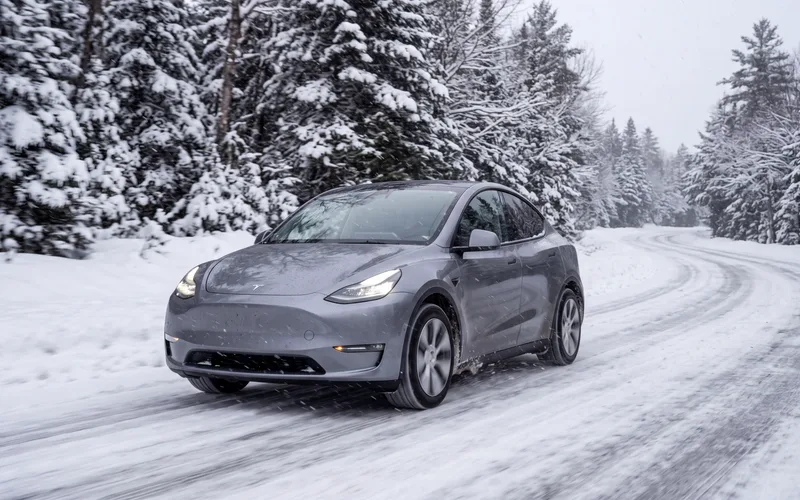 Tesla Model YCompact SUV
The Model Y crushes the I-PACE on the numbers that matter for EV ownership — 300+ miles of range, ~250 kW Supercharging on the native NACS network, and roughly half the price — while offering more cargo room and better software.
Compare 3.20B+
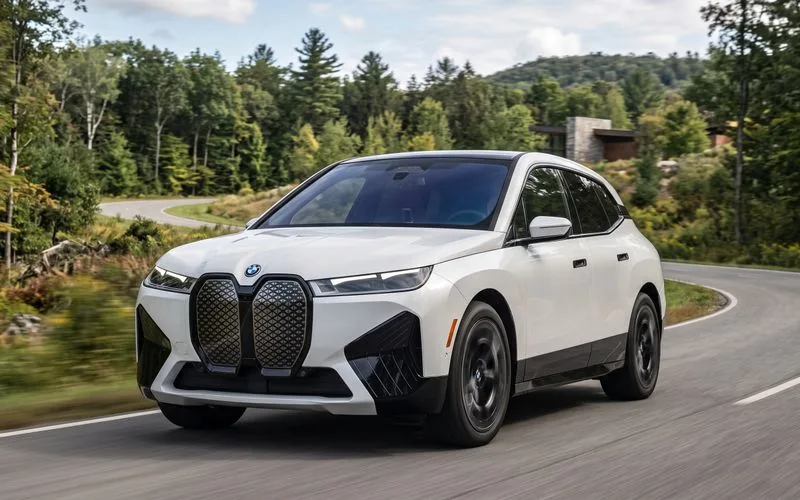 BMW iXMid-Size Luxury SUV
The iX xDrive60 delivers 364 miles of EPA range, ~195 kW peak DC charging, and 97 MPGe combined against the I-PACE's 246 miles, 100 kW, and 76 MPGe — a decisive win on the fundamentals of a modern luxury EV.
Compare 2.55C+
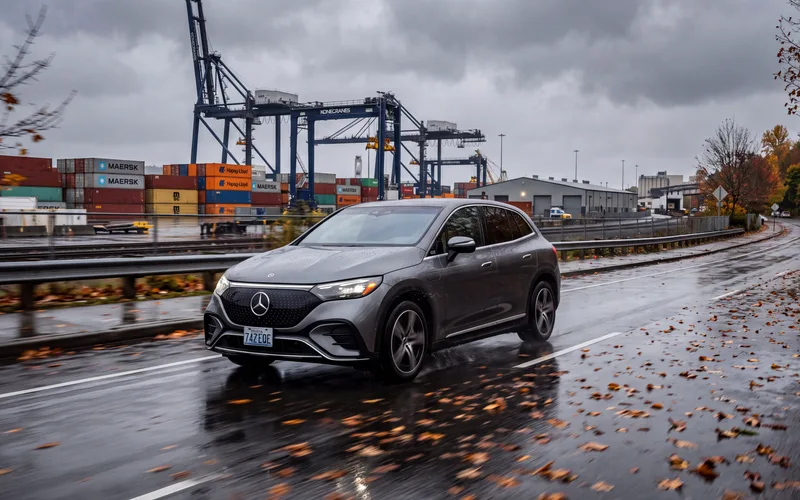 Mercedes-Benz EQE SUVMid-Size Luxury SUV
The EQE SUV offers ~279 miles of range, ~170 kW fast charging, four-zone climate, and Mercedes' Hyperscreen tech — clearly ahead of the Jaguar's dated dual-screen Pivi Pro and 246-mile range.
CompareHow it's evolved
6 scored model years · 2019–2024
Subject scores by year
Hover or tap a score to see what moved it versus the year before. A corner mark flags a big swing.
| Year | Performance | Efficiency | Safety | Space | Cost | Reliability | Tech | Use-case | Driving | Value |
|---|---|---|---|---|---|---|---|---|---|---|
| 2024 | 62 | 53 | 57 | 42 | 20 | 42 | 75 | 54 | 76 | 50 |
| 2023 | 62 | 53 | 47 | 43 | 25 | 43 | 73 | 53 | 75 | 52 |
| 2022 | 62 | 53 | 48 | 43 | 25 | 42 | 74 | 53 | 76 | 58 |
| 2021 | 62 | 53 | 42 | 41 | 25 | 39 | 61 | 50 | 74 | 53 |
| 2020 | 62 | 53 | 41 | 42 | 25 | 36 | 61 | 50 | 75 | 63 |
| 2019 | 62 | 53 | 41 | 42 | 25 | 32 | 60 | 50 | 75 | 65 |
Compare two years
Best fit & conditions
Higher scores mean a better fit for that use case. Learn more about use-case fit →
Subject profile
Academic Probation · NHTSA safety recalls
Feb 5, 2026Electrical system: propulsion system: traction batteryThe high voltage battery may overheat.
Defect
Jaguar Land Rover North America, LLC (Jaguar) is recalling certain 2020-2021 Jaguar I-PACE vehicles. The high voltage battery may overheat.
Risk
A high voltage battery that overheats increases the risk of a fire.
Remedy
Owners are advised to park outside and away from structures, charge outside, and limit their charge to a maximum of 90% until the recall repair is complete. As an interim repair, the battery software will be updated by a dealer, or through an over-the-air (OTA) update to limit the state of charge to 90%. The final remedy is currently under development. Repairs will be performed free of charge. Interim letters notifying owners of the safety risk were mailed April 2, 2026. Additional letters will be sent once the final remedy is available. Owners may contact Jaguar's customer service at 1-800-452-4827. Jaguar's numbers for this recall are H570, H571, and H572. This recall replaces NHTSA recall numbers 23V369, 23V709, and 24V085. Vehicles repaired under one or more of the previous recalls will need to have the new remedy completed.
NHTSA campaign 26V067000 ↗Manufacturer no. H570 H571 H5722,278 vehicles potentially affected (all models in the campaign)Filed by Jaguar Land Rover North America, LLCFiled as I-PACEMar 7, 2024Electrical system: propulsion system: traction batteryThe high-voltage battery may overheat.
Defect
Jaguar Land Rover North America, LLC. (Jaguar) is recalling certain 2019-2020 I-Pace vehicles. The high-voltage battery may overheat.
Risk
A high-voltage battery that overheats increases the risk of a fire.
Remedy
Dealers will replace the high-voltage battery, free of charge. Owner notification letters were mailed June 26, 2024. Owners may contact Jaguar's customer service at 1-800-452-4827. Jaguar's number for this recall is H484. These vehicles were previously recalled under 23V-369 and will need to have the new remedy completed.
NHTSA campaign 24V183000 ↗Manufacturer no. H484258 vehicles potentially affected (all models in the campaign)Owners notified Jun 26, 2024Filed by Jaguar Land Rover North America, LLCFiled as I-PACEFeb 8, 2024Electrical system: propulsion system: traction batteryThe fasteners that secure the battery module to the busbars may not have been tightened securely, which can cause electrical arcing at the busbars.
Defect
Jaguar Land Rover North America, LLC (Jaguar) is recalling certain 2019-2020 Jaguar I-PACE vehicles. The fasteners that secure the battery module to the busbars may not have been tightened securely, which can cause electrical arcing at the busbars.
Risk
Electrical arcing increases the risk of a fire.
Remedy
Dealers will inspect and repair the busbar fasteners and replace any damaged components as necessary, free of charge. Owner notification letters were mailed March 21, 2024. Owners may contact Jaguar's customer service at 1-800-452-4827. Jaguar's number for this recall is H468.
NHTSA campaign 24V086000 ↗Manufacturer no. H4682 vehicles potentially affected (all models in the campaign)Owners notified Mar 20, 2024Filed by Jaguar Land Rover North America, LLCFiled as I-PACEFeb 8, 2024Electrical system: propulsion system: traction batteryThe high-voltage battery may overheat.
Defect
Jaguar Land Rover North America, LLC (Jaguar) is recalling certain 2019-2020 Jaguar I-PACE vehicles previously repaired under recall number 23V-369. The high-voltage battery may overheat.
Risk
A high-voltage battery that overheats increases the risk of a fire.
Remedy
Owners are advised to park and charge their vehicle outside and away from structures until the recall repair is complete and for 30 days after the repair has been completed. The battery energy control module software will be updated by a dealer. Repairs will be performed free of charge. Owner notification letters were mailed March 20, 2024. Owners may contact Jaguar's customer service at 1 -800-452-4827. Jaguar's number for this recall is H471. These vehicles were previously recalled for this same issue under recall number 23V-369 and will need to have the new remedy performed.
NHTSA campaign 24V085000 ↗Manufacturer no. H471100 vehicles potentially affected (all models in the campaign)Owners notified Mar 20, 2024Filed by Jaguar Land Rover North America, LLCFiled as I-PACEOct 19, 2023Electrical system: propulsion system: traction batteryThe previous repair may not have been completed correctly, and still allow the high-voltage battery to overheat.
Defect
Jaguar Land Rover North America, LLC (Jaguar) is recalling certain 2019-2023 I-PACE vehicles previously repaired under recall 23V-369. The previous repair may not have been completed correctly, and still allow the high-voltage battery to overheat.
Risk
The high-voltage battery overheating increases the risk of a fire.
Remedy
Owners are advised to park and charge their vehicle outside and away from structures until the recall repair is complete, and for 30 days after the repair has been completed. Dealers will update the battery energy control module software, free of charge. Owner notification letters were mailed December 11, 2023. Owners may contact Jaguar customer service at 1-800-452-4827. Jaguar's number for this recall is H459.
NHTSA campaign 23V709000 ↗Manufacturer no. H459501 vehicles potentially affected (all models in the campaign)Owners notified Dec 1, 2023Filed by Jaguar Land Rover North America, LLCFiled as I-PACEMay 25, 2023Electrical system: propulsion system: traction batteryThe high-voltage battery may overheat.
Defect
Jaguar Land Rover North America, LLC (Jaguar) is recalling certain 2019-2024 Jaguar I-PACE vehicles. The high-voltage battery may overheat.
Risk
The high-voltage battery overheating increases the risk of a fire.
Remedy
Owners are advised to park and charge vehicle outside and away from structures until the recall repair is complete. The battery energy control module software will be updated by a dealer, or through an over-the-air (OTA) update. In addition, battery modules will be replaced as necessary. Repairs will be performed free of charge. Owner notification letters were mailed July 18, 2023. Owners may contact Jaguar's customer service at 1-800-452-4827. Jaguar's number for this recall is H441.
NHTSA campaign 23V369000 ↗Manufacturer no. H4416,422 vehicles potentially affected (all models in the campaign)Owners notified Jul 18, 2023Filed by Jaguar Land Rover North America, LLCFiled as I-PACEFeb 13, 2020SeatsJaguar Land Rover North America, LLC (Jaguar) is recalling one 2020 I-Pace vehicle. The front passenger seat frame may be missing fasteners, resulting in a seat frame with insufficient strength.
Defect
Jaguar Land Rover North America, LLC (Jaguar) is recalling one 2020 I-Pace vehicle. The front passenger seat frame may be missing fasteners, resulting in a seat frame with insufficient strength.
Risk
In the event of a crash, the seat may not properly secure the occupant, increasing their risk of injury.
Remedy
Jaguar will notify the owner, and a dealer will replace the front passenger seat assembly, free of charge. The recall began March 25, 2020. Owners may contact Jaguar customer service at 1-800-452-4827. Jaguar's number for this recall is H282.
NHTSA campaign 20V082000 ↗Manufacturer no. H2821 vehicles potentially affected (all models in the campaign)Owners notified Mar 25, 2020Filed by Jaguar Land Rover North America, LLCFiled as I-PACEMay 9, 2019Service brakesIf the electrical regenerative brake system fails, there will be an increased delay between when the driver brakes and when the vehicle decelerates. As such, these vehicles fail to comply with the requirements of Federal Motor Vehicle Safety Standard (FMVSS) number 135, "Light Vehicle Brake Systems."
Defect
Jaguar Land Rover North America, LLC (Jaguar) is recalling certain 2019-2020 I-PACE vehicles. If the electrical regenerative brake system fails, there will be an increased delay between when the driver brakes and when the vehicle decelerates. As such, these vehicles fail to comply with the requirements of Federal Motor Vehicle Safety Standard (FMVSS) number 135, "Light Vehicle Brake Systems."
Risk
A delay in deceleration, increases the distance needed to stop and the risk of a crash.
Remedy
Jaguar will notify owners, and dealers will update the software to reduce the delay, free of charge. The recall began June 12, 2019. Owners may contact Jaguar customer service at 1-800-637-6837. Jaguar's number for this recall is H213.
NHTSA campaign 19V351000 ↗Manufacturer no. H2133,083 vehicles potentially affected (all models in the campaign)Owners notified Jun 12, 2019Filed by Jaguar Land Rover North America, LLCFiled as I-PACE
5 recalls on other model years of the I-PACE (2019, 2021–2024)
Dec 12, 2024Electrical system: propulsion system: traction batteryThe high-voltage battery may overheat.
Defect
Jaguar Land Rover North America, LLC (Jaguar) is recalling certain 2019 Jaguar I-PACE vehicles that received an improper interim repair under recall number 24V-633. The high-voltage battery may overheat.
Risk
A high-voltage battery that overheats increases the risk of a fire.
Remedy
Owners are advised to park and charge their vehicle outside and away from structures and limit their charge to a maximum of 80% until the recall repair is complete. Dealers will update the battery energy control module software as an interim repair, free of charge. Owner notification letters were mailed February 6, 2025. As a final repair, Jaguar will repurchase the vehicles under recall number 24V-633. Owners may contact Jaguar customer service at 1-800-452-4827. Jaguar's number for this recall is H529.
NHTSA campaign 24V927000 ↗Manufacturer no. H52985 vehicles potentially affected (all models in the campaign)Owners notified Feb 6, 2025Filed by Jaguar Land Rover North America, LLCFiled as I-PACEAug 23, 2024Electrical system: propulsion system: traction batteryThe high-voltage battery may overheat.
Defect
Jaguar Land Rover North America, LLC (Jaguar) is recalling certain 2019 Jaguar I-PACE vehicles. The high-voltage battery may overheat.
Risk
A high-voltage battery that overheats increases the risk of a fire.
Remedy
Owners are advised to park and charge their vehicle outside and away from structures and limit their charge to a maximum of 80% until the recall repair is complete. As an interim repair, dealers will update the battery energy control module software, free of charge. Owner letters were mailed March 5, 2025. JLR will repurchase the vehicles. Owners may contact Jaguar customer service at 1-800-452-4827. Jaguar's numbers for this recall are H514 and H536. These vehicles were previously recalled for this same issue under one or more recall numbers 24V-085 (H471), 23V-709 (H459), or 23V-369 (H441) and will need to have the new interim remedy performed before the vehicle is repurchased.
NHTSA campaign 24V633000 ↗Manufacturer no. H5142,760 vehicles potentially affected (all models in the campaign)Owners notified Mar 5, 2025Filed by Jaguar Land Rover North America, LLCFiled as I-PACEFeb 22, 2024Exterior lighting: turn signalIn the event that one of the turn signals stops working, the turn signal flash rate frequency will not adjust to warn the driver that a turn signal is not working correctly. As such, these vehicles fail to comply with the requirements of Federal Motor Vehicle Safety Standard number 108, "Lamps, Reflective Devices, and Associated Equipment."
Defect
Jaguar Land Rover North America, LLC (Jaguar) is recalling certain 2021-2024 Jaguar I-Pace vehicles. In the event that one of the turn signals stops working, the turn signal flash rate frequency will not adjust to warn the driver that a turn signal is not working correctly. As such, these vehicles fail to comply with the requirements of Federal Motor Vehicle Safety Standard number 108, "Lamps, Reflective Devices, and Associated Equipment."
Risk
Inoperative rear turn signals may not notify other drivers of a turning vehicle, increasing the risk of a crash.
Remedy
Dealers will update the Car Configuration File (CCF) software, free of charge. Owner notification letters were mailed April 8, 2024. Owners may contact Jaguar customer service at 1-800-452-4827. Jaguar's number for this recall is H475.
NHTSA campaign 24V134000 ↗Manufacturer no. H4752,015 vehicles potentially affected (all models in the campaign)Owners notified Apr 8, 2024Filed by Jaguar Land Rover North America, LLCFiled as I-PACEJul 27, 2023Visibility: defroster/defogger/hvac systemThe high voltage coolant heater may fail to defrost the windshield.
Defect
Jaguar Land Rover North America, LLC (Jaguar) is recalling certain 2021-2022 I-Pace vehicles. The high voltage coolant heater may fail to defrost the windshield.
Risk
A high voltage coolant heater that fails to defrost the windshield can reduce the driver's view, increasing the risk of a crash.
Remedy
Dealers will replace the high voltage coolant heater, free of charge. Owner notification letters were mailed October 26, 2023. Owners may contact Jaguar customer service at 1-800-452-4827. Jaguar's number for this recall is H448.
NHTSA campaign 23V518000 ↗Manufacturer no. H448668 vehicles potentially affected (all models in the campaign)Owners notified Oct 26, 2023Filed by Jaguar Land Rover North America, LLCFiled as I-PACEJan 26, 2023Back over prevention: warnings: external/pedestrian alert · Electrical system: softwareThe vehicles fail to make sufficient pedestrian warning sounds when stationary and in reverse. As such, these vehicles fail to comply with the requirements of Federal Motor Vehicle Safety Standard number 141, "Minimum Sound Requirements for Hybrid and Electric Vehicles."
Defect
Jaguar Land Rover North America, LLC (Jaguar) is recalling certain 2021-2022 I-Pace vehicles. The vehicles fail to make sufficient pedestrian warning sounds when stationary and in reverse. As such, these vehicles fail to comply with the requirements of Federal Motor Vehicle Safety Standard number 141, "Minimum Sound Requirements for Hybrid and Electric Vehicles."
Risk
A vehicle that fails to make sufficient sound may result in pedestrians being unaware of an approaching vehicle, increasing the risk of a crash.
Remedy
Dealers will update the audio amplifier software, free of charge. Owner notification letters were mailed March 16, 2023. Owners may contact Jaguar customer service at 1-800-452-4827. Jaguar's number for this recall is H421.
NHTSA campaign 23V030000 ↗Manufacturer no. H4211,072 vehicles potentially affected (all models in the campaign)Owners notified Mar 16, 2023Filed by Jaguar Land Rover North America, LLCFiled as I-PACE
Source: NHTSA Office of Defects Investigation recall database, model years 2019–2024. Recalls are listed by model year as the manufacturer filed them; whether a specific car is affected depends on its VIN — check a VIN at nhtsa.gov ↗. NHTSA model names matched to this page: I-PACE.
Detailed scoring by subject
1Performance & PowertrainOne of the I-PACE's strongest categories.2.17C
2020 is a carry-over year in the first generation, which began in 2019; only the First Edition trim was dropped. Every US trim (S, SE, HSE) shares the same two 197 hp motors, one per axle, for 394 hp combined.
Jaguar's US-rated combined torque is 512 lb-ft, available from a standstill. That is very high for the compact luxury SUV class.
Jaguar claims 0–60 mph in 4.5 s for the EV400, which is quick for the class. The drivetrain did not change for 2020, and instrumented tests land at about 4.2–4.6 s.
Reviewers consistently praise the I-PACE's immediate, near-silent and smoothly metered thrust, with no lag or coarseness. It is among the most refined drivetrains in the compact luxury SUV class.
Each motor drives through a single-speed reduction gear, so there are no shifts and power delivery is continuous.
Jaguar rates the I-PACE for only a 750 kg (1,653 lb) braked trailer. That is far below the gas luxury rivals it is cross-shopped against, which typically tow 4,000–5,000 lb.
Dual-motor AWD is standard on every I-PACE, and no FWD or RWD version exists. It adds torque vectoring by braking and Jaguar's Adaptive Surface Response traction system.
This is a pavement-oriented luxury EV. The optional air suspension can lift the body for rough tracks, and Jaguar quotes a 500 mm wade depth, but there are no lockers, skid plates, low range or off-road trim.
For 2020 there is one powertrain: the dual-motor EV400 with a 90 kWh battery, shared by the S, SE and HSE trims. There is no gas, hybrid or alternate-output option.
2Efficiency & RangeGrades below the middle of the scale.1.55D
EPA rates the 2020 I-PACE at 76 MPGe combined (44.3 kWh/100 mi), poor for an EV SUV. All 2020 US trims share this single EPA configuration.
The EPA city rating is 80 MPGe (42.2 kWh/100 mi). With both motors permanently engaged and a curb weight near 4,800 lb, city consumption is high for an EV.
The EPA highway rating is 72 MPGe, near the bottom of the EV SUV class despite the 0.29 drag coefficient.
The EPA range rating for 2020 is 234 miles (about 245 city, 221 highway) from the 90 kWh pack. Jaguar's December 2019 software update claimed more real-world range, but the 2020 EPA label was not re-rated and the 246 mi figure appears only on later records.
Jaguar rates the I-PACE for 100 kW peak DC charging over CCS1, at the floor of the modern EV SUV band. The DC rate did not change during the generation.
Jaguar publishes no 10–80% figure; its own quote is 0–80% in 45 minutes on a 100 kW charger. Independent estimates for the 10–80% window land at about 40–45 minutes, at the slow end of the EV band.
EPA estimates $1,000 a year in energy cost. That is high for an EV because of the 44 kWh/100 mi consumption, but well below premium-fuel luxury SUVs.
It uses no gasoline and home charging is cheap, but the 2020 US car has the original 7 kW onboard AC charger, so a full Level 2 charge takes about 13 hours. Public charging is slow at 100 kW CCS1 with no Supercharger access, and high consumption makes each kWh go less far.
3SafetyOne of the I-PACE's weakest categories.0.75F
NHTSA never crash-tested the 2020 I-PACE, and every NCAP field is 'Not Rated'. The framework's 0 (never rated) therefore applies.
IIHS never rated the I-PACE in any year of its 2019–2024 generation, and it holds no Top Safety Pick or TSP+. The aluminum structure earned Euro NCAP 5 stars in 2018, but there is no US crashworthiness data, so it sits in the untested band below rated peers such as the GV70, Q5 and GLC.
For 2020 the US I-PACE came in S, SE and HSE trims. AEB with pedestrian detection, forward collision warning and lane keep assist were standard, while adaptive cruise and Blind Spot Assist came with the SE or the optional Driver Assist Pack. The fullest suite, ACC with steering assist, was reserved for the HSE.
AEB with pedestrian detection is standard, but IIHS has published no front crash prevention result (vehicle-to-vehicle or pedestrian, day or night) for the I-PACE. NHTSA's record does not list FCW as standard for 2020, so there is no independent US validation to credit.
Blind Spot Assist with steering intervention, plus Rear Traffic Monitor and Clear Exit Monitor, was optional on the S and fitted higher in the range. That falls short of the standard-everywhere coverage the class leaders offer.
Lane keep assist and lane departure warning are standard. Real centering comes only with ACC steering assist on the HSE or Driver Assist Pack, and reviewers describe JLR's system of this era as a nudge-style keeper rather than a smooth centerer.
Full-range adaptive cruise with stop & go was available, and steering assist came on the HSE or with a pack, but it was not standard on the base S. When fitted it works competently, but less polished than German and Korean rivals.
The 2020 I-PACE offered no hands-free highway driving system. Steering assist requires hands on the wheel.
LED headlights are fitted across the range, and the premium/Matrix LED units with auto high beam were reserved for upper trims or options. Auto high beam only became standard for 2022. IIHS never rated the I-PACE's headlights, so there is no independent Good rating to credit.
The cab-forward, coupe-like shape, with a shallow sloping rear window and thick rear pillars, limits rearward sightlines. The surround camera was largely confined to the HSE for 2020, and the 360 camera only reached the wider options list for 2021, so most cars rely on a reversing camera alone.
There are two outboard LATCH positions. The long wheelbase gives good rear legroom, but the sloping roofline and modest door aperture make installing seats, especially rear-facing ones, more awkward than in boxier rivals. IIHS never published a LATCH rating.
4Space & ComfortGrades near the bottom of the scale.0.76F
The I-PACE has two rows and five seats on every 2020 trim (S, SE and HSE). No third row was ever offered.
Front headroom is adequate for the class. The fixed panoramic roof is standard on every 2020 trim, and the body is unchanged across 2019–2022.
Front legroom sits at the short end of the SUV range. The cab-forward EV layout favours rear room over front seat-track travel.
Rear headroom is respectable under the sloping roof, because the flat battery floor lets the rear cushion sit low. The body shell is unchanged from 2019 to 2022.
Rear legroom is mid-pack on paper. The floor has no transmission tunnel, so foot room is better than the figure suggests.
This is a strict two-row, five-seat SUV. No trim has a third row.
Cargo space behind the rear seats is in the lower half of the compact-luxury class. The front trunk holds little more than the charging cable.
Maximum cargo space is below the compact-SUV norm. The sloping tailgate restricts tall loads.
With no transmission tunnel, there is room for a large bin under the console, plus usable door pockets, a small frunk and an underfloor cargo cubby. Storage under the rear seats is HSE-only. This is competent everyday storage without standout tricks.
The SE has 10-way power sport buckets that are supportive but have limited adjustment. The 18-way seats with power lumbar are HSE-only, and the S has 8-way manual seats. The rear bench seats two adults comfortably, and the middle seat is tight.
The low centre of gravity and air suspension with adjustable height give a firm but well-controlled ride. It can feel busy over sharp impacts on 20-inch wheels and is less plush than rivals tuned for comfort.
The silent powertrain and well-sealed cabin make it hushed around town. Tyre roar and some wind rustle come through at highway speed.
Remote cabin and battery preconditioning are standard on every trim. Heated front seats are on most trims. Cooled seats, the heated steering wheel and four-zone climate are options, mostly on the HSE, so key features cost extra on the volume SE.
5Cost of OwnershipThe I-PACE's lowest-graded category.0.00F
The 2020 I-PACE started with the EV400 S at $69,850 before destination, far above the SUV price band. The SE and HSE trims sat about $6K and $11K higher.
The mid-grade SE (Meridian audio, LED headlights, 20-in wheels, upgraded seats) was the typical US build. With destination and common options such as premium paint and the Cold Climate pack, it lands near $79K.
The EV drivetrain needs little routine service, and EliteCare covered scheduled maintenance for 5yr/60k, so most of the owner's spend is tires, brakes and wear items. Early-build cars were prone to electronics, 12V and software faults, and there were HV-battery recalls, so repair exposure is above mainstream-EV levels.
Several independent sources rank the I-PACE among the worst-depreciating vehicles sold in the US. The 2020 model year has lost roughly 72% of its value over five years, weighed down by the battery-fire recalls, the model's discontinuation and Jaguar's brand pivot.
EliteCare's 5-year/60,000-mile new-vehicle limited warranty beats the 4yr/50k offered by most German luxury rivals.
The high-voltage battery is covered for 8yr/100k, the EV-segment norm. The electric drive components fall under the 5yr/60k vehicle warranty.
EliteCare bundled 5yr/60k complimentary scheduled maintenance, 5yr/60k 24/7 roadside assistance and InControl connected services, one of the richest packages in luxury, where rivals offer 3yr/36k maintenance or none. It stops short of the top because there was no bundled public-charging credit as standard.
$79,000 volume-trim price minus its estimated resale value after 5 years (28% retained, or about $22,120) leaves about $56,880 in depreciation. Add the projected $6,000 in 5-year maintenance and repairs, and owning this vehicle for 5 years costs about $62,880 in total.
6Reliability & QualityOne of the I-PACE's weakest categories.0.39F
2020 is the second US model year of the sole 2019-launched generation, still on the original Touch Pro Duo infotainment that owners and testers widely faulted for freezes, reboots and connectivity bugs, alongside 12V battery drain, high-voltage system warnings and door-handle failures. Early-production I-PACEs sit near the bottom of EV reliability surveys, and low sales volume keeps samples thin.
Jaguar, like sister brand Land Rover, has spent most of the last decade in the bottom third of US dependability rankings, a consistent laggard rather than a mid-pack brand.
Eight NHTSA campaigns cover the 2020 model year, six of them on the high-voltage battery: successive overheating recalls whose earlier software repairs proved ineffective, a full battery-replacement campaign for 2019-2020 cars, and a February 2026 campaign for 2020-2021 cars whose final remedy is still under development. The 2020 carries more battery campaigns than any later year, plus an early regenerative-brake software recall.
The dual permanent-magnet drive units have held up reasonably well, but the LG-sourced 90 kWh pack has a documented thermal-runaway defect, and 2019-2020 packs are the worst-affected: singled out for outright battery replacement and again in the 2026 campaign. That dominates this powertrain's durability reputation.
Windsor leather, real aluminum and wood options and a well-finished dash keep the cabin competitive for the class, though some lower-cabin plastics and the dated, laggy Touch Pro Duo screens trail luxury rivals.
Panel fit is generally decent, but owners and long-term testers of early I-PACEs report squeaks, rattles and electrical/software gremlins, and Jaguar's initial-quality results trail the luxury segment.
Jaguar's roughly 150 US retailers are far fewer than BMW, Mercedes or Lexus run, leaving service gaps in rural areas, and EV-specific expertise varies from dealer to dealer.
JLR parts are expensive and prone to back-orders, I-PACE high-voltage components are dealer-only with almost no aftermarket support, and the battery-replacement and still-open campaigns covering 2020 cars have strained module and pack availability.
7Technology & InfotainmentMid-pack among this car's ten categories.2.10C
InControl Touch Pro Duo uses a 10-inch upper screen and a 5.5-inch lower screen on every 2020 trim. That is small next to later luxury EV rivals.
The pre-Pivi Pro InControl Touch Pro Duo system is slow to boot and laggy, with layered menus. It looks sleek, but reviewers found it frustrating. Pivi Pro, which fixed most of this, did not arrive until the 2021 update.
Wired Apple CarPlay and Android Auto, from the Smartphone Pack, are standard on every 2020 Jaguar including the I-PACE. Wireless projection did not arrive until the later Pivi Pro update.
Native navigation is standard and shows chargers and range on the route. Reviewers found the mapping unreliable and the voice control basic, so most owners default to phone projection.
Meridian-branded audio is standard on every trim, with a 380 W system on the S and SE. The HSE gets an 825 W Meridian system, so good premium sound is available but the volume trim gets the smaller one.
A configurable 12.3-inch Interactive Driver Display is standard on all trims, with a full-width map view. It is crisp but its graphics have aged.
The I-PACE was the first Jaguar with Software-Over-the-Air, which covers several vehicle modules as well as infotainment. Updates were infrequent, and the December 2019 range and efficiency improvement was widely delivered through dealer visits.
The Jaguar Remote app can locate the car and report lock, alarm and charging status, plus schedule charging and precondition the battery and cabin. There is no phone-as-key, and connected services need a subscription after the trial.
USB and 12 V outlets are spread across both rows, but the 2020 car has no wireless phone charging, which came later. There is no household AC outlet or vehicle-to-load.
Proximity keyless entry and push-button start are standard, and the waterproof Activity Key wristband is available. The powered tailgate is reserved for upper trims, and there is no phone-as-key.
Every trim has a rear camera and parking sensors. The 3D Surround Camera and park assist are standard only on the HSE and optional below it.
A head-up display is available as an option, mainly on the SE and HSE, and is not standard on the volume trim. It is modest in size and content.
8Use-Case FitGrades below the middle of the scale.1.37D
The flat rear floor and 35 in of legroom suit forward-facing seats. The low, sloping roofline and small rear door openings make lifting a child into a rear-facing seat awkward. The 25.3 cu ft cargo hold fits a stroller but little else.
AEB, lane keeping and a rear camera are standard. Adaptive cruise, blind-spot monitoring and the 360 camera cost extra or are reserved for upper trims, and the car has no NHTSA or IIHS crash ratings for 2020.
The cabin is quiet and the rear seat is comfortable, but the 234-mile EPA range and a 100 kW DC peak force long, frequent stops. There is no rear entertainment, and luggage space with five aboard is small.
Smooth, instant EV torque and adjustable regen with near one-pedal driving make traffic easy. Laggy Touch Pro Duo infotainment and poor rear visibility are the main daily annoyances, and stop-and-go adaptive cruise starts at the SE.
Home charging keeps running costs low, at about $1,000 a year in energy per EPA, and there are no oil changes. Consumption of 44.3 kWh/100 mi is thirsty for an EV, and its 20-inch tyres are costly.
The footprint is compact at about 184 in long, but the car is wide and has an average 39.3 ft turning circle. The 360 camera is HSE-only, so the volume trim relies on a rear camera and sensors despite poor rear sightlines.
The 1,653 lb tow rating is far below most compact luxury SUVs, and the cargo hold is small. There is no work variant.
This is an aluminium-intensive luxury chassis with delicate trim. Early production years had widely reported software and electrical glitches, and Jaguar ranks near the bottom on reliability. The car has no fleet history.
There is no 120 V outlet or vehicle-to-load, no washable liner, only basic tie-down anchors and no upfit ecosystem. Roof bars and a tow bar are dealer accessories.
It is quiet and composed on the highway. However, the 234-mile EPA range, 72 MPGe on the highway and a 100 kW DC peak make for frequent, slow charging stops, and adaptive cruise is not standard on the base S.
Standard dual-motor AWD, a 500 mm wading depth and adjustable air-suspension height handle gravel roads and snow easily. The 1,653 lb tow limit, lack of camp power and short range in remote areas restrict real adventures.
The 60/40 folding rear seat, underfloor cubby and small frunk help. Cargo space of only 25.3 and 51 cu ft and the sloping tailgate limit bulky gear, and roof bars and a hitch are accessories.
9Driving ExperienceThe I-PACE's best-graded category.3.11B
A low, floor-mounted battery, an aluminium body and near 50:50 weight distribution give agile, composed cornering. It was among the best-handling EV crossovers of its era, though its roughly 4,800 lb weight shows in quick direction changes.
The steering is quick and accurate with natural weighting, but feedback is limited, as with most EV steering systems.
Stopping power is strong. Early cars were criticised for a non-linear pedal as braking hands off from regeneration to the friction brakes, though high-regen mode handles most stops one-pedal.
The twin 197 hp motors deliver 394 hp and 512 lb-ft seamlessly through single-speed drives, with smooth, predictable tip-in.
It is near-silent at cruise, with a faint motor whine and an optional synthesised Active Sound Design note under hard acceleration. No vibration reaches the controls.
The turning circle is average to wide for a compact SUV because the 117.7 in wheelbase is long for the footprint.
The driving position is low and sporty, but the SE seats offer only 10-way adjustment. The high beltline, thick rear pillars and small rear window restrict sightlines, and the slow Touch Pro Duo screens bury functions.
A 4.5-second 0–60 time, a playful chassis and polished steering make it one of the most enjoyable EV SUVs of its time.
10Value & Market PositionOne of the I-PACE's strongest categories.2.27C
The base S came with dual-motor AWD, the Touch Pro Duo screens, a digital cluster, leather-faced seats, LED headlights and core driver aids. Meridian audio, adaptive cruise, the head-up display and air suspension were reserved for the pricier SE/HSE or options, so the base car was competitive with luxury-EV rivals rather than loaded.
It delivered 395 hp, 0-60 in about 4.5 s and standout handling for ~$70–81K. Its 234–246-mile EPA range and ~100 kW DC charging trailed the cheaper Tesla Model Y/Model X Long Range on range and charging per dollar, though discounts plus the $7,500 credit narrowed the gap.
There were three trims (S, SE, HSE) but only one dual-motor powertrain and one 90 kWh battery. Packages added some flexibility, but the price ladder was narrow and started near $70K.
US I-PACE volume fell after its launch year to low four figures, a small fraction of Tesla Model X/Y or Audi e-tron sales. Jaguar had to rely on heavy discounting to move it.
In 2020 Jaguar still carried heritage cachet and design appeal, which the I-PACE's award haul burnished. A weak reliability reputation, a thin dealer network and very poor resale kept the brand short of aspirational status.
Buyers in 2020 could stack the full $7,500 federal EV tax credit (passed through on leases) with roughly $10,000 in Jaguar discounts and earlier Tesla-conquest cash. That made the effective price far below sticker.
MY2020 was the second year of a generation launched for 2019, still a current-era dedicated EV platform. It received a December 2019 software update that raised EPA range to 246 mi. The 7 kW AC charger and ~100 kW DC charging were already behind the best rivals.
Around the 2020 model year this was one of the most decorated cars on sale: World Car of the Year, European Car of the Year, World Car Design and World Green Car in 2019, among 62 awards. Reviewers praised its design, handling and acceleration while flagging range, charging speed and infotainment glitches.