

The verdict
A struggling compact luxury suv, strong on driving and held back by ownership.
The 2026 Jaguar I-PACE is an end-of-life luxury EV that still drives beautifully but has been overtaken almost everywhere else. Its 394-hp dual-motor AWD powertrain, air-suspension chassis, and 4.5-second 0-60 mph remain genuinely engaging, and the 5-year/60,000-mile Jaguar EliteCare warranty leads the luxury class. But a 246-mile EPA range, 100 kW peak DC fast charging, a cramped 25.3 cu ft cargo hold, an ongoing high-voltage battery fire recall, and roughly 27% resale value after five years make this a hard vehicle to recommend at ~$75K unless you can capture the deep dealer discounts now on offer.
Jump to scoresStrengths
- Genuinely engaging EV driving experience
- Cheap to fuel and EV-only lineup
- Segment-leading basic warranty and roadside coverage
What holds it back
- Short range and slow charging for a modern luxury EV
- Cramped cabin and small cargo hold
- Brutal depreciation and expensive ownership math
Top alternatives
Cars shoppers cross-shop with the Jaguar I-PACE 2.60C+
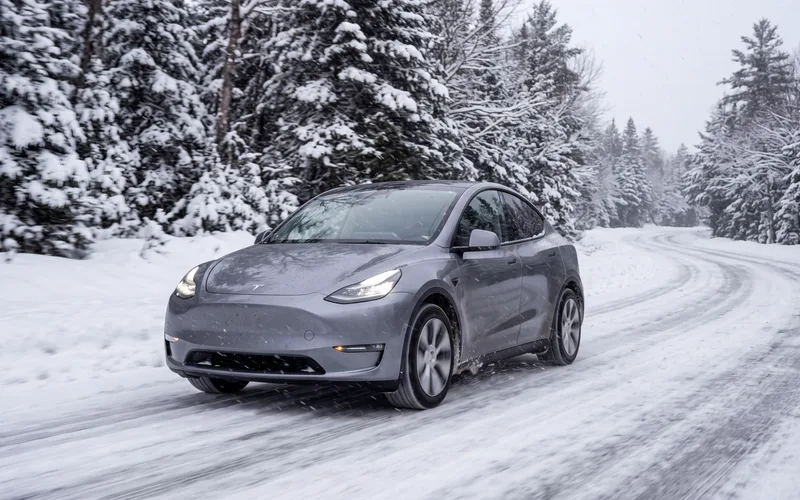 Tesla Model YCompact SUV
The Model Y crushes the I-PACE on the numbers that matter for EV ownership — 300+ miles of range, ~250 kW Supercharging on the native NACS network, and roughly half the price — while offering more cargo room and better software.
Compare 3.20B+
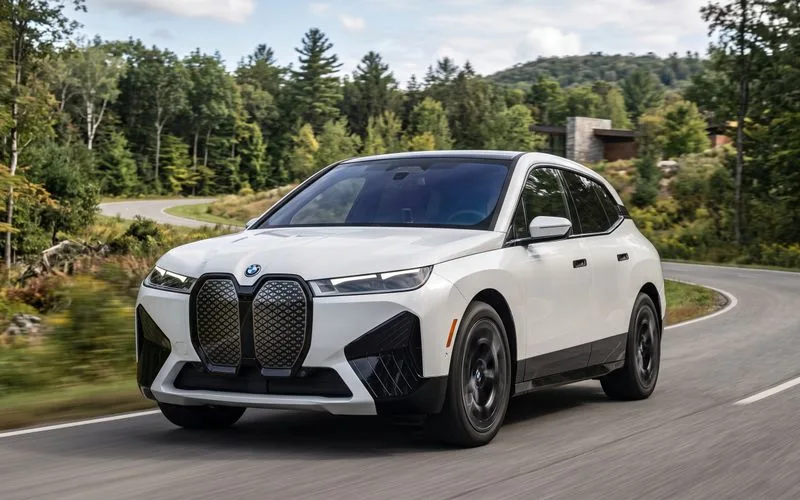 BMW iXMid-Size Luxury SUV
The iX xDrive60 delivers 364 miles of EPA range, ~195 kW peak DC charging, and 97 MPGe combined against the I-PACE's 246 miles, 100 kW, and 76 MPGe — a decisive win on the fundamentals of a modern luxury EV.
Compare 2.55C+
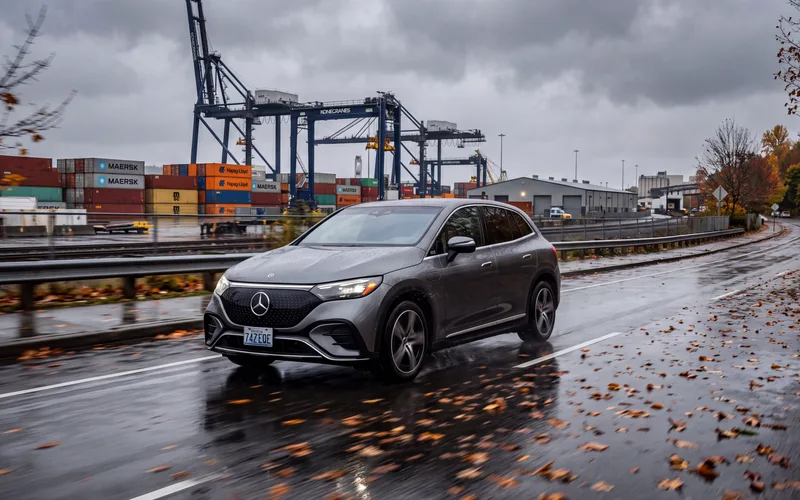 Mercedes-Benz EQE SUVMid-Size Luxury SUV
The EQE SUV offers ~279 miles of range, ~170 kW fast charging, four-zone climate, and Mercedes' Hyperscreen tech — clearly ahead of the Jaguar's dated dual-screen Pivi Pro and 246-mile range.
CompareHow it's evolved
6 scored model years · 2019–2024
Subject scores by year
Hover or tap a score to see what moved it versus the year before. A corner mark flags a big swing.
| Year | Performance | Efficiency | Safety | Space | Cost | Reliability | Tech | Use-case | Driving | Value |
|---|---|---|---|---|---|---|---|---|---|---|
| 2024 | 62 | 53 | 57 | 42 | 20 | 42 | 75 | 54 | 76 | 50 |
| 2023 | 62 | 53 | 47 | 43 | 25 | 43 | 73 | 53 | 75 | 52 |
| 2022 | 62 | 53 | 48 | 43 | 25 | 42 | 74 | 53 | 76 | 58 |
| 2021 | 62 | 53 | 42 | 41 | 25 | 39 | 61 | 50 | 74 | 53 |
| 2020 | 62 | 53 | 41 | 42 | 25 | 36 | 61 | 50 | 75 | 63 |
| 2019 | 62 | 53 | 41 | 42 | 25 | 32 | 60 | 50 | 75 | 65 |
Compare two years
Best fit & conditions
Higher scores mean a better fit for that use case. Learn more about use-case fit →
Subject profile
Academic Probation · NHTSA safety recalls
Feb 22, 2024Exterior lighting: turn signalIn the event that one of the turn signals stops working, the turn signal flash rate frequency will not adjust to warn the driver that a turn signal is not working correctly. As such, these vehicles fail to comply with the requirements of Federal Motor Vehicle Safety Standard number 108, "Lamps, Reflective Devices, and Associated Equipment."
Defect
Jaguar Land Rover North America, LLC (Jaguar) is recalling certain 2021-2024 Jaguar I-Pace vehicles. In the event that one of the turn signals stops working, the turn signal flash rate frequency will not adjust to warn the driver that a turn signal is not working correctly. As such, these vehicles fail to comply with the requirements of Federal Motor Vehicle Safety Standard number 108, "Lamps, Reflective Devices, and Associated Equipment."
Risk
Inoperative rear turn signals may not notify other drivers of a turning vehicle, increasing the risk of a crash.
Remedy
Dealers will update the Car Configuration File (CCF) software, free of charge. Owner notification letters were mailed April 8, 2024. Owners may contact Jaguar customer service at 1-800-452-4827. Jaguar's number for this recall is H475.
NHTSA campaign 24V134000 ↗Manufacturer no. H4752,015 vehicles potentially affected (all models in the campaign)Owners notified Apr 8, 2024Filed by Jaguar Land Rover North America, LLCFiled as I-PACEMay 25, 2023Electrical system: propulsion system: traction batteryThe high-voltage battery may overheat.
Defect
Jaguar Land Rover North America, LLC (Jaguar) is recalling certain 2019-2024 Jaguar I-PACE vehicles. The high-voltage battery may overheat.
Risk
The high-voltage battery overheating increases the risk of a fire.
Remedy
Owners are advised to park and charge vehicle outside and away from structures until the recall repair is complete. The battery energy control module software will be updated by a dealer, or through an over-the-air (OTA) update. In addition, battery modules will be replaced as necessary. Repairs will be performed free of charge. Owner notification letters were mailed July 18, 2023. Owners may contact Jaguar's customer service at 1-800-452-4827. Jaguar's number for this recall is H441.
NHTSA campaign 23V369000 ↗Manufacturer no. H4416,422 vehicles potentially affected (all models in the campaign)Owners notified Jul 18, 2023Filed by Jaguar Land Rover North America, LLCFiled as I-PACE
11 recalls on other model years of the I-PACE (2019–2023)
Feb 5, 2026Electrical system: propulsion system: traction batteryThe high voltage battery may overheat.
Defect
Jaguar Land Rover North America, LLC (Jaguar) is recalling certain 2020-2021 Jaguar I-PACE vehicles. The high voltage battery may overheat.
Risk
A high voltage battery that overheats increases the risk of a fire.
Remedy
Owners are advised to park outside and away from structures, charge outside, and limit their charge to a maximum of 90% until the recall repair is complete. As an interim repair, the battery software will be updated by a dealer, or through an over-the-air (OTA) update to limit the state of charge to 90%. The final remedy is currently under development. Repairs will be performed free of charge. Interim letters notifying owners of the safety risk were mailed April 2, 2026. Additional letters will be sent once the final remedy is available. Owners may contact Jaguar's customer service at 1-800-452-4827. Jaguar's numbers for this recall are H570, H571, and H572. This recall replaces NHTSA recall numbers 23V369, 23V709, and 24V085. Vehicles repaired under one or more of the previous recalls will need to have the new remedy completed.
NHTSA campaign 26V067000 ↗Manufacturer no. H570 H571 H5722,278 vehicles potentially affected (all models in the campaign)Filed by Jaguar Land Rover North America, LLCFiled as I-PACEDec 12, 2024Electrical system: propulsion system: traction batteryThe high-voltage battery may overheat.
Defect
Jaguar Land Rover North America, LLC (Jaguar) is recalling certain 2019 Jaguar I-PACE vehicles that received an improper interim repair under recall number 24V-633. The high-voltage battery may overheat.
Risk
A high-voltage battery that overheats increases the risk of a fire.
Remedy
Owners are advised to park and charge their vehicle outside and away from structures and limit their charge to a maximum of 80% until the recall repair is complete. Dealers will update the battery energy control module software as an interim repair, free of charge. Owner notification letters were mailed February 6, 2025. As a final repair, Jaguar will repurchase the vehicles under recall number 24V-633. Owners may contact Jaguar customer service at 1-800-452-4827. Jaguar's number for this recall is H529.
NHTSA campaign 24V927000 ↗Manufacturer no. H52985 vehicles potentially affected (all models in the campaign)Owners notified Feb 6, 2025Filed by Jaguar Land Rover North America, LLCFiled as I-PACEAug 23, 2024Electrical system: propulsion system: traction batteryThe high-voltage battery may overheat.
Defect
Jaguar Land Rover North America, LLC (Jaguar) is recalling certain 2019 Jaguar I-PACE vehicles. The high-voltage battery may overheat.
Risk
A high-voltage battery that overheats increases the risk of a fire.
Remedy
Owners are advised to park and charge their vehicle outside and away from structures and limit their charge to a maximum of 80% until the recall repair is complete. As an interim repair, dealers will update the battery energy control module software, free of charge. Owner letters were mailed March 5, 2025. JLR will repurchase the vehicles. Owners may contact Jaguar customer service at 1-800-452-4827. Jaguar's numbers for this recall are H514 and H536. These vehicles were previously recalled for this same issue under one or more recall numbers 24V-085 (H471), 23V-709 (H459), or 23V-369 (H441) and will need to have the new interim remedy performed before the vehicle is repurchased.
NHTSA campaign 24V633000 ↗Manufacturer no. H5142,760 vehicles potentially affected (all models in the campaign)Owners notified Mar 5, 2025Filed by Jaguar Land Rover North America, LLCFiled as I-PACEMar 7, 2024Electrical system: propulsion system: traction batteryThe high-voltage battery may overheat.
Defect
Jaguar Land Rover North America, LLC. (Jaguar) is recalling certain 2019-2020 I-Pace vehicles. The high-voltage battery may overheat.
Risk
A high-voltage battery that overheats increases the risk of a fire.
Remedy
Dealers will replace the high-voltage battery, free of charge. Owner notification letters were mailed June 26, 2024. Owners may contact Jaguar's customer service at 1-800-452-4827. Jaguar's number for this recall is H484. These vehicles were previously recalled under 23V-369 and will need to have the new remedy completed.
NHTSA campaign 24V183000 ↗Manufacturer no. H484258 vehicles potentially affected (all models in the campaign)Owners notified Jun 26, 2024Filed by Jaguar Land Rover North America, LLCFiled as I-PACEFeb 8, 2024Electrical system: propulsion system: traction batteryThe fasteners that secure the battery module to the busbars may not have been tightened securely, which can cause electrical arcing at the busbars.
Defect
Jaguar Land Rover North America, LLC (Jaguar) is recalling certain 2019-2020 Jaguar I-PACE vehicles. The fasteners that secure the battery module to the busbars may not have been tightened securely, which can cause electrical arcing at the busbars.
Risk
Electrical arcing increases the risk of a fire.
Remedy
Dealers will inspect and repair the busbar fasteners and replace any damaged components as necessary, free of charge. Owner notification letters were mailed March 21, 2024. Owners may contact Jaguar's customer service at 1-800-452-4827. Jaguar's number for this recall is H468.
NHTSA campaign 24V086000 ↗Manufacturer no. H4682 vehicles potentially affected (all models in the campaign)Owners notified Mar 20, 2024Filed by Jaguar Land Rover North America, LLCFiled as I-PACEFeb 8, 2024Electrical system: propulsion system: traction batteryThe high-voltage battery may overheat.
Defect
Jaguar Land Rover North America, LLC (Jaguar) is recalling certain 2019-2020 Jaguar I-PACE vehicles previously repaired under recall number 23V-369. The high-voltage battery may overheat.
Risk
A high-voltage battery that overheats increases the risk of a fire.
Remedy
Owners are advised to park and charge their vehicle outside and away from structures until the recall repair is complete and for 30 days after the repair has been completed. The battery energy control module software will be updated by a dealer. Repairs will be performed free of charge. Owner notification letters were mailed March 20, 2024. Owners may contact Jaguar's customer service at 1 -800-452-4827. Jaguar's number for this recall is H471. These vehicles were previously recalled for this same issue under recall number 23V-369 and will need to have the new remedy performed.
NHTSA campaign 24V085000 ↗Manufacturer no. H471100 vehicles potentially affected (all models in the campaign)Owners notified Mar 20, 2024Filed by Jaguar Land Rover North America, LLCFiled as I-PACEOct 19, 2023Electrical system: propulsion system: traction batteryThe previous repair may not have been completed correctly, and still allow the high-voltage battery to overheat.
Defect
Jaguar Land Rover North America, LLC (Jaguar) is recalling certain 2019-2023 I-PACE vehicles previously repaired under recall 23V-369. The previous repair may not have been completed correctly, and still allow the high-voltage battery to overheat.
Risk
The high-voltage battery overheating increases the risk of a fire.
Remedy
Owners are advised to park and charge their vehicle outside and away from structures until the recall repair is complete, and for 30 days after the repair has been completed. Dealers will update the battery energy control module software, free of charge. Owner notification letters were mailed December 11, 2023. Owners may contact Jaguar customer service at 1-800-452-4827. Jaguar's number for this recall is H459.
NHTSA campaign 23V709000 ↗Manufacturer no. H459501 vehicles potentially affected (all models in the campaign)Owners notified Dec 1, 2023Filed by Jaguar Land Rover North America, LLCFiled as I-PACEJul 27, 2023Visibility: defroster/defogger/hvac systemThe high voltage coolant heater may fail to defrost the windshield.
Defect
Jaguar Land Rover North America, LLC (Jaguar) is recalling certain 2021-2022 I-Pace vehicles. The high voltage coolant heater may fail to defrost the windshield.
Risk
A high voltage coolant heater that fails to defrost the windshield can reduce the driver's view, increasing the risk of a crash.
Remedy
Dealers will replace the high voltage coolant heater, free of charge. Owner notification letters were mailed October 26, 2023. Owners may contact Jaguar customer service at 1-800-452-4827. Jaguar's number for this recall is H448.
NHTSA campaign 23V518000 ↗Manufacturer no. H448668 vehicles potentially affected (all models in the campaign)Owners notified Oct 26, 2023Filed by Jaguar Land Rover North America, LLCFiled as I-PACEJan 26, 2023Back over prevention: warnings: external/pedestrian alert · Electrical system: softwareThe vehicles fail to make sufficient pedestrian warning sounds when stationary and in reverse. As such, these vehicles fail to comply with the requirements of Federal Motor Vehicle Safety Standard number 141, "Minimum Sound Requirements for Hybrid and Electric Vehicles."
Defect
Jaguar Land Rover North America, LLC (Jaguar) is recalling certain 2021-2022 I-Pace vehicles. The vehicles fail to make sufficient pedestrian warning sounds when stationary and in reverse. As such, these vehicles fail to comply with the requirements of Federal Motor Vehicle Safety Standard number 141, "Minimum Sound Requirements for Hybrid and Electric Vehicles."
Risk
A vehicle that fails to make sufficient sound may result in pedestrians being unaware of an approaching vehicle, increasing the risk of a crash.
Remedy
Dealers will update the audio amplifier software, free of charge. Owner notification letters were mailed March 16, 2023. Owners may contact Jaguar customer service at 1-800-452-4827. Jaguar's number for this recall is H421.
NHTSA campaign 23V030000 ↗Manufacturer no. H4211,072 vehicles potentially affected (all models in the campaign)Owners notified Mar 16, 2023Filed by Jaguar Land Rover North America, LLCFiled as I-PACEFeb 13, 2020SeatsJaguar Land Rover North America, LLC (Jaguar) is recalling one 2020 I-Pace vehicle. The front passenger seat frame may be missing fasteners, resulting in a seat frame with insufficient strength.
Defect
Jaguar Land Rover North America, LLC (Jaguar) is recalling one 2020 I-Pace vehicle. The front passenger seat frame may be missing fasteners, resulting in a seat frame with insufficient strength.
Risk
In the event of a crash, the seat may not properly secure the occupant, increasing their risk of injury.
Remedy
Jaguar will notify the owner, and a dealer will replace the front passenger seat assembly, free of charge. The recall began March 25, 2020. Owners may contact Jaguar customer service at 1-800-452-4827. Jaguar's number for this recall is H282.
NHTSA campaign 20V082000 ↗Manufacturer no. H2821 vehicles potentially affected (all models in the campaign)Owners notified Mar 25, 2020Filed by Jaguar Land Rover North America, LLCFiled as I-PACEMay 9, 2019Service brakesIf the electrical regenerative brake system fails, there will be an increased delay between when the driver brakes and when the vehicle decelerates. As such, these vehicles fail to comply with the requirements of Federal Motor Vehicle Safety Standard (FMVSS) number 135, "Light Vehicle Brake Systems."
Defect
Jaguar Land Rover North America, LLC (Jaguar) is recalling certain 2019-2020 I-PACE vehicles. If the electrical regenerative brake system fails, there will be an increased delay between when the driver brakes and when the vehicle decelerates. As such, these vehicles fail to comply with the requirements of Federal Motor Vehicle Safety Standard (FMVSS) number 135, "Light Vehicle Brake Systems."
Risk
A delay in deceleration, increases the distance needed to stop and the risk of a crash.
Remedy
Jaguar will notify owners, and dealers will update the software to reduce the delay, free of charge. The recall began June 12, 2019. Owners may contact Jaguar customer service at 1-800-637-6837. Jaguar's number for this recall is H213.
NHTSA campaign 19V351000 ↗Manufacturer no. H2133,083 vehicles potentially affected (all models in the campaign)Owners notified Jun 12, 2019Filed by Jaguar Land Rover North America, LLCFiled as I-PACE
Source: NHTSA Office of Defects Investigation recall database, model years 2019–2024. Recalls are listed by model year as the manufacturer filed them; whether a specific car is affected depends on its VIN — check a VIN at nhtsa.gov ↗. NHTSA model names matched to this page: I-PACE.
Detailed scoring by subject
1Performance & PowertrainOne of the I-PACE's strongest categories.2.17C
Combined SAE output of the standard EV400 dual permanent-magnet drivetrain — front + rear motors summing to 394 hp (295 kW).
Instant peak torque from twin PMSM motors, delivered from 0 rpm — very high for a compact luxury SUV thanks to the EV powertrain.
Jaguar's official 0–60 mph claim for the dual-motor I-PACE; instrumented tests have landed roughly 4.2–4.6 s.
Reviewers consistently praise the I-PACE's seamless, instant, near-silent power delivery — the traditional EV strengths executed to a luxury standard, with no lag or coarseness.
Single-speed direct-drive reduction gear per motor means no shift events at all — power delivery is continuous and imperceptible.
Jaguar's rated tow capacity is modest by SUV standards — well behind combustion luxury rivals and much lower than newer EV SUVs (EQE SUV, Model X, Rivian R1S).
Dual-motor AWD is standard on every I-PACE trim, with independent front/rear torque control enabling torque vectoring — no FWD/RWD variant exists.
Pavement-oriented luxury EV — standard air suspension raises to roughly 8.4 in and Jaguar quotes a 500 mm wade depth, but there are no lockers, skid plates, low range, or dedicated off-road trim.
The I-PACE is offered exclusively as a single EV powertrain (dual-motor AWD, ~90 kWh battery) — no gas, hybrid, or alternate EV output variant across the lineup.
2Efficiency & RangeGrades below the middle of the scale.1.58D
EPA rates the 2024 I-PACE at 85 MPGe combined on its standard 20-inch wheels — the configuration the sole 2024 US trim (EV400 R-Dynamic HSE) ships with. 2024 is a pure carry-over final model year: no powertrain or battery change from the 90 kWh dual-motor EV400 introduced in 2018, and the 2018-vintage platform's weight and unremarkable 0.29 Cd leave it well behind current luxury EV SUVs.
EPA city rating of 89 MPGe on the standard wheel package, re-confirmed against fueleconomy.gov for the 2024 model year. Regenerative braking helps in town, but the two-motor AWD architecture is permanently engaged with no front-motor decoupling, so city consumption stays high for a compact EV SUV.
EPA highway rating of 82 MPGe on the standard wheels — the strongest of the three I-PACE economy figures relative to its class band, since the 0.29 drag coefficient holds up better at speed than the curb weight does around town.
246 miles of EPA combined range from the 90 kWh (84.7 kWh usable) pack — near the bottom of the EV SUV band and far short of 2024 rivals such as the BMW iX or Tesla Model Y. The figure has not moved since the December 2019 software update that lifted it from 234 mi; Jaguar never delivered a larger-battery refresh before ending I-PACE production after 2024.
Jaguar rates the I-PACE for up to 100 kW DC fast charging over CCS1 — essentially the floor of the modern EV SUV band, and unchanged since launch while rivals moved to 150–350 kW on 800-volt architectures. Independent measurement puts the true peak marginally higher at ~104 kW, so the manufacturer figure is if anything conservative, but the sustained rate tapers quickly.
Jaguar publishes no 10–80% figure of its own; its quote is 0–80% in 45 minutes at 100 kW, and independent modelling of the 10–80% window lands at the same 45 minutes (83 kW average). Dealer and charging-guide sources claim ~40–41 min, so 45 is the conservative centre of a well-corroborated 40–45 minute spread — at or past the bottom of the EV SUV band either way, and the single weakest part of the I-PACE's efficiency case.
EPA puts annual energy cost at $900 for the standard-wheel car, or $1.48 to drive 25 miles — a fraction of what a premium-fuel luxury SUV such as Jaguar's own F-PACE costs to run, and the one place the I-PACE grades respectably in this category.
No gasoline at all, and the home-charging side is genuinely good: a standard 11 kW onboard AC charger refills the 90 kWh pack overnight on a plain J1772 connector with no proprietary hardware, at an EPA-estimated $900/yr. What holds it out of the top band is public charging — 100 kW CCS1 with no factory NACS support, no Supercharger access, and no complimentary charging credit, on a model Jaguar had already stopped developing.
3SafetyMid-pack among this car's ten categories.1.82C-
NHTSA has not published a full overall star rating for the I-PACE; low US sales volume for this late-life EV leaves it uncrash-tested. Estimating 4 stars based on aluminum monocoque EV structure and prior JLR performance.
The I-PACE is not an IIHS Top Safety Pick and has no full IIHS crashworthiness battery on file for this generation. Structure is likely competitive (skateboard EV, aluminum body), but the absence of published Good ratings caps the score.
Volume S trim includes AEB, lane keep assist, blind spot monitor, adaptive cruise with stop-and-go queue assist, rear traffic monitor, and front/rear park aid as standard. Core suite is comprehensive; 360 camera and Driver Assist Pack upgrades are reserved for higher trims.
No IIHS front crash prevention rating on file for the I-PACE. Reviewer commentary on current JLR AEB describes adequate daytime vehicle-to-vehicle intervention but less-refined pedestrian and nighttime behavior versus German rivals.
Blind-spot monitor and rear cross-traffic alert are standard across trims; blind-spot assist (active steering intervention) and the 3D Surround Camera are bundled in the optional Driver Assist Pack, so base coverage is alert-only.
Jaguar's lane keep assist is a nudge-style system with basic centering; reviewers of current-generation JLR products note late, abrupt interventions and no smooth continuous centering comparable to BMW or Mercedes systems.
Adaptive cruise with full stop-and-go queue assist is standard and works acceptably in traffic. There is no integrated highway assist mode combining ACC + lane centering; behavior lags current class benchmarks.
Jaguar offers no hands-free highway driving system on the I-PACE. There is no equivalent to BlueCruise, Super Cruise, Drive Pilot, or supervised FSD in the JLR portfolio.
Standard Premium LED headlights with signature DRL; Matrix LED with adaptive high-beam is standard on the volume S trim and above. Not IIHS-rated, but reviewer beam quality is generally regarded as good.
Sleek coupe-like SUV profile with high beltline, thick D-pillars, and a small rear window compromise natural sightlines. The optional 3D Surround Camera helps parking but is not standard on the volume trim.
Two rear LATCH positions with anchors somewhat buried in the seatback; the sloping roofline and narrower rear door aperture make fitment of rear-facing seats tighter than boxier compact luxury SUVs. Adequate but not class-leading.
4Space & ComfortOne of the I-PACE's weakest categories.0.80F
Standard 2+3 five-seat configuration across all I-PACE trims; no third-row option is offered on this platform. Correcting the placeholder (7.1 seats) — I-PACE has never been available as a 6/7-seater.
Mid-pack for the compact luxury SUV segment; panoramic roof (standard on most US trims) trims about 0.8 in. Correcting the placeholder (40.7 in) to the manufacturer figure.
Near the low end of the SUV normalization band — the low, coupe-like beltline and skateboard EV floor free some knee room but seat-track range is short by class standards. Correcting the placeholder (43.5 in).
Sloping coupe-like roofline compresses second-row headroom; sits at the lower end of the compact luxury SUV band. Correcting the placeholder (38.9 in).
Rear legroom is one of the I-PACE's weakest interior dimensions and a recurring criticism versus newer dedicated EV platforms (Q4 e-tron, EQE SUV, Polestar 3). Correcting the placeholder (40.1 in).
I-PACE is a strict five-seat SUV; no third row is offered or possible on this platform.
Modest cargo hold for the segment — battery packaging and the low-roof profile eat into rear volume. Frunk adds negligible space. Correcting the placeholder (77.1 cu ft, which was impossible for this footprint).
Even with the 60/40 rear seat folded the maximum cargo hold falls below the compact-luxury-SUV normalization floor (55 cu ft). Correcting the placeholder (83.4 cu ft).
Reasonable center console bin, door pockets, and an underfloor cubby in the rear cargo area; the flat EV floor helps foot space. No standout innovations (tiny frunk, limited hidden storage). Reviewers consistently rate storage 'competent, not clever'.
Front sport seats are supportive with 14-way power on most trims and lengthy cushions on optional Windsor leather units; some reviewers note firm bolstering and short lower cushion for tall drivers. Rear bench is comfortable for two but the middle seat is compromised.
Standard air suspension with adaptive dampers delivers a composed, planted ride from the low EV center of gravity; can feel firm over sharp impacts on the standard 20-in wheels and busier on the optional 22-in wheels.
Silent EV powertrain plus acoustic laminated windshield and thick side glass keep the cabin very quiet at city speeds; some tire and wind rustle intrudes above 70 mph, keeping it just short of segment best (EQS SUV, Polestar 3).
Heated front seats, heated steering wheel, and dual-zone climate are standard; ventilated front seats, heated rear seats, four-zone climate, and remote pre-conditioning via app are available on HSE trim. No rear ventilation or massage seats.
5Cost of OwnershipThe I-PACE's lowest-graded category.0.00F
Jaguar discontinued the I-PACE globally after MY24; a 2026 model year is a nominal carry-forward for markets that still stock inventory. Final US MY24 R-Dynamic HSE listed near $73,300 with destination, so a 2026 book price around $75k is the reasonable placeholder — well above the SUV price band.
I-PACE has only offered one US trim (HSE / R-Dynamic HSE) in its final years, so the volume trim is the base trim plus common options (Cold Climate pack, Head-Up Display, premium paint). Real-world transaction prices sit near $77k.
EV drivetrain eliminates oil changes and spark-plug/fluid work vs the F-PACE, cutting routine service materially. But Jaguar's dealer labor rates and pricey out-of-warranty repairs (12V systems, air suspension where fitted, infotainment) plus scarce EV-trained specialist coverage keep it above the SUV mean.
The I-PACE has been among the worst-depreciating vehicles on the US market — iSeeCars flagged it as one of the fastest-depreciating EVs in every recent report. Discontinuation and the impending brand pivot only accelerate the trend, and used values are pressured further by cheaper Tesla and Ioniq 5 competition.
Jaguar EliteCare provides a 5-year/60,000-mile new-vehicle limited warranty — tops the luxury field, matching Genesis and beating BMW/Audi/Mercedes (4yr/50k).
EV high-voltage battery and drive units carry the federally-mandated 8-year/100,000-mile coverage — meaningfully longer than the 5-year basic warranty and mid-pack for the luxury EV segment.
EliteCare bundles 5-year/60k roadside assistance and InControl Remote & Protect connected services — solid perks aligned with the long basic warranty. But Jaguar dropped complimentary scheduled maintenance around 2020 and there is no standing free-charging program in the US, so it lags Mercedes/BMW EV welcome packages and Cadillac Lyriq's charging credit.
$77,000 volume-trim price minus its estimated resale value after 5 years (27% retained, or about $20,790) leaves about $56,210 in depreciation. Add the projected $6,800 in 5-year maintenance and repairs, and owning this vehicle for 5 years costs about $63,010 in total.
6Reliability & QualityOne of the I-PACE's weakest categories.0.76F
The I-PACE has ranked at or near the bottom of Consumer Reports reliability charts among EVs for multiple years, with owners reporting infotainment glitches, high-voltage system faults, 12V battery drains, and door handle failures. J.D. Power historical VDS data for Jaguar EVs has been similarly weak.
Jaguar has consistently ranked in the bottom third — and frequently the absolute bottom — of Consumer Reports brand reliability rankings and J.D. Power VDS for the past decade, alongside sister brand Land Rover. Both JLR brands are viewed as dependability laggards.
The I-PACE has been subject to a series of high-severity battery fire recalls affecting the LG-supplied high-voltage pack — beginning in 2020, expanded in 2023, and further expanded in 2024 — with interim mitigation limiting state of charge to 75-80% pending final fixes. This is one of the worst recall records of any modern EV.
The dual permanent-magnet drive units themselves have been reasonably reliable, but the LG-sourced 90 kWh battery pack has a documented fire-risk defect and is the subject of ongoing recall action, which severely undermines the powertrain's durability reputation. Battery replacements after the recall program are complex and dealer-dependent.
Cabin materials are competitive for a luxury EV, with available Windsor leather, aluminum trim, and Suedecloth accents, but the design and materials have not been meaningfully refreshed since 2018 and now trail newer rivals like the Mercedes-Benz EQE SUV, Genesis GV60, and Lexus RZ. Some lower-cabin plastics feel below the current luxury EV benchmark.
Assembly quality is generally decent but Jaguar has a well-documented history of scattered trim rattles, uneven panel gaps on early production, and infotainment/electrical gremlins. Initial Quality survey results for Jaguar routinely trail luxury segment averages.
Jaguar operates roughly 150 US dealers — a small footprint compared with mainstream luxury brands (BMW ~350, Mercedes ~380, Lexus ~240) — leaving service deserts in the Mountain West and rural South. Service satisfaction is only average, and EV-specific expertise varies dealer to dealer.
JLR parts are notoriously expensive and often subject to long back-order times, and I-PACE-specific EV components (battery modules, drive units, high-voltage cabling) are largely dealer-only with minimal aftermarket support. Independent EV specialists rarely stock I-PACE parts.
7Technology & InfotainmentOne of the I-PACE's strongest categories.3.12B
I-PACE retains the original Touch Pro Duo dual-screen hardware (10-inch upper + 5.5-inch lower) even after receiving the newer Pivi Pro software with the 2021 refresh; no larger screen has been introduced for 2026.
Pivi Pro is a genuinely fast, well-laid-out system with a clean home-screen approach and quick boot, but it is now a 5+ year old platform running on older Touch Pro Duo hardware and is starting to feel dated versus newer luxury EV rivals with larger/curved displays.
Wireless Apple CarPlay and wireless Android Auto are standard across all trims via Pivi Pro; connections are typically reliable.
Pivi Pro includes built-in Amazon Alexa integration plus native voice with reasonable natural-language handling and self-learning navigation, but most owners still default to phone projection maps.
Meridian Sound is standard and solid; the available Meridian 3D Surround Sound System (825W, 16 speakers) is one of the better luxury premium audio options in the compact luxury EV segment.
12.3-inch fully digital, configurable Interactive Driver Display is standard, with multiple views including a full-map layout; graphics are crisp though the UI theme is aging.
Pivi Pro supports OTA updates across many vehicle modules via its dual-eSIM architecture, but scope is narrower and cadence slower than Tesla/Rivian/Lucid whole-vehicle updates.
Jaguar Remote app covers the essentials (lock/unlock, remote climate, charge scheduling and monitoring, locate, journey history) but lacks a phone-as-key digital key and connectivity-service features are subscription-gated after the trial.
Adequate USB-C ports front and rear plus 12V outlets; wireless phone charging is available on upper trims but not standard. No household AC outlets.
Keyless Entry with push-button start is standard, and Jaguar's unique waterproof Activity Key wristband remains available; no phone-as-key/UWB digital key.
3D Surround Camera with clear resolution is available (standard on upper trims); front and rear parking sensors are standard, with Park Assist offered.
Color Head-Up Display is offered as an option (typically part of a package on upper trims) with speed, navigation prompts, and driver-assist info; not available on the base trim.
8Use-Case FitGrades below the middle of the scale.1.64D
Sloping coupe-like roofline and narrower rear door aperture make loading rear-facing seats tighter than boxier compact luxury SUVs, and LATCH anchors are buried in the seatback. Only 35.0 in of rear legroom means an installed rear-facing seat pushes front passengers forward, and the small 25.3 cu ft cargo hold barely swallows a stroller alongside groceries.
Standard S trim includes AEB, lane keep assist, blind spot monitor, adaptive cruise with queue assist, and rear traffic monitor — a comprehensive baseline. However, there is no NHTSA overall star rating or IIHS Top Safety Pick award on file, the 3D Surround Camera and blind-spot steering assist are locked behind the Driver Assist Pack, and there is no hands-free highway system for long-haul family duty.
Cabin is quiet with standard air suspension and comfortable front seats, but 246 mi EPA range plus 100 kW peak DC fast charging (~45 min to 80%) mean frequent, slow charging stops on any real family trip. Rear middle seat is compromised, no rear entertainment or rear climate zones, and 51 cu ft max cargo is well below segment norms with a family's luggage aboard.
Instant EV torque, standard adaptive air suspension, adjustable single-pedal-style regen, and a quiet cabin make the I-PACE an easy daily driver. Held back from segment best by 4,784 lb curb weight, a low seating position with thick D-pillars that compress outward visibility, and aging Pivi Pro infotainment that adds friction to routine tasks.
EPA estimates only ~$1,050/yr in energy costs, with no oil-change or premium-fuel exposure — genuinely cheap per commuting mile if home Level 2 charging is available. Somewhat penalized by consumption of ~44 kWh/100 mi (higher than newer luxury EV SUVs), premium tire sizes, and Jaguar dealer service pricing on non-wear items.
At 184.3 in long and 74.6 in wide with a ~40 ft turning circle, the I-PACE is mid-size in urban settings. Standard front/rear park aid helps, but the excellent 3D Surround Camera is locked behind the Driver Assist Pack on the volume S trim, and the sloping rear plus high beltline hurt over-shoulder sightlines during parallel parking.
Rated for only 1,653 lb (750 kg) of towing — well short of the ~4,000+ lb capability of most compact luxury SUVs — with no bed, no meaningful payload advantage, and a small 25.3 cu ft cargo hold. Powertrain delivers ample torque but the vehicle is not engineered as a work tool.
Aluminum monocoque and low-slung EV chassis are built for luxury refinement, not fleet abuse. JLR reliability history is well below segment norms, the interior uses premium (easily scuffed) materials, and there is essentially no fleet or work-service track record for the I-PACE.
No vehicle-to-load (V2L) or onboard 120V power, no factory washable cargo liner, limited tie-down points, no bed access provisions (unibody SUV), and no aftermarket upfit ecosystem targeting the I-PACE. Roof rails and a hitch are dealer-installed accessories rather than factory-integrated work features.
Cabin quietness, comfortable seats, and standard air suspension make it a pleasant highway cruiser, but 246 mi EPA range coupled with 100 kW peak DC charging (roughly 45 min for 10–80%) and CCS1-only (no factory NACS/Tesla Supercharger) demand frequent, slow stops on cross-country trips. Adaptive cruise has queue assist but no highway-assist / lane-centering bundle to reduce driver fatigue.
Standard dual-motor AWD and adaptive air suspension with a raised off-road setting give it genuine gravel-road ability, and JLR's Terrain Response modes are useful. However, only ~5.6 in of normal ground clearance, a 1,653 lb tow limit that rules out most trailers and toys, no V2L for camp power, and limited range far from charging keep it well behind adventure-capable EVs like the Rivian R1S.
60/40 folding rear seats, an underfloor cargo cubby, and available cross-bars/hitch give some flexibility, but the 25.3 cu ft / 51.0 cu ft holds are the smallest in the compact luxury EV SUV class and the 0.9 cu ft frunk is essentially a charging-cable bin. The sloping roofline further limits tall items.
9Driving ExperienceThe I-PACE's best-graded category.3.13B
Low battery-in-floor CoG, near 50/50 weight distribution, and standard air suspension on volume trim give the I-PACE genuinely engaging handling for a luxury EV SUV; reviews since launch have consistently ranked it near the top of the class for cornering composure, trailing only the Porsche Macan Electric in the compact luxury EV set.
Steering is accurate and well-weighted with typical Jaguar polish, though it lacks the last degree of on-center feedback found in the Macan and rides slightly light in Comfort mode; Dynamic mode adds welcome heft.
Stopping power is strong on paper but pedal feel suffers from the well-documented regen-to-friction handoff quirk that has drawn criticism since launch; blended braking is inconsistent versus newer EVs like the Lyriq or EQE SUV.
Dual permanent-magnet motors deliver seamless, instant torque with no transmission shift shock; tip-in calibration is smooth and predictable and one-pedal driving is well tuned.
Effectively silent at cruise with only a subtle motor whine at full throttle; no transmission or engine vibration reaches the cabin.
Curb-to-curb turning diameter for the current-generation I-PACE per Jaguar's US spec sheet; large for a compact SUV due to the long wheelbase and wide track, which hurts low-speed maneuverability.
Low, cab-forward driving position feels sports-car-like and enthusiast-friendly, but sightlines over the high beltline and thick D-pillar are compromised versus rivals and the dated dual-screen center stack requires more attention than newer luxury EVs.
Retains its reputation as one of the more engaging electric luxury SUVs: quick 4.5-second 0-60, playful chassis, and adjustable Dynamic mode make it a rewarding daily; only the Porsche Macan Electric and Polestar 4 out-drive it in this set.
10Value & Market PositionGrades below the middle of the scale.1.33D
Base EV400 S includes leather, 12-way power seats, dual-screen Pivi Pro infotainment, Meridian audio, LED headlamps and full ADAS suite — competitive for a luxury EV but no longer standout as newer rivals bundle larger screens, HUD and advanced ADAS at the same price.
At ~$72–81K the I-PACE delivers a seven-year-old platform with ~234–292 mi EPA range and roughly 100 kW peak DC charging, well behind similarly priced Cadillac Lyriq/Optiq, Genesis GV60, Audi Q4 e-tron and Mercedes EQE SUV that offer more range, faster charging and fresher tech per dollar.
Single dual-motor EV400 powertrain across a slimmed-down S / R-Dynamic HSE lineup with limited option packs — no shorter-range/lower-price variant and no performance variant, giving buyers little flexibility.
US I-PACE volume collapsed to a few hundred units per year in 2023-24 and is trending toward zero as Jaguar winds the model down for its brand reinvention; among the lowest-selling luxury EV SUVs in the segment.
Jaguar retains genuine heritage cachet but the brand is mid-reinvention with a temporary US lineup void, thinning dealer network and a polarizing 'Copy Nothing' rebrand rollout that has dented near-term desirability and resale confidence.
With production winding down and inventory to clear, dealers routinely stack manufacturer cash, loyalty/conquest and aggressive lease support (often $10K+ off MSRP) — great for buyers even though it signals demand weakness.
Same generation since 2019 with only minor infotainment/wheel updates; Jaguar has publicly ended I-PACE production and the model is being replaced by an all-new EV portfolio, making a 2026 unit an end-of-life carryover with no forward roadmap.
Launched to a haul of major awards but current reviews are lukewarm — praise for design and driving dynamics is offset by explicit criticism of range, slow DC charging and dated infotainment; no recent comparison-test wins.