

The verdict
A capable mid-size suv, strong on safety and held back by efficiency.
The 2026 Telluride is still one of the most likable three-row family SUVs you can buy — 42.4 inches of second-row legroom, eight-passenger seating, a near-luxury cabin on upper trims, and Kia's full safety suite standard on the $38,500 base LX, all backed by a 10-year/100,000-mile powertrain warranty. What it no longer has is a competitive fuel bill: the sole 291-hp 3.8L V6 returns 21 MPG combined and costs roughly $2,350 a year in gas, with no hybrid offered at any price while the Palisade, Grand Highlander and Pilot all sell electrified versions in the mid-30s. This is also year seven of the generation with a redesign visibly close, which means good discounts now but softer resale later. Buy it if you want space, comfort and warranty coverage for the money and drive modest annual miles; skip it if you commute far enough for MPG to matter.
Jump to scoresStrengths
- Genuinely usable space for a full family
- Safety gear that isn't paywalled
- Long-haul comfort that punches above its price
What holds it back
- Fuel economy is the deal-breaker for high-mileage drivers
- One engine, no hybrid, no way out
- A troubling recall record for this generation
Top alternatives
Cars shoppers cross-shop with the Kia Telluride 3.03B
3.03B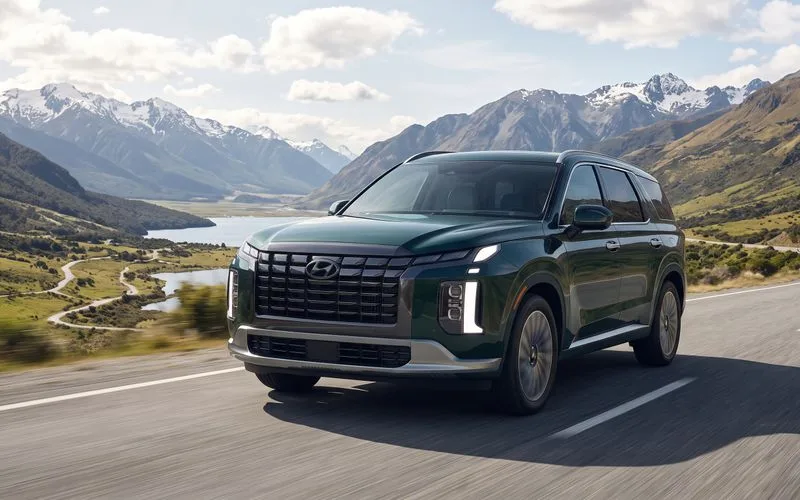 Hyundai PalisadeMid-Size SUVBetter at: Newer platform
Same bones, same dealer-network logic, but freshly redesigned for 2026 with a hybrid option and free scheduled maintenance the Kia doesn't include.
Compare 2.88B-
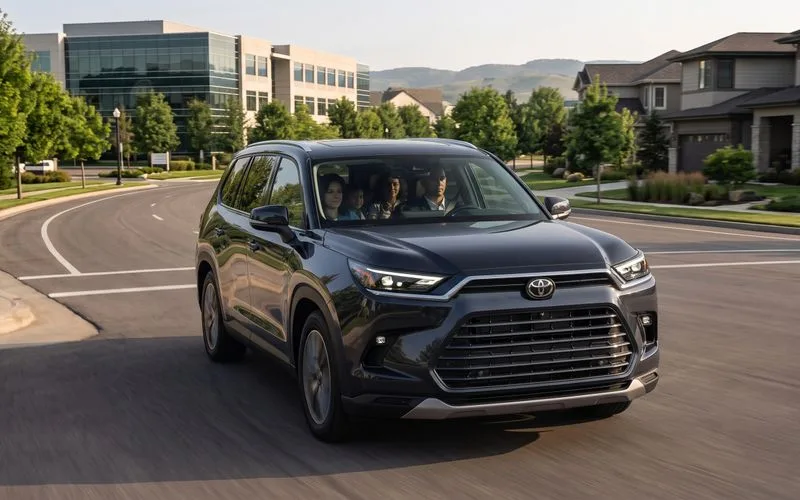 Toyota Grand HighlanderMid-Size SUVBetter at: Efficiency
Hybrid economy in the mid-30s MPG plus roughly 10 more cu ft of cargo and a truly adult-usable third row — the direct fix for the Telluride's two biggest flaws.
Compare 2.43C+
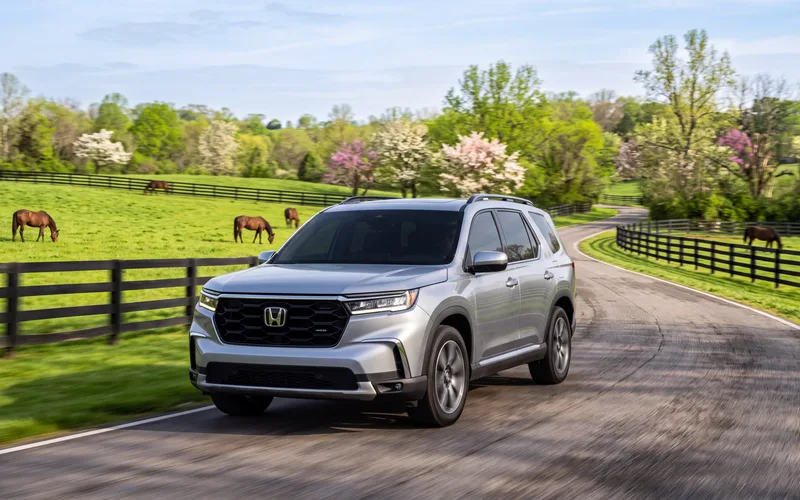 Honda PilotMid-Size SUVBetter at: Trail capability
The closest like-for-like V6 three-row on price and packaging, with a more capable TrailSport variant if light off-road duty matters.
CompareHow it's evolved
7 scored model years · 2020–2026
Subject scores by year
Hover or tap a score to see what moved it versus the year before. A corner mark flags a big swing.
| Year | Performance | Efficiency | Safety | Space | Cost | Reliability | Tech | Use-case | Driving | Value |
|---|---|---|---|---|---|---|---|---|---|---|
| 2026 | 51 | 40 | 80 | 76 | 69 | 74 | 68 | 71 | 65 | 76 |
| 2025 | 51 | 28 | 84 | 77 | 67 | 68 | 64 | 71 | 65 | 77 |
| 2024 | 51 | 29 | 84 | 77 | 65 | 68 | 65 | 71 | 67 | 77 |
| 2023 | 52 | 33 | 85 | 77 | 68 | 68 | 64 | 71 | 65 | 76 |
| 2022 | 49 | 34 | 79 | 77 | 72 | 68 | 58 | 67 | 65 | 74 |
| 2021 | 50 | 34 | 77 | 77 | 74 | 68 | 58 | 69 | 65 | 76 |
| 2020 | 49 | 34 | 77 | 76 | 77 | 65 | 55 | 68 | 65 | 79 |
Compare two years
Best fit & conditions
Higher scores mean a better fit for that use case. Learn more about use-case fit →
Subject profile
Trims & configurations
7 trimsScores above reflect the volume trim. Per-trim specs and scores are rolling out — the full lineup:
Academic Probation · NHTSA safety recalls
No NHTSA safety recall is on record for the 2026 Kia Telluride. Other model years of the Telluride have 17 — listed below.
17 recalls on other model years of the Telluride (2020–2025)
Jul 2, 2026Seats: front assembly: power adjustThe front power seat motor may overheat due to a stuck power seat slide knob or an improper recall 24V407 repair, which can result in a fire while parked or driving.
Defect
Kia America, Inc. (Kia) is recalling certain 2020-2024 Telluride vehicles. The front power seat motor may overheat due to a stuck power seat slide knob or an improper recall 24V407 repair, which can result in a fire while parked or driving.
Risk
A fire increases the risk of injury.
Remedy
Owners are advised to park outside and away from structures until the recall repair is complete. Dealers will install an electronic fuse assembly, free of charge. Owner notification letters are expected to be mailed August 13, 2026. Owners may contact Kia customer service at 1-800-333-4542. Kia's number for this recall is SC374. This recall replaces NHTSA recall number 24V407. Vehicles already repaired under the previous recall will need to have the new remedy completed. Vehicle Identification Numbers (VINs) involved in this recall will become searchable on NHTSA.gov beginning July 17, 2026.
NHTSA campaign 26V430000 ↗Manufacturer no. SC374462,869 vehicles potentially affected (all models in the campaign)Owners notified Aug 13, 2026Filed by Kia America, Inc.Filed as TELLURIDEFeb 23, 2026Seats: front assembly: reclinerDue to a manufacturing error, the driver and passenger seat back frame assemblies may fail to properly restrain occupants in a crash.
Defect
Kia America, Inc. (Kia) is recalling certain 2025 Telluride vehicles, equipped with power front seat(s). Due to a manufacturing error, the driver and passenger seat back frame assemblies may fail to properly restrain occupants in a crash.
Risk
A seat back frame that fails to properly restrain an occupant during a crash increases the risk of injury.
Remedy
Dealers will inspect and replace the front seat back frame assemblies, as necessary, free of charge. Owner notification letters were mailed beginning April 24, 2026. Owners may contact Kia Customer Service at 1-800-333-4542. Kia's number for this recall is SC362. Vehicle Identification Numbers (VINs) involved in this recall will become searchable on NHTSA.gov on March 9, 2026.
NHTSA campaign 26V105000 ↗Manufacturer no. SC36285,515 vehicles potentially affected (all models in the campaign)Owners notified Apr 24, 2026Filed by Kia America, Inc.Filed as TELLURIDEOct 30, 2025Tires: temporary/emergency spare tireThe vehicles are equipped with an incorrect spare tire which, when installed, can impair the anti-lock braking system (ABS) and the traction control system (TCS). As such, these vehicles fail to comply with the requirements of Federal Motor Vehicle Safety Standard number 110, "Tire Selection and Rims."
Defect
Kia Motors America (Kia) is recalling certain 2025 Telluride and 2026 Sorento vehicles. The vehicles are equipped with an incorrect spare tire which, when installed, can impair the anti-lock braking system (ABS) and the traction control system (TCS). As such, these vehicles fail to comply with the requirements of Federal Motor Vehicle Safety Standard number 110, "Tire Selection and Rims."
Risk
Anti-lock braking or traction control systems that do not function properly can increase the risk of a crash.
Remedy
Dealers will replace the spare wheel and tire assembly, free of charge. Owner notification letters were mailed December 3, 2025. Owners may contact Kia customer service at 1-800-333-4542. Kia's number for this recall is SC355. Vehicle Identification Numbers (VINs) involved in this recall will be searchable on NHTSA.gov beginning November 13, 2025.
NHTSA campaign 25V745000 ↗Manufacturer no. SC35545 vehicles potentially affected (all models in the campaign)Owners notified Dec 3, 2025Filed by Kia America, Inc.Filed as TELLURIDEJul 28, 2025Structure: exterior trimThe door belt molding trim can delaminate and detach from the vehicle.
Defect
Kia America, Inc. (Kia) is recalling certain 2023-2025 Telluride vehicles. The door belt molding trim can delaminate and detach from the vehicle.
Risk
A detached trim piece can become a road hazard for other vehicles, increasing the risk of a crash.
Remedy
Dealers will inspect and replace the belt molding trim assemblies as necessary, free of charge. Owner notification letters were mailed November 19, 2025. Owners may contact Kia customer service at 800-333-4542. Kia's number for this recall is SC347.
NHTSA campaign 25V494000 ↗Manufacturer no. SC347201,149 vehicles potentially affected (all models in the campaign)Owners notified Nov 19, 2025Filed by Kia America, Inc.Filed as TELLURIDEJun 5, 2024Seats: front assembly: power adjustThe front power seat motor may overheat due to a stuck power seat slide knob, which can result in a fire while parked or driving.
Defect
Kia America, Inc. (Kia) is recalling certain 2020-2024 Telluride vehicles. The front power seat motor may overheat due to a stuck power seat slide knob, which can result in a fire while parked or driving.
Risk
A fire increases the risk of injury.
Remedy
Owners are advised to park outside and away from structures until the recall repair is complete. Dealers will install a bracket for the power seat switch back covers and replace the seat slide knobs, free of charge. Owner notification letters were mailed July 30, 2024. Owners may contact Kia customer service at 1-800-333-4542. Kia's number for this recall is SC316.
NHTSA campaign 24V407000 ↗Manufacturer no. SC316462,869 vehicles potentially affected (all models in the campaign)Owners notified Jul 30, 2024Filed by Kia America, Inc.Filed as TELLURIDEMar 20, 2024Power train: driveline: driveshaftThe intermediate shaft and right front driveshaft may not be fully engaged, which can result in vehicle roll away while in PARK.
Defect
Kia America, Inc. (Kia) is recalling certain 2020-2024 Telluride vehicles. The intermediate shaft and right front driveshaft may not be fully engaged, which can result in vehicle roll away while in PARK.
Risk
A vehicle roll away increases the risk of a crash or injury.
Remedy
Owners are advised to manually engage the emergency parking brake prior to exiting the vehicle until the recall remedy is performed. Dealers will update the electronic parking brake software and replace any damaged intermediate shafts as necessary, free of charge. Owner notification letters were mailed May 15, 2024. Owners may contact Kia customer service at 1-800-333-4542. Kia's number for this recall is SC303.
NHTSA campaign 24V214000 ↗Manufacturer no. SC303427,407 vehicles potentially affected (all models in the campaign)Owners notified May 15, 2024Filed by Kia America, Inc.Filed as TELLURIDEFeb 26, 2024Exterior lighting: headlightsThe high beam headlights may fail.
Defect
Kia America, Inc. (Kia) is recalling certain 2020 Telluride vehicles. The high beam headlights may fail.
Risk
Inoperable high beam headlights may reduce visibility, increasing the risk of a crash.
Remedy
Dealers will inspect and repair or replace the high beam headlights, as necessary free of charge. Owner notification letters were mailed August 9, 2024. Owners may contact Kia customer service at 1-800-333-4542. Kia's number for this recall is SC299.
NHTSA campaign 24V148000 ↗Manufacturer no. SC29935,031 vehicles potentially affected (all models in the campaign)Owners notified Aug 9, 2024Filed by Kia America, Inc.Filed as TELLURIDEFeb 7, 2024Engine and engine cooling: engine: hard parts internal/mechanicalThe engine valve springs may break while driving, which can result in a loss of drive power and possibly create a hole in the engine block.
Defect
Kia America, Inc. (Kia) is recalling certain 2024 Telluride vehicles. The engine valve springs may break while driving, which can result in a loss of drive power and possibly create a hole in the engine block.
Risk
A loss of drive power increases the risk of a crash. A hole in the engine block increases the risk of a fire.
Remedy
Dealers will replace the engine sub-assembly, free of charge. Owner notification letters were mailed April 5, 2024. Owners may contact Kia customer service at 1-800-333-4542. Kia's number for this recall is SC296.
NHTSA campaign 24V077000 ↗Manufacturer no. SC2962,872 vehicles potentially affected (all models in the campaign)Owners notified Apr 5, 2024Filed by Kia America, Inc.Filed as TELLURIDEApr 26, 2023Electrical system: instrument cluster/panelKia America, Inc. (Kia) is recalling certain 2023 Sportage, Sportage Hybrid, Sportage Plug-in Hybrid, Niro Hybrid, Niro Plug-in Hybrid, Soul, and Telluride vehicles equipped with a digital instrument cluster containing a 4.2" LCD screen.  The instrument cluster may fail to display any information when the vehicle is started.  As such, these vehicles fail to comply with the requirements of Federal Motor Vehicle Safety Standard numbers 101, "Control and Displays," and 138, "Tire Pressure Monitoring Systems."
Defect
Kia America, Inc. (Kia) is recalling certain 2023 Sportage, Sportage Hybrid, Sportage Plug-in Hybrid, Niro Hybrid, Niro Plug-in Hybrid, Soul, and Telluride vehicles equipped with a digital instrument cluster containing a 4.2" LCD screen.  The instrument cluster may fail to display any information when the vehicle is started.  As such, these vehicles fail to comply with the requirements of Federal Motor Vehicle Safety Standard numbers 101, "Control and Displays," and 138, "Tire Pressure Monitoring Systems."
Risk
A blank instrument cluster display will not show critical information, such as tire pressure, warning messages, and warning lights, increasing the risk of a crash.
Remedy
Dealers will update the instrument cluster software, free of charge. Owner notification letters were mailed May 26, 2023. Owners may contact Kia customer service at 1-800-333-4542. Kia's number for this recall is SC270.
NHTSA campaign 23V298000 ↗Manufacturer no. SC270108,936 vehicles potentially affected (all models in the campaign)Owners notified May 26, 2023Filed by Kia America, Inc.Filed as TELLURIDEJan 29, 2023Air bags: side/windowDue to a manufacturing error, the wire harnesses for the second row seat side air bags may become damaged, causing them not to deploy in the event of a crash.
Defect
Kia America, Inc. (Kia) is recalling certain 2023 Telluride vehicles. Due to a manufacturing error, the wire harnesses for the second row seat side air bags may become damaged, causing them not to deploy in the event of a crash.
Risk
Air bags that do not deploy as intended can increase the risk of injury in a crash.
Remedy
Dealers will inspect and replace, or secure the air bag wire harnesses, as necessary, free of charge. Owner notification letters were mailed February 28, 2023. Owners may contact Kia customer service at 1-800-333-4542. Kia's number for this recall is SC262.
NHTSA campaign 23V035000 ↗Manufacturer no. SC26231,943 vehicles potentially affected (all models in the campaign)Owners notified Feb 28, 2023Filed by Kia America, Inc.Filed as TELLURIDEAug 15, 2022Trailer hitchesDebris and moisture accumulation on the tow hitch harness module printed circuit board (PCB) may cause an electrical short, which can result in a fire.
Defect
Kia America, Inc. (Kia) is recalling certain 2020-2022 Telluride vehicles potentially equipped with a Genuine Kia 4-pin tow hitch harness installed as original equipment, or purchased as an accessory through a Kia dealership. Debris and moisture accumulation on the tow hitch harness module printed circuit board (PCB) may cause an electrical short, which can result in a fire.
Risk
A fire while parked or driving can increase the risk of injury.
Remedy
Owners are advised to park outside and away from structures until the recall repair is complete. Dealers will install a new fuse and a wiring harness extension. Dealers will also inspect and replace the tow hitch harness assembly, as necessary. All repairs will be performed free of charge. Owner notification letters were mailed April 12, 2023. Owners may contact Kia customer service at 1-800-333-4542. Kia's number for this recall is SC247.
NHTSA campaign 22V626000 ↗Manufacturer no. SC24736,417 vehicles potentially affected (all models in the campaign)Owners notified Apr 12, 2023Filed by Kia America, Inc.Filed as TELLURIDEJul 19, 2022Tires: temporary/emergency spare tireThe vehicles may be equipped with an incorrect spare tire which, when installed, can impair the anti-lock braking system (ABS) and the traction control system (TCS). As such, these vehicles fail to comply with the requirements of Federal Motor Vehicle Safety Standard number 110, "Tire Selection and Rims."
Defect
Kia Motors America (Kia) is recalling certain 2022 Sorento and Telluride vehicles. The vehicles may be equipped with an incorrect spare tire which, when installed, can impair the anti-lock braking system (ABS) and the traction control system (TCS). As such, these vehicles fail to comply with the requirements of Federal Motor Vehicle Safety Standard number 110, "Tire Selection and Rims."
Risk
Impaired anti-lock braking or traction control systems can increase the risk of a crash.
Remedy
Dealers will inspect and replace the spare tire, as necessary, free of charge. Owner notification letters were mailed July 27, 2022. Owners may contact Kia customer service at 1-800-333-4542. Kia's number for this recall is SC244.
NHTSA campaign 22V509000 ↗Manufacturer no. SC2448 vehicles potentially affected (all models in the campaign)Owners notified Jul 27, 2022Filed by Kia Motors AmericaFiled as TELLURIDEMay 17, 2022Electrical system: instrument cluster/panelExcess adhesive in a circuit board within the instrument cluster may cause the instrument cluster display screen to be blank. As such, these vehicles fail to comply with the requirements of Federal Motor Vehicle Safety Standard number 101, "Control and Displays."
Defect
Kia Motors America (Kia) is recalling certain 2022 Telluride vehicles. Excess adhesive in a circuit board within the instrument cluster may cause the instrument cluster display screen to be blank. As such, these vehicles fail to comply with the requirements of Federal Motor Vehicle Safety Standard number 101, "Control and Displays."
Risk
A blank instrument cluster display screen will not show critical information, such as the odometer, which can increase the risk of a crash.
Remedy
Dealers will replace the instrument cluster assembly, free of charge. Owner notification letters were mailed July 15, 2022. Owners may contact Kia customer service at 1-800-333-4542. Kia's number for this recall is SC237.
NHTSA campaign 22V344000 ↗Manufacturer no. SC2373,596 vehicles potentially affected (all models in the campaign)Owners notified Jul 15, 2022Filed by Kia Motors AmericaFiled as TELLURIDEJul 28, 2021Electrical system: instrument cluster/panelThe LCD display screen may remain blank after startup. As such, these vehicles fail to comply with the requirements of Federal Motor Vehicle Safety Standard number 101, "Control and Displays."
Defect
Kia Motors America (Kia) is recalling certain 2022 Telluride vehicles. The LCD display screen may remain blank after startup. As such, these vehicles fail to comply with the requirements of Federal Motor Vehicle Safety Standard number 101, "Control and Displays."
Risk
A blank LCD display may be missing information, such as the digital speedometer, gear selection indicator, and odometer, which may increase the risk of a crash.
Remedy
Dealers will update the instrument cluster's software, free of charge. Owner notification letters were mailed August 3, 2021. Owners may contact Kia customer service at 1-800-333-4542. Kia's number for this recall is SC215.
NHTSA campaign 21V577000 ↗Manufacturer no. SC2155,143 vehicles potentially affected (all models in the campaign)Owners notified Aug 3, 2021Filed by Kia Motors AmericaFiled as TELLURIDEMar 11, 2021Air bags: air bag/restraint control module · Air bags: sensor: occupant classification: front passengerThe Occupant Classification and Detection System (OCS/ODS) unit may not detect the presence of a child restraint system in the front passenger seat. As such, these vehicles fail to comply with the requirements of Federal Motor Vehicle Safety Standard (FMVSS) number 208, "Occupant Crash Protection."
Defect
Kia Motors America (Kia) is recalling certain 2021 Telluride, K5, and Forte vehicles. The Occupant Classification and Detection System (OCS/ODS) unit may not detect the presence of a child restraint system in the front passenger seat. As such, these vehicles fail to comply with the requirements of Federal Motor Vehicle Safety Standard (FMVSS) number 208, "Occupant Crash Protection."
Risk
In the event of a crash, deployment of the front passenger air bag, with a child in that seat, can increase the risk of injury to the child.
Remedy
Kia will notify owners, and dealers will replace the OCS/ODS unit, free of charge. The recall began March 18, 2021. Owners may contact Kia customer service at 1-800-333-4542. Kia's number for this recall is SC207.
NHTSA campaign 21V164000 ↗Manufacturer no. SC207142 vehicles potentially affected (all models in the campaign)Owners notified Mar 18, 2021Filed by Kia Motors AmericaFiled as TELLURIDEJul 28, 2020Electrical system: wiring · Exterior lighting: brake lights · Forward collision avoidance: adaptive cruise controlWhen a trailer is connected to the vehicle, the trailer brake lights will not illuminate when the SCC applies the brakes. As such, these vehicles fail to comply with the requirements of Federal Motor Vehicle Safety Standard (FMVSS) number 108, "Lamps, Reflective Devices, and Associated Equipment."
Defect
Kia Motors America (Kia) is recalling certain 2020 Telluride vehicles equipped with Smart Cruise Control (SCC). When a trailer is connected to the vehicle, the trailer brake lights will not illuminate when the SCC applies the brakes. As such, these vehicles fail to comply with the requirements of Federal Motor Vehicle Safety Standard (FMVSS) number 108, "Lamps, Reflective Devices, and Associated Equipment."
Risk
Inoperative trailer brake lights can fail to warn other drivers that the vehicle is slowing, increasing the risk of a crash.
Remedy
Kia will notify owners, and dealers will install an additional wire harness to the main fuse box to signal the trailer brake lights, free of charge. The recall began September 10, 2020. Owners may contact Kia customer service at 1-800-333-4542. Kia's number for this recall is SC194.
NHTSA campaign 20V436000 ↗Manufacturer no. SC19486,921 vehicles potentially affected (all models in the campaign)Owners notified Sep 10, 2020Filed by Kia Motors AmericaFiled as TELLURIDEAug 13, 2019Seat belts: front · Seat belts: rear/otherThe seat belt assemblies in the front passenger, second, and/or third row seats may not tightly secure a child restraint system in the event of a crash. As such, these vehicles fail to comply with the requirements of Federal Motor Vehicle Safety Standard (FMVSS) number 208, "Occupant Crash Protection."
Defect
Kia Motors America (Kia) is recalling certain 2020 Telluride vehicles. The seat belt assemblies in the front passenger, second, and/or third row seats may not tightly secure a child restraint system in the event of a crash. As such, these vehicles fail to comply with the requirements of Federal Motor Vehicle Safety Standard (FMVSS) number 208, "Occupant Crash Protection."
Risk
If a child seat is not properly secured, there is an increased risk of injury to the occupant in a crash.
Remedy
Kia will notify owners, and dealers will inspect the vehicles and replace any incorrect seat belt assemblies. The repair will also include replacing the driver's seat belt which has a non-U.S. specified label, with a U.S. specification seat belt. The repairs will be performed free of charge. The recall began August 30, 2019. Owners may contact Kia customer service at 1-800-333-4542. Kia's number for this recall is SC181.
NHTSA campaign 19V594000 ↗Manufacturer no. SC18130,168 vehicles potentially affected (all models in the campaign)Owners notified Aug 30, 2019Filed by Kia Motors AmericaFiled as TELLURIDE
Source: NHTSA Office of Defects Investigation recall database, model years 2020–2026. Recalls are listed by model year as the manufacturer filed them; whether a specific car is affected depends on its VIN — check a VIN at nhtsa.gov ↗. NHTSA model names matched to this page: TELLURIDE.
Detailed scoring by subject
1Performance & PowertrainOne of the Telluride's weakest categories.1.45D
The 2026 Telluride is the final model year of the first generation and carries over the sole 3.8L Lambda II GDI V6 at 291 hp, unchanged since the 2020 launch and through the 2023 facelift. There is no optional or uprated engine, so the volume trim and the range max are the same number.
Peak torque of 262 lb-ft arrives high in the rev range at 5,200 rpm, typical of a naturally aspirated V6 and well behind turbocharged and hybrid rivals that make peak twist under 2,500 rpm.
Instrumented runs of the AWD V6 cluster around 7.0–7.4 seconds; adequate for a three-row family SUV but mid-pack now that turbo-four and hybrid rivals are in the low sixes.
The naturally aspirated V6 is smooth and completely lag-free with linear throttle response, which reviewers consistently praise, but it has to be revved to deliver and turns audibly strained near redline or fully loaded — refined rather than effortless.
The 8-speed torque-converter automatic shifts smoothly and picks gears sensibly in normal driving without the hunting or drone of a CVT; it can be a beat slow to kick down for a quick pass, and manual paddle control is basic.
Properly equipped, the X-Pro trim is rated at 5,500 lbs — the highest configuration in the lineup — while the rest of the range tops out at 5,000 lbs with the towing package and self-leveling rear suspension. Strong for a unibody three-row but short of body-on-frame alternatives.
AWD is optional on every trim and standard on X-Line and X-Pro, and the on-demand system adds a center-differential lock plus Snow/Mud/Sand terrain modes with brake-based torque vectoring — sophisticated for a unibody crossover, though there is no low range.
The X-Line and X-Pro lift ground clearance to 8.4 inches (from 8.0) and the X-Pro adds 18-inch wheels on all-terrain tires plus terrain modes, which makes it credible on trails and in weather — but there are no lockers, no low range, no meaningful underbody protection and only modest approach angles.
A single naturally aspirated 3.8L V6 is the only powertrain across the entire range — no turbo option, no hybrid, no PHEV and no EV variant. That is the narrowest lineup in the mainstream three-row class in 2026, where most rivals now offer at least one electrified choice.
2Efficiency & RangeThe Telluride's lowest-graded category.0.66F
The 2026 Telluride is the final year of the first-generation (ON) car and carries over the 3.8L Lambda II V6 with no powertrain change, so the generation's EPA combined rating of 22 MPG FWD / 21 MPG AWD applies. Replaces a placeholder value of 38.5 MPG that was far outside anything a naturally aspirated V6 three-row can achieve.
City economy is the V6's weakest figure — a roughly 4,400 lb three-row with a naturally aspirated engine and no hybrid assist in stop-and-go use.
Highway is where the tall-geared 8-speed automatic helps most, but 24 MPG AWD still trails turbo-four and hybrid three-rows by a wide margin.
A large 18.8-gallon tank partly offsets the thirsty V6, giving usable touring range despite poor economy — the one place the Telluride's efficiency story is respectable.
At 21 MPG combined the Telluride burns roughly 714 gallons a year at EPA's standard mileage — among the higher running costs in the mid-size three-row class, though it at least drinks regular.
The Lambda II V6 is specified for 87-octane regular unleaded with no premium recommendation, no E85 or diesel complication, and no charging infrastructure to arrange — the cheapest, simplest fuel requirement available. High marks here partly offset the poor consumption figures.
3SafetyThe Telluride's best-graded category.3.43B+
The first-generation (ON) Telluride has carried a 5-star NHTSA overall rating since its 2020 launch, and 2026 is a carryover year on the same body structure and restraint system, so the generation rating applies. Replaces a placeholder value of 4.2 stars, which is not a rating NHTSA can issue — overall stars are whole numbers.
The Telluride has held IIHS Top Safety Pick / TSP+ status through most of its run with Good results across the legacy crashworthiness battery, but the tougher current criteria — the updated moderate-overlap test with a rear-seat dummy plus headlight ratings that vary by trim — keep the volume trim at award-winning-but-not-flawless rather than a clean TSP+ across the range.
Kia Drive Wise is essentially complete on the base LX: forward collision-avoidance with pedestrian and cyclist detection, lane keeping and lane following (centering), blind-spot and rear cross-traffic collision-avoidance, driver attention warning, Safe Exit Assist, Rear Occupant Alert and full-speed Smart Cruise Control with stop-and-go are all standard. Almost nothing safety-relevant is paywalled — only Blind-Spot View Monitor, the 360-degree camera and the more capable Highway Driving Assist 2 are trim-gated.
The shared Hyundai/Kia FCA hardware avoids vehicle-to-vehicle and daytime pedestrian conflicts reliably, but nighttime pedestrian performance under the current, much harder IIHS front crash prevention protocol lands mid-pack rather than Superior — the usual pattern for this generation of sensor set.
One of the Telluride's strongest safety areas: the blind-spot and rear cross-traffic systems brake or steer rather than merely beep, both are standard from the base trim, and upper trims add the Blind-Spot View Monitor camera feed in the gauge cluster. Safe Exit Assist extends the same rear radar to children opening rear doors into traffic — exactly the hazard a three-row family SUV faces.
Lane Following Assist is standard across the range and holds the center confidently on well-marked highways, with press commentary generally describing it as smooth and non-nagging rather than ping-pongy; it still hunts on faded markings and in tight construction lanes, which keeps it below the systems reviewers trust without correction.
Smart Cruise Control with Stop & Go is standard on every trim — still uncommon at base-trim level — and Highway Driving Assist layers lane centering and navigation-linked speed adjustment on top, with HDA2 adding assisted lane changes on the top trim. Braking and resume behavior are smooth; the main limitation is that it remains a hands-on aid. Reduced from a placeholder 90, which implied best-in-class refinement the system does not demonstrate.
No hands-free highway system is offered on the Telluride at any trim or as an option. Highway Driving Assist 2 is a hands-on lane-centering system with a torque-sensing wheel check, not a BlueCruise or Super Cruise equivalent, so this item scores in the bottom band. The placeholder value of 81 implied a mature hands-free system that does not exist on this vehicle.
The 2023 facelift fitted new vertical LED headlamps across the range and High Beam Assist is standard, but the generation's IIHS headlight record has historically split — better projector units on higher trims against weaker results on the volume and base trims — which is precisely the kind of split that costs a vehicle a clean TSP+.
The upright, boxy body is one of the easier three-rows to see out of: a low beltline, large squared-off side glass, a near-vertical tailgate and a tall flat hood that makes the corners easy to place. Camera compensation is strong on upper trims — 360-degree surround view plus the Blind-Spot View Monitor — though the base LX gets only a reversing camera.
Wide, tall rear door apertures, a flat second-row floor and generous second- and third-row legroom make seat installation and buckling genuinely easy, and there are tether anchors in the third row as well as the second — so the Telluride can carry more than two child seats, the real test of a three-row. The lower anchors still sit in seat-bight slots that need some digging, which keeps it out of the very top of the band.
4Space & ComfortOne of the Telluride's strongest categories.3.17B
The 2026 Telluride is a carryover final year of the first generation (2020– , facelifted for 2023), so seating is unchanged: 8-passenger three-row layout with a second-row bench on LX/S/EX, 7-passenger with captain's chairs on SX and above. Maximum capacity of 8 sits at the top of the SUV band.
Boxy roofline gives generous front headroom for a mid-size SUV; the dual-panel sunroof fitted from EX up costs about 1.4 in. Per prompt guidance the non-sunroof figure is used.
Front legroom of 41.4 in is adequate but unremarkable — the Telluride prioritizes second- and third-row space in its wheelbase allocation, so it lands in the lower third of the SUV band despite a roomy overall cabin.
Second-row headroom of 38.8 in is strong for the class, a direct benefit of the upright roofline; six-footers clear the headliner in row two even with the panoramic roof.
At 42.4 in the second row exceeds the top of the SUV normalization band — genuinely limousine-like row-two space, and among the best in the mid-size three-row class. The sliding second row lets owners trade some of it to the third row.
With 31.4 in of legroom and 38.1 in of headroom the third row seats teens and average adults for short hops, and access is easy thanks to the one-touch sliding/folding second row plus standard third-row vents and USB-C ports. It falls short of the Grand Highlander and Traverse for genuine adult long-haul use, and the low-mounted cushion forces a knees-up posture.
Behind the second row the Telluride holds 46.0 cu ft — usable but mid-pack, since the three-row packaging that buys the class-leading second-row legroom costs cargo depth. The 21.0 cu ft behind the third row is a genuine strength for everyday seven/eight-up use.
87.0 cu ft with both rear rows folded is a solid figure for a mid-size three-row and is helped by a near-flat load floor and a wide, square tailgate opening.
Competitive everyday storage rather than segment-redefining: a deep center console with a pass-through tray, large door bins, an underfloor bin behind the third row, and up to six USB ports plus an available 115V household outlet. There is no giga-console or frunk-style innovation to push it into the top band.
Front seats are broadly praised for long-haul support, with 10-way power and lumbar on mid trims and quilted Nappa leather plus a massaging driver's seat on SX Prestige; the second row is equally comfortable with recline and slide. Only the low third-row cushion keeps it out of the highest band.
The Telluride's ride is a signature strength — a well-damped, absorbent tune that soaks up broken pavement without the float of softer rivals, with self-leveling rear suspension on tow-equipped trims. X-Line/X-Pro versions on all-terrain rubber ride slightly busier, which caps the score just below the plush segment leaders.
Quiet for a mainstream three-row — acoustic laminated front side glass on upper trims and thorough sound deadening keep highway wind and road noise low, though the 3.8L V6 is audible under hard acceleration and it is not luxury-brand silent.
Comfort content is a Telluride hallmark: tri-zone automatic climate control with vents for all three rows standard, heated front seats and heated steering wheel widely available, ventilated front seats and heated second row on upper trims, plus rear door sunshades and remote start with climate preset.
5Cost of OwnershipMid-pack among this car's ten categories.2.66C+
2026 is the final model year of the first-generation (2020-, facelifted 2023) Telluride, so pricing tracks the 2025 car with a modest increase; the LX FWD remains the entry point. Estimated from the 2025 LX FWD at $36,390 + $1,455 destination stepped up ~2% for 2026.
Telluride volume sits in the EX/SX band rather than the LX, and AWD take-rate is high in this segment, so the EX AWD is the representative configuration. Derived from the 2025 EX at $42,290 FWD (+$2,000 AWD) plus destination, uplifted for 2026.
The naturally aspirated 3.8L V6 and 8-speed automatic are a long-running, low-drama combination with no turbos, belts, or hybrid hardware to service, and Kia parts/labor rates sit below the mid-size premium-SUV average. Falls comfortably under the segment mid-point.
The Telluride has been one of the segment's strongest residual performers since launch, but the 2020-2022 supply-shortage premium has normalized and the second-generation redesign arriving right behind this model year puts mild pressure on gen-1 residuals.
Kia's 5-year/60,000-mile basic warranty is unchanged for 2026 and sits at the top of the mainstream field, where 3 yr/36,000 mi is the norm.
Kia's 10-year/100,000-mile powertrain coverage for the original owner is the segment benchmark and carries over for 2026; note it steps down to 5/60 for second owners, which tempers its resale value.
Kia includes no complimentary scheduled maintenance in the US — the notable gap against corporate sibling Hyundai, which bundles 3 yr/36,000 mi of free service on the Palisade. What the Telluride does get is an unusually long 5-year/60,000-mile roadside assistance term plus a Kia Connect connected-services trial, which places it in the 'basic roadside only' band rather than the top one.
$45,500 volume-trim price minus its estimated resale value after 5 years (56% retained, or about $25,480) leaves about $20,020 in depreciation. Add the projected $4,900 in 5-year maintenance and repairs, and owning this vehicle for 5 years costs about $24,920 in total.
6Reliability & QualityGrades above the middle of the scale.3.01B
2026 is the final year of the first-generation Telluride (2020–2026), so the design is mature and its failure modes are well understood — but predicted-reliability signals are mixed rather than top-tier: J.D. Power quality/dependability scores for the Telluride have run good-to-great while Consumer Reports has held it around average for the generation, dragged by the repeated fire-risk recall campaigns and infotainment/electrical complaints. Scored just above the middle of the average band, below Toyota Highlander (80.2) and near sister-car Palisade.
Kia is a genuine dependability success story of the last decade — repeatedly a top mass-market finisher in J.D. Power's Initial Quality Study and a solid mid-to-upper performer in the Vehicle Dependability Study and Consumer Reports brand rankings. It falls short of the 80-100 'consistently top-5' band because CR brand placement bounces around the upper-middle rather than sitting top-5 year after year, and the Hyundai/Kia group carries a heavy recent recall load.
This is the Telluride's clear weak spot: the first generation has been through several large safety campaigns, including multiple fire-risk recalls — the trailer-hitch wiring harness water-intrusion fire recall (shared with the Palisade) and, more damaging, the 2024 front power-seat slide-motor overheating recall covering roughly 460,000 Tellurides with a park-outside-and-away-from-structures advisory — plus an earlier intermediate-driveshaft recall on early cars. Repeated fire-risk campaigns across a single generation put this at the boundary of the framework's 'major or repeated recalls' band, even though 2026-build cars are downstream of the fixes.
The 3.8L Lambda II V6 (291 hp) paired with Kia's in-house 8-speed automatic is one of the most proven combinations in the Hyundai/Kia catalog — naturally aspirated, shared with the Palisade and Carnival, and free of the systemic rod-bearing and fire failures that plagued the Theta II four-cylinder family. High-mileage track record is good with no widespread failure pattern; held short of the 90s only because oil-consumption and transmission-shudder complaints exist at the margins.
The Telluride's cabin has been the model's signature strength since launch — SX Prestige trims with quilted Nappa leather, real-feeling switchgear and broad soft-touch coverage were routinely described by reviewers as near-luxury for the money. Scored at the top of the competitive band rather than class-leading because the design is now seven years old and volume LX/S/EX trims use noticeably more hard plastic in lower-touch zones than the halo trims that earned the reputation.
Assembly quality from Kia's West Point, Georgia plant is solid and consistent with Kia's strong initial-quality showings, and a seventh model year of the same body means the tooling is fully sorted. Kept in the upper half of the 'generally solid' band rather than the 80+ band because scattered owner reports of interior rattles and infotainment/electronic gremlins persist across the generation.
Kia fields roughly 775 US dealers — dense enough that nationwide coverage is a non-issue for a mainstream buyer, and the Telluride's volume means parts and trained technicians are everywhere. Sits at the bottom edge of the top band because Kia's customer service satisfaction scores are around average rather than a differentiator, and the network is materially thinner than Toyota's or Chevrolet's.
A high-volume mainstream three-row with a long-running, widely shared powertrain means parts are cheap and plentiful, and estimated annual maintenance/repair costs run below the mid-size SUV average. Kia's 10-year/100,000-mile powertrain and 5-year/60,000-mile basic warranty further shield early owners from expensive failures, though aftermarket depth still trails domestic trucks and SUVs.
7Technology & InfotainmentMid-pack among this car's ten categories.2.60C+
The 2023 facelift made the dual panoramic 12.3-inch layout standard across the Telluride line, and 2026 is a carryover final year for the first generation, so the volume trim and the range max are the same 12.3 in. Replaces a placeholder 10.9 in, which matched no Telluride configuration.
Kia's pre-ccNC system is quick, logically laid out, and keeps real hardware — a volume knob, a tuning knob, and shortcut keys — which reviewers consistently rate among the easier mainstream systems to live with. It is held back from the top band by the facelift's dual-function capacitive bar that toggles between climate and audio, a common reviewer complaint, and by software that is a generation behind Kia's newer models.
This is the well-known Hyundai/Kia trade-off: because every 2026 Telluride ships the 12.3-inch navigation head unit, phone projection is wired only — wireless CarPlay/Android Auto is not offered on any trim, including SX Prestige. Wired projection being standard across the range keeps it from the bottom of the band, but the item measures wireless specifically and the Telluride does not have it.
Native navigation is standard on every trim with clear graphics and Kia Connect live traffic plus free over-the-air map updates, which is genuinely useful. Voice control is the older command-and-keyword engine rather than the natural-language assistant in Kia's newer ccNC cars, so most owners default to phone projection for search and destination entry.
The 12-speaker Harman Kardon system on upper trims is a solid, clean-sounding premium upgrade but is not a class benchmark like the best Bose or Meridian setups among rivals. The 6-speaker base system on LX is unremarkable, which pulls the volume-trim view down from the top band.
A crisp, configurable 12.3-inch full-digital cluster is standard on every trim — no partial-digital base version — and it doubles as the display for the Blind-Spot View Monitor camera feed, one of the genuinely well-liked features on this vehicle. Standard fitment plus a real functional use puts it near the top of the band.
Kia Connect delivers over-the-air navigation and map updates, so the vehicle is not stuck at dealer-only servicing, but this generation predates the whole-vehicle OTA architecture Kia ships on its ccNC and E-GMP models. Feature-adding, car-wide updates are not part of the ownership experience here, placing it at the bottom of the infotainment/maps-only band.
The Kia Access / Kia Connect app covers the full set of core remote functions — remote start with climate preconditioning, lock/unlock, vehicle finder, diagnostics — and Digital Key 2 adds NFC phone-as-key on the top trim. It falls short of the top band because the service is subscription-gated after its complimentary term and the app is competent rather than standout software.
Device power is a real strength here: USB-C charge ports reach all three rows rather than stopping at row two, wireless phone charging is fitted from mid-trims up, and a 115V household outlet is available — exactly the loadout the family-hauler use case wants.
Proximity smart entry with push-button start and fob remote start is standard across the range, the hands-free smart power liftgate arrives on mid trims, and Digital Key 2 offers phone-as-key at the top of the line — the full keyless convenience set the top band asks for, with only the top-trim gating of phone-as-key holding it back.
Rear camera and rear parking sensors are standard, the 360-degree Surround View Monitor and Blind-Spot View Monitor appear on upper trims, and Remote Smart Parking Assist adds genuine parking automation at the top of the range — the useful hardware is broadly available rather than a single top-trim novelty. Camera resolution is good rather than best-in-class, so it sits at the lower end of the top band.
A large, well-regarded 10-inch head-up display is offered, but only at the very top of the range — a buyer shopping the volume EX or SX trim cannot get one at any price. That is the definition of the mid band: HUD limited to top trims.
8Use-Case FitGrades above the middle of the scale.2.84B-
Family logistics are the Telluride's core competence: near-square rear door apertures, a low step-in for a three-row SUV, 42.4 in of second-row legroom, and a one-touch sliding/tilting second row that opens third-row access. Eight-passenger seating is standard on LX/S/EX with captain's chairs from SX up, and the 21.0 cu ft behind the third row swallows a stroller without folding anything.
Strong safety proposition on the trims families actually buy — forward collision avoidance with junction turning, lane following assist, rear occupant alert and safe exit assist are standard from the base LX, and NHTSA awards 5 stars overall. It falls short of top-tier because the overall star rating rests on 4-star frontal and rollover sub-scores, and IIHS crashworthiness plus headlight performance are good rather than class-leading.
Genuinely excellent for multi-hour trips with all rows occupied: tri-zone climate with second- and third-row vents, heated (and on upper trims ventilated) second-row seats, a driver-talk intercom to the back rows, USB ports at every row, and 46.0 cu ft behind the second row for luggage with five aboard. The main gap is the lack of factory rear-seat entertainment screens.
Undemanding in traffic — the naturally aspirated V6 and 8-speed automatic pull away smoothly with no turbo lag or hybrid handoff to manage, the driving position and outward visibility are among the best in the segment, and stop-and-go adaptive cruise with lane centering is available. Sheer size is the only real daily-drive tax.
The weakest use case: 19/24 MPG on the volume EX AWD is well behind hybrid three-row rivals that return 34–36 MPG combined, and with no hybrid or plug-in option for 2026 there is no way to buy out of it. Regular unleaded, cheap consumables and Kia's long warranty soften the per-mile hit but cannot offset roughly $2,350/yr in fuel.
A ~197 in long, ~78 in wide body with a 39.7 ft turning circle makes tight urban work a deliberate exercise, and the surround-view and blind-spot view monitors that would help most are reserved for SX and above rather than the volume EX. Good glass area and a standard rear camera keep it manageable rather than genuinely awkward.
Light-to-moderate work only. The 5,000 lb tow rating with the factory package (5,500 lb on X-Pro) covers a small boat, a utility trailer or a pair of jet skis, and 87.0 cu ft of enclosed cargo takes materials out of the weather, but this is a unibody family SUV with roughly 1,600 lb of payload, no bed, and a high-revving V6 that has to work to hold a loaded trailer up a grade.
The 3.8L Lambda II V6 and 8-speed automatic are a long-running, well-proven combination and Kia's 10-year/100,000-mile powertrain warranty backs hard use, but the Telluride is not a fleet or trades vehicle: carpeted floors and cargo area throughout, no vinyl or rubber-floor work trim, and a body and interior specified for suburban duty rather than abuse.
Provisions are basic rather than absent: cargo tie-down hooks, standard roof rails, an available factory tow hitch and harness, and a 115V household outlet on X-Line, X-Pro and SX Prestige. There is no bed, no dedicated aftermarket upfit ecosystem, no cargo-area work lighting, and the carpeted cargo floor needs a bought-separately liner before anything dirty goes in.
A strong mile-eater: roughly 395 miles between fill-ups on the AWD volume trim, supportive and quiet front seats, well-suppressed road and wind noise, and Highway Driving Assist pairing adaptive cruise with lane centering to cut fatigue. Mid-20s highway economy means more stops than a hybrid rival, which is what keeps it out of the top band.
Comfortably beyond pavement-bound: AWD with a center-locking mode plus Snow/Mud/Sand terrain settings, standard roof rails for boxes and bikes, 5,000 lb of tow rating for toys, and a 115V outlet for camp gear on upper trims. The X-Pro adds all-terrain tires and a little more ride height, but even it keeps the unibody, modest clearance and road-biased approach angles that separate it from a 4Runner or Bronco.
Very flexible for bulky loads: a 60/40 third row that power-folds on most trims into a flat floor, a folding second row for 87.0 cu ft total, an underfloor bin behind the third row for wet or valuable items, standard roof rails and an available hitch. It gives up the top band only because segment leaders offer roughly 10 cu ft more maximum volume.
9Driving ExperienceOne of the Telluride's weakest categories.2.36C+
The 2026 Telluride is the final year of the unchanged first generation, and its chassis is tuned for calm rather than agility: strut front and multi-link rear suspension keep a ~4,300-4,600 lb three-row secure and composed, with better body control and less float than a Pilot or Ascent, but there is real roll in quick direction changes and grip on the all-season tires is modest. Confident and unflustered, never engaging.
The electric rack is accurate, consistently weighted and easy to place, which makes the Telluride feel smaller than it is in parking lots and on the highway, but it is effectively mute — no meaningful road texture reaches the wheel, and the extra heft in Sport mode is artificial rather than informative.
Four-wheel discs deliver adequate, fade-free stopping power for a heavy three-row with a firm and reasonably linear pedal, but measured stops are class-average rather than short and there is no regen blending to complicate matters on this gas-only model. Nothing to criticize, nothing that stands out.
The naturally aspirated 3.8L V6 and conventional 8-speed torque-converter automatic are one of the smoothest combinations left in the class: linear lag-free tip-in, well-timed unobtrusive shifts, and none of the elastic CVT behavior or turbo-four hesitation of rivals. It is a beat lazy to kick down for a sudden pass and has to be revved to deliver, which keeps it out of the top band.
Cruising refinement is a genuine strength — the V6 is near-silent at a steady highway cruise and there is no driveline vibration through the controls — but because the engine has to be worked to move a loaded three-row, it turns audibly coarse and strained near the top of the rev range, which is where the class leaders' hybrids and turbos stay quieter.
On a 114.2-inch wheelbase the Telluride needs about 38.9 ft curb-to-curb — mid-pack within the 34-42 ft mid-size SUV band, tighter than a Pilot (39.4 ft) but wider than an Explorer (38.7 ft) or Ascent (38.1 ft), so it takes a deliberate three-point turn in tight garages.
One of the Telluride's best qualities: a tall, commanding hip point behind a deep upright windshield, a big square greenhouse with thin pillars for genuinely good over-the-shoulder sightlines, wide-opening doors and a low step-in, plus a control layout that retained real HVAC and volume knobs through the 2023 facelift. Power tilt/telescoping steering and 12-way power seats on upper trims suit a wide range of body sizes.
The Telluride is a satisfying thing to drive in the way a well-built appliance is satisfying — solid, quiet, unflappable, more premium-feeling than its price — but numb steering, comfort-first damping and a V6 that must be revved mean nobody takes the long way home in one. The X-Pro adds all-terrain character rather than on-road entertainment.
10Value & Market PositionOne of the Telluride's strongest categories.3.15B
Since the 2023 mid-cycle refresh the base LX carries dual 12.3-inch panoramic displays (digital cluster + touchscreen), eight-passenger seating, tri-zone automatic climate control, LED headlights and the full Kia Drive Wise ADAS suite — forward collision-avoidance with pedestrian detection, lane keeping and lane following assist, blind-spot and rear cross-traffic collision avoidance, safe exit assist, rear occupant alert and Highway Driving Assist — all standard on a 291-hp V6 three-row for roughly $37,500. That is more content at the entry point than a base Pilot, Explorer or Atlas. It is held out of the top band because heated/ventilated seats, the power liftgate, the 360-degree camera and the head-up display still require stepping up to EX or above.
Telluride remains one of the strongest content-per-dollar plays among three-row SUVs: a naturally aspirated 291-hp V6, genuine adult-usable third row, near-luxury SX Prestige cabin materials and Kia's 10-year/100,000-mile powertrain warranty, with a loaded X-Pro landing in the low-$50,000s where equivalent Pilot Black Edition or Explorer Platinum money buys less interior finish. It is marked down from the top band because the segment's value bar moved: the V6-only powertrain returns roughly 21–22 mpg combined against high-30s for the hybrid Palisade, Grand Highlander and Pilot-class alternatives, so the fuel bill erodes the purchase-price advantage over an ownership cycle.
A wide, well-spaced trim walk — LX, S, EX, X-Line, SX, SX Prestige and the rugged X-Pro variants — spanning roughly $37,500 to the mid-$50,000s, with FWD or AWD, seven- or eight-passenger layouts and captain's chairs available from the mid-range up. Breadth is capped short of the top band by a single powertrain: there is no hybrid, plug-in or alternative engine to choose, so the configuration decision is trim-and-drivetrain only.
Telluride has been one of the best-selling mid-size three-row SUVs in the US since launch, running around 110,000 units a year and for much of the generation constrained by production capacity rather than demand — it repeatedly sold at or above sticker with minimal days on lot. It sits just below the top band because the outright volume leaders (Explorer, the Highlander/Grand Highlander pair) still outsell it, and a seventh-year model ahead of a redesign is on the flat-to-declining part of its curve.
Telluride is the vehicle that reset Kia's image — it is the brand's halo mainstream product, cross-shopped against luxury three-rows and carrying unusually strong showroom desirability and resale for a Kia. Scored above the Sportage's 69 for that flagship effect, but still short of the top band because Kia as a brand trails Toyota and Honda on default-choice status and long-term residual benchmarks.
The buyer picture has improved markedly from the 2021–2023 period when Telluride routinely transacted at or over MSRP with dealer markups. With inventory normalized and the generation in its final stretch, Kia has been running subvented APR and lease support on the nameplate and transaction prices sit below sticker — solid negotiability without the deep desperation discounting that would signal a weak product.
2026 is the seventh model year of the first-generation Telluride, which launched for 2020 and was facelifted for 2023 — that refresh brought current styling, dual panoramic displays and the X-Pro trims, but the underlying platform and V6 powertrain date to the launch car. Replacement risk is the dominant concern for a 2026 buyer: the mechanically related Hyundai Palisade was already renewed for 2026 on a new platform with a hybrid option, leaving Telluride visibly the older car in its own family and pointing to a next-generation replacement in the near term.
The most decorated mainstream three-row SUV of the last decade: 2020 World Car of the Year, 2020 North American Utility Vehicle of the Year, MotorTrend SUV of the Year, and repeated appearances on Car and Driver's 10Best Trucks and SUVs list, plus a long run of outright comparison-test wins on the strength of its cabin quality, packaging and refinement. It stays just below the very top of the band because at seven years old it no longer sweeps the class — the newer Palisade and Grand Highlander now take the win in several head-to-heads, largely on powertrain efficiency and cabin tech rather than on the Telluride's core execution.