

The verdict
A capable full-size luxury suv, strong on technology and held back by ownership.
The 2026 EQS SUV is the quietest, plushest three-row electric SUV you can buy — standard air suspension, a whisper-silent cabin, and the full 56-inch MBUX Hyperscreen now included on every trim. What it is not is a smart way to spend money: the volume EQS 400 4MATIC lists at $110,400, returns only 312 miles and 79 MPGe from its big 118-kWh pack, charges at a dated 200 kW, and is projected to retain roughly 35% of its value after five years. Buy it if you want an S-Class that happens to be electric and you're leasing rather than owning. Shop the Rivian R1S or Lucid Gravity if range, cargo room, or dollars-per-feature matter more than the three-pointed star.
Jump to scoresStrengths
- One of the quietest, smoothest cabins on sale at any price
- Technology is the best in the segment — and now standard
- Limousine-grade second row and genuinely comfortable seats
What holds it back
- Five-year ownership cost is brutal — about $85,610
- Efficiency and charging speed lag the current EV field
- Cargo space is small for a $110,000 three-row SUV, and there's no frunk
Top alternatives
Cars shoppers cross-shop with the Mercedes-Benz EQS SUV 2.81B-
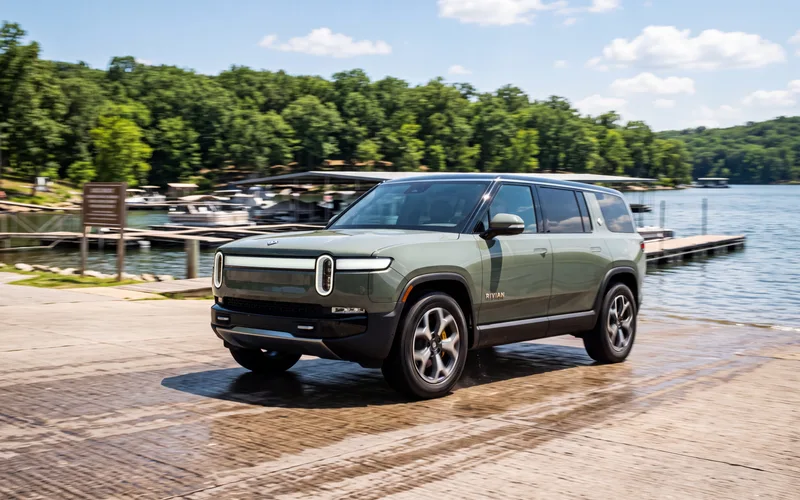 Rivian R1SFull-Size Luxury SUVBetter at: Value and capability
Three usable rows, 7,700 lbs of towing, a frunk, ~104 cu ft of cargo and real off-road ability from about $77,000 — roughly $33,000 less than the volume EQS SUV.
Compare 3.32B+
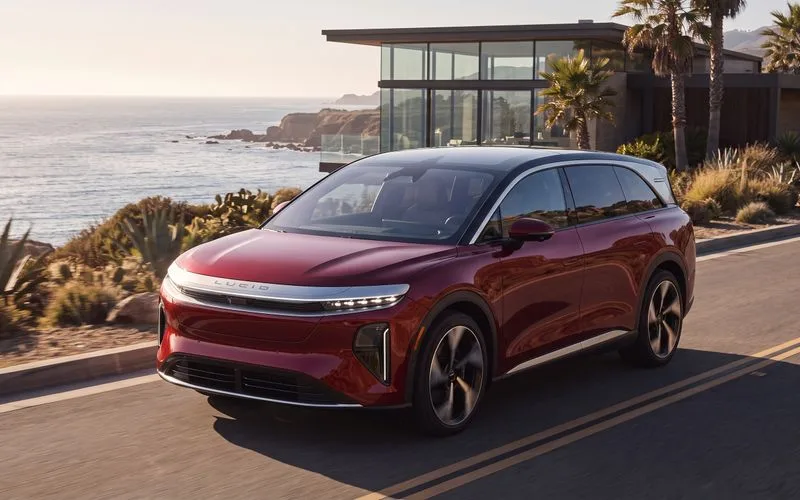 Lucid GravityFull-Size Luxury SUVBetter at: Range and charging
About 450 miles of range and roughly 400 kW charging at a comparable price make it the far better long-distance EV for anyone who won't tolerate 312 miles and 31-minute stops.
Compare 2.96B-
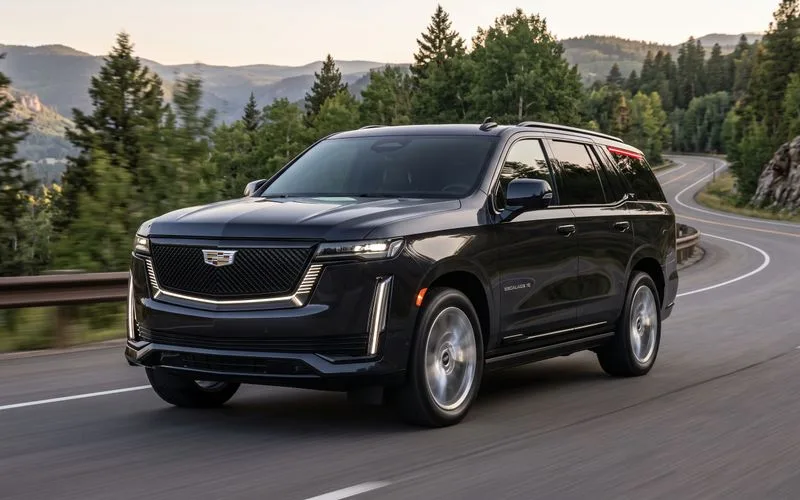 Cadillac Escalade IQFull-Size Luxury SUVBetter at: Space and range
Delivers the full-size presence, cargo room, and screen theater the EQS SUV promises, with over 400 miles of range and a stronger US resale outlook.
CompareSubject scores by year
Hover or tap a score to see what moved it versus the year before. A corner mark flags a big swing.
| Year | Performance | Efficiency | Safety | Space | Cost | Reliability | Tech | Use-case | Driving | Value |
|---|---|---|---|---|---|---|---|---|---|---|
| 2026 | 61 | 68 | 77 | 69 | 22 | 59 | 90 | 70 | 75 | 70 |
| 2025 | 61 | 68 | 74 | 69 | 22 | 60 | 87 | 67 | 78 | 68 |
| 2024 | 61 | 69 | 74 | 69 | 22 | 59 | 87 | 67 | 78 | 69 |
| 2023 | 61 | 66 | 65 | 68 | 22 | 58 | 83 | 66 | 76 | 69 |
Compare two years
Best fit & conditions
Higher scores mean a better fit for that use case. Learn more about use-case fit →
Subject profile
Academic Probation · NHTSA safety recalls
No NHTSA safety recall is on record for the 2026 Mercedes-Benz EQS SUV. Other model years of the EQS SUV have 3 — listed below.
3 recalls on other model years of the EQS SUV (2023–2025)
Jun 5, 2025Back over prevention: warnings: external/pedestrian alertPlease see the recall report for a complete list of models. Software in the Acoustic Vehicle Alerting System (AVAS) may cause an incorrect external pedestrian warning sound while reversing. As such, these vehicles fail to comply with the requirements of Federal Motor Vehicle Safety Standard number 141, "Minimum Sound Requirements for Hybrid Electric Vehicles."
Defect
Mercedes-Benz USA, LLC (MBUSA) is recalling certain 2022-2025 S-Class, EQE SUV, EQE, EQS SUV and EQS vehicles. Please see the recall report for a complete list of models. Software in the Acoustic Vehicle Alerting System (AVAS) may cause an incorrect external pedestrian warning sound while reversing. As such, these vehicles fail to comply with the requirements of Federal Motor Vehicle Safety Standard number 141, "Minimum Sound Requirements for Hybrid Electric Vehicles."
Risk
A vehicle that makes an incorrect sound may fail to alert pedestrians of a reversing vehicle, increasing the risk of crash.
Remedy
Dealers will update the AVAS software, free of charge. Owner notification letters were mailed August 1, 2025. Owners may contact MBUSA customer service at 1-800-367-6372. MBUSA's number for this recall is 2025070005.
NHTSA campaign 25V366000 ↗Manufacturer no. 202507000594 vehicles potentially affected (all models in the campaign)Owners notified Aug 1, 2025Filed by Mercedes-Benz USA, LLCFiled as EQS SUV 450 4MATIC, EQS SUV 450+, EQS SUV 580 4MATICMay 12, 2025Electrical system: wiring: fuses and circuit breakersAn incorrect fuse box that was not designed for the vehicle may have been installed.
Defect
Mercedes-Benz USA, LLC (MBUSA) is recalling certain 2023-2024 C-Class, E-Class, S-Class, SL, GLC, EQE SUV, EQE, EQS SUV, and EQS vehicles that were incorrectly repaired under recall 24V-115. An incorrect fuse box that was not designed for the vehicle may have been installed.
Risk
An incorrect fuse box can result in a sudden loss of drive power or a loss of critical safety functions such as the restraint systems or instrument cluster, increasing the risk of a crash or injury. Additionally, there could be an increased risk of a fire.
Remedy
Dealers will inspect and replace the main fuse boxes, free of charge. Owner notification letters were mailed June 6, 2025. Owners may contact MBUSA customer service at 1-800-367-6372. MBUSA's number for this recall is 2025050003/4.
NHTSA campaign 25V255000 ↗Manufacturer no. 2025050003/4443 vehicles potentially affected (all models in the campaign)Owners notified Jun 6, 2025Filed by Mercedes-Benz USA, LLCFiled as EQS SUV 580 4MATICMay 28, 2024Electrical system: propulsion system: traction battery: management system/energy control module (bms/becm): softwareThe battery management system software may cause the high-voltage battery to shut down, which can result in a sudden loss of drive power.
Defect
Mercedes-Benz USA, LLC (MBUSA) is recalling certain 2024 EQE 350 4MATIC, EQE 350+, EQE 500 4MATIC, EQS 450 4MATIC, EQS 450+, EQS 580 4MATIC, AMG EQE 53 4MATIC, AMG EQS 53 4MATIC, 2023-2025 EQE SUV 350 4MATIC, EQE SUV 350+, EQE SUV 500 4MATIC, EQS SUV 450 4MATIC, EQS SUV 450+, EQS SUV 580 4MATIC, 2024-2025 EQS SUV 680 4MATIC, and AMG EQE SUV 53 4MATIC vehicles. The battery management system software may cause the high-voltage battery to shut down, which can result in a sudden loss of drive power.
Risk
A sudden loss of drive power increases the risk of a crash.
Remedy
Dealers will update the battery management system software, free of charge. Owner notification letters were mailed July 5, 2024. Owners may contact MBUSA customer service at 1-800-367-6372. MBUSA's number for this recall is 2024060002.
NHTSA campaign 24V372000 ↗Manufacturer no. 202406000214,912 vehicles potentially affected (all models in the campaign)Owners notified Jul 5, 2024Filed by Mercedes-Benz USA, LLCFiled as EQS SUV 450 4MATIC, EQS SUV 450+, EQS SUV 580 4MATIC
Source: NHTSA Office of Defects Investigation recall database, model years 2023–2026. Recalls are listed by model year as the manufacturer filed them; whether a specific car is affected depends on its VIN — check a VIN at nhtsa.gov ↗. NHTSA model names matched to this page: EQS SUV 450 4MATIC, EQS SUV 450+, EQS SUV 580 4MATIC.
Detailed scoring by subject
1Performance & PowertrainOne of the EQS SUV's weakest categories.2.12C
Volume EQS 450 4MATIC dual-motor produces 355 hp; the EQS 580 4MATIC steps to 536 hp and the Maybach EQS 680 SUV tops the lineup at 649 hp.
The 450 4MATIC delivers a strong 590 lb-ft off the line; peak climbs to 633 lb-ft in the 580 4MATIC and 700 lb-ft in the Maybach 680 SUV.
Manufacturer 0–60 for the volume 450 4MATIC is 6.0 s; the 580 4MATIC does 4.5 s and the Maybach 680 SUV dips to about 4.1 s with launch control.
Reviewers universally describe the EQS SUV's power delivery as hushed, immediate, and effortlessly linear — S-Class-grade NVH isolation and no drivetrain coarseness at any speed.
Single-speed direct-drive per motor means no shifts, no hunting, no drone; regen paddles offer intuitive glide/one-pedal control across drive modes.
EQS SUV is rated to tow 3,500 lbs with the optional hitch package — modest for a full-size luxury SUV and typical for luxury EV SUVs (iX, EQE SUV).
4MATIC dual-motor AWD is available on the 450 and standard on 580 and Maybach 680; DYNAMIC SELECT includes an Offroad mode and the air suspension supports variable ride height.
Pavement-oriented luxury EV; AIRMATIC lifts ride height by ~1.4 in for a modest ~8.5 in max, but there is no low range, no skid plates, and no lockers — it's a road SUV, not a trail rig.
EV-only nameplate with three main power tiers (450+, 450 4MATIC, 580 4MATIC) plus the Maybach 680; no gas, hybrid, or PHEV alternative, so overall variety is narrow though tuned coverage within EV is broad.
2Efficiency & RangeMid-pack among this car's ten categories.2.63C+
For 2026 Mercedes dropped the RWD 450+ and renamed the lineup — every EQS SUV is now AWD and the volume trim is the EQS 400 4MATIC ($89,950, formerly the 450 4MATIC), EPA-rated at 79 MPGe combined / 43 kWh per 100 mi. The powertrain itself is unchanged; the 118-kWh pack has to move a ~6,000-lb full-size luxury SUV.
EPA city rating for the 2026 EQS 400 4MATIC SUV, carried over unchanged. Low within the EV band — heavy luxury BEVs give up the low-speed efficiency advantage that lighter EVs bank in city driving.
EPA highway rating for the 2026 EQS 400 4MATIC SUV. The EQS SUV's slippery bodywork holds highway efficiency within 2 MPGe of its city figure — unusual for the class and its relative strength among these three items.
EPA-estimated 312 mi on the volume 400 4MATIC from the 118-kWh pack, unchanged for 2026 — the 800V/122-kWh update went to the refreshed EQS sedan, not the SUV. Mid-pack for luxury EV SUVs: well behind Lucid Gravity (~450 mi), roughly level with BMW iX and Cadillac Vistiq.
Mercedes quotes up to 200 kW DC for the EQS SUV, unchanged for 2026 — the SUV stays on the 400-volt EVA2 architecture while the refreshed EQS sedan moves to 800V. Competent but no longer competitive with 800V rivals (Ioniq/EV9 ~230–350 kW, Lucid Gravity ~400 kW); Edmunds measured a 211 kW real-world peak, so the quoted figure is honest.
Manufacturer-quoted 31 minutes from 10–80% on a 200 kW DC charger. Middling — the large 118-kWh pack partly offsets the modest peak rate, but 800V rivals do the same job in 18–25 minutes. For 2026 the NACS DC fast-charge adapter is standard equipment, which widens where those 31 minutes can be spent.
EPA estimated annual energy cost of $950 for the EQS 400 4MATIC. Cheap against any gas full-size luxury SUV, but only mid-band among EVs — 43 kWh/100 mi is a lot of electricity per mile, and the 550 4MATIC lands at the same $950.
Full BEV — no gasoline or premium-fuel obligation, and the 9.6 kW onboard charger makes overnight Level 2 charging practical for nearly all daily use. Public fast charging is the one soft spot: 200 kW on a 400V architecture is average, though the NACS adapter now standard for 2026 opens the Supercharger network and removes the network constraint that used to accompany it.
3SafetyOne of the EQS SUV's strongest categories.3.25B+
NHTSA has not published crash-test results for the 2026 (or any prior year) EQS SUV. Estimated at 4 stars based on Mercedes-Benz's strong US crash-test track record and the related EQE's 5-star Euro NCAP rating; downgraded from placeholder 4.5 for lack of US data.
IIHS has not tested the EQS SUV. Related EQE earns 5-star Euro NCAP and Mercedes generally achieves Good ratings in most crashworthiness categories, but with no US award and no published individual crashworthiness results, an INFERRED mid-70 landing is more honest than the prior placeholder 87.
Standard suite is comprehensive: Active Brake Assist (with pedestrian/cyclist detection and cross-traffic function), Active Blind Spot Assist, Active Lane Keeping Assist, ATTENTION ASSIST, PRE-SAFE, and Evasive Steering Assist. Full-range adaptive cruise and Active Steering Assist require the Driver Assistance Package, keeping this shy of a top-tier 90+.
Not IIHS front-crash-prevention tested. Mercedes Active Brake Assist with pedestrian and cyclist detection (day/night) is well-regarded, and Edmunds explicitly cites 'strong emergency braking capabilities' in the 2026 EQS SUV test drive. Discounted from the prior 94 placeholder due to lack of formal Superior rating.
Active Blind Spot Assist is standard with active brake intervention, and Active Brake Assist with Cross-Traffic Function is standard. Full luxury coverage; trailer-aware is not applicable to a non-towing-focused luxury EV.
Edmunds test drive praised the lane centering as smooth and reliable with no false alarms — one of the best-behaving systems in the luxury EV set.
Full-speed-range Active Distance Assist DISTRONIC with Active Steering Assist provides refined stop-and-go and highway assist behavior; Edmunds validated smooth operation. Loses a few points because it lives in the optional Driver Assistance Package on the base trim.
Mercedes DRIVE PILOT (SAE Level 3, hands-off/eyes-off) is available on EQS models — one of only two certified L3 systems sold in the US. Geographic (CA/NV) and speed constraints (up to ~40 mph on approved highways at US launch; expanding toward ~59 mph in Europe) and lead-vehicle-required use case keep it below a mature broad-coverage BlueCruise/Super Cruise ceiling.
Standard MULTIBEAM LED with adaptive high beam assist; DIGITAL LIGHT projection headlamps available on higher trims and Maybach — best-in-class hardware, though IIHS headlight rating for the EQS SUV specifically is not published.
Edmunds highlighted excellent all-around visibility, large glass area, and a crisp surround-view camera system; commanding driving position aids situational awareness for a full-size EV.
Two complete sets of LATCH on the second-row outboard seats and a tether in the middle — standard luxury three-row layout. Wide rear doors and power-sliding second row help access, but the optional third row is tight (35.4 in headroom, ~32 in legroom) and not really usable for car seats.
4Space & ComfortMid-pack among this car's ten categories.2.65C+
EQS SUV volume trim (EQS 400 4MATIC) is 5-seat standard with a widely optioned power-folding third row raising capacity to 7. Scored at max available capacity to reflect that the third row is a defining full-size luxury SUV feature; the Maybach EQS 680 remains 4/5-seat only.
Mercedes-Benz USA-published front headroom for the EQS SUV with the standard panoramic sunroof; comfortably above the mid-luxury SUV benchmark.
Front legroom trails the full-size luxury SUV segment norm — a common EV drawback where dash-forward proportions and battery-driven H-point limit fore/aft seat travel. Cabin still feels open thanks to the tall roofline and airy dash.
Second-row headroom is a highlight — the tall, upright roofline (vs. the coupe-ish EQE SUV) gives class-leading clearance for adult passengers.
Long 126.4-inch wheelbase yields limousine-like second-row legroom — competitive with the GLS and BMW X7 despite the battery floor.
Optional third row seats two but is dimensionally tight: 35.4 in headroom and only 32.0 in legroom, with access through the second row. Fine for kids on short trips, cramped for teens or adults — the sloping roofline eats headroom and the second row must slide forward to open usable third-row legroom.
Cargo behind the second row is below the SUV segment band — the short rear overhang and battery packaging cap volume, and there is no frunk to compensate. Adequate for a weekly shop but tight for a full-size luxury SUV on a road trip.
Max cargo lands mid-band for SUVs — well behind Rivian R1S (~104 cu ft) and BMW iX (~78 cu ft), but competitive with mid-size luxury EVs. Sloping rear glass limits usable vertical volume.
Competent execution but nothing standout for a $90K+ EV: usable center console with wireless charging pad, deep door pockets, seat-back storage, and second-row wireless charger added on 2026 models. Notably no frunk (under-hood houses the HEPA filter), which handicaps the EQS SUV versus Tesla Model X and Rivian R1S.
Heated and ventilated multi-contour front seats with memory are standard; Exclusive Trim adds power side bolsters and massage. Rear passengers get heated, power-adjustable seats standard on 2026, upholstered pillows, and (with Executive Line) reclining Maybach-like thrones. Long-haul comfort is a consistent reviewer praise point.
AIRMATIC adaptive air suspension is standard on every EQS SUV. Reviewers repeatedly describe the ride as 'glides over broken pavement' and 'sumptuous' — a segment benchmark for isolation, closer to a Range Rover than to the sportier BMW iX or Porsche Cayenne.
Laminated acoustic glass, active noise cancellation, and heavy sound insulation combine with the silent EV powertrain for what Edmunds calls 'one of the quietest interiors available today' — wind and road noise nearly absent at highway speeds.
Rich standard equipment: heated + ventilated front seats with memory, 4-zone automatic climate (5-zone optional), heated power second-row seats, heated steering wheel, remote pre-entry climate control (up to 50 minutes), HEPA cabin filter, and available Energizing Comfort programs. Massage is optional via Exclusive Trim.
5Cost of OwnershipThe EQS SUV's lowest-graded category.0.00F
Three-row full-size luxury EV priced well above the SUV normalization ceiling. Even the entry 450+ RWD starts north of $105k, keeping the price score pinned at zero.
The dual-motor 450 4MATIC is the volume seller in the US where AWD dominates the three-row luxury segment; the 580 4MATIC (~$130k) and Maybach EQS 680 (~$180k) are lower-volume performance/flagship trims.
Mercedes dealer labor rates are the highest in the mainstream US luxury field, and the EQS SUV's 21–22" tires, air-suspension service, and complex 48V + high-voltage systems inflate scheduled costs. Reduced EV service intervals help but not enough to keep this below the SUV band ceiling.
Full-size luxury EVs have been the worst residual segment in the market — the EQS Sedan lost ~50% in two years, and the EQS SUV is tracking similarly. High MSRP amplifies the dollar loss even as EV-tax-credit dynamics and lease incentives keep transaction prices soft.
Standard Mercedes-Benz USA new-vehicle limited warranty — a year longer than the 3/36 industry norm but matched by BMW, Audi, and Lexus. No enhanced coverage for the flagship SUV.
For an EV the meaningful coverage is the traction battery — 10 yr / 155k mi is at the top of the market, exceeding the 8 yr / 100k federal minimum. Non-battery powertrain coverage tracks the basic warranty.
Mercedes-EQ ownership benefits are consistent across the EV lineup: 2 yr / 20,000 mi complimentary scheduled maintenance, 2 years of unlimited 30-minute Electrify America DC fast-charging sessions via Mercedes me Charge, and roadside assistance during the basic warranty. Solid mid-pack — meaningful but no longer standout against Rivian's or Lucid's earlier free-charging deals or Jaguar/Volvo's longer maintenance packages.
$110,400 volume-trim price minus its estimated resale value after 5 years (35% retained, or about $38,640) leaves about $71,760 in depreciation. Add the projected $13,850 in 5-year maintenance and repairs, and owning this vehicle for 5 years costs about $85,610 in total.
6Reliability & QualityOne of the EQS SUV's weakest categories.1.99C-
Consumer Reports has consistently rated Mercedes-Benz EVs (EQS sedan and SUV) among the lowest predicted reliability in the luxury EV space through its 2023–2025 model runs, with owner-reported issues in electronics, climate, and drive systems. J.D. Power initial-quality and dependability studies place Mercedes below the industry average, and the EQS SUV shares the EVA2 platform pain points with the sedan.
Mercedes-Benz's multi-year dependability standing sits mid-pack to slightly below average in J.D. Power VDS and Consumer Reports brand rankings, well behind Lexus/Toyota/Buick and behind BMW in recent studies. Solid engineering reputation is offset by electronics/infotainment complaints across the lineup.
The EQS SUV generation (2023-onward) has seen a heavier-than-average NHTSA recall cadence including 48V ground/electrical faults affecting power steering and braking assist, seatbelt sensor, driveshaft, rearview camera display, and multiple software-related campaigns. Nothing catastrophic like fire recalls, but the volume and safety-system involvement is notable.
The EVA2 platform (permanent-magnet rear plus induction front motor, 108–118 kWh battery) is a first-generation dedicated Mercedes EV architecture with limited long-term high-mileage data. Owner forums report some early drive-unit and battery-module issues; mechanically simpler than an ICE but has not yet built a durability track record on par with Tesla's mature drive units.
At $105K+ starting, the EQS SUV delivers class-appropriate materials — Nappa leather, real open-pore wood or piano-black trim, brushed metal, and the optional 56-inch MBUX Hyperscreen anchoring the dash. Reviewers consistently praise the material richness even when critiquing the software.
Assembly at Tuscaloosa is generally tight with consistent panel gaps and low mechanical NVH thanks to the EV silence. Scattered reviewer notes and owner complaints cite Hyperscreen glitches, HVAC quirks, and occasional interior rattles from the large glass roof and rear cabin trim.
Mercedes-Benz USA has roughly 380 franchised dealers with strong coverage in metro areas but sparser rural presence versus Toyota/Honda/Chevrolet. Service satisfaction in J.D. Power CSI runs mid-pack for luxury brands, behind Lexus and Buick but ahead of Land Rover/Jaguar.
Mercedes-Benz parts pricing is among the highest in the luxury segment, and EQS SUV-specific EV components (battery pack, drive units, Hyperscreen, 48V/12V modules) are dealer-only with limited aftermarket support. RepairPal and body-shop data consistently place Mercedes near the top of average annual repair cost.
7Technology & InfotainmentThe EQS SUV's best-graded category.4.00A+
For 2026 Mercedes made the full MBUX Hyperscreen standard on every EQS SUV trim including the EQS 400 4MATIC volume model — a 56-inch curved glass panel housing a 17.7-inch center OLED touchscreen, a 12.3-inch digital cluster, and a dedicated 12.3-inch front passenger display. Well above the SUV segment normalization ceiling.
Latest MBUX with Zero Layer UI running on the Hyperscreen's dedicated 8-core processor, 24 GB RAM, and 12 haptic actuators is one of the fastest and richest luxury systems; graphics, personalization, and haptic feedback are class-leading, though the sheer breadth of menus and touch-heavy climate controls give a learning curve.
Wireless Apple CarPlay and wireless Android Auto are standard on every 2026 EQS SUV trim with no package required.
'Hey Mercedes' natural-language voice assistant is among the strongest luxury voice systems, paired with MBUX Navigation with Electric Intelligence for EV-aware routing and charging planning; optional MBUX Augmented Reality Head-Up Display and center-display AR overlays are class-leading for turn-by-turn.
15-speaker Burmester Surround Sound System is standard on every 2026 EQS SUV trim — one of the strongest standard premium audio systems in the segment — with an available 23-speaker Burmester 3D system as a reference-tier upgrade.
12.3-inch fully digital OLED driver display with multiple configurable layouts (Modern Classic, Sport, Discreet, Assistance) is standard as part of the now-standard Hyperscreen; graphics quality and animation smoothness are class-leading.
EQS SUV runs on the EVA2 electrical architecture and receives regular OTA updates for MBUX, navigation, EV routing, and select vehicle systems; Mercedes has pushed multiple meaningful feature adds since launch and OTAs continue for MY26.
Mercedes me connect delivers remote start, remote climate preconditioning, lock/unlock, vehicle locate, charge scheduling and status, and Send2Car navigation; Digital Vehicle Key via Apple Wallet and Samsung Wallet is supported. Some services move to paid subscription after the trial and Digital Extras add-ons run ~$150/year.
USB-C ports across both rows plus dual wireless Qi phone-charging pads (front console AND rear seat) are standard; no household 120V AC outlet but the port coverage and dual wireless charging are among the best in the segment.
KEYLESS-GO proximity entry, push-button start, and HANDS-FREE ACCESS power liftgate are standard on every trim; Digital Vehicle Key with UWB is supported via Apple Wallet and Samsung Wallet for phone-as-key on compatible devices.
360-degree Surround View camera with high-resolution imagery plus Active Parking Assist with PARKTRONIC front/rear sensors are standard on every 2026 EQS SUV trim; MBUX interior camera adds hand-gesture parking view control.
The large MBUX Augmented Reality Head-Up Display (projecting nav arrows onto the road via a ~77-inch virtual image) remains optional on the volume EQS 400 4MATIC and is bundled with the AR navigation option — not standard on the entry trim despite the flagship positioning.
8Use-Case FitGrades above the middle of the scale.2.74B-
Three-row layout with standard LATCH anchors and wide-opening rear doors handles daily family logistics; optional second-row captain's chairs ease third-row access, but the third row is tight for anyone over about ten, and the low-slung EV floor plus tall ride height means kids need a step to climb in.
Standard suite includes Active Brake Assist, Blind Spot Assist, Attention Assist, and rear-occupant reminder; the Driver Assistance Package (Active Distance Assist Distronic, Active Steering Assist, Active Lane Change Assist, Evasive Steering Assist) is optional but bundled on volume trims. NHTSA has awarded 5-star overall for the platform.
AIRMATIC air suspension, exceptional cabin quietness, four-zone climate and rear-seat USB-C ports make it a strong long-trip family vehicle; however the third row is tight for adults and cargo behind row three is only ~7 cu ft, limiting luggage with all seats occupied. Optional MBUX rear entertainment adds appeal.
Rear-axle steering (up to 10°), standard air suspension, adjustable one-pedal regen and hushed EV powertrain make it an effortless commuter; MBUX voice control and 360° camera are widely equipped. Large footprint is the main friction.
EQS 450+ SUV rated ~89 MPGe combined, EQS 580 4MATIC ~79 MPGe — outstanding energy cost per mile versus any luxury full-size ICE peer. Home Level 2 charging keeps per-mile costs low, though insurance premiums and tire replacement costs are steep.
At 202.4 in long and ~6,000+ lb it is substantial, but rear-axle steering trims the turning circle to ~36 ft — better than the GLS or X7 — and the 360° camera plus front/rear parking sensors ease tight spots. Still oversized in true urban settings.
3,500 lb tow rating is well below any traditional full-size SUV; there is no bed, and the luxury cabin is not intended for hard use. Adequate for a small utility trailer but nothing more.
Nappa leather, MBUX Hyperscreen glass and luxury-grade trim are the opposite of work-friendly, and Mercedes' EQ platform has no fleet-service track record. Fine for its intended luxury role, poor as a work tool.
No 120V outlets or V2L, no upfitter provisions, no rubberized cargo floor, and the tow rating limits trailer options. Aftermarket roof rack accessories exist but the vehicle is not designed for jobsite duty.
285–307 mi EPA range depending on trim (450+ leads), 200 kW DC peak (10–80% in ~31 min), air suspension and quiet cabin make it a superb tourer within the EV charging network. Range trails class leaders like Lucid Gravity (~450 mi) which caps the score.
4MATIC AWD is available on all but the base 450+; air suspension raises ride height ~1 in and an Off-Road drive mode is included, but ground clearance (~7.5 in), 3,500 lb tow rating and street-oriented tires cap real adventure ability. Fine for gravel roads and light snow, weak for true off-road use.
Max cargo ~74 cu ft with third row power-folded, roof rails available, and both rear rows fold nearly flat; however there is no frunk and behind-third-row space is a modest 7.1 cu ft, so bulky gear plus all seats occupied is a squeeze.
9Driving ExperienceOne of the EQS SUV's strongest categories.3.07B
Standard rear-axle steering (up to 10 deg opposite lock at low speeds) and air suspension make the ~6,000-lb EQS SUV surprisingly nimble for its footprint, with quick turn-in and minimal roll. Reviewers note it feels floaty and softly damped in Comfort mode and only tightens up meaningfully in Sport — capable but not engaging.
Steering has decent heft and conveys some tire/road information, and precision is aided by the rear-steer system. It is not as communicative as the best luxury rivals and lightens noticeably in Comfort mode.
Ultimate stopping power is strong (~111 ft from 60 mph in instrumented testing) and fade resistance is fine, but the regen-blended brake pedal moves with the selected recuperation level and is often already partway to the floor before you apply pressure — a pedal-feel quirk that trips up new drivers.
Dual-motor EV powertrain delivers seamless, instant torque with no shift interruptions and well-calibrated tip-in. Regen modes (including full one-pedal via steering-wheel paddles) transition smoothly, and there is no ICE stop/start to worry about.
Cabin is exceptionally hushed even by luxury-EV standards — inverter whine is nearly absent, and Mercedes' sound-insulated floor and shaped wheel-arch liners keep motor and road roar distant. Vibration through the controls is essentially nil.
Standard rear-axle steering pulls the curb-to-curb diameter down to 39.0 ft — remarkable for a 202-inch, 126-inch-wheelbase full-size SUV, but still mid-pack against the 34–42 ft SUV normalization band.
Wide seat and wheel adjustment ranges suit a broad range of body sizes, and Burmester audio and massaging seats are lovely. The tall, deep 'Hyperscreen' dash forces some drivers to sit higher than natural to see over it, and touch-heavy controls put common functions (climate, mirrors) in menus rather than dedicated buttons.
Effortless, quick, and refined, but character is deliberately serene — not something enthusiasts recommend for the drive itself. Even the 536-hp EQS 580 feels more like a fast lounge than a sporting SUV, well behind a Lucid Gravity or Model X Plaid for engagement.
10Value & Market PositionGrades above the middle of the scale.2.73B-
The 2026 EQS 450+ SUV (~$105K MSRP) comes standard with adaptive air suspension, four-wheel steering (up to 10 degrees), 12.8-in central OLED + 12.3-in driver displays, MB.Drive Assist bundle, Burmester 3D surround, panoramic roof, heated/ventilated front seats, 360-camera, keyless entry, and standard NACS DC fast-charging adapter for 2026. It's a genuinely loaded luxury baseline, but the marquee MBUX Hyperscreen and third-row seat remain option-package upgrades on the volume 450+/450 trims, and Cadillac's Escalade IQ bundles a 55-in pillar-to-pillar display and executive rear seating for the money.
Value is the EQS SUV's weakest angle even after Mercedes' aggressive 2026 EV price resets. The Rivian R1S delivers three-row capability, more real-world range, and stronger performance from ~$77K, and the Lucid Gravity clears 440-plus miles of range with more usable interior space at a similar sticker. The EQS SUV counters with brand cachet and refinement rather than raw content-per-dollar, so buyers pay a genuine luxury tax versus the flagship EV set.
Broad ladder from EQS 450+ RWD through EQS 450 4Matic AWD and EQS 580 4Matic to the Maybach EQS 680 SUV halo, plus a third-row seat option and multiple appearance packages (Night Package, AMG Line, Maybach). Powertrain and battery choices are less varied than the ICE GLS family, but the range spans a wider price and content spread than most three-row luxury EV rivals.
US market reception has been poor — Mercedes paused EQE/EQS production in mid-2025 citing low demand and only resumed after the deep 2026 price resets, and the EQS SUV sits well outside the mid/full-size luxury SUV sales leaderboard against the Cadillac Escalade IQ, Rivian R1S, and legacy GLS. Volume is sustained by dealer footprint rather than genuine pull.
The Mercedes-Benz three-pointed star remains one of the most aspirational luxury badges in the US market, and the EQS positioning as the 'S-Class of EVs' carries flagship halo. The EQ sub-brand specifically has softer image than the ICE Mercedes lineup — styling has drawn 'blob' criticism and residual values on used EQS SUVs have been weak — so brand equity does not fully transfer, but it still meaningfully outranks EV-native rivals.
The 2026 MSRP reductions of roughly $12–15K across the EQ line function as a baked-in permanent incentive, and dealers routinely stack additional cash-on-hood, a complimentary home Wallbox (or public charging voucher), and the leased-EV $7,500 federal credit passthrough. Aggressive lease programs commonly cut effective monthly payments well below MSRP-implied economics, making it one of the more negotiable luxury nameplates on the lot.
The EQS SUV launched for 2023 and is mid-cycle by 2026, but the current MY brings a substantive refresh: revised front-end styling with a more upright grille shared with the EQS sedan facelift, standard NACS DC fast-charging adapter, retuned powertrain calibrations, and wider MBUX Hyperscreen availability. No imminent successor is on the roadmap, so buyers aren't stepping onto a platform about to be replaced.
Reviewers consistently praise interior quality, quietness, and third-row usability, but ding the EQS SUV for polarizing styling, mushy brake feel, distracting haptic controls, and range/efficiency that trail Rivian R1S, Lucid Gravity, and Tesla Model X. Consumer Reports further docks it for below-average predicted reliability. No 10Best, NACTOY, or comparison-test wins for the current generation.