

The verdict
A struggling subcompact convertible, strong on driving and held back by use-case.
The 2026 Mini Cooper Convertible is a charm-first car: a tiny 201-hp drop-top that is genuinely fun on a back road, trivially easy to park with a 35.4-ft turning circle, and one of the only four-seat soft-tops you can buy well under $50,000. What you give up is nearly everything practical — 30.8 inches of rear legroom, a 7.6 cu ft trunk that shrinks to 5.7 with the roof stowed, a 348-mile range from an 11.6-gallon tank of required premium, and no NHTSA or IIHS crash data at all. At roughly $42,000 as most buyers configure a Cooper S, you are paying premium-brand money for a subcompact with premium-brand repair bills and weak 44% five-year resale. Buy it because you want this specific car; there is no rational case that gets you here.
Jump to scoresStrengths
- Genuinely fun to drive, top down
- The easiest convertible in America to park
- Connected tech that punches above the price
What holds it back
- The back seat and trunk are close to unusable
- Expensive to keep, and it does not hold its value
- No crash-test data, and key safety gear costs extra
Top alternatives
Cars shoppers cross-shop with the Mini Cooper Convertible 2.08C
2.08C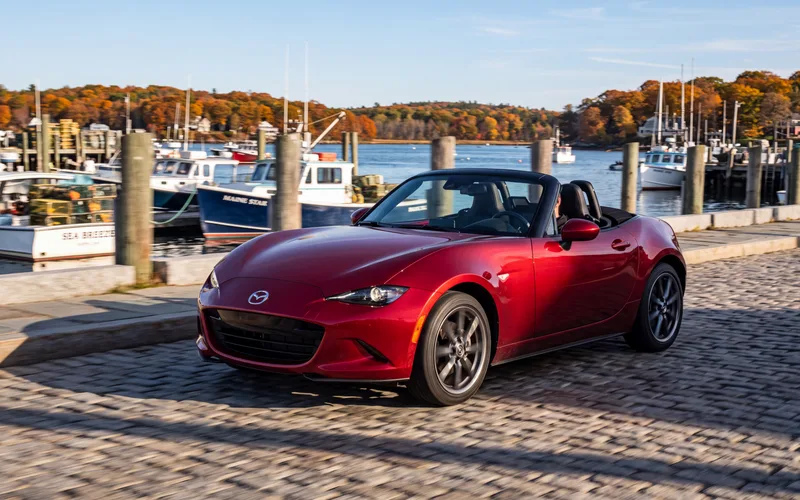 Mazda MX-5 MiataSports CarBetter at: Value and resale
Costs roughly $12,000 less as equipped, still offers a manual, and holds its value far better than the Mini's 44% five-year retention.
Compare 2.48C+
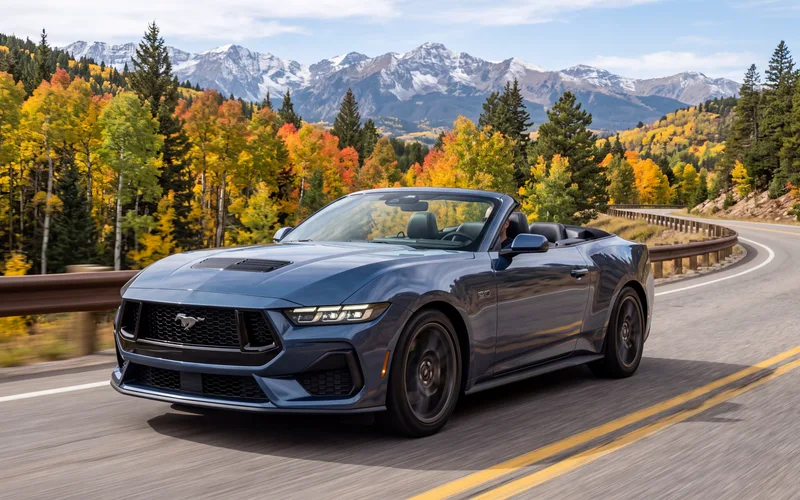 Ford Mustang ConvertibleSports CarBetter at: Power per dollar
About 315 hp from roughly $37,000 with a usable back seat, so you get more power and more space for less money.
Compare 2.83B-
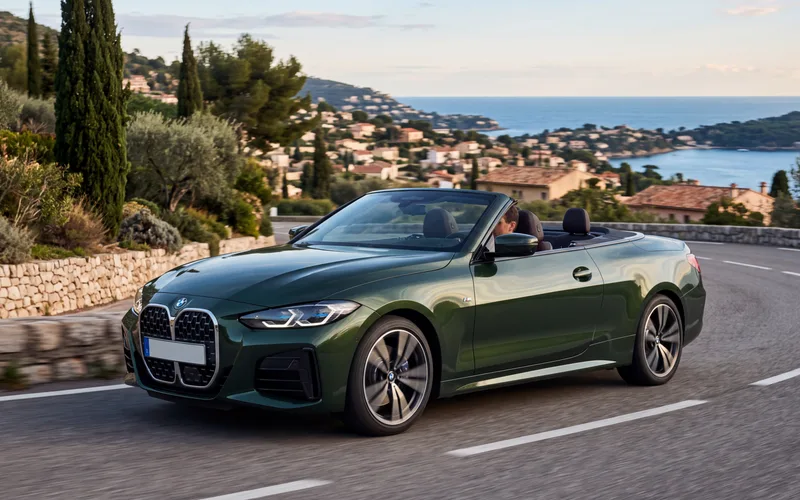 BMW 4 Series ConvertibleLuxury CoupeBetter at: Comfort and refinement
The step up for anyone who actually wants to travel in a four-seat convertible — quieter, smoother-riding, with a 9-plus cu ft trunk and real rear legroom.
CompareProduction history
Best fit & conditions
Higher scores mean a better fit for that use case. Learn more about use-case fit →
Subject profile
Academic Probation · NHTSA safety recalls
Sep 17, 2025Seat belts: front: retractorThe torsion bar in both front seat belt retractors may have been damaged during production.
Defect
BMW of North America, LLC is recalling certain 2025-2026 X1 and X2, MINI Cooper Convertible, MINI Cooper, Mini Countryman S ALL4, and 2025 MINI Countryman SE ALL4 vehicles. The torsion bar in both front seat belt retractors may have been damaged during production.
Risk
A damaged seat belt retractor may not properly restrain an occupant during a crash, increasing the risk of injury.
Remedy
Dealers will replace both front seat belt retractors, free of charge. Owner notification letters were mailed November 13, 2025. Owners may contact BMW customer service at 1-800-525-7417. Vehicle Identification Numbers (VINs) will be searchable on NHTSA.gov on November 7, 2025.
NHTSA campaign 25V616000 ↗1,571 vehicles potentially affected (all models in the campaign)Owners notified Nov 13, 2025Filed by BMW of North America, LLCFiled as COOPER, COOPER CONVERTIBLE
11 recalls on other model years of the Cooper Convertible (2017, 2019–2021, 2025)
Jul 1, 2026Electronic stability control (esc) · Service brakes, hydraulic: power assist: electric: control moduleThe integrated brake (IB) system may malfunction and result in a loss of power brake assist or cause the Antilock Brake (ABS) and Dynamic Stability Control (DSC) systems to not function properly.
Defect
BMW of North America, LLC (BMW) is recalling certain 2025 Mini Cooper S, Mini Countryman S All4, X2, 2024 Rolls-Royce Spectre, 2023-2025 i7, 7 Series, X7, 2024-2025 i5, 5 Series, 2023-2024 XM, X1, 2024-2025 X6, and X5 vehicles. The integrated brake (IB) system may malfunction and result in a loss of power brake assist or cause the Antilock Brake (ABS) and Dynamic Stability Control (DSC) systems to not function properly.
Risk
A loss of power brake assist can extend the distance required to stop the vehicle. Additionally, malfunctioning ABS and/or DSC systems can cause a loss of vehicle control. Either of these scenarios can increase the risk of a crash.
Remedy
The Integrated brake system will be inspected and, if necessary, replaced, free of charge. Owner notification letters are expected to be mailed August 21, 2026. Owners may contact BMW customer service at 1-800-525-7417 or Rolls-Royce customer service at 1-877-877-3735. Vehicle Identification Numbers (VINs) involved in this recall will become searchable on NHTSA.gov beginning August 21, 2026. Vehicles previously repaired under recall 24V739 or 24V104 will need to have the new remedy completed.
NHTSA campaign 26V422000 ↗428 vehicles potentially affected (all models in the campaign)Owners notified Aug 25, 2026Filed by BMW of North America, LLCFiled as COOPER SSep 18, 2024Electronic stability control (esc): control module · Service brakes, hydraulic: antilock/traction control/electronic limited slip: control unit/modulePlease refer to the recall report for the complete list of models. The welds in the servomotor of the integrated brake control module may break, causing a loss of power brake assist and rear brake function. In addition, the Antilock Brake System (ABS) and Dynamic Stability Control (DSC) system may not function.
Defect
BMW of North America (BMW) is recalling certain 2023-2024 X1, 2024-2025 X5, 2025 X6, 2023-2025 X7, 740i, 760i, 2024 XM, 530i, 540i, i7, 750e, X2, 2024-2025 i5, 2024 Rolls Royce Spectre, 2025 MINI Countryman S ALL4, JCW Countryman ALL4, and 2025 MINI Hardtop 2 Door (Cooper, Cooper S) vehicles. Please refer to the recall report for the complete list of models. The welds in the servomotor of the integrated brake control module may break, causing a loss of power brake assist and rear brake function. In addition, the Antilock Brake System (ABS) and Dynamic Stability Control (DSC) system may not function.
Risk
A loss of brake power assist or rear brake function can result in extended stopping distance. A loss of ABS or DSC can cause a loss of vehicle handling and control. Either of these scenarios can increase the risk of a crash.
Remedy
Dealers will replace the integrated brake system, free of charge. Owner notification letters were mailed November 13, 2024. Owners can contact BMW Customer Service at 1-800-525-7417.
NHTSA campaign 24V697000 ↗309 vehicles potentially affected (all models in the campaign)Owners notified Nov 13, 2024Filed by BMW of North America, LLCFiled as COOPER, COOPER SFeb 12, 2024Electronic stability control (esc) · Service brakes, hydraulic: power assist: electric: control modulePlease see the recall report for a complete list of models and model years. The integrated brake (IB) system may malfunction and result in a loss of power brake assist or cause the Antilock Brake (ABS) and Dynamic Stability Control (DSC) systems to not function properly.
Defect
BMW of North America, LLC. (BMW) is recalling certain 2023-2025 BMW, MINI, and Rolls-Royce vehicles. Please see the recall report for a complete list of models and model years. The integrated brake (IB) system may malfunction and result in a loss of power brake assist or cause the Antilock Brake (ABS) and Dynamic Stability Control (DSC) systems to not function properly.
Risk
A loss of power brake assist can extend the distance required to stop the vehicle. Additionally, malfunctioning ABS and/or DSC systems can cause a loss of vehicle control. Either of these scenarios can increase the risk of a crash.
Remedy
Dealers will replace the integrated brake system, free of charge. Owner notification letters were mailed between June and December 2024. Owners may contact BMW customer service at 1-800-525-7417 or Rolls Royce customer service at 1-877-877-3735.
NHTSA campaign 24V104000 ↗266,716 vehicles potentially affected (all models in the campaign)Owners notified Jun 28, 2024Filed by BMW of North America, LLCFiled as COOPER, COOPER SJul 21, 2021Seat beltsThe passenger seat belt Automatic Locking Retractor (ALR) may deactivate early, before the webbing fully retracts. As such, these assemblies fail to comply with the requirements of Federal Motor Vehicle Safety Standard number 208, "Occupant Crash Protection."
Defect
BMW of North America, LLC (BMW) is recalling certain 2021 2 Series (230i, 230i xDrive, M240i, M240i xDrive), 330e, 330e Xdrive, 4 Series Coupe (430i, 430i xDrive, M440i xDrive) M4 Coupe, M4 Competition Coupe, BMW 4 Series Convertible (430i, M440i), BMW X1 sDrive28i, xDrive28i, 2 Series Gran Coupe (228i, 228i xDrive, M235i xDrive), M2 Competition Coupe, 330i, 330i xDrive, M340i, M340i xDrive, M3, M3 Competition, 530i, 530i xDrive, 540i, 540i xDrive, MINI Hardtop 2 Door (Cooper, CooperS, JCW), X2 sDrive28i, X2 xDrive28i, X2 M35i, Z4 sDrive30i, Z4 M40i, MINI Hardtop 2 Door (Cooper SE), MINI Convertible (Cooper, Cooper S, JCW), MINI Clubman (Cooper S, Cooper S All4, JCW), MINI Countryman (Cooper, Cooper All4, Cooper S, Cooper S All4, JCW All4), Rolls Royce Ghost, MINI Countryman (Cooper S E All4), Rolls Royce Phantom, Rolls Royce Cullinan, and Toyota Supra vehicles. The passenger seat belt Automatic Locking Retractor (ALR) may deactivate early, before the webbing fully retracts. As such, these assemblies fail to comply with the requirements of Federal Motor Vehicle Safety Standard number 208, "Occupant Crash Protection."
Risk
During a crash, a seat belt retractor that does not function as intended increases the risk of injury.
Remedy
Dealers will inspect the seat belt retractors (including the seat belts) and, if necessary, replace the retractors, free of charge. Owner notification letters were mailed on September 3, 2021. Owners may contact BMW customer service at 1-800-525-7417; 1-866-825-1525 (MINI); 1-877-877-3735 (Rolls Royce); and 1-888-270-9371 (Toyota).
NHTSA campaign 21V554000 ↗21,537 vehicles potentially affected (all models in the campaign)Owners notified Sep 3, 2021Filed by BMW of North America, LLCFiled as COOPER, COOPER SMay 20, 2020Air bags · Air bags: air bag/restraint control module · Air bags: side/window: curtainDue to a problem with the rollover sensor within the air bag control unit, in the event of a rollover crash, the head air bag, seat belt pretensioners and other safety systems, may not activate.
Defect
BMW of North America, LLC (BMW) is recalling certain 2020 X1 xDrive28i, X1 sDrive28i, X2 xDrive28i and X2 sDrive28i, 2020 MINI Clubman Cooper S All4, 2021 MINI Hardtop 2 Door (Cooper, Cooper S, John Cooper Works and Cooper S E) and MINI Hardtop 4 Door (Cooper and Cooper S) vehicles. Due to a problem with the rollover sensor within the air bag control unit, in the event of a rollover crash, the head air bag, seat belt pretensioners and other safety systems, may not activate.
Risk
If the safety systems do not deploy as intended in a roll over crash, it may increase the risk of injury.
Remedy
BMW will notify owners, and dealers will replace the air bag control unit, free of charge. The recall began July 17, 2020. Owners may contact BMW customer service at 1-800-525-7417 or MINI customer service at 1-866-825-1525.
NHTSA campaign 20V283000 ↗76 vehicles potentially affected (all models in the campaign)Owners notified Jul 17, 2020Filed by BMW of North America, LLCFiled as COOPER, COOPER S, JCW CONVERTIBLEAug 28, 2019StructureThe rear side trim panels may have been assembled without a crash pad. As such, these vehicles fail to comply with the requirements of Federal Motor Vehicle Safety Standard (FMVSS) number 214, "Side Impact Protection."
Defect
BMW of North America, LLC (BMW) is recalling certain 2020 MINI Hardtop 2-Door Cooper, Cooper S, and JCW vehicles. The rear side trim panels may have been assembled without a crash pad. As such, these vehicles fail to comply with the requirements of Federal Motor Vehicle Safety Standard (FMVSS) number 214, "Side Impact Protection."
Risk
Without a crash pad, rear seat passengers would have an increased risk of injury in the event of a side impact crash.
Remedy
MINI will notify owners, and MINI dealers will install crash pads, free of charge. The recall began October 11, 2019. Owners may contact MINI customer service at 1-866-825-1525.
NHTSA campaign 19V634000 ↗683 vehicles potentially affected (all models in the campaign)Owners notified Oct 11, 2019Filed by BMW of North America, LLCFiled as COOPER, COOPER SAug 14, 2019Steering: linkages: tie rod assemblyThe steering gear tie rod may have been assembled incorrectly, which may result in excessive wear of the tie rod end, eventually causing it to break.
Defect
BMW of North America, LLC (BMW) is recalling certain 2018-2019 BMW X1 sDrive28i, X1 xDrive28i, 2019 X2 xDrive28i, MINI Cooper S Convertible, Countryman, and John Cooper Works Countryman vehicles. The steering gear tie rod may have been assembled incorrectly, which may result in excessive wear of the tie rod end, eventually causing it to break.
Risk
A broken steering tie rod would lead to a loss of vehicle control, increasing the risk of a crash.
Remedy
BMW will notify owners, and dealers will inspect the vehicles and replace the tie rods and ball joints as necessary, free of charge. The recall began October 11, 2019. Owners may contact BMW customer service at 1-800-525-7417 or MINI customer service at 1-866-825-1525.
NHTSA campaign 19V601000 ↗32 vehicles potentially affected (all models in the campaign)Owners notified Oct 11, 2019Filed by BMW of North America, LLCFiled as COOPERJul 11, 2018Engine and engine cooling: engineThe crankshaft sensor may be equipped with incorrect firmware, preventing the sensor from properly processing input from the crankshaft reluctor ring, possibly resulting in a vehicle stall. On September 12, 2018, BMW expanded the recall to a total of 5,309 vehicles including certain 2018-2019 BMW 540d xDrive, 230i M240i, M240i xDrive, X2 sDrive28i, X2 xDrive28i, X1 sDrive28i, X1 xDrive28i, 330i, 330i xDrive, 340i, 340i xDrive, 330i xDrive Gran Turismo, 530i, 530i xDrive, 540i, 540i xDrive, 530e, 530e xDrive, 640i xDrive Gran Turismo, 330e, 2019 430i Gran Coupe, 430i xDrive Gran Coupe, 440i Gran Coupe, 440i xDrive Gran Coupe, 430i, 430i xDrive, 440i, 440i xDrive, 740i, 740i xDrive, MINI Cooper, Cooper S, JCW, MINI Countryman (Cooper, Cooper All4, Cooper S, Cooper S All4, JCW All4), and MINI Clubman (Cooper, Cooper S, Cooper All4, Cooper S All4, JCW All4) vehicles.
Defect
BMW of North America, LLC (BMW) is recalling certain 2018 BMW 540d xDrive vehicles. The crankshaft sensor may be equipped with incorrect firmware, preventing the sensor from properly processing input from the crankshaft reluctor ring, possibly resulting in a vehicle stall. On September 12, 2018, BMW expanded the recall to a total of 5,309 vehicles including certain 2018-2019 BMW 540d xDrive, 230i M240i, M240i xDrive, X2 sDrive28i, X2 xDrive28i, X1 sDrive28i, X1 xDrive28i, 330i, 330i xDrive, 340i, 340i xDrive, 330i xDrive Gran Turismo, 530i, 530i xDrive, 540i, 540i xDrive, 530e, 530e xDrive, 640i xDrive Gran Turismo, 330e, 2019 430i Gran Coupe, 430i xDrive Gran Coupe, 440i Gran Coupe, 440i xDrive Gran Coupe, 430i, 430i xDrive, 440i, 440i xDrive, 740i, 740i xDrive, MINI Cooper, Cooper S, JCW, MINI Countryman (Cooper, Cooper All4, Cooper S, Cooper S All4, JCW All4), and MINI Clubman (Cooper, Cooper S, Cooper All4, Cooper S All4, JCW All4) vehicles.
Risk
A vehicle stall can increase the risk of a crash.
Remedy
BMW will notify owners, and dealers will replace the crankshaft sensor, free of charge. The recall began September 6, 2018. Owners may contact BMW customer service at 1-800-525-7417.
NHTSA campaign 18V465000 ↗5,309 vehicles potentially affected (all models in the campaign)Owners notified Sep 6, 2018Filed by BMW of North America, LLCFiled as COOPER, COOPER SMar 31, 2017Exterior lighting: brake lightsWhen the affected vehicles are braking and the turn signals are on, the inner, bumper-mounted, brake light will go out. As such, these vehicles fail to comply with the requirements of Federal Motor Vehicle Safety Standard (FMVSS) number 108, "Lamps, Reflective Devices, and Associated Equipment."
Defect
BMW of North America, LLC (BMW) is recalling certain 2016-2017 MINI Cooper Clubman, Cooper S Clubman and JCW Clubman vehicles. When the affected vehicles are braking and the turn signals are on, the inner, bumper-mounted, brake light will go out. As such, these vehicles fail to comply with the requirements of Federal Motor Vehicle Safety Standard (FMVSS) number 108, "Lamps, Reflective Devices, and Associated Equipment."
Risk
If the brake light does not illuminate when a turn signal is activated, other drivers may be confused, increasing the risk of a crash.
Remedy
MINI will notify owners, and dealers will reprogram the vehicle to correct the brake lighting, free of charge. The recall began May 22, 2017. Owners may contact MINI customer service at 1-866-825-1525.
NHTSA campaign 17V222000 ↗16,883 vehicles potentially affected (all models in the campaign)Owners notified May 19, 2017Filed by BMW of North America, LLCFiled as COOPER, COOPER SDec 20, 2016Air bagsThe affected vehicles have seat- mounted side air bag inflator initiators that may fail to ignite during a crash.
Defect
BMW of North America, LLC (BMW) is recalling certain model year 2017 BMW 640i, 640i xDrive, 650i, 650i xDrive, M6, 535i, 535i xDrive, 430i, 430i xDrive, 440i, 440i xDrive, M4, X1 sDrive28i, X1 xDrive28i, i3, i8, Rolls-Royce Dawn, Mini Clubman Cooper, Clubman Cooper S, Cooper All4, Cooper S All4, Mini 4-Door Cooper, Cooper S, Mini 2-Door Cooper, Cooper S, John Cooper Works and 2016 BMW 528i, 528i xDrive, 535i, 535i xDrive, 550i, 550i xDrive, M5 and 535d vehicles. The affected vehicles have seat- mounted side air bag inflator initiators that may fail to ignite during a crash.
Risk
If the air bag inflator initiator fails to ignite, the seat-mounted air bag will not deploy, increasing the risk of injury.
Remedy
BMW will notify owners, and dealers will replace the air bag modules, free of charge. The recall began February 6, 2017. Owners may contact BMW customer service at 1-800-525-7417.
NHTSA campaign 16V914000 ↗3,506 vehicles potentially affected (all models in the campaign)Owners notified Feb 10, 2017Filed by BMW of North America, LLCFiled as COOPER, COOPER SOct 17, 2016Seat belts: front: retractorThe vehicle-sensitive locking mechanism of the seat belt Emergency Locking Retractor (ELR) for the driver's seat may not lock as designed. As such, these vehicles fail to comply with the requirements of the Federal Motor Vehicle Safety Standard (FMVSS) number 209, "Seat Belt Assemblies."
Defect
BMW of North America, LLC (BMW) is recalling certain model year 2016-2017 X1 sDrive28i, X1 xDrive28i, MINI Hardtop 4 Door Cooper, Mini Hardtop 4 Door Cooper S, MINI Cooper Clubman, and Cooper S Clubman, 2017 Rolls-Royce Ghost, and 2016 528i vehicles. The vehicle-sensitive locking mechanism of the seat belt Emergency Locking Retractor (ELR) for the driver's seat may not lock as designed. As such, these vehicles fail to comply with the requirements of the Federal Motor Vehicle Safety Standard (FMVSS) number 209, "Seat Belt Assemblies."
Risk
In the event of a crash where heavy braking is applied, the Emergency Locking Retractor (ELR) may activate when the occupant is more forward in the seat, possibly increasing the risk of injury.
Remedy
BMW will notify owners, and dealers will replace the driver's seat belt assembly, free of charge. The recall began July 3, 2019. Owners may contact BMW customer service at 1-800-525-7417.
NHTSA campaign 16V747000 ↗15,455 vehicles potentially affected (all models in the campaign)Owners notified Jul 3, 2019Filed by BMW of North America, LLCFiled as COOPER, COOPER S
Source: NHTSA Office of Defects Investigation recall database, model years 2017–2026. Recalls are listed by model year as the manufacturer filed them; whether a specific car is affected depends on its VIN — check a VIN at nhtsa.gov ↗. NHTSA model names matched to this page: COOPER, COOPER CONVERTIBLE, COOPER S, JCW CONVERTIBLE.
Detailed scoring by subject
1Performance & PowertrainOne of the Cooper Convertible's weakest categories.0.51F
The 2026 Cooper Convertible is the new F67 generation, and MINI USA does not import the 1.5L three-cylinder Cooper C for it — the 2.0L turbo four in Cooper S tune (201 hp) is the entry and volume powertrain, with the JCW at 228 hp. Against a convertible band that runs to 520 hp, a 201 hp subcompact scores low even though the output is competitive for its own size class.
Peak torque of 221 lb-ft (300 Nm) arrives low and holds across a broad plateau, which is why the car feels quicker than its 0-60 suggests in everyday driving. Scores mid-low against a band shared with 450 lb-ft luxury GTs.
Convertible bodywork adds roughly 250 lb of structure and roof mechanism over the F66 hardtop, costing about a half second — the hatch runs low-6s, the convertible mid-to-high 6s. Quick for a subcompact but slow next to the V8 and six-cylinder convertibles that set the top of this band.
The B48 turbo four is one of the better small-displacement engines on sale: torque plateau starts under 1,500 rpm, turbo lag is minimal, and throttle response is sharp in Go-Kart mode. It gives up top-end sophistication and aural quality to BMW's inline-six convertibles, which is why it sits below the Z4 (82) rather than in the 80+ band.
The 7-speed dual-clutch is decisive and fast-shifting once moving, but new-generation MINIs draw consistent criticism for low-speed hesitation and jerkiness typical of a DCT in traffic. The new generation also drops the manual entirely — a real loss in a car sold on driver engagement, and the main reason this trails the Z4's ZF eight-speed (90) and the Mustang (80).
Front-wheel drive only across the entire convertible line — MINI's ALL4 all-wheel-drive system is reserved for the Countryman and is not offered on any Cooper Convertible trim. Falls in the guidance's bottom band for a single-driven-axle car with no AWD option anywhere in the range.
One engine, one gearbox: the 2.0L turbo four in two states of tune (201 hp Cooper S, 228 hp JCW) paired exclusively with the 7-speed DCT. There is no hybrid, no PHEV, no manual, and — unlike the hardtop, which has a fully electric Cooper SE sibling — no electric convertible in the US lineup. Narrower than the Mustang and Z4 (both 55), which at least field two distinct engines plus a manual.
2Efficiency & RangeOne of the Cooper Convertible's weakest categories.0.55F
The US 2026 MINI Convertible (F67) is sold from the Cooper S up, so the volume trim is the 201-hp 2.0L turbo four with the 7-speed DCT, good for roughly 30 MPG combined. That is strong for an open-top car but only mid-pack against the convertible band, which is shared with efficient hatch-based bodystyles.
City is the convertible's weakest cycle: there is no hybrid assist of any kind on the B48, and the drop-top carries a few hundred pounds of chassis reinforcement and roof hardware that stop-start driving pays for directly.
Highway is where the small-displacement turbo and tall DCT top gears pay off — around 36 MPG, well clear of the V8 and inline-six convertibles it is cross-shopped against, though the soft top's aerodynamic penalty keeps it a few MPG behind the hardtop Cooper S.
Decent economy is undone by a very small ~11.6-gallon tank, so a full fill covers only about 350 miles — near the bottom of the convertible band and a genuine road-trip annoyance in a car whose whole appeal is the long scenic drive.
At EPA's standard 15,000 miles a year the Cooper S Convertible burns about 500 gallons, and because all of it has to be 91-octane the annual bill lands near $2,100 — respectable in absolute terms but no bargain for a subcompact.
MINI specifies premium 91-octane for the B48 2.0L turbo across the convertible range, a permanent 50-70 cent per gallon penalty over regular that cancels much of the small car's efficiency advantage. Scored below the hardtop Cooper's equivalent item because the convertible has no cheap-to-run electric sibling to soften the requirement.
3SafetyGrades below the middle of the scale.1.44D
NHTSA has no published overall star rating for the MINI Cooper Convertible — the nameplate is low-volume and has gone untested across generations, including the current F67 that launched for 2025. Value set to the segment-midpoint convention used for untested convertibles rather than an observed result.
No IIHS ratings exist for the MINI Convertible — the Institute does not run its roof-strength or side-impact protocols on soft-top convertibles, so there is no award and no crashworthiness data for the current generation. Scored just below the untested-convertible peers (Mustang Convertible 50, Z4 55) because the Cooper is a subcompact carrying a real mass disadvantage in multi-vehicle crashes on top of the missing data.
MINI's standard Active Guard bundle covers forward collision warning, automatic emergency braking with pedestrian detection, lane departure warning, speed-limit info and driver attention monitoring, plus a standard rear camera and park distance control. Both of the items the framework flags as decisive — blind-spot monitoring and adaptive cruise — sit in the optional Driving Assistant package/upper trims, so it lands below the Z4 (72) and Mustang Convertible (68), which include BSM on every trim.
AEB with pedestrian detection is standard and derives from the BMW Group sensor/software stack that rates well on tested platform mates, but there is no IIHS front-crash-prevention result for this model and no nighttime pedestrian data, so it cannot be credited into the top band.
Blind-spot detection is an option rather than standard equipment, and it is alert-only with no active steering intervention; rear cross-traffic coverage arrives with the same parking/assistance bundle. Availability restricted to option-package buyers puts it at the bottom of the middle band, well under the Z4's standard BSM (80).
Lane departure warning is standard, but active lane-keeping steering assist requires the Driving Assistant package, and MINI's implementation is a corrective nudge rather than the sustained centering the top band describes. Functional when equipped, absent on a base car.
When optioned, Active Cruise Control with Stop & Go is the BMW-derived full-speed-range system and behaves smoothly in traffic — a genuine strength. It is held out of the top band because it is not standard and there is no integrated highway-assist mode layering centering onto the cruise system.
MINI does not offer any hands-free highway driving system on any US model, and the Cooper Convertible is no exception — BMW Group's Highway Assistant is confined to larger BMW-badged platforms. No option exists at any price.
LED headlights with automatic high beams are standard across the range and adaptive/matrix LED units are available higher up, which is solid equipment for a subcompact. No IIHS headlight rating exists for the Convertible, so real-world reach and glare control are unverified and it stays mid-band.
Top down, sightlines are essentially unobstructed and the car's tiny footprint makes placement easy; top up, the fabric roof creates thick rear-quarter blind zones behind a small backlight, which is the configuration most owners drive in most of the time. A standard rear camera and park distance control compensate for parking but not for lane changes, and no 360-degree camera is offered — better than the Mustang Convertible's deep blind zones (42), short of the Z4 (62).
The 2+2 rear bench is a token seat: LATCH anchors are present but buried in the seat bight, and the only way in is past a tipped-forward front seat on a two-door body with no rear doors. Rear legroom is too tight to fit a rear-facing seat without pushing the front passenger seat far forward, and two seats across is impractical — below even the Mustang Convertible (25), which has a larger rear compartment.
4Space & ComfortGrades below the middle of the scale.1.14D
The F67 Cooper Convertible is a strict 2+2 across every 2026 trim (Cooper S, John Cooper Works) — four belted positions, no five-seat configuration offered. That is the floor of the 4–5 seat convertible band.
MINI's upright seating position and tall glasshouse give the Cooper an unusually good front headroom figure for a small car, at or above the top of the 36–40 in convertible band. Taken from the F66/F67 shared architecture (identical front seat mounting and roof header to the Cooper Hardtop) rather than a separately verified convertible spec sheet.
Front legroom is adequate rather than generous — roughly a third of the way up the 40–44 in convertible band, and short of the 42.1–42.2 in that the CLE, 4 Series and Z4 offer. The convertible shares the hatch's 98.2 in wheelbase and front seat travel.
Mid-band for the segment, and better than the 4 Series (36.5 in), CLE (36.0 in) or Mustang Convertible (35.7 in) — the fabric roof sits high over the rear bench. Headroom is not what makes the back seat unusable here; legroom is.
At 30.8 in the rear seat falls below the 32 in floor of the convertible band — among the worst figures of the scored convertible peers, and genuinely usable only for small children or cargo. Access is awkward too, past a fixed front seatback on a two-door body.
The trunk is the smallest of any scored convertible — 215 litres (7.6 cu ft) with the roof raised, dropping to 160 litres (5.7 cu ft) once the roof is stowed, versus 9.0–9.9 cu ft for the 4 Series, CLE and Z4. That is below the 10 cu ft band floor, so it scores 0. A split-folding rear seatback and MINI's Easy Load function, which lifts the folded roof clear of the opening, partly offset the raw number.
Cabin storage is sparse even by small-car standards: a shallow console cubby beneath the new toggle bar, a small glovebox, and narrow door pockets, with none of the underfloor space the Cooper Hardtop gets behind its hatch — the soft-top well takes it. The Easy Load roof-lift and split-folding rear seats are genuinely clever touches, which keeps this off the bottom of the band, but it lands below the Hardtop (55) and near the Mustang Convertible (50).
Front sport seats are supportive and hold up well on longer drives, with good lateral bolstering for a car this size, but adjustment is limited next to the CLE (84) or 4 Series (82) — no massage, and multi-way power is trim-dependent. The rear bench is a token perch that no adult will tolerate beyond a short hop, which caps this below its premium-convertible peers.
The short 98.2 in wheelbase, firm suspension tune and run-flat tires make for a busy, jittery ride over broken pavement — a long-standing MINI trait — and removing the roof adds the scuttle shake that soft-top conversions of a hatchback body typically show. Scored a notch below the Cooper Hardtop (52) for that reason, and well behind the CLE (85) and 4 Series (78), which ride on longer, stiffer platforms engineered as convertibles.
The insulated fabric roof keeps things civil around town, but highway wind and road noise are clearly higher than in the fixed-roof Cooper Hardtop (55), and the engine is audible under load. Comparable to the Mustang Convertible (45) and behind the larger, better-sealed 4 Series (65) and CLE (78) soft tops, which carry more acoustic material over a longer roof span.
Dual-zone automatic climate, heated front seats and a heated steering wheel are available, and the convertible adds a wind deflector and MINI's Always Open Timer — solid coverage, but tied to the upper Signature and Iconic trims rather than standard. The gap to premium rivals is the missing neck-level warm-air system (Airscarf on the CLE, BMW's neck warmer on the 4 Series and Z4) and the absence of ventilated seats, which is what separates this from the CLE (90) and 4 Series (85).
5Cost of OwnershipGrades below the middle of the scale.1.13D
Entry 2026 Cooper C Convertible (1.5L turbo I3, 161 hp) carries a low-$35K delivered price — mid-pack for the convertible band, and well under the BMW 4 Series / Mercedes CLE droptops it shares showrooms with. Replaces a placeholder value.
Convertible buyers skew heavily to the Cooper S (201 hp 2.0L) in Signature trim rather than the base C, and MINI's option/paint/trim packs push real transaction configurations into the low-$40Ks. Iconic trim and the JCW Convertible run higher still.
MINI is a BMW Group premium brand with premium parts and labor rates, and it has long carried above-average repair frequency and cost in owner-cost surveys. The power soft top adds a wear item (motor, hydraulics, seals) that fixed-roof rivals do not have, so the convertible sits at the high end of the small-car range.
This is the weakest part of the MINI ownership case. MINI has consistently ranked among the heavier-depreciating brands, and premium-priced small cars with above-average repair reputations resell poorly. Retention lands well below the Mazda MX-5's enthusiast-supported residuals.
MINI's New Passenger Car Limited Warranty runs 4 years/50,000 miles — a year longer than the mainstream 3/36 standard and matching BMW, which is a genuine advantage over the Mazda MX-5 and Ford Mustang droptops.
MINI does not publish a longer powertrain warranty — engine and transmission are covered only by the same 4-year/50,000-mile bumper-to-bumper term. Against a band that expects 5–10 years of powertrain coverage this scores at the floor, and it is a real weakness given the brand's repair-cost reputation.
MINI Ultimate Care includes 3 years/36,000 miles of no-cost scheduled maintenance, paired with 4 years of unlimited-mileage roadside assistance and a MINI Connected connected-services trial. That multi-year included-maintenance package is the strongest in this comparison set — the MX-5 and Mustang convertibles include no scheduled maintenance at all — and it meaningfully blunts the early-ownership cost of a premium-brand small car.
$42,000 volume-trim price minus its estimated resale value after 5 years (44% retained, or about $18,480) leaves about $23,520 in depreciation. Add the projected $7,300 in 5-year maintenance and repairs, and owning this vehicle for 5 years costs about $30,820 in total.
6Reliability & QualityMid-pack among this car's ten categories.2.35C+
Mixed signals with thin model-specific data. The F67 convertible is early in the redesigned F66-family generation, and no Consumer Reports predicted-reliability score exists at this volume — CR generally cannot survey the Cooper Convertible separately from the hatch. Mini's recent CR brand showings have been middling-to-decent while J.D. Power dependability has been weaker, and the all-new Mini Operating System 9 software stack adds early-life risk. Lands mid-band, below the Miata (long clean record) and the BMW convertibles.
Mini is a genuine mid-pack dependability brand rather than a problem brand or a leader. It has posted respectable Consumer Reports brand report card finishes in several recent years, but J.D. Power Vehicle Dependability Study results have typically sat around or slightly worse than the industry average — well short of the top-5 consistency the 80+ band requires, and clearly behind parent BMW's recent top-tier luxury finishes (BMW scored 78 on this item).
The redesigned generation is too young for a settled recall picture, so this leans on the outgoing F56/F57 lineage it heavily carries over from. That lineage shows recurring, well-documented service themes rather than a clean sheet: coolant and oil-filter-housing leaks, direct-injection carbon buildup, and convertible-specific soft-top mechanism and drain-tube complaints. Mini has also been swept into broad BMW Group component campaigns. Nothing systemic or catastrophic, but more TSB noise than the segment's best.
Both engines come from BMW's high-volume modular family — the 1.5L B38 turbo three in the Cooper C and the 2.0L B48 turbo four in the Cooper S — deployed across millions of BMW and Mini vehicles, so the high-mileage picture is well understood rather than unproven. Proven but not bulletproof: oil-filter-housing gasket and coolant leaks and DI carbon buildup are recognized weak points, and the 7-speed dual-clutch automatic is the softer link, with low-speed jerkiness and mechatronic complaints in earlier applications. Solidly upper-middle, short of the 80+ 'proven, trouble-free' band.
The redesigned cabin is one of the car's genuine strengths: a 9.4-inch circular OLED center display that reviewers consistently praise as standout hardware, plus a knitted textile dashboard and door treatment that replaces conventional leather with a distinctive, well-executed material story. It falls short of class-leading because the price is premium for a subcompact and hard plastics remain in the lower doors and console, so richness is not uniform.
Oxford-built Minis assemble well and structural solidity is good for a soft-top, but two things keep this out of the top band. Mini Operating System 9 has drawn glitch and lag complaints typical of a first-generation software stack, and moving climate and other basic functions into the touchscreen is exactly the pattern that penalizes cars in initial-quality studies. Convertible-normal wind noise and occasional top-seal rattles apply as well.
This is the vehicle's clearest ownership weakness. Mini USA operates roughly 100-110 dealers nationwide — an order of magnitude thinner than mainstream brands and well under parent BMW's network — so buyers outside major metros can face long drives for warranty and specialist soft-top work. Service satisfaction at the dealers that do exist is reasonable and BMW-affiliated facilities help, which keeps this above the bottom band, but coverage density alone caps it near the bottom of the segment set.
Mini carries BMW-grade parts pricing without BMW-grade parts logistics. Published repair-cost trackers have long placed Mini's average annual repair cost well above the all-brand average with an above-average rate of major repairs, and convertible-specific components — top mechanism, hydraulics, seals — are expensive and largely dealer-sourced. A strong enthusiast aftermarket keeps it out of the worst band, but this sits at the bottom of the convertible calibration set.
7Technology & InfotainmentOne of the Cooper Convertible's strongest categories.2.70B-
The F67 Cooper Convertible carries over the F66 Hardtop's dash wholesale: a single 9.4-inch round OLED 'MINI Interaction Unit' mounted centrally, standard on every trim with no larger option anywhere in the range. Measured on the diagonal it is small for a 2026 premium car, and because the panel is circular the usable rectangular area is smaller still than the number implies, so it normalizes near the bottom of the 7-15.5 in convertible band. Corrects the 11 in placeholder, which was not a size MINI has fitted to this car.
MINI Operating System 9 is quick and visually striking — Snapdragon-class hardware, an OLED panel with deep blacks, slick transitions — and the retro physical toggle bar underneath keeps ignition, gear selection, volume and Experience modes off the screen entirely. Against that, climate and most secondary functions live inside the round interface, and the circular layout wastes its own corners. Scored a notch under the Hardtop's 68 for a convertible-specific reason: a horizontal glass panel in an open car is materially harder to read in direct sun, which is exactly when a convertible is being used.
Wireless Apple CarPlay and wireless Android Auto are both standard on every US trim, with no wired-only base car — top-band equipment. The deduction is presentational, not functional: projection has to render inside a round screen, so the CarPlay canvas sits letterboxed in the middle with the corners unused and looks visibly compromised next to a conventional widescreen implementation.
The MINI Intelligent Personal Assistant is the BMW-group natural-language system — among the better factory assistants, handling conversational climate, navigation and media requests, here fronted by the animated 'Spike' avatar — and connected native navigation with online routing and live traffic is standard, so this is a nav system owners have reason to actually use. Held below the mechanically identical BMW 4 Series Convertible (83) because voice recognition in an open car degrades with wind and road noise at speed, which is the operating condition that matters here.
A Harman Kardon premium system is available on upper trims and is a legitimate branded upgrade, while the standard system is adequate rather than notable. What caps it is the room it plays in — and a convertible is the worst room in the segment: with the roof down there is no cabin to speak of, and MINI does not fit the headrest-mounted speakers that let the MX-5's Bose system (88) stay coherent top-down. Scored just under the Hardtop's 72 for that reason.
The weakest technology dimension on this car by the item's own measure: the current generation deletes the instrument binnacle entirely, so there is no gauge display of any kind in front of the driver at any trim or price — MINI substitutes a standard head-up display, credited separately under 7.3.3. Scored in the low band because the item measures a configurable digital gauge display and the vehicle offers none, with partial credit for this being a deliberate design decision backed by standard equipment rather than a cost omission.
MINI inherits BMW Group's Remote Software Upgrade infrastructure, which delivers whole-vehicle over-the-air updates — infotainment, driver assistance and vehicle control software, not maps alone — pushed to the car and installable from the phone app or the centre screen. MINI OS 9 was architected around this, so the Convertible sits in the top band, though MINI's US release cadence has been less publicised and less feature-additive than the industry leaders'.
The MINI App covers the full remote set — lock/unlock, vehicle locate and status, remote climate preconditioning and send-to-car navigation — on the well-maintained BMW-group backend rather than a bespoke MINI stack, and Digital Key Plus adds ultra-wideband phone-as-key with iPhone and Apple Watch. The deduction is for the familiar BMW pattern of connected services shifting to paid subscriptions once the included term expires.
Front occupants are served properly — USB-C only with no legacy USB-A, plus a wireless charging shelf under the centre screen on the volume trim and above. Beyond that there is essentially nothing: no household AC outlet, and the vestigial rear seats of a soft-top get no device power at all, a tighter packaging result than even the Hardtop's token back row. Total port count is low by any 2026 standard.
Comfort Access proximity entry is fitted on the volume trim and above, ignition is the signature toggle on the physical control bar, and Digital Key Plus makes an iPhone or Apple Watch a true phone-as-key with ultra-wideband passive unlocking. Held below the top band because a two-door soft-top has no power or hands-free tailgate, so the convenience set is entry-and-start only. MINI has historically allowed roof operation from the remote fob on convertibles, which would lift this score, but that is not verified for the 2026 F67 and is not credited here.
Rear-view camera and park distance control are standard, and the optional Parking Assistant Plus bundle adds a capable surround-view camera, automated parallel and perpendicular parking and a Reversing Assistant that retraces the last stretch of travel — strong content for the class, and well clear of the Mustang Convertible (55). It stays mid-band, and a touch under the Hardtop's 72, because the 360-degree view is a package item on upper trims rather than volume-trim equipment, and a soft-top's small rear window and thick roof pillars make top-up rear visibility bad enough that the surround view is closer to a necessity than an indulgence here.
One of very few cars at any price with a head-up display standard on every trim, base included — a direct consequence of deleting the instrument cluster, since the HUD is the only place speed and navigation prompts appear in the driver's sightline. It is a pop-up combiner panel rather than a windshield-projected unit, so the image is smaller and dimmer in strong sun than a premium full-windshield HUD; scored marginally below the Hardtop's 85 because combiner washout is worse again in an open car under direct overhead light, where this one is the sole driver display.
8Use-Case FitThe Cooper Convertible's lowest-graded category.0.12F
A two-door 2+2 with 30.8 in of rear legroom is close to the worst case for car seats: the only way in is past a tipped-forward front seat, LATCH anchors are buried in the seat bight, and a rear-facing seat forces the front passenger seat most of the way forward. A 7.6 cu ft trunk will not take a stroller alongside anything else.
There is no published NHTSA overall star rating and no IIHS crashworthiness data for the MINI Convertible, so a family buying at roughly $42K gets no independent crash evidence at all. Standard Active Guard (FCW, AEB with pedestrian detection, lane departure warning) is a real floor, but blind-spot detection and adaptive cruise are options and there is no rear-occupant alert.
Four-up multi-hour travel is not realistic: the rear bench is a token 2+2 with sub-31 in legroom, rear amenities are effectively absent (no rear vents, device power concentrated up front), and with four aboard luggage capacity falls to 5.7 cu ft top down. Highway wind and road noise are clearly above the fixed-roof Hardtop.
The B48 turbo four's torque plateau from under 1,500 rpm makes it easy in traffic, the footprint is tiny, and a head-up display is standard on every trim so speed and navigation stay in view. Against that, the 7-speed DCT draws consistent criticism for low-speed hesitation and jerkiness, the short-wheelbase chassis on run-flats rides busily over broken pavement, and adaptive cruise with Stop & Go is an option rather than standard.
Roughly 30 MPG combined and cheap insurance make it the least expensive commute in the convertible field on paper, but two premium-brand penalties eat the advantage: MINI specifies 91-octane for the entire range, and BMW Group parts pricing plus above-average repair frequency push five-year maintenance and repair well above small-car norms. Average for its class rather than genuinely cheap.
This is the car's best use case by a wide margin. A sub-150-inch footprint on a 98.2 in wheelbase with MINI's characteristically tight turning circle makes it trivial to thread and park, top down the sightlines are essentially unobstructed, and a rear camera with park distance control is standard while surround view and automated parking are available. The only deduction is top-up rear-quarter blind zones from the fabric roof and blind-spot detection being optional.
Not meaningfully work-capable in any dimension. There is no tow rating (the framework's towing and payload items do not even apply to this body type), the trunk holds 7.6 cu ft through a narrow aperture, and the powertrain is a front-drive 201-hp four with no provision for load. Two genuinely usable seats and no cargo floor to speak of.
A premium-brand soft-top with no fleet presence anywhere. The fabric roof and its mechanism are consumable items, the interior is trimmed for showroom appeal rather than abuse, run-flat tires are expensive to replace, and MINI carries above-average repair frequency and cost against a thin dealer network. The one genuine strength is the engine — BMW's B48 turbo four is a high-volume, well-proven unit.
Essentially no work-oriented provisions exist. There is no bed, no hitch, no 120V onboard power, no washable surfaces, and — because the entire roof is fabric that stows into the body — no roof rails and no possibility of a factory rack or upfit ecosystem. Trunk tie-downs are token at best.
A pleasant two-up cruiser on a good day, but the endurance limits are real and they stack up: an 11.6-gallon tank gives only about 350 miles of premium-fuel range, highway wind and road noise run high with the fabric roof, the short-wheelbase chassis on run-flats stays busy over broken pavement, and the fatigue-reducing driver assists — adaptive cruise with Stop & Go, lane centering — are options with no hands-free system offered at any price.
Pavement-bound. Front-wheel drive only with no ALL4 option on any Cooper Convertible trim, low ground clearance and a sport-tuned chassis on run-flats, no tow rating for toys, no roof rating because a folding fabric top cannot carry rails, and no camping-friendly provisions such as a 120V outlet or a flat load floor. The open roof is a genuine outdoor pleasure, but pleasure is not capability.
The most restrictive cargo setup of any scored convertible: 7.6 cu ft with the roof up falling to 5.7 cu ft once it is stowed, through a small aperture. Folding rear seatbacks and MINI's Easy Load function — which raises the stowed roof to widen the opening — are real mitigations that lift it off the floor, but there are no roof rails, no hitch and no underfloor storage, so bulky gear simply does not travel.
9Driving ExperienceThe Cooper Convertible's best-graded category.2.96B-
The F67 Convertible keeps the short 98.2-in wheelbase, wide track and eager turn-in that make the Cooper one of the most agile small cars on sale, but chopping the roof costs structural rigidity and adds roughly 250 lb over the Hardtop, so body control over mid-corner bumps is looser and scuttle shake is present on broken pavement. That places it below the structurally stiffer 4 Series Convertible (80) and its own Hardtop sibling (82), but ahead of the heavier, softer Mustang Convertible (70).
The same fast, accurate electrically assisted rack as the Cooper Hardtop (74) — a large part of the car's agility — but reviewers of this generation describe it as artificially weighted and short on genuine road feedback, and the convertible's softer structure blunts the immediacy slightly further off-center.
Firm, short pedal travel and confident, repeatable stops for the class, using the same brake hardware as the Cooper S Hardtop (77) but hauling down roughly 250 lb more mass, which costs a little outright stopping distance. No fade complaints in normal use, and no regen blending to manage since the US Convertible is gas-only.
The 2.0L TwinPower Turbo four is crisp once rolling, with a torque plateau starting under 1,500 rpm and minimal lag, but the 7-speed dual-clutch that replaced the torque-converter automatic hesitates and engages abruptly at crawl speeds — the most consistent drivability complaint on this generation. Matches the Hardtop (70), which uses the identical B48/DCT combination.
The 2.0L is audible but tuneful under load and the open roof makes the exhaust note a feature rather than a nuisance, but the small, stiffly sprung body transmits more powertrain noise than a larger convertible and MINI's synthesized engine sound divides reviewers. Scored level with the Hardtop (68) and below the smoother inline-sixes in the Z4 (78) and 4 Series Convertible (84).
The Convertible shares the Hardtop 2-Door's 98.2-in wheelbase and front geometry, giving it one of the tightest turning circles of any convertible on sale — a real advantage in city parking and U-turns, and comfortably better than the 4 Series Convertible (39.4 ft) or Mustang Convertible (37.8 ft). Replaces a placeholder 36.8 ft figure that was too large for a car this short.
Upright seating with a wide wheel and seat adjustment range for a subcompact, and superb sightlines with the roof stowed — but roof-up over-shoulder and rear visibility are among the worst in the segment, and this generation migrated climate and most vehicle settings into the round OLED touchscreen with only a small physical toggle bar and no conventional gauge cluster. Two long doors and a low hip point also make ingress/egress harder than in a hatch, so it lands just under the Hardtop (68).
Character is the whole product thesis and the Convertible doubles down on it: eager turn-in, a torquey 2.0L, a tiny footprint, a playful cabin and a power fabric roof that opens on the move make this one of the few small cars enthusiasts actively recommend. It trails its own Hardtop (85) marginally on outright sharpness and gives up pace and drama to the Mustang Convertible (87) and 4 Series Convertible (87), and the DCT-only lineup costs it the manual-shift engagement older MINIs had.
10Value & Market PositionOne of the Cooper Convertible's strongest categories.2.45C+
The F67 Convertible carries the new generation's standard kit across the range — 9.4-inch circular OLED touchscreen with wireless Apple CarPlay/Android Auto, LED headlights, keyless entry, the Active Driving Assistant suite (AEB, lane-departure warning, blind-spot detection) and a fully powered fabric roof with a sliding-sunroof-style partial-open mode. That is a genuinely complete base spec, but heated seats, head-up display, adaptive cruise and Harman Kardon audio stay bundled into the Signature Plus/Iconic tiers, so a properly equipped car climbs several thousand dollars above an entry price already in the mid-$30Ks.
On raw content and capability per dollar the Convertible is weak: roughly $42K as typically equipped buys a 201-hp front-drive subcompact with a small trunk that shrinks further with the top stowed, against a Mustang Convertible with far more power for similar money and a Miata that costs far less. The offsetting argument is scarcity — it is effectively the only four-seat premium soft-top well under $50K — so buyers are paying for a body style with no direct substitute rather than for content, and the roughly $4–5K premium over an equivalent Hardtop is steep.
The Convertible spans Cooper C (1.5L turbo three) and Cooper S (2.0L turbo four) with a John Cooper Works range-topper, each layered over the Classic/Signature/Iconic equipment tiers plus MINI's unusually deep paint, roof, stripe and interior-trim personalization. It is narrower than the Hardtop's lineup, though — no electric variant, no ALL4 all-wheel drive anywhere in the range, and a 7-speed dual-clutch automatic only now that the manual is gone, which removes the configurations enthusiast buyers cared most about.
This is a low-volume derivative of an already low-volume nameplate: MINI sells in the low tens of thousands annually in the US, the Convertible is a small fraction of Hardtop volume, and the affordable-convertible segment has been contracting for a decade as buyers move to crossovers. It effectively owns the subcompact-convertible niche by default rather than by demand, and the trajectory is flat-to-down.
MINI is one of the strongest image plays in the small-car market — an instantly recognizable icon with BMW Group engineering behind it, a loyal owner base, and design-and-character appeal that the drop-top body style arguably showcases better than any other MINI. It sits below the German luxury marques on outright aspiration and the thin US dealer footprint tempers the halo, but the badge is clearly a net positive for this car.
MINI runs the BMW Group playbook of supported lease programs and subvented APR rather than large cash-on-hood, and a slow-turning, seasonally-sold convertible typically leaves real room to negotiate below MSRP — particularly on carryover stock in the off-season. Good buyer-side benefit without the desperation pricing that would signal a failing model.
The F67 is an all-new generation — new interior architecture around the circular OLED display and MINI Operating System 9, revised exterior design and updated turbo powertrains — that reached the US for the 2025 model year. MY2026 is the second year of a current-generation car, so buyers face essentially no redesign risk and get this generation's cabin tech, with the caveat that OS 9 is new enough that its rough edges are still being worked out.
Reviewers reliably praise the Convertible's charm, steering and the quality of its power roof — it is the default recommendation for anyone wanting a small four-seat drop-top — but the current generation draws the same criticism as the Hardtop for burying climate and vehicle controls in the touchscreen, a firm ride and the dropped manual, plus convertible-specific complaints about scuttle shake, added weight and a trunk that is barely usable with the top stowed. Well-liked, essentially never the outright winner of a comparison test, and no major award identified for this generation.