

The verdict
A struggling subcompact hatchback, strong on ownership and held back by performance.
The 2024 Mirage was the cheapest new car in America — $17,790 with destination — and its entire case rests there: 39 MPG combined on regular gas, roughly $1,600 a year in fuel, a 10-year/100,000-mile powertrain warranty, and two years of free maintenance. Everything you touch and hear reflects that price. The 78-hp three-cylinder needs about 12.6 seconds to reach 60 mph, the cabin is loud enough that Consumer Reports scored noise 1 out of 5, and safety gear stops at forward collision mitigation — no blind-spot monitoring or adaptive cruise at any price. Buy it if the monthly payment is the whole decision and your driving is short, urban and slow; 2024 was also the Mirage's final model year, so you are buying a nameplate with no successor.
Jump to scoresStrengths
- The lowest cost of entry and ownership on the market
- Industry-best warranty plus free scheduled maintenance
- Effortless to park and thread through a city
What holds it back
- The slowest new car you could buy
- Technology stuck in the mid-2010s
- Safety gear that is missing, not just optional
Top alternatives
Cars shoppers cross-shop with the Mitsubishi Mirage 2.25C
2.25C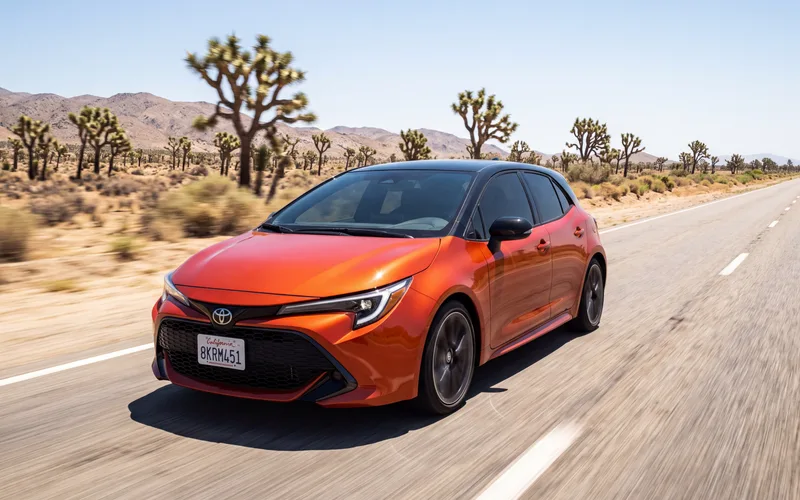 Toyota Corolla HatchbackCompact HatchbackBetter at: All-round quality
For a few thousand more it fixes nearly every Mirage complaint — power, noise, safety content and highway range — while still returning strong MPG and carrying Toyota resale value.
Compare 1.80C-
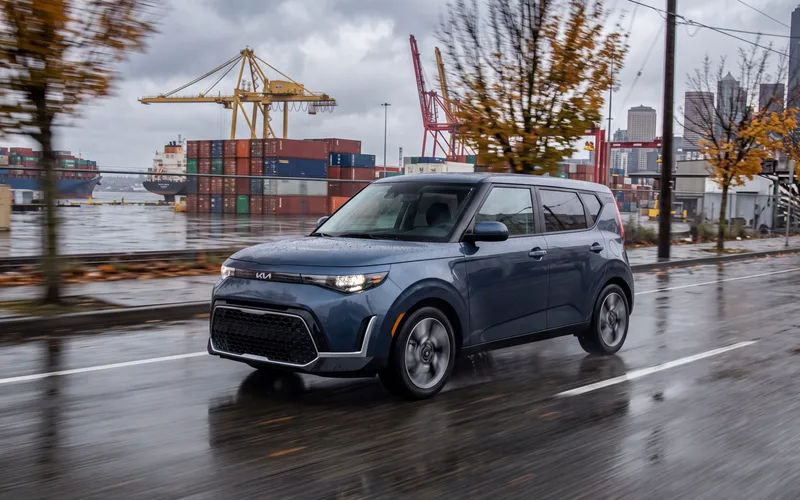 Kia SoulSubcompact HatchbackBetter at: Space and value
The most direct budget alternative: similar money, a matching 10-year/100,000-mile powertrain warranty, and far more usable space and power without moving upmarket.
Compare 2.46C+
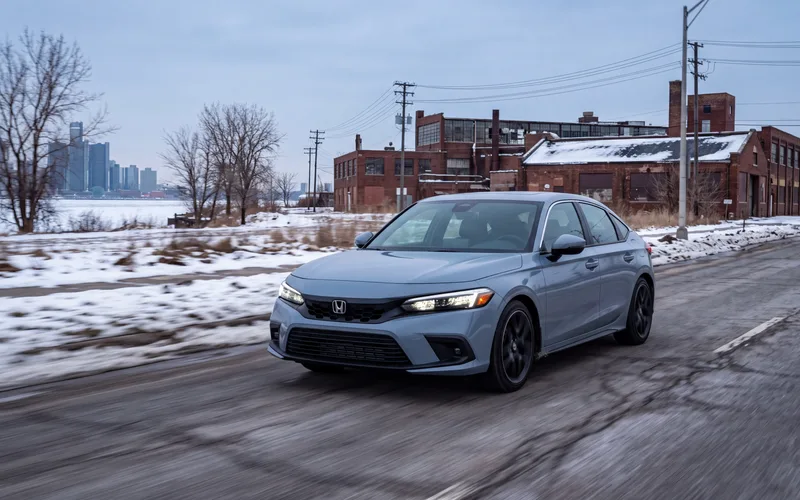 Honda Civic HatchbackCompact HatchbackBetter at: Refinement
Worth stretching for if the Mirage's refinement and safety gaps bother you, with standard adaptive cruise and a cabin that holds up over years rather than months.
CompareProduction history
Best fit & conditions
Higher scores mean a better fit for that use case. Learn more about use-case fit →
Subject profile
Academic Probation · NHTSA safety recalls
No NHTSA safety recall is on record for the 2024 Mitsubishi Mirage. Other model years of the Mirage have 3 — listed below.
3 recalls on other model years of the Mirage (2017–2018)
Apr 26, 2019Air bags · Air bags: air bag/restraint control moduleThe internal acceleration sensor in the Supplemental Restraint System (SRS) Electronic Control Unit (ECU) can misinterpret vibrations, such as from poor road conditions or a flat tire, as a malfunction and disable all the vehicle's air bags.
Defect
Mitsubishi Motors North America, Inc. (MMNA) is recalling certain 2017-2018 Mirage G4 vehicles. The internal acceleration sensor in the Supplemental Restraint System (SRS) Electronic Control Unit (ECU) can misinterpret vibrations, such as from poor road conditions or a flat tire, as a malfunction and disable all the vehicle's air bags.
Risk
Air bags that do not deploy increase the risk of injury in a crash.
Remedy
MMNA notified owners, and dealers will reprogram the SRS-ECU software, free of charge. The recall began May 24, 2019. Owners may contact MMNA customer service at 1-888-648-7820. MMNA's number for this recall is SR-19-001.
NHTSA campaign 19V330000 ↗Manufacturer no. SR-19-00126,016 vehicles potentially affected (all models in the campaign)Owners notified May 24, 2019Filed by Mitsubishi Motors North America, Inc.Filed as MIRAGE G4Oct 30, 2017Air bagsThe internal acceleration sensor in the Supplemental Restraint System (SRS) Electronic Control Unit (ECU) can misinterpret vibrations such as those from poor road conditions or a flat tire to be a sensor error thereby disabling the air bags from deploying in a crash.
Defect
Mitsubishi Motors North America, Inc. (MMNA) is recalling certain 2014-2018 Mirage vehicles. The internal acceleration sensor in the Supplemental Restraint System (SRS) Electronic Control Unit (ECU) can misinterpret vibrations such as those from poor road conditions or a flat tire to be a sensor error thereby disabling the air bags from deploying in a crash.
Risk
Air bags that do not deploy as designed in a crash increase the risk of injury.
Remedy
MMNA will notify owners, and dealers will reprogram the SRS-ECU software, free of charge. The recall began on November 10, 2017. Owners may contact MMNA customer service at 1-888-648-7820. MMNA's number for this recall is SR-17-006.
NHTSA campaign 17V686000 ↗Manufacturer no. SR-17-00683,555 vehicles potentially affected (all models in the campaign)Owners notified Nov 10, 2017Filed by Mitsubishi Motors North America, Inc.Filed as MIRAGESep 19, 2016Exterior lighting: headlightsThe affected vehicles may have been assembled without the headlight horizontal adjustment lockout clips properly secured. As such, these vehicles fail to comply with the requirement of Federal Motor Vehicle Safety Standard (FMVSS) number 108, "Lamps, Reflective Devices, and Associated Equipment."
Defect
Mitsubishi Motors North America, Inc. (MMNA) is recalling certain model year 2017 Mirage vehicles manufactured October 28, 2015, to August 4, 2016 and equipped with High Intensity Discharge (HID) headlamps. The affected vehicles may have been assembled without the headlight horizontal adjustment lockout clips properly secured. As such, these vehicles fail to comply with the requirement of Federal Motor Vehicle Safety Standard (FMVSS) number 108, "Lamps, Reflective Devices, and Associated Equipment."
Risk
Without the horizontal adjustment locking clip being secured, the headlight can be adjusted to either reduce the driver's visibility or blind oncoming vehicles. Both conditions can increase the risk of a crash.
Remedy
MMNA will notify owners, and dealers will secure the horizontal locking clips as necessary, free of charge. The recall began on September 3, 2016. Owners may contact MMNA customer service at 1-888-648-7820. MMNA's number for this recall is SR-16-008.
NHTSA campaign 16V675000 ↗Manufacturer no. SR-16-008587 vehicles potentially affected (all models in the campaign)Owners notified Oct 3, 2016Filed by Mitsubishi Motors North America, Inc.Filed as MIRAGE
Source: NHTSA Office of Defects Investigation recall database, model years 2017–2024. Recalls are listed by model year as the manufacturer filed them; whether a specific car is affected depends on its VIN — check a VIN at nhtsa.gov ↗. NHTSA model names matched to this page: MIRAGE, MIRAGE G4.
Detailed scoring by subject
1Performance & PowertrainThe Mirage's lowest-graded category.0.00F
The 1.2-liter three-cylinder is the only engine in the 2024 Mirage, identical across ES, LE, SE and Black Edition; at 78 hp it was the least powerful new car sold in the US and the only one left with a two-digit horsepower rating.
Peak torque of 100 N·m (74 lb-ft) arrives at a high 4,000 rpm, so there is essentially no low-end pull; unchanged for the entire 2014–2024 US run of this generation.
No 2024-specific instrumented test exists, but the powertrain is mechanically unchanged from the tested 2021–2023 CVT cars, which land in the 12.1–12.8 s range — among the slowest times recorded for any new vehicle sold in the US.
The three-cylinder is coarse and audibly strained under any real load — reviewers consistently describe droning, buzzing and thrash whenever the throttle is opened, and the car struggles on grades and highway merges. Delivery is not laggy so much as simply overwhelmed, which still sits squarely in the 'rough and unrefined' band.
The CVT — the only transmission for 2024 after the 5-speed manual was dropped following 2022 — does not hunt or shift harshly, but it holds the engine at high revs to extract the limited power, producing constant drone that defines the driving experience. No manual mode, paddles or simulated ratios to escape it.
Front-wheel drive only on every 2024 trim; Mitsubishi never offered AWD on this generation of Mirage in the US, despite marketing S-AWC on the Outlander and Eclipse Cross. Bottom of the 0–49 FWD-only band.
One engine, one transmission, one driven axle — no turbo, hybrid, PHEV or EV variant anywhere in the range, and for 2024 even the manual-transmission choice was gone. The narrowest possible lineup, sitting just below the Fiat 500e, which at least offers a distinct electrified powertrain.
2Efficiency & RangeOne of the Mirage's strongest categories.2.51C+
The 1.2L three-cylinder with CVT returns 39 MPG combined on regular gas, identical across every 2024 trim since there is only one powertrain. That made the Mirage the most efficient non-hybrid, non-electrified car sold in the US in 2024 — but it still sits well behind the hybrid and EV hatchbacks that define the top of this segment.
36 MPG city is strong for a conventional gas car and reflects the Mirage's ~2,100 lb curb weight and tiny displacement, but with no hybrid assist there is no regenerative recovery in stop-and-go, so it trails hybrid rivals like the Prius by a wide margin in exactly the driving where they gain the most.
43 MPG highway is the Mirage's best number and the closest it gets to hybrid territory, helped by low mass and a small frontal area. Real-world highway returns depend heavily on terrain, since the 78-hp engine works hard on grades and at higher cruising speeds.
Class-leading efficiency is undone by a 9.2-gallon fuel tank — one of the smallest in any US-market car — so total range lands at only 359 miles despite 39 MPG combined. That is shorter than a Corolla Hatchback (~462 mi) or Civic Hatchback (~421 mi) that both drink more fuel per mile, and it puts the Mirage near the bottom of the segment band for range.
At $1,600/yr the Mirage is among the cheapest non-electrified cars in the US to fuel, undercutting the Corolla Hatchback (~$1,750) and Civic Hatchback (~$1,950) by a meaningful margin. Hybrids still beat it — the Prius runs ~$1,200/yr — so it scores solidly rather than exceptionally.
Regular 87-octane unleaded is all the 1.2L asks for, with no premium recommendation and no special fluids or DEF. The 9.2-gallon tank that hurts range helps here — a fill-up costs about $38, the lowest of any new car in the segment, which matters for the budget buyer this car targets.
3SafetyOne of the Mirage's weakest categories.0.34F
NHTSA rated the 2024 Mirage 5-door hatchback 4 out of 5 stars overall, with 4 stars in each of the frontal, side and rollover assessments — no individual test earned 5 stars.
The Mirage is not a Top Safety Pick in any year and earns Marginal — the second-lowest rating — in the driver-side small overlap front test. Its only Good results are in the retired original moderate overlap front and original side tests, and IIHS notes most of the vehicle's assessment still rests on a 2014-model test; it was never subjected to the tougher updated moderate-overlap or updated side protocols before being discontinued after 2024.
Forward Collision Mitigation with pedestrian detection is standard on every 2024 trim (ES, LE, Black Edition, SE), which is the one genuine strength here. But of the five suite features this item measures, three are simply unavailable at any price: blind-spot monitoring, rear cross-traffic alert and adaptive cruise control are not offered on any 2024 Mirage trim, and lane departure warning is a warning-only system reserved for the upper trims rather than standard.
Standard AEB with pedestrian detection on every trim is meaningful, but IIHS never published a front crash prevention rating for the Mirage — no Superior/Advanced recognition, and no vehicle-to-vehicle or day/night pedestrian test scores exist. The system is a modest-speed-range camera/radar setup on an ageing platform rather than a modern wide-envelope one, so it scores as basic-but-present.
The 2024 Mirage offers no blind-spot warning, no rear cross-traffic alert and no safe-exit assist on any trim — not standard, not optional, not even on the top SE. This is an outright absence rather than a trim-locked feature, the worst case this item measures.
Lane departure warning is the extent of it, and it is an upper-trim item rather than standard equipment. There is no lane keep assist and no lane centering — the car will beep at you but never steer, so there is nothing to judge for smoothness or ping-ponging.
Basic fixed-speed cruise control only. Adaptive cruise control was never offered on the US-market Mirage in 2024 — Mitsubishi's MI-PILOT/ACC hardware went to the Outlander and Eclipse Cross but not the Mirage — so there is no stop-and-go capability and no highway assist of any kind.
No hands-free highway driving system is offered or planned. With no adaptive cruise and no lane centering, the Mirage lacks even the prerequisite building blocks for a hands-free mode.
LED headlights are standard across all four 2024 trims, which is better than the halogen base units common at this price. Offsetting that, IIHS has no published Good headlight rating for the current-generation Mirage, and there is no adaptive or automatic high-beam function — automatic on/off headlights only, and only from LE up.
This is the Mirage's clearest safety strength. It is a tiny, upright subcompact hatchback with a low beltline, tall glass, slim pillars and a short hood, so sightlines in every direction are genuinely good and the car is trivially easy to place and park. Camera compensation is minimal — the federally-mandated backup camera and nothing else, no 360-degree view or rear parking sensors — but the natural sightlines barely need it.
IIHS rates the Mirage's LATCH hardware Good for ease of use — the anchors themselves are easy to find and reach, which is the part of this item the Mirage does well. The limitation is space, not hardware: with a 96.5-inch wheelbase and a narrow body, a rear-facing seat forces the front passenger seat well forward, three-across is not realistic, and rear door openings are small for maneuvering a bulky seat in.
4Space & ComfortGrades below the middle of the scale.1.20D
Every 2024 Mirage hatchback trim — ES, LE, Black Edition and SE — is a five-passenger car with a two-place front row and a three-place 60/40-split rear bench; there is no four-seat configuration in the US lineup.
The Mirage's tall, boxy 59.4-inch roofline buys 39.0 inches of front headroom — genuinely good for a subcompact hatchback, and unaffected by trim since no 2024 Mirage offers a sunroof to eat into it.
41.7 inches of front legroom is mid-pack for the class in raw numbers, but the usable range is narrower than the figure suggests: the driver gets a 6-way manual seat and a tilt-only steering column with no telescope, so taller drivers struggle to set a good position.
37.2 inches of second-row headroom is a mid-band result and the rear cabin's strongest dimension — the upright greenhouse keeps head space respectable even though knee space does not follow.
At 34.2 inches the Mirage sits near the bottom of the hatchback band — this is a short-hop back seat, and reviewers flag it as cramped for two adults on anything but brief trips.
Cargo is the Mirage's outright best space attribute: 17.1 cubic feet behind the rear seats is near the top of the hatchback band and roughly double what subcompact rivals like the Mini Cooper Hardtop and Fiat 500e manage, expanding to 47.0 cu ft with the standard 60/40 bench folded.
Storage is functional but bare: front door pockets, a glovebox, a small open console cubby and front cupholders, with no covered center console bin, no underfloor cargo well, no rear climate or 12V amenities beyond the basics, and no rear center armrest. The 2024 additions help at the margins — a standard tonneau cover across the hatchback line and a driver's seat armrest newly standard on LE and above — but the base ES still goes without even that armrest.
Front seats are tolerable for short commutes but thinly padded and short on adjustment — 6-way manual driver, 4-way passenger, tilt-only column — so the driving position is a common complaint rather than an occasional one. The rear bench is worse: minimal padding on top of the segment-low 34.2 inches of legroom.
A sub-2,100-lb curb weight on a short wheelbase with narrow, economy-biased tires gives the Mirage a light, busy, easily unsettled ride — it skips over broken pavement rather than absorbing it and is noticeably disturbed by crosswinds and expansion joints at highway speed. Reviewers consistently file the ride under 'unrefined' alongside the engine and noise complaints.
This is the Mirage's weakest comfort attribute by some distance. The 1.2-liter three-cylinder thrashes and vibrates under any real throttle, the CVT holds it at high revs on grades, and there is little sound deadening to hold back wind and road noise — reviewers describe engine and wind noise as omnipresent, not merely present at speed.
Better than the price implies at the bottom of the range and thin at the top. Automatic climate control is standard on every trim including the $16,695 ES — unusual at this price — but heated front seats arrive only on the $18,595 SE, and ventilated seats, a heated steering wheel, rear vents and remote pre-conditioning are unavailable at any price. The result is a solid baseline with no upper-trim payoff.
5Cost of OwnershipThe Mirage's best-graded category.4.00A+
For 2024 the Mirage ES was the cheapest new car sold in the United States, opening below $18,000 with destination — thousands under the next-cheapest hatchback and far beneath the bottom of the segment normalization band, so it scores out at the ceiling. Being cheap is the entire product thesis.
The LE is the practical volume pick — it adds keyless entry/push-button start, alloy wheels and cruise control over the ES for a few hundred dollars, and lands around $18,500 with destination and typical dealer-added accessories. Even the top SE stays under $20,000, so the whole lineup clears the band floor.
About as cheap as a car gets to keep running: a 1.2-liter three-cylinder with three spark plugs, 14- and 15-inch tires that cost well under $100 apiece, unusually low repair frequency, and a 5-year/60,000-mile bumper-to-bumper warranty that covers nearly the whole window. Two years of complimentary oil changes and rotations take care of most of the early scheduled service outright.
Percentage retention is genuinely good — better than the subcompact average — because a low starting price compresses the depreciation curve and because the sub-$20,000 new-car market has disappeared, leaving strong used demand for anything this cheap to buy and run. Worth reading with the caveat that the dollars involved are small: retaining 58% of $17,790 is roughly $10,000, so a strong percentage still means a modest asset.
Mitsubishi's 5-year/60,000-mile New Vehicle Limited Warranty is the longest bumper-to-bumper term offered by any mainstream brand, matching Hyundai/Kia and beating the 3-year/36,000-mile industry norm by two full years — a meaningful reassurance on a car this inexpensive. Tops out the normalization band.
The 10-year/100,000-mile powertrain limited warranty is the joint-best in the industry and covers the engine and CVT — the two components a value shopper most fears on an economy car — for a decade. The catch is that it is not transferable: a second owner drops to 5 years/60,000 miles, which blunts some of the resale benefit but not the original-owner value.
New for the 2024 model year, every Mitsubishi came with a 2-year/30,000-mile complimentary maintenance package — three oil-and-filter changes, three tire rotations, three multi-point inspections and one cabin air filter — alongside 5 years of unlimited-mileage roadside assistance. Real money on a car with $332/yr running costs, and the longest roadside term in the peer group. Held out of the top band because the maintenance covers only two years and only oil, rotations and a filter, it is original-owner-only and non-transferable, and there are no connected-service or charging perks to speak of.
$18,500 volume-trim price minus its estimated resale value after 5 years (58% retained, or about $10,730) leaves about $7,770 in depreciation. Add the projected $3,000 in 5-year maintenance and repairs, and owning this vehicle for 5 years costs about $10,770 in total.
6Reliability & QualityOne of the Mirage's strongest categories.2.21C
The Mirage's reliability case rests on mechanical simplicity rather than engineering excellence: a 78-hp naturally aspirated three-cylinder, no turbo, no hybrid system, no air suspension and barely any electronics means there is very little to break, and the ownership data reflects that. J.D. Power's 79/100 sits at the very top of its 'Average' band and RepairPal ranks it well above the subcompact norm on repair frequency. Held out of the 80s because Consumer Reports rates predicted reliability only average (3/5) and the powertrain family has documented failure modes on earlier years of this same generation.
Mitsubishi's dependability signal is unusually noisy — it swung from a genuine top-five mass-market finish in the 2023 J.D. Power VDS to near the bottom of the industry two studies later, which is a bigger year-to-year move than a stable brand should produce and points to a small, model-mix-sensitive sample rather than a durable trend. Consumer Reports does not rank the brand at all for lack of survey data, so a buyer has one volatile source and no second opinion. Mid-pack, with the caveat that the confidence interval around 'mid-pack' is wide.
The 2024 Mirage carries zero NHTSA recalls as of August 2026 — an unusually clean sheet, helped by the fact that this is the eleventh year of a frozen design with essentially nothing new to go wrong, and reinforced by a very low complaint count. The 2025 Mitsubishi backup-camera and fuel-pump recall waves that hit the brand were Outlander campaigns and did not touch the Mirage. Not a perfect 100 because the generation is not spotless in the round: the 2014-2018 cars took an airbag-sensor recall covering 83,500 vehicles.
The 1.2-liter 3A92 three-cylinder and Jatco CVT have been in the US Mirage since 2014, so this is a well-understood combination rather than an unproven one — but the long run has surfaced a consistent list of failure modes rather than retiring them. Oil consumption, timing chain and cam phaser wear, electronic throttle faults and ignition coils recur across the generation, and the CVT draws reports of shudder and premature wear on higher-mileage cars. It rewards maintenance and punishes neglect, which is a poor fit for a car bought largely by price-first owners. Mixed history, squarely mid-band.
The cheapest new car in America has the cabin to match, and the shortfall is real even after grading on the price curve — Consumer Reports scored interior finish a 1 out of 5, its lowest mark, and reviewers reach for words like 'depressingly low-rent' and 'spartan'. Hard plastic covers essentially every surface, the switchgear and 7-inch screen are a decade old in feel, and there is no soft-touch material anywhere a hand naturally falls. A Nissan Versa costs little more and is meaningfully nicer inside, so this is not simply the price talking.
Scored above the materials item on purpose: the Mirage is cheap rather than defective. Reviewers do call out panels that 'don't quite fit together' and the car is conspicuously noisy, but the assembly itself does not generate the rattle-and-misalignment complaint volume that would put it in the bottom band — the NHTSA complaint file is thin and RepairPal records the lowest unscheduled-repair frequency in its class. Low 40s reflects visible cost-cutting in trim alignment and NVH sealing on a design that stopped being updated years ago, not a car falling apart.
Two facts pulling hard in opposite directions. Coverage is thin and getting thinner — roughly 330 US stores during the 2024 model year against 1,000-plus for a mainstream rival, with one of the largest net dealer losses of any mainstream brand this decade, so rural and small-market buyers can be an hour or more from a franchised service bay. But the dealers that remain are genuinely good at service: Mitsubishi ranked first in the mass-market Customer Service Index in 2023, the first time in the study's 43-year history, and stayed near the top in 2024. Mid-band is the honest average of a sparse network staffed by satisfied customers.
Repairs are cheap and rare, which is the combination that actually matters to a buyer at this price. A 1.2-liter three-cylinder with three plugs, 14- and 15-inch tires and no turbo or hybrid hardware keeps parts prices low, and after a decade in production the Mirage is fully covered by the mass retail parts channels rather than being dealer-only. Kept just below the top band because Mitsubishi-specific components still route through a shrinking dealer network, the performance aftermarket is negligible, and 2024 being the nameplate's final US model year adds a modest long-horizon question about slow-moving parts.
7Technology & InfotainmentOne of the Mirage's weakest categories.0.00F
The 7-inch Smartphone-Link Display Audio head unit is standard on every 2024 Mirage trim and is the only screen offered — there is no larger display anywhere in the lineup.
The SDA unit is a carryover design from the mid-2010s with low-resolution graphics and sluggish response, though it keeps physical volume/tune knobs and separate climate dials so basic tasks stay easy.
Apple CarPlay and Android Auto are standard on all four trims, which is the Mirage's strongest tech feature, but both are wired-only through the single USB port — Mitsubishi never brought wireless projection to the Mirage before it was discontinued.
No factory navigation is offered on any 2024 Mirage trim, and onboard voice control is limited to basic Bluetooth phone/audio commands — anything map-related requires a plugged-in phone running CarPlay or Android Auto.
Every trim ships with the same four-speaker system, thin-sounding and unaided by any factory upgrade; the Rockford Fosgate 300-watt system exists only as a dealer-installed port accessory, not a factory trim option.
The Mirage uses conventional analog dials with a small monochrome multi-information display between them; no configurable or full-digital cluster is available on any trim.
The Mirage has no embedded telematics modem, so there is no over-the-air update path of any kind — infotainment or map updates require a dealer visit or USB media.
There is no companion app for the Mirage at all — no remote lock/unlock, no remote start, no vehicle locator, no digital key. The car was never wired for Mitsubishi's connected services and was discontinued after 2024 without ever gaining them.
Device power amounts to a single front USB-A port plus one 12-volt outlet — no USB-C anywhere, no rear-seat ports, no wireless charging pad on any trim.
Volume ES and LE trims get only remote keyless entry with a conventional twist-key ignition; FAST-Key proximity entry with push-button start is reserved for the top SE trim, and no remote start or phone-as-key is offered anywhere in the lineup.
A rearview camera is standard (federally mandated) and its image was widened for the 2021 facelift, but resolution is low by 2024 standards and there are no front or rear parking sensors, no surround-view camera and no parking automation on any trim.
No head-up display is offered on any 2024 Mirage trim or as a factory option — driver information comes solely from the analog cluster's small multi-information display.
8Use-Case FitGrades near the bottom of the scale.0.58F
The hardware and the cargo hold are better than the price suggests — four real doors, a five-seat cabin, IIHS-rated Good LATCH ease of use, and 17.1 cu ft behind the rear seats that swallows a full-size stroller with room left over, roughly double what two-door subcompacts like the Mini Hardtop or Fiat 500e manage. What defeats it is space: at 34.2 inches of rear legroom on a 96.5-inch wheelbase, a rear-facing seat pushes the front passenger seat uncomfortably far forward, three-across is not realistic, and the small rear door apertures make wrestling a bulky convertible seat in a daily annoyance rather than a one-time chore.
Standard Forward Collision Mitigation with pedestrian detection on every trim including the $16,695 ES is a genuine credit at this price, but almost everything else a family shops for is missing outright rather than trim-locked: no blind-spot monitoring, no rear cross-traffic alert, no rear-occupant alert, no lane keep assist and no adaptive cruise at any price on any 2024 trim. Crash credentials are mid-tier at best — 4 stars overall from NHTSA with no 5-star sub-score, a Marginal driver-side small overlap result from IIHS, no Top Safety Pick in any year, and an assessment still resting largely on a 2014-model test the car was never re-run through under the updated protocols.
Luggage space with four aboard is the one thing that works — 17.1 cu ft under a standard tonneau cover is real trunk capacity for a subcompact. Everything else about a multi-hour trip with a full car goes against it: a thinly padded rear bench with 34.2 inches of legroom, no rear climate vents, no rear USB or 12V outlets, no rear center armrest, and a cabin that Consumer Reports scored 1 out of 5 for noise, so conversation between rows is a fight against engine thrash and wind roar. A 359-mile total range on a 9.2-gallon tank also forces more stops than the class norm.
In the specific job of crawling through city traffic the Mirage is easy — light steering, a sub-2,110-lb curb weight, excellent sightlines, a CVT with no shift shock, and automatic climate control standard even on the base ES. The fatigue arrives everywhere else. Driver accommodation is poor for a car you sit in daily: a 6-way manual seat, a tilt-only column with no telescope, and thin padding make a good position hard to find. There is no adaptive cruise or stop-and-go assist of any kind, and 78 hp means every highway merge or on-ramp is a planned event conducted at full throttle with the CVT holding the engine at a drone.
This is the Mirage's reason to exist and it delivers: 39 MPG combined on 87-octane regular made it the most efficient non-electrified car sold in the US in 2024, at about $1,600 a year in fuel, and the consumables are as cheap as they come — three spark plugs, no turbo, and 14- and 15-inch tires that cost well under $100 each. RepairPal records $457/yr in repairs against 0.1 unscheduled shop visits per year, and 2024 added a 2-year/30,000-mile complimentary maintenance package on top of the 5-year/60,000-mile warranty. Only hybrids and EVs beat it per mile, which is what keeps it out of the very top of the band.
Best-in-class and effectively the Mirage's other core competence. It is 151.4 inches long and 65.6 inches wide with a 30.2-foot curb-to-curb turning circle, so it slots into gaps and executes U-turns that make larger hatchbacks take a second bite. The upright greenhouse, low beltline, slim pillars and short hood give genuinely good natural sightlines, which matters because camera assistance stops at the federally mandated backup camera — no parking sensors and no surround view on any trim. It barely needs them.
The 2024 Mirage carries no US tow rating at all — Mitsubishi does not publish a towing capacity for the North American car and no factory hitch is offered, so the answer is zero rather than low. Payload on a 2,106-lb subcompact is nominal, and 78 hp with 74 lb-ft arriving at 4,000 rpm is already overwhelmed by four passengers, let alone a load. The 17.1 cu ft hatch is useful for parcels and light delivery errands, which is the only work case this car can honestly serve, and it is the sole reason this is not scored lower.
There is a real argument on the simplicity side — a naturally aspirated three-cylinder with no turbo or hybrid hardware, RepairPal's 4.5/5.0 reliability and 0.1 unscheduled visits per year, and a 10-year/100,000-mile powertrain warranty. But 'work duty' means abuse, and this is a car that rewards careful maintenance and punishes neglect: the 3A92 engine has a documented history of oil consumption, timing chain and cam phaser wear across the generation, and the Jatco CVT draws shudder and premature-wear reports on higher-mileage cars with a 25,000–30,000-mile fluid interval. No fleet track record, no heavy-duty or wear-friendly interior options, and a light structure with cloth seats throughout.
Onboard power is a single front USB-A port and one 12-volt outlet — no inverter, no 110V household outlet, no rear power of any kind. There is no factory roof rail, crossbar, hitch or tie-down system, no washable flooring or vinyl seat option, and no upfitter ecosystem to speak of; anything rack-related comes from Thule, Yakima or SportRack aftermarket fit kits rather than Mitsubishi. The standard tonneau cover and cargo hooks in the hatch are the extent of the work-oriented provisions.
A poor mile-eater on nearly every axis this item measures. Class-leading efficiency is cancelled by a 9.2-gallon tank for a 359-mile total range — shorter than a Corolla Hatchback or Civic Hatchback that both drink more fuel. Seat endurance is limited by thin padding and a tilt-only steering column, the cabin has essentially no sound deadening against constant engine and wind noise, and a 2,106-lb car on a short wheelbase with narrow economy tires gets shoved around by crosswinds and expansion joints at highway speed. There is no adaptive cruise or lane centering to take any load off the driver, and sustained grades demand full throttle and the CVT drone that comes with it.
Pavement-bound by design. Front-wheel drive only — AWD was never offered on this generation in the US — with 6.3 inches of ground clearance, 78 hp, narrow low-rolling-resistance tires and no drive modes, hill-descent or skid protection. No tow rating means no small utility trailer, teardrop or boat, and no factory roof rails means bikes, boxes and boards need an aftermarket clamp-on fit kit. Camping provisions amount to a 12-volt socket and a 60/40 bench that folds to a stepped rather than flat floor. Well-maintained gravel and a forest-service road are its outer limit.
The clear bright spot in the adventure group and the Mirage's best practical attribute overall. 17.1 cu ft behind the rear seats expanding to 47.0 cu ft with the 60/40 bench folded is near the top of the hatchback band and roughly double what the Mini Hardtop or Fiat 500e offer, accessed through a wide, low, square hatch opening with a standard tonneau cover to hide the load. It stops short of the upper band because the flexibility is basic: the folded floor is stepped rather than flat, there is no underfloor storage well, no adjustable load floor, no fold-flat front passenger seat for long items, and neither roof rails nor a hitch is available from the factory.
9Driving ExperienceGrades near the bottom of the scale.0.62F
The Mirage's soft, economy-tuned suspension, ~2,100 lb curb weight and narrow low-rolling-resistance tires produce pronounced body roll and a nervous, wander-prone feel at highway speeds. Its city agility is real, but that comes from its tiny footprint rather than any chassis composure, placing it well below every other hatchback in the calibration set (Impreza 65, Corolla Hatchback 65.5).
The electric rack is very light and short on feedback, with poor on-center response and little build-up of weight as cornering load rises — tuned for parking-lot effort rather than road feel. A minority of owners find it acceptable, but professional reviews are consistent that it is numb.
Front discs with rear drums stop a very light car adequately but not impressively — instrumented stops of this generation are longer than they should be for the mass, and the pedal is soft and short on feedback. This is the least-bad of the Mirage's dynamic attributes: unremarkable rather than dangerous.
The 78-hp 1.2-liter three-cylinder is the least powerful engine sold in the US and needs roughly 11–12 seconds to reach 60 mph; the CVT pins it near redline under any real throttle, so tip-in, merging and passing all require planning. Inherent three-cylinder imbalance also transmits vibration through the controls at idle and under load.
Minimal sound deadening plus a CVT that holds high revs makes engine noise the defining characteristic of the cabin — a constant coarse drone during acceleration, joined by significant wind and road noise at highway speed. This is the single worst NVH result in the hatchback set.
A 30.2-ft curb-to-curb circle is best-in-class by a wide margin and sits below the bottom of the hatchback normalization band — the Mirage's standout dynamic trait and genuinely useful in tight urban parking and U-turns.
Simplicity works in its favor: a tall greenhouse, low beltline and short overhangs give excellent outward visibility and easy ingress/egress, and the handful of physical controls are logically placed and within reach. It loses ground on adjustment range and support — thin, flat seat cushions and a limited-adjustment column mean taller drivers struggle to find a good position.
The Mirage is routinely named among the least enjoyable new cars sold in the US — no power, no grip, no steering feel and an unpleasant soundtrack. The RALLIART trim is an appearance package only, with no powertrain or chassis changes, so it adds nothing here. Nobody recommends this car for how it drives; it is bought on price and fuel economy.
10Value & Market PositionGrades below the middle of the scale.1.12D
The $16,695 ES covers the basics well for the price — CVT, 7-inch touchscreen with Apple CarPlay/Android Auto, automatic climate control, forward collision mitigation, power windows/locks, keyless entry — but the driver-assist sheet is thin next to rivals, with no blind-spot monitoring or adaptive cruise at any trim and lane-departure warning reserved for the $19,690 SE. Fourteen-inch steel wheels and a four-speaker stereo mark it as base-spec in a way a Versa or Kicks does not.
As the cheapest new car in America the Mirage delivers real value on the metrics that matter to its buyer — entry price, 36/43 MPG, a 10-year/100,000-mile powertrain warranty and 2-year/30,000-mile free maintenance. Per dollar of content and capability it is far weaker: 78 hp, coarse refinement and a decade-old platform mean reviewers near-universally point budget buyers at the Nissan Versa instead.
Four trims (ES, LE, Black Edition, SE) spanning $16,695–$19,690 give a tightly spaced ladder plus a sedan body style in the G4, but there is exactly one powertrain — 1.2L three-cylinder, CVT, front-wheel drive — and no meaningful option packages. Configuration choice is essentially color and trim badge.
2024 was by far the Mirage's best US year — 29,766 units, up 125% over 2023's 13,219 — genuinely strong volume for Mitsubishi and a steep upward trajectory. The caveat is that the surge followed the August 2024 discontinuation announcement and was driven by clearance pricing into a market starved of cheap cars, not by underlying demand for the product.
Mitsubishi is a marginal US brand with a thin dealer network, a shrinking lineup and little image halo; the Mirage in particular has become shorthand for cheapest-possible transportation rather than an aspirational badge. The industry-leading 10-year/100,000-mile powertrain warranty is the one genuine brand asset, and it partly offsets the resale and perception drag.
Scored on buyer benefit, this is the Mirage's strongest card: end-of-production clearance pushed leftover 2024s well below invoice, with documented street prices in the $12,500–$14,000 range against a $16,695 MSRP, on top of standing rebates and subsidized financing. Almost nothing else on the new-car market discounts that hard in percentage terms.
This is the oldest design in the class by a wide margin — the sixth-generation A05 Mirage launched in the US for 2014 on a platform introduced in Japan in 2012, and its last refresh was the 2021 model year. Worse than aging: Mitsubishi confirmed in August 2024 that 2024 is the final model year, with no replacement, so buyers are purchasing an orphaned nameplate.
The Mirage is a fixture at the bottom of subcompact rankings and comparison tests, with no major awards to its name. Critics consistently grant the price, fuel economy and warranty, then fault the cheap interior, coarse 78-hp three-cylinder, poor dynamics and unreassuring crash results — U.S. News calls the critics' consensus below average for the class.