

The verdict
A struggling subcompact hatchback, strong on ownership and held back by performance.
The 2025 Kia Soul is one of the last genuinely cheap new cars in America — $21,985 out the door for a boxy hatchback with 24.2 cu ft of cargo behind the back seat, 39.5 inches of rear headroom, and Kia's 10-year/100,000-mile powertrain warranty. What you give up is motive power: a single 147-hp 2.0-liter four with a CVT, 8.5 seconds to 60 mph, front-wheel drive only, and no adaptive cruise control on three of the four trims. It is also the nameplate's final year — Kia ended Soul production in October 2025 — which means clearance pricing today and an orphaned badge later. Buy it for the space-per-dollar and the warranty, not for how it drives or how far a gallon takes you.
Jump to scoresStrengths
- Cargo and headroom that embarrass cars costing thousands more
- The cheapest way into a new car with a real warranty
- Cheap to keep, cheap to fix
What holds it back
- One slow engine, no choices, and nothing quick left in the range
- 30 MPG is ordinary money in 2025
- No adaptive cruise on the trims most people buy — and halogen headlights
Top alternatives
Cars shoppers cross-shop with the Kia Soul 2.25C
2.25C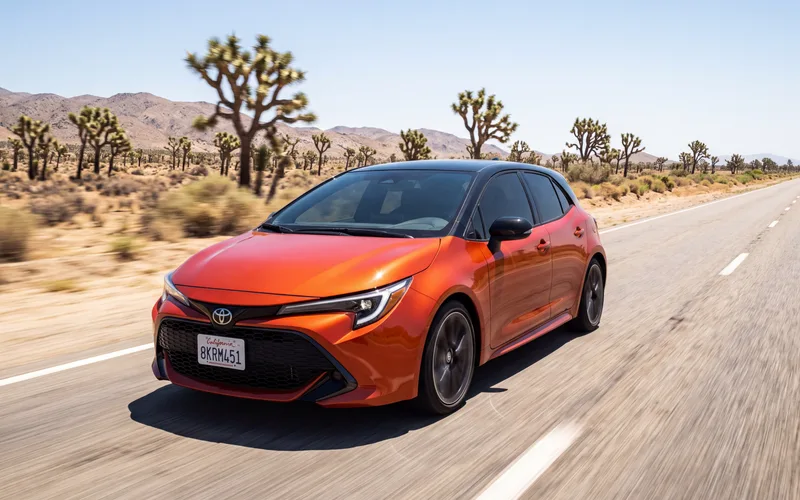 Toyota Corolla HatchbackCompact HatchbackBetter at: Efficiency
The closest like-for-like cross-shop — similar money, but quicker, quieter, more efficient and with Toyota's resale behind it, if you can live with far less cargo room.
Compare 2.46C+
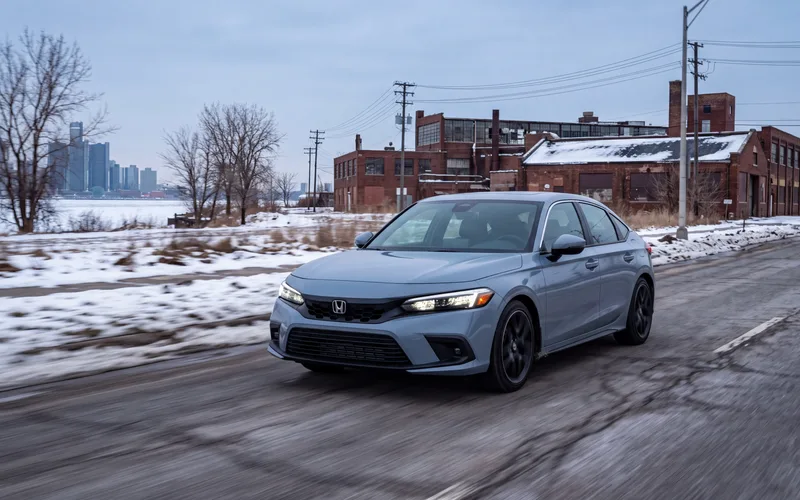 Honda Civic HatchbackCompact HatchbackBetter at: Refinement
Costs more but delivers a genuinely refined, quiet and quick hatchback with stronger safety standing — worth the stretch if the budget allows.
Compare2.56C+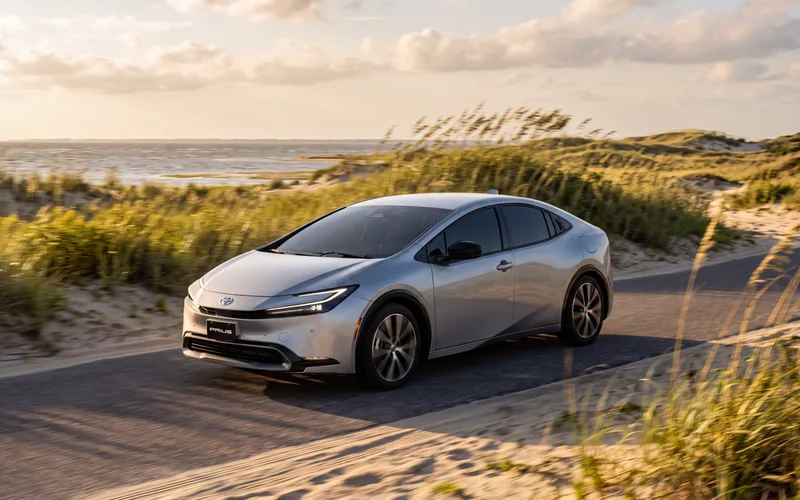 Toyota PriusCompact HatchbackBetter at: Fuel economy
If your mileage is high, the Prius's hybrid economy and available all-wheel drive pay back the price premium the Soul can't answer.
CompareHow it's evolved
9 scored model years · 2017–2025
Subject scores by year
Hover or tap a score to see what moved it versus the year before. A corner mark flags a big swing.
| Year | Performance | Efficiency | Safety | Space | Cost | Reliability | Tech | Use-case | Driving | Value |
|---|---|---|---|---|---|---|---|---|---|---|
| 2025 | 19 | 49 | 54 | 70 | 85 | 71 | 52 | 53 | 61 | 66 |
| 2024 | 19 | 49 | 55 | 70 | 86 | 72 | 54 | 53 | 62 | 67 |
| 2023 | 18 | 50 | 56 | 70 | 86 | 67 | 53 | 54 | 63 | 68 |
| 2022 | 25 | 51 | 57 | 70 | 93 | 70 | 52 | 55 | 68 | 59 |
| 2021 | 25 | 51 | 56 | 70 | 93 | 69 | 45 | 54 | 67 | 63 |
| 2020 | 24 | 50 | 55 | 70 | 92 | 56 | 45 | 52 | 68 | 66 |
| 2019 | 27 | 39 | 51 | 70 | 93 | 58 | 35 | 50 | 64 | 62 |
| 2018 | 27 | 39 | 51 | 70 | 91 | 65 | 30 | 49 | 64 | 65 |
| 2017 | 26 | 39 | 43 | 69 | 90 | 63 | 24 | 47 | 64 | 75 |
Compare two years
Best fit & conditions
Higher scores mean a better fit for that use case. Learn more about use-case fit →
Subject profile
Academic Probation · NHTSA safety recalls
No NHTSA safety recall is on record for the 2025 Kia Soul. Other model years of the Soul have 8 — listed below.
8 recalls on other model years of the Soul (2017–2023)
Feb 17, 2025Engine and engine cooling: engine: hard parts internal/mechanicalThe piston oil rings may have been manufactured incorrectly, which can result in engine damage.
Defect
Kia America, Inc. (Kia) is recalling certain 2021-2023 Seltos and Soul vehicles. The piston oil rings may have been manufactured incorrectly, which can result in engine damage.
Risk
Engine damage can cause a vehicle stall or fire, increasing the risk of a crash or injury.
Remedy
Dealers will inspect and replace the engine as necessary, free of charge. Dealers will also install piston-ring noise sensing system (PNSS) software, free of charge. Owner notification letters were mailed April 4, 2025. Owners may contact Kia customer service at 800-333-4542. Kia's number for this recall is SC336.
NHTSA campaign 25V099000 ↗Manufacturer no. SC336137,256 vehicles potentially affected (all models in the campaign)Owners notified Apr 4, 2025Filed by Kia America, Inc.Filed as SOULDec 22, 2023Air bagsDue to a manufacturing error, the side curtain air bags may deploy unexpectedly.
Defect
Kia America, Inc. (Kia) is recalling certain 2023 Soul and 2024 Seltos vehicles. Due to a manufacturing error, the side curtain air bags may deploy unexpectedly.
Risk
An air bag that deploys unexpectedly can increase the risk of injury or crash.
Remedy
Dealers will inspect and replace both side curtain air bag modules as necessary, free of charge. Owner notification letters were mailed January 31, 2024. Owners may contact Kia customer service at 1-800-333-4542. Kia's number for this recall is SC289.
NHTSA campaign 23V830000 ↗Manufacturer no. SC2892,967 vehicles potentially affected (all models in the campaign)Owners notified Jan 31, 2024Filed by Kia America, Inc.Filed as SOULOct 26, 2023Electrical system: software · Power train: automatic transmission: gear position indication (prndl)The parking mechanism may be damaged, which can result in unintended vehicle movement when the gear shift lever is in the Park 'P' position and the parking brake is not applied while the vehicle is powered on.
Defect
Kia America, Inc. (KIA) is recalling certain 2015-2019 Soul EV vehicles. The parking mechanism may be damaged, which can result in unintended vehicle movement when the gear shift lever is in the Park 'P' position and the parking brake is not applied while the vehicle is powered on.
Risk
Unintended vehicle movement can increase the risk of a crash.
Remedy
Dealers will update the electronic control unit software, free of charge. Owner notification letters were mailed December 21, 2023. Owners may contact Kia customer service at 1-800-333-4542. Kia's number for this recall is SC287. This recall expands and replaces recall number 20V-389. Vehicles previously repaired under 20V-389 will need to have the new remedy completed.
NHTSA campaign 23V724000 ↗Manufacturer no. SC2876,262 vehicles potentially affected (all models in the campaign)Owners notified Dec 21, 2023Filed by Kia America, Inc.Filed as SOUL EVJul 31, 2023Power train: automatic transmission: fluid/lubricant: pumpThe electronic controller for the Idle Stop & Go oil pump assembly may contain damaged electrical components that can cause the pump to overheat.
Defect
Kia America, Inc. (Kia) is recalling certain 2023 Soul, Sportage, and 2023-2024 Seltos vehicles. The electronic controller for the Idle Stop & Go oil pump assembly may contain damaged electrical components that can cause the pump to overheat.
Risk
An electric oil pump assembly that overheats increases the risk of a vehicle fire.
Remedy
Owners are advised to park outside and away from structures until the recall repair is complete. Dealers will inspect and replace the electric oil pump controller, as necessary, free of charge. Owner notification letters are expected to be mailed September 28, 2023. Owners may contact Kia customer service at 1-800-333-4542. Kia's number for this recall is SC275.
NHTSA campaign 23V531000 ↗Manufacturer no. SC27539,765 vehicles potentially affected (all models in the campaign)Owners notified Sep 28, 2023Filed by Kia America, Inc.Filed as SOULApr 26, 2023Electrical system: instrument cluster/panelKia America, Inc. (Kia) is recalling certain 2023 Sportage, Sportage Hybrid, Sportage Plug-in Hybrid, Niro Hybrid, Niro Plug-in Hybrid, Soul, and Telluride vehicles equipped with a digital instrument cluster containing a 4.2" LCD screen.  The instrument cluster may fail to display any information when the vehicle is started.  As such, these vehicles fail to comply with the requirements of Federal Motor Vehicle Safety Standard numbers 101, "Control and Displays," and 138, "Tire Pressure Monitoring Systems."
Defect
Kia America, Inc. (Kia) is recalling certain 2023 Sportage, Sportage Hybrid, Sportage Plug-in Hybrid, Niro Hybrid, Niro Plug-in Hybrid, Soul, and Telluride vehicles equipped with a digital instrument cluster containing a 4.2" LCD screen.  The instrument cluster may fail to display any information when the vehicle is started.  As such, these vehicles fail to comply with the requirements of Federal Motor Vehicle Safety Standard numbers 101, "Control and Displays," and 138, "Tire Pressure Monitoring Systems."
Risk
A blank instrument cluster display will not show critical information, such as tire pressure, warning messages, and warning lights, increasing the risk of a crash.
Remedy
Dealers will update the instrument cluster software, free of charge. Owner notification letters were mailed May 26, 2023. Owners may contact Kia customer service at 1-800-333-4542. Kia's number for this recall is SC270.
NHTSA campaign 23V298000 ↗Manufacturer no. SC270108,936 vehicles potentially affected (all models in the campaign)Owners notified May 26, 2023Filed by Kia America, Inc.Filed as SOULMar 29, 2023Electrical system: propulsion system: traction batteryThe high-voltage battery pack may experience an electrical short-circuit while driving.
Defect
Kia America, Inc. (Kia) is recalling certain 2015-2019 Soul EV vehicles equipped with an E400 battery. The high-voltage battery pack may experience an electrical short-circuit while driving.
Risk
A battery electrical short-circuit increases the risk of a fire.
Remedy
Dealers will update and/or replace the battery management system and software, as necessary, free of charge. The new software will illuminate the EV warning light, limit charging capacity, and reduce vehicle power if abnormal voltage is detected. If this occurs, the battery will be replaced, free of charge. Owner notification letters were mailed August 18, 2023. Owners may contact Kia customer service at 1-800-333-4542. Kia's number for this recall is SC267.
NHTSA campaign 23V218000 ↗Manufacturer no. SC2672,689 vehicles potentially affected (all models in the campaign)Owners notified Aug 18, 2023Filed by Kia America, Inc.Filed as SOUL EVJan 25, 2022Air bagsThe Air Bag Control Unit (ACU) cover may contact a memory chip on the printed circuit board and damage the electrical circuit. Circuit damage may result in deactivated air bags that will not deploy in a crash.
Defect
Kia Motors America (Kia) is recalling certain 2017-2019 Sedona, Soul, Soul EV, 2017-2018 Forte, and 2017 Forte Koup vehicles. The Air Bag Control Unit (ACU) cover may contact a memory chip on the printed circuit board and damage the electrical circuit. Circuit damage may result in deactivated air bags that will not deploy in a crash.
Risk
Air bags that do not deploy as intended can increase the risk of injury in a crash.
Remedy
Dealers will inspect the ACU, and either update the software or replace the unit, as necessary. Repairs will be performed free of charge. Owner notification letters were mailed March 21, 2022. Owners may contact Kia customer service at 1-800-333-4542. Kia's number for this recall is SC226.
NHTSA campaign 22V031000 ↗Manufacturer no. SC226410,619 vehicles potentially affected (all models in the campaign)Owners notified Mar 21, 2022Filed by Kia Motors AmericaFiled as SOUL, SOUL EVApr 13, 2021EngineThe piston oil rings may not have been properly heat-treated, which may result in engine damage.
Defect
Kia Motors America (Kia) is recalling certain 2020-2021 Soul, and 2021 Seltos vehicles equipped with 2.0L Nu MPI engines. The piston oil rings may not have been properly heat-treated, which may result in engine damage.
Risk
A damaged engine may stall, increasing the risk of a crash. In addition, oil may leak onto hot exhaust components, increasing the risk of a fire.
Remedy
Kia will notify owners, and dealers will inspect and, if necessary, replace the engine, free of charge. In addition, Kia will deploy Piston Ring Noise Sensing System (PNSS) software. The recall began June 11, 2021. Owners may contact Kia customer service at 1-800-333-4542. Kia's number for this recall is SC209.
NHTSA campaign 21V259000 ↗Manufacturer no. SC209147,249 vehicles potentially affected (all models in the campaign)Owners notified Jun 11, 2021Filed by Kia Motors AmericaFiled as SOUL
Source: NHTSA Office of Defects Investigation recall database, model years 2017–2025. Recalls are listed by model year as the manufacturer filed them; whether a specific car is affected depends on its VIN — check a VIN at nhtsa.gov ↗. NHTSA model names matched to this page: SOUL, SOUL EV.
Detailed scoring by subject
1Performance & PowertrainThe Soul's lowest-graded category.0.00F
For 2025 every Soul trim (LX, S, EX, GT-Line) uses the same naturally aspirated 2.0-liter Nu MPi four; the 1.6T was dropped with the 2023 facelift, so there is no model-range maximum above this figure.
Peak torque of the sole 2.0L Nu MPi engine, identical across all four 2025 trims. The high 4,500 rpm peak means little low-end pull in normal driving.
Edmunds track-tested the 2.0L/IVT Soul at 8.5 seconds to 60 mph, with other tests of the same naturally aspirated configuration clustering at 8.4 seconds. Older sub-8-second figures belong to the discontinued 1.6T, not the 2025 car.
The port-injected 2.0L is smooth and predictable at town speeds with no turbo lag to manage, but reviewers consistently note it gets loud and strained when merging or climbing, and there is no reserve of torque to draw on. Adequate rather than refined — mid-pack for a subcompact economy hatchback and well behind the turbocharged and hybrid powertrains in this segment.
Kia's IVT is a better-executed CVT than most: stepped simulated ratios and a sound-insulating case cover largely suppress the full-throttle drone that defines the type, and around town it is unobtrusive. It still flares and holds revs under sustained load, and there is no genuine manual mode, so it lands above the CVT average without reaching the crispness of a good conventional automatic.
The Soul has never offered all-wheel drive in any model year or trim, including 2025 — it is front-wheel drive only despite the crossover-adjacent styling and the GT-Line's appearance package. Scores in the low band by definition, with nothing above traction control to offset it.
2025 is a single-powertrain year: one 2.0L naturally aspirated four with one transmission across all four trims. The 1.6T and its dual-clutch were discontinued with the 2023 facelift, the six-speed manual left after 2021, and the Soul EV was never revived for the US market — so buyers have no engine, transmission, or electrification choice at all.
2Efficiency & RangeOne of the Soul's weakest categories.1.31D
Every 2025 Soul uses the same 147-hp 2.0L Nu MPi four with the i-VT continuously variable transmission — the 1.6T went away with the 2023 facelift — so the whole range sits at 30 MPG combined except the EX, which EPA lists separately as "Soul Eco dynamics" at 31. Thirty combined is mid-pack for a gas subcompact hatchback: the boxy body and a naturally aspirated engine with no hybrid assist leave it well behind the Corolla and Civic hatchbacks.
The i-VT and standard idle stop-and-go help in traffic, but with no electric assist and a tall, blunt-nosed body the Soul only manages 27 MPG in the city — respectable against gas-only rivals, nowhere near a hybrid subcompact.
Highway is the Soul's weakest cycle relative to segment: 33 MPG lands below the middle of the gas-hatchback band because the upright roofline and flat face that create the interior space also create the drag.
A small 14.3-gallon tank paired with 30 MPG combined yields about 429 miles between fills — adequate for commuting but short of the 500-mile-plus figures posted by efficient compact hatchbacks with similar tanks. There is no EV variant in the US for 2025; the Soul EV left the American lineup years before this model year.
EPA puts annual fuel spend at $2,050 on regular unleaded, a middling result: cheap fuel grade keeps the bill down, but 30 MPG combined means the Soul burns more of it than the efficiency leaders in its class.
The 2.0L Nu MPi is specified for regular 87-octane unleaded with no premium recommendation, so the Soul avoids the fuel-grade penalty that drags down turbocharged rivals like the Golf GTI and Integra. Points are withheld only because there is no flexibility beyond gasoline — no E85 capability, no diesel, and no hybrid or plug-in variant to fall back on in the US for 2025.
3SafetyGrades below the middle of the scale.1.65D
NHTSA rates the 2025 Soul 4 stars overall — 4 in frontal, 5 in side and 4 in rollover — a mid-pack result rather than the 5-star overall most current small cars now post. The rating carries over the SK3 generation's testing; nothing in the 2025 structure changed from 2024.
The Soul earns Good in every IIHS crashworthiness test it has been given — driver- and passenger-side small overlap, original moderate overlap, original side, roof strength and head restraints — but those results date to the 2020 redesign and IIHS has never run the facelifted car through the updated side or updated moderate overlap protocols. With no current-protocol data and no award, it sits in the mostly-Good-but-unrecognized band.
Kia makes a genuinely broad set standard on every 2025 Soul — Forward Collision-Avoidance Assist with pedestrian detection, Lane Keeping Assist, Lane Following Assist, Lane Departure Warning, Driver Attention Warning, High Beam Assist and Rear Occupant Alert — and the volume S trim adds Blind-Spot Collision-Avoidance, Rear Cross-Traffic Collision-Avoidance and Lane Change Assist as standard. What holds it out of the top band is adaptive cruise: there is none on LX, S or EX, only on a GT-Line with the Tech Package, so the single most-used highway assist is unavailable on three of four trims.
The Soul's FCA earned Superior ratings from IIHS in both vehicle-to-vehicle and daytime pedestrian front crash prevention when the SK3 car was evaluated, which is a strong daytime result. But that testing predates the current protocol — the car has never been run against the nighttime pedestrian and higher-speed vehicle-to-vehicle tests IIHS now uses — and cyclist detection is confined to the GT-Line Tech Package rather than standard.
From the S trim up, the Soul gets Blind-Spot Collision-Avoidance Assist and Rear Cross-Traffic Collision-Avoidance Assist — the avoidance-assist versions, which brake rather than merely beep — plus Lane Change Assist, all standard. Points come off because the base LX has to option them, and because there is no Safe Exit Assist, no Blind-Spot View Monitor and no surround-view camera anywhere in the range.
Every 2025 Soul carries Lane Departure Warning, Lane Keeping Assist and Lane Following Assist, so even a $20,490 LX gets active centering — unusual at this price and IIHS flags it as standard rather than optional. Kia's LFA in the Soul is a competent lane-holder on clearly marked highway but is the older single-camera calibration, prone to wandering between corrections and to dropping out on faded markings, and it is not paired with adaptive cruise on any trim below the GT-Line Tech Package, which is where centering systems feel most polished.
This is the Soul's clearest safety-content gap. The LX, S and EX get plain fixed-speed cruise control with no radar following at all; Navigation-Based Smart Cruise Control and Highway Driving Assist exist only on a GT-Line ordered with the Tech Package. The system itself is good when you can get it — Kia's NSCC reads mapped curves and HDA blends ACC with centering — but a buyer of the volume S trim simply cannot have it.
No hands-free highway system is offered on the Soul at any trim or price. Highway Driving Assist on the GT-Line Tech Package is a hands-on centering-plus-ACC system that requires steering-wheel torque, and Kia's hands-off HDA2 hardware was never fitted to this platform.
Halogen headlamps are standard on the LX, S and EX; LEDs are GT-Line equipment. When IIHS last rated Soul headlights on this generation, every halogen variant — reflector and projector alike — came back Poor, and only the LED units earned Good. The facelifted 2023-25 lamps have not been re-rated, so a volume-trim buyer is on the halogens that scored worst with no published evidence they improved. High Beam Assist standard across the range is the one mitigating factor.
The tall, upright greenhouse is the Soul's structural advantage here — big side glass, a high seating position and a nearly vertical windshield give excellent forward and side sightlines for a car this small. It loses ground behind: thick D-pillars and the split rear glass leave real over-the-shoulder blind zones, and the compensation stops at a standard rearview camera since no surround-view or blind-spot camera is offered.
IIHS rates the Soul's LATCH hardware Acceptable — two complete outboard sets plus a center tether, with the demerit being lower anchors buried too deep in the seat bight. The boxy body helps the physical act of loading a seat: tall, wide-opening rear doors and 63 inches of roof height mean no stooping, and 38.8 inches of rear legroom is generous for the class. Three across is not realistic at 70.9 inches of exterior width with no center lower anchors.
4Space & ComfortOne of the Soul's strongest categories.2.77B-
Every 2025 Soul trim (LX, S, EX, GT-Line) is a five-passenger front-wheel-drive hatchback; there is no 4-seat or 7-seat configuration.
Kia publishes 39.9 in of front headroom for the sunroof-free LX and S trims — the tall, boxy roofline is the Soul's defining packaging advantage and puts it at the very top of the subcompact-hatchback band.
41.1 in is unchanged across the 2025 range and sits only modestly above the 40 in floor of the hatchback band — the Soul buys its space in height rather than in front stretch-out room, so this is its weakest interior dimension.
At 39.5 in the Soul clears the top of the hatchback band outright and out-measures most compact SUVs; back-seat riders sit upright with obvious clearance rather than under a sloping roof.
38.8 in of second-row legroom is generous for a subcompact and well above the boxy-rival norm; reviewers note four adults fit without complaint on long trips, though it stops short of the 40 in-plus figures posted by larger hatchbacks.
24.2 cu ft behind the second row is well past the top of the hatchback band and beats most compact crossovers — the vertical tailgate and flat load floor are the entire point of the Soul's shape.
Solid everyday storage without a headline trick: door pockets, an overhead console, front cupholders and assorted cubbies, plus a dual-level cargo floor (standard on EX, optional elsewhere) and a genuinely square load bay. Against that, the rear headrests do not fold flat so the folded floor is not fully level, and there is no underfloor console bin, onboard power outlet or fold-flat front passenger seat of the kind that earns a top-band score.
Front seats are consistently described as comfortable over multi-hour stints, helped by a height-adjustable driver's seat and a wide range of wheel adjustment; the volume S trim adds an 8-way power driver's seat with 2-way power lumbar, which is unusual at this price. The rear bench is upright and roomy but flat and lightly padded, and cloth is the only upholstery below EX — good rather than class-leading.
The short 102.4-in wheelbase and torsion-beam rear axle give a firm, occasionally busy ride over broken pavement — Consumer Reports flags a stiff ride outright — and the tall body leans in corners. It stays composed and never crashes through impacts, so it is mid-band rather than poor: acceptable for commuting and tolerable on the highway, but not a car that isolates you from a bad road.
Noise is the clearest cost of the Soul's shape: the near-vertical windshield and slab sides generate obvious wind roar at highway speed, road noise carries into the big open cargo bay, and the 2.0-liter Nu MPi with its CVT drones under load. There is no acoustic glass or active noise cancellation at any trim, and Consumer Reports calls the interior noisy without qualification.
Dual automatic temperature control is standard from the S up (the LX gets plain air conditioning) and a rear heat ventilation duct is standard throughout, which is respectable for the money. But heated front seats do not arrive until the EX and are only an option on the GT-Line — the volume S cannot be had with them — and a heated steering wheel, ventilated seats and rear climate controls are not offered on any 2025 trim. Comfort kit is mid-trim-and-up at best, which is exactly the 50-79 band's lower edge.
5Cost of OwnershipThe Soul's best-graded category.3.81A
In its final US model year the Soul remained Kia's cheapest vehicle and one of the least expensive new cars on sale in America, undercutting every subcompact-hatch and subcompact-crossover rival on entry price. At $20,490 before freight it sits below the floor of the hatchback pricing band, so it maxes this item outright.
The S is the retail volume configuration — it adds the 10.25-inch touchscreen with navigation, dual-zone automatic climate, wireless phone charging, power driver's seat and remote start over the LX for $2,500, which is the equipment level most shoppers actually take. Even the top EX lands under $26,500, so the whole ladder sits at or below the bottom of the hatchback band.
Running costs are low for the class: every 2025 Soul uses the naturally aspirated 2.0L Nu MPI four with the i-VT, a simple non-turbo front-drive drivetrain shared with the Forte, on 16- or 18-inch wheels with cheap parts and a dense dealer network. The figure sits above the raw scheduled-maintenance projections because it budgets tires, brakes and unscheduled repairs, and because Kia includes no complimentary maintenance in the US, so the owner pays from the first oil change; it is set slightly above the Forte's figure for the Soul's taller, heavier body and larger optional wheels.
The Soul has always been a strong value-holder — cheap to buy, cult following, and a boxy package with no direct replacement in Kia's lineup — and it depreciates from a low base, so absolute dollar loss is small. The figure is set several points below the published estimate because 2025 is the nameplate's final model year: Kia announced the end of Soul production in October 2025, and orphaned badges typically shed some residual over a five-year horizon as parts and dealer familiarity thin out.
Kia's 5-year/60,000-mile basic coverage tops the band outright and is two full years longer than the 3/36 offered by Honda, Toyota, Mazda, Nissan and VW. It is brand-wide and applies across the whole 2025 Soul range.
The 10-year/100,000-mile powertrain warranty is the ceiling of the segment band and double what Honda and Toyota provide. It covers the original purchaser only — subsequent owners drop to 5 yr/60,000 mi — but for a first buyer it is best-in-class, and it matters more than usual on a nameplate that has just been discontinued.
This is where Kia hands back part of its warranty lead: unlike Hyundai's 3 yr/36,000 mi plan or ToyotaCare's 2 yr/25,000 mi, Kia includes no complimentary scheduled maintenance in the US, so the Soul owner pays for the first oil change. What is included is solid but conventional — 5 years/60,000 miles of 24/7 roadside assistance and the longer 3-year Kia Connect trial that arrived with the 2025 model year, which lifts it a few points above the equivalent pre-2025 Kia but keeps it in the 'basic roadside only' band. No fuel or charging credits apply to the gas-only Soul.
$24,485 volume-trim price minus its estimated resale value after 5 years (57% retained, or about $13,956) leaves about $10,529 in depreciation. Add the projected $4,300 in 5-year maintenance and repairs, and owning this vehicle for 5 years costs about $14,829 in total.
6Reliability & QualityOne of the Soul's strongest categories.2.79B-
Multiple independent sources put the Soul above average: Consumer Reports expects the 2025 Soul to be more reliable than the average new car and ranks it 6th of 22 in its segment for predicted reliability, ahead of the non-hybrid Corolla and Civic; J.D. Power rates its Quality & Reliability 'Great' (81–90 band). The 2025 car helps its own case by being mechanically conservative — the last year of the SK3 generation with a single port-injected non-turbo engine, one transmission, front-wheel drive only, and no new hardware to break in. It lands with the Mazda3/Civic tier rather than the Corolla's, because the underlying engine family's oil-consumption history keeps it out of the very top band.
Kia sits in the upper half of the mainstream field but not consistently top-5: 10th in Consumer Reports' 2025 brand reliability rankings and 8th overall in the 2025 J.D. Power Initial Quality Study at 181 PP100, better than the 187 PP100 mass-market average. Its strongest evidence is dated — Kia was the #1 mass-market brand in the Vehicle Dependability Study three years running (2021–2023) — and it is offset by a decade of Hyundai/Kia engine campaigns (Theta II fires, and the 2025 piston-oil-ring recall) that keep the brand short of Toyota/Lexus-tier standing.
The 2025 model year itself carries no NHTSA recalls to date, which is a genuinely clean sheet for a final-year car. What holds the score to the middle band is the generation it belongs to: NHTSA 25V-099 (Kia SC336, announced February 2025, ~137,256 vehicles) recalled 2021–2023 Soul and Seltos models over 2.0L MPI piston oil rings that can scar the cylinder wall and cause stalling or fire — a systemic powertrain campaign on the same engine the 2025 car uses, and one NHTSA subsequently opened a recall query into after 47 complaints that the remedy did not take. The affected build window (July 2, 2020 – April 19, 2022) does not reach 2025 production, and TSB activity on 2025 cars is the ordinary squeak/rattle/weather-strip variety rather than anything structural.
Every 2025 Soul uses the 2.0L Nu MPi four (147 hp) with the Intelligent Variable Transmission — a long-serving, high-volume Hyundai/Kia combination shared with the Forte and Seltos, port-injected rather than direct-injected (so no GDI carbon-buildup pattern), naturally aspirated and unstressed. Against that, the Nu family's known failure mode is exactly a durability one: piston slap, ticking and oil consumption traced to piston/ring design, which is what produced the 2021–2023 recall on this very engine. Kia's belt-driven IVT has held up better than the CVT reputation generally, and 2025 units postdate the recalled production window, but the family's history rules out the proven-workhorse band.
Appropriate for a car that starts under $22,000, not better than that. Reviewers consistently land on the same verdict — very little soft-touch plastic, but the surfaces are textured and varied enough that the cabin reads durable rather than cheap, helped by synthetic leather on the door armrests and a leather-wrapped wheel on upper trims. KBB still flags 'cheap plastics here and there', so this is competitive-for-price rather than class-leading against a Mazda3 or Civic.
Assembly is solid without being tight: Kia's 181 PP100 in the 2025 Initial Quality Study beats the mainstream average, and 83% of KBB owner reviewers recommend the car with quality named among its strongest attributes. But Consumer Reports lists squeaks and rattles, wind noise and seal/weather-strip leaks among the Soul's trouble spots, and the tall boxy body with a large unlined cargo area makes cabin noise a recurring review complaint. Basic fit and finish, scattered complaints — squarely mid-band.
Coverage is not an issue — roughly 800 Kia dealers across all 50 states put a franchised service bay within reach of nearly any US buyer, and the Soul's mechanicals are ordinary enough that independent shops handle it too. Service satisfaction is the softer half: Kia placed 12th with 835 points in the 2025 J.D. Power Customer Service Index, mid-pack rather than a strength, and the 2025 engine-recall queue drew documented complaints about remedy availability and diagnosis at dealers. Dense network, average experience.
One of the Soul's real strengths. It sold over 100,000 units a year in the US from 2011 to 2018 and passed a million units built worldwide, so wear parts are everywhere and cheap; the drivetrain is shared with the Forte and Seltos, the engine is naturally aspirated and port-injected, and there is no AWD hardware, air suspension or high-voltage system to price a repair upward. RepairPal puts average annual repair cost at $437 against $466 for the class and $652 across all vehicles, with 'excellent ownership costs'. The remaining 10-year/100,000-mile powertrain warranty on 2025 cars covers the expensive failure mode outright for original owners.
7Technology & InfotainmentOne of the Soul's weakest categories.1.51D
The volume S trim and everything above it carry Kia's 10.25-inch AVN 5.0 touchscreen with built-in navigation; only the stripped LX drops to the 8-inch DA 2.0 unit. A 10.25-inch screen with standard native nav is generous for a subcompact hatchback, and it is the largest display the Soul ever offered.
Kia's AVN 5.0 is one of the better mainstream systems: crisp graphics, quick response, a shallow and logical menu tree, split-screen on the 10.25-inch unit, and — the part reviewers keep praising — a full row of physical buttons and rotary knobs for climate and audio beneath the screen instead of touch panels. It sits behind a Mazda3 or a Golf on outright polish and the hardware is a generation behind Kia's newer ccNC dual-screen setup, but nothing about it is slow or confusing.
Backwards, and it costs the volume trim: wireless Apple CarPlay and Android Auto come only on the base LX's 8-inch DA 2.0 head unit, while the 10.25-inch navigation unit fitted to S, EX and GT-Line is wired-only. So the trim most buyers take has a wireless charging pad and still requires a cable for phone projection — a complaint owners have raised on Kia Soul forums since the 2023 facelift, with no firmware fix issued. Projection itself is standard on every trim, which keeps this out of the bottom band.
Factory navigation standard from the S trim up is unusual at this price and genuinely useful, and Bluetooth voice recognition is standard on those same trims (the LX gets Bluetooth without it). The assistant is the older command-word system, though — no natural-language 'Hey Kia' assistant, which lives on Kia's newer ccNC hardware — and map updates are manual USB downloads rather than automatic, so most owners still default to CarPlay/Google Maps.
Six speakers standard across the range is ordinary but adequate, and a real branded upgrade exists — the 10-speaker Harman Kardon system with dedicated center speaker, subwoofer and external amplifier. The catch is placement: it is optional on EX and GT-Line only (via the GT-Line Technology Package or the EX-based Soulmate Special Edition), so the volume S trim cannot be optioned into it at any price.
A full digital meter cluster is standard on every 2025 trim including the base LX, which is ahead of most subcompacts. Its ambition is limited, though — Kia's own diagram shows it rendering a conventional speedometer, tachometer, fuel and coolant gauges around a modest central LCD for gear position, odometer, trip computer and outside temperature, rather than the reconfigurable 12.3-inch panel on Kia's newer models. Standard everywhere, but not a showpiece.
Effectively none. The Soul is absent from Kia's list of OTA-eligible vehicles — that program covers the ccNC and Gen5W head units in the Carnival, EV6, EV9, K4, K5, Sorento, Niro, Seltos, Sportage, Stinger and Telluride, and the Soul's AVN 5.0 hardware is not among them. Navigation map and system updates are manual USB downloads from update.kia.com applied by the owner or a dealer, and there is no whole-vehicle ECU update path. As a final-model-year car on outgoing hardware it will not be retrofitted.
The Soul is enrolled in Kia Connect through the Kia Access app, with a complimentary 3-year subscription on 2025 purchases covering remote start with climate control, remote lock/unlock, Find My Car, vehicle status and climate scheduling. The app is competent rather than class-leading, and the ceiling is low: no Kia Digital Key (phone-as-key) on this platform, and the Plus package that carries most remote functions runs $14.99/month or $149/year once the complimentary term ends.
Adequate for the class and no more. The volume S trim gets a standard wireless charging pad plus a multimedia USB input and two USB charger ports in the center console — one of them at the rear of the console so back-seat passengers can reach it — and a 12V outlet. The base LX drops the wireless pad and the USB chargers entirely, gaining a second 12V outlet instead, and no trim offers a household AC outlet or dedicated second-row port bank.
The volume S trim and above get Smart Key proximity entry with push-button start, panic alarm and trunk opener, plus key-fob remote start (press-and-hold within four seconds of locking) and app-based remote start through Kia Connect — the full mainstream convenience set. What is missing is anything above it: no phone-as-key digital key, and no hands-free power liftgate on any trim. The base LX is a genuine step down, with a folding key and plain remote keyless entry only.
Thin, and it is the Soul's weakest technology area after OTA. A rearview camera with dynamic parking guidelines is standard (federally mandated) and Rear Cross-Traffic Collision Avoidance is standard from the S trim up, but Kia's own 2025 equipment list shows no factory parking distance warning on any US trim — front or rear sensors are a port/dealer-installed accessory. There is no surround-view monitor, no blind-spot view monitor and no automated parking assist at any price, all of which the newer Seltos that replaced the Soul in Kia's lineup can be had with.
No head-up display is offered on the 2025 Soul, on any trim or in any package. The SK3 Soul never had one across its 2019–2025 run, and the final model year added nothing — the GT-Line Technology Package, the Soulmate Special Edition and the LX Technology Package are all fully enumerated by Kia and none contains a HUD.
8Use-Case FitGrades below the middle of the scale.1.53D
The Soul's boxy packaging is a genuine family asset: near-vertical rear doors open wide onto a 39.5-in-rear-headroom cabin, so a child goes into a seat at adult waist height instead of being lowered into a low-slung hatch, and 24.2 cu ft behind the second row swallows a full-size stroller upright with the 60/40 bench still in use. The demerit is the hardware — IIHS rates the LATCH provisions only Acceptable because the lower anchors sit too deep in the seat bight, and at 70.9 in wide three seats across is a squeeze.
The crash results are mid-pack rather than reassuring — NHTSA gives the 2025 Soul 4 stars overall (4 frontal, 5 side, 4 rollover), short of the 5-star result most current small cars post, and it holds no current IIHS award. Standard ADAS breadth is good for the money (FCA with pedestrian detection, LKA and LFA on every trim, BCA/RCCA from the S up), but the two features families notice most are missing on the trims they buy: halogen headlights on LX/S/EX and fixed-speed cruise with no radar following below the GT-Line Technology Package, plus no rear-occupant alert anywhere.
Space is the strength and it is not marginal — 38.8 in of rear legroom and 39.5 in of rear headroom let four adults ride without complaint, and unusually the luggage does not compete with them, since 24.2 cu ft stays available with all five seats occupied. What thins out is everything else: no rear USB charge ports and no rear air vents (only a floor-level heat ventilation duct), a cargo cover and dual-level board that are EX equipment rather than standard, a firm short-wheelbase ride, and the loudest cabin issue in the car — the near-vertical windshield generates obvious wind roar at highway speed.
In the stop-and-go duty the Soul was designed for it is easy and unintimidating: light steering, a torque-converter i-VT that pulls away smoothly with no turbo lag or dual-clutch shunt, an upright high-H-point seating position with excellent forward and over-shoulder sightlines, and Lane Following Assist standard even on the $20,490 LX. Fatigue creeps in above town speed — 147 hp and 132 lb-ft peaking at 4,500 rpm mean the engine gets loud and strained on merges, and the volume LX/S/EX trims have only fixed-speed cruise control, so traffic on the way in is entirely manual.
Cheap to run in absolute dollars — EPA puts the volume trims at 30 MPG combined on 87-octane regular for about $2,050 a year, and the consumables are as inexpensive as new-car consumables get: a naturally aspirated port-injected 2.0L with no turbo or hybrid hardware, common 16- and 18-in tire sizes, and a million-plus-unit parts pool. What caps it is the era it retired into: 27 MPG in the city is ordinary in 2025, when a hybrid commuter of the same footprint returns close to double that per city mile.
This is the Soul's best use-case attribute and it is earned on the tape measure, not on impressions: 165.2 in long on a 34.8-ft curb-to-curb turning circle — tighter than the Honda HR-V (35.1 ft) and the Toyota Corolla Cross (35.4 ft) — combined with the flat sides, tall glass and nearly vertical windshield that make all four corners easy to place. It stops short of the top band only because the parking aids are thin: a standard rearview camera and Rear Cross-Traffic Collision-Avoidance Assist from the S up, but no surround-view camera and no front or rear parking sensors on any trim.
Kia publishes no towing rating for the US Soul and the owner's manual does not recommend towing at all, so the trailer figure is not low — it does not exist. Motive capability matches: 147 hp through the front wheels only, no AWD in any 2025 trim, and roughly 1,000 lb of GVWR headroom over a ~2,950 lb curb weight to cover passengers and cargo together. The one real work merit is the box itself — 62.1 cu ft behind a square, vertical tailgate with a flat folded floor genuinely serves light courier or trade-supply duty.
The mechanicals are the proven part: the 2.0L Nu MPi and the i-VT are long-serving high-volume Hyundai/Kia units, Consumer Reports expects the 2025 Soul to be more reliable than the average new car, and 10 yr/100,000 mi of powertrain coverage backs it. Everything around them is passenger-car spec — hard but thin plastics rather than wear-friendly ones, cloth or synthetic-leather seats with no rubber-floor or vinyl-trim option, a torsion-beam rear axle and a unibody subcompact chassis with no commercial or fleet variant and no history of hard-use service.
There is essentially no work-provision content. Kia offers no factory roof rails on the 2025 Soul at any trim — the rail-equipped X-Line was deleted in the 2023 facelift and Kia has declined to reintroduce a roof-rail option on this body — so every rack is an aftermarket bare-roof or bolt-on kit. Onboard power stops at two 12V outlets in the center fascia (S and up) plus a single cargo-area 12V on the EX alone; there is no AC inverter, no factory hitch or wiring, no upfit ecosystem, and only basic hooks in a carpeted cargo bay.
The Soul's shape works against it exactly where a road trip lives. Wind roar off the near-vertical windshield and slab sides is the dominant highway note, the 102.4-in wheelbase and torsion-beam rear give a firm and occasionally busy ride at speed, and 147 hp with the i-VT gets loud holding pace on grades. Range is only adequate — a 14.3-gal tank at 30 MPG combined is about 429 miles. The real fatigue penalty is that the trims most buyers get have plain fixed-speed cruise: adaptive following and Highway Driving Assist exist only in the GT-Line Technology Package. Front seats are genuinely comfortable over multi-hour stints, which keeps it out of the bottom band.
The crossover styling is not backed by any crossover hardware. The Soul has never offered all-wheel drive in any model year, 2025 included; ground clearance is a car-normal 6.7 in; there is no terrain or drive-mode selector, no tow rating for a small trailer or teardrop, and no factory roof rails for a box or bikes. What it does offer a camper is interior: a flat 62.1 cu ft load bay long enough to sleep in with the 60/40 bench down, which is why the boxy Soul retains a following for car camping despite being firmly pavement-bound.
For its 165-in footprint the cargo box is exceptional — 24.2 cu ft behind the rear seats and 62.1 cu ft folded, through a square vertical tailgate with a low load lip and a flat floor, out-carrying several compact crossovers and every subcompact hatch rival. The 60/40 bench folds on all four trims and a dual-level cargo board adds a hidden well (standard on EX, optional elsewhere). It falls short of the top band on attachment points rather than volume: no factory roof rails, no factory hitch or trailer wiring, and no fold-flat front passenger seat for long items.
9Driving ExperienceMid-pack among this car's ten categories.2.13C
The Soul's short 102.4-inch wheelbase, quick 12.8:1 steering rack and 2,888–2,998 lb curb weight make it genuinely nimble in town, and reviewers report a firm, controlled ride with no float over big bumps. But the chassis is a MacPherson strut / coupled-torsion-beam-axle economy layout carrying a tall boxy body, there is no AWD or any dynamic hardware, and grip on the volume trim's 16/17-inch all-seasons is modest — secure and easy rather than composed at pace.
The motor-driven rack is quick (2.5 turns lock-to-lock) and reviewers describe the weighting as natural rather than artificial, which is above par for an economy subcompact. Feedback is still essentially absent — it is tuned light for parking-lot ease, and there is no drive-mode weighting adjustment on any 2025 trim.
Hardware is ordinary but adequate for a 2,900-lb car — 11.0-inch vented front / 10.3-inch solid rear discs on every trim, with a measured 172-ft stop from 70 mph that sits mid-pack for the class. What pulls the score down is calibration: the low-speed pedal is repeatedly described as touchy and over-sensitive, taking acclimatization to stop smoothly, which is exactly the situation this car spends most of its life in.
The port-injected 2.0L Nu MPi is a smooth, predictable old-school naturally aspirated four with clean tip-in and no turbo lag to manage, and Kia's IVT holds ratios sensibly around town. The deficit is reserve: 147 hp and 132 lb-ft peaking at 4,500 rpm means the transmission has to hunt and the engine has to be wound out for any real demand, so merges and grades expose the calibration rather than flatter it.
Kia did real work on the IVT — simulated stepped ratios and a sound-insulated transmission case keep the classic CVT drone from setting in at full throttle, which is better than most of the type. It is still an unremarkable four-cylinder that gets loud and coarse when worked, and the Soul's upright windshield adds audible wind noise on the highway, so the cabin is noisier than the class average overall.
Manufacturer figure, unchanged across LX, S, EX and GT-Line despite the wheel-size spread. At 34.8 ft it sits near the tight end of the hatchback band — a real everyday strength of the short-wheelbase, front-drive-only package.
This is the Soul's strongest driving-experience trait: the boxy body buys a tall upright seating position, deep glass and slim pillars for genuinely good sightlines, plus wide door openings and a chair-height sill that make ingress and egress easy. Controls stay physical and simple, with a height-adjustable driver's seat and a generous tilt/telescoping range. Marks come off for undersized sideview mirrors and a driver's seat that is manual on the volume trims — power adjustment only arrives with the GT-Line Technology package.
The Soul has personality — the styling, the tight turning circle and the light, willing feel around town give it more character than a Versa or a Corolla Hatchback base car. But since the 1.6T left after 2022 there is nothing quick about it: 8.5 sec to 60, a CVT, front drive only, and no enthusiast-oriented hardware behind the GT-Line's appearance package. Pleasant and likeable, never something you take the long way home in.
10Value & Market PositionMid-pack among this car's ten categories.2.47C+
A $20,490 LX arrives with an 8-inch touchscreen, wireless Apple CarPlay/Android Auto, and Kia's full active-safety block — Forward Collision-Avoidance Assist with pedestrian and cyclist detection, Lane Keeping Assist, Lane Following Assist, Lane Departure Warning, Driver Attention Warning and High Beam Assist — which is more standard content than almost anything else selling under $22,000. The deductions are real though: steel wheels and halogen reflector headlamps on the LX, blind-spot and rear cross-traffic monitoring withheld until the S (or a $500 LX Technology Package), and adaptive cruise control unavailable on LX, S and EX at any price.
This is the Soul's whole argument and it is a strong one — an out-the-door base of $21,985 buys 120.9 cu ft of interior volume and 24.2 cu ft of cargo behind the rear seat, more usable space than compact hatchbacks costing several thousand more, and the $22,990 S adds a 10.25-inch touchscreen with navigation, dual-zone automatic climate, wireless charging, power driver's seat and remote start. Kia's 5-year/60,000-mile basic and 10-year/100,000-mile powertrain coverage adds value no rival at this price matches; only the 147 hp naturally aspirated four and the absence of AWD keep it out of the top band.
Four trims — LX, S, GT-Line, EX — span only $4,300 from bottom to top, and beneath them there is exactly one mechanical configuration: the 2.0L MPI four with the IVT, front-wheel drive only. The 1.6T with the 7-speed DCT went away with the 2023 facelift, the manual was dropped after 2021 and the Soul EV never returned to the US on this generation, so a buyer chooses trim and paint but never powertrain or drivetrain. Package flexibility is thin as well, with the meaningful options bundled into two Technology Packages plus the 2025-only Soulmate appearance edition.
In absolute terms the Soul still sold well for a subcompact — roughly 50,000 US units in 2025 against 52,397 in 2024, a mild 4.3% slip and volume most cars in this price class never approach. The trajectory is the problem: that is a third of the 154,768 peak set in 2016, the decline has run for most of a decade, and Kia answered it by ending production in October 2025 with the K4 hatchback taking over as the entry model. Healthy current volume, terminal trend.
Kia's standing has genuinely risen over this generation's life — Telluride and EV6/EV9 halo products, design work that reviewers now praise rather than excuse, an industry-leading warranty and an above-average 2025 Initial Quality Study result — so the badge no longer costs the Soul anything on a shopping list. It stops short of aspirational: Kia is still read as the value choice against Honda and Toyota, and the 2021-and-earlier theft crisis left a residue in insurance pricing and public perception that a 2025 car with an immobilizer inherits unfairly but inherits nonetheless.
Scored on buyer benefit, this is near the top of the range: a discontinued final-year model on a shrinking dealer inventory is a car nobody pays sticker for, and Kia layered real money on top — up to $1,000 customer cash, subvented APR paired with additional bonus cash, and advertised leases around $229/month. It is not the very top band only because the offers are regional and, on a car already priced at $20,490, the absolute dollars available are smaller than what a mid-size shopper would see.
The SK3 generation launched for 2019, making 2025 its seventh model year, and the only substantive update in that span was the 2023 facelift — revised lights and fascias, no new platform or powertrain. For 2025 the change list is a Soulmate appearance edition and nothing else. Worse than an imminent redesign, this is an imminent deletion: production ended in October 2025 with no successor Soul, so a buyer takes on an orphaned nameplate whose infotainment, driver-assist hardware and 6-speed-era mechanicals were already a generation behind at purchase.
Reviewers like the Soul and consistently recommend it, but almost always with the price in the sentence — U.S. News ranks it at the top of its subcompact group and gave it both the 2025 Best Subcompact SUV for the Money and 2025 Best New Cars for Teens awards, and Edmunds calls it one of the best subcompacts on sale. It is not a comparison-test winner on its merits: Edmunds' own ranked list places it 12th of 18 subcompact SUVs, acceleration draws criticism in nearly every review, and the car has never taken a 10Best, NACTOY or IIHS Top Safety Pick nod. Well-regarded value pick, rarely the outright choice of the class.