

The verdict
A struggling mid-size sedan, strong on space and held back by performance.
The 2026 Nissan Altima is the discount option in a mid-size sedan class that has moved on without it. Roughly $28,400 to start and about $31,100 for the volume SV undercuts a Camry or Accord by a couple thousand dollars, and you get Nissan's full Safety Shield 360 suite standard on every trim, excellent front seats and — uniquely against the Accord — all-wheel drive orderable on any trim for about $1,400. But this is the eighth year of an unchanged design: one 188-hp 2.5-liter four with a droning CVT, no hybrid anywhere in the lineup while the Camry is hybrid-only, 35.2 inches of rear legroom against the Accord's 40.8, and five-year resale near 43% that hands most of your upfront savings back at trade-in. It makes sense as a comfortable, cheap-to-buy commuter — not as the long-haul family car in this segment.
Jump to scoresStrengths
- One of the cheapest ways into a mid-size sedan — and Nissan deals hard
- Front seats and front-row space that are genuinely class-leading
- The full driver-assist suite standard, even on the cheapest trim
What holds it back
- No hybrid — in the segment where hybrids won
- Slow, and loud about it
- You give the discount back at trade-in — and the warranty is the class floor
Top alternatives
Cars shoppers cross-shop with the Nissan Altima 2.84B-
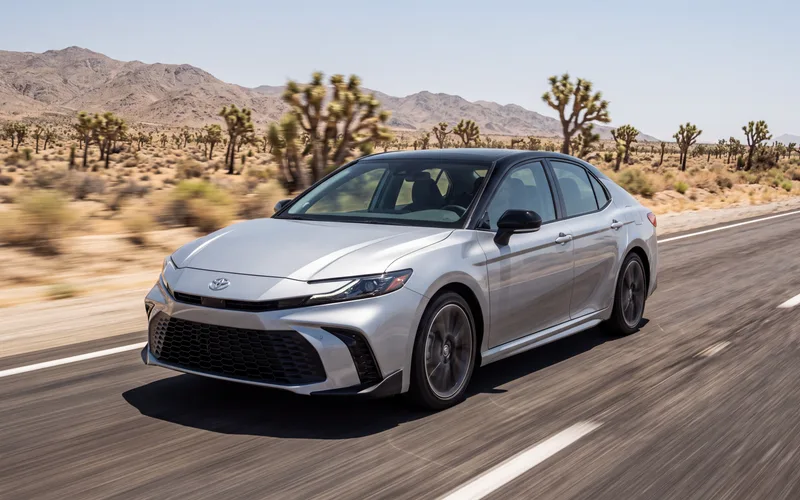 Toyota CamryMid-Size SedanBetter at: Fuel economy
For roughly $1,400 more it's hybrid-only at 46-51 MPG, retains about 57% of its value at five years against the Altima's 43%, and carries far stronger reliability marks — the extra sticker comes back within a few years.
Compare 2.89B-
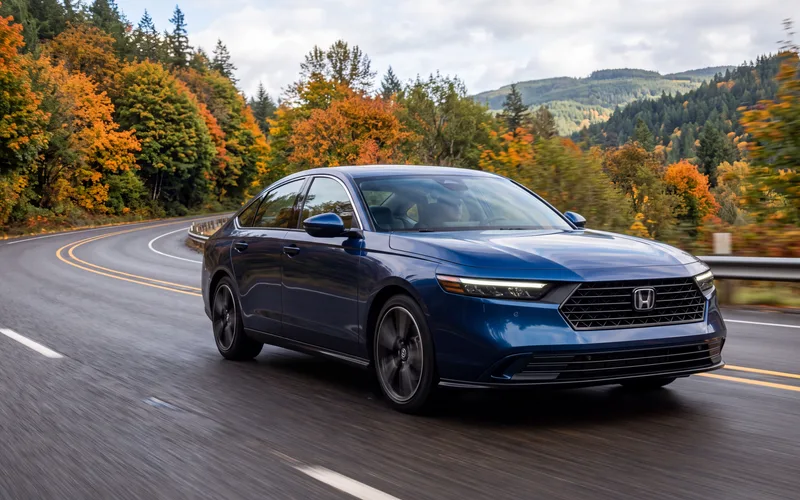 Honda AccordMid-Size SedanBetter at: Rear-seat space
Costs more and drops AWD from the menu, but gives you five and a half extra inches of rear legroom, a hybrid powertrain, Google built-in and a car that's genuinely enjoyable to drive.
Compare 2.56C+
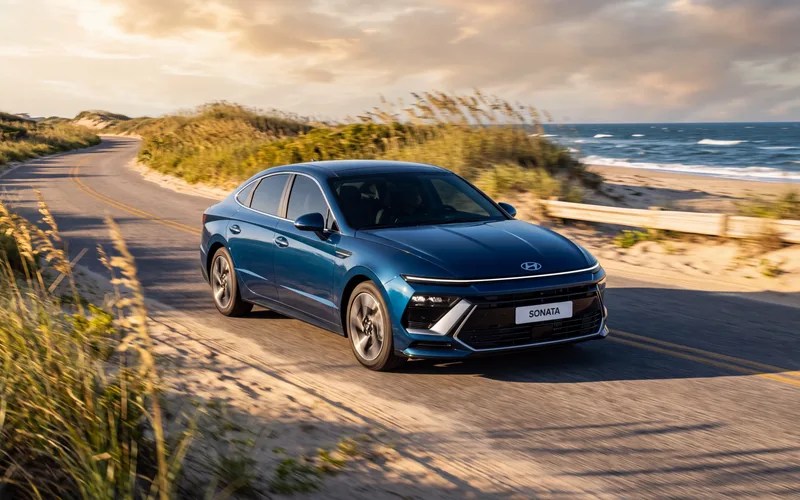 Hyundai SonataMid-Size SedanBetter at: Warranty coverage
Matches the Altima on price and available AWD while adding a 10-year/100,000-mile powertrain warranty and a hybrid option — the better answer if the CVT's 60,000-mile coverage worries you.
CompareHow it's evolved
10 scored model years · 2017–2026
Subject scores by year
Hover or tap a score to see what moved it versus the year before. A corner mark flags a big swing.
| Year | Performance | Efficiency | Safety | Space | Cost | Reliability | Tech | Use-case | Driving | Value |
|---|---|---|---|---|---|---|---|---|---|---|
| 2026 | 34 | 65 | 66 | 66 | 55 | 64 | 52 | 53 | 58 | 55 |
| 2025 | 33 | 59 | 59 | 66 | 60 | 69 | 48 | 54 | 60 | 54 |
| 2024 | 36 | 59 | 59 | 62 | 63 | 75 | 45 | 51 | 57 | 64 |
| 2023 | 36 | 59 | 69 | 64 | 64 | 69 | 48 | 51 | 60 | 63 |
| 2022 | 36 | 59 | 69 | 64 | 65 | 69 | 45 | 51 | 59 | 60 |
| 2021 | 36 | 59 | 68 | 64 | 66 | 68 | 45 | 50 | 59 | 62 |
| 2020 | 37 | 62 | 69 | 67 | 60 | 57 | 46 | 54 | 62 | 68 |
| 2019 | 38 | 61 | 68 | 67 | 60 | 53 | 46 | 54 | 62 | 69 |
| 2018 | 26 | 63 | 53 | 69 | 59 | 62 | 34 | 52 | 54 | 56 |
| 2017 | 27 | 63 | 52 | 67 | 67 | 66 | 29 | 50 | 59 | 59 |
Compare two years
Best fit & conditions
Higher scores mean a better fit for that use case. Learn more about use-case fit →
Subject profile
Trims & configurations
4 trimsScores above reflect the volume trim. Per-trim specs and scores are rolling out — the full lineup:
Academic Probation · NHTSA safety recalls
No NHTSA safety recall is on record for the 2026 Nissan Altima. Other model years of the Altima have 16 — listed below.
16 recalls on other model years of the Altima (2017–2021, 2024–2025)
Aug 12, 2026Air bags: critical fastenersThe front passenger air bag and front passenger knee air bag may have been installed with incorrect mounting fasteners, which can cause the air bags not to deploy as intended.
Defect
Nissan North America, Inc. (Nissan) is recalling certain 2025 Altima vehicles. The front passenger air bag and front passenger knee air bag may have been installed with incorrect mounting fasteners, which can cause the air bags not to deploy as intended.
Risk
Air bags that do not deploy as intended increase the risk of injury in a crash.
Remedy
Dealers will replace the air bag mounting fasteners, free of charge. Owner notification letters were mailed September 30, 2026. Owners may contact Nissanâs customer service at 1-800-867-7669. Nissan's number for this recall is PD202. Vehicle Identification Numbers (VINs) involved in this recall became searchable on NHTSA.gov beginning August 17, 2026.
NHTSA campaign 26V526000 ↗Manufacturer no. PD202149 vehicles potentially affected (all models in the campaign)Owners notified Sep 25, 2026Filed by Nissan North America, Inc.Filed as ALTIMAJan 20, 2026Latches/locks/linkages: doors: latchThe door strikers may have been improperly welded and break, allowing the door to open while moving. As such, these vehicles fail to comply with the requirements of Federal Motor Vehicle Safety Standard number 206, "Door Locks and Door Retention Components."
Defect
Nissan North America, Inc. (Nissan) is recalling certain 2025 Altima, Sentra, 2025-2026 Frontier, and 2026 Kicks vehicles. The door strikers may have been improperly welded and break, allowing the door to open while moving. As such, these vehicles fail to comply with the requirements of Federal Motor Vehicle Safety Standard number 206, "Door Locks and Door Retention Components."
Risk
A door that opens unexpectedly while the vehicle is in motion increases the risk of injury or a crash.
Remedy
Dealers will replace the door strikers, free of charge. Owner notification letters were mailed March 17, 2026. Owners may contact Nissan's customer service at 800-647-7261. Nissan's numbers for this recall are PD185 and PMA61. Vehicle Identification Numbers (VINs) involved in this recall will be searchable on NHTSA.gov beginning January 28, 2026.
NHTSA campaign 26V023000 ↗Manufacturer no. PD185, PMA6126,432 vehicles potentially affected (all models in the campaign)Owners notified Mar 13, 2026Filed by Nissan North America, Inc.Filed as ALTIMAJun 27, 2025Engine and engine cooling: engine: hard parts internal/mechanicalThe engine bearings may have manufacturing defects that can lead to engine failure.
Defect
Nissan North America, Inc. (Nissan) is recalling certain 2021-2024 Rogue, 2019-2020 Altima, 2019-2022 Infiniti QX50, and 2022 Infiniti QX55 vehicles equipped with 3-cylinder 1.5L or 4-cylinder 2.0L variable compression turbo (VC-Turbo) engines. The engine bearings may have manufacturing defects that can lead to engine failure.
Risk
Engine failure increases the risk of a crash. A bearing failure may cause a breach in the engine block, allowing hot oil to be discharged, increasing the risk of an engine fire.
Remedy
Dealers will reprogram the engine control module (ECM) software, free of charge. Owner letters were mailed April 8, 2026. Owners may contact Nissan's customer service at 800-647-7261 or Infiniti's customer service at 1-800-662-6200. Nissan's numbers for this recall are R25A8/A9 and R25B1/B2.
NHTSA campaign 25V437000 ↗Manufacturer no. R25A8/A9 R25B1/B2/D1443,899 vehicles potentially affected (all models in the campaign)Owners notified Jan 26, 2026Filed by Nissan North America, Inc.Filed as ALTIMADec 21, 2023Steering: rack and pinionThe bolts connecting the electronic power steering unit to the steering rack may loosen, resulting in a loss of steering control or steering lock-up.
Defect
Nissan North America, Inc. (Nissan) is recalling certain 2024 Altima vehicles. The bolts connecting the electronic power steering unit to the steering rack may loosen, resulting in a loss of steering control or steering lock-up.
Risk
A loss of steering control or steering lock-up can increase the risk of a crash.
Remedy
Dealers will replace the steering gear assembly, free of charge. Owner notification letters were mailed February 9, 2024. Owners may contact Nissan customer service at 1-800-867-7669. Nissan's number for this recall is PC997.
NHTSA campaign 23V882000 ↗Manufacturer no. PC9975 vehicles potentially affected (all models in the campaign)Owners notified Feb 9, 2024Filed by Nissan North America, Inc.Filed as ALTIMASep 8, 2023Back over prevention: sensing system: cameraDamage to the camera harness can cause distortion or loss of the rearview camera display image. As such, these vehicles fail to comply with the requirements of Federal Motor Vehicle Safety Standard number 111, "Rear Visibility."
Defect
Nissan North America, Inc. (Nissan) is recalling certain 2019-2021 Altima and 2020-2021 Sentra vehicles. Damage to the camera harness can cause distortion or loss of the rearview camera display image. As such, these vehicles fail to comply with the requirements of Federal Motor Vehicle Safety Standard number 111, "Rear Visibility."
Risk
A rearview camera that does not properly display an image can reduce the driver's rear view, increasing the risk of a crash.
Remedy
Dealers will inspect the rearview camera and harness for damage and replace them as necessary. If no damage is found, the dealer will apply protective tape and reroute the rearview camera harness. Repairs will be performed free of charge. Owner notification letters are expected to be mailed October 19, 2023. Owners may contact Nissan's customer service at 1-800-867-7669. Nissan's number for this recall is R23C3.
NHTSA campaign 23V628000 ↗Manufacturer no. R23C3153,376 vehicles potentially affected (all models in the campaign)Owners notified Oct 19, 2023Filed by Nissan North America, Inc.Filed as ALTIMAMar 11, 2021Tires · Tires: sidewallOn the affected vehicles, it is possible that one or more tires were cured for too long during tire production.
Defect
Nissan North America, Inc. (Nissan) is recalling certain 2019-2020 Altima and 2018-2021 Titan vehicles equipped with Continental tires. On the affected vehicles, it is possible that one or more tires were cured for too long during tire production.
Risk
Over cured tires may develop a break in the sidewall, resulting in sudden air loss or belt edge separation which could lead to tread/belt loss. Either condition can cause a loss of vehicle control, increasing the risk of a crash.
Remedy
Nissan will notify owners, and dealers will inspect the tires, and replace them as necessary, free of charge. Owner notification letters were mailed on May 11, 2021. Owners may contact Nissan customer service at 1-800-867-7669. Nissan's number for this recall is PC798.
NHTSA campaign 21V169000 ↗Manufacturer no. PC79836,141 vehicles potentially affected (all models in the campaign)Owners notified May 11, 2021Filed by Nissan North America, Inc.Filed as ALTIMAMar 4, 2021Steering: linkages: tie rod assemblyThe tie rod ball joint fastener was not tightened properly, which could result in the tie rod ball joint detaching from the steering knuckle.
Defect
Nissan North America, Inc. (Nissan) is recalling certain 2020-2021 Nissan Altima vehicles. The tie rod ball joint fastener was not tightened properly, which could result in the tie rod ball joint detaching from the steering knuckle.
Risk
A detached tie rod ball joint can cause a loss of steering control, and increase the risk of a crash.
Remedy
Nissan will notify owners, and dealers will tighten the left and right-side tie rod ball joint fasteners, or install new fasteners as necessary, free of charge. The began March 31, 2021. Owners may contact Nissan customer service at 1-800-867-7769. Nissan's number for this recall is PC795.
NHTSA campaign 21V138000 ↗Manufacturer no. PC7952,407 vehicles potentially affected (all models in the campaign)Owners notified Mar 31, 2021Filed by Nissan North America, Inc.Filed as ALTIMANov 5, 2020TiresThe tires may have been over cured.
Defect
Nissan North America, Inc. (Nissan) is recalling certain 2020 Altima S grade vehicles equipped with Continental ProContact TX tires, size 215/60 R16 H, with TIN date code 3320 and Mold ID S-419149. The tires may have been over cured.
Risk
Over cured tires can result in a sidewall break causing a sudden loss of air or the tread separating from the tire. Both conditions increase the risk of a crash.
Remedy
Nissan will notify owners, and dealers will inspect the vehicle's tires to see if they are affected, replacing them as necessary, free of charge. The recall began December 10, 2020. Owners may contact Nissan customer service at 1-800-8677669. Nissan's number for this recall is PC765.
NHTSA campaign 20V685000 ↗Manufacturer no. PC7652,214 vehicles potentially affected (all models in the campaign)Owners notified Dec 10, 2020Filed by Nissan North America, Inc.Filed as ALTIMASep 22, 2020Visibility: glass, side/rearThe rear window glass may not remain properly secured to the vehicle.
Defect
Nissan North America, Inc. (Nissan) is recalling certain 2020 Altima, Maxima and Leaf vehicles. The rear window glass may not remain properly secured to the vehicle.
Risk
Rear window glass that separates from the vehicle can increase the risk of a crash.
Remedy
Nissan will notify owners, and dealers will replace the back window glass, free of charge. The recall began November 4, 2020. Owners may contact Nissan customer service at 1-800-867-7669. Nissan's number for this recall is PC752.
NHTSA campaign 20V570000 ↗Manufacturer no. PC752150 vehicles potentially affected (all models in the campaign)Owners notified Nov 4, 2020Filed by Nissan North America, Inc.Filed as ALTIMAMay 28, 2020Latches/locks/linkages: hood: latchIf the primary hood latch is inadvertently released, there is an increased likelihood that the secondary hood latch may corrode over time.
Defect
Nissan North America, Inc. (Nissan) is recalling certain model year 2013-2018 Nissan Altima vehicles. If the primary hood latch is inadvertently released, there is an increased likelihood that the secondary hood latch may corrode over time.
Risk
Corrosion to the secondary latch may cause it to bind and remain in the unlatched position when the hood is closed. If the primary latch is inadvertently released again and the secondary latch is not engaged, the hood could unexpectedly open while driving, increasing the risk of a vehicle crash.
Remedy
Nissan will notify owners, and dealers will install a stronger release spring in the hood release lever, a warning label near the secondary hood latch, and an OwnerÂs Manual addendum card with instructions on how to lubricate and maintain the secondary hood latch mechanism, free of charge. Owner notification letters were mailed June 30, 2021. Owners may contact Nissan customer service at 1-800-867-7669. Note: Recall 16V-029 remains open for any unremedied 2013-2015 Altimas and this recall applies to all vehicles covered by 16V-029 even if those repairs have already been performed.
NHTSA campaign 20V315000 ↗Manufacturer no. R20A71,831,818 vehicles potentially affected (all models in the campaign)Owners notified Jun 30, 2021Filed by Nissan North America, Inc.Filed as ALTIMASep 12, 2019Back over prevention: sensing system: cameraAdditionally included are 2019 Nissan GT-R and Taxi and Infiniti QX50, QX60, Q70, Q70L vehicles. The back-up camera and display settings can be adjusted such that the rear view image is no longer visible and the system will retain that setting the next time the vehicle is placed in reverse. As such, these vehicles fail to comply with the requirements of Federal Motor Vehicle Safety Standard (FMVSS) number 111, "Rear Visibility."
Defect
Nissan North America, Inc. (Nissan) is recalling certain 2018-2019 Nissan Altima, Armada, Frontier, Kicks, Leaf, Maxima, Murano, NV, NV200, Pathfinder, Rogue, Rogue Sport, Sentra, Titan, Titan Diesel, Versa Note and Versa Sedan vehicles, as well as Infiniti Q50, Q60, QX30 and QX80 vehicles. Additionally included are 2019 Nissan GT-R and Taxi and Infiniti QX50, QX60, Q70, Q70L vehicles. The back-up camera and display settings can be adjusted such that the rear view image is no longer visible and the system will retain that setting the next time the vehicle is placed in reverse. As such, these vehicles fail to comply with the requirements of Federal Motor Vehicle Safety Standard (FMVSS) number 111, "Rear Visibility."
Risk
The lack of an image in the back-up camera display increases the risk of a crash.
Remedy
Nissan will notify owners in phases, having dealers update the back-up camera settings software, free of charge. The recall began November 11, 2019 and all affected VINs should be activated. Owners may contact Nissan customer service at 1-800-867-7669 or INFINITI customer service at 1-800-662-6200.
NHTSA campaign 19V654000 ↗1,228,830 vehicles potentially affected (all models in the campaign)Owners notified Nov 11, 2019Filed by Nissan North America, Inc.Filed as ALTIMAApr 18, 2019Fuel system, gasoline: delivery: fuel pumpThe fuel pump lock ring may not be fully engaged, possibly causing fuel to leak. As such, these vehicles fail to comply with the requirements of Federal Motor Vehicle Safety Standard (FMVSS) number 301, "Fuel System Integrity."
Defect
Nissan North America, Inc. (Nissan) is recalling certain 2019 Altima vehicles equipped with front wheel drive (FWD) and 2.5 liter engines. The fuel pump lock ring may not be fully engaged, possibly causing fuel to leak. As such, these vehicles fail to comply with the requirements of Federal Motor Vehicle Safety Standard (FMVSS) number 301, "Fuel System Integrity."
Risk
A fuel leak in the presence of an ignition source increases the risk of a fire.
Remedy
Nissan will notify owners, and dealers will inspect the fuel tank assembly. If the lock ring is disengaged, dealers will tighten the ring to specification. If the lock ring is detached, dealers will replace the fuel pump. Both remedies will be completed free of charge. The recall began May 15, 2019. Owners may contact Nissan customer service at 1-800-867-7669.
NHTSA campaign 19V316000 ↗374 vehicles potentially affected (all models in the campaign)Owners notified May 15, 2019Filed by Nissan North America, Inc.Filed as ALTIMAMar 25, 2019Exterior lighting: brake lights: switchThe brake switch bracket may be in the incorrect location, which may cause the brake switch to remain on.
Defect
Nissan North America, Inc. (Nissan) is recalling certain 2019 Nissan Altima vehicles. The brake switch bracket may be in the incorrect location, which may cause the brake switch to remain on.
Risk
If the brake switch remains in the ON position, the brake lights will remain illuminated when the brakes are not being pressed, which may confuse other drivers. Additionally, the transmission shift lever may be moved out of the Park position without the brake pedal being pressed, allowing the vehicle to roll unexpectedly. Either condition increases the risk of a crash.
Remedy
Nissan will notify owners, and dealers will inspect and install a new brake pedal as needed, free of charge. The recall began May 15, 2019. Owners may contact Nissan customer service at 1-800-867-7669.
NHTSA campaign 19V235000 ↗5,744 vehicles potentially affected (all models in the campaign)Owners notified May 15, 2019Filed by Nissan North America, Inc.Filed as ALTIMADec 20, 2018Fuel system, gasoline: delivery: fuel pump · Fuel system, gasoline: delivery: hoses, lines/piping, and fittingsThe retainer clip connecting the low pressure fuel tube to the high pressure fuel pump may not have been locked into position.
Defect
Nissan North America, Inc (Nissan) is recalling certain 2019 Altima vehicles. The retainer clip connecting the low pressure fuel tube to the high pressure fuel pump may not have been locked into position.
Risk
If the retainer clip is unlocked, the fuel tube may shift and cause a fuel leak, increasing the risk of a fire. If the fuel tube fully disconnects, the engine can stall, increasing the risk of a crash.
Remedy
Nissan has notified owners, and dealers will route the fuel hose into the holding clip and lock the retainer clip into place, as necessary, free of charge. The recall began February 11, 2019. Owners may contact Nissan customer service at 1-800-867-7669.
NHTSA campaign 18V922000 ↗23,903 vehicles potentially affected (all models in the campaign)Owners notified Feb 11, 2019Filed by Nissan North America, Inc.Filed as ALTIMADec 19, 2018Latches/locks/linkages: doors: latch · Structure: emergency: escape/egress/exitThe door latch-lock cable may not have been routed properly in the rear door when the remedy was applied. As a result, the cable may interfere with the window regulator causing the rear passenger door to unlatch and inadvertently open without warning when the window is lowered.
Defect
Nissan North America, Inc. (Nissan) is recalling certain 2015-2017 Altima vehicles, previously remedied under recall number 17V-040. The door latch-lock cable may not have been routed properly in the rear door when the remedy was applied. As a result, the cable may interfere with the window regulator causing the rear passenger door to unlatch and inadvertently open without warning when the window is lowered.
Risk
If the rear passenger door opens while the vehicle is moving, the rear passengers have an increased risk of injury.
Remedy
Nissan will notify owners, and dealers will secure the latch-lock cables in the correct position using the new remedy procedure, free of charge. The recall began February 5, 2019. Owners may contact Nissan customer service at 1-800-647-7669.
NHTSA campaign 18V915000 ↗341,003 vehicles potentially affected (all models in the campaign)Owners notified Feb 5, 2019Filed by Nissan North America, Inc.Filed as ALTIMAJan 18, 2017Latches/locks/linkages: doors: latchThe rear door latch/lock cable on the vehicles may have been improperly routed. As a result, lowering a rear window may inadvertently cause that door to unlatch and open.
Defect
Nissan North America, Inc. (Nissan) is recalling certain 2015-2017 Altima vehicles. The rear door latch/lock cable on the vehicles may have been improperly routed. As a result, lowering a rear window may inadvertently cause that door to unlatch and open.
Risk
If the rear passenger doors inadvertently open while the vehicle is in motion, it may increase the risk of injury to the rear passengers.
Remedy
Nissan will notify owners, and dealers will correct the rear door latch/lock cable routing, free of charge. The recall began on February 16, 2017. Owners may contact Nissan customer service at 1-800-647-7261.
NHTSA campaign 17V040000 ↗341,005 vehicles potentially affected (all models in the campaign)Owners notified Feb 16, 2017Filed by Nissan North America, Inc.Filed as ALTIMA
Source: NHTSA Office of Defects Investigation recall database, model years 2017–2026. Recalls are listed by model year as the manufacturer filed them; whether a specific car is affected depends on its VIN — check a VIN at nhtsa.gov ↗. NHTSA model names matched to this page: ALTIMA.
Detailed scoring by subject
1Performance & PowertrainThe Altima's lowest-graded category.0.23F
Volume trim (SV) uses the 2.5L PR25DD naturally aspirated four rated 188 hp FWD / 182 hp AWD, unchanged across the L34 generation. Output is low-to-mid-pack for a mid-size sedan now that rivals run hybrid or turbo powertrains.
Peak torque of 180 lb-ft arriving at a high 3,600 rpm is modest against hybrid rivals that deliver instant motor torque off the line.
Roughly 7.6 seconds to 60 mph in the volume 2.5 FWD configuration — adequate but slower than the Camry hybrid (~7.0 s) and Accord hybrid (~6.6 s) that set the segment's current pace.
The naturally aspirated 2.5 has no turbo lag and responds cleanly at part throttle, but turns coarse and vocal when worked hard and lacks the low-end shove of the segment's electrified powertrains. Solidly mid-band: smooth in normal use, unrefined under load.
Nissan's Xtronic CVT is among the better executions of the type — smooth in traffic, with simulated steps under hard acceleration — but it still drones on highway merges and holds high revs in a way conventional automatics and hybrid e-CVTs avoid.
AWD is optional across the trim range rather than restricted to a top trim — a genuine Altima advantage over the FWD-only Accord. Operation is basic on-demand torque transfer with no terrain modes, low range, or torque vectoring, which caps it in the mid band.
A single naturally aspirated 2.5L engine with one transmission is the entire lineup — no hybrid, no plug-in, no EV variant, and the 2.0L VC-Turbo that once topped the range is understood to have been dropped. Drivetrain choice (FWD/AWD) is the only meaningful variation, which lands this in the bottom band.
2Efficiency & RangeOne of the Altima's strongest categories.2.42C+
The sixth-generation (L34) Altima's 2.5L four with Xtronic CVT has been EPA-rated 32 MPG combined in FWD form since the 2023 refresh, and 2026 is a carryover year with no powertrain change; AWD drops to 30 MPG. Mid-pack for a non-hybrid mid-size sedan, well behind the hybrid Camry and Accord.
The naturally aspirated 2.5L gets no hybrid assist in traffic, so city economy is the weakest part of the Altima's EPA line — barely half what a hybrid Camry returns around town.
Highway is the Altima's strongest efficiency figure — a tall CVT top ratio and slippery sedan body deliver 39 MPG, competitive with non-hybrid rivals and the core of its case as a long-commute car.
A 16.2-gallon tank at the 32 MPG combined rating yields roughly 518 miles between fill-ups — above average for the mid-size sedan class, and closer to 630 miles on a highway-heavy tank.
At 32 MPG combined the Altima burns about 469 gallons over 15,000 miles; on regular unleaded that is roughly $1,550 a year — cheap by whole-market standards, but several hundred dollars a year worse than a hybrid mid-size sedan.
The 2.5L four runs on regular 87-octane unleaded across every trim, with no premium recommendation anywhere in the lineup since the VC-Turbo was discontinued — the simplest and cheapest fueling story in the segment.
3SafetyOne of the Altima's strongest categories.2.47C+
The sixth-generation (L34) Altima carries a 5-star NHTSA overall rating, with frontal impact the weak leg at 4 stars and side impact and rollover at 5; the 2026 car is a carryover of that structure and is scored against the generation-level result rather than a separately published 2026 test.
The Altima posts Good results across the legacy IIHS battery — both small-overlap tests and the original moderate overlap — and was a Top Safety Pick early in this generation, but it grades below Good in the updated moderate-overlap (rear-passenger) evaluation and holds no current award. A key updated test at Marginal is what pulls this into the bottom band rather than the middle one.
Nissan Safety Shield 360 is standard on every Altima trim including the base S — AEB with pedestrian detection, rear automatic braking, blind-spot warning, rear cross-traffic alert, lane departure warning and high-beam assist — which is broader standard content than most mainstream midsize rivals, where blind-spot monitoring is still trim-gated. The gap is adaptive cruise with lane centering: ProPILOT Assist starts at SV, so the base S goes without.
AEB covers vehicles and pedestrians on every trim and is backed by standard rear automatic braking, which few midsize rivals match, but Nissan's forward system dates to this generation's 2019 launch and has not distinguished itself in the harder updated front crash prevention protocol — the higher closing speeds and nighttime-pedestrian scenarios that now separate the class.
Blind Spot Warning and Rear Cross Traffic Alert are standard on the base trim rather than trim-gated as on much of the segment, and standard rear automatic braking adds genuine intervention behind the car. It stays out of the top band because the blind-spot system is alert-only — no steering or braking correction into an occupied lane — and no safe-exit or rear-occupant alert is offered.
Lane departure warning is standard and ProPILOT Assist adds true lane centering from SV up, which reviewers find steady on well-marked highways; it is marked down because the centering is trim-gated, hands-on only, and hands back earlier than the best systems on faded markings and tighter curves.
ProPILOT Assist pairs full-speed-range adaptive cruise — including stop-and-hold in traffic — with lane centering, and it is among the smoother mainstream implementations for gap management and resume. It loses points for not reaching the base S trim and for being the plain ProPILOT Assist rather than a Navi-link version with map-based speed adjustment on the volume trim.
No hands-free highway driving is offered on the Altima at any trim or price. ProPILOT Assist requires hands on the wheel, and Nissan fields no BlueCruise/Super Cruise equivalent in the US midsize-sedan class.
LED headlights are standard across the range since the 2023 refresh and high-beam assist comes with Safety Shield 360 on every trim, but IIHS has graded this generation's volume-trim lighting at Acceptable rather than Good, with the better-rated projector setup historically tied to the upper trims — squarely the mid-band pattern.
Forward and side sightlines are good for a modern sedan — a relatively low cowl and slim A-pillars — but the fastback-influenced roofline, high rear deck and thick C-pillars pinch the over-the-shoulder and rear views, and the 360-degree camera that would compensate is confined to the upper trims.
Midsize rear-seat width and 35-plus inches of rear legroom make the Altima genuinely workable for two child seats, and wide-opening rear doors help; the anchors themselves are the compromise — lower anchors set deep in the seat bight that require digging, and only two lower-anchor positions with the center position tether-only.
4Space & ComfortThe Altima's best-graded category.2.49C+
The Altima is a conventional five-passenger mid-size sedan with a three-place rear bench on every trim (S, SV, SR, SL); no trim reduces or adds seating.
Front headroom is 39.2 in without the moonroof, near the top of the mid-size sedan range; the power moonroof on SV and SL trims cuts it to 37.8 in.
At 43.8 in the Altima offers among the most front legroom in the mid-size class — a genuine standout dimension and one of the car's strongest packaging attributes.
Rear headroom of 37.5 in is mid-pack for the segment; the fastback-influenced roofline costs a little clearance, and the moonroof drops it to 36.9 in on so-equipped trims.
Rear legroom of 35.2 in is the Altima's clearest packaging weakness — well short of the Accord (~40.8 in) and Camry (~38 in), and the reason the generous front legroom does not translate into class-leading family space.
A 15.4 cu ft trunk is competitive-to-good for a mid-size sedan, with a wide opening and a 60/40 split-folding rear seatback to extend it for longer items.
Storage is competent but conventional: a usable covered center console bin, decent door pockets, a phone shelf ahead of the shifter with USB-A/USB-C, and a 60/40 folding rear seat — but no standout innovation such as a configurable console, underfloor bins, or onboard power.
Nissan's NASA-inspired Zero Gravity front seats are a real, repeatedly praised strength for long-haul comfort and are the Altima's best comfort attribute; the rear bench is flatter with a low cushion and less thigh support, which caps the score below the Accord.
The Altima is tuned toward comfort — it rounds off broken pavement well and stays settled on the highway — though the sport-tuned SR on 19-in wheels is noticeably firmer and body control trails the segment's best.
Highway wind and road noise are about average for the class, but the 2.5-liter four paired with the Xtronic CVT drones under hard acceleration and on grades, which is the intrusion reviewers single out most often.
Dual-zone automatic climate control, heated front seats and a heated steering wheel are available from the mid trims up, but there are no ventilated seats anywhere in the lineup, no rear climate zone, and remote start is the extent of pre-conditioning — mid-trim-and-up coverage rather than a rich standard set.
5Cost of OwnershipGrades below the middle of the scale.1.68D
The 2026 Altima is a carryover of the sixth-generation (L34) car, so the entry S trim continues to open well below the mid-size mainstream benchmarks — roughly $2,000 under a base Camry and a similar margin under a base Accord. Undercutting on sticker is the Altima's core commercial argument now that it fields no hybrid, and it is the item this category scores best on.
The SV is the volume Altima — it adds ProPILOT Assist, the larger displays, alloy wheels and the dual-zone climate content that make the car feel mid-size rather than rental-grade, and it is where most retail buyers land. So equipped it still sits under a Camry SE, and AWD is a modest flat adder available across the range rather than a top-trim-only option, which is a genuine packaging advantage over the FWD-only Accord.
The naturally aspirated 2.5L PR25DD is a simple, cheap engine to service — no turbo, regular fuel, conventional maintenance intervals — and dropping the VC-Turbo removed the lineup's most complex and expensive-to-fix powertrain. What keeps this only good rather than class-leading is the Xtronic CVT: it is the component with the segment's worst out-of-warranty repair reputation, and a replacement is a four-figure event once the 60,000-mile powertrain term lapses. Costs also run above a Sentra's on tires and brakes given the larger platform and 17–19-inch wheels.
This is the Altima's worst ownership number and, at weight 3, the single item that does most of the damage to the category — it is why a car that is cheap to buy is not cheap to own. Large rental and fleet volume floods the used market, heavy incentive spend on new units drags transaction prices below sticker, buyer wariness about Nissan CVTs suppresses private-party demand, and a non-hybrid gas sedan in a segment that has gone electrified is the least wanted configuration on a used lot. The discount taken up front is substantially handed back at trade-in.
Nissan's New Vehicle Limited Warranty runs 3 years or 36,000 miles — the industry floor and the bottom of the framework band. It matches Toyota and Honda but is two years and 24,000 miles short of what Hyundai and Kia hand a Sonata or K5 buyer at the same price point.
Powertrain coverage is 5 years or 60,000 miles, again the band floor. It matters more on this car than on most rivals because the Xtronic CVT is exactly the component Altima shoppers most want covered, and it comes off warranty at 60,000 miles — half the mileage Hyundai and Kia give an original owner, and with none of the long electrified-hardware coverage a hybrid Camry buyer gets on the parts that worry them.
Nissan includes no complimentary scheduled maintenance on the Altima — there is no ToyotaCare or Hyundai Complimentary Maintenance equivalent, so the first oil change is out of pocket. What is included keeps it in the 'basic roadside only' band rather than the zero band: roadside assistance runs alongside the 3-year/36,000-mile basic term, and SV and above get a NissanConnect Services trial with remote start, emergency calling and automatic collision notification through the app. There are no fuel or charging credits and nothing that offsets the short warranty terms.
$31,100 volume-trim price minus its estimated resale value after 5 years (43% retained, or about $13,373) leaves about $17,727 in depreciation. Add the projected $4,900 in 5-year maintenance and repairs, and owning this vehicle for 5 years costs about $22,627 in total.
6Reliability & QualityMid-pack among this car's ten categories.2.33C+
The Altima's predicted-reliability case is average-band, and 2026 is the most settled version of it: the L34 generation is in its eighth model year with no significant new content, and the complex 2.0L VC-Turbo variable-compression engine has been withdrawn, leaving one long-serving naturally aspirated four as the whole lineup. That maturity is a real plus, but the Xtronic CVT keeps the prediction from rising above mid-pack, and Nissan's brand-level drag pulls model-level forecasts down with it.
Brand-level item, so this matches the figure already carried for the 2026 Sentra and Versa in this dataset. Nissan sits in the lower-middle of multi-year dependability — consistently behind Toyota, Honda and Hyundai in Consumer Reports brand rankings and at or below industry average in J.D. Power's Vehicle Dependability Study — with the CVT legacy as the specific drag on its long-term numbers.
Recall exposure across this generation has been moderate in count and component-level — supplier- and software-driven campaigns rather than a repeating powertrain, fire or safety-system defect — which keeps it clear of the sub-50 band. A MY2026 car also benefits from eight years of accumulated running changes on a design that is no longer being revised. The blemish is on the TSB side, where CVT judder, control-software reflash and fluid/cooling bulletins remain a recurring service theme across Nissan's CVT lineup.
Engine and transmission pull in opposite directions, which lands this squarely in the mixed-history band. The 2.5L PR25DD four is a low-stress unit from a long Nissan mid-size lineage with no significant high-mileage red flag, and dropping the VC-Turbo removed the lineup's genuinely unproven, mechanically complex option. Against that, the Jatco Xtronic CVT is the single weakest link: the Altima was the model that did the most damage to Nissan's transmission reputation, and while current units are materially improved over the 2013-2018 population, the family has never demonstrated Toyota- or Honda-grade high-mileage durability.
Acceptable for the money without ever being a selling point. The Altima's genuine strength is seating — Nissan's Zero Gravity front seats draw consistent praise — and upper SR/SL trims add leather-appointed surfaces and better trim inserts, but the dash architecture dates to 2019 and the lower cabin, console and door bases carry obvious hard plastics. Against newer mid-size rivals it reads as the oldest cabin in the class, which is what holds it below the Camry rather than any single material failing.
Solid with scattered complaints, which is the middle of the band. The Altima is built on a mature, high-volume US line running the same body for eight years, and process maturity of that kind generally shows up as consistent panel fit and few assembly-defect patterns. What keeps it off the top band is Nissan's near-industry-average standing in initial-quality measures and recurring reviewer notes on road and wind noise, which owners read as build quality even where assembly itself is sound.
Brand-level item, held consistent with the other 2026 Nissans in this dataset. Physical access is not the problem — Nissan runs one of the larger US franchised networks, comparable in dealer count to Honda. What caps the score is mid-pack service satisfaction and a network that has been contracting under Nissan's US sales decline and restructuring, which adds some access risk in thinner markets across a long ownership period.
The category's clear strength. The Altima has been one of America's highest-volume sedans for three decades, so OEM and aftermarket parts are cheap and universally stocked, every independent shop knows the car, and routine service costs sit at or below the mid-size average. Two things keep it out of the top band: a CVT replacement is a four-figure big-ticket item that shows up disproportionately in this model's long-term cost tail, and the L34 is late in its life cycle, which over a long ownership horizon shifts more parts supply toward the aftermarket.
7Technology & InfotainmentOne of the Altima's weakest categories.1.45D
The L34 Altima carries the screen hardware set at the MY2023 facelift into 2026 unchanged: an 8-inch touchscreen on S and the volume SV, with the 12.3-inch display reserved for SR and SL. Eight inches sits near the bottom of the sedan normalization band and is the same volume-trim screen the Camry LE/SE has — but where Toyota at least offers 12.3 inches two trims up the ladder, the Altima's older dash architecture means the big screen is a genuine trim-walk purchase rather than a mid-range feature. The previous placeholder value of 11.1 inches did not correspond to any screen Nissan fits to this car.
NissanConnect on the Altima is easy to live with and hard to be impressed by. The layout is shallow and legible, and Nissan kept a real volume knob, tuning control and separate rotary climate dials rather than burying HVAC in the screen — worth genuine credit on a daily-driver sedan. What holds it to the middle band is age: this is the pre-Google-built-in Nissan stack in its eighth model year, with dated graphics and a small panel in a wide bezel on the volume SV. It reads below Toyota Audio Multimedia in the Camry (76) and well behind the Accord's Google system (80), a step under the redesigned Sentra (72), and above the smaller, more basic Versa unit (60).
Wireless Apple CarPlay is standard across the Altima range including the base S, but Android Auto is wired-only on every trim — a long-standing asymmetry on this Nissan head unit. That is the middle band by definition ('wired standard / wireless on upper trims') and it is a real, daily annoyance for roughly half the buying public. It lands just above the Versa (58), whose base grade is wired for both, and far behind the Camry (90) and Corolla, where both protocols are wireless on every grade; the Sentra's newer stack (82) shows what the same brand does one showroom row over.
Built-in navigation comes only with the 12.3-inch system on SR and SL, so the volume SV has no native maps at all and depends entirely on phone projection. The native voice layer is conventional command-and-control recognition for phone, audio and climate rather than a natural-language assistant. That is a bottom-of-the-middle-band result: better than the Versa (45), which offers no native nav on any grade, but clearly behind the Camry's subscription-gated but capable Cloud Navigation (64) and nowhere near the Google Maps and Google Assistant the Accord (86) and Sentra (78) put in front of the driver.
Base trims run a plain six-speaker system, but a nine-speaker Bose Premium Audio setup is available at the top of the range and Bose tunes Nissan cabins well — having a credible branded upgrade that is not locked behind a four-figure package stack is worth real credit in this class. It sits above the Camry (62), whose nine-speaker JBL is buried in a $3,810 XLE/XSE package, and just under the Sentra (68) and Accord (72), the latter on the strength of a twelve-speaker Bose system.
The Altima is the mid-size sedan with no full-digital option anywhere in the range: every trim, up to and including a loaded SL, keeps physical analog dials flanking a 7-inch colour Advanced Drive-Assist Display. The MY2023 facelift added the big centre screen without touching the cluster. A 7-inch colour ADAD is a respectable partial-digital display and keeps this above the Versa (38), but the absence of any configurable full-digital panel is a hard ceiling — the Camry (68), Accord (74) and Sentra (74) all put one within reach, and the previous placeholder score of 72 credited hardware the Altima does not offer.
Over-the-air capability on this generation is thin and trim-dependent: the connected 12.3-inch SR/SL system can take map and infotainment software updates over the air, while the 8-inch head unit on the volume SV is effectively dealer- and USB-serviced. There is no whole-vehicle OTA that adds features to the powertrain or driver aids. That places it below the middle band most rivals now occupy — the Camry and Sentra (both 60) and the Accord (76) all run infotainment-and-maps OTA on the trims people buy — while staying above the Versa (25), which has no OTA path at all.
NissanConnect Services covers the expected core set through the MyNISSAN app — remote engine start and climate, remote lock/unlock, vehicle locator, alarm and maintenance alerts — on a complimentary trial that converts to a paid subscription, and there is no phone-as-key on the Altima. Mid-band, and effectively the same brand-level provision already scored on the Sentra (62); it lands a shade lower only because connected services do not reach the base S. It stays clearly behind the Camry (72), whose Remote Connect trial runs an unusually generous five years.
The provision is adequate rather than generous: USB-A and USB-C ports in the front console with a second pair for rear passengers on SV and above, and a wireless charging pad confined to the upper SR/SL end of the range. Rear-row ports are the part that matters most for a family sedan and the Altima has them; what costs it ground is that the Camry (74) makes wireless charging standard from its base LE while the Altima still treats it as a top-trim item, and there is no household AC outlet. It lands under the Sentra (70) and Accord (72) and well above the Versa (40), which has no rear ports at all.
Nissan Intelligent Key with proximity entry and push-button ignition is standard across the Altima range — including the base S, which is not a given in this class — and fob-based remote engine start arrives with the volume SV. That is the full practical convenience set most buyers shop for. The cap is the same as on every other Nissan here: no phone-as-key and no hands-free trunk release. Level with the Accord (70), a shade under the Sentra (72), below the Camry (76), whose app-based Digital Key at least exists.
This is the category's standout and the one place the Altima's age costs it nothing. Nissan's Intelligent Around View Monitor — a genuine 360-degree surround view with moving-object detection — reaches the volume SV rather than sitting at the top of the range, and front and rear sonar come with it. That is a better parking package than the Camry can offer (60, where the Panoramic View Monitor needs a package stacked on a package on the two priciest grades) and than the Accord offers at all (58, no surround view on any trim). It stops short of the top band only because the camera resolution is mid-generation and there is no automated parking function.
No head-up display is offered on the 2026 Altima at any trim, including a fully loaded SL — Nissan reserves HUD for higher models such as the Rogue Platinum and Ariya, and no generation of the Altima has offered one. Bottom band by definition; the previous placeholder score of 56 credited hardware the car does not have. The Accord shares the miss (28) while the Camry's 10-inch HUD (58) is the only real point of separation among mainstream mid-size sedans.
8Use-Case FitOne of the Altima's weakest categories.1.54D
Mid-size proportions, wide-opening rear doors and a 15.4 cu ft trunk with a 60/40 fold make the Altima workable for two child seats and a stroller, but 35.2 in of rear legroom is the segment's tightest short of the compacts — a rear-facing seat crowds the front passenger — and the lower LATCH anchors sit deep in the seat bight rather than under easy covers. Handles family duty with real compromises. Re-scored from placeholder against the measured rear-seat dimensions and LATCH assessment.
Nissan puts Safety Shield 360 — AEB with pedestrian detection, rear automatic braking, blind-spot warning and rear cross-traffic alert — plus Rear Door Alert on the base S, so families shopping the cheapest trim get the full core suite, and NHTSA rates the car 5 stars overall. It stays out of the top band because the Altima no longer earns a Top Safety Pick: it grades below Good in the updated IIHS moderate-overlap (rear-passenger) test, headlights are only Acceptable, and ProPILOT Assist is gated above the base trim. Re-scored from placeholder.
The front half is genuinely good for long hauls — Zero Gravity seats and a comfort-tuned ride — and the 15.4 cu ft trunk holds a family's luggage with all seats occupied, but the back is where road trips get thin: 35.2 in of legroom, a flat low-cushion bench, no rear climate zone, rear USB ports only from SV up, and CVT drone on grades. Comfortable for medium trips, short of the Camry and Accord for a full day in the car. The placeholder score was too generous.
Commuting is the Altima's natural habitat: the Xtronic CVT is smooth and step-free at low speed, 188 hp is ample for merges, the Zero Gravity seat keeps fatigue down, ProPILOT Assist adds full-speed adaptive cruise with stop-and-hold from the volume SV, and Nissan kept physical climate and volume controls. It misses the top band for the engine drone under load, the lack of any EV-mode or one-pedal smoothness that hybrid rivals bring to stop-and-go, and ProPILOT not reaching the base S. Re-scored from placeholder.
Regular 87-octane, a simple naturally aspirated four with no turbo to service, and about $1,550/yr in fuel make the Altima cheap in absolute terms, but 32 MPG combined and just 27 city is a long way off the hybrid mid-size sedans that now define this segment's commuting math, and Altima insurance quotes run materially above its rivals. Average per-mile cost for the class that a Camry or Accord hybrid beats by roughly $600 a year. Re-scored from placeholder.
The Altima carries a full mid-size footprint near 193 in long, and the fastback roofline, high rear deck and thick C-pillars pinch the over-the-shoulder view — but Nissan's Intelligent Around View Monitor puts a true 360-degree camera with moving-object detection on the volume SV rather than at the top of the range, which does more for tight parking than anything a rival offers at that price. Manageable with camera help, and better equipped for it than most of the class. Re-scored from placeholder.
Nissan publishes no US tow rating for the Altima on any trim, and a unibody sedan with a 188 hp naturally aspirated four has no bed, no meaningful payload headroom and no powertrain margin under load. The sealed 15.4 cu ft trunk with a 60/40 pass-through is the entire work story. Not meaningfully work-capable — the placeholder score of 60 was far too high for a mid-size sedan, and this lands in line with the Camry (18) and Accord (18).
The Altima is one of the most heavily fleet- and rental-deployed sedans in the US, which is exactly the hard-use, high-mileage validation this item rewards, and the PR25DD 2.5L is a simple, cheap, long-serving engine with wear-friendly cloth interiors on S and SV. What holds it to the middle band is the Xtronic CVT — the component with the weakest durability reputation in the car, and the one that comes off warranty at 60,000 miles. Re-scored from placeholder.
There is no 120V household outlet or inverter anywhere in the range, no factory roof-rail or hitch provision, no washable flooring or wear-surface option, and no upfit ecosystem of any kind. The 60/40 folding rear seatback and a handful of trunk hooks are the only work-adjacent provisions. Bottom band by definition — the placeholder 58 credited features the car does not have.
This is the Altima's strongest mission. Zero Gravity front seats are a repeatedly praised long-haul asset, the ride is tuned for comfort, 39 MPG highway on a 16.2-gallon tank gives roughly 630 highway miles between stops, and ProPILOT Assist adds adaptive cruise plus lane centering from SV to take the edge off interstate hours. It falls short of the Camry and Accord on cabin quietness — CVT drone on grades — and offers no ventilated seats or head-up display. Re-scored from placeholder.
All-wheel drive is optional on every Altima trim for about $1,400 — a genuine advantage over the FWD-only Accord and the reason gravel roads, ski trips and bad-weather travel are within reach. Everything else is pavement-bound: sedan ground clearance, no published tow rating, no roof-rail or crossbar provision, no drive or terrain modes, no AC outlet for camping, and a sealed trunk rather than a flat load bay. Placeholder was close; adjusted down slightly to sit just under the Camry (50), whose AWD is paired with a more capable powertrain.
The 15.4 cu ft trunk is competitive-to-good for a mid-size sedan and opens wide, and the 60/40 split-folding seatback creates a pass-through for skis or flat-packed boxes. But a sedan's narrow trunk aperture is the hard limit — bulky gear is a squeeze — and there are no roof rails, no factory hitch for a bike or cargo rack, no underfloor bins and no frunk. Fits normal luggage; anything tall does not fit at all. Re-scored from placeholder.
9Driving ExperienceMid-pack among this car's ten categories.1.91C-
The L34 Altima's wide track and independent multi-link rear suspension deliver secure, predictable cornering with moderate body roll, but the platform dates to 2019 and reviewers consistently place it behind the Accord and the XV80 Camry for body control and chassis response. The SR's sport-tuned dampers and 19-in wheels sharpen it marginally without changing the character.
The electric rack is accurately geared and light enough to make the Altima easy in parking lots and on the highway, but it is heavily isolated — weight builds artificially off-center and there is essentially no road texture fed back through the wheel. Precise enough for confident placement; nothing more.
Stopping distances from 70 mph land in the high-170-ft range for the 2.5 — mid-pack for a roughly 3,200-lb mid-size sedan — and the pedal is firm enough to modulate but somewhat soft in the first inch of travel. No regen blending to complicate the pedal since there is no electrified variant.
The naturally aspirated 2.5L paired to the Xtronic CVT is shudder-free and lag-free in normal driving — no gear hunting, no turbo lag, no stop/start roughness — but 188 hp through a CVT gives the familiar rubber-band response under hard throttle, where revs flare ahead of road speed. Adequate rather than well-calibrated.
The clearest refinement weakness. The 2.5L is unobtrusive at a steady cruise, but merging or climbing pins the CVT at high rpm and produces the drone reviewers reliably flag; the engine also turns coarse near its 6,000-rpm power peak. Vibration through the controls is well isolated — the problem is noise character, not harshness.
Nissan's published curb-to-curb turning diameter for the L34 Altima is 37.4 ft on the volume trims' 17- and 18-in wheels — mid-pack for a mid-size sedan (identical to the Camry LE, slightly tighter than the Accord's 38.1 ft) but well off the tight-turning compacts. The previous placeholder value of 35.5 ft was too optimistic for this wheelbase.
The strongest part of the Altima's driving experience. Nissan's Zero Gravity front seats are well regarded for long-haul support, front legroom of 43.8 in and headroom of 39.2 in accommodate tall drivers, and the cabin retains physical HVAC and audio knobs plus a power driver's seat from SV up. Marks come off for the low seating position and thick rear pillars that pinch over-shoulder visibility.
With the VC-Turbo gone from the lineup, the 2026 Altima is tuned purely as quiet, easy transport and there is nothing left to reward a longer route home — no engine note worth hearing, no throttle immediacy through the CVT, and steering too isolated to make a good road interesting. Competent and forgettable.
10Value & Market PositionMid-pack among this car's ten categories.1.70C-
Nissan Safety Shield 360 standard across the range and ProPILOT Assist from the SV grade are genuinely generous for the price, but the rest of the base S spec is plain — cloth, six speakers, 8-inch screen, no remote start until SV and no built-in navigation below SR. Competitive rather than class-leading content at base and volume trims.
At roughly $31,100 for the volume SV the Altima asks near-Camry money while delivering 188 hp, a single 2.5L/CVT powertrain and no hybrid option, against a Camry that is hybrid-only for similar outlay. Content-for-price sits behind the segment's fresher rivals even before factoring the Altima's weak resale.
Four well-spaced trims with all-wheel drive orderable on every one of them is real configurability and a point of difference against Accord and most rivals. Offsetting that, the range collapsed to a single engine and single transmission once the VC-Turbo was dropped, with no hybrid or performance variant to choose.
The Altima remains a six-figure-volume nameplate and one of the stronger sellers in a shrinking mid-size class, typically placing behind Camry and Accord but ahead of Sonata and K5. The trajectory is the problem: volume has fallen well off the nameplate's peak across the L34 generation, with a meaningful share going to fleet.
Nissan's brand equity in the US sits below neutral: lingering CVT reliability baggage, a reputation for subprime-heavy retail and fleet placement, and ongoing corporate restructuring coverage all weigh on the badge. The Altima carries more of that association than any other Nissan car line, and it shows in the model's resale.
Scored on buyer benefit as the item directs: the Altima is one of the most discountable cars in its class, routinely carrying cash allowances, subsidized APR and aggressive lease support, with wide dealer negotiability on top. The same market softness that wrecks its residuals makes it cheap to transact.
2026 is the eighth model year of the L34 generation, and even the MY2023 facelift is now four years old, leaving an aging platform with no hybrid and legacy infotainment while newer Nissans have moved on. With no announced successor, buyers also face genuine uncertainty about replacement or discontinuation of the nameplate.
Reviewers reliably place the Altima in the bottom half of mid-size sedan rankings and it does not win comparison tests, with criticism concentrated on CVT drone, a dated cabin and the absence of a hybrid. Credit remains for ride comfort, front-seat space and available AWD, but the car carries no significant recent award.