

The verdict
A mixed-report mid-size suv, strong on safety and held back by performance.
The 2026 Murano is a two-row, five-seat SUV that sells comfort and cabin quality rather than capability — Zero Gravity front seats, a library-quiet interior, dual 12.3-inch screens standard, a 5-star NHTSA rating and IIHS Top Safety Pick+, with all-wheel drive now standard on every trim. The catch is that it asks near-luxury money ($43,165 delivered for the base SV, $51,295 for a Platinum) while delivering a single 241-hp turbo four, 23 mpg combined with no hybrid option, a 1,500-lb tow rating and only 32.9 cu ft of cargo space behind the rear seat. Nissan's 3-year/36,000-mile warranty and roughly 46% five-year resale retention add real long-term cost on top. Buy it if the front two seats and highway serenity are what you're paying for; skip it if you need to haul, tow, carry more than five, or care about fuel bills.
Jump to scoresStrengths
- Crash-test credentials and standard driver aids that don't need an upgrade
- Front-row space that beats vehicles costing far more
- Seats and cabin isolation that read a class above the badge
What holds it back
- Warranty and resale value are both near the bottom of the class
- 23 mpg combined and no hybrid anywhere in the lineup
- 1,500-lb tow rating rules out almost every trailer
Top alternatives
Cars shoppers cross-shop with the Nissan Murano 2.79B-
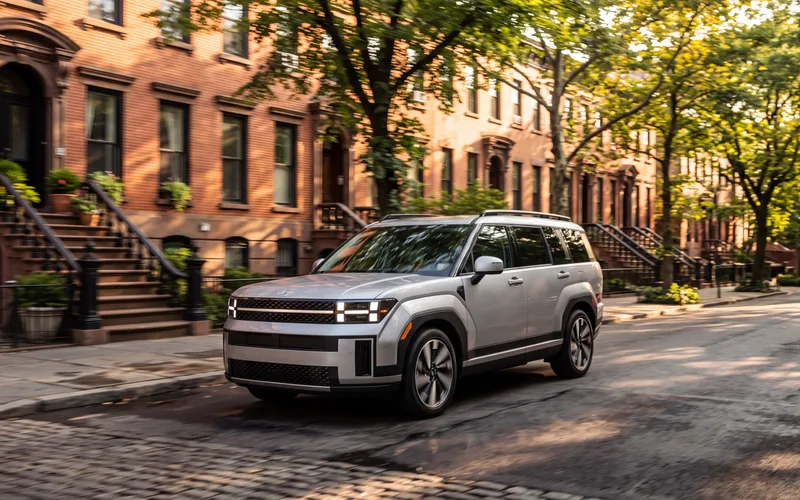 Hyundai Santa FeMid-Size SUVBetter at: Value and warranty
Costs about $5,000 less, adds a third row and a hybrid powertrain, and backs it with a 5-year/60,000-mile basic warranty against Nissan's 3-year/36,000.
Compare 2.63C+
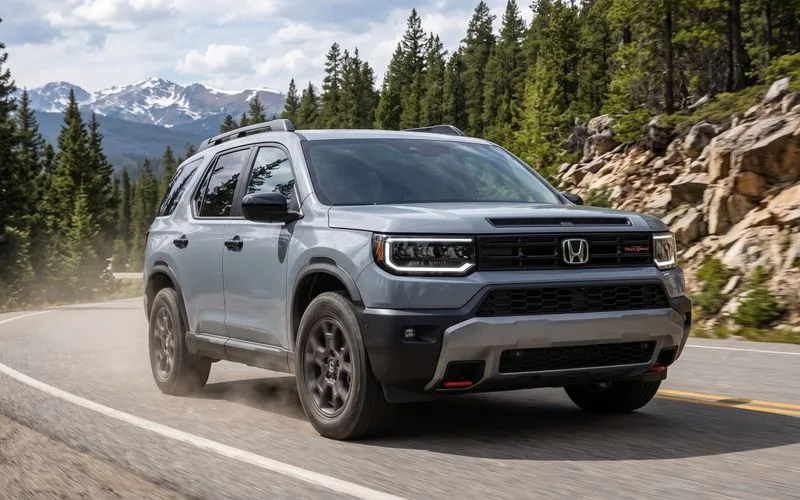 Honda PassportMid-Size SUVBetter at: Cargo and towing
Roughly 83 cu ft of maximum cargo and about 5,000 lbs of towing versus the Murano's 63.5 cu ft and 1,500 lbs, for buyers who need the utility a mid-size SUV is supposed to have.
Compare 1.89C-
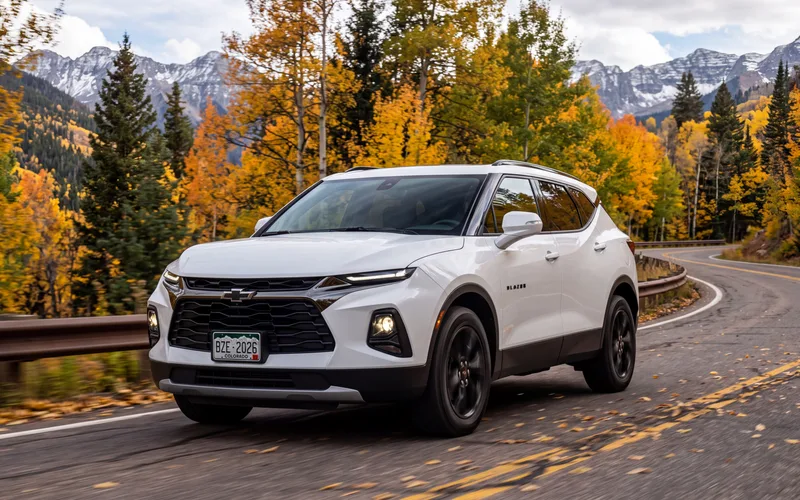 Chevrolet BlazerMid-Size SUVBetter at: Price
A similarly styled two-row crossover for roughly $4,700 less at the entry point, with a V6 and a usable tow rating the Murano can't offer.
CompareProduction history
Best fit & conditions
Higher scores mean a better fit for that use case. Learn more about use-case fit →
Subject profile
Academic Probation · NHTSA safety recalls
No NHTSA safety recall is on record for the 2026 Nissan Murano. Other model years of the Murano have 9 — listed below.
9 recalls on other model years of the Murano (2017–2020, 2024–2025)
Nov 26, 2025Back over prevention: softwareA software error may occur in the In-Vehicle Infotainment (IVI) system at vehicle startup, resulting in the rearview camera image not displaying when the vehicle is shifted into reverse. As such, these vehicles fail to comply with the requirements of Federal Motor Vehicle Safety Standard (FMVSS) number 111, "Rear Visibility."
Defect
Nissan North America, Inc. (Nissan) is recalling certain 2025 Murano, 2025-2026 Armada, and Infiniti QX80 vehicles. A software error may occur in the In-Vehicle Infotainment (IVI) system at vehicle startup, resulting in the rearview camera image not displaying when the vehicle is shifted into reverse. As such, these vehicles fail to comply with the requirements of Federal Motor Vehicle Safety Standard (FMVSS) number 111, "Rear Visibility."
Risk
A rearview image that does not display reduces the driver's view behind the vehicle, increasing the risk of a crash.
Remedy
The IVI system software will be updated by a dealer, or through an over-the-air (OTA) update, free of charge. Owner notification letters were mailed February 2, 2026. Owners may contact Nissan's customer service at 800-647-7261 or Infiniti's customer service at 1-800-662-6200. Nissan's numbers for this recall are R25D6, R25D5, and R25D7. Vehicle Identification Numbers (VINs) involved in this recall will become searchable on NHTSA.gov beginning December 12, 2025.
NHTSA campaign 25V821000 ↗Manufacturer no. R25D6, R25D5, R25D764,085 vehicles potentially affected (all models in the campaign)Owners notified Jan 23, 2026Filed by Nissan North America, Inc.Filed as MURANOMar 19, 2025Service brakes, hydraulic: foundation components: disc: caliperOne or both front brake caliper assemblies may have reduced strength and could break. As such, these vehicles fail to comply with the requirements of Federal Motor Vehicle Safety Standard number 135, "Light Vehicle Brake Systems."
Defect
Nissan North America, Inc. (Nissan) is recalling certain 2025 Murano, Pathfinder, and INFINITI QX60 vehicles. One or both front brake caliper assemblies may have reduced strength and could break. As such, these vehicles fail to comply with the requirements of Federal Motor Vehicle Safety Standard number 135, "Light Vehicle Brake Systems."
Risk
A broken front brake caliper can cause a loss of front brake function, increasing the risk of a crash.
Remedy
Dealers will inspect and replace the front brake caliper assemblies as necessary, free of charge. Owner notification letters were mailed May 9, 2025. Owners may contact Nissan's customer service at 800-647-7261 or INFINITI's customer service at 1-800-662-6200. Nissan's numbers for this recall are PD137 and PD138.
NHTSA campaign 25V173000 ↗Manufacturer no. PD137, PD1381,430 vehicles potentially affected (all models in the campaign)Owners notified May 9, 2025Filed by Nissan North America, Inc.Filed as MURANOJan 30, 2024Visibility: glass, side/rearThe incorrect primer may have been used on the quarter glass, resulting in the left and right quarter glass detaching from the vehicle.
Defect
Nissan North America, Inc. (Nissan) is recalling certain 2024 Murano vehicles. The incorrect primer may have been used on the quarter glass, resulting in the left and right quarter glass detaching from the vehicle.
Risk
Detached glass panels can become a road hazard, increasing the risk of a crash.
Remedy
Dealers will replace both side quarter glass panels, free of charge. Owner notification letters were mailed March 7, 2024. Owners may contact Nissan customer service at 1-800-867-7669. Nissan's number for this recall is PD102.
NHTSA campaign 24V053000 ↗Manufacturer no. PD1026 vehicles potentially affected (all models in the campaign)Owners notified Mar 7, 2024Filed by Nissan North America, Inc.Filed as MURANOMay 27, 2021Steering: linkages: knuckle: spindle: arm · Suspension: rear: axle: spindleThe front steering knuckle or rear axle housing may have insufficient strength due to improper heat-treatment.
Defect
Nissan North America, Inc. (Nissan) is recalling certain 2020 Nissan Murano, INFINITI QX60, 2021 Nissan GT-R, INFINITI QX50, and Q50 vehicles. The front steering knuckle or rear axle housing may have insufficient strength due to improper heat-treatment.
Risk
The steering knuckle or rear axle could deform upon impact, such as from hitting a curb, resulting in a loss of steering control, or possible wheel separation. Both of these conditions can increase the risk of a crash.
Remedy
Dealers will inspect and replace the front steering knuckle and rear axle housing, as necessary, free of charge. Owner notification letters were mailed July 26, 2021. Nissan owners may contact customer service at 1-800-867-7669. INFINITI owners may contact customer service at 1-800-662-6200.
NHTSA campaign 21V402000 ↗14,276 vehicles potentially affected (all models in the campaign)Owners notified Jul 26, 2021Filed by Nissan North America, Inc.Filed as MURANOMar 11, 2021Steering: linkagesThe left and/or right-hand transverse link may not have been manufactured correctly, which could result in it separating from the ball joint.
Defect
Nissan North America, Inc. (Nissan) is recalling certain 2020 Nissan Murano vehicles. The left and/or right-hand transverse link may not have been manufactured correctly, which could result in it separating from the ball joint.
Risk
Ball joint separation can cause a loss of vehicle control, and increase the risk of a crash.
Remedy
Nissan will notify owners, and dealers will inspect the transverse link's lot codes, and if necessary, replace them and perform a vehicle alignment, free of charge. Owner notification letters were mailed on May 6, 2021. Owners may contact Nissan customer service at 1-800-867-7669. Nissan's number for this recall is PC797.
NHTSA campaign 21V170000 ↗Manufacturer no. PC79715,223 vehicles potentially affected (all models in the campaign)Owners notified May 6, 2021Filed by Nissan North America, Inc.Filed as MURANONov 8, 2019Service brakes, hydraulic: antilock/traction control/electronic limited slipThese vehicles were previously recalled and unrepaired, or inspected and determined to not need a repair, under recall number 18V-601. In addition, this recall expands the previous population. The Anti-lock Brake System (ABS) actuator pumps may allow brake fluid to leak onto an internal circuit board.
Defect
Nissan North America, Inc. (Nissan) is recalling certain 2015-2018 Nissan Murano, 2016-2018 Nissan Maxima, and 2017-2019 Nissan Pathfinder and Infiniti QX60 vehicles. These vehicles were previously recalled and unrepaired, or inspected and determined to not need a repair, under recall number 18V-601. In addition, this recall expands the previous population. The Anti-lock Brake System (ABS) actuator pumps may allow brake fluid to leak onto an internal circuit board.
Risk
A brake fluid leak on the circuit board may result in an electrical short, increasing the risk of a fire.
Remedy
Nissan will notify owners, and dealers will replace the ABS actuator, free of charge. Owners will receive a second notice when remedy parts become available, currently expected to be during summer 2020. Owners may contact Nissan customer service at 1-800-867-7669. Note: If the ABS warning light remains illuminated for more than 10 seconds after engine start up, owners are advised to park the vehicle outdoors away from other vehicles or structures and to not drive the vehicle.
NHTSA campaign 19V807000 ↗391,479 vehicles potentially affected (all models in the campaign)Owners notified Dec 16, 2019Filed by Nissan North America, Inc.Filed as MURANOSep 12, 2019Back over prevention: sensing system: cameraAdditionally included are 2019 Nissan GT-R and Taxi and Infiniti QX50, QX60, Q70, Q70L vehicles. The back-up camera and display settings can be adjusted such that the rear view image is no longer visible and the system will retain that setting the next time the vehicle is placed in reverse. As such, these vehicles fail to comply with the requirements of Federal Motor Vehicle Safety Standard (FMVSS) number 111, "Rear Visibility."
Defect
Nissan North America, Inc. (Nissan) is recalling certain 2018-2019 Nissan Altima, Armada, Frontier, Kicks, Leaf, Maxima, Murano, NV, NV200, Pathfinder, Rogue, Rogue Sport, Sentra, Titan, Titan Diesel, Versa Note and Versa Sedan vehicles, as well as Infiniti Q50, Q60, QX30 and QX80 vehicles. Additionally included are 2019 Nissan GT-R and Taxi and Infiniti QX50, QX60, Q70, Q70L vehicles. The back-up camera and display settings can be adjusted such that the rear view image is no longer visible and the system will retain that setting the next time the vehicle is placed in reverse. As such, these vehicles fail to comply with the requirements of Federal Motor Vehicle Safety Standard (FMVSS) number 111, "Rear Visibility."
Risk
The lack of an image in the back-up camera display increases the risk of a crash.
Remedy
Nissan will notify owners in phases, having dealers update the back-up camera settings software, free of charge. The recall began November 11, 2019 and all affected VINs should be activated. Owners may contact Nissan customer service at 1-800-867-7669 or INFINITI customer service at 1-800-662-6200.
NHTSA campaign 19V654000 ↗1,228,830 vehicles potentially affected (all models in the campaign)Owners notified Nov 11, 2019Filed by Nissan North America, Inc.Filed as MURANOSep 7, 2018Service brakes, hydraulic: antilock/traction control/electronic limited slipThe Anti-Lock Brake (ABS) actuator pumps may allow brake fluid to leak onto an internal circuit board.
Defect
Nissan North America, Inc. (Nissan) is recalling certain 2015-2017 Nissan Murano, 2016-2017 Nissan Maxima, 2017-2018 Nissan Pathfinder, and 2017 Infiniti QX60 vehicles. The Anti-Lock Brake (ABS) actuator pumps may allow brake fluid to leak onto an internal circuit board.
Risk
A brake fluid leak on the circuit board may result in an electrical short, increasing the risk of a fire.
Remedy
Nissan will notify owners, and dealers will inspect the serial number on the ABS actuator, replacing it as necessary, free of charge. The recall began October 29, 2018. Owners may contact Nissan customer service at 1-800-867-7669. Note: When brake fluid has leaked onto the circuit board, the ABS warning lamp will remain illuminated for more than 10 seconds after engine start up. If this occurs, owners are advised to park the vehicle outdoors away from other vehicles or structures and to not drive the vehicle.
NHTSA campaign 18V601000 ↗215,124 vehicles potentially affected (all models in the campaign)Owners notified Oct 29, 2018Filed by Nissan North America, Inc.Filed as MURANOSep 2, 2016Service brakes, hydraulic: antilock/traction control/electronic limited slipThe affected vehicles have Anti-Lock Brake (ABS) actuator pumps that may allow brake fluid to leak onto an internal electrical circuit board.
Defect
Nissan North America, Inc. (Nissan) is recalling certain model year 2016-2017 Nissan Maxima vehicles manufactured February 10, 2015, to August 19, 2016 and equipped with Intelligent Cruise Control, 2015-2017 Murano vehicles manufactured August 22, 2014, to August 19, 2016 and equipped with Intelligent Cruise Control, and 2015-2016 Murano Hybrid vehicles manufactured August 22, 2014, to July 19, 2016. The affected vehicles have Anti-Lock Brake (ABS) actuator pumps that may allow brake fluid to leak onto an internal electrical circuit board.
Risk
A brake fluid leak onto the circuit board may result in an electrical short, increasing the risk of a fire.
Remedy
Nissan will notify owners, and dealers will inspect the ABS Actuator, replacing it as necessary, free of charge. The recall began on December 12, 2016. Owners may contact Nissan customer service at 1-800-647-7261. Note: When brake fluid has leaked onto the circuit board, the ABS warning lamp will remain illuminated for more than 10 seconds after engine start up. If this occurs, owners are advised to park the vehicle outdoors away from other vehicles or structures and to not drive the vehicle.
NHTSA campaign 16V636000 ↗120,329 vehicles potentially affected (all models in the campaign)Owners notified Dec 12, 2016Filed by Nissan North America, Inc.Filed as MURANO
Source: NHTSA Office of Defects Investigation recall database, model years 2017–2026. Recalls are listed by model year as the manufacturer filed them; whether a specific car is affected depends on its VIN — check a VIN at nhtsa.gov ↗. NHTSA model names matched to this page: MURANO.
Detailed scoring by subject
1Performance & PowertrainThe Murano's lowest-graded category.0.37F
The fourth-generation (Z53) Murano carries a single 2.0-liter KR20DDET variable-compression turbo four rated at 241 hp for 2026 — identical across SV, SL and Platinum, with no V6 or electrified alternative. Replaces the placeholder figure.
Peak torque of 260 lb-ft from the VC-Turbo four is up on the old 3.5L V6's 260 lb-ft only in delivery, not magnitude, and is mid-pack for a mid-size two-row crossover. Replaces the placeholder figure.
Three independent instrumented tests of the Z53 Murano cluster in the 7.2–7.6 s range; Edmunds' 7.4 s on the Platinum AWD is used as the representative figure since AWD is standard for 2026. Distinctly quicker than the placeholder assumption of 8.6 s.
The VC-Turbo pulls cleanly in normal driving and its variable-compression trick smooths part-throttle response, but reviewers consistently note it sounds coarse and buzzy under hard acceleration and lacks the effortless swell of the V6 it replaced, with some off-the-line lag. Solidly mid-band rather than the near-luxury smoothness the Murano's Premium positioning implies.
The nine-speed torque-converter automatic that arrived with the Z53 redesign is the single biggest driveability improvement over the old Xtronic CVT — shifts are natural and well-timed and the rubber-band effect is gone. It stops short of the top band because it can be slow to kick down and there is no meaningful manual control.
Rated at just 1,500 lbs — near the bottom of the mid-size SUV field, where 3,500–5,000 lbs is typical. The unibody, transverse four-cylinder layout with no factory tow package of consequence caps it well below rivals like the Pilot, Highlander or Grand Cherokee. Replaces a placeholder that overstated capability by roughly 3x.
For 2026 Nissan made intelligent AWD standard on every trim and dropped last year's SV FWD model, so there is no way to buy a front-drive Murano — a genuine year-over-year upgrade. Scored at the bottom of the top band rather than higher because the system is a basic on-demand front-biased setup with no low range, locking differentials or terrain-specific modes.
8.3 inches of ground clearance is respectable on paper and standard AWD helps in snow and on rutted gravel, but there is no off-road trim, no skid plating, no locker or terrain-mode suite, and road-biased tires and bumper geometry. This is a pavement crossover with foul-weather traction, not a trail vehicle.
One engine, one transmission, one drivetrain: the 2.0L VC-Turbo with the 9-speed automatic and standard AWD is the entire 2026 lineup. No hybrid, PHEV or EV variant is offered, which is a real gap in a mid-size two-row segment where the RAV4, Santa Fe, Sorento and CX-70 all offer electrified choices.
2Efficiency & RangeOne of the Murano's weakest categories.1.27D
For 2026 every Murano is AWD with the 2.0L VC-Turbo four and 9-speed automatic; EPA rates all trims at 23 mpg combined. Weak for a mid-size SUV in 2026 because there is no hybrid variant to lift the number.
21 mpg city trails hybrid-equipped mid-size rivals badly — the VC-Turbo has no electric assist for stop-and-go work, and standard AWD adds parasitic loss.
27 mpg highway is the powertrain's strongest showing — the variable-compression engine runs a high-compression, low-boost cycle at cruise — but it is still mid-pack for the segment.
The 18.7-gallon tank and 23 mpg combined give roughly 430 miles between fills, about 505 on a highway run — respectable rather than notable, since mediocre economy is offset by a decently large tank.
At 23 mpg combined the Murano burns roughly 652 gallons a year under EPA's 15,000-mile assumption; regular-grade fuel keeps the bill from being worse, but it still runs well above hybrid mid-size SUVs.
Despite being turbocharged, the VC-Turbo is calibrated for 87-octane regular on every trim — premium is optional and buys nothing measurable — so no fuel-grade penalty on top of the mediocre mpg.
3SafetyThe Murano's best-graded category.3.63A-
NHTSA rates the current-generation Murano 5 stars overall; the 2026 car is a carryover of the 2025 redesign with no structural changes, so the rating stands. Sub-scores are 5 stars side, 4 stars frontal and 4 stars rollover.
The 2025-26 Murano is an IIHS TOP SAFETY PICK+ with Good ratings in the small overlap front, updated moderate overlap front (rear-passenger dummy) and updated side tests — a clean sheet in the toughest current crashworthiness battery. Only the absence of any Superior-tier distinction beyond the award keeps it off the very top of the band.
Every trim — including the $41,670 SV — gets Nissan Safety Shield 360 (AEB with pedestrian detection, forward collision warning, blind spot warning, rear cross traffic alert, lane departure warning, rear automatic braking, high beam assist) plus ProPILOT Assist with Intelligent Cruise Control and steering assist. Nothing from the core five is trim-locked; only the surround-view camera and hands-free 2.1 are.
The Murano carries TOP SAFETY PICK+ under the 2026 criteria, which require a Good pedestrian front crash prevention rating (day and night) plus at least Acceptable in the harder vehicle-to-vehicle FCP 2.0 evaluation run at 31/37/43 mph against a car, motorcycle and semitrailer. Withheld from the top of the band because the vehicle-to-vehicle result is not confirmed as Good.
Blind Spot Warning and Rear Cross Traffic Alert are standard on all three trims, and Nissan goes past alert-only with Intelligent Blind Spot Intervention (brake-based steering nudge) and standard Rear Automatic Braking. No rear-occupant safe-exit alert, which is what separates it from the very top of the band.
Lane departure warning and lane keep assist are standard, but Consumer Reports' 2026 road test found ProPILOT Assist's lane centering makes the Murano 'ping-pong' between the lane lines and swing wide through corners. Functional but visibly unpolished next to the best mid-size SUV systems.
Standard ProPILOT Assist gives full-speed-range Intelligent Cruise Control with stop-and-go and hold, and Consumer Reports rates the distance-keeping as decent. The combined highway-assist experience is dragged down by the lane-centering wander rather than by the cruise control itself.
New for 2026: ProPILOT Assist 2.1 brings hands-off, feet-off single-lane driving on mapped divided highways with driver-attention monitoring — a genuine hands-free system. But it is locked to the $2,900 Technology package on the top Platinum trim only, and is single-lane (no automated lane changes), so coverage and capability trail BlueCruise and Super Cruise.
TOP SAFETY PICK+ requires Acceptable-or-better headlights on every trim, and High Beam Assist is standard fleet-wide. IIHS testing notes good straightaway visibility on both sides but only fair illumination on the sharp right curve, which reads as Acceptable rather than Good on the volume trims.
The Murano's coupe-like roofline, high beltline and thick rear pillars keep rearward sightlines poor — a long-standing complaint carried into the current generation. Camera compensation is real but not standard: the Around View Monitor starts at SL, and the HD enhanced 3D version with Invisible Hood View needs the Platinum Technology package, leaving base SV buyers with just a backup camera and parking sensors.
IIHS rates the Murano's LATCH hardware Good+ — its top ease-of-use grade. Two full sets of lower anchors sit under flip-off covers, three clearly marked top tethers are halfway down the seatback, and Cars.com fit-tested three car seats across the back bench with legroom to spare. Only the fixed outboard head restraints and a floppy center buckle keep it from a perfect mark.
4Space & ComfortMid-pack among this car's ten categories.1.84C-
The fourth-generation Murano remains a strictly two-row, five-passenger mid-size SUV across SV, SL and Platinum — no seven-seat configuration is offered. Replaces a placeholder value of 6.3 seats.
Volume SV trim has no panoramic moonroof, so the 41.1 in figure applies; SL and Platinum lose 1.7 in to the glass roof. Generous for the segment thanks to the 2025 redesign's taller, wider body.
44.3 in of front legroom sits at the top of the mid-size SUV band and is one of the Murano's clearest packaging strengths. Placeholder had understated this at 42.8 in.
Second-row headroom of the volume SV configuration is 39.7 in, near the top of the SUV band; the panoramic roof on SL/Platinum cuts it to 37.9 in.
36.3 in is mid-pack for a mid-size two-row SUV — adequate for adults but well short of three-row rivals and of the Murano's own generous front-row space, a byproduct of the style-led fastback roofline.
The Murano has no third row in any 2026 trim — it is a dedicated two-row, five-seat SUV, and buyers needing seven seats are pushed to the Pathfinder. Scored in the low band per the no-third-row rule; the placeholder's 65 wrongly implied one exists.
32.9 cu ft behind the rear seats is modest for a 192.9-in-long mid-size SUV — the sloping tailgate and style-first packaging cost real volume against boxier two-row rivals. The placeholder's 67.5 cu ft was more than double the real figure.
63.5 cu ft with the 60/40 second row folded flat lands near the bottom of the SUV band — competitive two-row mid-sizers clear 70–80 cu ft. Placeholder claimed 90.4 cu ft.
Competent everyday storage rather than innovation: the redesigned center console adds a deep covered armrest bin, a standard magnetically-aligned wireless charging pad across all three trims, and usable door pockets — but there is no underfloor bin, frunk, or fold-flat trick surface, and the fastback cargo hold limits vertical stowage. Placeholder's 90 implied standout innovation the Murano does not have.
Nissan's Zero Gravity front seats are repeatedly singled out as among the best in any mid-size SUV — generous shaping, supportive bolsters and effective power lumbar, with testers reporting hours without fatigue. For 2026 the new SL Comfort package extends ventilated + massaging front seats and heated outboard rear seats below the Platinum trim, widening access to the best version of the cabin.
Reviews split: most describe a smooth, isolated, near-luxury ride, but Consumer Reports' road test of the Murano found it rides stiffly with most bumps transmitted into the cabin and abrupt pitch over undulations — a penalty that tracks with the Platinum's 21-inch wheels. Composed rather than segment-leading, so mid-upper band rather than the placeholder's 90.
Isolation is a consistent strength — wind and road noise stay low even on coarse pavement at highway speed, with reviewers comparing it to luxury-brand rivals. Held below the top band because the 2.0L VC-Turbo is audibly coarse under hard acceleration, a step back from the outgoing V6's smoothness.
Rich and, for 2026, more widely available: dual-zone automatic climate and wireless charging are standard on the base SV AWD, heated front seats and heated steering wheel arrive on SL, and the new SL Comfort package brings ventilated massaging front seats and heated rear seats down from Platinum, which also adds quilted semi-aniline leather and a color head-up display. Second row gets vents rather than its own climate zone, which keeps it out of the top of the band.
5Cost of OwnershipOne of the Murano's weakest categories.0.58F
For 2026 the Murano drops front-wheel drive entirely, so the cheapest way in is the SV AWD at $41,670 plus $1,495 destination; Nissan held AWD trim pricing flat versus 2025, but killing the FWD trims raises the real entry point.
The mid-grade SL is the volume configuration — it carries the panoramic roof, Bose audio, heated steering wheel and Google built-in that buyers cross-shop the Murano for, and for 2026 the SL Comfort package adds ventilated/massaging front seats and heated rear seats.
CarEdge puts scheduled maintenance at about $526/yr over the first five years (~$2,600), with unscheduled repair on top; the VC-Turbo 2.0 and 9-speed automatic are more complex than the old naturally aspirated V6/CVT, and Nissan's brand-average 10-year maintenance-plus-repair figure implies roughly this much falls in the first five years.
The Murano is one of the weaker retainers in the mid-size SUV class — iSeeCars measures 53.5% depreciation at five years against a 48.5% class average — and heavy incentive support on a slow-selling nameplate keeps residuals soft despite the 2025 redesign.
Nissan's New Vehicle Limited Warranty remains 3 years / 36,000 miles for 2026 — the class minimum, and well short of Hyundai/Kia's 5-year basic coverage that the Murano's Korean rivals bring at similar money.
5 years / 60,000 miles on engine, transmission and drivetrain — the bottom of the mainstream band, which matters more than usual here given the variable-compression turbo four is a comparatively novel piece of hardware.
There is no complimentary scheduled maintenance — Nissan sells prepaid service plans instead. What is included is roadside assistance for the 3-year/36,000-mile basic term plus the usual short connected-services and SiriusXM trials, with Google built-in services on SL and Platinum. That is basic-roadside-only territory, the floor of the 50–79 band, and it trails rivals that include two or three years of covered service.
$48,255 volume-trim price minus its estimated resale value after 5 years (46% retained, or about $22,197) leaves about $26,058 in depreciation. Add the projected $6,700 in 5-year maintenance and repairs, and owning this vehicle for 5 years costs about $32,758 in total.
6Reliability & QualityMid-pack among this car's ten categories.2.59C+
Mixed signals: J.D. Power rates the 2026 Murano 77/100 for quality & reliability — squarely in its "Average" 70–80 band — and the nameplate won Most Dependable Midsize SUV in the 2026 VDS, but that award covers 3-year-old (2023) V6/CVT cars, not the redesigned Z53. Consumer Reports flags the 2025 ground-up redesign as elevated first-years risk, and 2025 owners have logged transmission hesitation and buggy infotainment. Placeholder score cut 20 points to reflect redesign risk the seed value ignored.
Nissan is trending up, not mid-pack: it placed 6th of 26 brands in Consumer Reports' 2026 predicted-reliability rankings and jumped nine positions in the J.D. Power 2026 VDS to 194 PP100 — above the industry average and 10th overall. Strong for a mainstream brand, but not the sustained top-5 record that earns the 80+ band.
The redesigned Murano drew two NHTSA recalls in its first model year (2025) — an IVI software fault that blanked the backup camera, and front brake caliper assemblies with reduced strength that could break, shared with Pathfinder and QX60. The 2026 build carries no recalls to date, but a structural brake-hardware campaign one year in is worse than a clean launch.
The 241-hp 2.0L VC-Turbo comes from the engine family behind Nissan's worst recent durability story — a 443,899-vehicle bearing-failure recall, an NHTSA investigation, a warranty extension and a class action, with failures running to metal in the oil pan and destroyed engines. The Murano's application is not covered by that recall, and dropping the CVT for a conventional 9-speed hydraulic automatic removes Nissan's other long-standing durability liability, but a variable-compression engine with an unresolved bearing reputation plus a transmission new to this model is an unproven combination.
The cabin is the Murano's headline strength and reads a class above its badge — padded surfaces, contrasting materials, dual 12.3-inch displays, ambient accent lighting, and semi-aniline leather with massaging front seats on Platinum. It stops short of true luxury-grade materials, and reviewers dislike the fingerprint-magnet piano-black around the shifter buttons.
Assembly quality reads as solid and reviewers describe a serene, well-built cabin, but this is the second year of an all-new platform and owner reports from 2025 cars include buggy tech behavior (steering-wheel buttons dropping out, settings resetting, Android Auto faults) and isolated noise complaints. Generally solid with scattered complaints — the middle band.
Nissan runs one of the densest mainstream US dealer networks and consistently posts top-tier service satisfaction — No. 1 in the J.D. Power CSI Study two years running earlier this decade and second among mass-market SUV/minivan brands in the 2026 study. Service access and experience are a genuine ownership advantage here.
Running costs are better than average for the class — RepairPal puts Murano repair and maintenance at $507/yr against $652 across all models, and CarEdge's 10-year projection beats the SUV average. Parts are widely stocked through a large mainstream network. Held below the top band because VC-Turbo and 9-speed components are new-generation and effectively dealer-channel, with no established aftermarket yet.
7Technology & InfotainmentOne of the Murano's strongest categories.2.99B-
Every 2026 Murano ships with dual 12.3-inch displays in a single housing — a 12.3-in center touchscreen plus a 12.3-in digital gauge cluster — with no smaller base screen and no larger optional unit.
The Google-based system on the volume SL and Platinum grades is quick, logically laid out, and reviewers describe it as responsive; points come off because the base SV runs the older NissanConnect software instead, and the redesign moved climate and seat functions to touch-sensitive panel controls that reviewers say require a glance away from the road.
Wireless Apple CarPlay and wireless Android Auto are standard on all three 2026 trims including the base SV — no wired-only tier and no upper-trim gating.
SL and Platinum get Google built-in — native Google Maps with a persistent, non-timing-out map and natural-language Google Assistant, plus Alexa built-in — which is among the better native nav/voice setups in the segment; the base SV drops to conventional NissanConnect voice with navigation not part of the Google stack.
SL and Platinum carry a 10-speaker Bose system with a Richbass subwoofer — pleasant and clearly better than the SV's six-speaker base setup, but a mid-tier Bose rather than the larger branded systems (Bose Performance, Mark Levinson, Meridian) found in premium mid-size rivals.
A full 12.3-inch configurable digital gauge cluster is standard on every trim, sharing the dash housing with the center screen — crisp and near class-leading for size at this price, though the layout options are less elaborate than the best luxury systems.
Nissan supports over-the-air updates for infotainment software and maps through NissanConnect (and the Google built-in app layer on SL/Platinum), but there is no evidence of regular whole-vehicle OTA campaigns that add powertrain or driver-assist features the way EV-native rivals do.
The NissanConnect Services app covers the core set — remote start, remote lock/unlock, My Car Finder, vehicle health reports, alerts — but it is trial-then-subscription for the Premium/Premium Plus tiers that carry remote start, and the Murano offers no phone-as-key digital key.
Four USB-C ports split between front and rear rows plus a standard wireless charging pad with magnetic alignment on every trim is a strong loadout for a two-row mid-size SUV; no household AC outlet keeps it out of the top band.
Nissan Intelligent Key proximity entry, push-button start and key-fob remote engine start are standard fleet-wide; a power liftgate arrives on SL and the motion-activated hands-free liftgate on Platinum and the SL Comfort package. No phone-as-key option holds it below the top band.
The 3D Enhanced Intelligent Around View Monitor with Invisible Hood View is standard on both SL and Platinum — a high-quality surround system available well below the top trim — backed by standard front and rear parking sensors; there is no automated self-parking function.
A multi-color digital head-up display is offered, but only on the top Platinum grade — it cannot be optioned onto the SV or the volume SL, which keeps this in the limited-availability band.
8Use-Case FitMid-pack among this car's ten categories.2.03C
The fourth-gen Murano's wider-opening rear doors, flat second-row floor and 32.9 cu ft behind the rear seat make daily kid-and-stroller logistics easy, and the bench clears a rear-facing seat without punishing the front passenger. It is a five-seater only, so a third car seat or a carpool third row is off the table — a real ceiling versus three-row mid-size rivals.
Top credentials on the trim families actually buy: IIHS Top Safety Pick+ for 2026 and a five-star NHTSA overall rating, with Safety Shield 360, ProPILOT Assist (lane centering plus stop-and-go), front/rear parking sensors, rear automatic braking, driver-attention monitoring and rear-seat alert all standard from the $41,670 SV. Only the hands-free ProPILOT Assist 2.1 is paywalled to a Platinum package.
A genuinely quiet, well-insulated cabin, Zero Gravity seats now in the second row, available manual rear sunshades and 32.9 cu ft of luggage space with all five seats occupied make it a strong medium-haul family tourer. Rear amenities stay thin — rear-seat heat is Platinum-only, there is no rear entertainment — and Consumer Reports found the ride stiff and choppy over broken pavement.
Standard ProPILOT Assist with stop-and-go, excellent front seats and a library-quiet cabin make the commute low-fatigue, but the new 2.0 VC-Turbo and nine-speed automatic draw consistent criticism for low-speed hesitation followed by an abrupt shove, and controls are scattered across a maze of screens and menus. Those are exactly the annoyances that show up every day in traffic.
23 mpg combined from a 241-hp four-cylinder is weak for a 2026 mid-size crossover, and Consumer Reports measured just 21 mpg overall — no better than the old V6, so the downsized turbo buys nothing at the pump. Regular unleaded and the absence of a hybrid tax are the saving graces; there is also no hybrid or PHEV Murano to step into.
At 192.9 in long and 78.0 in wide on 20- or 21-inch wheels this is a big two-row crossover with thick rear pillars, so tight garages and city curbs take care. Standard front and rear parking sensors, a standard power liftgate and the available Around View 360-degree monitor do most of the heavy lifting.
A 1,500 lb maximum tow rating is barely enough for a small utility trailer or a pair of jet skis, and rules out virtually every boat, camper or equipment trailer. There is no bed, no payload story and a unibody comfort chassis — the Murano is not a work vehicle in any meaningful sense.
The Murano is a comfort-and-style crossover with soft-trim interiors and no fleet presence, and its 2.0 VC-Turbo variable-compression engine paired with a nine-speed automatic is a young, complex combination with no long-duty track record. Consumer Reports predicts only average reliability, which is fine for a family car and thin reassurance for hard use.
Provisions are the crossover basics: cargo tie-down hooks, a dealer-accessory tow hitch and roof-rail crossbars, plus a 120V outlet that is an option rather than standard equipment. There are no washable surfaces, no bed-access hardware and no upfitter ecosystem to speak of.
This is the Murano's best mission: front seats reviewers call among the most comfortable in the mid-size class, heavy sound insulation that keeps wind and road noise down, and ProPILOT Assist standard with hands-free ProPILOT Assist 2.1 available for genuine highway fatigue relief. 27 mpg highway gives useful legs between stops; the stiff-over-bumps ride is the one demerit.
Newly standard all-wheel drive for 2026 and factory roof rails make gravel roads, ski trips and a bike rack entirely routine. Beyond that it is road-biased — modest ground clearance, street tires on 20- and 21-inch wheels, no off-road drive modes or skid plates, and the 1,500 lb tow limit shuts out most trailered toys.
32.9 cu ft behind the second row swallows a family's luggage easily, but 63.5 cu ft with the 60/40 bench folded is well short of two-row rivals — the Honda Passport and Chevrolet Blazer offer far more maximum volume, so bulky loads like bikes or furniture are a squeeze. Roof rails and an accessory hitch add flexibility that the interior alone does not.
9Driving ExperienceMid-pack among this car's ten categories.2.39C+
The fourth-generation Murano (redesigned for 2025, carried into 2026 with AWD now standard) is markedly more composed than the outgoing softly sprung V6 car — frequency-sensitive dampers and a claimed 26% increase in front roll stiffness give flat, secure cornering and 0.83 g of measured lateral grip — but reviewers are consistent that it is tuned for composure rather than agility and cannot match a Mazda CX-70 or CX-90 when pushed. Secure and unremarkable, mid-pack for a mid-size crossover.
The new electric rack is a clear step up from the old Murano's lazy setup — quick, linear and accurate off-center — but multiple reviews describe effort that feels artificially heavy at highway speeds and little genuine road feedback. Precise enough, still numb.
Pedal calibration draws praise for being solid and easy to modulate, and MotorWeek recorded a short 111-ft stop from 60 mph, but Edmunds' own test needed about 130 ft from 60 mph — merely average for a 4,200-lb mid-size crossover. Adequate-to-good stopping power with a well-tuned pedal.
Swapping the 3.5L V6/CVT for the 2.0L VC-Turbo and a 9-speed torque-converter automatic improved drivability meaningfully: 260 lb-ft arrives early, shifts are unobtrusive, and 0–60 mph drops to 7.4 seconds. It loses points for the turbo four straining under moderate-to-heavy load and for occasional lag before the compression ratio and boost catch up.
Wind and road noise are genuinely well suppressed thanks to standard active noise cancellation and active sound control, but the powertrain itself is the weak link: the VC-Turbo four turns growly and sends noticeable noise and vibration into the cabin when revved, which stands out against an otherwise near-luxury level of isolation.
Published turning diameter of 38.7 ft curb-to-curb on the 111.2-in wheelbase the current Murano carries over; wide-ish for a two-row mid-size SUV, though reviewers describe the low-speed maneuverability as better than the number suggests. All 2026 trims ride on 20- or 21-inch wheels, so there is no meaningfully tighter configuration.
A deliberate strength: Nissan raised step-in height to 19.5 in for easy ingress/egress, fits Zero Gravity front seats with wide adjustment (heated/ventilated/massaging on upper trims), and pairs dual 12.3-in screens with retained physical climate and volume controls. Only the steeply raked windshield and thick A-pillars trim forward sightlines versus boxier rivals.
Eco/Standard/Sport drive modes and paddle shifters add some engagement and Sport mode sharpens response for merging, but the Murano is explicitly positioned around quiet, relaxed cruising for empty-nesters rather than driver enjoyment, and the coarse-sounding four gives it no sonic character. Pleasant and easy, not memorable.
10Value & Market PositionOne of the Murano's strongest categories.2.84B-
The volume SV now includes Intelligent AWD as standard (FWD was dropped for 2026) alongside dual 12.3-inch displays, wireless CarPlay/Android Auto, wireless charging, four USB-C ports, ProPILOT Assist, dual-zone climate and active noise cancellation — a strong tech-and-safety baseline. It lands short of the top band because the entry price is $41,670 versus roughly $37,000 for a Blazer LT AWD or $39,390 for a Santa Fe SEL AWD, and base audio is only six speakers.
At $43,165 delivered for an SV and $51,295 for a Platinum, the Murano is priced into near-luxury territory while delivering 241 hp and 23 mpg combined from a single four-cylinder powertrain, with no hybrid or third-row option to justify the premium. Below-average resale further erodes the per-dollar case against a Santa Fe that undercuts it by roughly $5,000 with a third row and a hybrid choice.
Three trims (SV, SL, Platinum) spread $41,670–$49,800 give reasonable budget spacing, but configurability is thin: one engine, one transmission, and — after the FWD SV was culled for 2026 — no drivetrain choice at all, plus no hybrid or PHEV where rivals offer both.
The Z53 redesign produced one of Nissan's strongest sales stories: Murano volume more than doubled in calendar 2025, up 121.3% for the year and 112.1% in Q4, making it a clear fast riser. It stops short of the top band because the gain comes off a depressed base — the outgoing Z52 was a decade old — and absolute volume still trails the segment's leaders.
Nissan reads as a value/volume brand rather than an aspirational one, and the Murano is asking premium money against that backdrop while Nissan works through a well-publicized turnaround. Below-average segment resale is the concrete market consequence of that soft image.
Buyers get real leverage here: 0% APR for 60 months, financing bonus cash up to $3,000, forecast rebates up to $5,000, advertised leases from $399/month, and most transactions landing under sticker. Scored on buyer benefit, this is near the top of the band; it is held just short because the depth of the support also signals the model is not commanding its asking price.
The fourth-generation Z53 launched for 2025 after the Z52 ran ten model years, so 2026 is only year two of a current-platform design — dual 12.3-inch screens, VC-Turbo with a conventional 9-speed replacing the old V6/CVT. The 2026 update adds available ProPILOT Assist 2.1 hands-off highway driving, and there is no redesign risk on the horizon for buyers.
Reviews are consistently favorable — Car and Driver 8.5/10, a U.S. News top-10 midsize SUV finish at 8.8/10, Edmunds praise for the cabin and standard driver aids — and IIHS awarded the 2026 Murano its Top Safety Pick+. It sits below the top band because it is not winning comparison tests and collected no major hardware: no NACTOY nod and no KBB Best Buy for 2026.