
The verdict
A struggling mid-size suv, strong on reliability and held back by performance.
The 2026 Blazer is a good-looking, easy-driving two-row SUV that undercuts nearly every rival on price — $34,300 to start, versus $46,445 for a Honda Passport — and it comes with more standard gear than that number suggests. What it does not offer is space or thrift: 30.5 cubic feet behind the back seat is near the bottom of the mid-size class, and 25 MPG combined trails every hybrid competitor by a third. This is also the run-out year, with gas Blazer production ending September 30, 2026, so discounts are excellent and resale is not. Buy it as a cheap, comfortable, well-equipped commuter; skip it if you need to haul people, gear, or a trailer.
Jump to scoresStrengths
- Priced well below the two-row mid-size field
- Cheap to keep running and easy to get fixed
- Comfortable, quiet, and genuinely pleasant to drive
What holds it back
- Cargo space near the bottom of the class
- Fuel economy that hybrids embarrass
- Depreciation and a thin warranty
Top alternatives
Cars shoppers cross-shop with the Chevrolet Blazer 2.63C+
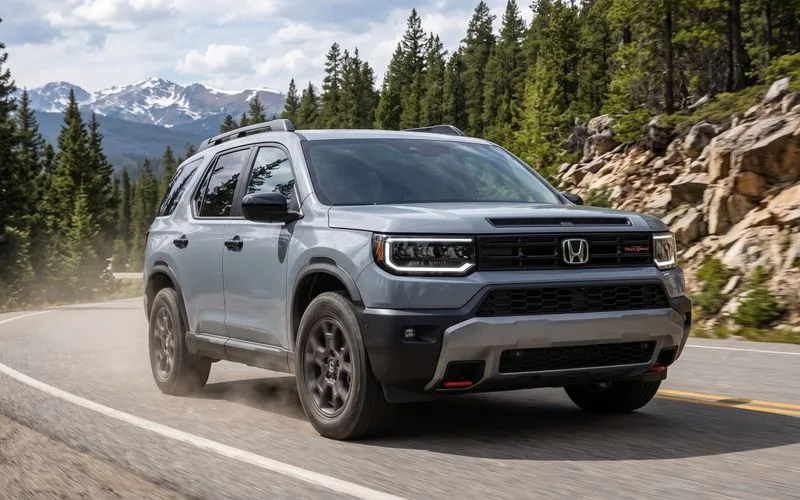 Honda PassportMid-Size SUVBetter at: Cargo and resale
It is the two-row mid-size SUV the Blazer is trying to be, with far more cargo room, real trail capability and much better resale, if your budget can stretch past $46,000.
Compare 2.40C+
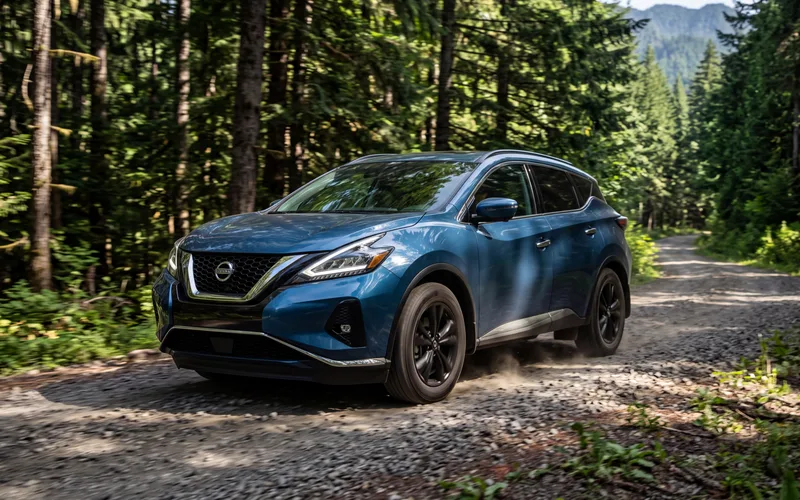 Nissan MuranoMid-Size SUVBetter at: Interior quality
A recently redesigned rival with a genuinely nicer cabin and standard ProPILOT driver assists, for shoppers who want current tech rather than the lowest price.
Compare 1.71C-
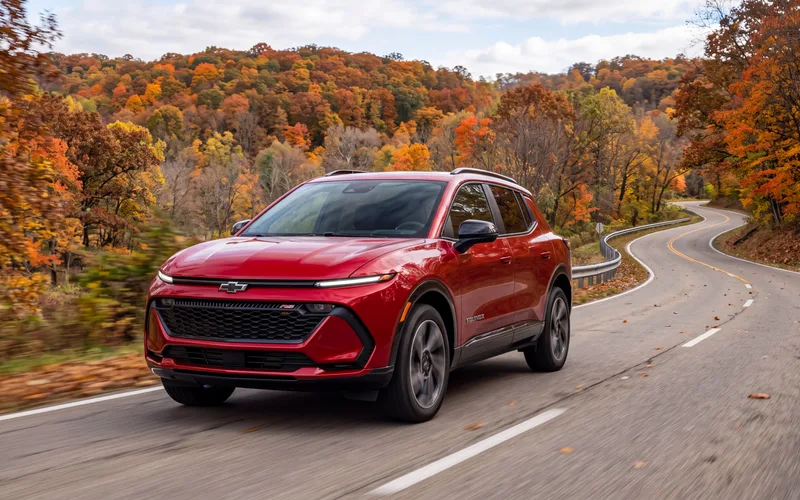 Chevrolet EquinoxCompact SUVBetter at: Value and freshness
The newer, cheaper Chevrolet that delivers similar cargo space and better MPG, and will not go out of production in September.
CompareHow it's evolved
8 scored model years · 2019–2026
Subject scores by year
Hover or tap a score to see what moved it versus the year before. A corner mark flags a big swing.
| Year | Performance | Efficiency | Safety | Space | Cost | Reliability | Tech | Use-case | Driving | Value |
|---|---|---|---|---|---|---|---|---|---|---|
| 2026 | 42 | 58 | 62 | 49 | 48 | 67 | 62 | 51 | 61 | 60 |
| 2025 | 42 | 57 | 60 | 48 | 48 | 65 | 61 | 52 | 61 | 62 |
| 2024 | 43 | 57 | 58 | 47 | 44 | 66 | 60 | 52 | 62 | 63 |
| 2023 | 42 | 57 | 60 | 45 | 51 | 66 | 57 | 53 | 60 | 60 |
| 2022 | 42 | 57 | 60 | 45 | 52 | 69 | 53 | 52 | 60 | 55 |
| 2021 | 42 | 57 | 58 | 44 | 56 | 63 | 51 | 52 | 60 | 57 |
| 2020 | 43 | 52 | 49 | 45 | 52 | 61 | 47 | 51 | 60 | 63 |
| 2019 | 49 | 42 | 48 | 45 | 51 | 62 | 48 | 51 | 63 | 61 |
Compare two years
Best fit & conditions
Higher scores mean a better fit for that use case. Learn more about use-case fit →
Subject profile
Academic Probation · NHTSA safety recalls
No NHTSA safety recall is on record for the 2026 Chevrolet Blazer. Other model years of the Blazer have 9 — listed below.
9 recalls on other model years of the Blazer (2019–2025)
Oct 2, 2024Latches/locks/linkages: doors: latchThe door strikers were not properly heat-treated, which can cause them to break.
Defect
General Motors, LLC (GM) is recalling certain 2025 Chevrolet Blazer, Blazer EV, and Equinox vehicles. The door strikers were not properly heat-treated, which can cause them to break.
Risk
A broken door striker can cause the door to open unexpectedly, increasing the risk of injury.
Remedy
Dealers will replace all four side door strikers and attachment bolts, free of charge. All affected vehicles are still in dealership inventory and therefore no owner notification letters are expected to be mailed. Owners may call Chevrolet customer service at 1-800-222-1020. GM's number for this recall is N242477131.
NHTSA campaign 24V737000 ↗Manufacturer no. N242477131731 vehicles potentially affected (all models in the campaign)Filed by General Motors, LLCFiled as BLAZERDec 21, 2023Structure: body: doorThe door strikers may fracture, resulting in the door opening unexpectedly.
Defect
General Motors, LLC (GM) is recalling certain 2024 Chevrolet Blazer, Blazer EV, Equinox, and GMC Terrain vehicles. The door strikers may fracture, resulting in the door opening unexpectedly.
Risk
A door opening while the vehicle is being driven can increasing the risk of injury or a crash.
Remedy
Dealers will replace all four door strikers and attaching bolts, free of charge. Owner notification letters were mailed January 24, 2024. Owners may contact Chevrolet customer service at 1-800-222-1020 and GMC customer service at 1-800-462-8782. GM's number for this recall is N232429911.
NHTSA campaign 23V869000 ↗Manufacturer no. N232429911265 vehicles potentially affected (all models in the campaign)Owners notified Jan 24, 2024Filed by General Motors, LLCFiled as BLAZERMar 16, 2023Power train: automatic transmissionThe transmission may have been built with an incorrect sun gear, which can result in the driver-side half-shaft disengaging from the transmission.
Defect
General Motors, LLC (GM) is recalling certain 2023 Cadillac XT6, GMC Acadia, Chevrolet Blazer, Traverse, and 2022-2023 Cadillac XT5 vehicles. The transmission may have been built with an incorrect sun gear, which can result in the driver-side half-shaft disengaging from the transmission.
Risk
A half-shaft disengaging from the transmission can result in a loss of drive power or vehicle rollaway when the vehicle is placed in park. Either of these scenarios can increase the risk of a crash.
Remedy
Dealers will replace the sun gears, free of charge. Owner notification letters were mailed on July 27, 2023. The remedy is expected to become available August 31, 2023. Owners may contact Cadillac customer service at 1-800-458-8006, Chevrolet customer service at 1-800-222-1020, or GMC customer service at 1-800-462-8782. GMC's number for this recall is N222389310.
NHTSA campaign 23V172000 ↗Manufacturer no. N2223893108,744 vehicles potentially affected (all models in the campaign)Owners notified Jul 27, 2023Filed by General Motors, LLCFiled as BLAZERFeb 2, 2023Power train: driveline: driveshaftThe left-side half-shaft assemblies may be missing a retaining ring.
Defect
General Motors, LLC (GM) is recalling certain 2023 Chevrolet Blazer and Traverse vehicles. The left-side half-shaft assemblies may be missing a retaining ring.
Risk
A missing retaining ring on the half-shaft can cause half-shaft inner joint separation, resulting in a loss of drive power or vehicle rollaway when the vehicle is placed in park. Either of these scenarios can increase the risk of a crash.
Remedy
Dealers will replace the left-side half-shaft assembly, free of charge. Owner notification letters were mailed February 23, 2023. Owners may contact Chevrolet customer service at 1-800-222-1020. GM's number for this recall is N222390180.
NHTSA campaign 23V042000 ↗Manufacturer no. N22239018010 vehicles potentially affected (all models in the campaign)Owners notified Feb 23, 2023Filed by General Motors, LLCFiled as BLAZERMay 19, 2022SeatsThe driver's seat cushion frame may have an improper weld in the power tilt-adjustment mechanism.
Defect
General Motors, LLC (GM) is recalling certain 2021 Chevrolet Malibu, 2022 Chevrolet Equinox, Blazer and Cadillac XT4 vehicles. The driver's seat cushion frame may have an improper weld in the power tilt-adjustment mechanism.
Risk
An improperly welded seat frame may not adequately restrain the driver in a crash, increasing their risk of injury.
Remedy
Dealers will inspect the driver's seat and replace the cushion frame, as necessary, free of charge. Owner notification letters were mailed June 23, 2022. Owners may contact Chevrolet customer service at 1-800-222-1020 or Cadillac customer service at 1-800-458-8006. GM's number for this recall is N212356050.
NHTSA campaign 22V359000 ↗Manufacturer no. N212356050221 vehicles potentially affected (all models in the campaign)Owners notified Jun 23, 2022Filed by General Motors, LLCFiled as BLAZERFeb 25, 2021TiresThe affected tires were cured for too long during production.
Defect
General Motors LLC (GM) is recalling certain 2020 Buick Enclave, Cadillac XT4, XT5, Escalade, Escalade ESV, Chevrolet Suburban, Tahoe, Traverse, GMC Yukon, Yukon XL, 2018-2021 Chevrolet Express, GMC Savana, 2019-2020 Chevrolet Blazer, Silverado 1500, GMC Acadia, Sierra 1500, and certain Continental tires sold to the aftermarket for various model year 2018-2021 vehicles. The affected tires were cured for too long during production.
Risk
Over cured tires may develop a break in the sidewall resulting in sudden air loss or a belt edge separation which could lead to a tread/belt loss. Either condition can cause a loss of vehicle control, increasing the risk of a crash.
Remedy
GM will notify owners, and dealers will inspect the tires, replacing them as necessary, free of charge. The recall began March 22, 2021. Owners may contact GMC customer service at 1-888-988-7267, Buick customer service at 1-866-608-8080, Chevrolet customer service at 1-800-222-1020 or Cadillac customer service at 1-800-458-8006. GM's number for this recall is N212329050.
NHTSA campaign 21V115000 ↗Manufacturer no. N21232905033,838 vehicles potentially affected (all models in the campaign)Owners notified Mar 22, 2021Filed by General Motors, LLCFiled as BLAZERDec 23, 2020Seat belts · Seat belts: critical fastenersIncorrect bolts may have been used at one or more fastening locations to secure the seat belts to the vehicle. If an incorrect bolt was used, the seat belt may not be properly attached to the vehicle.
Defect
General Motors, LLC (GM) is recalling certain 2020 Chevrolet Bolt EV and 2021 GMC Canyon and Sierra 1500, 2500 and 3500, Yukon, Yukon XL, Cadillac Escalade and Escalade ESV and Chevrolet Blazer, Camaro, Colorado, Equinox, Silverado 1500, 2500 and 3500, Suburban and Tahoe vehicles. Incorrect bolts may have been used at one or more fastening locations to secure the seat belts to the vehicle. If an incorrect bolt was used, the seat belt may not be properly attached to the vehicle.
Risk
If a seat belt assembly is not properly attached to the vehicle, the seat belt may not properly restrain an occupant in the event of a crash, increasing the risk of injury.
Remedy
GM will notify owners, and dealers will replace the suspect bolts, free of charge. The recall began January 29, 2021. Owners may contact GMC customer service at 1-800-462-8785, Cadillac customer service at 1-800-458-8006, or Chevrolet customer service at 1-800-222-1020. GM's number for this recall is N202322230.
NHTSA campaign 20V811000 ↗Manufacturer no. N202322230470 vehicles potentially affected (all models in the campaign)Owners notified Jan 29, 2021Filed by General Motors, LLCFiled as BLAZEROct 29, 2020Power train: automatic transmissionThe start/stop accumulator endcap may have missing bolts.
Defect
General Motors LLC (GM) is recalling certain 2018-2019 Chevrolet Cruze and Buick LaCrosse, 2018-2020 Chevrolet Equinox, Chevrolet Traverse and GMC Terrain, 2018 Chevrolet Malibu, 2019-2020 Buick Encore, Buick Enclave, Cadillac XT4, Chevrolet Blazer and GMC Acadia, and 2020 Cadillac XT6 vehicles. The start/stop accumulator endcap may have missing bolts.
Risk
Missing bolts on the start-stop accumulator endcap could result in a transmission oil leak and may progress to a loss of propulsion, increasing the risk of a crash. A transmission fluid leak in the presence of an ignition source may increase the risk of fire.
Remedy
GM will notify owners, and dealers will inspect the start-stop transmission accumulator and replace it if any bolts are missing, free of charge. The recall began December 15, 2020. Owners may contact GMC customer service at 1-888-988-7267, Buick Customer service at 1-866-608-8080, Chevrolet customer service at 1-800-222-1020 or Cadillac customer service at 1-800-458-8006. GM's number for this recall is N202313440.
NHTSA campaign 20V668000 ↗Manufacturer no. N202313440194,105 vehicles potentially affected (all models in the campaign)Owners notified Dec 15, 2020Filed by General Motors LLCFiled as BLAZERJul 30, 2020Air bags: side/window: curtain: inflatorThe diffuser component of the Roof-Rail Air Bag (RRAB) inflator may not have been properly crimped to the inflator and could separate from the inflator during air bag deployment.
Defect
General Motors, LLC. (GM) is recalling certain 2020 Buick Enclave, Cadillac XT5 and XT6, Chevrolet Blazer, Silverado 1500, 2500 and 3500 and Traverse and GMC Acadia and Sierra 1500, 2500 and 3500 vehicles. The diffuser component of the Roof-Rail Air Bag (RRAB) inflator may not have been properly crimped to the inflator and could separate from the inflator during air bag deployment.
Risk
If the diffuser separates from the inflator during deployment, RRAB performance may be degraded, increasing the risk of injury in a crash.
Remedy
GM will notify owners, and dealers will replace the suspect RRAB modules, free of charge. The recall began September 3, 2020. Owners may contact Chevrolet customer service at 1-800-630-2438, Cadillac customer service at 1-800-333-4223, or Buick customer service at 1-800-521-7300. GM's number for this recall is N202305380.
NHTSA campaign 20V446000 ↗Manufacturer no. N202305380769 vehicles potentially affected (all models in the campaign)Owners notified Sep 3, 2020Filed by General Motors LLCFiled as BLAZER
Source: NHTSA Office of Defects Investigation recall database, model years 2019–2026. Recalls are listed by model year as the manufacturer filed them; whether a specific car is affected depends on its VIN — check a VIN at nhtsa.gov ↗. NHTSA model names matched to this page: BLAZER.
Detailed scoring by subject
1Performance & PowertrainThe Blazer's lowest-graded category.0.82F
The volume 2LT/3LT trims carry the standard 2.0L turbocharged LSY four rated at 228 hp; the 3.6L V6 (308 hp) is confined to the RS for 2026 now that Premier has been dropped.
The turbo four's 258 lb-ft actually beats the V6 on paper for peak torque and arrives lower in the rev range, which is why the four feels adequate around town despite the modest horsepower.
Published estimates for the 2.0T volume configuration cluster around 7.2–7.5 seconds, mid-pack for a mainstream two-row mid-size crossover; the RS V6 cuts that to roughly 6.1 seconds.
The LSY 2.0T is a clear improvement over the LTG it replaced and pulls cleanly from low revs, but it gets audibly coarse when worked hard and shows some off-the-line turbo lag — competent rather than polished. The optional V6 is the smoother of the two.
The 9T50 nine-speed automatic shifts smoothly in normal driving and Sport mode sharpens its logic, but it can hesitate and hunt between its closely stacked upper gears, and GM's nine-speed has a mixed durability reputation from earlier Blazer model years.
Maximum properly-equipped rating is 4,500 lbs, but that requires the RS and the V6 — the volume 2.0T trims tow only 1,500 lbs unequipped and 3,250 lbs with the trailering package.
AWD is optional across the whole 2026 range rather than standard ($2,700 on 2LT/3LT, $2,900 on RS), and it brings AWD, Snow, Tow/Haul and Off-Road drive modes; the RS adds the more sophisticated twin-clutch rear differential, but ordinary AWD Blazers get the basic system.
Despite the Blazer name, this is a unibody, Camaro-styled pavement crossover: 7.5 inches of ground clearance, no low range, no lockers, no skid plates and no off-road trim. The AWD-only Off-Road drive mode recalibrates throttle and stability control and is the extent of the provision.
Two gas engines only — the 2.0L turbo four and the RS-exclusive 3.6L V6 — with no hybrid or PHEV anywhere in the gas Blazer range; the 2.5L four was dropped back in 2022 and the separately-badged Blazer EV is a different vehicle on a different platform.
2Efficiency & RangeMid-pack among this car's ten categories.1.93C-
The volume 2LT/3LT with the 2.0L LSY turbo and front-wheel drive is EPA-rated 25 MPG combined, which GM Authority's own segment comparison places mid-pack among two-row mid-size crossovers — competitive against other turbo-four rivals but well behind the hybrids that now dominate the class.
22 MPG in town is the weakest part of the Blazer's EPA line — with no hybrid assist and stop-start as the only economy aid, it gives up roughly a third to hybrid rivals like the Grand Highlander and Santa Fe in exactly the driving most owners do most.
The highway number is the Blazer's best showing — the tall nine-speed top gears let the turbo four settle down at cruise, and 29 MPG is respectable for a 4,000-lb mid-size crossover even if it still trails the class's hybrid leaders.
Range is the one genuinely good efficiency story here: a large 19.4-gallon tank on FWD models offsets the mediocre MPG for roughly 485 combined miles, and AWD's bigger 21.7-gallon tank actually pushes past 500 — comfortably above the mid-size-SUV norm despite the thirst.
Running 25 MPG combined on regular costs about 600 gallons a year under EPA's standard assumptions — a middling result that lands the Blazer above thriftier turbo-four rivals in cost but hundreds of dollars a year behind any hybrid competitor in the segment.
Both engines are certified on 87-octane regular — Chevrolet recommends regular unleaded (R+M)/2 87 or higher with TOP TIER detergent gasoline, and premium is optional for peak output rather than required. No diesel, no E85 caveat and no charging logistics to plan around, which takes some of the sting out of the mediocre MPG.
3SafetyOne of the Blazer's strongest categories.2.21C
NHTSA rates the 2026 Blazer 5 stars overall, with 5 stars in both frontal and side impact and 4 stars in the rollover evaluation — the same result the second-generation crossover has carried since launch.
The gas Blazer earns Good in the small overlap front (driver and passenger), original moderate overlap and original side tests, but IIHS still carries those results forward from 2020-build testing and has never run it through the updated moderate overlap (rear occupant) or updated side test. It holds no Top Safety Pick award, historically blocked by its headlights.
Chevy Safety Assist (AEB, Front Pedestrian Braking, Forward Collision Alert, Lane Keep Assist with Lane Departure Warning, Following Distance Indicator, IntelliBeam) is standard on all three 2026 trims, and the Driver Confidence Package — side blind-zone alert with lane-change alert, rear cross-traffic alert, rear park assist — became standard on the volume 2LT for 2026, so BSM and RCTA are now lineup-wide. Adaptive cruise remains an option on every trim, which caps this below the top band.
IIHS front crash prevention results for the Blazer are Advanced for vehicle-to-pedestrian (standard and optional systems) under the older daytime protocol, with the Enhanced AEB upgrade bundled into the optional Driver Confidence II package. It has not been evaluated under the current updated front crash prevention test that adds nighttime pedestrian and higher-speed vehicle-to-vehicle scenarios, so there is no evidence of night performance.
Side blind-zone alert with lane-change alert and rear cross-traffic alert are standard on every 2026 trim after the Driver Confidence Package moved to standard on 2LT — a genuine improvement over 2025. Coverage is alert-only, with no active braking or steering intervention, no safe-exit alert and no trailer-aware extension.
Lane Keep Assist with Lane Departure Warning is standard on all trims, but it is a corrective nudge system — the gas Blazer offers no lane centering or highway assist function at any price, a generation behind the centering systems standard on Honda, Toyota and Hyundai rivals in this segment.
GM's full-speed-range adaptive cruise is competent and unremarkable in use, but on the 2026 Blazer it is optional on every trim — bundled into the Driver Confidence II package even on the top RS — and there is no combined highway assist layered on top of it.
Super Cruise is not offered on the gas Blazer at any trim or package. Within Chevrolet's own lineup it is standard on the Blazer EV SS and available on Blazer EV LT and RS, which makes the omission on the combustion car conspicuous rather than segment-typical.
Headlights are the Blazer's long-standing safety weak point: IIHS rates the LED projectors Marginal for weak high-beam illumination on curves and the HID projectors Poor for the same plus excessive glare — the reason the car has repeatedly missed Top Safety Pick. IntelliBeam automatic high beams are now standard on every trim, which recovers a little.
The Camaro-inspired styling costs real sightlines — a rising rear beltline, thick rear roof pillars and a small third side window make rear three-quarter checks unreliable, and reviewers report difficulty seeing a compact car over the shoulder. Camera compensation exists but HD Surround Vision and the rear camera mirror sit in the optional Driver Confidence II package rather than being standard.
Two outboard rear positions have complete LATCH hardware with a third tether-only anchor, and the two-row mid-size cabin has generous rear legroom and wide-opening doors, so two seats fit without drama. The sloping roofline and a rear bench comfortable for only two adults make three-across and tall rear-facing installs a squeeze, and the anchors are the recessed GM type that require digging into the seat bight.
4Space & ComfortOne of the Blazer's weakest categories.1.26D
The 2026 gas Blazer is a strictly two-row, five-passenger mid-size crossover across all three trims (2LT, 3LT, RS) — front buckets plus a 60/40 split-folding sliding bench. The three-row Blazer with the stretched body is a China-only model and has never been sold in North America.
Carried over unchanged for 2026 — the gas Blazer is mechanically and dimensionally identical to the 2025 model, which itself carries the 2023 facelift's interior package. Mid-pack front headroom for a mid-size crossover.
Front legroom is at the low end of the mid-size SUV band, a consequence of the Blazer's Camaro-inspired low, driver-forward cabin rather than a packaging-first layout. Unchanged for 2026.
Second-row headroom is respectable despite the fastback-ish roofline, sitting above the middle of the SUV band. Unchanged for 2026.
The strongest passenger-space figure on the car: with only two rows to package, the Blazer gives its second row generous legroom, and the standard sliding bench lets riders trade legroom for cargo depth. Unchanged for 2026.
There is no third row — the US-market Blazer is a two-row, five-seat crossover only, with Chevrolet steering three-row shoppers to the Traverse. Buyers cross-shopping the Explorer, Telluride, Palisade or Grand Highlander lose an entire row here.
The Blazer's weak point: 30.5 cu ft behind the rear seats is small for a mid-size two-row SUV — a Honda Passport or Ford Edge-class rival carries far more, and even some compact SUVs match it. Style-driven packaging costs real cargo room here.
Seats-folded maximum of 64.2 cu ft is likewise below the mid-size two-row norm, though the flat-folding 60/40 bench makes the space that is there easy to use. Unchanged for 2026.
Competent but unremarkable: a covered center console with a dedicated phone slot and wireless charging (standard on RS, available elsewhere), large bottle-friendly door pockets, and a sliding second-row bench that trades legroom for cargo depth. Reviewers note there is nowhere good to stash a purse or larger bag, and nothing here approaches the sliding-console or underfloor tricks GM fits to its larger SUVs.
Front seats are comfortable and well shaped, with an 8-way power driver's seat with lumbar standard on every 2026 trim and leather from 3LT up; the second row is the weak half, with a flat cushion that reviewers call out on longer trips. Good for most commutes, short of the class benchmarks for all-day family use.
One of the Blazer's better traits — the suspension is well damped and absorbs broken pavement without float, while staying composed enough in corners to back up the sporty styling. RS models on 21-inch wheels give up some low-speed compliance relative to the 18s on 2LT.
Active noise cancellation is standard across the 2026 lineup and keeps wind and road noise well suppressed at highway speed; reviewers describe the cabin as quiet without reaching luxury isolation, and the naturally aspirated 3.6L V6 in the RS is audible under load.
Strong standard content for a mainstream mid-sizer: heated front seats, dual-zone automatic climate control, rear seat vents and remote start are standard on the $34,300 base 2LT. Ventilated front seats, a heated steering wheel, memory settings and ambient lighting are RS-standard, and with the Premier trim deleted for 2026 the RS is now the only route to the full comfort suite.
5Cost of OwnershipOne of the Blazer's weakest categories.1.24D
The 2026 lineup drops the Premier trim and opens with the 2LT FWD at $34,300 MSRP plus $1,995 destination; that is a mid-pack entry price for a mainstream mid-size two-row SUV.
The 2LT with AWD is the representative volume configuration now that Premier is gone; AWD adds $2,700–$2,900 depending on trim. Stepping to 3LT ($41,595 FWD) or RS ($45,495 FWD) pushes the transaction price well past $45k.
CarEdge puts scheduled maintenance alone at $594/yr (~$2,970 over five years) for the Blazer, with unscheduled repair exposure slightly worse than segment average; adding repairs lands the combined figure near $5,900 — typical for a GM mid-size crossover and in line with the Traverse and Acadia.
The Blazer is a weak retainer even by mainstream-SUV standards, and 2026 is the final model year for the gas Blazer — production ends September 30, 2026 with no 2027 ICE version — which removes any nameplate-continuity support for used values.
Standard Chevrolet coverage, at the bottom of the mainstream range — Hyundai and Kia offer 5 years of basic coverage on directly competing mid-size SUVs.
Chevrolet's 5-year/60,000-mile powertrain term is the segment floor; Hyundai/Kia double the mileage at 10 years/100,000 miles.
Chevrolet Complete Care covers a single complimentary maintenance visit in the first 12 months plus 5 years/60,000 miles of roadside assistance and a connected-services trial — real but minimal, well short of the multi-year included maintenance offered by Toyota (2 yr/25k) or BMW.
$38,995 volume-trim price minus its estimated resale value after 5 years (44% retained, or about $17,158) leaves about $21,837 in depreciation. Add the projected $5,900 in 5-year maintenance and repairs, and owning this vehicle for 5 years costs about $27,737 in total.
6Reliability & QualityThe Blazer's best-graded category.2.52C+
Sources disagree: Consumer Reports predicts only average reliability for the 2026 Blazer while J.D. Power and RepairPal are notably more positive, which is the textbook mixed-signal case. The fifth-gen platform is eight model years old and largely debugged, but the 2026 car's sole remaining powertrain is the one with the open bulletins.
Chevrolet's long-term dependability standing is genuinely strong right now — third among mass-market brands in the 2026 VDS — but initial quality slipped to mid-pack and Consumer Reports still rates the brand only average overall, held back by its EV side. Good enough to sit above the mainstream middle, short of the consistent top-5 band.
No NHTSA safety recalls have been issued against the 2026 gas Blazer as of August 2026, and the generation's recall history is ordinary rather than systemic — the notable recent one being 2024-2025 door strikers. Service-bulletin activity on the 2.0T/9-speed combination is what keeps this out of the top band.
For 2026 the naturally aspirated 3.6L LGX V6 was dropped, leaving the turbocharged 2.0L LSY as the only engine — and the LSY is the weaker half of the old lineup, with documented valvetrain-debris and LSPI-related issues, paired to a GM 9-speed family with a reputation for abrupt, code-free failures. A buyer who wanted the proven V6 no longer has that option.
The Blazer's cabin is the most consistently criticized part of the car: soft-touch material only where you touch most, with broad hard-plastic expanses across the dash and door tops, unlined bins and thin cargo carpet. That reads acceptably on a base RS but poorly at the upper-trim prices this mid-size SUV asks.
Assembly is generally sound — the design has been in production at Ramos Arizpe since 2018 and Chevrolet's initial quality remains above the mass-market average — but owner reports still include scattered transmission and electrical-gremlin complaints rather than a clean sheet.
Chevrolet runs one of the densest service networks in the country — a dealer in essentially every US market, including rural ones — and its service satisfaction now measures above the mass-market average, including in the SUV segment this car competes in.
Running costs are a genuine strength: the Blazer shares its 2.0T, 9-speed and C1 platform hardware with high-volume GM models, so parts are commodity items with deep aftermarket and independent-shop support, and measured repair spend runs slightly below the class average.
7Technology & InfotainmentOne of the Blazer's strongest categories.2.16C
The 2026 gas Blazer carries the 10.2-inch HD touchscreen introduced with the 2023 facelift on every trim; there is no larger screen option, so the volume 2LT and the top RS share the same display.
Chevrolet Infotainment 3 is aging and its graphics look plain beside newer GM Google built-in systems, but reviewers consistently call it one of the easier setups to live with: logical menus, rearrangeable icons, and a full bank of physical climate knobs below the screen.
Wireless Apple CarPlay and Android Auto are standard on every 2026 Blazer trim including the base 2LT — the gas Blazer notably still offers phone projection, unlike the Google-built-in-only Blazer EV.
Basic embedded voice recognition plus OnStar live-advisor destination download; connected Navigation is standard only on the RS (Infotainment 3 Premium) and absent on the volume 2LT, and there is no natural-language Google Assistant as on GM's newer Google built-in cars — most owners default to CarPlay/Android Auto maps.
Base 2LT gets a plain six-speaker system; the eight-speaker Bose upgrade is standard on RS and bundled into an option package on 3LT — competent but a modest premium system by mid-size SUV standards, and unavailable on the cheapest trim.
No full-digital cluster is offered on the gas Blazer: analog gauges flank a small driver information center, upgraded to an 8-inch Driver Information Center only on the RS. That is partial digital on the top trim while the volume 2LT/3LT keep the small screen.
The Blazer is OTA-capable through OnStar for infotainment and module software — GM even makes owners responsible for installing updates within 45 days — but this is patch-and-fix delivery, not the feature-adding whole-vehicle Ultifi cadence GM reserves for its Google built-in EVs.
myChevrolet with OnStar covers remote start/climate preset, lock/unlock, locate and vehicle health (fuel, tire pressure, oil life) and is a well-maintained app, but remote commands lapse to a paid Remote Access plan after the trial and there is no phone-as-key on the gas Blazer.
A mix of USB-A and USB-C outlets front and rear covers the basics, but wireless charging is not standard — it arrives with the RS or the 3LT option package — and there is no household 110V outlet, where the Blazer EV ships five USB-C ports.
Keyless entry, push-button start and remote start are standard from the base 2LT; the 3LT adds a power liftgate and the RS a hands-free gesture liftgate. Only phone-as-key is missing from the full keyless-convenience set.
Rear camera and rear park assist are standard, and HD Surround Vision plus the Rear Camera Mirror are available — but the 360-degree view is standard only on RS and optional on 3LT, unavailable on the volume 2LT, and no automated parking is offered.
No head-up display is offered on the 2026 gas Blazer at any trim — Chevrolet's HUD roster covers Silverado, Colorado, Tahoe/Suburban, Traverse, Corvette, Equinox EV and the Blazer EV, but not this vehicle, and the 2026 lineup simplification dropped options rather than adding them.
8Use-Case FitGrades below the middle of the scale.1.44D
Wide rear door openings, class-leading 39.6 in of rear legroom and a 60/40 bench that slides fore/aft make rear-facing seats genuinely easy to fit, but only two outboard positions have full LATCH hardware and the 30.5 cu ft cargo hold — near the bottom of the mid-size class — makes a stroller plus a weekly shop a real squeeze.
The crash-test half is strong — NHTSA 5 stars overall — and for 2026 every trim including the $34,300 2LT carries Chevy Safety Assist plus blind-spot and rear cross-traffic alert and the GM rear-seat reminder. The driver-assist half undercuts it: adaptive cruise is a paid package on every trim, there is no lane centering at any price, and IIHS rates the headlights Marginal (LED) to Poor (HID), which keeps the Blazer off the Top Safety Pick list families shop from.
Active noise cancellation, dual-zone climate with standard rear vents, rear console USB ports and a well-damped ride make the Blazer a pleasant place to spend four hours, but the rear bench cushion is flat and low on thigh support, heated rear seats cost $950 in the Enhanced Convenience package, there is no rear entertainment, and 30.5 cu ft with all five seats occupied is the tightest luggage hold among two-row mid-sizers.
This is what the Blazer does best: a quiet, well-damped cabin, 258 lb-ft arriving low in the rev range so it never feels strained in traffic, an easy-to-learn Infotainment 3 screen and standard heated seats, remote start and keyless go. Marks come off for genuinely poor rear three-quarter visibility from the Camaro-inspired roofline, some off-the-line turbo lag, and the absence of any lane-centering assist to take the edge off a stop-and-go crawl.
25 MPG combined FWD (24 AWD) on 87-octane regular works out to roughly $2,400 a year at EPA's 15,000-mile assumption — merely acceptable in 2026, when hybrid mid-size rivals commute for a third less. With no hybrid or mild-hybrid anywhere in the gas Blazer range, above-average insurance premiums and ~$594/yr scheduled maintenance, the per-mile cost is a clear weak point.
At 191.8 inches long with a ~38.7 ft turning circle the Blazer takes up as much curb as three-row rivals while carrying five, and the high beltline, thick rear pillars and small rear quarter window make judging the back corners hard. A rear camera and rear park assist are standard, but HD Surround Vision is standard only on RS and unavailable on the volume 2LT, so the trim most people buy parks on mirrors and a single camera.
The configuration most buyers get tows almost nothing: the 2.0T is rated at 1,500 lbs without the V92 Trailering Package and 3,250 lbs with it, and only the RS with the 3.6L V6 reaches 4,500 lbs. Combine that with a 30.5 cu ft unibody cargo hold, no bed and no payload-oriented packaging and the Blazer manages a small utility trailer or a dump run, nothing that counts as real work.
The LSY 2.0 turbo and 9T50 nine-speed are high-volume GM hardware with years of field data behind them, so the mechanicals are known quantities rather than experiments — but the Blazer has no fleet or commercial following, no work-grade trim with rubber flooring or vinyl seating, and its reliability record is merely average, so nothing here is built to absorb abuse.
The V92 Trailering Package is a decent piece of kit — hitch receiver, heavy-duty engine cooling, seven-pin harness, hitch guidance and hitch-view camera — and the rear seats fold genuinely flat over hidden underfloor storage. Everything else is thin: cargo tie-downs and a cargo net are the extent of the load-securing hardware, the 120V household outlet is standard only on RS or bundled in a package, roof cross rails are a dealer accessory, and no surface in the cabin is meant to be hosed out.
Range is the standout: a 19.4-gallon FWD tank (21.7 on AWD) at 25/24 MPG combined means roughly 485–520 miles between stops, and standard active noise cancellation, a composed highway ride and a standard 8-way power driver's seat with lumbar make those miles easy. What holds it back is the driver-assist story — adaptive cruise is optional on every trim, there is no lane centering or Super Cruise on the gas Blazer at any price, and no head-up display — so the driver works harder on a long haul than in most rivals.
Despite the nameplate this is a pavement crossover: 7.5 inches of ground clearance, no low range, no locking differentials and no skid plates, with AWD a $2,700–$2,900 option rather than standard equipment. AWD models do add Off-Road and Snow drive modes and the RS gets the twin-clutch rear axle, and a 3,250-lb tow rating with V92 covers a small camper or a pair of jet skis, so gravel forest roads and a bike rack are within reach — genuine trail work is not.
The shapes are right — a 60/40 bench that both slides and folds truly flat, hidden underfloor storage in the cargo well, available roof cross rails and an available hitch — but the volume is not. 30.5 cu ft behind the second row and 64.2 cu ft folded are below what compact rivals manage, and the sloped tailgate and high load lip make tall, boxy items awkward.
9Driving ExperienceMid-pack among this car's ten categories.2.12C
The gas Blazer is one of the more athletic two-row mid-size crossovers — reviewers consistently credit it with agile turn-in and well-controlled body roll, a deliberate Camaro-inspired brief. It is still a 2019-generation FWD-based crossover, so it is composed rather than genuinely engaging, and the AWD system on 2LT/3LT is a conventional setup (the twin-clutch rear diff is RS-only).
Steering is the weakest link in the Blazer's sporty pitch: reviewers describe it as slow and heavy without corresponding feedback, and V6 front-drive cars exhibit noticeable torque steer under power. Accurate enough for daily use but numb and artificially weighted.
No published instrumented 60–0 or 70–0 figure for the 2026 gas Blazer surfaced in search; reviews of the current generation report brakes that haul the roughly two-ton crossover down without drama but with a soft, long-travel pedal rather than a firm one. Scored mid-band on the strength of ordinary segment behavior with no evidence of a standout or a problem.
The volume 2.0L turbo four (228 hp / 258 lb-ft) with GM's 9-speed automatic is smooth in steady cruising but lazy to kick down, delaying passing response, and there are no paddle shifters to force the issue. The RS-only 3.6L V6 (308 hp, 0–60 in roughly 6.1–6.3 sec) is the smoother and more responsive of the two but is not the volume configuration.
The turbo four is the noisy engine of the pair under load, and GM has issued a service bulletin for a ticking noise from the LSY 2.0L used in the Blazer — a refinement mark against the configuration most buyers get. The V6 is meaningfully smoother and quieter but is confined to the RS.
Unchanged from the rest of the generation — the 2026 Blazer carries the same 113.0-inch wheelbase and chassis, and published turning figures across recent model years all land at roughly 38.7–38.8 ft. Mediocre for a two-row mid-size SUV.
Straightforward, physical-control-heavy layout with a power driver's seat standard on 2LT and generous front room (39.8 in headroom, 41.0 in legroom), so most body sizes settle in easily. Points come off for the sloped, Camaro-inspired greenhouse and thick rear pillars that pinch over-the-shoulder sightlines, and for a cabin reviewers call plasticky on the volume trims.
There is real character here by mid-size-crossover standards — sharp styling, willing chassis, and an RS V6 that runs 0–60 in the low sixes — but the volume 2.0T pairing of a noisy engine, slow-witted transmission, and numb steering keeps it in the 'pleasant, not memorable' band. It is also a run-out year: gas Blazer production ends 30 September 2026 with no 2027 ICE model.
10Value & Market PositionMid-pack among this car's ten categories.2.06C
With the Premier trim dropped and the 2.0L turbo made standard across the line for 2026, the entry 2LT at $34,300 bundles a 10.2-inch Infotainment 3 Plus touchscreen, wireless CarPlay/Android Auto, heated front seats, dual-zone auto climate, remote start, keyless access/push-button start, 18-inch alloys and full LED lighting. Chevy Safety Assist plus the Driver Confidence Package (blind-spot monitoring, rear cross-traffic alert, rear park sensors) are standard, though adaptive cruise, power liftgate and sunroof remain extra-cost.
The Blazer's entry point badly undercuts the two-row mid-size field — $34,300 against a 2026 Grand Cherokee at $40,915, Murano at $43,215 and Passport at $46,445 — so a well-equipped 2LT is thousands cheaper than rivals' base cars, and 228 hp (308 hp V6 on RS) is competitive power for the money. That advantage narrows sharply up the range: reviewers call the ~$46.5K RS V6 dated and overpriced next to a Murano or CX-70, and below-average resale claws back some of the up-front saving.
The 2026 lineup thins to three trims — 2LT, 3LT and RS — each in FWD or AWD, after the Premier was deleted; the 3.6L V6 survives only as an RS option, so V6 buyers must take the priciest trim. Six drivetrain/trim permutations spanning $34.3K–$46.5K covers the mainstream budget band adequately but offers less ladder and fewer packaging choices than rivals, and no way to pair the big engine with a mid trim.
Volume has fallen every year since the 2020 peak of 94,599 units, reaching 46,531 in 2025, and Q1 2026 dropped a further 26.3% to 10,700 — a steep decline as the model is wound down, with GM ending gas Blazer production on September 30, 2026. Absolute volume is still respectable mid-pack for the segment, which keeps this out of the bottom band, but the trajectory is clearly negative.
Chevrolet remains a broadly accepted mainstream brand — third among non-luxury marques for shopper consideration and a top-10 finisher in Consumer Reports owner satisfaction — but consideration slipped from 29% to 27% into 2026 and CR ranks the brand a middling 17th for reliability. The bowtie carries no meaningful price or resale halo here, and applying the Blazer name to a car-based crossover still draws criticism from buyers who associate it with the body-on-frame K5/S-10.
Buyers do well here: Chevrolet has run low-interest financing with 90-days-deferred payments, nationwide and regional lease programs (2026 Blazer FWD LT advertised roughly $319–$429/month), and stackable military, first-responder and educator cash allowances through 2026. With factory orders closed and production ending in September 2026, remaining stock is highly negotiable — it signals a model being cleared out, but the buyer-side benefit is real and substantial.
This is the same generation that entered production in December 2018, with its only significant update the 2023 facelift (new lighting/grille, 10.2-inch screen, standard Chevy Safety Assist) and essentially no change since. 2026 is the run-out year — gas production ends September 30, 2026, there is no 2027 model, and a refreshed version is not expected until 2028 from Spring Hill — the worst freshness position a buyer can face, with rivals like the Passport, Murano, Grand Cherokee and Atlas Cross Sport all newly redesigned around it.
Reviewers grant the Blazer credit for Camaro-derived styling, a roomy and relaxed cabin and a low entry price, but it ranks #27 among mid-size SUVs at U.S. News and is routinely faulted for class-trailing cargo room (30.5 cu ft behind row two), fuel economy described as poor even by segment standards, and a dated interior. It wins no significant 2026 hardware — no NACTOY, no 10Best, no KBB Best Resale Value award — and loses modern comparison tests to redesigned rivals rather than winning them.