

The verdict
A mixed-report compact suv, strong on safety and held back by performance.
The 2026 Rogue is the value play in the compact SUV class: it starts around $30,700 — roughly $1,600 under a CR-V LX — comes with Nissan's full Safety Shield 360 driver-assist suite on every trim including the base car, and the volume SV AWD near $34,500 throws in a 12.3-inch screen with Google built-in, wireless CarPlay and a 360-degree camera. Where it wins is the stuff you touch daily: Zero Gravity seats, rear doors that swing to nearly 90 degrees for car seats, and 44.3 inches of front legroom. Where it loses is under the hood and down the road — the 1.5L three-cylinder VC-Turbo is coarse and unproven, is covered by only a 5-year/60,000-mile powertrain warranty, and sits behind an engine-bearing recall on this generation, while resale hovers near 54 percent at five years against roughly 68-71 percent for a CR-V. Buy it if the discount and the standard equipment matter more than the badge; skip it if you want a hybrid, a long warranty, or money back at trade-in time.
Jump to scoresStrengths
- Every trim gets the full safety suite
- A genuinely roomy, comfortable place to sit
- Priced under the class leaders, and dealers deal
What holds it back
- The warranty is the shortest thing about it
- Not a towing or working vehicle
- The powertrain is the real risk in this car
Top alternatives
Cars shoppers cross-shop with the Nissan Rogue 2.13C
2.13C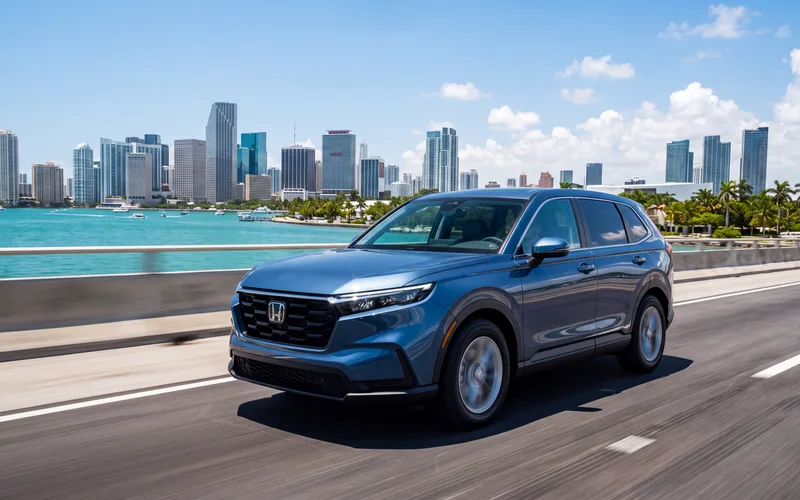 Honda CR-VCompact SUVBetter at: Resale value
Costs about $1,600 more up front but returns it several times over in resale, offers a hybrid, and adds 2.5 inches of rear legroom plus nearly 3 cu ft more cargo space.
Compare 2.56C+
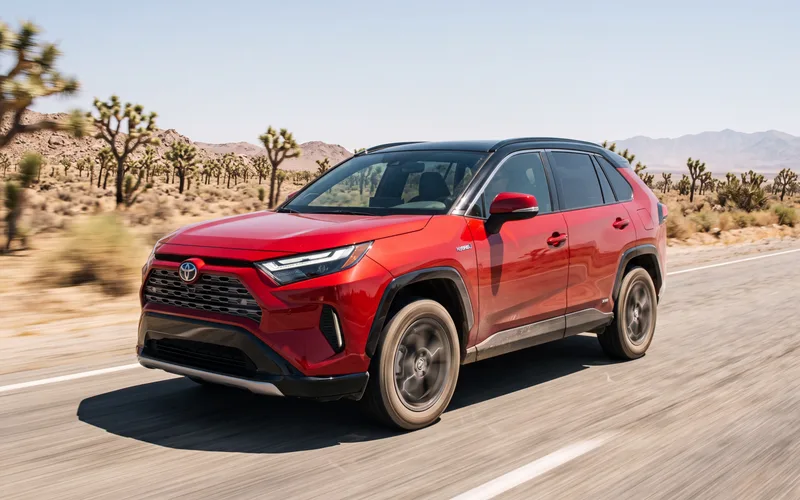 Toyota RAV4Compact SUVBetter at: Efficiency
Hybrid-only for 2026 means 40-plus MPG city versus the Rogue's 28, and it tows 3,500 lbs against the Nissan's 1,500 — with Toyota's durability record behind it.
Compare 2.44C+
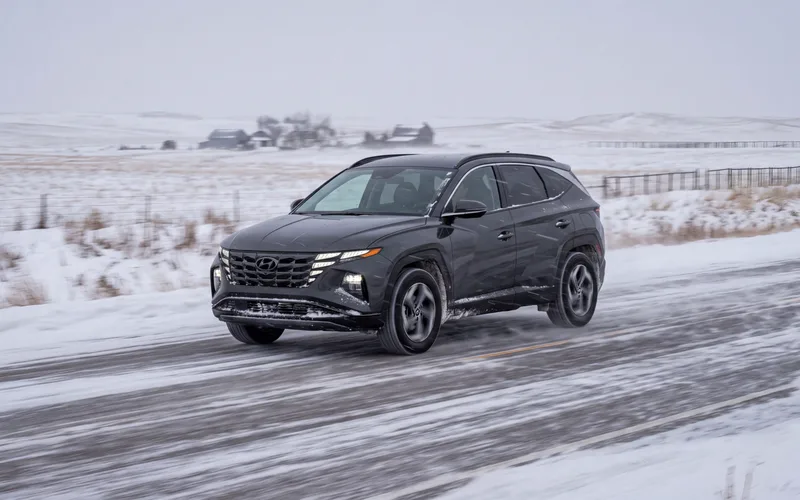 Hyundai TucsonCompact SUVBetter at: Warranty
A 10-year/100,000-mile powertrain warranty and hybrid and plug-in options directly answer the two things buyers hesitate over with the Rogue's VC-Turbo and CVT.
CompareHow it's evolved
10 scored model years · 2017–2026
Subject scores by year
Hover or tap a score to see what moved it versus the year before. A corner mark flags a big swing.
| Year | Performance | Efficiency | Safety | Space | Cost | Reliability | Tech | Use-case | Driving | Value |
|---|---|---|---|---|---|---|---|---|---|---|
| 2026 | 32 | 76 | 81 | 59 | 58 | 58 | 71 | 67 | 61 | 67 |
| 2025 | 32 | 73 | 75 | 55 | 59 | 58 | 57 | 63 | 65 | 71 |
| 2024 | 32 | 75 | 73 | 54 | 60 | 56 | 56 | 61 | 63 | 68 |
| 2023 | 31 | 74 | 77 | 54 | 59 | 56 | 52 | 64 | 62 | 74 |
| 2022 | 31 | 74 | 79 | 54 | 59 | 56 | 51 | 64 | 62 | 71 |
| 2021 | 26 | 65 | 70 | 53 | 60 | 59 | 51 | 63 | 64 | 71 |
| 2020 | 20 | 57 | 57 | 54 | 61 | 65 | 41 | 57 | 54 | 59 |
| 2019 | 22 | 57 | 57 | 54 | 59 | 63 | 40 | 56 | 51 | 61 |
| 2018 | 22 | 58 | 53 | 54 | 60 | 62 | 40 | 55 | 53 | 66 |
| 2017 | 23 | 58 | 46 | 54 | 60 | 60 | 28 | 54 | 53 | 65 |
Compare two years
Best fit & conditions
Higher scores mean a better fit for that use case. Learn more about use-case fit →
Subject profile
Trims & configurations
4 trimsScores above reflect the volume trim. Per-trim specs and scores are rolling out — the full lineup:
Academic Probation · NHTSA safety recalls
Jun 30, 2026Power train: automatic transmission: gear position indication (prndl)The instrument panel may not display the transmission gear selection indicator. As such, these vehicles fail to comply with the requirements of Federal Motor Vehicle Safety Standard number 102, "Transmission Shift Lever Sequence, Starter Interlock, and Transmission Braking Effect."
Defect
Nissan North America, Inc. (Nissan) is recalling certain 2026 Rogue vehicles. The instrument panel may not display the transmission gear selection indicator. As such, these vehicles fail to comply with the requirements of Federal Motor Vehicle Safety Standard number 102, "Transmission Shift Lever Sequence, Starter Interlock, and Transmission Braking Effect."
Risk
A missing gear selection indicator may lead to unintended vehicle movement or a vehicle rollaway, increasing the risk of a crash.
Remedy
Dealers will inspect and replace the transmission control valve assembly as necessary, free of charge. Owner notification letters were mailed August 31, 2026. Owners may contact Nissan's customer service at 800-647-7261. Nissan's number for this recall is PD198. Vehicle Identification Numbers (VINs) involved in this recall became searchable on NHTSA.gov on July 2, 2026.
NHTSA campaign 26V419000 ↗Manufacturer no. PD1985,823 vehicles potentially affected (all models in the campaign)Owners notified Aug 26, 2026Filed by Nissan North America, Inc.Filed as ROGUEDec 23, 2025Tires: temporary/emergency spare tireThe incorrect-size spare tire may have been installed, which does not match the tire size and inflation pressure information on the tire placard. As such, these vehicles fail to comply with the requirements of Federal Motor Vehicle Safety Standard number 110, "Tire Selection and Rims."
Defect
Nissan North America, Inc. (Nissan) is recalling certain 2026 Rogue vehicles. The incorrect-size spare tire may have been installed, which does not match the tire size and inflation pressure information on the tire placard. As such, these vehicles fail to comply with the requirements of Federal Motor Vehicle Safety Standard number 110, "Tire Selection and Rims."
Risk
Incorrect spare tire pressure information on the placard may lead to incorrect inflation of the spare tire, increasing the risk of a crash.
Remedy
Dealers will inspect and replace the spare tire assembly as necessary, free of charge. Owner notification letters were mailed February 25, 2026. Owners may contact Nissan's customer service at 800-647-7261. Nissan's number for this recall is PD180. Vehicle Identification Numbers (VINs) involved in this recall became searchable on NHTSA.gov on January 6, 2026.
NHTSA campaign 25V912000 ↗Manufacturer no. PD1804,655 vehicles potentially affected (all models in the campaign)Owners notified Feb 18, 2026Filed by Nissan North America, Inc.Filed as ROGUE
26 recalls on other model years of the Rogue (2017–2025)
Feb 11, 2026Engine and engine cooling: engine: engine control module (ecu/ecm): software · Fuel system, gasoline: fuel injection system: throttlebody/manifoldThe gears in the electronic throttle body assembly may break.
Defect
Nissan North America, Inc. (Nissan) is recalling certain 2024-2025 Rogue vehicles equipped with 3-cylinder 1.5L variable compression turbo (VC-Turbo) engines. The gears in the electronic throttle body assembly may break.
Risk
Broken throttle body gears can cause a loss of drive power, increasing the risk of a crash.
Remedy
Dealers will reprogram the engine control module (ECM) software and inspect and replace the electronic throttle body assembly as necessary, free of charge. Owner notification letters were mailed April 8, 2026. Owners may contact Nissan's customer service at 800-647-7261. Nissan's numbers for this recall are R25E2, R25E3 and R25A9. Vehicle Identification Numbers (VINs) involved in this recall will be searchable on NHTSA.gov beginning February 27, 2026.
NHTSA campaign 26V081000 ↗Manufacturer no. R25E3, R25E4, R25A9318,782 vehicles potentially affected (all models in the campaign)Owners notified Mar 31, 2026Filed by Nissan North America, Inc.Filed as ROGUEFeb 11, 2026Engine and engine cooling: engine: hard parts internal/mechanicalIncreased temperatures can break down the engine oil, which may cause the engine bearings to seize and become damaged, leading to engine failure.
Defect
Nissan North America, Inc. (Nissan) is recalling certain 2023-2025 Rogue vehicles equipped with 3-cylinder 1.5L variable compression turbo (VC-Turbo) engines. Increased temperatures can break down the engine oil, which may cause the engine bearings to seize and become damaged, leading to engine failure.
Risk
Engine failure can cause a loss of drive power, increasing the risk of a crash. A bearing failure may cause a breach in the engine block, allowing hot oil to be discharged, increasing the risk of an engine fire.
Remedy
Dealers will reprogram the engine control module (ECM) software, inspect for diagnostic trouble codes, and test drive the vehicle, free of charge. The dealer may also inspect the oil pan for metal debris, and replace the engine if necessary. Repairs will be performed free of charge. Owner notification letters were mailed April 8, 2026. Owners may contact Nissan's customer service at 800-647-7261. Nissan's numbers for this recall are R25E2 and R25E3. This recall expands previous NHTSA recall number 25V437. Vehicle Identification Numbers (VINs) involved in this recall will be searchable on NHTSA.gov beginning February 27, 2026.
NHTSA campaign 26V080000 ↗Manufacturer no. R25E2, R25E3323,917 vehicles potentially affected (all models in the campaign)Owners notified Mar 31, 2026Filed by Nissan North America, Inc.Filed as ROGUEJun 27, 2025Engine and engine cooling: engine: hard parts internal/mechanicalThe engine bearings may have manufacturing defects that can lead to engine failure.
Defect
Nissan North America, Inc. (Nissan) is recalling certain 2021-2024 Rogue, 2019-2020 Altima, 2019-2022 Infiniti QX50, and 2022 Infiniti QX55 vehicles equipped with 3-cylinder 1.5L or 4-cylinder 2.0L variable compression turbo (VC-Turbo) engines. The engine bearings may have manufacturing defects that can lead to engine failure.
Risk
Engine failure increases the risk of a crash. A bearing failure may cause a breach in the engine block, allowing hot oil to be discharged, increasing the risk of an engine fire.
Remedy
Dealers will reprogram the engine control module (ECM) software, free of charge. Owner letters were mailed April 8, 2026. Owners may contact Nissan's customer service at 800-647-7261 or Infiniti's customer service at 1-800-662-6200. Nissan's numbers for this recall are R25A8/A9 and R25B1/B2.
NHTSA campaign 25V437000 ↗Manufacturer no. R25A8/A9 R25B1/B2/D1443,899 vehicles potentially affected (all models in the campaign)Owners notified Jan 26, 2026Filed by Nissan North America, Inc.Filed as ROGUEOct 3, 2024Back over prevention · Equipment: electrical: infotainment: softwareA software error may cause the rearview camera to display a blank screen when the vehicle is in reverse. As such, these vehicles fail to comply with the requirements of Federal Motor Vehicle Safety Standard number 111, "Rear Visibility."
Defect
Nissan North America, Inc. (Nissan) is recalling certain 2024-2025 Rogue and 2025 INFINITI QX80 vehicles. A software error may cause the rearview camera to display a blank screen when the vehicle is in reverse. As such, these vehicles fail to comply with the requirements of Federal Motor Vehicle Safety Standard number 111, "Rear Visibility."
Risk
The loss of the rearview camera image while in reverse can reduce the driver's rear visibility, increasing the risk of a crash.
Remedy
The in-vehicle infotainment software will be updated by an over-the-air (OTA) software update or by a dealer, free of charge. Owner notification letters were mailed December 2, 2024. Owners may contact Nissan's customer service at 800-647-7261 or INFINITI's customer service at 1-800-662-6200. Nissan's numbers for this recall are R24B3 and R24B4.
NHTSA campaign 24V748000 ↗Manufacturer no. R24B3, R24B437,236 vehicles potentially affected (all models in the campaign)Owners notified Dec 3, 2024Filed by Nissan North America, Inc.Filed as ROGUEFeb 28, 2024Seat belts: pretensionerThe driver and front passenger seat belt pretensioners may have been incorrectly manufactured, which can cause the seat belts to not properly restrain occupants. As such, these vehicles fail to comply with the requirements of Federal Motor Vehicle Safety Standard number 208, "Occupant Crash Protection," 209, "Seat Belt Assemblies," and 210 "Seat Belt Assembly Anchorages."
Defect
Nissan North America, Inc. (Nissan) is recalling certain 2023 Rogue vehicles. The driver and front passenger seat belt pretensioners may have been incorrectly manufactured, which can cause the seat belts to not properly restrain occupants. As such, these vehicles fail to comply with the requirements of Federal Motor Vehicle Safety Standard number 208, "Occupant Crash Protection," 209, "Seat Belt Assemblies," and 210 "Seat Belt Assembly Anchorages."
Risk
Improperly restrained occupants have an increased risk of injury during a crash.
Remedy
Dealers will replace the front seat belt assemblies, as necessary, free of charge. Owner notification letters were mailed April 26, 2024. Owners may contact Nissan customer service at 1-800-867-7669. Nissan's number for this recall is PD105.
NHTSA campaign 24V156000 ↗Manufacturer no. PD1059,720 vehicles potentially affected (all models in the campaign)Owners notified Apr 26, 2024Filed by Nissan North America, Inc.Filed as ROGUEFeb 27, 2024Air bags: frontal: driver side: inflator moduleDue to a manufacturing issue, the driver's air bag inflator may absorb moisture, and cause the air bag to deploy improperly.
Defect
Nissan North America, Inc. (Nissan) is recalling certain 2024 Titan, Frontier, Infiniti QX60, Pathfinder, 2023-2024 Sentra, Versa, Kicks, Infiniti QX50, and 2023 Rogue vehicles. Due to a manufacturing issue, the driver's air bag inflator may absorb moisture, and cause the air bag to deploy improperly.
Risk
An air bag that deploys improperly may not protect the driver as intended during a crash, increasing the risk of injury.
Remedy
Dealers will replace the front driver's air bag assembly, free of charge. Owner notification letters were mailed April 10, 2024. Owners may contact Nissan customer service at 1-800-867-7669. Nissan's numbers for this recall are PD103, PD104, and PMA34.
NHTSA campaign 24V154000 ↗Manufacturer no. PD103, PD104, PMA34351 vehicles potentially affected (all models in the campaign)Owners notified Apr 10, 2024Filed by Nissan North America, Inc.Filed as ROGUENov 22, 2023Service brakes, hydraulic: foundation components: disc: caliperThe left and/or right rear brake caliper assemblies may be missing an internal bushing, allowing the O-ring seal to move and brake fluid to leak.
Defect
Nissan North America, Inc. (Nissan) is recalling certain 2021 Rogue vehicles. The left and/or right rear brake caliper assemblies may be missing an internal bushing, allowing the O-ring seal to move and brake fluid to leak.
Risk
A loss of brake fluid may reduce braking performance, increasing the risk of crash.
Remedy
Dealers will replace the left and right rear brake calipers, free of charge. Owner notification letters were mailed January 12, 2024. Owners may contact Nissan customer service at 1-800-867-7669. Nissan's number for this recall is PC933. The two vehicles that were previously inspected under recall 21V-286 and did not receive a brake caliper replacement will need to have the new remedy completed.
NHTSA campaign 23V791000 ↗Manufacturer no. PC9332 vehicles potentially affected (all models in the campaign)Owners notified Jan 12, 2024Filed by Nissan North America, Inc.Filed as ROGUEMay 25, 2023Seat belts: critical fastenersThe fastener in the rear seat belt anchor attachment points may not have been tightened properly and can loosen over time.
Defect
Nissan North America, Inc. (Nissan) is recalling certain 2023 Nissan Rogue vehicles. The fastener in the rear seat belt anchor attachment points may not have been tightened properly and can loosen over time.
Risk
A loose rear seat belt anchor fastener may not properly restrain an occupant in the event of a crash, increasing the risk of injury.
Remedy
Dealers will inspect and tighten the rear seat belt anchor bolts. Additionally, dealers will apply warning labels to the seat belt attachment points to indicate the bolt size and torque value required for any future seat belt repair. Repairs will be performed free of charge. Owner notification letters are expected to be mailed July 14, 2023. Owners may contact Nissan's customer service at 1-800-867-7669. Nissan's number for this recall is PC978, PC979.
NHTSA campaign 23V374000 ↗Manufacturer no. PC978, PC97971 vehicles potentially affected (all models in the campaign)Owners notified Jul 14, 2023Filed by Nissan North America, Inc.Filed as ROGUEApr 13, 2023Seats: critical fastenersThe driver's powered seat may not be fully secured to the seat frame, causing the seat frame welds to detach from the rear inboard seat bracket.
Defect
Nissan North America, Inc. (Nissan) is recalling certain 2023 Rogue, Pathfinder, and Infiniti QX60 vehicles. The driver's powered seat may not be fully secured to the seat frame, causing the seat frame welds to detach from the rear inboard seat bracket.
Risk
An unsecured seat with broken welds may not properly restrain an occupant during a crash, increasing the risk of injury.
Remedy
Dealers will inspect the driver's seat rail clearance, and if necessary, replace the driver's seat cushion frame, free of charge. Owner notification letters are expected to be mailed June 10, 2023. Owners may contact Nissan's customer service at 1-800-867-7669. Nissan's number for this recall is PC966, PC967.
NHTSA campaign 23V268000 ↗Manufacturer no. PC966, PC96712,400 vehicles potentially affected (all models in the campaign)Owners notified Jun 9, 2023Filed by Nissan North America, Inc.Filed as ROGUEFeb 16, 2023Electrical system: ignition: anti-theft: immobilizer/proximity: key/senderThe jackknife key may collapse into a folded position while driving.
Defect
Nissan North America, Inc. (Nissan) is recalling certain 2014-2020 Rogue and 2017-2022 Rogue Sport vehicles equipped with a jackknife style ignition key. The jackknife key may collapse into a folded position while driving.
Risk
Driver contact with a key in the collapsed position could inadvertently shut off the vehicle while driving, increasing the risk of a crash. Additionally, if the vehicle shuts off while driving, the air bags may not deploy in a crash as intended, increasing the risk of injury.
Remedy
Dealers will insert a spacer into the key slot of the jackknife key, free of charge. Interim notification letters notifying owners of the safety risk were mailed March 29, 2023. Owner notification letters are expected to be mailed August 30, 2023. Owners may contact Nissan's customer service at 1-800-867-7669. Nissan's number for this recall is R22C5.
NHTSA campaign 23V093000 ↗Manufacturer no. R22C8712,458 vehicles potentially affected (all models in the campaign)Owners notified Aug 30, 2023Filed by Nissan North America, Inc.Filed as ROGUENov 23, 2022Electrical system: wiringWater may leak into and corrode the dash side harness connector.
Defect
Nissan North America, Inc. (Nissan) is recalling certain 2017 Rogue vehicles. Water may leak into and corrode the dash side harness connector.
Risk
A corroded dash side harness connector increases the risk of a fire.
Remedy
Dealers will apply grease and repair any corroded connector as necessary, free of charge. Owner notification letters are expected to be mailed January 20, 2023. Owners may contact Nissan's customer service at 1-800-867-7669. Nissan's number for this recall is PC934.
NHTSA campaign 22V875000 ↗Manufacturer no. PC934125,215 vehicles potentially affected (all models in the campaign)Owners notified Jan 19, 2023Filed by Nissan North America, Inc.Filed as ROGUEOct 13, 2022Back over prevention: display functionThe in-vehicle infotainment (IVI) system may continuously reboot when the vehicle is restarted, which can result in an inoperative rearview display. As such, these vehicles fail to comply with the requirements of Federal Motor Vehicle Safety Standard number 111, "Rear Visibility."
Defect
Nissan North America, Inc. (Nissan) is recalling certain 2022 Titan, Titan XD, Frontier, and 2021-2022 Rogue vehicles. The in-vehicle infotainment (IVI) system may continuously reboot when the vehicle is restarted, which can result in an inoperative rearview display. As such, these vehicles fail to comply with the requirements of Federal Motor Vehicle Safety Standard number 111, "Rear Visibility."
Risk
An inoperative rearview camera display reduces the driver's rear visibility, increasing the risk of a crash.
Remedy
The IVI software will be updated by a dealer, or through an over-the-air (OTA) update, free of charge. Owner notification letters are expected to be mailed November 18, 2022. Owners may contact Nissan's customer service at 1-800-867-7669. Nissan's numbers for this recall are R22B8, R22C1, and PC923/25.
NHTSA campaign 22V772000 ↗Manufacturer no. R22B8 R22C1 PC923/2527,388 vehicles potentially affected (all models in the campaign)Owners notified Dec 9, 2022Filed by Nissan North America, Inc.Filed as REDUNDANT ROGUE, ROGUESep 1, 2022Seat belts: rear/other: buckle assemblyThe rear seat belts for the left-hand and right-hand rear seats may not retract properly. As such, these vehicles fail to comply with the requirements of Federal Motor Vehicle Safety Standard numbers 208, "Occupant Crash Protection," and 209, "Seatbelt Assemblies."
Defect
Nissan North America, Inc. (Nissan) is recalling certain 2021-2022 Rogue vehicles. The rear seat belts for the left-hand and right-hand rear seats may not retract properly. As such, these vehicles fail to comply with the requirements of Federal Motor Vehicle Safety Standard numbers 208, "Occupant Crash Protection," and 209, "Seatbelt Assemblies."
Risk
Seat belts that do not retract properly may be difficult to operate, preventing their usage, which can increase the risk of injury in a crash.
Remedy
Dealers will inspect and replace the rear seat belts, as necessary, free of charge. Owner notification letters are expected to be mailed October 27, 2023. Owners may contact Nissan's customer service at 1-800-867-7669. Nissan's number for this recall is PC915.
NHTSA campaign 22V666000 ↗Manufacturer no. PC9158,391 vehicles potentially affected (all models in the campaign)Owners notified Oct 27, 2022Filed by Nissan North America, Inc.Filed as REDUNDANT ROGUE, ROGUEAug 31, 2022Fuel system, gasoline: storage: tank assemblyThe fuel tank may have been punctured when vehicle modifications were performed.
Defect
Nissan North America, Inc. (Nissan) is recalling certain 2022 Rogue vehicles. The fuel tank may have been punctured when vehicle modifications were performed.
Risk
A hole in the fuel tank could leak, increasing the risk of fire.
Remedy
Dealers will inspect and replace the fuel tank as necessary, free of charge. Owner notification letters are expected to be mailed September 23, 2022. Owners may contact Nissan customer service at 1-800-867-7669. Nissan's number for this recall is PC912.
NHTSA campaign 22V660000 ↗Manufacturer no. PC912190 vehicles potentially affected (all models in the campaign)Owners notified Sep 23, 2022Filed by Nissan North America, Inc.Filed as REDUNDANT ROGUEJul 28, 2022Service brakes, hydraulic: power assist: hydraulicThe hydraulic brake booster assembly may overheat internally, resulting in a loss of power brake assist. As such, these vehicles fail to comply with the requirements of Federal Motor Vehicle Safety Standard number 135, "Light Vehicle Brake Systems."
Defect
Nissan North America, Inc. (Nissan) is recalling certain 2017-2019 Rogue Hybrid vehicles. The hydraulic brake booster assembly may overheat internally, resulting in a loss of power brake assist. As such, these vehicles fail to comply with the requirements of Federal Motor Vehicle Safety Standard number 135, "Light Vehicle Brake Systems."
Risk
A loss of power brake assist can extend the distance required to stop the vehicle, increasing the risk of a crash.
Remedy
Dealers will replace the hydraulic brake booster supply unit, free of charge. Interim Owner notification letters were mailed September 22, 2022. A second letter will be mailed October 31, 2022. Owners may contact Nissan's customer service at 1-800-867-7669. Nissan's number for this recall is R22A6.
NHTSA campaign 22V549000 ↗Manufacturer no. R22A65,904 vehicles potentially affected (all models in the campaign)Owners notified Nov 4, 2022Filed by Nissan North America, Inc.Filed as ROGUE HYBRIDJul 21, 2022Back over prevention: sensing system: camera · Equipment: electrical: infotainment: softwareWhen the Sirius XM subscription is set to "Not Subscribed," it may cause the infotainment head unit to reboot, resulting in an inoperative rearview camera. As such, these vehicles fail to comply with the requirements of Federal Motor Vehicle Safety Standard number 111, "Rear Visibility."
Defect
Nissan North America, Inc. (Nissan) is recalling certain 2021-2022 Rogue, 2022 Frontier, Pathfinder, and Titan rental vehicles. When the Sirius XM subscription is set to "Not Subscribed," it may cause the infotainment head unit to reboot, resulting in an inoperative rearview camera. As such, these vehicles fail to comply with the requirements of Federal Motor Vehicle Safety Standard number 111, "Rear Visibility."
Risk
An inoperative rearview camera display reduces the driver's rear visibility, increasing the risk of a crash.
Remedy
The Infotainment system software will be updated by a dealer, or through an over-the-air (OTA) update, free of charge. Owner notification letters are expected to be mailed July 29, 2022. Owners may contact Nissan's customer service at 1-800-867-7669. Nissan's number for this recall is R22A5 PC901 PC902.
NHTSA campaign 22V527000 ↗Manufacturer no. R22A5 PC901 PC90210,477 vehicles potentially affected (all models in the campaign)Owners notified Jul 29, 2022Filed by Nissan North America, Inc.Filed as REDUNDANT ROGUE, ROGUEApr 14, 2022Fuel system, gasoline: storage: tank assemblyDue to a manufacturing error, an area on the bottom wall of the fuel tank may be too thin.
Defect
Nissan North America, Inc. (Nissan) is recalling certain 2022 Rogue vehicles. Due to a manufacturing error, an area on the bottom wall of the fuel tank may be too thin.
Risk
Road debris may puncture the thin fuel tank wall, causing a gas leak and increasing the risk of a fire. In addition, the fuel tank may not perform as expected during a crash, increasing the risk of injury.
Remedy
Dealers will replace the fuel tank assembly and install a new lock ring, gasket, and o-ring seal, free of charge. Owner notification letters were mailed May 19, 2022. Owners may contact Nissan customer service at 1-800-867-7669. Nissan's number for this recall is PC887.
NHTSA campaign 22V259000 ↗Manufacturer no. PC88752 vehicles potentially affected (all models in the campaign)Owners notified May 19, 2022Filed by Nissan North America, Inc.Filed as REDUNDANT ROGUEDec 9, 2021Fuel system, gasoline: delivery: fuel pumpAbnormal wear inside the fuel pump may cause it to overheat and fail.
Defect
Nissan North America, Inc. (Nissan) is recalling certain 2021 Rogue vehicles. Abnormal wear inside the fuel pump may cause it to overheat and fail.
Risk
Fuel pump failure may cause an engine stall, increasing the risk of a crash.
Remedy
Dealers will replace the fuel pump assembly, free of charge. Owner notification letters were mailed January 27, 2022. Owners may contact Nissan customer service at 1-800-867-7669. Nissan's number for this recall is R21B8.
NHTSA campaign 21V957000 ↗Manufacturer no. R21B824,793 vehicles potentially affected (all models in the campaign)Owners notified Jan 27, 2022Filed by Nissan North America, Inc.Filed as ROGUEOct 26, 2021Engine and engine cooling: engine: engine control module (ecu/ecm) · Hybrid propulsion systemContact with the Electronic Control Module (ECM) bracket may damage the engine harness, causing a blown fuse.
Defect
Nissan North America, Inc. (Nissan) is recalling certain 2017-2019 Rogue Hybrid vehicles. Contact with the Electronic Control Module (ECM) bracket may damage the engine harness, causing a blown fuse.
Risk
A blown fuse may cause an engine stall, increasing the risk of a crash.
Remedy
Dealers will install a harness protector cover, free of charge. Owner notification letters were mailed December 16, 2021. Owners may contact Nissan customer service at 1-800-867-7669. Nissan's number for this recall is R21B6.
NHTSA campaign 21V839000 ↗Manufacturer no. R21B65,905 vehicles potentially affected (all models in the campaign)Owners notified Dec 16, 2021Filed by Nissan North America, Inc.Filed as ROGUEJun 24, 2021Child seat: vehicle tether anchor · Seats: mid/rear assemblyThe second-row upper tether wires may have been improperly welded to the seatback frame, preventing a child seat from being securely anchored. As such, these vehicles fail to comply with the requirements of Federal Motor Vehicle Safety Standard number 225, "Child Restraint Anchorage Systems."
Defect
Nissan North America, Inc. (Nissan) is recalling certain 2021 Rogue vehicles. The second-row upper tether wires may have been improperly welded to the seatback frame, preventing a child seat from being securely anchored. As such, these vehicles fail to comply with the requirements of Federal Motor Vehicle Safety Standard number 225, "Child Restraint Anchorage Systems."
Risk
An insecurely anchored child seat can move during a sudden stop or crash, increasing the risk of injury.
Remedy
Dealers will inspect and replace the rear seatbacks as necessary, free of charge. Owner notification letters were mailed July 30, 2021. Owners may contact Nissan customer service at 1-800-867-7669. Nissan's number for this recall is PC812.
NHTSA campaign 21V474000 ↗Manufacturer no. PC81247,098 vehicles potentially affected (all models in the campaign)Owners notified Jul 30, 2021Filed by Nissan North America, Inc.Filed as ROGUEApr 22, 2021Service brakes, hydraulic: foundation components: disc: caliperThe rear left and/or right brake caliper assemblies may be missing an internal bushing, allowing the O-ring seal to move and brake fluid to leak.
Defect
Nissan North America, Inc. (Nissan) is recalling certain 2021 Rogue vehicles. The rear left and/or right brake caliper assemblies may be missing an internal bushing, allowing the O-ring seal to move and brake fluid to leak.
Risk
A loss of brake fluid may reduce braking performance, increasing the risk of crash.
Remedy
Dealers will inspect and replace the left and/or right rear brake calipers, as necessary, free of charge. Owner notification letters were mailed June 10, 2021. Owners may contact Nissan customer service at 1-800-867-7669. Nissan's number for this recall is PC804.
NHTSA campaign 21V286000 ↗Manufacturer no. PC80414,054 vehicles potentially affected (all models in the campaign)Owners notified Jun 10, 2021Filed by Nissan North America, Inc.Filed as ROGUEMar 17, 2021Wheels: lugs/nuts/bolts/studsThe incorrect wheel nuts may have been installed, and may loosen causing wheel vibration.
Defect
Nissan North America, Inc. (Nissan) is recalling certain 2021 Nissan Rogue vehicles. The incorrect wheel nuts may have been installed, and may loosen causing wheel vibration.
Risk
The wheel vibration may break the wheel studs and cause the wheel assembly to separate from the vehicle, increasing the risk of a crash.
Remedy
Nissan will notify owners, and dealers will inspect the wheel nuts and replace any incorrect ones, free of charge. The recall began May 4, 2021. Owners may contact Nissan customer service at 1-800-867-7669. Nissan's number for this recall is PC799.
NHTSA campaign 21V186000 ↗Manufacturer no. PC79921 vehicles potentially affected (all models in the campaign)Owners notified May 4, 2021Filed by Nissan North America, Inc.Filed as ROGUEFeb 11, 2021Fuel system, gasoline: delivery: hoses, lines/piping, and fittings · Fuel system, gasoline: storage: tank assemblyThe fuel hose may not be secured in the proper position and the fuel tank lock ring may not be fully seated.
Defect
Nissan North America, Inc. (Nissan) is recalling certain 2021 Nissan Rogue vehicles. The fuel hose may not be secured in the proper position and the fuel tank lock ring may not be fully seated.
Risk
An improperly secured fuel hose may leak, increasing the risk of a fire. The fuel hose may also disconnect completely, causing the engine to stall and increasing the risk of a crash.
Remedy
Nissan will notify owners, and dealers will inspect and, as necessary, reposition and secure the fuel hose and lock ring, free of charge. The recall began March 16, 2021. Owners may contact Nissan customer service at 1-800-867-7669. Nissan's number for this recall is PC791.
NHTSA campaign 21V068000 ↗Manufacturer no. PC7912,150 vehicles potentially affected (all models in the campaign)Owners notified Mar 16, 2021Filed by Nissan North America, Inc.Filed as ROGUESep 12, 2019Back over prevention: sensing system: cameraAdditionally included are 2019 Nissan GT-R and Taxi and Infiniti QX50, QX60, Q70, Q70L vehicles. The back-up camera and display settings can be adjusted such that the rear view image is no longer visible and the system will retain that setting the next time the vehicle is placed in reverse. As such, these vehicles fail to comply with the requirements of Federal Motor Vehicle Safety Standard (FMVSS) number 111, "Rear Visibility."
Defect
Nissan North America, Inc. (Nissan) is recalling certain 2018-2019 Nissan Altima, Armada, Frontier, Kicks, Leaf, Maxima, Murano, NV, NV200, Pathfinder, Rogue, Rogue Sport, Sentra, Titan, Titan Diesel, Versa Note and Versa Sedan vehicles, as well as Infiniti Q50, Q60, QX30 and QX80 vehicles. Additionally included are 2019 Nissan GT-R and Taxi and Infiniti QX50, QX60, Q70, Q70L vehicles. The back-up camera and display settings can be adjusted such that the rear view image is no longer visible and the system will retain that setting the next time the vehicle is placed in reverse. As such, these vehicles fail to comply with the requirements of Federal Motor Vehicle Safety Standard (FMVSS) number 111, "Rear Visibility."
Risk
The lack of an image in the back-up camera display increases the risk of a crash.
Remedy
Nissan will notify owners in phases, having dealers update the back-up camera settings software, free of charge. The recall began November 11, 2019 and all affected VINs should be activated. Owners may contact Nissan customer service at 1-800-867-7669 or INFINITI customer service at 1-800-662-6200.
NHTSA campaign 19V654000 ↗1,228,830 vehicles potentially affected (all models in the campaign)Owners notified Nov 11, 2019Filed by Nissan North America, Inc.Filed as ROGUEOct 18, 2017Seat belts · SeatsThe recliner joints on the lower seat frame for the rear seats may have improper welds. As such, these vehicles fail to comply with the requirements of Federal Motor Vehicle Safety Standards (FMVSS) number 207, "Seating Systems," and 210, "Seat Belt Assembly Anchorages."
Defect
Nissan North America, Inc. (Nissan) is recalling certain 2016-2017 Nissan Rogue vehicles. The recliner joints on the lower seat frame for the rear seats may have improper welds. As such, these vehicles fail to comply with the requirements of Federal Motor Vehicle Safety Standards (FMVSS) number 207, "Seating Systems," and 210, "Seat Belt Assembly Anchorages."
Risk
The insufficient welds can increase the risk of injury to the occupants in the event of a crash.
Remedy
Nissan will notify owners, and dealers will inspect the seat frames and replace any defective lower seat frames, free of charge. The recall began December 6, 2017. Owners may contact Nissan customer service at 1-800-647-7261.
NHTSA campaign 17V663000 ↗4,883 vehicles potentially affected (all models in the campaign)Owners notified Dec 6, 2017Filed by Nissan North America, Inc.Filed as ROGUEApr 26, 2016Air bags: sensor: occupant classificationIn these vehicles, the front seat passenger Occupant Classification System (OCS) may incorrectly classify an adult passenger as a child or classify the seat as empty despite it being occupied. As a result, the passenger frontal air bag may be turned off and not deploy in the event of a crash.
Defect
Nissan North America, Inc. (Nissan) is recalling certain model year 2016-2017 Nissan Maxima, 2013-2016 Nissan Altima, NV200, LEAF, Sentra, and Pathfinder, 2014-2016 Nissan NV200 Taxi, Infiniti QX60, QX60 Hybrid, and Q50 Hybrid, 2014-2017 Nissan Rogue and Infiniti Q50, 2015-2016 Nissan Murano, Murano Hybrid, and Chevrolet City Express, 2014-2015 Nissan Pathfinder Hybrid, and 2013 Infiniti JX35 vehicles. In these vehicles, the front seat passenger Occupant Classification System (OCS) may incorrectly classify an adult passenger as a child or classify the seat as empty despite it being occupied. As a result, the passenger frontal air bag may be turned off and not deploy in the event of a crash.
Risk
If the passenger frontal air bag does not deploy as intended in the event of a crash, the passenger is at an increased risk of injury.
Remedy
Nissan will notify their owners. Chevrolet City Express owners will be notified by General Motors. Dealers will reprogram the Air Bag Control Unit (ACU) and OCS Electronic Control Unit (ECU) in Altima, Maxima, Murano, Rogue, and Sentra vehicles, and replace the OCS ECU in LEAF, NV200, NV200 Taxi, Pathfinder, Infiniti Q50, JX35, and QX60 and Chevrolet City Express vehicles, free of charge. Interim notices were sent to owners on May 31, 2016. Owners will receive a second notice when remedy parts become available. Owners may contact Nissan customer service at 1-800-867-7669, Infiniti customer service at 1-888-833-3216 or Chevrolet customer service at 1-800-222-1020.
NHTSA campaign 16V244000 ↗3,296,947 vehicles potentially affected (all models in the campaign)Owners notified Jun 10, 2016Filed by Nissan North America, Inc.Filed as ROGUE
Source: NHTSA Office of Defects Investigation recall database, model years 2017–2026. Recalls are listed by model year as the manufacturer filed them; whether a specific car is affected depends on its VIN — check a VIN at nhtsa.gov ↗. NHTSA model names matched to this page: REDUNDANT ROGUE, ROGUE, ROGUE HYBRID.
Detailed scoring by subject
1Performance & PowertrainThe Rogue's lowest-graded category.0.10F
The volume SV trim uses the KR15DDT 1.5L variable-compression turbo three-cylinder, rated 201 hp on premium and 195 hp on regular — a single output across the whole gas range, so there is no step-up engine to lift the model-range max. 201 hp sits low in the 150–550 hp SUV band even though it is competitive against compact-SUV rivals specifically.
The VC-Turbo's strength is torque rather than peak power — 225 lb-ft on a broad plateau from 2,800 rpm makes the Rogue feel more urgent in traffic than its 201 hp suggests, and it out-torques the CR-V's 1.5T (179 lb-ft) and Forester's NA 2.5 (178 lb-ft) by a wide margin.
The VC-Turbo Rogue is meaningfully quicker than the 2.5L it replaced (~8.5 s) and quicker than the gas CR-V (~8.4 s) and Forester (~8.5 s), though it trails the hybrid RAV4 (~7.0 s). Roughly mid-pack among compact SUVs, low in the absolute 3.5–9.5 s SUV band.
The variable-compression three-cylinder delivers strong, flexible mid-range thrust and pulls cleanly once boost arrives, but reviewers consistently flag a coarse three-cylinder thrum under load, some off-idle lag, and audible vibration at idle. Competent and torque-rich rather than genuinely refined — in line with the Escape's 1.5L EcoBoost I3 (60) and slightly ahead of the Forester's boxer four (58).
Nissan's Xtronic CVT is one of the better-tuned units in the class — it holds a natural-feeling ratio in normal driving and uses stepped programming under hard throttle to mask the drone — but it still flares and drones when pushed, and there is no true manual mode. Sits between the Forester's Lineartronic (55) and Honda's G-Design Shift CVT (66).
1,500 lbs is a token rating — enough for a small utility trailer or a pair of jet skis and nothing more. It matches the gas CR-V and Forester but falls far behind compact SUVs engineered to tow, such as the CX-50 (3,500 lbs) and Escape 2.0L EcoBoost (3,500 lbs), and sits near the floor of the 1,000–8,000 lb SUV band.
Intelligent AWD is optional on every trim from base S to Platinum rather than restricted to upper trims, and AWD models add a drive-mode selector with Snow, Off-Road and Tow settings. Operation is conventional on-demand front-drive-based AWD with no low range or true torque vectoring, so it lands with the CR-V (60) and well short of the Forester's standard symmetrical AWD (88).
Roughly 8.2 inches of ground clearance on AWD models and an Off-Road drive mode give the Rogue light-duty dirt-road ability, and the Rock Creek trim adds all-terrain tires and unique styling. There are no lockers, skid plates, or low-range hardware, and Rock Creek is more appearance package than capability upgrade — comparable to the CR-V TrailSport (45), below the Forester's X-MODE hardware (68).
The gas Rogue is a one-engine lineup — the 1.5L VC-Turbo and Xtronic CVT are the only combination offered from S to Platinum, with FWD/AWD the sole drivetrain choice. That is materially narrower than the CR-V's gas-plus-hybrid pairing (65) or the Escape's four powertrains (84). Scored at the top of the single-powertrain band rather than the bottom because Nissan has electrified Rogue variants (plug-in hybrid and e-Power) in play; their 2026 US availability could not be confirmed this run and would raise this item to roughly 60 if they are on sale.
2Efficiency & RangeOne of the Rogue's strongest categories.3.16B
EPA combined 31 MPG for the volume SV AWD configuration of the 1.5L VC-Turbo three-cylinder with Xtronic CVT; FWD trims rate 33 MPG combined. Ratings are unchanged carryover for the T33 generation, which has held 30/37/33 FWD and 28/34/31 AWD since the VC-Turbo replaced the 2.5L four for 2022.
EPA city 28 MPG for the SV AWD volume config, 30 MPG FWD. The turbo three-cylinder gives up ground on the city cycle to two-motor hybrid rivals (CR-V hybrid 40-43 city, RAV4 hybrid 40+), which is where the Rogue's lack of a mainstream hybrid costs it most.
EPA highway 34 MPG AWD / 37 MPG FWD. Highway is the Rogue's strongest cycle — the small-displacement turbo and tall CVT ratios make it competitive with, and in FWD form better than, most hybrid compact SUVs on the highway cycle.
14.5-gallon tank x 31 combined MPG = ~450 mi for the SV AWD volume config; FWD trims reach ~479 mi on the same tank. Solid mid-pack range for a gas compact SUV, though well short of hybrid rivals that clear 550 mi.
At EPA's standard 15,000 mi/yr and 55/45 city/highway split, 31 combined MPG on regular unleaded works out to roughly $1,600/yr for the SV AWD volume config, about $1,500/yr for FWD. That undercuts a gas CR-V AWD (~$1,700/yr at 29 combined) but runs $100-200/yr above the best hybrid compact SUVs.
The 1.5L VC-Turbo makes its full 201 hp / 225 lb-ft on premium; regular 87-octane is permitted but drops output to roughly 194 hp / 222 lb-ft. Nothing about the car requires premium and the penalty for running regular is small, but the split rating keeps it out of the top band occupied by rivals rated on regular outright (CR-V, RAV4). No diesel, E85, or charging infrastructure considerations on the gas trims.
3SafetyThe Rogue's best-graded category.3.50A-
The third-generation (T33) Rogue has carried a 5-star NHTSA overall rating since the 2021 launch, and the 2026 model year is a styling/tech refresh of the same structure rather than a new platform, so the rating carries forward. Replaces a placeholder value of 4.1 stars.
The Rogue has been a consistent IIHS award winner through this generation with Good results in the small-overlap and updated side tests, but the updated moderate-overlap (rear-passenger) test is the weak spot that has kept it at the edge of Top Safety Pick+ rather than clear of it. Scored at the bottom of the award band rather than the middle to reflect that.
Nissan Safety Shield 360 is standard on every Rogue trim including the base S — AEB with pedestrian detection, blind-spot warning, rear cross-traffic alert, lane departure warning, rear automatic braking and high-beam assist — with Intelligent Cruise Control also standard. That is a genuinely comprehensive standard suite and a real content advantage over rivals that gate blind-spot monitoring to mid trims.
Nissan's forward AEB rates well on the legacy vehicle-to-vehicle and daytime pedestrian evaluations, but the Rogue has not shown standout results under the tougher 2023-onward IIHS front crash prevention protocol that weights nighttime pedestrian scenarios and higher closing speeds. Placed in the middle band accordingly.
Blind Spot Warning and Rear Cross Traffic Alert are standard on all trims as part of Safety Shield 360, with Blind Spot Intervention (active steering nudge) added on upper trims. Held below the top band because there is no safe-exit/rear-occupant door alert and no trailer-aware blind-spot coverage.
Lane Departure Warning is standard and ProPILOT Assist adds steering-assist lane centering on SV and above. Reviewers describe the centering as competent and unobtrusive but prone to drifting toward lane edges on sweeping curves and poorly marked roads — solidly mid-band rather than best-in-class.
Intelligent Cruise Control is standard with full-speed-range stop-and-go, and ProPILOT Assist with Navi-link adds speed adjustment for curves and interchanges plus a hold function in traffic. Well-integrated and among the better mainstream systems, but it brakes late in cut-in situations and resumes less smoothly than the class leaders.
The Rogue offers hands-free highway driving via ProPILOT Assist 2.1 on the top Platinum trim, working on mapped divided highways with automated lane-change assistance. That puts it ahead of the RAV4 and CR-V, which offer no hands-free option at all, but the mapped-road coverage and top-trim-only availability fall well short of mature Super Cruise or BlueCruise deployments.
LED headlights are standard across the range and have rated Good or Acceptable through this generation, with automatic high-beam assist included in the standard Safety Shield 360 package. Not scored in the top band because the base-trim projector setup rates below the upper trims' units.
The Rogue's upright greenhouse, tall side glass and relatively slim A-pillars give it better-than-average natural sightlines for a compact SUV, and the Intelligent Around View Monitor 360-degree camera on upper trims covers the remaining blind zones. Thick rear pillars and a rising beltline keep it out of the top band.
The Rogue's signature near-90-degree rear doors make car-seat installation unusually easy, and the rear bench is wide with generous legroom and accessible lower anchors. Scored in the top band on access, held just inside it because three-across with full-size seats is still a squeeze in a compact SUV.
4Space & ComfortMid-pack among this car's ten categories.2.00C
The Rogue is a strictly two-row, five-seat compact SUV across every trim — no third row or six-seat configuration has ever been offered on the third-generation (T33) car. Replaces a placeholder value of 6.3 seats, which was not a real Rogue configuration.
Nissan publishes 41.1 in of front headroom for the T33 Rogue without the panoramic moonroof, dropping to roughly 39.4 in when the roof is fitted — a strong figure for the compact class and well clear of the RAV4 (37.9 in) and CR-V (40.0 in).
Nissan quotes 44.3 in of front legroom, among the largest published numbers in the compact SUV class; the figure is measured generously relative to some rivals, but the Rogue's front seating position is genuinely roomy and reviewers consistently note the airy front cabin.
Second-row headroom of 39.2 in is competitive for the segment and only marginally behind the CR-V (39.3 in) and RAV4 (39.5 in); the panoramic moonroof costs roughly three-quarters of an inch.
At 38.5 in the Rogue's second row is roomy enough for adults and helped by a sliding/reclining bench and near-90-degree rear door opening, but it trails the class-leading CR-V (41.0 in) by a meaningful margin.
The Rogue has no third row in any trim or model year of the current generation — buyers needing seven seats are pushed up to the Pathfinder. Scored in the low band per the item's guidance for two-row SUVs rather than omitted. The previous 62 was a placeholder implying seating the vehicle does not offer.
Roughly 36.5 cu ft behind the second row on the volume SV, with the Divide-N-Hide floor at its lowest setting; trims carrying the Bose premium audio subwoofer lose around five cubic feet. Competitive but a step behind the CR-V (39.3 cu ft). The prior 63 cu ft placeholder was far outside any real compact-SUV figure.
About 74.1 cu ft with the 60/40 second row folded — mid-pack for the compact class, between the RAV4 (70.4) and CR-V (76.5), with a near-flat load floor and a wide, square opening that make the space easy to use.
The Divide-N-Hide cargo system — reversible, repositionable panels that split the hold into hidden compartments or create a flat load floor — is a genuine differentiator, backed by a deep center console with a pass-through, large door bins and rear-seat USB ports. Short of true segment-standout innovation, but above the class average.
Nissan's NASA-inspired Zero Gravity front seats are one of the Rogue's most consistently praised attributes, with well-judged cushioning and support over long stints; the rear bench reclines. Held below 80 because lower trims get limited seat adjustment and less bolstering, so the best of it lands on SL/Platinum.
The Rogue rides on the softer, more absorbent end of the compact class and settles well on the highway, though the 19-inch wheels on SL/Platinum introduce some sharpness over broken pavement and body control is unremarkable when pushed.
Wind and road noise are well suppressed at highway cruise thanks to acoustic front glass and added insulation, but the 1.5L three-cylinder VC-Turbo is audibly coarse and drones under hard acceleration — the most common noise complaint about this generation. Score unchanged from the placeholder value by coincidence, not carry-over.
Dual-zone automatic climate control, heated front seats, heated steering wheel and remote start are available from the mid trims up, with heated rear seats and a panoramic moonroof reserved for SL/Platinum. Ventilated front seats are not part of the Rogue's typical equipment list, which caps the score below the class leaders.
5Cost of OwnershipOne of the Rogue's weakest categories.1.92C-
The Rogue S FWD anchors the lineup well below the compact-SUV average, undercutting the CR-V LX ($32,315) and RAV4 by roughly $1,500-2,500 — aggressive entry pricing has long been central to Rogue volume strategy. Figure carried forward from MY2025 with a typical model-year increase applied.
SV is the long-standing Rogue volume trim and AWD is the majority mix in the segment; SV AWD as typically equipped lands near $34,500, roughly $2,300 under a CR-V EX-L. Estimated from the MY2025 trim walk (SV ~+$2,350 over S, AWD ~+$1,500).
Routine service intervals and Nissan parts pricing are mid-pack for the class, but the Xtronic CVT remains the Rogue's dominant out-of-warranty repair risk and pushes projected 5-year cost above the Honda/Toyota compact-SUV benchmarks (~$5,400-5,800). Estimated from segment norms and Nissan's repair-cost history.
This is the Rogue's weakest ownership dimension. Heavy incentive and fleet participation depress used values relative to the CR-V and RAV4, historically leaving Rogue retention in the low-50s against a ~60% segment average. Estimated from Nissan's long-run residual pattern in the compact-SUV class.
Nissan's new-vehicle limited warranty is the industry-baseline 3 years / 36,000 miles — matching Honda, Toyota, Ford and GM but trailing Hyundai/Kia (5 yr / 60,000 mi) by a full two years. Nissan has held these terms unchanged for many years.
Nissan's 5 yr / 60,000 mi powertrain coverage sits at the bottom of the framework band and is half the 10 yr / 100,000 mi protection from Hyundai, Kia and Mitsubishi — a real weakness given the CVT is the component buyers most worry about.
Nissan includes no complimentary scheduled maintenance on the Rogue — a clear gap against ToyotaCare (2 yr / 25,000 mi) and Honda Service Pass (2 yr / 24,000 mi). What buyers get is roadside assistance bundled with the 3-yr/36k basic warranty plus NissanConnect Services and SiriusXM trial periods, which places it at the floor of the 'basic roadside only' band.
$34,500 volume-trim price minus its estimated resale value after 5 years (54% retained, or about $18,630) leaves about $15,870 in depreciation. Add the projected $6,200 in 5-year maintenance and repairs, and owning this vehicle for 5 years costs about $22,070 in total.
6Reliability & QualityOne of the Rogue's weakest categories.1.87C-
Mixed signals: the T33 Rogue has drawn roughly average-to-decent predicted reliability marks from J.D. Power and Consumer Reports in recent years, but that sits against an unresolved 1.5L VC-Turbo engine-bearing recall campaign and Nissan's Xtronic CVT reputation, which keeps it below the CR-V/RAV4 tier. Dropped from the placeholder 70 to reflect the powertrain risk that dominates this nameplate's dependability picture.
Nissan is a mid-pack dependability brand, not a top-5 one: it typically lands in the middle of J.D. Power's Vehicle Dependability Study and mid-to-lower in Consumer Reports' brand rankings, well behind the Toyota, Lexus, Honda, Subaru and Hyundai/Kia names that dominate this segment. The long shadow of Nissan's CVT durability history keeps the brand out of the upper band.
This generation carries a systemic powertrain recall, not just routine campaigns: Nissan recalled T33 Rogues with the 1.5L VC-Turbo over engine bearing failure traced to manufacturing debris, a risk of engine damage or stall rather than a trim or software fix. A powertrain-integrity recall of that scale puts the item in the sub-50 band per the scoring guidance, even though 2026 production should incorporate the corrected process.
The 1.5L VC-Turbo three-cylinder is the most mechanically novel engine in the compact-SUV class — a variable-compression multi-link mechanism with no high-mileage track record — and it is paired with an Xtronic CVT from a family with a long, well-documented durability problem. Combined with the engine-bearing recall, this is the guidance's 'unproven high-risk design' band; the placeholder 85 was flatly wrong for this powertrain.
Cabin materials are a genuine T33 strength and the main reason this category is not lower: reviewers have consistently called the upper trims near-premium for a mainstream compact SUV, with quilted semi-aniline leather on Platinum, broad soft-touch coverage and good switchgear feel. The volume SV is plainer with more hard plastic in low-touch zones, which holds it short of class-leading.
Assembly quality is solid and unremarkable — the Rogue posts roughly average initial-quality results with no pattern of rattles or panel-gap complaints in reviews, which is squarely the 'generally solid with scattered complaints' band. Nudged down from the placeholder because nothing supports a top-band claim.
Coverage is a strength — Nissan runs roughly a thousand US dealers, so parts and service are within reach almost anywhere — but service satisfaction is the weak half of the item, with Nissan typically mid-to-lower in customer-service studies and no complimentary scheduled-maintenance program to bring owners back. Adequate-to-good, not the dense-plus-well-regarded top band the placeholder 83 implied.
As one of the best-selling SUVs in the US the Rogue has abundant, cheap routine parts and deep independent-shop familiarity, which alone would justify a higher score. It is held to the middle of the normal band by two expensive failure modes — CVT replacement and the specialized VC-Turbo engine, which few independents will rebuild — so tail risk on a major repair sits above segment norm.
7Technology & InfotainmentOne of the Rogue's strongest categories.2.81B-
The 2026 Rogue carries over the refreshed third-generation (T33) cabin, where the volume SV trim gets the 12.3-inch NissanConnect touchscreen with Google built-in and only the base S retains the 8.0-inch unit. Score is recomputed from the 12.3 in volume-trim value against the SUV band.
NissanConnect with Google built-in on the 12.3-inch screen is quick, logically laid out and, unusually for the class, keeps a real volume knob plus separate physical climate controls — the reason it grades above the CR-V and Tucson. It stops short of the top band because the graphics and menu design are plain next to the newest Hyundai/Kia and 2026 RAV4 systems, and the base S 8.0-inch system is a visibly older experience.
Wireless Apple CarPlay and wireless Android Auto come standard on the volume SV and every trim above it, which is the full-marks configuration for this item. Held just below the top band because the base S trim's 8.0-inch system is the weaker implementation (wireless CarPlay but wired Android Auto), so the lineup is not uniformly wireless.
Google built-in puts native Google Maps and Google Assistant natural-language voice on the volume trim — genuinely best-in-class native navigation rather than something owners bypass for phone projection, and it also enables Play Store apps. Kept out of the 90s because the Google services depend on connected-services data that reverts to a paid subscription after the included trial, and the base S falls back to Nissan's older voice system with no native nav.
A 10-speaker Bose premium system is available on the upper SL and Platinum trims and is competent but not a standout, while the volume SV runs a 6-speaker base setup that reviewers describe as merely adequate. That is a solidly mid-pack showing in a class where Harman Kardon and Bose upgrades are common.
A 12.3-inch fully configurable digital cluster is offered, but on the upper SL and Platinum trims — the volume SV runs a 7-inch color drive-assist display flanked by analog gauges, which is the classic partial-digital middle band.
Over-the-air updates on the Rogue cover the infotainment side — system software, apps and Google map data on Google built-in cars — rather than whole-vehicle software. There is no track record of Nissan pushing feature-adding OTA updates to powertrain, chassis or driver-assist modules on this platform, which places it squarely in the infotainment-only band.
The NissanConnect Services app covers the core set — remote start with climate preconditioning, remote lock/unlock, vehicle locate, alerts and maintenance info — but it is subscription-gated once the included trial ends, the Rogue offers no phone-as-key, and app-store sentiment for NissanConnect is mediocre on reliability and login friction.
Front and second-row USB-A plus USB-C ports cover both rows and wireless phone charging is available from the volume SV upward, which is a solid mainstream-compact showing. It misses the top band because there is no household 120V outlet and the wireless pad is package- or trim-dependent rather than standard fleet-wide.
Nissan Intelligent Key proximity entry, push-button start and key-fob remote engine start are standard across the lineup including the base S, which is better than several rivals that reserve remote start for upper trims. It sits below the top band because the hands-free Motion Activated Liftgate is limited to SL/Platinum and the Rogue has no phone-as-key.
Nissan's Intelligent Around View Monitor is one of the better 360-degree systems in the class — crisp, with a genuinely useful off-angle/3D view and moving-object detection — and it reaches the volume SV rather than being top-trim-only, backed by front and rear sonar. Short of the top band because there is no automated parking assist on the Rogue.
A 10.8-inch color head-up display is offered but only on the range-topping Platinum trim, so a volume-trim SV buyer cannot get one at any price. That is the definition of the middle band — available, but out of reach on the trim most people buy.
8Use-Case FitMid-pack among this car's ten categories.2.53C+
Family logistics are the Rogue's signature strength: rear doors that open to nearly 90 degrees, a sliding/reclining second-row bench, and the Divide-N-Hide cargo floor make car-seat installs and stroller loading unusually easy for a compact SUV. Replaces a placeholder score that understated a segment-leading trait.
Nissan Safety Shield 360 is standard on every trim including the base S, so families buying at the volume price point get AEB with pedestrian detection, blind-spot warning, rear cross-traffic alert and rear automatic braking without paying up. ProPILOT Assist arrives at SV, and Rear Door Alert is standard.
Good but not class-leading for four-plus on a long haul: rear vents, first- and second-row USB-A/USB-C, a sliding rear bench and a large 36.5 cu ft hold behind row two, offset by rear legroom that trails the CR-V and rear amenities such as heated rear seats that are confined to the top trim.
A relaxed commuter: light steering, comfort-biased tuning, standard Zero Gravity front seats, good outward visibility and ProPILOT Assist with stop-and-go from SV upward. The three-cylinder VC-Turbo's coarse note under hard acceleration is the main thing keeping it out of the top band.
Competitive per-mile costs for a gas-only compact SUV, but the Rogue has no hybrid option in this configuration, so it gives up roughly a quarter of the economy to the hybrid CR-V and RAV4 that dominate the commuter use case. Premium fuel is recommended to reach the full 201 hp.
Easy to place in a city: a tidy compact-SUV footprint, a tight turning circle, an upright glasshouse with good sightlines, and Nissan's Intelligent Around View Monitor with Moving Object Detection plus front and rear sonar on the trims most buyers choose.
Not meaningfully a work vehicle. Maximum towing is roughly 1,500 lbs — at the bottom of the compact SUV class and well under the RAV4 and turbo Escape's 3,500 lbs — with no bed, no payload-oriented structure and little torque reserve under load through the CVT. The 74.1 cu ft hold is the only genuinely work-useful attribute. Corrects a placeholder that badly overstated capability (the cat1 towing figure on file is also still a placeholder).
The powertrain is the problem for hard-duty use: the 1.5L variable-compression turbo three-cylinder paired to an Xtronic CVT is complex and unproven under sustained load, and it sits behind Nissan's long-running CVT durability reputation. Wear-friendly cloth on S/SV helps, but nothing about this drivetrain reads fleet-proven. Corrects a placeholder that implied fleet-grade toughness.
Few work-oriented provisions. There are cargo tie-down hooks, roof rails on SV and above, an accessory hitch and the Divide-N-Hide floor's reversible wipe-clean panel, but no 120V onboard AC outlet, no washable cabin option and effectively no commercial upfit ecosystem behind it.
A genuinely good mile-eater. Zero Gravity front seats are a standout for seat endurance, ProPILOT Assist takes real strain out of highway stints, acoustic laminated glass keeps cruising noise down, and the tank is good for roughly 450-480 miles between stops.
Fine for trailheads and gravel — Intelligent AWD with selectable drive modes including an off-road setting, roughly 8.2 in of ground clearance and roof rails on most trims — but the ~1,500 lb tow ceiling rules out most boats, teardrops and utility trailers, and there is no factory all-terrain hardware package.
One of the more flexible cargo bays in the class thanks to Divide-N-Hide: a multi-position floor that creates either a hidden underfloor well or a flat load deck, combined with a 60/40 near-flat-folding bench, roof rails and 74.1 cu ft of maximum space. Corrects a placeholder that read this as restrictive.
9Driving ExperienceMid-pack among this car's ten categories.2.10C
The third-generation (T33) Rogue is tuned firmly toward comfort: body motions are well controlled and grip is adequate (roughly 0.82 g skidpad in published testing), so it is secure and predictable, but it leans early and never rewards a quick pace the way a CX-5, Sportage or CR-V does. Solidly mid-pack for a compact SUV — competent, not agile.
Accurate and light enough to make parking and low-speed maneuvering easy, but the electric assist is the Rogue's least communicative dynamic trait — reviewers repeatedly call it numb, with little build-up of weight or feedback as cornering loads rise. Precise enough to place the car, uninformative about what the front tires are doing.
A quiet strength: instrumented 60–0 mph stops for the T33 Rogue land in the low-to-mid 120-foot range, competitive with the CR-V (120 ft) and Sportage (124 ft) and better than the 2026 RAV4 Hybrid's 127 ft, with a firm, linear pedal that is easy to modulate. No regen-blending complication on the gas powertrain.
The 1.5L VC-Turbo three-cylinder's 225 lb-ft plateau from 2,800 rpm gives genuinely strong mid-range response once boost arrives, and the Xtronic CVT's simulated steps mask the usual rubber-band effect under hard throttle. Held back by off-idle turbo lag, a hesitant low-speed tip-in calibration, and auto stop/start restarts that a three-cylinder cannot hide as well as a four.
The most consistently criticized aspect of how the Rogue drives. The three-cylinder has an inherent thrum at idle and a coarse, offbeat character under load, and the CVT holds revs high enough to drone on highway grades. Wind and road isolation at a steady cruise is good — acoustic glass on upper trims helps — but the powertrain itself is the noise source, which is why this sits below the CR-V (64) and RAV4 (60), whose four-cylinder hybrids draw similar but milder complaints.
37.4 ft curb-to-curb is mid-pack for a compact SUV — a shade wider than the CR-V (37.3 ft) and the 2026 RAV4 (36.9 ft), and unremarkable within the 34–42 ft SUV band, though tight enough that the Rogue is easy to park in practice.
The Rogue's strongest dynamic-adjacent trait. Nissan's Zero Gravity front seats are a genuine long-haul advantage, the H-point is high with a low beltline and slim pillars for excellent outward vision, door openings are unusually wide and square for easy ingress, and the cabin retains physical climate and volume controls alongside the touchscreen. Marginally ahead of the CR-V (76) and level with the RAV4 (78).
The Rogue is engineered as transport, not entertainment: numb steering, comfort-first damping, a CVT, and a thrummy three-cylinder add up to a car nobody takes the long way home in. It does its job calmly and without irritation, which keeps it out of the bottom of the band, but no enthusiast outlet recommends it on driving enjoyment.
10Value & Market PositionMid-pack among this car's ten categories.2.54C+
Standard content is one of the Rogue's genuine strengths: Safety Shield 360 is fitted to every trim including the base S — AEB with pedestrian detection, blind-spot warning, rear cross-traffic alert, lane departure warning, rear automatic braking and high-beam assist — alongside standard Intelligent Cruise Control, LED headlights, Nissan Intelligent Key with push-button start and remote engine start. Rivals routinely gate blind-spot monitoring and remote start to mid or upper trims, so a base Rogue arrives better equipped than a base CR-V or Tucson; it stops short of the top band because the S trim still runs the 8.0-inch screen and the good infotainment starts at SV.
The Rogue undercuts its main rivals on sticker while matching or beating them on content — roughly $30,700 to start against a CR-V LX at ~$32,315, and a volume SV AWD near $34,500 that includes the 12.3-inch NissanConnect screen with Google built-in, wireless CarPlay/Android Auto, the Around View 360-degree camera and ProPILOT Assist, a combination rivals charge into the high $30Ks for. Held to the upper-middle band rather than the standout band by two real costs the sticker hides: there is no hybrid on the volume trims at a moment when CR-V and RAV4 buyers get one, and Rogue resale retention (~54% at five years vs ~68-71% for a CR-V) hands back much of the purchase-price advantage.
Four well-spaced trims (S, SV, SL, Platinum) plus the Rock Creek appearance package cover the range from a genuinely equipped base car to a near-premium Platinum with quilted semi-aniline leather, and Intelligent AWD is optional on every trim rather than reserved for the upper end. The gap is powertrain: the 1.5L VC-Turbo and Xtronic CVT are the only combination offered across the entire volume lineup, so buyers get no engine or hybrid choice at all — narrower than the CR-V's gas-plus-hybrid split or the Escape's multi-powertrain range.
The Rogue is consistently a top-three seller in the compact-SUV class — the largest segment in the US market — trailing only the RAV4 and CR-V and clearing every other nameplate here by a wide margin, and it is the volume backbone of Nissan's US business. That is squarely in the segment-leader band; it is held below the 90s because the trajectory is flat-to-softening late in the generation and a meaningful share of the volume is supported by incentives and fleet participation rather than pure retail pull.
Nissan is a neutral-to-weak brand in this segment rather than an aspirational one, and the placeholder 85 badly overstated it. The badge carries a well-documented CVT durability reputation, mid-pack dependability standings, a history of discount-led selling, and the weakest residuals among the mainstream Japanese brands — all of which drag on the Rogue rather than lift it. It sits at the bottom of the neutral band, well behind Toyota, Honda and Subaru in the same cross-shop, but above genuinely damaged brands because Nissan retains broad familiarity, a thousand-dealer network and real loyalty among value buyers.
Scored on buyer benefit, this is the Rogue's strongest dimension in the category. Nissan supports the Rogue with among the most aggressive incentive programs in the class — routine cash allowances, subvented low-APR financing and heavily supported lease offers — and dealers negotiate freely on a high-inventory, late-generation volume model. A buyer willing to shop can expect to pay meaningfully under MSRP, which is close to unheard of on a CR-V or RAV4. Kept just below the 90s because the same discounting is what erodes resale later, so the benefit is front-loaded rather than free.
2026 is roughly the sixth model year of the third-generation T33 Rogue, which launched for MY2021 and took its mid-cycle refresh for MY2024 (restyled front end, 12.3-inch NissanConnect with Google built-in, ProPILOT Assist 2.1). The cabin tech is therefore still current, but the platform and its sole VC-Turbo/CVT powertrain are late-cycle, rivals have redesigned around it, and an e-POWER step for the nameplate has been signalled — so a 2026 buyer faces real redesign risk within a short window. That is the bottom of the mid-cycle band, not the middle.
Reviewers consistently like the Rogue's cabin quality, near-90-degree rear doors, standard safety content, ride comfort and cargo space, and it earns solid recommendations — but it is very rarely the pick of a compact-SUV comparison test, finishing behind the CR-V, RAV4, CX-5/CX-50, Forester and the Tucson/Sportage pair in most published rankings. The recurring criticisms are structural to the car rather than trim-specific: three-cylinder coarseness, CVT drone under load, inert handling and the absence of a volume hybrid. It holds an IIHS award but not a clean Top Safety Pick+, and it has no 10Best or NACTOY win to point to. Placed in the lower half of the well-reviewed band, with the VC-Turbo engine-bearing recall a further drag on its current standing.