

The verdict
A mixed-report compact suv, strong on efficiency and held back by performance.
The all-new sixth-generation 2026 RAV4 drops gas-only power entirely — every version is a hybrid or plug-in hybrid, so the $33,350 base LE now returns 41–43 MPG combined and roughly 594 miles per tank as standard equipment. That, plus the best resale value in the compact-SUV class (25% five-year depreciation against a 39.9% class average) and a full Toyota Safety Sense 4.0 suite on every trim, makes it the safest financial bet in the segment. The trade-offs are real though: hard, hollow interior plastics on trims pushing $45,000, a Marginal IIHS rear-passenger crash result that keeps it off the 2026 Top Safety Pick list, cargo space behind the rear seats that measures smaller than a CR-V's or Tucson's, and steering that reviewers call numb. Buy it for the running costs and the resale, not for the drive or the cabin materials.
Jump to scoresStrengths
- Every trim is a hybrid, and the fuel math is exceptional
- Best resale value in the class, by a wide margin
- The cheap trim gets the same safety gear as the expensive one
What holds it back
- Front-seat space and cargo room trail the class
- It is not on the 2026 IIHS Top Safety Pick list
- Cheap-feeling interior materials at $45,000 prices
Top alternatives
Cars shoppers cross-shop with the Toyota RAV4 2.13C
2.13C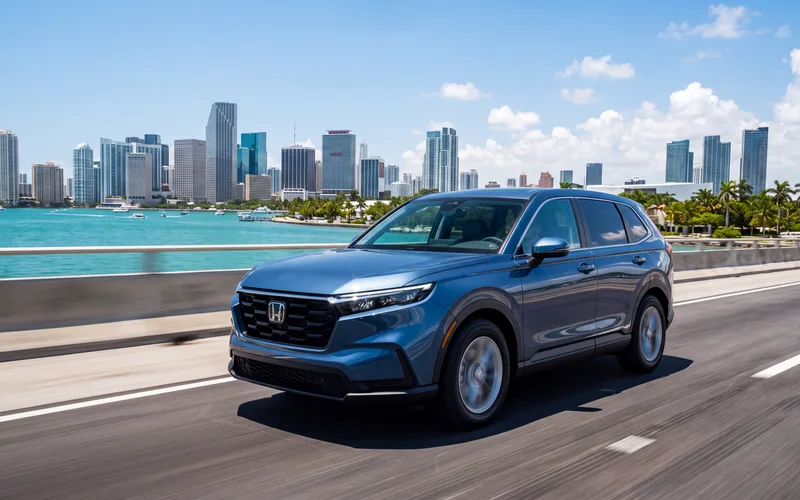 Honda CR-VCompact SUVBetter at: Cargo space
The most direct cross-shop — more usable cargo space, a better-finished cabin, and shorter braking distances, at the cost of weaker resale and no plug-in option.
Compare 2.44C+
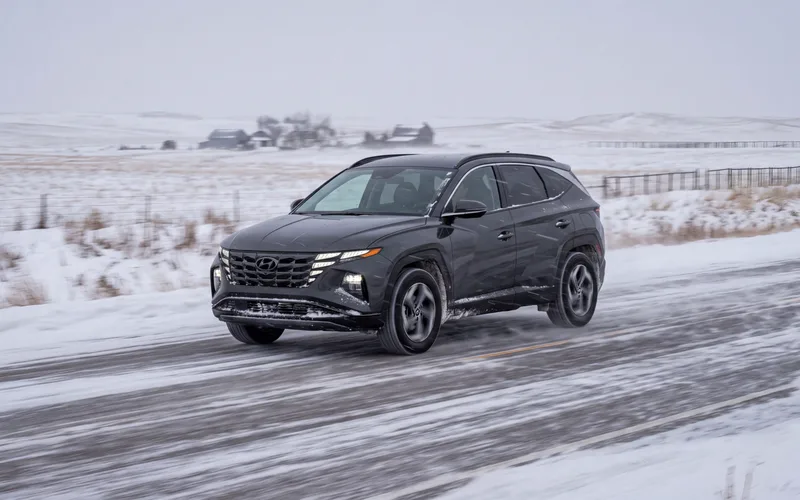 Hyundai TucsonCompact SUVBetter at: Warranty & value
Gives you a nicer interior, more cargo room, and a 10-year/100,000-mile powertrain warranty for less money, if you're willing to accept steeper depreciation.
Compare 2.26C
2.26C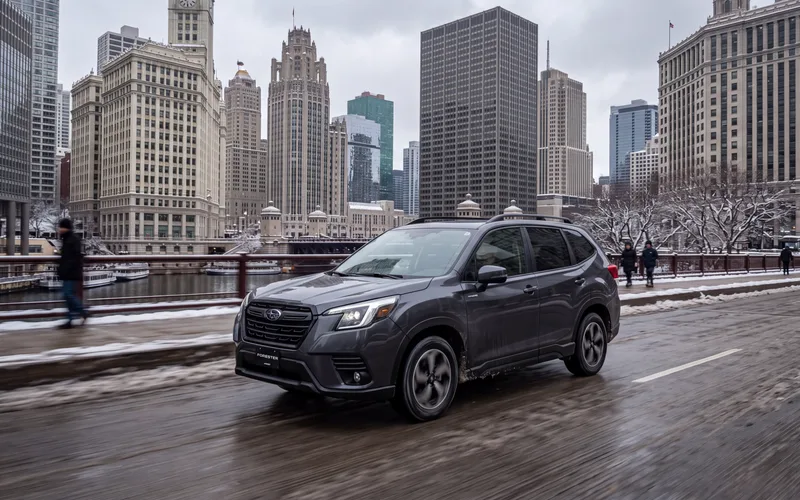 Subaru ForesterCompact SUVBetter at: All-weather traction
Standard all-wheel drive, better sightlines and more rear cargo room make it the pick for snow-belt buyers who don't need the RAV4's fuel economy edge.
CompareHow it's evolved
10 scored model years · 2017–2026
Subject scores by year
Hover or tap a score to see what moved it versus the year before. A corner mark flags a big swing.
| Year | Performance | Efficiency | Safety | Space | Cost | Reliability | Tech | Use-case | Driving | Value |
|---|---|---|---|---|---|---|---|---|---|---|
| 2026 | 47 | 97 | 75 | 50 | 70 | 79 | 75 | 72 | 66 | 79 |
| 2025 | 41 | 93 | 69 | 47 | 70 | 82 | 61 | 63 | 61 | 70 |
| 2024 | 45 | 93 | 75 | 47 | 70 | 81 | 62 | 65 | 63 | 72 |
| 2023 | 46 | 94 | 78 | 46 | 70 | 80 | 60 | 65 | 64 | 70 |
| 2022 | 41 | 94 | 76 | 48 | 71 | 82 | 47 | 64 | 64 | 72 |
| 2021 | 41 | 94 | 75 | 47 | 73 | 80 | 41 | 64 | 62 | 74 |
| 2020 | 43 | 94 | 74 | 47 | 75 | 76 | 46 | 65 | 62 | 77 |
| 2019 | 43 | 94 | 74 | 48 | 73 | 75 | 46 | 66 | 62 | 77 |
| 2018 | 38 | 77 | 63 | 47 | 73 | 82 | 26 | 60 | 60 | 68 |
| 2017 | 31 | 77 | 65 | 47 | 70 | 83 | 26 | 57 | 58 | 70 |
Compare two years
Best fit & conditions
Higher scores mean a better fit for that use case. Learn more about use-case fit →
Subject profile
Trims & configurations
7 trimsScores above reflect the volume trim. Per-trim specs and scores are rolling out — the full lineup:
Academic Probation · NHTSA safety recalls
Oct 7, 2026Engine and engine cooling: engine: engine control module (ecu/ecm): softwareThe motor generator ECU may encounter an error, causing the plug-in-hybrid system to reduce power or shutdown when driven at higher speeds.
Defect
Toyota Motor Engineering & Manufacturing (Toyota) is recalling certain 2026 RAV4 Plug-In Hybrid vehicles. The motor generator ECU may encounter an error, causing the plug-in-hybrid system to reduce power or shutdown when driven at higher speeds.
Risk
An unexpected powertrain shutdown can cause a loss of drive power, increasing the risk of a crash.
Remedy
Dealers will update the ECU software, free of charge. Owner notification letters are expected to be mailed starting November 22, 2026. Owners may contact Toyota's customer service at 1-800-331-4331. Toyota's number for this recall is 26TA22.
NHTSA campaign 26V659000 ↗Manufacturer no. 26TA2230,978 vehicles potentially affected (all models in the campaign)Filed by Toyota Motor Engineering & ManufacturingFiled as RAV4 PLUG-IN HYBRIDSep 2, 2026Equipment: other: labelsThe load carrying capacity modification label may display inaccurate added weight values. As such, these vehicles fail to comply with the requirements of Federal Motor Vehicle Safety Standard number 110, "Tire Selection and Rims."
Defect
Toyota Motor Engineering & Manufacturing (Toyota) is recalling certain 2024 Toyota Tacoma Hybrid, 2025 Tundra Hybrid, Tundra, 2026 RAV4 Hybrid, 4Runner i-Force Max Hybrid, and 4Runner vehicles. The load carrying capacity modification label may display inaccurate added weight values. As such, these vehicles fail to comply with the requirements of Federal Motor Vehicle Safety Standard number 110, "Tire Selection and Rims."
Risk
A vehicle with an incorrect maximum capacity weight value may be overloaded, increasing the risk of a crash.
Remedy
Dealers will replace the load carrying capacity modification label, free of charge. Owner notification letters are expected to be mailed October 18, 2026. Owners may contact Toyota's customer service at 1-800-331-4331. Toyota's number for this recall is 26TA18.
NHTSA campaign 26V571000 ↗Manufacturer no. 26TA18135 vehicles potentially affected (all models in the campaign)Filed by Toyota Motor Engineering & ManufacturingFiled as RAV4 HYBRID
24 recalls on other model years of the RAV4 (2017–2025)
Apr 22, 2026Seats: critical fastenersThe front seat brackets for the seat rails may be welded improperly.
Defect
Toyota Motor Engineering & Manufacturing (Toyota) is recalling certain 2025 RAV 4 vehicles. The front seat brackets for the seat rails may be welded improperly.
Risk
Improperly welded seat brackets can prevent the seat from adequately restraining an occupant during a crash, increasing the risk of injury.
Remedy
Dealers will inspect and repair the seat bracket welds as necessary, free of charge. Owner notification letters were mailed June 19, 2026. Owners may contact Toyota's customer service at 1-800-331-4331. Toyota's numbers for this recall are 26TB09 and 26TA09.
NHTSA campaign 26V256000 ↗Manufacturer no. 26TB09 / 26TA094 vehicles potentially affected (all models in the campaign)Owners notified Jun 19, 2026Filed by Toyota Motor Engineering & ManufacturingFiled as RAV4Mar 24, 2026Equipment: other: labelsThe load carrying capacity modification label may display inaccurate added weight values. As such, these vehicles fail to comply with the requirements of Federal Motor Vehicle Safety Standard number 110, "Tire Selection and Rims."
Defect
Toyota Motor Engineering & Manufacturing (Toyota) is recalling certain 2024-2025 Toyota Tundra, Tacoma Hybrid, Tacoma, RAV4 Hybrid, Land Cruiser Hybrid, Lexus GX550, 2024-2026 Tundra Hybrid, 2025 Sequoia Hybrid, Crown Signia, Grand Highlander, Lexus TX500 Hybrid, Lexus NX350 Hybrid, 2025-2026 Grand Highlander Hybrid, and Lexus TX350 vehicles. The load carrying capacity modification label may display inaccurate added weight values. As such, these vehicles fail to comply with the requirements of Federal Motor Vehicle Safety Standard number 110, "Tire Selection and Rims."
Risk
A vehicle with an incorrect maximum capacity weight value may be overloaded, which can increase the risk of a crash.
Remedy
Dealers will replace the load carrying capacity modification label, free of charge. Owner letters were mailed May 26, 2026. Owners may contact Toyota's customer service at 1-800-331-4331. Toyota's numbers for this recall are 26LB04, 26LA04, 26TB07, and 26TA07.
NHTSA campaign 26V179000 ↗Manufacturer no. See attached Part5738,230 vehicles potentially affected (all models in the campaign)Owners notified May 22, 2026Filed by Toyota Motor Engineering & ManufacturingFiled as RAV4 HYBRIDOct 30, 2025Back over prevention: display functionPlease see the recall report for a complete list of models. A software error may cause the rearview camera to freeze or display a blank screen when the vehicle is in reverse. As such, these vehicles fail to comply with the requirements of Federal Motor Vehicle Safety Standard (FMVSS) number 111, "Rear Visibility."
Defect
Toyota Motor Engineering & Manufacturing (Toyota) is recalling certain 2022-2026 Toyota, Lexus, and Subaru Solterra vehicles equipped with a Panoramic View Monitor (PVM) system. Please see the recall report for a complete list of models. A software error may cause the rearview camera to freeze or display a blank screen when the vehicle is in reverse. As such, these vehicles fail to comply with the requirements of Federal Motor Vehicle Safety Standard (FMVSS) number 111, "Rear Visibility."
Risk
A rearview camera that fails to display an image can reduce the driver's view behind the vehicle, increasing the risk of a crash.
Remedy
Dealers will update the parking assist software, free of charge. Owner letters were mailed January 2, 2026. Owners may contact Toyota's customer service at 1-800-331-4331. Toyota's numbers for this recall are 25TB13 and 25LB06. Subaru's number for this recall is WRE25.
NHTSA campaign 25V744000 ↗Manufacturer no. 25TB13/25LB06/WRE251,024,407 vehicles potentially affected (all models in the campaign)Owners notified Dec 5, 2025Filed by Toyota Motor Engineering & ManufacturingFiled as RAV4, RAV4 HYBRID, RAV4 PLUG-IN HYBRID, RAV4 PRIMESep 11, 2025Electrical system: instrument cluster/panelDue to an error in the instrument panel software at vehicle startup, the instrument panel may fail to display vehicle speed, brake system, and tire pressure warning lights.
Defect
Toyota Motor Engineering & Manufacturing (Toyota) is recalling certain 2023-2024 Toyota Venza, 2023-2025 RAV4 Prime, RAV4, Highlander, GR Corolla, Crown, 2024-2025 Lexus TX, LS, Toyota Tacoma, Grand Highlander, and 2025 Lexus RX, Toyota Crown Signia, Camry, RAV 4 Plug-in Hybrid (PHEV), and 4 Runner vehicles. Due to an error in the instrument panel software at vehicle startup, the instrument panel may fail to display vehicle speed, brake system, and tire pressure warning lights.
Risk
An instrument panel display that does not show critical information can increase the risk of a crash or injury.
Remedy
Dealers will update the instrument panel software over-the-air (OTA) for non-PHEV vehicles, free of charge. For PHEV vehicles, dealers will inspect the instrument panel assembly, and either replace it, or update the software, free of charge. Owner letters were mailed December 5, 2025. Additional letters will be sent, anticipated in May 2026. This is a phased recall. Owners may contact Toyota's customer service at 1-800-331-4331. Toyota's numbers for this recall are 25TB08 and 25TA08. Lexus' numbers for this recall are 25LB05 and 25LA05.
NHTSA campaign 25V595000 ↗Manufacturer no. See Part 573 Report591,377 vehicles potentially affected (all models in the campaign)Owners notified Dec 5, 2025Filed by Toyota Motor Engineering & ManufacturingFiled as RAV4, RAV4 PLUG-IN HYBRID, RAV4 PRIMEDec 5, 2024Service brakes, hydraulic: foundation components: disc: caliper · Wheels: hubSome of the bolts that secure the front brake caliper and the wheel hub bearing may be loose, which can result in a damaged caliper brake hose or possible wheel detachment.
Defect
Toyota Motor Engineering & Manufacturing (Toyota) is recalling certain 2024 RAV4 and 2025 Lexus NX vehicles. Some of the bolts that secure the front brake caliper and the wheel hub bearing may be loose, which can result in a damaged caliper brake hose or possible wheel detachment.
Risk
A damaged brake line can cause a brake fluid leak, reducing brake performance and increasing the distance required to stop the vehicle. Wheel detachment can result in a loss of vehicle control. Either condition increases the risk of a crash.
Remedy
Dealers will inspect and tighten the front brake caliper mounting bracket and hub bearing bolts, as necessary, free of charge. In addition, any damaged components will be replaced, free of charge. Owner notification letters were mailed January 23, 2025. Owners may contact Toyota customer service at 1-800-331-4331. Toyota's numbers for this recall are 24TA14 and 24LA08.
NHTSA campaign 24V911000 ↗Manufacturer no. 24TA14, 24LA0870 vehicles potentially affected (all models in the campaign)Owners notified Jan 23, 2025Filed by Toyota Motor Engineering & ManufacturingFiled as RAV4Dec 20, 2023Air bags: sensor: occupant classificationA short circuit may develop in the Occupant Classification System (OCS) sensor, preventing the front passenger air bag from deploying.
Defect
Toyota Motor Engineering & Manufacturing (Toyota) is recalling certain 2020-2021 Avalon, Avalon Hybrid, Corolla, Highlander, Highlander Hybrid, RAV4, RAV4 Hybrid, Lexus ES350, Lexus RX350, Lexus RX450H, 2021 Sienna Hybrid, Lexus ES250, 2020-2022 Camry, Camry Hybrid, and ES300H vehicles. A short circuit may develop in the Occupant Classification System (OCS) sensor, preventing the front passenger air bag from deploying.
Risk
An air bag that does not deploy during a crash increases the risk of injury.
Remedy
Dealers will inspect and replace the sensor as necessary, free of charge. Interim letters notifying owners of the safety risk were mailed in February 2024. Some final remedy owner letters were mailed October 31, 2024. Letters will continue to be mailed in phases through January 2026. Owners may contact Toyota customer service at 1-800-331-4331. Toyota's number for this recall is 23TB15/23TA15 Lexus 23LB03/23LA03.
NHTSA campaign 23V865000 ↗Manufacturer no. 23TA15, 23LA03999,901 vehicles potentially affected (all models in the campaign)Owners notified Oct 31, 2024Filed by Toyota Motor Engineering & ManufacturingFiled as RAV4, RAV4 HYBRIDNov 1, 2023Electrical system: 12v/24v/48v batteryCertain replacement 12-volt batteries may not fit properly in the battery tray, allowing the battery to move and contact the hold-down bracket, possibly causing a short circuit.
Defect
Toyota Motor Engineering & Manufacturing (Toyota) is recalling certain 2013-2018 RAV4 vehicles. Certain replacement 12-volt batteries may not fit properly in the battery tray, allowing the battery to move and contact the hold-down bracket, possibly causing a short circuit.
Risk
A battery short circuit increases the risk of a fire.
Remedy
Dealers will replace the battery clamp sub-assembly, battery tray, and positive terminal cover, free of charge. Owner letters were mailed December 27, 2024, to 2013-2014 RAV4 owners. Additional owner notification letters will be mailed in phases, phase 2 will begin on May 14, 2025, and phase 3 in late July 2025. Owners may contact Toyota's customer service at 1-800-331-4331. Toyota's numbers for this recall are 23TB13 and 23TA13.
NHTSA campaign 23V734000 ↗Manufacturer no. 23TB13 / 23TA131,853,568 vehicles potentially affected (all models in the campaign)Owners notified Dec 27, 2024Filed by Toyota Motor Engineering & ManufacturingFiled as RAV4Jul 12, 2023Electrical system: propulsion system: dc/dc converterThe electric current rectifying module contained within the DC-DC converter may have been damaged during production, which can result in an electrical short-circuit.
Defect
Toyota Motor Engineering & Manufacturing (Toyota) is recalling certain 2021-2022 RAV4 Prime and 2022 Lexus NX450h+ plug-in hybrid electric (PHEV) vehicles. The electric current rectifying module contained within the DC-DC converter may have been damaged during production, which can result in an electrical short-circuit.
Risk
A short circuit can cause the DC-DC converter to overheat, increasing the risk of a vehicle fire.
Remedy
Owners are advised not to charge their vehicles when the ambient air temperature is below or expected to drop below 41 degrees Fahrenheit (5 degrees Celsius). Dealers will replace the DC-DC converter, free of charge. Owner notification letters were mailed December 29, 2023. Owners may contact Toyota's customer service at 1-800-331-4331. Toyota's number for this recall is 23TB07/23LB01.
NHTSA campaign 23V478000 ↗Manufacturer no. 23TB07/23LB0143,442 vehicles potentially affected (all models in the campaign)Owners notified Dec 29, 2023Filed by Toyota Motor Engineering & ManufacturingFiled as RAV4 PRIMEJul 11, 2023Tires: valveDuring installation of the alloy wheels, the tire valve stem may have been improperly installed or damaged. In addition, the load carrying capacity label may state the incorrect weight. As such, these vehicles fail to comply with the requirements of Federal Motor Vehicle Safety Standard number 110, "Tire Selection and Rims."
Defect
Gulf States Toyota, Inc. (GST) is recalling certain 2023 Toyota RAV4 vehicles equipped with 17" black alloy accessory wheels. During installation of the alloy wheels, the tire valve stem may have been improperly installed or damaged. In addition, the load carrying capacity label may state the incorrect weight. As such, these vehicles fail to comply with the requirements of Federal Motor Vehicle Safety Standard number 110, "Tire Selection and Rims."
Risk
A damaged or improperly installed valve stem may allow air to leak and/or the tires to be underinflated, increasing the risk of tire failure and a crash.
Remedy
Dealers will inspect and, if necessary, replace the wheel valve stems and replace the load carrying capacity modification labels, free of charge. Owner notification letters were mailed on August 18, 2023. Owners may contact GST customer service at 1-800-444-1074. GST's number for this recall is 23R1.
NHTSA campaign 23V485000 ↗Manufacturer no. 23R1195 vehicles potentially affected (all models in the campaign)Owners notified Aug 18, 2023Filed by Gulf States Toyota, Inc.Filed as RAV4Feb 2, 2023Electrical system: propulsion system: hybrid management: power control unit/module (hpcu)During certain cold weather driving conditions, while driving in EV Mode, the hybrid vehicle control engine control unit (HEV ECU) software may cause the hybrid system to shut down if the accelerator is rapidly pressed to further accelerate the vehicle, resulting in a stall.
Defect
Toyota Motor Engineering & Manufacturing (Toyota) is recalling certain 2021 RAV4 Prime Plug-In Hybrid vehicles. During certain cold weather driving conditions, while driving in EV Mode, the hybrid vehicle control engine control unit (HEV ECU) software may cause the hybrid system to shut down if the accelerator is rapidly pressed to further accelerate the vehicle, resulting in a stall.
Risk
An engine stall increases the risk of a crash.
Remedy
Dealers will update the HEV ECU software, free of charge. Owner notification letters are expected to be mailed February 27, 2023. Owners may contact Toyota's customer service at 1-800-331-4331. Toyota's number for this recall is 23TA01.
NHTSA campaign 23V041000 ↗Manufacturer no. 23TA0116,679 vehicles potentially affected (all models in the campaign)Owners notified Feb 27, 2023Filed by Toyota Motor Engineering & ManufacturingFiled as RAV4 PRIMEJul 21, 2022Air bags: sensor: occupant classification: front passengerThe front passenger seat may have been assembled with interference between internal parts that may cause the Occupant Classification System (OCS) sensor to incorrectly detect the occupant. As such, these vehicles fail to comply with the requirements of Federal Motor Vehicle Safety Standard number 208, "Occupant Crash Protection."
Defect
Toyota Motor Engineering & Manufacturing (Toyota) is recalling certain 2022 Rav4, Rav4 Hybrid, and Rav4 Prime vehicles. The front passenger seat may have been assembled with interference between internal parts that may cause the Occupant Classification System (OCS) sensor to incorrectly detect the occupant. As such, these vehicles fail to comply with the requirements of Federal Motor Vehicle Safety Standard number 208, "Occupant Crash Protection."
Risk
Incorrect detection of an occupant may result in improper air bag deployment during a crash, increasing the risk of injury.
Remedy
Dealers will inspect and repair the front passenger seat, as necessary, free of charge. Owner notification letters were mailed September 2, 2022. Owners may contact Toyota's customer service at 1-800-331-4331. Toyota's number for this recall is 22TA08.
NHTSA campaign 22V519000 ↗Manufacturer no. 22TA083,533 vehicles potentially affected (all models in the campaign)Owners notified Sep 12, 2022Filed by Toyota Motor Engineering & ManufacturingFiled as RAV4, RAV4 HYBRID, RAV4 PRIMEApr 13, 2022Electronic stability control (esc): control module: softwareThe Skid Control ECU software may not turn on the Vehicle Stability Control (VSC) system when the vehicle is restarted after the driver has disabled the VSC system. As such, these vehicles fail to comply with the requirements of Federal Motor Vehicle Safety Standard number 126, "Electronic Stability Control Systems."
Defect
Toyota Engineering & Manufacturing (Toyota) is recalling certain 2022 Lexus LX 600, Lexus NX 350h, Lexus NX 450h+, Toytoa RAV4 Hybrid, 2021-2022 Lexus LS 500h, Toyota Mirai, RAV4 PRIME, Sienna, Venza, and 2020-2022 Toyota Highlander Hybrid vehicles. The Skid Control ECU software may not turn on the Vehicle Stability Control (VSC) system when the vehicle is restarted after the driver has disabled the VSC system. As such, these vehicles fail to comply with the requirements of Federal Motor Vehicle Safety Standard number 126, "Electronic Stability Control Systems."
Risk
Driving with a deactivated stability control system increases the risk of a crash.
Remedy
Dealers will update the Skid Control ECU software, free of charge. Owner notification letters were mailed May 27, 2022. Owners may contact Toyota customer service at 1-800-331-4331. Toyota's number for this recall is 22TA03. Lexus' number for this recall is 22LA01.
NHTSA campaign 22V239000 ↗Manufacturer no. 22TA03, 22LA01458,110 vehicles potentially affected (all models in the campaign)Owners notified May 27, 2022Filed by Toyota Motor Engineering & ManufacturingFiled as RAV4 HYBRID, RAV4 PRIMENov 25, 2020Air bags: frontal · Steering: columnBreakaway pins within the steering column, designed to absorb energy and reduce injury during a crash, could have been damaged during production, possibly affecting the performance of the driver's air bag in the event of a crash. As such, these vehicles fail to comply with the requirements of Federal Motor Vehicle Safety Standard number 208, "Occupant Crash Protection."
Defect
Toyota Motor Engineering & Manufacturing (Toyota) is recalling certain 2020-2021 Toyota Avalon and 2020 Avalon Hybrid, RAV4, and RAV4 Hybrid vehicles. Breakaway pins within the steering column, designed to absorb energy and reduce injury during a crash, could have been damaged during production, possibly affecting the performance of the driver's air bag in the event of a crash. As such, these vehicles fail to comply with the requirements of Federal Motor Vehicle Safety Standard number 208, "Occupant Crash Protection."
Risk
In the event of a crash, an air bag that does not perform as designed can increase the risk of injury.
Remedy
Toyota will notify owners, and dealers will replace the steering column, free of charge. The recall began December 18, 2020. Owners may contact Toyota customer service at 1-800-331-4331. Toyota's number for this recall is 20TB17/20TA17.
NHTSA campaign 20V734000 ↗Manufacturer no. 20TB17/20TA17161 vehicles potentially affected (all models in the campaign)Owners notified Dec 18, 2020Filed by Toyota Motor Engineering & ManufacturingFiled as RAV4, RAV4 HYBRIDNov 12, 2020Exterior lighting: headlightsThe headlight aiming caps may have been improperly closed, allowing for horizontal adjustment of the headlight beam. As such, these vehicles fail to comply with the requirements of Federal Motor Vehicle Safety Standard number 108, "Lamps, Reflective Devices, and Associated Equipment."
Defect
Toyota Motor Engineering & Manufacturing (Toyota) is recalling certain 2021 RAV4 Prime vehicles. The headlight aiming caps may have been improperly closed, allowing for horizontal adjustment of the headlight beam. As such, these vehicles fail to comply with the requirements of Federal Motor Vehicle Safety Standard number 108, "Lamps, Reflective Devices, and Associated Equipment."
Risk
Adjusting the horizontal headlight beam can increase glare, reducing the visibility of an oncoming driver or the vehicle operator, increasing the risk of a crash.
Remedy
Toyota will notify owners, and dealers will close the aiming caps on the headlights, free of charge. The recall began January 6, 2021. Owners may contact Toyota customer service at 1-800-331-4331. Toyota's number for this recall is 20TA15.
NHTSA campaign 20V698000 ↗Manufacturer no. 20TA15413 vehicles potentially affected (all models in the campaign)Owners notified Jan 6, 2021Filed by Toyota Motor Engineering & ManufacturingFiled as RAV4 PRIMENov 4, 2020Fuel system, gasoline: delivery: fuel pumpThe low-pressure fuel pump inside the fuel tank may fail.
Defect
Toyota Motor Engineering & Manufacturing (Toyota) is recalling certain 2018-2019 4Runner, 2019-2020 Avalon, 2019 Corolla Hatchback, 2017-2019 Highlander, 2018-2020 Camry, 2020 Corolla, 2018-2019 Land Cruiser, 2017-2020 Tacoma, 2019-2020 RAV4, 2019-2020 Sequoia, 2017-2020 Sienna, 2019-2020 Tundra, 2018-2020 Lexus ES350, 2017 Lexus GS200t, 2017-2019 Lexus GS350, 2019 Lexus GS300, 2018-2020 Lexus LC500h, 2019-2020 Lexus LS500, 2018-2019 Lexus GX460, 2017 Lexus IS200t, 2019 Lexus IS300, 2019 Lexus IS350, 2018-2020 Lexus LC500, 2018 Lexus LS500, 2019 Lexus LS500h, 2018-2019 Lexus LX570, 2017 Lexus RC200t, 2019 Lexus RC300, RC350, 2017 and 2019-2020 Lexus RX350, 2018-2020 RX350L, 2019 Lexus UX200, 2018-2019 Lexus NX300 vehicles. The low-pressure fuel pump inside the fuel tank may fail.
Risk
If the fuel pump fails, the engine can stall while driving, increasing the risk of a crash.
Remedy
Toyota will notify owners, and dealers will replace the fuel pump assembly with an improved one, free of charge. Owners of specific models were notified that remedy parts were available starting January 21, 2021. Owners of other models will be notified as remedy parts become available. Remedy parts should be available for all affected vehicles by late March 2021. Owners may contact Toyota customer service at 1-888-270-9371 or Lexus customer service at 1-800-255-3987. Note: This recall is an expansion of recall 20V-012. Toyota's number for this recall is 20TA02. Lexus' number for this recall is 20LA01.
NHTSA campaign 20V682000 ↗Manufacturer no. 20TA02, 20LA011,525,742 vehicles potentially affected (all models in the campaign)Owners notified Jan 21, 2021Filed by Toyota Motor Engineering & ManufacturingFiled as RAV4Jun 24, 2020Steering: electric power assist systemWater may enter through the steering gear box cover and cause a loss of electric power steering assist.
Defect
Toyota Motor Engineering & Manufacturing (Toyota) is recalling certain 2019-2020 RAV4 and 2020 RAV4 Hybrid vehicles equipped with electric power steering (EPS). Water may enter through the steering gear box cover and cause a loss of electric power steering assist.
Risk
A loss of power steering assist could increase steering effort at low vehicle speeds, increasing the risk of a crash.
Remedy
Toyota will notify owners, and dealers will replace the power steering gear box, free of charge. The recall began August 17, 2020. Owners may contact Toyota customer service at 1-888-270-9371. Toyota's number for this recall is 20TB11 / 20TA11.
NHTSA campaign 20V373000 ↗Manufacturer no. 20TB11 / 20TA1146 vehicles potentially affected (all models in the campaign)Owners notified Aug 17, 2020Filed by Toyota Motor Engineering & ManufacturingFiled as RAV4, RAV4 HYBRIDMay 20, 2020Suspension: front: control arm: lower armThe front lower suspension arms may have cracks, which may result in the suspension arm separating from the front wheel assembly.
Defect
Toyota Motor Engineering & Manufacturing (Toyota) is recalling certain 2019-2020 RAV4 and RAV4 Hybrid vehicles. The front lower suspension arms may have cracks, which may result in the suspension arm separating from the front wheel assembly.
Risk
If a suspension control arm breaks, it can result in a loss of vehicle control, increasing the risk of a crash.
Remedy
Toyota will notify owners, and dealers will replace both front lower suspension arms, free of charge. This recall began August 10, 2020. Owners may contact Toyota customer service at 1-888-270-9371. Toyota's interim numbers for this recall are 20TB08 / 20TA08.
NHTSA campaign 20V286000 ↗Manufacturer no. 20TB08 / 20TA089,502 vehicles potentially affected (all models in the campaign)Owners notified Aug 10, 2020Filed by Toyota Motor Engineering & ManufacturingFiled as RAV4, RAV4 HYBRIDFeb 6, 2020Engine and engine coolingPorosity in the engine castings may result in cracks than can allow coolant to leak internally and/or externally.
Defect
Toyota Motor Engineering & Manufacturing (Toyota) is recalling certain 2020 Toyota Avalon Hybrid, Camry, Camry Hybrid and Lexus ES300h and 2019-2020 RAV4 and RAV4 Hybrid vehicles equipped with 2.5L 4-Cylinder engines. Porosity in the engine castings may result in cracks than can allow coolant to leak internally and/or externally.
Risk
A coolant leak can cause the engine to overheat and cause a vehicle stall in conventional gasoline vehicles, increasing the risk of a crash. Additionally, for all involved vehicles, the engine may get damaged mechanically, possibly resulting in an engine oil leak, increasing the risk of a fire.
Remedy
Toyota will notify owners, and dealers will inspect and replace the engine including the engine block, as necessary, free of charge. The recall began April 3, 2020. Owners may contact Toyota customer service at 1-888-270-9371 or Lexus at 1-800-255-3987. Toyota's number for this recall is 20TA04. Lexus' number for this recall is 20LA02.
NHTSA campaign 20V064000 ↗Manufacturer no. See report44,191 vehicles potentially affected (all models in the campaign)Owners notified Apr 3, 2020Filed by Toyota Motor Engineering & ManufacturingFiled as RAV4, RAV4 HYBRIDAug 6, 2019Back over prevention: sensing system: cameraDue to a damaged electrical connector, the back-up camera may not activate when the vehicle is in reverse. As such, these vehicles fail to comply to Federal Motor Safety Standard (FMVSS) number 111, "Rearview Mirrors."
Defect
Toyota Motor Engineering & Manufacturing (Toyota) is recalling certain 2019 RAV4 and RAV4 Hybrid vehicles. Due to a damaged electrical connector, the back-up camera may not activate when the vehicle is in reverse. As such, these vehicles fail to comply to Federal Motor Safety Standard (FMVSS) number 111, "Rearview Mirrors."
Risk
If the backup camera system does not activate and the driver does not check his/her surroundings while reversing, there is an increased risk of a crash.
Remedy
Toyota will notify owners, and dealers will inspect the back-up camera system and replace the audio display unit, if necessary, free of charge. The recall began September 27, 2019. Owners may contact Toyota customer service at 1-888-270-9371. Toyota's number for this recall is K0N.
NHTSA campaign 19V576000 ↗Manufacturer no. K0N14,215 vehicles potentially affected (all models in the campaign)Owners notified Sep 27, 2019Filed by Toyota Motor Engineering & ManufacturingFiled as RAV4Jul 24, 2019Electronic stability control (esc) · Service brakesThe brake booster pump may fail causing a deactivation of the Vehicle Stability Control system and a loss of braking assist. As such, these vehicles fail to comply with the requirements of Federal Motor Vehicle Safety Standard (FMVSS) number 126, "Electronic Stability Control Systems."
Defect
Toyota Motor Engineering & Manufacturing (Toyota) is recalling certain 2019 Lexus LS500, LC500, ES300h, UX250h, LS500h, Toyota Prius, RAV4 HV, 2019-2020 Toyota Prius Prime, and 2020 Corolla HV vehicles. The brake booster pump may fail causing a deactivation of the Vehicle Stability Control system and a loss of braking assist. As such, these vehicles fail to comply with the requirements of Federal Motor Vehicle Safety Standard (FMVSS) number 126, "Electronic Stability Control Systems."
Risk
Deactivation of the vehicle stability control system or a loss of braking assist increases the risk of a crash.
Remedy
Toyota will notify owners, and dealers will inspect and, if necessary, replace the brake booster pump, free of charge. The recall began September 20, 2019. Toyota owners may contact Toyota customer service at 1-888-270-9371 and Lexus owners may contact Lexus customer service at 1-800-255-3987. Toyota's numbers for this recall are K1L/K0L. Lexus' numbers for this recall are K2F/KLF.
NHTSA campaign 19V544000 ↗Manufacturer no. K1L/K0L, K2F/KLF6,925 vehicles potentially affected (all models in the campaign)Owners notified Sep 20, 2019Filed by Toyota Motor Engineering & ManufacturingFiled as RAV4 HYBRIDJun 28, 2019Equipment: other: labelsThe load carrying capacity modification label may be incorrect. As such, these vehicles fail to comply with the requirements of Federal Motor Vehicle Safety Standard (FMVSS) number 110, "Tire Selection and Rims."
Defect
Southeast Toyota Distributors, LLC (SET) is recalling certain 2017-2019 Toyota Camry, Corolla, Rav4, Sienna, and Yaris iA vehicles equipped with factory-installed floor mats. The load carrying capacity modification label may be incorrect. As such, these vehicles fail to comply with the requirements of Federal Motor Vehicle Safety Standard (FMVSS) number 110, "Tire Selection and Rims."
Risk
An incorrect label may lead to unintentionally overloading the vehicle, increasing the risk of a crash.
Remedy
SET will notify owners and provide a corrected label for placement over the inaccurate label, free of charge. The recall began August 23, 2019. Owners may contact Toyota customer service at 1-888-270-9371. SET's number for this recall is SET19A.
NHTSA campaign 19V503000 ↗Manufacturer no. SET19A1,325 vehicles potentially affected (all models in the campaign)Owners notified Aug 23, 2019Filed by Southeast Toyota Distributors, LLCFiled as RAV4Mar 27, 2019Equipment: other: labelsThe text on the load capacity label may become illegible. As such, these vehicles fail to comply with the requirements of Federal Motor Vehicle Safety Standard (FMVSS) number 110, "Tire Selection and Rims."
Defect
Gulf States Toyota (GST) is recalling certain 2019 C-HR, 4Runner, Avalon, Avalon Hybrid, Camry, Camry Hybrid, Highlander, Land Cruiser, Prius, RAV4, Sequoia, Tacoma, Sienna, Tundra and Yaris vehicles. The text on the load capacity label may become illegible. As such, these vehicles fail to comply with the requirements of Federal Motor Vehicle Safety Standard (FMVSS) number 110, "Tire Selection and Rims."
Risk
If the driver cannot read the label, they may unknowingly overload the vehicle, increasing the risk of a crash.
Remedy
GST will notify owners, and dealers will provide corrected load carrying capacity modification labels, free of charge. The recall began May 24, 2019. Owners may contact GST customer service at 1-800-444-1074. GST's number for this recall is 19R1.
NHTSA campaign 19V244000 ↗Manufacturer no. 19R13,634 vehicles potentially affected (all models in the campaign)Owners notified May 24, 2019Filed by Gulf States Toyota, Inc.Filed as RAV4Dec 20, 2017Equipment: other: labelsThese vehicles may have incorrect load carrying capacity modification labels. As such, these vehicles fail to comply with the requirements of Federal Motor Vehicle Safety Standard (FMVSS) number 110, "Tire Selection and Rims."
Defect
Toyota Motor Engineering & Manufacturing (Toyota) is recalling certain 2017-2018 Toyota 4Runner and Tundra, 2018 Toyota Highlander, RAV4 and Lexus GX460 and 2017 Toyota Sienna and Tacoma vehicles. These vehicles may have incorrect load carrying capacity modification labels. As such, these vehicles fail to comply with the requirements of Federal Motor Vehicle Safety Standard (FMVSS) number 110, "Tire Selection and Rims."
Risk
An incorrect load information label can result in the operator overloading the vehicle and increasing the risk of a crash.
Remedy
Toyota will notify owners and provide them with corrected labels, free of charge. The recall began on January 23, 2018. Owners may contact Toyota customer service at 1-800-331-4331. Toyota's numbers for this recall are H0Z for Toyota vehicles, and HLF for Lexus vehicles.
NHTSA campaign 17V831000 ↗Manufacturer no. Toyota H0Z Lexus HLF649 vehicles potentially affected (all models in the campaign)Owners notified Jan 23, 2018Filed by Toyota Motor Engineering & ManufacturingFiled as RAV4May 2, 2017Tires: temporary/emergency spare tireThe spare tire air pressure was not adjusted to the proper pressure as stated on the Tire Pressure Label.
Defect
Gulf States Toyota, Inc. (Gulf States) is recalling certain 2017 4Runner , 86, Avalon, Camry, Camry Hybrid, Corolla, Corolla iM, Highlander, Highlander Hybrid, Prius, Prius C, RAV4, RAV4 Hybrid, Sienna and Yaris vehicles. The spare tire air pressure was not adjusted to the proper pressure as stated on the Tire Pressure Label.
Risk
A spare tire that is not inflated to the proper value may not perform as intended, increasing the risk of a crash.
Remedy
Gulf States will notify owners, and dealers will inspect the spare tires, adjusting their pressure as necessary, free of charge. The recall began June 15, 2017. Owners may contact Gulf States customer service at 1-800-444-1074. Toyota's number for this recall is 17R2.
NHTSA campaign 17V295000 ↗Manufacturer no. 17R2409 vehicles potentially affected (all models in the campaign)Owners notified Jun 15, 2017Filed by Gulf States Toyota, Inc.Filed as RAV4, RAV4 HYBRID
Source: NHTSA Office of Defects Investigation recall database, model years 2017–2026. Recalls are listed by model year as the manufacturer filed them; whether a specific car is affected depends on its VIN — check a VIN at nhtsa.gov ↗. NHTSA model names matched to this page: RAV4, RAV4 HYBRID, RAV4 PLUG-IN HYBRID, RAV4 PRIME.
Detailed scoring by subject
1Performance & PowertrainThe RAV4's lowest-graded category.1.15D
Scored on the volume XLE Premium AWD hybrid at 236 net combined hp. FWD hybrid is 226 hp; the PHEV lineup jumps to 324 net combined hp with the added rear motor and larger front motor.
Toyota does not publish a single net combined torque figure for the hybrid — 163 lb-ft is the 2.5L engine's peak, the figure most reviewers cite for a hybrid's mechanical torque. Real-world launch torque is higher because both electric motors deliver instant torque off the line.
0-60specs.com aggregate of two verified 2026 RAV4 HEV AWD instrumented tests both landed at 7.0–7.1 s. Edmunds' FWD test was 7.5 s. PHEV is a step change quicker at 5.4 s Toyota-claimed.
Toyota's fifth-gen hybrid system delivers smooth stop/start and near-imperceptible engine cut-ins around town, aided by instant motor torque. Under hard acceleration the 2.5L Atkinson still drones as revs pin, a familiar Toyota hybrid trait. Reviewers call it competent and refined rather than exciting.
Planetary-gear eCVT (Toyota Hybrid System) behaves like a very smooth single-speed with no traditional gear hunting. Some rubber-band feel remains when floored, but around-town shifts and highway cruising are seamless. Class-competitive for a hybrid CVT.
Max published RAV4 towing is 3,500 lbs on the Woodland trim with the factory Class II tow package. Non-Woodland hybrids stick to 1,750 lbs; the PHEV is also 1,750 lbs. Modest for the segment.
AWD is available on every 2026 RAV4 trim and standard on Woodland, GR SPORT, and most higher trims. The hybrid uses electronic on-demand rear-axle AWD (E-Four with dedicated rear motor); PHEV upgrades to a more powerful rear motor. Multi-Terrain Select adds Mud, Rock & Dirt, and Snow modes on capable trims. No low-range transfer case or lockers.
The dedicated Woodland trim brings 8.5" ground clearance, standard 18" all-terrain tires, black cladding, TRD-tuned suspension, raised roof rack, and Multi-Terrain Select — genuinely more capable than a base crossover on gravel, mud, and light snow. But there is no low-range gearing, no locking differentials, no underbody skid plates, and no proper approach/departure angle engineering. Solidly light-duty; nowhere near a 4Runner, Bronco Sport Badlands, or Wrangler.
For 2026 Toyota drops the gas-only RAV4 entirely — the lineup is hybrid (226/236 hp) or plug-in hybrid (324 hp, 54 mi EV range). Two distinct electrified options span mainstream commuting and quick sport-flavored duty (GR SPORT). No pure-EV or turbo-gas variant, so breadth is narrower than segment leaders that offer gas, hybrid, PHEV, and EV variants.
2Efficiency & RangeThe RAV4's best-graded category.4.00A+
For 2026 the RAV4 is an all-hybrid/PHEV lineup. Scored on the mainstream XLE Premium AWD hybrid at 41 MPG combined; FWD trims and LE/SE AWD run higher.
City MPG per EPA for the XLE Premium AWD hybrid volume trim. Hybrid drivetrain shines in stop-and-go operation.
EPA highway rating for the XLE Premium AWD hybrid volume trim.
Computed from EPA combined MPG and Toyota's 14.5-gallon fuel tank. Real-world hybrid range routinely tops 550 mi.
EPA-style estimate derived from 41 combined MPG and EPA's current regular-gas price assumption (~$4.15/gal implied by fueleconomy.gov figures). Most efficient FWD hybrid trim publishes $1,450/yr.
Runs on regular 87-octane unleaded — no premium required across the entire hybrid or PHEV lineup. PHEV adds Level 1/Level 2 home charging as an even cheaper energy option, with no dependence on public DC fast charging. As flexible and cheap to fuel as a mainstream compact SUV gets.
3SafetyGrades above the middle of the scale.3.08B
The outgoing 2024–2025 RAV4 earned a 5-star NHTSA overall rating with 5-star frontal and side scores. The 2026 shares the same TNGA-K platform and safety-cage architecture (the 2026 is an all-hybrid mid-cycle refresh, not a ground-up chassis change), so 5 stars is the reasonable carry-forward pending NHTSA's 2026 test cycle.
The 2025 RAV4 earned Top Safety Pick+ but on the updated 2025+ criteria the RAV4 posts Good in small overlap front, Acceptable in the updated side test, and Marginal in the updated moderate overlap (rear-occupant) test — a compact-SUV-class weakness. The 2026 RAV4 does NOT appear on IIHS's 2026 Top Safety Pick list as of July 2026 (only Camry, Prius, and Tundra crew cab represent Toyota), reflecting the Marginal rear-occupant result and headlight variability across trims.
Toyota Safety Sense 4.0 is standard on every trim from LE through GR SPORT: Pre-Collision System with pedestrian/cyclist detection, Full-Speed-Range Dynamic Radar Cruise Control, Lane Departure Alert with Steering Assist, and Lane Tracing Assist. For 2026 Toyota also makes Blind Spot Monitor with Rear Cross Traffic Alert, Lane Change Assist, Safe Exit Assist, and the Emergency Driving Stop System standard across the lineup — moving items that used to be locked behind higher trims onto the base LE.
Toyota's PCS in TSS 4.0 adds motorcycle detection and improved intersection performance over TSS 3.0, and the outgoing RAV4 earned Superior/Advanced in older IIHS front-crash-prevention testing. IIHS has not yet published updated day/night pedestrian AEB test results for the 2026 RAV4 specifically; carrying forward from TSS 3.0 the RAV4 was rated Superior daytime vehicle-to-vehicle and Advanced daytime pedestrian, with weaker nighttime pedestrian performance historically a class-wide issue.
Blind Spot Monitor and Rear Cross Traffic Alert are now standard on every 2026 RAV4 trim (previously optional on LE). Lane Change Assist adds a small steering nudge to help center the RAV4 in the target lane. Coverage is alert-based rather than active-braking cross-traffic, and there is no trailer-aware blind-spot mode as on the Tundra/Sequoia — limits the ceiling versus GM's Rear Pedestrian Braking or Ford's Trailer Blind Spot.
Lane Tracing Assist plus Lane Departure Alert with Steering Assist are standard. Edmunds' 2026 RAV4 tech review calls highway centering 'smooth and required minimal steering input' though the system still requires torque on the wheel and can wander in gentle curves versus best-in-class Honda Sensing 360+ or Hyundai Highway Driving Assist 2. Solidly functional, not category-leading.
Full-Speed-Range Dynamic Radar Cruise Control operates 0–110 mph with stop-and-go and curve-speed management. Edmunds testers 'were largely able to set and forget the cruise control' and praised the following-distance calibration. Combined with Lane Tracing Assist it delivers competent single-lane highway assist, but it lacks the automatic lane-change-on-signal or predictive slow-down features of higher-end rivals.
Toyota does not offer any hands-free highway driving system on the 2026 RAV4. Lane Tracing Assist and DRCC both require the driver's hands on the wheel, monitored by steering-torque sensing. There is no Toyota equivalent to Ford BlueCruise, GM Super Cruise, or Tesla FSD Supervised — and Toyota has not announced one for the RAV4.
LED reflector headlights are standard across the 2026 RAV4 lineup with Automatic High Beams (TSS 4.0). LED projector headlights with adaptive front lighting are optional on XLE Premium and up. IIHS historically rated the outgoing RAV4's base LED reflectors as Acceptable and the upgraded projectors as Good — headlight variability across trims is one of the reasons the 2026 has not earned a Top Safety Pick.
The redesigned 2026 RAV4 keeps upright greenhouse proportions with reasonably thin A-pillars and a low beltline, and reviewers cite good rearward visibility for the segment. A backup camera is standard; a Panoramic View Monitor (360-degree camera) is optional on XLE Premium and up. Rear three-quarter visibility over the thicker C-pillar is the weakest angle, largely compensated by standard BSM.
Cars.com's dedicated 2026 RAV4 car-seat check found it performed WORSE than the 2025 model — lower LATCH anchors are partially exposed and set snug against the cushions, complicating access for hooklike connectors; three top-tether anchors are marked but buried in seatback carpet. Rear doors also don't open as wide as some rivals (CR-V, Tucson), which tightens the working aperture for installing rear-facing seats. Front seatback scoop does help legroom for rear-facing infant carriers.
4Space & ComfortOne of the RAV4's weakest categories.1.37D
The sixth-generation 2026 RAV4 is a strictly two-row compact SUV; every trim from LE through Woodland and the PHEV seats five, with no third-row option.
Published 2026 front headroom is 37.9 in without a moonroof, dropping to roughly 36.7 in on moonroof-equipped trims — modest for a compact SUV, where tall-roof rivals clear 39 in.
Front legroom carries over at 41.0 in for the redesign — adequate for tall drivers but at the low end of the compact-SUV band, which runs to 44.5 in.
The RAV4's boxy roofline and stadium-style rear bench give 39.5 in of second-row headroom — genuinely more than up front and near the top of the compact-SUV band.
37.8 in of second-row legroom is comfortably adult-sized and above the compact-SUV midpoint, though three across the back is a squeeze on width rather than length.
The RAV4 has no third row and never has — buyers needing seven seats step up to the Highlander or Grand Highlander. Scored in the low band per the no-third-row rule, not omitted.
37.8 cu ft behind the rear seats is a slight gain over the outgoing car's 37.5–37.6 cu ft but still trails the CR-V, Tucson Hybrid and Sportage Hybrid; Cars.com's own tape-measure test put usable volume at 19.4 cu ft, below both of those rivals.
70.4 cu ft with the standard 60/40 fold-flat rear bench down is mid-pack for the class — up from 69.8 cu ft on the fifth generation but a couple of cubic feet behind the Tucson and Sportage hybrids.
Small-item storage is a genuine strength — a deep console, numerous bins and pockets including bins in the door handles, plus a 1,500-watt cargo-area outlet on Woodland and PHEV trims; marked down because the cupholders are undersized and reviewers found the console structure flimsy.
Front seats draw consistent praise for long-haul comfort and an unusually well-sorted driving position, with SofTex and synthetic-suede upholstery from XSE up; upper-trim material-quality complaints keep it out of the top band.
The redesign is deliberately comfort-first — reinforced suspension mounts and body joints give a grounded ride with little float or body lean — but testers still rate it a step behind the best in class at absorbing broken pavement.
Noise isolation is a clear generational improvement — high-damping structural adhesive and added insulation cut road roar and micro-vibration — though the hybrid four-cylinder still gets vocal under hard acceleration.
Dual-zone automatic climate control and USB-C charging are standard on every trim including the LE, heated front seats arrive on SE, and heated-plus-ventilated fronts on XSE and up; a heated steering wheel is limited to upper trims like Woodland, and there is no rear-zone climate control.
5Cost of OwnershipGrades above the middle of the scale.2.75B-
The all-new sixth-generation 2026 RAV4 is hybrid-only, and the entry LE FWD opens at $31,900 plus the $1,450 destination charge — about $2,100 more than the 2025 gas LE, but the hybrid powertrain is now standard rather than a premium.
XLE Premium is the value/volume trim of the 2026 lineup — it adds the power liftgate, SofTex upholstery and wireless charging the LE lacks — and AWD takes the majority of RAV4 sales, putting the representative transaction just under $39,000.
Published estimates for the RAV4 diverge widely — CarEdge projects roughly $1,940 scheduled maintenance plus $1,939 repairs over five years, while Edmunds' TCO for the 2026 LE carries $5,672 maintenance plus $887 repairs — so a blended ~$5,200 is used; either way upkeep is low for the class, helped by ToyotaCare covering the first two years.
The RAV4 is the retention benchmark of the compact-SUV class — iSeeCars' 2026 study puts five-year depreciation at just 25.0% (25.2% for the hybrid) against a 39.9% class average — tempered modestly here because the 2026 car carries a ~$2,100 higher entry price and an all-hybrid lineup whose residuals are not yet observed.
Toyota's standard 36-month/36,000-mile basic coverage is the segment floor — Hyundai and Kia both offer 5 yr / 60,000 mi.
The headline powertrain term is a class-minimum 5 yr / 60,000 mi, though the electrified hardware every 2026 RAV4 now carries is covered far longer — 8 yr / 100,000 mi on hybrid components and a transferable 10 yr / 150,000 mi on the traction battery.
ToyotaCare covers factory-scheduled maintenance for 2 years / 25,000 miles plus 2 years of unlimited-mileage roadside assistance, and the redesigned 2026 car adds connected-services trials (Safety Connect, Remote Connect, Drive Connect, Wi-Fi) — better than the CR-V, which includes no scheduled maintenance at all, but short of the multi-year plans from premium brands.
$38,950 volume-trim price minus its estimated resale value after 5 years (69% retained, or about $26,875) leaves about $12,075 in depreciation. Add the projected $5,200 in 5-year maintenance and repairs, and owning this vehicle for 5 years costs about $17,275 in total.
6Reliability & QualityOne of the RAV4's strongest categories.3.37B+
Consumer Reports predicts above-average reliability at 86/100 and J.D. Power rates quality & reliability 77/100, but both figures lean on the outgoing generation and Toyota's brand average — the sixth-generation 2026 car is a ground-up redesign with no track record of its own, and it won no 2026 J.D. Power dependability award for exactly that reason.
Toyota reclaimed the top spot in Consumer Reports' 2026 brand reliability survey and led model-level dependability awards, though J.D. Power's 2026 VDS places the brand eighth after a four-spot slip — strong but not uniformly top-5 across both studies.
No NHTSA recalls are recorded for the 2026 RAV4 or 2026 RAV4 PHEV as of July 2026, but the generation has been on sale only a few months, so the clean sheet reflects a short record rather than a proven one — and the predecessor PHEV accumulated several electrical and software campaigns.
The volume hybrid uses the 2.5L A25A-FXS Dynamic Force Atkinson four with Toyota's planetary e-CVT hybrid transaxle — an engine and hybrid architecture with a documented 200,000-mile-plus track record across RAV4, Camry and Lexus RX. The 324-hp PHEV's newly developed system is less proven, which holds the score just short of the top of the band.
The redesign brings larger displays and a cleaner layout, but reviewers consistently call out hard, hollow plastics well up into the cabin — a criticism that lands hardest on Limited trims approaching $50K, where rivals such as the Tucson use soft-touch and faux-leather surfaces far more liberally.
Assembly from Toyota's Kentucky, Canadian and Japanese RAV4 plants is solid with no pattern of panel-gap or rattle complaints, but early owners of this first-year redesign report infotainment freezes and reboots plus false forward-collision alerts — electronic rather than structural defects, and exactly the sort of thing that drags initial-quality scores.
Toyota runs one of the densest mainstream dealer networks in the US with strong service satisfaction in J.D. Power's 2026 Customer Service Index, so parts, warranty work and routine hybrid service are accessible essentially anywhere in the country.
RAV4 running costs are among the lowest in the compact SUV class and the nameplate's sales volume supports an enormous parts and aftermarket supply; the caveat is that PHEV-specific high-voltage components and this generation's new electronics carry higher out-of-warranty exposure.
7Technology & InfotainmentGrades above the middle of the scale.3.09B
The all-new sixth-generation 2026 RAV4 makes a 10.5-inch center touchscreen standard on every trim including the volume XLE, up from 8 inches in 2025, with a 12.9-inch unit on the upper XSE/Limited/GR Sport grades. Score recomputed from the 10.5 in volume-trim value.
The 2026 RAV4 debuts Toyota's Arene software-defined-vehicle platform on new Panasonic hardware, and reviewers describe snappy swiping, a logical widget-tile home screen and a high-quality display — a genuine leap over the old Toyota Audio Multimedia. It falls short of the top band because nearly all climate control migrated into the touchscreen, a change Edmunds and AutoGuide both call a usability regression and that Toyota itself has publicly acknowledged may have gone too far.
Wireless Apple CarPlay and wireless Android Auto are standard on all 2026 RAV4 trims from the base LE up, with both screen sizes running identical software. A minor deduction reflects an early-build Toyota tech tip covering audio/CarPlay software glitches on 2026 RAV4 Hybrids.
The newly developed 'Hey Toyota' assistant processes commands onboard rather than round-tripping to the cloud, which reviewers found markedly faster than the previous system, and the native navigation is Toyota's first in-house app built with Mapbox, with full-screen maps mirrored to the 12.3-inch cluster. Held under 80 because live traffic and the full connected-nav feature set sit behind a Drive Connect subscription once the trial lapses.
Base audio is a six-speaker setup and the optional JBL upgrade brings nine speakers with a subwoofer, two directed tweeters and an amp — competent and a clear step up, but a modest premium system next to the 12–17 speaker branded setups in rivals, and it is restricted to Limited (standard) and XSE (optional).
A configurable 12.3-inch full-digital gauge cluster is standard on every 2026 RAV4 trim — not an upper-trim option — and it can display full-screen native navigation. That is best-in-class practice for a mainstream compact SUV, where several rivals still ship partial-digital clusters on volume trims.
The 2026 RAV4 is the first production Toyota on the Arene software platform from Woven by Toyota, and both the cockpit/infotainment stack and the Toyota Safety Sense 4.0 driver-assistance software can be updated over the air — meaningfully broader than the maps-and-infotainment-only OTA of most mainstream rivals. It stops short of the top band because body and vehicle-dynamics functions are explicitly not OTA-upgradable and Toyota has no track record yet of feature-adding updates on this platform.
The Toyota app covers remote start/climate, lock/unlock, vehicle locate and PHEV charge management, and the RAV4 is Toyota's first vehicle with Apple Car Key — Digital Key now lives in the native Apple/Google/Samsung wallet rather than a Toyota app. The score is capped by aggressive subscription gating: Remote Connect runs about $15/month after a one-year trial, remote start via the key fob is itself subscription-dependent, and Digital Key is unavailable on LE and SE.
Up to five USB-C ports are distributed through the cabin including a high-power front media port, and Qi wireless charging is widely fitted — a single pad on XSE/Woodland/XLE Premium and a dual pad on Limited. It misses the top band because the base LE goes without wireless charging and the hybrid offers no household AC outlet.
Smart Key proximity entry with push-button start is fitted across the volume trims, a height-adjustable power liftgate is standard, hands-free kick-open liftgate arrives on XSE and Limited, and phone-as-key is genuinely available — the 2026 RAV4 is the launch vehicle for Apple Car Key at Toyota, with Google and Samsung wallet support too.
Beyond the standard backup camera, the RAV4 offers a Panoramic View Monitor with a 3D 360-degree overhead view from four cameras plus front and rear parking assist with automatic braking, and available Advanced Park handles the steering, shifting and braking for a parking maneuver hands-free. Surround view remains an upper-trim item rather than standard, which keeps it out of the top band.
A new color head-up display with a tilted projection area more than double the size of the previous generation's is offered on the 2026 RAV4, but it is confined to the top Limited grade rather than reaching the volume XLE — squarely mid-band per the item's guidance for a top-trim-only HUD.
8Use-Case FitGrades above the middle of the scale.2.89B-
The sixth-gen RAV4 gives families a tall, easy step-in aperture, best-in-class 39.5 in of rear headroom, adult-sized 37.8 in rear legroom and a standard 60/40 fold-flat bench, but Cars.com's dedicated car-seat check found the 2026 actually regressed versus the 2025: lower LATCH anchors sit snug against the cushions and the three top-tether anchors are buried in seatback carpet, and the rear doors don't swing as wide as a CR-V's or Tucson's. Cargo behind the second row measures below both of those rivals, so the stroller-plus-groceries load is tighter than the on-paper 37.8 cu ft suggests.
For 2026 Toyota pushed the whole family-relevant suite onto the $33,350 LE: Toyota Safety Sense 4.0 plus Blind Spot Monitor, Rear Cross Traffic Alert, Lane Change Assist, Safe Exit Assist and the Emergency Driving Stop System are now standard across the lineup, so families buying the cheap trim get the same protection as Limited buyers. The crash credential is the weak half — the RAV4 posts Marginal in the IIHS updated moderate-overlap test that specifically measures rear-passenger protection and is absent from the 2026 Top Safety Pick list, which is exactly the result a family shopper should weigh.
Second-row space is genuinely good for multi-hour stints — 39.5 in headroom and 37.8 in legroom — and the sixth-gen body's high-damping adhesive and added insulation make it noticeably quieter than the outgoing car, while a ~594-mile tank means far fewer stops with kids aboard. Rear amenities stay thin, though: no rear-zone climate control anywhere in the lineup, rear USB-C only from SE up, no rear entertainment or window shades, three across is a width squeeze, and luggage room with all five seats occupied trails the class leaders.
This is the RAV4's strongest mission. The now-standard hybrid pulls away on electric torque and slurs through stop-and-go with no gearchanges at all, the driving position is among the better-sorted in the class, and full-speed-range radar cruise with stop-and-go plus Lane Tracing Assist is standard on every trim, so the tedious parts of a commute are covered at the base price. It stops short of the top band because the 2.5-liter gets vocal when you actually ask for acceleration, and the hybrid offers no true one-pedal driving.
Making the lineup hybrid-only for 2026 means every RAV4 commutes on 41–43 MPG combined and 45–47 MPG in the city on regular unleaded — about $1,450–$1,520 a year at 15,000 miles — with no hybrid price premium to amortize because there is no gas-only version to compare against. Toyota's parts pricing and dealer density keep consumables cheap, ToyotaCare covers the first two years of scheduled service, and buyers who can plug in get 102 MPGe and ~54 EV miles from the PHEV, enough to cover most commutes on electricity alone.
A compact-SUV footprint, an upright seating position and a roughly 36-foot turning circle keep the RAV4 easy to place in a garage or a parallel spot, and the available Panoramic View Monitor's 3D 360-degree overhead view plus front and rear parking assist with automatic braking take the guesswork out of tight maneuvers — Advanced Park will even steer, shift and brake into the space for you. It lands mid-band rather than high because the surround-view camera and Advanced Park are upper-trim items while the LE makes do with a plain backup camera, and the new body's thicker rear pillars pinch over-the-shoulder visibility.
Towing is the ceiling here: only the Woodland, with its factory Class II package, reaches 3,500 lbs — every other hybrid trim and even the 324-hp PHEV is capped at 1,750 lbs, which covers a small utility trailer or a pair of jet skis and little else. With the 60/40 bench down there are 70.4 cu ft for materials and the Woodland/PHEV 1,500-watt cargo outlet will genuinely run a jobsite tool, but this is a unibody crossover with no published payload headroom, no bed and no low-range gearing — light-duty work only.
The volume powertrain — the 2.5-liter A25A-FXS Atkinson four paired to Toyota's planetary e-CVT hybrid transaxle — is one of the most fleet-proven combinations on sale, documented past 200,000 miles across RAV4, Camry and Lexus RX duty, with a chain-driven timing setup, a 10-year/150,000-mile hybrid battery warranty and no belt or clutch to abuse. Lower trims' hard-wearing fabric and plain plastics take scuffs well. It's held just short of the top band because the 324-hp PHEV system is newly developed and unproven, and because the platform is a crossover rather than a body-on-frame tool built for sustained abuse.
The 1,500-watt cargo-area outlet on Woodland and PHEV trims is a real work feature — enough to run a circular saw or a compressor off the vehicle at a site — and the Woodland adds a raised roof rack and Class II hitch on top of the standard cargo tie-downs, fold-flat bench and Toyota's deep accessory catalog of all-weather liners and racks. What keeps it mid-band is everything a work-focused vehicle would add and the RAV4 doesn't: no washable-interior option, no upfitter program, no bed or bulkhead, and outside Woodland/PHEV no onboard AC power at all.
Roughly 594 miles between fills from a 14.5-gallon tank is close to the best figure in the compact-SUV class and turns a long haul into one stop instead of two, and the front seats back it up — reviewers and owners report multi-hour drives without complaint, in a cabin the sixth generation insulated meaningfully better than its predecessor. Standard full-speed radar cruise with Lane Tracing Assist takes real fatigue out of the interstate miles. It misses the top band on engine drone during sustained climbs, the lack of any hands-free highway system, and luggage space that gets tight with four aboard.
Toyota built the 2026 lineup an adventure trim: the Woodland pairs 8.5 in of ground clearance, standard 18-in all-terrain tires, TRD-tuned suspension, a raised roof rack, Class II hitch and the 3,500-lb tow rating with a 1,500-watt outlet for camp power, and Multi-Terrain Select's Mud, Rock & Dirt and Snow modes back the electronic E-Four AWD that's available on every trim. It stays out of the top band because there's no low-range gearing, no locking differential and no skid plates, and because the volume XLE Premium rides lower on road tires — this is a trailhead and forest-road vehicle, not a rock crawler.
Everyday gear duty is well covered — 70.4 cu ft with the standard 60/40 fold-flat bench down, underfloor cargo storage, roof rails, an available hitch, a power liftgate from XLE Premium up, and an unusually deep set of cabin bins including storage inside the door handles. The limits are real, though: 37.8 cu ft behind the second row measures out below the CR-V and Tucson hybrids on Cars.com's tape, max volume trails the Tucson and Sportage hybrids, there's no 40/20/40 split or center pass-through for long items, and no front trunk.
9Driving ExperienceOne of the RAV4's weakest categories.2.48C+
The all-new sixth-generation 2026 RAV4 stiffens the carryover platform and retunes the suspension, and it shows in the numbers: 0.84 g on the skidpad beats the Honda CR-V's 0.82 g and improves 0.04 g on the outgoing hybrid. Body control is only adequate though — reviewers describe noticeable dive under braking, squat on acceleration, and a wallowy quality that makes it feel bigger than it is — so it lands as secure and improved rather than genuinely agile.
Steering is light at parking speeds and weights up sensibly with pace, and it is accurate enough for daily use, but every reviewer flags the lack of feedback — numb with an elastic quality on turn-in. Even the sport-tuned GR Sport rack, which is quicker, was called almost completely devoid of feel, so no configuration in the lineup fixes it.
The new Electronically Controlled Brake system blends regen and friction braking well — pedal feel is smooth and easy to modulate, addressing a real weak spot of the old car. Outright stopping power still trails the class: 127 ft from 60 mph beats the outgoing RAV4's 131 ft but sits well behind the CR-V (120 ft) and Sportage (124 ft), and Edmunds found panic stops a little uneven.
Toyota's fifth-generation hybrid system is the RAV4's best dynamic trait: no starter-motor stop/start shudder, seamless engine-on/engine-off transitions, and instant electric torque off the line make it smooth and responsive in exactly the traffic driving that dominates its use case. It stops short of the top band only because the eCVT still lets engine speed flare ahead of road speed under hard throttle.
Near-silent in EV mode and inoffensive at light throttle, but the naturally aspirated Atkinson four turns gruff and droning when you ask for full power, and reviewers rank it below the turbocharged hybrids in the class. Vibration through the controls is well isolated; it is the noise character, not harshness, that costs it points.
Published 2026 RAV4 dimensions list a 36.9 ft curb-to-curb turning diameter, consistent across the hybrid and plug-in hybrid lines on the unchanged wheelbase. That is mid-pack for a compact SUV — maneuverable enough for parking garages but not a standout.
A genuine strength: a low hood and upright seating position give unusually good sightlines for the class, Toyota kept physical climate and volume controls alongside the new screens, and the volume trims get 8-way power adjustment with driver memory. It misses the top band because the front seats sit higher than some drivers want and the cushion padding is firm on long stints.
The RAV4 is competent and easy rather than enjoyable — the numb steering, comfort-first body control, and gruff engine note add up to transportation, not entertainment. Toyota's own attempt to inject character, the 324 hp GR Sport PHEV, was judged more style than substance by testers who found it quick but not engaging.
10Value & Market PositionOne of the RAV4's strongest categories.3.39B+
The sixth-generation 2026 RAV4 makes the hybrid powertrain, a 10.5-inch touchscreen, a 12.3-inch full-digital gauge cluster, wireless Apple CarPlay/Android Auto, and the full Toyota Safety Sense 4.0 suite plus Blind Spot Monitor, Rear Cross Traffic Alert, Lane Change Assist, Safe Exit Assist and the Emergency Driving Stop System standard on the $33,350 base LE — a rival would have to climb several trims to match. It stops short of the top band because the LE still goes without wireless charging, a power liftgate and Digital Key, and remote services sit behind a ~$15/month subscription after the trial.
Entry pricing rose about $2,100 over the 2025 gas LE, but the hybrid that used to be a paid upgrade is now the only powertrain — 226-236 hp and 41-45 MPG for the money — and the RAV4 pairs that with the best five-year retention in the class (25.0% depreciation vs a 39.9% compact-SUV average) and below-average running costs. It falls short of a standout rating because upper trims run to $44,750 (and $49,950 for the GR SPORT PHEV) on an interior reviewers repeatedly fault for hard, hollow plastics, and braking and cargo volume trail key rivals at those prices.
The lineup spans LE, SE, XLE/XLE Premium, XSE, Woodland and Limited plus the PHEV-only GR SPORT, running from $33,350 to $49,950 with FWD or AWD on the lower grades and a choice of hybrid or plug-in hybrid — genuinely wide and evenly spaced, with distinct rugged (Woodland), sporty (XSE/GR SPORT) and luxury (Limited) flavors rather than a single ladder. It stops short of the very top because there is no longer a conventional gas option for price-driven buyers and Digital Key/wireless charging gate some content to the upper half.
The RAV4 is the benchmark of US SUV sales — America's best-selling SUV and best-selling non-pickup vehicle for several consecutive years, at roughly 450,000-475,000 US units annually — and the 2026 redesign launched into that demand rather than trying to build it. Confidence is MEDIUM rather than HIGH because full-year 2026 volume is not yet closed and the all-hybrid switch is only a few months into its sales record.
Toyota reclaimed the top spot in Consumer Reports' 2026 brand reliability survey and leads KBB's 2026 brand resale rankings, and the RAV4 nameplate itself carries the segment's strongest halo for durability and residuals — the default recommendation for buyers who want a car to disappear into the background of their lives. It is short of the ceiling because Toyota's appeal is trust rather than aspiration, and J.D. Power's 2026 VDS dropped the brand four places to eighth.
Scored on buyer benefit, this is the RAV4's weakest value dimension: a months-old, hybrid-only redesign of the segment's best-selling model gives dealers no reason to discount, so transactions cluster at or above MSRP with thin factory cash and few subvented finance offers, and desirable Woodland/Limited/GR SPORT stock can carry addendums. Buyers wanting negotiating room in a compact SUV do measurably better on a Rogue, Equinox or Tucson.
2026 is year one of an all-new sixth generation — a ground-up redesign that replaces the 2019-2025 fifth generation, drops gas-only power for a hybrid/PHEV lineup, and brings a new infotainment stack (10.5/12.9-inch screens, standard 12.3-inch digital cluster, Mapbox-based navigation), TSS 4.0 and a new electronically controlled brake system. There is no redesign risk for a buyer in 2026; the only freshness caveat is that first-year builds of a new generation carry the usual teething exposure.
The redesign is well received — KBB named it the 2026 Compact SUV Best Buy, U.S. News calls it 'among the most ergonomically sorted cars,' and testers praise the seats, visibility, improved brake feel and 0.84 g skidpad grip — but it is not a clean sweep. The 2026 RAV4 is absent from IIHS's 2026 Top Safety Pick list on a Marginal updated moderate-overlap result and trim-variable headlights, reviewers consistently knock the hard interior plastics and the loss of physical climate controls, and stopping distance (127 ft) trails the CR-V and Sportage, so it remains a strong recommendation rather than the automatic comparison-test winner.