

The verdict
A capable full-size luxury suv, strong on performance and held back by ownership.
Overall 2.89 (B-) across 10 graded subjects. Its strongest is performance & powertrain at 4.00 (A+), its weakest cost of ownership at 0.23 (F). 8 of 10 subjects grade at C− or better.
Jump to scoresStrengths
- Performance & Powertrain
- Value & Market Position
- Safety
What holds it back
- Cost of Ownership
- Reliability & Quality
- Efficiency & Range
Top alternatives
Cars shoppers cross-shop with the Rivian R1S 3.32B+
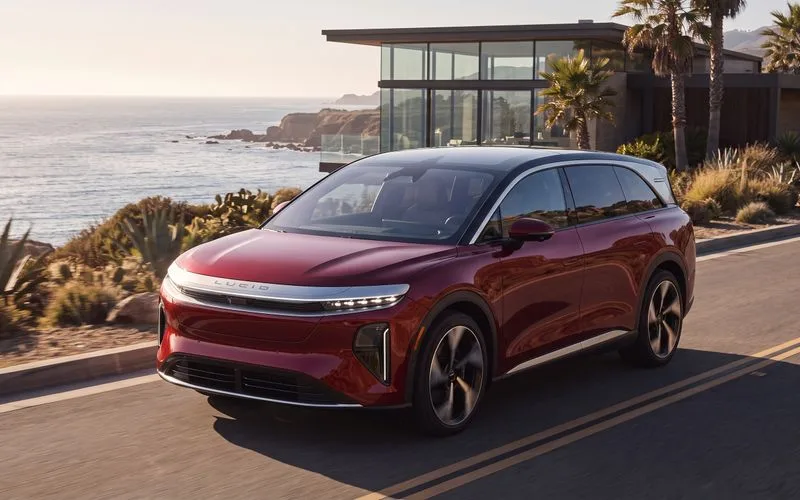 Lucid GravityFull-Size Luxury SUVBetter at: Range and comfort
The closest direct rival — more range, faster charging and a roomier, more comfortable cabin for similar money, if you can live without the off-road hardware.
Compare 2.96B-
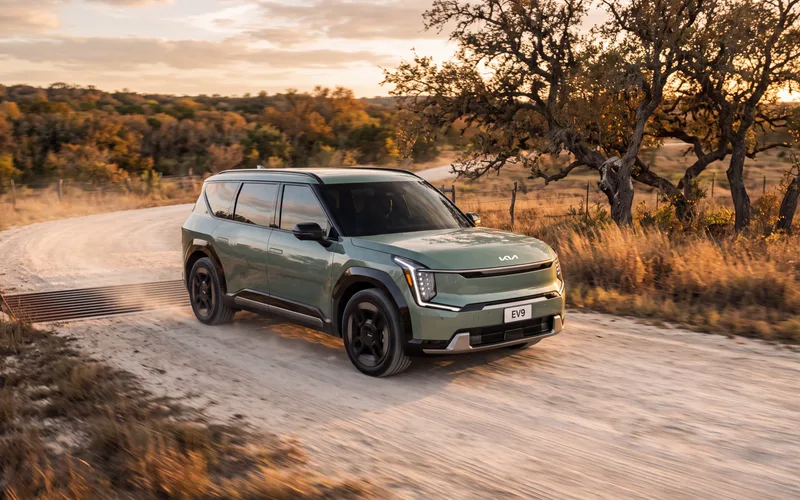 Kia EV9Mid-Size SUVBetter at: Value
Delivers the same seven-seat electric package for roughly $25,000 less, with a stronger warranty and a real dealer network to service it.
Compare 2.64C+
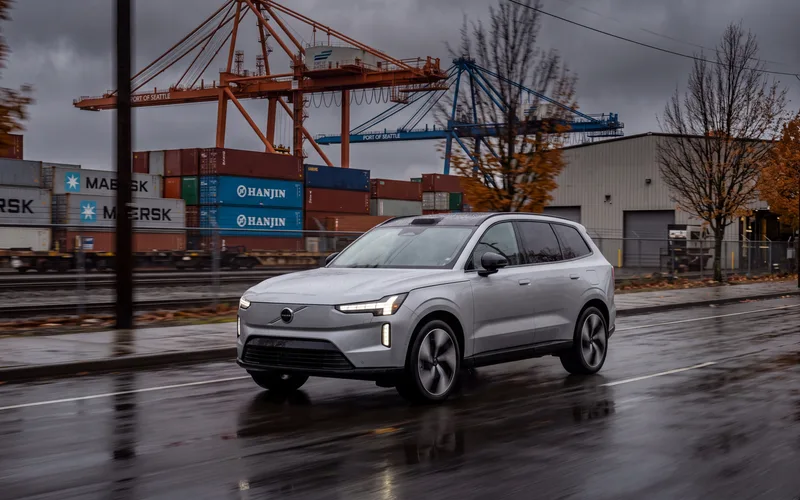 Volvo EX90Mid-Size Luxury SUVBetter at: Ride refinement
Matches the R1S's IIHS Top Safety Pick+ while riding quieter and softer, and it still offers CarPlay and a conventional luxury cabin.
CompareSubject scores by year
Hover or tap a score to see what moved it versus the year before. A corner mark flags a big swing.
| Year | Performance | Efficiency | Safety | Space | Cost | Reliability | Tech | Use-case | Driving | Value |
|---|---|---|---|---|---|---|---|---|---|---|
| 2026 | 90 | 68 | 80 | 68 | 16 | 46 | 73 | 75 | 73 | 73 |
| 2025 | 93 | 67 | 83 | 70 | 34 | 40 | 72 | 73 | 74 | 85 |
| 2024 | 92 | 72 | 74 | 67 | 24 | 42 | 70 | 78 | 74 | 81 |
| 2023 | 96 | 63 | 81 | 65 | 19 | 48 | 71 | 76 | 76 | 80 |
| 2022 | 92 | 63 | 83 | 68 | 33 | 44 | 70 | 75 | 77 | 77 |
Compare two years
Best fit & conditions
Higher scores mean a better fit for that use case. Learn more about use-case fit →
Subject profile
Detailed scoring by subject
1Performance & PowertrainThe R1S's best-graded category.4.00A+
The representative Dual Standard uses Rivian's 533-hp dual-motor AWD system. The new-for-2025 lineup also offered a 665-hp Performance upgrade and an 850-hp Tri-Motor.
The volume Dual Standard produces 610 lb-ft, already exceeding the top of the SUV normalization band.
The standard dual-motor configuration is exceptionally quick for a full-size seven-passenger SUV without an optional performance package.
The in-house dual motors deliver immediate, quiet and linear thrust, with no combustion or shift transitions. Reviews of the refreshed R1 consistently describe smooth acceleration and responsive performance.
Single-speed direct drive provides seamless acceleration without shifts, hunting or a manual-mode compromise.
A 7,700-pound maximum sits near the top of the SUV scoring band and applies across the 2025 range.
AWD is standard throughout the range, with front/rear motor control and All-Purpose, All-Terrain and Snow modes; Tri-Motor adds more granular rear-axle control and additional modes.
Standard height-adjustable air suspension, nearly 15 inches of maximum clearance, deep-water capability and dedicated terrain software give the R1S genuine off-road credibility. An All-Terrain package and the specialized California Dune version raise its ceiling further.
The change-year lineup spans standard and Performance dual-motor systems plus an all-new Tri-Motor, paired with Standard, Large and Max batteries. It lacks a non-EV alternative but offers unusually broad output and range choices within its EV architecture.
2Efficiency & RangeOne of the R1S's weakest categories.2.51C+
The volume Dual Standard on its standard 20-inch wheels is EPA-rated at 79 MPGe combined; its size and mass limit efficiency versus smaller EV SUVs.
Regenerative braking helps this large SUV reach 85 MPGe on the EPA city cycle.
The tall, heavy R1S returns 72 MPGe on the EPA highway cycle, modest by EV standards but credible for a full-size three-row SUV.
The representative Standard LFP pack delivers 258 EPA miles on its standard wheels, while other 2025 configurations substantially extend the model's range.
The Standard LFP battery is capped at 200 kW, below the 220-kW peak quoted for the larger 2025 packs.
The smaller Standard battery gives the volume trim the quickest quoted 10–80% time in the 2025 R1S range, though it trails leading 800-volt rivals.
EPA estimates $950 per year in electricity, much less than fueling a comparable gasoline full-size luxury SUV.
Electricity avoids premium gasoline, the LFP pack supports routine 100% charging, and home Level 2 charging is straightforward. CCS1 plus Rivian-provided NACS adapter support broadens road-trip access, though public fast charging remains costlier and less convenient than charging at home.
3SafetyOne of the R1S's strongest categories.3.62A-
NHTSA has not published an overall NCAP star rating for the redesigned 2025 R1S. The required numeric field therefore uses the dataset's neutral 4-star convention for an untested modern SUV and is not presented as a government result.
The redesigned 2025 R1S is a Top Safety Pick+ when built after August 2024, with Good ratings in the small-overlap, updated moderate-overlap, and updated side tests. The build-date limitation keeps it just below a near-perfect score.
Every second-generation R1S includes Rivian's new Autonomy Platform and the full core suite: AEB, full-stop adaptive cruise, highway lane centering, lane keeping, blind-spot warning, and rear cross-traffic warning. This is comprehensive standard coverage across the range.
IIHS rates the standard pedestrian front-crash-prevention system Good, with collision avoidance in every nighttime adult test at both tested speeds. Its only notable blemish was limited speed reduction in the 25-mph daytime crossing-child test.
Blind-spot detection and rear cross-traffic warning are standard, supported by new high-resolution blind-spot views and rear radar. Coverage is alert-focused rather than active intervention, and the owner's guide says rear cross-traffic warning is unavailable while towing.
Highway Assist centers the large SUV confidently and adds turn-signal-initiated lane changes, while lane keeping remains available away from supported highways. Its centering is restricted to eligible highways, preventing a top-tier score despite strong on-highway behavior.
Full-stop adaptive cruise is smooth and confidence-inspiring in traffic, and integrates well with highway centering and lane-change assistance. Highway Assist's road restrictions are the main limitation.
Gen 2 2025 vehicles gained hands-free highway driving through a March 2025 software update, with a driver-facing attention camera. It was limited to compatible highways and arrived after launch, so it trails broader, more mature systems.
All trims have curve-adaptive LED projectors and high-beam assist, but IIHS rates the single system Acceptable rather than Good because the low beams produced glare and only fair visibility on left curves.
The R1S's size creates normal full-size-SUV blind zones, but Gen 2's 11-camera system, crisp 360-degree view, parking sensors, and enhanced blind-spot camera view compensate comprehensively. Reviewers particularly praise the clarity and nighttime usefulness of the cameras.
IIHS rates LATCH usability Good and identifies four rear seating positions with complete LATCH hardware plus a fifth with a tether. Some third-row anchors are harder to maneuver around, but the seven-seat cabin offers outstanding multi-seat flexibility.
4Space & ComfortGrades above the middle of the scale.2.75B-
Every 2025 R1S has three-row seating for seven.
The tall, upright cabin provides generous first-row head clearance despite the standard panoramic roof.
Front legroom is adequate but not exceptional for a full-size luxury SUV.
The boxy roof preserves excellent second-row headroom.
The sliding second row offers useful flexibility, though its published legroom is only mid-pack.
A 32.8-inch-legroom, 38.6-inch-headroom third row can take adults on shorter trips, and the second row tilts and slides for access; it is less spacious than the largest three-row SUVs.
The square cargo bay is useful with the third row folded and retains meaningful space with all seats occupied.
A flat load floor and more than 100 cubic feet put maximum enclosed capacity at the top of the SUV normalization band.
A large powered frunk, underfloor rear storage, split tailgate, integrated flashlight, many cubbies, eight USB-C ports and three 120V outlets make this a storage standout.
Eight-way powered lumbar adjustment and heated seats in all rows are strong, but reviews find cushioning and long-trip comfort less convincing than the Kia EV9 and traditional luxury benchmarks.
The 2025 rear-suspension and roll-control retune greatly improves composure, yet independent testing still reports some head toss and an unsettled response over imperfect pavement.
The EV drivetrain is hushed and highway isolation is appropriately premium, although tire and impact noise keep it short of library-quiet class leaders.
Heated and ventilated front seats, heated wheel, heated second and third rows, pre-entry conditioning, dual-zone climate and a panoramic roof are standard across the 2025 lineup.
5Cost of OwnershipThe R1S's lowest-graded category.0.23F
The entry 2025 R1S is the Adventure Dual Standard at $75,900 before the mandatory destination charge.
The accessible Dual Standard is used as the representative volume EV configuration; it is also the default 2025 configuration in Edmunds' model-specific ownership analysis.
Edmunds projects relatively modest routine and repair expense for the 2025 Dual Standard, although this remains a forecast rather than observed five-year data for the new generation.
Retention is derived consistently from the volume trim's $77,700 delivered MSRP and Edmunds' $36,010 five-year depreciation estimate.
The 2025 comprehensive warranty is longer than the common luxury-industry three-year term but not class-leading.
The volume Dual Standard's battery pack and drivetrain receive eight years of coverage, with a 120,000-mile cap; Max and Large packs receive 150,000 miles.
There is no included scheduled-maintenance program, but Rivian supplies 24/7 roadside assistance and may provide alternate transportation for qualifying warranty repairs. Those are useful basic ownership perks rather than a premium multi-year maintenance package.
$77,700 volume-trim price minus its estimated resale value after 5 years (53.7% retained, or about $41,725) leaves about $35,975 in depreciation. Add the projected $4,534 in 5-year maintenance and repairs, and owning this vehicle for 5 years costs about $40,509 in total.
6Reliability & QualityOne of the R1S's weakest categories.0.67F
Consumer Reports rates the redesigned 2025 R1S as less reliable than other vehicles from the same model year, with owner-reported trouble spanning its battery, motors, drive system, charging, electronics, climate system, hardware, brakes, and noises/leaks. J.D. Power shows a 77/100 consumer score but explicitly says previous-year data were used, so it does not outweigh CR's model-year owner survey.
Rivian was last among the 22 brands ranked in Consumer Reports' late-2024 reliability study. As a young manufacturer with only a short R1 field history, it lacks the multi-generation dependability record of established luxury-SUV brands.
Nine NHTSA campaigns is heavy activity for a single model year and includes consequential issues, not only cosmetic defects. Although some fixes are inspections or over-the-air software, the record includes possible loss of propulsion power, failure to identify a lead vehicle, defective turn signals, loose seat-belt-retractor fasteners, and an incorrectly serviced rear toe link.
The volume Dual Standard combines a new LFP Standard pack with the second-generation vehicle's extensively revised electrical architecture, leaving little long-term field evidence. The simpler seven-ECU zonal architecture and service-oriented pack design are promising, but CR owner reports already identify battery, motor, drive-system, and charging trouble spots, and a 2025 recall covered possible power loss from a high-voltage connection.
The R1S cabin is a genuine strength for the price, with an upscale design, convincing surfaces, and available real wood and distinctive textile details. Reviewers describe it as luxurious and visually richer than many modern SUV interiors, though the most lavish materials shown on the six-figure Ascend are above the volume trim.
Assembly consistency trails the luxury-SUV norm. MotorTrend encountered extensive rattling and abnormal noises in multiple early second-generation test vehicles, while CR owners report body-hardware, paint/trim, and squeak/rattle/leak trouble; the early-prototype caveat keeps this above the bottom band.
Rivian's direct service-center network is sparse compared with nationwide luxury dealer networks, and visits are appointment-only. Nationwide mobile service can handle most work that does not require a lift, which materially improves reach, but complex repairs still depend on a relatively small center network.
The low-volume, proprietary EV architecture has little aftermarket support, and Rivian itself recommends its own service centers/mobile technicians or its certified collision network. High-voltage components, structural castings, sensors, and brand-specific body parts make repair channels limited and potentially expensive, despite the 2025 redesign being engineered for easier service.
7Technology & InfotainmentGrades above the middle of the scale.2.91B-
The standard landscape display exceeds the SUV normalization ceiling.
The polished, quick interface has clear permanent navigation/media/climate shortcuts, but burying mirror, steering-wheel and vent adjustment in the screen adds distraction.
Neither Apple CarPlay nor Android Auto was offered for the 2025 model year.
Native navigation is clear, integrates charger availability and routing, and works with the built-in voice assistant, reducing—but not eliminating—the phone-projection omission.
The standard Rivian Audio system is adequate; the available Rivian Premium Audio with Dolby Atmos provides a meaningful upgrade but cost extra on Dual models.
A crisp 12.3-inch fully digital driver display is standard and supports navigation, efficiency, tire and blind-spot views, though customization is not class-leading.
Frequent whole-vehicle OTA releases add driving, autonomy, infotainment and convenience features, placing Rivian among the industry leaders.
The polished app supports phone key, locks, climate, location, charging and vehicle-camera functions; some connected media and live security functions require Connect+.
Eight USB-C ports, dual-phone wireless charging and three 120V outlets provide exceptional device power across all three rows.
Phone-as-key, proximity access, ignition-free driving, remote climate and powered front and rear cargo openings are comprehensive and standard.
Ten much-higher-resolution cameras, 12 ultrasonic sensors, 360-degree view and blind-spot video give excellent coverage, though no full automated parking system was advertised.
No head-up display was offered on any 2025 R1S configuration.
8Use-Case FitGrades above the middle of the scale.2.93B-
Seven seats, four complete rear LATCH positions, a power-folding/sliding second row and ample cargo/frunk capacity make family logistics strong, though the tall step-in and third-row passage take effort.
Post-August-2024 examples earn IIHS Top Safety Pick+ with Good crashworthiness and standard blind-spot, lane-prevention and rear automatic braking systems.
Excellent cargo flexibility, all-row heat, abundant charging ports and quiet cruising help, but middling second/third-row space, touchscreen controls and inconsistent ride temper long-haul comfort.
Smooth one-pedal propulsion, good cameras, adaptive air suspension and Highway Assist reduce fatigue, but strong regenerative response and screen-based basic controls demand acclimation.
The Dual Standard's 79 MPGe combined and home charging beat gasoline full-size SUVs, but its mass, expensive tires and merely moderate EV efficiency keep costs above efficient crossover EVs.
A 200.8-inch-long, roughly 79-inch-wide body is cumbersome in tight cities; excellent surround cameras, sensors, kneel mode and a relatively tight measured circle mitigate rather than erase its size.
Standard AWD, 7,700-pound maximum towing, 104.7 cubic feet of rear cargo and strong instant torque handle substantial utility work, though it is not a pickup and towing sharply cuts EV range.
The capable chassis and washable storage are promising, but this costly luxury EV lacks a long fleet durability record and its premium cabin is poorly suited to sustained jobsite abuse.
Three 120V outlets, an optional compressor, hitch, sliding tie-downs, washable frunk and roof accessories are useful, but there is no bed or broad commercial upfit ecosystem.
The volume Dual Standard offers only 258 EPA miles, and charging trails newer 800V rivals, although quiet cruising, excellent native charging navigation and driver assistance help.
Standard AWD, height-adjustable air suspension, hydraulic roll control, substantial clearance, strong towing and factory off-road modes make it a genuine benchmark adventure EV.
A flat 104.7-cu-ft rear load floor, 46.7 cu ft behind row two, powered frunk, underfloor bin, split tailgate, hitch and roof solutions provide exceptional flexibility.
9Driving ExperienceGrades above the middle of the scale.3.01B
The low battery mass, hydraulic roll control and 2025 suspension retune give impressive pace and body control for a near-7,000-pound SUV, though its responses remain less cohesive than the best road-focused luxury SUVs.
Steering is accurate and responsive but transmits limited road texture, and some testers still perceive an unnatural relationship between steering input and body response.
Strong one-pedal regeneration and capable friction brakes confidently manage the vehicle's mass, but the aggressive regen calibration can make smooth modulation difficult.
The in-house Dual Motor AWD system delivers seamless, immediate response with no shifts or combustion transitions and abundant passing power.
Twin electric motors are nearly silent and vibration-free in normal use; tire and suspension noise is more noticeable than motor noise under load.
The measured circle is relatively tidy for this large SUV but exceeds the framework's 42-ft SUV upper normalization bound.
Commanding sightlines, kneel mode and broad powered seat/wheel adjustment suit many drivers, but screen-only mirror, vent and steering-wheel adjustments are needlessly cumbersome.
Even the volume Dual's immediate 533-hp thrust, strong grip, adjustable ride height and genuine trail ability give it far more character than a typical three-row SUV.
10Value & Market PositionOne of the R1S's strongest categories.3.77A
Even Dual Standard includes seven seats, AWD, air suspension, a panoramic roof, heated and ventilated front seats, heated second- and third-row seats, three displays, surround-view cameras, and a broad active-safety suite. The base price is high, but few costly comfort essentials are withheld.
The R1S combines luxury, seven-seat utility, standard AWD, 7,700-pound towing, genuine off-road hardware, and unusually strong performance, so capability per dollar is compelling. It is not a bargain: the $77,700 base overlaps a loaded Kia EV9 and upper configurations exceed $100,000.
Four well-spaced factory configurations cover three battery sizes and Dual- or Tri-Motor propulsion, with numerous wheel, paint, interior, roof, audio, and off-road choices. That is unusually broad personalization for a low-volume luxury EV SUV.
The R1S has meaningful acceptance for an expensive startup-brand SUV and grew strongly in 2024, but 2025 first-half volume dropped sharply year over year. It is a credible niche leader rather than a full-size luxury-SUV sales leader.
Rivian has an unusually strong adventure-luxury identity and exceptionally enthusiastic owners, giving the R1S real halo appeal despite the brand's young age and reliability concerns.
Rivian offered material lease support on 2025 inventory, including a $6,500 lease contribution on selected Dual Max Performance builds that could stack with a $7,500 lease credit, plus targeted EV trade-in support. The offers were configuration- and eligibility-dependent rather than universal cash discounts.
The 2025 model begins the registry's second R1S generation and is a major hardware, electrical-architecture, battery, motor, suspension, safety-sensor and computing overhaul. It therefore entered this model year at the start of its product cycle.
Reviews consistently praise the refreshed ride, performance, range, utility, and off-road ability; MotorTrend made it a 2025 SUV of the Year finalist and called the update a winning formula. Price, charging speed, and some usability issues keep it short of an uncontested class win.