

The verdict
A capable full-size luxury suv, strong on performance and held back by ownership.
The 2026 Rivian R1S is the most capable three-row electric SUV you can buy — 533 hp and 610 lb-ft standard, 7,700 lbs of towing, up to 14.9 inches of ground clearance, 104.7 cu ft of cargo space and an IIHS Top Safety Pick+ award, all for about $85,795 to start now that the cheaper Standard-pack model is gone. Running it is cheap (85 MPGe, roughly $900 a year in electricity) and it is one of the few luxury SUVs owners genuinely love — Rivian has topped Consumer Reports' owner-satisfaction survey three years running. Owning it is the hard part: Rivian finished last of about 30 brands in both Consumer Reports' report card and J.D. Power's 2026 Initial Quality Study, insurance runs around $3,250 a year, a dented rear quarter panel has been quoted at over $50,000 to fix, and five-year resale forecasts are worse than the luxury-EV average. Buy it if the capability and the character are the point; look elsewhere if you want a low-drama, low-cost family hauler.
Jump to scoresStrengths
- Genuine off-road hardware, not an off-road appearance package
- Supercar acceleration in a seven-seat body
- Cheap to fuel, easy to charge
What holds it back
- The cheap R1S no longer exists
- Depreciation and insurance take a serious bite
- Rivian sits last in every reliability ranking that matters
Top alternatives
Cars shoppers cross-shop with the Rivian R1S 3.32B+
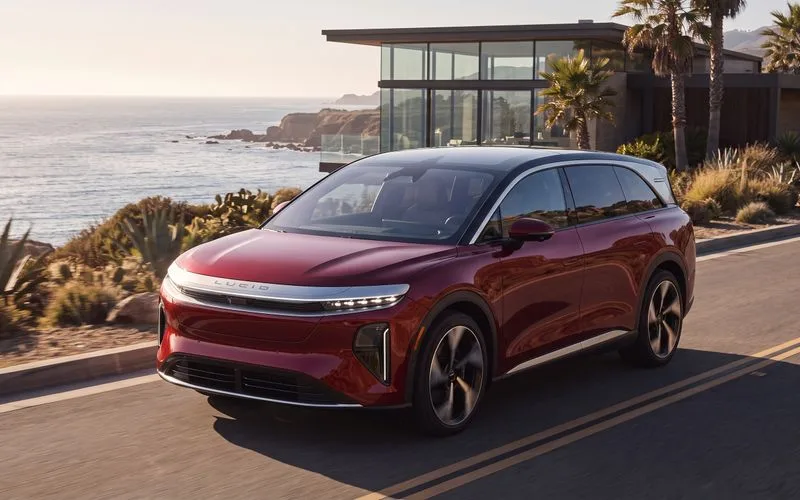 Lucid GravityFull-Size Luxury SUVBetter at: Range and comfort
The closest direct rival — more range, faster charging and a roomier, more comfortable cabin for similar money, if you can live without the off-road hardware.
Compare 2.96B-
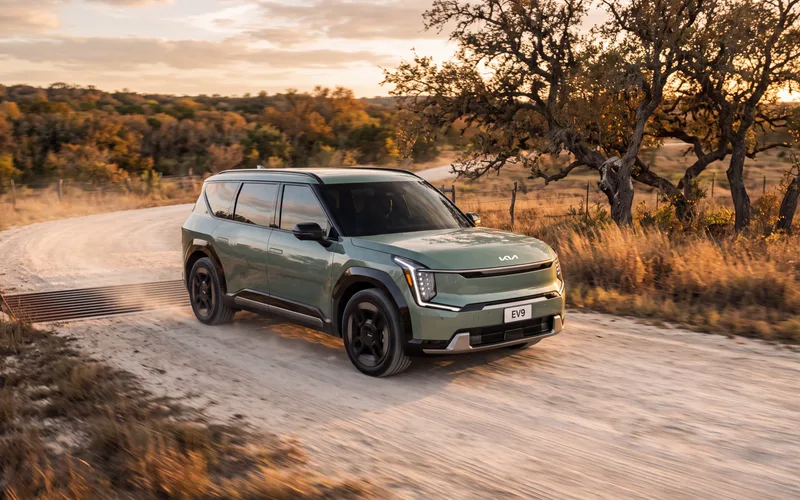 Kia EV9Mid-Size SUVBetter at: Value
Delivers the same seven-seat electric package for roughly $25,000 less, with a stronger warranty and a real dealer network to service it.
Compare 2.64C+
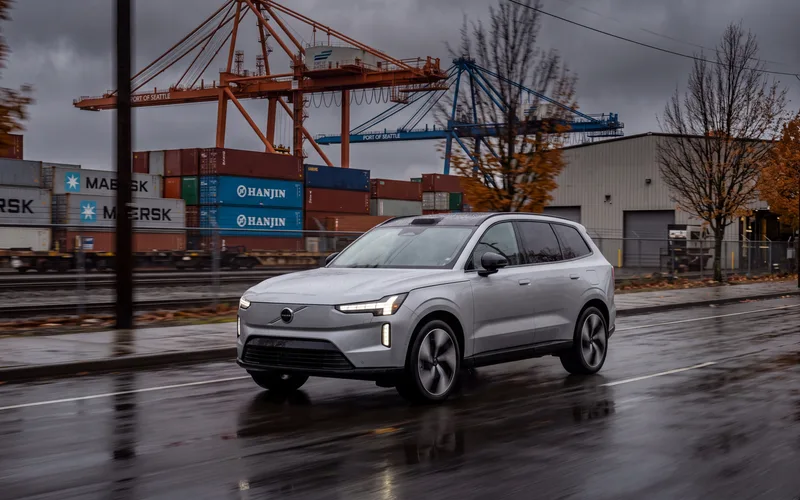 Volvo EX90Mid-Size Luxury SUVBetter at: Ride refinement
Matches the R1S's IIHS Top Safety Pick+ while riding quieter and softer, and it still offers CarPlay and a conventional luxury cabin.
CompareSubject scores by year
Hover or tap a score to see what moved it versus the year before. A corner mark flags a big swing.
| Year | Performance | Efficiency | Safety | Space | Cost | Reliability | Tech | Use-case | Driving | Value |
|---|---|---|---|---|---|---|---|---|---|---|
| 2026 | 90 | 68 | 80 | 68 | 16 | 46 | 73 | 75 | 73 | 73 |
| 2025 | 93 | 67 | 83 | 70 | 34 | 40 | 72 | 73 | 74 | 85 |
| 2024 | 92 | 72 | 74 | 67 | 24 | 42 | 70 | 78 | 74 | 81 |
| 2023 | 96 | 63 | 81 | 65 | 19 | 48 | 71 | 76 | 76 | 80 |
| 2022 | 92 | 63 | 83 | 68 | 33 | 44 | 70 | 75 | 77 | 77 |
Compare two years
Best fit & conditions
Higher scores mean a better fit for that use case. Learn more about use-case fit →
Subject profile
Academic Probation · NHTSA safety recalls
Sep 16, 2026Back over prevention: softwareThe rearview camera image may be obstructed by a notification when in reverse. As such, these vehicles fail to comply with the requirements of Federal Motor Vehicle Safety Standard (FMVSS) number 111, "Rear Visibility."
Defect
Rivian Automotive, LLC (Rivian) is recalling certain 2022-2027 R1S, 2022-2026 R1T, and 2027 R2 vehicles. The rearview camera image may be obstructed by a notification when in reverse. As such, these vehicles fail to comply with the requirements of Federal Motor Vehicle Safety Standard (FMVSS) number 111, "Rear Visibility."
Risk
An obstructed rearview camera image can reduce the driver's view behind the vehicle, increasing the risk of a crash.
Remedy
Rivian has released an over-the-air (OTA) software update, free of charge. Owner notification letters are expected to be mailed November 9, 2026. Owners may contact Rivian customer service at 1-888-748-4261. Rivian's number for this recall is FSAM-1866. Vehicle Identification Numbers (VINs) involved in this recall will be searchable on NHTSA.gov on November 9, 2026.
NHTSA campaign 26V597000 ↗Manufacturer no. FSAM-186698,828 vehicles potentially affected (all models in the campaign)Filed by Rivian Automotive, LLCFiled as R1SAug 5, 2026Exterior lighting: turn signalOne or both front turn signals may fail to illuminate and flash. As such, these vehicles fail to comply with the requirements of Federal Motor Vehicle Safety Standard (FMVSS) number 108, "Lamps, Reflective Devices, and Associated Equipment."
Defect
Rivian Automotive, LLC (Rivian) is recalling certain 2025-2026 R1S and R1T vehicles. One or both front turn signals may fail to illuminate and flash. As such, these vehicles fail to comply with the requirements of Federal Motor Vehicle Safety Standard (FMVSS) number 108, "Lamps, Reflective Devices, and Associated Equipment."
Risk
Turn signals that do not function properly increase the risk of a crash.
Remedy
Rivian will inspect and replace the front turn signals as necessary, free of charge. Owner notification letters were mailed September 28, 2026. Owners may contact Rivian customer service at 1-888-748-4261. Rivian's number for this recall is FSAM-1833. This is an expansion of Recall 25V387. Vehicle Identification Numbers (VINs) involved in this recall will be searchable on NHTSA.gov on August 31, 2026.
NHTSA campaign 26V508000 ↗Manufacturer no. FSAM-18333,829 vehicles potentially affected (all models in the campaign)Owners notified Sep 28, 2026Filed by Rivian Automotive, LLCFiled as R1SJan 15, 2026Seat belts: critical fasteners · Seat belts: rear/other: retractorThe bolts that secure the second-row driver and passenger side seat belt retractor assemblies may be improperly tightened.
Defect
Rivian Automotive, LLC (Rivian) is recalling certain 2022-2025 R1T and 2022-2026 R1S vehicles. The bolts that secure the second-row driver and passenger side seat belt retractor assemblies may be improperly tightened.
Risk
An improperly secured seat belt retractor may not adequately restrain the seat occupant, increasing the risk of injury during a crash.
Remedy
Rivian will inspect and tighten the bolts as necessary, free of charge. Owner notification letters were mailed March 2, 2026. Owners may contact Rivian customer service at 1-888-748-4261. Rivian's number for this recall is FSAM-1795.
NHTSA campaign 26V009000 ↗Manufacturer no. FSAM-1795869 vehicles potentially affected (all models in the campaign)Owners notified Mar 2, 2026Filed by Rivian Automotive, LLCFiled as R1S
19 recalls on other model years of the R1S (2022–2025)
Jan 5, 2026Suspension: critical fastenersThe toe link may have been reassembled incorrectly during service procedures performed before March 10, 2025.
Defect
Rivian Automotive, LLC (Rivian) is recalling certain 2022-2025 R1S and R1T vehicles that previously had service performed. The toe link may have been reassembled incorrectly during service procedures performed before March 10, 2025.
Risk
The toe link joint may separate, increasing the risk of a crash.
Remedy
Rivian will replace the rear toe link bolts, free of charge. Owner notification letters were mailed February 17, 2026. Owners may contact Rivian customer service at 1-888-748-4261. Rivian's number for this recall is FSAM-1794. Vehicle Identification Numbers (VINs) involved in this recall will be searchable on NHTSA.gov beginning February 24, 2026.
NHTSA campaign 26V003000 ↗Manufacturer no. FSAM-179419,641 vehicles potentially affected (all models in the campaign)Owners notified Feb 17, 2026Filed by Rivian Automotive, LLCFiled as R1SSep 8, 2025Forward collision avoidance: adaptive cruise control: softwareThe Hands-Free Highway Assist (HWA) software may fail to correctly identify a lead vehicle.
Defect
Rivian Automotive, LLC (Rivian) is recalling certain 2025 R1S and R1T vehicles operating a software version prior to 2025.18.30. The Hands-Free Highway Assist (HWA) software may fail to correctly identify a lead vehicle.
Risk
Failure to detect another vehicle increases the risk of a crash.
Remedy
Rivian has released an over-the-air (OTA) software update, free of charge. Owner notification letters were mailed October 17, 2025. Owners may contact Rivian customer service at 1-888-748-4261. Rivian's number for this recall is FSAM-1744.
NHTSA campaign 25V585000 ↗Manufacturer no. FSAM-174424,214 vehicles potentially affected (all models in the campaign)Owners notified Oct 17, 2025Filed by Rivian Automotive, LLCFiled as R1SAug 21, 2025Electrical system: propulsion system: traction batteryAn improperly grounded connection inside the High Voltage Distribution Box (HVDB) may cause a loss of drive power.
Defect
Rivian Automotive, LLC (Rivian) is recalling certain 2025 R1S and R1T vehicles. An improperly grounded connection inside the High Voltage Distribution Box (HVDB) may cause a loss of drive power.
Risk
A loss of drive power increases the risk of a crash.
Remedy
Rivian will inspect and repair the HVDB ground strap joint or replace the high voltage battery pack as necessary, free of charge. Owner notification letters were mailed October 17, 2025. Owners may contact Rivian customer service at 1-888-748-4261. Rivian's number for this recall is FSAM-1723.
NHTSA campaign 25V537000 ↗Manufacturer no. FSAM-172323 vehicles potentially affected (all models in the campaign)Owners notified Oct 17, 2025Filed by Rivian Automotive, LLCFiled as R1SJun 11, 2025Exterior lighting: turn signalOne or both front turn signals may fail to illuminate and flash. As such, these vehicles fail to comply with the requirements of Federal Motor Vehicle Safety Standard (FMVSS) number 108, "Lamps, Reflective Devices, and Associated Equipment."
Defect
Rivian Automotive, LLC (Rivian) is recalling certain 2025 R1S and R1T vehicles. One or both front turn signals may fail to illuminate and flash. As such, these vehicles fail to comply with the requirements of Federal Motor Vehicle Safety Standard (FMVSS) number 108, "Lamps, Reflective Devices, and Associated Equipment."
Risk
Turn signals that do not function properly, failing to indicate the driver's intention to change direction, increase the risk of a crash.
Remedy
Rivian will inspect and replace the front turn signals as necessary, free of charge. Owner notification letters were mailed September 22, 2025. Owners will receive a second notice once the remedy becomes available. Owners may contact Rivian customer service at 1-888-748-4261. Rivian's number for this recall is FSAM-1693.
NHTSA campaign 25V387000 ↗Manufacturer no. FSAM-169327,882 vehicles potentially affected (all models in the campaign)Owners notified Sep 22, 2025Filed by Rivian Automotive, LLCFiled as R1SJun 3, 2025Seat belts: front: anchorageThe D-ring bolts for one or both front seat belt anchorage assemblies may not have been properly installed.
Defect
Rivian Automotive, LLC (Rivian) is recalling certain 2022-2025 R1T and R1S vehicles. The D-ring bolts for one or both front seat belt anchorage assemblies may not have been properly installed.
Risk
An improperly secured seat belt may not restrain an occupant as intended, increasing the risk of injury during a crash.
Remedy
Rivian will inspect and properly secure the seat belt anchorage assemblies as necessary, free of charge. Owner notification letters were mailed July 8, 2025. Owners may contact Rivian customer service at 1-888-748-4261. Rivian's number for this recall is FSAM-1681.
NHTSA campaign 25V370000 ↗Manufacturer no. FSAM-1681536 vehicles potentially affected (all models in the campaign)Owners notified Jul 8, 2025Filed by Rivian Automotive, LLCFiled as R1SFeb 13, 2025Exterior lighting: headlightsThe headlight low beams may fail to illuminate when starting the vehicle in cold weather. As such, these vehicles fail to comply with the requirements of Federal Motor Vehicle Safety Standard (FMVSS) number 108, "Lamps, Reflective Devices, and Associated Equipment."
Defect
Rivian Automotive, LLC (Rivian) is recalling certain 2025 R1S and R1T vehicles. The headlight low beams may fail to illuminate when starting the vehicle in cold weather. As such, these vehicles fail to comply with the requirements of Federal Motor Vehicle Safety Standard (FMVSS) number 108, "Lamps, Reflective Devices, and Associated Equipment."
Risk
Headlight failure can reduce visibility, increasing the risk of a crash.
Remedy
Rivian will replace the headlight control modules, free of charge. Owner notification letters were mailed September 22, 2025. Owners may contact Rivian customer service at 1-888-748-4261. Rivian's number for this recall is FSAM-1612.
NHTSA campaign 25V085000 ↗Manufacturer no. FSAM-161217,260 vehicles potentially affected (all models in the campaign)Owners notified Sep 22, 2025Filed by Rivian Automotive, LLCFiled as R1SNov 1, 2024Electrical system: software · Exterior lightingSoftware version 2024.39.30 may prevent certain exterior lights from turning on when the Car Costume feature is activated.
Defect
Rivian Automotive, LLC (Rivian) is recalling certain 2025 R1T and R1S vehicles. Software version 2024.39.30 may prevent certain exterior lights from turning on when the Car Costume feature is activated.
Risk
Deactivated exterior lighting reduces the vehicle's visibility to other drivers, increasing the risk of a crash.
Remedy
Rivian has released an over-the-air (OTA) software update, free of charge. Owner notification letters were mailed December 18, 2024. Owners may contact Rivian customer service at 1-888-748-4261. Rivian's number for this recall is FSAM-1552.
NHTSA campaign 24V827000 ↗Manufacturer no. FSAM-15525,128 vehicles potentially affected (all models in the campaign)Owners notified Dec 18, 2024Filed by Rivian Automotive, LLCFiled as R1SSep 13, 2024Steering: steering control module · Vehicle speed control: cruise controlThe steering column control module (SCCM) may be missing cruise control markings. As such, these vehicles fail to comply with the requirements of Federal Motor Vehicle Safety Standard number 101, "Control and Displays."
Defect
Rivian Automotive, LLC. (Rivian) is recalling certain 2025 R1S vehicles. The steering column control module (SCCM) may be missing cruise control markings. As such, these vehicles fail to comply with the requirements of Federal Motor Vehicle Safety Standard number 101, "Control and Displays."
Risk
The driver may not know how to activate or deactivate the cruise control without the proper markings, increasing the risk of a crash.
Remedy
Rivian will inspect and replace the SCCMs as necessary, free of charge. Owner notification letters were mailed October 18, 2024. Owners may contact Rivian customer service at 1-888-748-4264. Rivian's number for this recall is FSAM-1532.
NHTSA campaign 24V686000 ↗Manufacturer no. FSAM-153233 vehicles potentially affected (all models in the campaign)Owners notified Oct 18, 2024Filed by Rivian Automotive, LLCFiled as R1SJun 20, 2024Equipment: other: labelsThe maximum vehicle capacity weight value on the tire placard label is incorrect. As such, these vehicles fail to comply with the requirements of Federal Motor Vehicle Safety Standard number 110, "Tire Selection and Rims."
Defect
Rivian Automotive, LLC. (Rivian) is recalling certain 2022-2023 R1S and R1T vehicles. The maximum vehicle capacity weight value on the tire placard label is incorrect. As such, these vehicles fail to comply with the requirements of Federal Motor Vehicle Safety Standard number 110, "Tire Selection and Rims."
Risk
A vehicle with an incorrect maximum capacity weight value may be overloaded, which can increase the risk of a crash.
Remedy
Rivian will mail owners a corrected overlay tire placard label, free of charge. Owner notification letters were mailed August 8, 2024. Owners may contact Rivian customer service at 1-888-748-4264. Rivian's number for this recall is FSAM-1491.
NHTSA campaign 24V458000 ↗Manufacturer no. FSAM-1491666 vehicles potentially affected (all models in the campaign)Owners notified Aug 8, 2024Filed by Rivian Automotive, LLCFiled as R1SJun 5, 2024Air bags: critical fasteners · Air bags: side/window: curtainThe attachment clips on the upper B-pillar and/or C-pillar trim panels may have been damaged during a service procedure.
Defect
Rivian Automotive, LLC (Rivian) is recalling certain 2022-2024 R1T and R1S vehicles. The attachment clips on the upper B-pillar and/or C-pillar trim panels may have been damaged during a service procedure.
Risk
Damaged pillar trim panel clips can result in improper side curtain air bag deployment, increasing the risk of injury during a crash.
Remedy
Rivian will replace the pillar trim panels, free of charge. Owner notification letters were mailed July 16, 2024. Owners may contact Rivian customer service at 1-888-748-4261. Rivian's number for this recall is FSAM 1464.
NHTSA campaign 24V408000 ↗Manufacturer no. FSAM-14641,723 vehicles potentially affected (all models in the campaign)Owners notified Jul 16, 2024Filed by Rivian Automotive, LLCFiled as R1SMay 23, 2024Exterior lighting: headlightsThe headlights may be improperly aimed. As such, these vehicles fail to comply with the requirements of Federal Motor Vehicle Safety Standard number 108, "Lamp, Reflective Devices and Associated Equipment."
Defect
Rivian Automotive, LLC. (Rivian) is recalling certain 2023-2024 EDV, R1S, and R1T vehicles. The headlights may be improperly aimed. As such, these vehicles fail to comply with the requirements of Federal Motor Vehicle Safety Standard number 108, "Lamp, Reflective Devices and Associated Equipment."
Risk
Improperly aimed headlights can result in insufficient illumination of the road, decreasing the driver's visibility and increasing the risk of a crash.
Remedy
Rivian will inspect and adjust the headlight alignment as necessary, free of charge. Owner notification letters were mailed June 28, 2024. Owners may contact Rivian customer service at 1-888-748-4264. Rivian's number for this recall is FSAM-1445.
NHTSA campaign 24V367000 ↗Manufacturer no. FSAM-14452,334 vehicles potentially affected (all models in the campaign)Owners notified Jun 28, 2024Filed by Rivian Automotive, LLCFiled as R1SMay 9, 2024Equipment: other: labelsThe dashboard air bag warning label may be missing. As such, these vehicles fail to comply with the requirements of Federal Motor Vehicle Safety Standard number 208, "Occupant Crash Protection."
Defect
Rivian Automotive, LLC. (Rivian) is recalling certain 2024 R1T and R1S vehicles. The dashboard air bag warning label may be missing. As such, these vehicles fail to comply with the requirements of Federal Motor Vehicle Safety Standard number 208, "Occupant Crash Protection."
Risk
Without the dashboard label, operators may be unaware of the increased risks that an air bag poses to an infant or child in the front seat, increasing the risk of injury to occupants.
Remedy
Rivian mailed owners the warning label information, free of charge. Owner notification letters were mailed May 30, 2024. Owners may contact Rivian customer service at 1-888-748-4264. Rivian's number for this recall is FSAM-1429.
NHTSA campaign 24V319000 ↗Manufacturer no. FSAM-1429127 vehicles potentially affected (all models in the campaign)Owners notified May 30, 2024Filed by Rivian Automotive, LLCFiled as R1SDec 21, 2023Vehicle speed control: accelerator pedalThe accelerator pedal may not detect when the driver releases the pedal, failing to activate "auto-hold" or "park" as intended.
Defect
Rivian Automotive, LLC (Rivian) is recalling certain 2022 R1T and R1S vehicles. The accelerator pedal may not detect when the driver releases the pedal, failing to activate "auto-hold" or "park" as intended.
Risk
Failure to activate "auto-hold" or "park" can result in unintended vehicle movement, increasing the risk of a crash.
Remedy
Rivian has released an over-the-air (OTA) software update. Rivian will also replace the accelerator pedals, free of charge. Owner notification letters were mailed January 18, 2024. Owners may contact Rivian customer service at 1-888-748-4261. Rivian's number for this recall is FSAM 1342.
NHTSA campaign 23V883000 ↗Manufacturer no. FSAM 13427,873 vehicles potentially affected (all models in the campaign)Owners notified Jan 18, 2024Filed by Rivian Automotive, LLCFiled as R1SNov 21, 2023Equipment: electrical: infotainment: software · Visibility: defroster/defogger/hvac systemA software update may have deactivated the defroster and defogger system controls.
Defect
Rivian Automotive, LLC (Rivian) is recalling certain 2022-2023 R1T and R1S vehicles. A software update may have deactivated the defroster and defogger system controls.
Risk
The inability to operate the windshield defrosting and defogging system can decrease the driver's visibility, increasing the risk of a crash.
Remedy
Rivian has released an over-the-air (OTA) software update, free of charge. Owner notification letters were mailed December 21, 2023. Owners may contact Rivian customer service at 1-888-748-4261. Rivian's number for this recall is FSAM-1331.
NHTSA campaign 23V783000 ↗Manufacturer no. FSAM-13311,463 vehicles potentially affected (all models in the campaign)Owners notified Dec 21, 2023Filed by Rivian Automotive, LLCFiled as R1SMar 31, 2023Exterior lighting: back up lightsThe reverse light beam may not be visible from certain angles. As such, these vehicles fail to comply with the requirements of Federal Motor Vehicle Safety Standard number 108, "Lamps, Reflective Devices, and Associated Equipment."
Defect
Rivian Automotive, LLC (Rivian) is recalling certain 2022-2023 R1S vehicles. The reverse light beam may not be visible from certain angles. As such, these vehicles fail to comply with the requirements of Federal Motor Vehicle Safety Standard number 108, "Lamps, Reflective Devices, and Associated Equipment."
Risk
Reduced visibility of the reverse lights increases the risk of a crash.
Remedy
Rivian will repair or replace the reverse lights, free of charge. Owner notification letters were mailed July 12, 2023. Owners may contact Rivian customer service at 1-855-748-4265. Rivian's number for this recall is FSAM-1216.
NHTSA campaign 23V233000 ↗Manufacturer no. FSAM-12165,030 vehicles potentially affected (all models in the campaign)Owners notified Jul 12, 2023Filed by Rivian Automotive, LLCFiled as R1SMar 9, 2023Air bags: critical fasteners · Air bags: side/window: curtainThe fasteners that secure the right and left side curtain air bags may be improperly secured.
Defect
Rivian Automotive, LLC (Rivian) is recalling certain 2022-2023 R1S vehicles. The fasteners that secure the right and left side curtain air bags may be improperly secured.
Risk
Improperly secured side curtain air bags may not perform as intended, increasing the risk of injury during a crash.
Remedy
Dealers will secure or replace the side curtain air bags as necessary, free of charge. All owners have been notified and all vehicles will be repaired by March 15, 2023. Owners may contact Rivian customer service at 1-888-748-4261. Rivian's number for this recall is FSAM-1185.
NHTSA campaign 23V159000 ↗Manufacturer no. FSAM-118530 vehicles potentially affected (all models in the campaign)Owners notified Mar 15, 2023Filed by Rivian Automotive, LLCFiled as R1SFeb 22, 2023Air bags: frontal · Seat belts: front: retractorA faulty automatic locking retractor (ALR) sensor in the front passenger seat belt system may incorrectly report as ON when it is actually OFF, causing the suppression or improper deployment of the air bag. As such, these vehicles fail to comply with the requirements of Federal Motor Vehicle Safety Standard number 208, "Occupant Crash Protection."
Defect
Rivian Automotive, LLC (Rivian) is recalling certain 2022 R1T and R1S vehicles. A faulty automatic locking retractor (ALR) sensor in the front passenger seat belt system may incorrectly report as ON when it is actually OFF, causing the suppression or improper deployment of the air bag. As such, these vehicles fail to comply with the requirements of Federal Motor Vehicle Safety Standard number 208, "Occupant Crash Protection."
Risk
Failure of the air bag to deploy as intended increases the risk of injury to the front passenger during a crash.
Remedy
Dealers will inspect and replace the front passenger seat belt system components as necessary, free of charge. Owner notification letters were mailed April 5, 2023. Owners may contact Rivian customer service at 1-888-748-4261. Rivian's number for this recall is FSAM-1166.
NHTSA campaign 23V109000 ↗Manufacturer no. FSAM-116612,716 vehicles potentially affected (all models in the campaign)Owners notified Apr 5, 2023Filed by Rivian Automotive, LLCFiled as R1SOct 6, 2022Steering: linkages: knuckle: spindle: arm · Suspension: front: control arm: upper armThe fastener connecting the front upper control arm and steering knuckle may have been improperly tightened.
Defect
Rivian Automotive, LLC (Rivian) is recalling certain 2022 R1T, R1S, and EDV vehicles. The fastener connecting the front upper control arm and steering knuckle may have been improperly tightened.
Risk
A loose steering knuckle fastener could separate, causing a loss of vehicle control and increasing the risk of a crash.
Remedy
Dealers will inspect and, as necessary, tighten the steering knuckle fastener, free of charge. Owner notification letters were mailed November 11, 2022. Owners may contact Rivian customer service at 1-888-748-4261. Rivian's number for this recall is FSAM 997.
NHTSA campaign 22V744000 ↗Manufacturer no. FSAM 99712,212 vehicles potentially affected (all models in the campaign)Owners notified Nov 11, 2022Filed by Rivian Automotive, LLCFiled as R1SAug 25, 2022Seat belts: front: anchorageThe front seat belt anchors may have been inadequately attached to the B-pillar.
Defect
Rivian Automotive, LLC (Rivian) is recalling certain 2022 R1T and R1S vehicles. The front seat belt anchors may have been inadequately attached to the B-pillar.
Risk
An improperly secured seat belt anchor may not adequately restrain the seat occupant during a crash, increasing the risk of injury.
Remedy
Rivian will inspect the front seat belt assemblies and, as necessary, properly secure the bolts, free of charge. Owner notification letters were September 30, 2022. Owners may contact Rivian customer service at 1-888-748-4261. Rivian's number for this recall is FSAM-924.
NHTSA campaign 22V641000 ↗Manufacturer no. FSAM-924207 vehicles potentially affected (all models in the campaign)Owners notified Sep 30, 2022Filed by Rivian Automotive, LLCFiled as R1S
Source: NHTSA Office of Defects Investigation recall database, model years 2022–2026. Recalls are listed by model year as the manufacturer filed them; whether a specific car is affected depends on its VIN — check a VIN at nhtsa.gov ↗. NHTSA model names matched to this page: R1S.
Detailed scoring by subject
1Performance & PowertrainThe R1S's best-graded category.4.00A+
Volume trim is the Gen-2 Dual-Motor (Large pack), rated at 533 hp; the range tops out at 1,025 hp in the 2026 Quad-Motor. Output sits at the very top of the SUV normalization band even in base form.
610 lb-ft from the standard Dual-Motor setup is well beyond the top of the SUV band (500 lb-ft), and it arrives instantly from a standstill as with any EV.
Rivian quotes 4.5 seconds for the Dual-Motor R1S, which is quicker than most three-row SUVs of any kind. The Quad-Motor's claimed 2.6 s (Launch Mode, 22-inch Super Sport wheels) was measured nearer 3.0 s by Edmunds.
Instant, lag-free electric delivery with a pedal map reviewers single out as both quick and smooth; the Gen-2 update softened accelerator tuning and regen onset, and the 2026 car is quieter still. Falls short of a perfect score only because the highest-output versions can feel abrupt in Sport/Launch settings.
Single-speed direct drive on every motor, so there is no shifting to criticize — no hunting, no downshift lag, seamless from a stop to highway speed. Regen/one-pedal calibration, the EV analogue of shift quality, was specifically retuned for smoother low-setting behavior.
7,700 lbs is near the ceiling of the SUV band and matches or beats most gas full-size luxury SUVs, though towing at that weight cuts EV range roughly in half.
Electric all-wheel drive is standard on every 2026 R1S — there is no two-wheel-drive version — and the system is unusually sophisticated: independent motors front and rear, and on Tri/Quad models genuine per-wheel torque vectoring with a rear-motor disconnect for efficiency.
Genuine off-road hardware and geometry: adjustable air suspension spanning 7.9–14.9 in of ground clearance, 35.6° approach and 34.4° departure angles, an All-Terrain package with skid plates and AT tires, plus Rock Crawl, Soft Sand and Rally modes, kick (tank) turn and the RAD Tuner parameter editor. Sits just below body-on-frame specialists like the G-Class on outright durability credentials, not on capability.
Battery-electric only — no gas, hybrid or PHEV alternative — so buyers who cannot live with charging have nowhere to go in the lineup. Within EV terms the choice is unusually wide, with Dual, Dual Performance, Tri and Quad motor configurations and Standard (LFP), Large and Max battery packs, which is why this lands mid-band rather than low.
2Efficiency & RangeOne of the R1S's weakest categories.2.61C+
Volume configuration for 2026 is the Gen-2 R1S Dual with the 109-kWh Large pack — now the entry trim at $83,990 as Rivian phases out the Dual Standard ahead of R2 — and it ships on 22-inch road wheels EPA-rated 85 MPGe combined (39 kWh/100 mi). Mid-pack against the EV-class SUV band: a 7,000-lb, 200.8-inch three-row with 14.9 in of available ground clearance is not an aerodynamic vehicle.
EPA city rating for the 2026 R1S Dual Motor Large pack on the standard 22-inch wheels. Regenerative braking gives the usual EV city advantage over highway, and this is the best figure in the R1S lineup — the heavier Max pack drops to 91 and the Large Plus to 89.
EPA highway rating for the Dual Large on the 22-inch aero-optimized road wheels the Gen-2 refresh introduced specifically to lift highway efficiency. Dual Standard, Dual Large and Dual Max all rate 77 highway on 22in wheels, so the figure is mostly a property of the body rather than the battery.
The volume Dual Motor Large pack (109 kWh) is EPA-rated 329 miles on 22-inch wheels and 289 miles on the 20in All-Terrain package. Solidly above average for a three-row EV SUV but a long way short of the Max pack's 410 miles — the range a buyer cross-shopping a Lucid Gravity is comparing against.
Rivian quotes a 220 kW maximum DC charge rate for the R1 platform, and instrumented Gen-2 sessions peak at 215–216 kW after the 2025.18 and 2026.07 software updates raised the ceiling. Competitive for a 400-volt architecture but well behind the 800-volt Hyundai/Kia and Lucid systems that anchor the top of this band. MEDIUM rather than HIGH because Rivian publishes the 220 kW figure in R1 platform copy rather than an R1S-specific, pack-specific spec table.
Rivian publishes no pack-specific 10–80% figure for the R1S, so this is the best-corroborated measured time for the Gen-2 Large pack — down from 41.5 minutes before the 2025.18 update added on-demand preconditioning and lifted the pack's peak. A 109-kWh battery on a 400-volt bus simply takes a while; the Standard pack is quicker in minutes precisely because it is smaller.
EPA label energy cost for the Dual Large at 39 kWh/100 mi under the standard 15,000 mi/yr assumption. A comparably sized gas full-size SUV runs three to four times this, but real-world cost climbs sharply for an owner who leans on DC fast charging instead of home Level 2.
No fuel grade to worry about, and the Gen-2 car carries a native NACS port with factory access to 21,500+ Tesla Superchargers plus 50,000+ other public fast chargers, so road-trip charging is about as easy as it gets for a non-Tesla. Marked down slightly because realizing the cheap per-mile figure above assumes home Level 2, and the 109-kWh pack means long sessions when you can't plug in at home.
3SafetyOne of the R1S's strongest categories.3.47B+
NHTSA has never run a Rivian through its NCAP program, so no overall star rating exists for any R1S model year including 2026; carried at the dataset's segment-neutral 4.0-star convention for untested vehicles, matching the sibling 2026 R1T scorecard. Replaces the placeholder 4.6-star figure.
The 2026 R1S is an IIHS TOP SAFETY PICK+ with Good ratings in small overlap front, updated moderate overlap front and updated side, and it is one of only two large SUVs to earn 2026 TSP+ (with the Volvo EX90) under the tougher 2026 criteria — best-in-class crashworthiness for the segment.
Every 2026 R1S trim ships the full Rivian Autonomy Platform — AEB with forward collision warning, adaptive cruise with lane centering, lane keep assist and lane departure warning, blind-spot monitoring, rear cross-traffic alert, surround-view camera, driver attention monitoring and auto high beams — with nothing core locked behind a trim walk.
IIHS rates the 2026 R1S Good for pedestrian front crash prevention (which under the current protocol includes nighttime scenarios) but only Acceptable for vehicle-to-vehicle front crash prevention 2.0 — strong pedestrian performance keeps it in the top band, the Acceptable V2V result keeps it off the top of it.
Blind-spot monitoring and rear cross-traffic alert are standard, and the Gen 2 system adds a live side-camera feed overlaid in the instrument cluster when the turn signal is used — a genuine upgrade over an alert-only mirror light. Owner reports of the driver-display vehicle visualization missing traffic in the actual blind zone keep it below the very top.
Lane departure warning, lane keep assist and lane centering are standard, running on the Gen 2 sensor stack of eleven cameras and five radars; reviewers describe the centering as undramatic and trustworthy rather than ping-ponging.
Full-speed-range adaptive cruise with lane centering is standard on every trim and integrates directly into Highway Assist, Rivian's hands-on highway mode, with reviewers reporting smooth, well-integrated behavior rather than late braking or slow resume. Sharply above the placeholder 74.
Hands-free driving is available on the 2026 R1S and its road coverage is unusually broad — Universal Hands-Free extends the existing Enhanced Highway Assist beyond divided highways to about 3.5 million miles of North American roads, wider than the divided-highway-only maps of BlueCruise or Super Cruise. It is a paid add-on rather than included, which keeps it short of a perfect score.
IIHS rates the R1S headlights Acceptable, not Good — the single non-Good result on an otherwise clean scorecard. The rating applies to the standard fitment across the range, so there is no worse variant to avoid, and automatic high beams are standard, placing it at the top of the middle band. Far below the placeholder 97.
Natural sightlines are mediocre for a vehicle this tall — owners single out a very large C-pillar, and the R1S has no rear wiper, so the rear window fouls in rain and snow. Standard surround-view cameras and the turn-signal blind-spot camera feed compensate substantially, but compensation is not the same as seeing out.
IIHS rates the R1S LATCH ease of use Good, and the hardware count is generous: two full sets of lower anchors in the second-row outboard seats plus a middle tether anchor, and two more sets in the third row, behind wide rear door openings.
4Space & ComfortMid-pack among this car's ten categories.2.63C+
Every 2026 R1S trim — Dual Standard, Dual, Tri and Quad — is a three-row seven-seater in a 2-3-2 layout; no six-seat captain's-chair or eight-seat bench option is offered.
Published first-row headroom is 41.1 in and is unchanged for the Gen 2 car; the fixed panoramic glass roof is standard on every trim, so there is no separate no-sunroof figure.
Front legroom of 41.4 in is modest for a 200.8-in-long SUV — the R1S trades front stretch-out room for its packaging, and lands near the bottom of the SUV normalization band despite full-size exterior dimensions.
Second-row headroom of 39.7 in is near the top of the SUV band — the boxy roofline preserves height even under the standard fixed glass panel.
Second-row legroom of 36.6 in is mid-pack rather than full-size-luxury generous — the third row eats into it — though the row slides and reclines, so the usable figure varies with how the way-back is set.
A genuine third row with 32.8 in of legroom, its own vents, USB-C and heated cushions — but access through the tilting second row is tight and the flat, thigh-support-free cushion makes it a kids-and-short-hops seat rather than an adult-grade one, well short of an EV9 or Escalade.
Rivian quotes 46.7 cu ft with the third row folded — only average by the SUV band, because the R1S's tall-but-short cargo bay gives up floor length to the third row; the 11.1 cu ft frunk and ~5 cu ft underfloor bin (not counted here) do a lot of the real-world work.
With both rear rows folded the R1S swallows 104.7 cu ft — above the top of the SUV normalization band and among the largest holds in the class, and that is before the 11.1 cu ft lockable frunk and the underfloor bin.
Standout for an SUV without the R1T's gear tunnel: a two-shelf 11.1 cu ft lockable frunk with a drain plug that doubles as a cooler, a deep underfloor bin with spare tire and built-in air compressor, a large console cavity, flat-folding rear rows and Gear Guard camera monitoring. Held below the 90s only because there is no gear-tunnel-class party trick.
Front seats are well cushioned and supportive and 2026 brings upgraded quilted synthetic-leather trim, but they lack adjustable bolsters and thigh extensions; the second row is firmer (rescued by slide-and-recline) and the third row is flat and short on thigh support — good, not class-leading against a Navigator or EQS SUV.
The Gen 2 adaptive air suspension is a clear step up over the original — expansion joints and broken pavement are absorbed far better — but reviewers still fault it as overly firm, with sharp impacts punching through, so it reads capable rather than luxury-plush in a class where the Escalade and Range Rover set the bar.
Measured around the low-60s dB at 70 mph with reduced wind noise versus the first-generation car — solidly quiet, but audible motor whine keeps it a notch behind the hushed benchmarks of the full-size luxury class.
Unusually complete as standard equipment: heated and ventilated front seats, heated second- AND third-row seats, and a heated steering wheel on the base Dual Standard, plus multi-zone automatic climate control, app-based remote pre-conditioning and Rivian's cabin-keep modes. Only the lack of ventilated rear seats and the heat load from the fixed glass roof hold it back.
5Cost of OwnershipThe R1S's lowest-graded category.0.00F
Rivian sunset the entry Dual Standard R1S in March 2026, making the Dual (Large pack) the model year's entry point at $83,900 + $1,895 destination. That is roughly $21k above the top of the SUV pricing band, so the item floors out.
The volume configuration is now the Dual Large with the Adventure interior; as typically ordered with premium paint and 22-inch wheels it lands near $89,800. Dual Max is $92,885 and Tri/Quad Max climb past $108k.
The strongest part of the R1S ownership picture: no oil, plugs or transmission service, and heavy regen spares the brakes. Estimates diverge — KBB models ~$623/yr ($3,115 over five years) while EV-specific guides warn of $2,500+ in out-of-pocket repairs — so the Edmunds TCO split is used as the middle, credible figure.
Forecasts disagree sharply. iSeeCars projects 67.7% depreciation (32.3% retained), worse than the 65.2% luxury-large-EV-SUV average; EV-focused guides and the Edmunds TCO depreciation line imply low-to-mid 50s. Splitting toward the pessimistic side is warranted by Rivian's short brand history and soft used-EV luxury demand, though the end of the federal new-EV credit removes one source of residual pressure.
Rivian's New Vehicle Limited Warranty covers the Dual-Motor R1S for 4 years/50,000 miles; only the Quad-Motor configuration carries the longer 5-year/60,000-mile term. Class-average, not a differentiator.
The volume Dual Large gets 8 years/150,000 miles on the high-voltage battery and drive units — a generous mileage cap, but the 8-year term is the federal EV minimum every rival matches.
No complimentary scheduled maintenance at all — every service visit is out of pocket, unlike Lucid or the Korean luxury brands. What is included is roadside assistance (limited to warrantable breakdowns within the warranty period), connected LTE service, and a 12-month Rivian Adventure Network / Waypoints charging trial; Rivian also bills for towing to non-warranty service appointments. Mobile service that comes to the owner is a genuine convenience perk. That mix sits at the boundary between 'basic roadside only' and something meaningful.
$89,795 volume-trim price minus its estimated resale value after 5 years (43% retained, or about $38,612) leaves about $51,183 in depreciation. Add the projected $5,393 in 5-year maintenance and repairs, and owning this vehicle for 5 years costs about $56,576 in total.
6Reliability & QualityOne of the R1S's weakest categories.1.08D
Consumer Reports expects the 2026 R1S to be less reliable than the average new car, and independent aggregators agree; the Gen-2 zonal electrical architecture and in-house drive units have improved things but three model years of owner data still put it below average.
Rivian sits at the bottom of both major quality/dependability studies — last of roughly 30 brands in Consumer Reports' overall brand report card and dead last in the J.D. Power 2026 Initial Quality Study. That is a bottom-third brand record by any reading, even allowing for a young company still climbing the curve.
The R1 platform has accumulated repeated safety-critical recalls — suspension separation, seat-belt anchorage, loss of drive power and an ADAS collision-avoidance defect — plus an open NHTSA investigation covering roughly 115,000 vehicles. The 2026 car benefits from Gen-2 hardware changes, but the generation's recall record is systemic rather than incidental.
The high-voltage side is the strong part of the story: high-mileage R1S owners report only single-digit-percent capacity loss near 100,000 miles, the Standard pack moved to longer-calendar-life LFP, and Rivian warrants the battery and drivetrain for 8 years/175,000 miles. The offset is that the Gen-2 in-house Enduro and quad drive units are new hardware without a long field record, so this is 'newer powertrain, no red flags' rather than proven.
Materials are a genuine strength and appropriate to the $77k-and-up price: quilted vegan leather, real ash/walnut/driftwood veneers, metal trim and broad soft-touch coverage, with Tri and Quad adding plaid stitching and extra leather on the dash and doors. It reads upscale next to mainstream three-row EVs, if not quite as opulent as a Range Rover or Escalade cabin.
Gen-2 assembly is measurably better than the early cars — tighter fender-to-door gaps and a quieter cabin — but Rivian's last-place initial-quality result and CR trouble-spot data still flag body hardware, trim fit and interior rattles as recurring owner complaints. Solid, with scattered-to-frequent complaints rather than class-leading.
Coverage is thin by luxury-SUV standards — roughly 100 company-owned service centers nationwide with no dealer body to fall back on — but the trajectory is good: 1,000+ service specialists added, a 50% larger mobile-service fleet through 2026, and scheduling waits down sharply from the multi-week backlogs of the early years. Adequate with mixed reputation, not a dense network.
This is the worst part of owning an R1S: aluminum-intensive structure, Rivian-only parts with no aftermarket, and a small pool of certified collision shops combine to produce repair bills far beyond what the damage looks like, plus long parts waits and insurance premiums to match. Several documented cases have effectively totaled lightly damaged cars.
7Technology & InfotainmentGrades above the middle of the scale.2.96B-
The Gen-2 R1S carries a 15.6-inch center touchscreen standard across every 2026 trim, at the very top of the SUV normalization band, and adds a 6.8-inch rear-seat touchscreen.
Rivian's in-house Gen-2 stack is fast and visually polished — reviewers describe tablet-like responsiveness to taps, swipes and pinches — but nearly every cabin function including vent aim and mirror adjustment lives in the touchscreen, and Consumer Reports faults the lack of physical controls as distracting.
Neither Apple CarPlay nor Android Auto is offered in any form on the 2026 R1S — Rivian's leadership has said phone projection is redundant against its own software and has no plans to add it. Owners resort to ~$425 third-party dash devices.
Native navigation is now genuinely excellent — the 2025.22 OTA folded Google Maps data, satellite view, live traffic and POI detail into Rivian's own nav alongside EV-specific Range on Arrival — but the voice side is the weak half, with no full natural-language assistant yet and a Gemini-based replacement still pending.
A 12-speaker system is standard, and Rivian Premium Audio — a ~960-watt, Dolby Atmos and Apple Spatial Audio setup that reviewers rate highly — is a $1,750 option on the volume Dual trims (bundled in the $2,500 Sound + Vision package) and standard from Tri up.
A crisp 12.3-inch reconfigurable digital gauge display is standard on every 2026 trim, showing drive modes, ADAS visualization and camera feeds; it is smaller and less configurable than the widescreen clusters in German rivals, and some vehicle information is pushed to the center screen instead.
Rivian is among the strongest OTA operators in the industry: whole-vehicle updates regularly add real features, including the 2025.46 release that unlocked Universal Hands-Free driving and the UWB Digital Key on Gen-2 R1S, and the 2025.22 release that replaced the navigation stack.
The Rivian app is a polished, well-rated remote hub — lock/unlock, precondition, charging control, locate, Gear Guard camera views — and Gen-2 cars now support a native UWB Digital Key stored in Apple/Google wallets and shareable with up to eight people. Streaming, hotspot and live security cam sit behind the paid Connect+ tier.
Every 2026 R1S carries eight USB ports, two wireless phone chargers, two 120-volt household outlets and a Wi-Fi hotspot for up to eight devices — a comprehensive set with power available to all three rows.
Passive proximity entry is standard with a key fob and key card, and Gen-2 cars add a native ultra-wideband Digital Key in the phone/watch wallet with NFC fallback if the phone dies, plus power liftgate and full app-based remote lock/locate/precondition.
A surround-view 360-degree camera system and front/rear proximity sensors are standard, rendered large and clear on the 15.6-inch screen and well regarded for placing this long, wide SUV — but Rivian still ships no automated self-parking despite having the hardware for it.
No head-up display is offered on the R1S at any trim or option level in 2026; Rivian has said it is relying on the 12.3-inch driver display instead, and aftermarket units are the only route.
8Use-Case FitOne of the R1S's strongest categories.3.11B
Second row is genuinely three-across car-seat friendly with easy-to-find lower anchors, and every third-row seat gets full LATCH plus a top tether — rare at any price. The bench-only second row (no captain's-chair option) is the catch: with a rear-facing seat installed, tilting the bench to reach row three ranges from awkward to impossible, and the tall step-in height means small kids need help climbing aboard.
The 2026 R1S is an IIHS TOP SAFETY PICK+ — its third such award, earned under the tightened 2026 crash-avoidance and rear-passenger-protection criteria, and the only American-built large SUV to take one this year. Rivian's full driver-assist hardware and ADAS suite are standard on every trim including the entry Dual Standard, so families aren't buying up for safety; the deduction is for the absence of any NHTSA crash test and for hands-free Universal Hands-Free sitting behind the paid Autonomy+ tier.
Very strong on the fundamentals for a multi-hour family haul: quiet cabin, adaptive air suspension, standard heated third row, and — the part most three-row SUVs fail — 17.7 cu ft still behind row three plus a 9.9 cu ft frunk, so seven people and their bags actually coexist. Held short of the top band by thin rear amenities: no rear-seat entertainment screens, all climate and seat functions buried in the single center display, and third-row space that suits kids more than adults.
Effortless in traffic in the way a big EV should be — instant, smooth torque, an air suspension that isolates broken pavement, and regen strong enough for genuine one-pedal driving. Two real annoyances keep it out of the top band: reviewers report the low-speed regen is too abrupt when creeping or reversing, feeling like the parking brake grabbing, and every climate and vehicle control lives in the touchscreen with no physical shortcuts.
Home-charged energy cost of roughly $0.07–$0.11/mile is a fraction of what a gas full-size luxury SUV burns, and there is no oil, no exhaust, and minimal brake wear thanks to regen. But the R1S is a heavy vehicle (~6,700–7,100 lb) and its 76–85 MPGe combined is mediocre by EV standards, so it is nowhere near the cheapest per mile among electrics; 20–22 in performance tires and luxury-tier insurance also blunt the savings.
This is the R1S's weakest daily-use dimension: 200.8 in long, 81.8 in wide before mirrors and around 6,700–7,100 lb, so it fills a standard urban space and demands care in a parking structure. The 360-degree camera suite, air suspension that can drop for entry, and a turning circle usefully tighter than the R1T's make it manageable rather than genuinely easy, and the aggressive low-speed regen adds friction to tight maneuvering.
Best-in-class tow rating for an electric SUV — 7,700 lb through a standard integrated 2 in Class IV receiver rated to 810 lb tongue weight — and quad/tri-motor torque that never strains under load. Two hard limits keep it in the middle band: there is no bed, only an enclosed cargo bay, and towing near the rating roughly halves usable range, which turns a working tow day into a charging-stop exercise. Payload also binds before the tow rating once seven seats and a heavy tongue load are combined.
The hardware is rugged — skid plates, air suspension, sealed EV powertrain — but the ownership record is the problem for anyone leaning on this vehicle for work. Consumer Reports ranks Rivian last among 2026 brands for predicted reliability and expects the 2026 R1S to be less reliable than the average new car, with owners reporting half-shaft and control-arm wear, suspension faults, and electronics/trim issues. There is no fleet track record to offset that, and downtime is what kills a work vehicle.
Better provisioned than most luxury SUVs — two 120V household outlets, three 12V sockets, up to eight USB ports, tie-downs, lockable under-floor storage and a factory-supported roof-rack and hitch-accessory ecosystem cover a lot of light-trade needs. What it can't do is be hosed out or upfitted: there is no bed, no cargo-van variant, no vinyl-floor or work-package trim, and the vegan-leather cabin is built for a family, not for muddy tools.
One of the strongest mile-eaters on sale: up to 410 miles EPA on the Dual Max (358 miles measured at a steady 70 mph), a quiet, well-isolated cabin on air springs, and — new for 2026 — a native NACS port that opens the Tesla Supercharger network with no adapter, which removes the single biggest EV road-trip friction point. 215–220 kW peak charging is competitive rather than class-leading, and the best hands-free assist now sits behind a subscription, which is what holds it just under the ceiling.
The clearest segment benchmark in the whole category set. Adaptive air suspension gives up to ~14.9 in of ground clearance across four selectable heights, dual/tri/quad motors provide true torque-vectoring all-wheel drive, and Camp Mode holds cabin temperature and live 120V outlets overnight — a genuine basecamp, not a marketing trim. Add 7,700 lb of tow rating for toys and a deep rack/tent accessory ecosystem and there is very little it can't reach.
Almost nothing in the segment swallows gear like this: 104.7 cu ft with both rows folded, 46.7 behind row two, a still-usable 17.7 behind row three, plus a 9.9 cu ft lockable frunk and covered under-floor storage under the cargo deck. Power-folding second and third rows drop to a near-flat floor, a 2 in hitch is built in for racks, and the roof supports factory and aftermarket crossbars and rooftop tents.
9Driving ExperienceGrades above the middle of the scale.2.92B-
Gen-2 chassis with adaptive air suspension turns in far more sharply than a ~7,000 lb three-row has any right to, and the quad-motor's per-wheel torque vectoring is genuinely playful; body control on the volume Dual trim is good but Consumer Reports still faults the tune as oversprung and underdamped over broken pavement, which keeps it below the segment's best-riding luxury SUVs.
The rack is very quick and accurate off-center, which is what makes the R1S feel small, but reviewers consistently describe the ratio as unnaturally fast and darty on the highway with little genuine feedback — precise rather than communicative.
Stopping power itself is not the issue — the hardware hauls the mass down repeatably — but the regen-to-friction blending is the weak link: Consumer Reports calls the regen too intense, and owners report a numb or 'dead' pedal during hard decelerations and grabbiness at parking speeds. Standard (lower) regen mode mitigates it rather than fixing it.
Multi-motor EV drivetrain with no shifts, no stop/start and essentially zero lag; tip-in is well calibrated and the 2026 lineup spans 533 hp (Dual Standard) to 1,025 hp (Quad), with the Quad among the quickest SUVs sold. Response is the R1S's single strongest dynamic trait.
The motors themselves are near-silent with only mild whine under full throttle, and Gen 2 is measurably quieter and more refined than the launch car. Docked slightly because overall isolation — road and wind noise around the near-silent drivetrain — is still called out as behind luxury-segment rivals.
At 13.2 m / 43.3 ft curb-to-curb the R1S is worse than the top of the SUV normalization band and worse than many full-size pickups — it has no rear-axle steering, and the long wheelbase plus wide tires produce a genuinely awkward U-turn and multi-point parking maneuvers. The figure is identical across Dual Standard through Quad.
Commanding sightlines, a wide seat and wheel adjustment range, and excellent camera assistance (360-degree surround view plus high-res blind-spot feeds in the driver display) are offset by an unusually screen-dependent control set — mirrors, steering-column adjustment and even the dash vents are buried in touchscreen menus, and there is no CarPlay or Android Auto. Reviewers split between 'quirks you adapt to' and outright distraction.
Few three-row SUVs at any price deliver this combination of supercar acceleration, individual-wheel torque vectoring with drift and off-road modes, and real trail capability; enthusiast outlets openly call the Quad a sleeper supercar. The numb steering and firm ride keep it from a perfect score, but nobody describes the R1S as an appliance.
10Value & Market PositionGrades above the middle of the scale.2.95B-
The 2026 entry trim (Dual Large Pack, $83,990 + $1,895 destination = $85,885) includes standard AWD, adaptive air suspension, 329-mi EPA range, three rows for seven, panoramic glass roof, the full Rivian Autonomy Platform sensor suite (10x compute, 8x-megapixel HD cameras from the Gen 2 refresh), adaptive cruise, AEB, blind-spot monitoring and lane keeping — genuinely rich for the price against $85k three-row luxury rivals. Held back from the top band by the absence of Apple CarPlay/Android Auto (Rivian's CEO has said it will not be added), a bench-only third row with no captain's-chair option, and the Autonomy Platform+ hands-free tier being a paid add-on.
Value eroded measurably for 2026: Rivian deleted the Dual Standard Pack in June 2026, pushing the entry point up $7,000 to $85,885, and the $7,500 federal EV credit expired 30 Sep 2025, so the effective out-the-door delta versus 2025 is well over $10k. Performance and capability per dollar remain a strength (533–1,025 hp, 2.9 s 0–60 for the Tri per Edmunds instrumented testing, real off-road hardware none of the EV9/EX90/Vistiq set can match), but a Kia EV9 or Hyundai Ioniq 9 delivers the same three rows for roughly $25k less, Lucid Gravity undercuts it with more range and efficiency, and Rivian's last-place finish in Consumer Reports' 2026 reliability survey plus above-category depreciation weigh on the money case.
Three powertrains (Dual 533 hp, Tri 850 hp, Quad 1,025 hp), two battery packs (Large 109 kWh / Max), a Performance Upgrade for the Dual (665 hp), plus extensive wheel, tire, paint and interior combinations spanning $83,990 to $121,990 — a wide, well-spaced ladder by luxury-SUV standards. Docked for the June 2026 deletion of the Standard Pack, which removed the affordable rung, and for having no two-row or captain's-chair configuration at all.
The R1S is Rivian's volume model — about 53% of Q1 2026 sales — but the absolute numbers are small and the trajectory is negative: Rivian sold 19,692 units in the US through H1 2026, down 7.2% year over year, and posted the second-steepest California sales drop of any top-30 brand. In its own price bracket the R1S is a credible seller, yet it is nowhere near segment-leading volume and demand is being propped up by discounting ahead of the R2 launch.
Rivian has topped Consumer Reports' owner-satisfaction survey three years running, with 85% of owners saying they'd buy again — ahead of BMW, Subaru and Tesla — and the adventure/outdoors positioning gives it a genuine aspirational halo in this segment. Kept out of the top band because the halo does not carry through to the two places image usually pays off: Rivian finished last in CR's 2026 reliability survey, missed the S&P loyalty awards, and R1S resale is worse than its category average.
Even with the federal EV credit gone, buyer-side incentives on the 2026 R1S are unusually strong: Rivian has run $6,500 lease cash on R1 leases, a $5,000 MY26 lease bonus, 0% APR on Quad Max, 1.99% APR for 60 months across most of the range, and has cut in-stock prices ahead of the 2027 model-year switchover. Scored on buyer benefit as the item directs; the fact that these signal soft demand is captured in 10.2.1 rather than here.
2026 is the second full year of the Gen 2 R1S, re-engineered for 2025 with Rivian's own zonal electrical architecture, in-house drive units, a smoother powertrain, quieter cabin and a 10x-compute autonomy platform — current-generation hardware by any measure, and the 2026 update added range at the base trim (329 mi vs 270 mi). Minor deduction only because a 2027 model-year changeover is imminent, which is an annual refresh rather than a redesign but does put current inventory a step behind.
Broadly well-reviewed and a 2026 IIHS Top Safety Pick+ winner, praised for design, performance, range and unique off-road ability, but it is rarely the outright pick of the class: Edmunds' 2026 Top Rated Electric SUV went to the Hyundai Ioniq 5 (Rivian's win was the R1T on the truck side), Consumer Reports notes the improved road-test score 'still lags behind both luxury and non-luxury EV SUV competitors,' and it trades wins rather than sweeping comparison tests against the Lucid Gravity and Kia EV9.