

The verdict
A struggling mid-size suv, strong on technology and held back by ownership.
The 2025 VinFast VF 9 is the brand's US flagship: about $75,000 as delivered for the volume Plus, with 402 hp, standard all-wheel drive, seven seats, a 15.6-inch touchscreen, a head-up display and a 10-year/125,000-mile warranty that no rival comes close to matching. Then the numbers turn: a 123-kWh battery — one of the largest in any SUV — returns just 287 miles and 68 MPGe, fast charging tops out near 150 kW and takes about 40 minutes to reach 80%, and there are only 7.5 cubic feet behind the third row. Launch reviewers found window, door and tailgate sensor faults on press cars before they even moved, US registrations sat near 102 units five months after deliveries began, and a five-year resale projection of 39.4% points to roughly $45,000 in depreciation. Unless a heavily subsidized lease — recently as low as $449 a month — insulates you from that, the Kia EV9 and Hyundai Ioniq 9 do this job better in nearly every measurable way.
Jump to scoresStrengths
- A warranty no competitor can match
- Screen, ports and head-up display that shame the price bracket
- Driver-assist hardware is standard, not optional
What holds it back
- The worst ownership math in the segment
- A huge battery that delivers a small range
- Unproven quality and a service network that keeps shrinking
Top alternatives
Cars shoppers cross-shop with the VinFast VF 9 2.96B-
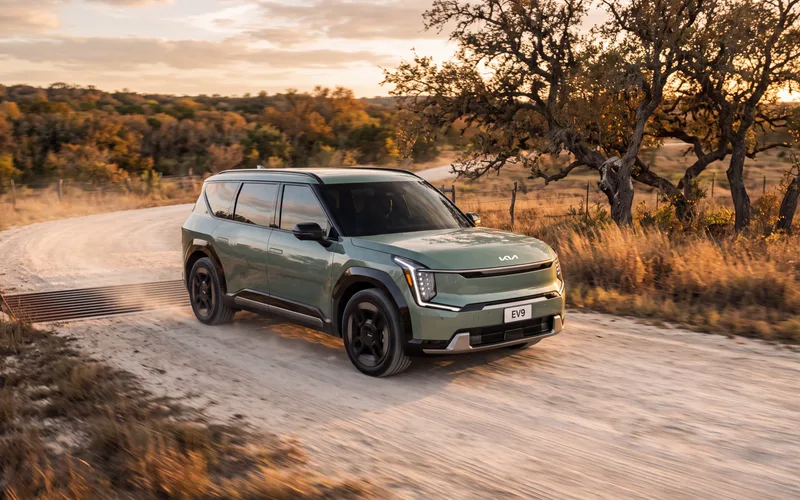 Kia EV9Mid-Size SUVBetter at: All-around practicality
It does everything the VF 9 was meant to do — three usable rows, 5,000 lbs of towing, 81.7 cubic feet of cargo, NACS charging — with a dealer on nearly every highway and resale value that actually holds.
Compare 2.95B-
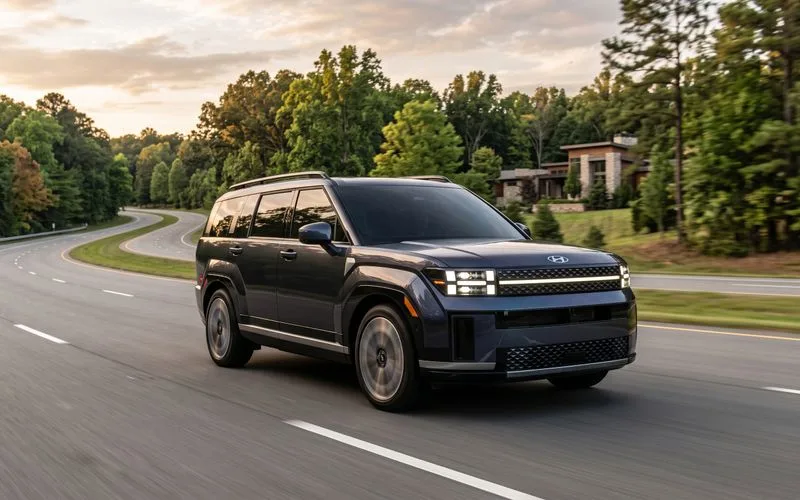 Hyundai Ioniq 9Mid-Size SUVBetter at: Range and charging
Charges 10–80% in about 24 minutes on 800 volts and offers 21.9 cubic feet behind the third row, turning the VF 9's two biggest failures into strengths for similar money.
Compare 2.81B-
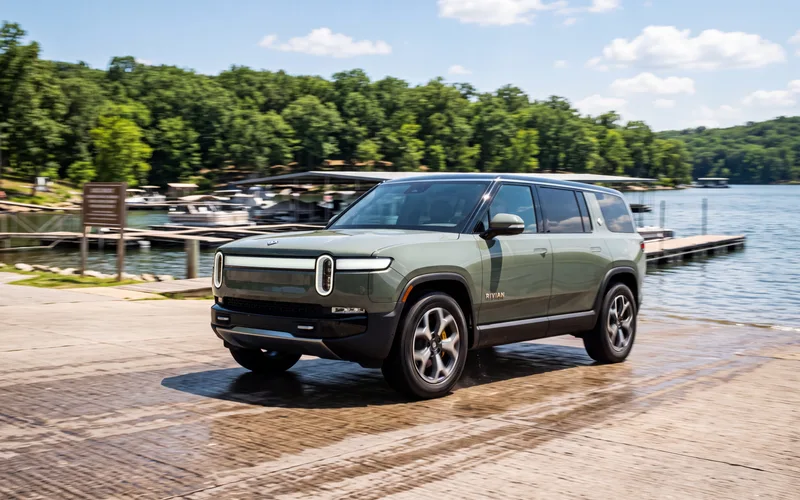 Rivian R1SFull-Size Luxury SUVBetter at: Capability and polish
The genuine premium three-row EV, with the range, off-road capability and software polish the VF 9 promises on its spec sheet but doesn't deliver on the road.
CompareSubject scores by year
Hover or tap a score to see what moved it versus the year before. A corner mark flags a big swing.
| Year | Performance | Efficiency | Safety | Space | Cost | Reliability | Tech | Use-case | Driving | Value |
|---|---|---|---|---|---|---|---|---|---|---|
| 2026 | 52 | 56 | 54 | 56 | 25 | 34 | 68 | 50 | 48 | 42 |
| 2025 | 56 | 57 | 58 | 59 | 25 | 35 | 79 | 57 | 55 | 50 |
| 2024 | 53 | 58 | 60 | 61 | 25 | 33 | 81 | 59 | 51 | 49 |
Compare two years
Best fit & conditions
Higher scores mean a better fit for that use case. Learn more about use-case fit →
Subject profile
Academic Probation · NHTSA safety recalls
No NHTSA safety recall is on record for the 2025 VinFast VF 9. Nothing is on record for any 2024–2026 VF 9 either.
Source: NHTSA Office of Defects Investigation recall database, model years 2024–2026. Recalls are listed by model year as the manufacturer filed them; whether a specific car is affected depends on its VIN — check a VIN at nhtsa.gov ↗.
Detailed scoring by subject
1Performance & PowertrainMid-pack among this car's ten categories.1.75C-
The volume Plus trim uses the same dual-motor output as the Eco.
Both 2025 trims share this peak torque rating.
The Plus is the heavier volume trim and is fractionally slower than Eco.
Dual-motor response is ample and smooth in ordinary driving, but reviewers describe inconsistent accelerator mapping and an unfinished overall calibration.
The direct-drive single-speed EV transmission avoids shifts and hunting, though the vehicle's broader drivability calibration keeps it below exemplary.
This is VinFast's maximum conventional braked-trailer rating for either trim.
Dual-motor AWD is standard on every VF 9, with selectable Eco, Normal, and Sport modes, but no low range or dedicated terrain system.
Standard AWD helps on loose or slippery roads, but 7.1 inches of clearance and no lockers, skid plates, crawl control, or off-road trim make this a pavement-oriented SUV.
Eco and Plus differ in equipment, but both use the same 402-hp dual-motor AWD electric powertrain, leaving no meaningful powertrain choice.
2Efficiency & RangeMid-pack among this car's ten categories.1.87C-
This is the 2025 EPA result for the volume Plus trim.
The value is specific to the EPA-listed 2025 Plus.
The value is specific to the EPA-listed 2025 Plus.
The 2025 Plus EPA record is used rather than VinFast's current-page figure for another certification/configuration.
VinFast's US sheet identifies 150-kW motors but omits charge input power; the peak charging figure is corroborated by the 2025 first-drive specification reporting.
VinFast publishes 35 minutes only for 10–70%, so that nonmatching interval is not substituted for the requested 10–80% result.
EPA's standard estimate assumes 15,000 miles annually.
Home Level 2 charging is practical at up to 11.5 kW, but the 123-kWh pack is slow on a household outlet and the CCS1/400-V architecture lacks the fastest charging and broadest native network access.
3SafetyOne of the VF 9's strongest categories.1.92C-
NHTSA has not published an overall rating for the 2025 VF 9 or another model year of this generation. The required numeric value is therefore a conservative estimate, anchored to the related 2024 VF 8's 4-star overall result rather than VinFast's unverified 5-star design target.
IIHS has not published a rating page, crashworthiness results, or a Top Safety Pick award for the VF 9. Its 11-airbag specification is reassuring on paper but cannot substitute for independent crash testing, placing it in the rubric's untested low band.
The volume Eco receives the same broad suite as Plus: front/rear AEB, adaptive cruise, lane keeping and centering, blind-spot detection, rear cross-traffic alert, highway and traffic-jam assist, and a 360-degree camera. Some advanced functions may require later activation, OTA updates, or a paid Smart Driving package, which keeps the score below the very top.
Front and rear AEB plus intersection assist provide stronger specified coverage than a basic system, but IIHS has not tested its vehicle, pedestrian-day, or pedestrian-night performance. Credit is limited to documented capability rather than proven stopping performance.
Blind-spot detection, rear cross-traffic alert, door-open warning and rear AEB are standard on Eco and Plus, providing wide coverage and braking support while reversing. The published specification does not establish trailer-aware detection or active blind-spot steering intervention.
Lane keeping and centering are standard, but a 2025 road test found the system forcefully tugged the wheel instead of steering smoothly and felt one or two generations behind rivals. That crude intervention outweighs the impressive feature list.
Adaptive cruise, traffic-jam assist and highway assist are standard and combine longitudinal and steering support, but reviewer evidence does not show class-leading refinement and the weak lane-control tuning limits trust in the combined system. The owner's manual also requires hands-on supervision.
No mature hands-free highway system is offered. Highway Assist is Level 2 and its operating conditions explicitly require the driver's hands on the wheel, so it is not comparable with BlueCruise or Super Cruise.
Matrix LED lighting and automatic high beams are standard, a strong equipment baseline, but IIHS has not measured beam reach, curve illumination, or glare on any VF 9 trim. Without a Good rating it remains in the middle band.
The large, long body and poor over-the-shoulder view create meaningful blind zones, although standard blind-spot monitoring and a 360-degree camera compensate on paper. Camera usefulness is reduced by an exceptionally low frame rate noted in a 2025 road test.
The Eco's second-row bench and wide door openings make multiple child seats workable, but the third row has top tethers without lower anchors and access becomes difficult when a second-row seat is occupied. The cramped, low third row further limits family flexibility despite the VF 9's large exterior.
4Space & ComfortOne of the VF 9's strongest categories.2.00C
The volume Eco uses a three-row 2-3-2 layout.
VinFast does not publish SAE headroom; this is a conservative estimate from the 66.8-inch roof height, low floor, and reviewers' description of large front seats.
No SAE legroom figure is published; the estimate reflects the 124-inch wheelbase and consistently reported spacious first row.
VinFast does not publish row-specific headroom; reviewers describe ample first- and second-row space.
No manufacturer SAE figure is available; the estimate is supported by the long wheelbase and reviews calling the second row spacious.
The third row has good headroom but a very low cushion, knees-up posture, and difficult access, making it mainly preteen space.
VinFast's seat-down figure corresponds to folding the third row.
VinFast publishes only 926 L as the seat-down capacity and does not provide a larger all-rear-seats-folded SAE figure.
A frunk, broad consoles, wireless charging, and plentiful row-by-row ports are useful, but storage innovation and ultimate cargo capacity lag leading three-row EVs.
The large front seats are supportive and heated, while upper-trim front and second-row chairs add ventilation and massage; the poor third row prevents a top score.
Air springs and the long wheelbase deliver settled highway behavior, but the ride is rigid at low speed and not consistently plush.
The EV drivetrain and standard acoustic front glass support a quiet cabin, with reviewers reporting strong highway refinement.
Even Eco includes heated front seats and wheel, while Plus adds tri-zone climate, ventilated/massaging front and second-row seats, and a glass roof.
5Cost of OwnershipThe VF 9's lowest-graded category.0.00F
The 2025 VF 9 Eco is the entry trim, although VinFast launched U.S. deliveries with the Plus and said the Eco would arrive later. Its delivered MSRP is above the top of the SUV normalization band.
The Plus is representative because VinFast began U.S. customer deliveries with it while the Eco was delayed. The $75,000 delivered MSRP excludes optional paint or seating, which raised Edmunds' observed customer vehicle to $76,375.
No credible model-specific five-year projection is published for this extremely low-volume newcomer. EV routine service is light and covered defects fall under the unusually long warranty, but a 6,500-lb SUV's large tires and limited service network justify a higher estimate than smaller EVs.
The projection places the VF 9 just below the SUV normalization floor, consistent with its tiny U.S. footprint, aggressive leasing and uncertain brand acceptance. This is a statistical projection rather than five years of VF 9 transaction history.
VinFast covers the whole vehicle for 10 years/125,000 miles, twice the upper end of the rubric's basic-warranty band and far beyond mainstream or premium competitors.
The original high-voltage battery receives 10 years with unlimited mileage for non-commercial use, while the drivetrain is protected by the 10-year/125,000-mile vehicle warranty. This reaches the top of the SUV band.
There is no included scheduled-maintenance program or U.S. charging credit, but VinFast provides unusually comprehensive 24/7 roadside support and mobile repairs. Roadside coverage includes jump-start, lockout, winching, warranty and collision towing, and out-of-charge towing to a charger or home.
$75,000 volume-trim price minus its estimated resale value after 5 years (39.4% retained, or about $29,550) leaves about $45,450 in depreciation. Add the projected $4,500 in 5-year maintenance and repairs, and owning this vehicle for 5 years costs about $49,950 in total.
6Reliability & QualityOne of the VF 9's weakest categories.0.30F
Consumer Reports has insufficient owner-survey data to predict reliability for the 2025 VF 9, while early US press vehicles exhibited multiple sensor and software faults before or during very short drives. The model is too new for a dependable long-term forecast, but the observed launch defects put it below average rather than merely unknown.
VinFast lacks the multi-year US sample needed for inclusion in major CR or J.D. Power dependability rankings, and its first US product established a poor software and quality reputation. That is materially weaker support than even a bottom-third established brand with a measurable history.
No US NHTSA safety-recall campaign specific to the 2025 VF 9 was identified, which is favorable on its face. The score stops below the cleanest band because US volume and exposure are extremely small, the generation is young, and overseas VF 9s built through March 2024 were recalled for an airbag inspection/replacement.
The dual-motor AWD system and very large 123-kWh battery have essentially no US high-mileage record, and the 2025 vehicle is only the second model year in the registry's 2024-start generation. The long warranty reduces owner exposure but does not establish durability, while recurring software and calibration faults add risk around the broader propulsion system.
The volume Eco trim presents well with vegan-leather seating, ambient lighting and a large 15.6-inch display, giving it acceptable richness for a premium three-row SUV. Reviewers nevertheless place its refinement behind similarly priced established rivals, so it is competitive-looking rather than genuinely premium in execution.
Multiple press vehicles showed conspicuous delivery-quality faults, including non-working window, door and tailgate sensors plus warning messages. Physical fit and finish was judged improved and not uniformly poor, but the repeated electronic defects and inconsistent controls are unacceptable at this price.
VinFast's US footprint is sparse and geographically uneven, leaving many owners far from brand-authorized EV service. Mobile and 24/7 assistance soften the problem only where available and do not substitute for a dense, mature dealer network.
The low-volume, imported VF 9 has virtually no US aftermarket and model-specific body, electronics and high-voltage parts depend on VinFast channels. An unusually long factory warranty is valuable, but it covers cost rather than eliminating parts delays or limited collision-repair options.
7Technology & InfotainmentThe VF 9's best-graded category.3.40B+
The same central display is fitted to both trims.
The latest layout is responsive and improved, but too many basic functions live in the screen and software warnings remain a concern.
Both wireless projection systems are standard.
Alexa offers natural-language functions and the native system includes navigation, though owners still benefit from phone projection.
A 14-speaker arrangement including subwoofer is unusually generous, though no premium audio brand or exceptional review verdict is documented.
There is no separate gauge cluster; speed and vehicle data share the center screen, partially offset by a standard HUD.
The connected architecture supports vehicle software updates and feature deployment, but the early software record is inconsistent.
The app provides vehicle data, remote control, navigation, service booking and roadside assistance, a broad feature set without documented phone-as-key.
Every row gets two USB ports, plus a 90W USB-C port, wireless charging, 12V luggage power and an AC outlet.
Smart-key entry/start and a hands-free power liftgate are standard, though phone-as-key is not documented.
Front/rear sensors and a surround-view camera are standard, but reviewers observed visible camera stutter.
A head-up display is standard on Eco and Plus and is especially valuable given the absent gauge cluster.
8Use-Case FitMid-pack among this car's ten categories.1.87C-
Wide doors, seven seats and a power liftgate help, but the cramped third row, difficult access and no lower LATCH anchors there limit family flexibility.
Eleven airbags, surround view, Level 2 highway assist, AEB and comprehensive lane/traffic aids are standard, but no U.S. NCAP or IIHS crash rating is published for the 2025 VF9.
The first two rows, quiet highway ride and rich climate/charging amenities work well, but adult-hostile third-row seating and only 7.5 cu ft behind it constrain full-family trips.
Strong visibility aids and smooth EV acceleration help, but inconsistent regeneration, jumpy initial throttle and huge turning circle make traffic more tiring than expected.
Electric running costs are favorable versus gasoline SUVs, but 68 MPGe combined is poor for an EV and the 6,500-pound footprint will increase tire costs.
The VF9 is over 201 inches long and its 48.1-foot turning circle is exceptionally cumbersome, though standard surround view and sensors prevent an even lower result.
Standard AWD, 402 hp, 1,212-pound Eco payload and nearly 4,000-pound braked tow rating handle light-to-moderate work, but cargo space is modest.
The very long warranty helps, but the young platform, software faults and comfort-oriented cabin leave hard-use durability unproven.
A luggage-area 12V outlet, AC outlet and accessory hitch offer basics, but there is no work-focused onboard-power system or established upfit ecosystem.
The Eco's 330-mile EPA range, quiet cabin and settled highway ride are strong, but slow 400V charging and inconsistent software/ADAS temper touring appeal.
AWD, 7.1-inch clearance, roof load allowance and nearly 4,000-pound towing suit gravel roads and recreational gear, though clearance is modest.
A 40:20:40 second row, folding third row, frunk and roof/hitch provisions add flexibility, but published cargo volume is unexpectedly small for its footprint.
9Driving ExperienceGrades below the middle of the scale.1.69D
It feels large but remains reasonably composed and direct; low-speed bulk and some float keep it well short of athletic rivals.
Reassuring weight and directness beat the EV norm, but the steering is not sporty and low-speed behavior can feel awkward.
Mechanical braking is smooth, but unpredictable and heavy regenerative braking undermines consistent pedal-and-lift-off confidence.
Dual-motor response is strong and smooth at speed, but initial throttle tip-in is jumpy and regen calibration makes stop-and-go progress jerky.
The dual-motor EV drivetrain is near-silent and no reviewer identifies meaningful motor vibration or objectionable whine.
The official diameter is far beyond the SUV normalization band and explains reviewers' maneuverability criticism.
The roomy, elevated position and standard HUD are positives, but mirror and steering-wheel adjustment through screen-plus-buttons is convoluted and the center-screen speedometer is a compromise.
402 hp and direct steering provide adequate pace, but the enormous footprint, inconsistent low-speed calibration and numb character make it more transport than entertainment.
10Value & Market PositionOne of the VF 9's weakest categories.1.34D
Even the Eco includes dual-motor AWD with 402 hp, seven seats, a 123-kWh battery, a 15.6-inch screen, wireless phone integration, a panoramic roof and an extensive ADAS suite. The Plus adds richer seating and comfort content, making equipment generosity a clear strength despite the high entry price.
The warranty, power and standard equipment are substantial, but the roughly $75,000 Plus competes with polished, faster-charging alternatives from established brands. Edmunds found the delivered VF 9 within reach of a loaded Kia EV9 while materially behind it in refinement, software, usability and third-row/cargo packaging.
Choice is limited to Eco and Plus, both with the same dual-motor AWD powertrain and battery; there is no lower-priced single-motor version. The Plus offers captain's chairs, but otherwise this is close to a take-it-or-leave-it lineup.
U.S. acceptance was exceptionally weak: deliveries began with only eight customers and subsequent registration reporting remained around one hundred units after several months. This is far below even niche three-row EV competitors and indicates virtually no market traction.
Pininfarina styling and a flagship position provide some novelty, but VinFast entered the U.S. with little recognition and severe quality/software baggage from the VF 8. The VF 9's own launch-drive faults, sparse dealer/service footprint and uncertain U.S. strategy reinforce rather than repair that image.
Buyer-facing incentives have been exceptionally rich: launch leases combined multiple discounts worth up to $14,550, and later 2025-model leases fell to about $449 per month. The generosity is excellent for a willing lessee, although it plainly reflects weak demand and residual risk.
The 2025 VF 9 belongs to the first generation beginning in 2024 and was newly arriving to U.S. customers for this model year, so redesign risk was minimal. It is mechanically a carry-over rather than a refresh, but its platform, large battery and software-defined feature set were still new to the market.
Reviews acknowledge strong acceleration, improved ride, abundant technology and generous equipment, but the consistent verdict is that the VF 9 remains unfinished and uncompetitive. It earned no major U.S. vehicle award or comparison win, and launch drives documented repeated software faults and poor third-row packaging.