

The verdict
A struggling mid-size suv, strong on technology and held back by ownership.
The 2026 VinFast VF 9 is a lot of three-row electric SUV for the money — $64,100 buys 402 hp, all-wheel drive, seven seats, a 15.6-inch screen, a head-up display and a 10-year/125,000-mile warranty that no rival comes close to matching. The problem is almost everything that happens after you sign: a 123 kWh battery — one of the biggest in any SUV — returns only 287 miles and takes about 45 minutes to fast-charge, there are just 7.5 cubic feet of cargo space behind the third row, and a 2023 VF 9 that stickered at $84,200 is now worth about $24,900. With roughly 21 US dealers left and fewer than 1,500 VinFasts registered nationwide last year, buying one is a bet on the company still being here to honor that warranty. Unless a deeply discounted lease insulates you from the depreciation, the Kia EV9 and Hyundai Ioniq 9 do this job better in nearly every measurable way.
Jump to scoresStrengths
- A warranty nobody else offers
- Big-screen tech and phone integration come standard
- Driver-assist and safety equipment isn't trim-gated
What holds it back
- Depreciation is the worst in the market
- Nowhere to get it fixed, and no parts pipeline
- Biggest battery in the class, shortest legs
Top alternatives
Cars shoppers cross-shop with the VinFast VF 9 2.96B-
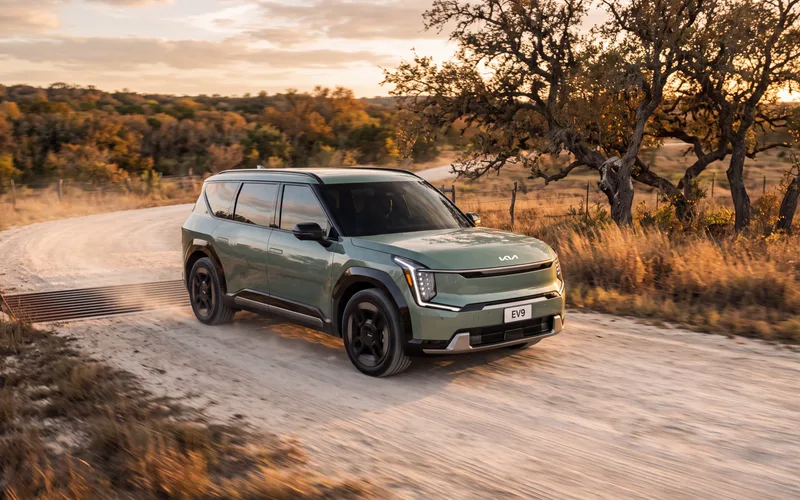 Kia EV9Mid-Size SUVBetter at: All-around practicality
It does everything the VF 9 was meant to do — three usable rows, 5,000 lbs of towing, 81.7 cubic feet of cargo, NACS charging — with a dealer on nearly every highway and resale value that actually holds.
Compare 2.95B-
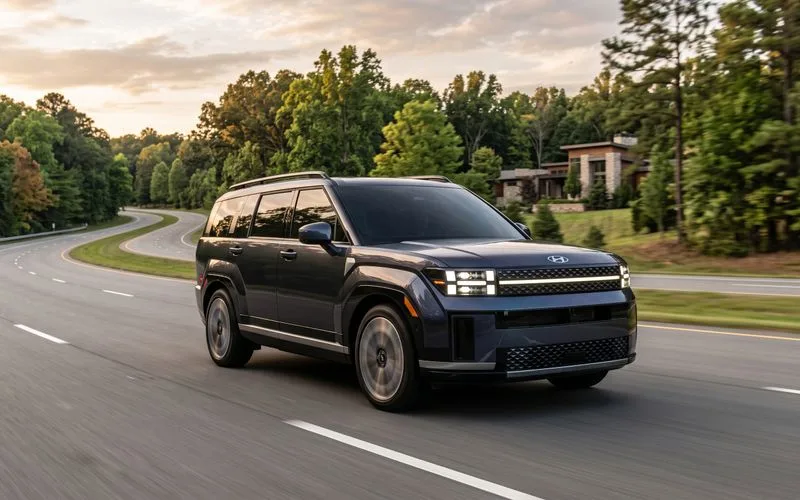 Hyundai Ioniq 9Mid-Size SUVBetter at: Range and charging
Charges 10–80% in about 24 minutes on 800 volts and offers 21.9 cubic feet behind the third row, turning the VF 9's two biggest failures into strengths for similar money.
Compare 2.81B-
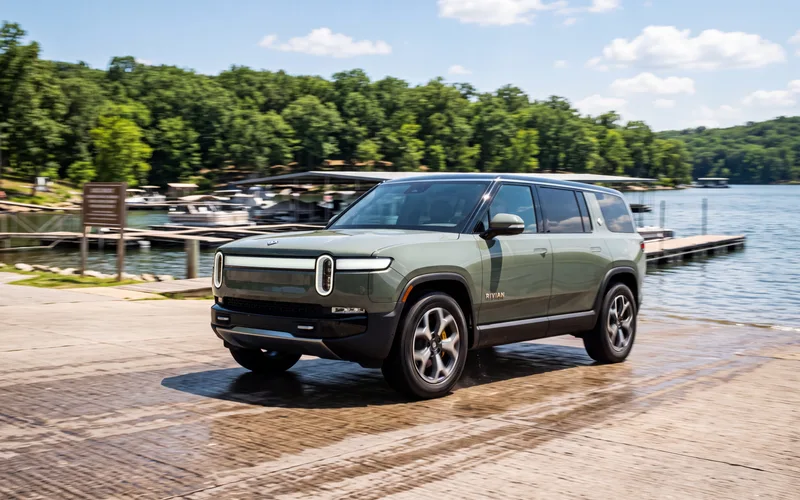 Rivian R1SFull-Size Luxury SUVBetter at: Capability and polish
The genuine premium three-row EV, with the range, off-road capability and software polish the VF 9 promises on its spec sheet but doesn't deliver on the road.
CompareSubject scores by year
Hover or tap a score to see what moved it versus the year before. A corner mark flags a big swing.
| Year | Performance | Efficiency | Safety | Space | Cost | Reliability | Tech | Use-case | Driving | Value |
|---|---|---|---|---|---|---|---|---|---|---|
| 2026 | 52 | 56 | 54 | 56 | 25 | 34 | 68 | 50 | 48 | 42 |
| 2025 | 56 | 57 | 58 | 59 | 25 | 35 | 79 | 57 | 55 | 50 |
| 2024 | 53 | 58 | 60 | 61 | 25 | 33 | 81 | 59 | 51 | 49 |
Compare two years
Best fit & conditions
Higher scores mean a better fit for that use case. Learn more about use-case fit →
Subject profile
Academic Probation · NHTSA safety recalls
No NHTSA safety recall is on record for the 2026 VinFast VF 9. Nothing is on record for any 2024–2026 VF 9 either.
Source: NHTSA Office of Defects Investigation recall database, model years 2024–2026. Recalls are listed by model year as the manufacturer filed them; whether a specific car is affected depends on its VIN — check a VIN at nhtsa.gov ↗.
Detailed scoring by subject
1Performance & PowertrainGrades below the middle of the scale.1.49D
The 2026 VF 9 carries over the single dual-motor powertrain: two motors making a combined 300 kW / 402 hp, identical on Eco and Plus. Healthy on paper for a three-row EV — more than a Kia EV9 GT-Line — but it is moving 6,417–6,543 lbs of curb weight.
620 Nm / 457 lb-ft combined across the two axles — near the top of the SUV normalization band and the VF 9's most competitive raw number. Now confirmed against the manufacturer's own spec sheet rather than secondhand spec tables.
Correcting a units error in the prior score: VinFast's published 6.6 s (Eco) / 6.7 s (Plus) figure is explicitly 0–62 mph — a metric 0–100 km/h time — not 0–60 mph, so scoring 6.6 against a 0–60 band penalized the VF 9 against rivals quoted in true 0–60 terms. Backing out the last 2 mph gives roughly 6.3 s to 60 mph. Either way it is unremarkable for 402 hp: mass, not power, is the limiter.
The motors themselves are quiet and vibration-free as any dual-motor EV is, but the calibration on top of them is faulted by every outlet that has driven it at length, and the specific defects are worse than the prior score credited: throttle response described as woefully slow even in Sport, a distinct two-step power delivery at full throttle, and regenerative braking that varies stop to stop within a single setting. Because those complaints are systematic rather than occasional, this drops just into the bottom band, well below the polished EV9 and Ioniq 9.
Single-speed reduction gearing means there is no shifting to fault and delivery never hunts, and the three selectable regen levels give more adjustability than several rivals. Marked down from the prior score because the two interfaces that stand in for gear logic both draw complaints — laggy gear-select buttons that make low-speed maneuvering awkward, and a one-pedal mode that defaults off at every restart — so the driveline still fails to feel transparent in traffic.
Now confirmed on the manufacturer's own spec sheet at 1,800 kg / 3,968 lbs braked and 750 kg / 1,653 lbs unbraked — a real rating, and a meaningful advantage over the sibling VF 8, which carries no US tow rating at all. Still trails the Kia EV9 (5,000 lbs) and Rivian R1S, so it lands mid-band, and the trailer hitch is an aftersales add-on rather than a factory option.
Dual-motor all-wheel drive is standard on every US VF 9 — there is no front- or rear-drive base model to avoid, which is better coverage than most three-row rivals. Reduced from the prior score because that score rested on a factual error: the VF 9 does not have four-corner height-adjustable air suspension, only rear air springs, so there is no ride-height dimension to credit. What remains is a plain front/rear motor split with three drive modes — no low range, no locking differential, no terrain modes, no torque-vectoring story.
A pavement family SUV, and measurably less capable than the prior score assumed. The manufacturer's own figures put ground clearance at just 6.8 in on the Eco and 7.2 in on the Plus — below where the widely-quoted 7.8 in put it, and low even for a road crossover — on all-season tires with no skid plates, no locking differentials, no terrain modes and no off-road trim. Standard AWD covers rain and snow and nothing beyond; 6,500 lbs and a 48-foot turning circle work against it anywhere tight.
One powertrain and nothing else: battery-electric only, and unlike the VF 8 the two trims do not even differ in motor tune — Eco and Plus both make 300 kW / 402 hp from the same 123 kWh pack, differing only in equipment and therefore range (330 vs 291 mi EPA). No gas, hybrid or PHEV alternative exists within the nameplate in any market, so a buyer who cannot live with an EV has nowhere to go.
2Efficiency & RangeOne of the VF 9's strongest categories.1.75C-
Any BEV clears the SUV normalization band outright, but 68 MPGe combined (49.8 kWh/100 mi) is the worst electric efficiency of any three-row electric SUV on sale — well behind the Kia EV9 (~80), Hyundai Ioniq 9 (~86) and Rivian R1S — a consequence of 5,700+ lb curb weight, a boxy 201.5-in body and dual-motor AWD as the only US configuration.
Regenerative braking gives the usual city advantage over the highway figure, but only by 5 MPGe — a narrow spread that reflects how much of the VF 9's energy use is mass rather than aero, and it still trails every mainstream electric three-row in town.
The upright, full-size body makes highway the VF 9's weakest case — EPA highway range of 274 mi is 24 mi short of its city figure — and reviewers report the usual 15–25% shortfall against the rating at sustained speed, so the practical road-trip number is worse than the score suggests.
This is the category's defining weakness: a 123 kWh usable pack — one of the largest in any electric SUV — returns only 287 miles, less than a Kia EV9 (~304) or Ioniq 9 (~335) manage from packs 20–25 kWh smaller. The Eco's 330 miles is competitive, but EPA has certified only the Plus since 2024 and it is the only trim VinFast is actually retailing.
160 kW on a 400-volt architecture is mid-pack in absolute terms but poor relative to the pack it has to fill: the 800V Kia EV9 and Ioniq 9 take 235–350 kW, and a 123 kWh battery is the largest in the class, so the VF 9 has the most energy to move at one of the lowest rates. VinFast publishes no peak-kW figure of its own, which is itself telling for a flagship.
At the very bottom of the segment band — the class benchmark is 18–24 min — because a 400V pack of this size cannot be refilled quickly at 160 kW. Pairing the slowest fast-charge in the class with the shortest range in the class is what makes the VF 9 a genuinely poor road-trip vehicle, since both halves of a charging stop go the wrong way.
Far cheaper per mile than any comparably sized combustion SUV, but the highest running cost among electric three-rows because it burns the most electricity per mile — roughly $150–250/yr more than an EV9 or Ioniq 9 at the same annual mileage, and the gap widens for anyone charging on public DC rather than at home.
No fuel grade to think about, and a homeowner with Level 2 can run it cheaply — but the VF 9 is an outlier on charging access, and this run's re-verification hardens rather than softens that finding: it remains CCS1-only on a 400V architecture with no NACS port and no manufacturer-approved Supercharger adapter, at a point when essentially the whole industry has one. Stack on the segment's worst consumption (49.8 kWh/100 mi, the largest home-charging bill of any electric SUV) and a 123 kWh pack that EPA rates at 15 hours to fill on 240V — longer than an overnight window — and keeping this car charged is materially more complicated than any rival's. Held at the prior score: the new sources corroborate the existing basis rather than adding a fresh negative.
3SafetyGrades below the middle of the scale.1.63D
Re-verified 2026-08-13: NHTSA holds a 2026 VF 9 record but has still never crash-tested it — every frontal, side and rollover subtest returns 'Not Rated'. Estimated at 4.0 stars from the only VinFast NHTSA has actually tested, the 2024 VF 8, which earned exactly 4 stars overall dragged there by a 2-star overall frontal result; the VF 9's greater mass and longer front structure help in the NCAP frontal barrier, but nothing establishes that VinFast's structural engineering clears 4 stars on this body.
IIHS has never rated any VinFast, so the VF 9 has no crashworthiness results and no Top Safety Pick award, and unlike the VF 8 it has no Euro NCAP or ASEAN NCAP result to stand in either — VinFast's own US materials describe the VF 9 as designed to 5-star ASEAN NCAP standards with NHTSA and Euro NCAP certification 'still pending', which is a design claim, not a test result. Untested with known concerns keeps it in the bottom band: the brand's one NHTSA-tested model posted a 2-star passenger-side frontal and drew a 100%-affected airbag design recall. Held at the top of that band rather than lower because sibling VF 6 and VF 7 did earn genuine 5-star Bharat NCAP results in January 2026, so the brand is not incapable of building to a 5-star regime.
Content breadth remains the VF 9's clearest safety strength and was re-confirmed for 2026: AEB with forward collision warning, adaptive cruise, Highway Driving Assist, traffic jam assist, lane keep/departure/centering plus emergency lane keep, blind-spot detection, rear cross-traffic alert, door-opening (safe exit) warning, traffic sign and intelligent speed recognition, driver monitoring, automatic high beam, front and rear parking sensors and a 360-degree surround camera are all standard on both Eco and Plus rather than gated to the upper trim, alongside 11 airbags. Held below the top of the band by VinFast's own standing caveat that some ADAS functions ship late by software update and may require a subscription — and this item measures what is fitted, not how well it works, which is penalized in 3.2.2, 3.2.4 and 3.2.5.
AEB with forward collision warning is standard and NHTSA lists FCW as fitted, but there is no IIHS front crash prevention result — no vehicle-to-vehicle rating and no day or night pedestrian rating — so nothing verifies how it performs. Scored at the floor of the adequate band: the 2026 VF 9 itself carries zero NHTSA complaints and zero investigations, but the sibling VF 8 running the same generation of ADAS drew documented phantom-braking coverage and an NHTSA-investigated ADAS recall, which is a real reason not to credit unverified performance.
Radar blind-spot detection, rear cross-traffic alert and a door-opening (safe exit) warning are standard on every trim, which is fuller coverage than most rivals gate to upper trims. Sits in the upper half of the alert-only band rather than the top one because there is no active steering or braking intervention — no blind-spot steering assist, no rear automatic braking — and no trailer-aware mode.
Lane departure warning, lane keep assist, emergency lane keep and lane centering are all standard, but the execution draws direct criticism: reviewers describe the system as a generation or two behind, yanking at the wheel instead of steering the car smoothly back into the lane. Fitted but crude lands in the bottom band, and the platform's ADAS steering has already produced a recall on the sibling VF 8 for unexpected, hard-to-override steering inputs during wide turns.
The capability is all present and standard — full-speed-range adaptive cruise, traffic jam assist for stop-and-go, and a Level 2 Highway Driving Assist that combines cruise with lane centering, plus onramp/offramp and auto lane-change assist. Scored in the lower half of the capable-with-rough-edges band because the highway assist inherits the same lane-centering calibration reviewers call outdated, and no reviewer has credited the ACC itself as refined.
There is no hands-free highway driving option on the VF 9 — nothing comparable to Super Cruise, BlueCruise or FSD-supervised. VinFast announced a Level 2++ ADAS pilot for the VF 8 and VF 9 in July 2026, but it explicitly still requires active human supervision, is being evaluated in controlled zones in Hanoi, and is tied to next-generation platforms rather than the US car on sale now.
The VF 9 uses matrix LED headlamps with automatic high beam standard across the range, which is better hardware than the segment norm on paper. Held just above the mid-band because no IIHS headlight rating exists for any VinFast and no reviewer has assessed reach, cutoff or glare control, so the hardware claim is uncorroborated by any measured result.
A 360-degree surround camera is standard, but the camera compensation is the problem rather than the fix — two independent reviews single out the exterior cameras' resolution and frame rate as among the worst on sale, making tight-quarters parking harder than it should be. Compounding it, the VF 9 has no instrument cluster at all: speed and basic driving information live on the 15.4-inch center screen, forcing a look across the cabin. A very large turning circle makes the sightline deficits harder to work around.
The second row works — a seven-seat three-row layout with two sets of outboard lower anchors, wide rear doors and generous legroom on the flat EV floor — but the third row has no lower LATCH anchors at all, only top tethers, so any third-row seat is a seat-belt install and most rear-facing and many forward-facing options are ruled out. That is a direct disadvantage against the Kia EV9, which does have lower anchors back there. Third-row access with seats installed is also compromised: the available second-row captain's chairs carry a fixed center console, and the large padded armrest makes climbing through awkward.
4Space & ComfortOne of the VF 9's strongest categories.1.75C-
The VF 9 is VinFast's three-row flagship, sold as a seven-seater with the Eco's second-row bench; the Plus swaps in second-row captain's chairs for a six-seat layout, with a seven-seat bench also offered. Seven seats sits high in the 4–8 SUV band, and 2026 is a carry-over year for the configuration.
VinFast does not publish SAE headroom for the VF 9 and the US spec aggregators list it as N/A, so this is an estimate from the body: at 66.7 in tall the VF 9 is a long, low three-row (Kia EV9 70.1 in, Hyundai Ioniq 9 70.5 in), and the fixed panoramic glass roof costs a further fraction of an inch. Reviewers call front headroom good but not standout.
No published figure; estimated from flat-floor skateboard packaging on a 123.9 in wheelbase, which puts the VF 9 in the tight cluster its three-row EV rivals occupy (EV9 41.4 in, Ioniq 9 41.4 in, Rivian R1S 41.2 in). Front legroom is the least differentiated dimension in the class.
Estimated from the same low-roof packaging: the VF 9's 66.7 in height is roughly 3.5 in under the boxy EV9/Ioniq 9, and the fixed glass panel intrudes on the second row, so headroom lands mid-band rather than at the top. Reviewers report no complaints about second-row head space.
The 123.9 in wheelbase — among the longest in any three-row EV — and a third row set far rearward (only 7.5 cu ft behind it) leave the second row genuinely stretched out, and reviewers single out the captain's chairs as lounge-like. Tempered below the EV9/Ioniq 9 (42.8 in) because Edmunds found the first two rows 'not as roomy as I expected considering the exterior size'.
A third row exists and has two dedicated seats with their own windows, overhead glass and USB-C, but the cushion sits only 5–6 in off the floor, so occupants ride knees-up and reviewers limit it to children. Access is the bigger problem: the Plus's second-row captain's chairs tilt but do not clear a path, and the large padded console armrest blocks the walk-through, forcing a fold-and-tumble. VinFast's own 2026 marketing claims adults sit comfortably back there; the independent first drives say otherwise and are weighted accordingly.
This is the VF 9's worst dimension by a wide margin: 926 L with the third row down is barely more than a compact wagon's behind-seat hold, and 212 L behind the raised third row does not clear a week's groceries — remarkable for a 201.5 in vehicle. Near the bottom of the 25–80 cu ft SUV band, and unchanged for 2026.
No published all-seats-down number exists — every source stops at 926 L with only the third row folded. Estimated by applying the typical three-row-EV ratio between behind-second-row and maximum volume (Kia EV9 43.5→81.7 cu ft, ≈1.9×) to the VF 9's verified 32.7 cu ft, which lands it near the bottom of the 55–100 cu ft band and consistent with reviewers' complaints about the hold being small for the footprint.
The cabin itself is well organized — a deep under-floor cargo bin that swallows charging gear, a deep console, device trays, door and side storage channels, wireless charging and USB-C in all three rows, plus a 75 L frunk. It falls short of the standout band because none of it is innovative by segment standards and the underlying cargo hold is small, so the clever bins compensate for a packaging problem rather than adding capability.
Front and second-row comfort is the VF 9's strongest suit — 12-way power, heated, ventilated and massaging front seats with memory on the Plus, and 8-way power heated, ventilated, massaging second-row captain's chairs that reviewers compare to luxury minivan thrones. Held out of the 80+ band because the Eco's front seats are only heated and power-adjustable, and the third row's floor-level cushion is genuinely uncomfortable.
Mixed and clearly behind the segment's best. Reviewers report the rear air suspension struggling over expansion joints and dips — floaty and bouncy on rough pavement — and a rigid low-speed ride around town where the battery mass isn't absorbed. It is an improvement over the shorter-wheelbase VF 8 and is composed on smooth roads, which keeps it in the middle band rather than the bottom.
Quiet in the way any EV is at low speed and generally calm on the highway, but the large-diameter wheels generate more road and tire noise than reviewers expected in a vehicle pitched as a luxury flagship. Average-with-intrusion rather than library-quiet.
Comfort equipment is the VF 9's most convincing luxury claim, and this run confirmed more of it than the previous pass recorded: the panoramic glass roof is lineup-wide per VinFast's own model page (not Plus-only), and the Plus's three-zone climate adds cabin filtration plus an air ionizer, alongside soft-close doors, heated/ventilated/massaging front and second-row seats, a rear-seat display, USB-C in all three rows and app-based remote preconditioning. Held to the low 80s because ventilation, massage and the third climate zone still require stepping up from the Eco, whose comfort kit is limited to heated power front seats and a heated wheel.
5Cost of OwnershipThe VF 9's lowest-graded category.0.00F
VinFast US publishes the VF 9 "from $62,900" excluding destination, and its own offer-terms page confirms destination is extra; with the $1,200 US destination charge the entry price is $64,100. The Eco trim was dropped after the early US run, so the Plus is simultaneously the base and only trim — there is no cheaper way in, which puts a brand with no residual support at Kia EV9 Land / Ioniq 9 money and near the top of the SUV band.
With the Eco gone the Plus is by definition the volume trim, so the volume price is the base price plus paint — advertised VF 9 Plus units carry MSRPs around $64,290–$65,700 depending on color and dealer-added items. Heavy transaction incentives ($7,500 retail bonus cash and 0% APR for 84 months were live on remaining 2024 stock into spring 2026) mean almost nobody pays it, but MSRP is the measured figure here and it is a poor sticker for a brand with essentially no resale floor.
The EV drivetrain removes engine servicing and the 10-year/125,000-mile bumper-to-bumper term nominally absorbs component repairs across the whole five-year window, which holds the out-of-pocket figure below the mid-size SUV midpoint. It carries a premium over the VF 8 and over an EV9 or Ioniq 9 all the same: a ~5,700 lb three-row on large wheels chews tires and brakes, and with barely 30 US dealers the towing and out-of-area logistics on any unscheduled event are real money.
This is the defining ownership fact about the VF 9 and it is worse than the VF 8's. A 2023 VF 9 stickered at $84,200 and KBB now shows resale around $24,900 and trade-in $21,400 — under 30% retained at roughly three years — with the model in the 75–100th percentile for depreciation among all 2023 SUVs; 2024 cars that listed at $75,000 are asking $42,000 and trading at ~$34,800. Extrapolating that curve puts five-year retention in the mid-teens, far below the 40% segment floor, so the item scores zero. Brand-continuity risk is doing much of the damage: fewer than 1,500 US sales last year and a North Carolina plant now pushed toward 2028 mean buyers price in the chance support disappears.
VinFast's signature US offer and the single strongest line in this category — double the 5-year term that tops the segment band, so the item maxes out. Worth stating plainly that the coverage is only as good as the company standing behind it, which is the same risk destroying the resale line above.
Battery coverage runs a full 10 years with no mileage cap for non-commercial use, against the 8 yr / 100,000 mi federal minimum that most EV rivals simply match — at the top of the band, so the item maxes. On a 123 kWh pack whose replacement cost would exceed the car's used value within a couple of years, that term is the most substantive thing VinFast gives an owner.
Roadside assistance runs the full 10 yr / 125,000 mi alongside the warranty — genuinely better than the 3–5 years typical in the segment — and at-home mobile service plus OTA updates are pitched as substitutes for a showroom visit, which the thin network makes necessary rather than luxurious. It stays out of the 80+ band because there is no published complimentary scheduled-maintenance program in the US, VF Connect telematics moves to paid Pro/Prime tiers after the free Standard tier, and the unlimited-charging and $1,200 home-charger-install credit of the old Charged-Up program were early-buyer promotions not reflected in current national materials. Same brand program as the VF 8, scored the same.
$64,300 volume-trim price minus its estimated resale value after 5 years (15% retained, or about $9,645) leaves about $54,655 in depreciation. Add the projected $5,400 in 5-year maintenance and repairs, and owning this vehicle for 5 years costs about $60,055 in total.
6Reliability & QualityOne of the VF 9's weakest categories.0.22F
No credible predicted-reliability rating exists for the VF 9 — Consumer Reports' reliability page for the model returns "No Detailed Data Available" for want of survey sample, and J.D. Power does not rank VinFast at all. The owner record that does exist is thin and glitch-heavy (software bugs, touchscreen lag, DC fast-charge firmware incompatibilities, real-world range well under rating), though the faults skew toward annoyance and OTA-fixable software rather than the immobilizing failures that defined the VF 8 launch. Scored well into the below-average band because absence of data combined with a poor early record is not a neutral signal.
VinFast has no multi-year US dependability record to stand on and is absent from every major study, but the deciding factor for 2026 is that the brand's US position is contracting rather than maturing: fewer than 1,500 registrations in 2025 (down 57% while the US EV market grew 11%), a dealer count falling to about 21, the North Carolina plant halted and pushed to 2028, and heavy ongoing losses. That is orphan-brand risk, which a mid-pack score would badly misrepresent — a long warranty is only worth what the issuer's survival is worth.
The VF 9 has drawn zero NHTSA recall campaigns across its entire US life, which is a genuinely clean sheet and the strongest thing in this category — it is scored mid-band rather than in the 80s for two reasons. The US VF 9 fleet is only a few hundred cars, so three years without a campaign carries far less statistical weight than the same record on a mainstream nameplate, and the platform sibling VF 8 has taken four recalls including a 6,000-vehicle ADAS campaign for unexpected steering input and a blank-instrument-display campaign, both against software and display architecture the VF 9 shares. The TSB record is effectively opaque.
The dual-motor 402 hp drivetrain and 123 kWh pack have no high-mileage track record anywhere, and VinFast's own integration of them is unproven — owners report highway range far below rating and DC fast-charging behavior that varies by network firmware, which points at immature battery and charging control rather than hardware failure. Cells sourced from established vendors and an unusually long 10-year/125,000-mile vehicle and battery warranty keep this off the floor, but the framework's 0–49 band explicitly covers unproven high-risk designs and that is what this is; the warranty's value is also contingent on VinFast still being in the US market to honor it.
This item is judged relative to price, and that is where the VF 9 loses: at a $75,000-plus as-tested figure, two independent reviews name specific materials as substandard. The equipment list and first impression are genuinely good — vegan leather, second-row captain's chairs, panoramic roof, 13-speaker audio, a 15.6-inch display — and the driver's immediate sightlines are soft-touch, but the quality falls away past that, and routing everything through one screen with no instrument cluster costs perceived quality too. Placed at the top of the below-average band rather than deeper into it because the cabin presents better than the brand's first effort.
Assembly is the clearest area of improvement over the VF 8 — reviewers describe the VF 9 as a vastly improved, more cohesive and consistent product, the benefit of longer development on the flagship. It still sits below segment norms: build-quality variance on early US units is a documented recurring complaint, the button shifter needs a forceful jab to reliably select Park, massage actuators are audibly noisy, and seat-side plastics are called flimsy. No initial-quality study covers the brand, so there is no independent IQS floor under any of this, and owner satisfaction is poor.
This is the VF 9's worst attribute and the sparsest service network of any brand in the dataset — roughly 21 US dealer points entering 2026 against an original plan of 125, and the network is actively shrinking rather than filling in, leaving most of the country without a realistic service option. The RepairWise certified-repair partnership announced in 2026 is a real attempt to extend coverage and cut wait times, and app-based roadside assistance and mobile booking help at the margin, but a nascent third-party program does not offset two dozen points nationwide or the owner reports of cars sitting for weeks to months.
Parts are dealer-only and imported from Vietnam with the North Carolina plant not opening before 2028, there is no aftermarket and no independent-shop familiarity with the platform, and owners report cars idled waiting on components. The 10-year/125,000-mile warranty genuinely removes most out-of-pocket cost for covered repairs and RepairWise should help sourcing, but neither touches downtime or collision work that an insurer must source — and with the worst-quartile depreciation this model carries, modest damage pushes a car toward a total loss because repair cost is measured against a collapsed value.
7Technology & InfotainmentThe VF 9's best-graded category.2.59C+
A single 15.6-inch landscape center touchscreen is standard on both VF 9 trims and is the only screen in front of the driver's field of view — among the largest displays in any mid-size SUV. It also hosts the speedometer and driving data because there is no gauge cluster.
The display is sharp and the menu tree is navigable once learned, but almost every function — climate, mirrors, steering-column adjustment, one-pedal drive — routes through the screen, and US/Canadian press cars showed outright software failures rather than mere lag. 2026 is a carry-over year for the hardware, with improvement arriving only through OTA releases, so this stays in the bottom band alongside the VF 8.
Wireless Apple CarPlay and wireless Android Auto are both standard on Eco and Plus — a genuine strength that reviewers single out against other EV startups, and a change from the projection-free cars VinFast launched in the US. Held just below the top of the band because owners report intermittent projection dropouts consistent with the car's wider software instability.
Alexa Built-in gives the VF 9 a true natural-language assistant that handles climate, seat heaters, lighting, media, directions and smart-home commands — better than most automakers' in-house systems. Native navigation is the weak half: embedded maps are a Plus-trim addition rather than standard, and reviewers gave them no credit, so this lands mid-band rather than top.
Eleven speakers on Eco and a 14-speaker system on the volume Plus trim is a generous count for the class, but there is no marquee audio-brand partnership and reviewers rated the upgraded system as merely acceptable for a $70k-plus SUV.
The VF 9 has no instrument cluster of any kind — speed and driving data render in the center touchscreen, off the driver's sightline. A standard head-up display partly covers for it (credited separately under 7.3.3), but as a configurable gauge display this is an outright omission and sits at the bottom of the band, as on the VF 8.
Whole-vehicle over-the-air updating is core to VinFast's product strategy and demonstrably substantive rather than maps-only: OTA releases have added features (wireless phone projection), revised calibration and delivered recall remedies on US cars. It falls short of the top of the band on cadence transparency and on how much of the software still needs fixing.
The VinFast C-App covers the expected EV core set — remote lock/unlock, cabin preconditioning, charge monitoring, vehicle locate, plus service booking and roadside assistance — but its execution is the problem, with owners reporting dropouts and erratic key detection, and connected services moving to a paid plan after the included term.
Device support is a real VF 9 strength: USB-C in all three rows including high-wattage front ports, a standard wireless charging pad, and an 8-inch second-row screen. It misses the top band because no household AC outlet or vehicle-to-load provision is offered on the US car.
Proximity keyless entry, push-button start and a hands-free power liftgate are standard rather than trim-gated, and app-based remote control extends to remote parking and summon — a strong convenience set. Kept out of the top band by reliability: a reviewer recorded the car still holding a Bluetooth key link half an hour after the keys had gone indoors.
On paper this is top-band content — surround-view camera plus parking sensors standard on both trims, with automated parking assist, remote parking and summon — but image execution is the worst part of the car's technology, with reviewers calling the camera resolution and frame rate about as bad as they get and saying it makes tight parking harder, not easier. Generous hardware and poor delivery average out mid-band.
A head-up display is standard on both Eco and Plus — unusual at any price and effectively mandatory here, since it is the only driver-forward instrumentation the VF 9 has. Scored in the top band for that standard fitment, trimmed for a press car on which the HUD repeatedly failed to come up.
8Use-Case FitGrades below the middle of the scale.1.32D
Three rows, seven seats, a flat skateboard floor, tall wide rear apertures, two sets of second-row lower LATCH anchors, soft-close doors, a hands-free power liftgate, cargo-side tie-downs and a deep under-floor bin that will stand a double stroller upright once the tray comes out — the daily kid-and-gear routine is genuinely well served, and better than the two-row VF 8. Two real deductions keep it mid-band: there are no lower LATCH anchors in the third row at all, only top tethers, so a third-row seat is a seat-belt install and most rear-facing options are out (the Kia EV9 does have them); and the Plus's captain's chairs carry a fixed center console, so with car seats installed in row two the only way into row three is climbing over it.
The content half is excellent and free: VinFast fits AEB with forward collision warning, adaptive cruise, Highway Driving Assist, lane keep/centering, blind-spot detection, rear cross-traffic alert, door-opening warning, driver monitoring, front and rear parking sensors, a 360-degree camera and 11 airbags as standard on both trims rather than gating them to an upper trim. The credentials half is empty, and for a family car that is what decides it — NHTSA holds a 2026 VF 9 record but has never crash-tested it (every subtest reads 'Not Rated'), IIHS has never rated any VinFast, there is no Euro NCAP or ASEAN NCAP result for the VF 9 either, and no rear-occupant reminder is documented. Scored below the VF 8, which at least has real 4-star NHTSA and Euro NCAP results, because the brand's one tested model posted a 2-star passenger frontal and drew an airbag-design recall VinFast itself put at a 100% defect rate.
For four people this is a strong tourer: 8-way power heated, ventilated, massaging second-row captain's chairs reviewers compare to luxury-minivan thrones, three-zone climate with filtration and an ionizer, a panoramic roof with a separate glass panel over row three, an 8-inch rear display, Wi-Fi hotspot, wireless charging and USB-C in every row. For six or seven it falls apart on the two things this item measures last — the third-row cushion sits 5–6 inches off the floor so occupants ride knees-up, and there are only 7.5 cu ft behind that row, which will not hold a family's luggage with all seats in use (the Ioniq 9 offers 21.9). No integrated rear sunshades, and more tire noise than a flagship should make.
All the EV fundamentals that make an EV9 an 89 are present — silent single-speed running, three regen levels with a one-pedal mode, standard adaptive cruise with traffic jam assist and Highway Driving Assist, a standard 360-degree camera and head-up display, plus a ride that is calmer than the VF 8's on the longer wheelbase. The calibration on top of them is what drags it under the segment: reviewers describe throttle response as woefully slow even in Sport with a two-step delivery at full pedal, regen that varies stop to stop within one setting, a one-pedal mode that switches itself off at every start, laggy gear-select buttons that make low-speed maneuvering awkward, and a car with no instrument cluster at all, so climate, mirrors and even column adjustment route through a screen that has shown outright software failures.
Per-mile energy cost is far below any comparable gas three-row — EPA puts it at $1,100 a year over 15,000 miles, and there are no oil changes and little brake wear — but among EVs this is the most expensive three-row to commute in by a clear margin. 68 MPGe combined (49.8 kWh/100 mi) is the worst electric-SUV efficiency on sale, roughly $150–250/yr more than an EV9 or Ioniq 9 and worse than the VF 8's ~90 MPGe, and a 6,543 lb curb weight on large-diameter wheels is hard on tires. The 10-year/125,000-mile bumper-to-bumper term is a genuine offset on consumable repairs.
The worst urban-usability case among three-row EVs. At 201.5 inches long, 88.7 inches wide across the mirrors and 6,543 lbs it is bigger than an EV9 or Ioniq 9, and its 48.1-foot turning circle is roughly seven feet wider than theirs — Edmunds put it 'on par with a Tacoma Trailhunter.' The parking hardware is generous (standard 360-degree camera and front and rear sensors on both trims, plus automated parking assist, remote parking and summon), but two independent reviews single out camera resolution and frame rate as about as bad as it gets, so the aid that should rescue the footprint actively makes tight parking harder. One family reviewer found it 'drives smaller than it looks'; the manufacturer's own turning figure and the camera complaints outweigh that.
There is a real tow rating here — 3,968 lbs braked, confirmed on VinFast's own spec sheet, which is more than the VF 8 (no US rating at all) can claim — but it trails the 5,000 lbs both the EV9 and Ioniq 9 offer, the hitch is an aftersales accessory rather than a factory option, and no trailer mode or trailer-aware blind-spot function exists. Everything else works against work duty: 7.5 cu ft behind the third row and 32.7 with it folded is the smallest hold in the class by a wide margin, there is no published payload figure on a 6,543 lb curb weight, and towing on a 287-mile EV limited to about 160 kW means very short legs under load.
Nothing about the VF 9 suggests it absorbs hard use, and the problem is less the hardware than the support behind it. There is no fleet history, no high-mileage record for the motors or the 123 kWh pack, no credible predicted-reliability rating (Consumer Reports has no sample), and the interior is luxury-oriented — vegan leather, massage actuators, glass roof — rather than wear-friendly. Decisively for work duty, uptime is the worst in the dataset: roughly 21 US dealer points and shrinking, parts dealer-only and imported from Vietnam with the US plant pushed to 2028, and owners reporting cars idled waiting on components. Scored a little above the VF 8 because the VF 9 has taken zero recall campaigns in its entire US life and reviewers call its assembly a clear step up, and because the 10-year/125,000-mile warranty removes most out-of-pocket repair cost even if it cannot remove downtime.
The basics are present and better than the VF 8's: cargo-side tie-downs, roof rails that accept crossbars, a deep under-floor bin, a 75-litre frunk, a flat load floor with the third row down, a hands-free power liftgate, and a dealer-fitted hitch behind a 3,968 lb rating. What is missing is everything that makes a vehicle useful at a jobsite — no 120V household outlet and no vehicle-to-load export on the US car, so nothing runs a corded tool off a 123 kWh pack that could easily support it (the EV9 offers 1,920 W and the Ioniq 9 1.5 kW), no washable surfaces, no work-oriented upfit ecosystem, and effectively no aftermarket, with owners on VinFast's own forums still asking for factory racks and cargo covers.
The comfort half holds up — front and second-row seats are the best thing about the car, rear air springs keep it calm and collected at highway speed, and a standard head-up display, adaptive cruise and Highway Driving Assist do reduce fatigue. The range-and-charging half is where it loses to every mainstream electric three-row: 287 miles EPA combined and only 274 highway from a 123 kWh pack, a 400V architecture peaking near 160 kW (10–70% in about 35 minutes), and — decisively — a CCS1 port with no NACS fitment and no manufacturer-approved adapter, so the Supercharger network that would rescue a long trip is not sanctioned access at all. Set against an Ioniq 9 doing 10–80% in about 24 minutes on 800V with a factory NACS port, that is a materially worse road-trip tool, and the lane centering that ought to carry the highway miles is the system reviewers say yanks at the wheel.
Three things genuinely help: dual-motor AWD is standard on every US VF 9 rather than a paid upgrade, there is a 3,968 lb tow rating for a small trailer or boat, and the roof rails take crossbars for bikes or a box. Beyond that it is a pavement SUV, and by the manufacturer's own numbers a low-riding one — 7.2 inches of clearance on the Plus and just 6.8 on the Eco, under the VF 8 and below almost every rival, on all-season tires with only aerodynamic underbody panels, no skid plates, no locking differential, no low range and no terrain modes at all (Eco/Normal/Sport only). There is no V2L for camp power, no factory hitch, and 6,543 lbs with a 48-foot turning circle is the wrong tool anywhere tight.
The fittings are better than the raw volume: a 75-litre frunk, a deep under-floor bin that doubles as vertical space for a stroller with its tray out, cargo-side tie-downs, roof rails that accept crossbars, a hands-free power liftgate, a flat load floor with the third row down, and a hitch available for a bike or cargo rack. The volume itself is the class's worst and the reason this sits mid-band rather than higher — 32.7 cu ft with the third row folded is only a few percent more than a compact wagon offers, 7.5 cu ft behind the raised third row will not clear a grocery run, VinFast publishes no both-rows-folded figure at all (about 62 cu ft by class ratio), and the second row does not slide.
9Driving ExperienceGrades below the middle of the scale.1.17D
The chassis hardware reads well on paper — independent double wishbones up front, multi-link with air springs at the rear — and the VF 9 is genuinely settled at highway speed, where a low battery-floor center of gravity does its work. It falls into the low band on body control over real pavement: reviewers report the rear air suspension unable to contain 6,417–6,543 lbs over expansion joints and dips, going floaty and bouncy rather than composed, which is the textbook description of the 0–49 band. Grip is limited by all-season tires on 20-in (Eco) / 21-in (Plus) wheels, and low-speed agility is separately compromised by a 48-ft turning circle. Placed a little above the sibling VF 8 (46) because the VF 9 at least gets highway composure right, well below the three-row EV set (Kia EV9, Ioniq 9, Rivian R1S).
The best-regarded of the VF 9's dynamic traits and the clearest place it improves on the VF 8. Reviewers credit the electric assist with reasonable weight and a pleasant directness that makes a 201.4-in vehicle easy to place on the road. It stays mid-band rather than climbing higher for two reasons both testers raised: no real feedback builds at speed, and low-speed effort is oddly inconsistent — a calibration defect, not merely numbness.
Split result that lands mid-band. The friction brakes themselves earn praise for consistent pedal feel, and three selectable regen levels give more adjustability than several rivals. What holds it down is blending: regen strength was reported as unpredictable from stop to stop, leaving the driver hovering over the brake pedal — exactly the tuning fault this item penalizes. No instrumented 60-0 mph figure has been published for the VF 9 by any US outlet, and 6,417–6,543 lbs on all-season tires with unassisted-by-upgrade ventilated discs at both ends is working against it, so it gets no credit above 'adequate'.
The hardware is inherently smooth — two 150 kW motors, single-speed reduction gearing, no shift events and no idle vibration — but the calibration layered on top is faulted by every outlet that has driven the car at length, and the specific complaints are drivability defects rather than taste. One tester called the accelerator calibration among the oddest they had experienced in any EV, with a distinct two-step power delivery; another found throttle response slow even in Sport. That is a persistent driveline calibration problem, so it sits at the top of the low band. Scored to match the 48 recorded for powertrain refinement (1.1.4) in this vehicle's cat1, which measures the same defect.
Comfortably the VF 9's strongest driving-experience item. As a dual-motor BEV it is near-silent at cruise with no combustion NVH and no vibration through the controls, and double-pane acoustic front glass is standard on both trims. Every cabin-noise complaint reviewers raised was aimed at road and tire roar from the large-diameter wheels — a cat4 concern, scored 58 there — rather than at the motors. Held out of the 80+ band for audible motor whine under hard acceleration and isolation that falls short of the luxury flagship positioning.
VinFast's own US specification sheet publishes a minimum turning circle diameter of 14.66 m — 48.1 ft — identical on Eco and Plus. That is not merely poor for a mid-size SUV, it is outside the 34–42 ft normalization band entirely and worse than most full-size pickups, the product of a 3,150 mm wheelbase with limited steering lock. Reviewers treat it as a genuine daily usability failure rather than a spec-sheet curiosity, and it is the single biggest drag on this category.
The seat and sightlines are fine — commanding three-row SUV height, 12-way power front seats with memory on the Plus — but the control strategy and ingress both draw specific, repeatable complaints. There is no driver's instrument cluster, so speed and range live on the 15.6-in center touchscreen at the edge of the driver's sightline (an optional head-up display partly mitigates this, unlike on the VF 8). The turn-signal stalks self-cancel at an arbitrary point, causing unintended cancellations mid-maneuver; the gear-select buttons lag; and the running boards push the step-in distance far enough out that a tester repeatedly barked their calves on them getting in. Those are functional defects, so this lands in the low band despite good seats.
Nothing here invites the long way home. Straight-line pace is merely adequate for the class (6.63 s to 100 km/h from 402 hp hauling 6,500 lbs), and every other ingredient is a negative: floaty body control on rough roads, steering that gives nothing back at speed, a two-step throttle calibration, and a turning circle that makes low-speed driving a chore. Reviewers explicitly frame it as a practical family hauler rather than a driver's car, and no US enthusiast publication recommends it on driving merit — appliance-like rather than actively unpleasant, hence the top of the low band.
10Value & Market PositionOne of the VF 9's weakest categories.0.79F
Content per dollar is the one place the VF 9 genuinely beats the segment: $62,900 buys a 402 hp dual-motor AWD seven-seater with a 123 kWh pack, 15.6-inch touchscreen, standard head-up display, panoramic glass roof, vegan leather, 11 airbags, surround-view camera and parking sensors, wireless CarPlay and Android Auto, Alexa Built-in and a full ADAS suite including highway driving assist and auto lane change. A Kia EV9 needs a ~$73K GT-Line to match the HUD, surround view and captain's chairs, so rivals really do charge thousands more for parity. Held out of the top band because almost nothing is optional either — the generosity is a single fixed bundle, not a well-stocked base with room to add.
On a spec sheet the VF 9 is fair-to-good value — the equipment and 402 hp per dollar land it mid-band, and the 10-year/125,000-mile warranty is nominal value no rival offers. What keeps it out of the upper band is that reviewers judging the car at its asking price did not agree it delivered: Edmunds concluded "VinFast needs to crank up the wow factor if it's going to win any converts at this price point," and the capability behind the numbers is compromised by 291 miles of Plus-trim range, software failures on press cars and a camera system rated among the worst at any price. Content is present; realized value per dollar is only average.
Take-it-or-leave-it by any standard: two trims (Eco and Plus) separated mainly by the panoramic roof and seat comfort, over a single dual-motor AWD powertrain and a single 123 kWh battery, with no drivetrain choice, no wheel or towing packages and effectively only paint to select. It is narrower still in practice — VinFast's own offer terms and press kit are still written against the 2024 VF 9 Plus, so the live US configurator amounts to whatever leftover Plus inventory a dealer holds. Sits in the bottom band because a buyer cannot spec the car up or down to a budget.
The weakest market acceptance of any SUV in the dataset. VinFast sold 1,413 vehicles in the US across its entire lineup in 2025 — down 57% year over year while the US EV market grew — and the VF 9 is the more expensive of only two models offered, so its own volume is a few hundred units at best against Kia EV9 and Hyundai Ioniq 9 volumes two orders of magnitude higher. The trajectory compounds it: retail network down to 21–22 stores against an original plan of 125, with the chairwoman confirming US expansion is paused. Floors the band.
The brand actively drags the car. VinFast's US reputation was set by the VF 8's launch reviews and has been compounded by closing dealerships, a paused expansion and open questions about whether the company will keep supporting US cars at all — the reason the VF 9's resale is the worst in the market rather than merely poor. There is no loyal following, no image halo and no aspirational pull to offset it; a buyer is taking brand risk, not buying brand cachet.
Scored as buyer benefit, this is the VF 9's second real strength: MSRP has been cut from $85,800 to $62,900 over the car's US life, VinFast layered $7,500 Retail Bonus Cash on top of 0% APR for up to 84 months with no down payment, and dealer listings have run as low as $44,900 — roughly half the original sticker. Explicitly capped below the top band because the prompt reserves 80+ for meaningful incentives "without desperation pricing," and this is textbook desperation pricing on run-out stock. Trimmed further because the VF 9 programs lapsed (financing Feb 28, bonus cash Mar 31 2026) while the VF 8 got refreshed 2025-MY offers running through Aug 31 2026, so the headline deal is not currently posted.
One generation since 2022 with no facelift, putting 2026 in year five of an unchanged design, and Wikipedia records no refresh — the only development of note is the Lạc Hồng 900 LX armored derivative, which is not a US product. The platform shows its age where it counts: no gauge cluster, a 400V architecture and charging behavior owners report as immature. Worse for a buyer, the newest US VF 9 is 2024 model-year stock while the VF 8 has moved to 2025, so this is a run-out car with no announced replacement rather than a mid-cycle one.
Ranked dead last — #11 of 11 large three-row electric SUVs — with no major award of any kind: no NACTOY nod, no Car and Driver 10Best, no IIHS Top Safety Pick, and no comparison-test win. Edmunds headlined its first drive "A Rough First Impression" after error messages appeared on the center screen before the car even moved, and Motor Illustrated's verdict was "not one I can recommend right now." Scored above the floor rather than at it because reviewers consistently note the VF 9 is a marked step up from the VF 8 and credit the space, equipment and Pininfarina styling — AutoGuide's "Moments of Goodness" captures the consensus that the hardware has promise and the software does not.