

The verdict
A mixed-report sport compact, strong on safety and held back by performance.
The 2026 Acura Integra is a premium-badged Civic hatchback that trades outright speed for polish, practicality, and safety. It swallows 24.3 cu ft of cargo behind the rear seats, carries a 5-star NHTSA rating and standard AcuraWatch on every trim, and pairs a genuinely good chassis with the ELS Studio 3D 16-speaker audio and head-up display that come on the ~$38,290 A-Spec Technology volume trim. The catch is the drivetrain: 200 hp, a ~7.0-second 0-60, front-wheel drive only, and a CVT unless you step up to the manual-equipped Tech trim. Buy it for the everyday refinement and hatchback utility, not for the power figures.
Jump to scoresStrengths
- Hatchback cargo space that shames the sedans it's priced against
- Safety kit is standard, not a package
- Audio, HUD and screens punch above the price
What holds it back
- 200 horsepower is not much for the money
- Front-wheel drive only, with no electrified option
- Premium fuel and a small tank make it costlier to run than 33 MPG suggests
Top alternatives
Cars shoppers cross-shop with the Acura Integra 2.46C+
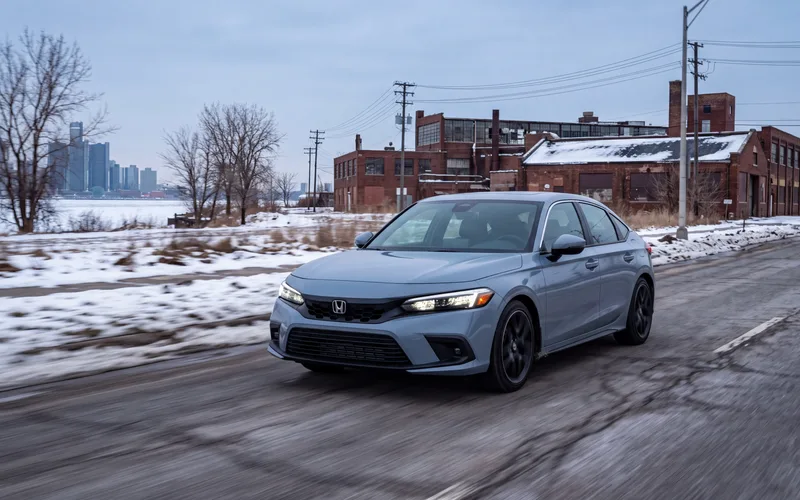 Honda Civic HatchbackCompact HatchbackBetter at: Value
Same platform and engine for roughly $6,700 less, with a hybrid option the Integra doesn't offer.
Compare 2.43C+
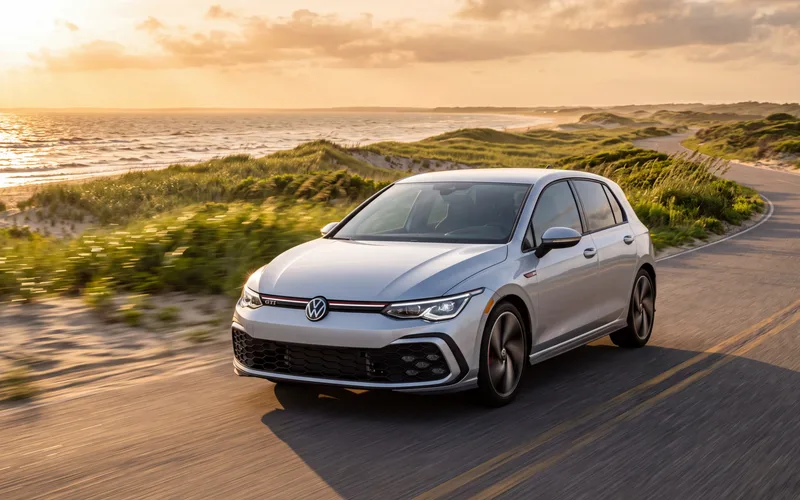 Volkswagen Golf GTIHot HatchBetter at: Performance
Meaningfully quicker and more engaging to drive for similar money, with a sharper dual-clutch gearbox.
Compare 2.57C+
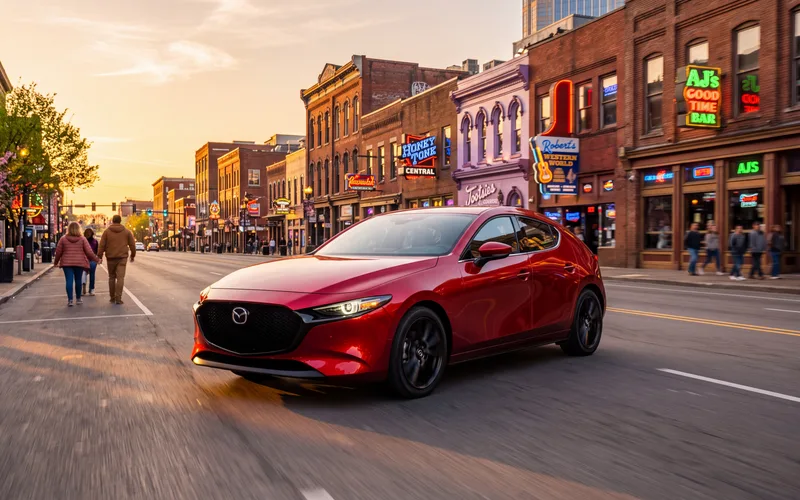 Mazda Mazda3 HatchbackCompact HatchbackBetter at: AWD & interior
A genuinely upscale interior plus available all-wheel drive, which no Integra offers at any price.
CompareSubject scores by year
Hover or tap a score to see what moved it versus the year before. A corner mark flags a big swing.
| Year | Performance | Efficiency | Safety | Space | Cost | Reliability | Tech | Use-case | Driving | Value |
|---|---|---|---|---|---|---|---|---|---|---|
| 2026 | 37 | 50 | 78 | 67 | 64 | 78 | 69 | 59 | 73 | 71 |
| 2025 | 37 | 45 | 75 | 64 | 60 | 77 | 52 | 54 | 67 | 68 |
| 2024 | 37 | 45 | 77 | 64 | 62 | 74 | 52 | 54 | 67 | 71 |
| 2023 | 35 | 45 | 79 | 64 | 64 | 73 | 52 | 54 | 67 | 70 |
Compare two years
Best fit & conditions
Higher scores mean a better fit for that use case. Learn more about use-case fit →
Subject profile
Academic Probation · NHTSA safety recalls
No NHTSA safety recall is on record for the 2026 Acura Integra. Other model years of the Integra have 4 — listed below.
4 recalls on other model years of the Integra (2023–2025)
Jan 29, 2026Seats: critical fastenersThe driver's seat cushion frame may not have been tightened properly, which can result in a loose seat. As such, these vehicles fail to comply with the requirements of Federal Motor Vehicle Safety Standard number 207, "Seating Systems."
Defect
Honda (American Honda Motor Co.) is recalling certain 2023 Honda Accord, Accord Hybrid, and 2024 HR-V, Pilot, and Acura Integra vehicles. The driver's seat cushion frame may not have been tightened properly, which can result in a loose seat. As such, these vehicles fail to comply with the requirements of Federal Motor Vehicle Safety Standard number 207, "Seating Systems."
Risk
A loose driver's seat may not adequately restrain the driver during a crash, increasing the risk of injury.
Remedy
Dealers will replace the driver's seat cushion frame, free of charge. Owner notification letters were mailed March 10, 2026. Owners may contact Honda's customer service at 1-888-234-2138. Honda's numbers for this recall are ONC, KND, BNE and ZNF. Vehicle Identification Numbers (VINs) involved in this recall will become searchable on NHTSA.gov beginning February 5, 2026. This recall expands previous NHTSA recall number 24V859.
NHTSA campaign 26V054000 ↗Manufacturer no. ONC, KND, BNE, ZNF32 vehicles potentially affected (all models in the campaign)Owners notified Mar 9, 2026Filed by Honda (American Honda Motor Co.)Filed as INTEGRANov 14, 2024Seats: critical fastenersThe driver's seat cushion frame may not have been tightened properly, which can result in an unsecured seat. As such, these vehicles fail to comply with the requirements of Federal Motor Vehicle Safety Standard number 207, "Seating Systems."
Defect
Honda (American Honda Motor Co.) is recalling certain 2023-2024 Honda Accord, Accord Hybrid, Civic Sedan, Civic Hatchback, Pilot, and 2024 HR-V, Acura Integra and Acura Integra Type S vehicles. The driver's seat cushion frame may not have been tightened properly, which can result in an unsecured seat. As such, these vehicles fail to comply with the requirements of Federal Motor Vehicle Safety Standard number 207, "Seating Systems."
Risk
An unsecured driver's seat may not adequately restrain the driver during a crash, increasing the risk of injury.
Remedy
Dealers will replace the driver's seat cushion frame, free of charge. Owner notification letters were mailed January 6, 2025. Owners may contact Honda customer service at 1-888-234-2138.
NHTSA campaign 24V859000 ↗121 vehicles potentially affected (all models in the campaign)Owners notified Jan 6, 2025Filed by Honda (American Honda Motor Co.)Filed as INTEGRAOct 3, 2024SteeringThe steering gearbox assembly may have been manufactured incorrectly, which can cause excessive internal friction and lead to difficulty steering the vehicle.
Defect
Honda (American Honda Motor Co.) is recalling certain 2023-2025 Acura Integra, Civic Type R, CR-V Hybrid, CR-V, HR-V, 2022-2025 Civic, Civic Hatchback, 2024-2025 Acura Integra Type S, 2025 CR-V Fuel Cell EV, Civic Hybrid, and Civic Hatchback Hybrid vehicles. The steering gearbox assembly may have been manufactured incorrectly, which can cause excessive internal friction and lead to difficulty steering the vehicle.
Risk
Difficulty steering can increase the risk of a crash.
Remedy
Dealers will replace the worm gear spring and redistribute or add grease as necessary, free of charge. Owner notification letters were mailed November 18, 2024. Owners may contact Honda Customer Service at 1-888-234-2138. Honda's numbers for this recall are SJS, MJU, QJT and VJV.
NHTSA campaign 24V744000 ↗Manufacturer no. SJS, MJU, QJT, VJV1,693,199 vehicles potentially affected (all models in the campaign)Owners notified Nov 18, 2024Filed by Honda (American Honda Motor Co.)Filed as INTEGRAJun 15, 2023Service brakes, hydraulic: antilock/traction control/electronic limited slip: control unit/moduleA ball valve in the vehicle stability assist (VSA) modulator may leak brake fluid, which can result in unintended vehicle movement when the brake hold feature is engaged or an unexpected increase in brake pedal travel.
Defect
Honda (America Honda Motor Co.) is recalling certain 2023 Civic, Acura RDX, Acura Integra, and 2022 Honda Accord vehicles. A ball valve in the vehicle stability assist (VSA) modulator may leak brake fluid, which can result in unintended vehicle movement when the brake hold feature is engaged or an unexpected increase in brake pedal travel.
Risk
Unintended vehicle movement or an unexpected increase in brake pedal travel can increase the risk of a crash or injury.
Remedy
Dealers will replace the VSA modulator, free of charge. Owner notification letters were mailed July 24, 2023. Owners may contact Honda customer service at 1-888-234-2138. Honda's numbers for this recall are OEJ, XEK, AEY, XEX and OEW.
NHTSA campaign 23V430000 ↗Manufacturer no. OEJ,XEK,AEY,XEX,OEW386 vehicles potentially affected (all models in the campaign)Owners notified Jul 24, 2023Filed by Honda (American Honda Motor Co.)Filed as INTEGRA
Source: NHTSA Office of Defects Investigation recall database, model years 2023–2026. Recalls are listed by model year as the manufacturer filed them; whether a specific car is affected depends on its VIN — check a VIN at nhtsa.gov ↗. NHTSA model names matched to this page: INTEGRA.
Detailed scoring by subject
1Performance & PowertrainThe Integra's lowest-graded category.0.45F
Standard 1.5L VTEC Turbo I-4 makes 200 hp across the Integra, Integra A-Spec, and A-Spec w/ Technology trims that make up the volume of sales. Modest for the compact 130–520 hp band.
192 lb-ft from 1,700 rpm gives easy off-idle response, but the absolute figure sits in the lower quarter of the hatchback band.
Instrumented tests of the mechanically identical 2023–2025 A-Spec Technology cluster around 7.0 s; MY2026 carries the same powertrain.
The 1.5T is smooth and quiet by small-turbo standards with negligible lag off boost, but it sounds gruff at the top of the tach and is more adequate than exciting — Acura's added sound damping helps it feel a step more premium than the Civic Si it shares hardware with.
The CVT (volume gearbox) is one of Honda's better efforts with simulated stepped ratios and quick kickdown; the optional 6-speed manual with helical LSD and rev-match on A-Spec Technology is genuinely one of the best manuals sold today.
Integra is FWD-only across every trim including Type S — no AWD option exists on the Civic-platform architecture it uses.
Two distinct gas turbos across the nameplate (1.5T base/A-Spec, 2.0T Type S) plus a genuine 6MT alternative to the CVT on 1.5T — no hybrid, PHEV, or EV variant.
2Efficiency & RangeOne of the Integra's weakest categories.1.31D
Base 1.5L turbo with CVT is the volume drivetrain and returns 33 MPG combined per EPA; the enthusiast 6MT drops to 30 MPG combined.
EPA city rating for the volume 1.5T CVT drivetrain.
EPA highway rating for the volume 1.5T CVT drivetrain.
Derived from EPA combined MPG and the 12.4-gallon fuel tank shared across the Integra 1.5T lineup.
EPA estimate at 15k mi/yr on premium fuel; the premium recommendation pushes annual cost above class average despite reasonable MPG.
Acura specifies 91-octane premium unleaded as recommended for the 1.5T turbo engine; the car will run on regular but with reduced output, so most owners buy premium.
3SafetyThe Integra's best-graded category.3.33B+
2024 Acura Integra earned NHTSA 5-star overall; 2026 shares the same DE-generation structure and equipment so the rating carries.
2024 Acura Integra earned IIHS Top Safety Pick+ with Good ratings in small overlap front and updated moderate overlap plus Good headlights across all trims; 2026 unchanged so the award should carry.
AcuraWatch is standard on every 2026 Integra trim and bundles CMBS (AEB with pedestrian detection), Adaptive Cruise with Low-Speed Follow, LKAS, Road Departure Mitigation, Traffic Sign Recognition and Traffic Jam Assist; Blind Spot Information with Cross Traffic Monitor is also standard across all trims.
Honda/Acura CMBS on the current Civic/Integra platform earned Superior in IIHS vehicle-to-vehicle front crash prevention and Advanced in the updated pedestrian evaluation; night pedestrian performance is capable but not class-leading.
Blind Spot Information and Rear Cross Traffic Monitor are standard on every 2026 Integra trim, alert-only (no active steering intervention).
LKAS and RDM are standard and function competently, but reviewers consistently note Honda's centering feels less confident than best-in-class systems, with occasional ping-ponging on wider lanes.
Adaptive Cruise Control with Low-Speed Follow is standard and works to a stop; Traffic Jam Assist adds low-speed lane centering. Refined and reliable but a step behind BlueCruise/Super Cruise-tier highway assist.
The 2026 Integra offers no hands-free highway driving system — Acura has not yet fielded a Super Cruise/BlueCruise equivalent on any model.
Full LED 'Jewel Eye' headlights with auto high beams are standard across all 2026 Integra trims; IIHS rated the 2024 Integra's headlights Good on all trims, contributing to the TSP+ award.
Civic-derived hatchback body has relatively slim A-pillars and a large greenhouse for the segment; the sloping liftback compromises the rear three-quarter view slightly, largely offset by standard rearview camera and available multi-view camera on the Tech package.
Two sets of LATCH lower anchors in the outboard rear seats with tether anchors on the seatback; anchors are somewhat buried in the seat bight. Compact hatchback rear seat is workable for a rear-facing seat but tight for three-across.
4Space & ComfortMid-pack among this car's ten categories.2.56C+
Standard 2+3 seating layout across all Integra trims (A-Spec, A-Spec w/ Tech).
Power moonroof is standard on every Integra trim, so the with-moonroof figure is the shipped value; the shared Civic hatch platform's 39.3 in ceiling is reduced accordingly.
Carried over from the 2023-generation Integra; 2026 has no dimensional changes.
Sloped liftback roofline trims rear headroom relative to the Civic hatchback's 37.1 in; figure unchanged for 2026.
Same 107.7-in wheelbase as the Civic hatch yields tight-but-usable rear legroom for the sport-compact class.
The liftback layout gives it near-wagon cargo utility — well above the 10-20 cu ft hatchback band and roughly double what a compact sedan trunk offers.
Competitive but not standout: usable center console bin, dual cupholders, wireless charge pad on A-Spec Tech, and a broad liftback opening with 60/40-split fold-flat rear seats. Door pockets and console are modest in absolute terms.
Front sport seats are well-bolstered and praised for long-drive support; leatherette is standard, heated 8-way power front seats on all trims, leather with ventilation on A-Spec Tech. Rear bench is fine for two adults on short trips, tight for three.
Sport-tuned dampers deliver composed body control with a slightly firm edge over sharp bumps; A-Spec Tech's adaptive dampers (with the 6MT package) broaden the range. Softer than a Civic Si or Type R but firmer than a mainstream Civic hatch.
Acura adds active noise cancellation and extra sound insulation versus the Civic, plus acoustic front glass; still not luxury-quiet, and the 1.5T is audible under load.
Standard dual-zone auto climate, heated front seats, and 8-way power driver's seat across the range; A-Spec Tech adds ventilated front seats and heated steering wheel. Rear vents are absent, which caps the score.
5Cost of OwnershipMid-pack among this car's ten categories.2.35C+
Entry A-Spec sits ~$6,700 above a Civic Hatchback Sport — the Acura badge tax for a re-trimmed Civic Si platform. Still lands comfortably in the middle of the premium-compact hatchback band; the Type S (~$52k) is a separate model.
A-Spec with Technology Package is the volume seller — adds ELS Studio 3D 16-speaker audio, heated seats, wireless charging, adaptive cruise upgrades, and unlocks the 6-speed manual. The ~$3,700 step above base is what most Integra buyers pay.
Shares the Civic Si's proven 1.5T and CVT/6MT hardware with Honda parts economics, but Acura dealer labor rates and premium-fuel spec (91 octane recommended) push service ~30% above a Civic Hatchback. Well below Audi/BMW premium-compact peers.
Fresh nameplate, enthusiast interest, and 6MT availability keep residuals strong for a premium compact — well above segment average (~40%). Slightly trails the Civic Hatchback (~61%) because Acura MSRPs depreciate a hair faster than Honda's, but leads most premium peers.
Acura's standard bumper-to-bumper is a full year longer than parent-brand Honda's 3/36 — solid mid-pack coverage for a premium compact. Trails Hyundai/Kia/Genesis (5/60k) but beats every mainstream Japanese and most German rivals.
6/70k powertrain is only a modest step above Honda's 5/60k and well behind Hyundai/Kia/Genesis (10/100k). Adequate but the segment's weakest area for Acura.
Acura Complimentary Maintenance covers factory-scheduled service (oil, tire rotations, multi-point inspections) for 2 yr / 24,000 mi — matches most premium peers and beats parent Honda in bundle length. Roadside assistance runs the full 4-yr/50k warranty period (vs Honda's 3/36), and AcuraLink connected-services trial is included. No charging credits since it's gas-only.
$38,290 volume-trim price minus its estimated resale value after 5 years (57% retained, or about $21,825) leaves about $16,465 in depreciation. Add the projected $5,300 in 5-year maintenance and repairs, and owning this vehicle for 5 years costs about $21,765 in total.
6Reliability & QualityOne of the Integra's strongest categories.3.29B+
Consumer Reports has rated the current DE5-generation Integra above-average for predicted reliability since launch, and it shares the mechanically-proven Civic Si platform (L15B7 1.5T, 6MT/CVT) with Honda's most reliable compact.
Acura has trended above the industry average in J.D. Power VDS the last several years and lands mid-pack in CR brand reliability — solid but a step behind Lexus/Toyota. Matches the Type S sibling for brand consistency.
DE5 Integra has accumulated only a handful of NHTSA recalls since 2023 (backup camera software, fuel pump on early units) with no systemic powertrain or safety-critical actions; TSB pattern mirrors the parent Civic and is unremarkable.
Honda's L15B7 1.5T and companion 6MT/CVT have millions of miles of field data via the Civic/Civic Si/CR-V — earlier oil-dilution concerns from the 2016-2019 era were addressed, and the current calibration has held up well; scores higher than the newer K20C1 in the Type S.
Reviewers have consistently flagged the base Integra's cabin as essentially Civic-grade at Acura prices — nice ELS audio and switchgear, but hard plastics in lower touchpoints and a design that doesn't clearly out-class its Honda sibling.
Built at Marysville, Ohio alongside the TLX and previously the NSX — assembly quality is a consistent Honda/Acura strength with tight panel gaps and minimal rattle complaints in owner surveys.
Acura runs roughly 270 US dealers — thinner than Honda/Toyota/Lexus and concentrated in metros, but service satisfaction scores are mid-pack among luxury brands and warranty coverage (4yr/50k basic, 6yr/70k powertrain) is competitive.
Sharing a platform and powertrain with the Civic Si means abundant parts availability and one of the largest aftermarket ecosystems in the segment; Acura-branded trim pieces carry a modest premium over Honda equivalents but overall repair costs are reasonable for a premium compact.
7Technology & InfotainmentMid-pack among this car's ten categories.2.67C+
Volume trim (A-Spec with Technology Package) carries a 9-inch center touchscreen; base A-Spec ships a 7-inch unit with wired-only phone projection. Screen size unchanged for 2026.
Acura's 9-inch system (shared architecture with modern Honda) is responsive and logically laid out, and reviewers consistently praise Acura for retaining a physical volume knob and hard shortcut buttons. Menu graphics and some deep-dive settings feel a step behind German rivals but not frustrating in daily use.
Wireless Apple CarPlay and Android Auto are standard whenever the 9-inch screen is fitted (A-Spec with Technology Package and every trim above). Base A-Spec's 7-inch screen is wired-only, which keeps this from a top-tier score for the lineup as a whole even though the volume trim is wireless.
The Technology Package adds Acura Navigation with 3D graphics and a competent (but not natural-language) voice assistant; base A-Spec relies on phone projection for maps. Most owners default to CarPlay/AA, but the native stack is above the compact-hatch average.
ELS Studio 3D 16-speaker premium audio is standard on the volume A-Spec Technology trim and on Type S — a class-benchmark tuning developed with Grammy-winning producer Elliot Scheiner. Even the base 8-speaker system is competitive for the segment.
A-Spec with Technology Package and Type S get a 10.2-inch fully digital driver display with configurable views; base A-Spec uses a partial-digital cluster with a 7-inch info screen inside analog gauges. Volume-trim experience is crisp and configurable.
Acura/Honda OTA remains limited to infotainment and map updates — no whole-vehicle OTA that adds features to powertrain, ADAS, or body electronics as Tesla, Rivian, Ford, or Hyundai/Kia offer. Major software refreshes still require a dealer visit.
AcuraLink app supports remote start, lock/unlock, vehicle finder, service scheduling, and maintenance alerts, with a 3-year Standard subscription included; premium features (concierge, geofencing, stolen-vehicle) require paid tiers. No digital-key/phone-as-key.
Two USB-C data/charge ports up front plus two USB-C charging ports for rear passengers, and wireless phone charging standard on the A-Spec Technology volume trim. No household outlet, which is normal for the class.
Proximity smart entry with push-button start is standard across the lineup, walk-away auto-lock available, and remote start is offered via key fob and AcuraLink. Power liftgate is not offered on Integra, and there's no phone-as-key.
Multi-angle rear camera standard with the Technology Package (single-angle on base), and front/rear parking sensors bundle with Technology. No 360-degree surround-view camera is offered on Integra, keeping it below premium-segment leaders.
Full-color head-up display is standard on the volume A-Spec Technology trim and on Type S, showing speed, navigation prompts, and driver-assist status. Above-average for the segment where HUDs are often absent entirely.
8Use-Case FitOne of the Integra's weakest categories.2.00C
Shares the Civic Hatchback's 37.4-in rear legroom, 60/40 split-folding rear seat, and wide low-lift hatch opening (24.3 cu ft behind row 2) — genuinely useful for strollers, diaper bags, and daily kid logistics. Trimmed against the Civic by a lower 36.5-in rear headroom (sloped liftback roof + standard moonroof) and IIHS Marginal LATCH ease-of-use (anchors buried in the seat bight). Price of entry (~$34.6k A-Spec) also pushes it well above a comparable Civic Hatchback Sport as a family choice.
AcuraWatch is standard on every 2026 Integra trim (AEB w/ pedestrian detection, ACC w/ Low-Speed Follow, LKAS, RDM, Traffic Sign Recognition, Traffic Jam Assist), and Blind Spot Info + Rear Cross Traffic Monitor is standard fleet-wide. NHTSA 5-star overall and IIHS TSP+ (2024, carryover architecture) on the trims families actually buy. Small deductions: no rear-occupant alert, and family price of entry (~$34.6k A-Spec) sits ~$6.7k above a comparably safe Civic Hatchback Sport.
24.3 cu ft cargo hold behind the rear seats swallows four people's soft luggage without folding the bench, and Acura's added ANC + acoustic front glass make the cabin noticeably quieter than the Civic hatch on the highway. ELS Studio 3D 16-speaker audio (A-Spec Tech) and ventilated front seats are premium road-trip touches. Downsides: no rear HVAC vents, tight rear headroom for taller kids, and ~409-mi range on premium fuel — well short of the Civic Hybrid's 500+ mi between stops.
The 1.5T + CVT volume drivetrain is smooth off idle with light steering, clean forward sightlines, and standard AcuraWatch ACC with Low-Speed Follow + Traffic Jam Assist — reviewers consistently call it a low-fatigue daily companion. Quieter than the Civic thanks to ANC and acoustic glass. A step below the Civic Hybrid's two-motor low-speed refinement (no hybrid variant on Integra), which caps it a few points below the sibling.
EPA 33 MPG combined (1.5T CVT) is respectable for a premium compact but well below the Civic Hatchback Sport Hybrid's ~48 MPG, and Acura recommends 91-octane premium — EPA pegs annual fuel cost at ~$2,300/yr on 15k mi/yr. Consumables and mechanicals are Civic-cheap, but premium fuel + Acura dealer labor + no electrified option keep per-mile costs squarely mid-pack for the segment, not a standout.
185.8-in overall length and 107.7-in wheelbase (about 5 in longer than the Civic Hatchback, otherwise similar), 71.9-in width, and a low nose make it easy to slot into urban parking. Standard rearview camera on all trims; multi-view camera on A-Spec Tech. No 360-degree surround camera offered, and the sloped liftback slightly compromises the rear three-quarter view vs the more upright Civic hatch.
No factory tow rating and no bed — the Integra is not meaningfully work-capable in the truck/van sense. The 24.3 cu ft cargo bay (46.2 cu ft seats folded, wide low-lift hatch) is genuinely useful to a mobile technician, courier, or trades apprentice hauling small tools and parts. Otherwise a passenger-car chassis with sport-tuned suspension.
Honda drivetrain reliability is well-proven on the shared Civic Si platform (1.5T + CVT/6MT), but Acura specifies leatherette/leather + ventilation, ANC, and premium trim finishes with no washable-surface package, low ground clearance, and no work-oriented interior. A step below the Civic Hatchback because the plusher cabin is even less abuse-friendly.
No 120V AC outlet, no washable flooring, no factory hitch. Some cargo-area tie-downs and the 60/40 fold-flat rear seat give a modest load bay for tools/parts, and the Civic-hatch body shares an active aftermarket rack/hitch ecosystem. Still light on true work-focused provisions, and the premium interior further discourages jobsite use vs the Civic.
Well-bolstered front sport seats (heated 8-way power standard, ventilated on A-Spec Tech), ANC + acoustic front glass, and standard ACC with Low-Speed Follow + Traffic Jam Assist add up to a genuinely capable mile-eater — quieter than the Civic hatchback body on coarse pavement. Range is the ceiling: ~409 mi combined on premium fuel (12.4-gal tank), meaningfully short of the Civic Hybrid's ~500+ mi and any modern hybrid tourer.
FWD-only across the trim walk (no SH-AWD is offered on the Civic platform), low ground clearance, no factory roof rails, and no factory hitch keep it firmly pavement-bound. The Civic-hatch body has broad aftermarket rack, bike, and hitch support that adventurous owners can lean on, giving it a modest gear-hauling edge over a sedan even without AWD.
24.3 cu ft cargo behind the rear seats, expanding to ~46 cu ft with the 60/40 rear seat folded, plus a wide low-lift liftback opening — near-wagon flexibility that swallows bikes, coolers, and IKEA boxes a sedan cannot. No factory hitch or roof rails caps it below AWD adventure hatches, and underfloor storage is modest, but for the sport-compact class the flexibility is a headline strength.
9Driving ExperienceOne of the Integra's strongest categories.2.92B-
Built on the 11th-gen Civic Si chassis with Acura-specific firmer spring/damper tuning and thicker rear anti-roll bar. Composed body control, strong front-end grip, and above-average agility for a premium compact — the A-Spec Tech's helical LSD sharpens it further, though scored on the volume A-Spec (CVT, no LSD).
Uses the Civic Si's dual-pinion variable-ratio EPS — quicker on-center response and better feedback than the base Civic Hatchback rack. Precise and naturally weighted, among the best in the mainstream/premium compact class.
Uprated four-wheel discs (larger fronts than base Civic) with a firm, easily modulated pedal. Instrumented 70-0 stops in the 165-170 ft range — competitive for the segment; no fade issues in reviews. Type S gets Brembos, not this trim.
1.5L turbo (200 hp / 192 lb-ft) is smooth with linear tip-in, but the CVT — standard on the volume A-Spec — introduces the familiar rubber-band feel under hard throttle. Manual is available on A-Spec Technology and largely fixes drivability, but is not the volume configuration.
Acura added active noise cancellation and extra sound deadening vs. the Civic Hatchback, so highway cruise is notably quieter. The 1.5T still drones under hard CVT acceleration, capping the score below luxury benchmarks.
Same wheelbase and steering geometry as the Civic sedan/hatchback. Mid-pack for the compact hatch segment.
Sport seats with excellent bolstering, wide seat/wheel adjustment range, physical HVAC and volume knobs, and Honda's low cowl with thin A-pillars. Pedal placement is heel-toe friendly (a nod to the manual). A clear step above the Civic Hatchback in seat quality and material feel.
The A-Spec Technology with 6-speed manual + helical LSD + rev-match is a genuine enthusiast pick — one of the last affordable premium hatches so equipped. But the volume A-Spec CVT is more grand-touring than sporting; brings dynamic polish without the giggle-factor of a Civic Type R or GR Corolla. Above Civic Hatchback (72.4) on refinement and LSD-manual availability.
10Value & Market PositionGrades above the middle of the scale.2.80B-
Base Integra bundles 9-inch touchscreen with wireless CarPlay/Android Auto, heated leatherette front seats, moonroof, LED lighting, and the full AcuraWatch suite (adaptive cruise, lane keep, collision mitigation, blind-spot) — a premium content set at its price point vs. an Audi A3 or Mercedes A-class where similar kit lives in packages.
Fair content-for-price against premium-brand rivals, but the Integra shares its bones with the roughly $6–8K cheaper Civic Si/hatch — most reviewers rate it decent value overall while noting the Honda counterpart is the objectively better dollar-for-dollar buy.
Three trims only — Integra, A-Spec, and A-Spec with Technology Package — and the 6-speed manual is restricted to the top A-Spec Tech. Type S is sold as a separate model. Adequate spread but limited flexibility versus a broader compact-luxury lineup.
Integra volumes have settled in the high-20K to low-30K units/year range since the 2023 relaunch — a solid mid-pack result in a shrinking premium-hatch/compact-sedan niche, though well below segment-leading compact luxury sedans.
Acura sits comfortably as a mainstream entry-luxury brand and the Integra nameplate carries meaningful 1990s enthusiast heritage, but the marque lacks the aspirational pull of Audi/BMW/Mercedes in the eyes of most premium-compact shoppers.
Acura routinely posts modest financing offers and small lease-cash allowances on Integra, and inventory is generally available so transaction prices sit at or slightly below MSRP — meaningful but not aggressive buyer benefit.
The 5th-generation Integra launched for 2023 on the current Honda Civic architecture, so the 2026 model is a year-4 mid-cycle car — still contemporary in tech and safety kit but no longer new, with a mid-cycle refresh likely in the next model year or two.
2023 North American Car of the Year winner and a Car and Driver 10Best pick, with broadly positive reviews for chassis, interior, and safety kit. Rarely the outright winner of premium-compact comparison tests, and reviewers routinely note the CVT dulls the base drivetrain.