

The verdict
A mixed-report sport compact, strong on reliability and held back by performance.
The 2025 Integra is a practical, well-built premium hatchback that drives better than its 200-hp engine suggests. It has top-tier crash ratings, a J.D. Power Quality Award and a 24.3 cu ft liftback hold that beats sedan rivals. The trade-offs are leisurely acceleration (about 7 seconds to 60), a premium-fuel habit, and a volume A-Spec that holds back the 9-inch screen, wireless CarPlay and connected-app features for the $39,195 Technology Package. Buy it as a refined, sensible daily driver. Shoppers who want real speed should look at the Type S or a GTI.
Jump to scoresStrengths
- Top-tier crash protection and standard driver aids
- Proven Honda hardware and strong build quality
- Hatchback cargo space at sedan size
What holds it back
- Modest power for a premium sport compact
- Base tech is thin on the volume A-Spec
- Premium fuel and a small tank
Top alternatives
Cars shoppers cross-shop with the Acura Integra 2.46C+
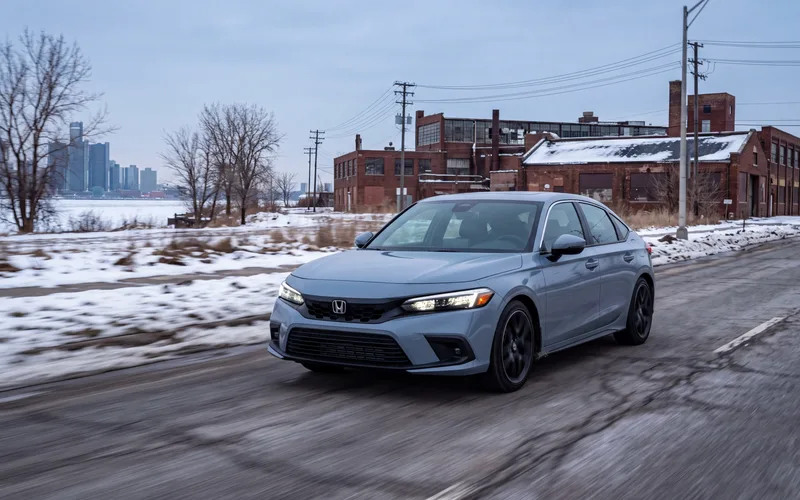 Honda Civic HatchbackCompact HatchbackBetter at: Value
Same platform and engine for roughly $6,700 less, with a hybrid option the Integra doesn't offer.
Compare 2.43C+
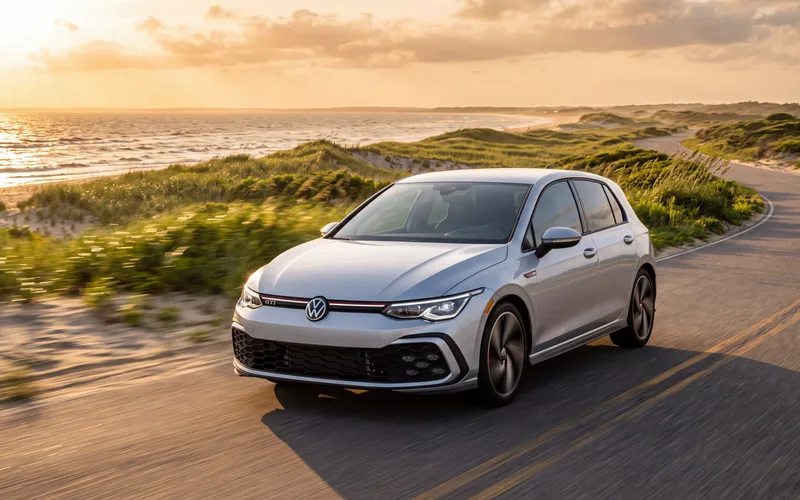 Volkswagen Golf GTIHot HatchBetter at: Performance
Meaningfully quicker and more engaging to drive for similar money, with a sharper dual-clutch gearbox.
Compare 2.57C+
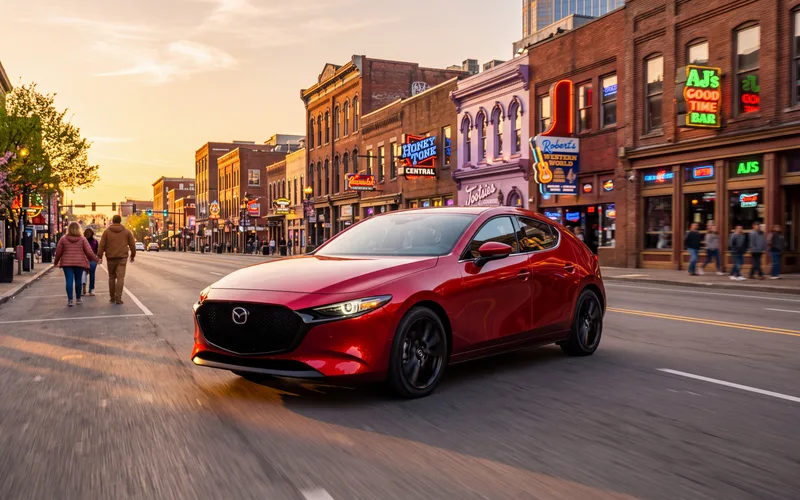 Mazda Mazda3 HatchbackCompact HatchbackBetter at: AWD & interior
A genuinely upscale interior plus available all-wheel drive, which no Integra offers at any price.
CompareSubject scores by year
Hover or tap a score to see what moved it versus the year before. A corner mark flags a big swing.
| Year | Performance | Efficiency | Safety | Space | Cost | Reliability | Tech | Use-case | Driving | Value |
|---|---|---|---|---|---|---|---|---|---|---|
| 2026 | 37 | 50 | 78 | 67 | 64 | 78 | 69 | 59 | 73 | 71 |
| 2025 | 37 | 45 | 75 | 64 | 60 | 77 | 52 | 54 | 67 | 68 |
| 2024 | 37 | 45 | 77 | 64 | 62 | 74 | 52 | 54 | 67 | 71 |
| 2023 | 35 | 45 | 79 | 64 | 64 | 73 | 52 | 54 | 67 | 70 |
Compare two years
Best fit & conditions
Higher scores mean a better fit for that use case. Learn more about use-case fit →
Subject profile
Academic Probation · NHTSA safety recalls
Oct 3, 2024SteeringThe steering gearbox assembly may have been manufactured incorrectly, which can cause excessive internal friction and lead to difficulty steering the vehicle.
Defect
Honda (American Honda Motor Co.) is recalling certain 2023-2025 Acura Integra, Civic Type R, CR-V Hybrid, CR-V, HR-V, 2022-2025 Civic, Civic Hatchback, 2024-2025 Acura Integra Type S, 2025 CR-V Fuel Cell EV, Civic Hybrid, and Civic Hatchback Hybrid vehicles. The steering gearbox assembly may have been manufactured incorrectly, which can cause excessive internal friction and lead to difficulty steering the vehicle.
Risk
Difficulty steering can increase the risk of a crash.
Remedy
Dealers will replace the worm gear spring and redistribute or add grease as necessary, free of charge. Owner notification letters were mailed November 18, 2024. Owners may contact Honda Customer Service at 1-888-234-2138. Honda's numbers for this recall are SJS, MJU, QJT and VJV.
NHTSA campaign 24V744000 ↗Manufacturer no. SJS, MJU, QJT, VJV1,693,199 vehicles potentially affected (all models in the campaign)Owners notified Nov 18, 2024Filed by Honda (American Honda Motor Co.)Filed as INTEGRA
3 recalls on other model years of the Integra (2023–2024)
Jan 29, 2026Seats: critical fastenersThe driver's seat cushion frame may not have been tightened properly, which can result in a loose seat. As such, these vehicles fail to comply with the requirements of Federal Motor Vehicle Safety Standard number 207, "Seating Systems."
Defect
Honda (American Honda Motor Co.) is recalling certain 2023 Honda Accord, Accord Hybrid, and 2024 HR-V, Pilot, and Acura Integra vehicles. The driver's seat cushion frame may not have been tightened properly, which can result in a loose seat. As such, these vehicles fail to comply with the requirements of Federal Motor Vehicle Safety Standard number 207, "Seating Systems."
Risk
A loose driver's seat may not adequately restrain the driver during a crash, increasing the risk of injury.
Remedy
Dealers will replace the driver's seat cushion frame, free of charge. Owner notification letters were mailed March 10, 2026. Owners may contact Honda's customer service at 1-888-234-2138. Honda's numbers for this recall are ONC, KND, BNE and ZNF. Vehicle Identification Numbers (VINs) involved in this recall will become searchable on NHTSA.gov beginning February 5, 2026. This recall expands previous NHTSA recall number 24V859.
NHTSA campaign 26V054000 ↗Manufacturer no. ONC, KND, BNE, ZNF32 vehicles potentially affected (all models in the campaign)Owners notified Mar 9, 2026Filed by Honda (American Honda Motor Co.)Filed as INTEGRANov 14, 2024Seats: critical fastenersThe driver's seat cushion frame may not have been tightened properly, which can result in an unsecured seat. As such, these vehicles fail to comply with the requirements of Federal Motor Vehicle Safety Standard number 207, "Seating Systems."
Defect
Honda (American Honda Motor Co.) is recalling certain 2023-2024 Honda Accord, Accord Hybrid, Civic Sedan, Civic Hatchback, Pilot, and 2024 HR-V, Acura Integra and Acura Integra Type S vehicles. The driver's seat cushion frame may not have been tightened properly, which can result in an unsecured seat. As such, these vehicles fail to comply with the requirements of Federal Motor Vehicle Safety Standard number 207, "Seating Systems."
Risk
An unsecured driver's seat may not adequately restrain the driver during a crash, increasing the risk of injury.
Remedy
Dealers will replace the driver's seat cushion frame, free of charge. Owner notification letters were mailed January 6, 2025. Owners may contact Honda customer service at 1-888-234-2138.
NHTSA campaign 24V859000 ↗121 vehicles potentially affected (all models in the campaign)Owners notified Jan 6, 2025Filed by Honda (American Honda Motor Co.)Filed as INTEGRAJun 15, 2023Service brakes, hydraulic: antilock/traction control/electronic limited slip: control unit/moduleA ball valve in the vehicle stability assist (VSA) modulator may leak brake fluid, which can result in unintended vehicle movement when the brake hold feature is engaged or an unexpected increase in brake pedal travel.
Defect
Honda (America Honda Motor Co.) is recalling certain 2023 Civic, Acura RDX, Acura Integra, and 2022 Honda Accord vehicles. A ball valve in the vehicle stability assist (VSA) modulator may leak brake fluid, which can result in unintended vehicle movement when the brake hold feature is engaged or an unexpected increase in brake pedal travel.
Risk
Unintended vehicle movement or an unexpected increase in brake pedal travel can increase the risk of a crash or injury.
Remedy
Dealers will replace the VSA modulator, free of charge. Owner notification letters were mailed July 24, 2023. Owners may contact Honda customer service at 1-888-234-2138. Honda's numbers for this recall are OEJ, XEK, AEY, XEX and OEW.
NHTSA campaign 23V430000 ↗Manufacturer no. OEJ,XEK,AEY,XEX,OEW386 vehicles potentially affected (all models in the campaign)Owners notified Jul 24, 2023Filed by Honda (American Honda Motor Co.)Filed as INTEGRA
Source: NHTSA Office of Defects Investigation recall database, model years 2023–2026. Recalls are listed by model year as the manufacturer filed them; whether a specific car is affected depends on its VIN — check a VIN at nhtsa.gov ↗. NHTSA model names matched to this page: INTEGRA.
Detailed scoring by subject
1Performance & PowertrainThe Integra's lowest-graded category.0.45F
The volume trims (Integra, A-Spec, A-Spec Technology) all use the 1.5L VTEC turbo four at 200 hp — modest against the 130–520 hp hatchback band; only the low-volume Type S reaches 320 hp.
A broad 192 lb-ft plateau gives easy midrange response, but the peak figure sits in the lower quarter of the hatchback band.
MY2025 carries the unchanged 1.5T/CVT powertrain of the 2023 launch cars; instrumented tests of that drivetrain cluster around 7 seconds.
The 1.5T is smooth with little lag thanks to torque from 1,800 rpm, but it turns coarse near redline and is adequate rather than exciting; extra sound deadening over the Civic helps it feel a little more premium.
The volume CVT is one of the better ones, with simulated steps and paddle shifters, though it still drones under hard throttle; the optional 6MT with rev-match and a helical LSD (A-Spec Technology) is class-leading.
Front-wheel drive only on every 2025 trim, Type S included; no AWD option exists.
Two gas turbo engines (1.5T, 2.0T Type S) and a choice of CVT or 6MT on the 1.5T, but no hybrid, PHEV or EV variant.
2Efficiency & RangeOne of the Integra's weakest categories.0.97F
The A-Spec with CVT is the volume configuration; its larger wheels/tires cost 1 MPG against the base car.
EPA city rating for the volume A-Spec CVT.
EPA highway rating for the volume A-Spec CVT.
Computed from the EPA combined figure and the small 12.4-gallon tank, which keeps range below most hatchback rivals despite decent economy.
EPA's annual cost assumes premium fuel, which pushes the Integra's running cost well above regular-fuel compacts with similar MPG.
Acura recommends 91-octane premium for both engines. It is not strictly required, but EPA cost figures and most owners assume it.
3SafetyOne of the Integra's strongest categories.3.12B
NHTSA tested the 2025 Integra hatchback (FWD) and awarded five stars overall with five stars in every sub-rating.
The 2025 Integra earned a Top Safety Pick (not TSP+) under the tougher 2025 criteria: Good in both small-overlap tests and the updated side test, but only Acceptable in the updated moderate-overlap (rear-passenger) test, which is what holds it below the plus award.
AcuraWatch is standard on every 2025 Integra trim — AEB with pedestrian detection, adaptive cruise with Low-Speed Follow and Traffic Jam Assist, lane keeping, road departure mitigation — and blind-spot plus rear cross-traffic monitoring are standard too. Parking sensors are reserved for the A-Spec Technology Package.
IIHS rates the Integra's pedestrian front crash prevention Good under its current (day and night) protocol, a requirement for the 2025 TSP award; the standard CMBS is effective though IIHS's page does not list an updated vehicle-to-vehicle rating to confirm top-tier car-to-car performance.
Blind Spot Information and Rear Cross Traffic Monitor are standard on every trim, but both are alert-only — no active steering or braking intervention and no safe-exit warning.
LKAS and Road Departure Mitigation are standard and work competently, with Traffic Jam Assist adding low-speed centering; reviewers find Honda-family centering functional but less smooth than the best systems, with some wander in wide lanes.
Adaptive Cruise with Low-Speed Follow (stop-capable on the CVT car) and Traffic Jam Assist are standard; dependable, but there is no full-speed integrated highway-assist layer beyond LKAS.
No hands-free highway driving system is offered on any 2025 Integra trim.
LED headlights with auto high beams are standard, but IIHS rates them only Acceptable on every trim — enough for the award, short of the Good rating that earns the top band.
The Civic-based liftback has reasonably slim A-pillars and a good forward view, but the sloped rear glass and thick C-pillars limit rear three-quarter sightlines; only a rearview camera compensates (no surround view), with parking sensors limited to the Tech package.
IIHS rates LATCH ease of use Acceptable: two outboard sets of lower anchors that are usable but not ideal, and a compact rear seat that fits a rear-facing seat with some front-seat compromise; three-across is impractical.
4Space & ComfortMid-pack among this car's ten categories.2.32C+
Every 1.5T Integra trim seats five in a 2+3 layout; only the separately-scored Type S drops to four.
Moonroof is standard on the 1.5T trims, so the with-moonroof figure is the only one shipped; trim for the class.
Generous front legroom, carried over unchanged within the 2023-on generation.
The fastback liftback roofline costs rear headroom; taller adults brush the headliner.
Same 107.7-in wheelbase as the Civic gives adequate but not generous rear legroom.
The liftback opening and deep hold give near-wagon cargo space, well above sedan-trunk rivals like the A3 and CLA.
Competitive everyday storage: 60/40 split-fold rear seatback, cargo privacy cover and a wide hatch opening, but a modest center console and only a 12V outlet; no standout storage features.
Volume A-Spec gets heated, deeply bolstered leatherette front seats with 8-way power driver adjustment; the Tech package's 12-way seat with power lumbar is better. Rear seat is fine for medium trips, but headroom is tight.
The volume A-Spec rides on 18-inch wheels with fixed dampers, so it is firm-edged over broken pavement. Adaptive dampers that broaden its range are reserved for the Technology Package.
Reviewers find road noise louder than expected for an upscale brand, especially on the 18-inch A-Spec tires; the CVT also lets engine drone in on long grades.
Heated front seats are standard, but the volume A-Spec has single-zone climate. Dual-zone climate arrives only with the Technology Package, and no 2025 Integra trim offers ventilated seats or a heated steering wheel.
5Cost of OwnershipMid-pack among this car's ten categories.2.06C
Entry 2025 Integra lands mid-band for the hatchback segment — a premium over the Civic Hatchback it shares hardware with, but well under German premium compacts.
The A-Spec with Technology Package is the typically-equipped Integra (the only non-Type S trim with the 6MT, 9-in screen, ELS audio and adaptive dampers); CarEdge's typical transaction price of ~$40.6k is consistent with it.
Civic-derived 1.5T and CVT/6MT hardware keep parts cheap, but Acura dealer labor and premium fuel recommendation push it above a Civic; estimates cluster around $5k with KBB the highest.
Strong residuals for a premium compact, helped by Honda-family reliability reputation and the manual's enthusiast appeal; sources disagree by a few points so the midpoint is used.
A year longer than Honda's 3/36 and typical of premium brands, but short of Hyundai/Kia/Genesis 5/60.
Modest improvement on Honda's 5/60 and par for premium brands, but far behind the 10/100 offered by Hyundai/Kia/Genesis.
For 2025 the Acura Maintenance Program is only 1 year/12,000 miles (oil/filter, rotations, inspections), plus roadside assistance for the full 4/50 warranty term and an AcuraLink trial — a short included-maintenance period, below the 2-yr plans of BMW/Toyota-Lexus peers.
$39,195 volume-trim price minus its estimated resale value after 5 years (54% retained, or about $21,165) leaves about $18,030 in depreciation. Add the projected $5,000 in 5-year maintenance and repairs, and owning this vehicle for 5 years costs about $23,030 in total.
6Reliability & QualityThe Integra's best-graded category.3.24B+
J.D. Power gives the 2025 Integra a 'Great' 82/100 Quality & Reliability score and named it a Quality Award winner; Consumer Reports lists no model-specific prediction (NA), so the signal rests on JDP plus the proven shared Civic platform. 2025 is a carry-over year in the 2023-on DE generation.
Mixed brand signals: Consumer Reports ranked Acura 5th of all brands in its 2025 reliability survey, but the J.D. Power 2025 VDS put Acura below the industry average at 249 PP100 against 202 — mid-pack overall.
One NHTSA campaign covers the 2025 Integra: 24V744, a Honda-wide electric power steering software fix that requires a reflash. Across the generation there are four campaigns in total, all shared Honda-family issues (fuel-system ball valve on 2023, two 2024-only campaigns), with nothing systemic to the powertrain.
The volume trim's L15B7 1.5L turbo with CVT (6MT optional) is the same engine family as the Civic Si/Civic/CR-V, with a large high-mileage field record. The 2016-2019 oil-dilution concern was largely a CR-V cold-climate issue and has been addressed in later calibrations.
Reviewers call the cabin well assembled and nicer than the Civic's in its touchpoints and ELS audio, but it is still recognizably Civic-derived, with hard plastics in the lower zones at a premium price.
Built in Marysville, Ohio, with consistent Honda/Acura assembly quality. The J.D. Power Quality Award, which is based on 90-day problems per 100 owners, supports strong initial quality.
Acura's roughly 270 US dealers are thinner than Honda's or Toyota's and concentrated in metro areas. Service satisfaction is mid-pack among premium brands, and the 4yr/50k basic and 6yr/70k powertrain warranty is competitive.
Mechanicals are shared with the Civic and Civic Si, which keeps parts abundant and gives the car a huge aftermarket. Acura-specific trim and body panels cost a modest premium, but overall repair costs stay reasonable for a premium compact.
7Technology & InfotainmentOne of the Integra's weakest categories.1.48D
The volume A-Spec ships with the 7-inch display; the 9-inch unit needs the Technology Package.
The Honda-derived interface is quick and keeps a physical volume knob and shortcut buttons. On the volume trim, though, the 7-inch screen is small and dated for a premium car.
Wired CarPlay and Android Auto are standard; wireless projection is offered only with the Technology Package.
No factory navigation system is listed for any 2025 Integra trim. Siri Eyes Free is standard and Alexa Built-In comes with the Technology Package, so maps depend on phone projection.
The 8-speaker Acura Premium Audio on the volume trim is adequate. The 16-speaker ELS Studio 3D system on the Technology Package is widely praised and class-leading.
A 10.2-inch fully digital Acura Precision Cockpit cluster is standard on every trim, an unusual inclusion at this price.
Integra has no whole-vehicle over-the-air updates. Software and module updates are largely dealer-performed, and the volume trim lacks AcuraLink connectivity entirely.
AcuraLink remote services (remote start/lock, vehicle finder) are not available on the volume A-Spec, only with the Technology Package, so the representative car has essentially no connected app functions.
The volume A-Spec has one front USB-A port and a 12V outlet, with no rear ports and no wireless charging. The Technology Package adds front USB-C, two rear USB-A ports and a Qi pad.
Smart entry (front doors and tailgate), Walk Away Auto Lock and push-button start are standard. Key-fob remote start is limited to the Technology Package with CVT, and there is no phone-as-key or power liftgate.
Every trim has a multi-view rear camera with dynamic guidelines plus Rear Cross Traffic Monitor. Front and rear parking sensors and Low-Speed Braking Control need the Technology Package, and no surround-view camera is offered.
A 5.3-inch head-up display comes with the Technology Package (and Type S), one step above the volume A-Spec. That is still rare among sport-compact rivals.
8Use-Case FitGrades below the middle of the scale.1.61D
The wide liftback and 24.3 cu ft hold swallow strollers easily, and the 60/40 rear seat folds. Low seating, a sloped roofline (36.4 in rear headroom) and middling LATCH access make car-seat loading less easy than in a crossover.
It earned a 2025 IIHS Top Safety Pick and a 5-star NHTSA overall rating. The full AcuraWatch suite, blind-spot info, Rear Cross Traffic Monitor, rear-outboard side airbags and Rear Seat Reminder are standard on the base car.
Luggage space with all seats up is excellent. But the volume A-Spec gives rear riders no USB ports, has single-zone climate and a tight rear roofline, and road noise is noticeable on long highway stints.
Standard ACC with Low-Speed Follow and Traffic Jam Assist, Automatic Brake Hold and a smooth low-speed CVT make traffic easy. The firm 18-inch ride and road noise are the minor annoyances.
32 MPG combined is fine for its size, but premium 91-octane fuel pushes the EPA annual fuel cost to about $2,550, more than mainstream compact hatches running on regular.
It is long for a hatch at 185.8 in with a middling 38.1-ft turning circle, but visibility is good and the multi-view camera, BSI and Cross Traffic Monitor are standard. Parking sensors need the Technology Package.
No published tow rating and no truck-style utility; a large 24.3 cu ft cargo bay with the rear seat folded is its only work-relevant asset.
The Civic-derived 1.5T powertrain has a solid Honda reputation, but leatherette/microsuede trim, a low-slung body and premium positioning make it ill-suited to hard work use.
There is no household outlet (12V only), no factory hitch, no washable flooring and no upfit program; the fold-flat rear seat and cargo area are the sole provisions.
Supportive heated seats, standard ACC with Low-Speed Follow and lane keeping, and about 397 miles of range make it a decent tourer. Road noise and the firm A-Spec ride limit long-haul endurance.
Front-wheel drive only, 5.1 in of ground clearance and no factory roof rails or hitch keep it on pavement; any bike rack has to be aftermarket.
The 24.3 cu ft liftback hold and 60/40 split-fold rear seat handle bulky gear far better than sedan rivals. No factory roof rails or hitch keeps it below wagon/crossover flexibility.
9Driving ExperienceMid-pack among this car's ten categories.2.56C+
Civic Si-derived chassis with a thicker 18 mm rear bar on A-Spec gives crisp turn-in and 0.87 g of skidpad grip, though the 27.2-sec figure-eight trails rivals and adaptive dampers are Tech-only.
Variable-ratio electric rack (11.52:1 on A-Spec) is quick, precise and naturally weighted, though it carries only modest feedback; reviewers rate it among the better systems in the class.
12.3-in vented front / 11.1-in rear discs give a firm, easily modulated pedal, but the instrumented 134-ft 60-0 stop is long for the class.
The 200-hp 1.5T pulls with broad torque from 1,800 rpm, but the volume trim's CVT lets revs rise and fall with small throttle changes on grades and when pushed. Idle stop is standard.
Inoffensive at cruise, but the CVT-held 1.5T drones under hard acceleration. Active Sound Control is reserved for the Technology Package.
Middling turning circle for a compact hatch, slightly larger than the hatchback-band midpoint.
Low, sporty seating with a tilt/telescopic wheel, good forward sightlines and physical climate/volume controls. The volume A-Spec's 8-way seat lacks the Tech package's 12-way lumbar adjustment, and the rear view is narrow.
Balanced chassis and sharp steering make even the CVT car pleasant on a back road. The enthusiast pick, the 6-speed manual with LSD, is limited to the A-Spec Technology trim, so the volume car is more brisk GT than sport compact.
10Value & Market PositionOne of the Integra's strongest categories.2.63C+
The $34k base car includes AcuraWatch driver aids, moonroof, LED lighting and heated front seats, but the 9-inch screen, wireless CarPlay/Android Auto, wireless charging, ELS 16-speaker audio and HUD are reserved for the $39k A-Spec Tech — so the volume buyer pays up for parity with rivals.
Fair value against premium compacts (A3, CLA, BMW 2 Gran Coupe) with a hatch and a manual they lack, but it is essentially a nicer Civic Si costing several thousand more for similar 200-hp performance.
Base, A-Spec and A-Spec Tech plus the Type S give a clear price ladder from $34k to $54k, but front-drive only, one 1.5T engine on non-Type S cars, and the manual only on the top 1.5T trim.
US volume slid from 24,398 in 2024 to 20,178 in calendar 2025 (−17%), with a soft first half; still a meaningful seller in a shrinking premium-compact niche, but on a declining trajectory during the 2025 model year.
Acura is a respected entry-luxury brand and the Integra name carries strong 1990s enthusiast heritage, but the marque lacks the aspirational pull of the German premium brands.
2025 Integras have carried promotional APR with finance bonus cash, lease specials, and college-grad/military offers, and leftover 2025 units have seen sizable cash — real buyer benefit without fire-sale pricing.
The 2025 is year three of the fifth generation launched for 2023 on the 11th-gen Civic platform — current but carry-over, with the 2026 refresh (updated styling and infotainment) imminent for buyers.
This generation won 2023 North American Car of the Year and earned Car and Driver 10Best recognition, with consistent praise for chassis, manual gearbox and practicality; reviewers routinely ding the CVT and slow base acceleration, and it rarely tops premium-compact comparisons outright.