

The verdict
A mixed-report mid-size luxury sedan, strong on safety and held back by efficiency.
The 2018 Acura TLX is a value-minded alternative to the German luxury sedans, pairing a 290-hp V6 and optional SH-AWD with a longer standard safety list than most rivals charge extra for — the full AcuraWatch suite, including a 5-star NHTSA rating and IIHS-rated 'Superior' automatic braking, comes on every trim from $33,995. The tradeoffs show up in running costs and tech: both engines require premium fuel, EPA pegs the V6 at $3,400/yr to fuel, and the small 7-inch touchscreen and lack of hands-free driving assist feel behind the segment even for 2018. It's a strong pick for buyers who want near-luxury driving dynamics and class-leading standard safety gear without German sticker prices, less so for families needing top-tier rear-seat space or anyone who values cutting-edge infotainment.
Jump to scoresStrengths
- AcuraWatch safety suite standard on every trim
- Top-tier crash protection
- Engaging handling for the class
What holds it back
- Premium-only fuel and a steep 5-year running-cost tab
- Small touchscreen and no true head-up display
- No hands-free driving and dated connected-car tech
Top alternatives
Cars shoppers cross-shop with the Acura TLX 3.21B+
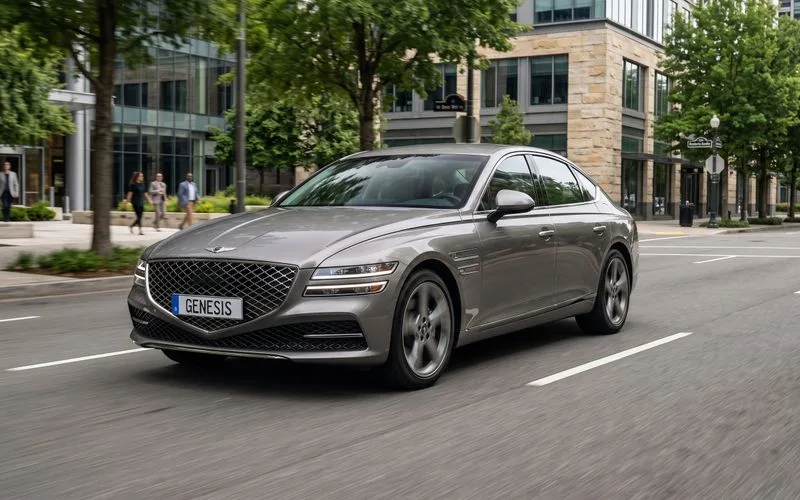 Genesis G80Mid-Size Luxury SedanBetter at: Space and warranty
Similar money buys a physically larger, better-equipped sedan with a real touchscreen and a 10-year powertrain warranty behind it.
Compare 3.11B
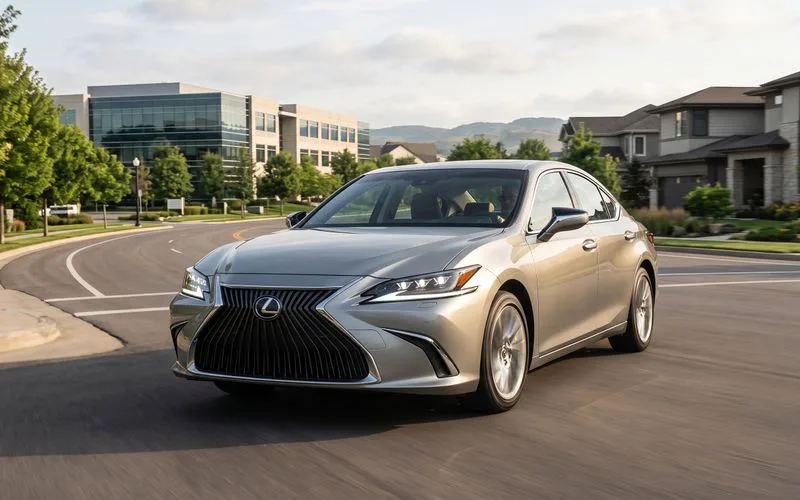 Lexus ESMid-Size Luxury SedanBetter at: Efficiency
A hybrid ES cuts the annual fuel bill by roughly $1,150 while adding rear-seat room and the segment's best resale.
Compare 3.27B+
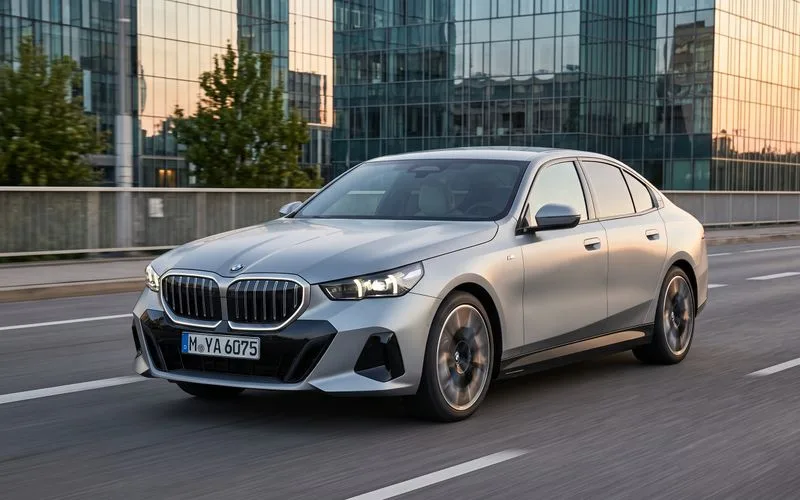 BMW 5 SeriesMid-Size Luxury SedanBetter at: Tech and driving
Buyers willing to spend $12,000 more get a rear-drive chassis, hands-free highway driving, and gas, plug-in, or EV powertrains.
CompareHow it's evolved
9 scored model years · 2017–2025
Subject scores by year
Hover or tap a score to see what moved it versus the year before. A corner mark flags a big swing.
| Year | Performance | Efficiency | Safety | Space | Cost | Reliability | Tech | Use-case | Driving | Value |
|---|---|---|---|---|---|---|---|---|---|---|
| 2025 | 56 | 24 | 71 | 58 | 41 | 74 | 57 | 50 | 66 | 61 |
| 2024 | 53 | 25 | 74 | 56 | 43 | 76 | 57 | 48 | 63 | 60 |
| 2023 | 53 | 26 | 76 | 54 | 48 | 70 | 53 | 46 | 58 | 58 |
| 2022 | 53 | 24 | 77 | 54 | 62 | 64 | 54 | 47 | 58 | 59 |
| 2021 | 55 | 20 | 78 | 58 | 52 | 71 | 46 | 46 | 57 | 66 |
| 2020 | 39 | 37 | 65 | 54 | 53 | 70 | 37 | 47 | 62 | 60 |
| 2019 | 53 | 23 | 68 | 57 | 59 | 59 | 41 | 44 | 55 | 60 |
| 2018 | 51 | 24 | 73 | 57 | 48 | 63 | 41 | 47 | 56 | 69 |
| 2017 | 40 | 38 | 57 | 57 | 62 | 51 | 27 | 43 | 55 | 62 |
Compare two years
Best fit & conditions
Higher scores mean a better fit for that use case. Learn more about use-case fit →
Subject profile
Academic Probation · NHTSA safety recalls
May 21, 2026Air bags: sensor: occupant classification: front passengerThe front passenger seat weight sensor may crack and short circuit, which can cause the air bags to deploy unintentionally during a crash.
Defect
Honda (American Honda Motor Co.) is recalling certain 2018-2021, 2023 Acura TLX, 2019-2024 RDX, 2017-2020, 2022-2026 MDX, 2017-2021, 2023, 2025 Honda Ridgeline, 2017-2022 Pilot, 2019-2021 Passport, 2018-2026 Odyssey, 2019-2022 Insight, 2019-2021 HR-V, 2018-2020 Fit, 2020-2022 CR-V Hybrid, 2017-2022 CR-V, 2017-2018, 2021 Civic Type R, 2017-2021 Civic hatchback, 2016-2020 Civic coupe, 2016-2022 Civic, 2017-2022 Accord Hybrid, and 2016-2022 Accord vehicles. The front passenger seat weight sensor may crack and short circuit, which can cause the air bags to deploy unintentionally during a crash.
Risk
Air bags that deploy unintentionally during a crash increase the risk of injury.
Remedy
Dealers will replace the seat weight sensors, free of charge. Owner notification letters were mailed July 7, 2026. Owners may contact Honda's customer service at 1-888-234-2138. Honda's numbers for this recall are BOL, WO9, OOA, WOM, XOH, NOC, POD, BOE, UOF, POB, EOG, AOI, QO8, TOJ, DO7, and SOK. This recall expands previous NHTSA recall number 24V064. Vehicle Identification Numbers (VINs) involved in this recall will be searchable on NHTSA.gov beginning May 29, 2026.
NHTSA campaign 26V332000 ↗Manufacturer no. Refer to Comments98,892 vehicles potentially affected (all models in the campaign)Owners notified Jul 6, 2026Filed by Honda (American Honda Motor Co.)Filed as TLXDec 18, 2023Fuel system, gasoline: delivery: fuel pumpThe fuel pump inside the fuel tank may fail.
Defect
Honda (American Honda Motor Co.) is recalling certain 2013-2023 Honda Accord, Civic Coupe, Civic Sedan, Civic Hatchback, Civic Type R, CR-V, HR-V, Ridgeline, Odyssey, Acura ILX, MDX, MDX Hybrid, RDX, RLX, TLX, 2019-2022 Honda Insight, Passport, 2020 Honda CR-V Hybrid, 2018-2019 Honda Clarity PHEV, Fit, and 2015-2020 Honda Accord Hybrid, Pilot, Acura NSX vehicles. The fuel pump inside the fuel tank may fail.
Risk
Fuel pump failure can cause an engine stall while driving, increasing the risk of a crash.
Remedy
Dealers will replace the fuel pump module, free of charge. Owner letters were mailed September 6, 2024. Owners may contact Honda customer service at 1-888-234-2138. Honda's numbers for this recall are KGC and KGD. This recall is an expansion of NHTSA recall numbers 21V-215 and 20V-314.
NHTSA campaign 23V858000 ↗Manufacturer no. KGC, KGD2,490,460 vehicles potentially affected (all models in the campaign)Owners notified Mar 29, 2024Filed by Honda (American Honda Motor Co.)Filed as TLXNov 13, 2023Engine and engine cooling: engine: hard parts internal/mechanicalDue to a manufacturing error, the connecting rod bearing in the engine may wear and seize, damaging the engine.
Defect
Honda (American Honda Motor Co.) is recalling certain 2015-2020 Acura TLX, 2016-2020 Acura MDX, 2016 and 2018-2019 Pilot, 2017 and 2019 Ridgeline, and 2018-2019 Odyssey vehicles. Due to a manufacturing error, the connecting rod bearing in the engine may wear and seize, damaging the engine.
Risk
A damaged engine may run improperly or stall while driving, increasing the risk of a fire, crash, or injury.
Remedy
Dealers will inspect and repair, or replace the engine as necessary, free of charge. Owner letters were mailed March 28, 2024. 2016-2017 Acura MDX owner letters were mailed November 1, 2024. 2016-2020 Acura MDX owner letters are expected to be mailed in mid-December 2024. Honda began mailing owner notification letters as of March 18, 2024. 2015-2016 Acura owner letters are expected to be mailed mid-December 2024, 2018 Acura TLX owner letters are expected to be mailed the end of March/early April 2024, 2019 Acura TLX owner letters are expected to be mailed mid-May 2024, 2020 Acura TLX owner letters are expected to be mailed mid-June 2024, and 2016-2020 Acura MDX owner letters are expected to be mailed January 27, 2025. Owners may contact Honda customer service at 1-888-234-2138. Honda's numbers for these recalls are XG1 and GG0.
NHTSA campaign 23V751000 ↗Manufacturer no. XG1, GG0248,999 vehicles potentially affected (all models in the campaign)Owners notified Mar 28, 2024Filed by Honda (American Honda Motor Co.)Filed as TLXJan 29, 2019Fuel system, other: delivery: fuel pumpParticulates in fuel may adhere to the internal components of the fuel pump, reducing its performance.
Defect
Honda (American Honda Motor Co.) is recalling certain 2016-2018 Acura MDX, 2015-2019 Acura TLX and 2015-2017 Honda Accord vehicles, equipped with a 3.5L V6 engine. Particulates in fuel may adhere to the internal components of the fuel pump, reducing its performance.
Risk
Reduced fuel pump performance can result in an engine stall, increasing the risk of crash.
Remedy
Honda will notify owners, and dealers will update the fuel injection engine control unit (FI-ECU) software and, if necessary, replace the fuel pump, free of charge. The recall began March 25, 2019. Owners may contact customer service at 1-888-234-2138. Acura's recall number for this recall is P3W. Honda's recall number for this recall is N3X.
NHTSA campaign 19V060000 ↗Manufacturer no. N3X, P3W437,032 vehicles potentially affected (all models in the campaign)Owners notified Mar 25, 2019Filed by Honda (American Honda Motor Co.)Filed as TLX
7 recalls on other model years of the TLX (2019–2025)
Jun 12, 2025Service brakes, hydraulic: pedals and linkagesThe brake pedal pivot pin was not secured properly, which can cause the pedal to shift out of position. As such, these vehicles fail to comply with Federal Motor Vehicle Safety Standard numbers 108, "Lamps, Reflective Devices, and Associated Equipment" and 135, "Light Vehicle Brake Systems."
Defect
Honda (American Honda Motor Co.) is recalling certain 2021-2025 Acura TLX, 2023-2025 Acura MDX, and 2023-2025 Honda Pilot vehicles. The brake pedal pivot pin was not secured properly, which can cause the pedal to shift out of position. As such, these vehicles fail to comply with Federal Motor Vehicle Safety Standard numbers 108, "Lamps, Reflective Devices, and Associated Equipment" and 135, "Light Vehicle Brake Systems."
Risk
A brake pedal that shifts out of position can prevent the driver from applying the brakes as intended, increasing the risk of a crash or injury.
Remedy
Dealers will inspect and replace the brake pedal assembly as necessary, free of charge. Owner notification letters were mailed July 29, 2025. Owners may contact Honda's customer service at 1-888-234-2138. Honda's numbers for this recall are FLX and XLY.
NHTSA campaign 25V391000 ↗Manufacturer no. FLX, XLY259,033 vehicles potentially affected (all models in the campaign)Owners notified Jul 28, 2025Filed by Honda (American Honda Motor Co.)Filed as TLXJan 23, 2025Electrical system: software · Fuel system, gasoline: fuel injection systemA software error in the fuel injection electronic control unit (FI-ECU) may cause an engine stall or a loss of power.
Defect
Honda (American Honda Motor Co.) is recalling certain 2022-2025 Acura MDX Type-S, 2023-2025 Honda Pilot, and 2021-2025 Acura TLX Type-S vehicles. A software error in the fuel injection electronic control unit (FI-ECU) may cause an engine stall or a loss of power.
Risk
An engine stall or loss of power can increase the risk of a crash or injury.
Remedy
Dealers will reprogram the FI-ECU software, free of charge. Owner notification letters were mailed March 17, 2025. Owners may contact Honda's customer service at 1-888-234-2138. Honda's numbers for this recall are EL1 and AL0.
NHTSA campaign 25V031000 ↗Manufacturer no. EL1, AL0294,612 vehicles potentially affected (all models in the campaign)Owners notified Mar 17, 2025Filed by Honda (American Honda Motor Co.)Filed as TLX TYPE SDec 19, 2024Fuel system, gasoline: storage: tank assemblyThe fuel filler neck and fuel tank may have been improperly welded, which can result in a fuel leak.
Defect
Acura (American Honda Motor Co.) is recalling certain 2021-2023 TLX vehicles. The fuel filler neck and fuel tank may have been improperly welded, which can result in a fuel leak.
Risk
A fuel leak in the presence of an ignition source increases the risk of a fire.
Remedy
Dealers will replace the fuel tank assembly, free of charge. Owner notification letters were mailed February 3, 2025. Owners may contact Honda customer service at 1-888-234-2138. Acura's number for this recall is JKX.
NHTSA campaign 24V950000 ↗Manufacturer no. JKX167 vehicles potentially affected (all models in the campaign)Owners notified Feb 3, 2025Filed by Honda (American Honda Motor Co.)Filed as TLXFeb 1, 2024Air bags: sensor: occupant classification: front passengerThe front passenger seat weight sensor may crack and short circuit, failing to suppress the air bag as intended.
Defect
Honda (American Honda Motor Co.) is recalling certain 2020-2022 Pilot, Accord, Civic sedan, HR-V, Odyssey, 2020 Civic coupe, Fit, 2021-2022 Civic hatchback, 2021 Civic Type R, Insight, 2020-2021 CR-V, CR-V Hybrid, Passport, Ridgeline, Accord Hybrid, 2020 Acura MDX, 2022 Acura MDX, 2020-2022 Acura RDX, and 2020-2021 Acura TLX vehicles. The front passenger seat weight sensor may crack and short circuit, failing to suppress the air bag as intended.
Risk
An air bag that deploys unintentionally during a crash can increase the risk of injury.
Remedy
Dealers will replace the seat weight sensors, free of charge. Owner notification letters were mailed March 28, 2024. This is a phased recall. Owners may contact Honda customer service at 1-888-234-2138. Honda's numbers for these recalls are XHP and VHQ.
NHTSA campaign 24V064000 ↗Manufacturer no. XHP, VHQ750,114 vehicles potentially affected (all models in the campaign)Owners notified Mar 28, 2024Filed by Honda (American Honda Motor Co.)Filed as TLXDec 22, 2022Tires: beadThe tires may have sustained cuts and tears during the sorting process, which can result in tire damage.
Defect
Honda (American Honda Motor Co.) is recalling certain 2022 Acura TLX vehicles. The tires may have sustained cuts and tears during the sorting process, which can result in tire damage.
Risk
Damaged tires can lead to a sudden loss of air pressure and loss of vehicle control, increasing the risk of a crash.
Remedy
Dealers will inspect and replace the tires as necessary, free of charge. Owner notification letters were mailed January 30, 2023. Owners may contact Honda's customer service at 1-888-234-2138. Honda's number for this recall is GCW.
NHTSA campaign 22V950000 ↗Manufacturer no. GCW19 vehicles potentially affected (all models in the campaign)Owners notified Jan 30, 2023Filed by Honda (American Honda Motor Co.)Filed as TLXMar 25, 2021Fuel system, gasoline: delivery: fuel pumpThe low-pressure fuel pump inside the fuel tank may fail.
Defect
Honda (American Honda Motor Co.) is recalling certain 2019-2020 Acura MDX, MDX Sport Hybrid, RDX, TLX, Honda Accord, Civic Hatchback, Insight, 2019 Acura ILX, Honda Accord Hybrid, Civic Coupe, Civic Coupe Si, Civic Sedan, Civic Sedan Si, Civic Type R, Fit, HR-V, Odyssey, Passport, Pilot and Ridgeline, and 2018-2019 CR-V vehicles. The low-pressure fuel pump inside the fuel tank may fail.
Risk
Fuel pump failure can cause an engine stall while driving, increasing the risk of a crash.
Remedy
Honda will notify owners, and dealers will replace the fuel pump assembly, free of charge. Owner letters were mailed May 18, 2021. Owners may contact Honda customer service at 1-888-234-2138. Note: This recall is an expansion of recall 20V-314.
NHTSA campaign 21V215000 ↗Manufacturer no. Multiple Codes624,552 vehicles potentially affected (all models in the campaign)Owners notified May 18, 2021Filed by Honda (American Honda Motor Co.)Filed as TLXApr 12, 2019Engine and engine cooling: engine: gasoline: belts and associated pulleysThe timing belt teeth may separate from the belt.
Defect
Honda (American Honda Motor Co.) is recalling certain 2018-2019 Acura MDX and Honda Pilot vehicles and 2019 Acura RLX, RLX Sport Hybrid, TLX and Honda Odyssey and Ridgeline vehicles. The timing belt teeth may separate from the belt.
Risk
Teeth separation from the timing belt may result in an engine stall, increasing the risk of crash.
Remedy
Honda will notify owners, and dealers will inspect the vehicle and replace any affected timing belt free of charge. Vehicles receiving a replacement timing belt will also have the engine inspected and any damaged components will be replaced for free. The recall began June 7, 2019. Honda owners may contact customer service at 1-888-234-2138. Honda's number for this recall is L4M. Acura owners may contact customer service at 1-888-234-2138. Acura's number for this recall is Z4L.
NHTSA campaign 19V298000 ↗Manufacturer no. L4M, Z4L93,946 vehicles potentially affected (all models in the campaign)Owners notified Jun 7, 2019Filed by Honda (American Honda Motor Co.)Filed as TLX
Source: NHTSA Office of Defects Investigation recall database, model years 2017–2025. Recalls are listed by model year as the manufacturer filed them; whether a specific car is affected depends on its VIN — check a VIN at nhtsa.gov ↗. NHTSA model names matched to this page: TLX, TLX TYPE S.
Detailed scoring by subject
1Performance & PowertrainGrades below the middle of the scale.1.40D
2018 is a facelift year (revised fascia, infotainment) but the drivetrains carry over unchanged from the prior model year; the V6 FWD Technology trim is the representative volume configuration.
Peak torque for the V6 volume trim, carried over for the 2018 facelift.
Instrumented figure for the V6 FWD volume trim; the four-cylinder is meaningfully slower, reflected in displayValue.
The naturally aspirated V6 delivers strong, linear power with no turbo lag and class-appropriate smoothness; the base 2.4L I4 is adequate but unremarkable at low RPM. No hybrid transition behavior to contend with.
The 2018 refresh retuned the ZF 9-speed (V6) for improved refinement over the launch-generation TLX, but reviewers and owners still reported occasional harsh or hesitant shifts in the midrange; the I4's 8-speed dual-clutch is competent but not class-leading at low speed.
SH-AWD is a sophisticated torque-vectoring system, but it is available exclusively on V6-engined trims — the base 2.4L I4 is FWD-only, so AWD does not span the full lineup.
For 2018 the TLX offers only two naturally aspirated gasoline engines (2.4L I4, 3.5L V6) — no turbo, hybrid, PHEV, or EV variant, a narrower lineup than rivals beginning to add electrification in this segment.
2Efficiency & RangeThe TLX's lowest-graded category.0.00F
EPA combined rating for the V6 FWD Technology trim scored as representative in cat1; the I4 is meaningfully more efficient and the AWD V6 slightly less, both noted in displayValue.
EPA city rating for the volume V6 FWD trim.
EPA highway rating for the volume V6 FWD trim.
Range is calculated from the published fuel tank capacity and EPA combined MPG rather than a single manufacturer-quoted range figure, which Acura does not publish directly.
EPA's standard-assumption annual cost for the volume V6 FWD trim; the premium-fuel requirement pushes this above the sedan segment's normalization band, consistent with this being a weaker subject for the vehicle rather than a data error.
Both the 2.4L I4 and 3.5L V6 require premium (91 octane) fuel for 2018 — there is no regular-fuel option anywhere in the lineup, adding real running cost versus mainstream segment rivals.
3SafetyThe TLX's best-graded category.2.98B-
NHTSA gave the 2018 TLX a 5-star overall rating with 5 stars in every individual test category (frontal, side, rollover).
IIHS rated the 2018 TLX Good on moderate overlap front, side, roof strength, and head restraints/seats, but only Acceptable on the small-overlap front (driver-side) test, with a Marginal lower-leg/foot measure in that test. That one Acceptable result (plus an Acceptable headlight rating, see 3.3.1) keeps it short of Top Safety Pick despite otherwise strong crashworthiness.
2018 was the model year Acura made the full AcuraWatch suite (forward collision warning + AEB, lane departure warning/intervention, road departure mitigation, adaptive cruise control, auto high-beam) standard on every TLX trim, from base 2.4L through A-Spec and Advance — a notable move ahead of rivals. The gap is blind-spot monitoring and rear cross-traffic alert, which remain locked to the Technology Package and above rather than standard across the line.
IIHS rated the standard Collision Mitigation Braking System Superior, its highest front-crash-prevention tier, avoiding collisions in both the 12 mph and 25 mph vehicle-to-vehicle tests. IIHS did not publish a separate pedestrian AEB test result for this generation TLX at the time, which keeps this just below a perfect score.
Blind Spot Information and rear cross-traffic alert are alert-only (no active steering/braking intervention) and require stepping up to the Technology Package or above — not available on the base trim at all, which keeps this out of the top band despite being a competent system once equipped.
Reviewers described the standard lane-keeping assist and adaptive cruise as working in an unobtrusive, helpful fashion on the refreshed 2018 TLX, functional on the highway without excessive ping-ponging, though period AcuraWatch lane centering was not considered class-leading for smoothness compared to the best systems of the era.
Standard adaptive cruise control (now full-speed-range as part of the AcuraWatch suite across all trims) was praised by reviewers as capable and unobtrusive in city and highway driving, a step up from the pre-2018 TLX where ACC was optional.
Acura offered no hands-free highway driving system in 2018 — AcuraWatch's lane-keeping assist is a hands-on system requiring driver torque on the wheel. True hands-free systems (Super Cruise, BlueCruise) did not exist on any Acura product at this time.
IIHS tested the 2018 TLX's standard LED projector headlights (same hardware across all trims) as Acceptable, with high-beam assist but no curve-adaptive beam — good on the straightaway and gradual right curves but weaker on left curves. This is a meaningful improvement over the prior Jewel Eye headlight's Marginal rating, but still short of a Good rating.
Reviewers praised the TLX's open greenhouse and slim A-pillars for strong forward visibility, calling out easy maneuvering in traffic. The thicker rear roof pillars create a real rear-quarter blind spot, which Acura addresses with the optional (not standard) blind-spot monitor rather than better glass design.
IIHS rated the TLX's LATCH system overall Marginal: only two rear seating positions have complete lower-anchor-and-tether hardware, with the third position tether-only, limiting the ability to fit three child seats across without compromise.
4Space & ComfortMid-pack among this car's ten categories.1.83C-
Standard 5-passenger sedan seating, consistent across all 2018 TLX trims.
Manufacturer-published figure, unchanged by the 2018 facelift which was exterior/tech focused.
Manufacturer-published figure.
Manufacturer-published figure; reviewers note headroom gets tight for passengers over 6 feet.
Manufacturer-published figure; generous for the body style but on the low side of the mid-size luxury sedan band.
2018 facelift added a molded cargo bin, growing trunk volume from 13.2 cu ft in 2017.
Competitive but unremarkable everyday storage: console bin, door pockets, and underfloor trunk storage for small items; no standout innovation.
Well-padded, supportive front seats praised for both commuting and multi-hour trips; rear seat comfortable for adults though headroom-limited.
Smooth, composed ride even over broken pavement, though reviewers note it trails top European/Japanese rivals and A-Spec's firmer tuning doesn't meaningfully change ride quality.
Highway cabin quietness is a consistently cited strength carried over from the pre-facelift car.
Heated/ventilated front seats and heated steering wheel are gated to the A-Spec and Advance packages rather than standard across the range, consistent with mid-trim-and-up availability.
5Cost of OwnershipGrades below the middle of the scale.1.19D
Entry 2.4L FWD trim base price for the 2018 model year, including mandatory destination charge.
The V6 with Technology Package is the historically best-selling TLX configuration, balancing the popular 3.5L engine with the most-shopped feature package.
Edmunds True Cost to Own breaks out maintenance and repair separately for the V6 TLX; summed for the combined 5-year figure this item asks for.
Aggregated depreciation trackers for the TLX nameplate put 5-year depreciation in the 44-51% range across sources; no 2018-specific 5-year residual study was found, so this is a midpoint of corroborating estimates.
Acura's standard new-vehicle basic warranty for 2018 was unchanged from the brand's longstanding 4-year/50,000-mile coverage.
Acura's standard new-vehicle powertrain warranty for 2018 was 6 years/70,000 miles, sitting at the low end of the luxury-segment band.
Acura included 24-hour roadside assistance for the duration of the basic warranty (4 yr/50,000 mi) at no cost, but unlike some rivals offered no complimentary scheduled maintenance on a standard retail purchase in 2018 — only the Acura Care extended plan, which is a paid add-on.
$39,900 volume-trim price minus its estimated resale value after 5 years (53% retained, or about $21,147) leaves about $18,753 in depreciation. Add the projected $9,560 in 5-year maintenance and repairs, and owning this vehicle for 5 years costs about $28,313 in total.
6Reliability & QualityOne of the TLX's strongest categories.2.24C
Mixed signals across sources for the first-gen (2015-2020) TLX: generally good on most components but the 9-speed ZF automatic was a recurring weak point that depressed overall predicted scores through the facelift years.
Acura, as Honda's luxury division, has consistently placed in the upper half to top-10 of both Consumer Reports' brand reliability rankings and J.D. Power dependability studies through the late 2010s, benefiting from shared Honda powertrain/platform engineering.
The 2018 TLX is swept into two serious, large-scale Honda/Acura powertrain recalls issued in 2023 — a fuel pump failure recall (stall risk) and a connecting-rod-bearing engine recall (engine seizure/fire risk) — plus an earlier 2019 fuel system recall for V6-equipped 2015-2019 TLX units. The severity (fire/stall risk on core powertrain components) outweighs the modest recall count.
The base 2.4L i-VTEC four and 3.5L V6 are long-serving, generally durable Honda engine families, but the 9-speed ZF automatic paired with them carried a well-documented reputation for hard/lazy shifts, downshift lag, and occasional slip-to-neutral complaints across the 2015-2020 generation, and the connecting-rod-bearing recall adds a legitimate durability red flag for V6 units.
Reviewers consistently credit the facelifted 2018 TLX with soft-touch materials, available leather, and solid perceived quality for the segment, though the overall cabin design was already starting to read as dated versus newer German rivals.
Period reviews describe consistent panel fit and assembly quality typical of Honda/Acura manufacturing, with no notable pattern of rattles or misalignment complaints specific to the 2018 facelift.
Acura's dealer network is smaller than mainstream Honda's but adequate nationwide coverage for a luxury marque, with service satisfaction scores that place it mid-to-upper pack among premium brands in J.D. Power's Customer Service Index.
Significant parts and engineering commonality with Honda keeps availability and technician familiarity good relative to European luxury rivals, though Acura-specific trim/electronics parts and labor still carry a luxury-brand premium over a mainstream Honda Accord.
7Technology & InfotainmentOne of the TLX's weakest categories.0.73F
2018 facelift upgraded the lower screen to a capacitive 7-inch panel with 30% faster response, paired with a non-touch 8-inch upper display for nav/audio status.
The 2018 update sped up touch response and modernized menus, but the dual-screen ODMD layout remained a point of criticism for clutter and a learning curve versus single-screen rivals.
Apple CarPlay and Android Auto became standard across all 2018 TLX trims for the first time, but only via wired connection — wireless projection was not yet offered.
Native AcuraLink navigation with 3D view and real-time traffic rerouting is available on upper trims, but era-typical voice recognition is stiff enough that most owners default to CarPlay/Android Auto for voice and mapping.
The optional ELS Studio Premium Audio 10-speaker system is well regarded for the class; base audio is adequate but unremarkable.
A full-color TFT display sits within an otherwise analog gauge cluster rather than offering a fully configurable digital instrument panel — partial digitalization typical of 2018-era entry-luxury sedans.
AcuraLink of this era handled connected telematics (remote lock, roadside assist, vehicle locator) but did not deliver whole-vehicle or infotainment OTA software updates the way contemporary EV-era systems began to.
The AcuraLink app covers core remote functions — lock/unlock, remote start (Advance package, ~300 ft range), vehicle locate, and stolen-vehicle tracking/roadside assistance — solid for the period but reliant on a subscription after the trial.
Just one USB port (2.5A) is available in the cabin; a wireless charging pad is offered only on A-Spec and Advance Package trims, leaving the volume trim thin on device power.
Smart entry with push-button start is standard, and AcuraLink remote start (300 ft range) is available on the Advance Package — solid but not class-leading convenience for 2018.
A rearview camera is standard, and the 2018 facelift added an optional 360-degree surround-view camera — a new feature for the nameplate, though front/rear parking sensors are not emphasized in the lineup.
The TLX's 'Head-Up Warning' is a CMBS collision-warning light reflected onto the windshield, not a true information head-up display showing speed/nav — a genuine HUD was not offered on this generation TLX.
8Use-Case FitOne of the TLX's weakest categories.1.11D
Standard LATCH anchors and 34.5 in of rear legroom handle car seats and growing kids reasonably, but rear headroom is tight for taller passengers and the trunk opening/pass-through is restrictive for stroller-era gear.
AcuraWatch (adaptive cruise, forward collision warning, automatic emergency braking, lane-keeping assist, road departure mitigation) became standard across every 2018 TLX grade — ahead of many rivals still gating ADAS behind options — and IIHS rated its standard AEB 'Superior', though small-overlap front crash protection is only 'Acceptable'.
Quiet cabin and comfortable front seats support multi-hour trips, and rear legroom is competitive, but 14.3 cu ft of trunk space and limited rear headroom cap how well it serves a fully loaded family road trip.
Smooth ride, comfortable seating, and a quiet cabin make it relaxing in traffic; the main daily friction is the dual-screen infotainment's learning curve rather than the driving experience itself.
27 MPG combined for the volume FWD 2.4L trim is reasonable but not exceptional for the segment; the V6 drops to 24 combined, and Acura recommends premium fuel for the V6, raising mixed-driving costs.
A 39.2 ft (FWD) curb-to-curb turning diameter and standard rearview camera make it manageable in the city, aided by an optional 360-degree camera new for 2018.
As a unibody luxury sedan, Acura does not publish a tow rating for the TLX and it has no cargo bed or load-carrying provisions — essentially unsuited to work duty.
The Honda-derived 2.4L/3.5L powertrains have a generally solid reliability reputation, but the TLX's luxury-oriented interior and tuning are not aimed at or validated for hard commercial use.
No bed, tie-downs, or upfit ecosystem exist for a sedan like the TLX; it offers essentially no jobsite provisions.
A quiet cabin, comfortable front seats, and standard adaptive cruise control support highway touring; the 33 mpg highway FWD figure and roughly 17.2-gallon tank give solid range between fuel stops.
Optional SH-AWD adds foul-weather traction, but low ground clearance and sedan geometry leave little genuine off-pavement or adventure capability.
A 60/40 split-folding rear seat extends cargo flexibility, but reviewers note the pass-through opening is restricted by a two-step rise that hampers sliding long gear through from the trunk.
9Driving ExperienceMid-pack among this car's ten categories.1.80C-
Reviewers consistently single out handling as the TLX's strongest dynamic trait — natural steering and composed body control through sharp turns — with the A-Spec's chassis tweaks sharpening it further.
Steering is described as natural-feeling and precise for the class, aided by the TLX's optional four-wheel steering (Precision All Wheel Steer on SH-AWD trims).
No major brake complaints surface in contemporary reviews; pedal feel and stopping power are described as adequate without being a standout, and the standard AEB system was independently rated 'Superior' by IIHS.
The V6's ZF 9-speed and the 2.4L's 8-speed dual-clutch were both carried over for 2018 with their era-typical low-speed hesitation and occasional rough shifts reported by owners, rather than best-in-class smoothness.
The V6 is refined and mostly inoffensive under load; the base 2.4L four-cylinder is adequate but noticeably coarser when pushed, consistent with the quiet-cabin-but-unremarkable-powertrain character reviewers describe.
Manufacturer-published curb-to-curb turning diameter for the volume FWD configuration; AWD trims turn slightly wider.
Well-bolstered, supportive seats and good sightlines give a comfortable driving position for most body types, with the main ergonomic friction coming from the dual-screen infotainment layout rather than seat/wheel adjustability.
Handling is engaging, but Consumer Reports and other outlets describe the overall driving character as underwhelming on the volume (non-A-Spec) trim, placing it a notch below sportier segment rivals.
10Value & Market PositionOne of the TLX's strongest categories.2.65C+
The 2018 facelift made the full AcuraWatch driver-assist suite (adaptive cruise, forward collision mitigation, lane departure intervention, road departure mitigation) standard on every grade, plus Apple CarPlay/Android Auto, heated front seats, dual-zone climate, and a moonroof at the base trim — a longer standard list than German rivals that charge extra for comparable driver-assist packages.
V6 power, SH-AWD availability, and a long standard-feature list across a $33k-$46k range undercut comparably equipped German rivals, though the TLX trails them on outright cabin materials and driving feel.
Six configurations spanning 2.4L FWD base through 3.5L V6 SH-AWD with Technology, A-Spec, and Advance packages gives a well-spaced range from value-oriented to loaded, though there is no true high-performance halo trim.
30,468 US units in 2018 is a respectable mid-pack result for the segment, but it was a 12.6% decline from 2017, indicating softening rather than growing demand.
Acura carries a solidly respected near-luxury reputation for reliability and value, but lacks the aspirational cachet of the German luxury marques it competes against, keeping brand pull neutral-to-positive rather than a strong halo.
Lease incentives of roughly $5,500-6,000 off MSRP were commonly available on 2018 TLX deals, giving buyers meaningful negotiating room without the vehicle being a distress sale.
2018 is a mid-cycle facelift (revised fascia, wheels, new CarPlay/Android Auto infotainment, standard AcuraWatch) of a generation that began for 2015 and would run through 2020 — fresher than a pure carry-over year but not an all-new platform.
Reviews were solidly positive but not segment-leading — Edmunds scored it 7.5/10 and outlets praised the facelift's tech and chassis, but the TLX was not a recorded Car and Driver 10Best or comparison-test winner against the 3-Series/C-Class/A4 for 2018.