

The verdict
A mixed-report mid-size luxury sedan, strong on reliability and held back by efficiency.
The 2025 Acura TLX is a driver's luxury sedan that undercuts the Germans by five figures — $47,795 to start with torque-vectoring SH-AWD standard on every trim, a 17-speaker ELS Studio 3D stereo, and Honda-family mechanicals that keep five-year maintenance near $6,100 instead of the $8,000–$10,000 a BMW or Mercedes runs. What you give up is space and running costs: 34.9 inches of rear legroom is compact-car territory, the trunk holds just 13.5 cubic feet, and 24 MPG combined on required premium fuel works out to roughly $2,750 a year. The infotainment is the other sticking point — there is no touchscreen at all, just a 10.2-inch display driven by a touchpad that nearly every reviewer calls the car's worst feature. Acura has confirmed 2025 as the TLX's final model year, which means deep end-of-run discounts today and a nameplate with no future tomorrow.
Jump to scoresStrengths
- Standard SH-AWD makes it genuinely fun to drive
- Honda-grade reliability and cheap-for-luxury upkeep
- Loaded from the base trim, thousands below the Germans
What holds it back
- There is no touchscreen — and the alternative is worse
- The back seat is a size class too small
- Thirsty, and premium fuel is the only option
Top alternatives
Cars shoppers cross-shop with the Acura TLX 3.21B+
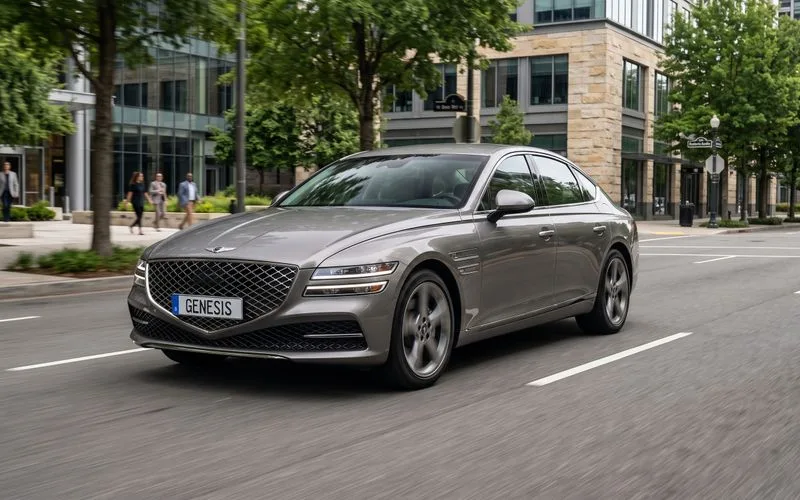 Genesis G80Mid-Size Luxury SedanBetter at: Space and warranty
Similar money buys a physically larger, better-equipped sedan with a real touchscreen and a 10-year powertrain warranty behind it.
Compare 3.11B
3.11B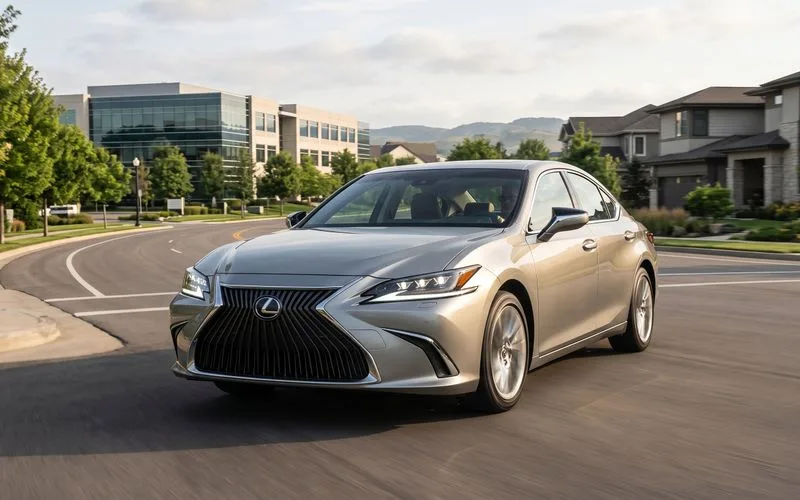 Lexus ESMid-Size Luxury SedanBetter at: Efficiency
A hybrid ES cuts the annual fuel bill by roughly $1,150 while adding rear-seat room and the segment's best resale.
Compare 3.27B+
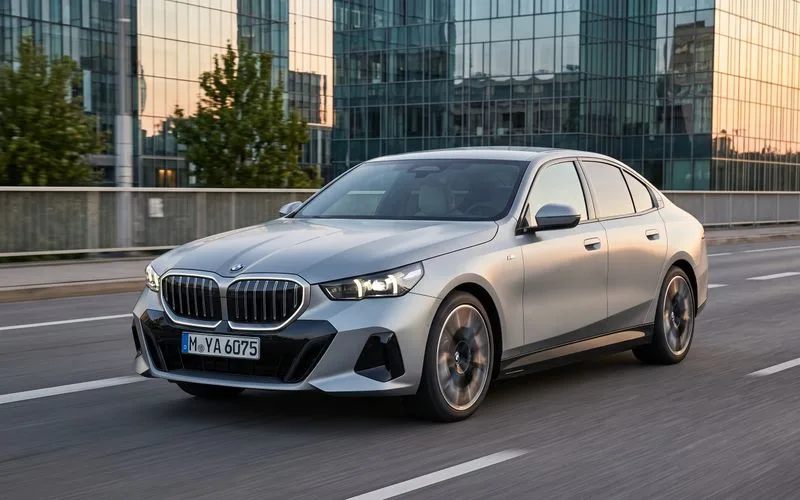 BMW 5 SeriesMid-Size Luxury SedanBetter at: Tech and driving
Buyers willing to spend $12,000 more get a rear-drive chassis, hands-free highway driving, and gas, plug-in, or EV powertrains.
CompareHow it's evolved
9 scored model years · 2017–2025
Subject scores by year
Hover or tap a score to see what moved it versus the year before. A corner mark flags a big swing.
| Year | Performance | Efficiency | Safety | Space | Cost | Reliability | Tech | Use-case | Driving | Value |
|---|---|---|---|---|---|---|---|---|---|---|
| 2025 | 56 | 24 | 71 | 58 | 41 | 74 | 57 | 50 | 66 | 61 |
| 2024 | 53 | 25 | 74 | 56 | 43 | 76 | 57 | 48 | 63 | 60 |
| 2023 | 53 | 26 | 76 | 54 | 48 | 70 | 53 | 46 | 58 | 58 |
| 2022 | 53 | 24 | 77 | 54 | 62 | 64 | 54 | 47 | 58 | 59 |
| 2021 | 55 | 20 | 78 | 58 | 52 | 71 | 46 | 46 | 57 | 66 |
| 2020 | 39 | 37 | 65 | 54 | 53 | 70 | 37 | 47 | 62 | 60 |
| 2019 | 53 | 23 | 68 | 57 | 59 | 59 | 41 | 44 | 55 | 60 |
| 2018 | 51 | 24 | 73 | 57 | 48 | 63 | 41 | 47 | 56 | 69 |
| 2017 | 40 | 38 | 57 | 57 | 62 | 51 | 27 | 43 | 55 | 62 |
Compare two years
Best fit & conditions
Higher scores mean a better fit for that use case. Learn more about use-case fit →
Subject profile
Academic Probation · NHTSA safety recalls
Jun 12, 2025Service brakes, hydraulic: pedals and linkagesThe brake pedal pivot pin was not secured properly, which can cause the pedal to shift out of position. As such, these vehicles fail to comply with Federal Motor Vehicle Safety Standard numbers 108, "Lamps, Reflective Devices, and Associated Equipment" and 135, "Light Vehicle Brake Systems."
Defect
Honda (American Honda Motor Co.) is recalling certain 2021-2025 Acura TLX, 2023-2025 Acura MDX, and 2023-2025 Honda Pilot vehicles. The brake pedal pivot pin was not secured properly, which can cause the pedal to shift out of position. As such, these vehicles fail to comply with Federal Motor Vehicle Safety Standard numbers 108, "Lamps, Reflective Devices, and Associated Equipment" and 135, "Light Vehicle Brake Systems."
Risk
A brake pedal that shifts out of position can prevent the driver from applying the brakes as intended, increasing the risk of a crash or injury.
Remedy
Dealers will inspect and replace the brake pedal assembly as necessary, free of charge. Owner notification letters were mailed July 29, 2025. Owners may contact Honda's customer service at 1-888-234-2138. Honda's numbers for this recall are FLX and XLY.
NHTSA campaign 25V391000 ↗Manufacturer no. FLX, XLY259,033 vehicles potentially affected (all models in the campaign)Owners notified Jul 28, 2025Filed by Honda (American Honda Motor Co.)Filed as TLXJan 23, 2025Electrical system: software · Fuel system, gasoline: fuel injection systemA software error in the fuel injection electronic control unit (FI-ECU) may cause an engine stall or a loss of power.
Defect
Honda (American Honda Motor Co.) is recalling certain 2022-2025 Acura MDX Type-S, 2023-2025 Honda Pilot, and 2021-2025 Acura TLX Type-S vehicles. A software error in the fuel injection electronic control unit (FI-ECU) may cause an engine stall or a loss of power.
Risk
An engine stall or loss of power can increase the risk of a crash or injury.
Remedy
Dealers will reprogram the FI-ECU software, free of charge. Owner notification letters were mailed March 17, 2025. Owners may contact Honda's customer service at 1-888-234-2138. Honda's numbers for this recall are EL1 and AL0.
NHTSA campaign 25V031000 ↗Manufacturer no. EL1, AL0294,612 vehicles potentially affected (all models in the campaign)Owners notified Mar 17, 2025Filed by Honda (American Honda Motor Co.)Filed as TLX TYPE S
9 recalls on other model years of the TLX (2017–2023)
May 21, 2026Air bags: sensor: occupant classification: front passengerThe front passenger seat weight sensor may crack and short circuit, which can cause the air bags to deploy unintentionally during a crash.
Defect
Honda (American Honda Motor Co.) is recalling certain 2018-2021, 2023 Acura TLX, 2019-2024 RDX, 2017-2020, 2022-2026 MDX, 2017-2021, 2023, 2025 Honda Ridgeline, 2017-2022 Pilot, 2019-2021 Passport, 2018-2026 Odyssey, 2019-2022 Insight, 2019-2021 HR-V, 2018-2020 Fit, 2020-2022 CR-V Hybrid, 2017-2022 CR-V, 2017-2018, 2021 Civic Type R, 2017-2021 Civic hatchback, 2016-2020 Civic coupe, 2016-2022 Civic, 2017-2022 Accord Hybrid, and 2016-2022 Accord vehicles. The front passenger seat weight sensor may crack and short circuit, which can cause the air bags to deploy unintentionally during a crash.
Risk
Air bags that deploy unintentionally during a crash increase the risk of injury.
Remedy
Dealers will replace the seat weight sensors, free of charge. Owner notification letters were mailed July 7, 2026. Owners may contact Honda's customer service at 1-888-234-2138. Honda's numbers for this recall are BOL, WO9, OOA, WOM, XOH, NOC, POD, BOE, UOF, POB, EOG, AOI, QO8, TOJ, DO7, and SOK. This recall expands previous NHTSA recall number 24V064. Vehicle Identification Numbers (VINs) involved in this recall will be searchable on NHTSA.gov beginning May 29, 2026.
NHTSA campaign 26V332000 ↗Manufacturer no. Refer to Comments98,892 vehicles potentially affected (all models in the campaign)Owners notified Jul 6, 2026Filed by Honda (American Honda Motor Co.)Filed as TLXDec 19, 2024Fuel system, gasoline: storage: tank assemblyThe fuel filler neck and fuel tank may have been improperly welded, which can result in a fuel leak.
Defect
Acura (American Honda Motor Co.) is recalling certain 2021-2023 TLX vehicles. The fuel filler neck and fuel tank may have been improperly welded, which can result in a fuel leak.
Risk
A fuel leak in the presence of an ignition source increases the risk of a fire.
Remedy
Dealers will replace the fuel tank assembly, free of charge. Owner notification letters were mailed February 3, 2025. Owners may contact Honda customer service at 1-888-234-2138. Acura's number for this recall is JKX.
NHTSA campaign 24V950000 ↗Manufacturer no. JKX167 vehicles potentially affected (all models in the campaign)Owners notified Feb 3, 2025Filed by Honda (American Honda Motor Co.)Filed as TLXFeb 1, 2024Air bags: sensor: occupant classification: front passengerThe front passenger seat weight sensor may crack and short circuit, failing to suppress the air bag as intended.
Defect
Honda (American Honda Motor Co.) is recalling certain 2020-2022 Pilot, Accord, Civic sedan, HR-V, Odyssey, 2020 Civic coupe, Fit, 2021-2022 Civic hatchback, 2021 Civic Type R, Insight, 2020-2021 CR-V, CR-V Hybrid, Passport, Ridgeline, Accord Hybrid, 2020 Acura MDX, 2022 Acura MDX, 2020-2022 Acura RDX, and 2020-2021 Acura TLX vehicles. The front passenger seat weight sensor may crack and short circuit, failing to suppress the air bag as intended.
Risk
An air bag that deploys unintentionally during a crash can increase the risk of injury.
Remedy
Dealers will replace the seat weight sensors, free of charge. Owner notification letters were mailed March 28, 2024. This is a phased recall. Owners may contact Honda customer service at 1-888-234-2138. Honda's numbers for these recalls are XHP and VHQ.
NHTSA campaign 24V064000 ↗Manufacturer no. XHP, VHQ750,114 vehicles potentially affected (all models in the campaign)Owners notified Mar 28, 2024Filed by Honda (American Honda Motor Co.)Filed as TLXDec 18, 2023Fuel system, gasoline: delivery: fuel pumpThe fuel pump inside the fuel tank may fail.
Defect
Honda (American Honda Motor Co.) is recalling certain 2013-2023 Honda Accord, Civic Coupe, Civic Sedan, Civic Hatchback, Civic Type R, CR-V, HR-V, Ridgeline, Odyssey, Acura ILX, MDX, MDX Hybrid, RDX, RLX, TLX, 2019-2022 Honda Insight, Passport, 2020 Honda CR-V Hybrid, 2018-2019 Honda Clarity PHEV, Fit, and 2015-2020 Honda Accord Hybrid, Pilot, Acura NSX vehicles. The fuel pump inside the fuel tank may fail.
Risk
Fuel pump failure can cause an engine stall while driving, increasing the risk of a crash.
Remedy
Dealers will replace the fuel pump module, free of charge. Owner letters were mailed September 6, 2024. Owners may contact Honda customer service at 1-888-234-2138. Honda's numbers for this recall are KGC and KGD. This recall is an expansion of NHTSA recall numbers 21V-215 and 20V-314.
NHTSA campaign 23V858000 ↗Manufacturer no. KGC, KGD2,490,460 vehicles potentially affected (all models in the campaign)Owners notified Mar 29, 2024Filed by Honda (American Honda Motor Co.)Filed as TLXNov 13, 2023Engine and engine cooling: engine: hard parts internal/mechanicalDue to a manufacturing error, the connecting rod bearing in the engine may wear and seize, damaging the engine.
Defect
Honda (American Honda Motor Co.) is recalling certain 2015-2020 Acura TLX, 2016-2020 Acura MDX, 2016 and 2018-2019 Pilot, 2017 and 2019 Ridgeline, and 2018-2019 Odyssey vehicles. Due to a manufacturing error, the connecting rod bearing in the engine may wear and seize, damaging the engine.
Risk
A damaged engine may run improperly or stall while driving, increasing the risk of a fire, crash, or injury.
Remedy
Dealers will inspect and repair, or replace the engine as necessary, free of charge. Owner letters were mailed March 28, 2024. 2016-2017 Acura MDX owner letters were mailed November 1, 2024. 2016-2020 Acura MDX owner letters are expected to be mailed in mid-December 2024. Honda began mailing owner notification letters as of March 18, 2024. 2015-2016 Acura owner letters are expected to be mailed mid-December 2024, 2018 Acura TLX owner letters are expected to be mailed the end of March/early April 2024, 2019 Acura TLX owner letters are expected to be mailed mid-May 2024, 2020 Acura TLX owner letters are expected to be mailed mid-June 2024, and 2016-2020 Acura MDX owner letters are expected to be mailed January 27, 2025. Owners may contact Honda customer service at 1-888-234-2138. Honda's numbers for these recalls are XG1 and GG0.
NHTSA campaign 23V751000 ↗Manufacturer no. XG1, GG0248,999 vehicles potentially affected (all models in the campaign)Owners notified Mar 28, 2024Filed by Honda (American Honda Motor Co.)Filed as TLXDec 22, 2022Tires: beadThe tires may have sustained cuts and tears during the sorting process, which can result in tire damage.
Defect
Honda (American Honda Motor Co.) is recalling certain 2022 Acura TLX vehicles. The tires may have sustained cuts and tears during the sorting process, which can result in tire damage.
Risk
Damaged tires can lead to a sudden loss of air pressure and loss of vehicle control, increasing the risk of a crash.
Remedy
Dealers will inspect and replace the tires as necessary, free of charge. Owner notification letters were mailed January 30, 2023. Owners may contact Honda's customer service at 1-888-234-2138. Honda's number for this recall is GCW.
NHTSA campaign 22V950000 ↗Manufacturer no. GCW19 vehicles potentially affected (all models in the campaign)Owners notified Jan 30, 2023Filed by Honda (American Honda Motor Co.)Filed as TLXMar 25, 2021Fuel system, gasoline: delivery: fuel pumpThe low-pressure fuel pump inside the fuel tank may fail.
Defect
Honda (American Honda Motor Co.) is recalling certain 2019-2020 Acura MDX, MDX Sport Hybrid, RDX, TLX, Honda Accord, Civic Hatchback, Insight, 2019 Acura ILX, Honda Accord Hybrid, Civic Coupe, Civic Coupe Si, Civic Sedan, Civic Sedan Si, Civic Type R, Fit, HR-V, Odyssey, Passport, Pilot and Ridgeline, and 2018-2019 CR-V vehicles. The low-pressure fuel pump inside the fuel tank may fail.
Risk
Fuel pump failure can cause an engine stall while driving, increasing the risk of a crash.
Remedy
Honda will notify owners, and dealers will replace the fuel pump assembly, free of charge. Owner letters were mailed May 18, 2021. Owners may contact Honda customer service at 1-888-234-2138. Note: This recall is an expansion of recall 20V-314.
NHTSA campaign 21V215000 ↗Manufacturer no. Multiple Codes624,552 vehicles potentially affected (all models in the campaign)Owners notified May 18, 2021Filed by Honda (American Honda Motor Co.)Filed as TLXApr 12, 2019Engine and engine cooling: engine: gasoline: belts and associated pulleysThe timing belt teeth may separate from the belt.
Defect
Honda (American Honda Motor Co.) is recalling certain 2018-2019 Acura MDX and Honda Pilot vehicles and 2019 Acura RLX, RLX Sport Hybrid, TLX and Honda Odyssey and Ridgeline vehicles. The timing belt teeth may separate from the belt.
Risk
Teeth separation from the timing belt may result in an engine stall, increasing the risk of crash.
Remedy
Honda will notify owners, and dealers will inspect the vehicle and replace any affected timing belt free of charge. Vehicles receiving a replacement timing belt will also have the engine inspected and any damaged components will be replaced for free. The recall began June 7, 2019. Honda owners may contact customer service at 1-888-234-2138. Honda's number for this recall is L4M. Acura owners may contact customer service at 1-888-234-2138. Acura's number for this recall is Z4L.
NHTSA campaign 19V298000 ↗Manufacturer no. L4M, Z4L93,946 vehicles potentially affected (all models in the campaign)Owners notified Jun 7, 2019Filed by Honda (American Honda Motor Co.)Filed as TLXJan 29, 2019Fuel system, other: delivery: fuel pumpParticulates in fuel may adhere to the internal components of the fuel pump, reducing its performance.
Defect
Honda (American Honda Motor Co.) is recalling certain 2016-2018 Acura MDX, 2015-2019 Acura TLX and 2015-2017 Honda Accord vehicles, equipped with a 3.5L V6 engine. Particulates in fuel may adhere to the internal components of the fuel pump, reducing its performance.
Risk
Reduced fuel pump performance can result in an engine stall, increasing the risk of crash.
Remedy
Honda will notify owners, and dealers will update the fuel injection engine control unit (FI-ECU) software and, if necessary, replace the fuel pump, free of charge. The recall began March 25, 2019. Owners may contact customer service at 1-888-234-2138. Acura's recall number for this recall is P3W. Honda's recall number for this recall is N3X.
NHTSA campaign 19V060000 ↗Manufacturer no. N3X, P3W437,032 vehicles potentially affected (all models in the campaign)Owners notified Mar 25, 2019Filed by Honda (American Honda Motor Co.)Filed as TLX
Source: NHTSA Office of Defects Investigation recall database, model years 2017–2025. Recalls are listed by model year as the manufacturer filed them; whether a specific car is affected depends on its VIN — check a VIN at nhtsa.gov ↗. NHTSA model names matched to this page: TLX, TLX TYPE S.
Detailed scoring by subject
1Performance & PowertrainMid-pack among this car's ten categories.1.78C-
Volume trim is the 2.0T A-Spec with 272 hp; Type S 3.0T V6 tops the range at 355 hp. Mid-pack among mid-size luxury sedans on the volume powertrain.
Volume 2.0T makes 280 lb-ft from 1,600–4,500 rpm — a broad, flat torque curve typical of a modern boosted four. Type S adds meaningful shove at 354 lb-ft.
Volume 2.0T SH-AWD trims run about 6.0 seconds to 60 mph in instrumented tests — competitive but slower than turbo-six rivals in the segment; Type S is quick at roughly 4.9 s.
The 2.0T is smooth in normal driving with strong low-end response, but reviewers consistently note that the four-cylinder sounds coarse when pushed and lacks the refinement of six-cylinder rivals. Type S V6 is markedly smoother and more characterful.
The 10-speed automatic shifts smoothly and mostly stays in the correct gear, with responsive paddle-shift manual mode; occasional low-speed hesitation and busy behavior at partial throttle are reported but not deal-breakers.
For 2024–2025 SH-AWD is standard across the entire TLX lineup (A-Spec, Advance, Type S). Acura's Super Handling AWD is one of the most sophisticated systems in the segment, using rear torque vectoring to shift power side-to-side for genuine cornering benefit — not just traction.
Two powertrains — the 2.0T inline-four in A-Spec/Advance and the 3.0T V6 in Type S — cover mainstream luxury and performance shoppers, but the TLX offers no hybrid, PHEV, or EV variant, which lags most mid-size luxury sedan rivals (BMW 5 Series, Lexus ES, Mercedes E-Class, Genesis G80 all offer electrified options).
2Efficiency & RangeThe TLX's lowest-graded category.0.00F
Volume 2.0T A-Spec SH-AWD is EPA-rated 24 mpg combined. The 2025 model year is a carryover — powertrains, gearing, and ratings are unchanged from 2024, when SH-AWD became standard across the lineup and the FWD 2.0T (which had rated 25 combined) was dropped.
EPA city rating of 21 mpg for the volume 2.0T SH-AWD — no stop-start hybrid assist, and standard AWD carries a small city penalty versus RWD peers.
EPA highway rating of 29 mpg for the volume 2.0T SH-AWD; the tall 10-speed automatic helps at cruise but the mid-size sedan's frontal area and standard AWD keep it well behind hybridized rivals.
The 15.9-gallon tank multiplied by the 24 mpg combined EPA rating yields roughly 382 miles between fill-ups for the volume 2.0T SH-AWD. Type S drops to about 334 mi at 21 mpg combined.
At 24 mpg combined on 15,000 mi/yr with EPA's premium-fuel price assumption, the 2.0T SH-AWD's annual fuel bill runs about $2,750 — near the top of the mid-size luxury sedan range because the TLX is both premium-fuel-only and gas-only. Type S is roughly $3,150.
Acura specifies premium 91-octane fuel for both the 2.0T and 3.0T V6 (recommended for the 2.0T, required for the Type S), with no regular-fuel, E85, diesel, hybrid, or home-charging option to soften running costs. That puts the TLX in the same 'premium only, gas only' bucket as the German mid-size sedans without any of their PHEV escape hatches.
3SafetyOne of the TLX's strongest categories.2.83B-
Second-generation TLX (2021+) carries a 5-star NHTSA overall rating; unchanged for the 2024 refresh carried into 2025.
TLX earned Top Safety Pick under prior-generation IIHS criteria with Good small-overlap and original moderate-overlap results, but is not named a 2024/2025 TSP under the tougher updated moderate-overlap (rear-passenger) and updated side tests where the sedan grades Acceptable rather than Good.
AcuraWatch is standard on every trim (CMBS/AEB with pedestrian detection, road departure mitigation, lane keep assist, adaptive cruise with low-speed follow, traffic sign recognition, traffic jam assist), and the 2024 refresh made blind-spot info with rear cross-traffic monitor standard across the range — full AEB/ACC/LKA/BSM/RCTA on the base trim.
CMBS earned Superior for vehicle-to-vehicle front crash prevention under prior IIHS methodology and rates Advanced for daytime pedestrian; nighttime pedestrian performance is less strong than best-in-class systems and it has not been re-tested to the newest IIHS protocol at top marks.
Blind Spot Information and Rear Cross-Traffic Monitor are standard on every 2025 TLX trim (upgraded from optional on lower trims pre-refresh), but the system is alert-only — no active steering or braking intervention.
AcuraWatch LKAS with lane centering works within its lane but reviewers routinely describe it as reactive rather than confident — occasional ping-pong on gently curving highways and hand-off warnings that trigger frequently.
Full-speed-range adaptive cruise with Low-Speed Follow plus Traffic Jam Assist is standard, and the combined highway experience is smooth in steady traffic; braking can feel late in cut-in scenarios and the system does not offer a curve-slowing or navigation-linked speed adjustment.
Acura does not offer any hands-free highway system on the 2025 TLX — no BlueCruise, Super Cruise, Highway Driving Pilot, or equivalent; hands must remain on the wheel with AcuraWatch engaged.
Jewel Eye LED headlights with auto high-beams are standard across all 2025 TLX trims; IIHS grades the equipment Acceptable rather than Good — adequate low-beam reach with some glare, no top-rated adaptive curve-following performance in tests.
Coupe-like fastback roofline gives the TLX thick rear pillars, a shallow rear window, and pronounced over-the-shoulder blind zones; a multi-view camera is optional but a full 360-degree surround view is not offered even on Type S, limiting camera compensation.
Two sets of lower LATCH anchors on the outboard rear seats with tether anchors for all three positions; anchors sit deep in the seat bight requiring some digging, and the sloping roofline pinches rear door aperture height for installing rear-facing seats.
4Space & ComfortMid-pack among this car's ten categories.1.88C-
Standard 5-seat sedan configuration across all 2025 TLX trims (TLX, A-Spec, A-Spec Advance, Type S).
Volume Technology-equipped trim ships with the panoramic moonroof standard, so the published 37.2 in figure applies; tight for the mid-size luxury sedan class.
Front legroom is competitive if not class-leading, matching most mid-size luxury sedan rivals.
Fastback roofline and standard moonroof drop the second-row headroom to a tight 36.6 in — below-average for the mid-size luxury sedan class.
A well-known weak point for the second-generation TLX — 34.9 in of rear legroom is closer to a compact luxury sedan (or even a subcompact) than to the mid-size class it competes in, and trails every direct rival (A6, 5-Series, E-Class, G80, ES) by 3-5 in.
Trunk volume of 13.5 cu ft is small for the mid-size luxury class (BMW 5 Series ~17, E-Class ~13.1, ES ~15.3, A6 ~13.7) and reflects the same packaging trade-offs as the tight rear seat.
Competent but unremarkable storage: usable console bin under a cantilevered armrest, wireless phone charger standard from Technology up, a small pass-through under the shifter, and modestly sized door bins — no standout innovation and the sloping console eats space around the True Touchpad controller.
Front sport seats — leatherette on base TLX, Milano leather with 16-way power and thigh extension on A-Spec Advance and Type S — are widely praised for long-haul support and bolstering; the rear bench is comfortable enough but the tight legroom and lowish cushion undermine second-row comfort on longer trips.
Firm sport-luxury tuning with a Macpherson-strut-replacement double-wishbone front and adaptive dampers standard on Type S (optional/absent lower down); composed and controlled but reviewers note a busy secondary ride over broken pavement, especially on the A-Spec's 19s and Type S's 20s.
Active noise cancellation is standard fleet-wide, acoustic front glass is standard from Technology up, and the 2.0T's four-cylinder is well isolated at cruise; road noise on coarse pavement is a step behind the ES and 5 Series but wind noise is well controlled.
Base TLX includes dual-zone auto climate, heated front seats, and heated steering wheel; A-Spec adds ventilated front seats; A-Spec Advance and Type S add heated rear outboard seats plus the 16-way front seats with driver massage — a competitive comfort menu for the class, though remote pre-conditioning is limited to the AcuraLink app on the entry-level Package.
5Cost of OwnershipOne of the TLX's weakest categories.0.71F
For 2025 Acura made SH-AWD standard across the lineup, so the entry point is the TLX Technology SH-AWD; still noticeably below Germans and roughly on par with the Genesis G80.
The A-Spec is the highest-volume TLX trim (majority of Acura sedan sales skew A-Spec) — richer than base but well shy of the Type S at $59,495.
Acura service costs sit meaningfully below German luxury peers (BMW/Mercedes commonly $8k–10k) because service intervals are wider and parts are shared with Honda; slightly above Lexus/Toyota-family baselines.
TLX residuals sit above German rivals but below Lexus ES and best-in-class Japanese sedans; Acura's premium-brand pricing hurts retention percentage even though the truck stops depreciating earlier than a BMW 5-series.
Acura's standard 4-year/50,000-mile basic coverage — a step above the 3/36 luxury norm (BMW, Audi, Mercedes) and matches Lexus.
6/70 powertrain coverage is average for the luxury class but well behind Genesis's 10/100 and Hyundai/Kia's 10/100 non-luxury benchmarks.
Acura Care includes 2 yr / 24,000 mi of complimentary scheduled maintenance (oil changes, tire rotation, multi-point inspections), 4 yr / 50,000 mi roadside assistance, and a 3-month AcuraLink connected-services trial — meaningful for a luxury sedan though shorter than BMW's former 3/36 and Genesis's 3-yr program.
$52,795 volume-trim price minus its estimated resale value after 5 years (48% retained, or about $25,342) leaves about $27,453 in depreciation. Add the projected $6,100 in 5-year maintenance and repairs, and owning this vehicle for 5 years costs about $33,553 in total.
6Reliability & QualityThe TLX's best-graded category.3.05B
Consumer Reports has rated the second-generation TLX around average (~3/5) for predicted reliability, with Type S variants pulling the composite down slightly due to early twin-turbo V6 reports. J.D. Power quality scores for the TLX have been mid-pack among premium sedans; the 2024 refresh (carried into 2025) is too recent to show fresh dependability data.
Acura is a consistent top-10 brand in Consumer Reports reliability rankings and generally mid-pack among premium marques in J.D. Power VDS — a step behind Lexus and Toyota but reliably ahead of most German luxury brands over multi-year averages.
The second-generation TLX (2021+) has seen a moderate recall cadence — fuel-pump campaigns tied to the wider Honda/Acura fleet, rearview-camera software, and airbag-control-unit fixes — but nothing systemic to the platform. 2024 refresh addressed several early-run infotainment complaints; recall pace has settled by the 2025 model year.
The volume trim's 2.0L K20C-family turbo four is a proven Honda unit shared with the Civic Si/Type R and Accord/CR-V lineage — strong high-mileage record and no systemic failure pattern. The Honda 10-speed automatic (in service since 2018) is well-established. The Type S 3.0L twin-turbo V6 is TLX/MDX-exclusive and newer, with scattered early reports of oil consumption on 2021-2022 units but no widespread failures.
Reviewers rate the TLX cabin as competitive for its ~$46-58K price band — Milano leather (Advance/Type S), open-pore wood or brushed aluminum trim, and generous soft-touch coverage — though it trails the material richness of a similarly-priced BMW 5 Series or Genesis G80. The 2024 refresh added upgraded stitching and trim details that carried into 2025.
Built at the Marysville Auto Plant in Ohio (which also assembles the MDX and the previous PMC hand-built Type S allocations), the TLX earns solid marks for panel-gap consistency and assembly. Early 2021-2022 units drew scattered complaints about infotainment glitches with the old True Touchpad Interface; the 2024 refresh replaced that with a 12.3" touchscreen and quieted most complaints by 2025.
Acura operates roughly 270 US dealers — thinner than mainstream Honda but well-distributed across metro areas; rural coverage is a step down from Lexus. Service satisfaction typically ranks above the industry average in J.D. Power's Customer Service Index for premium brands.
Extensive parts-sharing with the Honda lineup (K20C 2.0T engine family, 10AT transmission, common suspension components) keeps commodity parts abundant and reasonably priced. Type S turbo, SH-AWD hardware, and V6-unique parts run higher than Honda-mainstream but well below German-luxury pricing; aftermarket support is decent but shallow compared to sport-sedan segment leaders.
7Technology & InfotainmentMid-pack among this car's ten categories.1.83C-
The 2025 TLX carries over the True Touchpad Interface: a 10.2-inch center display that is NOT touch-capable, operated exclusively via a console-mounted touchpad. Unlike the refreshed 2025 MDX and 2026 RDX, the TLX was never updated to a Google Built-In touchscreen. For the 'touchscreen size' item this scores as 0 in.
The True Touchpad Interface is widely and consistently criticized as one of the worst infotainment systems in the luxury segment — reviewers cite a steep learning curve, distraction risk, awkward absolute-position mapping, and slower everyday operation than a touchscreen or rotary controller. Software responsiveness itself is acceptable, but the input method drags UX well below peers.
The 2024 refresh made wireless Apple CarPlay and wireless Android Auto standard across every TLX trim — a meaningful modernization even as the underlying touchpad interface remained. Slightly below 90 because using CarPlay through the touchpad is more awkward than on peer touchscreens.
AcuraLink navigation is standard on Technology and above, but the built-in voice assistant is command-based rather than natural-language and reviewers find it dated. Most owners default to phone projection for both maps and voice, so the native stack lands solidly in the mid-tier.
ELS Studio 3D by Panasonic (17 speakers) is standard on Technology, A-Spec, Advance, and Type S — a genuinely excellent premium audio system that is a signature Acura strength, competitive with Burmester and Bang & Olufsen in the segment. Base 10-speaker system is also above average. Does not offer the 25-speaker ELS Studio Signature Edition found on the MDX Type S Advance.
12.3-inch full-color TFT digital instrument cluster is standard on Technology, A-Spec, Advance and Type S — crisp, configurable graphics on par with luxury peers. Base TLX uses a hybrid analog/digital cluster, but the volume trim gets the full digital display.
The TLX does not offer whole-vehicle OTA updates. Navigation map updates can be delivered over-the-air via AcuraLink but the infotainment stack, ADAS modules and vehicle software still require dealer visits — well behind Tesla, Rivian, Ford/GM EVs, and BMW/Mercedes flagships.
AcuraLink app supports remote start/climate, lock/unlock, vehicle locator, geofencing, and service scheduling. Basic remote features included for a limited period; extended remote/concierge features require a paid subscription tier. Reliable and complete for the core use cases but no digital key and no advanced integrations.
USB-C and USB-A charging ports front and rear, plus wireless phone charging pad standard on Technology and above. Adequate provisioning for a compact/mid luxury sedan, but no household AC outlet keeps it out of the top tier.
Proximity smart entry, push-button start and remote engine start (fob + AcuraLink app) are standard on every 2025 TLX trim. No hands-free trunk and no phone-as-key/digital key — features that are increasingly standard on luxury peers (BMW, Genesis, Hyundai, Mercedes).
Multi-view rear camera with dynamic guidelines standard on all trims; front and rear parking sensors standard on Technology and above; surround-view (360°) camera standard on Advance and Type S Advance. No automated parking assist. Image quality is good on the 10.2-inch display.
10.5-inch color head-up display is available only on Advance and Type S Advance — not on base TLX, Technology, A-Spec, or standard Type S. Quality is good when equipped, but limited trim availability caps the score.
8Use-Case FitOne of the TLX's weakest categories.1.36D
Two outboard LATCH sets on a five-passenger bench, but 34.9 in of rear legroom and 36.6 in of rear headroom (cat4.1.4/4.1.5) are closer to a compact sedan than a mid-size — a rear-facing infant seat behind an average-height driver crowds the front occupant. Sloping fastback pinches rear door aperture for tall convertible seats, and IIHS rates lower-anchor connection Marginal because anchors sit deep in the seat bight (cat3.3.3 = 65).
5-star NHTSA overall (cat3.1.1), full AcuraWatch (AEB with pedestrian detection, LKAS, ACC with LSF, TJA) and Blind Spot Info + Rear Cross-Traffic Monitor standard on every trim after the 2024 refresh (cat3.2.1 = 85), plus 10 airbags. Held back because there is no 2024/2025 IIHS TSP under the tougher updated moderate/side tests (Acceptable rather than Good; cat3.1.2 = 60), headlights are Acceptable rather than Good, and no rear-occupant reminder is marketed.
Standard dual-zone auto climate, Active Sound Control + acoustic glass keep the cabin above-average quiet (cat4.3.3 = 70), and front seats are widely praised for long-haul support (cat4.3.1 = 68), but the 13.5 cu ft trunk (cat4.2.1) is small for the class and swallows only two large rollers before stroller/gear becomes a squeeze. Rear amenities are thin — USB-C ports and heated rear seats are limited to A-Spec Advance and Type S Advance, and the tight rear seat undermines multi-hour comfort for four-up (cat4.1.5 = 29).
The 272-hp 2.0T with well-calibrated 10-speed automatic (cat1.1.5 = 70) and standard SH-AWD (cat1.3.1 = 90) delivers strong, predictable midrange with all-weather confidence, wireless CarPlay/Android Auto is standard, and AcuraWatch ACC + Traffic Jam Assist eases stop-go traffic (cat3.2.5 = 72). Held back by a firm, sometimes busy secondary ride (cat4.3.2 = 65), a coarse-sounding four under load (cat1.1.4 = 68), and the True Touchpad Interface that reviewers consistently rank among the segment's worst everyday-use infotainment inputs (cat7.1.2 = 38).
EPA 24 mpg combined on premium fuel puts the volume 2.0T SH-AWD at roughly $2,750/yr in fuel — well above hybridized rivals (Lexus ES Hybrid ~$1,600/yr) and any electrified commuter option — and Acura offers no hybrid, PHEV, or EV escape hatch (cat2.2.2 = 15). Insurance and service are moderate for a luxury sedan but the per-mile fuel penalty dominates the commuting math.
Mid-size sedan footprint at roughly 194.6 in long with a 40-ft turning circle — manageable but no compact-car nimbleness in tight urban parking. Multi-view rear camera and front/rear parking sensors are standard on Technology and above, but the surround-view (360°) camera is limited to Advance and Type S Advance — not on the volume A-Spec — and the coupe-like fastback with thick C-pillars produces poor rear three-quarter visibility (cat3.3.2 = 60).
Mid-size luxury sedan with no US tow rating, no cargo bed, and a 13.5 cu ft trunk (cat4.2.1) that holds a couple of tool bags at most. Rear seat folds 60/40 for occasional long items but there is no work-tool practicality to speak of.
The volume 2.0T (Honda K20C family, shared with Civic Type R / Accord / CR-V) and 10AT (in service since 2018) are proven, high-mileage powertrains with strong track records (cat6.1.4 = 78) — a modest edge over Audi/BMW turbo sixes for work-abuse tolerance. Held back by a luxury-oriented cabin (Milano leather, wood/aluminum trim, wireless charger) that is not wear-friendly for daily tool loading, and no fleet-vehicle presence.
No cargo bed, no factory roof rails, no factory-supported upfit ecosystem, and no onboard 110V outlet. Trunk offers a 12V outlet and basic tie-down hooks — nothing beyond what any commuter sedan provides.
Quiet cabin (cat4.3.3 = 70), front sport seats widely praised for long-haul support with available massage on Advance/Type S (cat4.3.1 = 68), competent AcuraWatch ACC + Traffic Jam Assist for freeway drone (cat3.2.5 = 72), and the ELS Studio 3D 17-speaker system standard from Technology up. Held back by a modest 15.9 gal × 24 mpg ≈ 382 mi range (cat2.2.1) that trails A6/5-Series tourers, no hands-free driving option (cat3.2.6 = 5), a firm secondary ride on 19s/20s (cat4.3.2 = 65), and 34.9 in of rear legroom that limits four-up multi-hour trips.
Super Handling AWD is standard across every 2025 TLX trim (cat1.3.1 = 90), and its torque-vectoring rear differential is one of the segment's most sophisticated AWD systems — genuinely useful in snow, rain, and light gravel, and a real step up on the Germans' simpler transfer cases. Held back by ~5.5 in ground clearance, low front bumper overhang, no US tow rating for boat/camper duty, and no factory roof-rail or hitch marketed for the sedan.
13.5 cu ft trunk (cat4.2.1) is small for the mid-size luxury class with only a 60/40 split-fold rear seatback — no 40/20/40 with center pass-through means skis or long lumber block one of the rear seating positions entirely. No frunk, no underfloor storage tray, no factory roof rails, and no factory hitch further limit bulky-gear duty versus a Sportback or wagon-bodied peer.
9Driving ExperienceOne of the TLX's strongest categories.2.43C+
SH-AWD (Super Handling All-Wheel Drive) is standard for 2025 and its torque-vectoring rear differential gives the TLX real cornering rotation that most mid-size luxury sedans (ES, A6, E-Class) lack. Body control is tight, grip is strong on the A-Spec's 19s, and reviewers consistently place it among the more athletic front-drive-based sedans in the segment — still short of a rear-drive BMW 5 Series or Alfa Giulia at the very top.
Variable-ratio electric power steering is accurate off-center with linear weight buildup; Sport mode adds meaningful heft. Feedback is muted like most in class, but effort calibration and precision are above average for a mid-size luxury sedan.
Firm, easy-to-modulate pedal on the volume 2.0T trims with 4-wheel discs; instrumented 70–0 mph stops in the ~165–170 ft range are competitive with segment norms. Type S adds 4-piston front Brembo calipers with even shorter stops and better fade resistance for track use.
The 2.0L VTEC Turbo pulls hard once boost builds but shows a moment of off-boost lag on light tip-in, and the 10-speed automatic occasionally hunts between ratios at partial throttle. Sport mode sharpens response substantially. Type S 3.0T V6 is markedly smoother and more linear, but the volume 2.0T calibration is average for the class and clearly behind hybridized rivals (ES 300h, E 350).
The 2.0T is hushed at highway cruise thanks to the acoustic windshield and Active Sound Control, but takes on a coarse, industrial four-cylinder note under hard acceleration that lags the smoother inline-6 and V6 rivals in the class (5 Series, E-Class, G80 3.5T). Type S V6 is far more musical.
Long 113.0-in wheelbase and wide track make the TLX one of the larger turning circles in the mid-size luxury sedan segment — noticeably worse than a 5 Series (~40.0 ft) or E-Class (~39.4 ft) and a real hindrance in tight urban maneuvering.
Excellent low-slung driving position with wide seat/wheel adjustment range and supportive sport seats, but the TLX retains Acura's polarizing True Touchpad Interface (TTI) for infotainment — a genuine ergonomic drawback that Acura eliminated on the 2025 MDX but did NOT extend to the TLX. Physical HVAC and audio knobs partially compensate. Rear headroom is tight due to the low roofline.
Standard SH-AWD, quick variable-ratio steering, a firm chassis, and the willing 2.0T give the TLX (especially in A-Spec Advance with adaptive dampers) genuine driver appeal — long regarded as one of the more engaging picks in a segment full of comfort-first appliances. Type S ratchets that up further with the V6, adaptive air dampers on some trims, and standard Brembos. Not quite BMW 3 Series levels of engagement, but clearly beats the ES and A6 for a driver-focused shopper.
10Value & Market PositionMid-pack among this car's ten categories.2.08C
For 2025 Acura made SH-AWD standard across the entire TLX lineup (FWD dropped), so even the base Technology trim gets torque-vectoring AWD plus leather with heated/ventilated front seats, 10.2" HD display, wired Apple CarPlay/Android Auto, ELS Studio 10-speaker audio, panoramic sunroof, LED headlights, 19" wheels, and the full AcuraWatch driver-assist suite (adaptive cruise with low-speed follow, lane-keep, collision mitigation, blind-spot). Better base kit than BMW 3/5-Series or Mercedes C/E-Class at the price, though Genesis G80 still bundles more content per dollar.
At $47,795 for Technology SH-AWD, the TLX undercuts BMW 5 Series (~$60K), Mercedes E-Class (~$62K), and Audi A6 (~$60K) by five figures while including standard AWD — strong on a features-per-dollar basis. Type S at $59,495 with a 355 hp turbo V6 is credible value versus S6/M340i/AMG C43. Content, however, skews near-luxury: the 2.0T on non-Type S trims and the touchpad infotainment feel less premium than V6/rotary-controller German rivals, and Genesis G80 remains the segment value benchmark.
Four-tier lineup — Technology, A-Spec, A-Spec Advance, Type S — spans about $12K from base to loaded, with the Type S adding a distinct 3.0L turbo V6 powertrain. But the range is narrow: gas-only (no hybrid or PHEV), sedan-only, and for 2025 AWD-only after FWD was dropped. Rivals like BMW 5 Series (ICE/PHEV/EV), Mercedes E-Class (ICE/PHEV plus wagon), and Genesis G80 (2.5T/3.5T/Electrified) offer meaningfully more choice.
TLX US sales have run in the ~15–18K units/year range for the second generation — well behind BMW 3/5-Series, Mercedes C/E-Class, and even Genesis G80/G70 combined. Acura confirmed 2025 as the TLX's final model year with no direct replacement announced, which further depressed showroom traffic. Steady low-volume niche seller in a shrinking segment, now in wind-down.
Acura sits in the near-luxury tier — respected for engineering, reliability, and value but without the aspirational cachet of BMW, Mercedes, Audi, or Lexus. The Type S halo and NSX/PMC assembly heritage give TLX some enthusiast credibility, but mainstream US buyers view Acura as premium-Honda rather than a full luxury peer.
With 2025 being the final TLX model year and Acura clearing dealer inventory, incentives are meaningfully deeper than the luxury norm — Acura Financial Services has been running aggressive lease-cash and low-APR programs on remaining stock. Buyers can typically negotiate several thousand off MSRP, well beyond what BMW/Mercedes/Audi allow on current-generation cars.
The current (second-generation) TLX debuted for MY2021 on Acura's rear-drive-biased dedicated platform, so 2025 is the fifth year of the generation with no major refresh — cabin tech (10.2" HD display, touchpad HMI) already trails 2024–25 rivals with 14-inch+ integrated OLED setups. Compounding this, 2025 is the announced FINAL model year with no successor — the segment's oldest active nameplate, on the way out.
Reviewers generally like the TLX chassis (praised as one of the better-driving sedans in class, particularly Type S with its 3.0T V6 and SH-AWD) and criticize the True Touchpad infotainment, tight rear seat, and non-Type S engine's coarseness under load. Regularly finishes mid-pack in mid-size luxury sedan comparison tests behind BMW 5 Series and Genesis G80, without major awards (no 10Best, NACTOY, or MotorTrend Car of the Year nod for either generation).