
The verdict
A mixed-report compact luxury sedan, strong on driving and held back by efficiency.
The 2017 A3 is the sweet spot of its generation — the facelift year that dropped the old 1.8T for a 220-hp 2.0T with quattro, put Apple CarPlay and the 12.3-inch Virtual Cockpit on the options list, and made pre sense automatic braking standard on every car. At $35,150 delivered for the quattro Premium it was the cheapest genuine Audi sedan you could buy, and it hits 60 mph in 5.8 seconds and handles better than most rivals in the class. The catch is space and trim gating: 35.1 inches of rear legroom, a 10.0 cu ft trunk on quattro cars, and a base Premium that can't be ordered with blind-spot monitoring, adaptive cruise, navigation, or the LED headlights at any price — its standard xenons rate Poor with IIHS. Nine years on it's a sharp small luxury car for one or two people; buy a Premium Plus or Prestige, not the base trim.
Jump to scoresStrengths
- Genuinely good to drive, not just badge-good
- Crash-test credentials at the top of the class
- A cabin that punches well above the price
What holds it back
- The smallest trunk in the class, and quattro makes it worse
- Back seat is a compromise, not a place
- Base-trim headlights rate Poor — the worst IIHS gives
Top alternatives
Cars shoppers cross-shop with the Audi A3 2.86B-
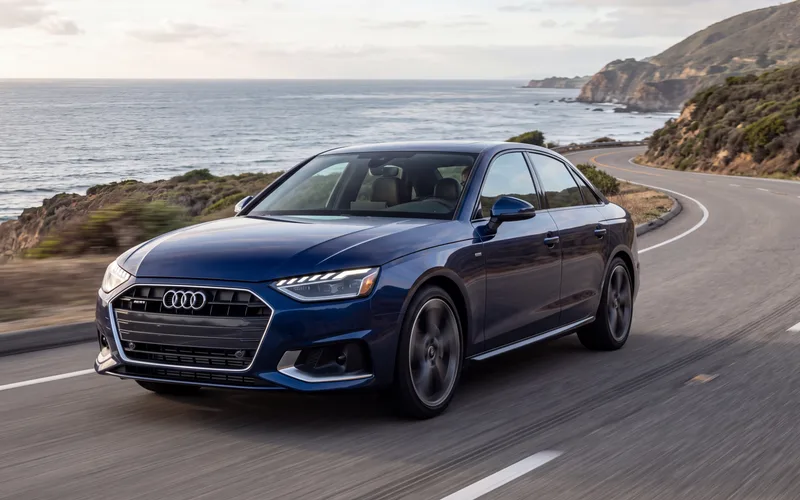 Audi A4Compact Luxury SedanBetter at: Space
Same Audi cabin, tech, and quattro without the cramped back seat or the 10.9 cu ft trunk — the A3's compromises disappear for a few thousand dollars more.
Compare 3.07B
3.07B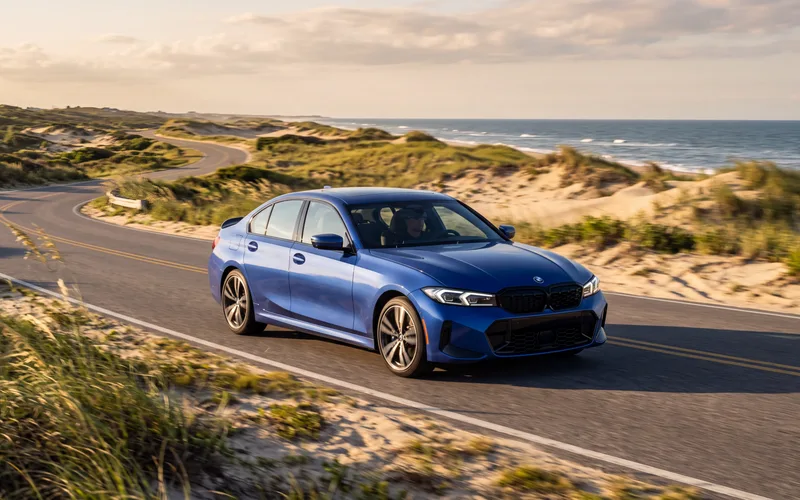 BMW 3 SeriesCompact Luxury SedanBetter at: Driving feel
The segment benchmark for steering feel and rear-seat room, with a head-up display and a plug-in option the A3 can't offer at any price.
Compare 2.71B-
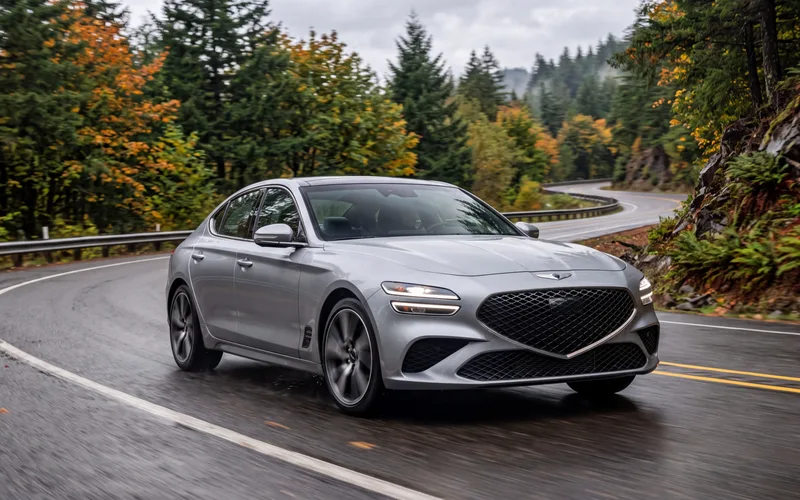 Genesis G70Compact Luxury SedanBetter at: Ownership cost
More standard equipment, a 10-year powertrain warranty, and included maintenance answer the A3's biggest weakness — what it costs you after year four.
CompareHow it's evolved
9 scored model years · 2017–2026
Subject scores by year
Hover or tap a score to see what moved it versus the year before. A corner mark flags a big swing.
| Year | Performance | Efficiency | Safety | Space | Cost | Reliability | Tech | Use-case | Driving | Value |
|---|---|---|---|---|---|---|---|---|---|---|
| 2026 | 52 | 37 | 74 | 55 | 41 | 74 | 70 | 47 | 77 | 71 |
| 2025 | 51 | 35 | 64 | 53 | 45 | 72 | 70 | 47 | 76 | 72 |
| 2024 | 50 | 48 | 58 | 52 | 46 | 72 | 67 | 46 | 71 | 69 |
| 2023 | 49 | 49 | 61 | 52 | 46 | 71 | 66 | 46 | 71 | 74 |
| 2022 | 49 | 52 | 57 | 51 | 48 | 56 | 66 | 46 | 71 | 70 |
| 2020 | 54 | 30 | 61 | 53 | 52 | 72 | 46 | 45 | 72 | 64 |
| 2019 | 53 | 30 | 62 | 50 | 54 | 71 | 44 | 43 | 72 | 64 |
| 2018 | 53 | 37 | 62 | 50 | 54 | 69 | 42 | 43 | 72 | 67 |
| 2017 | 53 | 37 | 62 | 49 | 55 | 68 | 42 | 43 | 72 | 70 |
Compare two years
Best fit & conditions
Higher scores mean a better fit for that use case. Learn more about use-case fit →
Subject profile
Academic Probation · NHTSA safety recalls
Feb 14, 2024Fuel system, gasolineDue to a problem with a suction jet pump seal inside the fuel tank, fuel may flow into the evaporative emissions (EVAP) system and possibly leak out of the charcoal canister.
Defect
Volkswagen Group of America, Inc. (Volkswagen) is recalling certain front-wheel drive 2015-2020 Audi A3 Sedan, 2015-2019 Audi A3 Cabriolet, 2019-2020 Volkswagen Jetta GLI, 2018 Golf Sportwagen GP, 2018-2019 Golf Sportwagen A7, 2015-2017 Golf Sportwagen, 2015-2020 Golf GTI, and 2015-2020 Golf A7 vehicles. Due to a problem with a suction jet pump seal inside the fuel tank, fuel may flow into the evaporative emissions (EVAP) system and possibly leak out of the charcoal canister.
Risk
A fuel leak in the presence of an ignition source increases the risk of a fire.
Remedy
Dealers will replace the suction pump, free of charge. Final owner notification letters for Audi owners were mailed on July 25, 2024. Final owner letters for VW owners were mailed on August 13, 2024. Owners may contact Volkswagen customer service at 1-800-893-5298 or Audi customer service at 1-800-253-2834. Volkswagen's numbers for this recall are VW: 20UF/Audi: 20YF. Vehicles that were previously recalled under 16V-647 will need to have the new remedy completed. This recall expands and replaces previous recall number 16V-647.
NHTSA campaign 24V110000 ↗Manufacturer no. VW: 20UF/AUDI:20YF261,257 vehicles potentially affected (all models in the campaign)Owners notified Jul 25, 2024Filed by Volkswagen Group of America, Inc.Filed as A3Mar 22, 2021Air bags: on-off switch assembly · Air bags: sensor: occupant classification: front passengerThe passenger occupant detection system (PODS) may malfunction and switch off the passenger air bag even when the seat is occupied.
Defect
Volkswagen Group of America, Inc. (Audi) is recalling certain 2015-2020 Audi S3 Sedan, A3 Sedan, 2016-2018 A3 Etron, 2017-2020 RS3 Sedan, and 2015-2019 A3 Cabriolet vehicles. The passenger occupant detection system (PODS) may malfunction and switch off the passenger air bag even when the seat is occupied.
Risk
A deactivated passenger air bag increases the risk of injury during a crash.
Remedy
Dealers will replace the PODS sensor mat and update the PODS control module, free of charge. Owners letters were mailed December 23, 2021. Owners may contact Audi customer service at 1-800-253-2834. Audi's number for this recall is 69BY.
NHTSA campaign 21V198000 ↗Manufacturer no. 69BY153,152 vehicles potentially affected (all models in the campaign)Owners notified Dec 23, 2021Filed by Volkswagen Group of America, Inc.Filed as A3, A3 SPORTBACK E-TRON, RS 3, S3Jun 19, 2019Air bags: sensor: occupant classificationAn improper electrical contact may cause the Passenger Occupant Detection System (PODS) to falsely detect a malfunction and deactivate the passenger air bag.
Defect
Volkswagen Group of America, Inc. (Audi) is recalling certain 2015-2016 Audi S3 Sedan, 2015-2019 A3 Sedan and A3 Cabriolet, 2016-2018 A3 e-tron, and 2017-2019 RS3 vehicles. An improper electrical contact may cause the Passenger Occupant Detection System (PODS) to falsely detect a malfunction and deactivate the passenger air bag.
Risk
A deactivated passenger air bag increases the risk of injury during a crash.
Remedy
Audi will notify owners, and dealers will replace the connector and reroute the cable, free of charge. The recall began September 12, 2019. Owners may contact Volkswagen customer service at 1-800-253-2834. Audi's number for this recall is 69Z4.
NHTSA campaign 19V474000 ↗Manufacturer no. 69Z4138,896 vehicles potentially affected (all models in the campaign)Owners notified Sep 12, 2019Filed by Volkswagen Group of America, Inc.Filed as A3 CABRIOLET, A3 SPORTBACK E-TRON, RS 3Aug 16, 2017Engine and engine cooling: engineThe Engine Control Unit (ECU) software may misinterpret the flywheel rotation on engine start-up as a "knocking" condition, and the adjusted air/fuel mixture may result in an engine stall.
Defect
Volkswagen Group of America, Inc. (Volkswagen) is recalling certain 2017-2018 Audi A3 Cabriolet and A3 Sedan vehicles. The Engine Control Unit (ECU) software may misinterpret the flywheel rotation on engine start-up as a "knocking" condition, and the adjusted air/fuel mixture may result in an engine stall.
Risk
An engine stall can increase the risk of a crash.
Remedy
Audi will notify owners, and dealers will reprogram the ECU software, free of charge. The recall began September 19, 2017. Owners may contact Audi customer service at 1-800-253-2834. Volkswagen's number for this recall is 24DF.
NHTSA campaign 17V508000 ↗Manufacturer no. 24DF8,383 vehicles potentially affected (all models in the campaign)Owners notified Sep 19, 2017Filed by Volkswagen Group of America, Inc.Filed as A3 CABRIOLETMar 22, 2017Air bags: sensor: occupant classificationIn a lower-speed crash situation, the air bag control unit software may deploy the passenger frontal air bag improperly if the front seat passenger is sitting on the edge of the seat or is laying in the seat with the seat reclined. As such, these vehicles fail to comply with the requirements of Federal Motor Vehicle Safety Standard (FMVSS) number 208, "Occupant Crash Protection."
Defect
Volkswagen Group of America, Inc. (Volkswagen) is recalling certain 2017 Audi A3 and S3 Sedan vehicles. In a lower-speed crash situation, the air bag control unit software may deploy the passenger frontal air bag improperly if the front seat passenger is sitting on the edge of the seat or is laying in the seat with the seat reclined. As such, these vehicles fail to comply with the requirements of Federal Motor Vehicle Safety Standard (FMVSS) number 208, "Occupant Crash Protection."
Risk
If the air bag deploys with more force than intended, it can increase the risk of injury.
Remedy
Audi will notify owners, and dealers will update the air bag control module software, free of charge. The recall began April 20, 2017. Owners may contact Audi customer service at 1-800-253-2834. Volkswagen's number for this recall is 69Q3.
NHTSA campaign 17V196000 ↗Manufacturer no. 69Q311,618 vehicles potentially affected (all models in the campaign)Owners notified Apr 20, 2017Filed by Volkswagen Group of America, Inc.Filed as A3 CABRIOLET, S3
13 recalls on other model years of the A3 (2018–2020, 2022–2023)
Apr 3, 2024Air bags: sensor: occupant classification: front passengerAn electrical connection in the front passenger seat for the occupant detection system (ODS) control module may loosen and deactivate the front passenger air bag.
Defect
Volkswagen Group of America, Inc. (Volkswagen) is recalling certain 2023 Audi S5 Cabriolet, A4 Allroad, Q5 Sportback, A3 Sedan, S5 Sportback, SQ7, TT Coupe, TT Roadster, RS5 Sportback, 2024 A8, E-Tron Quattro, E-Tron Sportback Quattro, Q8, RSQ8, 2023-2024 Q3, Q5, and Q7 vehicles. An electrical connection in the front passenger seat for the occupant detection system (ODS) control module may loosen and deactivate the front passenger air bag.
Risk
A deactivated front passenger air bag will not deploy during a crash, increasing the risk of injury.
Remedy
Dealers will replace the passenger seat occupant detection system control module, free of charge. Owner notification letters were mailed on May 8, 2024. Owners may contact Audi customer service at 1-800-253-2834. Volkswagen's number for this recall is 69GU.
NHTSA campaign 24V251000 ↗Manufacturer no. 69GU91 vehicles potentially affected (all models in the campaign)Owners notified May 8, 2024Filed by Volkswagen Group of America, Inc.Filed as A3Dec 7, 2022Equipment: other: labelsThe Safety Certification label on the B-pillar is missing weight capacity information. As such, these vehicles fail to comply with the requirements of 49 CFR Part 567, "Certification."
Defect
Volkswagen Group of America, Inc. (Volkswagen) is recalling certain 2023 Audi S3, RS3, and A3 vehicles. The Safety Certification label on the B-pillar is missing weight capacity information. As such, these vehicles fail to comply with the requirements of 49 CFR Part 567, "Certification."
Risk
Missing weight information may result in unintentional overloading of the vehicle, increasing the risk of a crash.
Remedy
Audi dealers will install an overlay label, free of charge. Owner notification letters were mailed February 27, 2023. Owners may contact Audi's customer service at 1-800-253-2834. Audi's number for this recall is 50ZZ.
NHTSA campaign 22V901000 ↗Manufacturer no. 50ZZ297 vehicles potentially affected (all models in the campaign)Owners notified Feb 24, 2023Filed by Volkswagen Group of America, Inc.Filed as A3, RS 3, S3Nov 2, 2022Back over prevention: display functionThe rearview camera image may be blank or unresponsive when the vehicle is placed in reverse gear or when the park function is manually activated. As such, these vehicles fail to comply with the requirements of Federal Motor Vehicle Safety Standard number 111, "Rear Visibility."
Defect
Volkswagen Group of America, Inc. (Volkswagen) is recalling certain 2022 Golf R A8, Audi S3, RS3 Sedan, Q4 E-Tron SUV, A3 Sedan, and 2022-2023 Volkswagen Golf GTI, and ID4 vehicles. The rearview camera image may be blank or unresponsive when the vehicle is placed in reverse gear or when the park function is manually activated. As such, these vehicles fail to comply with the requirements of Federal Motor Vehicle Safety Standard number 111, "Rear Visibility."
Risk
An inoperative rearview camera display can reduce the driver's rear visibility, increasing the risk of a crash.
Remedy
Dealers will replace the rearview camera, free of charge. Owner notification letters were mailed to Audi owners February 14, 2023. Volkswagen owners will receive an owner notification letter once remedy parts become available. Owners may contact Volkswagen's customer service at 1-800-893-5298 and Audi's customer service at 1-800-253-2834. Volkswagen's numbers for this recall are (Volkswagen) 91EK and (Audi) 91EL.
NHTSA campaign 22V823000 ↗Manufacturer no. VW: 91EK, Audi: 91EL2,607 vehicles potentially affected (all models in the campaign)Owners notified Feb 14, 2023Filed by Volkswagen Group of America, Inc.Filed as A3, RS 3, S3Oct 31, 2022Tires: pressure monitoring and regulating systemsThe tire pressure monitoring system may not detect an air pressure loss in adequate time when deflating occurs among all four tires simultaneously. As such, these vehicles fail to comply with the requirements of Federal Motor Vehicle Safety Standard number 138, "Tire Pressure Monitoring Systems."
Defect
Volkswagen Group of America, Inc. (Volkswagen) is recalling certain 2019 Volkswagen Tiguan LWB, Golf Sportswagen A7, Golf Alltrack, Golf R GP, Audi Q3, Audi A3 Cabriolet, 2019-2020 Jetta NF, Jetta GLI, Golf GTI, Atlas, Golf A7, Audi A3, 2020-2021 Atlas Cross Sport, and 2021 Atlas FL vehicles. The tire pressure monitoring system may not detect an air pressure loss in adequate time when deflating occurs among all four tires simultaneously. As such, these vehicles fail to comply with the requirements of Federal Motor Vehicle Safety Standard number 138, "Tire Pressure Monitoring Systems."
Risk
An undetected sudden loss of pressure in all four tires increases the risk of a crash.
Remedy
Dealers will update the TPMS software, free of charge. Owner notification letters were mailed November 18, 2022. Owners may contact Volkswagen's customer service at 1-800-893-5298 or AudiÂs customer service at 1-800-253-2834. Volkswagen's numbers for this recall are (Audi) 45J7, and (VW) 45J6 and 45J8.
NHTSA campaign 22V815000 ↗Manufacturer no. AU:45J7,VW:45J6,45J8296,044 vehicles potentially affected (all models in the campaign)Owners notified Nov 18, 2022Filed by Volkswagen Group of America, Inc.Filed as A3Oct 26, 2022Back over prevention: display function · Equipment: electrical: infotainment: video (touch)screen/monitor/unitThe infotainment main unit may become damaged internally when the vehicle is shut off, resulting in an inoperative rearview camera display the next time the vehicle is started. As such, these vehicles fail to comply with the requirements of Federal Motor Vehicle Safety Standard number 111, "Rear Visibility."
Defect
Volkswagen Group of America, Inc. (Audi) is recalling certain 2021-2022 AUDI A8, A6 Allroad, E-TRON Quattro, 2022 S3, RSQ8, RS7, RS6 Avant, Q8, Q7, Q3, E-TRON Sportback Quattro, S5 Cabriolet, E-TRON GT, S5 Sportback, A7, A6, A5 Sportback, A5 Cabriolet, A4, A4 Allroad, A3, S8, SQ7, SQ8, S6, and S4 vehicles. The infotainment main unit may become damaged internally when the vehicle is shut off, resulting in an inoperative rearview camera display the next time the vehicle is started. As such, these vehicles fail to comply with the requirements of Federal Motor Vehicle Safety Standard number 111, "Rear Visibility."
Risk
An inoperative rearview camera display reduces the driver's rear visibility, increasing the risk of a crash.
Remedy
Dealers will replace the infotainment main unit, free of charge. Owner notification letters were mailed June 6, 2022. Owners may contact Audi's customer service at 1-800-253-2834. Audi's number for this recall is 91Ei.
NHTSA campaign 22V806000 ↗Manufacturer no. 91Ei6,076 vehicles potentially affected (all models in the campaign)Owners notified Jun 6, 2023Filed by Volkswagen Group of America, Inc.Filed as A3, S3Aug 29, 2022Air bags: frontalThe front passenger air bag may have been folded incorrectly.
Defect
Volkswagen Group of America, Inc. (Volkswagen) is recalling certain 2022 Audi S3, A3, and RS3 vehicles. The front passenger air bag may have been folded incorrectly.
Risk
An incorrectly folded air bag can tear, prohibiting it from deploying properly during a crash, increasing the risk of an injury.
Remedy
Dealers will replace the front passenger air bag module, free of charge. Owner notification letters were mailed December 13, 2022. Owners may contact Audi's customer service at 1-800-253-2834. Audi's number for this recall is 69DZ.
NHTSA campaign 22V652000 ↗Manufacturer no. 69DZ4,117 vehicles potentially affected (all models in the campaign)Owners notified Dec 13, 2022Filed by Volkswagen Group of America, Inc.Filed as A3, RS 3, S3Jul 20, 2022Seat belts: pretensionerThe retention force of the seat belt tensioner on the driver and front passenger seats may be inadequate to properly restrain the occupants during a crash.
Defect
Volkswagen Group of America, Inc. (Volkswagen) is recalling certain 2022 Audi S3 and A3 sedans. The retention force of the seat belt tensioner on the driver and front passenger seats may be inadequate to properly restrain the occupants during a crash.
Risk
Improperly restrained occupants have an increased risk of injury during a crash.
Remedy
Dealers will replace the driver and front passenger seat belt assemblies, free of charge. Owner notification letters were mailed November 15, 2022. Owners may contact Audi's customer service at 1-800-253-2834. Audi's number for this recall is 68i2.
NHTSA campaign 22V515000 ↗Manufacturer no. 68i22,584 vehicles potentially affected (all models in the campaign)Owners notified Nov 15, 2022Filed by Volkswagen Group of America, Inc.Filed as A3, S3Apr 6, 2022Child seat: vehicle latch anchorThe child seat anchorage fitting sleeves are incorrectly marked with a different symbol than the one described in the owner's manual. As such, these vehicles fail to comply with the requirements of Federal Motor Vehicle Safety Standard number 225, "Child Restraint Anchorage Systems."
Defect
Volkswagen Group of America, Inc. (Audi) is recalling certain 2022 A3 Sedan and S3 Sedan vehicles. The child seat anchorage fitting sleeves are incorrectly marked with a different symbol than the one described in the owner's manual. As such, these vehicles fail to comply with the requirements of Federal Motor Vehicle Safety Standard number 225, "Child Restraint Anchorage Systems."
Risk
An incorrectly marked child restraint anchorage may cause confusion during child seat installation, resulting in a child seat being improperly secured and increasing the risk of injury during a crash.
Remedy
Dealers will replace all four fitting sleeves, free of charge. Owner notification letters were mailed May24, 2022. Owners may contact Audi customer service at 1-800-253-2834. Audi's number for this recall is 72M7.
NHTSA campaign 22V224000 ↗Manufacturer no. 72M7466 vehicles potentially affected (all models in the campaign)Owners notified May 24, 2022Filed by Volkswagen Group of America, Inc.Filed as A3, S3Oct 20, 2021Back over prevention: sensing system: cameraA software error may prevent the rear-view image from initially displaying when the vehicle begins to reverse. As such, these vehicles fail to comply with the requirements of Federal Motor Vehicle Safety Standard number 111, "Rear Visibility."
Defect
Volkswagen Group of America, Inc. (Audi) is recalling certain 2021 Audi A8 and S8, 2022 Audi A5 Sportback, A4 Sedan, E-Tron GT, Q3, Q5, RS6 Avant, A3 Sedan, S5 Sportback, Q5 Sportback, Q7, Q8, RSQ8, SQ7, SQ8, and S3 Sedan vehicles. A software error may prevent the rear-view image from initially displaying when the vehicle begins to reverse. As such, these vehicles fail to comply with the requirements of Federal Motor Vehicle Safety Standard number 111, "Rear Visibility."
Risk
A rear-view camera that does not display an image reduces the driver's rear view, increasing the risk of a crash.
Remedy
Dealers will update the infotainment unit parameters, free of charge. Owner notification letters were mailed November 9, 2021. Owners may contact Audi customer service at 1-800-253-2834. Audi's number for this recall is 91CR.
NHTSA campaign 21V825000 ↗Manufacturer no. 91CR2,857 vehicles potentially affected (all models in the campaign)Owners notified Nov 9, 2021Filed by Volkswagen Group of America, Inc.Filed as A3, S3Aug 5, 2021Seat belts · Seat belts: rear/other: retractorThe rear seat belt automatic locking retractors may deactivate early, which can prevent the child restraint system from securing properly. As such, these vehicles fail to comply with the requirements of Federal Motor Vehicle Safety Standard number 208, "Occupant Crash Protection."
Defect
Volkswagen Group of America, Inc. (Volkswagen) is recalling certain 2021 Volkswagen ID4, Audi A4 Allroad, A4 Sedan, A5 Cabriolet, A5 Coupe, A5 Sportback, A6 Allroad, A6 Sedan, A7, A8, E-Tron Quattro, E-Tron Sportback Quattro, Q3, Q5, Q5 Sportback, Q7, Q8, RS5 Sportback, RS5 Coupe, RS6 Avant, RS7, RSQ8, S4 Sedan, S5 Cabriolet, S5 Coupe, S5 Sportback, S6 Sedan, S7, S8, SQ5, SQ5 Sportback, SQ7, SQ8, and 2021-2022 S3 Sedan vehicles. The rear seat belt automatic locking retractors may deactivate early, which can prevent the child restraint system from securing properly. As such, these vehicles fail to comply with the requirements of Federal Motor Vehicle Safety Standard number 208, "Occupant Crash Protection."
Risk
An unsecured child restraint system can increase the risk of injury during a crash.
Remedy
Dealers will inspect, and replace as necessary, the middle-rear seat belt assemblies, free of charge. Owner notification letters were mailed August 27, 2021. Owners may contact Volkswagen customer service at 1-800-893-5298 and Audi customer service at 1-800-253-2834. Volkswagen's numbers for this recall are 69CR (VW) and 69CS (Audi).
NHTSA campaign 21V606000 ↗Manufacturer no. 69CR, 69CS45,496 vehicles potentially affected (all models in the campaign)Owners notified Aug 27, 2021Filed by Volkswagen Group of America, Inc.Filed as S3Feb 13, 2019Seats: mid/rear assemblyThe latching pins for the center rear seat head restraint may be missing.
Defect
Volkswagen Group of America, Inc. (Volkswagen) is recalling certain 2018 Audi A3 sedan and RS3 vehicles. The latching pins for the center rear seat head restraint may be missing.
Risk
In the event of a crash, the head restraint may detach and cause injury to the vehicle occupants.
Remedy
Audi has notified owners, and dealers will inspect the head restraints, replacing any that are missing pins, free of charge. The recall began on March 7, 2019. Owners may contact Audi customer service at 1-800-253-2834. Audi's number for this recall is 72I8.
NHTSA campaign 19V095000 ↗Manufacturer no. 72I83,326 vehicles potentially affected (all models in the campaign)Owners notified Mar 7, 2019Filed by Volkswagen Group of America, Inc.Filed as A3 CABRIOLET, RS 3Dec 5, 2018Fuel system, gasoline: delivery: hoses, lines/piping, and fittingsThe fuel hose quick connector may detach from the fuel supply line in the engine bay, resulting in a fuel leak.
Defect
Volkswagen Group of America, Inc. (Volkswagen) is recalling certain 2018 Audi TT Roadster, TT Coupe, A3 Sedan and A3 Cabriolet vehicles. The fuel hose quick connector may detach from the fuel supply line in the engine bay, resulting in a fuel leak.
Risk
A fuel leak in the engine compartment can increase the risk of a fire.
Remedy
Volkswagen will notify owners, and dealers will secure the fuel line connection, as necessary, free of charge. The recall began January 11, 2019. Owners may contact Audi customer service at 1-800-253-2834. Volkswagen's number for this recall is 20BK.
NHTSA campaign 18V863000 ↗Manufacturer no. 20BK1,104 vehicles potentially affected (all models in the campaign)Owners notified Jan 11, 2019Filed by Volkswagen Group of America, Inc.Filed as A3 CABRIOLETNov 14, 2018Seats: mid/rear assemblyThe rear seat frame head restraint guide sleeves may be incorrectly welded to the seat frame.
Defect
Volkswagen Group of America, Inc. (Volkswagen) is recalling certain 2018 Volkswagen e-Golf and Golf R vehicles, and Audi A3 Sedan and RS3 vehicles. The rear seat frame head restraint guide sleeves may be incorrectly welded to the seat frame.
Risk
If the guide sleeves are incorrectly welded, in the event of a crash, the rear seat head restraints may have reduced stability, increasing the risk of injury.
Remedy
Volkswagen and Audi will notify their owners, and dealers will inspect the guide sleeves for incorrect welds, replacing the rear seat frame, as necessary, free of charge. The recall began December 28, 2018. Owners may contact Volkswagen customer service at 1-800-893-5298 or Audi customer service at 1-800-253-2834. Volkswagen's numbers for this recall are 72H8 (VW) and 72H9(Audi).
NHTSA campaign 18V803000 ↗Manufacturer no. VW 72H8 / Audi 72H9169 vehicles potentially affected (all models in the campaign)Owners notified Dec 28, 2018Filed by Volkswagen Group of America, Inc.Filed as A3 CABRIOLET, RS 3
Source: NHTSA Office of Defects Investigation recall database, model years 2017–2026. Recalls are listed by model year as the manufacturer filed them; whether a specific car is affected depends on its VIN — check a VIN at nhtsa.gov ↗. NHTSA model names matched to this page: A3, A3 CABRIOLET, A3 SPORTBACK E-TRON, RS 3, S3.
Detailed scoring by subject
1Performance & PowertrainGrades below the middle of the scale.1.59D
2017 is the US facelift year of the third-generation A3 (Typ 8V, generation start 2015 per the registry), and it is a powertrain change year rather than a carry-over: the 1.8 TFSI entry engine was dropped and both US A3 sedans became 2.0 TFSI — 186 hp with front drive, 220 hp with quattro. The quattro car is scored as the representative configuration, matching the 2018–2020 A3 scorecards.
350 Nm on a plateau starting at 1,600 rpm is the defining trait of the EA888 in this application — strong midrange for a compact luxury sedan even though peak horsepower is modest.
5.8 s for the 220 hp quattro is quick for a non-S compact luxury sedan without approaching the S3, and it is unchanged through the facelift.
The 2.0 TFSI is smooth and strong through the midrange with little turbo lag once rolling; the deduction is for the off-the-line hesitation as the dual-clutch and turbo take up load, a consistent complaint on this generation and unaffected by the 2017 facelift, which was cosmetic and electronic rather than mechanical.
quattro cars use the six-speed S tronic dual-clutch and FWD cars the seven-speed; both shift crisply and downshift intelligently in Sport, but share the family low-speed creep and launch hesitation that keeps them out of the top band. No manual gearbox was offered in the US A3.
quattro is optional across the A3 range (and standard on S3/RS 3) but the sedan's base configuration is front-drive, and choosing quattro also means the stronger 220 hp engine — availability is broad, sophistication is ordinary Haldex-style on-demand AWD with no low range or terrain modes.
2017 is the broadest year of this generation in the US: two states of tune of the 2.0 TFSI (FWD and quattro), the A3 Sportback e-tron plug-in hybrid, the S3, and the five-cylinder RS 3 sedan arriving as a 2017 model — an electrified option and a genuinely different engine family are both present, though the A3 proper still offers just the one engine.
2Efficiency & RangeThe A3's lowest-graded category.0.43F
EPA rates the 2017 A3 quattro — the representative configuration — at 27 MPG combined, mid-pack against the 18–42 MPG gas-sedan band; the 2017 facelift dropped the 1.8T but left the 2.0T's ratings identical to the 2018 car that followed.
Standard start-stop helps the city figure, but the all-wheel-drive hardware and a ~3,360 lb curb weight keep it unremarkable for a compact sedan.
31 MPG highway is modest against the 24–45 MPG sedan band; the front-drive A3's 35 MPG on the same engine shows most of the gap is the quattro driveline and its six-speed rather than the engine itself.
The small tank, not the engine, is what limits range — the A3's economy is respectable but 14.5 gallons leaves it well short of larger sedans on a single fill.
EPA's own annual cost estimate for the quattro sits at the expensive end of the compact-sedan field, and the figure assumes regular unleaded — real-world cost is higher for owners who follow Audi's premium recommendation.
EPA classifies the car as running on regular unleaded, but Audi recommends premium for the 2.0 TFSI to reach rated output — a recommended-not-required situation that lands in the middle band, and the same call made on the 2018–2020 A3 scorecards.
3SafetyMid-pack among this car's ten categories.2.15C
NHTSA carries 2017 A3 sedan records but every rating field on them reads 'Not Rated' — the agency simply did not test the facelifted car. The item's own instruction is to fall back to the latest tested year of the generation, and here the 8V is bracketed on both sides: the 2015, 2016 and 2018 A3 sedans all return an identical 5-star overall in both FWD and quattro form, with the same 4-star frontal, 5-star side, 4-star rollover subscores and the same 10.9% rollover probability. The 2017 facelift changed lighting, cabin and grille rather than structure, so carrying the 5 across is well supported rather than an assumption — but the star is inherited, not measured on this exact year.
IIHS rates the 2017 A3 sedan Good in every crashworthiness test it ran — driver- and passenger-side small overlap front, moderate overlap front, side (original), roof strength, and head restraints & seats — pairs that with a Superior front crash prevention result, and awards it Top Safety Pick+. That is the top band by the guidance's wording, and a notch above the plain Top Safety Pick the structurally identical 2018 car received. The distinction is worth being straight about: it is not that the 2017 is a safer car, it is that 2017's TSP+ needed only an Acceptable headlight rating, which the LED variants met, while 2018 raised that bar to Good and the A3 dropped an award level with no change to the vehicle. Two further qualifiers hold this below the 90s — the award 'applies only to vehicles with specific headlights', so it does not attach to the volume Premium at all (see 3.3.1), and the 8V was retired before IIHS introduced the updated side test and the rear-passenger moderate overlap test, so this clean sweep is measured against the 2017 test regime rather than today's.
The 2017 facelift is the year Audi made pre sense standard on the A3, and that genuinely matters — every 2017 car leaves the lot with forward collision warning and automatic emergency braking (pre sense front) plus pre sense basic, a rearview camera and rear parking sensors. But that is one of the five features this item asks about. On the ~$31–32k base Premium, blind-spot monitoring, rear cross-traffic alert, adaptive cruise control and active lane assist cannot be ordered at any price; blind-spot and cross-traffic are an option package on the Premium Plus and standard only on the Prestige, and adaptive cruise and lane assist follow the same pattern. Even lane departure warning is absent from the Premium. Mainstream compacts costing half as much were bundling AEB with lane keeping and adaptive cruise as standard within a year of this car, so 'significant safety features locked to upper trims' is the honest read on a luxury-badged compact. It sits a point under the 2018 car because for 2018 Audi at least made side assist standard equipment on the Premium Plus, which it was not in 2017.
The car-to-car half is as strong as IIHS measured and, from 2017 onward, it is standard rather than optional: pre sense front earns a Superior front crash prevention rating for vehicle-to-vehicle. What keeps this mid-band is that there is no pedestrian half at all — the US-market 2017 A3 has no vehicle-to-pedestrian detection to be tested, so the system is blind to the crash type where the US fatality trend was worsening fastest, and no night-time capability exists to evaluate. Superior car-to-car plus nothing for pedestrians is squarely 'adequate daytime performance, weaker night/pedestrian results'.
Available, alert-only, and unreachable from the volume trim. Audi side assist and the rear cross-traffic assist bundled with it are standard only on the Prestige and cost extra even on the mid Premium Plus — for 2017 they were still an option package there, a year before Audi made side assist standard Premium Plus content. The base Premium cannot be ordered with blind-spot monitoring at all. Both systems warn rather than intervene: an LED in the mirror housing and a cross-traffic chime, with no corrective braking or steering, and there is no safe-exit warning for a door opened into a passing cyclist. Against the segment that is a step behind rivals whose blind-spot and cross-traffic systems will brake for you. It lands just under the 2018 car purely on packaging — same hardware, one trim further away from the buyer.
Low band on availability first, capability second. The volume Premium has no steering assistance of any kind and not even lane departure warning. Active lane assist is Prestige standard equipment and a Premium Plus option, and the 8V implementation is a departure-prevention system that nudges the wheel away from a boundary rather than the continuous mid-lane centering the top band describes — there is no lane-centering mode that will hold the car on its own, and the US car did not get the traffic jam assist steering function offered in Europe. Competent enough as a departure guard when fitted; absent from most 2017 A3s on the road.
When fitted, Audi's radar cruise on the 8V is a full-speed-range stop-and-go system that will brake to a standstill in traffic and pull away again with the S tronic, and it is well regarded for smooth, natural gap-keeping — real middle-band capability. Two things hold it there. It is Prestige standard equipment and a Premium Plus option, so a base Premium buyer cannot have it at any price and the walk to get it as standard equipment is roughly $8,000. And there is no highway assist layer in the US car: adaptive cruise and active lane assist are separate hands-on systems rather than the integrated speed-and-steering assist that Audi shipped on the A4/Q5 that year as traffic jam assist and that arrived on the A3 only with the 8Y in 2022.
No hands-free highway driving exists on the 2017 A3, and none existed anywhere in Audi's US lineup that year — there was no BlueCruise, Super Cruise or supervised-FSD equivalent to option at any price. Everything on offer is hands-on by design: the optional adaptive cruise and active lane assist both require the driver to keep hold of the wheel and nag or disengage otherwise. The small non-zero score credits the existence of a competent hands-on assist, not any hands-free capability.
The volume trim's headlights are IIHS-rated Poor, and it is the clearest safety demerit on the car. IIHS published three 2017 A3 variants: the Prestige's LED system with high-beam assist rates Acceptable, the Premium Plus with the LED package rates Acceptable, and the xenon HID projectors standard on the Premium — and on a Premium Plus ordered without the LED package — rate Poor. So the best headlights money buys on a 2017 A3 are merely Acceptable, a base-trim buyer gets the worst rating IIHS issues, and LED cannot be ordered on the Premium at all. That is precisely why the Top Safety Pick+ award is restricted to 'specific headlights', and why the same car lost the plus for 2018 when IIHS required Good. Note that the Matrix LED headlamps Wikipedia credits to the facelift were a European feature — US regulations did not permit adaptive matrix beams in 2017, so the American car got a non-matrix LED unit. Low band, unambiguously.
Average for the class. The A3 is a small car with slim front pillars and a fairly low beltline, so forward and three-quarter sightlines beat the Mercedes CLA it was cross-shopped against, whose plunging roof creates larger blind zones. Working against it: the saloon's sloping roofline and thick C-pillars cut the over-shoulder view, the rear window is small, and camera compensation is thin — a rearview camera and rear parking sensors are standard, which is better than most rivals offered as base equipment, but front sensors are upper-trim content and no surround-view camera was offered on the A3 at any trim in 2017. Reviewers also note the pop-up infotainment screen mildly obstructs the forward view for shorter drivers. Middle band: average visibility with some blind zones and only partial camera coverage.
The hardware is better than the packaging. IIHS rates the 2017 A3's LATCH ease of use Acceptable — two rear positions carry complete LATCH hardware and the anchors themselves are easy to find, so installation is not a fight. The problem is space and access: the A3 sedan's rear door opening is small with a low roof edge to duck under, rear legroom is tight for the class, and a rear-facing seat behind the driver pushes the front seat far enough forward that only a shorter adult fits. Forward-facing is manageable, rear-facing is a genuine compromise, and three across is not realistic. Workable LATCH with real space compromises is the middle band by definition. Dimensionally the 2017 facelift changed nothing here — it is the same 8V shell as the rest of the run.
4Space & ComfortGrades below the middle of the scale.1.27D
The 2017 A3 sedan is a conventional five-seat four-door and the 2017 facelift changed nothing about the body — the cosmetic and electronic update left the 8V's cabin architecture and the three-across rear bench untouched.
36.5 in sits at the bottom of the 36–40 in sedan band — the A3's low roofline combined with a panoramic sunroof that Audi makes standard rather than optional, so the headroom penalty cannot be configured away.
41.2 in is adequate rather than generous and lands in the lower third of the 40–44 in sedan band, but reviewers consistently report the front seats work for long stints — on this platform the packaging compromise is spent behind the front row, not in it.
Rear headroom is only marginally below the front figure, so the back seat's problem is legroom rather than the roof — though the fast rear glass makes taller adults duck on the way in.
35.1 in is genuinely tight — adults fit but sit knees-up behind a tall driver, and it is the single most common criticism of the car. It is the main reason the A3 undercuts an A4 or a 3 Series on everyday practicality.
quattro costs the A3 sedan 2.3 cu ft of trunk, dropping it to 10.0 cu ft — the smallest boot in the compact luxury class and at the floor of the 10–20 cu ft sedan band. The 60/40 folding rear seat is what makes long items possible at all.
Storage is the plain compact-Audi set — a small covered console bin, modest door pockets, a glovebox and two front cupholders — with nothing inventive and no rear-seat provision at all. 2017 is thinner than the years that follow: the base Premium's console carries a 3.5 mm aux jack and a USB charging point rather than a data USB interface, and there is no wireless charging (added 2019) and no rear USB port (added 2020) anywhere in the range.
Front seats are a genuine strength — leather is standard on every trim, the driver gets eight-way power with four-way power lumbar, and reviewers single the front chairs out for multi-hour comfort. Two things hold 2017 below the top band: the rear bench is firm, upright and short of thigh support for adults, and heated front seats are not standard on the volume Premium the way they are from 2018 onward.
The A3 rides firm — noticeably so at low speed — but it is well damped rather than harsh, absorbing and isolating impacts cleanly without upsetting the car's balance. Wheel choice matters more than trim: the Premium's standard 17-inch all-season setup is very composed, while the 18s that come with Premium Plus and the optional 19s make it busier and noisier.
Wind and road noise are well suppressed for a compact car and the 2.0T is distant at a cruise — reviewers describe highway noise levels as civilized. It falls short of larger luxury sedans, there is no active noise cancellation or acoustic side glass on any 2017 A3, and the optional 18- and 19-inch wheels audibly cost it road noise.
Dual-zone automatic climate control, leather and a panoramic sunroof are standard from the base Premium up, which is respectable at this price — but 2017 gates more upward than the years that follow. Heated front seats are Premium Plus content rather than standard equipment, and above that line there is simply nothing: no ventilated seats, no heated steering wheel, no heated rear seats, no rear climate zone or rear vents, and no remote pre-conditioning on any 2017 A3.
5Cost of OwnershipGrades below the middle of the scale.1.67D
The front-drive 2.0 TFSI Premium opened the facelifted 2017 A3 sedan range at $31,200, or $32,150 delivered — about $750 under the equivalent 2018 entry point and the cheapest way into an Audi sedan that year.
This scorecard describes the 220-hp 2.0T quattro, the configuration most US A3 buyers stepped up to, in base Premium trim at $34,200 plus the $950 destination charge. quattro is a flat $3,000 walk at every trim level and brings 34 extra horsepower (220 vs 186) and 258 lb-ft with it, on a six-speed S tronic rather than the FWD car's seven-speed.
Dealer-rate synthetic services on long intervals, Audi diagnostic labor rates and out-of-warranty repair exposure once the 4-year/50,000-mile term lapses put the A3 in the upper third of the sedan cost band. Published estimates diverge sharply by methodology — CarEdge counts only the first five years of a car kept from new, Edmunds' True Cost to Own prices a realistic service-plus-repair schedule — so the midpoint of the two is taken.
The A3 tracks the compact-luxury depreciation curve rather than beating it, shedding about half its value in five years and fractionally more than its category average. The midpoint of the two published estimates is taken, and treated with caution because a 2017 car's five-year mark landed in 2022 — the peak of the pandemic used-car bubble — so any retention figure measured at that point flatters the car relative to what a buyer should plan for.
The Audi New Vehicle Limited Warranty runs 4 years or 50,000 miles bumper-to-bumper — the German-luxury norm, matching BMW and Mercedes-Benz of the same year but a year and 10,000 miles short of what the Korean brands offered in 2017.
Audi publishes no longer standalone powertrain warranty; engine and transmission coverage simply ends when the 4/50 bumper-to-bumper term does. That is the shortest arrangement in the segment and falls below the bottom of the framework's 5–10 year band, so it scores zero.
No complimentary scheduled maintenance came with a 2017 A3 — Audi Care is a separately purchased prepaid plan covering the 10k/20k/30k/40k services — so the owner pays for the first oil change. What is included is 4 years of 24-hour Audi Roadside Assistance running alongside the new-vehicle warranty, an Audi connect CARE telematics subscription on Audi connect–equipped cars, and the usual short SiriusXM trial: real but ordinary perks that leave the car well short of rivals bundling one to three years of covered services.
$35,150 volume-trim price minus its estimated resale value after 5 years (50% retained, or about $17,575) leaves about $17,575 in depreciation. Add the projected $6,500 in 5-year maintenance and repairs, and owning this vehicle for 5 years costs about $24,075 in total.
6Reliability & QualityOne of the A3's strongest categories.2.62C+
The two headline predictors disagree and neither is strong. Consumer Reports calls the 2017 A3 about average in reliability compared with other cars of its model year, while J.D. Power's predicted-reliability figure carried by U.S. News is 2.5 of 5 — explicitly below average — even though J.D. Power's own model page shows an 83/100 quality-and-reliability composite. What pulls the score to the low-mid band rather than the middle is that 2017 is a change year, not a carry-over: the front-drive car swapped the 1.8T for a 186 hp 2.0T and picked up a brand-new seven-speed S tronic, and NHTSA campaign 17V508 — an ECU calibration that could misread flywheel rotation as knock and stall the engine — lands on 2017-2018 A3s only, which is exactly the shape of a first-year calibration problem.
Audi is a mixed-signal brand rather than a good or bad one, and the contradiction is structural: respectable-to-strong on Consumer Reports' brand ranking in this era — Audi took the #1 spot in CR's 2016 brand reliability table at 80 points, displacing Lexus, and has sat mid-to-upper since — but persistently weak in J.D. Power's dependability work. The on-point survey for a 2017 car is the 2020 Vehicle Dependability Study, which samples three-year-old vehicles: Audi placed near the bottom of the industry there (only Land Rover fared worse), and stayed in the bottom third through 2021-2024. Averaging a top-of-class CR standing against a bottom-third JDP standing lands mid-band.
Three NHTSA campaigns reach the 2017 A3 sedan and two of them are safety-significant. 17V508 is the one that counts against this model year specifically — it covers 2017-2018 A3s alone and the failure mode is an engine stall from ECU knock misdetection. 24V110 (Audi 20YF) covers front-drive 2015-2020 A3 sedans for a fuel-tank suction-jet-pump seal that lets fuel reach the EVAP canister and leak, a fire risk, and it is a front-drive-only campaign, so it hits the volume configuration. 21V198 is the fleet-wide PODS sensor-mat defect that can switch off the passenger airbag with an occupant in the seat. None is a structural powertrain failure and all three have free dealer remedies, but a stall recall unique to this year plus a fire-risk recall is more than typical activity — and NHTSA carries a large TSB file for the model year.
The engine is proven and the transmission is the wrinkle. Both 2017 US outputs — 186 hp front-drive and 220 hp quattro — are the 2.0-liter EA888 Gen 3, one of the highest-volume premium four-cylinder families in the world, shared with the VW Golf/GTI/Jetta and Audi A4/Q3; Gen 3 largely resolved the Gen 2 timing-chain-tensioner and oil-consumption failures, and well-maintained examples routinely pass 150,000 miles. Its known wear items are consumables rather than catastrophes: the plastic water-pump/thermostat module typically leaks between 60,000 and 90,000 miles, and direct injection means intake-valve carbon cleaning past 60,000. What holds the score at the low end of the proven band is that 2017 introduced the seven-speed S tronic (DQ381) in the front-drive car — a first application, where the quattro car keeps the long-proven six-speed DQ250 wet-clutch unit — and the 17V508 stall recall is a first-year calibration fault on this exact combination. The much-discussed P2884 mechatronic failure around 60,000 miles belongs to the A3 e-tron's DQ400e hybrid gearbox and does not apply to this gas car.
The 8V A3's cabin was the entry-luxury benchmark and 2017 is its best-executed year: the facelift brought a revised steering wheel, the optional 12.3-inch Virtual Cockpit digital cluster previously reserved for pricier Audis, and Apple CarPlay/Android Auto. Reviewers consistently rate the materials above the car's price point — leather, soft-touch plastics, and real-feeling aluminum and chrome accents, with switchgear that feels a class up. The reservation, which keeps it out of the top band, is that the dash-top and upper-door plastics are softer-looking than peak Audi and base trims read plainer; Sport and S line cars with standard leather sports seats close most of that gap.
Assembly consistency is a genuine strength by the 2017 facelift — the 8V had been in production three years by then, and reviewers describe fit and finish as impeccable, with all trim variants solid to the touch and no rattle or panel-misalignment cluster in owner reporting. The gap between the score and the top band is brand-level rather than car-level: Audi's weak standing in J.D. Power initial-quality work in this era is about electronics and infotainment complaints rather than physical assembly, but it is the initial-quality signal this item asks about.
Coverage is adequate and the service experience in this car's warranty years was genuinely excellent. Audi runs roughly 300 US dealers — dense across metros and suburbs but visibly thinner than BMW or Mercedes-Benz and a real inconvenience in rural and small markets, where the nearest franchised Audi service point can be a long drive. Offsetting that, J.D. Power's 2016 Customer Service Index — which surveys owners of one- to three-year-old vehicles, exactly this car's cohort as it entered service — ranked Audi highest in dealer service satisfaction among all luxury brands at 874. Coverage caps the score; satisfaction lifts it above the A3's later model years.
Better than the Audi badge implies, because the A3 is an MQB car: it shares the EA888 engine, S tronic gearboxes and much of its hardware with the VW Golf/GTI and Jetta, so parts flow through a high-volume VW Group supply chain and there is deep independent-specialist and enthusiast aftermarket support — a rarity at this end of the luxury market. RepairPal puts A3 combined annual repair and maintenance at $741, under the $801 luxury-compact average, with low repair severity, average frequency and 0.5 unscheduled shop visits a year, and ranks it 3.5/5 and 4th of 17 luxury compacts. It is still well above the $652 all-vehicle average, the quattro version runs higher at $824, and a 2017 is now nine years old and years past any factory coverage, so the known EA888 wear items — the water-pump module, intake carbon service — and any S tronic work land entirely on the owner.
7Technology & InfotainmentOne of the A3's weakest categories.0.81F
Audi fits one centre-screen size across the whole 2017 A3 range: a 7.0 in display that rises out of the dash top and is operated by a rotary controller with a handwriting touchpad rather than by touch. It sits at the floor of the 7–15.5 in sedan band and does not grow with any package — the 12.3 in Audi virtual cockpit that arrives with the facelift is an instrument-cluster panel, not the centre display.
2017 is the year the A3's MMI is at its freshest — the facelift brought the updated hardware that enables phone projection — and the system is quick, logically nested and paired with real climate and audio knobs, with a console rotary and handwriting pad that is easier to use at speed than most touch-only rivals. What holds it mid-band is the small, low-resolution 7 in panel that no package upgrades and graphics that already looked of their era.
2017 is the first year phone projection exists on the A3 at all, and Audi charges for it on the volume trim: the Audi smartphone interface brings Apple CarPlay and Android Auto, standard on Premium Plus and Prestige but part of the Convenience package on the base Premium. Everything is wired through the front USB interface — no 2017 A3 offers wireless projection, and the feature does not become standard equipment until 2019.
Native navigation is out of reach from the volume trim in 2017: MMI Navigation plus and the Audi connect services that feed it come inside the $3,000 Technology package, which is offered on Premium Plus and above and is standard only on the Prestige — a base Premium buyer cannot order built-in maps. The command-word voice system handles destination and radio entry competently but is not natural-language, and projection-equipped owners default to Siri or Google.
A 180-watt, 10-speaker system with CD and satellite radio is standard on every 2017 A3 and is more than adequate for the car, while the optional 14-speaker Bang & Olufsen system is a genuinely strong premium upgrade for a compact. Audio is one of the stronger parts of this car's technology case.
Audi virtual cockpit is new to the A3 for 2017 and is one of the best digital clusters of its era — a crisp 12.3 in configurable panel with full-screen Google Earth mapping, technology previously reserved for pricier Audis. On the 2017 A3 it is bundled inside the Technology package on Premium Plus and standard only on the Prestige, so a base Premium buyer gets conventional analog dials with a small colour trip computer and cannot option it at all.
There is no over-the-air vehicle software update on the 8V A3. Technology-package cars pull map and connected content over the embedded Audi connect modem, and map databases are otherwise updated by SD card at the dealer; nothing in the powertrain, chassis or driver-assist software can be revised without a service visit.
A myAudi companion app exists for the 2017 A3 but is thin on this car: send-to-car destinations, vehicle status and service scheduling, with remote lock/unlock unsupported on A3 models and everything connected riding on a trial subscription tied to the Technology package rather than standard on the volume Premium. There is no remote start, no remote climate and no digital key. The richer Audi connect CARE feature set Audi advertises today — remote lock/unlock, remote start, stolen-vehicle locator — postdates this generation of the A3.
The provision is minimal and 2017 is the thinnest year of the generation: the base Premium's console carries a 3.5 mm aux input and a USB charging point, with the actual USB data interface arriving only alongside the smartphone interface. There is no rear USB port anywhere, no USB-C, no household outlet, and no wireless charging on any trim.
Proximity entry with push-button start is standard from Premium Plus upward and is orderable on the base Premium inside the Convenience package — broadly gettable, but not standard across the range and not free on the trim most buyers start from. Nothing exists above that line: no remote engine start, no phone-as-key, and a sedan trunk with no hands-free release.
Better than the rest of this car's technology story, and better than the 2018 A3 on this point: 2017 makes front AND rear parking sensors plus a rearview camera standard on every trim including the base Premium, so no A3 buyer has to pay for parking help. It stays mid-band because that is where it stops — no surround-view camera at any price, no automated park assist (Audi adds active parking assist to the Prestige only for 2019), and a rear camera image that is modest by 2017 luxury standards.
No head-up display is offered on the 2017 A3 in any form — not standard, not optional, not on the Prestige, and not as a dealer accessory. Audi's answer on this car is the newly available virtual cockpit cluster instead.
8Use-Case FitOne of the A3's weakest categories.0.87F
35.1 in of rear legroom and a 10.0 cu ft trunk on the quattro make daily family logistics a squeeze: a rear-facing seat forces the front passenger forward, and a full-size stroller plus a grocery run does not fit behind the rear seat. LATCH hardware is only Acceptable, the centre position has a tether anchor alone, and the sedan's small rear door opening with a low roof edge makes lifting a child into a seat awkward.
The crash credentials are genuinely strong for 2017 — IIHS Top Safety Pick+ with Good in every crashworthiness test, NHTSA five stars overall for the generation — and the facelift is the year Audi made pre sense front (forward collision warning with automatic emergency braking) standard on every A3, which lifts this above the 2018 car as scored. What holds it under 50 is what families still cannot get at the volume price point: the base Premium cannot be ordered with blind-spot monitoring at all, adaptive cruise and lane departure warning are Prestige-level equipment, its standard xenon headlights rate Poor with IIHS, and there is no rear-seat reminder on any 2017 A3.
Front-seat occupants travel very well, but a family of four loses on both counts that matter for a long trip: the back seat is firm, upright and tight, and the quattro's 10 cu ft trunk cannot carry four people's luggage without folding the rear seat down. There are no rear vents, no rear USB port and no rear entertainment of any kind, and 2017 does not even make heated front seats standard.
This is the A3's strongest mission: compact, light-steering, well-isolated and effortless in traffic once rolling, with 258 lb-ft available from 1,600 rpm. The deduction is the six-speed S tronic dual-clutch on quattro cars, which can hesitate and shunt from a standstill — a trait Audi only partly addressed by fitting the seven-speed to quattro models for 2019.
27 MPG combined for the quattro (29 for the front-driver) is respectable for a turbocharged luxury compact but not cheap to run: Audi recommends premium fuel for the 2.0 TFSI to reach rated output, and Audi maintenance and consumables cost more per mile than a mainstream compact sedan.
At about 175 in long with a 36.1 ft curb-to-curb turning circle and light low-speed steering, the A3 is one of the easiest luxury sedans to park and thread through a city — and 2017 backs that up with front and rear parking sensors plus a rearview camera standard on every trim, which is not true of every year of this generation. The absence of a surround-view camera keeps it out of the very top of the band.
The A3 is not a work vehicle in any sense: Audi publishes no US tow rating for it, there is no bed or van-style load area, and the 10 cu ft trunk with a fixed sedan aperture rules out bulky materials. Only the 60/40 folding rear seat gives it any load flexibility at all.
A luxury compact with standard leather, a panoramic glass roof and low-profile tyres on the upper trims is the wrong tool for abuse, and it has no fleet or trade reputation to draw on. The EA888 Gen 3 2.0T underneath is a proven high-volume engine, which is the only reason this is not lower.
There is essentially nothing here: no onboard AC power, no bed or tie-down system beyond trunk hooks, no roof rails on the sedan body (the roof is a standard panoramic glass panel), no factory hitch in the US, and carpeted surfaces throughout. The upfit ecosystem for this car is aesthetic, not functional.
As a two-up tourer the A3 is good: civilized at a cruise, comfortable front seats, ~392 miles of combined range and a settled highway gait on the standard 17s. It falls well short of a real mile-eater because adaptive cruise is confined to the Prestige and the Premium Plus option list, there is no lane centering, heated seats are not standard, and rear-seat and luggage space limit it to two people plus soft bags.
quattro all-wheel drive is the one real asset — it makes the A3 genuinely useful on snow and gravel — but everything else is pavement-bound: a low sedan ride height, no roof rails, no factory hitch, no drive modes for loose surfaces, and no camping-friendly load floor or onboard power.
The 60/40 folding rear seat is the only flexibility on offer, and it is working against the smallest trunk in the class — 10.0 cu ft on the quattro. Bulky gear has to go through a sedan trunk aperture with no hatch, no roof rails and no underfloor storage beyond the spare well.
9Driving ExperienceThe A3's best-graded category.2.90B-
A short 102.2 in wheelbase, a firm suspension tune and quattro traction make the A3 genuinely agile — reviewers consistently note minimal body lean and quick response to steering inputs on a winding road. It is a very competent handler rather than a class benchmark: the front-drive-biased chassis prioritises security over adjustability, and the 2017 facelift was cosmetic and electronic, leaving the chassis exactly as it was.
The electromechanical rack is quick and accurate and weights up convincingly as speed rises, but the recurring criticism is a lack of feel — vague on centre and unnaturally light at parking speeds, with Audi drive select changing effort rather than information.
Instrumented stops for the 2017 A3 2.0T quattro are strong for a compact luxury sedan — 118 ft from 60 mph on the standard 17-inch all-season tyres, which Edmunds called better than average — and the pedal is firm and easy to modulate. Nothing here is exceptional: no performance braking option exists below the S3.
2017 is a powertrain change year — the 1.8T entry engine is dropped and the quattro car gets a 220 hp 2.0 TFSI with 258 lb-ft on a plateau from 1,600 rpm, so response is immediate and effortless once moving. Dual-clutch character costs it the top band: quattro cars use the six-speed S tronic with the family's hesitant low-speed take-up from rest, a ratio short of the seven-speed the front-driver already had and Audi fitted to quattro models for 2019.
The EA888 2.0T is well isolated at a cruise and inoffensive under moderate load, and reviewers describe highway noise as civilized. It is a four-cylinder without acoustic theatre, though — worked hard it sounds workmanlike, there is no active sound enhancement or sport exhaust below the S3, and the optional 18- and 19-inch wheels add road noise the standard 17s do not.
36.1 ft sits in the better third of the 34–40 ft sedan band, and combined with the A3's ~175.5 in overall length it makes U-turns and parking-garage ramps easy work — one of the car's genuine everyday strengths.
A low, well-supported seating position with eight-way power adjustment plus four-way power lumbar and a tilt/telescoping wheel suits a wide range of drivers, and the control layout is a strength of the era — a console rotary for MMI with real knobs and buttons for climate and audio rather than menu diving. Marks come off for a fast roofline that pinches over-the-shoulder vision and rear ingress.
5.8 seconds to 60, quick steering, a compact footprint and all-weather traction make the 2017 A3 quattro an enjoyable car to hustle, and the facelift's new 220 hp 2.0T made the quattro car quicker to buy into than before. It stops short of enthusiast-recommended because the enthusiast's answer in this showroom is the S3 or the newly arrived RS 3 — the A3 is entertaining rather than characterful.
10Value & Market PositionOne of the A3's strongest categories.2.71B-
The 2017 Premium is decently furnished for an entry-luxury car — leather upholstery, panoramic sunroof, dual-zone climate control, xenon headlights with LED daytime running lights, front AND rear parking sensors, a newly standard rearview camera, Audi pre sense basic, an eight-way power driver's seat and a 10-speaker system. But more of what buyers expect is gated upward than on the 2018 car: heated front seats are still a standalone option rather than standard equipment, Apple CarPlay and Android Auto ride on the MMI touch upgrade, and Virtual Cockpit, navigation, Audi connect and blind-spot monitoring require Premium Plus and the $3,000 Technology Package.
This is the 2017 A3's strongest card. At $32,150 delivered it was the least expensive route into a genuine Audi sedan — $750 cheaper than the 2018 car — and the $35,150 Premium quattro buys the new-for-2017 220-hp 2.0T, all-wheel drive and a 5.8-second 0–60 for less than most rivals asked for the same hardware, on freshly facelifted sheet metal with Virtual Cockpit newly on the options list. What holds it back from the top band is that the headline technology still costs extra, the trunk is below class average and the rear seat is tight.
Six sedan permutations for 2017 — Premium, Premium Plus and Prestige, each as the 186-hp front-drive 2.0T or the 220-hp 2.0T quattro — spanning $31,200 to $43,150 before destination, with the S3 and the newly arrived RS 3 above and the Cabriolet and Sportback e-tron bodies alongside. That is a wide, well-spaced ladder for a compact luxury car. It is not wider than 2018's because the facelift simplified the range in the other direction: the 1.8T entry engine and the TDI diesel were both deleted for 2017.
23,828 US deliveries in 2017 — the second-best year of the 8V's US run in absolute terms and enough to keep the A3 among the stronger sellers in the compact-luxury class, but down about 24% on 2016 and a third off the 2015 peak as buyers migrated to the Q3 crossover. Solid mid-pack volume on a clearly downward trajectory, which is the middle of this item's range rather than either end.
The four rings carry genuine aspirational weight and a design-and-technology halo that lifts a $32K car's perceived standing well above its price — the A3's core appeal is that it is a real Audi at the bottom of the range. 2017 rates fractionally above the mid-cycle years because the facelift put the brand's then-current design language on the car (the A4-style Singleframe grille, available Matrix-derived LED lighting and the 12.3-inch Virtual Cockpit seen in the A8 and R8), so the halo it trades on was intact rather than dated.
An ordinary year to be the buyer. This is the first year of the facelift, so Audi had a freshly updated product to sell and less reason to discount than in the run-out years that followed — but volume was already falling about a quarter year over year, which brought the usual subvented compact-luxury lease support, loyalty and conquest cash to the table. Real but unremarkable negotiability, well short of the clearance pricing the 2020 car eventually carried.
2017 is the best freshness year in the whole 8V run and the reason the rest of the generation's scores decline from here. It is the third US model year of the third-generation car, but it is the facelift itself: new front and rear styling, an all-new pair of 2.0-liter turbo fours replacing the 1.8T and TDI, a revised MMI with smartphone projection, and the 12.3-inch Virtual Cockpit newly on the options list. It falls short of the top band only because the underlying MQB platform and cabin architecture date to 2015 and the 8Y replacement was four model years out.
Well regarded, with a genuine safety accolade to point at, but never the outright pick of the class. Reviewers praised the handling, steering precision, ride composure, cabin materials and low highway noise while marking it down for rear-seat and trunk space and for predicted reliability — which is what keeps it out of the comparison-test-winner band despite a strong showing on the road.