

The verdict
A capable luxury gt, strong on performance and held back by ownership.
The 2026 Audi e-tron GT is a stunning, hand-built electric grand tourer that drives and feels like a six-figure car should — 509 hp at the entry point (up to 912 hp on RS performance), a 3.9-second 0-60, and the fastest charging on sale at 320 kW, which refills 10-80% in about 18 minutes. Inside, it's a genuinely beautiful, library-quiet cabin with class-leading materials and front seats you can sit in all day. The catch is that it's a two-seat car with two emergency seats behind: 30.6 inches of rear legroom and a 9.2 cu ft trunk make it impractical, and at $126,500 to start with roughly 42% of that left after five years, it will cost about $81,480 to own over that stretch. Buy it because you love how it looks and drives, not because the numbers add up.
Jump to scoresStrengths
- Supercar pace with EV smoothness
- The fastest-charging EV you can buy
- Chassis and ride that hide 5,100 pounds
What holds it back
- Ownership cost is brutal, even by luxury EV standards
- The back seat and trunk are basically decoration
- Range and efficiency trail the EV benchmarks
Top alternatives
Cars shoppers cross-shop with the Audi e-tron GT 2.69C+
 Porsche TaycanLuxury GTBetter at: Driver engagement
Shares the same platform and charging tech but sharpens the steering and chassis for buyers who prioritize driver engagement over cabin comfort.
Compare 2.98B-
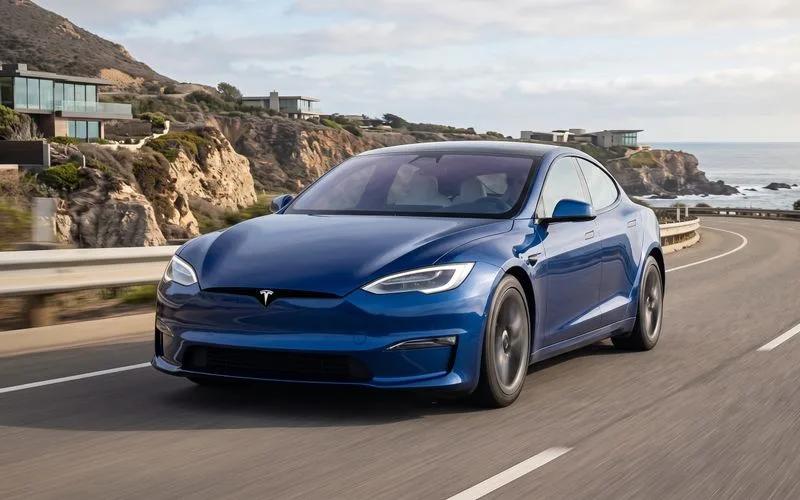 Tesla Model SFull-Size Luxury SedanBetter at: Range and value
Delivers 405 miles of range and far better efficiency for roughly $45,000 less, if you can live without the Audi's hand-built interior.
Compare 3.09B
3.09B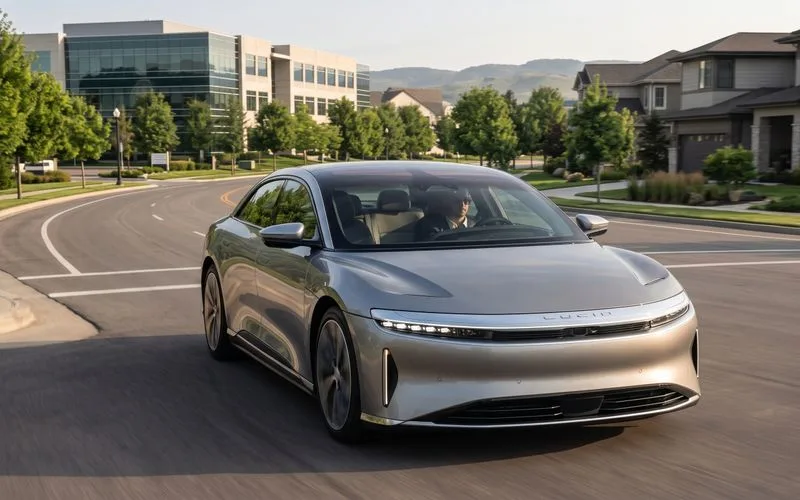 Lucid AirFull-Size Luxury SedanBetter at: Range and space
Offers 420-plus miles of range, 146 MPGe, and a genuinely usable back seat and trunk at a lower starting price.
CompareProduction history
Best fit & conditions
Higher scores mean a better fit for that use case. Learn more about use-case fit →
Subject profile
Academic Probation · NHTSA safety recalls
Dec 19, 2025Back over prevention: sensing system: cameraPlease see the recall report for a complete list of models. A software error may prevent the rearview camera image from displaying as intended. As such, these vehicles fail to comply with the requirements of Federal Motor Vehicle Safety Standard number 111, "Rear Visibility."
Defect
Volkswagen Group of America, Inc. (Audi) is recalling certain 2019-2026 vehicles. Please see the recall report for a complete list of models. A software error may prevent the rearview camera image from displaying as intended. As such, these vehicles fail to comply with the requirements of Federal Motor Vehicle Safety Standard number 111, "Rear Visibility."
Risk
A rearview image that does not display reduces the driver's view behind the vehicle, increasing the risk of a crash.
Remedy
Dealers will update the software, free of charge. Owner notification letters were mailed January 14, 2026. Owners may contact Audi customer service at 1-800-253-2834. Audi's number for this recall is 90TV. Vehicle Identification Numbers (VINs) involved in this recall became searchable on NHTSA.gov on December 23, 2025.
NHTSA campaign 25V900000 ↗Manufacturer no. 90TV356,894 vehicles potentially affected (all models in the campaign)Owners notified Jan 14, 2026Filed by Volkswagen Group of America, Inc.Filed as E-TRON GT, RS E-TRON GT
14 recalls on other model years of the e-tron GT (2022–2025)
Jun 27, 2025Suspension: front: macpherson strutA retaining ring on top of the suspension strut may come loose, resulting in a dislodged strut and air loss from the strut spring.
Defect
Volkswagen Group of America, Inc. (Volkswagen) is recalling certain 2025 Audi E-Tron GT vehicles. A retaining ring on top of the suspension strut may come loose, resulting in a dislodged strut and air loss from the strut spring.
Risk
An air suspension strut failure may cause a loss of vehicle handling and control, increasing the risk of a crash.
Remedy
Dealers will inspect and replace the air suspension struts as necessary, free of charge. Owner notification letters were mailed July 16, 2025. Owners may contact Audi customer service at 1-800-253-2834. Volkswagen's number for this recall is 40LF.
NHTSA campaign 25V428000 ↗Manufacturer no. 40LF8 vehicles potentially affected (all models in the campaign)Owners notified Jul 16, 2025Filed by Volkswagen Group of America, Inc.Filed as E-TRON GTApr 15, 2025Air bags: sensor: occupant classification: front passengerThe passenger occupant detection system (PODS) may experience a fault in the wiring and deactivate the front passenger air bag when the seat is occupied.
Defect
Volkswagen Group of America, Inc. (Audi) is recalling certain 2022-2023 RS E-TRON GT and E-TRON GT vehicles. The passenger occupant detection system (PODS) may experience a fault in the wiring and deactivate the front passenger air bag when the seat is occupied.
Risk
A deactivated passenger air bag increases the risk of injury during a crash.
Remedy
Dealers will replace the seat cushion, free of charge. Owner notification letters were mailed July 15, 2025. Owners may contact Audi customer service at 1-800-253-2834. Audi's number for this recall is 74HC.
NHTSA campaign 25V227000 ↗Manufacturer no. 74HC3,773 vehicles potentially affected (all models in the campaign)Owners notified Jul 15, 2025Filed by Volkswagen Group of America, Inc.Filed as E-TRON GT, RS E-TRON GTSep 30, 2024Electrical system: propulsion system: traction battery · Electrical system: softwareThe high-voltage battery may experience a short circuit within the battery module.
Defect
Volkswagen Group of America, Inc. (Audi) is recalling certain 2022-2024 E-TRON GT, and RS E-TRON GT vehicles. The high-voltage battery may experience a short circuit within the battery module.
Risk
A short circuit in a high-voltage battery module increases the risk of a fire.
Remedy
Dealers will install advanced diagnostic software as the final remedy free of charge. For vehicles where on-line data is available (Audi recall number 931A), as an interim measure, the vehicles will be monitored through online data evaluation at no cost to owners. Where the online data shows a potentially critical battery module, the owner will be contacted and advised to only charge the vehicle up to 80% charging capacity until the affected module can be replaced at an authorized Audi dealer, free of charge. For vehicles where online-data is not available (Audi recall number 931B), as an interim measure, dealers will perform diagnostic procedures and, if necessary, replace battery module assemblies, free of charge. Owners of these vehicles will also be advised to only charge their vehicle up to 80% charging capacity, and the inspection may have to be repeated before the software becomes available. Owner notification letters were mailed to Audi recall number 931A on July 24, 2025, and 931B was mailed on July 28, 2025. Owners may contact Audi customer service at 1-800-253-2834. Audi's numbers for this recall are 931A and 931B. This recall expands and replaces previous recall numbers 24V-229, and 24V-228. Vehicles previously repaired under the prior recalls will need to have the new remedy completed.
NHTSA campaign 24V726000 ↗Manufacturer no. 931A/931B6,499 vehicles potentially affected (all models in the campaign)Owners notified Jul 24, 2025Filed by Volkswagen Group of America, Inc.Filed as E-TRON GT, RS E-TRON GTJun 20, 2024Service brakes, air: supply: hoses, lines/piping, and fittingsThe front axle brake hoses can develop tears, causing a leak and a brake circuit failure.
Defect
Volkswagen Group of America, Inc. (Audi) is recalling certain 2022-2024 Audi RS E-Tron GT and Audi E-Tron GT vehicles. The front axle brake hoses can develop tears, causing a leak and a brake circuit failure.
Risk
A failed brake circuit can cause longer brake pedal travel and reduced braking performance, extending the distance required to stop and increasing the risk of a crash.
Remedy
Dealers will replace the front axle brake hoses, free of charge. Owner notification letters were mailed on August 6, 2024. Owners may contact Audi customer service at 1-800-253-2834. Audi's number for this recall is 47UP.
NHTSA campaign 24V465000 ↗Manufacturer no. 47UP9,653 vehicles potentially affected (all models in the campaign)Owners notified Aug 6, 2024Filed by Volkswagen Group of America, Inc.Filed as E-TRON GT, RS E-TRON GTMar 22, 2024Electrical system: propulsion system: traction batteryThe high-voltage battery may experience a short circuit within the battery modules.
Defect
Volkswagen Group of America, Inc. (Volkswagen) is recalling certain 2022-2023 Audi RS E-Tron GT and E-Tron GT vehicles. The high-voltage battery may experience a short circuit within the battery modules.
Risk
A short circuit in a high-voltage battery module increases the risk of a fire.
Remedy
Owners are advised to only charge their vehicles to a maximum of 80% battery capacity until the repair has been completed. Dealers will replace the high-voltage battery modules, free of charge. Owner notification letters were mailed on May 21, 2024. Owners may contact Audi customer service at 1-800-253-2834. Volkswagen's number for this recall is 93VM.
NHTSA campaign 24V229000 ↗Manufacturer no. 93VM33 vehicles potentially affected (all models in the campaign)Owners notified May 21, 2024Filed by Volkswagen Group of America, Inc.Filed as E-TRON GT, RS E-TRON GTMar 22, 2024Electrical system: propulsion system: traction batteryThe high-voltage battery may experience a short circuit within the battery modules.
Defect
Volkswagen Group of America, Inc. (Volkswagen) is recalling certain 2022-2024 Audi RS E-Tron GT and E-Tron GT vehicles. The high-voltage battery may experience a short circuit within the battery modules.
Risk
A short circuit in a high-voltage battery module increases the risk of a fire.
Remedy
Owners are advised to only charge their vehicles to a maximum of 80% battery capacity until the repair has been completed. Dealers will, analyze the battery data and replace the high-voltage battery modules as necessary free of charge. Owner notification letters were mailed on May 21, 2024. Owners may contact Audi customer service at 1-800-253-2834. Volkswagen's number for this recall is 93VN.
NHTSA campaign 24V228000 ↗Manufacturer no. 93VN1,009 vehicles potentially affected (all models in the campaign)Owners notified May 21, 2024Filed by Volkswagen Group of America, Inc.Filed as E-TRON GT, RS E-TRON GTDec 13, 2023Electrical system: propulsion system: charging: cable/cord: onboardWhen using the industrial 220V/240V plug at the 100% charge setting, some home power outlets may be incapable of handling the electrical current required to utilize the compact charging system, causing the outlet or charging cable to overheat.
Defect
Volkswagen Group of America, Inc. (Audi) is recalling certain 2022-2024 RS e-tron GT, e-tron GT, Q4 e-tron Sportback, Q4 e-tron, 2020-2021 Audi A8, 2019-2024 e-tron Quattro, 2020-2024 e-tron Sportback Quattro, Q5, and 2021-2022 A7 vehicles. When using the industrial 220V/240V plug at the 100% charge setting, some home power outlets may be incapable of handling the electrical current required to utilize the compact charging system, causing the outlet or charging cable to overheat.
Risk
An overheated outlet or charging cable can increase the risk of a fire.
Remedy
Owners are advised not to use the 220V/240V compact/portable charging cable and only use the 110V home charging cable or public charging stations. Dealers will supply a new 220V/240V compact/portable charging cable with an incorporated temperature sensor, free of charge. Owner notification letters were mailed on March 28, 2024. Owners may contact Audi customer service at 1-800-253-2834. Audi's numbers for this recall are 93U6 and 93U8.
NHTSA campaign 23V842000 ↗Manufacturer no. 93U6/93U893,196 vehicles potentially affected (all models in the campaign)Owners notified Mar 28, 2024Filed by Volkswagen Group of America, Inc.Filed as E-TRON GT, RS E-TRON GTSep 1, 2023Electrical system: propulsion system: traction batteryThe high-voltage battery may have an insufficient amount of sealant, which can allow liquid to accumulate in the battery.
Defect
Volkswagen Group of America, Inc. (Audi) is recalling certain 2023 Audi RS E-Tron GT and E-Tron GT vehicles. The high-voltage battery may have an insufficient amount of sealant, which can allow liquid to accumulate in the battery.
Risk
Liquid accumulation in the high voltage battery can cause electrical arcing, increasing the risk of a fire.
Remedy
Dealers will test the battery for leakage and replace the battery as necessary, free of charge. Owner notification letters were mailed October 30, 2023. Owners may contact Audi's customer service at 1-800-253-2834. Volkswagen's number for this recall is 93T7.
NHTSA campaign 23V613000 ↗Manufacturer no. 93T71,899 vehicles potentially affected (all models in the campaign)Owners notified Oct 30, 2023Filed by Volkswagen Group of America, Inc.Filed as E TRON GT, RS E-TRON GTDec 14, 2022Suspension: front: macpherson strutA retaining ring on top of the suspension strut may come loose, resulting air loss from the strut spring.
Defect
Volkswagen Group of America, Inc. (Audi) is recalling certain 2022 Audi E-Tron GT vehicles. A retaining ring on top of the suspension strut may come loose, resulting air loss from the strut spring.
Risk
An air suspension strut failure may cause a loss of vehicle handling and control, increasing the risk of a crash.
Remedy
Dealers will inspect the suspension strut and replace it, if necessary, free of charge. Owner notification letters are expected to be mailed February 10, 2023. Owners may contact Audi's customer service at 1-800-253-2834. Audi's number for this recall is 42M4.
NHTSA campaign 22V927000 ↗Manufacturer no. 42M496 vehicles potentially affected (all models in the campaign)Owners notified Feb 9, 2023Filed by Volkswagen Group of America, Inc.Filed as E-TRON GTOct 26, 2022Back over prevention: display function · Equipment: electrical: infotainment: video (touch)screen/monitor/unitThe infotainment main unit may become damaged internally when the vehicle is shut off, resulting in an inoperative rearview camera display the next time the vehicle is started. As such, these vehicles fail to comply with the requirements of Federal Motor Vehicle Safety Standard number 111, "Rear Visibility."
Defect
Volkswagen Group of America, Inc. (Audi) is recalling certain 2021-2022 AUDI A8, A6 Allroad, E-TRON Quattro, 2022 S3, RSQ8, RS7, RS6 Avant, Q8, Q7, Q3, E-TRON Sportback Quattro, S5 Cabriolet, E-TRON GT, S5 Sportback, A7, A6, A5 Sportback, A5 Cabriolet, A4, A4 Allroad, A3, S8, SQ7, SQ8, S6, and S4 vehicles. The infotainment main unit may become damaged internally when the vehicle is shut off, resulting in an inoperative rearview camera display the next time the vehicle is started. As such, these vehicles fail to comply with the requirements of Federal Motor Vehicle Safety Standard number 111, "Rear Visibility."
Risk
An inoperative rearview camera display reduces the driver's rear visibility, increasing the risk of a crash.
Remedy
Dealers will replace the infotainment main unit, free of charge. Owner notification letters were mailed June 6, 2022. Owners may contact Audi's customer service at 1-800-253-2834. Audi's number for this recall is 91Ei.
NHTSA campaign 22V806000 ↗Manufacturer no. 91Ei6,076 vehicles potentially affected (all models in the campaign)Owners notified Jun 6, 2023Filed by Volkswagen Group of America, Inc.Filed as E-TRON GTOct 5, 2022Back over prevention: display functionDue to a software issue, a blank or black screen may be displayed instead of the rearview camera image when the vehicle is placed in reverse gear. As such, these vehicles fail to comply with the requirements of Federal Motor Vehicle Safety Standard number 111, "Rear Visibility."
Defect
Volkswagen Group of America, Inc. (Volkswagen) is recalling certain 2021 Audi A8, RS7, RS6 Avant, RS5 Sportback, RS5 Coupe, Q8, Q7, Q5 Sportback, S4 Sedan, Q5, A7, A6, A6 Allroad, A5 Sportback, A5 Coupe, A5 Cabrioleet, A4 Sedan, A4 Allroad, E-Tron Sportback Quattro, SQ7, S5 Cabriolet, E-Tron Quattro, SQ8, SQ5 Sportback, SQ5, S8, S7, S6 Sedan, S5 Sportback, S5 Coupe, 2022 E-Tron GT, and 2021-2022 RSQ8 vehicles. Due to a software issue, a blank or black screen may be displayed instead of the rearview camera image when the vehicle is placed in reverse gear. As such, these vehicles fail to comply with the requirements of Federal Motor Vehicle Safety Standard number 111, "Rear Visibility."
Risk
A blank rearview camera display can reduce the driver's rear visibility, increasing the risk of a crash.
Remedy
Dealers will update the infotainment unit software, free of charge. Owner notification letters were mailed October 25, 2022. Owners may contact Audi's customer service at 1-800-253-2834. Volkswagen's number for this recall is 91DZ.
NHTSA campaign 22V742000 ↗Manufacturer no. 91DZ170,296 vehicles potentially affected (all models in the campaign)Owners notified Oct 25, 2022Filed by Volkswagen Group of America, Inc.Filed as E-TRON GTFeb 16, 2022Equipment: other: owners/service/other manualThe owner's manual may list the incorrect tire pressure.
Defect
Volkswagen Group of America, Inc. (Audi) is recalling certain 2022 E-Tron GT vehicles. The owner's manual may list the incorrect tire pressure.
Risk
Incorrect tire pressure information could result in improperly inflated tires, increasing the risk of a crash.
Remedy
Dealers will insert a corrected tire pressure table into the owner's manual, free of charge. Owner notification letters were mailed March 7, 2022. Owners may contact Audi customer service at 1-800-853-2834. Audi's number for this recall is 06E7.
NHTSA campaign 22V085000 ↗Manufacturer no. 06E7920 vehicles potentially affected (all models in the campaign)Owners notified Mar 7, 2022Filed by Volkswagen Group of America, Inc.Filed as E-TRON GTFeb 16, 2022Seat belts: rear/other: buckle assembly · Seat belts: rear/other: anchorageThe center seat belt buckle wiring harness may obstruct access to the right rear seat lower child seat anchors, preventing a child seat from being properly secured. As such, these vehicles fail to comply with the requirements of Federal Motor Vehicle Safety Standard number 225, "Child Restraint Anchorage Systems."
Defect
Volkswagen Group of America, Inc. (Audi) is recalling certain 2022 E-Tron GT vehicles. The center seat belt buckle wiring harness may obstruct access to the right rear seat lower child seat anchors, preventing a child seat from being properly secured. As such, these vehicles fail to comply with the requirements of Federal Motor Vehicle Safety Standard number 225, "Child Restraint Anchorage Systems."
Risk
An improperly secured child seat increases the risk of injury during a crash.
Remedy
Dealers will reroute and secure the center rear seat belt buckle wiring harness and, as necessary, replace a damaged buckle, free of charge. Owner notification letters were mailed March 15, 2022. Owners may contact Audi customer service at 1-800-253-2834. Audi's number for this recall is 72M6.
NHTSA campaign 22V084000 ↗Manufacturer no. 72M6693 vehicles potentially affected (all models in the campaign)Owners notified Mar 15, 2022Filed by Volkswagen Group of America, Inc.Filed as E-TRON GTDec 1, 2021Suspension: frontThe retaining ring on the air suspension struts may come loose.
Defect
Volkswagen Group of America, Inc. (Volkswagen) is recalling certain 2022 Audi E-Tron GT vehicles. The retaining ring on the air suspension struts may come loose.
Risk
A loose retaining ring may allow air to escape, compromising vehicle handling and increasing the risk of a crash.
Remedy
Dealers will inspect and replace the air suspension struts as necessary, free of charge. Owner notification letters were mailed January 27, 2022. Owners may contact Audi customer service at 1-800-253-2834. Volkswagen's number for this recall is 42L2.
NHTSA campaign 21V935000 ↗Manufacturer no. 42L210 vehicles potentially affected (all models in the campaign)Owners notified Jan 27, 2022Filed by Volkswagen Group of America, Inc.Filed as E-TRON GT
Source: NHTSA Office of Defects Investigation recall database, model years 2022–2026. Recalls are listed by model year as the manufacturer filed them; whether a specific car is affected depends on its VIN — check a VIN at nhtsa.gov ↗. NHTSA model names matched to this page: E TRON GT, E-TRON GT, RS E-TRON GT.
Detailed scoring by subject
1Performance & PowertrainThe e-tron GT's best-graded category.4.00A+
Refreshed 2025+ e-tron GT quattro (volume trim) makes 509 hp in boost/launch mode; the range extends to 670 hp (S), 845 hp (RS), and 912 hp on the new RS performance flagship.
Volume e-tron GT quattro delivers 611 lb-ft (830 Nm); trim range climbs to ~997 lb-ft (1,350 Nm) on RS performance in boost mode — comfortably past the sedan segment normalization ceiling.
Base e-tron GT quattro hits 60 mph in 3.9 seconds per Audi; the range compresses to 3.3 s (S), 2.8 s (RS), and 2.4 s on RS performance — among the quickest series-production sedans sold in the US.
Dual permanent-magnet motor EV drivetrain delivers instant, seamless torque with no lag; the refreshed 800V architecture and new rear PSM motor draw universal praise for refinement and immediacy across every trim.
Two-speed transmission on the rear axle (shared with Taycan) is largely imperceptible in daily driving; a soft shift under hard launch is occasionally noticed but never intrusive, and the fixed front-axle reduction is invisible.
Dual-motor electric quattro AWD is standard on every e-tron GT trim, with active torque vectoring on the rear axle and no FWD/RWD variant offered — the entire lineup is AWD by design.
EV-only lineup with no ICE, hybrid, or PHEV option, but the range spans four genuinely distinct performance tiers (quattro / S / RS / RS performance) covering a broad 509–912 hp spread — narrow in fuel type, wide in output.
2Efficiency & RangeOne of the e-tron GT's strongest categories.3.35B+
EPA combined MPGe for the volume S e-tron GT on its standard 20-inch wheels, retrieved directly from the EPA vehicle record for the 2026 model year. Efficient for a 5,100-lb, 670-hp AWD GT, but well behind the EV sedans that define the top of the class (Model 3 at 138, Lucid Air at 146) because mass and wide performance tires cost more than the 0.24 Cd aero recovers.
EPA city MPGe for the 2026 S e-tron GT on 20-inch wheels. The city figure edges out the highway one — the usual EV pattern from regenerative braking — but the car's curb weight keeps it near the bottom of the EV-sedan city band.
EPA highway MPGe for the 2026 S e-tron GT. Slippery low-drag bodywork means the e-tron GT gives up less on the highway cycle than most heavy EVs, so this is its strongest of the three economy figures relative to the EV-sedan band.
EPA range for the volume S e-tron GT with the standard 20-inch wheels. The 2025 facelift's 105 kWh gross / 97 kWh usable pack (up from 93.4 kWh) carries into 2026 unchanged and lifts range well past the pre-refresh car, but 300 miles is only mid-pack for an EV sedan against a Model S (405 mi) or Lucid Air (420 mi).
The 2025 facelift raised peak DC intake by 50 kW to 320 kW on the J1 platform's 800-volt architecture, and 2026 carries it over. That is at the very top of what any production EV accepts and the single strongest number on this scorecard.
Audi's quoted 10–80% time under ideal conditions, and the 800V pack holds a high state of charge curve rather than only peaking briefly — the practical benefit of the 320 kW ceiling. Among the quickest-charging EVs sold in the US.
EPA annual energy cost at the standard 15k mi/yr assumption. A fraction of what a premium-required 600-hp ICE GT would drink, but roughly 50% above the efficient EV sedans (Model 3 ~$550, Lucid Air ~$500) that set the pace in this class, and real-world spend climbs further if most charging is done on DC networks rather than at home.
No fuel grade to buy at all: an 11 kW standard onboard AC charger (22 kW optional in some markets) fills the 97 kWh usable pack overnight on a normal home Level 2 circuit — EPA puts a full 240V charge at about 15.5 hours, the price of a big battery rather than a slow charger. Away from home the 800V/320 kW architecture is close to a best case, and for 2026 Audi includes the NACS-to-CCS1 DC adapter at no cost with the car, so Tesla's Supercharger network is open alongside CCS. Held just below the class leaders because the port is still CCS1 rather than NACS-native (adapter in hand for every fast-charge stop) and the ~$850/yr energy cost is mid-pack rather than low.
3SafetyGrades above the middle of the scale.3.20B+
NHTSA has not crash-tested the e-tron GT due to its low U.S. sales volume. Inferred 5 stars because the platform-sister Porsche Taycan (J1 architecture, refreshed 2025) earned a 5-star Euro NCAP rating (85% adult occupant, 83% child occupant) and modern EV skateboard structures with reinforced battery enclosures typically achieve NHTSA 5 stars.
IIHS has not tested the e-tron GT — no Top Safety Pick award. Modern EV structure with reinforced battery enclosure and Audi's typically strong crash engineering suggest Good-level crashworthiness, but the absence of any tested results holds the score in the mid-range rather than award territory.
The 2026 e-tron GT includes Audi pre sense front (AEB), Audi active lane assist, Audi side assist (blind-spot monitor), rear cross-traffic assist, and adaptive cruise assist as standard equipment on the S e-tron GT and higher trims. Comprehensive core suite is not gated to option packages.
Audi pre sense front provides forward collision warning with autonomous emergency braking including pedestrian detection at urban speeds. No IIHS front-crash-prevention verification exists for this model, so scored to reflect a competent modern system without award-grade validation.
Audi side assist (BSM), rear cross-traffic assist with automatic braking, and safe exit warning are standard on the 2026 e-tron GT. Coverage is comparable to premium peers though not class-leading in active intervention.
Audi active lane assist provides functional lane centering as part of Adaptive Cruise Assist Plus. Reviewers describe it as smooth on well-marked highways but less confident than BMW/Mercedes systems on faded markings or tighter curves.
Adaptive Cruise Assist Plus combines full-speed-range adaptive cruise (with stop-and-go), lane guidance, and predictive efficiency assist. Braking and resume behavior are refined; integrates well with navigation-aware speed adjustments.
Audi does not offer any true hands-free highway driving system in the U.S. market. No equivalent to Ford BlueCruise, GM Super Cruise, or Tesla FSD (Supervised) — hands must remain on the wheel with active lane assist and adaptive cruise engaged.
LED Matrix-design headlights with adaptive high-beam are standard on the 2026 e-tron GT range; Digital Matrix LED with dynamic light animation is available on higher trims. Excellent reach and glare-free adaptive shading in reviews, though IIHS has not published a headlight rating.
The low, coupe-like GT profile with a fast rear roofline, thick C-pillars, and shallow rear glass compromises natural sightlines. A 360-degree surround-view camera is available and helps in parking, but rearward and over-shoulder visibility remain below-average for the segment.
The 2+2-style rear seat is tight on legroom and headroom, with LATCH anchors buried in the seatback bight and the low roofline making it awkward to lift a rear-facing seat in. Workable for one child seat, poor for two, and 3-across is impractical.
4Space & ComfortOne of the e-tron GT's weakest categories.0.93F
The e-tron GT is a strict four-seater — fixed rear buckets separated by a full-length center console, no bench option across S/RS trims.
Low-slung GT roofline puts front headroom mid-band for sedans and tight for tall occupants when the panoramic glass roof is fitted.
Front legroom is competitive for the luxury GT class and comfortable for tall drivers thanks to the long wheelbase.
Sharply raked coupe-like roof cuts rear headroom to the low end of the sedan band; six-footers brush the headliner.
Rear legroom is the vehicle's biggest packaging compromise — below the sedan normalization floor and among the tightest in the luxury sedan set. Adults fit only for short trips.
Rear trunk is well below the sedan band minimum; the small frunk helps in practice but the main hold is compact and the sloping deck limits tall items.
Console bin, decent door pockets, and the front trunk add practical utility, but there are no standout innovations — the full-length center tunnel eliminates rear storage and rear buckets lack meaningful cubbies.
Standard front sport seats and available 18-way massaging front seats are widely praised for long-haul comfort and lateral support; rear buckets are supportive if you fit.
Adaptive air suspension (standard on S/RS) and available active suspension deliver a plush-but-controlled ride that hides the ~5,100 lb curb weight; some firmness on 21-inch wheels over sharp impacts.
Silent EV drivetrain, laminated acoustic glass, and thick sound insulation deliver library-quiet highway cruising; only faint tire roar on coarse pavement.
Rich standard kit: heated front seats, available four-zone climate, ventilated and massaging front seats, heated steering wheel, heated rear seats, and myAudi remote pre-conditioning via app.
5Cost of OwnershipThe e-tron GT's lowest-graded category.0.00F
After the 2025 refresh Audi USA dropped the base e-tron GT; the new entry point is the S e-tron GT at roughly $126,500 including destination. Well beyond the sedan normalization band ceiling of $55k.
S e-tron GT is the entry and volume trim of this halo lineup; with typical option packages (Prestige, driver-assist, air suspension) most transactions land around $130–135k. Range across the lineup extends to ~$167k on RS performance.
EV drivetrain eliminates oil changes and reduces brake wear via regen, but Audi dealer labor rates and expensive staggered performance tires push running costs above class-average EVs. Roughly mid-band for a luxury sedan.
Luxury EVs depreciate steeply — federal tax credit erosion on used sales, battery-tech pace, and soft used-EV demand hit values hard. e-tron GT tracks with Taycan at roughly 40–45% retention over 5 years.
Audi's standard new-vehicle limited warranty is 4 years / 50,000 miles — mid-pack for luxury.
Federal-mandated EV battery warranty of 8 years / 100,000 miles applies, and Audi extends similar coverage to the electric drive unit. Solid mid-band coverage for an EV.
No included scheduled maintenance (Audi Care is a paid add-on), but the package includes 4-year 24/7 roadside assistance, 3-year Audi Connect trial, and Electrify America charging credits (typically 1–3 years of complimentary DC-fast charging on premium EVs). Meaningful perks for road-trip usability, short of a full included-service program.
$131,000 volume-trim price minus its estimated resale value after 5 years (42% retained, or about $55,020) leaves about $75,980 in depreciation. Add the projected $5,500 in 5-year maintenance and repairs, and owning this vehicle for 5 years costs about $81,480 in total.
6Reliability & QualityMid-pack among this car's ten categories.2.53C+
Low-volume halo EV with limited CR/JDP predicted-reliability data; e-tron GT and platform-mate Taycan have historically drawn mixed marks over control units, high-voltage electronics, and infotainment software.
Audi typically lands mid-pack in Consumer Reports brand reliability and near industry average in J.D. Power VDS — better than the German luxury trailers but well behind Toyota/Lexus/BMW.
Current-gen e-tron GT (J1 platform, 2022+ MY) has had multiple recalls including a high-voltage battery investigation shared with Taycan, plus scattered software and lighting TSBs; nothing systemic to the refreshed 2025+ car.
J1 platform's 800V PSM dual-motor drivetrain and two-speed rear gearbox (shared with Taycan since 2019) have accumulated a decent field record with few catastrophic drivetrain failures; MY2025+ refresh adds a larger 105 kWh gross battery whose long-term durability is not yet established.
Class-leading materials execution: standard leather-or-vegan surfaces, brushed aluminum and open-pore wood, Alcantara headliner, and switchgear that reviewers consistently rank at the top of the six-figure EV field.
Hand-assembled at Audi's low-volume Böllinger Höfe facility in Neckarsulm alongside the R8 successor line; panel gaps, paint quality, and interior assembly are consistently cited as flagship-grade.
Roughly 300+ US Audi dealers give adequate but not dense coverage; not every dealer is fully equipped for high-voltage EV service, which can mean longer waits for e-tron GT-specific work. J.D. Power CSI puts Audi around industry average.
Low-volume German luxury EV with expensive dealer-only parts, extremely costly high-voltage components (battery, inverters, PPE electronics), and minimal aftermarket support — repair costs sit well above mainstream EVs and above even Tesla Model S in most out-of-warranty scenarios.
7Technology & InfotainmentOne of the e-tron GT's strongest categories.3.41B+
Center MMI touch response display measures 10.1 inches diagonal, unchanged through the 2025/2026 refresh.
Audi's MMI touch response is fast, logically laid out, and preserves useful physical switchgear on the console; reviewers rate it as clearer to live with than the Taycan's stacked screens, though the smaller display and older layout trail newer Audis with the dual-screen 2026 architecture.
Both wireless Apple CarPlay and wireless Android Auto are standard across all e-tron GT trims.
MMI Navigation Plus with natural-language voice control, cloud-based routing and EV charging planner is standard; assistant handles conversational commands and integrates with the Audi connect PLUS subscription.
16-speaker Bang & Olufsen Premium 3D Sound System with 710W and dedicated head-restraint speakers is optional; base 10-speaker system is competent for the class.
12.3-inch Audi Virtual Cockpit Plus is standard on all trims with configurable views including full-screen navigation, performance, and classic gauge layouts — still one of the sharpest and most flexible clusters in the class.
Audi supports Function on Demand and infotainment/maps OTA updates on MIB 3 models, but whole-vehicle drivetrain/ADAS OTA remains behind Tesla and newer BMW/Mercedes systems.
myAudi app offers remote lock/unlock, precondition climate, charging schedule, charge status, and location — polished and reliable, though digital-key (UWB phone-as-key) is not yet offered on this model.
Multiple USB-C data/power ports front and rear, standard wireless charging pad, and 12V outlets; no household AC outlet but ample device power for the segment.
Advanced Key (proximity entry and push-button start) is standard, remote start via myAudi app; digital key / phone-as-key not offered on this model.
360-degree top-view camera, front and rear parking sensors, and Park Assist Plus (semi-automated parking) are available; imagery is high resolution and integrates with the surround view for tight garages.
Full-color head-up display with speed, navigation, and driver-assist info is optional on Premium Plus and standard on Prestige; large and clear but not the AR-projection style found on newer Mercedes/BMW EVs.
8Use-Case FitOne of the e-tron GT's weakest categories.1.01D
Strict four-seater with 2+2 fixed rear buckets separated by a full-length center tunnel (cat4.1.1 = 4 seats), just 30.6 in of rear legroom (cat4.1.5) and 36.0 in of rear headroom (cat4.1.4) — among the tightest in any luxury sedan, so a rear-facing infant seat forces the front passenger onto the dashboard. LATCH anchors sit buried in the seatback bight of low-slung buckets (cat3.3.3 = 55), and the coupe-like roofline plus low ride height make lifting a child seat in awkward. Only one child seat is genuinely workable, and there is no bench so no third position is even possible.
Audi pre sense front (AEB with pedestrian detection), Audi side assist (BSM), rear cross-traffic assist, active lane assist, and adaptive cruise assist plus are all standard on the S e-tron GT and up (cat3.2.1 = 88), giving families a complete ADAS baseline without option-package gating. Held back because NHTSA has not tested this low-volume model, IIHS has not published crashworthiness results (cat3.1.2 = 60, no TSP award), no hands-free driving is offered, and the six-figure price means it isn't a trim families 'actually buy'.
For the two occupants who fit up front the e-tron GT is a plush tourer — standard adaptive air suspension (cat4.3.2 = 84), library-quiet cabin (cat4.3.3 = 86), available four-zone climate, heated rear seats, and available massaging front thrones (cat4.3.4 = 90). Falls apart for real families because there are only four seats, the 9.2 cu ft trunk plus 2.8 cu ft frunk (cat4.2.1) cannot swallow a stroller with a full week's luggage, rear legroom (30.6 in) is punishing for adults behind adults, and 278-300 mi of range with a family of four aboard forces frequent stops on longer trips.
One-speed EV powertrain delivers seamless, hesitation-free stop-and-go without the S tronic DCT low-speed judder that hurts the A6 (cat1.1.5), quattro AWD is standard on every trim, adaptive air suspension is standard for isolation over broken pavement (cat4.3.2 = 84), the cabin is class-quiet (cat4.3.3 = 86), and Adaptive Cruise Assist Plus with lane guidance is standard (cat3.2.5 = 85). Held back only by low-slung GT visibility with a shallow rear window and thick C-pillars (cat3.3.2 = 62) and the wide 196.4 in body that eats lane width.
Full-EV commuting on ~$925/yr of home electricity at 15k mi (cat2.3.1) — roughly a third of the A8's $2,650/yr premium-fuel bill and with no oil changes, spark plugs, or exhaust wear. Held back because a ~5,100 lb curb weight on wide staggered performance tires means $1,800-2,500 tire replacements, insurance on a $106K-plus EV is meaningfully above the class norm, and DC fast-charging at commercial rates erodes the energy advantage. Cheaper per mile than any ICE luxury sedan but pricier to run than a BMW i4 (~$700/yr energy).
196.4 in long by 77.2 in wide — a genuinely large footprint at the top of the mid-size band. Standard rear parking sensors and available 360-degree top-view camera with Park Assist Plus help meaningfully (cat7.3.2), and optional all-wheel steering (~4 degrees at low speed) shrinks the turning circle to roughly 37.7 ft. Held back by the low, coupe-like GT roofline with thick C-pillars and a shallow rear window that limits over-the-shoulder sightlines (cat3.3.2 = 62), and a wide body that eats space in tight garages.
Luxury GT with no US tow rating, no cargo bed, only 9.2 cu ft of trunk plus a 2.8 cu ft frunk (cat4.2.1), and a strict 2+2 cabin with a full-length center tunnel that eliminates any long-object pass-through. Not meaningfully work-capable — even the compact A4 with a folding rear seatback and 13 cu ft trunk is more useful for trades.
The e-tron GT is the antithesis of a work vehicle: standard Nappa or perforated fine Nappa leather, Alcantara headliner, thin-carpet trunk floor, dual MMI touchscreens, adaptive air suspension, and 20-21 in wheels with staggered performance tires all punish tool loading and jobsite grit. No fleet-vehicle deployment, and Audi J1-platform EV out-of-warranty repair costs are high with dealer-only servicing.
No cargo bed, no factory roof rails, no factory tow hitch, and no vehicle-to-load 110V power outlet despite the 105 kWh battery. Trunk offers a 12V outlet and a couple of tie-down eyelets — nothing beyond what a compact sedan provides. No upfit ecosystem, no washable surfaces, no work packages in Audi's US accessories catalog.
Excellent GT touring for two: standard adaptive air suspension delivers a plush, controlled ride (cat4.3.2 = 84), the cabin is class-quiet at highway speed (cat4.3.3 = 86), front seats are widely praised with available 18-way massage (cat4.3.1 = 86), Adaptive Cruise Assist Plus is standard (cat3.2.5 = 85), and standard LED Matrix headlights (cat3.3.1 = 90) reduce night-driving fatigue. The refreshed 800V platform's ~300 mi range (S trim on 20 in wheels) plus 320 kW DC fast-charging (10-80% in ~18 min) keeps interstate stops brief. Held back by a range that still trails Tesla Model S (~400 mi) and Lucid Air (420+ mi), no Audi hands-free driving option (cat3.2.6 = 20), and RS trims that dip to ~245 mi with the biggest wheels.
quattro AWD is standard across the range and the adaptive air suspension can raise the ride ~0.8 in for gravel or unpaved driveways — real-world useful in snow. Held back by 4.3 in of default ground clearance (~5.1 in raised), aggressive front and rear overhangs that scrape on rough roads, no US tow rating, no factory roof rails, no factory hitch, and staggered 20-21 in performance tires with thin sidewalls that punish gravel. Genuinely pavement-bound despite the AWD.
9.2 cu ft rear trunk plus 2.8 cu ft frunk equals ~12 cu ft total (cat4.2.1) — smaller than every mainstream compact sedan and 40% below the A6's 14.6 cu ft. Standard 40/20/40-split folding rear seatback with center pass-through lets skis or long boards through, but the sloping liftback-style deck and shallow trunk block big rollers. No factory roof rails, no factory tow hitch, no underfloor storage tray. One of the vehicle's genuine ownership weaknesses.
9Driving ExperienceGrades above the middle of the scale.3.30B+
Shares the Porsche Taycan's J1 platform with standard adaptive air suspension and the electric quattro AWD system; reviewers praise flat, composed cornering, prodigious grip, and body control that belies the ~5,000-lb curb weight. Rear-axle steering is standard on S/RS trims and improves agility further.
Steering is quick and precise with well-judged weighting via progressive-ratio rack, but reviewers consistently note it feels more filtered and less communicative than the Taycan's — accurate but not tactile.
Standard 15.7-in front discs (tungsten-carbide-coated on S/RS, carbon ceramics optional) deliver strong, fade-free stops with instrumented 70-0 mph in ~152 ft; regen-to-friction blending is essentially seamless with two-stage paddle-adjustable regen.
Dual permanent-magnet motors deliver instant, linear torque; the two-speed rear transmission shifts imperceptibly at highway speeds and there is no perceptible lag, hesitation, or driveline shock in any drive mode.
Near-silent EV operation with excellent motor whine suppression; optional e-tron sport sound generator adds character on demand. Some tire roar on coarse pavement is the primary intrusion.
Base e-tron GT quattro is 12.0 m curb-to-curb (≈39.4 ft); S and RS trims with all-wheel steering shrink it to 11.5 m (≈37.7 ft). Long wheelbase and wide track make it clumsy in urban U-turns without rear steer.
Low, sporty seating position with wide adjustment range and a squared-off steering wheel that clears the digital cluster well. The dual-touchscreen center stack requires eyes-off-road glances for climate and shortcut functions, and the sloping roof compromises over-the-shoulder sightlines.
One of the most enjoyable EVs on sale — supercar-grade acceleration, composed chassis, and genuine character. Tuned more toward grand-touring composure than Taycan-level scalpel-sharp response, but still an enthusiast recommendation.
10Value & Market PositionGrades above the middle of the scale.2.98B-
Base e-tron GT is well-equipped for a $100k+ luxury EV: matrix LED headlights, adaptive air suspension, 20-inch wheels, 4-zone climate, heated 14-way power sport seats, Audi virtual cockpit plus 10.1-inch MMI, active safety suite. More generous at base than the sibling Porsche Taycan, which nickel-and-dimes many features.
At roughly $107k to start and $170k for RS Performance, it commands a premium but delivers 800V architecture, dual motors, up to 912 hp, and Porsche-derived chassis. Tesla Model S ($82k) and Lucid Air ($71k+) deliver more range for less; the e-tron GT's value case is brand and craftsmanship rather than raw content-per-dollar.
The refreshed lineup spans four trims — e-tron GT, S e-tron GT, RS e-tron GT, and the range-topping RS e-tron GT Performance — with generous option packages and color/interior customization. Range is well-spaced from luxury GT to hypercar-adjacent, though there is no lower entry point below $100k.
A niche halo EV with only a few thousand US deliveries per year and volumes trending down as the segment matures. It sells largely on image rather than volume and trails Tesla Model S, Lucid Air, and the Taycan in this segment.
Audi remains a top-tier luxury brand with strong US aspiration, and the e-tron GT is the brand's technology and design halo. It doesn't carry Porsche-level prestige but its styling is widely regarded as the segment's most beautiful EV.
As a luxury EV over $80k, it does not qualify for the federal $7,500 clean-vehicle credit on purchase, though the leasing loophole often passes credit through on lease deals. Slow-moving inventory means modest dealer discounts and Audi Financial lease specials are usually available; not a market-price car.
Received a comprehensive mid-cycle refresh for the 2025 model year with a new 105 kWh battery, more powerful motors (up to 912 hp on RS Performance), revised suspension, and updated exterior/interior. 2026 continues the refreshed generation — very fresh with no near-term redesign risk.
The refreshed e-tron GT is very well reviewed for design, cabin quality, and blistering straight-line performance, particularly in RS Performance guise. It usually finishes behind the Porsche Taycan for driver engagement and behind Lucid Air for range/efficiency in comparison tests, but is a consistent Editor's Choice or highly recommended pick.