

The verdict
A mixed-report mid-size luxury suv, strong on safety and held back by ownership.
The 2025 Audi Q8 e-tron is one of the most beautifully built and quietest electric SUVs you can buy — a hushed, air-sprung, 402-hp luxury cruiser with a cabin that shames most rivals at any price. What it isn't is efficient or modern underneath: 78 MPGe and 272 miles of EPA range from a huge 106-kWh usable battery is the worst energy math in its class, 170-kW charging is a generation behind 800-volt rivals, and 28.5 cubic feet behind the rear seats is small for a $77,000 two-row SUV. Add roughly 40% resale value after five years on a model Audi is winding down, and buying one new costs about $53,840 over five years. Lease it or buy it heavily discounted and it's a lovely thing; pay sticker and you're funding someone else's bargain.
Jump to scoresStrengths
- Genuinely serene — one of the quietest cabins in the class
- Cabin materials and build quality are class benchmarks
- Effortless, seamless power delivery
What holds it back
- Brutal depreciation — the single biggest cost of owning one
- Worst-in-class efficiency, and range that doesn't match the battery
- Small inside for its footprint — cargo and rear space both trail
Top alternatives
Cars shoppers cross-shop with the Audi Q8 e-tron 2.73B-
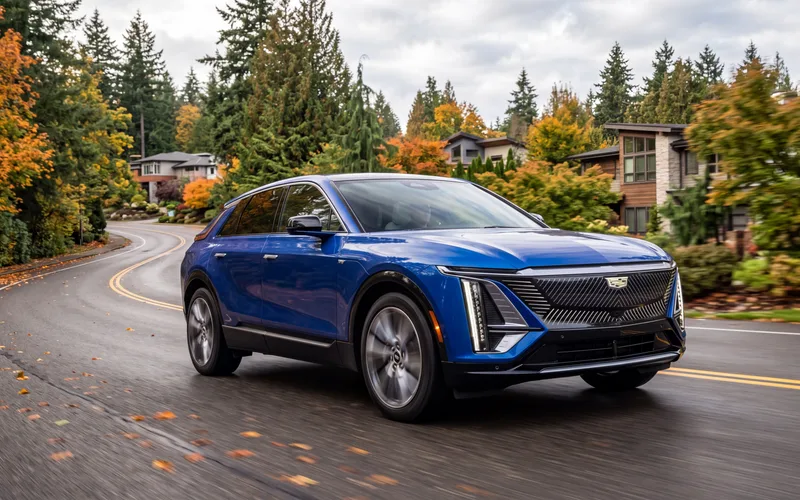 Cadillac LyriqMid-Size Luxury SUVBetter at: Value and range
Roughly $15,000 cheaper with about 314 miles of range and faster charging, which is exactly where the Q8 e-tron is weakest.
Compare 3.20B+
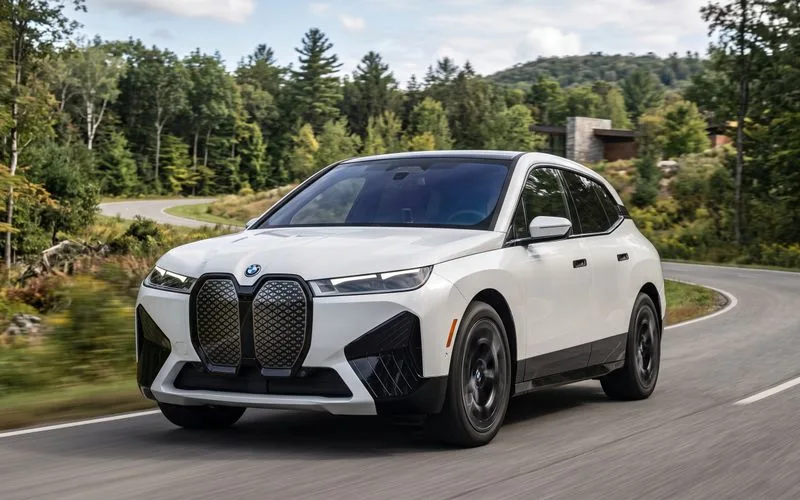 BMW iXMid-Size Luxury SUVBetter at: Range and cargo
For buyers who want luxury-EV refinement without giving up range, cargo or towing — 300-plus miles, 35.5 cu ft and 5,500 lbs.
Compare 2.55C+
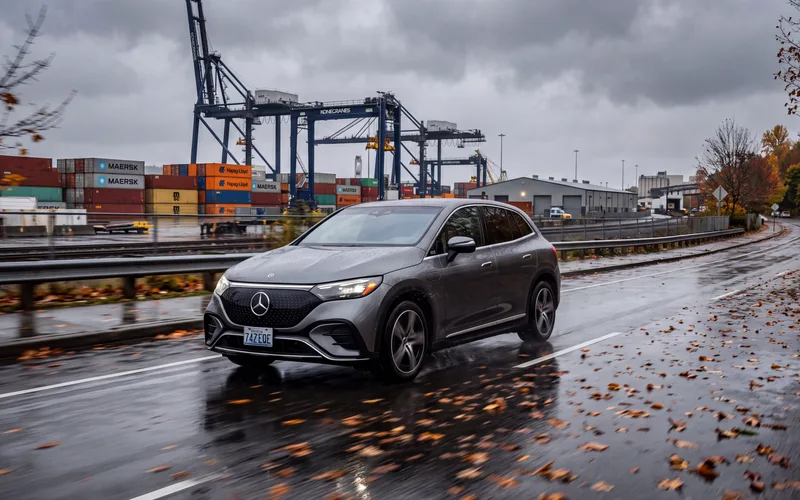 Mercedes-Benz EQE SUVMid-Size Luxury SUVBetter at: Newer tech
Similar money buys a newer purpose-built EV platform with 200-kW charging and more up-to-date infotainment.
CompareProduction history
Best fit & conditions
Higher scores mean a better fit for that use case. Learn more about use-case fit →
Subject profile
Academic Probation · NHTSA safety recalls
No NHTSA safety recall is on record for the 2025 Audi Q8 e-tron. Other model years of the Q8 e-tron have 15 — listed below.
15 recalls on other model years of the Q8 e-tron (2019–2024)
Apr 15, 2026Service brakes, hydraulic: pedals and linkagesThe fastener that connects the brake pedal and the brake booster may have been improperly assembled during manufacturing, which can cause the brake pedal to detach from the brake booster.
Defect
Volkswagen Group of America, Inc. (Audi) is recalling certain 2019-2023 Audi E-Tron Quattro, 2020-2023 Audi E-Tron Sportback, 2024 Q8 E-Tron, Q8 Sportback E-Tron, SQ8 E-Tron, and SQ8 Sportback E-Tron vehicles. The fastener that connects the brake pedal and the brake booster may have been improperly assembled during manufacturing, which can cause the brake pedal to detach from the brake booster.
Risk
Brake pedal detachment can cause a loss of brake function and increase the risk of a crash.
Remedy
Dealers will inspect and tighten the pushrod screw joint as necessary, free of charge. Owner notification letters were mailed on April 28, 2026. Owners may contact Audi customer service at 1-800-253-2834. Volkswagen's number for this recall is 46P7. This recall expands previous NHTSA recall number 24V621. Vehicle Identification Numbers (VINs) involved in this recall became searchable on NHTSA.gov on April 17, 2026.
NHTSA campaign 26V240000 ↗Manufacturer no. 46P718,853 vehicles potentially affected (all models in the campaign)Owners notified Apr 28, 2026Filed by Volkswagen Group of America, Inc.Filed as E-TRON QUATTRO, E-TRON SPORTBACK, Q8 SPORTBACK E-TRON, SQ8 E-TRON, SQ8 SPORTBACK E-TRONDec 19, 2025Back over prevention: sensing system: cameraPlease see the recall report for a complete list of models. A software error may prevent the rearview camera image from displaying as intended. As such, these vehicles fail to comply with the requirements of Federal Motor Vehicle Safety Standard number 111, "Rear Visibility."
Defect
Volkswagen Group of America, Inc. (Audi) is recalling certain 2019-2026 vehicles. Please see the recall report for a complete list of models. A software error may prevent the rearview camera image from displaying as intended. As such, these vehicles fail to comply with the requirements of Federal Motor Vehicle Safety Standard number 111, "Rear Visibility."
Risk
A rearview image that does not display reduces the driver's view behind the vehicle, increasing the risk of a crash.
Remedy
Dealers will update the software, free of charge. Owner notification letters were mailed January 14, 2026. Owners may contact Audi customer service at 1-800-253-2834. Audi's number for this recall is 90TV. Vehicle Identification Numbers (VINs) involved in this recall became searchable on NHTSA.gov on December 23, 2025.
NHTSA campaign 25V900000 ↗Manufacturer no. 90TV356,894 vehicles potentially affected (all models in the campaign)Owners notified Jan 14, 2026Filed by Volkswagen Group of America, Inc.Filed as E-TRON, E-TRON SPORTBACKAug 19, 2024Service brakes, hydraulic: pedals and linkagesThe fastener that connects the brake pedal and the brake booster may have been improperly assembled during manufacturing, which can cause the brake pedal to detach from the brake booster.
Defect
Volkswagen Group of America, Inc. (Audi) is recalling certain 2019-2024 Audi E-Tron and 2020-2024 Audi E-Tron Sportback vehicles. The fastener that connects the brake pedal and the brake booster may have been improperly assembled during manufacturing, which can cause the brake pedal to detach from the brake booster.
Risk
Brake pedal detachment can cause a loss of brake function and increase the risk of a crash.
Remedy
Dealers will inspect and repair the brake booster, free of charge. Owner notification letters were mailed on October 1, 2024, and November 22, 2024. Owners may contact Audi customer service at 1-800-253-2834. Volkswagen's number for this recall is 46P6.
NHTSA campaign 24V621000 ↗Manufacturer no. 46P61,453 vehicles potentially affected (all models in the campaign)Owners notified Oct 1, 2024Filed by Volkswagen Group of America, Inc.Filed as E-TRONJun 10, 2024Service brakes, air: supply: hoses, lines/piping, and fittingsThe brake line connection may have been over-tightened and fail, resulting in a brake fluid leak and reduced braking ability.
Defect
Volkswagen Group of America, Inc. (Volkswagen) is recalling certain 2024 Audi Q8 Sportback E-Tron Quattro and Q8 E-Tron Quattro vehicles. The brake line connection may have been over-tightened and fail, resulting in a brake fluid leak and reduced braking ability.
Risk
Reduced braking ability can cause longer brake pedal travel or extend the distance required to stop the vehicle, increasing the risk of a crash.
Remedy
Dealers will inspect and replace the brake pressure line as necessary, free of charge. Owner notification letters were mailed on July 9, 2024. Owners may contact Audi customer service at 1-800-253-2834. Volkswagen's number for this recall is 47DE.
NHTSA campaign 24V428000 ↗Manufacturer no. 47DE65 vehicles potentially affected (all models in the campaign)Owners notified Jul 9, 2024Filed by Volkswagen Group of America, Inc.Filed as Q8 E-TRON, Q8 SPORTBACK E-TRONApr 3, 2024Air bags: sensor: occupant classification: front passengerAn electrical connection in the front passenger seat for the occupant detection system (ODS) control module may loosen and deactivate the front passenger air bag.
Defect
Volkswagen Group of America, Inc. (Volkswagen) is recalling certain 2023 Audi S5 Cabriolet, A4 Allroad, Q5 Sportback, A3 Sedan, S5 Sportback, SQ7, TT Coupe, TT Roadster, RS5 Sportback, 2024 A8, E-Tron Quattro, E-Tron Sportback Quattro, Q8, RSQ8, 2023-2024 Q3, Q5, and Q7 vehicles. An electrical connection in the front passenger seat for the occupant detection system (ODS) control module may loosen and deactivate the front passenger air bag.
Risk
A deactivated front passenger air bag will not deploy during a crash, increasing the risk of injury.
Remedy
Dealers will replace the passenger seat occupant detection system control module, free of charge. Owner notification letters were mailed on May 8, 2024. Owners may contact Audi customer service at 1-800-253-2834. Volkswagen's number for this recall is 69GU.
NHTSA campaign 24V251000 ↗Manufacturer no. 69GU91 vehicles potentially affected (all models in the campaign)Owners notified May 8, 2024Filed by Volkswagen Group of America, Inc.Filed as E-TRONDec 20, 2023Electrical system: propulsion system: traction battery thermal: management: softwareCertain high-voltage battery modules may overheat.
Defect
Volkswagen Group of America, Inc. (Audi) is recalling certain 2020-2022 E-Tron Sportback Quattro and 2019-2022 E-Tron Quattro vehicles. Certain high-voltage battery modules may overheat.
Risk
A high-voltage battery that overheats increases the risk of a fire.
Remedy
Dealers will install onboard diagnostic software to monitor battery module performance, and replace affected battery modules where necessary, free of charge. Owner notification letters were mailed April 3, 2025. Owners may contact Audi customer at 1-800-253-2834. Audi's numbers for this recall are 93U9 and 93V2.
NHTSA campaign 23V867000 ↗Manufacturer no. 93U9/93V226,866 vehicles potentially affected (all models in the campaign)Owners notified Apr 2, 2025Filed by Volkswagen Group of America, Inc.Filed as E-TRONDec 13, 2023Electrical system: propulsion system: charging: cable/cord: onboardWhen using the industrial 220V/240V plug at the 100% charge setting, some home power outlets may be incapable of handling the electrical current required to utilize the compact charging system, causing the outlet or charging cable to overheat.
Defect
Volkswagen Group of America, Inc. (Audi) is recalling certain 2022-2024 RS e-tron GT, e-tron GT, Q4 e-tron Sportback, Q4 e-tron, 2020-2021 Audi A8, 2019-2024 e-tron Quattro, 2020-2024 e-tron Sportback Quattro, Q5, and 2021-2022 A7 vehicles. When using the industrial 220V/240V plug at the 100% charge setting, some home power outlets may be incapable of handling the electrical current required to utilize the compact charging system, causing the outlet or charging cable to overheat.
Risk
An overheated outlet or charging cable can increase the risk of a fire.
Remedy
Owners are advised not to use the 220V/240V compact/portable charging cable and only use the 110V home charging cable or public charging stations. Dealers will supply a new 220V/240V compact/portable charging cable with an incorporated temperature sensor, free of charge. Owner notification letters were mailed on March 28, 2024. Owners may contact Audi customer service at 1-800-253-2834. Audi's numbers for this recall are 93U6 and 93U8.
NHTSA campaign 23V842000 ↗Manufacturer no. 93U6/93U893,196 vehicles potentially affected (all models in the campaign)Owners notified Mar 28, 2024Filed by Volkswagen Group of America, Inc.Filed as E-TRONOct 26, 2022Back over prevention: display function · Equipment: electrical: infotainment: video (touch)screen/monitor/unitThe infotainment main unit may become damaged internally when the vehicle is shut off, resulting in an inoperative rearview camera display the next time the vehicle is started. As such, these vehicles fail to comply with the requirements of Federal Motor Vehicle Safety Standard number 111, "Rear Visibility."
Defect
Volkswagen Group of America, Inc. (Audi) is recalling certain 2021-2022 AUDI A8, A6 Allroad, E-TRON Quattro, 2022 S3, RSQ8, RS7, RS6 Avant, Q8, Q7, Q3, E-TRON Sportback Quattro, S5 Cabriolet, E-TRON GT, S5 Sportback, A7, A6, A5 Sportback, A5 Cabriolet, A4, A4 Allroad, A3, S8, SQ7, SQ8, S6, and S4 vehicles. The infotainment main unit may become damaged internally when the vehicle is shut off, resulting in an inoperative rearview camera display the next time the vehicle is started. As such, these vehicles fail to comply with the requirements of Federal Motor Vehicle Safety Standard number 111, "Rear Visibility."
Risk
An inoperative rearview camera display reduces the driver's rear visibility, increasing the risk of a crash.
Remedy
Dealers will replace the infotainment main unit, free of charge. Owner notification letters were mailed June 6, 2022. Owners may contact Audi's customer service at 1-800-253-2834. Audi's number for this recall is 91Ei.
NHTSA campaign 22V806000 ↗Manufacturer no. 91Ei6,076 vehicles potentially affected (all models in the campaign)Owners notified Jun 6, 2023Filed by Volkswagen Group of America, Inc.Filed as E-TRONOct 5, 2022Back over prevention: display functionDue to a software issue, a blank or black screen may be displayed instead of the rearview camera image when the vehicle is placed in reverse gear. As such, these vehicles fail to comply with the requirements of Federal Motor Vehicle Safety Standard number 111, "Rear Visibility."
Defect
Volkswagen Group of America, Inc. (Volkswagen) is recalling certain 2021 Audi A8, RS7, RS6 Avant, RS5 Sportback, RS5 Coupe, Q8, Q7, Q5 Sportback, S4 Sedan, Q5, A7, A6, A6 Allroad, A5 Sportback, A5 Coupe, A5 Cabrioleet, A4 Sedan, A4 Allroad, E-Tron Sportback Quattro, SQ7, S5 Cabriolet, E-Tron Quattro, SQ8, SQ5 Sportback, SQ5, S8, S7, S6 Sedan, S5 Sportback, S5 Coupe, 2022 E-Tron GT, and 2021-2022 RSQ8 vehicles. Due to a software issue, a blank or black screen may be displayed instead of the rearview camera image when the vehicle is placed in reverse gear. As such, these vehicles fail to comply with the requirements of Federal Motor Vehicle Safety Standard number 111, "Rear Visibility."
Risk
A blank rearview camera display can reduce the driver's rear visibility, increasing the risk of a crash.
Remedy
Dealers will update the infotainment unit software, free of charge. Owner notification letters were mailed October 25, 2022. Owners may contact Audi's customer service at 1-800-253-2834. Volkswagen's number for this recall is 91DZ.
NHTSA campaign 22V742000 ↗Manufacturer no. 91DZ170,296 vehicles potentially affected (all models in the campaign)Owners notified Oct 25, 2022Filed by Volkswagen Group of America, Inc.Filed as E-TRONOct 20, 2021Back over prevention: sensing system: cameraA software error may prevent the rear-view image from initially displaying when the vehicle begins to reverse. As such, these vehicles fail to comply with the requirements of Federal Motor Vehicle Safety Standard number 111, "Rear Visibility."
Defect
Volkswagen Group of America, Inc. (Audi) is recalling certain 2021 Audi A8 and S8, 2022 Audi A5 Sportback, A4 Sedan, E-Tron GT, Q3, Q5, RS6 Avant, A3 Sedan, S5 Sportback, Q5 Sportback, Q7, Q8, RSQ8, SQ7, SQ8, and S3 Sedan vehicles. A software error may prevent the rear-view image from initially displaying when the vehicle begins to reverse. As such, these vehicles fail to comply with the requirements of Federal Motor Vehicle Safety Standard number 111, "Rear Visibility."
Risk
A rear-view camera that does not display an image reduces the driver's rear view, increasing the risk of a crash.
Remedy
Dealers will update the infotainment unit parameters, free of charge. Owner notification letters were mailed November 9, 2021. Owners may contact Audi customer service at 1-800-253-2834. Audi's number for this recall is 91CR.
NHTSA campaign 21V825000 ↗Manufacturer no. 91CR2,857 vehicles potentially affected (all models in the campaign)Owners notified Nov 9, 2021Filed by Volkswagen Group of America, Inc.Filed as E-TRONSep 13, 2021Service brakes, hydraulic · Service brakes, hydraulic: antilock/traction control/electronic limited slipCorrosion in the brake booster may cause the Anti-Lock Brake System (ABS), Electronic Stability Control (ESC), speedometer display, and brake assist to stop functioning.
Defect
Volkswagen Group of America, Inc. (Audi) is recalling certain 2021 Audi E-Tron Quattro and E-Tron Sportback Quattro vehicles. Corrosion in the brake booster may cause the Anti-Lock Brake System (ABS), Electronic Stability Control (ESC), speedometer display, and brake assist to stop functioning.
Risk
A loss of braking assist, ABS, and ESC will increase the effort and distance required to stop, increasing the risk of a crash.
Remedy
Dealers will replace the brake booster, free of charge. Owner notification letters were mailed September 30, 2021. Owners may contact Audi customer service at 1-800-253-2834. Audi's number for this recall is 47R7.
NHTSA campaign 21V707000 ↗Manufacturer no. 47R738 vehicles potentially affected (all models in the campaign)Owners notified Sep 30, 2021Filed by Volkswagen Group of America, Inc.Filed as E-TRONAug 5, 2021Seat belts · Seat belts: rear/other: retractorThe rear seat belt automatic locking retractors may deactivate early, which can prevent the child restraint system from securing properly. As such, these vehicles fail to comply with the requirements of Federal Motor Vehicle Safety Standard number 208, "Occupant Crash Protection."
Defect
Volkswagen Group of America, Inc. (Volkswagen) is recalling certain 2021 Volkswagen ID4, Audi A4 Allroad, A4 Sedan, A5 Cabriolet, A5 Coupe, A5 Sportback, A6 Allroad, A6 Sedan, A7, A8, E-Tron Quattro, E-Tron Sportback Quattro, Q3, Q5, Q5 Sportback, Q7, Q8, RS5 Sportback, RS5 Coupe, RS6 Avant, RS7, RSQ8, S4 Sedan, S5 Cabriolet, S5 Coupe, S5 Sportback, S6 Sedan, S7, S8, SQ5, SQ5 Sportback, SQ7, SQ8, and 2021-2022 S3 Sedan vehicles. The rear seat belt automatic locking retractors may deactivate early, which can prevent the child restraint system from securing properly. As such, these vehicles fail to comply with the requirements of Federal Motor Vehicle Safety Standard number 208, "Occupant Crash Protection."
Risk
An unsecured child restraint system can increase the risk of injury during a crash.
Remedy
Dealers will inspect, and replace as necessary, the middle-rear seat belt assemblies, free of charge. Owner notification letters were mailed August 27, 2021. Owners may contact Volkswagen customer service at 1-800-893-5298 and Audi customer service at 1-800-253-2834. Volkswagen's numbers for this recall are 69CR (VW) and 69CS (Audi).
NHTSA campaign 21V606000 ↗Manufacturer no. 69CR, 69CS45,496 vehicles potentially affected (all models in the campaign)Owners notified Aug 27, 2021Filed by Volkswagen Group of America, Inc.Filed as E-TRONAug 2, 2021Air bags: knee bolster · Structure: interior panels: dashboardThe right hinge pin for the glove box cover may not be properly secured, allowing the glove box lid trim to interfere with the knee air bag during deployment.
Defect
Volkswagen Group of America, Inc. (Volkswagen) is recalling certain 2021 Audi E-Tron Quattro and E-Tron Sportback Quattro vehicles. The right hinge pin for the glove box cover may not be properly secured, allowing the glove box lid trim to interfere with the knee air bag during deployment.
Risk
An air bag that does not deploy properly can increase the risk of injury in a crash.
Remedy
Dealers will inspect the glove box, and secure the hinge pin as necessary, free of charge. Owner notification letters were mailed August 27, 2021. Owners may contact Audi customer service at 1-800-253-2834. Volkswagen's number for this recall is 68H6.
NHTSA campaign 21V595000 ↗Manufacturer no. 68H658 vehicles potentially affected (all models in the campaign)Owners notified Aug 27, 2021Filed by Volkswagen Group of America, Inc.Filed as E-TRONJul 26, 2021Service brakes, hydraulicAn improperly welded rotor and shaft may separate within the integrated brake system.
Defect
Volkswagen Group of America, Inc. (Volkswagen) is recalling certain 2021 E-Tron Quattro and 2020-2021 Audi E-Tron Sportback Quattro vehicles. An improperly welded rotor and shaft may separate within the integrated brake system.
Risk
Separation of the rotor and shaft may cause a reduction in braking assistance and a loss of the Antilock Brake System (ABS) and Electronic Stability Control (ESC), increasing the risk of a crash.
Remedy
Dealers will replace the brake booster, free of charge. Owner notification letters were mailed September 14, 2021. Owners may contact Audi customer service at 1-800-253-2834. Volkswagen's number for this recall is 47R1.
NHTSA campaign 21V569000 ↗Manufacturer no. 47R1498 vehicles potentially affected (all models in the campaign)Owners notified Sep 14, 2021Filed by Volkswagen Group of America, Inc.Filed as E-TRONJun 10, 2019Electrical system: propulsion system: traction batteryMoisture can enter the high-voltage battery system through a faulty seal on the charging socket.
Defect
Volkswagen Group of America, Inc. (Audi) is recalling certain 2019 Audi e-tron vehicles. Moisture can enter the high-voltage battery system through a faulty seal on the charging socket.
Risk
Moisture in the high-voltage system can cause a short-circuit, increasing the risk of fire. If warning lights appear along with the message "Electrical system: fault," immediately stop driving the vehicle, park outdoors away from structures, do not charge the vehicle, and contact Audi Roadside Assistance at 1-800-411-9988 to have the vehicle towed.
Remedy
Audi will notify owners, and dealers will install a new seal and, as necessary, replace the affected system components, free of charge. The recall began September 6, 2019. Owners may contact Audi's customer service at 1-800-253-2834. Audi's number for this recall is 93E8.
NHTSA campaign 19V434000 ↗Manufacturer no. 93E81,646 vehicles potentially affected (all models in the campaign)Owners notified Sep 6, 2019Filed by Volkswagen Group of America, Inc.Filed as E-TRON
Source: NHTSA Office of Defects Investigation recall database, model years 2019–2025. Recalls are listed by model year as the manufacturer filed them; whether a specific car is affected depends on its VIN — check a VIN at nhtsa.gov ↗. NHTSA model names matched to this page: E-TRON, E-TRON QUATTRO, E-TRON SPORTBACK, Q8 E-TRON, Q8 SPORTBACK E-TRON, SQ8 E-TRON, SQ8 SPORTBACK E-TRON.
Detailed scoring by subject
1Performance & PowertrainMid-pack among this car's ten categories.2.60C+
Volume Q8 e-tron 55 quattro produces 402 hp combined from dual motors with launch control engaged; the SQ8 e-tron adds a second rear motor for 496 hp.
Instantaneous EV torque of 490 lb-ft from the dual-motor 55 quattro sits at the top of the SUV band; the tri-motor SQ8 e-tron hits 718 lb-ft.
Audi rates the Q8 e-tron 55 quattro at 5.4 seconds to 60 mph with launch control; the SQ8 e-tron drops that to 4.3 s. Instrumented tests have measured the 55 quattro closer to 5.0 s.
Dual asynchronous motors deliver essentially silent, lag-free thrust; reviewers consistently praise the Q8 e-tron's serene, seamless power delivery, on par with peer luxury EVs like the EQE SUV and iX.
Single-speed reduction gears at each axle mean there are no shifts to fumble; power is uninterrupted from a standstill to top speed. Steering-wheel paddles select regen strength without disrupting delivery.
Audi rates the Q8 e-tron and SQ8 e-tron at 4,000 lbs properly equipped — mid-pack for a luxury EV SUV, below the BMW iX (5,500 lbs) but ahead of many rivals.
Every Q8 e-tron ships with electric quattro all-wheel drive standard — dual motors on the 55 quattro, tri-motor on the SQ8. No RWD/FWD variant is offered in the US.
Optional adaptive air suspension can raise ride height for light off-pavement work and quattro traction is confidence-inspiring on loose surfaces, but there are no dedicated off-road modes, skid plates, or terrain-specific hardware — this is a road-focused luxury SUV.
Single powertrain family — battery-electric only — offered in two output tunes (Q8 e-tron 55 quattro and SQ8 e-tron). No gas, hybrid, or PHEV option; the Sportback body style adds visual variety but not powertrain breadth.
2Efficiency & RangeMid-pack among this car's ten categories.2.33C+
EPA combined MPGe for the volume 2025 Q8 e-tron quattro on its standard 20-inch wheels (114 kWh gross / 106 kWh usable pack, 400V architecture). 2025 is NOT a carry-over of the 2024 rating: EPA re-certified the car by wheel size and the combined figure fell from 81 to 78 MPGe. At 43 kWh/100 mi this is among the thirstiest EV SUVs on sale — a ~5,700 lb curb weight and a 0.27 Cd on the boxy body against an EV-SUV band that runs to 125 MPGe.
EPA city MPGe for the 2025 Q8 e-tron quattro. Unusually for an EV the Q8 e-tron rates lower in the city than on the highway — its mass works against it in stop-start driving despite regenerative braking, and it sits near the bottom of the EV-SUV city band (70–140 MPGe) well behind an Ioniq 5 or Model Y. Down from 80 MPGe in 2024. The prior scorecard's 82 MPGe city was a stale, transposed figure.
EPA highway MPGe for the 2025 Q8 e-tron quattro — the car's better of the two cycles, helped by the facelift's aero work (0.27 Cd, 0.25 on the Sportback) and by a tall-geared single-speed drivetrain that lets the front motor decouple when it isn't needed. Down from 83 MPGe in 2024. The prior scorecard listed 76 MPGe, which was neither year's highway rating.
EPA combined range for the 2025 volume configuration. The widely repeated 285-mile figure is the 2024 rating and does NOT apply to 2025 — EPA split the 2025 car by wheel size and rated it 272 mi on 20s, 254 mi on 21s. That is short for a $74k luxury EV SUV: BMW iX ~305–324 mi, Cadillac Lyriq ~314 mi, Lucid Gravity 450+, and it takes a 106 kWh usable pack — one of the largest in the class — to get there.
Audi's quoted peak DC rate for the 114 kWh US Q8 e-tron/SQ8 e-tron. The 2022 facelift raised it from 150 kW, and the Q8 e-tron holds close to peak across a wide state-of-charge window rather than spiking and tapering. But it is a 400V bus in a class where 800V rivals (Lyriq/Optiq at 190 kW, EQE/EQS SUV at 200 kW, Ioniq 5 and EV9 at 235+ kW, Lucid Gravity at 400 kW) charge materially faster.
Audi's own 10–80% figure for the Q8 e-tron and Sportback. Respectable in absolute terms for a 106 kWh usable pack — the flat charge curve means real-world sessions land close to the quote rather than well past it — but it is mid-pack: 800V rivals do the same window in 18–25 minutes, and the Q8 e-tron needs the full 31 minutes to recover only ~190 miles because of its poor consumption.
EPA annual energy-cost estimate at 15,000 mi/yr on national-average residential electricity. Cheap next to the premium-fuel ICE Q7/Q8 it shadows (~$2,700–$2,900/yr), but the most expensive EV SUV energy bill in its price class — the Q4 e-tron runs ~$650/yr and even the larger BMW iX undercuts it — because the Q8 e-tron simply consumes more kWh per mile than anything else here. Habitual DC fast-charging at public rates pushes real spend well above this.
A full EV, so there is no premium-fuel penalty and day-to-day energy is inexpensive Level 2 charging at home — the base case for this item. Two deductions keep it out of the 90s: the standard 9.6 kW onboard charger needs ~13 hours for a full replenish of the 106 kWh pack (the 19.2 kW upgrade that halves it is reserved for Premium Plus and Prestige), and the 400V/170 kW DC ceiling makes road-trip charging slower and pricier per mile than 800V rivals. CCS port with adapter access to Tesla Superchargers across Audi's US EV line.
3SafetyThe Q8 e-tron's best-graded category.3.35B+
NHTSA awarded the original 2019 Audi e-tron a 5-star overall rating; the Q8 e-tron shares the same MLB Evo platform and structure, but NHTSA has not retested the refreshed nameplate.
The e-tron/Q8 e-tron platform earned Good ratings across the original IIHS crashworthiness battery (small overlap front driver/passenger, moderate overlap, roof, head restraints), but has not appeared on the 2024/2025 Top Safety Pick lists once IIHS added the updated side test and stricter headlight/pedestrian AEB thresholds.
Standard Audi pre sense front (AEB with pedestrian detection), pre sense basic, pre sense rear, Audi side assist (blind-spot monitor), rear cross-traffic assist, and Audi active lane assist across all trims — a comprehensive suite on the base Premium Plus.
Audi pre sense front has historically posted Superior daytime vehicle-to-vehicle results in IIHS front-crash prevention testing, with Advanced pedestrian detection; nighttime pedestrian performance is competent but not class-leading versus Volvo/Mercedes.
Audi side assist (blind-spot monitoring) and rear cross-traffic assist are standard, and the exit warning function alerts occupants to approaching traffic before opening doors — solid alert-based coverage without active braking intervention on cross-traffic.
Audi active lane assist provides confident lane-keeping with steering intervention; reviewers describe the centering as functional and mostly smooth on marked highways but note it can hand back control on faded lines or curves versus more modern rivals.
Available adaptive cruise assist bundles full-range ACC with stop-and-go and lane centering into a competent highway aid; reviewers rate the calibration smooth on interstates though it lacks the anticipatory automatic lane changes offered by BMW/Mercedes.
Audi does not offer a hands-free highway driving system in the US market — the adaptive cruise assist is hands-on with steering-wheel torque monitoring; no BlueCruise/Super Cruise equivalent.
Standard LED headlights are rated Acceptable-to-Good across trims; available Matrix-design LED headlights with adaptive high-beam segmenting are strong performers, but the top-tier adaptive-driving-beam function remains regulator-limited in the US.
Traditional SUV upright greenhouse gives clear sightlines with reasonable pillar thickness; available top-view 360 camera and park assist plus fill in tight-space blind zones. Sportback body loses some rear visibility versus the standard SUV.
Two rear outboard LATCH positions with tether anchors; IIHS-style ease-of-use has historically rated Acceptable — anchors sit slightly recessed but rear doors open wide and rear seat room easily accommodates two child seats side-by-side.
4Space & ComfortOne of the Q8 e-tron's weakest categories.1.43D
Two-row five-passenger configuration across all trims; no third-row option offered.
Standard panoramic sunroof trims theoretical roof height slightly; still competitive for the mid-size luxury SUV segment.
Front legroom sits near the low end of the segment band — the raised floor covering the skateboard battery constrains foot space more than a comparable ICE luxury SUV.
Solid rear headroom for a mid-size luxury SUV; SUV body (not Sportback) preserves usable head clearance in the second row.
Comfortable for adults on shorter drives but noticeably tighter than the class leaders (Mercedes EQE SUV, Cadillac Lyriq) due to the older MLB-based platform.
The Q8 e-tron is offered exclusively as a two-row five-seater; no third-row seating is available. Buyers needing a third row must look to the Mercedes EQS SUV, Rivian R1S, or Cadillac Vistiq.
Below-average cargo volume for the mid-size luxury SUV segment — the platform is older and the second-row cushion sits relatively high off the battery pack.
Maximum cargo lags newer purpose-built EV rivals; a Rivian R1S or Kia EV9 comfortably exceeds this with the same footprint.
Competent Audi cabin storage — deep center console, wireless charging pad, useful door bins, and a small ~2 cu ft frunk for cables. Lacks standout innovation like Rivian's gear tunnel or Tesla's underfloor bins.
Audi's Prestige/S-line front seats offer 18–22-way power adjustment with massage and multi-way lumbar; reviewers repeatedly cite them among the best in the segment for long-haul comfort.
Adaptive air suspension is standard, delivering a plush, composed ride that leverages the vehicle's ~5,700 lb curb weight to absorb impacts; often called the Q8 e-tron's defining strength.
Silent electric powertrain paired with standard acoustic glass, extensive underbody paneling, and active noise cancellation produces one of the quietest cabins in the luxury EV SUV class.
Standard heated front seats, heated steering wheel, and 4-zone climate on Premium Plus/Prestige; ventilated and massaging fronts, heated rears, and myAudi remote pre-conditioning are widely available.
5Cost of OwnershipThe Q8 e-tron's lowest-graded category.0.00F
Q8 e-tron is a late-life carryover for 2026 (Audi is transitioning to the PPE-based Q6/next-gen Q8 e-tron); pricing tracks the 2024/25 refresh with a small uplift. Base 55 Premium sits well above the SUV normalization band's $65K ceiling → pins near zero.
Premium Plus is the volume seller for Q8 e-tron buyers who want the technology package and driver assistance; adds ~$4K over base and pushes past the SUV band's $68K ceiling → score 0. SQ8 e-tron and Prestige trims push over $90K.
EV drivetrain eliminates oil changes and slashes brake wear via regen, but Audi labor/parts rates and premium 20"–21" tire replacement push it above the Q4 e-tron; still well under a Q7 or Q8 ICE (both $8K+). Class-typical for luxury EV mid-size SUVs.
Luxury EVs continue to depreciate hardest, and Q8 e-tron faces the added drag of platform obsolescence (MLB-based; Audi is migrating to PPE) plus aggressive lease pass-through of the $7,500 credit that suppresses used transaction prices. Sits at the bottom of the SUV band → score 0.
Audi's standard new-vehicle limited warranty; matches BMW, Mercedes, and most luxury peers but trails Genesis (5/60) and Jaguar (5/60).
Federally-mandated 8-year EV battery coverage governs the meaningful powertrain warranty; Audi's non-battery drivetrain coverage mirrors the 4/50 basic warranty — average for luxury EVs and short of Genesis/Kia's 10/100 powertrain terms.
Audi does not include free scheduled maintenance (Audi Care is a paid prepaid plan). Q8 e-tron buyers get complimentary Electrify America DC fast charging (~250 kWh or 30-min session credit for 3 years), 4 years of 24/7 roadside assistance, and a 3-year Audi Connect PLUS trial — meaningful but short of BMW's discontinued 3-yr free maintenance or Genesis' 3-yr complimentary scheduled service.
$81,900 volume-trim price minus its estimated resale value after 5 years (40% retained, or about $32,760) leaves about $49,140 in depreciation. Add the projected $4,700 in 5-year maintenance and repairs, and owning this vehicle for 5 years costs about $53,840 in total.
6Reliability & QualityMid-pack among this car's ten categories.2.60C+
Consumer Reports and J.D. Power have historically ranked the Audi e-tron/Q8 e-tron near or slightly below the industry average for predicted reliability, with reports citing 12V systems, infotainment, and charging electronics as pain points. Placeholder was optimistic.
Audi has bounced between mid-pack and lower-mid in CR brand reliability rankings and typically finishes below industry average in J.D. Power VDS. Not bottom-tier, but well short of the placeholder 97.
The e-tron/Q8 e-tron generation has accumulated multiple recalls since 2019, including a high-voltage battery fire-risk recall on early units, seat-belt and rear-view camera campaigns, and coolant/thermal-system TSBs. The 2023+ Q8 e-tron refresh is cleaner but the platform history is not spotless.
The Q8 e-tron uses a mature dual-asynchronous-motor drivetrain that has been in market since 2019, giving it more real-world mileage data than most EVs; battery degradation reports are generally favorable, though early cars had cooling-system service actions.
The Q8 e-tron's cabin is a benchmark for the segment — Valcona leather, real wood/aluminum trim, dense soft-touch surfaces top to bottom, and premium switchgear that reviewers consistently call class-leading in the mid-size luxury EV space.
Ingolstadt/Brussels build quality is tight and consistent — panel gaps, door thunk, and switchgear damping all reflect flagship Audi standards. Owner rattle/squeak complaints are rare relative to the segment.
Audi has roughly 300 US dealers — adequate national coverage in metros but sparser than BMW/Mercedes in rural markets, and Audi service satisfaction in J.D. Power CSI has been mid-pack among luxury brands.
Audi parts are expensive and largely dealer-only; independent aftermarket support for the Q8 e-tron's HV components is thin. Audi has also announced the wind-down of Q8 e-tron production at Brussels, raising long-term parts-support concerns for a low-volume EV.
7Technology & InfotainmentOne of the Q8 e-tron's strongest categories.3.17B
Audi Q8 e-tron carries over the dual-screen MMI Touch Response cockpit — 10.1-inch upper display for infotainment and 8.6-inch lower display for climate/comfort. Smaller than the panoramic single-screen setups on newer PPE-platform Audis and Tesla/Lucid rivals.
MMI Touch Response is logically organized with satisfying haptic clicks, but the architecture is now dated versus the panoramic MMI in the Q6 e-tron and rivals like MBUX and BMW iDrive 9. Reviewers note usable but middling response and continued grumbling about climate absorbed into the lower touchscreen.
Wireless Apple CarPlay and wireless Android Auto are standard across all Q8 e-tron trims (Premium, Premium Plus, Prestige) and pair reliably.
MMI Navigation Plus with natural-language voice, EV-specific route planning with charging stops, and cloud-connected map data is standard. Functional and EV-aware, but voice recognition still lags Mercedes MBUX; most owners default to CarPlay for maps.
Standard Audi sound system with 10 speakers is competent; the available Bang & Olufsen Premium 3D Sound System (16 speakers, 705W) — standard on Prestige — is among the best in the mid-size luxury EV segment for staging and clarity.
12.3-inch Audi Virtual Cockpit Plus is standard on every trim — a highly configurable full-digital cluster with a full-screen map view and EV-specific energy/range displays. Remains a benchmark for driver information screens even as the center MMI ages.
The Q8 e-tron predates Audi's new E3 1.2 electrical architecture used on the Q6 e-tron, so OTA scope is largely limited to map data and select infotainment/connected-services updates rather than the whole-vehicle feature drops available on Tesla, Rivian, Lucid, and newer Audis.
myAudi app provides remote lock/unlock, cabin preconditioning, charging status and schedule control (an EV-specific plus), vehicle locator and remote start. Apple Wallet digital key is supported. Feature depth is solid but many connected services require Audi connect PLUS subscription after the trial.
Multiple USB-C ports in both rows and wireless phone charging on Premium Plus and Prestige. No household AC outlet in the cabin, so it trails power-outlet-rich rivals like Rivian R1S, but coverage is otherwise strong for the class.
Advanced Key with proximity entry and push-button start is standard on Premium Plus and Prestige, optional on Premium. Hands-free power tailgate with gesture control is standard on upper trims, and Apple Wallet digital key is supported on equipped vehicles.
Rear-view camera and front/rear parking sensors are standard. 360-degree top-view camera with virtual perspective and Park Assist Plus with automated parking maneuvers are available on Premium Plus and standard on Prestige; image quality and utility rate above segment average.
Color head-up display projecting speed, navigation guidance, and driver-assist information is available on Premium Plus and standard on Prestige. Clear and informative, though smaller and less feature-rich than the augmented-reality HUD found in the newer Q6 e-tron.
8Use-Case FitGrades above the middle of the scale.2.88B-
Upright traditional SUV body (not the Sportback) preserves usable rear headroom for tall rear-facing seats; wide-opening rear doors, a flat EV floor between the outboard seats, and two outboard LATCH positions with tether anchors ease daily loading. Held back by 37.4-in rear legroom that trails class leaders (iX 39.9, EQE SUV ~40) and by the 5-seat-only layout — no third-row option for growing families.
Every 2026 Q8 e-tron ships with Audi pre sense front (AEB with pedestrian detection), pre sense rear, side assist (blind-spot), rear cross-traffic assist, active lane assist, and rear-seat reminder — a strong standard family kit. 5-star NHTSA overall (carried from the 2019 e-tron platform) is a plus, but the refreshed nameplate has not appeared on current IIHS Top Safety Pick lists after the updated side test and headlight bar was added, capping the score below Volvo/Genesis safety benchmarks.
Standard adaptive air suspension, acoustic glass, active noise cancellation, and a silent EV drivetrain give this one of the quietest cabins in the class for long family drives; heated rear outboard seats and 4-zone climate on Premium Plus/Prestige round out rear-passenger comfort. Cargo behind row 2 is only 28.5 cu ft, tight for four-plus with luggage, and 285-mi EPA range forces a mid-day fast-charge stop on real road trips.
Silent dual-motor delivery with instant torque, paddle-selectable regen strength, standard air suspension damping, and Audi's refined MMI touch make daily traffic effortless — reviewers repeatedly cite the Q8 e-tron as a serene, low-effort commuter. ~193-in length is manageable in city work, and standard adaptive cruise assist with stop-and-go on Prestige (available on Premium Plus) reduces fatigue; no true one-pedal mode and no hands-free system keep it just behind BMW/GM benchmarks.
79 MPGe combined and ~$1,000/yr EPA energy-cost estimate translate to roughly one-third the per-mile fuel spend of a comparable Q7/Q8 ICE luxury SUV, and the ~$74,400 Premium starting price sits under the $80,000 SUV cap for the federal Clean Vehicle Credit (final assembly in Belgium may limit the up-front credit to the leasing route). Efficiency lags nimbler EV siblings (Q4 e-tron 115 MPGe) and top rivals (iX 86, EQE SUV 87) because of the heavy ~5,700-lb curb weight and quattro dual-motor drag.
At 193.5 in long and ~76 in wide the Q8 e-tron sits in mid-size-plus territory, and the ~41-ft turning circle is average for the class. Upright SUV greenhouse gives good outward visibility versus the Sportback, and 360-degree top-view camera plus park assist plus are available (bundled into Convenience/Executive packages on Premium Plus); no rear-wheel steering offered.
4,000-lb tow rating properly equipped is enough for a mid-sized boat, jetskis, or a light utility trailer and standard electric quattro AWD gives real trailer stability; instant EV torque handles hills easily but real-world range at tow can drop 40–50%, capping work radius. No bed, 56.5 cu ft max cargo, and a luxury cabin keep this well short of Q7/GLE-tier work utility.
MLB Evo chassis and Audi's dual-motor e-tron powertrain are proven after six model years in service, but the Valcona leather cabin, wood/aluminum trim, standard air suspension, and aluminum-heavy body are not built for jobsite abuse. Consumer Reports and JD Power reliability trends for the e-tron/Q8 e-tron sit around average — competent but not fleet-tough.
No V2L or exterior 120V outlet, no dedicated bed, and no factory upfitter program — this is a luxury tourer, not a work vehicle. Cargo tie-downs, an optional trailer hitch, and available roof rails cover only the basics, and the carpeted cargo floor is not wear-friendly for tools.
Standard adaptive air suspension, acoustic glass, class-hushed cabin (89/100 quietness in cat 4), and available adaptive cruise assist with stop-and-go make it a superb mile-eater on the interior; the ~193-in wheelbase and multi-way front seats support long stints comfortably. Held back by a 285-mi EPA range (296 mi Sportback) that trails iX (338) and Lucid Gravity (450+), a modest 170-kW peak DC fast-charge on a 400V pack (~31 min 10–80%), and no hands-free driving.
Standard electric quattro AWD, standard adaptive air suspension that can raise ride height to ~8.6 in for gravel roads and ski access, 4,000-lb tow, and available roof rails cover most weekend-adventure use cases comfortably. But there are no dedicated off-road drive modes, no skid plates or low range, no V2L to power camping gear, and ground clearance still trails Rivian R1S / Lexus GX territory.
28.5 cu ft behind row 2 expands to 56.5 cu ft with the 40/20/40 seats folded and a small ~2 cu ft frunk holds charge cables — enough for typical luggage but well below purpose-built EV rivals (iX 35.5/77.9, Rivian R1S ~46/104, EQE SUV 30/72.5). Standard 60/40 rear split, available roof rails, and available Class-II hitch expand load options.
9Driving ExperienceOne of the Q8 e-tron's strongest categories.2.93B-
Composed and stable with standard adaptive air suspension and quattro AWD, but ~5,700 lb curb weight blunts agility; reviewers call it a refined luxury cruiser rather than a corner-carver. Trails class handling benchmarks like the BMW iX and Cadillac Lyriq.
Typical Audi progressive steering: accurate weighting and quick off-center response, but on-center feedback is muted. Precise enough for confident placement, short of the BMW iX for organic feel.
Strong hardware with confident stopping power and firm pedal; regen blending is smooth in most driving but not as seamless as Mercedes EQE SUV or BMW iX. Heft extends stopping distances slightly vs lighter rivals.
Dual-motor quattro delivers instant, seamless torque with no shift interruption; boost mode adds a brief surge without harshness. Calibration is impeccable and among the best-mannered EV powertrains in the segment.
Near-silent motors with barely audible whine; extensive sound insulation and acoustic glass make it one of the quietest EVs in class. No perceptible vibration through pedals or wheel.
Audi USA spec sheet lists a 40.4 ft curb-to-curb turning diameter, on the wide end for a mid-size SUV due to the long wheelbase and non-steering rear axle.
Wide seat/wheel adjustment range, commanding view, easy ingress with air-suspension entry mode. Dual-touchscreen infotainment adds hunt-and-peck for basic functions; physical drive selector is well placed.
Refined and effortless but never engaging — the Q8 e-tron prioritizes isolation and comfort over character. Straight-line thrust satisfies, but corner-to-corner enthusiasm is a step behind the BMW iX and Cadillac Lyriq. SQ8 e-tron version raises the fun ceiling.
10Value & Market PositionOne of the Q8 e-tron's weakest categories.2.26C
Base Q8 55 e-tron Premium ships with heated 12-way power leather seats, panoramic glass roof, tri-zone climate, wireless Apple CarPlay/Android Auto, dual-screen MMI Touch, Virtual Cockpit Plus, Bang & Olufsen 3D audio (16-speaker), and adaptive cruise with lane keeping — competitive but not standout for a $77K luxury EV. Matrix LED headlights, top-view camera, and heads-up display are pushed to Premium Plus/Prestige, while Cadillac Lyriq and Genesis GV70 EV include more of that content at similar prices.
At ~$77K base for ~285 mi EPA range and ~170 kW peak DC charging, the Q8 e-tron is out-specced for the money by newer rivals — Cadillac Lyriq undercuts by $15K+ with more range, Mercedes EQE SUV offers a newer architecture at similar money, and Audi's own PPE-based Q6 e-tron delivers better range and faster charging at lower MSRP. Refinement and interior quality are the mitigating strengths.
Buyers can pick two body styles (SUV or Sportback), two power tunes (55 quattro / SQ8 e-tron), and three trims each (Premium / Premium Plus / Prestige) — a wide $77K–$100K+ ladder with meaningful equipment spacing. Only knock is the absence of a lower-cost single-motor RWD entry point that peers like the Mercedes EQE SUV 350+ offer.
Q8 e-tron / e-tron SUV volume has fallen sharply — well outsold by the Cadillac Lyriq, Mercedes EQE SUV, and Audi's own Q4 e-tron and new Q6 e-tron. Production of the Brussels-built Q8 e-tron is being wound down as Audi transitions to PPE, and dealers are running heavy incentives to clear inventory.
Audi remains a strong aspirational luxury brand with a well-earned reputation for interior design and quattro AWD, and the Q8 nameplate sits at the top of the utility line. Audi's EV halo trails Tesla, Rivian, and Lucid in the luxury EV conversation, and the aging MLB-based Q8 e-tron doesn't get the halo bump the newer Q6/next-gen Q8 e-tron will.
As Audi clears MLB-based inventory ahead of the next-gen Q8 e-tron, dealer incentives and lease specials have been aggressive — commonly $10K–$15K off MSRP, with lease deals routinely passing through the $7,500 commercial EV credit. From a buyer benefit standpoint, few luxury EVs are easier to negotiate hard on right now, though the flip side is depreciation.
The Q8 e-tron is fundamentally a 2019 e-tron SUV that received a light refresh and rename for 2024 (larger 114 kWh gross battery, revised motors, styling tweaks). It rides on the aging MLB evo architecture while Audi's newer PPE platform underpins the Q6 e-tron; a PPE-based Q8 e-tron replacement is expected within 1–2 model years, so 2026 buyers face significant redesign risk.
Reviewers consistently praise the Q8 e-tron's ride quality, interior refinement, and quiet dual-motor delivery, but flag mid-pack range (~285 mi) and merely adequate DC charging (~170 kW peak) as weak spots vs. price. It rarely finishes atop comparison tests against the EQE SUV, iX, Lyriq, or Polestar 3, and has not collected major awards like NACTOY or Car and Driver 10Best.