
The verdict
A strong compact luxury sedan, strong on technology and held back by ownership.
The 2026 BMW i4 is the electric sedan for people who still care about how a car drives. New silicon-carbide inverters push the volume eDrive40 to 118 MPGe and 333 miles of EPA range on its standard 18-inch wheels, and the chassis it borrows from the 4 Series Gran Coupe makes it one of the sharpest-handling EVs at any price. The catch is money: at $59,250 to start and roughly 36% of that retained after five years, depreciation alone runs about $40,600, which is why Cost of Ownership grades near the bottom of the site. Buy it if the driving and the cabin tech justify the bill — and lease rather than buy if you can, since BMW passes through the $7,500 commercial credit on leases the purchase doesn't qualify for.
Jump to scoresStrengths
- Cabin tech is the best part of the car
- Drives like a BMW, not like an appliance
- Real range gains for 2026, and cheap miles
What holds it back
- Depreciation is brutal — about $40,600 in five years
- The back seat is genuinely small
- Expensive to fix once the warranty runs out
Top alternatives
Cars shoppers cross-shop with the BMW i4 3.00B
3.00B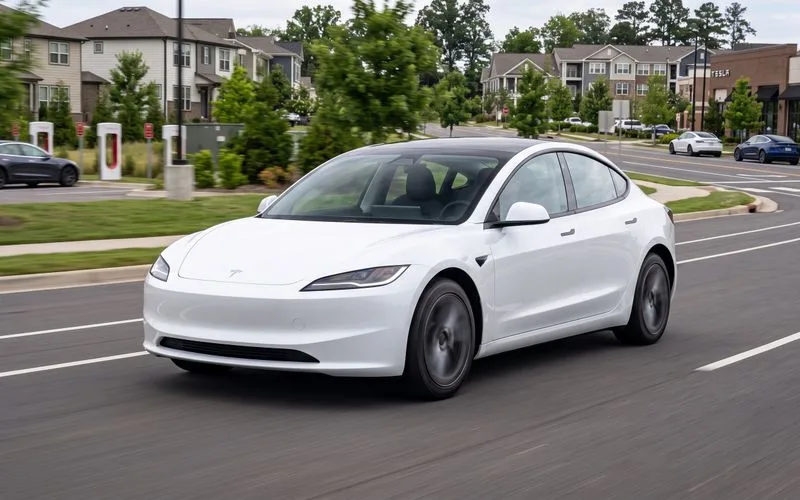 Tesla Model 3Mid-Size Luxury SedanBetter at: Value & charging
Costs less for similar range, charges faster on the Supercharger network with no adapter, and retains far more of its value after five years.
Compare 2.73B-
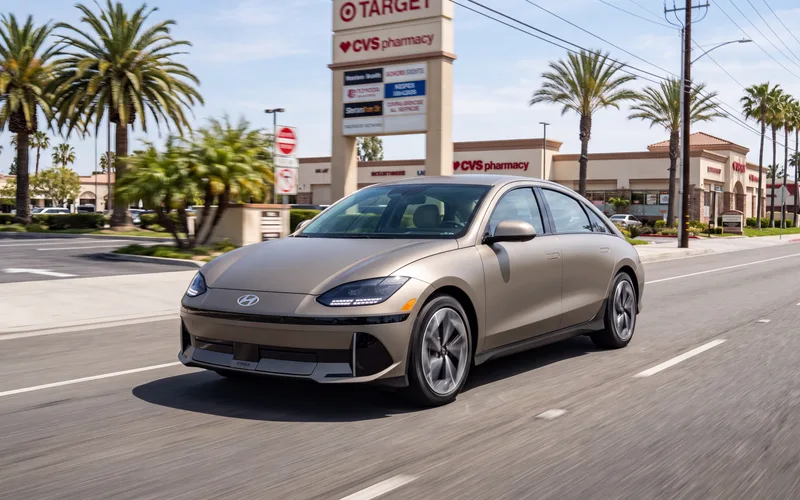 Hyundai Ioniq 6Mid-Size SedanBetter at: Fast charging
Its 800-volt system cuts a 10–80% charge to roughly 18 minutes and it undercuts the i4 by thousands while qualifying for incentives the BMW misses.
Compare 3.26B+
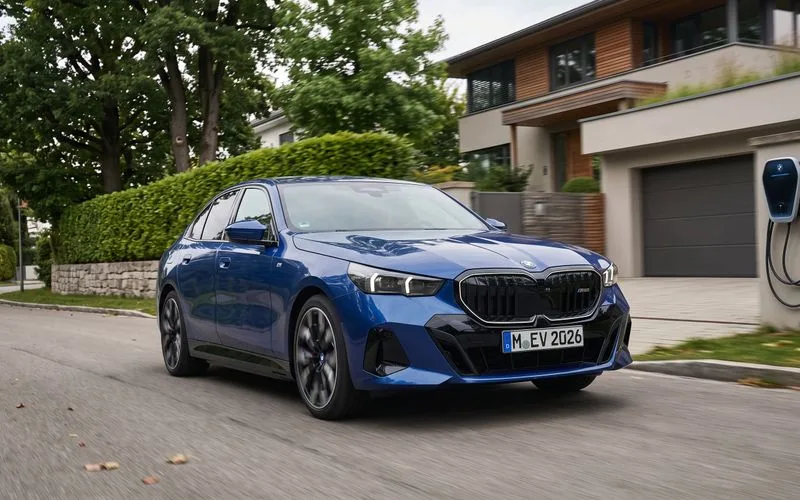 BMW i5Mid-Size Luxury SedanBetter at: Rear-seat space
Same BMW cabin tech and driving character in a larger body that solves the i4's cramped 34.2-inch rear seat.
CompareSubject scores by year
Hover or tap a score to see what moved it versus the year before. A corner mark flags a big swing.
| Year | Performance | Efficiency | Safety | Space | Cost | Reliability | Tech | Use-case | Driving | Value |
|---|---|---|---|---|---|---|---|---|---|---|
| 2026 | 67 | 68 | 75 | 66 | 24 | 72 | 87 | 60 | 77 | 79 |
| 2025 | 67 | 67 | 57 | 62 | 25 | 72 | 80 | 54 | 74 | 77 |
| 2024 | 67 | 66 | 51 | 57 | 28 | 71 | 85 | 58 | 75 | 78 |
| 2023 | 62 | 66 | 53 | 55 | 32 | 66 | 79 | 53 | 75 | 77 |
| 2022 | 61 | 66 | 52 | 55 | 32 | 66 | 79 | 53 | 75 | 73 |
Compare two years
Best fit & conditions
Higher scores mean a better fit for that use case. Learn more about use-case fit →
Subject profile
Academic Probation · NHTSA safety recalls
No NHTSA safety recall is on record for the 2026 BMW i4. Other model years of the i4 have 12 — listed below.
12 recalls on other model years of the i4 (2022–2025)
Dec 23, 2025Electrical system: propulsion system: cablesBMW of North America, LLC (BMW) is recalling one 2025 I4 EDRIVE40 vehicle. The connection between the positive battery cable and the rear power distributor may become loose.
Defect
BMW of North America, LLC (BMW) is recalling one 2025 I4 EDRIVE40 vehicle. The connection between the positive battery cable and the rear power distributor may become loose.
Risk
A loose positive battery cable connection could lead to the vehicle stalling, increasing the risk of a crash. In addition, a loose battery cable can overheat, increasing the risk of a fire.
Remedy
A dealer will check the positive battery cable connection and, if necessary, repair it, free of charge. The owner notification letter is expected to be mailed on February 13, 2026. Owners may contact BMW customer service at 1-800-525-7417. The Vehicle Identification Number (VIN) involved in this recall will be searchable on NHTSA.gov beginning February 13, 2026.
NHTSA campaign 25V906000 ↗1 vehicles potentially affected (all models in the campaign)Owners notified Feb 18, 2026Filed by BMW of North America, LLCFiled as I4 EDRIVE40Jul 23, 2025Electrical system: propulsion system: traction motor: controller: softwareThe electric drive motor software may shut down the high-voltage system, causing a loss of drive power.
Defect
BMW of North America, LLC (BMW) is recalling certain 2022-2025 i4, 2022-2024 IX, 2023-2024 I7, and 2024 I5 vehicles. The electric drive motor software may shut down the high-voltage system, causing a loss of drive power.
Risk
A loss of drive power increases the risk of a crash.
Remedy
The electric drive motor software will be updated over-the-air (OTA) or by a dealer, free of charge. Owner notification letters are expected to be mailed August 5, 2025. Owners may contact BMW customer service at 1-800-525-7417.
NHTSA campaign 25V395000 ↗71,286 vehicles potentially affected (all models in the campaign)Owners notified Aug 8, 2025Filed by BMW of North America, LLCFiled as I4, I4 EDRIVE35, I4 EDRIVE40Jul 16, 2025Electrical system: propulsion system: traction batteryThe high-voltage battery cell modules may not have been assembled properly, resulting in stress on the module frame and possible module failure.
Defect
BMW of North America, LLC (BMW) is recalling certain 2022-2025 IX, 2023-2024 I7, and 2022-2023 i4 vehicles. The high-voltage battery cell modules may not have been assembled properly, resulting in stress on the module frame and possible module failure.
Risk
Battery module failure may lead to a shutdown of the high-voltage system which can result in a loss of drive power, increasing the risk of a crash. In addition, module failure increases the risk of a fire.
Remedy
Dealers will replace specific high-voltage battery cell modules, free of charge. Interim owner notification letters explaining the safety risk were mailed September 11, 2025. Another notice will be sent once the remedy becomes available, anticipated December 31, 2025Owners may contact BMW customer service at 1-800-525-7417.
NHTSA campaign 25V470000 ↗136 vehicles potentially affected (all models in the campaign)Owners notified Dec 2, 2025Filed by BMW of North America, LLCFiled as I4Aug 15, 2024Structure: frame and membersThe left-side longitudinal beam may crack, compromising the structural integrity of the chassis.
Defect
BMW of North America, LLC. (BMW) is recalling certain 2024 i4 eDrive40, xDrive40, and M50 vehicles. The left-side longitudinal beam may crack, compromising the structural integrity of the chassis.
Risk
Reduced structural integrity may result in damage to the high voltage battery during a crash, increasing the risk of fire.
Remedy
Dealers will inspect and replace the left-side longitudinal beam as necessary, free of charge. Owner notification letters were mailed October 14, 2024. Owners may contact BMW customer service at 1-800-525-7417.
NHTSA campaign 24V611000 ↗1,150 vehicles potentially affected (all models in the campaign)Owners notified Oct 14, 2024Filed by BMW of North America, LLCFiled as I4, I4 M50Feb 23, 2024Electrical system: propulsion system: traction batteryThe high-voltage battery module may contain insufficient weld seams, which can result in the battery overheating.
Defect
BMW of North America, LLC (BMW) is recalling certain 2024 i4 xDrive40, i4 M50 and i5 eDrive40 vehicles. The high-voltage battery module may contain insufficient weld seams, which can result in the battery overheating.
Risk
An overheated battery module increases the risk of a fire.
Remedy
Dealers will replace the high-voltage battery module, free of charge. Owners may contact BMW customer service at 1-800-525-7417.
NHTSA campaign 24V135000 ↗4 vehicles potentially affected (all models in the campaign)Owners notified Feb 16, 2024Filed by BMW of North America, LLCFiled as I4, I4 M50Jun 28, 2023Electrical system: propulsion system: hybrid managementThe high voltage battery combined charging unit (CCU) may not have been manufactured correctly, resulting in improperly connected and/or assembled components inside the CCU.
Defect
BMW of North America, LLC (BMW) is recalling certain 2022-2023 iX xDrive50, iX M60, i4 eDrive40, i4 M50, and 2023 i760 xDrive hybrid electric vehicles. The high voltage battery combined charging unit (CCU) may not have been manufactured correctly, resulting in improperly connected and/or assembled components inside the CCU.
Risk
An improperly connected or assembled CCU can interrupt electrical power while driving and result in an engine stall, increasing the risk of a crash.
Remedy
Dealers will replace the high voltage battery combined charging unit (CCU), free of charge. Owner notification letters were mailed August 23, 2023. Owners may contact BMW customer service at 1-800-525-7417.
NHTSA campaign 23V449000 ↗69 vehicles potentially affected (all models in the campaign)Owners notified Aug 23, 2023Filed by BMW of North America, LLCFiled as I4Apr 26, 2023Electrical system: propulsion system: traction batteryThe high voltage battery cell monitoring circuit may have improperly secured electrical connections which can result in an engine stall.
Defect
BMW of North America, LLC (BMW) is recalling certain 2022-2024 iX xDrive50 and 2023 i4 eDrive35, i4 eDrive40, and i4 M50 Hybrid Electric vehicles. The high voltage battery cell monitoring circuit may have improperly secured electrical connections which can result in an engine stall.
Risk
An engine stall increases the risk of a crash.
Remedy
Dealers will replace the high voltage battery cell monitoring circuit, free of charge. Owner notification letters were mailed June 22, 2023. Owners may contact BMW customer service at 1-800-525-7417.
NHTSA campaign 23V295000 ↗31 vehicles potentially affected (all models in the campaign)Owners notified Jun 22, 2023Filed by BMW of North America, LLCFiled as I4Feb 23, 2023Electrical system: body control module: softwareDuring a service visit, a replacement electronic control unit (ECU) may have been installed with incorrect programming, which can cause the automatic door locking (ADL) function to not lock the doors as intended.
Defect
BMW of North America, LLC (BMW) is recalling certain 2023 330i, 330i xDrive, M340i, M340i xDrive, M3, 330e, 330e xDrive, 430i Convertible, 430i xDrive, M440i, 2022-2023 430i, 430i xDrive, M440i xDrive, i4 eDrive40, and i4 M50 vehicles. During a service visit, a replacement electronic control unit (ECU) may have been installed with incorrect programming, which can cause the automatic door locking (ADL) function to not lock the doors as intended.
Risk
Doors that do not lock as intended while the vehicle is in motion may open during a crash, increasing the risk of injury.
Remedy
Dealers will update the ECU software, free of charge. Owner notification letters were mailed April 10, 2023. Owners may contact BMW customer service at 1-800-525-7417.
NHTSA campaign 23V118000 ↗120 vehicles potentially affected (all models in the campaign)Owners notified Apr 10, 2023Filed by BMW of North America, LLCFiled as I4Jan 25, 2023Back over prevention: warnings: external/pedestrian alert · Forward collision avoidance: warnings: external/pedestrian alertDuring vehicle start-up, the artificial sound generator control unit may experience a fault and fail to generate the external pedestrian warning sound. As such, these vehicles fail to comply with the requirements of Federal Motor Vehicle Safety Standard number 141, "Minimum Sound Requirements for Hybrid and Electric Vehicles."
Defect
BMW of North America, LLC (BMW) is recalling certain 2022-2023 i4 eDrive40 and iX xDrive50 electric vehicles. During vehicle start-up, the artificial sound generator control unit may experience a fault and fail to generate the external pedestrian warning sound. As such, these vehicles fail to comply with the requirements of Federal Motor Vehicle Safety Standard number 141, "Minimum Sound Requirements for Hybrid and Electric Vehicles."
Risk
Without external warning sounds, pedestrians may be unaware of an approaching vehicle, increasing the risk of injury.
Remedy
Dealers will update the external artificial sound generator software, free of charge. Owner notification letters were mailed March 9, 2023. Owners may contact BMW customer service at 1-800-525-7417.
NHTSA campaign 23V026000 ↗3,431 vehicles potentially affected (all models in the campaign)Owners notified Mar 9, 2023Filed by BMW of North America, LLCFiled as I4Dec 20, 2022Electrical system: propulsion system: traction battery thermal: management: softwareThe high voltage battery electronic control unit (ECU) software may cause an interruption of electrical power.
Defect
BMW of North America, LLC (BMW) is recalling certain 2022-2023 iX xDrive40, iX xDrive50, iX M60, i4 eDrive35, i4 eDrive40, i4 M50, and 2023 i7 xDrive60 vehicles. The high voltage battery electronic control unit (ECU) software may cause an interruption of electrical power.
Risk
An interruption of electrical power may result in a sudden loss of drive power, increasing the risk of a crash.
Remedy
Dealers will update the high voltage battery ECU software, free of charge. Owner notification letters are expected to be mailed February 10, 2023. Owners may contact BMW customer service at 1-800-525-7417.
NHTSA campaign 22V944000 ↗14,086 vehicles potentially affected (all models in the campaign)Owners notified Feb 3, 2023Filed by BMW of North America, LLCFiled as I4Jul 27, 2022Electrical system: propulsion system: traction batteryThe high voltage battery may have internal damage, resulting in an electrical short-circuit.
Defect
BMW of North America, LLC (BMW) is recalling certain 2022-2023 iX xDrive50, iX M60, 2022 i4 eDrive40, and i4 M50 vehicles. The high voltage battery may have internal damage, resulting in an electrical short-circuit.
Risk
A short-circuit in a high voltage battery increases the risk of a fire.
Remedy
Owners are advised not to drive or charge their vehicles, and to park outside and away from structures until the remedy is complete. Dealers will replace the high voltage battery, free of charge. Interim owner notification letters, informing owners of the safety risk, were mailed September 23, 2022. A second letter will be mailed when remedy parts become available. Owner notification letters were mailed December 23, 2022. Owners may contact BMW customer service at 1-800-525-7417. Owners will also be contacted by phone.
NHTSA campaign 22V541000 ↗367 vehicles potentially affected (all models in the campaign)Owners notified Dec 23, 2022Filed by BMW of North America, LLCFiled as I4Jul 7, 2022Electrical system: instrument cluster/panelWhile in Valet Parking Mode, the Central Information Display (CID) may not display critical safety information, such as warning messages and/or warning lights. As such, these vehicles fail to comply with the requirements of Federal Motor Vehicle Safety Standard number 101, "Control and Displays."
Defect
BMW of North America, LLC (BMW) is recalling certain 2022-2023 iX xDrive40, iX xDrive50, iX M60, 2022 i4 eDrive40, and i4 M50 vehicles equipped with hybrid electric powertrains. While in Valet Parking Mode, the Central Information Display (CID) may not display critical safety information, such as warning messages and/or warning lights. As such, these vehicles fail to comply with the requirements of Federal Motor Vehicle Safety Standard number 101, "Control and Displays."
Risk
A display that does not show critical information, such as warning messages and/or warning lights, can increase the risk of a crash.
Remedy
Dealers will update the display's head unit software, free of charge. Owner notification letters were mailed September 6, 2022. Owners may contact BMW customer service at 1-800-525-7417.
NHTSA campaign 22V483000 ↗6,930 vehicles potentially affected (all models in the campaign)Owners notified Sep 6, 2022Filed by BMW of North America, LLCFiled as I4
Source: NHTSA Office of Defects Investigation recall database, model years 2022–2026. Recalls are listed by model year as the manufacturer filed them; whether a specific car is affected depends on its VIN — check a VIN at nhtsa.gov ↗. NHTSA model names matched to this page: I4, I4 EDRIVE35, I4 EDRIVE40, I4 M50.
Detailed scoring by subject
1Performance & PowertrainMid-pack among this car's ten categories.2.53C+
Volume trim eDrive40 (RWD, base) produces 335 hp from its single rear motor; xDrive40 makes 396 hp and the M60 flagship makes 593 hp. The eDrive35 is not offered in the US for 2026, making eDrive40 the entry trim.
eDrive40 volume trim delivers 317 lb-ft at zero rpm; xDrive40 rises to 443 lb-ft and the M60 tops the range at 586 lb-ft.
eDrive40 volume trim hits 60 mph in a manufacturer-quoted 5.5 seconds; xDrive40 does it in 4.9 s and the M60 in 3.7 s.
EV drivetrain delivers instant, silent, linear thrust with none of the turbo lag or engine coarseness of BMW's ICE sedans. Reviewers consistently rank the i4 among the smoothest premium EVs.
Single-speed direct-drive with no gear steps to hunt for; regen behavior is well calibrated with Sport, Comfort, and one-pedal modes. No hesitation or shift shock at any speed.
AWD is available on two of three trims (xDrive40 and M60) but the volume eDrive40 is RWD only. Dual-motor xDrive uses continuously variable torque split with strong stability control, though there are no terrain modes or low range — this is a road-oriented luxury sedan.
EV-only lineup — no gas, hybrid, or PHEV alternative — but three meaningfully distinct EV configurations (335 hp RWD, 396 hp AWD, 593 hp M60 AWD) span a wide performance and price range. Buyers wanting an ICE alternative can look to the 4 Series Gran Coupe.
2Efficiency & RangeMid-pack among this car's ten categories.2.58C+
EPA combined MPGe for the 2026 eDrive40 in its standard 18-inch wheel configuration. MY2026 brings silicon-carbide inverters across the i4 line, lifting the eDrive40 from 109 to 118 MPGe combined — this is a change year, not a carry-over.
EPA city MPGe for the volume eDrive40. Single-motor RWD plus the new SiC power electronics give strong low-speed efficiency, though the i4's 400V CLAR-derived platform is heavier than dedicated-EV rivals.
EPA highway MPGe for the eDrive40. The 0.24 Cd liftback body and active air-flap control make this one of the strongest highway MPGe figures among EV sedans, and the 2026 inverter change added roughly 15 MPGe over the prior year.
EPA combined range for the volume eDrive40 on its standard 18-inch wheels, from the 83.9 kWh gross / 81.2 kWh usable pack. MY2026 gains 15 miles on 18s and 12 on 19s from the SiC inverters; BMW's claim is that the eDrive40 clears 300 miles on any wheel/tire package.
BMW's fifth-generation eDrive charging hardware is unchanged for 2026 — a 400-volt architecture peaking at 200 kW. Mid-pack among EVs: well ahead of 400V cars capped near 150 kW, but half the rate of 800V rivals like the Ioniq 6 or Taycan.
BMW's quoted 10–80% window on the 83.9 kWh pack, unchanged for 2026 since the charging hardware carried over. Independent charging-curve testing lands slightly under 30 minutes, so the manufacturer figure is realistic rather than optimistic; cold-soaked packs without preconditioning are limited to about 75 kW and take far longer.
EPA estimated annual energy cost at the standard 15,000 mi/yr assumption on national-average residential electricity. The figure assumes home Level 2 charging; owners who rely on public DC fast charging will pay substantially more per kWh.
A full EV with no fuel-grade requirement at all: primary energy is cheap home electricity, with a full 240V charge in 10–12 hours on the standard 11 kW onboard AC charger. Two frictions hold it below the top band — the i4 keeps a CCS1 port for 2026 (BMW's native NACS port rollout began with i5 production in March 2026 and does not cover the i4), so Tesla Supercharger access needs a BMW-approved adapter plus the remote software upgrade, and public DC charging at 200 kW peak on a 400V system is competent rather than quick.
3SafetyGrades above the middle of the scale.3.10B
NHTSA has not published a full 5-part rating for every i4 variant; volume eDrive35/eDrive40 testing yielded a 4-star overall aggregate, dragged by frontal-crash results typical of BMW's compact platform.
Current-generation i4 earns Good ratings in moderate-overlap and updated side crash tests with Acceptable in the small-overlap driver side; historically a TSP recipient but headlight and rear-passenger protection results have kept it off TSP+ in the newest criteria.
Active Driving Assistant is standard across the range and includes automatic emergency braking, forward collision warning, active blind-spot detection, lane departure warning, rear cross-traffic alert, and speed-limit info — a fully comprehensive standard suite.
BMW's front crash prevention system earns Advanced-to-Superior ratings in IIHS vehicle-to-vehicle testing; pedestrian daytime detection is strong, though nighttime pedestrian results are Advanced rather than Superior.
Active Blind Spot Detection with steering-wheel haptic warning and Rear Cross-Traffic Alert are standard across all trims, with camera-based Rear Collision Preparation also included.
Standard Lane Departure Warning; true lane-centering ('Steering & Lane Control Assistant') requires Driving Assistant Professional package. Reviewers describe the optional system as smooth on highways with occasional wander in gentle curves.
Full-speed-range adaptive cruise with stop-and-go is bundled in Driving Assistant Professional (optional on lower trims, standard on i4 M50). Reviewers call the ACC among the most refined in the segment, with smooth resumes and confident distance keeping.
BMW Highway Assistant enables hands-free driving up to 85 mph on approved divided highways; capability is mature but the mapped-road network in the US is narrower than GM Super Cruise or Ford BlueCruise, keeping this below the highest tier.
Standard LED headlights rate Acceptable in IIHS testing; Adaptive LED with cornering function (optional package, standard on M50) rates Good. Volume trims sit mid-pack because owners must upgrade for the top rating.
Fastback gran-coupe roofline and thick C-pillars create a narrow rear window and sizeable over-shoulder blind spots; a 360-degree camera system (Parking Assistant Plus) is optional and compensates well when equipped but is not standard on lower trims.
Two outboard LATCH anchor sets are workable but partially buried behind seat cushions; the compact rear bench and sloping roofline restrict rear-facing seat clearance and make three-across nearly impossible.
4Space & ComfortOne of the i4's weakest categories.2.48C+
Standard 5-passenger configuration with a 40/20/40 split-folding rear seat across all i4 trims.
US spec sheet figure with the panoramic moonroof that is fitted to most trims; middle of the compact luxury sedan pack.
Adequate for the compact luxury sedan class but at the low end of the segment; shared architecture with the 4 Series Gran Coupe.
Coupe-like roofline cuts into rear headroom; on par with the Tesla Model 3 but below the BMW 3 Series sedan.
The under-floor battery pushes the rear seat cushion up and shortens usable rear legroom; among the tightest rear seats in the compact luxury EV sedan class.
The i4 is a Gran Coupe liftback — 470 L (≈16.6 cu ft) behind the rear seats, expanding to 1,290 L (≈45.6 cu ft) with the rear seat folded. Real-world utility is much higher than a fixed-trunk sedan of similar posted volume.
Competitive but not standout: usable center console cubby, decent door bins, wireless charging tray, and a large hatchback opening with a 40/20/40 pass-through are pluses; no frunk under the hood and only a shallow trunk sub-floor limit hidden storage versus purpose-built EVs like the Model 3 and Polestar 2.
Standard sport seats offer strong lateral bolstering with 8-way power adjustment and driver memory; multi-contour and ventilated seats optional. Front seats earn praise for long-haul comfort though reviewers call the rear bench flat and firm.
Composed with impressive body control for a ~4,700-lb EV, but base and M Sport suspensions ride on the firm side and get busy over broken pavement; not as plush as an EQE or Lucid Air.
EV silence plus acoustic front windshield and available acoustic side glass produce a hushed cabin at highway speed; some road noise intrudes on coarse pavement, especially on 19–20 in performance tires.
Heated front seats, dual-zone auto climate, wireless charging, and remote pre-conditioning via the My BMW app are standard; heated steering wheel, heated rear seats, ventilated front seats, and 4-zone climate available as options or on higher trims.
5Cost of OwnershipThe i4's lowest-graded category.0.00F
2026 eDrive40 base is $57,900 + $1,350 destination. xDrive40 $61,600, M60 $68,300. Sits above the sedan normalization band (22k–55k), so the pipeline will floor this near 0.
eDrive40 is the volume trim; a typically-optioned car adds Premium Package (~$2,500) plus color/wheel upgrade, landing near $63.5k. Above the sedan volume-trim band (24k–58k).
EV drivetrain trims routine service to cabin filters, brake fluid, tire rotations. CarEdge projects ~$2,614; Recharged/owner data suggests $3,000–$3,750 including tires and consumables through year 5.
EV depreciation on luxury cars is severe; iSeeCars pegs the i4 at 35.5% retention (~64.5% loss). Federal EV credit at purchase further compresses used values vs the gas 4 Series (~49% retention).
BMW's standard new-vehicle limited warranty is 4 yr / 50,000 mi bumper-to-bumper, unchanged for the 2026 i4.
BMW covers the high-voltage battery and electric drivetrain for 8 yr / 100,000 mi — federal EV minimum, no meaningful extension above the norm.
3 yr / 36,000 mi BMW Ultimate Care scheduled maintenance plus 4-yr roadside assistance and 3-yr ConnectedDrive Remote Services trial. No standing public-charging credit bundled at this price class (unlike EQE/Taycan/Model S offers), keeping perks solid but not standout.
$63,500 volume-trim price minus its estimated resale value after 5 years (36% retained, or about $22,860) leaves about $40,640 in depreciation. Add the projected $3,200 in 5-year maintenance and repairs, and owning this vehicle for 5 years costs about $43,840 in total.
6Reliability & QualityGrades above the middle of the scale.2.87B-
Consumer Reports has rated the i4 with above-average predicted reliability in recent model years since its 2022 launch, reflecting EV simplicity and a maturing platform. J.D. Power quality scores for the i4 have been solid but not class-leading.
BMW consistently ranks mid-pack among luxury brands in J.D. Power Vehicle Dependability Study and Consumer Reports brand rankings — respectable but well behind Lexus/Toyota and behind Genesis, and with recent complexity-driven problems on newer generations.
The i4 experienced a notable 2023 battery-cell stop-sale/recall (potential short-circuit risk) plus typical BMW electrical/software TSBs. Nothing systemic to the powertrain in later production, but not a clean sheet either.
BMW's 5th-generation eDrive motor/inverter architecture is now shared across i4/iX/i5/i7 with growing real-world miles and no systemic failure patterns; Samsung SDI battery pack has performed well in field data. EVs also have far fewer wear items than ICE.
The i4 cabin features BMW's curved display, Sensatec/Vernasca leather, aluminum trim, and consistently soft-touch surfaces in high-touch zones. Reviewers place it at or above class average for compact luxury sedans.
Built alongside the 4 Series Gran Coupe at BMW's Munich plant with tight panel gaps and consistent assembly. Occasional scattered complaints of trim rattles/software glitches, in line with the segment.
BMW operates roughly 340 US dealerships — solid nationwide coverage though thinner in rural areas than mass-market brands. Service satisfaction (J.D. Power CSI) is mid-pack among luxury brands.
BMW parts and labor rates are notably expensive out of warranty, and EV-specific components (battery modules, inverter, high-voltage cabling) further inflate repair costs. Independent-shop and aftermarket support exists but is limited compared to Japanese/domestic sedans.
7Technology & InfotainmentThe i4's best-graded category.3.91A+
The 2026 i4 carries BMW's Curved Display standard across the range — a 12.3-inch driver display fused with a 14.9-inch central touchscreen running iDrive 8.5.
iDrive 8.5 is fast and visually polished with the retained rotary controller — a real usability advantage vs pure-touch rivals — but reviewers note deeper menu structures and heavier touch reliance vs the outgoing iDrive 7 for climate and basic settings.
Wireless Apple CarPlay and wireless Android Auto are standard across all i4 trims, integrated into the Curved Display with a resizable side pane.
BMW Intelligent Personal Assistant handles natural-language commands and vehicle functions well, and BMW Maps with AR navigation and EV route planning is class-competitive — behind Google-integrated systems for POI search but ahead of most legacy luxury nav suites.
Standard 10-speaker HiFi audio is competent; Harman Kardon Surround Sound is optional on most trims, and the reference Bowers & Wilkins Diamond system (16 speakers) is available as a top-tier upgrade praised in reviews.
12.3-inch full-digital driver display is standard as part of the Curved Display — crisp, configurable, with drive-mode-specific themes.
BMW Remote Software Upgrade delivers whole-vehicle OTAs on a regular cadence, occasionally adding features (Digital Key improvements, iDrive refinements) rather than just maps.
My BMW app is polished with remote climate, lock, locate, charge scheduling, and Digital Key Plus (UWB-capable iPhones and select Android phones). ConnectedDrive features are included for a lengthy trial with modest subscription fees after.
USB-C ports front and rear with a wireless phone charging tray standard on most trims; no household AC outlet, which limits the ceiling.
Comfort Access keyless entry and push-button start are standard, and BMW Digital Key Plus supports UWB phone-as-key on iPhone and select Android phones for passive-approach unlocking.
Parking Assistant Plus with 3D Surround View, Remote 3D View via the app, and Reversing Assistant (retraces the last 50 m) is available; front and rear parking sensors are standard. Widely available but not standard on the volume trim.
Full-color Head-Up Display is available on the i4 via option packages — large, informative, with nav and drive info — but not standard on the volume trim.
8Use-Case FitOne of the i4's weakest categories.2.02C
Fastback liftback opening and 40/20/40 rear split help stroller and gear loading, but the sloping roofline eats rear headroom and the compact door aperture makes rear-facing car-seat installs tight, on par with the 3 Series/4 Series Gran Coupe.
Strong ADAS suite standard (Active Driving Assistant: FCW, AEB with pedestrian detection, lane departure warning, blind-spot, rear cross-traffic) and Top Safety Pick credentials, though full-speed adaptive cruise and lane-keep bundle into optional Driving Assistance Professional.
Quiet luxury cabin and 300-mile eDrive40 range are strong, but the ~10 cu ft trunk is small for a family and rear headroom is snug for taller adults on multi-hour drives.
Silent, instant-torque EV powertrain, adaptive B-mode one-pedal driving, and a comfortable low-speed ride make the i4 an effortless commuter with only the firm optional M Sport suspension as a caveat.
EPA 3.4 mi/kWh combined translates to roughly 4–5 cents per mile at US-average residential electricity, dramatically cheaper than any comparable ICE luxury sedan; premium tires and higher insurance are the offsets.
Compact-sedan footprint (~188 in length) and standard parking sensors plus rearview camera make the i4 easy to park; rear visibility is compromised by the sloping fastback roofline and thick C-pillars, partly mitigated by a 360° camera option.
The i4 is not rated to tow in North America and offers only a small sedan trunk — it has essentially no work-vehicle capability beyond hauling a briefcase and a laptop bag.
Luxury leatherette/leather-lined interior, low ride height, and complex electronics are the opposite of a work-truck profile; no fleet track record for jobsite duty.
No factory tow hitch, no bed, no jobsite outlets, no upfit ecosystem — the i4 offers only a 12V outlet and basic trunk tie-downs.
Superb highway quietness and comfortable front seats plus 270–301 mi range and 200 kW peak DC charging make it a competent EV tourer, but stops are still ~30 minutes each and the small trunk limits luggage for two-plus travelers.
AWD is available on xDrive40 and M50, but ~5.5 in ground clearance, low-profile summer/all-season performance tires, no factory roof rails and no towing rating keep the i4 confined to pavement and gravel road-trip duty.
The liftback hatch and 40/20/40 folding rear seat give the i4 far more gear flexibility than a traditional sedan (long skis or a bike through the pass-through), but the ~10 cu ft trunk and lack of factory roof rails or a hitch cap total cargo utility.
9Driving ExperienceOne of the i4's strongest categories.3.25B+
Built on the 4 Series Gran Coupe platform with near-50/50 weight distribution and adaptive dampers on M Sport/M50 trims. Battery weight (curb ~4,680–5,020 lb) blunts the classic 3-Series feel, but Car and Driver and MotorTrend consistently rate the i4 among the best-handling EV sedans, ahead of Tesla Model 3 and Mercedes EQE.
Variable-ratio electric rack is quick, accurate, and naturally weighted, but reviewers note it filters out road texture more than a BMW 3 Series. Above the EV-sedan average yet a step short of an ICE M340i.
Strong hardware — M50 brakes stopped 70–0 mph in ~154 ft in C/D testing — with much-improved regen-to-friction blending since the 2024 iDrive 8.5 refresh. Pedal feel is firm and linear; the M50's larger discs give confident fade resistance.
Single-speed EV drivetrain delivers instant, seamless torque with no shift shock or engine start/stop artifacts. Tip-in calibration is well-tuned across Comfort/Sport modes; multi-motor xDrive/M50 hand-off is imperceptible.
Near-silent electric motors with well-suppressed inverter whine; BMW's IconicSounds Electric adds synthesized character on demand. Some low-frequency tire and wind noise intrudes at highway speeds per reviews, but the drivetrain itself is exemplary.
BMW USA lists a 12.0 m curb-to-curb turning circle for the i4 (both eDrive40 and M50). Longer than compact-sedan norms because of the platform's wide track and battery-driven wheelbase.
Excellent seat range, thigh extension, and low-slung driving position typical of BMW. Sightlines are compromised by the low roof/high beltline, and iDrive 8.5's touchscreen-first climate/audio layout draws criticism versus the older rotary-heavy setup.
M50 xDrive is genuinely engaging — 536 hp, 3.7-second 0–60, and Boost mode that lets it hustle like a proper sport sedan; eDrive40 RWD retains balance and playfulness. Not quite ICE-M-car engaging, but among the most enthusiast-friendly EV sedans on sale.
10Value & Market PositionOne of the i4's strongest categories.3.39B+
Base eDrive35 (~$52k MSRP) includes 18" wheels, panoramic roof, iDrive 8.5 with 14.9" curved display + 10.25" cluster, wireless Apple CarPlay/Android Auto, adaptive suspension, and BMW Digital Key — competitive but BMW still charges extra for Harman Kardon audio, the heated seats bundle (Premium package), and Driving Assistance Professional, keeping it in familiar German nickel-and-dime territory versus a more loaded Genesis G70 or Volvo S60.
Value is uneven across the lineup — eDrive35/eDrive40 (~$52-58k) are premium-priced against a Tesla Model 3 Long Range or Polestar 2 for comparable range, but the i4 M50 (~$71k, 536 hp, 3.7-sec 0-60) is widely called one of the best performance-EV values available, delivering M-car dynamics and BMW refinement for meaningfully less than a comparably specced Porsche Taycan or Audi e-tron GT.
Four well-spaced trims — eDrive35 (RWD 281 hp), eDrive40 (RWD 335 hp, longest range), xDrive40 (AWD 396 hp), and M50 (AWD 536 hp) — span roughly $52k to $72k with clear power/range/drivetrain differentiation, giving buyers meaningful choice from budget entry-luxury EV to genuine sport EV within one nameplate.
The i4 has been BMW's best-selling EV in the US since launch, running ~13-15k units annually and outselling most luxury EV rivals including the Mercedes EQE Sedan, Audi e-tron GT, and Tesla Model S — a strong showing in the still-small premium EV sedan segment even if it cannot touch Model 3 volume.
BMW remains a top-tier premium brand globally with a strong loyalist following, and the i4 benefits from full BMW cachet plus the M50's association with the M sub-brand — buyers get 'Ultimate Driving Machine' credibility without the perception drag that has affected some rival luxury EVs.
i4 does not qualify for the federal $7,500 EV purchase credit (built in Munich), but BMW routinely passes through the commercial-vehicle EV credit on leases — making lease offers genuinely attractive — and pairs it with loyalty/conquest cash and subsidized APR on eDrive40/xDrive40 trims, so meaningful buyer savings are commonly available without desperation pricing.
Mid-cycle LCI facelift arrived for 2025 with new grille, revised lighting, updated interior trim, and iDrive 8.5 — keeping the current-gen i4 (launched for 2022) contemporary through 2026, though BMW's Neue Klasse EV platform arriving 2027-2028 is a modest looming-redesign concern for long-hold buyers.
The i4 M50 made Car and Driver's 10Best in 2023, and the i4 is consistently praised across MotorTrend, Edmunds, KBB, and Consumer Reports for driving dynamics, ride/handling balance, and interior quality — it regularly wins or medals in comparison tests against the Tesla Model 3 Performance and Polestar 2.