
The verdict
A strong mid-size luxury sedan, strong on safety and held back by ownership.
The 2026 BMW i5 is the electric 5 Series done properly — a hushed, beautifully built mid-size luxury sedan with a 14.9-inch curved display, a 5-star NHTSA rating and IIHS Top Safety Pick+ credentials, and one of the smoothest EV powertrains on sale. What it is not is a bargain: the volume eDrive40 lands around $69,175 to start and low-$70Ks as typically equipped, and luxury-EV depreciation is brutal enough that five years of ownership pencils out near $49,800. Its 310-mile range and 205 kW peak charging are respectable but no longer impressive next to 800-volt rivals, and rear legroom of 36.6 inches genuinely trails an E-Class. Buy it for the way it drives and the way the cabin feels — lease it rather than buy it if the depreciation math matters to you.
Jump to scoresStrengths
- Genuinely first-rate safety credentials
- Class-leading screens and software
- A remarkably quiet, refined way to travel
What holds it back
- The depreciation is punishing
- Range and charging speed are only average
- Back seat is tighter than the price suggests
Top alternatives
Cars shoppers cross-shop with the BMW i5 3.27B+
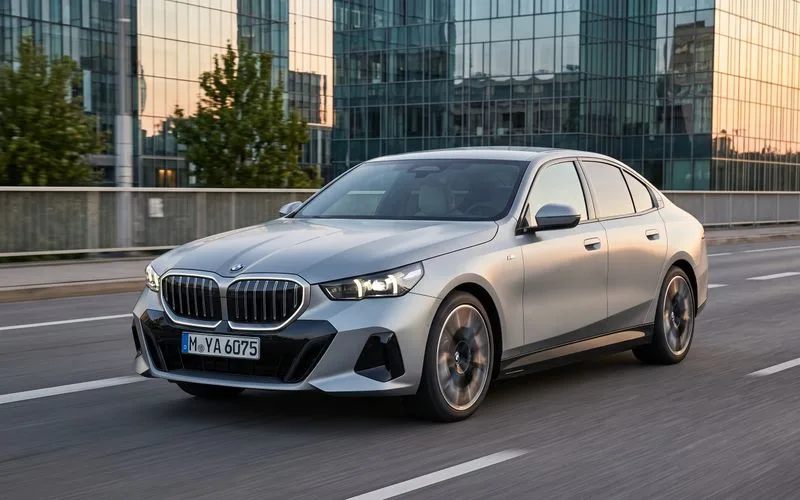 BMW 5 SeriesMid-Size Luxury SedanBetter at: Resale value
Same car, same cabin, same screens — but with a 500-mile tank range and roughly ten percentage points better five-year resale, which is the i5's single weakest number.
Compare 2.93B-
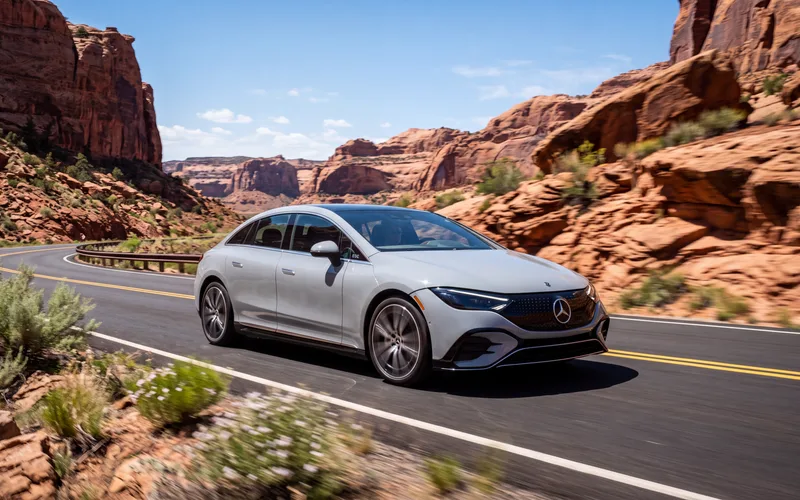 Mercedes-Benz EQE SedanMid-Size Luxury SedanBetter at: Rear-seat space
The closest electric rival, with more than 39 inches of rear legroom against the i5's 36.6 and more equipment bundled into the base price.
Compare 2.73B-
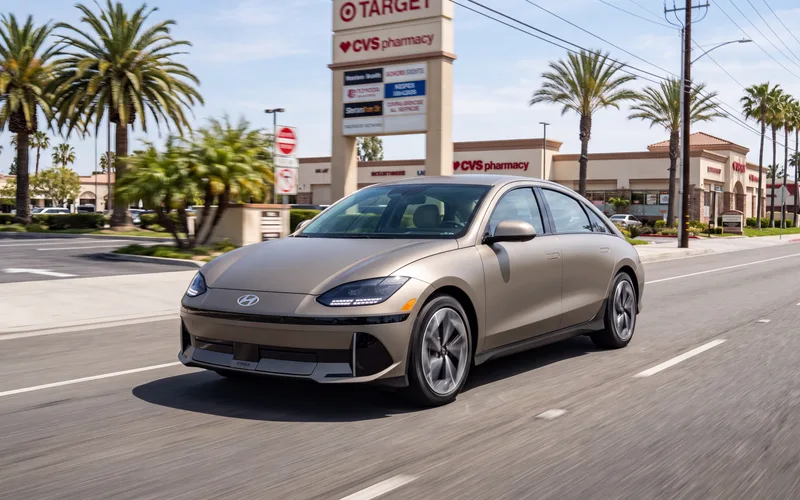 Hyundai Ioniq 6Mid-Size SedanBetter at: Charging speed
An 800-volt architecture charges 10–80% in about 18 minutes versus the i5's 30, goes further per kWh, and costs tens of thousands less.
CompareSubject scores by year
Hover or tap a score to see what moved it versus the year before. A corner mark flags a big swing.
| Year | Performance | Efficiency | Safety | Space | Cost | Reliability | Tech | Use-case | Driving | Value |
|---|---|---|---|---|---|---|---|---|---|---|
| 2026 | 66 | 68 | 87 | 76 | 18 | 74 | 87 | 62 | 75 | 77 |
| 2025 | 66 | 67 | 77 | 74 | 18 | 68 | 86 | 60 | 74 | 74 |
| 2024 | 62 | 67 | 64 | 74 | 20 | 63 | 85 | 52 | 76 | 77 |
Compare two years
Best fit & conditions
Higher scores mean a better fit for that use case. Learn more about use-case fit →
Subject profile
Academic Probation · NHTSA safety recalls
Feb 19, 2026Electrical system: wiringThe electrical wiring harness for the air conditioning system may become damaged during replacement of the cabin air filter.
Defect
BMW of North America, LLC (BMW) is recalling certain 2025 M5 Sportswagon, 2025-2026 M5, 2024-2025 750e xDrive, 2025-2026 550e xDrive, 2023-2025 I7, 2023-2025 7 Series, 2024-2026 i5, and 5 Series vehicles. The electrical wiring harness for the air conditioning system may become damaged during replacement of the cabin air filter.
Risk
A damaged wiring harness can short-circuit, increasing the risk of a fire.
Remedy
Dealers will inspect and replace the air conditioning systemâs electrical wiring harness and add a retaining strap/bracket to the harness, as necessary, free of charge. Owner notification letters were mailed April 16, 2026. Owners may contact BMW customer service at 1-800-525-7417. Vehicle Identification Numbers (VINs) involved in this recall will be searchable on NHTSA.gov beginning April 13, 2026.
NHTSA campaign 26V096000 ↗58,713 vehicles potentially affected (all models in the campaign)Owners notified Apr 16, 2026Filed by BMW of North America, LLCFiled as I5 EDRIVE40, I5 M60 XDRIVE, I5 XDRIVE40
9 recalls on other model years of the i5 (2024–2025)
Jul 1, 2026Electronic stability control (esc) · Service brakes, hydraulic: power assist: electric: control moduleThe integrated brake (IB) system may malfunction and result in a loss of power brake assist or cause the Antilock Brake (ABS) and Dynamic Stability Control (DSC) systems to not function properly.
Defect
BMW of North America, LLC (BMW) is recalling certain 2025 Mini Cooper S, Mini Countryman S All4, X2, 2024 Rolls-Royce Spectre, 2023-2025 i7, 7 Series, X7, 2024-2025 i5, 5 Series, 2023-2024 XM, X1, 2024-2025 X6, and X5 vehicles. The integrated brake (IB) system may malfunction and result in a loss of power brake assist or cause the Antilock Brake (ABS) and Dynamic Stability Control (DSC) systems to not function properly.
Risk
A loss of power brake assist can extend the distance required to stop the vehicle. Additionally, malfunctioning ABS and/or DSC systems can cause a loss of vehicle control. Either of these scenarios can increase the risk of a crash.
Remedy
The Integrated brake system will be inspected and, if necessary, replaced, free of charge. Owner notification letters are expected to be mailed August 21, 2026. Owners may contact BMW customer service at 1-800-525-7417 or Rolls-Royce customer service at 1-877-877-3735. Vehicle Identification Numbers (VINs) involved in this recall will become searchable on NHTSA.gov beginning August 21, 2026. Vehicles previously repaired under recall 24V739 or 24V104 will need to have the new remedy completed.
NHTSA campaign 26V422000 ↗428 vehicles potentially affected (all models in the campaign)Owners notified Aug 25, 2026Filed by BMW of North America, LLCFiled as I5Jul 23, 2025Electrical system: propulsion system: traction motor: controller: softwareThe electric drive motor software may shut down the high-voltage system, causing a loss of drive power.
Defect
BMW of North America, LLC (BMW) is recalling certain 2022-2025 i4, 2022-2024 IX, 2023-2024 I7, and 2024 I5 vehicles. The electric drive motor software may shut down the high-voltage system, causing a loss of drive power.
Risk
A loss of drive power increases the risk of a crash.
Remedy
The electric drive motor software will be updated over-the-air (OTA) or by a dealer, free of charge. Owner notification letters are expected to be mailed August 5, 2025. Owners may contact BMW customer service at 1-800-525-7417.
NHTSA campaign 25V395000 ↗71,286 vehicles potentially affected (all models in the campaign)Owners notified Aug 8, 2025Filed by BMW of North America, LLCFiled as I5Oct 2, 2024Electronic stability control (esc) · Service brakes, hydraulic: power assist: electric: control modulePlease see the recall report for a complete list of models and model years. The integrated brake (IB) system may malfunction and result in a loss of power brake assist or cause the Antilock Brake (ABS) and Dynamic Stability Control (DSC) systems to not function properly.
Defect
BMW of North America, LLC. (BMW) is recalling certain 2023-2024 X1, X5, X6, X7, XM, 530i, i5, 740i, 760i, i7, and 750e vehicles. Please see the recall report for a complete list of models and model years. The integrated brake (IB) system may malfunction and result in a loss of power brake assist or cause the Antilock Brake (ABS) and Dynamic Stability Control (DSC) systems to not function properly.
Risk
A loss of power brake assist can extend the distance required to stop the vehicle. Additionally, malfunctioning ABS and/or DSC systems can cause a loss of vehicle control. Either of these scenarios can increase the risk of a crash.
Remedy
Dealers will replace the integrated brake module, free of charge. Interim owner notification letters notifying owners of the safety risk are expected to be mailed November 22, 2024. Second letters will be mailed once the parts are available. Owners may contact BMW customer service at 1-800-525-7417. Vehicles in this recall were previously repaired under recall number 24V-104 and will need to have the new remedy completed.
NHTSA campaign 24V739000 ↗11,579 vehicles potentially affected (all models in the campaign)Owners notified Nov 27, 2024Filed by BMW of North America, LLCFiled as I5 EDRIVE40, I5 M60 XDRIVESep 25, 2024Steering: linkages: knuckle: spindle: armThe steering spindle may break requiring a greater steering effort to control the vehicle.
Defect
BMW of North America (BMW) is recalling certain 2024-2025 530i xDrive, 540i xDrive, 2024-2025 i5 eDrive40, i5 M60 xDrive, 2025 i5 xDrive40, 2024 740i xDrive, 760i xDrive, 750e xDrive, i7 eDrive50, i7 xDrive60, and i7 M70 xDrive vehicles. The steering spindle may break requiring a greater steering effort to control the vehicle.
Risk
A sudden increase in required steering effort increases the risk of a crash.
Remedy
Dealers will replace the steering spindle's double universal joint, free of charge. Owner notification letters were mailed November 22, 2024. Owners may contact BMW Customer Service at 1-800-525-7417.
NHTSA campaign 24V714000 ↗982 vehicles potentially affected (all models in the campaign)Owners notified Nov 22, 2024Filed by BMW of North America, LLCFiled as I5 EDRIVE40, I5 M60 XDRIVE, I5 XDRIVE40Sep 18, 2024Electronic stability control (esc): control module · Service brakes, hydraulic: antilock/traction control/electronic limited slip: control unit/modulePlease refer to the recall report for the complete list of models. The welds in the servomotor of the integrated brake control module may break, causing a loss of power brake assist and rear brake function. In addition, the Antilock Brake System (ABS) and Dynamic Stability Control (DSC) system may not function.
Defect
BMW of North America (BMW) is recalling certain 2023-2024 X1, 2024-2025 X5, 2025 X6, 2023-2025 X7, 740i, 760i, 2024 XM, 530i, 540i, i7, 750e, X2, 2024-2025 i5, 2024 Rolls Royce Spectre, 2025 MINI Countryman S ALL4, JCW Countryman ALL4, and 2025 MINI Hardtop 2 Door (Cooper, Cooper S) vehicles. Please refer to the recall report for the complete list of models. The welds in the servomotor of the integrated brake control module may break, causing a loss of power brake assist and rear brake function. In addition, the Antilock Brake System (ABS) and Dynamic Stability Control (DSC) system may not function.
Risk
A loss of brake power assist or rear brake function can result in extended stopping distance. A loss of ABS or DSC can cause a loss of vehicle handling and control. Either of these scenarios can increase the risk of a crash.
Remedy
Dealers will replace the integrated brake system, free of charge. Owner notification letters were mailed November 13, 2024. Owners can contact BMW Customer Service at 1-800-525-7417.
NHTSA campaign 24V697000 ↗309 vehicles potentially affected (all models in the campaign)Owners notified Nov 13, 2024Filed by BMW of North America, LLCFiled as I5Feb 23, 2024Electrical system: propulsion system: traction batteryThe high-voltage battery module may contain insufficient weld seams, which can result in the battery overheating.
Defect
BMW of North America, LLC (BMW) is recalling certain 2024 i4 xDrive40, i4 M50 and i5 eDrive40 vehicles. The high-voltage battery module may contain insufficient weld seams, which can result in the battery overheating.
Risk
An overheated battery module increases the risk of a fire.
Remedy
Dealers will replace the high-voltage battery module, free of charge. Owners may contact BMW customer service at 1-800-525-7417.
NHTSA campaign 24V135000 ↗4 vehicles potentially affected (all models in the campaign)Owners notified Feb 16, 2024Filed by BMW of North America, LLCFiled as I5Feb 12, 2024Electronic stability control (esc) · Service brakes, hydraulic: power assist: electric: control modulePlease see the recall report for a complete list of models and model years. The integrated brake (IB) system may malfunction and result in a loss of power brake assist or cause the Antilock Brake (ABS) and Dynamic Stability Control (DSC) systems to not function properly.
Defect
BMW of North America, LLC. (BMW) is recalling certain 2023-2025 BMW, MINI, and Rolls-Royce vehicles. Please see the recall report for a complete list of models and model years. The integrated brake (IB) system may malfunction and result in a loss of power brake assist or cause the Antilock Brake (ABS) and Dynamic Stability Control (DSC) systems to not function properly.
Risk
A loss of power brake assist can extend the distance required to stop the vehicle. Additionally, malfunctioning ABS and/or DSC systems can cause a loss of vehicle control. Either of these scenarios can increase the risk of a crash.
Remedy
Dealers will replace the integrated brake system, free of charge. Owner notification letters were mailed between June and December 2024. Owners may contact BMW customer service at 1-800-525-7417 or Rolls Royce customer service at 1-877-877-3735.
NHTSA campaign 24V104000 ↗266,716 vehicles potentially affected (all models in the campaign)Owners notified Jun 28, 2024Filed by BMW of North America, LLCFiled as I5Dec 22, 2023Back over prevention: warnings: external/pedestrian alert · Forward collision avoidance: warnings: external/pedestrian alertDuring vehicle start-up, the artificial sound generator control unit may experience a fault and fail to generate the external pedestrian warning sound. As such, these vehicles fail to comply with the requirements of Federal Motor Vehicle Safety Standard number 141, "Minimum Sound Requirements for Hybrid and Electric Vehicles."
Defect
BMW of North America, LLC (BMW) is recalling certain 2024 i5 eDrive40 and i5 M60 vehicles. During vehicle start-up, the artificial sound generator control unit may experience a fault and fail to generate the external pedestrian warning sound. As such, these vehicles fail to comply with the requirements of Federal Motor Vehicle Safety Standard number 141, "Minimum Sound Requirements for Hybrid and Electric Vehicles."
Risk
Without external warning sounds, pedestrians may be unaware of an approaching vehicle, increasing the risk of injury.
Remedy
Dealers will update the external artificial sound generator software, free of charge. Owner notification letters were mailed February 16, 2024. Owners may contact BMW customer service at 1-800-525-7417. Note: This is an expansion of Recall 23V-026.
NHTSA campaign 23V885000 ↗4,926 vehicles potentially affected (all models in the campaign)Owners notified Feb 16, 2024Filed by BMW of North America, LLCFiled as I5, I5 M60Oct 18, 2023Electrical system: adas: driver monitoring: camera/sensorThe ground connection to the steering wheel may not have been attached correctly, resulting in an inoperative hands-on detection system.
Defect
BMW of North America, LLC (BMW) is recalling certain 2023-2024 740i, 740i xDrive, 760i xDrive, i7 eDrive50, i7 xDrive60, i7 M70, 2024 750e xDrive, 530i, 530i xDrive, i5 eDrive40, and i5 M60 vehicles. The ground connection to the steering wheel may not have been attached correctly, resulting in an inoperative hands-on detection system.
Risk
An inoperative hands-on detection system may fail to detect when the driver's hands are not on the steering wheel and therefore not engage the emergency stopping assistant system, increasing the risk of a crash.
Remedy
Dealers will inspect and reattach the ground connection as necessary, free of charge. Owner notification letters were mailed December 8, 2023. Owners may contact BMW customer service at 1-800-525-7417.
NHTSA campaign 23V700000 ↗12,296 vehicles potentially affected (all models in the campaign)Owners notified Dec 8, 2023Filed by BMW of North America, LLCFiled as I5, I5 M60
Source: NHTSA Office of Defects Investigation recall database, model years 2024–2026. Recalls are listed by model year as the manufacturer filed them; whether a specific car is affected depends on its VIN — check a VIN at nhtsa.gov ↗. NHTSA model names matched to this page: I5, I5 EDRIVE40, I5 M60, I5 M60 XDRIVE, I5 XDRIVE40.
Detailed scoring by subject
1Performance & PowertrainOne of the i5's weakest categories.2.44C+
Volume trim is the RWD eDrive40 at 335 hp; xDrive40 raises output to 389 hp and the M60 tops the range at 593 hp with Launch Control.
eDrive40's single rear motor produces 317 lb-ft; instant EV torque delivery gives strong step-off despite a mid-pack peak figure for the segment.
eDrive40 posts a manufacturer-quoted 5.7 s to 60 mph; the M60 xDrive drops to a supercar-adjacent 3.7 s.
EV delivery is uniformly praised as smooth, quiet, and immediate; no lag, no coarse transitions, with BMW's IconicSounds cues toggleable for pure calm.
Single-speed reduction gear means no shifts to critique; regen tuning is progressive with a well-judged adaptive B mode that reads traffic.
Dual-motor xDrive is available on two of three i5 trims (xDrive40 and M60), giving buyers straightforward access to AWD without stepping to the top trim, though the standard configuration is RWD.
The i5 nameplate is EV-only — three motor tunes but a single fuel type; gas and PHEV buyers must cross-shop the 5 Series proper. Rubric rewards multiple distinct powertrains, which the i5 does not offer.
2Efficiency & RangeMid-pack among this car's ten categories.2.60C+
2026 is a change year, not a carry-over: new silicon-carbide inverters in the power electronics plus lower-friction wheel bearings lift the eDrive40 from the prior year's rating to 110 MPGe combined on standard 19" wheels. The prior scorecard's 87 MPGe was a stale/incorrect figure for this nameplate.
EPA city rating for the volume eDrive40 on standard wheels; adaptive regenerative braking that reads traffic and terrain helps in stop-and-go use. Up on the prior model year with the MY2026 efficiency hardware.
Strong steady-state efficiency for a mid-size luxury EV, helped by the G60's 0.22–0.23 drag coefficient, active grille shutters, flush door handles and closed-off underbody.
EPA range on the 84.3 kWh pack in the volume eDrive40 with standard wheels — up 15 miles on 2025 (295 mi) from the MY2026 SiC-inverter and wheel-bearing changes, but still mid-pack among EV sedans and heavily wheel-size dependent. The prior scorecard's 321 mi overstated it.
The i5's Combined Charging Unit accepts up to 205 kW on DC — respectable for a 400V architecture, but short of the 250–350 kW peaks 800V rivals hit, and the figure is unchanged for 2026 (the MY2026 update targeted efficiency, not charge rate).
BMW's quoted 10–80% time on a suitable DC charger; average for the class — the 84.3 kWh pack is large enough that a 205 kW peak yields a half-hour session rather than the ~18–20 minutes 800V competitors advertise.
EPA energy-cost estimate for the volume eDrive40 at standard 15k-mile assumptions. Low in absolute terms, but only mid-band against other EVs, which is the class it is graded within; the prior scorecard's $650 was the stale figure.
Pure BEV with no fuel-grade decision and cheap overnight home charging: 11 kW AC standard fills the pack on an ordinary 240V Level 2 circuit in 10–12 hours, and 31 kWh/100 mi is a genuinely low cost per mile for a 4,800-lb luxury sedan. The 2026 model year resolves the prior knock — the M60 and later-build eDrive40/xDrive40 cars carry a native NACS inlet for direct Supercharger access (earlier 2026 builds get adapter access via a software update), with CCS adapters included. The remaining limit is architectural, not practical: 400V/205 kW means longer road-trip stops than an 800V rival.
3SafetyThe i5's best-graded category.3.96A+
NHTSA has published a 5-star overall rating for the 2024 BMW i5 eDrive40 sedan, which shares its body and safety cage with the 2026 i5. No structural revisions for MY26.
IIHS lists the 2024 BMW i5 alongside the 5 Series with Top Safety Pick+ status, Good ratings in the updated moderate overlap (with rear-passenger dummy), small overlap driver/passenger and updated side impact. Body-in-white carries into 2026 unchanged.
Active Driving Assistant is standard on every i5 trim, bundling AEB with pedestrian detection, blind-spot detection, lane departure warning, front collision warning and rear cross-traffic alert. Full-speed ACC and lane centering remain part of the optional Driving Assistance Professional package, which keeps this below best-in-class where those are standard.
The i5 shares the 5 Series' Superior IIHS front crash prevention result (vehicle-to-vehicle) with Advanced ratings in the daytime and nighttime pedestrian evaluations — driven by the same stereo-camera + radar stack.
Blind-spot detection and rear cross-traffic alert are standard on Active Driving Assistant, with optional Active Blind Spot Protection (steering intervention) and front cross-traffic alert bundled into Driving Assistance Professional. Competitive with EQE and A6 e-tron but not class-leading.
Active Lane Keeping with side-collision avoidance is regarded as smooth and confidently centered on marked highways, using the same stereo camera + radar stack as the ICE 5 Series. Optional inside the Driving Assistance Professional pack rather than standard.
Optional full-range Adaptive Cruise Control with Stop & Go is refined, with well-integrated Traffic Jam Assistant behavior and confident braking/merging. Reviewers consistently rate BMW's ACC among the more polished systems in the mid-luxury sedan segment.
BMW Highway Assistant supports hands-free driving up to 85 mph on mapped divided US highways with driver eye monitoring, plus hands-off lane change confirmation via glance. That coverage and speed ceiling place it alongside GM Super Cruise and Ford BlueCruise as one of the more mature hands-free systems.
Adaptive LED headlights with high-beam assist are standard; optional BMW Icon adaptive LED headlights add greater range and a signature light signature. IIHS rated i5/5 Series headlights Good across trims in the 2024 evaluation, which was required for the TSP+ award.
Sightlines match the ICE 5 Series — decent for a mid-size sedan, but the tall beltline, chunky C-pillars and high dash create rear-quarter blind zones. Standard reversing camera and available Parking Assistant Plus with surround-view camera compensate reasonably well.
Two sets of lower LATCH anchors in the outboard rear positions with three top-tether anchors — identical to the ICE 5 Series interior. Anchors sit behind seat-back trim slits so access requires some digging, but rear-door apertures are usably wide for a mid-size sedan.
4Space & ComfortGrades above the middle of the scale.3.16B
Standard 5-passenger configuration (2 front + 3 rear) across all i5 trims (eDrive40, xDrive40, M60).
Volume trim front headroom without moonroof; drops to 39.5 in with the panoramic glass roof standard on most configurations.
Average front legroom for the mid-size luxury segment; adequate but not class-leading versus the E-Class (41.7 in) or Genesis G80.
Rear headroom slightly reduced by the sloping roofline versus ICE mid-size luxury sedans, but still competitive for the segment.
Rear legroom is a known weakness — noticeably tighter than the Mercedes E-Class/EQE (39+ in) and Genesis G80 (38+ in) despite similar wheelbase.
Trunk volume trails the ICE 5 Series (18.4 cu ft) slightly due to battery packaging but remains competitive; no frunk offered on i5.
Competent center console, door bins, and wireless charging tray, but no standout innovation like a frunk (i5 lacks one) or Lucid Air-style storage tricks. 40/20/40 split-folding rear seat improves pass-through utility.
Standard comfort seats with strong bolstering and 14-way power adjustment; optional multi-contour seats with massage on M60 and Premium package. Reviewers consistently praise long-haul support, though M Sport seats can feel firm.
Adaptive M suspension standard on higher trims delivers composed ride with luxury-appropriate compliance; slightly firmer than Mercedes EQE but better body control. Air suspension is not offered (unlike i7).
Near-silent EV powertrain plus acoustic glass, extensive sound insulation, and available IconicSounds Electric (defeatable). Among the quietest mid-size sedans, edged out only by full-size flagships like the i7 and EQS.
Heated front seats and heated steering wheel standard; ventilated front seats, heated rear seats, four-zone climate, and remote preconditioning via My BMW app available. Comprehensive feature set matches segment expectations.
5Cost of OwnershipThe i5's lowest-graded category.0.00F
2026 i5 eDrive40 carries the G60 generation with a small MY-over-MY bump from the 2025 eDrive40 base ($67,100 + $1,175 destination). xDrive40 lands ~$71.9k, M60 xDrive ~$86.3k. Well above the sedan normalization band (22k–55k), so the pipeline floors it near 0.
eDrive40 is the volume trim; a typical build adds the near-mandatory Premium Package (~$2,900), color/wheel upgrade, and Driving Assistance Professional, landing in the low-$70Ks. Above the sedan volume-trim band (24k–58k).
EV drivetrain limits routine service to cabin filters, brake fluid, tire rotations. Slightly higher than the i4 (~$3,200) reflecting larger tires and heavier curb weight driving faster consumable wear. Well below sedan-band average.
Luxury EV sedan depreciation remains severe — federal EV credit-at-purchase and softening used-EV demand compress residuals. i5 tracks the i4 (~35.5%) and undercuts the gas 5 Series (~46%). iSeeCars and KBB residual bands place BMW luxury EV sedans at 34–38% retention.
BMW New Vehicle Limited Warranty is 4 yr / 50,000 mi, unchanged for 2026 i5. Mid-pack among luxury brands (matches Audi and Mercedes; trails Genesis's 5 yr and Jaguar EliteCare's 5 yr).
BMW covers the high-voltage battery and electric drivetrain for 8 yr / 100,000 mi — the federal EV minimum. No meaningful extension beyond the norm; Hyundai/Kia offer 10 yr / 100,000 mi on their EV powertrains for comparison.
3 yr / 36,000 mi BMW Ultimate Care scheduled maintenance included, plus 4-yr unlimited-mile roadside assistance and 3-yr ConnectedDrive Remote Services trial. No standing public-charging credit bundled at this price point (unlike EQE, Taycan, Model S promotions), keeping perks solid but not standout in the luxury EV set.
$72,500 volume-trim price minus its estimated resale value after 5 years (36% retained, or about $26,100) leaves about $46,400 in depreciation. Add the projected $3,400 in 5-year maintenance and repairs, and owning this vehicle for 5 years costs about $49,800 in total.
6Reliability & QualityGrades above the middle of the scale.2.99B-
The i5 shares the G60 platform launched for 2024 MY and inherits BMW's 5th-generation eDrive, which has shown mid-pack predicted reliability across the i4/iX/i7 range in Consumer Reports and J.D. Power studies. Newer luxury EVs and BMW's iDrive 8.5 software complexity carry some risk relative to established gas rivals.
BMW is a consistently mid-to-lower-pack luxury brand in multi-year dependability studies. J.D. Power 2024/2025 VDS placed BMW below segment average; Consumer Reports brand rankings put BMW in the middle third with EV models pulling the aggregate down.
The G60 i5 (launched 2024 MY) has seen a modest number of NHTSA recalls covering software (iDrive/instrument cluster), high-voltage-system diagnostics, and airbag-supplier issues shared across the BMW range — typical volume for a new luxury launch, nothing systemic to the drivetrain.
The i5's electrically-excited synchronous motors and 84 kWh (81.2 usable) NMC pack are the same 5th-gen eDrive family already proven across the iX and i4 with limited pack/motor failure reports since 2022. EV drivetrain has far fewer wear points than a comparable BMW inline-six or V8.
Reviewers consistently praise the G60 i5's cabin as one of the best in the mid-size luxury EV class: extensive Sensatec/Veganza soft-touch coverage, crystal or knurled-metal switchgear, ambient-lit interaction bar, and Merino leather on M60 trim. Only occasional criticism is glossy-black clutter around the touchscreen.
Dingolfing-built G60 has drawn strong initial-quality remarks from reviewers — tight panel gaps, solid door thunk, no widespread rattle complaints. J.D. Power IQS ranks BMW mid-pack overall but 5 Series/i5 assembly quality is a bright spot in the lineup.
BMW operates ~340+ franchised dealers across all 50 states, most EV-certified, with a mature loaner and mobile-service program. Service satisfaction tracks slightly below Lexus/Genesis but comfortably above Tesla in J.D. Power CSI.
BMW EV parts are dealer-heavy and expensive: air-suspension modules, iDrive units, and 800V/eDrive components carry premium pricing; aftermarket is thin for EV-specific parts. RepairPal-style averages place BMW annual maintenance well above segment mean.
7Technology & InfotainmentOne of the i5's strongest categories.3.94A+
Standard on all trims: 14.9-inch central touchscreen paired with a 12.3-inch digital cluster under a single curved-glass panel, near the top of the sedan segment.
iDrive 8.5 with QuickSelect shortcuts is fast, sharp, and generally well-reviewed; rotary controller is retained, but reviewers still knock the heavy touch reliance for HVAC.
Wireless Apple CarPlay and wireless Android Auto are standard on every 2026 i5 trim.
Natural-language BMW Intelligent Personal Assistant plus native navigation with EV-specific route planning, range prediction, and real-time charging integration — genuinely useful vs relying on the phone.
12-speaker 205-watt Harman Kardon Premium is now standard on all i5 trims, and an optional 655-watt 18-speaker Bowers & Wilkins Diamond Surround is available (standard on M60) — strong across the range.
Full 12.3-inch digital cluster is standard on every trim as part of the BMW Curved Display; crisp and configurable but layout customization is more limited than Mercedes MBUX.
Whole-vehicle Remote Software Upgrades ship roughly three times a year, delivering new features (digital key sharing, remote parking) not just maps — the i5 has a documented history of receiving them.
My BMW app is polished with remote climate/lock/locate, EV charging control, and BMW Digital Key Plus now supports cross-platform sharing between iPhone and Android; remote parking via app is a new 2026 add.
Six USB-C ports across both rows and standard wireless phone charging in the front console; no household AC outlet, which caps the score below the abundant-power tier.
Comfort Access proximity entry and push-button start are standard; BMW Digital Key Plus (phone-as-key) is included and now supports cross-platform sharing.
Rear camera and Parking Assistant with rear/front sensors are standard, but 360-degree Surround View and Parking Assistant Plus (auto park, remote parking) are locked behind the $2,200 Premium Package on the volume eDrive40 trim.
Head-up display is not standard on the volume eDrive40 trim — it requires the $2,200 Premium or $3,600 Executive package; quality is high once fitted, but standard availability drops the score.
8Use-Case FitOne of the i5's weakest categories.2.16C
Full four-door sedan aperture with 37.4 in rear legroom and standard outboard LATCH is friendly for daily kid duty, but the battery packaging trims trunk to ~17.3 cu ft (vs 18.4 for the gas 5 Series) and the sedan lift-over remains less kid-friendly than a same-price BMW SUV.
Active Driving Assistant is standard across all i5 trims (AEB with pedestrian detection, forward collision warning, lane departure, blind-spot, rear cross-traffic, evasion assist) plus adaptive cruise, and the shared G60 5 Series structure earned a 2024 IIHS Top Safety Pick+. Driving Assistance Professional with Highway Assistant hands-free driving remains a paid upgrade.
Silent EV powertrain, adaptive comfort seats, 4-zone climate, and available panoramic glass roof make it a refined multi-hour cruiser for four; the ~295 mi eDrive40 range and ~17 cu ft trunk are the limiters versus a gas 540i or an EQE Sedan on long family trips.
Instant-torque single-speed EV powertrain, adaptive one-pedal B-mode regen, standard adaptive cruise, and a hushed cabin make the i5 an almost effortless commuter; the main friction remains iDrive 8.5's touchscreen menu depth that reviewers routinely knock.
At roughly 3.0 mi/kWh EPA combined (~85 MPGe), the eDrive40 costs about 5 cents per mile on US-average residential electricity — dramatically cheaper than a premium-fuel 530i (~28 mpg). Higher-tier insurance, EV-specific tires, and BMW service pricing keep it from a top score.
The i5 shares the gas 5 Series footprint (199.2 in long, 74.8 in wide, ~40 ft turning circle), which is at the larger end of mid-size — tight urban parking needs the optional 360° cameras and Parking Assistant Professional to be truly comfortable.
The i5 carries no US towing rating, has no bed, and sedan trunk plus battery packaging leave essentially no meaningful hauling headroom — this is squarely in the 0–49 'not work-capable' band.
Complex 400V EV drivetrain, luxury leather/SensaTec interior, low ride height, and expensive BMW service pricing make the i5 a poor fit for jobsite abuse; no fleet-work track record and no reinforced work packages offered.
No factory hitch, no bed, no washable rubber-mat interior, no bidirectional/V2L outlets on the 2026 model, and no BMW upfit ecosystem — trunk tie-down loops and a 12V accessory socket are the extent of it.
The i5 excels at highway comfort (quiet cabin, comfort seats, hands-free Highway Assistant option) but a 295 mi EPA range on the volume eDrive40 and ~205 kW peak DC charging (10–80% in ~30 min) trail an ICE 530i's ~500 mi tank range for long cross-country runs; the 2026 model's NACS port opens up Tesla Supercharger access to close some of that gap.
xDrive AWD is standard on M60 and available on eDrive40 xDrive, but ~5.4 in ground clearance, no factory roof rails, no towing rating and low-profile all-season/summer tires keep the i5 confined to pavement and well-graded gravel roads.
17.3 cu ft trunk plus a 40/20/40 split-folding rear seat with ski pass-through covers normal luggage well, but battery packaging shrinks it a bit vs the gas 5 Series (18.4 cu ft), and the sedan has no factory roof rails, no hitch, and no frunk — bulky adventure gear or a bike rack is a real problem.
9Driving ExperienceGrades above the middle of the scale.3.11B
Shares the G60 chassis with the ICE 5 Series with standard adaptive dampers and a low-mounted battery that lowers CG, but curb weight of ~5,250–5,350 lb blunts some agility. Reviewers rate it composed and secure with strong grip in xDrive/M60 form; optional Integral Active Steering meaningfully improves point-and-shoot response. Not as playful as the smaller i4 M50.
Shares the G60's variable-assist electric rack — quick and accurate, with selectable Sport weighting, but notably numb compared with the 3 Series and older 5 Series generations. Feedback is muted; precision is not.
Firm, linear pedal with confident stopping power; the i5 M60's larger rotors improve fade resistance. Regen-to-friction blending is much improved for MY26 with the iDrive 8.5 refresh, and hardware is class-competitive against EQE and Lucid Air.
Single-speed EV powertrain delivers instant, seamless torque with zero shift shock or engine start/stop artifacts. Tip-in is well-calibrated across Comfort/Sport modes and the M60's dual-motor hand-off is imperceptible; among the smoothest luxury EV drivetrains on sale.
Near-silent electric motors with well-suppressed inverter whine; laminated glass and active sound insulation keep the cabin hushed at cruise. Some highway wind and tire noise intrudes per reviews, but drivetrain intrusion itself is essentially nil. IconicSounds Electric adds optional synthesized character.
The i5 shares the G60 platform's 117.9-in wheelbase and wide track; BMW USA lists a curb-to-curb turning diameter of ~12.35 m for the i5, slightly wider than the ICE 5 Series due to EV motor packaging. Optional Integral Active Steering tightens it to roughly 37 ft.
Excellent seat range, thigh extension, and adjustability typical of BMW. But the iDrive 8.5 curved-display setup buries HVAC and drive-mode toggles in touch menus, and thicker A/D-pillars mildly compromise sightlines versus prior 5 Series. Ingress/egress is easy given the sedan proportions.
M60 xDrive is genuinely engaging — 593 hp, 3.4-second 0–60, and Boost mode make it a proper electric sport sedan; eDrive40 RWD retains BMW's rear-biased balance and is playful for its weight. Not as pure or communicative as an ICE M5, and slightly less agile than the smaller i4, but among the more enthusiast-friendly mid-size luxury EVs.
10Value & Market PositionOne of the i5's strongest categories.3.23B+
eDrive40 comes standard with the curved 14.9-inch iDrive 8.5 display, wireless Apple CarPlay/Android Auto, panoramic roof, heated front seats, Active Driving Assistant, Parking Assistant, and Harman Kardon audio — competitive at the base price, but heated rear seats, ventilated seats, Driving Assistant Pro (hands-free lane change), and premium leather remain option-package fare, a common BMW gripe versus Genesis G80 and Mercedes EQE which bundle more standard.
At ~$67k starting for the eDrive40 and ~$88k for the M60, the i5 delivers luxury refinement and 295-hp/335-mi range (eDrive40) that justifies the badge, but Tesla Model S and Lucid Air Pure offer more range/power per dollar and Genesis Electrified G80 undercuts on price with more standard content — the i5's value story is 'you're paying for the BMW badge and chassis polish.'
Three trims — eDrive40 (RWD, 295 hp), xDrive40 (AWD, ~389 hp), and M60 xDrive (performance, 590 hp) — cover a reasonable spread from efficiency-oriented to M-adjacent, with M Sport packages, upgraded wheels, and a broad option matrix; still narrower than the gas 5-Series' historical breadth, and there is no long-wheelbase or luxury-tuned variant like the i7 offers.
The i5 sold roughly 15,000 US units in 2024 (its first full year) and holds a meaningful share of the combined 5-Series/i5 mix, but overall volume trails Tesla Model 3/S combined and the Mercedes EQE by a modest margin — respectable for a premium EV sedan but well short of a segment sales leader.
BMW remains one of the most desirable premium brands in the US, consistently near the top of Interbrand and Kantar BrandZ rankings, with strong loyalty and 'aspirational' pull that measurably supports resale and cross-shop consideration; the i5 inherits that halo directly from the 5-Series lineage.
The i5 benefits strongly from BMW Financial Services passing through the $7,500 federal commercial-EV lease credit as a capitalized cost reduction, plus periodic loyalty/conquest cash and competitive lease residuals — meaning real-world lease deals significantly undercut MSRP-implied payments, and dealers negotiate on purchase pricing more than on gas 5-Series inventory.
The G60-generation 5-Series/i5 launched for the 2024 model year, making 2026 the third year of a still-current platform with iDrive 8.5, the latest driver-assist stack, and BMW's current design language — no imminent redesign risk, though a mid-cycle LCI refresh is expected around 2027–2028.
The i5 has been widely praised — Car and Driver 10Best 2024 winner (as part of the 5-Series/i5 family), MotorTrend Car of the Year finalist, and consistent high marks from Edmunds and Consumer Reports for ride quality, interior refinement, and highway assist — with common critiques centered on curb weight, iDrive haptics, and range-per-dollar trailing Lucid/Tesla, so it wins some but not most direct EV comparison tests.