
The verdict
A capable mid-size sedan, strong on technology and held back by use-case.
The 2026 Ioniq 6 is a striking, exceptionally quiet electric sedan that charges faster than almost anything on the road — 10-80% in about 18 minutes on an 800-volt station — and backs it with the best warranty in the segment: 5 years/60,000 miles bumper-to-bumper and 10 years/100,000 miles on the powertrain and battery. It is also the year the nameplate gave up its headline advantage: the 2026 configuration Hyundai has published is rated 88 MPGe combined and roughly 245 miles of range, down from 132 MPGe and 342 miles a year earlier. Add an 11.2 cu-ft trunk that is small even by sedan standards and a projected 43% resale value at five years, and this becomes a car you buy for how it drives, charges and looks rather than for how far it goes or what it will be worth. Best for a one- or two-person household with home charging that values quiet and tech over cargo space.
Jump to scoresStrengths
- Charging that embarrasses most EVs at any price
- The best warranty and coverage package in the segment
- A hushed, effortless way to cover ground
What holds it back
- Range and efficiency went backwards this year
- The trunk is the compromise you live with every day
- Depreciation is the real price of admission
Top alternatives
Cars shoppers cross-shop with the Hyundai Ioniq 6 3.00B
3.00B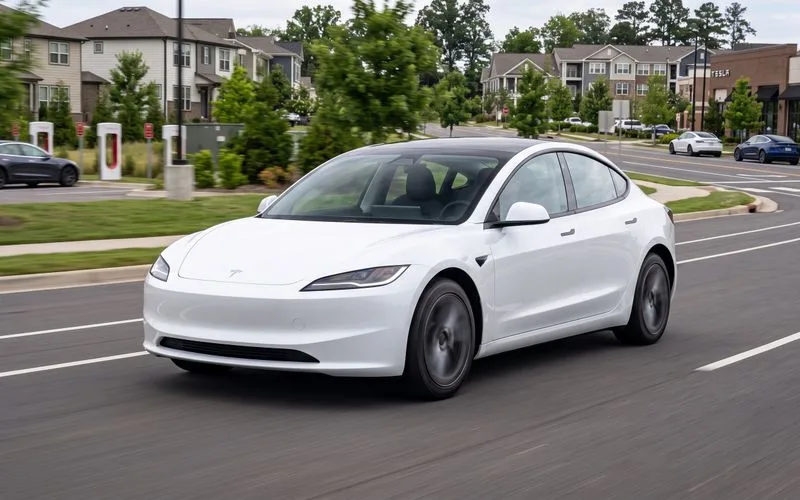 Tesla Model 3Mid-Size Luxury SedanBetter at: Range & resale
More range, stronger resale and the deepest charging network, for similar or less money — the case against the Ioniq 6 on pure EV fundamentals.
Compare 2.46C+
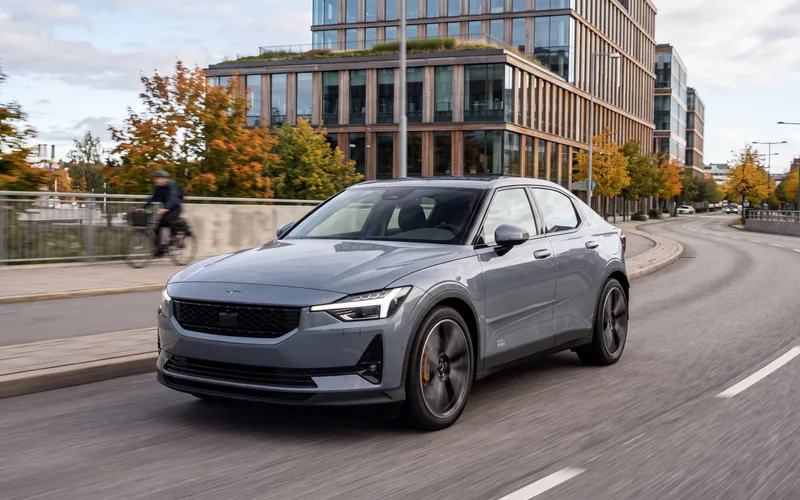 Polestar Polestar 2Compact Luxury SedanBetter at: Cargo access
A near-identical EV fastback pitch but with a hatchback opening, which fixes the Ioniq 6's biggest day-to-day frustration.
Compare 2.56C+
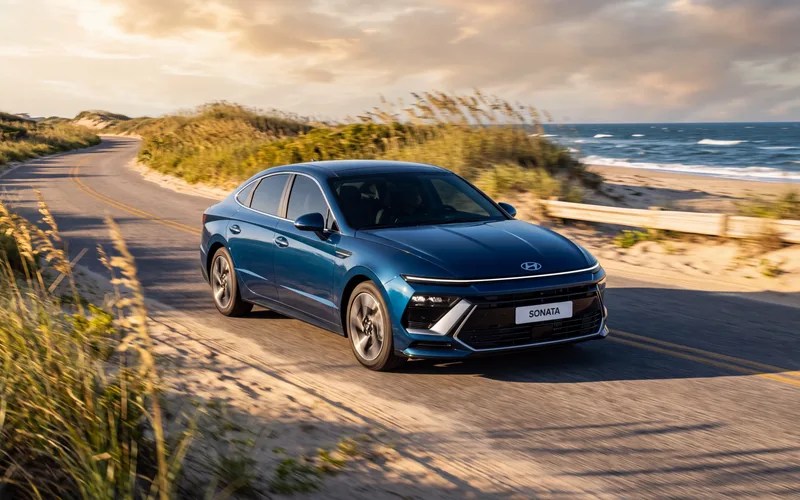 Hyundai SonataMid-Size SedanBetter at: Price & practicality
Same warranty and showroom for thousands less, with a usable trunk and better resale — the right call if home charging isn't realistic.
CompareSubject scores by year
Hover or tap a score to see what moved it versus the year before. A corner mark flags a big swing.
| Year | Performance | Efficiency | Safety | Space | Cost | Reliability | Tech | Use-case | Driving | Value |
|---|---|---|---|---|---|---|---|---|---|---|
| 2026 | 56 | 76 | 77 | 68 | 60 | 68 | 79 | 55 | 68 | 75 |
| 2025 | 54 | 77 | 80 | 63 | 57 | 66 | 69 | 57 | 70 | 69 |
| 2024 | 55 | 78 | 79 | 68 | 61 | 64 | 67 | 57 | 71 | 74 |
| 2023 | 54 | 78 | 80 | 66 | 57 | 63 | 70 | 56 | 69 | 75 |
Compare two years
Best fit & conditions
Higher scores mean a better fit for that use case. Learn more about use-case fit →
Subject profile
Academic Probation · NHTSA safety recalls
No NHTSA safety recall is on record for the 2026 Hyundai Ioniq 6. Other model years of the Ioniq 6 have 6 — listed below.
6 recalls on other model years of the Ioniq 6 (2023–2025)
Apr 6, 2026Seat belts: front: anchorageThe driver and passenger seat belt anchors may detach.
Defect
Hyundai Motor America (Hyundai) is recalling certain 2023-2025 Hyundai Ioniq 6, 2023-2026 Genesis G90, 2024-2026 Hyundai Santa Fe, and Hyundai Santa Fe Hybrid vehicles. The driver and passenger seat belt anchors may detach.
Risk
A detached seat belt anchor will not adequately restrain the seat occupant, increasing the risk of injury in a crash.
Remedy
Dealers will inspect and reinforce or replace the seat belt anchors, as necessary, free of charge. Owner notification letters were mailed beginning May 29, 2026. Owners may contact Hyundai customer service at 1-855-371-9460 and Genesis customer service at 844-340-9741. Hyundai's numbers for this recall are 298 and 032G. Vehicle Identification Numbers (VINs) involved in this recall became searchable on NHTSA.gov April 8, 2026.
NHTSA campaign 26V218000 ↗Manufacturer no. 298-032G294,448 vehicles potentially affected (all models in the campaign)Owners notified May 29, 2026Filed by Hyundai Motor AmericaFiled as IONIQ 6Sep 11, 2025Electrical system: propulsion system: charging: portThe charging port door panel may detach.
Defect
Hyundai Motor America (Hyundai) is recalling certain 2023-2025 IONIQ 6 electric vehicles. The charging port door panel may detach.
Risk
A detached charging port door panel can create a road hazard for other vehicles, increasing the risk of a crash.
Remedy
Dealers will apply an adhesive on the charging port door assembly, free of charge. Owner notification letters were mailed beginning October 10, 2025. Owners may contact Hyundai customer service at 1-855-371-9460. Hyundai's number for this recall is 282. Vehicle Identification Numbers (VINs) involved in this recall became searchable on NHTSA.gov on September 13, 2025.
NHTSA campaign 25V606000 ↗Manufacturer no. 28231,042 vehicles potentially affected (all models in the campaign)Owners notified Oct 10, 2025Filed by Hyundai Motor AmericaFiled as IONIQ 6Nov 18, 2024Electrical system: 12v/24v/48v battery · Electrical system: propulsion system: charging: module: softwareThe Integrated Charging Control Unit (ICCU) may become damaged and stop charging the 12-volt battery, which can result in a loss of drive power.
Defect
Hyundai Motor America (Hyundai) is recalling certain 2022-2024 IONIQ 5, 2023-2025 IONIQ 6, Genesis GV60, Genesis GV70 "Electrified," and Genesis G80 "Electrified" vehicles. The Integrated Charging Control Unit (ICCU) may become damaged and stop charging the 12-volt battery, which can result in a loss of drive power.
Risk
A loss of drive power increases the risk of a crash.
Remedy
Dealers will inspect and replace the ICCU and its fuse, as necessary. In addition, dealers will update the ICCU software. All repairs will be performed free of charge. Owner notification letters were mailed December 20, 2024. Owners may contact Hyundai customer service at 1-855-371-9460 or Genesis customer service at 1-844-340-9741. Hyundai's numbers for this recall are 272 (Hyundai) and 025G (Genesis). This recall expands and replaces previous recall number 24V-204. Vehicles previously repaired under recall 24V-204 will need to have the new remedy completed.
NHTSA campaign 24V868000 ↗Manufacturer no. 272 (H), 025G (G)145,642 vehicles potentially affected (all models in the campaign)Owners notified Dec 20, 2024Filed by Hyundai Motor AmericaFiled as IONIQ 6Apr 19, 2024Power train: driveline: differential unitThe differential gear bolts in the gear drive unit may not be tightened properly, which can result in a loss of drive power or cause the differential to lock up.
Defect
Hyundai Motor America (Hyundai) is recalling certain 2024 IONIQ 6 vehicles. The differential gear bolts in the gear drive unit may not be tightened properly, which can result in a loss of drive power or cause the differential to lock up.
Risk
A loss of drive power or differential lock up can increase the risk of a crash.
Remedy
Dealers will replace the gear drive unit, free of charge. Owner notification letters were mailed June 17, 2024. Owners may contact Hyundai customer service at 1-855-371-9460. Hyundai's number for this recall is 259.
NHTSA campaign 24V283000 ↗Manufacturer no. 2592 vehicles potentially affected (all models in the campaign)Owners notified Jun 17, 2024Filed by Hyundai Motor AmericaFiled as IONIQ 6Mar 15, 2024Electrical system: 12v/24v/48v battery · Electrical system: propulsion system: charging: module: softwareThe Integrated Charging Control Unit (ICCU) may become damaged and stop charging the 12-Volt battery, which can result in a loss of drive power.
Defect
Hyundai Motor America (Hyundai) is recalling certain 2022-2024 IONIQ 5, 2023-2024 IONIQ 6, Genesis GV60, Genesis GV70 "Electrified," and Genesis G80 "Electrified" vehicles. The Integrated Charging Control Unit (ICCU) may become damaged and stop charging the 12-Volt battery, which can result in a loss of drive power.
Risk
A loss of drive power increases the risk of a crash.
Remedy
This recall is replaced by NHTSA recall number 24V-868. Vehicles already repaired under this recall will need to have the new remedy completed. Dealers will inspect and replace the ICCU and its fuse, as necessary. In addition, dealers will update the ICCU software. All repairs will be performed free of charge. Owner notification letters were mailed April 22, 2024. Owners may contact Hyundai customer service at 1-855-371-9460. Hyundai's number for this recall is 257/021G.
NHTSA campaign 24V204000 ↗Manufacturer no. 257/021G99,055 vehicles potentially affected (all models in the campaign)Owners notified Apr 22, 2024Filed by Hyundai Motor AmericaFiled as IONIQ 6Feb 1, 2024Power train: driveline: driveshaftThe rear inner driveshaft may have been improperly heat-treated, allowing it to break under load and resulting in a loss of drive power.
Defect
Hyundai Motor America (Hyundai) is recalling certain 2023 IONIQ 5, IONIQ 6, and Genesis GV60 vehicles. The rear inner driveshaft may have been improperly heat-treated, allowing it to break under load and resulting in a loss of drive power.
Risk
A loss of drive power increases the risk of a crash.
Remedy
Dealers will replace the rear inner driveshaft, free of charge. Owner notification letters were mailed March 29, 2024. Owners may contact Hyundai customer service at 1-855-371-9460. Hyundai's numbers for this recall are 253(H), 017G(G).
NHTSA campaign 24V065000 ↗Manufacturer no. 253 (H), 017G (G)1,165 vehicles potentially affected (all models in the campaign)Owners notified Mar 29, 2024Filed by Hyundai Motor AmericaFiled as IONIQ 6
Source: NHTSA Office of Defects Investigation recall database, model years 2023–2026. Recalls are listed by model year as the manufacturer filed them; whether a specific car is affected depends on its VIN — check a VIN at nhtsa.gov ↗. NHTSA model names matched to this page: IONIQ 6.
Detailed scoring by subject
1Performance & PowertrainOne of the Ioniq 6's weakest categories.1.74C-
The volume configuration is the Long Range RWD single-motor car, which carries over at 225 hp for 2026 despite the refresh's larger 84 kWh pack. That output is modest against the sedan band, though the range now tops out very high with the new Ioniq 6 N.
The single rear motor produces 350 N·m (258 lb-ft), delivered instantly from a standstill — mid-pack for the sedan band, though the dual-motor AWD nearly doubles it.
Instrumented testing of the Long Range RWD has consistently beaten Hyundai's conservative 7.4-second claim, landing around 6.2 seconds; the slippery 0.22 Cd body and instant low-end torque make it feel quicker still around town.
The 800-volt E-GMP powertrain delivers power immediately and silently with no lag and no transitions to fumble; it sits just below the premium German EVs only because road and wind noise intrude a little more, not because the delivery itself is anything less than seamless.
A single-speed reduction gear means there is nothing to hunt or shift, and Hyundai's paddle-adjustable regen with i-Pedal one-pedal mode is among the best-executed systems of its kind, blending into the friction brakes smoothly.
Dual-motor AWD is optional across the Long Range trim walk rather than locked to the top trim, and is standard on the Ioniq 6 N; operation is straightforward electronic torque split with no low range or terrain hardware, and choosing it costs meaningful range.
Battery-electric only — there is no gas, hybrid or PHEV option — but within that there are four distinct configurations for 2026, including the new high-performance N, which is broader than most single-body-style EVs manage.
2Efficiency & RangeOne of the Ioniq 6's strongest categories.3.14B
For 2026 the US IONIQ 6 range is the 641-hp N and nothing else, so the volume trim is now a dual-motor performance EV rather than the aero-optimized Long Range RWD — Hyundai's own spec sheet puts it at 88 MPGe combined, roughly a third below the 132 MPGe the 2025 RWD posted. Still a slippery car, but 20-inch wheels, sticky tires and two motors cost far more than the body shape recovers.
City is the N's better cycle, as it is for any EV, since regen recovers most low-speed energy and the extra power costs nothing when it is not used. Hyundai publishes only a combined figure, so this is the combined number split on the city/combined ratio the two closest reference cars share.
The streamliner body still helps at speed — the Ioniq 6 shape is far slipperier than any other 600-plus-hp EV sedan — but the N's wider track, 20-inch wheels and performance tires give back most of what the standard car's 0.21 Cd bought. Derived from the combined figure, since no EPA highway number exists yet.
The 2026 US car is the N, and its 84.0-kWh pack covers about 245 miles rather than the 342 the 2025 Long Range RWD managed on a smaller battery — a ~100-mile step backward for the nameplate, and the single biggest reason this category collapses this year. Even against the EV-specific sedan band it lands near the floor.
Hyundai publishes the charger rating and a 432 kW pack charging-power ceiling rather than a car-side peak, but the 800-volt E-GMP pack genuinely accepts around 260 kW at the top of its curve — among the highest acceptance rates of any EV at any price, and the reason it refills faster than 400-volt rivals stuck near 150 kW. Unchanged in substance from the pre-N car: same architecture, same 84.0-kWh pack.
Eighteen minutes is a manufacturer figure for this exact model year and about as quick as fast charging gets, which materially offsets the short range — but read the footnote: the 18 minutes needs 800-volt CCS hardware and an adapter, and the car's own NACS port at a 400-volt Supercharger stretches the same fill to 30 minutes.
At 88 MPGe the N draws about 5,750 kWh a year over 15,000 miles — still cheaper to run than any gas performance sedan, but roughly $250/yr worse than the 2025 Ioniq 6 it replaces, and no longer among the cheap EVs. Owners leaning on public DC fast charging will pay two to three times this.
No fuel grade to think about and the most flexible energy access in the segment: a native NACS port opens the Supercharger network with no adapter, a CCS adapter covers the 800-volt stations where the car is quickest, and a 10.9-kW onboard charger refills 10–100% at home in about seven and a quarter hours. Held below the 2026 Ioniq 5's 94 because the headline 18-minute fill needs adapted CCS hardware while the native port takes 30 minutes, and because the N's appetite makes every one of those fills a bigger one.
3SafetyOne of the Ioniq 6's strongest categories.3.25B+
The Ioniq 6 rides on the same E-GMP structure as the Ioniq 5 and Kia EV6, both of which carry 5-star NHTSA overall ratings, and the dedicated-EV layout helps both side impact and rollover via the low, structurally integrated floor battery. The 2026 facelift is cosmetic and electrical rather than structural, so the generation-level result should carry.
The Ioniq 6 launched as an IIHS Top Safety Pick+ and posts Good results across the core crashworthiness battery for this generation, which is the structural picture the item is mostly measuring. It sits below the 80s because IIHS has since tightened the award bar (updated side test, rear-passenger moderate overlap, headlights Acceptable-or-better on every trim) and the 2026 award status was not confirmed.
Hyundai SmartSense is close to complete on the base trim: forward collision-avoidance with pedestrian, cyclist and junction-turning detection, lane keeping, Lane Following Assist lane centering, blind-spot and rear cross-traffic collision-avoidance with braking intervention, Safe Exit Assist, stop-and-go adaptive cruise, driver attention warning and high beam assist all standard. Highway Driving Assist being standard rather than trim-locked is what lifts this above the Sonata's 84 — almost nothing safety-relevant is paywalled except the camera aids.
Forward Collision-Avoidance Assist covers vehicles, pedestrians and cyclists and adds junction-turning intervention, and Hyundai's system rated well under the older IIHS daytime front crash prevention protocol. It stays in the 70s because the harder 2024-onward higher-speed vehicle-to-vehicle test and the nighttime pedestrian evaluation are where Hyundai has been mid-pack, and neither result was confirmed for this car.
Blind-Spot Collision-Avoidance Assist and Rear Cross-Traffic Collision-Avoidance Assist are standard on every trim and both intervene with braking rather than warning alone, and Safe Exit Assist is standard — meaningful on a car this often used in cities. The Blind-Spot View Monitor camera feed, which matters more than usual given the poor over-shoulder view, is restricted to Limited, which caps this short of the top band.
Lane Following Assist gives true lane centering as standard equipment and Highway Driving Assist layers navigation-linked speed control on top from the base trim, which is ahead of most mid-size rivals. Reviewers rate Hyundai's tuning as one of the better mainstream systems on well-marked highways but still note wander on faded markings and a torque-sensing nag that hands back quickly.
Smart Cruise Control with Stop & Go is standard, works to a full stop and resumes cleanly, and Hyundai's Machine Learning variant adapts following distance to the driver's own habits; HDA2 adds automatic lane change on upper trims. It is a well-integrated package that reviewers rate near the front of the mainstream field, held out of the highest band by the abrupt closing-speed braking Hyundai's ACC still shows in traffic.
No hands-free highway driving is offered on the Ioniq 6 at any trim. Highway Driving Assist and HDA2 are explicitly hands-on-wheel systems with a torque sensor that nags within seconds of release, so there is no BlueCruise, Super Cruise or Highway Assistant equivalent here. The previous score of 68 credited a capability the car does not have.
LED projector headlights and High Beam Assist are standard across the range — no trim is stuck with lesser hardware — and the car's Top Safety Pick+ history implies its headlights graded Acceptable or better on every trim, since that is an award prerequisite. Confidence is low because the 2026 facelift revised the headlight units themselves, so prior IIHS grades may not carry to this model year.
This is the Ioniq 6's clearest safety weakness. The streamliner profile pairs a very high beltline with a shallow, sharply raked rear window and thick C-pillars, leaving a letterbox rear view and large over-shoulder blind zones — worse than the already-compromised Sonata or BMW i4 fastbacks. Camera compensation is thin at the volume trim: a plain rearview monitor is standard while the surround-view and blind-spot camera feeds that would offset it are Limited-only.
The long E-GMP wheelbase gives the rear bench generous legroom and a flat floor, so two seats fit without crowding the front occupants, and there are two outboard lower-anchor sets plus three top tethers. Working against it: the anchors sit recessed in the seat bight, and the low, steeply falling roofline pinches the door aperture and headroom, which makes hoisting a rear-facing seat in more awkward than the floor space suggests.
4Space & ComfortMid-pack among this car's ten categories.2.59C+
The Ioniq 6 is a five-passenger four-door sedan in every US trim (SE Standard Range through Limited, plus the 2026-added XRT and Ioniq 6 N); there is no 4-seat or 6-seat configuration.
Front headroom is generous for a low-slung streamliner because the front seats sit relatively low in the E-GMP floor; no sunroof is offered on the Ioniq 6, so there is no reduced-headroom variant to note.
Front legroom is mid-pack for a mid-size sedan — adequate but short of the 43+ in offered by the Accord and Sonata, a consequence of the long dash-to-axle streamliner packaging.
The fastback roofline costs rear headroom relative to a conventional three-box mid-sizer; the number is average on paper and reviewers consistently report six-footers brushing the headliner in back.
The 116.1-in wheelbase and flat EV floor deliver strong rear legroom — better than the Tesla Model 3 and near the top of the mid-size sedan set, though the raised floor leaves rear passengers in a knees-up posture with little foot space under the front seats.
The worst practical compromise in the car: a conventional trunk lid (not a hatch) opening onto just 11.2 cu ft, well under the 15–17 cu ft typical of mid-size sedans, and the frunk is too small to be more than a cable locker.
Competitive but not clever: the flat E-GMP floor yields a usable open bin under the bridge-style console and the 60/40 rear seats fold to extend the small trunk, but there is no sliding console like the Ioniq 5's, door bins are modest, and the fixed trunk lid limits what the load space can actually swallow. Rated conservatively because the 2026 facelift revised the console and switchgear and the net effect on storage is not confirmed here.
Front seats are a genuine strength — slim-frame, well-shaped, with power adjustment and Limited's reclining relaxation function — but the rear bench is the weak half, with a low cushion, limited thigh support and a knees-up seating position forced by the battery floor.
Composed and well-damped for the class with good body control from the low battery-in-floor center of gravity, but the tune is on the firm side and the 20-in wheels on upper trims let sharp impacts through; it does not match the plushness of a Sonata or Accord.
A standout: the 0.22 Cd streamliner body plus no combustion engine makes for very low wind noise at highway speed, with acoustic front glass and active noise measures; coarse-pavement road noise is the only regular intrusion.
Richly equipped for the price class: heated front seats and heated steering wheel available from low trims, ventilated front seats and heated rear outboard seats on Limited, dual-zone climate, a standard heat pump, and remote cabin preconditioning through Bluelink — content that costs extra on German rivals.
5Cost of OwnershipOne of the Ioniq 6's weakest categories.2.07C
The entry SE Standard Range RWD opens around $39,900 delivered — mid-pack against the 22,000–55,000 sedan band, expensive next to a gas mid-sizer, but no longer the outlier it once was, because Hyundai repositioned 2026 Ioniq pricing downward after the federal 30D credit expired on 30 September 2025 and the sticker had to stand on its own. The facelift's larger pack, standard NACS port and added content push the other way, so the two effects partly cancel.
SE Long Range RWD is the volume configuration — the trim reviewers point buyers at, and the one this scorecard's efficiency and range figures are built on (~342 mi) — and it lands near $45,500 delivered, in the upper-middle of the sedan band. That is real money against a $31,000 Sonata SEL, and the buyer only earns it back through cheap running costs, never at the till.
This is where the Ioniq 6 earns back some of its price: no oil, no spark plugs, no belts, no exhaust and no transmission service, so scheduled work is essentially tire rotations, cabin filters, and periodic brake-fluid and coolant changes — and regenerative braking means the friction pads often survive the whole five years. Hyundai's 3-year/36,000-mile complimentary maintenance absorbs most of what remains early on, and the 5-year/60,000-mile bumper-to-bumper term covers nearly the entire window against repairs. The main cost risk is tires, which the heavy, torquey, aero-optimized chassis wears faster than a comparable gas sedan.
Depreciation is the Ioniq 6's real ownership cost and the one item dragging this category down. Non-Tesla EVs have retained value poorly, and the 2023–2025 cars were hit twice — discounted heavily when new, then dumped into a used market where buyers discount unknown battery life and where the expiration of the federal credit reset every price reference downward. The 2026 car should do somewhat better than its predecessors precisely because its MSRP was already repriced for a no-credit world, leaving less artificial height to fall from, but 43% still trails the gas Sonata's ~48% and is far short of what a Camry or a truck holds.
Hyundai's 5-year/60,000-mile bumper-to-bumper coverage tops the sedan band outright and beats every German and Japanese rival's standard 4-year or 3-year term. On an EV it matters more than usual, because it covers the electronics, the 800-volt charging hardware and the infotainment stack that are the likeliest things to fail.
Ten years and 100,000 miles on the drive unit, plus a matching 10-year/100,000-mile term on the high-voltage battery, is the best coverage in the segment and answers head-on the objection that kills EV resale — what happens when the pack degrades. Note the asterisk that costs nothing here but matters to a used buyer: the 10-year term is original-owner only and drops to 5 yr / 60,000 mi once the car is sold on.
The package clears the 80-plus bar comfortably: 3 years / 36,000 miles of included scheduled maintenance, 5 years of unlimited-mileage roadside assistance with EV-specific charge-related towing, a multi-year Bluelink+ connected-services trial, and an EV charging incentive on top — historically a public-charging credit or a home Level 2 charger/installation credit, buyer's choice. The 2026 car's standard NACS port adds native Tesla Supercharger access, worth more in practice than any credit because it fixes the thing owners actually complain about. It sits a notch above the gas Sonata's 85 in this dataset for exactly that EV-specific increment.
$45,500 volume-trim price minus its estimated resale value after 5 years (43% retained, or about $19,565) leaves about $25,935 in depreciation. Add the projected $4,100 in 5-year maintenance and repairs, and owning this vehicle for 5 years costs about $30,035 in total.
6Reliability & QualityMid-pack among this car's ten categories.2.63C+
The Ioniq 6 enters its fourth US model year on a well-established E-GMP platform, and its third-party predicted-reliability readings have generally landed average to modestly above average — EVs carry far fewer wear items than an ICE sedan, and Hyundai's electrics have not shown a body-integrity or build-defect theme. Two things hold it to the middle of the band: 2026 is the first year of a substantial mid-cycle facelift (restyled bodywork, larger battery pack, native NACS charge port, reworked interior electronics), and refresh years reliably generate above-baseline early complaint volume; and the platform's ICCU failure history is a real, documented defect class rather than a reputational rumor.
Hyundai sits solidly mid-pack on multi-year dependability: at or modestly above industry average in J.D. Power's Vehicle Dependability Study and mid-field in Consumer Reports brand rankings, consistently stronger in initial quality than in three-year dependability. The brand is well clear of the bottom tier but is not a Toyota or Honda peer, and it still carries reputational drag from the Theta II engine campaigns and the no-immobilizer theft wave — neither of which touches an E-GMP electric.
This is the Ioniq 6's weakest reliability dimension. The E-GMP family's defining defect is failure of the Integrated Charging Control Unit (ICCU), which stops the high-voltage system from charging the 12V battery and can leave the car unable to charge or, in the worst case, losing drive power — a drivability-relevant failure, not a cosmetic one. It drew recall and service-campaign activity across the whole platform family with software-plus-hardware remedies, and replacement parts were widely backordered, so time-to-remedy was poor. None of this is fire-risk or restraint-system severity, and a 2026 build ships with the revised hardware and calibration from the outset — but the generation's cumulative docket is busier than the segment norm and the defect is systemic rather than a one-off production window.
E-GMP is one of the better-proven dedicated EV powertrains in the market: in service since 2021, spread across six-plus nameplates and two brands at high volume, with permanent-magnet drive units that have shown no systemic failure pattern and a battery-longevity record that has held up well in independent degradation data. That earns it more accumulated real-world mileage than Mercedes' EVA2 or Lucid's proprietary hardware. Two things keep it out of the proven-for-200k band: the ICCU is an actual failure-prone component inside this powertrain family, which is exactly what this item measures; and the 2026 car's larger ~84 kWh pack is a new cell and pack specification without its own long-term field record.
The Ioniq 6 cabin is design-led and materially better than Hyundai's mainstream sedans — a flat-floor lounge layout, dual 12.3-inch curved displays, recycled and sustainably sourced textiles, and relaxation front seats — and the 2026 facelift reworked the center console and switchgear, adding storage and improving the physical control set. What keeps it mid-band rather than high is price context: this item is graded relative to cost, and at a Premium price class reviewers consistently flag hard, hollow plastics on the lower doors, console sides and rear cabin that read below the German EV sedans it is cross-shopped against.
Assembly quality is a genuine Hyundai strength — the brand consistently outperforms its long-term dependability standing in initial-quality measures — and the Ioniq 6 carries no widespread rattle, squeak or panel-alignment complaint theme; its slippery, tightly detailed bodywork demands and gets good panel-gap consistency. The mild reservation is that 2026 is the first year of the facelifted body and interior, and reworked dashes and new exterior panels typically produce a modest early-production teething bump.
Hyundai runs a dense nationwide franchised network — on the order of 830-870 US dealers — so physical coverage is adequate almost anywhere, and 3 years/36,000 miles of complimentary maintenance lowers the cost of using it. The EV-specific deduction is real, though: not every Hyundai store is equipped or certified for high-voltage service, EV owners report longer waits and less experienced service departments than ICE customers at the same brand, and the ICCU campaign strained service capacity at exactly the wrong moment.
The Ioniq 6 sits between two very different reference points. In its favor, E-GMP hardware is shared across a high-volume family (Ioniq 5/9, Kia EV6/EV9, Genesis GV60), Hyundai OEM parts pricing is far below the German EV norm, and the 10-year/100,000-mile battery term absorbs the single largest ownership risk. Against it, this is still an EV: drive units, inverters, the ICCU and high-voltage cabling are dealer-only, the independent-shop and aftermarket ecosystem is thin compared with an ICE sedan, the ICCU backorder episode showed how badly EV-specific parts supply can bottleneck, and aluminum-intensive collision repair pushes insurance and body-shop costs above a comparable mid-size sedan.
7Technology & InfotainmentThe Ioniq 6's best-graded category.3.39B+
The Ioniq 6 uses the E-GMP dual 12.3-in curved panoramic display — a 12.3-in center touchscreen with embedded navigation standard across SE, SEL and Limited, with no smaller base head unit and no larger optional screen. Replaces the placeholder 11.5-in figure.
Hyundai's ccNC-generation software is quick, logically laid out with split-screen home cards, and the Ioniq 6 keeps a physical volume knob and a row of hard shortcut keys — reviewers routinely rank Hyundai/Kia infotainment among the best in the mainstream. The capacitive touch climate/menu panel is the main recurring complaint.
The ccNC head unit supports wireless Apple CarPlay and Android Auto, and because the 12.3-in navigation unit is standard on every trim the capability is standard fleet-wide rather than a trim upgrade. Scored LOW confidence because the pre-facelift Ioniq 6's 12.3-in unit was wired-only and the 2026 facelift is the first year of the change for this nameplate.
Embedded navigation is standard on all trims and is genuinely useful in an EV — it plans charging stops along a route and preconditions the battery ahead of a DC fast charger, which phone projection cannot do. Voice recognition handles climate, nav and media commands but is command-driven rather than a true natural-language assistant.
Base trims get a modest 6-speaker system; the premium upgrade is an 8-speaker Bose setup on upper trims — a smaller array than the 12-speaker Bose in the Sonata and well short of the branded systems in the German EV sedans this car is priced against. The quiet EV cabin flatters it more than the hardware deserves.
A 12.3-in full-digital cluster is standard on every trim as half of the curved panoramic panel, with clear EV-specific readouts (state of charge, energy flow, range) and Blind-Spot View Monitor camera feeds rendered into the dials. Crisp and configurable, though the graphics are functional rather than showy next to BMW/Mercedes.
E-GMP models with ccNC go beyond maps-only updating — Hyundai delivers over-the-air updates to vehicle controllers as well as infotainment and navigation, so the car can gain fixes and functionality without a dealer visit. Scored below the Tesla tier because feature-adding releases are less frequent and less publicized.
Bluelink+ is provided complimentary rather than as a recurring subscription, and on an EV it covers the functions that matter most — remote climate preconditioning, charge start/stop and charge-limit setting, charge scheduling, remote lock/unlock and vehicle locate. The no-subscription pricing is a real advantage over rivals that paywall equivalent features.
USB-C data/charge ports serve both rows, a wireless charging pad sits in the console on volume trims, and vehicle-to-load turns the traction battery into a power source — an interior outlet under the rear seat plus an exterior V2L adapter at the charge port capable of running household appliances. That is materially more device power than any conventional sedan offers.
Proximity entry with push-button start is standard, remote climate/start runs from both the fob and the free Bluelink+ app, and Digital Key 2 turns a phone or smartwatch into the key with shareable access. Remote Smart Parking Assist on the top trim also lets the car pull itself into or out of a tight space from outside.
Rear camera and rear parking sensors are standard, and upper trims add a Surround View Monitor, Blind-Spot View Monitor feeds in the cluster, front sensors and Remote Smart Parking Assist — real parking automation rather than just imagery. Surround view being reserved for the top trim keeps it out of the highest band.
The augmented-reality head-up display is a large, genuinely capable unit that projects turn arrows onto the road ahead — but it is Limited-trim equipment only, unavailable on the SE and SEL trims most buyers shop, which caps it in the mid band despite the quality of the hardware.
8Use-Case FitThe Ioniq 6's lowest-graded category.1.72C-
The long 116.1-in E-GMP wheelbase gives a flat floor and 39.2 in of rear legroom, so the car seats themselves fit well, but the streamliner fastback roof cuts the rear door aperture and the 11.2 cu ft trunk is small for a stroller plus the rest of a family's gear. Two sets of outboard LATCH lower anchors and three tethers are conventional rather than generous.
Strong family safety proposition on the trims families actually buy: 5-star NHTSA overall and IIHS Top Safety Pick+ credentials for the generation, with the full Hyundai SmartSense suite — forward collision avoidance with pedestrian/cyclist and junction-turning, lane keeping and lane following, blind-spot and rear cross-traffic avoidance, and adaptive cruise with stop & go plus Highway Driving Assist — standard on the base SE rather than optional. Rear Occupant Alert and Safe Exit Assist are included.
Quiet and smooth for the long haul — the 0.22 drag coefficient makes it one of the hushed cars in the class — with rear USB-C charging, rear vents and dual-zone climate. But 37.5 in of rear headroom is tight for adults under the fastback roof, and the 11.2 cu ft trunk means four occupants plus a week's luggage is a genuine packing exercise.
Close to an ideal commuter: instant, lag-free single-motor delivery, four-level paddle-adjustable regen plus i-Pedal one-pedal driving that removes most brake work in stop-and-go, Smart Cruise Control with Stop & Go and Highway Driving Assist standard, and a well-judged driving position. Poor over-the-shoulder visibility from the high beltline and thick C-pillars is the main daily annoyance.
Among the cheapest cars in any segment to commute in: roughly 122 MPGe combined and about $650 a year in electricity at 15,000 miles, with regenerative braking sharply extending pad and rotor life and no oil changes, filters or spark plugs. Only home-charging access and the weak resale picture temper the per-mile story.
Manageable but not easy. It is a genuinely long mid-size car on a 116.1-in wheelbase, and the fastback's high tail and thick C-pillars make judging the rear end hard. A rearview camera and rear parking sensors are standard, but the Surround View and Blind-Spot View monitors that would fix it are reserved for higher trims.
Not meaningfully work-capable. Hyundai does not publish a US tow rating for the Ioniq 6, there is no bed, and the sealed 11.2 cu ft trunk with a narrow sedan opening rules out most jobsite loads. The single credit is 1.9 kW V2L, which will run corded tools or a compressor at a site without a generator.
A low-slung passenger EV with soft-touch, design-led interior surfaces and no fleet or trade reputation to draw on. The E-GMP platform itself has real cumulative US mileage across the Ioniq 5/6/9 and Kia EV6/EV9, but the well-documented ICCU failure mode is exactly the kind of fault that strands a work vehicle, and low ground clearance rules out rough sites.
V2L is a genuinely useful jobsite feature and lifts this above the floor — an interior outlet plus an exterior adapter turns the traction battery into a site power source. Everything else is missing: no hitch, no roof rails or rack ecosystem, no bed-access hardware, no washable surfaces, and only trunk-grade tie-downs.
The Ioniq 6's strongest use case. The 2026 84.0-kWh Long Range RWD is rated around 342 miles, and the 800V architecture takes roughly 350 kW for a 10-80% stop in about 18 minutes through a native NACS port — so charging stops are short and the network is broad. A 0.22 drag coefficient keeps it quiet at highway speed and Highway Driving Assist cuts fatigue. Range falls materially on 20-inch wheels and AWD.
Pavement-bound in shape but not useless outdoors: e-AWD is available across the Long Range trims and 1.9 kW V2L is a legitimate camping asset, powering a fridge, kettle or lights off the traction battery for days. Against that, it is a low sedan with no roof rails, no published US tow rating for bikes or a small trailer, and clearance suited to a graded forest road at most.
The clearest weakness in the car. An 11.2 cu ft trunk is small even by mid-size sedan standards, the frunk holds barely more than a charging cable at ~0.5 cu ft, and the narrow fastback opening restricts what will physically pass through. A 60/40 folding rear seat with pass-through helps with long items, but there are no roof rails or hitch to move bulk outside the cabin.
9Driving ExperienceMid-pack among this car's ten categories.2.59C+
The E-GMP skateboard's floor-mounted battery gives the Ioniq 6 a very low center of gravity and notably flat, stable cornering for a 4,000-lb-plus sedan, but the volume SE/SEL RWD Long Range is damped and tired for comfort and range rather than grip, so it is composed rather than eager. Replaces the placeholder score with a real assessment.
Steering is accurately geared and consistent off-center, which makes the car easy to place, but it transmits almost no road feedback and the selectable drive modes vary effort weight rather than genuine feel — the most common dynamic criticism of the car.
Hyundai's regen-to-friction blending is among the better calibrations in the segment, with paddle-selectable regen levels and i-Pedal one-pedal driving, and stopping distances are short for the curb weight; the pedal itself still feels slightly soft and synthetic at the hand-off from regen to friction braking.
A single-speed 800V EV powertrain has no gearshifts, no stop/start and no idle vibration, and Hyundai's tip-in calibration is progressive rather than grabby, so response is instant and delivery is seamless from a stop through highway passing.
The motor is effectively silent under load with no intrusive inverter whine, and the streamliner body's 0.22 drag coefficient keeps wind noise unusually low at highway speed; tire roar over coarse pavement is the main remaining noise source, more so on the 20-inch wheels than the volume trim's 18s.
The Ioniq 6 carries the E-GMP platform's long 116.1-inch wheelbase, which yields a turning circle at the wide end of the mid-size sedan range and makes U-turns and tight parking structures noticeably more awkward than in a conventional sedan. Corrects the placeholder value of 36.6 ft, which drops the computed score sharply.
The front driving position is genuinely good — low-set, with a wide seat and wheel adjustment range and physical climate and volume controls retained rather than buried in the touchscreen — but the fastback roofline, high beltline, thick C-pillars and small, spoiler-bisected rear window make over-the-shoulder and rearward visibility poor.
The volume RWD Long Range is quick, quiet and effortless but deliberately tuned as an efficiency-first cruiser — satisfying rather than exciting, with numb steering capping engagement. The 2026 lineup's halo Ioniq 6 N is a genuinely enthusiast-grade car, but it is a low-volume performance variant and not the configuration scored here.
10Value & Market PositionGrades above the middle of the scale.3.06B
Even the entry SE arrives with the dual 12.3-in curved display pair, the full SmartSense driver-assist suite (forward collision avoidance, blind-spot view, lane-keeping, safe exit warning, Highway Driving Assist), heated front seats, vehicle-to-load power and Digital Key — content that German and Tesla rivals either charge for or omit. The 2026 facelift adds a native NACS port as standard equipment rather than a dealer-installed adapter, which is a real cost item handed over for free.
At roughly $45,500 for the volume SE Long Range RWD the Ioniq 6 buys ~342 miles of range, 800V ultra-fast charging and class-leading efficiency alongside a 10 yr / 100,000 mi powertrain warranty — genuinely strong content per dollar on paper. What holds it to the middle of the band is that the $7,500 federal credit disappeared on 30 September 2025, so the sticker now stands unassisted against a Tesla Model 3 that undercuts it on price and out-ranges it, and the car's weak ~43% five-year resale means the dollars per year of ownership land worse than the window sticker suggests.
For an EV sedan the ladder is unusually complete: SE Standard Range RWD, SE and SEL Long Range in RWD or AWD, an N Line appearance/chassis tier, Limited, and the 601 hp Ioniq 6 N halo added for 2026 — roughly $40k to the high-$60ks with two battery sizes and both drivetrains. It falls short of the top band only because option flexibility inside each trim is minimal in the Korean-market style (packages are bundled into trims, not ordered a la carte).
The Ioniq 6 has never been more than a niche seller in the US — low five figures annually against a Tesla Model 3 an order of magnitude ahead of it, and well behind Hyundai's own Ioniq 5. It sits in the doubly squeezed intersection of two shrinking categories, the sedan and the non-Tesla EV, and the pull-ahead of demand before the September 2025 credit expiry left the following quarters weaker still. The facelift and the N halo should stabilize the trajectory but will not make this a volume nameplate.
Hyundai has moved decisively out of the discount-brand bracket, and the Ioniq sub-brand in particular carries real design credibility after the Ioniq 5 and Ioniq 6 took back-to-back World Car of the Year honors. It is a respected, no-longer-apologetic badge — but it is still not an aspirational one in the way BMW or even Tesla is to an EV shopper, and the mainstream Hyundai showroom experience keeps it from the top band.
Scored as buyer benefit, this is one of the Ioniq 6's strongest cards. With the federal credit gone and EV sedan inventory slow to turn, Hyundai has leaned hard on factory cash, subvented low-APR financing and aggressive lease support to keep the Ioniq line moving, and dealers negotiate freely — transaction prices routinely land well under sticker. The reason it is not higher is precisely that the discounting reflects soft demand rather than a healthy market.
2026 is the facelift year for the CE1 generation and an unusually substantial one: restyled front and rear ends, a larger 84 kWh battery replacing the 77.4 kWh pack, a factory NACS charge port, interior and ADAS updates, and an entirely new Ioniq 6 N at the top of the range. A buyer in 2026 is buying the newest version of a three-year-old platform with no redesign risk on the horizon.
The Ioniq 6 is one of the most decorated EVs of its generation — the 2023 World Car of the Year triple crown — and reviewers consistently praise its efficiency, 800V charging speed, ride quality and design, with the 2026 Ioniq 6 N drawing particularly strong notices as a genuinely engaging performance EV. It stops short of the top band because it rarely wins outright comparison tests against the Model 3: the fastback roof costs rear headroom, the sedan trunk opening is awkward next to a liftback, and rearward visibility is a recurring complaint.